Twitch streamers rake in millions with a shady crypto gambling boom
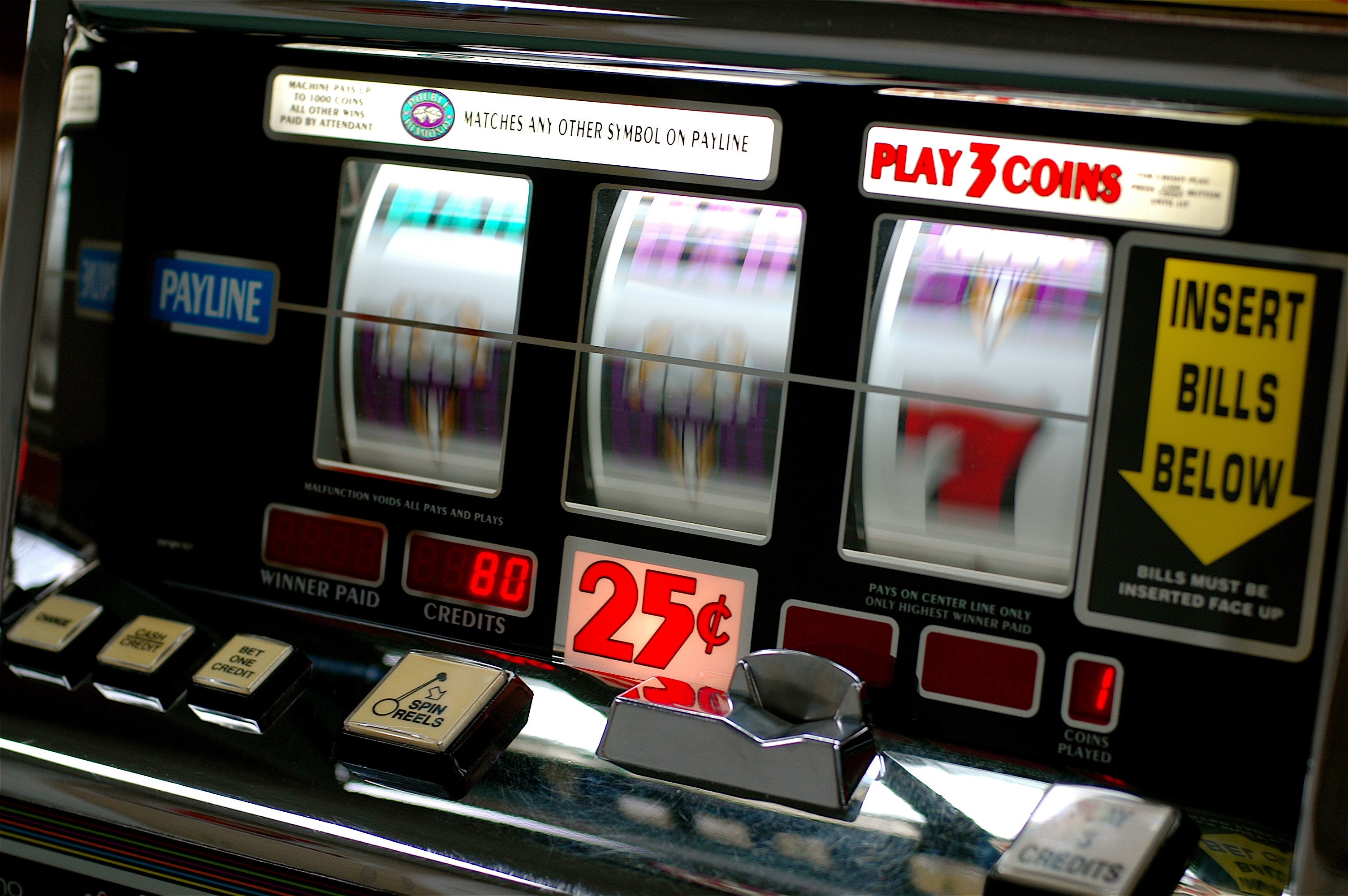
A slot machine
Enlarge / We just assume this is what the slots in an online cryptocurrency casino look like, but I guess we can see them in action on Twitch.

Tyler Niknam was getting out of Texas. Niknam, 30, is a top streamer on Twitch, where he’s better known as Trainwrecks to his 1.5 million followers. For hours on end, Niknam was hitting the slots on Stake.com, an online cryptocurrency casino and his most prominent Twitch sponsor, to live audiences of 25,000. He’d been winning big, sometimes as much as $400,000 in crypto in one fell swoop, and he never seemed to go broke. The problem? It wasn’t allowed.

If you visit Stake on a US-based browser, a message will quickly pop up on the site: “Due to our gaming license, we cannot accept players from the United States.” Though Stake doesn’t possess a gambling license in any state, Nikam and other US gamblers easily circumvent this by using VPNs. Promoting gambling sites that cannot operate in the US and making money by referring US residents to them may constitute promoting illegal gambling, legal experts told WIRED.

“Canada needs to happen asap,” Niknam wrote in a private Discord DM to Felix “xQc” Lengyel, 25, Twitch’s number two streamer. Lengyel briefly streamed slots but stopped in June. “You cannot show you’re on Stake at all.” A few days later, Niknam arrived in Canada, where he settled into a routine—gambling in a mostly empty apartment, sometimes more than a dozen hours a day. (Niknam and Lengyel did not respond to WIRED’s requests for comment.)

Twitch is in the middle of a gambling boom, fueled by the rise of so-called “crypto casinos”—websites where gamblers can purchase cryptocurrencies like Bitcoin and Ethereum for use in digital games of chance like slots, blackjack, and baccarat. And sites like Stake and Roobet are paying popular streamers to play the casino games on their channels, sometimes offering tens of thousands of dollars an hour, according to streamers and experts interviewed by WIRED. One gambling website, Duelbits, apparently offered top gambling streamer Adin Ross between $1.4 million and $1.6 million a month to stream slots on Twitch, according to a Discord DM between himself and Duelbits. (Ross, who was recently suspended from Twitch for using his phone while driving, did not respond to WIRED’s requests for comment. Neither did Stake, Roobet, or Duelbits.)

A WIRED review found that 64 of the top 1,000 most-trafficked Twitch streamers have streamed crypto slots or advertised sponsorship deals from crypto gambling websites, although the trend gained real traction in April and May of 2021. Some streams attract more than 100,000 live viewers. Many of these streamers are members of Twitch’s Partner Program, which gives top creators access to additional support and features like increased revenue sharing. It’s Twitch’s highest tier of streamers, and the company says it looks for people “who can act as role models to the community”—a community where 21 percent of users are between 13 and 17 years old.

One thing it might not be good to take these role models’ advice on? The perils of losing money by gambling. Some streamers may be playing with house money. Keeping up the appearance of painless fun, crypto casinos sponsoring these streamers refresh their digital wallets with money, according to videos, leaked chats, and interviews with individuals knowledgeable about crypto gambling on Twitch.

“It wasn’t my money,” Matthew “Mizkif” Rinaudo said on his Twitch channel in June. Rinaudo, 26, says he was getting offers to do gambling streams for $35,000 an hour—double the price tag of his typical sponsorships—for 10 hour-long streams over the course of a month. (One individual who works with multiple Twitch streamers says that tens of thousands of dollars per hour is normal for these streams.) He had streamed gambling earlier this year, just five times in April, and he says sponsors were fleshing out his crypto casino account, once with $5,000. Plus, he’d advertise affiliate links with attractive discounts. Despite the lucrative business opportunity, Rinaudo decided to stop working with online crypto casinos in June. (Rinaudo did not respond to WIRED’s request for comment.)

“Morality came into play. It did. I felt shitty doing any type of gambling sponsorship,” he later said. “And I know people are like, Mizkif, but you do sponsors all fucking day. If you download Dungeons and Dragons, what’s the worst that happens? You lose $40 and a couple of hours of your life. Gambling is different.”

Online gambling is regulated by a combination of federal and state laws in the US. Gambling websites need a license to operate in individual states—it doesn’t matter whether they’re operating with hard USD or digital currency. Many crypto casinos, like Stake and Duelbits, are based offshore in countries like Curaçao and do not have those licenses. Yet they are easy to access from the US through a VPN. (More reputable online gambling sites ask users for more data points to confirm their location.) “While these sites block the US, they do not prevent access from people within the US,” says Jeff Ifrah, an attorney who specializes in online gambling law. Ifrah says he recently has been fielding lots of questions from US-based Twitch streamers and their representatives. While legal experts say it can be tough to prosecute these websites, their US-based promoters may be open to scrutiny.

Taking sponsorships from and encouraging illegal gambling can land streamers in sticky legal territory, Ifrah says. He warns streamers against advertising these crypto gambling sites while streaming from the US. “My advice to them is that, basically, the underlying activity is illegal.” It still happens, though. “There’s a lot of money in it,” he says. “Streamers have told me, ‘Hey, I don’t want to just give this up. This is a big opportunity for me, because these sites pay a lot of money.’”

There may be big opportunities, but they can come with big risks. “A lot of the gambling promoted on Twitch is illegal or unregulated and poses definite risks for consumers, vulnerable adults, and adolescents or underage children,” says Keith Whyte, executive director of the National Council on Problem Gambling, an organization that promotes comprehensive policies to support healthy, legal gambling. Because these sites often aren’t vetted as much as sites that are legal in the US, experts question whether their odds are fair and what their backends look like, says Whyte. “It’s a fairly common tactic in the unregulated gambling industry to inflate win rates.”

Gambling experts interviewed by WIRED say that right now it’s on Twitch to act. “The health of their users is something to be concerned about,” says Whyte. “They have enormous incentive to police content that is either illegal, unregulated, or potentially harmful.”

Twitch’s terms of service prohibit illegal activity on its website and ask users to comply with the Federal Trade Commission’s guidelines on advertising. That said, it does not specifically ban gambling streams. Crypto gambling is flourishing on Twitch, frankly, because it is allowed to. By contrast, livestreaming competitors YouTube and Facebook Gaming prohibit streaming online gambling sites that have not been previously reviewed. Twitch also has gambling-related categories, such as slots, which have no age limit to prevent younger viewers from watching. (Some stream titles say “18+.”)

Twitch told WIRED, “We strictly prohibit illegal content and activity on the service, and take action in all verified incidents of illegal gambling that are reported to us. Our Community Guidelines make clear that ‘[Streamers] must respect all applicable local, national, and international laws while using our services. Any content or activity featuring, encouraging, offering, or soliciting illegal activity is prohibited.’” The company adds that its goal is to foster “a safe, positive experience for all users of our service” and that it is “closely monitoring gambling content.”

Twitch has had to deal with gambling-related controversies on its platform before. Years ago, top streamers gambled with cosmetics from the first-person shooter Counter-Strike: Global Offensive. So called “skins gambling” was an unregulated frontier that soon became massively popular—and filled with allegations of foul play. The first Twitch streamer to reach 1 million, and later 2 million, followers was Tom “Syndicate” Cassell. Cassell drew in huge audiences gambling and winning big on the site CSGOLotto.com, but he also reached a settlement with the FTC in late 2017 for failing to disclose his status as vice president of CSGOLotto.com while promoting it.

Streamer Moe “m0E” Assad, who was sponsored by the skin-gambling site CSGO Diamonds, played with house money without disclosing it to viewers. CSGO Diamonds also later admitted that it told Assad the outcome of games in advance so he could fix the results. Gaming celebrity Richard “FaZe Banks” Bengston, co-owner of esports team FaZe Clan, recently said he made $200,000 a day running his own skin-gambling site, which was incorporated on the Caribbean island of Antigua. Counter-Strike: Global Offensive publisher Valve cracked down on skin-gambling sites in 2016, sending cease-and-desist notices to 20 websites.

Prominent figures from the skins-gambling scene are now getting involved in crypto casinos. Assad has been gambling on Twitch since last year; now that gambling has blown up on Twitch, he is making bank with his Roobet sponsorship between games of the first-person shooter Valorant. Bengston, 29, is also sponsored by Roobet. A native on YouTube, Bengston made his Twitch debut early last month alongside crypto gambling streamer Adin Ross. He played slots on Roobet, and he spoke highly of his sponsor: “They treat us so well, fly us out to Mexico for these things. Full compliance, by the fucking books baby.” (Speaking on Bengston’s behalf, FaZe Clan declined to comment.)

On his stream from Cabo San Lucas, Mexico, Bengston’s account starts with $15,000 in Bitcoin. He’s playing “Mines” (think Minesweeper, but with cryptocurrency stakes). 40,000 people are watching. His first bet is $2,000. He blows through the $15,000 in 40 seconds. “I need to ask them for more bread,” says Bengston. “We’re gonna pretend that just didn’t happen.” In his next round, $7,000 becomes $0 immediately. Dismissing Mines, Bengston switches to Slots. There’s $15,000 in his account. The Roobet window is not onscreen between when he loses all his money and money enters the account. At the end of the stream, he is up $203,000. He gives thousands in Roobet funds to his viewers.

While still in Mexico, Bengston got a Roobet tattoo live on Twitch. “Use code ‘fam,’ baby. I don’t fucking play games.”

Updated 7-14-2021, 1:55 pm EDT: This story was updated to clarify that neither Felix Lengyel nor Matthew Rinaudo responded to WIRED’s requests for comment before publication.

This story first appeared on wired.com.

https://arstechnica.com/?p=1780850


A troll, a pregnant man, and a low battery make the list of proposed new emoji

Today is World Emoji Day, a thing I never knew existed until two years ago when Ford publicized that it was trying to get a pickup truck added to the official set. Truth be told, I forgot all about World Emoji Day almost immediately, but I was reminded again this week when I saw the list of potential new additions being considered by the Unicode Consortium for inclusion into Unicode 14.

Some of these potential emoji would be useful for talking about the climate emergency—I’m thinking of the melting face and also the coral here. I’m sure we can all use a troll in our lives, too, while the saluting face will replace the trusty o7. And the low battery is bound to be popular. There are some new hands, gesturing, pointing, shaking, and even making love hearts to boot.

A couple of additions might upset some reactionaries on the Internet, however. Specifically, the pregnant man and his gender neutral equivalent, the pregnant person, have been proposed as inclusive additions since pregnancy is possible for some transgender and non-binary people. The world may also soon receive a gender neutral person with a crown option to go with the emoji man and woman wearing crowns.

The addition of some new emoji means the removal of others. For Unicode 14, that’s most likely going to mean losing the vulture (how will we discuss private equity?), the crow, the raised little finger (no more high tea?), the orchid, the cooking pot, the submarine, and the chainsaw.

Unicode is scheduled to approve the final list of Unicode 14 characters in September of this year, which means we can probably expect the new emoji to show up on our devices some time in the first half of 2022.

Listing image by Emojipedia

https://arstechnica.com/?p=1780509


HTML holes provide a glimpse of Steam Deck’s initial preorder numbers

Though Valve is fiercely protective of its PC game sales data, a rare HTML hole in its Steam service revealed apparently firm order numbers for the Steam Deck, the company’s recently confirmed Switch-like portable gaming PC.

For the first 90 minutes of the system’s preorder period earlier today—as limited to shoppers in North America, the UK, and the EU—Valve’s database coughed up exact preorder numbers, thanks to “queue” metadata appearing in publicly viewable calls to the HTML version of Steam. During that time, SteamDB creator Pavel Djundik kept track of the sales tally, and by his count, the publicly reported queue for confirmed preorders exceeded 110,000 across those three sales regions.

Djundik’s count was limited to Steam Deck’s pricier SKUs, so the estimate doesn’t account for sales of the cheapest, $399 version (which comes with 64GB of onboard storage). His count, as backed up by other users’ image captures of sales data through the preorder period’s first 90 minutes, boils down as follows:

  • 512GB model, $649: 71,600 (of which 55,000 came from North America)
  • 256GB model, $529: 33,000 (of which 28,000 came from North America)

Other users have chimed in to count close to 10,000 64GB model preorders from North America, with other regions’ 64GB counts remaining unclear.

As of press time, all three models are still available for preorder. However, only buyers in the very beginning of the preorder period could guarantee hardware arriving as early as “December 2021.” Valve is continuing to accept preorders, with shipment estimates bumped to “Q1 2022” for the 64GB and 256GB models and “Q2 2022” for the 512GB model.

Mild scalper protections didn’t buttress the servers

Still, even after a frantic opening to the Steam Deck preorder process, the company is happily accepting as many orders as customers want to make, so long as they’re willing to get in line for more models to be produced. All preorders between now and Sunday, July 18, require a Steam account in “good standing,” which is verified by any purchase made through Steam by June 2021. Once Sunday rolls around, anyone can place an order via Steam.

This process differs from the endless availability song-and-dance we’ve seen from consoles by Nintendo, Sony, and Microsoft, which tends to revolve around variable amounts of stock opening up at third-party retailers. Sony and Microsoft’s own direct-sales options are similarly scattershot, though Xbox All Access is among the most scalper-proof options on the market. It requires attaching a buyer’s Xbox account credentials, and its layaway price model includes a Game Pass Ultimate subscription.

That count of over 110,000 preorders came amid an apparent server maelstrom, as the earliest Steam Deck shoppers ran into error messages and emotional cartoon mascots. Worse, some would-be buyers were met by the insulting claim that they had “been attempting a lot of purchases in the last few hours“—likely due to the site itself telling users to refresh its error-filled pages. Getting to the latter error punted a user to the back of the line.

Anonymized purchase information appearing as public metadata doesn’t represent a particularly concerning HTML hole, but it’s not the first such problem we’ve encountered within Valve’s Steam service. A 2013 report from Ars’ Kyle Orland led the company to patch an issue that left a lot of potentially identifying user information out in public view, especially for users who had marked their information as private or friends-only. Orland has since followed that report with a number of examinations of Steam’s sales figures and user numbers based on various data leaks and interpretations.

Listing image by Valve

https://arstechnica.com/?p=1780975


Review: Loki’s surprising twists paid off with a major cliffhanger finale

It should be obvious by now that Marvel Studios is leaning hard into the multiverse concept for Phase 4 of the MCU, and the Disney+ series Loki developed that multiverse even further as it concluded its six-episode run this week. Granted, the finale proved to be a bit “talky-talky” and heavy on the exposition. But it ended on one hell of a cliffhanger than sets up any number of tantalizing possibilities for the MCU as a whole—particularly Doctor Strange in the Multiverse of Madness, currently scheduled for release next March.

(Major spoilers for the finale are below the second gallery. We’ll give you a heads up when we get there.)

As we’ve reported previously, the launching point for Loki the series is that scene in Avengers: Endgame when a 2012 version of Loki snags the tesseract containing the Space Stone and vanishes through a portal. Our trickster soon encounters a team of armed guards who “arrest” him on behalf of an entity known as the Time Variance Authority (TVA), the “custodians of chronology” in the MCU, monitoring violations to the Sacred Timeline. Catch the TVA’s attention by trying to change history, and you just might meet the wrong end of the Retroactive Cannon (Ret Con) and have your entire history deleted from the historical timeline.

By using the tesseract to escape his original timeline, this Time Variant Loki has violated the established chronology and is brought before Judge Ravonna Renslayer (Gugu Mbatha-Raw) to answer for his “crime.” But another TVA agent, Mobius M. Mobius (Owen Wilson, wow) intervenes. He wants Loki’s help tracking down another “Time Variant” who has escaped and gone rogue, jumping around through time and disrupting everything by causing so-called “Nexus Events.” And Loki reluctantly agrees to help, albeit with his own agenda. He has his suspicions about the TVA, for starters, and not just because he chafes at their authoritarian approach to maintaining the timeline.

The pilot episode, “Glorious Purpose,” was Disney+’s most-watched series premiere. “[It] did everything it needed to do and did it with a welcome soupçon of whimsical swagger, as befits a trickster god,” I wrote in my review last month. “Whether Loki can develop and sustain this promising start remains to be seen, but I am optimistic that this will be the Marvel series we all so badly want it to be.”

For the most part, that optimism was justified. The remaining five episodes are an excellent mix of action, surprising twists, canny exposition, and intimate character moments, all leading up to the final reveal: what is the TVA’s true nature and purpose, and is there someone (or something) else behind the scenes pulling the strings of the sacred trio of Time Keepers?

(WARNING: Major spoilers below, including for the finale.)

The show didn’t waste any time bringing on the big reveals. By the end of the second episode, Loki and Mobius had tracked down the dangerous Loki Variant, who turned out to be a woman named Sylvie (Sophia di Martino) with powers of enchantment. There had been much fan speculation as to whether this character would be “Lady Loki” from the comics or the Enchantress. She’s actually an entirely new character with elements of both. Of course, the two Variants find each other fascinating—and, let’s face it, sparks are definitely flying. But Sylvie doesn’t trust anyone, and Loki 2012 is inherently untrustworthy, which makes their slow progression of learning to work together all the more intriguing—and their eventual conflict over a difficult choice heartbreakingly inevitable.

All the best Marvel elements are here, including an incredibly gifted cast, lots of clever Easter eggs, and great production design (check out all that the retro tech). If TVA headquarters reminds you of a Marriott hotel circa the 1990s, that’s because it was filmed at the Marriott Marquis in Atlanta. But what makes Loki really shine isn’t just the stellar individual performances—it’s the chemistry among the co-stars: between Hiddleston and Wilson, to be sure, whose lively banter is a highlight of the early episodes, but also between Hiddleston and di Martino, and Wilson and Mbatha-Raw, whose characters are longtime friends who find themselves at odds over the future of the TVA.

The penultimate episode, “Journey Into Mystery,” was the fan favorite, as Loki gets “pruned” by the TVA and ends up in a place called the Void, where he encounters several other Loki Variants: Classic Loki (Richard E. Grant), Kid Loki (Jack Veal), Boastful Loki (DeObia Oparei), President Loki (Hiddleston), and the unquestioned standout: Alligator Loki. (We even catch a glimpse of Thor as a captured frog, aka “Throg,” whose croaks of rage were voiced by Chris Hemsworth.) The only downside to all those Loki Variants is that we get to spend so little time with them.

Hiddleston’s portrayal of the trickster god in the MCU is so exceptional, it’s almost impossible to imagine anyone else in the role. But the broad appeal of all those Loki Variants is a testament to the enduring power of the mythical figure of Loki through the ages, independent of any single incarnation. Loki is large and contains multitudes. That also goes for the Norwegian supernatural YA series, Ragnarok, in which Jonas Strand Gravli steals scene after scene as a gender-fluid teen named Laurits, who ends up channeling Loki in the show’s second season—even giving “birth” to a tapeworm that seems to be an incarnation of Jörmungandr, the Midgard serpent and arch-enemy of Thor.

It’s Kang

The finale’s big reveal, of course, was the identity of whoever has been controlling the TVA and the Sacred Timeline. It was exactly who fans thought it would be: none other than Kang the Conqueror (Jonathan Majors), already confirmed for Ant-Man and the Wasp: Quantumania—or rather, a Kang Variant known as He Who Remains. Majors (so luminous as Atticus in Lovecraft Country) has the difficult task of delivering a ton of exposition—yep, he’s gotta start monologuing—and it’s to the actor’s great credit that he pulls this off with intelligence and sly wit. His Kang is every inch what head writer Michael Waldron described as a “very charismatic sociopath.”

And yes, there is an end-credits nugget: we see the god of mischief’s case file being branded with a stamp: “Loki will return in season two.” That’s right, as Hiddleston himself previously hinted: we’re getting a second season, which I think is a good call, especially given that cliffhanger ending. WandaVision worked best as a standalone series, and The Falcon and the Winter Soldier, in my opinion, just wasn’t compelling enough to warrant a second season.

But Loki introduced so many elements that it only had time to tangentially explore, mostly because of the need to fulfill its obligation to set up forthcoming films in the MCU’s Phase 4, with the introduction of Kang and the unraveling of the Sacred Timeline. That’s probably my only quibble with the show and why I’m game for more—perhaps a standalone adventure. And maybe someday Alligator Loki will even get his own spinoff series.

Listing image by Marvel Studios

https://arstechnica.com/?p=1780045


Nintendo’s OLED Switch goes up for preorder today—here’s where to get one

Promotional images for upgraded handheld video game system.
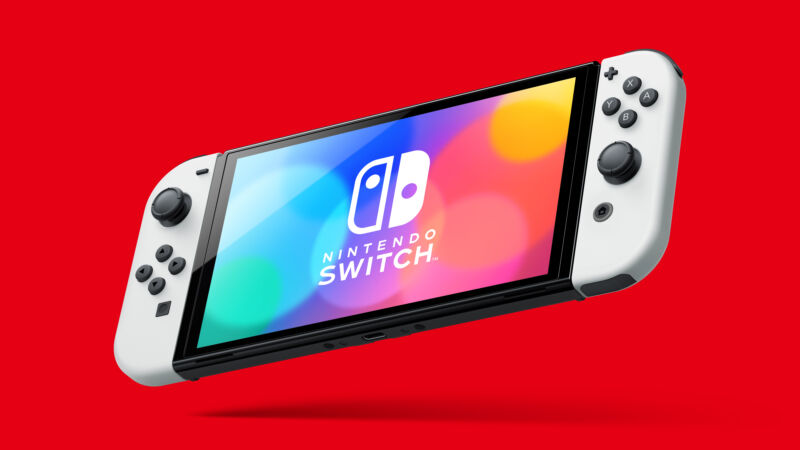
Enlarge / The new Nintendo Switch (OLED model).

After an initial unveiling last week, Nintendo’s Switch OLED model is now available to preorder through various retailers in the US. In a tweet earlier on Thursday, the company confirmed that orders for the new console variant would begin at 12pm PT/3pm ET.

If you’re hoping to grab one, here are the retail listings that are up as of this writing. We’ll add more as we see them, but given the intense demand for recent gaming hardware like the PlayStation 5, Xbox Series X, and Nvidia’s RTX graphics cards (from scalpers or otherwise), we don’t expect stock to be available for long:

The new OLED Switch costs $350 and will ship from October 8. That’s compared to $300 for the base Switch model and $200 for the handheld-only Nintendo Switch Lite.

The device itself is more of an iteration of the standard Switch than a generational upgrade like the PS5 or Xbox Series X. It will work with the same library of games and support the same family of accessories. The only notable exception is the Nintendo Labo series, as Nintendo says that “the system will not cleanly fit within all the design parameters” of that set of cardboard kits.

What’s new with the Switch OLED model

As the name suggests, the Switch OLED model’s biggest upgrade is its OLED display. This is the display technology used on high-end TVs and recent iPhones, among various other devices. Though we haven’t seen Nintendo’s panel specifically, OLED tech usually has significantly better contrast ratios—i.e., the difference between the brightest whites and darkest black tones—than traditional LCDs like the ones on the standard Switch and Switch Lite. Because its pixels are lit up and turned off individually instead of relying on the more imprecise backlights of an LCD panel, OLED displays can produce inky, near-perfect blacks.

Response times—i.e., the time it takes for a display to change from one color to another—are typically shorter, too, which can result in smoother motion in games. And viewing angles are often wider, so the image generally won’t appear as “washed out” when looked at from the side. That may be particularly helpful if you and a friend are huddled around the console in its “tabletop mode.”

OLED displays generally can’t get as bright as a good LCD panel at maximum, and we don’t know how accurate the new panel’s colors will be out of the box. But moving to OLED should make for a more vibrant image that passively upgrades every game you play on the new Switch.

One thing to at least keep in mind, though, is burn-in. The nature of OLED tech means that images that remain on-screen for excessive periods of time can be “retained” as persistent ghostly backgrounds, regardless of what you’re watching. Since many games contain static UI elements—ammo counters, a world map, a HUD, etc.—there’s a chance this could become an issue for a small number of people down the road. But there haven’t been widespread reports of burn-in affecting owners of many OLED phones or tablets, and it generally takes a long time for burn-in to take effect. So long as you don’t play one game for several hours a day consecutively for months on end, we wouldn’t expect this to be a problem.

Beyond that, the OLED Switch comes with a more spacious 7-inch display, compared to the 6.2-inch panel of the standard Switch and the 5.5-inch panel of the Switch Lite. The hardware itself is just 0.1 inches longer and .05 pounds heavier than that of the base model, however, thanks primarily to the significantly slimmer bezels surrounding the display.

The OLED Switch also overhauls the notoriously flimsy kickstand built into the base Switch. Whereas the current model’s stand sits off-center and only supports one angle, the OLED Switch’s stand covers most of the console’s back and supports a broader range of adjustments. This should make the console more secure and accommodating when used in tabletop mode.

When it does come time to play on the big screen, though, the OLED Switch comes with an upgraded dock, which now has a totally removable backplate and a wired Ethernet port. The latter should help if you frequently play online multiplayer games or just suffer from middling Wi-Fi at home. Nintendo says you’ll be able to use the new Switch with the original model’s dock and vice versa, though it remains to be seen if the company will sell this new dock separately.

Rounding out the new feature list, Nintendo says the speakers built into the new Switch hardware have been “enhanced” compared to those in the older model, though again, that’s something we’ll have to test to verify. There’s also double the internal storage, 64GB compared to 32GB in the base Switch and Switch Lite. That’s better, but it’s still not a ton, so you’ll likely want to invest in a good microSD card to hold a full game library.

Finally, the new Switch’s Joy-Cons will be sold with a clean-looking white and black finish alongside a more traditional red and blue color scheme.

What isn’t new with the Switch OLED model

Months of reports, rumors, and speculation regarding an upcoming “Switch Pro” console led many onlookers and Nintendo fans to expect a device with major performance boosts over the base Switch and Switch Lite. While the new Switch’s OLED display upgrade is not insignificant—the display is the one thing you’re always looking at with a handheld console, after all—it appears those expectations have outpaced reality.
Internally, the OLED Switch is largely identical to the base Switch. A Nintendo spokesperson confirmed that the new model does not have a new CPU or more RAM. There’s none of Nvidia’s DLSS image upscaling tech. Its display is still set at a modest 720p resolution, which means the pixel density here is technically lower than before. When it’s docked up to a TV, the new model still outputs video at 1080p, not a sharper and more modern 4K resolution.

There’s still no Bluetooth audio support, and Nintendo hasn’t mentioned any major changes to its relatively fragile Joy-Con controllers. And while OLED is generally more power-efficient than LCD, the new Switch’s battery has the same 4,310 mAh capacity as before, and Nintendo estimates the same 4.5- to 9-hour battery-life range.

Exactly why the upgrades here aren’t as substantial as previous reports suggested is anyone’s guess. Nintendo and other tech-industry giants are still suffering from a global semiconductor shortage in their supply chains. The Switch itself continues to sell phenomenally well, with nearly 85 million units sold as of March 31, and the company’s profits have only grown throughout the ongoing pandemic. Whatever the case, Nintendo does not seem interested in bifurcating the Switch’s user base, hardware-wise, for the time being.

Is the OLED Switch worth buying?

At $200, the Switch Lite remains a more affordable and more compact option for those who only plan to play their Switch in portable mode.
Enlarge / At $200, the Switch Lite remains a more affordable and more compact option for those who only plan to play their Switch in portable mode.

Without the benefit of testing, we can’t definitively say whether the OLED model is worth the upgrade for current Switch owners. At first blush, however, it would appear to be a tough sell. Performance should be virtually identical in handheld mode, and unless you need that LAN port, there will be next to no difference when hooked up to a TV. (You can always use an Ethernet adapter with the current Switch dock, too.) While the upgraded kickstand, speakers, and storage capacity sound nice, they’re likely not enough to justify dropping another $350. So, if you just bought a new Switch, don’t feel bad!

Similarly, if you want to spend as little as possible on a new Switch and don’t care about playing on a TV, the Switch Lite undercuts the new model by $150, works with the same library of games, and should be just as powerful. It also has a genuine d-pad. Its display is noticeably smaller and still LCD, but if you’re willing to sacrifice screen size for greater portability, it still presents a strong value.

For enthusiasts, meanwhile, Valve’s just-announced Steam Deck may take much of the wind out of the OLED model’s sails. That brand new portable gaming PC will start at $399, but it differs from Nintendo’s handheld in significant ways, and we haven’t been able to get our hands on it just yet.
If you’re interested in buying your first Switch, though, or if you only own a Switch Lite and want to upgrade to a TV-capable model, it may be a different story. OLED is traditionally a genuine upgrade over LCD, and the roomier display looks like it is much more efficiently designed. Combined with the array of smaller improvements, a $50 premium over the standard Switch doesn’t appear that unreasonable, even if some estimates suggest the console only costs Nintendo $10 more to actually produce. You’ll just have to be OK waiting until October to get your hands on the console.

If you’re a Nintendo enthusiast, meanwhile, you’ve probably been F5-ing your way through retailer pages ever since the OLED Switch was announced.

It’s worth noting that the OLED Switch’s reveal doesn’t completely preclude Nintendo from ever releasing that processor-bumped, 4K-capable “Switch Pro” that has gotten fans in a tizzy. Nintendo has a history of launching several hardware variations, particularly with its handheld consoles. If something like that model ever does come to fruition, it would presumably be better-suited to handle the more graphically intense third-party games we’re seeing on Sony’s PlayStation 5 and Microsoft’s Xbox Series consoles. As it stands now, the Switch’s hardware can run many larger-scale non-Nintendo games, but those ports often include compromises to frame rates and overall fidelity.

Nevertheless, the OLED model is what we have. The Switch remains a nicely versatile system with an expansive library of worthwhile games, so for newcomers in particular, this newest variant should hold some appeal—if they can manage to secure one in the first place.

Note: Ars Technica may earn compensation for sales from links on this post through affiliate programs.

https://arstechnica.com/?p=1778540


Steam Deck is Valve’s Switch-like portable PC, starting at $399 this December

On Thursday, Valve took the wraps off its new Switch-like portable PC, now dubbed the Steam Deck, confirming that it is indeed the hardware Ars Technica wrote about earlier this year. The device will begin shipping later this year at a starting price of $399.

The hefty-looking console, which is 11.7 inches long (compared to 9.4 inches for the default Switch with Joy-Cons), will launch at three price points, differentiated by built-in storage capacity, higher SSD speed ratings (jumping from default eMMC storage to a pricier NVMe protocol), and differently tempered glass on its screen. Those upgraded versions will cost $529 (256GB) and $649 (512GB, “anti-glare etched glass”). Both pricier bundles include a carrying case.

All models will have the same AMD-powered combination of a four-core Zen 2 CPU and a RDNA 2 GPU, which Valve describes as a “custom” APU. Each model also includes 16GB of LPDDR5 RAM, a 40 Whr battery (guaranteeing “2-8 hours of gameplay” on a single charge), a microSD card slot for expandable storage, and a 7-inch, 1280×800, 60 Hz touchscreen LCD.

Valve promises that “your entire Steam Library shows up, just like [on] any other PC,” when you load up your Steam account on a Steam Deck. The device will run on a “new version” of SteamOS, itself a Linux distro, with Valve’s Proton compatibility layer used to ensure that Windows games function properly. Valve has been bullish about testing and expanding Proton compatibility over the years, and Steam Deck will be the initiative’s biggest proving ground yet. If you’d rather roll with your own OS, Valve chief Gabe Newell has indicated that Deck owners can wipe the device and start with whatever they choose, including their own licensed copy of Windows.

The console looks nearly identical to the prototype hardware that Ars Technica was made aware of earlier this year, complete with an Xbox gamepad-like array of buttons, joysticks, and triggers—and a pair of thumb-sized touchpads. The touchpads are similar to the ones in the Steam Controller, only smaller this time around. Finally, there are “grip” buttons where a player’s pinky might brace. As we reported previously, the Steam Deck does not include removable controllers. In terms of audio support, Deck owners can expect Bluetooth 5 headset functionality, a 3.5mm audio jack, and a built-in chat microphone.

None of the bundles includes a Switch-like dock to connect to televisions, though Valve says it will sell a USB-C dock with HDMI-out functionality and a variety of PC-like connections (which you can see in the above gallery). That device doesn’t have a release date yet, but if you’d rather not wait for Valve’s version, the company says your own “powered USB-C hub” will work as well.

If you want to preorder a Steam Deck (beginning at 1 pm ET on Friday, July 16), you’ll need to use a Steam account that has “made a purchase on Steam prior to June 2021 for the first 48 hours of reservation availability.” A one-time $5 deposit will also be required, though exactly how that payment process will work remains unclear as of press time.

Listing image by Valve

https://arstechnica.com/?p=1780592


Netflix will start publishing video games, has hired former EA exec

Close-up photo of hands operating a video game controller.
Enlarge / Netflix as a gaming publisher: We know it’s happening. But we have many, many questions as to what shape its service will take.

Netflix’s growing fascination with video games will soon explode in the form of a full-fledged game-publishing arm.

While Netflix has yet to post its own announcement about the initiative, the streaming-video provider has confirmed to Ars Technica that it has hired a former EA and Oculus exec to lead a Netflix game-publishing team.

The newly hired exec is Mike Verdu, who most recently worked in developer relations with Facebook’s Oculus VR team (his public profile still says that’s his current job). He has worked in game development and publishing since the early ’90s, and his first studio, Legend Entertainment, was eventually acquired by GT Interactive.

While Netflix has not yet confirmed what shape its video game publishing arm might take, Bloomberg reporter Mark Gurman has suggested that the effort could lead to “video games [as part of] its service in the next year.” The use of “video games” as a descriptor is key, as that differentiates the effort from the “choose your own adventure” TV specials that have become more common on the service since Black Mirror‘s “Bandersnatch” special debuted in 2018.

Does this mean more Belmont action?

In addition, Netflix has spent the past half-decade building a collection of exclusive TV series based on video game licenses, including animated series based on Castlevania, Dota 2 and a critically acclaimed, live-action version of The Witcher (whose second season is set to launch later this year). Perhaps Konami’s longtime pause on Castlevania games could change with Netflix as a publishing partner in the mix. (Then again, maybe we should cool our heels and see whether Netflix’s first slate of games revolve around nongaming properties like the wacky dating show Sexy Beasts, the ridiculous cast of Tiger King, or, fingers crossed, the absurd sketch comedy of I Think You Should Leave.)

However, we’ve seen aggressive release timelines dog major new game publishing efforts as recently as this year, with Google loudly shuttering its Stadia game development studios after two years of development and zero releases. Should Netflix stick with a timeline as brief as “the next year,” the streaming giant will likely have to focus on scaled-back releases, if not games that have already been in the works for years before today’s announcement.

And while Netflix currently enjoys massive exposure by way of its popular app, we don’t know if the same app will support streamed games on all existing devices and operating systems, which each come with their own hiccups. Plus, if it requires a constant online connection, is Netflix poised to offer competitive, cloud-based button-tap latency? And will such a service require installation trickery to bypass storefronts’ aggressive rules about individually reviewed and rated games?

Until Netflix clarifies its exact launch strategy and back-end solution, we’re left wondering how it will compete with a growing glut of cloud-based and download-based gaming subscription services.

https://arstechnica.com/?p=1780447


Museum obtains rare demo of id Software’s Super Mario Bros. 3 PC port

The Strong National Museum of Play has obtained a rare demo of Super Mario Bros. 3 that a pre-Doom id Software coded for MS-DOS PCs back in 1990. The acquisition will ensure that the historical curiosity will be preserved and accessible to researchers well into the future.

Students of video game history have long been aware of the existence of the demo, which was described in detail in David Kushner’s excellent 2003 book Masters of Doom. id Software—then known as Ideas from the Deep (IFD)—coded the game in under a week and sent a copy to Nintendo in the hopes of getting a contract to develop an official PC port of the NES classic, which had launched in the US earlier in 1990.

Part of what made the demo special was a John Carmack-coded scrolling algorithm that went way beyond the stuttering background movements and full-screen wipes you’d usually see in late ’80s DOS games. “When looking at PC games of the era, there really weren’t titles with the smooth scrolling seen in Nintendo’s hits,” Museum of Play Digital Games Curator Andrew Borman told Ars via email. And though Nintendo would never entertain the idea of a PC port for SMB3, id Software was “not deterred by the rejection, [and] the technology was reused for Commander Keen, which is still one of my favorite series of that era,” Borman said.

A surprise find

Though the demo’s existence has been well-known for a while, the closest the general public has gotten to it was a 2015 video released by John Romero showing many of the demo’s levels and functionality. Fast forward to today, when Borman said he was surprised to find the demo sitting inconspicuously in a larger collection of donated software.

“The individual who donated it was a game developer,” Borman told Ars. “But they did not work on this pitch, instead receiving [it] during their work. It wasn’t something I expected to see in this donation, but it was extremely exciting, having seen the video Romero shared back in 2015. One of my favorite things at the museum is helping to process incoming donations, especially when we can help share stories from important developers like id Software.”

[embedded content]
John Romero’s 2015 video provided the general public’s closest look at the demo—until today.

Before testing the game for himself, Borman said he imaged the original floppy (to help preserve the physical artifact) and verified the contents by comparing a run on the DOSBox emulator to Romero’s 2015 video. He was then able to explore the little-seen demo for himself, including Level 1-4, which had never been seen by the public, and a cheeky “IFD” logo spelled out in stars and mushrooms in the upper-left corner of Level 1-1. He described 1-4 as “a fairly flat level, though it has a nice pyramid at the end.”

“It is an early demo, though, and lacks many features and polish that would have been seen had the developers been able to work with Nintendo in creating a full retail release,” Borman said. “For being such an early demo, it is a lot of fun to play, especially 1-1, which recreates that iconic first level from Super Mario Bros 3.”

It belongs in a museum

Borman said the demo will be available upon request to researchers and other parties with a relevant interest. There are no current plans to exhibit the game to the public in the Strong’s soon-to-be-expanded Rochester museum space or elsewhere. But Borman said that “there are plenty of opportunities to come in the future” for that kind of display.

The Museum of Play will also ensure that this piece of history will be accessible to future generations of gaming historians. “Our preservation work focuses not only on the research needs of today but also how researchers decades from now, some who may not even be born yet, will access material,” Borman said. “Proper climate-controlled storage helps to preserve those physical artifacts, especially when materials like plastic degrades over time. We are also building out our digital preservation capabilities, allowing us to preserve the many forms of media that we find, including the various cartridge and optical mediums.”

Research interest aside, the newly preserved demo provides a window into an alternate universe where two of the most important companies in gaming teamed up to revolutionize ’90s PC gaming. “While the demo here really represents a week or less of work, knowing now how important id Software would become, it is an interesting ‘what-if?’ of game history,” Borman said. “It’s fun to think about how the company could have changed had it formed a relationship with Nintendo.”

Listing image by Andrew Borman / Strong Museum of Play

https://arstechnica.com/?p=1780015


Better performance for pirates: Crack removes stutters from Capcom PC game

Over the weekend, the PC version of May 2021’s Resident Evil 8: Village was apparently cracked and uploaded to various piracy depositories. In sadly unsurprising news, as with at least a few other cracked PC games in recent years, this scene release came with a bonus that’s currently only available to freeloaders: improved performance.

The game’s cracked version, credited to the release group Empress, includes an “NFO” text file that cites two distinct antipiracy prevention measures: “Denuvo V11” and “Capcom Anti-Tamper V3.” While the NFO text includes its fair share of anti-Denuvo language, the Empress author’s technical breakdown of the crack says both systems working in concert are to blame:

All in-game shutters [sic] like the one from when you kill a zombie are fixed because Capcom DRM’s entry points are patched out so most of their functions are never executed anymore. This results in much smoother game experience. THIS IS PURE CANCER AND ANYONE WHO ACCEPTS THIS IS NOTHING BUT A PATHETIC GARBAGE HUMAN SLAVE!

The messaging continues with a key clarification: Capcom’s DRM was “fully obfuscated” in a Denuvo virtual machine, thus making the game “run even slower.”

More bullets, fewer spikes

While Ars Technica is—for obvious reasons—not in a position to perform comprehensive tests of RE8:V‘s cracked version, we have independently verified that the Empress release solves at least one infamous issue with the existing retail version: frame-time spikes.

Ars has seen like-for-like scenarios played out on RE8:V‘s retail and cracked versions on the same midgrade gaming PC with a RivaTuner Statistics Server (RTSS) performance graph turned on. The retail version includes easily reproducible scenarios where attacking an advancing zombie with a gun—something you do quite often in Resident Evil games—can trigger a visible on-screen stutter. In other words, the image freezes for a noticeable moment before the game catches up, and this can be seen in RTSS’s real-time graph as a spike. The same spikes don’t appear when the same save file is loaded on the game’s cracked version.

Whether either version enjoys a lead in other performance metrics is unclear, and performance can obviously vary based on hardware, drivers, and other factors. But the aforementioned testing scenario was run on both versions of the game in 1080p resolution, an environment better suited to reveal CPU-bound performance limits, and the cracked version showed, at least in the limited tests we reviewed, a better distribution of its CPU workload across a 12-thread chip.

“The pivotal moment of a game with guns is shooting those guns”

Previously, DRM providers like Denuvo have loudly admitted to the seeming inevitability that cracks appear on a per-game basis. “Given the fact that every unprotected title is cracked on the day of release—as well as every update of games—our solution made a difference,” Denuvo’s marketing director said in 2017. Coincidentally, this admission came in the case of Resident Evil 7, the last mainline entry in Capcom’s long-running horror series, whose Denuvo scheme was cracked less than a week after the game’s retail launch.

Whatever Capcom and Denuvo worked up this time around seems to have evaded crackers’ efforts for much longer. That may have come at the price of guaranteed smooth performance—with gaming analysts like Digital Foundry’s Alex Battaglia maligning the game’s PC version. “This stuttering honestly leaves a very bad first impression for this game, as the pivotal moment of a first-person game with guns is shooting those guns,” Battaglia said shortly after RE8:V‘s May 2021 launch. “If that is unsatisfying very often when you do it, then the game is doing something wrong.”

Still, Denuvo has done enough work in recent years to rule out the obvious assumption that its DRM instantly results in reduced PC performance. Hence, we made sure to get an independently verified test result before moving forward, even if it might mean certain PC hardware combinations may work better with Capcom’s existing retail version.

Judgments, last or otherwise

Capcom, like other gaming publishers, has eventually updated some of its PC games with Denuvo-free versions. In Capcom’s case, though, that usually doesn’t happen until the game in question has reached the end of its update life cycle, particularly in terms of post-launch DLC packs. As of press time, RE8:V still has unreleased DLC in the works. Capcom representatives did not immediately answer Ars’ questions about whether RE8:V‘s PC version may receive a quicker path to such an update thanks to this week’s Empress crack.

A weird, stuttering, DRM-laden PC game might very well be better than no PC version at all, and that fact came up on Monday when Japanese gamemaker and publisher Sega made the news for a PC-related complication of its own. Its Judgment gaming series, a critically acclaimed spinoff of Yakuza, might not continue after the sequel Last Judgment launches later this year. The issue, according to reports, is that one real-life actor’s talent agency refuses to agree to terms that would bring the series to PC platforms like Steam.

Listing image by Capcom

https://arstechnica.com/?p=1779719


F1 2021 reviewed: Codemasters adds story, keeps the racing sim feeling fresh

If you’re old enough to have started playing video games by the turn of the century, the words “EA releases a new Formula 1 game” might strike fear into your heart. After all, the gaming behemoth published some pretty bad F1-branded racing games between 2000-2003. But even though this year’s box art has the EA logo on it, F1 2021 still feels solidly like a Codemasters’ game through and through (EA bought the British studio earlier this year).

That’s good news, as Codemasters has been responsible for several extremely good F1 games over the past few years. As ever, the studio’s challenge is to make this year’s installment sufficiently different from last year’s version to get people to open their wallets. For F1 2021, the changes are largely down to a new single-player story mode and a two-player career mode, which are both in addition to the various single-player, multiplayer, and esports modes you might remember from F1 2020.

These new feature-filled modes are interesting experiments from a development team better known for good physics, but in an era of an engaging new documentary series about F1, this is a clever move to capture some of the sport’s new fans. And it’s executed well, too.

<img src="https://rassegna.lbit-solution.it/wp-content/uploads/2021/07/f1-2021-reviewed-codemasters-adds-story-keeps-the-racing-sim-feeling-fresh.jpg" alt="F1 2021 product image” class=”ars-circle-image-img ars-buy-box-image”>

F1 2021 [PC, PS4, PS5, Xbox]

(Ars Technica may earn compensation for sales from links on this post through affiliate programs.)

Braking Point

The new story mode is called Braking Point. At times, you play as F1 rookie Aiden Jackson, and at other times, you control his teammate Casper Akkerman, an old hand in the paddock who is nearing the end of his time in the sport. Braking Point takes you through the 2020 and then 2021 F1 seasons, with each chapter offering up a different challenge—having to recover from a late-race tire puncture or needing to finish ahead of your teammate, for instance.

Codemasters dipped its toe into this kind of thing with F1 2019 and the inclusion of Formula 2 (the feeder series for F1, again included in this year’s installment), which first introduced the fictional AI opponent everyone loves to hate, Devon Butler. The great news is that Butler is back and as unlikable as ever as he tries to pit Casper and Aiden against each other.

“We knew that what we did in F1 2019 was really popular, really successful,” Lee Mather, franchise game director at Codemasters, said in an interview with Ars Technica. “We were quite nervous about that because, as a team that makes racing games, there’s a big difference when you’re trying suddenly to inject real character into a story or into a person. And I think the fact that we got Devon Butler to be hated as much as he is showed we actually did have the ability to create those characters.”

You may well detect the influence of a popular Netflix documentary in Braking Point. “There’s a few things that are inspired by things that did happen in Drive to Survive,” Mather says. “You’ll see what goes on in the driver room and see what happens at team dinners. You’ll see what goes on with Aiden’s mum phoning him to check how he’s getting on—it’s building the story and the relationships.”

All the other modes you expect

There’s probably a limit to the number of times a player will go through Braking Point, even with the game’s three difficulty presets of casual, standard, and expert. But there should be decent longevity in the game’s other single-player modes.

In My Team mode, you run your own team (like a latter-day Jack Brabham or Dan Gurney). Again, you can run through a shortened or full season, but this time, in addition to doing well in each race, you have to manage the team in between—hiring a second driver, lining up sponsors, keeping the different departments happy, and developing a steady stream of updates for the car.

Like previous Codemasters F1 games, you earn resource points to pay for those upgrades by completing practice sessions on each race weekend. These can feel a little grindy after you’ve done each Grand Prix, and now there’s an option to simulate the tests instead. (F1 2020 allowed you to simulate the races but not practice sessions.) However, some test programs will only have a success rate of 50 or 25 percent when simulated.

As we detailed previously, Codemasters will regularly update driver rankings for the real-world drivers in the game. And if you splurged on the Digital Deluxe Edition, you can hire legends of the sport from days of yore, including Michael Schumacher, Ayrton Senna, and Alain Prost.

Perhaps the most important thing about F1 2021 is that Codemasters has not messed with the actual mechanics of driving the cars, beyond tweaks necessary for the 2021-spec cars. With a good force-feedback wheel, the cars are engaging to drive, and you can feel subtleties in cars from different teams—a McLaren handles differently from an Alpine, a Red Bull, or a Mercedes. If you’re a fan of the sport, you’ll probably enjoy F1 2021.

The Good:

  • Still brilliant physics, and the F1 cars are fun to drive
  • Braking Point gives you an interesting set of challenges wrapped up in a story
  • Even more flexibility with game settings and assists
  • There’s no chance of any of your digital races being canceled because of the pandemic

The Bad:

  • As with last year, the real-world calendar is going to be a bit different from the one in the game because of the pandemic canceling races
  • Sometimes the commentators don’t properly recognize how impressive your racing was

The Ugly:

  • Casper Akkerman’s Dutch accent, since he sounds very Danish to me

Verdict: Buy it if you’re an F1 fan.

Listing image by Electronic Arts

https://arstechnica.com/?p=1779557