These Road Safety Ads Evoke the Joy of Life, Not Fear, to Encourage Careful Driving
Road safety ads are usually formulaic: A man or woman is driving, answers a text, and then swerves into oncoming traffic or collides with a pedestrian, claiming a life.
How to Handle Marketing This Week; Netflix Tops 200M subscribers: Wednesday’s First Things First
Welcome to First Things First, Adweek’s daily resource for marketers. We’ll be publishing the content to First Things First on Adweek.com each morning (like this post), but if you prefer that it come straight to your inbox,you can sign up for the email here.
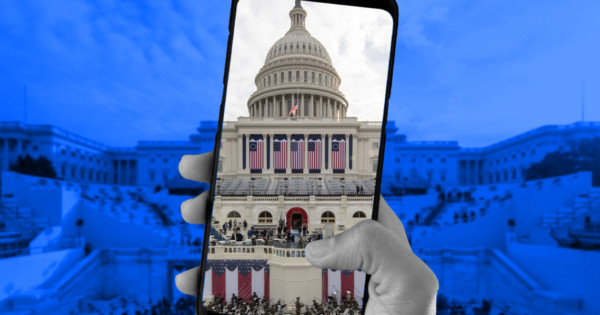
It’s officially Inauguration Day, and the transition of power from Donald Trump to Joe Biden has already proven to be the rockiest in recent memory. That means that things have the potential to be tense today—and that brands need to think carefully about the way they present themselves on social media. Alex Kalbli, who leads global social at TE Connectivity and is an Adweek Executive Mentee, shares a few key do’s and don’ts for approaching social during this sensitive moment.
The streaming wars continue to rage on, with new players added seemingly every day (like Paramount+, which announced yesterday that it will launch on March 4), but Netflix surges on ahead of the pack, reaching more than 203 million subscribers this week, with 8.5 million added just in the last quarter. However, for the first time, Netflix isn’t shrugging off its competitors: In a note to shareholders, the streamer acknowledged the crowded market for the first time ever.
Related:Peacock is having a great 2021, mostly thanks to The Office’s Jan. 1 arrival on the streaming service, after the sitcom departed its longtime streaming home on Netflix—and it has the Summer Olympics to look forward to.
Even if they shouldn’t be, Covid-19 vaccines are a contentious topic. Healthcare professionals and world health organizations face a constant battle against widespread misinformation and resistance to the vaccine. That means that pandemic-strained retailers, which want to keep customers—and employees—coming in, are trying to find ways to ensure that they don’t lose vaccine opponents. So some retailers are incentivizing, rather than requiring, employees to be vaccinated.
David&Goliath has a history of creating purpose-centered work, including for the nonprofit Today, I’m Brave (the brainchild of agency founder David Angelo) and for carmaker Kia, which has focused on philanthropy in its two most recent Super Bowl ads. Now D&G is advancing its purpose a step further with the launch of a creative impact hub and the hiring of Blake Winfree and Ben Purcell to execute on the vision.
When we were living the pandemic in two-week increments back in March, holding out hope that we’d return to “regular life” soon and that this whole quarantine was a blip, our newsroom started filming a daily TV show called Adweek Together. Dozens of guests came on to share their thoughts, frustrations and triumphs in the early days of what we now know as a global crisis.
In one episode, I asked Tiffany R. Warren, executive vp, chief diversity and inclusion officer, Sony Music Group, and founder of Adcolor, for advice on maintaining DEI initiatives remotely, and I’ll never forget what she said: “I have to live it first.”
We have lived it, reader. More than 300 days of it. And while there are still many unknowns, our editors have dug up answers and smart predictions to questions like when business will bounce back, what it will look like when it does and what consumers are going to expect from us in the long term. I promise you’ll want to read and share these insights from our agencies, brands, TV, media, creativity and ad tech editors.
To craft this issue for you, we first logged onto Zoom (what else?) and asked questions for a full hour. If we had a crystal ball, what would we want to know about the year ahead? It was a long list. Then we went to work tracking down answers with the goal of giving you some guidance for 2021.
As we dug up answers and surveyed our community, several themes emerged: The pandemic didn’t create trends, it accelerated them—ecommerce sped up by as much as five years. Though challenged, creativity always finds a way. Now that we’ve adopted tech like AR and video chat, we’re never going back. And every type of business has to focus obsessively on their customer—brands, for one, are attuned to shoppers like never before, and agencies are at last tuning into brands.
Look for data, advice and predictions in this issue, on Adweek.com and at our Outlook 2021 live virtual summit Jan. 26-28. And please send me a note with your own thoughts on the new year! I’d love to hear your take, because nothing’s set in stone and we’re all learning as we live it.
Changes Already in Motion for Brands a Year Ago Will Only Accelerate in 2021
Where We Were
There are a lot of words that could be used to describe 2020—“unprecedented,” for one; “pandemic” is an obvious choice. But if you’re a brand, the word that best encapsulates the year is “pivot.”
Pivoting is precisely what brands, big and small and across categories, had to do starting in March. The marketing community united around the need for rapid adjustments and overhauls. It was an impressive accomplishment, because the world of brands is a massive one, encompassing companies that make the products we desperately need in times of crisis—ahem, toilet paper—and those we most definitely do not, as much as we like them (looking at you, $1,000 handbags).
All brands seemed to realize that trends steadily creeping up on the horizon were much closer than they had anticipated. CMOs started the year with a focus on the consumer—creating more personalized experiences for them, providing them with a variety of ways to access their brands, and standing up for causes and issues they believe in. The events of 2020 didn’t change those priorities but, rather, made them paramount.
“A lot of brands talked about being incredibly customer-centric,” says Jared Fink, group director, experience at Siegel+Gale. “[In 2020], that was put to the test.”
Where We Are Now
Brands provide services we scarcely used prior to the pandemic—how many weddings were hosted on Zoom pre-2020?—as well as ones that feel like something from another lifetime. (It wasn’t a great year for selling transatlantic flights.)
The events of 2020 pushed to the forefront just how varied the positioning of those different sectors really is—and thus, what pivots they were forced to make. Companies such as Lysol and Clorox soared in 2020, thanks to an unprecedented demand for their products, forcing them to ramp up production. That, in turn, allowed them to increase ad budgets, something Clorox did three times in 2020, including a 30% bump in the final quarter of the year.
Other success stories of 2020, like Zoom, which saw downloads of its mobile app increase 728% from March to April, also put more dollars toward advertising. Zoom allocated $100.9 million in the fourth quarter of 2020, up $45 million from the previous year.
But the chaos of the pandemic resulted in more calamity than it did positivity. Travel brands are the most prominent example, with demand—and revenues—falling off a cliff. That impacted their ad spend: Very few airlines ran TV ads in 2020, save Southwest, which was often the only airline advertising on television. Retail, outside of behemoths like Amazon, Target and Walmart, was hit hard, too, with 38 retailers and restaurants filing for bankruptcy, including J.Crew, Neiman Marcus and JCPenney, compared to just 19 in 2019.
Where We’re Going
In 2021, brands will double down on the bets they made in 2020—rolling out new loyalty programs, like Walmart+; embracing new methods of getting goods in consumers’ hands, like curbside pickup or launching new direct-to-consumer channels; and trying out new advertising platforms like TikTok or, for some brands, TV (1,200 DTC brands ran TV ads for the first time in 2020, according to iSpot.tv).
And even in a future world where we’re meeting in person more, the shift to digital will persist. IBM’s U.S. Retail Index reports that the pandemic has accelerated the move from physical stores to ecommerce by five years. In 2021, that shift will continue, as brands embrace tactics like livestreaming in commerce, which has already made waves in China, and shopping on social media platforms, thanks to the 2020 debut of Instagram and Facebook Shops.
Essential Fourth-Quarter Stats for the Media and Tech Industries
Again, I have been distracted this quarter with the election and Covid data absorbing my life. Back to my Q4 insights into the media world and, at the end, my positive outlook on 2021.
Here’s a pithy, curated recap of what I saw happen in the quarter, and my predictions for 2021. All the insights below are from conversations I have had, podcasts I have listened to and articles I’ve read. It only makes my list if I believe it and I have heard it several times.
Overview
Longest year ever
Though, 2020, it could have been much worse
Facebook, YouTube and Twitter are now media companies. They are publishers in addition to tech platforms and the referees of journalism.
The pandemic has changed everything.
The big get bigger and the small get wiped out.
Post Covid-19, consumers have shifted from buying services and experiences to buying products.
Big breakthrough technology comes in two stages: Stage one is doing things better, and stage two is doing things we have never thought we could do before, like self-driving cars.
Amazon is the sun—it feeds us and nurses us, but if you get too close it will incinerate you.
Some career advice: Leave ad tech and get into health tech
I am starting a SPAC [special purpose acquisition company].
Everyone is connected and no one is in charge.
Right now it’s not illegal to be a monopoly, but it’s illegal to abuse your monopolistic power.
A crisis is a horrible thing to waste.
Google Search was one of the most important new technologies for improving human life.
The federal government is a monopoly that can’t go bankrupt and has horrible customer service.
Big tech
Perhaps the tech companies have data on Covid and they know what’s going on but they’re afraid to share because then we will know how much data they really collect.
Instagram will test shopping functionality inside Reels, a new TikTok rival.
Facebook, Amazon, Alphabet, Apple all have monopoly power.
Google, Amazon or Apple get ahead of the curve and spin off a major asset in 2021.
Facebook dominates the news media landscape and is largely unedited.
LinkedIn stories feels like a mismatch. Who cares?
Is Google Chrome the second most valuable asset after Google Search?
Facebook acquisition of Instagram in 2012 is one of the best acquisitions of all time
Zero click search is an answer to a user’s question right at the top of the search engine results page so the user does not need any further information that would be gained by clicking the link—way too powerful
Personalized advertising is under assault as Apple readies a change that would limit the ability of Facebook and other companies to target ads
The Facebook algorithm is slowly ruining democracy.
Facebook is pure algorithmic amplification.
Now that Apple has launched its 5G phone, what is next for the iPhone? Folding, multidimensional two screens?
TikTok isn’t acting like a company that might be shut down in the U.S.
TikTok is reportedly experimenting with longer-form, 3-minute videos.
Facebook said that just 6% of content U.S. users see is political, though they didn’t say how the company defined political content or give a timeframe that the statistic applies to.
Parler downloads soared as conservatives flock to the Twitter clone after the Biden win.
Instagram cautiously considers paying publishers.
Amazon pharmacy today—next we will see Amazon minute clinics inside of Whole Foods
Facebook employees say post-election changes to its algorithm should be made permanent
Amazon, Google and now Facebook are pushing into cloud gaming, which could finally give advertisers a way into this market.
Streaming
Disney is shifting its entertainment strategy to have streaming be its primary focus.
Comcast is in talks with Walmart to develop and distribute smart TVs, as the cable giant looks to become a dominant hub for streaming apps, not just TV channels.
Nearly six months after the late-May launch of HBO Max, AT&T’S WarnerMedia and Amazon have finally come to a deal enabling the SVOD to be accessible on 40 million Amazon Fire TVs.
The Queen’s Gambit is the biggest limited series yet on Netflix.
Every movie should be cut into eight 30-minute segments and turned into a series
Warner Bros. announced that all of its 2021 film slates will stream on HBO Max at the same time the films play in theaters.
AT&T’s WarnerMedia is considering two new streaming services: one revolving around CNN, and the other based on TNT, TBS and Warner Bros. movies.
Disney+ will be the same price as Netflix in a few years.
Disney+ has 86.8 million subscribers as of Dec. 11, 2020.
AMC, the world’s largest movie-theater company, said it may run out of cash by year’s end if it doesn’t raise more funds or get more people back to theaters.
The 10 Most Consequential Streaming Moments of 2020
This year threw a lot of curveballs at the television entertainment industry. Covid-19 forced businesses to experiment left and right as consumer adoption of streaming continued in force, and two huge streaming players debuted. Meanwhile, a wave of executive departures upended entertainment institutions and came with major business shake-ups and shifts that will continue to reverberate in the coming year.
As part of Adweek’s Year in Review coverage, we took a look back at some of the biggest moments in the streaming industry in 2020. There were so many momentous moments that the debuts of HBO Max and Peacock didn’t even make our list.
Randy Freer Exits Hulu
Freer announced in January he was stepping down, setting in motion Hulu’s continued evolution and integration into Disney’s broader streaming operations. With Freer gone, the ad sales team was moved under Disney ad sales chief Rita Ferro’s purview; ad sales chief Peter Naylor left for Snapchat shortly thereafter. Kelly Campbell was also elevated to president upon Freer’s exit, putting a marketer in the front-seat at the company as Hulu continued pushing its live TV product. The departure foretold just some of the ways Hulu would continue shifting under the Disney umbrella: Hulu is now advertised heavily as part of the Disney+ bundle of which Hulu is a part, and the service is getting new programming from Disney-owned FX and investing in reality.
Bob Iger Steps down as CEO of Disney
Iger’s February exit from the top of Disney, and Bob Chapek’s elevation to the corner office, came just months into Disney+’s early success, and shook the House of Mouse weeks before the Covid-19 pandemic hit. Chapek has since hit the gas on streaming while steering the rest of the business through the pandemic; the move is also widely considered to be an impetus for Disney streaming head Kevin Mayer’s ill-fated exit to TikTok, which paved the way for an ever-more-streamlined approach at Disney. It’s also been a fortuitous move for Iger, who has now gotten to focus more on content just as Disney has moved to pour more money into programming to keep Disney+ a must-have streaming service.
Fox Corp. Buys Tubi
Fox Corp.’s acquisition of free ad-supported streamer Tubi in March wasn’t the only AVOD acquisition that happened in 2020, but it was one of the most consequential. With Tubi, Fox, which lightened its asset load with a monster sale to Disney, was able to considerably expand its direct-to-consumer footprint, helping set the broadcaster up for a chance to win over younger audiences that are eschewing linear television. The transaction has also meant Tubi has gotten a boost, too: the streamer has been injected with Fox programming like The Masked Singer, and the streamer’s inventory was included in all of Fox Corp.’s upfront talks with advertisers.
Tokyo Summer Olympics Postponed for 2021
The postponement of the Olympics in late March dealt a blow to athletes and competitors while also marking a major upset for NBCUniversal, which had been counting on the games as a marketing vehicle for upcoming streaming service Peacock. With the absence of the games (and the ad dollars it would bring in), NBCUniversal promptly shifted marketing of its fledgling streamer to focus on its free price point, and has held some more aggressive marketing pushes for the upcoming year, when NBCUniversal will have both the beloved comedy The Office and, hopefully, the forthcoming games — now rescheduled for 2021 — to boost its streamers’ profile on a national stage.
As U.S. media agency of record, Havas Media will handle media buying and planning responsibilities across all of Sanofi’s consumer and pharmaceutical brands in the U.S., which comprises the majority of the company’s spending. Havas Media Group North America president Shane Ankeney announced the news Wednesday in an internal memo obtained by Adweek.
In the memo, Ankeney explained that the appointment marked not just a retention but an expansion of Havas Media’s responsibilities for the client, with the agency adding additional brands not part of its previous remit for Sanofi. As a result, Havas Media now will manage all of Sanofi’s U.S. media investments.
Havas Media was previously awarded media buying for Sanofi’s prescription brands and media planning for consumer brands following a 2017 review, which saw Sanofi appoint GroupM’s Mindshare as global media agency of record, while independent New York agency KWG retained media buying responsibilities for consumer brands at the time.
Ankeney thanked Havas Media’s Sanofi and Growth teams for their efforts across a lengthy review process, which included nearly 20 pitches and presentations. The review was led by search consultancy MediaSense and included global incumbent Mindshare and IPG Mediabrands, as well as Havas Media and Omnicom’s team, according to sources with knowledge of the process.
Sanofi spent an estimated $1.1 billion on media globally from July 2019 to June 2020, with North America comprising about $670 million of that total, according to global data consultancy COMvergence.
At 93 Years Old, Ginny Bahr Retires From Wunderman Thompson
It’s the end of an era at Wunderman Thompson. Ginny Bahr, who joined the agency 69 years ago as a secretary and hasn’t looked back, is retiring.
According to the agency, she’s its longest-serving employee. Bahr joined the shop long before its 2018 merger with Wunderman, when it was still known as J. Walter Thompson.
Wunderman Thompson said Bahr first joined the agency as a receptionist in 1951 and has since served as secretary to many of its past vice presidents and CEOs. The agency said she also had the opportunity to work on accounts including Ford, PanAm and Shell throughout her career.
More recently, Bahr told Adweek she’s mostly been “doing secretarial work” in the agency’s treasurer’s office. As for why she’s retiring now, she said, “I guess it’s about that time.”
Bahr said she stopped going to the office in February after an elevator accident left her with a broken shoulder. Shortly afterwards, everyone at the agency started working from home due to Covid-19, so she hasn’t been able to return since.
“I never got back because everything started changing. I certainly am going to miss the company,” Bahr said. “I have so many memories. I enjoyed the people I worked with. I have no complaints.”
Bahr said her favorite memories at the agency involve singing in J. Walter Thompson’s choir, which she said performed throughout New York City during the holiday season.
“I loved those times,” she said.
In 2017, she served as J. Walter Thompson’s virtual “SXSW correspondent,” a gig that involved offering up quippy commentary and highlights from the conference at the agency’s New York office via a video series called Midtown by Midtown East, or “MXME.”
As someone who worked in advertising during the “Mad Men” era in the 1960s, Bahr said she wasn’t involved in—or even privy to —the debauchery that’s come to define that time period. Still, she admitted that she occasionally heard things through the grapevine.
“Many times, people thought I probably knew all about [those days], and I’m embarrassed to say I never really did know much about them,” she said. “At any rate, those days were pretty racy, and as I said, I was aware of them but not involved. I never went on any business trips with the guys.”
In terms of what’s changed since she first started, Bahr said people dress much differently than they once did in the office.
“It’s much more relaxed,” she explained. “Nowadays, it’s nothing when you see women in slacks and occasionally shorts. Men are dressing very differently. They all wear jeans, usually. It’s a lot more casual. I guess that’s good, because then you’re more relaxed in what you do.”
Bahr also remembers a time when female creatives were a rare breed at the agency. According to Bahr, they differentiated themselves from other women with hats and sometimes gloves.
“They always wore hats and were dressed to the T,” she recalled. “There was a definite difference.”
As her career comes to an end, Bahr’s advice for her younger colleagues is simple: “Relax. Enjoy it and realize that you’re pretty fortunate to have joined a company like [Wunderman] Thompson.”
To commemorate her retirement, the agency pulled together a short video that highlights her many accomplishments, such as spearheading the agency’s blood drives. In it, former and current agency executives share stories and what it’s been like working with Bahr.
Combs Enterprises Selects Droga5 as Global Creative Agency of Record
Combs Enterprises, a business venture from celebrity business mogul Sean “Diddy” Combs, has appointed Accenture-owned Droga5 as its global agency of record across several brands. The appointment comes as Combs Enterprises outlines ambitions to grow across the entertainment, luxury and lifestyle categories. Combs Enterprises will work with both Droga5 New York and Droga5 London, which was recently selected as Adweek International Agency of the Year.
“At Combs Enterprises, we have clear ambitions to expand our entertainment, wine & spirits and lifestyle brands with reinvigorated focus on key products and initiatives,” Combs Enterprises vp, global marketing spirts Ingrid Best said in a statement. “By partnering with a creative and cultural force like Droga5 and tapping into the top-notch creativity and strategic thinking from its teams in New York and London, we will no doubt bring an energy to the market and culture at large that only we can bring together. We look forward to unveiling our category shaking work next year.”
Droga5 will be responsible for developing creative and strategy connected across the entire brand experience. Droga5 London will work with Combs Enterprises’ luxury tequila brand DeLeón, beginning with a U.S. campaign expected to debut some time next year.
“We are thrilled to be working with Sean Combs and the entire team at Combs Enterprises,” Droga5 London CCO David Kolbusz said in a statement. “We want to start by turning the world’s best tequila into a legacy brand. By harnessing the power of creativity and connecting it across the Combs Enterprises brands we can give customers the experience they expect, demand and deserve. Let’s go.”