Burger King’s Moldy Whopper Adds Grand Prix Wins at Epica Awards to Its Banner Year

Burger King’s Moldy Whopper, putrid as it may be, has enjoyed several accolades this year.

It picked up a coveted Black Pencil at this year’s D&AD Awards and took the No. 3 spot on Adweek’s 25 Best Ads of 2020 list, to name a few. And as the year comes to a close, it’s picking up a few more wins.

At this year’s Epica Awards, a global competition judged by an international panel of industry journalists, Moldy Whopper took home the Grand Prix in three categories: Film, Public Relations and Print. The Epica Awards held its ceremony virtually on Dec. 17.

The Moldy Whopper made its debut in February. Created by David Miami, Publicis Bucharest and Stockholm-based Ingo, the crux of the campaign is a time-lapse film that shows Burger King’s signature menu item rotting over the span of a month.

The stunt was created to illustrate the chain’s commitment to ending its use of artificial preservatives. According to Burger King, it’s removed them from the Whopper in most European countries and select locations in the U.S.

“Swipe Night,” an interactive campaign created by 72andSunny Los Angeles for Tinder, won the Digital Grand Prix. The choose-your-own-adventure series debuted ahead of Halloween last year on the dating app.

A jigsaw puzzle that Heinz created in partnership with Rethink Canada walked away with the Design Grand Prix. When puzzle sales began to soar earlier this year following lockdown orders, the brand jumped on the opportunity to create its own.

In the Responsibility category, the Grand Prix went to “Through Your Eyes,” a campaign for an organ donation organization called Incucai in Argentina. Created by Wunderman Thompson Buenos Aires, the campaign partnered the organization with Sony Music and Argentine musician Dante Spinetta on a music video.

To watch the video on a mobile device, viewers have to point it directly at another person’s eyes; otherwise, it’s blurry. The music video was created to raise awareness of the challenges faced by people awaiting a corneal transplant and to encourage donations.

Editor’s Note: The reporter who wrote this article served on the jury of this year’s Epica Awards.

https://www.adweek.com/agencies/burger-kings-moldy-whopper-adds-grand-prix-wins-at-epica-awards-to-its-banner-year/


Inside Google Chrome’s Privacy Sandbox Proposals

Experiments are underway at Google to engineer a sustainable ad-funded internet after the platform withdraws support in 2022 for the third-party cookie, the web’s default means of monetization since the 1990s.

This includes a large-scale identifiability study that aims to establish a threshold of information publishers can access to personalize their websites to users of the market-leading Google Chrome browser, while preserving individuals’ privacy.

Additionally, Google is testing a means of allowing marketers to continue online ad attribution in Chrome beyond 2022.

A Google spokesperson was unable to immediately respond to Adweek’s request for clarification around the timelines of these projects, which are both part of Google’s Privacy Sandbox initiative, a years-long series of experiments to continue support for an ad-funded online ecosystem in a manner that placates privacy advocates.

Crackdown on fingerprinting

No firm decisions have been made yet, but the identifiability study is part of Google’s efforts to curb covert tracking without third-party cookies, with “fingerprinting” identified as a particularly egregious means of doing so.

Browser fingerprinting is a technique where developers identify “stable information” on a user’s web browser, such as extensions or fonts installed, with such techniques historically used to track users in environments where third-party cookies are unavailable.

Details of the identifiability study were shared at last week’s Chrome Dev Summit, where Google representatives showcased ongoing efforts ahead of what is set to be a crunch year for teams at the world’s most popular web browser.

Privacy budget

Google is conducting the identifiability study to glean data that will equip publishers with the right balance of user information, derived through APIs—also known as identifiers, or fingerprinting surfaces—while preserving Chrome users’ privacy.

The Chrome team has proposed an “identifiability threshold” of API information that developers can use to personalize a Chrome user’s website visit, including ad targeting.

From here, each publisher is afforded a “privacy budget,” and once a website approaches or exceeds this allowance the web browser can impose limitations on the Chrome APIs the publisher can access in order to prevent the recognition of individual website visitors.

Maud Nalpas, from the Google Chrome developer relations team, told Chrome Dev Summit attendees the purpose of the identifiability study is to help quantify the identifiability threshold, plus which APIs will count toward a publisher’s privacy budget.

“We are hoping that most websites are below [the identifiability threshold] so that the privacy budget enforcement only affects a small number of sites,” she added. For a more thorough explanation, watch this video:

[embedded content]

Nalpas said the study is examining 300-plus Chrome APIs that websites are accessing, plus how much identifiable data they expose, but that it is still too early for publishers to prepare their privacy budgets.

Separately, Google is also proposing measures to mitigate covert web-wide tracking, including willful IP blindness that aims to prevent geolocation data, arguably the most stable of identifiers, from being accessed and used to track individuals’ browsing behavior.  

Conversion measurement without cookies

Chrome Dev Summit also saw Google showcase a conversion measurement API to help advertisers assess which ads generated a conversion, such as a direct purchase or database registration, without the use of third-party cookies.

Third-party cookies are ad tech’s historic attribution tool of choice, helping to synch ad requests with the most suitable media buyer, but they have been under attack by privacy advocates who maintain such monitoring leaks personally identifiable sensitive data.  

https://www.adweek.com/programmatic/google-chrome-privacy-sandbox-experiments/


Omnicom Appoints Emily Graham as Chief Equity and Impact Officer

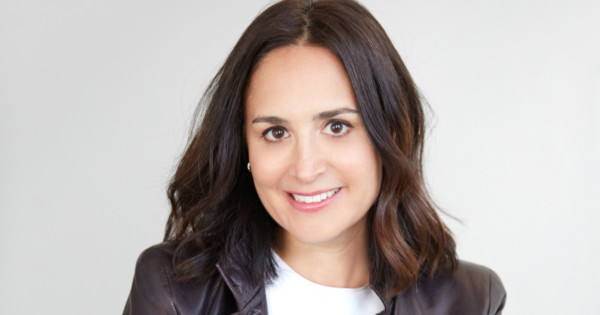
Emily Graham has been named Omnicom’s chief equity and impact officer and svp of diversity and inclusion communications.

She takes on responsibilities previously held by Tiffany R. Warren, who left her role as the holding company’s svp and chief diversity officer earlier this year to take on a similar position at Sony Music Group.

Graham joins from PR giant FleishmanHillard, which Omnicom owns. At FleishmanHillard, she served as chief diversity and inclusion officer, a role she took on in June after holding various other roles at the agency.

According to Omnicom, Graham led a “global task force that accelerated DE&I as a business priority across the firm’s 2,500-person network” at FleishmanHillard. She also launched and led True Mosaic, a DEI offering for the agency’s clients.

Earlier in her career, Graham worked at PR firms including MWWPR and Burson-Marsteller. In her new role, she’ll report to Omnicom chairman and CEO John Wren.

“Our goal is that every Omnicom agency, globally, be a pillar of diversity, equity and inclusion, and we are proud to keep our efforts moving forward under Emily’s leadership,” Wren said in a statement. “Emily joins us not only with a passion for DE&I, but a wealth of experience in the agency world where she consistently offered top-tier client counsel as a seasoned communications strategist.”

In this role, Graham will be tasked with executing Open 2.0, an eight-point action plan that Omnicom laid out in July to help it “reach system equity” across the organization.

“I am honored to join Omnicom, especially at a time where vision, clarity and action on DE&I is essential. Achieving real systemic equity with urgency is the heart of our Open 2.0 strategy,” Graham said in a statement.

Part of the Open 2.0 plan involves hiring diversity directors for each of the holding company’s networks, which include DDB, TBWA and BBDO, as well as its various specialty practices such as Omnicom Health Group.

DDB appointed Nikki Lamba as its first-ever global head of DEI this week. Other Omnicom agencies, including BBDO and the Integer Group, have also appointed DEI leads in recent months.

https://www.adweek.com/agencies/omnicom-emily-graham-chief-equity-impact-officer/


Media Agency m/SIX Hires Belinda Smith as Americas CEO

Belinda Smith has joined global media network m/SIX as Americas CEO, a new role at the agency. 

In this role, Smith will oversee the agency’s operations in the U.S., Canada, Mexico, Argentina and Uruguay, reporting to global CEO Jess Burley.

Smith is no stranger to m/SIX. Up until recently, she served as head of global marketing intelligence at Electronic Arts, which handed media responsibilities to m/SIX last year. While Electronic Arts handles much of its media in-house, it selected m/SIX as its global strategic external partner.

“Since my initial meetings with the m/SIX team in 2017, I’ve felt strongly that the talent, leadership, strategic thinking and solutions they provide are unmatched in the agency world, and I am excited to lead such a pioneering group,” she said.

Smith added that she thinks the role offers her a “great opportunity to change the way marketing is done and transform client-agency relationships.

“During my time at EA, I overhauled our agency roster along with our media, strategy, data, measurement and attribution disciplines, and now I look forward to bringing this expertise and experience to the larger market.”

Smith said her “No. 1 focus” will be on the agency’s people. A self-described marketing and diversity activist, she currently serves as the global diversity ambassador for the World Federation of Advertisers. Last year, she penned an op-ed for Adweek that detailed five ways agencies and brands can improve their DEI initiatives.

Since June, she has served as a special adviser to the board of The&Partnership, an agency network backed by WPP that partly owns m/SIX via a partnership with GroupM.

Her work involved advising the board on diversity and inclusion efforts.

“Talent is the core of every business, and I’ve always focused on building diverse, global, high-achieving teams. I look forward to bringing my sharp focus on inclusion and representation with me in the new role,” Smith said.

Prior to joining Electronic Arts, Smith served as director of programmatic strategy at 360i. She held roles at the Interactive Advertising Bureau and AT&T earlier in her career.

“Belinda’s experience client side and from an agency perspective gives her the 360-degree view needed to navigate today’s landscape,” Burley said. “Coupling that with her digital expertise makes her the perfect candidate for this role.”

According to a m/SIX spokesperson, the agency has won business from brands including Clarins, Haribo, Fossil Group and Whirlpool this year. The agency network operates in more than 40 countries.

Last year, m/SIX partnered with adam&eveDDB on a launch campaign for FIFA 2020. More recently, the agency worked with Fossil Group, which handed its EMEA media account to m/SIX earlier this year, on a Black Friday “War Zoom.”

According to m/SIX, the virtual event “was designed to mimic a newsroom-style environment and enabled client and agency to analyze social, organic, onsite and media trends in real time and immediately adjust media campaigns and strategies across the U.K., Germany, France and Italy.”

https://www.adweek.com/agencies/msix-hires-belinda-smith-americas-ceo/


Apple Made an Otherworldly, Hypnotic Ad About Lying on Your Couch With Its New Headphones

When Apple bought the Beats by Dre headphone line in 2014 for $3 billion, it was clear the move was more about brand ubiquity and style rather than hardware quality.

While most Apple products are considered paragons of product design (missing ports and annoying notches aside), Beats gear has often been criticized by audiophiles as style over substance—a reputation that’s perhaps less deserved today, with Consumer Reports rating Beats headphones about on par with Sony products in a similar $300 price range.

But now Apple has released its first over-the-ear headphones under its own core brand, positioning it as an extension of its popular AirPods line of wireless earbuds. The AirPods Max was announced today at a hefty price of $549.

Apple is banking on that price being one true audio enthusiasts, and/or its die-hard fans, are willing to pay for the headphone equivalent of an iPhone.

To reveal the product, the brand created a spot called Journey Into Sound that turns the everyday activity of zoning out on your couch into an interstellar-yet-internal experience.

The spot commendably avoids lingering on the technology inside the headphones, which boast 20 hours of wireless usage and top-of-the-line noise canceling. It does, however, demonstrate the “transparency mode” that allows you to hear the real world around you before wisely choosing to mute everything again.

Apple’s soundtrack for the spot is “Polarizer” by Cid Rim, the stage name used by Austrian-born drummer and producer Clemens Bacher.

The ad was directed by the duo known as Vania and Muggia, made up of Vania Heymann and Gal Muggia. They also directed Apple’s “Meet iPhone 12” launch spot:

https://www.adweek.com/creativity/apple-made-an-otherworldly-hypnotic-ad-about-lying-on-your-couch-with-its-new-headphones/


Discovery+ Doesn’t Want to be the Next Netflix. It’s Targeting Disney+ Instead

Most upstart streaming services long to be the next Netflix, whether they admit it publicly or not. But for Discovery’s new OTT platform, which will debut on Jan. 4, the company is targeting a different streamer’s playbook instead: Disney+. In a virtual presentation to investors Wednesday, Discovery’s planned international streaming strategy makes good on the… https://www.adweek.com/tv-video/discovery-plus-plan-netflix-disney-plus/


Catherine Levene Named New President of Meredith’s National Media Group

Magazine publisher Meredith has appointed Catherine Levene as its new president, replacing Jon Werther who left the corporation in 2019.

In her new role, Levene will oversee all National Media Group activities from Meredith Magazines to Meredith Consumer Product, and report to CEO Tom Harty, who describes Levene as “relentless in pursuing the best experiences” for both consumers and advertisers.

Levene has a strong history with the company. Under her leadership as chief digital officer, Meredith launched a first-party data studio, optimized content performance and expanded digital advertising revenues. In addition, the National Media Group saw a 38% increase in total advertising revenue, published 30% more videos and introduced new multi-platform brands. Levene is also proud of the company’s diversity and inclusion efforts and is a sponsor of :BLACKPRINT, Meredith’s Black employee resource group.

“I am excited for the future of the National Media Group under her leadership, and I am proud and thrilled to see Catherine make history as Meredith’s first female corporate officer,” Harty said in a statement.

Levene has spent her entire career in the media industry, working for companies like The New York Times and Daily Candy before moving to the Meredith Corporation in January 2019. As Meredith’s National Media Group’s president, Levene is focused on maintaining the company’s history of serving American women of all ages. The media group reaches nearly 95% of U.S. women through brands like PEOPLE, Better Homes & Gardens and Allrecipes.

Levene also noted the company’s ability to overcome challenges of the pandemic, adapting a print guarantee program to advertisers in April.

“I am extremely proud of what our Digital team has accomplished,” she said in a statement. “Together, we have powered through the Covid-19 pandemic to find more innovative ways to meet the demands of consumers and advertisers alike across our business. These examples prove Meredith’s commitment to serving women at every stage of their lives by creating the information and experiences they have grown to know and trust from our brands.”

“I am grateful to work for a company committed to becoming a more diverse and inclusive employer and ultimately to serving our audiences and customers in an even more rich and impactful way,” she added.

Emmy is an Adweek contributor who is completing her journalism degree at The College of New Jersey with minors in Spanish and broadcast journalism.


https://www.adweek.com/media/catherine-levene-named-new-president-of-merediths-national-media-group/


Verizon Media Debuts ConnectID

Verizon Media has unveiled its gambit in the industry-wide effort to help the media traders to transition from using third-party data as the default means of online targeting with the launch of ConnectID.  

The countdown to 2022, the year third-party cookies will become redundant as a targeting tool, is on, and although the market has seen several such introductions such as The Trade Desk’s UDID, Verizon claims ConnectID is unique given its 900 billion customer touchpoints.

The company has said that this bank of first-party data, based on its owned-and-operated properties such as AOL, TechCrunch and Yahoo Mail, will generate an identity graph that can help advertisers target and track audiences across devices. Verizon Media is promoting ConnectID to lure more advertisers and media owners to trade via its ad-tech suite, which has both a buy- and sell-side offering, in its ongoing effort to capture market share from the industry’s largest names Facebook and Google.

To accompany the launch of ConnectID, Verizon Media has also announced a series of tie-ups including publishing house Newsweek and data providers such as Acxiom, Equifax, Neustar, Throtle and TransUnion. Verizon Media ConnectID is currently available in the Americas and the Asia-Pacific region, with the market witnessing several identity solution launches, some of which are based on deterministic first-party data, while others are based on more probabilistic targeting methods.   

Iván Markman, chief business officer at Verizon Media, told Adweek the company has conducted several trials with retail-focused advertisers and direct-to-consumer brands where performance improved by up to 33% compared to the use of third-party cookies.

“Most of the identity solutions out there are largely dependent on third-party integrations,” Markman said. “Most of the companies don’t really own the customer relationships, and more important they won’t have the assets [such as a news website or email services] to provide a value exchange.”

In regards to the company’s early testing of ConnectID, Markman also noted how these tests were conducted to ensure the solution’s compatibility with the identity frameworks of the industry’s major holding groups—a major preoccupation for such players in recent years.

https://www.adweek.com/programmatic/verizon-media-debuts-connectid/


Vote for 2020’s Top Ads; 2021 Marketing Trends to Watch: Tuesday’s First Things First

Welcome to First Things First, Adweek’s daily resource for marketers. We’ll be publishing the content to First Things First on Adweek.com each morning (like this post), but if you prefer that it come straight to your inbox, you can sign up for the email here.

The Moldy Whopper. Nike’s split-screen masterpiece. Ocean Spray capitalizing on Nathan Apodaca’s viral TikTok. Nineteen Eighty Fortnite. These iconic brand moments are among those that have come to define marketing in 2020—but which one do YOU think had the most impact? Over the next couple of weeks on Twitter and Instagram, you’ll find daily #AdOfTheYear polls that will determine the Reader’s Choice honoree. 

Check out the full bracket of contenders here and learn how, where and when to vote.

Change is likely to continue at breakneck speed in the coming year. Josh Cole, CMO of Sky Zone, took a look at the trends and themes that marketers need to keep an eye on in 2021. One key area of focus will be the new customer behaviors that will stick around into next year (and beyond) and which 2020 expectations might become less important over time. For example, will “ghost kitchens” continue to be a greater part of this new normal—and how will advertising need to adapt?

Also on the horizon: Marketers can expect to see more adaptations to social justice issues, a cookie-less future and more.

Back in October, Motel 6 touched off a wave of backlash against The Richards Group when it fired the agency in reaction to a racist comment by founder Stan Richards. The moment led many other high-profile clients, including Keurig Dr. Pepper, The Salvation Army and The Home Depot, to drop the agency as well, after which Richards departed. Now, Motel 6 has found a new agency of record in Kansas City indie Barkley following a review.

A continued shift: The move also follows internal restructuring at Motel 6.

Related: Chicago-based agency Highdive has been named agency of record for auto insurance company The General, and selected as creative agency of record by candy brand Airheads. 

Ajit Pai, who has been chairman of the FCC since 2017, announced that he’ll step down upon Joe Biden’s inauguration. In the role, Pai largely championed deregulation, overseeing the merger of T-Mobile and Sprint and rolling back net neutrality rules established during the Obama administration. He was also involved in Trump’s ineffective efforts to get the FCC to oversee social media platforms after the president claimed that they tended to censor public figures along party lines.

Here’s what Pai’s departure means for marketers.

Music, radio and the auto industry have been integrally intertwined for more than half a century. Now that connection is evolving as brands like Hyundai, Cadillac and Ford take aim at customer ears with more audio advertising on streaming services and podcasts. These campaigns have been elaborate, with partnerships that yield microsites, custom playlists, personalized videos and audio ads and more.

Aiming for millennials: Learn how Spotify and Volkswagen created an immersive “3D” audio experience.

More of Today’s Top News & Highlights:

https://www.adweek.com/retail/vote-for-2020s-top-ads-2021-marketing-trends-to-watch-tuesdays-first-things-first/


FS1 Meets Street Fighter as Skip Bayless and Shannon Sharpe Battle in Arcade-Themed Promo

Skip Bayless and Shannon Sharpe face off each morning on their FS1 talk show, Skip and Shannon: Undisputed, but now they have elevated their battle to a new—yet retro—level.

The hosts fight, albeit virtually, in a new FS1 promo that places them in a classic fighting arcade game like Mortal Kombat or Street Fighter.

In the spot, which also features Undisputed moderator Jenny Taft as the battle’s referee, Bayless and Sharpe begin their battle on the Undisputed set, before moving to new locations for later rounds. Among the topics the hosts are fighting over: Bill Belichick vs. Tom Brady (the New England Patriots head coach and his former quarterback) and whether Michael Jordan or LeBron James is the GOAT (Greatest of All Time).

“It was certainly an homage to the great fighting arcade games of the ’80s and ’90s. Street Fighter, Mortal Kombat, Karate Champ all influenced the piece. Skip and Shannon face off every show, so this was a fun and different way to promote Undisputed,” said Bill Battin, svp, on-air marketing, Fox Sports.

Fox Sports partnered with Jérôme Debève at La Huella FX in Madrid to create the promo, which will roll out Thursday on social and digital channels, and air on FS1 over the coming weeks.

While Taft recorded her lines specifically for the promo, Bayless and Sharpe’s dialogue was taken from Undisputed sound bites.

Battin said the promo is packed with Easter eggs for Undisputed fans. At one point, Cowboys fan Bayless zaps Sharpe with a stream of Dallas Cowboys stars, and unleashes his “How ’bout them Cowboys!” catchphrase. The spot also features both hosts’ dogs: Sharpe’s Pomeranian, Tarzan, and Bayless’ Maltese, Hazel.

Later in the promo, a “Club Shay Shay” neon sign flashes behind Sharpe—that originally referred to Sharpe’s faux VIP clubs for GOATs, but is now the name of his weekly podcast. The goat mask that Sharpe wears on-air whenever LeBron James wins a big game also makes an appearance.

https://www.adweek.com/tv-video/fs1-meets-street-fighter-as-skip-bayless-and-shannon-sharpe-battle-in-arcade-themed-promo/