Bad Bunny’s Super Bowl Halftime Sold the World on Puerto Rico


For 15 minutes on Sunday, more than 130 million people were on the edge of their seats, watching Bad Bunny transform the Super Bowl 60 Halftime Show into the biggest party of the year, all while speaking and singing entirely in Spanish.

The Puerto Rican artist filled Levi’s Stadium in San Francisco, California with visual and sonic references of his homeland, from images of sugarcane fields, a cornerstone in Puerto Rico’s economy until the 20th century, to a real wedding that portrayed a variety of moments traditional of a Latin celebration.

Contrary to expectations, the artist refrained from overtly promoting specific brands, instead focusing on elevating Puerto Rican culture and Latino community on one of the most important stages in advertising.

Wearing a collared shirt and tie carrying the No. 64 designed by the Spanish brand Zara and launching a new custom sneaker with Adidas, the BadBo 1.0 in white, the artist did make some subtle nods to brand partners in his performance. 

But more than anything, his halftime show sold millions of viewers on Puerto Rico itself, defining its history, creativity, and identity in a way that emotionally connected with a global audience.  

Voy a llevarte pa’ PR

Bad Bunny anchored his performance with reggaetón hits like “Yo Perreo Sola,” “Safaera,” and “Voy a Llevarte pa PR” in his iconic casita, where Latin artists including Cardi B, Jessica Alba, Pedro Pascal, Karol G, and others joined the celebration.

To the Afro-Caribbean rhythms of “Titi Me Preguntó,” he launched a visual journey celebrating numerous moments of daily Caribbean life, from street food vendors to domino games and women getting their nails done at the salon.

“You’re listening to music from Puerto Rico,” he said in Spanish while standing in the casita, a set piece reflecting rural life on the island, which has become a centerpiece of his latest tour, transitioning into a section that paid tribute to key songs that helped elevate reggaetón to a mainstream musical genre.

The economic impact of Puerto Rican culture had already manifested from his concert residency on the island, generating an estimated $400 million for the country. But with this celebration of his homeland experienced by millions, Bad Bunny’s halftime show was a lesson in cultural storytelling marketers can learn from.

Despite the party, his portrayal of Puerto Rico didn’t shy away from the island’s challenges, like the energy crisis caused by decades of underinvestment in the power grid and the imposition of Americanization, both recurring themes in his work. His performance addressed these issues directly, as he performed from light poles while singing “El Apagón,” and as Ricky Martin, one of the first Puerto Ricans to break into the Anglo market, performed “Lo que le pasó a Hawáii,” a song that critiques the island’s colonial status.

In this way, the halftime show reimagined Puerto Rico as the author of its own story: a place shaped by colonial violence and resource extraction, but driven by an uncompromising cultural lineage that continues to influence the world beyond the island’s coastline.

From PR to the globe 

In an unexpected moment, Lady Gaga took center stage amid a real wedding, performing a salsa-infused version of “Die with a Smile,” before joining Bad Bunny to dance to the hit “Baile Inolvidable.” Wearing an ensemble in the light blue associated with Puerto Rican independence and a red flor de maga, the island’s national flower, the artist’s appearance bridged Puerto Rican and American culture and stood as an allegory for Bad Bunny’s transcendence on the global stage. 

Acknowledging New York City as the original epicenter of salsa, the artist performed “NuevaYol” while dancers moved through bodegas, barber shops, and everyday community scenes, including a representation of “Toñitas,” one of the few remaining Puerto Rican Social Clubs in the city — spaces that have been fundamental to the identity of many Latino immigrants in the United States.

This scenery follows Bad Bunny’s appearance in the Grammys last week when he declared “ICE out.” That political message continued as he handed his Grammy for Album of the Year to a child watching the historic moment with their family on television.

To the rhythms of plena, accompanied by the local group Pleneros de la Cresta, Bad Bunny closed the show with a parade of flags representing every country in the Americas, calling out each nation by name. 

The imagery woven throughout his performance bring together cultural affirmation for Puerto Ricans while serving as a point of recognition for broader Latin American audiences and an educational entry point for viewers unfamiliar with the island’s history.

By placing Puerto Rican musical genres at the center of the narrative, Bad Bunny demonstrated these rhythms as exportable cultural assets. When he said “We’re still here” in Spanish, he affirmed the continent’s cultural and linguistic diversity on a national stage. 

Nonetheless, the world’s most-watched entertainment stage also became a showcase for Puerto Rico, using every element to project the island as a recognizable and authentic identity to millions of viewers.

https://www.adweek.com/brand-marketing/bad-bunnys-super-bowl-halftime-sold-the-world-on-puerto-rico/



MrBeast Beat Brad Pitt for the Super Bowl’s Most-Engaging Celebrity

Matthew McConaughey and other celebs were in Super Bowl commercials all night, all night, all night.

ADWEEK previously reported that 62% of Super Bowl ads had celebrities in them, and those stars were making millions—though perhaps not quite as many millions as in past Big Games.

But with all the money going to star power, which stars paid off the most for brands?

Data and measurement company EDO has calculated the incremental consumer engagement of each celeb who appeared in a Super Bowl ad, seeing how much more searched and engaging they were than the average.

Notably, this is for ads only, so halftime performers were ranked separately. EDO said Bad Bunny was “right up there” with the incremental engagement levels of performers from the past five Super Bowls, and it “wasn’t even close” when compared to TPUSA’s counterprogramming with Kid Rock, who had “a fraction of the incremental engagement that Bad Bunny generated.”

According to EDO, when looking at the ads, digital creator and entrepreneur MrBeast ultimately topped the list, having more than double the engangement of the No. 2 star on the list, Brad Pitt.

“Perhaps most notably, social influencers and creators were frankly underrepresented,” EDO CEO Kevin Krim said. “As someone who’s professionally studied Super Bowl ads for over a decade now, I was struck that the remainder of the top rankings was a familiar mix of mainstream celebrities from film, music, and sports. The influencer and creator generation have not broken through to Super Bowl-level prominence yet.”

See a closer look at EDO’s Top 10 Most Engaging Celebrities below:

1. MrBeast, Salesforce (Engagement Index: 3,733)

MrBeast teamed up with Salesforce on a 30-second spot, “The Vault,” which kicks off a game of puzzles culminating in a million-dollar prize. The ad performed despite airing in the fourth quarter of a largely uneventful Super Bowl.

2. Brad Pitt, Netflix (Engagement Index: 1,413)

Brad Pitt took second place in the chart with a surprise ad for Netflix’s upcoming Once Upon a Time in Hollywood sequel. EDO noted that searches for Brad Pitt saw a “massive spike” as people tried to figure out what the movie was.

3. Chris Hemsworth, Amazon (Engagement Index: 1,334)

In Amazon’s 60-second Super Bowl ad, “Alexaaaa+,” Chris Hemsworth thinks AI is trying to kill him, and Amazon’s Alexa+ AI isn’t helping to ease his mind.

4. Sabrina Carpenter, Pringles (Engagement Index: 930)

Instead of another Manchild, Sabrina Carpenter decides to date her potato crisps in Pringles’ Super Bowl 60 ad, “Pringleleo.”

5. The Backstreet Boys, T-Mobile (Engagement Index: 861)

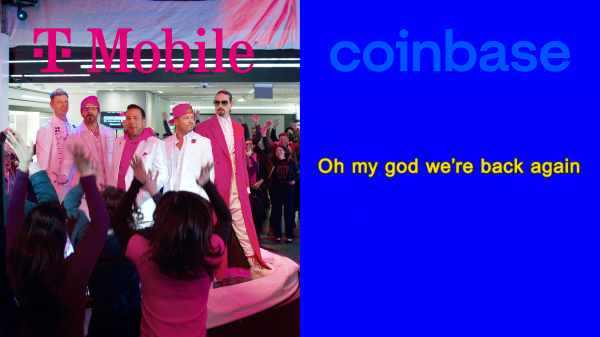
Oh my God, they’re back again. The Backstreet Boys say they “Want It That Way” in a 60-second spot for T-Mobile, with the group showing up in T-Mobile’s Times Square store. Another of the group’s songs was featured in a Coinbase ad.

6. Serena Williams, Ro (Engagement Index: 769)

Ro, a direct-to-consumer healthcare business that sells GLP-1 medications such as Ozempic, Wegovy, and Zepbound, made its Super Bowl debut with an ad starring brand ambassador Serena Williams.

7. Mike Tyson, MAHA (Engagement Index: 751)

Mike Tyson calls overweight people “fudgey” in a 30-second Super Bowl ad from the MAHA Center, an advocacy group aligned with Health and Human Services Secretary Robert F. Kennedy Jr.’s Make America Healthy Again movement.

8. Matthew McConaughey, Uber Eats (Engagement Index: 570)

Uber Eats continues its food conspiracy in a 60-second Super Bowl ad starring Matthew McConaughey and Bradley Cooper, with the former guiding viewers through the game’s history and pointing out all the food-related Easter eggs.

9. Guy Fieri, Bosch (Engagement Index: 496)

In Bosch’s Super Bowl ad, Flavortown has a new Guy Fieri, with the celebrity chef losing his frosted tips to declare he’s “just a guy.”

10. Lady Gaga, Pokémon (Engagement Index: 479)

Pokémon kicked off its 30th anniversary with a Super Bowl ad shown during the third quarter, and the celebs were all over it. Comedian Trevor Noah, Formula One driver Charles Leclerc, Puerto Rican rapper Young Miko, K-pop star Jisoo, and Canadian actress Maitreyi Ramakrishnan all appeared. However, Lady Gaga claimed the most engaging title, somehow singing with Bad Bunny and Jigglypuff in the same night.

See EDO’s celebrity ranker here, and a more extensive list of the most engaging celebrities below:

  1. MrBeast — Slack: Vault (Engagement Index: 3733)
  2. Brad Pitt — Netflix: The Adventures of Cliff Booth (Engagement Index: 1413)
  3. Chris Hemsworth — Amazon: Chris Hemsworth Thinks Alexa+ Is Scary Good (Engagement Index: 1334)
  4. Sabrina Carpenter — Pringles: Pringleleo (Engagement Index: 930)
  5. The Backstreet Boys — T-Mobile: Tell Me Why (T-Mobile’s Version) (Engagement Index: 861)
  6. Serena Williams — Ro (Weight Control): Healthier On Ro (Engagement Index: 769)
  7. Mike Tyson — MAHA Council: Eat Real Food (Engagement Index: 751)
  8. Matthew McConaughey — Uber Eats: Hungry for the Truth (Engagement Index: 570)
  9. Guy Fieri — Bosch: Just A Guy (Engagement Index: 496)
  10. Lady Gaga — Pokémon: What’s Your Favorite? – #Pokemon30 (Engagement Index: 479)
  11. Bradley Cooper — Uber Eats: Hungry for the Truth (Engagement Index: 465)
  12. Marshawn Lynch — Nike: We Run It Now (Engagement Index: 367)
  13. Adrien Brody — Intuit TurboTax: The Expert: Rain (Engagement Index: 365)
  14. Sofía Vergara — Boehringer Ingelheim: Mission – Detect the SOS (Engagement Index: 316)
  15. Jennifer Aniston — Dunkin’: Good Will Dunkin’ (Engagement Index: 312)
  16. Hailee Steinfeld — State Farm: Stop Livin’ on a Prayer (Engagement Index: 280) (first airing of ad)
  17. Emma Stone — Squarespace: Unavailable (Engagement Index: 273)
  18. Machine Gun Kelly — T-Mobile: Tell Me Why (T-Mobile’s Version) (Engagement Index: 273)
  19. Matthew Broderick — Genspark: Take the Monday After the Super Bowl Off (Engagement Index: 251)
  20. Kurt Russell — Michelob Ultra: The ULTRA Instructor (Engagement Index: 225)
  21. George Clooney — Grubhub: The Feest (Engagement Index: 212)
  22. Elsa Pataky — Amazon: Chris Hemsworth Thinks Alexa+ Is Scary Good (Engagement Index: 208)
  23. Ben Affleck — Dunkin’: Good Will Dunkin’ (Engagement Index: 208)
  24. Ted Danson — Dunkin’: Good Will Dunkin’ (Engagement Index: 202)
  25. Benson Boone — Instacart: Bananas (Engagement Index: 202)
  26. Andy Samberg — Hellmann’s: Longform (Engagement Index: 193)
  27. Ben Stiller — Instacart: Bananas (Engagement Index: 190)
  28. Kendall Jenner — Fanatics: Bet on Kendall (Engagement Index: 174)
  29. Danny Trejo — Wegovy: A New Way (Engagement Index: 174)
  30. Scarlett Johansson — Ritz Crackers: RITZ Island (Engagement Index: 171)
  31. Andy Cohen — Nerds: Taste Buds (Engagement Index: 149)
  32. Matthew Broderick — Genspark: Take the Monday After the Super Bowl Off (Engagement Index: 144)
  33. Jon Hamm — Ritz Crackers: RITZ Island (Engagement Index: 144)
  34. Rob Gronkowski — Novartis: Relax Your Tight End (Engagement Index: 142)
  35. Bon Jovi — State Farm: Stop Livin’ on a Prayer (Engagement Index: 138)
  36. Tom Brady — Dunkin’: Good Will Dunkin’ (Engagement Index: 128)
  37. Charli XCX — Poppi: Vibes (Engagement Index: 123)
  38. Trevor Noah — Pokémon: What’s Your Favorite? – #Pokemon30 (Engagement Index: 116)
  39. Post Malone — Bud Light: Keg (Engagement Index: 114)
  40. Jeff Goldblum — Apartments.com: Can’t Live There (Engagement Index: 109)
  41. DJ Khaled — Wegovy: A New Way (Engagement Index: 108)
  42. Charles Leclerc — Pokémon: What’s Your Favorite? – #Pokemon30 (Engagement Index: 106)
  43. Doechii — Levi’s: Behind (Engagement Index: 94)
  44. Hailee Steinfeld — State Farm: Stop Livin’ on a Prayer (Engagement Index: 90) (second airing of ad)
  45. Lamine Yamal — Pokémon: What’s Your Favorite? – #Pokemon30 (Engagement Index: 83)
  46. Sam Neill — Xfinity: Jurassic Park… Works (Engagement Index: 79)
  47. KATSEYE (Musical Group) — State Farm: Stop Livin’ on a Prayer (Engagement Index: 78)
  48. Jeff Goldblum — Xfinity: Jurassic Park… Works (Engagement Index: 74)
  49. Jisoo — Pokémon: What’s Your Favorite? – #Pokemon30 (Engagement Index: 71)
  50. Rachel Sennott — Poppi: Vibes (Engagement Index: 55)
  51. iShowSpeed (Streamer/Influencer) — Meta: Athletic Intelligence Is Here ft. Spike Lee (Engagement Index: 54)
  52. Colin Jost — DraftKings: Live-ish (Engagement Index: 52)

https://www.adweek.com/commerce/celebrities-most-engaging-super-bowl-commercials/


The Backstreet Bowl: Behind the T-Mobile-Coinbase Pop Showdown at Super Bowl 60

Amid the celeb sightings, 1990s nostalgia, GLP-1s galore, sports betting promos, and AI overload from last night’s Super Bowl — the Backstreet Boys found themselves in their own battle between brands. 

Their 1999 hit “I Want It That Way” was a surprise performance during T-Mobile’s 13th consecutive Super Bowl ad, which aired during the second quarter. It was flamboyant, silly, and riddled with celeb cameos from the likes of rapper-rocker Machine Gun Kelly, comedian Druski, and actor Pierson Fodé. 

During the same quarter, a slightly rejiggered version of the iconic boy band’s “Everybody (Backstreet’s Back)” anthem showed up in a lo-fi karaoke-inspired ad that was eventually revealed to be an ad for the cryptocurrency exchange Coinbase. The brand framed the spot as “an ode to crypto” in a blog post, saying it was meant to signal that crypto is for everyone, and pointing to the roughly 52 million Americans who have used it.

The idea to cast the band for T-Mobile’s spot, and license “I Want It That Way,” came from Andrew Panay, the producer of Wedding Crashers and head of Panay Films, which is responsible for many of T-Mobile’s flashiest commercial campaigns. 

He decided to hire the group after a “spiritual” experience last summer watching the band perform at The Sphere in Las Vegas, he previously told ADWEEK.

But there was competition over licensing rights, as multiple brands were interested in using the song for a Super Bowl ad, Panay said. “I licensed the song, I put money down, and then more brands came after it,” he said. It almost amounted to a bidding war, he said, “but I stopped it.” 

T-Mobile declined to comment.

Coinbase said it wasn’t one of the brands that went after “I Want It That Way,” and that it had planned to use “Everybody” since the early days of planning. 

The brand’s karaoke-style spot came together quickly after the brand’s creative agency, the New York-based Isle of Any, proposed the idea in the fall of 2025. 

It was a smooth process because the idea was “wildly participatory,” said Joe Staples, vice president of creative at Coinbase. The Super Bowl experience, he said, is like going to a karaoke, with the party atmosphere, the drinking, and people huddled around the TV like a campfire. “Same amount of people, same amount of inebriation, same amount of playfulness. It just seemed to fit.”

But Coinbase felt the pressure to deliver standout creative four years after making a Super Bowl splash in 2022 with its famous 60-second spot displaying a floating QR code — a defining moment that helped Coinbase stand out against a field of rivals during the so-called “Crypto Bowl.”

Since that moment, crypto’s star has faded. FTX, a one-time Coinbase competitor that also advertised in that Super Bowl, has since been bankrupted and seen its founder Sam Bankman-Fried imprisoned for fraud. A frenzied crypto selloff this month, meanwhile, has seen Bitcoin’s value drop 20% since the start of 2026.

Coinbase was the only crypto brand that invested in a Super Bowl spot this year, and it did so despite industry headwinds and the growing price of Super Bowl media — NBCUniversal charged upwards of $10 million for some 30-second in-game spots. 

“There aren’t many forums with 120 million people watching,” Staples said.

Coinbase believed the Backstreet Boys were the ideal vehicle for its message, and it wasn’t deterred when they learned “early on” that T-Mobile was working with the band for its own Super Bowl spot. 

In fact, Staples said, Coinbase doesn’t mind the comparisons of its ad with T-Mobile’s, because the approaches are distinct — and both brands might benefit from the chatter pitting the two against each other. 

Plus, “They’re very different approaches to advertising,” Staples said.

Andrew Panay didn’t say whether T-Mobile knew that Coinbase was also airing a Backstreet Boys spot. But the fact that both brands did was testament to the band’s enduring cultural sway, he said. 

“The Backstreet Boys have legacy, they have freshness, they have long-time fans, new fans, male and female fans. Gen Z and boomers know their music. They have extremely broad appeal,” he said.

Neither brands specified the total investment value of their campaigns.

Advertising industry insiders were amused and surprised by the Backstreet Boys bombardment Sunday night. “Two ads featuring the Backstreet Boys was not on my Super Bowl bingo card,” Jon Laughlin, chief creative officer at Laughlin Constable, said. 

Many creatives who spoke with ADWEEK preferred the Coinbase spot. 

“The winner for me, for sure, is the Coinbase spot,” said Annika Welander, CEO of creative agency Someoddpilot. “I love creative that punches so far out of its weight class.”

Amir Sahba, founder and CEO of creative agency Thinkingbox, however, felt T-Mobile won the Backstreet Bowl: “T-Mobile gave us something to feel. Coinbase gave us something confusing to figure out in real time.”Despite the varied reactions, T-Mobile’s spot ranked much higher than Coinbase’s on EDO’s TV Outcomes rankings, which measure the impact of each ad in the game based on immediate engagements that are most predictive of future sales. On that assessment, T-Mobile’s ad was 17th out of 98, while Coinbase’s ranked 47th.

Watch both T-Mobile’s and Coinbase’s full Super Bowl 60 ads below.

https://www.adweek.com/brand-marketing/the-backstreet-bowl-behind-the-t-mobile-coinbase-pop-showdown-at-super-bowl-60/


Super Bowl 2026 Was Packed With Celebrities, but Not as Many as Expected


Dunkin’ stuffed Ben Affleck, Jason Alexander, and Jennifer Aniston in its ’90s sitcom ad. Grubhub tapped George Clooney to talk about food-delivery fees, and Uber Eats brought back Matthew McConaughey. Kendall Jenner advertised sports betting platform Fanatics Sportsbook, and Doechii showed off her Levi’s.

Super Bowl 60 was another celebrity-driven bonanza, but actually featured slightly fewer famous faces than expected, according to data from TV measurement firm iSpot: 62% of ads featured celebrities, down from 68% last year. The firm predicted that 70% of ads would include celebrities. 

Brands like Instacart, Ritz, and Xfinity also used multiple celebrities in their ads. According to iSpot, 37% of ads featured multiple celebrities, down from 51% last year.

Total celebrity count grew while total celebrity-based ads dropped

Separate data from TV adtech firm Extreme Reach shows that the number of individual appearances from celebrities in ads increased in the 2026 Super Bowl.

Even as fewer Super Bowl ads featured celebrities, brands like Dunkin’, Michelob Ultra, Novartis, Pokemon, and T-Mobile packed celebrities into their ads, increasing the total number of talent in Super Bowl ads, per Extreme Reach. There were 103 celebrity appearances in 66 ads; out of those, 39 featured more than one celebrity, according to Extreme Reach.

Paying for top-tier talent on top of an $8 million TV ad buy has become the norm for advertisers to cut through the noise of the Super Bowl. As it’s gotten harder for brands to get attention during the Super Bowl, celebrities have become a proven formula for a winning Super Bowl ad.

Plus, celebrities help brands reach audiences outside of the Super Bowl, sustaining buzz beyond 30 or 60 seconds.

“When a brand adds a celebrity to a campaign, they have the opportunity to reach audiences far beyond the TV spot,” Jessie Mash, partner and chief business officer at SonderCo, a brand and talent partnerships agency, previously told ADWEEK. “The commercial often extends into earned media opportunities, social amplification, and cultural conversation.”

https://www.adweek.com/brand-marketing/super-bowl-2026-was-packed-with-celebrities-but-not-as-many-as-expected/


How Doritos and Ulta Used TikTok Clubhouse As a Super Bowl Second-Screen Power Play


As Super Bowl advertising becomes less about a single TV moment and more about real-time cultural participation, brands are increasingly investing in influence that plays out off of the broadcast.

This year, TikTok positioned its Clubhouse activation as a core second-screen strategy for brands. The IRL creator hub, hosted in early February, was designed to fuel platform-native content throughout the Big Game weekend by bringing together athletes, creators, and brands to collaborate on content specifically designed for the platform.

Rather than a replacement for the TV spot, TikTok designed this year’s Clubhouse to amplify Super Bowl ads through creator-led content that shaped how the game was experienced before, during, and after kickoff.

For brands like Doritos and Ulta Beauty, the approach reflects a broader shift away from reactive social posting during live TV moments and toward immersive, creator-led environments built to extend campaigns in real time.

Immersed in culture

Unlike the social war rooms of a decade ago, built to react to moments as they happen, TikTok Clubhouse is designed to place brands inside the cultural action itself, said Rema Vasan, head of North America business marketing. She described it as “bringing the For You Page to IRL.”

While Super Bowl spots are often about achieving broad reach, successful brands on TikTok aren’t just chasing views, Vasan added. The platform analyzes signals like engagement and sharing leading up to the game and customizes solutions that helps brands achieve specific goals, like consideration, interaction, or sales.

At this year’s Clubhouse, title sponsor Doritos built a sensory environment tied to its signature orange color, while Ulta Beauty’s “Game Face” headquarters focused on beauty storytelling and getting-ready rituals.

“Every brand’s execution is super custom,” Vasan said. “Their goals are different. The audience they’re looking to reach is different. And how they connect with culture and creators is going to be different.”

TikTok said engagement around Super Bowl–related content on the platform increased 13% year over year on Super Bowl Sunday and the following Monday, according to internal data.

“The game has become so much more than just the game itself,” Vasan said. “It’s become this second-screen cultural ecosystem. And what Clubhouse does really well is enable brands and fans to actively participate in it.”

Letting go of control

For Chris Bellinger, chief creative officer at PepsiCo Foods, Clubhouse’s appeal is about meeting Gen Z where they already are. “You’ve got to fish where the fish are,” he said. “Especially with Gen Z, the second screen is almost becoming the primary screen.”

But that shift requires brands to rethink how they show up on social and accept the creative trade-offs that come with creator-led spaces. Doritos has a long history with user-generated content in the Super Bowl, thanks back to its Crash the Super Bowl contests, making the brand more comfortable acting in real-time on social, Bellinger said.

That approach has delivered results for the brand: Doritos brand mentions grew 35% year-over-year during last year’s Super Bowl, while the brand added more than 200,000 new TikTok followers.

“If you’re going to get into this space, you have to let go,” he said.

For Ulta Beauty, TikTok Clubhouse is a way for the brand to participate in culture as it unfolds. According to CMO Kelly Mahoney, social platforms “shape conversation, influence trends, and give voice to authentic expression.”

“Around the Super Bowl, that means meeting people where they’re celebrating, creating, and connecting,” she continued.

But while grabbing second-screen attention is becoming critical, marketers agree that it doesn’t mean traditional Super Bowl ads aren’t still important.

“Nothing’s ever going to be a one-size-fits-all,” Bellinger said. “You’re talking to different audiences at different times for different objectives.”

https://www.adweek.com/social-marketing/how-doritos-and-ulta-used-tiktok-clubhouse-as-a-super-bowl-second-screen-power-play/


Super Bowl Hot Take: NFL Ad Wins the Night by Believing in an Unknown Kid

THE AD: In the NFL’s new 60-second Super Bowl ad, “Champion,” which airs right before the Apple Music Super Bowl LX Halftime Show, the NFL is leaving the stars on the sidelines. Instead, the ad focuses on the importance of youth coaches, with the creative featuring a young boy who delivers a speech to his toys, echoing a speech he received from his coach.

“I am a champion,” the boy says, as the scene cuts back and forth between his room and the speech from his coach. The ad ends with the tagline “belief is a superpower” and a message thanking coaches.

MY HOT TAKE: A star is born. In the NFL’s new Super Bowl ad, there are no celebrities. There are no NFL athletes. Instead, there’s an unknown child actor carrying the weight of a 60-second Super Bowl commercial right before Bad Bunny performs onstage.

NFL execs told ADWEEK that it was scary to commit to the idea of a kid carrying their Super Bowl ad. In fact, the NFL conducted a thorough nationwide search to find the right child actor who could bring performance, gravitas, and empathy.

Glenn Cole, co-founder, 72andSunny, a longtime creative partner for the NFL, said the search was “nerve-wracking.”

“We knew that was going to be make or break,” Cole said.

However, in the end—after an exhaustive search—they found the right kid, Brayon Cutrer, who helps the league pull off a powerfully resonant moment in the most-watched game in sports. He may not have entered the Big Game as a celebrity, but he may be leaving it as one.

In a Super Bowl full of celebrity cameos and excess of everything, the quieter moments of “Champion” somehow speak the loudest.

Watch the NFL’s Super Bowl ad, “Champion,” below.

https://www.adweek.com/creativity/super-bowl-hot-take-nfl-ad-wins-the-night-by-believing-in-an-unknown-kid/


Creatives React: Raisin Bran Wields William Shatner Masterfully in Its First Super Bowl Ad

In its first Super Bowl ad, Raisin Bran, the most geriatric of breakfast cereals, has pinned its hopes on a poop joke.

Starring the 94-year-old William Shatner as his scatalogical alter ego, Will Shat, the spot touts the digestive benefits of Raisin Bran, which has enough dietary fiber to help even the most irregular of eaters keep their porcelain appointments consistent.

Will Shat, whose shortened surname makes the point quite unsubtly, plays a character not unlike Captain Kirk, the legendary Star Trek voyager Shatner once played in his salad days. 

In the ad, Shat teleports from what appears to be a spacecraft to a bar to a living room and then to a tailgate, where he appears on top of a car, prompting an onlooker to yell, “Will Shat on a van!” Truly, we live in the golden age of creativity. 

Here’s what creatives thought of the ad:

Gordy Sang, Cofounder and Chief Creative Officer, Quality Meats

“I never knew people used ‘Shat’ as a shorthand, so impressive that they got away with that on network. Reminds me a lot of the K-Mart ‘I just shipped my pants’ work from back in the day.

This will probably be a crowd pleaser.”

Josh Rosenberg, CEO, Day One Agency

“Shatner for the win. The casting is literally perfect here—the ad doesn’t work without him. Very impressed with his command over the screen at 94. If Raisin Bran is his secret, I might have to reconsider my own breakfast choices.”

Daniel Gonzalez, Creative Director, Remezcla

“Raisin Bran was the cleanest example of a spot that stood out for clearly explaining what the product actually does. It made a big, expensive bet on a functional truth: better poops. It felt almost Mad Men-era in its simplicity, a reminder that clarity can still sell.”

Seth Hargrave, CEO, MediaTwo

“While the middle school humor is on point, there’s a younger fan base to consider. Hysterics could easily be followed by awkward explanations around the coffee table. However, this seems to be the modus operandi of Super Bowl messaging as a whole. So kudos to Raisin Bran for taking that risk and making it memorable, and kudos to Shat for doing what he does best.”

Watch Raisin Bran’s Super Bowl 60 Ad, “Will Shat,” below.

https://www.adweek.com/brand-marketing/creatives-react-raisin-bran-william-shatner/


Super Bowl Hot Take: Raisin Bran ‘Shats’ the Bed With Ancient Allusions

THE AD: In Raisin Bran’s first Super Bowl spot in 15 years, actor William Shatner finally lands the role he was born to play: “Will Shat,” a Star Trek knockoff with a penchant for poop jokes.

The ad opens with Will Shat seated in the command chair of a spaceship, before he teleports to Earth to help its citizens combat the scourge of inadequate fiber intake. He flies from scene to scene—a bar, a living room, a football tailgate—dispensing both Raisin Bran and digestive double entendres in the process. 

MY HOT TAKE: I appreciate that Raisin Bran, a cereal more often associated with nursing homes than halftime shows, decided to lean into the natural levity of digestive health. Unlike Jamie Lee Curtis and her Activia, the ‘Will Shat’ character takes a winking approach to the benefits of being regular, and it works.

Still, the spot relies heavily on allusions to William Shatner’s most famous role, Star Trek’s Captain Kirk, which will surely go over the heads of almost everyone under 40. And for an ad premised on word play, ‘Will Shat’ is almost unusably contorted, a combination of the future and past tense that is nearly impossible to deploy in real life. Sure it plays off William Shatner, but was there not a catchier or more grammatically correct combination to be had? 

Ultimately, the best advertisement for the health benefits of Raisin Bran is William Shatner himself, who at 94 years old hardly looks a day over 70. Shatner has never shied away from making fun of himself for a laugh, and his winning charisma continues to charm, even as he approaches a century.

Watch Raisin Bran’s Super Bowl 60 ad, “Will Shat,” below.

https://www.adweek.com/brand-marketing/super-bowl-raisin-bran-ad-ancient-allusion/


Poop, Pee, and Pubes: Brands Can’t Stop Going to the Bathroom During the Super Bowl


An unlikely motif has emerged among this year’s crop of Super Bowl ads: bathroom humor.

Liquid I.V. has leaned fully into the bit. In the lead-up to the game, the hydration brand released two restroom-based teaser ads, one featuring K-pop vocalist EJAE belting Phil Collins’ 1984 power ballad “Against All Odds” from a bathroom stall. The other follows a janitor who pauses mid-cleaning, puzzled, as the same song echoes from an empty toilet.

The Super Bowl spot itself escalates the premise into a full-blown chorus: a montage of toilets, stalls and bathroom fixtures singing “Against All Odds” in unison. The joke lands on a visual gag—asking viewers to literally “take a look” at what’s in the bowl—as a way to prompt people to check their hydration levels.

Men’s grooming brand Manscaped was also in on the potty joke, with its Super Bowl pregame ad featuring anthropomorphic clumps of hair trapped in a shower drain, crooning a mournful ballad about their brief, doomed relationships with their former bodies.

Even cereal brands are heading to the bathroom. WK Kellogg Co‘s Raisin Bran’s ad talks about digestion and gut health—territory that’s long been difficult to advertise without veering into discomfort.

Taken together, the ads suggest that when it comes to wellness, digestion, and hydration, advertisers are increasingly willing to go where polite marketing once refused.

It’s not the first time advertisers have used the Super Bowl to make bathroom jokes. Last year, for instance, Angel Soft encouraged viewers to step away from the screen and take a bathroom break during its ad.

But this year, this immature and sometimes mildly gross form of humor is increasingly common. And according to creative leaders and brand marketers, that’s not an accident.

“You’re trying to break through the most noisy creative environment you’re ever going to be in, at a time when people’s attention spans are devastatingly short,” said Steve Slivka, chief creative officer at Manifest, who has worked on multiple Super Bowl ads for brands like Cadillac and Slim Jim. “At the same time, you’re navigating one of the most polarized cultural moments we’ve been in.”

And at some level, bathroom humor strikes that balance of being universally funny and understood. “As evolved as I think I am, there’s no defense for singing toilets,” Slivka continued. “You’re going to have a reaction to it. That’s just true.”

Relieving the pressure

Absurdist humor has historically resurfaced in moments of heightened social and political tension, a. Slivka pointed to to Dadaism, a movement that emerged during World War I as a rejection of logic and order.

“It was fighting an absurd time in history with absurdity,” he said. “I think that’s very much where we are right now. The work reflects that, but in a way that sidesteps polarizing issues and goes back to something very human.”

That “human” reaction—surprise, discomfort, laughter—is precisely what brands are betting on as they try to stand out without alienating large swaths of the country.

Still, comedy can be risky—especially when it comes to bathroom jokes. “There’s a line you can’t cross where it becomes crass or starts to destroy the brand equities you’ve worked so hard to build,” Slivka said. “Some people might laugh, some might not—but it can’t be a detriment.”

Weird for a reason

Liquid I.V., for its part, considered its bathroom-centric ad carefully. CMO Stacey Andrade-Wells said the surreal setup is anchored in a specific behavioral insight and aims to spark awareness around dehydration by leaning into a surprisingly common habit.

“Fifty-nine percent of Americans are looking at their pee before they flush,” she said. “That’s an opportunity to drive conversation about a sign of dehydration, inspire dialog, and ultimately change people’s behaviors.”

While an ad with singing toilets is a silly and a little gross, the key is using absurdity to get a point across about the product that will encourage people to want to try it.

“If you’re using absurdity just for the purposes of absurdity, you might get a little bit of conversation,” Andrade-Wells said. “But ultimately, you’re not going to land what you want, which is for people to remember the brand and try it out.”

With its Raisin Bran ad, WK Kellogg Co is also using potty humor to spotlight a taboo topic—gut health and fiber consumption—a conversation the brand believes it has earned the right to be a part of.

“Our feeling is that we’ll bring some humor and humanity to a topic that can be awkward,” said Doug VandeVelde, chief growth officer, WK Kellogg Co. “Not lecture people, but deliver something that will spark an a-ha moment.”

The challenge, Slivka agreed, isn’t coming up with an outrageous idea; it’s determining whether a brand has earned the right to go there.

“It’s easy to ask, ‘What do we do to get noticed?’” he said. “The harder thing is staying honest about whether it actually makes sense for the brand.”

https://www.adweek.com/creativity/poop-pee-and-pubes-brands-cant-stop-going-to-the-bathroom-during-the-super-bowl/


EXCLUSIVE: FTC Probe Expands to IAS Over Alleged Ad Boycotts, Lawsuit Reveals


Ad-verification firm Integral Ad Science is one of 16 media credibility and news rating organizations being investigated by the U.S. Federal Trade Commission over alleged advertiser boycotts of right-wing media, according to a lawsuit concerning the probe. 

The detail appeared in Feb. 2 amendments to a lawsuit filed in a federal court against the FTC from the nonprofit research group Global Disinformation Index (GDI)—another organization being investigated.

In June, under the leadership of Andrew Ferguson, a Trump appointee, the FTC launched an investigation into purported collusion among media credibility groups to boycott conservative media platforms and publishers. As part of that probe, the FTC issued a series of Civil Investigative Demand (CID) letters. Similar to subpoenas, CID letters require that recipients produce requested documentation and respond to specific inquiries. In some of these letters, the government demanded wide swaths of information, including years of communications, records, and financial reports. 

GDI’s lawsuit alleges that the CID letter it received is retaliatory and violates GDI’s First Amendment rights by punishing protected speech. 

And, in recent amendments made to its complaint, GDI explicitly said that IAS is being probed, too—an unreported detail. “IAS is one of the other 16 non-profit entities that the FTC seeks information about in GDI’s CID,” the complaint reads, “and on information and belief, IAS is one of the other 16 organizations that received a CID related to the Commission’s investigation into an advertiser boycott.”

Notably, GDI’s complaint does not name any other recipients of CIDs or parties under FTC investigation whose names have not already been reported. It also alleges that IAS cut ties with GDI amid FTC scrutiny, and said GDI’s business has suffered in the aftermath.

In December, IAS wrote in a blog post that it would no longer use GDI to support a contextual brand safety product it offers. “As part of IAS’s continuous efforts to improve its offerings for clients and maintain enhanced control over brand safety, IAS has determined to discontinue the use of the limited input from the Global Disinformation Index (GDI) in our Context Control Avoidance solution,” it said.

The groups had worked together since 2021.

In a statement to ADWEEK, GDI said it believes that IAS’s decision to stop using GDI’s risk assessments for media environments “may leave all advertisers who use IAS tools less well protected from brand unsuitable content.”

IAS declined to a request for comment, and the FTC did not respond to an inquiry from ADWEEK.

The broader list of media credibility firms that received CID letters from the FTC last year was not made public, though ADWEEK confirmed that Media Matters for America and Ad Fontes Media both received CIDs. Since then, a federal court granted a preliminary injunction to Media Matters, temporarily barring the FTC from investigating the organization; the court determined that the CID was “a retaliatory act” for Media Matters’ criticism of Elon Musk. GDI is now seeking a preliminary injunction as well, it confirmed.

On Feb. 6, NewsGuard confirmed that it received a CID letter in a new lawsuit against the FTC and chairman Andrew Ferguson. Much like GDI’s lawsuit, NewsGuard claims that the federal agency unlawfully levied its regulatory power against the organization to retaliate against and censor NewsGuard, claiming it went so far as to bar ad agency holding company Omnicom from doing business with NewsGuard. 

Launched last summer, the FTC’s investigation arrived less than a year after a congressional investigation determined that members of a preeminent coalition of advertising organizations known as the Global Alliance for Responsible Media, or GARM, colluded to withhold ad spend from right-leaning outlets like Fox News, The Daily Wire, and Breitbart. It was a finding that prompted X, under the oversight of Elon Musk, to sue GARM and its parent the World Federation of Advertisers, alleging they pressured advertisers into boycotting sites including X. GARM shuttered days after the lawsuit was filed.

https://www.adweek.com/media/exclusive-ftc-probe-expands-to-ias-over-alleged-ad-boycotts-lawsuit-reveals/