BRANDWEEK: Eli Lilly Is Rethinking What ‘Healthy Marketing’ Looks Like
At ADWEEK’s Brandweek 2025 event in Atlanta on Monday, executives and creators explored how modern healthcare marketers can move beyond patient education to build genuine cultural relevance.
In Transforming Health Brands for the Modern Consumer, ADWEEK chief brand and community officer Jenny Rooney moderated a panel that brought together Lina Polimeni, the chief marketing officer of Eli Lilly and Company; Jason White, president of Wieden+Kennedy; and Nita Danielle, a health influencer and entrepreneur.
Together, they described how personalization, AI, and authenticity are reshaping the relationship between health brands and the people they serve.
From Targeting to Relevance
Personalization should start with empathy, not data, Polimeni said.
ADWEEK TV Advantage: Reading Between the Lies on Warner Bros. Discovery M&A
ADWEEK Advantage is part of a new series where every month, our top editors interpret what happened in each vertical, and what it means for the future.
Every season is spooky season when it comes to media M&A, and each piece of Warner Bros. Discovery news is here to give you a jump scare.
The three years since WarnerMedia and Discovery’s $43 billion merger to create Warner Bros. Discovery have been anything but boring. Among some of the highlights, CEO David Zaslav shuttered completed projects for tax purposes, sent hit TV shows into obscurity, and hosted an earnings call that turned into a social media circus amid rumors that the company was shuttering HBO Max—all while still holding around $35 billion in debt.
Le Sserafim and Their Peers Are Flipping the Script on US K-Pop Brand Deals
K-pop is having a moment in the U.S., and brands want to share the mic.
Live touring revenue from the genre jumped 79% year over year in the first half of 2025, according to Billboard,with supergroups like Stray Kids and Ateez selling out American stadiums. K-pop artists also dominated the charts, claiming half of the top 10 best-selling physical albums in the U.S., according to entertainment insights company Luminate.
The genre has also made its mark at some of the country’s biggest music festivals over the last two years, with acts like Enhypen, TXT, Le Sserafim, and Twice performing at Coachella and Lollapalooza.
On screen, Netflix’s KPop Demon Hunters shattered records as the streamer’s most-watched film ever, with its soundtrack charting at number one in the States.
Brands like Samsung and Mattel moved fast to cash in on the film’s hype. Now, as the genre further cements its hold on U.S. culture, a new generation of K-pop acts is rewriting the rules of brand collaboration. Co-creating products and inking meaningful partnerships with homegrown brands.
In 2024, group TXT teamed up with General Mills for limited-edition cereal boxes featuring the band members’ faces, collectibles that fans snapped up instantly. Walmart has leaned into the space with its K-Pop Personalization Studio, a roving mobile bus that pulls up outside concert stops.
The Empire State Building has become another marquee stage for K-pop activations too. In October, it turned orange for Riize’s tour.
Deeper partnerships
As advertisers look beyond one-off endorsements, K-pop’s next generation is showing how collaboration can deepen fandom and brand loyalty.
Globally, the K-pop market was valued at $8.1 billion in 2021 and is projected to reach $20.0 billion by 2031 with an estimated growth of 7.3% annually, per Allied Market Research.
K-pop acts have been breaking into the American mainstream since boy band BTS’s 2020album “Map of the Soul: 7,” became the first in the genre to sell one million pure copies in the U.S.
Since 2021, the band has worked with Mars Candy and launched their own McDonald’s meal. The band’s BT21 cartoon figures have appeared on products ranging from Crocs and Converse to Dunkin’ Donuts, too.
Girl group Le Sserafim are cementing themselves as a fan favorite in America, too, building a legion of loyal followers dubbed “Fearnots.”
The five-member group—Kim Chaewon, Sakura, Huh Yunjin, Kazuha, and Hong Eunchae—debuted in May 2022 with their album “Fearless” and have since appeared on the U.S. Billboard 200 five times and the Billboard Top 100 twice.
Partnerships with U.S. brands were laced throughout Le Sserafim’s first U.S. tour, including a sold-out capsule clothing collection with NYC brand Guizio. Amazon Music pop-ups in Los Angeles and Seattle drew hundreds of fans, some lining up as early as 2 a.m.
Guizio’s collaboration with Le Sserafim
“Our approach to artist merchandise collaborations is as unique as the artists themselves,” Julia Heiser, head of Amazon Music live merch, told ADWEEK. “Le Sserafim has cultivated a distinctive aesthetic that resonates deeply with their fanbase.”
As K-pop expands into new markets, brands have endless engagement opportunities due to the constant stream of new groups debuting, and Amazon Music’s collab marked its first with a K-pop girl group.
MinJi Joo, a freelance creative brand strategist and consultant, explained, “K-pop is a machine where it’s as if there’s a new group debuting every day.”
A global strategy
Behind K-pop’s global dazzle is a rigorous trainee system where aspiring idols spend years mastering vocals, choreography, and production. Already in 2025, more than 50 new groups have launched.
In South Korea, idols are seen as role models. Their polished image and powerful influence make them ideal brand partners, Joo noted. And, U.S. brands aren’t just chasing K-pop’s domestic fans; they’re leveraging the genre’s global reach.
Among them is the NBA, which has worked with numerous K-pop idols for the past decade at home and in the Asia Pacific (APAC) region. In 2016, Got7 and Twice modeled streetwear pieces representing teams like the Chicago Bulls, the Cleveland Cavaliers, and the Brooklyn Nets.
“As a brand that’s deeply embedded in culture, we’ve been able to explore working with celebrities and influencers in [APAC] and around the world,” Sheila Rasu, vp, head of marketing for NBA Asia, said. “Collaborating with K-pop artists has become a natural extension of the NBA’s global fan engagement strategy.”
Le Sserafim’s NBA partnership evolved organically. After attending a Lakers game in 2023 wearing personalized jerseys from the brand, fans dubbed them a “lucky charm” and began wearing NBA jerseys to concerts.
The group embraced the partnership, performing in NBA jerseys before being appointed “Friends of the NBA” in 2024 under a multi-year deal. The program enlists celebrities and influencers, including Enhypen and BTS’s Suga, to boost the league’s visibility across APAC through appearances, events, and content.
“The enthusiasm from K-pop fans reflects how the NBA’s cultural impact extends beyond the court,” said Rasu. “Le Sserafim are co-creators of a cultural moment where music, fashion, and sports intersect.”
A New Era
With K-pop now an export as powerful as tech or entertainment, its artists are becoming case studies in building engaged, profitable communities.
The genre’s fans are putting their money where their fandom is. Four in five in the U.S. purchased a K-pop record last year, while 74% bought albums to collect, according to Billboard.
In a statement, Source Music, Le Sserafim’s label, said authenticity is central to every partnership decision its bands make, and the artists agree.
For Le Sserafim’s Yunjin (a New York native), supportive audiences took some of the pressure off their first U.S. tour.
When asked if she had a message for fans, she told ADWEEK, “You guys sent us so much love and support that you turned our fear into excitement and a stronger sense of responsibility. We promise to be back on tour, but until then, please look forward to our new music.”
That new music comes in a fresh single, Spaghetti, which features J-hope of BTS. Le Sserafim member Chaewon said the song “marks the next chapter in our story that captures our growth as artists and the new changes we’re ready to show our audiences.”
U.S. partners eager to work closely with artists and audiences to build deeper connections, will edge ahead in K-pop’s battle of the brands.
City Cast Recalibrates, Adding Social Video and New Markets
Nearly five years after its founding, City Cast is recalibrating its local-news formula.
The media startup, backed by Graham Holdings and known for its daily podcasts and newsletters, is shuttering its operations in Houston and Boise while launching in the Twin Cities and Seattle. At the same time, it’s introducing social video as a core pillar of its model—part of what founder David Plotz calls “City Cast 2.0.”
The moves follow a period of rapid expansion that saw the company grow to more than a dozen markets in three years. Now, City Cast has learned enough to refine which cities and formats make sense.
“We realized that we weren’t in the right mix of cities,” Plotz said. “Houston is just too big to feel like a single community, and Boise, while wonderful, is too small. We do best in places with an urban, left-leaning, engaged audience, and a lively local media scene.”
Finding the right markets
City Cast now operates in 13 cities with a staff of roughly 90. After launching in 2021 with two markets, Chicago and Denver, it expanded to 11 by January 2024, and opened operations in Nashville and Austin last April.
Each market runs a small local team—typically a host, writer, producer, and salesperson—supported by a central production and marketing hub. The company’s audience continues to grow: Newsletter subscribers have climbed to around 500,000 from 350,000 last year, according to Plotz, and its podcast listenership has risen to 240,000 monthly users from 175,000 a year ago.
City Cast is unprofitable, but its progress is notable. Revenue will nearly double in 2025 to between $4 million and $6 million, according to Plotz, driven by a mix of advertising and memberships. That’s a significant jump from the roughly $3 million in revenue it touted last spring, as ADWEEK first reported. The company has around 5,000 paying “Neighbors,” who contribute $10 per month or $100 per year for ad-free shows, exclusive newsletters, merchandise, and access to events.
The shift in markets accompanies a broader repositioning of the company’s mission.
City Cast now frames its work less as producing daily shows and more as helping people “be better actors in their cities,” according to Plotz. That civic orientation has informed its event programming—street festivals in Salt Lake City and Portland, smaller gatherings for members—and even its membership language, rebranding “Members” as “Neighbors.”
“We’re not just making podcasts,” Plotz said. “We’re building communities that help people learn about, and participate in, the places they live.”
Adding social video
In its next phase, City Cast is expanding beyond newsletters and podcasts into short-form video on platforms like TikTok, Instagram Reels, and YouTube Shorts. Rather than full-episode uploads, the videos feature local hosts riffing on daily stories, showcasing events, and giving personality-driven commentary.
The move is both a growth strategy and a bet on creator-led storytelling.
“When people think of the quintessential figure of their city, it should be our host,” Plotz said. “That’s what we’re working toward.”
The shift makes strategic sense, according to Bob Cohn, president of the local media startup The Baltimore Banner.
“If you’re going into younger markets, having a social-video component is smart,” Cohn said. “Both podcasts and social video lend themselves to personality-driven journalism, and building around people who are genuine characters can be a wise approach. It’s also the kind of work that’s hardest for AI to replicate.”
Cohn added that City Cast’s focus on certain civic attributes—progressive, highly engaged, college-town audiences—also distinguishes it from more traditional local outlets.
“They’re not big enough to do tons of original reporting, so there has to be a vibrant conversation already happening in those places,” he said. “Their product thrives when there’s something to riff on.”
Internally, the company has centralized its production operations and overhauled its content cadence. Podcasts now rely more on recurring contributors than one-off guests, and the popular “Roundup” episodes are airing twice weekly.
Plotz called this next chapter a reset: a smaller set of markets, a clearer civic mission, and a renewed emphasis on community and hosts as local personalities.
“Media is change or die,” he said. “We’ve built something that makes cities better by making people more engaged in them. That’s the work we’re doubling down on.”
Gayle King to Depart CBS Mornings, According to Report
Gayle King, the long-serving co-anchor of CBS Mornings, may depart the morning show sometime in 2026.
According to a Variety report, King, whose contract is set to expire in May, could still stay with CBS News and be reassigned to another role. One potential avenue is King latching onto a producer deal and creating her own programming for the network.
In a statement to TVNewser, a CBS News spokesperson said, “There have been no discussions with Gayle about her contract that runs through May 2026. She’s a truly valued part of CBS, and we look forward to engaging with her about the future.”
King has been part of CBS News’ morning show since January 2012 and has experienced numerous changes during that time, including changes in on-air colleagues, the show’s format, and the way TV news is consumed in general.
CBS Mornings, which she co-anchors alongside Tony Dokoupil and Nate Burleson, continues to trail its other morning show competitors, ABC News’ Good Morning America and NBC News’ Today, in total viewers and the Adults 25-54 demo.
It has been a tumultuous week at CBS News, which also underwent layoffs that reduced its headcount by nearly 100. Among those affected are CBS Saturday Morning’s longtime co-anchors Michelle Miller and Dana Jacobson, as well as the show’s executive producer, Brian Applegate.
Other on-air talent reportedly impacted include Debora Patta,Janet Shamlian, Nikki Battiste, Nancy Chen,and Lisa Ling.
These layoffs come as CBS News’ parent company, Paramount Skydance, is looking to eliminate a total of 2,000 positions, with 1,000 positions impacted in this go-around and the remaining 1,000 to take place at a later date.
Meanwhile, all focus is on Weiss, who has a mandate from Paramount’s CEO, David Ellison, to overhaul CBS News. She has been charged with shaping editorial priorities, championing core values across CBS News’ various platforms, and overseeing innovation at the network, with a focus on how it reports and delivers news.
Whatever happens with King, more changes are to be expected as Weiss settles into her role.
Following her first earnings call at the helm of the advertising giant, new CEO Cindy Rose said WPP’s financial performance “is certainly not where it needs to be” on a call with press Thursday—and she promised a plan to fix it.
“My ambition for WPP is sky-high, and we are committed to doing the hard work it will take to turn this business around,” she said.
Key pillars of her roadmap include simplification, competitive pricing, and, of course, AI.
“We haven’t gone far enough or fast enough in adapting to the evolving needs of our clients,” Rose told reporters. “They want our offer to be simpler, more integrated, powered by media, data, and AI, efficiently priced and designed to deliver growth and business outcomes. You can expect us, in our effort to improve our execution, to be focused in those areas.”
To revamp the business to meet these demands, focus areas in the coming months will include client acquisition and retention, strengthening the go-to-market strategy, and optimizing WPP’s org chart while “building a high performance team culture,” Rose said.
The company is also evaluating ways to expand its addressable market through the potential integration or development of additional enterprise tech solutions, though Rose declined to go into specifics.
The former Microsoft exec took the reins at the British advertising behemoth last month, with Mark Read exiting after a tumultuous seven-year stint in the role.
WPP has suffered hit after hit this year, with investors losing confidence amid a messy reorg of its media division, AI acceleration challenges, and a spate of high-profile client departures—with both Coca-Cola and Mars migrating their media accounts to French rival Publicis.
Rose has hit the ground running in her first two months in the role. She’s overseen a leadership reshuffle and inked a deal with Google that includes a $400 million pledge from WPP to integrate the tech giant’s advanced AI tools into WPP Open, its AI marketing platform. Last week, WPP launched a self-serve version of WPP Open to court dollars from small businesses and performance marketers.
The company expects WPP Open Pro, and WPP Open more broadly, to drive much-needed revenue. Rose views the platform’s underlying common data model as a key differentiator among agency AI solutions, noting that it helps clients “optimize their entire marketing investment across the entire marketing function.”
Of these recent developments, Rose said: “These are all bold and decisive moves that hopefully give you a sense of our direction of travel, and you can certainly expect more of the same from us in the months ahead.”
“We need to go farther and we need to go faster,” she added.
As WPP pours resources into its AI programs, another priority will be to revitalize WPP Media, rebranded earlier this year from GroupM. In Rose’s view: “GroupM lost its way, but I’m very confident in [CEO] Brian [Lesser]’s vision of an open and privacy-compliant data- and AI-powered ecosystem.”
The media buyer saw signs of growth in Q3, snagging new business from Mastercard, logistics titan Maersk, and retailer Marks & Spencer.
WPP said it will share a more comprehensive strategy plan publicly in the coming year.
Despite its financial woes, Rose signaled confidence in the firm’s direction.
“We’ve got strong foundations, and we’ve got the ingredients we need to succeed, including amazing clients, strong capabilities, world-class talent, and some of the most consequential agency brands in the world,” she said. “We have unrivaled global scale and reach, market-leading technology and technology partnerships that really give us a competitive edge, and all of that makes this a very exciting platform for us to build on.”
Rising to Defend Its Billion-Dollar Tylenol Brand, Kenvue Lures CMO from Mondelēz
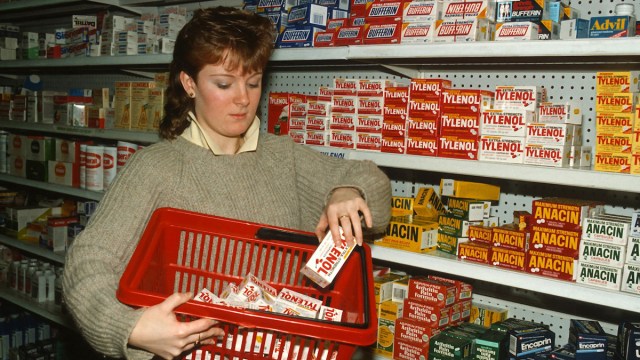
Tylenol has been in the headlines for the last several weeks—though not for reasons any marketer would want.
Despite a veritable mountain of clinical evidence to the contrary, on September 22, Health and Human Services Secretary (HHS) Robert F. Kennedy, Jr. called out Tylenol for potentially leading to autism in children when taken by pregnant women.
Now, in an apparent attempt to circle the wagons around its flagship brand, parent company Kenvue has recruited Jon Halvorson as its new CMO.
A graduate of the University of Michigan’s Stephen M. Ross School of Business, Halvorson was most recently global svp of consumer experience for food conglomerate Mondelēz International. He has also held high-ranking positions at General Motors, and Starcom MediaVest, and Omnicom Media Group.
One of Halvorson’s most consequential decisions at Mondelēz—which makes Oreo cookies, Ritz crackers, and Toblerone chocolates, among many other brands—was to harness AI as a means of trimming advertising costs. “Generative AI is revolutionizing the creative process,” he told the Wall Street Journal last year.
But at Kenvue, Halvorson will need more than AI to combat the branding challenge the HHS announcement sent tumbling down last month.
Shortly after RFK Jr.’s broadside—which President Trump joined by declaring that “Tylenol is not good… don’t take it”—Kenvue returned fire with an announcement stressing that “sound science shows Tylenol is safe and taking acetaminophen does not cause autism.” The communique cited research from the American Academy of Pediatrics, the World Health Organization, and the Autism Science Foundation, among many other respected medical organizations.
But a central problem for Kenvue—and, soon, for Halvorson—is that a large portion of the public no longer trusts the advice of public-health authorities.
For example, only 54% of Americans believe what the Centers for Disease Control says, according to a recent Ipsos poll. It will likely take some potent marketing messaging to restore and protect the reputation and fiscal health of Kenvue’s 70-year-old pain reliever. Morningstar estimates that Tylenol delivers some $1 billion in sales for Kenvue yearly.
Despite High Bar for M&A, Comcast to ‘Look at Things’ Amid WBD Sale Rumors
The numbers
28%—Increase in media earnings before interest, taxes, depreciation, and amortization (EBITDA), driven by Peacock.
-$217 million—Peacock EBITDA losses, which improved by $219 million year over year.
-2.7%—Revenue decreased after comparison to the 2024 Olympics, which broke the ad revenue record.
41 million—Total Peacock subscribers, which is flat quarter over quarter and up 5 million year over year.
The watercooler talk
Mergers were on analysts’ minds during Comcast’s third-quarter earnings call on Thursday, as the company is one of the reported suitors for Warner Bros. Discovery, which recently said it was receiving interest from “multiple parties.”
Mike Cavanagh, Comcast’s president, said the “bar is very high” for the company to pursue any M&A transactions, given how strongly it feels about its businesses and strategies. However, he added, “You should expect us to look at things that are trading in our in the space around our industry.”
A major question surrounding any WBD transaction would be whether a sale would pass government regulation. To that point, Cavanagh noted that the company’s Versant spin-off is on track.
“What we’d be looking for and what we’re going to look like post diverse and spin, I think more things are viable than maybe some of the public commentary that’s out there,” Cavanagh said.
The key quote
“I would point out that with the Versant spin, we’ve set NBC media business up, pairing Peacock on the streaming side with NBC broadcast. You’ve seen lots of news lately about us attracting the NBA, Taylor Sheridan, and the like, over the long term, and you put that business alongside one of the finest studio businesses in the industry and our parks business, and I think the strategies we have are really sound and durable without M&A,” said Mike Cavanagh, Comcast president.
The Trade Desk Taps Shopsense AI to Turn More of the Open Web Into Shoppable Ad Inventory
The Trade Desk is giving brands a new way to serve contextual sponsored product ads. The ad tech firm announced a new integration with startup Shopsense AI on Thursday to bring sponsored product ads to publisher content across the open internet.
The deal, made through The Trade Desk’s OpenPath supply integration, lets advertisers place shoppable product listings directly next to relevant editorial content—like a Nike shoe ad beside a marathon training article or a cookware link under a recipe video.
“For The Trade Desk, [this integration] creates a bigger surface area on the inventory side, creating a higher relevancy to a different kind of commercial opportunity,” said Will Doherty, svp of inventory development at The Trade Desk. This effectively turns impressions across omni-channel platforms like CTV, web, and audio into shoppable media placements, he added.
The move follows The Trade Desk’s recent expansion into retail media. ADWEEK previously reported that advertisers will be able to programmatically buy sponsored product ads on delivery app Gopuff through The Trade Desk in a deal facilitated by commerce adtech firm Koddi. The Shopsense integration extends that strategy beyond retailer environments and into premium publisher inventory.
This integration dovetails with an increase in consumer tolerance for commerce-driven media. A December 2024 Bain & Company study found that 45% of consumers don’t mind sponsored ads if they’re relevant, and 40% say well-executed ads can actually help their shopping experience.
Shopsense, founded in 2023 by former Amazon executives, uses a mix of generative AI and machine learning to analyze images, text, and video on publisher pages and extract commerce intent. The system identifies products in content—such as sunglasses on a celebrity or a team jersey in a game recap—and converts them into “targetable parameters” advertisers can buy against, including search queries, Amazon product IDs, or Global Trade Item Numbers (GTINs, a unique number that identifies a product or service), according to Bryan Quinn, president and co-founder of Shopsense.
Shopsense works with media companies including Disney, Fox, Paramount, Vox Media, BuzzFeed, and People Inc. The integration with The Trade Desk allows clients to activate relevant sponsored ads on those publisher sites.
“We see a great opportunity to merge upper-funnel storytelling with lower-funnel performance via The Trade Desk,” Quinn said.
Once Shopsense AI identifies product context on a page, it sends a bid request using the OpenRTB protocol. The Trade Desk evaluates whether it has relevant sponsored product ads to serve, and if it wins the auction, the placement appears as native, shoppable media embedded on the page. Brands can layer this inventory alongside existing CTV, display, and audio buys.
“Our clients have CTV running, they have web running, they have audio running, and now they can bring their product listings into the same experience, expanding omni-channel experience,” Doherty said.
Nothing But Net: Last Year’s $2 Billion in Basketball Ad Spend Delivers Big ROI
Basketball is becoming a slam dunk for advertisers across categories, according to a new EDO report.
ADWEEK has an exclusive look at EDO’s new basketball outcomes report, which reveals that basketball is one of the most effective ad environments for advertisers. According to the television data and analytics firm, last year had $2.3 billion in ad spend and nearly 1,000 brands advertising across the NBA, WNBA, and NCAA basketball.
“Basketball continues to be one of the most powerful environments for advertisers where passion meets performance,” Dana McGraw, svp, data & measurement science, Disney Advertising, said. “Across the NBA, WNBA, and college basketball, we’re seeing measurable proof that fan engagement drives real business results.”