Call for Nominations: ADWEEK Debuts Best Places to Launch a Career

ADWEEK has opened entries for a new awards program launching in 2026: Best Places to Launch a Career.

Best Places to Launch a Career shines a spotlight on organizations that go above and beyond in nurturing the next generation of talent. This inaugural award recognizes companies that don’t just hire early-career professionals but actively invest in their growth, offering the training, mentorship, and opportunities needed to build meaningful and lasting careers in advertising, media, tech, and marketing.

From creating inclusive and supportive cultures to designing programs that encourage learning, innovation, and advancement, these organizations understand that the success of their people is the foundation of their future. 

Please use the form below to complete your entry. The final deadline to submit is December 22, 2025.

If you have any questions or would like to request an extension, please contact awards@adweek.com. 

Entry Fees

  • Early Bird Deadline (ends 11/7/25): $375
  • Regular Deadline (ends 12/1/25): $425
  • Final Deadline (ends 12/22/25): $495 

https://www.adweek.com/agencies/call-for-nominations-adweek-debuts-best-places-to-launch-a-career/


Can The New York Times Be the ‘Essential’ Newspaper for the Entire World?


On Tuesday, the French news publisher Le Monde launched a cross-offer initiative with The New York Times, an arrangement that will allow Le Monde—as well as its sister publications Courrier International and Le Nouvel Obs—to offer their subscribers a one-year New York Times subscription for no additional cost.

The deal is not a partnership, per se. The bundle will not be available to all Le Monde readers; instead, the French outlet will selectively present it to those with a high propensity to respond to it, such as readers who engage with the international section, according to Le Monde’s chief digital operations officer Lou Grasser. It also only goes one way: The New York Times will not be offering its readers an opportunity to subscribe to Le Monde. 

“We have seen encouraging results from other bundles, but this is fundamentally a test,” Grasser said. “The philosophy is the same that guides our deals with OpenAI and Perplexity, in that the faster we go with testing the sooner we will know what works.”

.newsletter-subscription-form-wrapper p:empty{ display: none !important } .newsletter-subscription-form-wrapper button br{ display: none !important }

The bundle includes The New York Times’ full digital subscription, which includes products like Cooking and Games. It is also meant to complement Le Monde in English, a translated version of Le Monde that the publisher debuted in 2022, to entice European readers who do not speak French. 

For Le Monde, the initiative is part of a larger effort to scale its subscription business. The French news publisher, the largest in the country, now has 665,000 total subscribers, 600,000 of which are digital-only, according to Grasser. (Le Monde in English has brought in around 13,000 subscribers, Grasser said, a fraction of the 150,000 English-speaking customers it had set as its 2025 goal.)

More broadly, the outlet had set for itself the ambitious goal of netting 1 million subscribers by 2025, a mark that it is also bound to miss. But it continues to work diligently toward its stated aim, and has made ample use of innovative partnerships to do so, including tie-ups with Spotify and HBO in the last year.

Overall, Le Monde Group generated €310 million ($360 million) in 2024, roughly half of which, around €150 million, came from Le Monde alone, according to Grasser. Subscriptions accounted for approximately 50% of that business, or around €75 million, which breaks down further into digital (35%) and print (15%). By the end of 2025, Le Monde anticipates generating around €70 million ($81 million) from digital subscribers, a growth of 33%.

For The Times, the initiative accomplishes several objectives. It nets it a cut of the generated revenue, for one. But more critically, it provides the news publisher, which itself aims to have 15 million subscribers by 2027, a valuable source of data about the international appetite for its subscription product. It also gains access to this data at virtually no cost, as the structure of the Le Monde deal does not require The Times to manage the infrastructure of the bundle.

“This provides The New York Times with exposure to a new market without any customer acquisition cost,” according to Felix Danczak, a subscription marketing analyst who is now head of AI and growth at venture firm Pembroke VCT. “They also get behavioral and engagement data on international readers for free, which will tell them whether or not it makes sense to do this expansion elsewhere.”

Indeed, the tie-up with Le Monde is not the first such arrangement the Gray Lady has inked. 

Last fall, four European news publishers—El País (Spain), Politiken (Denmark), the Irish Times (Ireland), and Corriere della Sera (Italy)—sweetened their subscription deals by offering complimentary access to The New York Times. The Times has these deals with more than 20 publishers, according to Nieman Lab. 

The tie-ups are part of a broader strategy for the publisher, which in March 2022 set itself the goal of becoming “the essential subscription for every curious, English-speaking person seeking to understand and engage with the world.”

All the news that’s translated to print

Lately, even a goal as lofty as serving “every curious, English-speaking person” has begun to feel limited. 

Crucially, instantaneous language translation has become more widespread. The technology has been gradually improving for years, and AI has only accelerated that rate of growth. 

Le Monde in English, for instance, became economically feasible only because AI could do the bulk of the translation work (although the final copy is reviewed by a team of editors), according to the company, which is majority owned by French billionaire Xavier Niel. (Niel is also an investor in several AI startups.)

So far, The Times’ forays into international markets have come in the form of untranslated products. Enough people speak English worldwide that it has not yet been a materially limiting factor. 

But with nearly costless translation now readily accessible, The Times could soon begin to evolve its international expansion strategy, offering its product in consumers’ native language and dramatically increasing its total addressable market, according to Danczak.

A spokesperson for The New York Times declined to comment.

The company has also faced pressure from activist investors to increase its use of the technology. In August, investment firm Fivespan announced it had built up a position in The Times, pushing the publisher to more aggressively embrace AI. Fivespan founders Dylan Haggart and Sarah Coyne pointed to AI-enabled translation as a key growth accelerant that The Times has left underutilized. 

“AI is a clear tailwind for The New York Times,” Fivespan said in a letter obtained by Bloomberg in August. “Our work shows it can more than double the company’s long-term revenue and profit potential: enhancing growth by reaching broader audiences, converting more readers into paying subscribers, and unlocking new, lucrative profit pools.”

If The Times believes it can generate 15 million English-speaking subscribers by the end of next year, imagine how much larger its potential market could be once language is no longer a barrier, Danczak said. Translation, properly handled, could dramatically balloon The Times’ subscriber base, transforming its business into a truly international resource.

The benefits extend even beyond subscribers. Translation renders not only new reporting more valuable, but archival content as well, according to Jeff Kaloski, managing director and partner at L.E.K. Consulting. 

A similar phenomenon is playing out right now in the entertainment industry, Kaloski said. Backlogs of content going back decades—more than a century in some cases—can now be localized at next to no cost, unlocking intellectual property that was once cost-prohibitive to translate.

As AI firms work to secure licensing deals with trusted information providers, The Times’ ability to translate its archive into other languages could make its data exponentially more valuable. Rather than limit its utility to English-based queries, Times content could be used to inform answers in any language, according to Danczak.

Of course, this all remains hypothetical at the moment. 

The Times, alongside Le Monde and others, has moved slowly in its embrace of AI-enabled translation in order to ensure that its quality of reporting does not suffer. Automated translation tools still produce errors particularly in less-popular languages, and competitors that have moved more quickly, like Bloomberg, have hit snags trying to inject AI-generated summaries and localization into their coverage. 

For The Times to be “the essential subscription” for the non-English speaking world, it will first need to be trusted in other languages.

https://www.adweek.com/media/new-york-times-le-monde-bundle-ai-translation-onbackground/


AppLovin Pulls Mobile Product As Backdoor App Install Allegations Mount


Adtech firm AppLovin on Wednesday confirmed it has shuttered a mobile software product that was allegedly enabling downloads of apps onto user devices without consent. 

A company spokesperson said in a statement shared with ADWEEK that AppLovin eliminated Array last quarter. The product enabled device makers like Samsung and service carriers like T-Mobile to surface on-device app recommendations and allow seamless direct app downloads. 

The spokesperson said AppLovin decided to close down Array, a move first reported by Bloomberg, because the product “was not economically viable.”

However, chief financial officer Matthew Stumpf last year cited Array, alongside a handful of other parts of the business, as key to AppLovin’s revenue growth. The LinkedIn profile of former AppLovin product lead Jia-Hong Xu previously claimed that Array’s direct download ad function was “the company’s top revenue driver.”

AppLovin has reassigned workers on the Array team to its burgeoning e-commerce business, the spokesperson said. 

Founded in 2012, AppLovin helps developers monetize mobile apps with ads. Though it’s become a Wall Street darling—with a market cap swelling to around $207 billion—it’s faced growing scrutiny this year, due in large part to a smattering of short seller reports in the spring and summer. These reports, from firms including Fuzzy Panda Research, Sakura Research, and Culper Research, detailed unsubstantiated allegations ranging from  “deceptive, predatory” advertising to artificially inflated revenue through round-tripping practices. 

Array’s closure comes on the heels of new research this week published by ad fraud researcher and former Harvard professor Ben Edelman—who also has a short position on AppLovin. Edelman has unearthed instructions within AppLovin source code that he says appear to instigate autonomous downloads of external mobile apps when users engage with an in-app ad powered by AppLovin.

He also observed what he described to ADWEEK as “very unusual idiosyncrasies,” including language indicating a five-second countdown timer linked to an ‘autoInstallDelayMs’ instruction that appears to be designed for triggering app installs.

Edelman also compiled 208 posts from users complaining that apps were appearing on their devices even though they didn’t believe they had consented to downloading them. Some complaints, reviewed independently by ADWEEK, indicated that these apps automatically downloaded after users clicked on an ad, when trying to exit an ad, and even in cases where users claimed they did not touch their screens at all. Edelman believes unwanted downloads stem from the Array product, though the allegation is unproven. 

Edelman has conducted tests on a variety of his own devices as well, but has never witnessed an automatic app install via an AppLovin ad in these tests, he said. 

“I never managed to get it to happen to me,” he said. “That’s okay. I’ve never seen a meteor, but I know that meteors exist through the scientific process. And so, too, here I have a scientific process that is sufficient to reach conclusions, even if I’d rather see the meteor with my own eyes.”

AppLovin’s spokesperson rejected Edelman’s claims outright, saying: “We have never installed an application without explicit user consent.” They said AppLovin’s app ads redirect to app stores and “that’s where a user consents to download something or not.”

A T-Mobile spokesperson said in a statement that “T-Mobile does not install apps on customers’ devices without their consent.” They added that the mobile carrier ran a pilot program with AppLovin that allowed users to consensually download apps from ads, but that the pilot has ended. Samsung did not respond to a request for comment.

In March, AppLovin hired lawyers to investigate claims made by various short sellers.

AppLovin is currently being probed by the U.S. Securities and Exchange Commission over its data collection practices and allegations that the company breached contracts with some partners in an attempt to bolster its ads business, Reuters reported last week.

Despite swirling allegations about its business, AppLovin’s stock has continued to surge this year, up nearly 75% since the start of 2025.

Update Oct. 15 at 2:57 p.m. ET: This story has been updated to include a statement from T-Mobile.

https://www.adweek.com/media/applovin-pulls-mobile-product-as-backdoor-app-install-allegations-mount/


Apple Tops Global Brand Rankings Again, But An AI Contender Is Closing In


Apple has topped Interbrand’s annual Best Global Brands ranking for the 13th consecutive year—but AI giant Nvidia is closing in on its crown.

Interbrand’s list ranks 100 companies based on their financial performance, the role their brand plays in purchase intent, and the brand’s competitive strength.

The total value of this year’s Best Global Brands stands at $3.6 trillion, a 4.4% increase versus last year.

2025’s top five brands remained unchanged from 2024, with Microsoft, Amazon, Google, and Samsung following Apple’s lead.

However, further down the list, there’s been a historic surge for Nvidia and 12 new entrants across tech, finance, retail, and more, underlining shifting market dynamics.

Nvidia’s Rise

AI chipmaker Nvidia recorded the largest-ever brand value increase in Best Global Brands’ history, rising by 116% to reach $43.2bn—catapulting it from 36th place in 2024 to 15th in 2025.

“Nvidia’s stellar product marketing and complete dominance in its ecosystem have spurred its meteoric rise,” said Greg Silverman, global director of brand economics at Interbrand.

However, he cautioned that the Silicon Valley company (which was founded in 1993, but has recently surged in prominence as its hardware drives the AI boom) shouldn’t get too comfortable.

“The emergence of a disruptor could undo this brand if it does not invest in long-term brand storytelling,” Silverman said. “It has the scale, but that’s not a brand strategy. To maintain sustainable growth, this is imperative.”

Despite their recent advertising blitzes, consumer-facing AI brands like OpenAI and Anthropic did not make this year’s list. Notable new entries included investment firm BlackRock, which landed at number 31, Booking.com (32), and Uniqlo (47).

Instagram’s brand value grew 27%, leading it too enter the top 10 for the first time, too.

When it came to brand tumbles, Nike—which is transforming to regain its marketing edge—dropped from the 14th to the 23rd spot after losing 26% of its value.

Elon Musk’s Tesla also dropped 13 spots to 25th place, with a 35% decline in brand value.

Interbrand’s Best Global Brands 2025 – Top 10
1. Apple
2. Microsoft
3. Amazon
4. Google
5. Samsung
6. Toyota
7. Coca-Cola
8. Instagram
9. McDonald’s
10. Mercedes-Benz

https://www.adweek.com/brand-marketing/apple-tops-global-brand-rankings-again-but-an-ai-contender-is-closing-in/


The Trade Desk Execs Share New Details About How Sell-Side Solution OpenAds Will Work


The Trade Desk on Tuesday revealed new details about how its recently launched supply path product OpenAds will work. 

Debuted earlier this month, OpenAds has been positioned as a prebid wrapper created with the intention of improving supply chain transparency and giving media buyers a direct route through which to access publisher ad space.

The Trade Desk CEO Jeff Green and general manager of product Mike O’Sullivan described the new features of OpenAds at an event in New York hosted by Prebid.org, a nonprofit platform that sets standards for programmatic advertising and helps publishers manage header bidding. In August, Prebid.org made changes to the Transaction ID marker in bid requests meant to improve privacy that resulted in limited insight from media buyers.

This is the first time The Trade Desk has shared information about how OpenAds will work from a technical perspective, with Green and O’Sullivan describing four key features. These features are meant to give publishers greater visibility into ad auctions and help them verify demand as legitimate.

The first feature is called Auction Code Attestation. This is a way of cryptographically proving that the code running within the real-time infrastructure running ad auctions is identical to the code visible in a public database or local copy. In short, it’s meant to ensure that the code that users see in the OpenAds GitHub repository actually matches what is being executed.

The second feature, the Sincera Integrity Signature, surfaces deterministic evidence of instances in which bid request fields are manipulated.  “So, if someone is swapping out an ID silently, the signature will snap. It’ll break,” O’Sullivan said. “If someone is modifying the Transaction ID to overwrite it with the previous value—because you’re rendering an ad for a bid that we sent in 45 minutes ago—the signature will snap.”

The third flagship feature, Auction Audit, enables publishers to monitor the auction more closely, giving them access to a breadth of data signals including the number of bids on their inventory, who placed the bids, how often an auction ran a specific ad unit, and more. The Trade Desk hopes that the audit function will help publishers “verify that nobody’s putting their thumb on the scale,” O’Sullivan said. 

The Auction Audit feature will be accessible as JSON, a file type for sharing structured data, and also via PubDesk, The Trade Desk’s new dashboard for publishers. PubDesk is currently accessible to users of OpenPath, the company’s tool for linking buyers directly to premium publishers. It will become available to non-OpenPath users after Thanksgiving, the company said.

The fourth and final core pillar of OpenAds is Transaction ID—yes, the same cross-exchange identifier that was disabled by Prebid.org in August. 

“Transaction IDs, in and of itself, are not really a feature, but they allow for such a great degree of precision in unpacking and detecting and finding all sorts of issues, the least of which is duplication,” O’Sullivan said. “One of the things that came out of this Transaction ID discussion and debate is this sense of, ‘Well, we’re not going to give this data because we don’t want people to use it, or we don’t want buyers to to bid shade….But this is doable with timestamps.”

Transaction ID changes

Historically, Transaction IDs were meant to be consistent across all bidders for a given auction, which enabled buyers and demand-side platforms to see duplicate bids and notice when an auction might have been manipulated or tampered with. In August, Prebid.org changed how TIDs work—now, each bidder receives a unique TID for the same auction, which essentially reduces visibility for the buy side.

Green denied that OpenAds was created as a direct response to the TID change, but admitted that the move “accelerated [the] announcement” of OpenAds. OpenAds, itself built on the Prebid codebase, can be used by a variety of users but is designed to primarily service publishers.

O’Sullivan said that The Trade Desk views OpenAds as a wrapper designed to work in conjunction with Prebid.js and other wrappers for managing header bidding. 

“We’re in a position to create this wrapper, and create better signal, and to participate in a conversation to make the ecosystem better,” Green said. “We’re just asking people to try it and to see if it will work better for them, and then give us the chance to prove ourselves.”

Green said that The Trade Desk has spoken to a handful of publishers who’ve resumed use of Transaction IDs after Prebid.org’s summer shakeup.

Prebid.org didn’t respond to a request to comment by publication.

New sell-side controls

The introduction of OpenAds has generated some controversy as some publishers and publisher-adjacent businesses have argued that The Trade Desk should not be encroaching into the sell side of the advertising business. Having some control over both sides of the auction, they argue, is risky; in fact, it’s the reason Google’s adtech business was found in violation of U.S. competition law this year.

The Trade Desk said it’s debuting publisher tools with the end goal of creating cleaner supply paths for advertisers on the buy side.

Pressed by Prebid.org chair Garrett McGrath about whether The Trade Desk was intentionally extending its business into the sell side, Green said, “I don’t believe that the auction is inherently a sell side function.” He said that servicing publishers via PubDesk is a “second-order effect” of trying to “ help buyers have the most efficient supply chain possible.” 

Pushed again by McGrath, however, Green admitted that “for some,” The Trade Desk might be reconstituting what is considered a sell-side tool. 

The rollout of OpenAds is evidence of a larger mission, however, Green contended. 

“I don’t care if OpenAds itself is successful. I’m very happy if Prebid and/or others innovate and do something similar and are even better than what we are doing,” he said, adding: “Many people said to me, ‘Jeff, it would have been less contentious if you’d done this another way’….And my response to that is, yes, but this is faster.”

Green continued: “This is facilitating the dialogue that we need to be having. It is not buy side versus sell side. It is [about] quality publishers who are taking home less than they should be, and [other] publishers that are taking home more than they should be.”

Finally, Green tossed in a jab at Google, whose adtech stack is at risk of unravelling as a federal judge considers how to remedy what earlier this year was determined to be an illegal monopoly in ad exchanges and ad servers. “And let’s not perpetuate the legacy that Google started, which is, ‘Let’s fuck with the auction as much as the law will allow, and even maybe a little beyond that.’”

The Trade Desk’s stock is down 56% since the start of the year amid a handful of platform changes. Last month, The Trade Desk sunset part of its divisive Kokai interface.

Correction Oct. 15 at 9:18 am: A previous version of this story incorrectly said that the Auction Audit feature, could be accessed via sellers.json—it can be accessed via JSON files. Additionally, Mike O’Sullivan’s title was incorrectly listed as vice president of product, but he is general manager of product.

https://www.adweek.com/programmatic/the-trade-desk-openads-sell-side-tools/


Spotify Podcasts Are Officially Coming to Netflix


When it comes to video podcasts, Netflix has found itself a Ringer.

Starting in early 2026, video podcasts from Spotify Studios and The Ringer will be available on Netflix in the U.S., with additional markets to follow, the companies announced Tuesday.

The initial list of titles, which is expected to grow in the future, includes sports entries such as The Bill Simmons Podcast, The Ringer Fantasy Football Show, and The Ringer NBA Show; lifestyle offerings such as The Rewatchables, The Big Picture, and The Dave Chang show; and true-crime stories such as Conspiracy Theories and Serial Killers.

Rumors of a deal between the companies originally circulated in July, with experts telling ADWEEK that a partnership would allow Netflix to gain entry into some of the most popular genres for TV and video while also helping Spotify expand beyond audio streaming.

“At Netflix, we’re always looking for new ways to entertain our members, wherever and however they want to watch,” Lauren Smith, Netflix vp of content licensing and programming strategy, said in a statement. “As video podcasts continue to grow in popularity, our partnership with Spotify allows us to bring full video versions of these top shows to both Netflix and Spotify audiences.”

https://www.adweek.com/convergent-tv/netflix-and-spotify-make-video-podcast-partnership-official/


MrBeast Kicks Off Global Soccer Initiative With TelevisaUnivision


MrBeast and TelevisaUnivision are scoring partnership goals.

Today, MrBeast and Spanish-language media company TelevisaUnivision announced they’re teaming up for a new initiative called the “Road to Beast Cup.”

Beau Avril, svp, global head of media and brand partnerships, for MrBeast, and Tim Natividad, TelevisaUnivision’s ad sales chief, first shared the news during an ADWEEK House panel moderated by ADWEEK CEO Will Lee.

With the 2026 FIFA World Cup on the horizon, the Road to Beast Cup initiative serves as a complement to the 2026 summer of soccer, showcasing top global creators teaming up with soccer legends for a 1v1 Creator Cup at Estadio Azteca in Mexico City.

The companies said that the creators and legends will go head-to-head, competing for a “major contribution” to build soccer fields in their home countries. And viewers can watch it all happen across MrBeast’s social channels and TelevisaUnivision platforms.

“This partnership pushes the game forward in new ways and delivers content built for today’s audience,” Natividad said in a statement.

Brands also have the opportunity to get involved, ADWEEK has learned, with advertisers getting the chance to integrate into the cultural moments during the initiative.

Meanwhile, the initiative also has philanthropic motivations, with MrBeast, TelevisaUnivision, and Beast Philanthropy joining to create a new school and a soccer field near Mexico City, as well as refurbish 10 additional soccer fields for kids across the country.

“Soccer is the world’s most popular sport, and Jimmy is the world’s most popular creator, making TelevisaUnivision the perfect partner to join us on our journey to create lasting change,” Jeff Housenbold, CEO of Beast Industries, said in a statement.

https://www.adweek.com/convergent-tv/mrbeast-televisaunivision-road-to-beastcup-soccer-initiative/


Paramount Snags Roku Ad Sales Leader Jay Askinasi as CRO


Roku City is now a little emptier, with Paramount naming Jay Askinasi, Roku’s ad sales leader, as CRO.

Today, Paramount, a Skydance Corporation, announced that Askinasi will take on the newly-created chief revenue officer role, leading the company’s monetization strategy and strengthening its position as a “next-generation media company.” He is the latest member of CEO David Ellison’s exec leadership team and starts Nov. 3.

Askinasi will lead the company’s advertising sales team, partnering with product teams, leveraging data-driven insights, cultivating ecosystem partnerships, and driving a unified advertising platform, according to Paramount.

Despite Askinasi leading the company’s ad sales team, ADWEEK has learned that John Halley, president of Paramount Advertising, will stay in his role, reporting to Askinasi.

“We are thrilled to welcome Jay to Paramount as our new CRO. He brings a unique and highly relevant mix of experience across ad tech, platforms, data, agencies, and startups—all grounded in a deep understanding of the media and converged video landscape,” Jeff Shell, president of Paramount, said in a statement.

The executive spearheaded ad sales while at Roku, joining the company in 2024. He previously served as CEO of Publicis Media Exchange U.S., overseeing media investment strategy.

“This is a pivotal moment of transformation for the industry, and Paramount is clearly positioning itself at the forefront of that change,” Askinasi said. “I’m excited to help shape a next-generation digital monetization engine—one that can stand alongside the biggest tech platforms—while preserving the creative excellence and cultural influence that define Paramount’s iconic content.”

In late July, Paramount announced that it was nearing the end of its current upfront cycle, with overall volume consistent with that of last year. The volume was driven by sports and streaming.

“The reality is that if you had a sports portfolio, if you had a big tentpole portfolio, [advertisers] were diving in on that,” Halley told ADWEEK in September. “And actually, stage one of the upfront moved earlier and much faster than we thought because of those coveted properties.”

https://www.adweek.com/convergent-tv/paramount-snags-roku-ad-sales-leader-jay-askinasi-cro/


OpenAI Just Flunked Marketing 101


OpenAI’s recent ads for ChatGPT were everywhere—NFL Primetime, streaming platforms, outdoor, and beyond. Press coverage hailed the AI company’s biggest marketing push yet as a new chapter of AI brand building. 

But few pointed out just how incredibly poor the ads were.

Set aside the irony of an AI company relying on traditional media to promote its product. Focus instead on the dire creative quality of the two TV spots, Pull-Up and Dish. 

Research firm System1 tested both ads with a representative panel of U.S. consumers. The results confirm that while AI tech bros continue to kill it with product development, they’re lightyears behind on the rest of the marketing challenge.

Both ranked in the lowest quintile for long-term growth and short-term sales impact. That’s incredibly bad, even for the tech category, which always underperforms. 

Worse, both scored dismally on fluency—System1’s measure of whether consumers actually know which brand is being advertised to them.

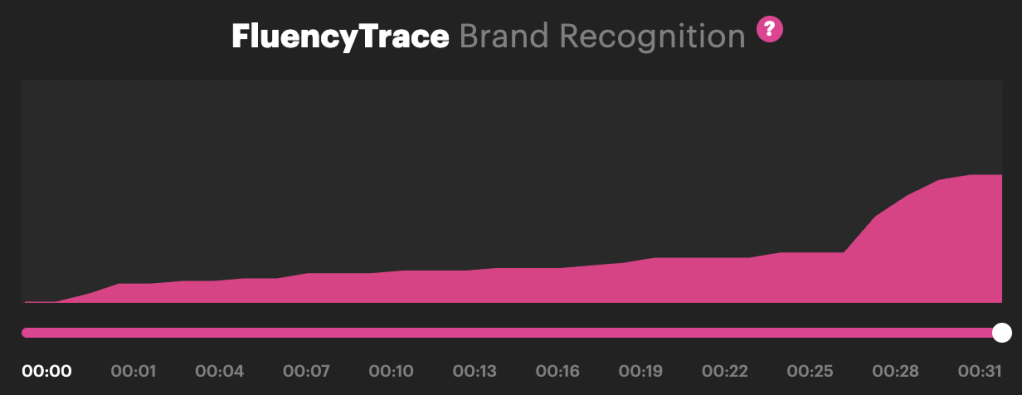
Source: System1 FluencyTrace real time testing of “Pull-Up”
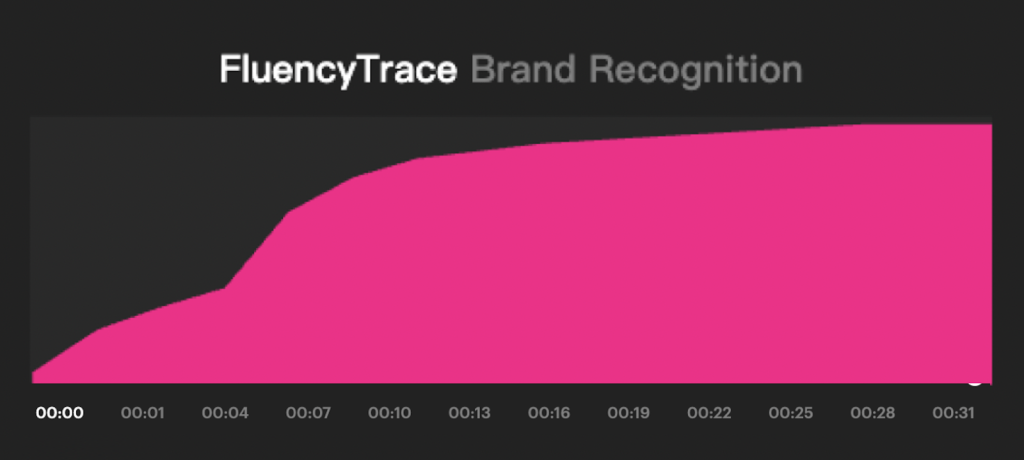
The Pull-Up ad managed a fantastically bad fluency score of 59. That means only 59% of viewers–who were being paid to watch the ad with their full attention–knew what was being advertised. In System1’s real-time assessment above, you can see a black ocean of ignorance engulfing the audience. A disappointingly small hump of pink recognition kicks in two seconds before the end, when ChatGPT’s logo appears. 

This is the definition of bad advertising, standing in rude contrast to the sea of pink when KFC or Apple or Mars ads are tested.

Source: System1 FluencyTrace real time testing of Twix “Two Bears” Ad

And that’s just real-time fluency, not the tougher and more important metric of branded recall among unpaid, inattentive audiences with a memory-shredding delay before being quizzed. Most studies conclude that just around half of all advertising achieves branded recall. 

Now back to the killer ratio: half of the ads aired in America can’t even communicate what product they are selling.

There’s a simple explanation: Most marketers are too involved in their product. Most agencies are too interested in their storytelling. Both miss market orientation. 

They don’t realize that consumers don’t care about their product, don’t focus on advertising, and have a bazillion more important things to think about. This total lack of involvement contrasts directly with professionals spending eight hours a day fixated on one brand and a thirty-second masterpiece. We make ads in exact inversion to how they’re consumed.

Bad advertisers assume a single whiff of a logo at the end is enough—like a Hitchcock movie revealing its triumphant conclusion in the final frames. Brands with a more advanced grasp of effectiveness know better. They use distinctive assets from the outset to ensure immediate recognition at the start, throughout, and after. They squeeze value from every pixel they paid for.

Andrew Tindall’s “Rule of 7” is instructive here. His analysis of a giant Effie database suggests a brand needs seven distinctive assets in a thirty-second ad to achieve 100% branded recall. Not seven different assets—just seven repetitions of the colors, shapes, and other elements in your asset palette. And no, that doesn’t limit creativity. It challenges it to work harder toward its true purpose: advertising effect and sales.

Achieving branded recall and maintaining distinctiveness is crucial for all brands. But it’s especially critical for AI brands like ChatGPT, which are incredibly generic. They all look the same, operate the same, work off each other, launch innumerable product iterations, and fall blandly into a big, gray AI bucket.

While AI awareness is near-universal among Americans, most people don’t see any difference between AI providers. Menlo Ventures found that “most people don’t distinguish between older assistants like Alexa and Siri and newer large language models like ChatGPT and Claude. It’s all the same.” I don’t know which AI models I’m currently subscribed to. Do you?

Distinctiveness will be crucial in the next chapter of AI. There are too many competing brands. The two or three that survive won’t necessarily carve a differentiated position, but they’ll come to mind first by standing out. The route to that escape starts with making ads that don’t score a 59 for fluency.

Perhaps the geniuses at OpenAI should have asked their own chatbot for advice. When I did exactly that yesterday, ChatGPT—unlike the company behind it—played it perfectly:

Prompt: Assess the new Pull-Up ad from ChatGPT against the laws of advertising effectiveness and score it out of 10.

ChatGPT-5: Pull-Up is strategically on-brief and nicely made, but it underweights distinctive assets and mid-ad branding, so it risks becoming a likeable, generic “AI-helped me” story rather than a memorable ChatGPT ad that builds future sales.

Score: 5/10

Mark Ritson is a former marketing professor, brand consultant and award winning columnist. He is the founder of the MiniMBA in Marketing, which teaches all the many laws of advertising effectiveness as part of its outstanding syllabus. 

https://www.adweek.com/brand-marketing/openai-just-flunked-marketing-101/


For Substack, The Free Press’ Sale Is a Tenuous Victory

When the news broke Monday that Paramount Skydance had acquired The Free Press for $150 million, Substack cofounders Hamish McKenzie and Chris Best took to a livestream to celebrate.

The Free Press, perhaps more than any other multiauthor publication on the platform, is a quintessential Substack success story, with more than a hundred thousand paying subscribers and millions of monthly readers. The duo wanted to toast the moment, which marked the biggest exit of any creator on its platform.

But the celebration comes with a sense of caution, as it raises questions about what could happen if The Free Press inevitably left the newsletter platform.

https://www.adweek.com/media/substack-free-press-paramount-cbs-sale-tenuous-victory-onbackground/