Agencies Are Done Only Dabbling in AI. Now Comes the Hard Part.

Agencies are racing to keep pace with the rapid evolution of generative AI, while also helping their clients do the same.

At Advertising Week New York on Wednesday, senior leaders from WPP and Assembly Global described how AI is transforming everything from workflows and media planning to creative development and team structure, ushering in what one panelist called “the most transformative technology of our lifetime.”

The session, dubbed “How Agencies Can Thrive in the Age of Generative AI,” featured Elav Horwitz, executive vice president, global head of strategic partnerships and AI solutions at WPP, and Kate Nible, vice president, client experience at Assembly Global, in conversation with Bianca Bradford, director, head of agency, North America at Meta.

To start, panelists shared their own day-to-day AI hacks, from using ChatGPT to organize personal notes to streamlining household questions. But the heart of the conversation was the agency opportunity.

“A single word answer is obviously efficiency,” said Nible. “The management of media is so time-consuming. There are so many tiny tasks from front to back. AI gives you time back … It gives you the opportunity to think about what this data is actually saying.”

For Horwitz, the technology is both a disruption and a creative catalyst.

“Let’s be honest. I think we needed a little bit of this fire, this energy back. We all got super comfortable with traditional ways of working,” Horwitz said. “Now, the hardest part is to come up with the right idea and stand out in culture, in terms of craft and taste, because there’s so much content out there.”

From transformation to operations

The panelists emphasized that agencies are moving beyond experimentation toward operationalizing AI at scale. Nible pointed to Assembly’s Stage platform, which powers reporting and analysis across channels, helping teams identify cross-channel insights in real time.

“The biggest difference is that our larger clients are able to more naturally identify cross-channel connections and do something about them because of the wealth and breadth of information at our fingertips,” Nible said.

Horwitz noted that WPP has 70,000 employees using AI daily, with 50,000 custom agents built internally.

“The idea was: How can we actually democratize that across the organization—not only keep it to the creative or production teams?” Horwitz explained. “Suddenly, strategists can play their own AI videos and present that as a client presentation. That completely changed the way we work.”

Both agreed that technology is not the bottleneck; however, change management is.

“I don’t think technology is the problem,” Horwitz said. “It’s the change management around it—bringing people along for the ride, making them trust the process and get excited about it.”

Beyond efficiency: creativity and scale

The conversation then turned to creativity.

A case study for Make Up For Ever demonstrated how using Meta’s AI background tool to swap a plain white background for a more vibrant one improved both engagement and return on ad spend, all within brand guardrails. The ease and speed of the test reflected how AI can make low-risk creative optimization both fast and meaningful.

Horwitz added that the conversation has shifted: Brands are no longer asking how to use AI for low-funnel efficiencies—they want big ideas.

“Finally, we’re getting questions like: we want to use AI for big creatives as well,” Horwitz said. “How do we amplify AI at scale to be part of culture?”

As agencies and clients adapt, panelists predicted major changes in team structures, workflows, and the creative process.

“The creative process hasn’t changed probably since the Mad Men days,” Horwitz said. “This is the first time we can finally start changing it, questioning it, making production more upstream, more agile.”

Nible added that AI is creating new client expectations around digital experiences that are both emotionally resonant and algorithmically optimized, a “delicate dance” that will require close agency partnership.

And despite fears that AI will displace creativity, Horwitz argued the opposite: “Tech companies are actually hiring more designers than ever,” she said. “It’s the humans behind the machines. If the idea is good, if the story is good, if the craft is excellent, that’s what matters.”

Agencies aren’t only experimenting with generative AI—they’re restructuring around it. Efficiency gains are real, but the panel made clear that the real unlock lies in creativity, team design, and client collaboration.

The challenge now? Bringing clients along fast enough to keep pace.

https://www.adweek.com/agencies/agencies-are-done-only-dabbling-in-ai-now-comes-the-hard-part/


North America CEO Sharb Farjami Exits WPP Media


Sharb Farjami, CEO of WPP Media North America, is leaving the company, according to a staff memo obtained by ADWEEK.

Brian Lesser, CEO of WPP Media globally, will take on direct leadership of the North America region while the company searches for Farjami’s successor. WPP Media’s regional executive committee will report directly to Lesser during the transition, with Farjami supporting the handover.

Farjami has led WPP’s media operations in North America since January 2024, after running media agency Wavemaker in the region. Based in New York, he sat at the helm as the group went through a period of transition, including a rebranding and restructure in May.

In a note to staff announcing his departure, Lesser credited Farjami with helping WPP Media win clients including Adobe, Audible, and Johnson & Johnson and “guiding the rollout of our new operating model and brand in the region.”

“Sharb’s leadership laid the foundation for our success and was instrumental in our transformation,” Lesser wrote in the note. “He has been a tireless advocate for our clients and our business. As a former CEO of North America, I know firsthand the scale of his contributions and the legacy he leaves. He will be missed. ”

“The past four years at WPP Media have been an extraordinary journey marked by meaningful milestones with a remarkable team,” Farjami wrote in a statement. “I’m deeply proud of what we’ve achieved and grateful to everyone who’s been part of it. I’ll always be cheering on WPP Media in its next chapter.”

The leadership shift comes during a pivotal period for WPP Media. In May, the media network rebranded from GroupM and restructured to more closely integrate its agencies on the back-end. The news came after a string of major account losses, including Coca-Cola and Mars.

In August, the network had a big win when it unseated Carat to win Mastercard’s $180 million global media account, ending a decade-long relationship.

The leadership shift at WPP Media comes amid broader change at parent WPP. Cindy Rose took the helm of the holding company on Sept. 1, succeeding Mark Read. In her first address to staff, Rose acknowledged “a lot of hard work ahead” but said she felt “super excited to co-create the new WPP together.”

In its latest earnings report, WPP announced a strategic review as its revenue dropped by 5.8%.

Below is the full text of Lesser’s internal note to staff.

Team,

I’m writing you today to share that Sharb Farjami is leaving WPP to pursue an opportunity outside of a media agency. I’m deeply grateful for the impact he’s had over the past two years as CEO of WPP Media North America and, previously, as CEO of Wavemaker US. Effective immediately, I will oversee North America as we begin the search for our next North America CEO, with the regional executive committee reporting directly to me. Sharb will support me during our period of transition. 

Sharb’s leadership laid the foundation for our success and was instrumental in our transformation. From bringing in clients like Adobe, Audible, and Johnson & Johnson, to guiding the rollout of our new operating model and brand in the region, he has been a tireless advocate for our clients and our business. As a former CEO of North America, I know firsthand the scale of his contributions and the legacy he leaves. He will be missed. 

I believe the future holds even greater opportunities for us, thanks to the work that has already been done, and I’m excited for what we will accomplish together. I look forward to working even more closely with our US and Canada leadership teams as we build on the momentum Sharb helped create.

Please join me in wishing Sharb continued success in his next chapter.

Brian

https://www.adweek.com/agencies/north-america-ceo-sharb-farjami-exits-wpp-media/


Call for Nominations: Most Powerful Women in Sports 2026


It’s time to celebrate the women and non-binary people pushing sports and sports marketing forward—nominations for ADWEEK’s Most Powerful Women in Sports 2026 are now open! 

From athletes with an entrepreneurial spirit to pioneering executives and charismatic creators, this list honors individuals who have made a significant impact on sports marketing in the past 12 months. Check out last year’s winners here. 

There is no entry fee. Nominations are due by 11/25.

To submit a nomination, please fill out the form below and reach out to awards@adweek.com if you have any questions or would like to request an extension.

Winners will be announced in the February issue of ADWEEK in print and online. 

https://www.adweek.com/brand-marketing/call-for-nominations-most-powerful-women-in-sports-2026/


The NBA Is a Slam Dunk for NBCU: Ads Nearly Sold Out, Around 170 Partners


NBCU is bringing a full-court press for its NBA ad inventory.

Ahead of NBA tipoff in two weeks—which starts the first season of an 11-year deal between the league and NBCU—NBCUniversal is announcing that it has surpassed its advertising expectations, achieving a near sellout of ad inventory and taking on almost 170 partners.

According to NBCU, more than 20% of advertisers are new to the company, and nearly 10% are new to the NBA. Additionally, more than 70% of clients are investing across NBCU’s platforms, and more than 30% of overall NBA investment has gone towards digital. Investments in linear have also exceeded expectations by 20%, NBCU added.

“As a Chicago native, watching Michael Jordan and the Bulls win six championships with the NBA on NBC was an indescribable feeling, and now helping to welcome the property back is both a personal and professional highlight for me,” Mark Mashall, NBCU’s ads chief, said in a statement. “It is incredibly exciting to re-create the magic of the NBA on NBC as it returns to NBC and launches it on Peacock for the first time.”

The company is sold out of its marquee spots, with categories coming from auto, finance, QSR, entertainment, and retail.

Among the brands you’ll see, American Express is the official halftime sponsor, and DraftKings is the betting partner. Meanwhile, Kia is the official presenting sponsor of Tuesday’s NBA Coast to Coast, McDonald’s will sponsor Basketball Night in America and NBA Showtime on Sunday, State Farm will sponsor Tuesday’s NBA Showtime studio show, and Wingstop is sponsoring the Monday NBA Showtime studio show.

Xfinity will be the official presenting sponsor for Peacock NBA Monday.

Overall, NBCU will present 100 NBA regular-season games, up to 40 playoff games, and the NBA All-Star Weekend/Game each year. And the company is also making the inventory for its games available programmatically.

Amazon, which is also one the the league’s new media partners, recently announced its own NBA partnerships, with FanDuel being the first major sponsor and official betting partner. Amazon Web Services is also teaming with the league on an AI partnership.

https://www.adweek.com/convergent-tv/nbcu-nba-ads-sold-out-170-partners/


Paramount’s New Ad Offering Looks to ‘Fix’ Streaming Advertising


When it comes to Paramount streaming ads, the fix is in.

Kicking off the first day of Advertising Week, Paramount announced new Streaming Fixed Units. The offering gives marketers premium, fixed ad placements for the first seven days of new episode premieres of Paramount series, including things like Landman and Tulsa King.

The move helps to take advantage of appointment viewing, giving brands the opportunity to be in front of large audiences for IP premieres, with plans to eventually expand into sports and other content.

According to Leo O’Connor, evp streaming, Paramount Advertising, the offering came from the insight that there was a gap in the market for streaming-only entertainment moments.

“These are shows that aren’t simulcast but still attract large, concentrated audiences, like Sunday night premieres of Tulsa King, Landman, and Mayor of Kingstown,” O’Connor said. “We wanted to create a model that could match advertiser demand for breakthrough visibility during these moments, especially as audiences gather around new episodes released weekly.”

O’Connor called the format a “powerful complement” to programmatic buying, with transactions coming from direct orders and scheduled manually in the ad server. The process ensures advertisers “see their ad” in unmissable spots such as the A-position.

Thus far, advertiser categories adopting Streaming Fixed Units include financial services, alcoholic beverages, retail, CPG, artificial intelligence, household products, software & apps, auto, casual dining, and Western lifestyle brands that are resonating with the Taylor Sheridan universe, such as Boot Barn.

“Paramount observed that audiences are aggregating around streaming-only shows in large numbers, especially on Sunday nights and the following few days,” O’Connor said. “This model gives advertisers a way to be part of high-attention cultural moments.”

https://www.adweek.com/convergent-tv/paramounts-new-ad-offering-looks-to-fix-streaming-advertising/


Manifest And Aisle Rocket Join Forces to Take On the Forgotten Middle


Content agency Manifest is absorbing sister agency Aisle Rocket, forming a mid-sized independent with hubs in New York, Phoenix, Chicago, Boston, and Washington, D.C., the company told ADWEEK.

Both agencies were already owned by Miami-based ARS Advertising, which acquired Manifest in March 2024. At the time, it planned to operate both agencies separately while having them work on shared clients.

But as consolidation in the industry accelerates—and as more independents emerge—leadership saw an opening to create a mid-sized challenger focused on the mid-funnel.

“There really is this gap and opportunity in the middle for mid-size agencies, for those CMOs that are looking for something different, but still need a certain size and scale to be able to serve their business well,” said Melissa Bouma, managing partner and chief growth and strategy officer at Manifest. “We realized we could be stronger together.”

The agency will be led by CEO Ross Shelleman, chief growth and strategy officer Melissa Bouma, and chief experience officer Steve Slivka.

Both agencies bring distinct strengths. Manifest, founded in the 1980s, built its reputation on content marketing and brand journalism—publishing more than 10 million magazines a year at its peak—before evolving into performance marketing and digital storytelling. Aisle Rocket, meanwhile, specializes in creative technology, ecommerce and consumer brand campaigns.

Bouma said together, the agency can now target the “middle of the journey”—the point between awareness and purchase, when customer consideration widens and brands risk losing momentum.

“As you do your research, your consideration set actually grows,” she explained. “That’s where we need to educate, drive comparison, lock in brand preference, and help shrink that set back down. It’s so complex and tangly in the middle, and we’re here to help demystify that and actually accelerate that journey.”

The new Manifest employs about 200 people across New York, Washington, D.C., Boston, Chicago, and Phoenix. Net revenue is in the “strong eight figures, trending toward nine,” according to Bouma, and leadership is targeting 7% growth in 2026.

Nearly half of Manifest’s creative team come from journalism backgrounds, with alumni of outlets such as The New York Times’ T Brand Studio and The Washington Post.

“Instead of the classic two-person team of art and copy, you have art, copy, and journalism,” Bouma explained. “That story gets brought into the creative process and made to sing for the brand.”

Manifest’s clients include Whirlpool, Fiserv, CDW, and Primrose Schools. Bouma said the agency is pursuing new opportunities in healthcare, pharma, and consumer categories.

“When we go into an RFP, we’re up against holding company agencies all the time,” Bouma said. “But we inherently know how content should behave and move audiences, versus talking about formats or tactics or widgets. That’s been our experience and how we’ve been competitive.”

With ARS’ backing, Manifest is positioning itself as the kind of mid-sized challenger Bouma says have become hard to find in a market polarized between holding companies and small independents.

“Independent doesn’t mean limited,” she said. “It means focused, flexible, and aligned with our clients’ needs.”

https://www.adweek.com/agencies/manifest-and-aisle-rocket-join-forces-to-take-on-the-forgotten-middle/


Publicis Taps Deepti Velury to Lead Production, Debuts ‘Leona’ AI Engine

As AI reshapes the production business, Publicis Groupe is putting it at the center.

The holding company told ADWEEK it has appointed Deepti Velury as global CEO of production, a new role at Publicis overseeing its global production studios, hubs, and AI platforms, including production network PXP.

Velury, previously chief technology and transformation officer at Epsilon, will steer Publicis’ effort to bring its production capabilities into the AI era by integrating data, technology, and measurement throughout.

That effort is supported by the debut of Leona, described by Publicis as an “end-to-end agentic AI content engine” that taps its connected identity data set to generate and adapt creative.

https://www.adweek.com/agencies/publicis-taps-deepti-velury-to-lead-production-debuts-leona-ai-engine/


AI Is Disrupting Everything. Why Not Podcasting?


At the IAB Podcast Upfront in Midtown Manhattan on Tuesday, scores of media executives, celebrities, audio creators, and adtech vendors graced the stage to extol the virtues of podcasting.

In a series of presentations interspersed with frenzied networking breaks, panelists hit all the classic talking points: the intimacy of the medium and the efficacy it affords for advertisers; the challenges and opportunities in measurement; the need to embrace a multipronged commercial strategy; and, of course, the embrace of video that’s begun to transform the entire medium.

One topic, however, was conspicuously absent: artificial intelligence. If the technology came up at all, it was as a tool to achieve backend efficiencies, such as creative optimization, audience targeting, and streamlined editing—not as a threat to the industry, nor in any way part of the actual process of creating the podcasts themselves.

.newsletter-subscription-form-wrapper p:empty{ display: none !important } .newsletter-subscription-form-wrapper button br{ display: none !important }

As an unfortunate regular of the conference circuit, I can hardly overemphasize how unusual this is. Nearly every media industry event I attend immediately devolves into a parlor game of AI bingo, with the audience and panelists all waiting patiently for the subject to arise and subsume the rest of the conversation. In every other part of publishing, there is no more pressing subject matter and no greater object of hyperfixation than AI.

To compound the oddity, news of a controversial startup in the audio space has recently worked the industry into a lather. Called Inception Point AI, the company has made headlines by championing a strategy predicated on using AI-generated personalities to create podcasts, with the broader goal of turning the personalities into influencers.

The Hollywood Reporter article introducing the startup—“5,000 Podcasts. 3,000 Episodes a Week. $1 Cost Per Episode”—set off a firestorm of indignation, with thought leaders and executives in the audio industry decrying the output as “slop.” 

Set against the backdrop of this uproar, the exclusion of AI from any of the Upfront programming was particularly baffling. Clearly the barbarians are at the gates. Just as ChatGPT transformed text-based production when it was introduced two years ago, the debut of Inception Point, and the launch this week of both Meta’s and OpenAI’s AI-generated social video feeds, feels like an inflection point. 

‘Carbon-based’ creators

Just like its predecessor, the mission and methodology of Inception Point have been roundly criticized. Several audio executives I spoke with insisted that the intrusion of AI into the world of podcast creation would be limited to the fringes, if at all.

Their arguments border on the sentimental. If you’ve ever spoken with anyone involved in professional podcasting, the craft can be discussed with the kind of reverence that most people reserve for houses of worship. The words authenticity, connection, intimacy, and even magic come up frequently. It can get very woo-woo.

And yet, do you have a favorite podcast? As treacly as it sounds, the medium does yield a sense of intimacy unlike any other, one often rooted in a sense of connection that the listener has with the host. As a result, its practitioners are confident—adamant, almost—that it will be largely spared from the ravages of AI. 

“It’s obvious that creators need to be carbon-based organisms,” said Greg Glenday, CEO of the podcast company Acast. “We use AI around the edges, but our pitch to advertisers is authenticity. That is our moat and our five-year plan.”

Others echoed the sentiment that AI poses less of a threat to podcast hosts than it does to writers or even video creators. 

“As long as podcasting remains something people think of as an authentic experience,” said Matt Shapo, the director of digital audio and video at the IAB, “I’m not sure we’ll ever have the same level of disruption when it comes to content production.”

There are exceptions, of course. 

Certain genres of podcast are likely to be outsourced to AI, the same way commodity text content has been replaced by ChatGPT. Podcasts recapping sports games, detailing the weather, or offering a synopsis of a news article are already popular use cases for the technology. In these cases, according to Glenday, listeners have a connection to the content, not the creator. 

“Commodity podcasting—news, weather, daily rundowns—could be replaced,” said Alison Tucker, an associate director of audio investment at Omnicom Media Group. “But basically everything else? That’s much harder.”

The divide is reflective of a wider trend reshaping digital media. As AI dramatically reduces the effort required to create generic content, publishers and consumers are increasingly gravitating toward creator-led content, where personality can distinguish it from the deluge of information now inundating the web.

Robot callers

Still, the confidence among podcasters is disorienting, as AI has engendered existential dread into nearly every other sector of the economy. 

That optimism—misplaced or otherwise—is also exactly where Inception Point sees its opportunity, according to CEO and cofounder Jeanine Wright. 

The idea for the company came from the pandemic, when cofounder William Corbin created a popular podcast, called Covid 411, simply by reading the daily CDC update into a mic. The series spurred Corbin to think about other ways to make timely content that people want with low production costs, Wright said. 

While the ambitions of the startup are broader than podcasts, the company started with the medium because the technology surrounding synthetic audio is already advanced enough that it’s difficult to tell the difference between a real and artificial voice. 

By combining that capability with timely subject matter, the company aims to produce quick, low-lift audio products that only need to find a small audience to recoup their minimal costs. Already, Inception Point has more than 4,000 of these AI-generated shows, publishing thousands of episodes a week on platforms including iHeartMedia’s Spreaker. (Some of the flash-published series include biographies of zeitgeist subjects including Austin Butler, Ozzy Osborne, and Charlie Kirk.) 

The strategy positions the company specifically for the niche of commodity audio content that podcast executives have conceded is already susceptible to bot-sourcing. The larger question is whether audiences will embrace its entertainment output, which the company plans to expand to feature a cast of AI-generated personalities in conversation with one another, discussing real and fictional subjects through the filters of their lab-designed personalities. 

“Most of the pushback is because people have not stayed on the cutting-edge of AI development,” Wright said. “If people say that AI creators will never be able to get to the emotionality of a human creator, I think they don’t understand the capabilities of the tools today and where they will be in the future.”

That such a product could ever take off admittedly feels like a stretch. And yet, by now I am loath to bet against the steady advance of AI into every crevice of creative output. 

So who is right: the podcast professionals betting on their moat of authenticity, or the Hollywood startup farming out its editorial to bots? 

“I do have a bit of anxiety,” Glenday said. “Sometimes, you get nervous when everyone agrees.”

https://www.adweek.com/media/ai-podcasts-inception-point-onbackground/


Podcast Ad Spend to Surpass $3 Billion in 2025, IAB Projects

At the 2025 IAB Podcast Summit on Tuesday, executives and creators wrestled with an increasingly thorny question: What exactly is a podcast? 

The medium has evolved into something far broader than just on-demand audio—now it includes video-first formats, creator-driven communities, live activations, and cross-platform storytelling. 

Still, one thing became clear: Podcasting is maturing into a full-fledged channel for both performance and brand dollars. This year, the medium is projected to top $3 billion in advertising revenue for the first time, according to Matt Shapo, the director of digital audio and video at the IAB. 

Below are the five main themes that emerged from the IAB Podcast Upfront.

https://www.adweek.com/media/iab-podcast-upfront-2025/


Netflix and Stranger Things Are Turning Target Stores Upside Down


Netflix is looking to reach its Target audience thanks to Stranger Things.

Today, ahead of the fifth and final season of Stranger Things premiering in November, Netflix and Target announced new Stranger Things-inspired merchandise, including apparel, accessories, collectibles, and more. The partnership brings more than 150 items to the retailer in stores and online starting Oct. 5.

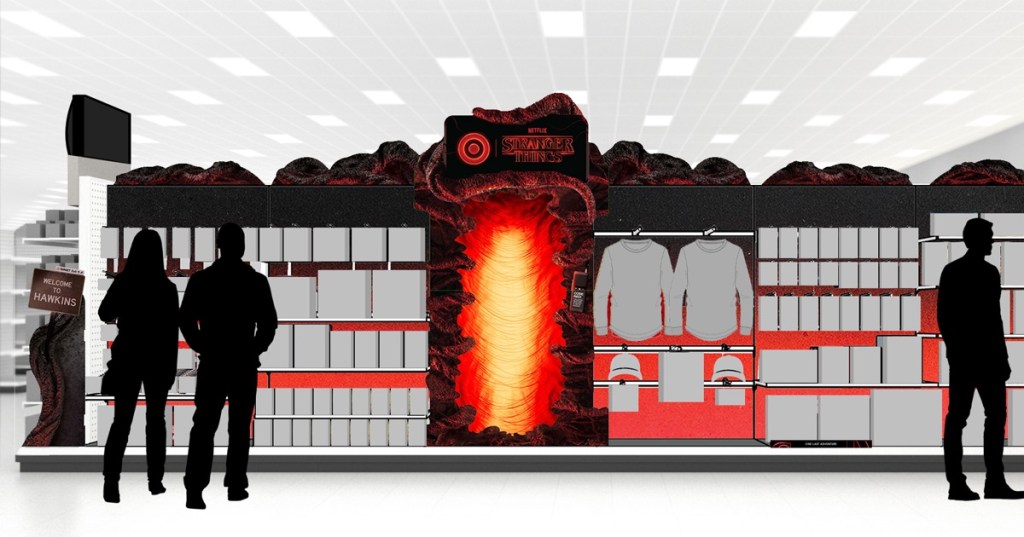
Target will also showcase a campaign co-created with Netflix, which includes TV spots as well as in-store experiences. On Oct. 12, the collab will also feature a recreated 1987 Target store set in Hawkins, Indiana, which will “blur the line between nostalgia and storytelling,” according to the companies.

“The fifth and final season of Stranger Things is more than an ending. It’s a cultural moment, and Target is proud to be the place where fans can celebrate together,” Cassandra Jones, senior vice president of merchandising for fun101, Target, said in a statement.

Stranger Things display rendering at Target
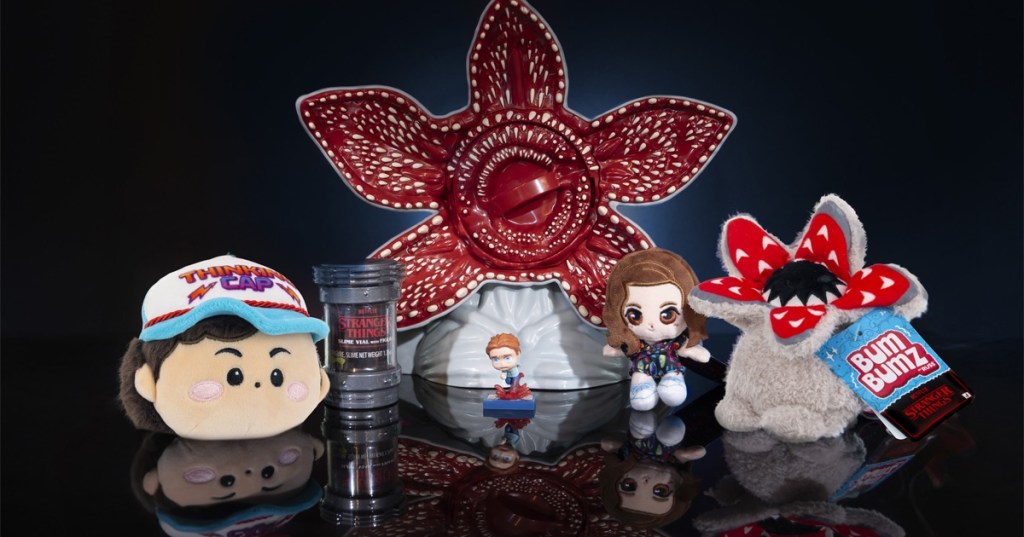
Among the items, Target will have products from Funko, Mattel, Gatorade, and Squishmallows. Meanwhile, consumers can also take home things like a Demogorgon popcorn bucket or Walkie Talkie phone cases for iPhones.

According to Target, stores will be set up to give shoppers a portal to the world of Hawkins through its displays, with in-store and online destinations evolving throughout the season.

“Target shares in our creative spirit and promise to bring fans something fresh and engaging with this spectacular collection of Stranger Things 5 must-haves,” Tanya Isler, head of consumer products for the US and Canada, Netflix, said. “Together, we’re bringing fans an unforgettable shopping experience filled with authentic products and surprises that transport them to Hawkins and the Upside Down.”

Netflix’s Target collaboration continues the streamer’s trend of bringing brands back to the ’80s as it gears up for the final season of Stranger Things.

ADWEEK’s Brittaney Kiefer recently wrote about how Netflix and Doritos teamed up for a 1987-style telethon promotion, complete with 1980s legends such as David Hasselhoff, Paula Abdul, and ALF.

Demogorgan Bundle Box from Target

https://www.adweek.com/convergent-tv/netflix-stranger-things-target/