Horizon Global Has Big Ambitions, But a Lot of Catching Up To Do


When Havas and Horizon Media launched Horizon Global on Monday, an independent joint venture between the two rival agency groups, it was a sign of the times.

The tie-up underscores the pressure facing mid-tier networks in a consolidating market. Omnicom’s $13.5 billion acquisition of IPG, expected to close before the end of the year, will narrow the field of global media giants while creating a new largest player. Publicis began consolidating its media business more than a decade ago. Meanwhile, WPP is restructuring its media arm by merging operations across its agencies, and the future of Dentsu’s international business hangs in the balance.

Horizon and Havas—each strong in their home markets but smaller on the global stage—see the joint venture as a way to compete for global media briefs they would otherwise struggle to win.

Operating out of New York and Paris, Horizon Global manages $20 billion in billings and has a presence in more than 100 markets. The new entity also scales each agency’s access to data by merging Horizon’s Blu platform with Havas’ Converged.AI into a unified system called BluConverged.

The JV highlights the pressure on independents and mid-sized networks to grow as media reviews balloon in size. In the past year, brands including Bayer ($720 million), Mars ($1.7 billion) and Coca-Cola ($785 million) have launched launched sprawling reviews that require global scale and cross-market coordination.

Horizon Global is an acknowledgement that consolidation is reshaping the market. “Client centricity…has been a huge driving force for us,” said Peter Mears, Horizon Global board member and global CEO of Havas Media Network.

Bulking up

Led by Horizon president Bob Lord as interim CEO and Havas’ Renata Spackova as COO, Horizon Global will operate independently from both agencies under a single P&L. Lord and Spackova will report to a board led by Mears, Horizon founder and CEO Bill Koenigsberg, and Havas chairman and CEO Yannick Bolloré. Havas and Horizon will split profits from the JV equally.

While the goal is to compete globally, Horizon Global’s sweet spot will be U.S.-centric clients with global reach—business Horizon couldn’t credibly win on its own, but now can support with Havas’ international footprint.

Horizon Global is also a data and tech scale play. Combining both agencies’ data platforms “allows us to run a much leaner operation from a human perspective than some of our competitors are,” said Mears.

Lord added that when it comes to tech, Horizon Global’s “open ecosystem” approach lets it plug in tools from Amazon, Google, and Adobe: “An open ecosystem spurs innovation. A closed ecosystem stifles it,” he said.

Most importantly, the new structure gives clients working across geographies “one throat to choke,” as Lord put it. He pointed to airlines and footwear as areas where Horizon Global sees near-term opportunity—though the agency declined to confirm whether it’s in any active pitches.

A new terrain

Horizon Global reflects the reality facing many midsize networks that need more scale to compete for global media accounts. With Horizon’s U.S. heft and Havas’ international reach, both are betting that joining forces can win them a seat at bigger tables in a market with fewer options. Mears said 2025 has been slow for new business, but that its looking like “a very busy fall and a busy Q1 2026.”

Industry analyst Brian Wieser, however, said the JV only opens doors to a narrow set of reviews that require both U.S. heft and a small global footprint.

“There’s going to be some subset of marketers who are primarily U.S.-based, who are large and have relatively small global operations, and only want to appoint one agency,” he said. “In that narrow set of circumstances, they might get into a pitch that they would have otherwise [not].”

Asked if Horizon Global narrows the gap with mega-holdcos, Wieser was blunt: “Not at all. If the global part were big, you’re not considering Horizon or Havas in the first place.”

While both companies see Horizon Global as a long-term play, Lord said there’s room to evolve the offer, including potential acquisitions down the line.

“Because of the way that we’ve set this joint venture up, it gives us a lot of flexibility for what will come in the future,” he said. “Are there assets that we want to pull into this JV?”

By joining forces, Horizon and Havas are acknowledging that if they want to chase big, global media clients, going it alone is no longer an option.

https://www.adweek.com/agencies/horizon-global-has-big-ambitions-but-a-lot-of-catching-up-to-do/


Havas and Horizon Launch Joint Venture With $20B in Billings


Horizon Media Holdings and Havas on Monday unveiled Horizon Global, a joint venture bringing together the media operations of both holding companies in an effort to scale up and compete in major global media pitches.

Horizon Global operates in more than 100 markets and is based in New York. Managing $20 billion in billings, it debuts as one of the largest media buyers globally, according to a press release.

Bob Lord, president of Horizon Media Holdings, will run Horizon Global as interim global CEO as the company searches for a permanent leader. Renata Spackova, previously global chief operating officer , new core business at Havas, will be global COO of the new venture. Both will report to a board that includes Horizon founder and CEO Bill Koenigsberg, Havas chairman and CEO Yannick Bolloré, and Havas Media Network global CEO Peter Mears.

Horizon Global will merge Horizon’s Blu data platform with Havas’ Converged.AI platform, creating a single system called BluConverged that gives both agencies access to a broader set of data and tech tools.

“This is the first agency network built in the AI era,” Koenigsberg said in a statement. Bolloré called the partnership “a significant moment” for both companies, adding that Horizon’s decision to team up with Havas reflects their “complementary strengths.”

The launch comes as consolidation reshapes the industry. Omnicom’s $13.5 billion acquisition of IPG narrows the number of major media buyers in the market, prompting smaller players to seek scale. Horizon and Havas are positioning Horizon Global as a stronger alternative for U.S.-led multinational accounts.

Outside of Horizon Global’s shared assignments, Horizon Media and Havas Media Network will continue to operate independently, servicing their client portfolios and pursuing new business separately.

Lord said the new venture “enters the market at a dynamic moment with a global offering that truly puts clients first.”

Havas reported 2.6% organic growth in the second quarter of 2025, led by North America, along with an 8.3% rise in adjusted EBITA. Horizon is privately held and does not report earnings.

https://www.adweek.com/agencies/havas-and-horizon-launch-joint-venture-with-20b-in-billings/


The Meaning Behind Jimmy Kimmel’s First Post Since ABC Pulled His Show


Jimmy Kimmel made his first post since his late night show was taken off the air last Wednesday.

Hours before Kimmel’s show was set to return to ABC on Tuesday, the host posted a photo of himself with TV writer, producer, and activist Norman Lear, who died in 2023.

“Missing this guy today,” Kimmel wrote.

Lear, who created and produced several classic sitcoms, including All in the Family and The Jeffersons, was also outspoken against the Federal Communications Commission. As People points out, he co-signed a lawsuit against the FCC in 1976 over how the organization enacted a family viewing time rule, requiring programming between 7-9 p.m. ET to be suitable for all ages. He was also on one of Richard Nixon’s enemy lists.

Jimmy Kimmel Live was pulled from ABC’s lineup last Wednesday following backlash from the FCC—and subsequently local TV giants Nexstar and Sinclair—over Kimmel’s previous comments regarding the death of Charlie Kirk.

Despite the show’s return, Nexstar—which is seeking approval from the FCC over a $6.2 billion merger with rival Tegna—and Sinclair announced plans to preempt Jimmy Kimmel Live’s return on local ABC affiliates in favor of news programming.

https://www.adweek.com/convergent-tv/jimmy-kimmel-first-post-since-show-pulled-meaning/


Why Is Hearst Buying So Many Texas Newspapers?

Pending a shareholder vote on Sept. 23, the Dallas Morning News will become the second publisher that the 138-year-old Hearst Corp. has bought in the state of Texas this year. 

In February, it snapped up the Austin American-Statesman from Gannett, and while the price of that sale was not disclosed, a source close to the deal told me Hearst paid around $55 million for it.

Following the tie-up, Hearst will own the flagship news operation in each of the four largest metropolitan areas in the second-most populous state in the country. Alongside the Dallas Morning News and Austin American-Statesman, it also owns the San Antonio Express-News and the Houston Chronicle. The Dallas Morning News and Houston Chronicle are two of the country’s largest newspapers by circulation. 

.newsletter-subscription-form-wrapper p:empty{ display: none !important } .newsletter-subscription-form-wrapper button br{ display: none !important }

In addition to those titles, Hearst acquired San Antonio Magazine in 2023, Austin Magazine in 2024, and—prior to buying the Austin American-Statesman—launched a newsletter startup in Austin, called Austin Daily, which it has since shuttered.

The purchases come as most players in the media industry are actively looking to exit the space. Peacock recently premiered a series, called The Paper, entirely built around the premise that the economics of local news are backwards. So why is Hearst getting further invested? 

For starters, it helps to understand that while the Hearst name might be synonymous with newspapers and magazines—it owns heavyweights like Cosmopolitan, Good Housekeeping, and Esquire—the vast majority of its revenue now comes from a series of deeply boring, incredibly lucrative businesses far removed from the media world. 

According to media executive Colin Morrison, who chronicled Hearst’s business in a blog post in July, the company generated around $13 billion in revenue last year and turned an operating profit of $1.5 billion. The bulk of that revenue comes from its B2B portfolio, according to Morrison.

For example, Fitch, the 112-year-old bond ratings group owned by Hearst, accounts for 17% of the company’s annual income, an estimated $2.5 billion last year, per Morrison. 

That alone is more than the $2.4 billion Hearst’s entire media division brought in in 2024, according to Morrison. Even so, a source familiar with Hearst’s business tells me that its news division, despite industry headwinds, is profitable and expected to continue to operate profitably.

As a result, the outsized performance of Hearst’s other properties—which include a 20% stake in ESPN—has allowed it to continue investing in print and digital media businesses with far more patience than its peers. 

The unique legacy of Hearst as one of the original newspaper chains also plays a role in its ongoing interest in the news media business. In an era of cost-cutting, Hearst has repeatedly vocalized its commitment to journalism and the news business and considers it core to its identity. 

Chief executive Steven R. Swartz has talked openly about the importance of maintaining the diversity of its portfolio, holding onto news publishers and magazines even though jettisoning them would almost certainly boost its margins. Hearst rarely makes cuts or closes outlets—it famously gave bonuses to its employees in the early days of the pandemic.

Now, as it becomes more challenging than ever to operate as an independent news outlet, the company is taking advantage of some opportunistic acquisitions to grow its news business even further. 

The Dallas Morning News, for instance, was one of the last family-owned independent news operations in the country, owned by longtime publisher George Bannerman Dealey and his descendants since Dealey purchased the paper in 1926. 

In recent quarters the Dallas Morning News had struggled to turn a profit, according to public financials. Mike Orren, formerly its chief product officer, told me that its balance sheet struggles were, at least in part, the result of a mandate to invest its cash into transitioning the business into a sustainable digital operation. 

The company could therefore stomach a small loss if it meant that it was setting itself up for the future. To that point, the Dallas Morning News has no debt and a cash balance of around $33 million, which becomes Hearst’s after the acquisition, bringing the net cost of the purchase closer to $40 million. 

These factors explain why Hearst is in the news business and why the Dallas Morning News felt comfortable selling to it, but why focus so much attention on Texas? 

The answer comes down to the opportunity Hearst sees in the state, as well as the efficiencies it unlocks by owning news outlets in its four biggest markets. 

Earlier this year, I reported that Hearst had begun experimenting with cross-promoting its news and magazine brands to its audiences based on their consumption behavior. If you had shown an interest in the lifestyle content section of the Chronicle, for instance, you might receive a targeted promotion to subscribe to Cosmopolitan.

As Hearst continues to operate its Texas outlets as spokes in a larger wheel, it can obviously find efficiencies in areas of shared resources, like accounting and print distribution, but it can also combine its audience data to optimize its recirculation, subscription, and paywall strategies. 

If operating local news were as simple as finding efficiencies of scale, though, the other major players in the ecosystem would not be struggling as much as they are. Hearst’s benefit is in the markets it’s chosen—each of these cities are major metropolitan areas with large, discrete subscriber bases. 

It has some precedent for this strategy. Hearst operates a string of news outlets in Connecticut and has been highly acquisitive in the region, snapping up more than a dozen publishers in the area since 2017. While smaller than Texas, Connecticut is an affluent market that has proven its ability to support and sustain local news.

Hearst’s publications might not provide a lot of cash, but the investment the company has funneled into them is a rounding error on its larger business. As long as the publishers can stay afloat, the news business can continue to serve as an homage to the broader Hearst legacy.

The only real threat to the longevity of this strategy could come from the trust Hearst set up to govern the company after his death, which is set to dissolve when all of the family members who were alive at the time of his 1951 passing have themselves died. While a bit of a morbid guessing game, Morrison estimates that will likely happen in the next 10 to 15 years.

At that time, the unique ownership structure that has allowed the company to operate in lockstep with the vision of its founder, rather than simply the maximization of shareholder value, could unravel. 

Beneficiaries of the trust—there are around 60, per Morrison—might then decide that the company’s ongoing patronage of the news business is not the best allocation of its resources. What the media business will look like by then is an entirely separate conversation, but the stage could be set for another messy succession struggle. 

Until then, though, Hearst might be the last profitable company still actively looking to get into the news business.

https://www.adweek.com/media/onbackground-hearst-dallas-news-texas-newspapers/


Junior Ad Jobs Are Vanishing—Can the Industry Rebuild Its Ladder?

When Measu Bellay graduated from the University of Maryland with a degree in economics in 2018, she thought she might pursue a PhD. Instead, she pivoted to photography and art direction through the advertising portfolio program The One School.

But when she tried to land her first full-time role at an agency, opportunities were few and far between.

“I was very shocked,” Bellay said. “Most of the time, there isn’t even an application. By the time you see it online, someone else might already have it in the bag.”

Despite being the top student in her program, Bellay has spent the past year piecing together her portfolio with spec work, taking on freelance gigs, and entering creative competitions. 

https://www.adweek.com/agencies/junior-ad-jobs-are-vanishing-can-the-industry-rebuild-its-ladder/


As Nike Tweaks Its Tagline, a Look Back at the Dark Origins of ‘Just Do It’


Nike began a new chapter of its own history this week when it tinkered with the slogan that has served it well for 37 years. Introduced in 1988, “Just Do It” was among the best known catchlines in marketing history, enjoying an 82.3% recognition rate, according to a 2018 poll by Survata. 

If the change is a bold move, it’s also a measured one. “Just Do It” has become “Why Do It,” but the essential component—“do it”—remains.

Mostly forgotten, however, is how it got there in the first place. 

“Just Do It” was an adaptation of “Let’s do it,” the final words spoken by spree killer Gary Gilmore shortly before his execution in 1977.

Had almost any other ad executive pitched that one, it might never have made it out of the conference room. But in this case, the adman was Dan Wieden, cofounder of Wieden+Kennedy.

In 1988, Wieden & Kennedy (the plus sign would come later) was a six-year-old firm taking great care of its marquee client, Nike, which Wieden and Dave Kennedy had taken with them after they left rival shop William Cain. As Weiden recalled in a 2015 interview with design magazine Dezeen, by 1988, Nike had finally thrown serious money at a new campaign—and he’d been up all night worrying. Wieden had put five teams on the job, each creating its own spot. The ads were fine, but didn’t function coherently as a group.

“We need a tagline to pull this stuff together,” Wieden thought.

It was then the creative exec recalled a quote carried widely in national media 11 years before. In 1977, the state of Utah imposed the death penalty on Gilmore, who’d murdered a gas-station attendant and a hotel manager. Gilmore’s execution made national news because he’d refused all appeals and opted for a firing squad. Shortly before the riflemen took aim, the warden asked Gilmore if he had any last words. 

“Gary looked up for an extended period,” witness Lawrence Schiller told The Salt Lake City Tribune. “I believe his words [were], ‘Let’s do it.’”

Why would Weiden have recalled a tidbit so obscure when creating a tagline for Nike? For a time, Gilmore had lived in Portland, the city where both Weiden+Kennedy and Nike are based. Norman Mailer had also won a Pulitzer for The Executioner’s Song, his novel based on Gilmore’s story.

Wieden, who died in 2022, insisted that his partial adoption of the line had no social or political implications.

“I like[d] the ‘do it’ part,” he said in Doug Pray’s 2009 documentary Art & Copy. “None of us really paid that much attention. We thought, ‘yeah, that’d work.’”

Indeed, the slogan did work—even if it also left the client holding some dialectical baggage. Liz Dolan, Nike’s vp of global marketing in 1988, told Pray, “I’m sure they didn’t want anyone to really know.” (Nike did not immediately respond to ADWEEK’s request for comment.)

A lucrative property with troubling origins is hardly a new paradox in corporate America, of course.

“Many long-established brands have skeletons in the closet,” said Ericho Communications CEO Eric Yaverbaum, author of Public Relations for Dummies. “Leaders may not be responsible for the actions of their predecessors, but they still benefit from the legacies those actions created.”

It’s unclear how much Wieden may have even told his client about his inspiration for the slogan, but one thing is beyond dispute: Nike chose well in running with it.

Widen would long remember how Nike founder Phil Knight wasn’t a fan of the slogan at first, telling him: “We don’t need that shit.”

To which Wieden responded: “Just trust me on this one.”

https://www.adweek.com/brand-marketing/as-nike-tweaks-its-tagline-a-look-back-at-the-dark-origins-of-just-do-it/


EXCLUSIVE: Scope3 Lays Off Staff as Part of Shift Toward Agentic Advertising


Scope3 laid off a portion of its staff last week as part of a shift into so-called agentic advertising offerings, ADWEEK has learned.

A company spokesperson confirmed the cuts, but declined to provide the number of affected staff. The company had more than 100 staffers worldwide as of last December, according to a blog post by CEO and cofounder Brian O’Kelley. 

Most impacted by the restructuring is Scope3’s commercial team, responsible for generating revenue through product sales and partnerships with brands, agencies, and adtech providers. A spokesperson confirmed that members of that team were cut last Thursday, Aug. 28.

One affected staffer, speaking on condition of anonymity, told ADWEEK that there were also several people not affected by layoffs who were “leaving on their own accord following the announcement.”

Scope3 recently expanded beyond its flagship carbon emissions data product for the adtech ecosystem and into ad verification and AI offerings. The company spokesperson said the shakeup is part of this strategic shift to establish a deeper focus on agentic advertising. 

In March, the company launched a suite of AI agent-powered products, including its Agentic Media Platform, a kind of adaptable operating system that enables organizations on either the buy- or sell-side of the aisle to build, integrate, or deploy agents that execute decisions fully autonomously at the impression level. It also released its Brand Standards product, which lets users build custom agents to make brand safety and suitability decisions, and is designed to compete with ad verification incumbents like DoubleVerify and Integral Ad Science.

Despite the recent layoffs, Scope3 is hiring in some departments, including product and engineering, areas that it believes will be critical in scaling these AI offerings. At the time of writing, the company has seven open job postings on LinkedIn across a variety of functions, including marketing, accounting, and engineering.

On the same day that it announced layoffs to employees, the firm publicly appointed a new commercial lead, Tim Collier. Collier told ADWEEK last week: “As we think about building and owning the agentic advertising category, it requires us to totally rethink how we set up the commercial structure of the business.”

https://www.adweek.com/media/scope3-lays-off-sales-staff-ai-agentic-advertising-restructuring/


EXCLUSIVE: The New York Times Is Shutting Down Its Audio App


The New York Times is sunsetting its Audio app, the standalone product it originally launched in May 2023 in a bid to deepen its relationship with audiences. 

The app, which offered a curated audio experience and included content from outside publishers, will shut down in early October, according to Sam Dolnick, deputy managing editor at The New York Times.

The decision came as a result of the increasingly prominent role that audio—and, in some cases, its attendant video—now plays within the flagship News app, Dolnick told ADWEEK. 

When the publisher launched the Audio app more than two years ago, the News app still predominantly featured text articles and photography. But as consumer behaviors changed, with more audiences gravitating toward video and audio content alongside traditional text, the News app began weaving the mediums more natively into its interface.

.newsletter-subscription-form-wrapper p:empty{ display: none !important } .newsletter-subscription-form-wrapper button br{ display: none !important }

In March, the publisher introduced a Listen tab to the home screen of the News app, alongside Home, Play, and You. The update reflects the company’s belief that podcasts and audio journalism have now become central to its overall offering.

“I see this as audio graduating from Off-Broadway to Broadway,” Dolnick said. “But now audio journalism has become so central to what the Times does that it belongs on the main stage.”

Meeting audiences where they are

When the Audio app launched, it made The New York Times one of only a handful of news organizations—alongside NPR and two Dutch publishers, De Correspondent and NRC—that sought to steer listeners toward an owned-and-operated property for audio programming, rather than just to platforms like Spotify or Apple Podcasts, which also host many of The Times’ audio offerings.

Its sunsetting reflects not just how rapidly the digital media environment has shifted in recent years, but also the perpetual tug of war publishers are engaged in when it comes to attracting audiences to their properties compared to meeting them where they already are.

“Most people consume podcasts through YouTube and Spotify, so they were facing the classic on-platform, off-platform challenge,” a former Times employee involved with the app’s rollout told ADWEEK. “This was their shot at trying to get people habituated to a Times-owned platform.”

“Separate products make sense for audiences that are clearly distinct and where the economics can justify a separate experience,” said Ben Berentson, managing director of Code and Theory. “The concept of there being an ‘audio’ audience is going away, just as the idea of a ‘mobile’ audience has mostly gone away.”

Details of the move

The News app will now host The Times’ full podcast archive, including the video assets that accompany certain podcasts, such as the Ezra Klein Show and Hard Fork.

Third-party publishers that had their content featured in the Audio app, like The New Yorker, will not be included in the News app.

In addition to migrating its podcast library to the News app, The Times is also trying to interweave audio throughout the platform in new, more intuitive ways, Dolnick said.

For example, the publisher is working to improve its personalization capabilities, showcasing new episodes of shows that listeners have indicated an interest in. It also plans to more widely integrate audio versions of text articles, enabling a user to read part of a story then listen to the rest, later, while driving or running.

The overarching goal is to make more of its content available in a variety of formats, allowing users to consume the news in whichever way they prefer, whether that changes over the course of a day or a lifetime, Dolnick said.

A broader app strategy

Following the closure of the Audio product, the Times’ app portfolio now consists of News, Cooking, Games, and The Athletic.

The publisher has no immediate plans to consolidate any of its other apps, Dolnick said, citing the unique user experiences available to users in its Games and Cooking apps. As for the Athletic, the sheer bulk of its output makes it a poor candidate to be woven into the News app, according to Dolnick.

As The Times works to improve its personalization technology—spurred, in part, by a recent activist shareholder squeeze—the problem of relevant Athletic reporting going unseen by its intended audience should also decrease. Brand safety considerations, keeping sports content separated from news, could also play a role in the decision to keep The Athletic siloed.

Whether The Times keeps its constellation of apps as is or not, its willingness to be unsentimental in these kinds of decisions is a strength, according to Berentson. 

“One of the hardest things in any media business is to be able to look at their portfolio of products and make dispassionate decisions,” Berentson said. “Something can serve a valuable intermediate or transitional purpose and still have been a smart decision to create at the time.”

https://www.adweek.com/media/new-york-times-audio-app-shuts-down/


Everyone Got the Sydney Sweeney Campaign Wrong

Mark Ritson is a former marketing professor, brand consultant and an award-winning columnist. He is also the founder of the MiniMBA in Marketing, a ten-week training program for senior managers who missed or have forgotten their marketing fundamentals. Sign up here.

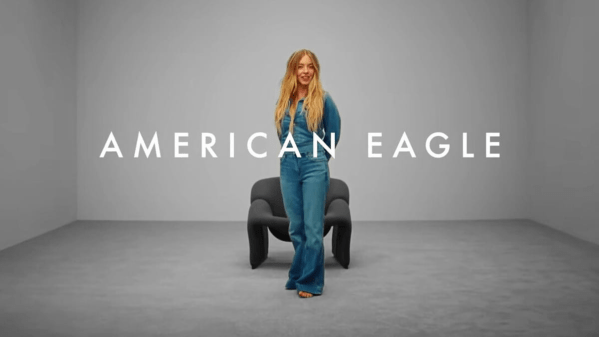
American Eagle Outfitters’ Q2 earnings added yet another contested chapter to the company’s advertising-led turnaround story. 

While sales were flat and margins down, CEO Jay Schottenstein was bullish about the company’s outlook – partly because of the much-debated Sydney Sweeney campaign that launched late July. 

This news and after-hours trading that saw the company’s stock soar more than 20%, will bolster those on the right, who saw the Sweeney campaign as prime evidence of a movement away from “woke” advertising.  

Other equally vocal critics, who objected to perceived hints of racism and even eugenics, believed the subsequent social uproar around these negative themes proved that the ads would hurt the American Eagle brand. 

But marketers actually trained in marketing held back and left the interpretations to pundits, politicians, and advertising amateurs.

Marketers are not the consumer

Market orientation translates into a simple but crucial rubric: you are not the consumer. 

If you make the product or the ad, you’re the last person on the planet who can judge its quality because you aren’t the target market, and even if you are, you are literally one in a million and your views are unlikely to be representative. 

Good marketers know they know nothing. That’s why they need market research.

Almost everyone who opined about American Eagle last month was too old to be part of the target market. 

The real Sydney Sweeney controversy had nothing to do with genes and everything to do with marketers abandoning basic marketing principles for hot takes on a campaign designed for consumers they’d never met, shopping in stores they’d never visited, for products they’d never buy. 

And the same goes for the self-fulfilling snatches of evidence used to critique or justify the campaign. 

Traffic into American Eagle stores did dip the week after the campaign launched. But it dipped for most of the brand’s competitors too. H&M, Abercrombie & Fitch, and Urban Outfitters all suffered similar drops. 

Similarly, the social engagement around the campaign signaled many things, but not necessarily an imminent marketing success. Despite what growth marketers tell you, there is such a thing as bad publicity. It’s called “bad publicity.”

The right measures to assess American Eagle’s campaign weren’t quarterly earnings, social debate, or foot traffic. There is no generic list of “killer metrics” that can gauge brand and advertising success. The only way to measure anything is to step back and ask what the objectives were before the tactic was executed and measure things pre and post.

Don’t mistake tactics for strategy

Unfortunately, many American marketers revel in tactics and ignore strategy. Extensive research confirms that an optimum campaign evolves from, at most, a handful of clear objectives. Some have too many, and cannot measure success.

American Eagle CMO Craig Brommers knows a lot about marketing, and was trained at UCLA with senior stints at Calvin Klein, Abercrombie & Fitch, and Gap. Brommers laid down clear objectives at the outset of the most expensive campaign in the brand’s history. 

First, the ads had to cut through culture and leverage shock value to get noticed.

Second, the campaign had to reclaim American Eagle’s position among the Gen Z demographic as the denim authority. 

And finally, the campaign had to re-engage with these consumers ahead of the crucial back-to-school period and get them to shop the brand again.

Was the Sydney Sweeney campaign successful?

Data from ad testing firm System1 suggests that for all the noise surrounding the campaign, the ad itself had a modest impact on target consumers. It tested average for short term sales, long term brand building, and overall fluency. 

That last aspect is crucial because although this was clearly about Sydney Sweeney and her jeans, the American Eagle part was not as salient. 

Interestingly, the ad performed much better with older consumers aged 35+ and men who proved significantly more receptive to the Sydney Sweeney campaign despite its focus on women’s jeans. Go figure.

And that tepid response carried through to the campaign’s impact on brand perceptions. 

It’s early days but three-month rolling data from brand tracking firm Tracksuit shows American Eagle essentially flat in terms of awareness, consideration and preference among the same Gen Z target market. The campaign has neither boosted nor broken the brand.

Despite the sound and fury around American Eagle’s Rorschach test of a campaign,  the only perspective that mattered was that of the market. And delightfully, given the conflicting extremities of industry assessments, consumer response was generally ‘meh’. 

Market orientation often brings this kind of reality check to an industry that takes itself too seriously and attributes way too much importance to the things that it does.

As one participant in the System1 survey put it: “It’s just an ad for jeans.”

https://www.adweek.com/brand-marketing/everyone-got-the-sydney-sweeney-campaign-wrong/


NBCU Scores Super Bowl Ad Sellout, Highest Grossing NFL Season Ever


NBCUniversal is getting an early NFL score.

Days before the 2025-2026 NFL season kicks off—as well as the 20th season of Sunday Night Football—NBCU is announcing its highest-grossing season ever, with overall revenue increasing across its platforms. In addition, the company has sold out all ad inventory for Super Bowl 60, airing on Feb. 8, 2026, on NBC, Peacock, and Telemundo. The company also sold out 90% of its NFL inventory outside of the Super Bowl.

With the news, NBCU achieves a Super Bowl LX sellout around a month earlier than Fox announced its sellout for Super Bowl 59.

“Coming off of the strongest sports upfront in our company’s history, Super Bowl LX has generated extraordinary interest from brands and allowed us to sell out of our ad inventory earlier than ever,” Peter Lazarus, evp of NBC Sports and Olympics, advertising and partnerships, said in a statement.

Regarding advertisers, NBCU noted that CPG, entertainment, finance, and alcohol were the top categories lining up for the next Big Game. Meanwhile, pharma and QSR continue to increase spend. According to NBCU, the Super Bowl had a 20% increase in digital, with more brands adopting a 360 approach.

Sunday Night Football will have more than 150 partners in its programming, with around 40 being new. Auto, insurance, retail, tech, and QSR are the main categories spending, while pharma and finance are also increasing their investment. NBCU says it “sold out of all key sponsorships” for its NFL lineup, with Toyota sponsoring halftime.

ADWEEK previously reported that NBCU, which went to market seeking around $7 million for Super Bowl spots, was looking for $8 million for a 30-second ad and an $8 million match across its other sports properties as early as July due to increased demand. Ahead of NBCU releasing its final numbers, Fox holds the record for Super Bowl ad revenue, reaching $800 million in gross revenue from advertising sales across its platforms for Super Bowl 59.

In closing its most recent upfront, NBCU told ADWEEK that it had its “highest ad sales volume” in its history, with record sales commitments overall and its largest digital upfront. The growth was fueled by sports and live events, which included the addition of the NBA, as well as the growth of Peacock.

https://www.adweek.com/convergent-tv/nbcu-super-bowl-sellout-highest-grossing-nfl-season/