The Trade Desk Revenue Rises but Growth Slows and Stock Tanks 30%

The numbers

$694 million: Revenue for Q2 2025, up 19% year-over-year, and above the company’s prior guidance of $682 million.

22%: YoY revenue growth for the first half of 2025. Growth was 27% during the same period last year.

-30%: The Trade Desk stock fell in after-hours trading. 

Three-quarters: The number of The Trade Desk clients using its core platform Kokai, with the bulk of spend running through it. Expects all clients will use it by the end of the year. 

Watercooler talk

Despite a solid quarter for The Trade Desk, its stock tanked because its rate of growth slowed compared to previous quarters.

Moving on from Wall Street’s histrionics, company CEO Jeff Green brushed off the growing competition coming from Amazon, whose improving ad business has drawn some advertisers to shift millions of dollars away from The Trade Desk.

“Despite their mixed messages, they are not trying to buy the Open Internet objectively. They can’t. They have way too much Prime Video supply to sell to ever honestly pitch large brands to objectively buy the Open Internet,” Green said.

Among notable leadership changes, The Trade Desk is bringing on Alex Kayyal, previously at Lightspeed Venture Partners, as chief financial officer effective Aug. 21, succeeding Laura Schenkein. The company also appointed Omar Tawakol, CEO of AI startup Rembrand, to its board of directors.

The Trade Desk also saw more use of CTV and OpenPath, its tool that connects advertisers directly with publishers. The company is also increasing its business working directly with brands, which Green said made up many of the 100 joint business plans it signed recently.

And after a slow start, The Trade Desk seems to be migrating clients over to its Kokai interface. Seventy percent of client spend is on Kokai, according to Schenkein.

Some sectors underperformed, including the home and garden vertical which makes up 8% of The Trade Desk’s business, and style and fashion, which makes up 4%.

Key quote 

Amazon is “more of a potential partner, honestly, than it is a long-term competitor,” Green said. He pitched The Trade Desk as a potential partner if Amazon opens Prime Video to external demand: “We believe we’d be an amazing partner to drive demand to them.”

https://www.adweek.com/programmatic/the-trade-desk-revenue-rises-but-growth-slows-and-stock-tanks-30/


Meet the 2025 AAF Advertising Hall of Achievement Inductees


The American Advertising Federation (AAF) has announced the 2025 Advertising Hall of Achievement (AHOA) inductees, honoring seven exceptional advertising professionals under the age of 40.

The honorees represent an array of disciplines, from creative advertising to commerce and influencer marketing, reflecting the diversity of talent shaping the future of the industry.

They include:

  • Orlando Baeza, vice president, brand and creative, Chime
  • Abi Evans, chief growth officer, dentsu Creative (Recipient of the Jack Avrett Volunteer Spirit Award)
  • Alison Levin, president, advertising and partnerships, NBCUniversal
  • Amie Owen, chief commerce officer, IPG Mediabrands
  • Paolo Provinciali, vice president, marketing growth, performance and operations, LinkedIn
  • Jason Schulweis, chief commercial officer, The Female Quotient
  • Charlotte Tansill, North America president of PR, social and influence, Ogilvy

In addition, this year’s Cultural Force Award will be presented to model, host, and spokesperson Ashley Graham. The award celebrates a public figure under 40 who has made an outsized impact by influencing culture and redefining societal standards. Past recipients include Chris Paul (2023) and Issa Rae (2024).

The AHOA induction ceremony and celebration will take place on November 20, 2025, at Pier Sixty in New York City.

“We want to make this industry better. We want to leave it better than we found it,” Steve Pacheco, president and CEO of the AAF, told ADWEEK. “These [are] genuine stories of solid, good people that have done great things and affected their community in positive ways.”

Recognizing Leadership and Innovation

AHOA inductees are honored for their leadership, innovation, and commitment to advancing the industry. Their contributions span startups, agencies, platforms, and media.

To qualify, candidates must be 40 or younger at the time of nomination, actively engaged in the U.S. advertising industry, and have demonstrated measurable success in marketing, sales, or media. Mentorship, advocacy, and volunteering are also key components of the selection process.

This year’s class of inductees—representing commerce, retail media networks, social media, and streaming—showcases the sectors driving transformative changes within the industry. “These sectors are reshaping the future, and we’re proud to celebrate the people who’ve made those changes a reality,” said Tim Natividad, co-chair of AHOA and president of U.S. advertising sales at TelevisaUnivision.

Behind the Selection Process

AHOA candidates undergo a rigorous selection process. After initial reviews by a volunteer committee, final selections are made by the Council of Judges, who ensure inductees are chosen for their impact.

The process is overseen by Christena Pyle, co-chair of AHOA and chief equity officer at dentsu, who said she has been involved with AAF since college, when she participated in the National Student Advertising Competition. “Being part of this process is a lifetime privilege,” she said.

Pyle emphasized the importance of mentorship in the selection process: “The integrity of the person is just as important as their achievements. We look for individuals who have not only excelled in their careers, but also helped others grow along the way. It’s about how you help others succeed, not just your own career.”

In addition to mentorship, Natividad highlighted the honorees’ role in evolving the industry: “We want to recognize individuals who’ve changed the way the industry operates. This year’s class reflects that diversity,” he said.

https://www.adweek.com/agencies/meet-the-2025-aaf-advertising-hall-of-achievement-inductees/


Call for Nominations: 2025 ADWEEK Tech Stack Awards

The ADWEEK Tech Stack Awards is a new program honoring the companies behind 2025’s most groundbreaking product and platform launches that have driven proven revenue impact in marketing, advertising, and media. 

From strategic uses of agentic AI to next-gen creative tools to cutting-edge measurement solutions, these awards recognize the products redefining how brands connect, engage, and grow.

Spanning more than 20 product categories and four company honors, ADWEEK’s Tech Stack Awards spotlight the companies behind the innovations pushing the industry forward. Two winners will be named per Product/Platform category and one winner per Company categories. 

Products/Platforms 

  1. Social Media Marketing Product/Platform – Recognizing innovative solutions that redefine how brands show up and engage across social platforms. Entries must demonstrate measurable impact and performance—backed by real case studies that show how the product has transformed client or internal social strategies.
  1. Creator Marketing Product/Platform – Celebrating platforms that power the end-to-end influencer marketing workflow—from discovery to partnership management to content ROI. Entries must prove innovation in scaling authentic creator collaborations and delivering business results for brands through creator-driven campaigns.
  1. Creative Tech Product/Platform – Honoring next-generation tools that revolutionize digital asset creation—static or video—by automating without compromising creativity. Entries must show real-world examples of how the platform or product has helped brands scale personalization, reduce production time, and accelerate go-to-market.
  1. Strategic AI Product/Platform – Recognizing AI-driven platforms that deliver strategic—not just tactical—value and transformation across organizations and client businesses. From autonomous agents to predictive decision-making engines, these tools are showing demonstrable revenue impact, reshaping workflows, and propelling business outcomes.
  1. Podcast/Audio Product/Platform – Honoring platforms driving innovation in the creation, distribution, monetization, or measurement of podcasts and other audio content. Winners show clear ability to drive audience growth and monetization through case studies of standout brand or media success.
  1. Data/Analytics Product/Platform – Honoring platforms that empower marketers with breakthrough analytics, visualization, or predictive capabilities. These solutions turn complex data into actionable insights, driving efficiency, targeting, and real performance improvements for clients.
  1. AR/VR Product/Platform – Celebrating cutting-edge platforms that elevate brand storytelling through immersive augmented and virtual reality. From retail to entertainment, winners demonstrate real brand use cases and tangible results in engagement or conversion.
  1. PR Product/Platform – Spotlighting innovation in public relations—from distribution and media outreach to sentiment analysis and reporting. Winning platforms help brands and agencies scale earned media impact, backed by success stories with measurable ROI.

  1. Mobile Product/Platform – Honoring solutions pushing the boundaries of mobile advertising, UX, or app monetization. These platforms demonstrate how innovation in mobile formats or infrastructure is directly driving user acquisition, retention, and revenue.
  1. Experiential Product/Platform – Celebrating platforms that enhance how brands plan, execute, and scale IRL activations. Whether streamlining logistics or amplifying reach, these tools show measurable lift in engagement, brand recall, or sales.
  1. Cloud Platform – Recognizing transformative cloud solutions that power scalability, integration, and performance for marketers. These platforms fuel innovation behind the scenes—with client examples proving agility, speed, and efficiencies.
  1. CRM Product/Platform – Spotlighting platforms redefining how marketers manage and optimize the customer journey to scale direct communications with consumers. These tools showcase automation at scale—delivering better targeting, higher conversion, and campaign ROI, with strong client success stories.
  1. Addressable Identity Product/Platform – Honoring solutions advancing cookieless data privacy and identity resolution. Through innovative consent frameworks, clean rooms, or encryption tech, these platforms show how brands are safely driving personalization at scale.
  1. Sell-Side Programmatic Product/Platform – Recognizing tools empowering publishers to optimize inventory, yield, and transparency. Winning platforms show impact through increased fill rates, improved CPMs, and higher-quality buyer connections.
  1. Buy-Side Programmatic Product/Platform – Celebrating platforms that maximize efficiency, transparency, and performance for media buyers. These solutions help agencies and brands deliver smarter campaigns at lower costs and with stronger results—and have the data to prove it.
  1. Commerce Product/Platform – Honoring platforms that power modern commerce and retail media, from shoppable media and checkout innovations to SKU optimization. Winners show how their tools drive measurable lift in sales or conversion rates.
  1. Email Product/Platform – Spotlighting platforms reimagining email marketing through smarter automation, personalization, and deliverability. Award-winning tools demonstrate business growth through increased open rates, click-throughs, and ROI.
  1. Search Product/Platform – Recognizing tools that elevate performance in search—from optimizing traditional SEO and SEM to innovating with new AI-driven search experiences. Winning platforms demonstrate significant gains in discoverability, traffic, and revenue for clients.
  1. CTV/OTT Product/Platform -Celebrating innovation in Connected TV and Over-the-Top advertising. These platforms show how brands are reaching high-value audiences on the TV screen with smarter targeting, creative optimization, and measurable outcomes.
  1. Marketing Measurement Product/Platform – Honoring platforms that are cracking the code on complex marketing ROI. From multi-touch attribution to incrementality, these tools show how brands are turning insights into budget-saving, growth-driving decisions—and are helping brands back up their marketing investments.
  2. Gaming Product/Platform – Recognizing platforms that are redefining how brands engage with gaming audiences—whether through immersive in-game advertising, branded experiences, creator integrations, or performance-driven placements. These solutions demonstrate innovation in format, targeting, or measurement, and are backed by results such as increased engagement and revenue. Winning products show how gaming has evolved into a powerful, measurable channel for marketers.

Company

  1. Top Ad Tech Company 
  2. Top Streaming/Media Company
  3. Top Measurement/Analytics Company
  4. Top Creative Tech company 

Whether it’s a breakthrough in data analytics, a game-changing influencer marketing product, or strategic uses of AI that reshape how the company runs, the ADWEEK Tech Stack Awards sets the benchmark for excellence in marketing technology innovation.

Enter using the nomination form below by September 19. 

https://www.adweek.com/programmatic/call-for-nominations-2025-adweek-tech-stack-awards/


American Eagle Responds to Sydney Sweeney Backlash By Doubling Down on the Message


One week into the social-media maelstrom created by Sydney Sweeney slipping into her great jeans—while talking about her great genes—American Eagle broke its deafening silence by issuing a statement on social media late Friday afternoon.

“‘Sydney Sweeney Has Great Jeans’ is and always was about the jeans,” the company said. “Her jeans. Her story.”

Spelling means everything in this case, since the dust that the ad kicked up centered around whether the use of the homophone was a thinly veiled endorsement of a debunked theory of genetic desirability.

As ADWEEK reported on July 29, the ad’s juxtaposition of Sweeney’s line, “My body’s composition is determined by my genes,” and the narrated slogan “Sydney Sweeney Has Great Jeans,” prompted some critics to charge that the ad was nostalgic for eugenics, a discredited belief—though popular in 1920s and ’30s America—that society could be bettered through selective breeding.

American Eagle’s statement refutes to that suggestion, however, adding that “we’ll continue to celebrate how everyone wears their AE jeans with confidence, their way. Great jeans look good on everyone.”

Though the post’s intent is evidently to sort out any misunderstandings over the ad’s meaning, the statement straddles the issue even as it confronts it. While AE makes clear that the ad was “always about the jeans”—in other words, not about the desirability of certain biological and racial characteristics—it’s also clearly defending the campaign. 

Historically, in cases where a piece of advertising creates an imbroglio, it’s common for a brand to apologize and yank the ad. This is what Pepsi did following its disastrous 2017 short film in which Kendall Jenner soothed racial unrest by handing a can of cola to a cop—a theme that offended Black Lives Matter supporters, among others. (“Clearly, we missed the mark,” the company said at the time.)

It’s also unclear why American Eagle waited several days to respond to the tumult—and did so late on a summer Friday afternoon, after the weekly news cycle had ended. (The company did not respond by press time to ADWEEK’s request for an explanation.)

Meanwhile, Sweeney’s own Instagram account has kept the actress a safe distance from the fracas that began earlier this week. Her most recent post, dated July 23, features her working on the engine of a 1968 Mustang fastback—wearing jeans, of course.

https://www.adweek.com/brand-marketing/american-eagle-responds-to-sydney-sweeney-backlash-by-doubling-down-on-the-message/


Summer Bash Taps Into Wrestling’s Expanding Cultural Arena


WWE’s merger with UFC under the Endeavor-backed TKO Group has brought together the world’s two wrestling powerhouses as the sport rises as both a cultural spectacle and commercial vehicle. Now, brand partners are looking for ways to ride that momentum—without always going through the ring.

According to Market Intelligence, the global professional wrestling market will grow from $2.95 billion in 2024 to a projected $3.14 billion in 2025, with a compound annual growth rate of around 6.7% through 2033. As interest rises, brands are exploring how to align with the fanbase beyond official matches and league media buys.

Enter Summer Bash, a one-night fan event happening on Thursday (July 31) at New York’s 650-seat Gramercy Theatre. Co-produced by wrestling podcast The Masked Man Show and culture marketing agency Nue, the show is part live taping, part concert, and part fan activation. Wrestling icon Bret “The Hitman” Hart will sit down for a live podcast interview hosted by Kazeem Famuyide and David Shoemaker, followed by a performance from rapper and wrestling super fan Action Bronson.

While the event doesn’t include an actual wrestling match, it’s designed to draw the same passionate audience. It builds on a template Nue helped create with WaleMania, the annual WrestleMania-weekend party series co-founded with rapper Wale. Unlike that series, however, Summer Bash isn’t built around a single artist.

“We took out the hero artist and made it more about the combination of music and sport,” Jesse Kirshbaum, CEO of Nue Agency, told ADWEEK. “We’re no longer beholden to an artist. We’re showing that this format… it could be at a Super Bowl event. It could be at NBA All-Star Weekend.”

Backed by Chase Freedom and Wingstop—both WWE sponsors—and supported by Live Nation, Summer Bash offers marketers a low-friction way to engage with wrestling fans outside of official league programming. Chase Freedom cardholders will have access to an exclusive meet-and-greet with Hart, while Wingstop will generate social content with talent at the event.

“They’re not going to get access to this type of talent for their socials, necessarily, unless they’re supporting an event like this,” Kirshbaum said. “Being in a room like this… it shows they’re embedded with the culture and with their fans.”

The format of the event also reflects how brands are shifting toward more relaxed experiences that tap into existing fanbases. Through its partnership with popular wrestling podcast The Masked Man Show, Summer Bash gives brands a direct channel into an existing fan community.

“Podcasts are really driving culture, and IRL podcast experiences are a big boom right now,” Kirshbaum said. “That intimate voice in your ear… it just gets the fans really excited.”

Off the Mat, Into the Culture

While WWE’s TKO era has made wrestling more brand-friendly, Kirshbaum said independent events like Summer Bash offer a different kind of access, for fans and marketers alike.

“It’s a heavier, clunkier proposition when it’s part of a much bigger package,” he said. “Whereas this shows the spirit of an indie… but also creates something that’s really exciting for the fans.”

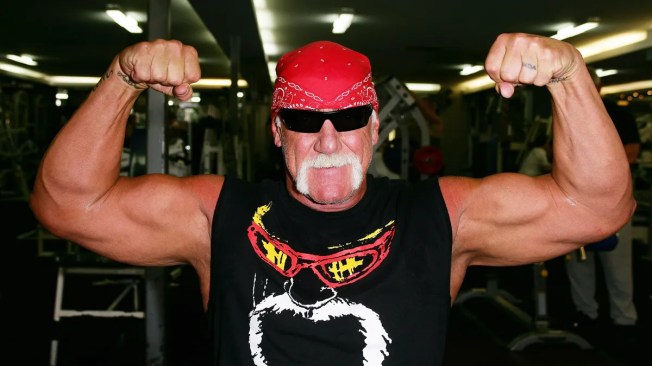
The event arrives just days before WWE’s SummerSlam begins at MetLife Stadium, and a week after the passing of Hulk Hogan—giving Hart’s appearance added significance. At 68 years-old, “he’s the last of a dying breed,” Kirshbaum added.

Summer Bash is currently a one-night experiment, but Kirshbaum is already thinking ahead.

“Everybody wants to be a part of something that’s replicable and scalable,” he said.

For Nue agency, the event also lends a view into where fandom—and attention—is going: “There’s such an abundance of content right now. You know what makes this worth getting off the couch for? The cross-pollination of really different groups to create this special fan experience.”

https://www.adweek.com/brand-marketing/summer-bash-taps-into-wrestlings-expanding-cultural-arena/


Meta’s AI Boosts Ads, Lifting Revenue to $46.6B

The numbers

$46.6 billion: Meta’s ad revenue, up 21% YoY. Overall revenue was $47.5 billion.

+9%: Increase in average price per ad, thanks to stronger ad performance.

2 million: Number of advertisers that used Meta’s generative AI-powered creative tools.

The water cooler talk

AI investments paid off for Meta’s ad business this quarter. “On advertising, the strong performance this quarter is largely thanks to AI unlocking greater efficiency and gains across our ad system,” said CEO Mark Zuckerberg.

The tech giant is using AI to determine which ads to show people in more places across the Meta ecosystem. And it’s also harnessing more behavioral signals picked up over a longer period of time. As a result, Zuckerberg said, AI has driven 5% more conversions on Instagram, and 3% more on core Facebook.

Meta’s Advantage+, which uses AI to determine the best place for ads across Meta’s portfolio of apps, is also “seeing strong momentum,” said CFO Susan Li. Meta is shoving Advantage+ into a wider variety of ad campaigns. For instance, Li said Advantage+ is now being activated “at the beginning” for campaigns that drive sales conversions and app downloads, improving their performance. She added that “in the coming months,” Meta will push Advantage+ into campaigns designed to generate leads.

And improved performance means Meta can charge more for ads, with the average price per ad jumping 9%.

Zuckerberg’s goal to have AI develop ad creative also seems to be coming true, as almost 2 million advertisers use Meta’s generative AI features to build creative assets, including video, animations, and text.

Key quotes 

Ads on WhatsApp will continue their rollout, slowly but surely — just keep expectations modest.

“We expect the introduction of ads in Status will be gradual over the course of this year and next, with low levels of expected ad supply initially,” Li said, referring to advertisements in WhatsApp’s Status feed. “We also expect WhatsApp ads in Status to earn a lower average price than Facebook or Instagram ads for the foreseeable future, due in part to WhatsApp’s skew toward lower monetizing markets, and more limited information that can be used for targeting. Given this, we do not expect ads in Status to be a meaningful contributor to total impressions or revenue growth for the next few years.”

https://www.adweek.com/media/metas-ai-boosts-ads-lifting-revenue-to-466b/


Google Will Use Machine Learning to Estimate Users’ Age and Block Them From Restricted Content and Ads


Google this week will begin using machine learning to estimate users’ ages in order to tailor ad experiences more appropriately for minors, the company said in a blog post Wednesday. 

The technology will use behavior like search queries and the kinds of videos they’ve consumed on YouTube to help determine whether a user is under 18. 

When a user is flagged as likely to be under the age of 18, the system will notify the user and automatically implement guardrails across Google’s products, including disabling ad personalization and restricting “age-sensitive ad categories” such as alcohol, gambling, weight loss, and high fat and sugar food and beverages.

Users Google identifies as minors will also be barred from accessing apps restricted to adult users in the Google Play store and will automatically be opted into YouTube’s Digital Wellbeing program, which includes features like content protections, limiting repeat views of some kinds of videos, and reminders to take breaks from the platform. The Timeline setting in Google Maps, which keeps a chronological record of places the user has visited, will also be switched off for users estimated to be under 18. 

Google will test the new feature, called ‘age assurance,’ for some signed-out users in the U.S. over the coming weeks. 

The changes were summarized in the blog post as part of the company’s efforts to “further protect young people as they use Google products” and were shared with some Google advertising customers via email Wednesday afternoon. 

The development follows a February announcement from YouTube CEO Neal Mohan that outlined Google’s plans to expand advertising protections for minors using machine learning this year. 

Last fall, Google accused some advertisers of purposefully targeting teens on YouTube, in violation of the platform’s policy, ADWEEK previously reported.

The rollout of Google’s ‘age assurance’ tool comes just months after Meta introduced a similar product to Instagram that can scan for indicators that minors are lying about their age—to help ensure that under-18 users are using safeguarded ‘Teen Accounts’ rather than an unrestricted version of the app.

https://www.adweek.com/media/google-will-use-machine-learning-to-estimate-users-age-and-block-them-from-restricted-content-and-ads/


Thanks to Covid Habits, Millions Are Still Loafing at Home—Just Where La-Z-Boy Wants Them


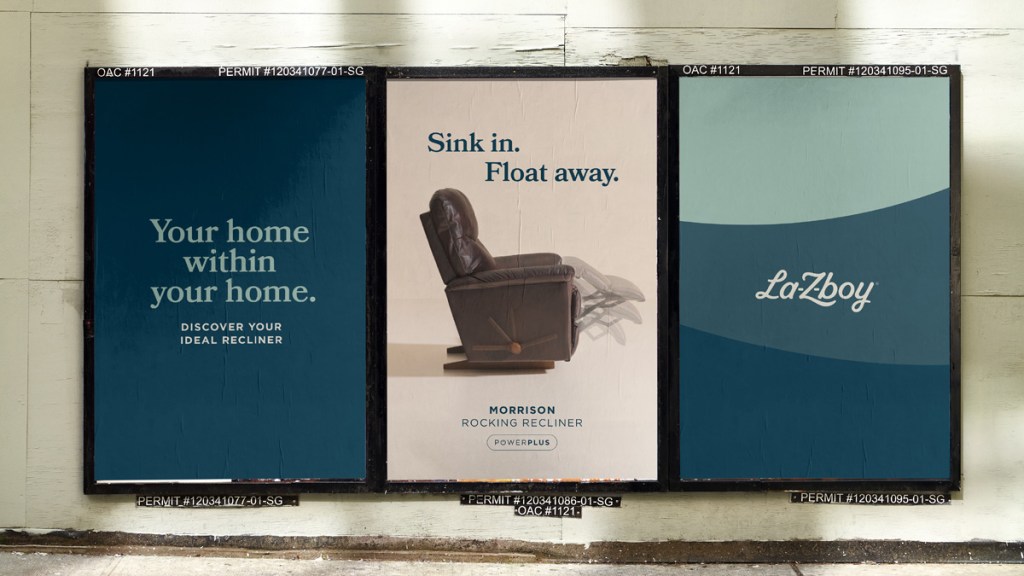
Earlier this week, furniture brand La-Z-Boy, the leading maker of recliners, took the wraps off a new logo and visual identity. The company had two good reasons for doing it. First, the brand’s centennial will arrive in 2027, so it made sense to get a jump on a new look. Second, the last time the visual assets had gotten a facelift was 2003—and they were looking, well, pretty 2003.

“Our system was built at the time to serve that reality,” the brand’s vice president and CMO Christina Hoskins told ADWEEK. But 22 years ago, she said, “social didn’t exist the way it does now, streaming didn’t exist the way it does now—digital wasn’t what it is today.”

While it may not have been an official part of the strategy, there’s a third, more encompassing factor that makes this brand refresh well timed. La-Z-Boy is presenting itself to a nation of couch potatoes, a crowd that’s arguably more receptive to buying a recliner than at any time since the suburban ’60s.

The pandemic takes the credit for this one. La-Z-Boy was one of those fortunate few brands—like Uber Eats, Clorox, and Purell—for whom the coronavirus produced a troupe of enthusiastic customers. 

“We had many good years of sales early [during] Covid,” Hoskins said, “when people were home, when they were investing in their home, when they wanted their homes to be a place of safety and respite and peace. So that was great for us, and continues to be.”

According to recent studies and surveys, those recliner-friendly times are likely here to stay.

In March, CBS news declared that “the U.S. is becoming a nation of homebodies,” citing research from UCLA that revealed that, compared to pre-pandemic times, Americans are now spending 51 fewer minutes outdoors every day as part of a broader “stay-at-home shift.” 

New catchphrases evoke the solitude of staying home.
La-Z-Boy

A Talker Research survey from April revealed that 72% of Americans prefer a nice night at home over going out. And according to a TrustedHousesitters survey released in June, 56% of Gen-Zers admit to nixing vacation plans to stay home with their pets.

Does this surfeit of soilitudinarians constitute a readymade rabble of recliner buyers? Time will tell—but La-Z-Boy is positioning itself to appeal to them, if the current rebrand is any indication.

While relaxing at home has always been a prevailing theme in La-Z-Boy’s advertising, it was equally apparent that the product on offer was a piece of furniture—usually one reserved for dad after a long day at the office. What’s different now is the company’s intent to frame itself as a wellness product.

“Our strategy has shifted substantially to focus on comfort, expanding the reach of the Lazy Boy brand,” Hoskins said. “We’re a comfort brand and that is bigger than the furniture itself.”

Features of the comprehensive rebrand include softer, curvaceous type meant to mimic settling into a comfortable chair.
La-Z-Boy

To that end, everything from the new slogans (“Life’s better laid back,” “Tailored for your time off”) to the color palette (“misty midnight tones and earthly hues”) aims to convey tranquility and repose—just the sort of things that post-pandemic America is in the mood for anyway.

The centerpiece of the rebrand is La-Z-Boy’s new wordmark, which creative shop Colle McVoy returned to a cursive typeface in a way that evokes the 1927 original but is more curvaceous, with rounded corners and gentle contours meant to evoke the feeling of settling into a recliner.

Over the last two decades, “we’d lost touch with what we stand for as a brand, which is ultimately comfort,” said vice president and group design director Diana Quenomoen. “The evolved logo should be telegraphic. When I see it, I should see comfort. It should express and exude that emotive feeling.”

Apart from forcing Americans to loaf around at home, another feature of pandemic living that seems to have permanently re-coded the culture is removing the guilt from that loafing. And, here again, La-Z-Boy stands ready to accommodate.

“We all know we need to rest in life,” Hoskins said. “Sometimes we feel guilty [about] it, but La-Z-Boy wants to make sure that you don’t feel guilty.”

https://www.adweek.com/brand-marketing/thanks-to-covid-habits-millions-are-still-loafing-at-home-just-where-la-z-boy-wants-them/


Rethink Taps Gretel Vet to Lead New Design Practice


Independent agency Rethink has launched a design practice, bringing together its services in brand strategy, visual identity, packaging, and design systems under a formal offering for clients. The practice will operate across its North American offices in New York, Vancouver, Toronto, and Montreal.

Larissa Marquez, former executive director of operations at Brooklyn design studio Gretel, has joined Rethink as managing director of the new design group. Based in New York, she reports to Sean McDonald, Rethink’s partner and global chief strategy officer.

“I saw an incredible opportunity,” Marquez said of the job. “Rethink has a strong legacy and reputation, and that was important for me as a next step in my career.”

While Rethink has done award-winning design work for clients such as Kraft Heinz, Molson Coors, and KitKat, design had never been packaged as part of its offering on par with its advertising services.

With this new practice, “design is no longer a subsidiary of advertising. It is a peer of advertising,” said McDonald.

She added that a design practice allows Rethink to benefit from “the client relationships of an advertising agency” while also “focusing on design and output.”

“We are highly conceptual and mix strong strategic thinking with strong visual storytelling,” she said. “That combination is very distinctive.”

Also joining Rethink Design’s leadership is executive creative director of design Rich Greco, previously a design leader at JKR and Droga5; partner and executive creative director Hans Thiessen, a longtime Rethink exec; and Rethink partner and group creative director Alex Bakker.

McDonald said the structure gives design leaders like Greco and Bakker a more defined leadership role on client accounts, with design treated as a standalone discipline rather than a support function.

Rethink Design’s teams include a mix of junior and senior talent across North America, and the agency is “very deliberately looking to hire talent at the junior end,” McDonald said. The agency is home to talent like Zoë Boudreau and Jesse Shaw, who recently won gold at the Cannes Young Lions Design competition.

The agency plans to “scale to the opportunities” it gets, but Marquez declined to comment on whether it’s hiring for the team.

For Rethink Design’s first year, McDonald said the focus will be on integrating with the broader Rethink team, creating quality work, and growing momentum with clients.

“If we continue to build out case studies and any number that represents the best work in the world, that will be great,” he said. “But the real opportunity is to learn and integrate all of Larissa’s experience with all of the experience that we have.”

Marquez added: “For us, the most important thing is to set the standard really high from the beginning.”

https://www.adweek.com/agencies/rethink-taps-gretel-vet-to-lead-new-design-practice/


FCC Approves Paramount and Skydance Merger Shortly After DEI Elimination Promises


Paramount Global and Skydance Media’s merger is now imminent.

Today, multiple outlets reported that the FCC has officially cleared the way for the $8 billion merger between Skydance and Paramount.

The news comes shortly after Skydance Media made several concessions to the FCC. Skydance’s chief attorneys reportedly sent a letter on Tuesday to FCC Chair Brendan Carr, committing to install an ombudsman to review “complaints of bias or other concerns” at CBS News. The company also confirmed that Paramount has eliminated its diversity, equity, and inclusion initiatives.

According to the reports, the FCC signed off on the transfer of Paramount’s broadcast licenses to the Skydance ownership group, led by David Ellison, who will serve as chairman and CEO of the combined company.

The merger was first announced one year ago and is expected to close in the coming weeks.

Paramount declined to comment. Skydance Media also did not reply to a request for comment.

Following the completion of the merger, ADWEEK has confirmed that Chris McCarthy, one of Paramount Global’s co-CEOs, will exit the company.

McCarthy became one of the company’s co-CEOs in April 2024 alongside George Cheeks, president and CEO of CBS, and Brian Robbins, president and CEO of Paramount Pictures and Nickelodeon. The appointments came following the exit of then-CEO Bob Bakish amid the ongoing merger.

In addition to being co-CEO, McCarthy was president and CEO of Showtime/MTV Entertainment Studios and Paramount Media Networks.

Paramount and Skydance’s merger has faced criticism in recent weeks following Paramount Global’s $16 million settlement with President Donald Trump over a lawsuit filed last year. The lawsuit accused CBS News of “deceitful” editing during a 60 Minutes interview with former Vice President and then-Democratic presidential candidate Kamala Harris.

Prior to the announcement of The Late Show’s impending cancellation, host Stephen Colbert referred to the settlement as a “big fat bribe” to secure the merger’s approval from the Trump administration. South Park also put Paramount and Trump under fire in its Season 27 debut on Wednesday, which aired hours after its creators inked a $1.5 billion deal with Paramount.

https://www.adweek.com/convergent-tv/fcc-approves-paramount-and-skydance-merger-dei-elimination/