Google’s AI Mode Gets Smarter With Deep Search, Agentic, and Shopping Tools


.article-native-ad { border-bottom: 1px solid #ddd; margin: 0 45px; padding-bottom: 20px; margin-bottom: 20px; } .article-native-ad svg { color: #ddd; font-size: 34px; margin-top: 10px; } .article-native-ad p { line-height:1.5; padding:0!important; padding-left: 10px!important; } .article-native-ad strong { font-weight:500; color:rgb(46,179,178); }

Google is expanding access to its AI Mode feature on Search, and introducing more sophisticated AI capabilities into the platform.

Google says that the changes are designed to improve the accuracy and effectiveness of AI-generated search results and improve the user experience.  

The updates to AI Mode—the experimental AI-backed Google Search feature designed for nuanced or multi-step queries unveiled in early March—were announced at Google’s tentpole developer conference, Google I/O, at the company’s headquarters in Silicon Valley today. 

AI Mode will expand to all U.S. users for the first time. The system, as well as AI Overviews—the automated summaries that appear atop some Google search results—will now be powered by Gemini 2.5, Google’s suite of advanced reasoning models. AI Overviews will also expand to new markets, Google said, becoming available in more than 200 countries and 40 languages.

The platform will also get sharper and more user-friendly thanks to new capabilities to be folded in over the coming months, said Demis Hassabis, the CEO and cofounder of Google DeepMind, onstage at I/O today.

For one, AI Mode will soon have a capability called ‘Deep Search,’ akin to ChatGPT’s ‘Deep Research’ mode. Rather than simply searching an index, Deep Search scans multiple sites simultaneously and conducts automated follow-up searches in response to its findings, ultimately producing a thorough, heavily-cited report in mere minutes. 

“It will do maybe hundreds of queries and searches for you and browse the web to understand all the facets of your question,” Robby Stein, vp of product at Google Search, told ADWEEK. “Each section has links to dive in and learn more, and it brings all that knowledge and understanding into a long format. So you can be an expert in anything that you’re looking up or wanting to research.”

Google is also adding ‘live’ capabilities into AI Mode, enabling users to converse in a real-time, two-way dialogue with the system about their real-world environment, even using their device’s camera to show the platform what they’re seeing. In short, it’s like having a live phone call or video conference with the AI-powered search platform.

AI gets more agentic

Agentic capabilities will be integrated into Google’s AI Mode, too. With these offerings, users can assign tasks that the platform can complete on its own by navigating the web and actioning autonomously. For example, users can book haircuts, make restaurant reservations, and more. 

Further, AI Mode will soon be able to produce data visualizations. The system can analyze users’ data sets and configure insights into easy-to-digest graphics for specific user queries, beginning with finance and sports. 

“AI systems that were born out of text and chat are becoming more visual and expressive,” Stein said. 

Finally, as part of its efforts to expand its commerce business, Google is also introducing shopping capabilities in AI Mode. Using data from Google’s Shopping Graph, which includes more than 50 billion product listings globally, the shopping experience will surface products that fit users’ specific queries.

“For example, [maybe] I have a light gray couch and I’m looking for a rug to brighten the room,” explained Lilian Rincon, vp of product at Google Shopping, in a demo with ADWEEK. After inputting this kind of query, a user can expect to see a “mosaic of dynamic, browsable, and personalized products,” she said. Plus, users can add on additional parameters to tailor their results even more from the results that are initially surfaced. 

The announcements are part of Google’s larger AI investment strategy—at its Q1 earnings call in late April, Alphabet Chief Financial Officer Anat Ashkenazi reaffirmed the company’s plan to shell out around $75 billion this year on the technology. 

Alphabet posted year-over-year revenues of $90.23 billion for the quarter, outpacing analysts’ projections. 

https://www.adweek.com/media/googles-ai-mode-gets-smarter-with-deep-search-agentic-and-shopping-tools/


Dark Times at The Los Angeles Times


.article-native-ad { border-bottom: 1px solid #ddd; margin: 0 45px; padding-bottom: 20px; margin-bottom: 20px; } .article-native-ad svg { color: #ddd; font-size: 34px; margin-top: 10px; } .article-native-ad p { line-height:1.5; padding:0!important; padding-left: 10px!important; } .article-native-ad strong { font-weight:500; color:rgb(46,179,178); }

The Los Angeles Times has hit a rough patch.

Last year, the publisher fired its editor in chief, saw tens of thousands of subscribers cancel their subscriptions, and lost around $50 million, according to exclusive reporting from ADWEEK.

And this year, it has already undergone two rounds of layoffs and a sweep of buyouts, lost thousands of lucrative print subscriptions in the Pacific Palisades fires, and watched as Netflix pulled hundreds of thousands in ad spend, citing “changes at the paper” as its rationale.

In this week’s episode of Adspeak, we dive into the challenges facing the storied publisher, as well as the extent to which its owner, the enigmatic billionaire Dr. Patrick Soon-Shiong, is responsible for its decline. Janice Min, the chief executive officer at The Ankler, joins to add her insights on the landscape of West Coast media.

The podcast pulls from an April story detailing the headwinds buffeting the news organization, which captured never-before-reported specifics of its commercial precarity.

Outside of losing $50 million, The Los Angeles Times has also seen its digital subscriber base drop from nearly 290,000 to 260,000 over the course of just five months. The publisher that once aspired to reach 5 million paying readers now has a total paid audience of around 335,000.

The challenges facing The Los Angeles Times are not unique to it, however. In fact, its struggles mirror those facing a number of other blue-chip news outlets that were also bought by billionaires in the last decade.

Under Jeff Bezos, The Washington Post has similarly lost subscribers and revenue in recent years, while Marc Benioff’s Time has faced a separate but parallel challenge to maintain its relevance in a profitable fashion.

As a result, the recent turmoil at The Los Angeles Times raises a larger question, which is whether these billionaire owners are saving these publishers… or accelerating their collapse.

Listen now.

https://www.adweek.com/media/los-angeles-times-adspeak/


Stranger Ads? Netflix Ads Leader Explains How AI Puts Brands in the Worlds of Its Shows


.article-native-ad { border-bottom: 1px solid #ddd; margin: 0 45px; padding-bottom: 20px; margin-bottom: 20px; } .article-native-ad svg { color: #ddd; font-size: 34px; margin-top: 10px; } .article-native-ad p { line-height:1.5; padding:0!important; padding-left: 10px!important; } .article-native-ad strong { font-weight:500; color:rgb(46,179,178); }

When Emily Cooper is the one pitching advertisers, things are clearly going trés magnifique.

Netflix’s third upfront week event, held last week at the Perelman Performing Arts Center in New York, included announcements that its ad tier had grown to 94 million monthly active users globally, the introduction of new AI-powered formats the put brands in the worlds of shows like Wednesday and Stranger Things, and a cameo by Lily Collins’ character from Emily in Paris pitching advertisers on the company’s in-house adtech.

In addition to the ad updates, the streaming giant previewed its upcoming slate, including revealing its newly announced Christmas Day NFL game matchups and teasing new seasons of Wednesday, Stranger Things, The Diplomat, Forever, The Four Seasons, and more, along with new projects such as Jamie Foxx’s Fight for ’84 and Denzel Washington and Daisy Edgar-Jones in Here Comes the Flood.

Following ADWEEK’s conversations with NBCUniversal, Fox, Amazon, TelevisaUnivision, Disney, and Warner Bros. Discovery, Netflix’s ads president, Amy Reinhard, spoke to us about the company’s updated adtech, its evolving approach to its NFL Christmas games, and how exactly the company got Emily Cooper for its event.

This interview has been condensed and edited for clarity.

ADWEEK: What were the priorities heading into this upfront event?

Reinhard: We wanted to get two messages across. One, which is what we’ve been working on over the course of the last year, is the fact that we launched the ad suite, and are excited about the international rollouts of that coming up here in the next six weeks. So that was the first priority. The second priority was to marry that with our fantastic content slate and bring out the stars.

In terms of what I’m excited about, I would just say launching our ad suite takes us to a whole new level, because the operational complexity is reduced for us. I talked a lot about being able to test and learn and iterate quickly, and so the pace of innovation—that’s going to be quickened in the future.

Speaking to that innovation, one of your new ad innovations, a modular framework, uses AI to put brands within the worlds of shows like Wednesday or Stranger Things, surrounding a brand or product with show imagery. How did that come together?

One of the biggest requests we get from our advertisers is the ability to get closer to our content. And we obviously do integrated marketing campaigns … but they are very intensive in terms of the time and the energy that they take. So, as we think about trying to scale our ability to do that, we do have all these fantastic video and photo assets from the libraries of our worlds, so being able to connect those with advertisers and bring our users more into that world and maintain that look and feel is going to be important to advancing our interests and our advertisers interests.

You also mentioned onstage that Netflix will be able to test, iterate, and innovate on dozens of formats by 2026.

Those dozens of ad formats are meant to be an industry-specific approach, meaning an auto ad may look different from a CPG ad. The effectiveness may be different, so these are things that we’re looking to test. But the idea being the modularity, it’s very easy to assemble these on the fly and also optimize and personalize. We think this could be a competitive advantage for us, but it’s early days, and we’re excited to get started with a couple of partners and test into it.

You got Emily Cooper (Lily Collins) to pitch advertisers in a video about Netflix’s ad suite and innovations, which was perfect since her character is in marketing and advertising. What was the genesis of that?

All the credit to our marketing teams. This is why they are so fantastic at what they do. Because I agree with you. When I first saw it, it made me laugh, and I thought it was so perfect in terms of what we were trying to say. It was a great integration moment. I believe that she was on set because they’re starting to film the next season. We did, at first, try to get her to do live, but I believe that it’s because she was in production that she couldn’t do it. But such a perfect moment.

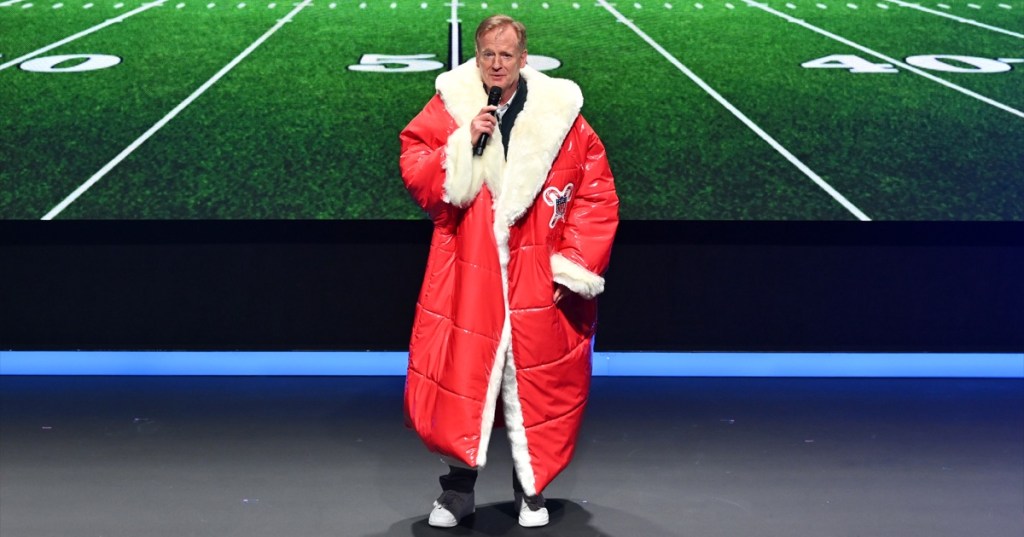
Roger Goodell presenting Netflix’s Christmas NFL matchups.Courtesy of Netflix

One of the most memorable moments came when NFL commissioner Roger Goodell appeared onstage with a Santa suit, the Netflix coat from your Christmas games, to announce the next Netflix NFL matchups. Plus, Jerry Jones made an appearance, too.

We were very excited about the games that we got, and by the way, within Netflix, most people were hearing the game pairings at that moment. So there are a lot of happy folks here because it’s a great matchup between the Dallas Cowboys and the Washington Commanders, and then the Minnesota Vikings against the Detroit Lions. That was a great moment for Jerry to be there as well.

Year One was a success for the NFL Christmas games. What can we expect for Year Two? Will there be more opportunities for brands to get involved? Or how are you approaching that?

Yes, I think we have the luxury of a little bit more time now this year. We know what to expect. We know what the matchup is going to be, and we have the experience we had last year, obviously, with “Beyoncé Bowl” as well. You can expect something very similar. We are looking to have it be a monumental moment on Christmas. We know families are gathered around the TV, a perfect time to engage with both advertisers and our members. So I think you can imagine that it’s going to be similar to last year, and even better.

You announced 94 million monthly active users for the ads tier. But can you explain the numbers because that’s just accounts, correct? With the actual number of users, you said it was more like 170 million.

We have always anchored our count of monthly active users around profiles, because, to be honest, we want to make sure that we’re anchoring in data that we know, and so we have the data around our profiles that are logging in. The point that we also wanted to make is that people are hearing very large numbers the rest of the week. Those numbers are apples to oranges, because sometimes they’re including a person per household multiplier, or they’re including duplication across different platforms. So we just wanted to make sure that people understood a more apples-to-apples comparison based on research that we have of how many people are in the households that we are addressing, to make those numbers more analogous.

You can’t talk about upfront this year without mentioning tariffs. What’s the messaging you’re having with buyers?

We’ve been very optimistic about what we’re hearing from the market. I think everybody is taking a bit of a wait and see approach to understand how the rest of the year is going to net out, but we haven’t seen any pullback in marketing spend, and we are talking about a number of different opportunities in the back half of the year, whether it’s around integrated marketing opportunities or sponsorships around our the slate and the titles that we have coming back.

Because we’re smaller than other folks in terms of the size of the overall business—and we’re still looking to grow—we’re still optimistic, even in this macro environment, that we can accomplish what we need to do.

CMO Marian Lee introduced several Wednesday partnerships onstage, including Booking.com and a mysterious orange fingerprint for Cheetos, with details on the way later. What can you say about the evolving relationship with brands?

This has been a pitch for us from the start. We want to make sure that we’re very selective about the opportunities that we do because the most important thing for us is that they need to feel authentic.

I wish she could have talked more about the partnership with Cheetos because I think that’s going to be very innovative. But we’ve done a lot of work in the past, like with Expedia and Domino’s. I think there are a lot of opportunities for us to keep rolling these out. And just to be clear, these are co-branded partnerships. These aren’t integrations. We think these will definitely be creative that will help them stand out in the marketplace.

Lastly, will you be back in upfront week next year?

It’s so funny because you are not the first person to put this out there today. We just had a conversation about this this morning. I’m always fascinated by the ideas that our marketing teams come up with. So I think the big thing for us is to make sure that we’re innovative, and there are different ways for us to stand out. And I can tell you some of the ideas I heard about this morning would definitely accomplish that.

For now, we just want to bask in the moment a little bit of having pulled off a successful, streamlined event, which I’m so proud of all the team, because there are a lot of people who work on these things and work very hard. We’re going to take a moment before we get into the planning for next year, but I can promise you it’s going to be memorable.

https://www.adweek.com/convergent-tv/netflix-ads-ai-puts-brands-in-shows/


Movement Strategy Acquires Newfangled Studios to Create a Social Marketing Powerhouse


.article-native-ad { border-bottom: 1px solid #ddd; margin: 0 45px; padding-bottom: 20px; margin-bottom: 20px; } .article-native-ad svg { color: #ddd; font-size: 34px; margin-top: 10px; } .article-native-ad p { line-height:1.5; padding:0!important; padding-left: 10px!important; } .article-native-ad strong { font-weight:500; color:rgb(46,179,178); }

Independent social media agencies Movement Strategy and Newfangled Studios are joining forces after more than a decade as competitors, ADWEEK has learned.

Movement Strategy has acquired Newfangled Studios in an all-cash deal. The transaction includes an upfront payment worth roughly half the deal’s value, with a two-year earn-out tied to growth targets.

The companies declined to share a specific transaction figure but said the deal was valued “well into the eight figures.” No private equity backer was involved.

“There are not that many companies that can create really high-quality social creative at scale,” Jason Mitchell, CEO of Movement Strategy, told ADWEEK. “It’s something that Newfangled can do. It’s something that we can do. And together, we feel like we can do it even at a greater capacity.”

Both agencies will continue to go to market independently, retaining their leadership and individual brands. But they will operate on shared systems and participate in joint knowledge-sharing, workshops, and events. Combined headcount is expected to be slightly north of 150 employees, and no layoffs are planned.

While the goal is to cross-pollinate on new business opportunities, existing client relationships at both agencies will be preserved.

“When I told my clients—Bank of America, Google and Staples—about the acquisition, all three said, ‘We’re so happy for you, but we hope this doesn’t mean we’ll lose that small agency touch,’” said Macaela Vandermost, founder and CEO of Newfangled Studios. “That’s really important to us.”

Social-first at scale

Both founded in 2009, Movement Strategy and Newfangled Studios have taken what Vandermost described as “parallel journeys” as social agencies—with the latter starting on the East Coast and the former on the West.

Mitchell and Vandermost met last year. “We just had a lot of really great meetings and conversations,” said Mitchell. “First of all, [Vandermost] felt like a person that we really like, someone we want to spend time with and work with, and someone we think we could learn a ton from.”

Strategically, the move pairs Movement’s focus on organic social with Newfangled’s capabilities in paid social media. “Together, that’s a very complete offering,” said Eric Dieter, COO of Movement Strategy.

And as clients increasingly expect bespoke creative for every platform, joining forces will help both agencies manage the scale and complexity that’s “just growing every day,” Vandermost said.

“We are regularly delivering social campaigns with 100-plus assets across ad units,” she added.

Beyond execution, the agencies hope to support clients as social becomes core to their overall creative and marketing strategies.

“We want to shift brands from thinking of social as a channel to thinking of social as a mindset,” said Vandermost. “Even the most traditional media should resonate with a social-first audience. That doesn’t necessarily mean it has to be an ad on TikTok. It could be an ad anywhere. But we want to integrate that spirit of social into all campaigns.”

For Dieter, success will be measured by the engagement of both teams and clients a year from now.

“When we announced it at our agency all-hands, the emojis and excitement were flowing,” Dieter said. “These are people who are intentional about working here. They could work at lots of other places. And they choose to be here.”

https://www.adweek.com/agencies/movement-strategy-acquires-newfangled-studios-to-create-a-social-marketing-powerhouse/


Disney Ad Chief Talks Aliens, Jimmy Kimmel, and Ads on ESPN (the Streamer)


.article-native-ad { border-bottom: 1px solid #ddd; margin: 0 45px; padding-bottom: 20px; margin-bottom: 20px; } .article-native-ad svg { color: #ddd; font-size: 34px; margin-top: 10px; } .article-native-ad p { line-height:1.5; padding:0!important; padding-left: 10px!important; } .article-native-ad strong { font-weight:500; color:rgb(46,179,178); }

They mostly come out at 4 p.m. … mostly.

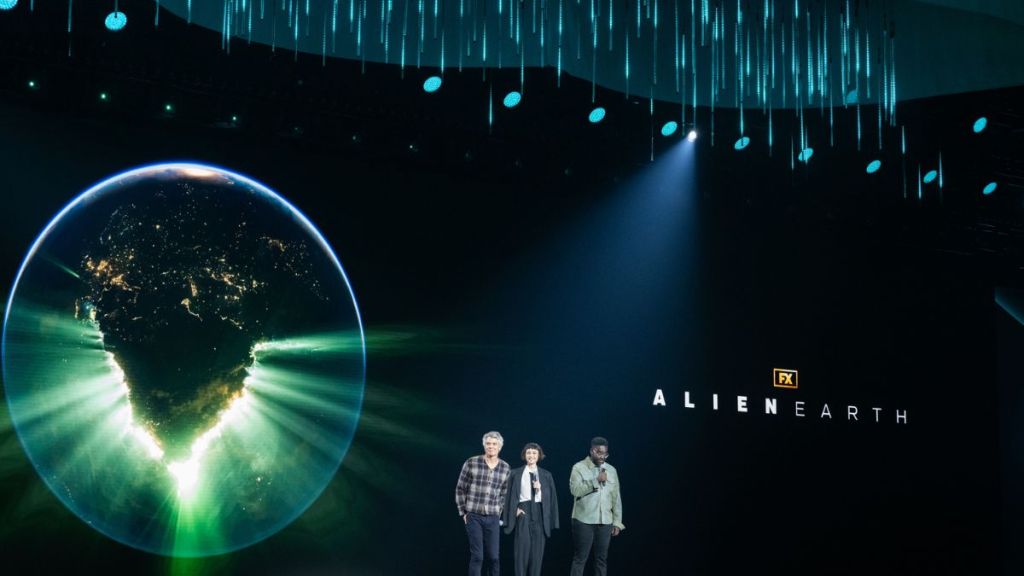
The Javits Center briefly resembled the exomoon LV-426 on Tuesday afternoon when Disney’s upfront presentation was hijacked by a marauding Xenomorph. The scream-inducing moment was all in service of FX on Hulu’s upcoming Alien: Earth—the first scripted series based on the beloved sci-fi film franchise—and also featured 50 performers playing scientists pushing 11 crates holding eggs of nearly-hatched aliens.

Besides thrilling the crowd, the Alien: Earth interlude also demonstrated the full power of Disney’s showmanship, not to mention the depth of its IP library. “Everyone recognizes Alien,” Rita Ferro, Disney’s president of global advertising, tells ADWEEK. “It’s made for that kind of stage where the storytelling is in line with the quality and expectation of something coming from Disney.”

That’s a theme that Ferro reinforces throughout our latest upfront postmortem interview. While the Mouse House is home to many doors—all of which lead to many different platforms, brands, and content—they all lead to the unrivaled production value and reach made possible by the Disney name.

“Disney is a brand that is elastic,” Ferro emphasizes. “It includes Marvel, Star Wars, ESPN, ABC News, and FX. But it’s all coming from Disney, and our quality and storytelling owns the hearts and minds of fans and consumers across any platform you want to watch. That’s simply not the same everywhere.”

This interview has been edited for length and clarity.

ADWEEK: Let’s start at the end of the presentation: Jimmy Kimmel closed out the show with his annual roast, and he was particularly fiery this year. What was your reaction to his set?

Ferro: The beauty of Jimmy’s annual roast is that it’s always a surprise. Every year, I brace for impact, but I felt pretty good about the fact that I personally wasn’t roasted much this year. My mom was in the room, so I was a little more sensitive! [Laughs] But Jimmy’s always so funny and free in that roast. He goes after all of us, and he made no exception to Bob Iger, too. There have been some years where it was more painful than this year; it was funny and, at the end of the day, very Jimmy.

I spoke with NBCU ad chief Mark Marshall about his cameo in the roast, and he said it was all in good fun.

I haven’t talked to Mark yet—I have to call him! But I always say that if you make it onto a comedian’s hit list, you’ve made it. He’s a good friend and one of the funniest people I know, so I think he appreciates the comedy.

Jimmy did call out the lack of new programming on ABC—there’s only one new show on the fall schedule this year. Is that a sign of the times for broadcast television or more of a sign of the evolving nature of the upfront?

I think it’s a sign of how we’re thinking about programming, our cross-platform content strategy, and making sure that the shows that are going to the right platforms are the shows that make the most sense for those platforms. We’ve made a concerted effort over the last couple of months to focus on what is resonating with the audiences on ABC, and we’ve seen that live content or what appears to be live content continues to resonate tremendously—things like Dancing With the Stars, American Idol, and the Bachelor series.

The other thing, too, is that length-of-show was my number one priority this year. Because of the breadth and size of our portfolio, we’ve had two-and-a-half-hour shows in the past, and I wanted to pick a smattering of some of the best content to leave people wanting more. We landed at 80 minutes, and there was so much greatness—and even more greatness that didn’t make the stage.

Jimmy Kimmel
Jimmy Kimmel roasts Disney at the upfront.Courtesy ABC/Jimmy Kimmel/Disney

Jimmy also had a good line about ESPN+ seeming more like a minus now that the new DTC streamer has been announced. What are the plans for that platform going forward?

We have a lot of rights deals across the marketplace that were done as part of ESPN+; the UFC is one of them, and also some of the college sports. That product will continue to exist because there is a marketplace for it—ESPN+ has over 30,000 hours of live events. But we are also prioritizing the triple bundle that includes ESPN, Hulu, and Disney+ with or without ads for consumers. We’re going to be very ambitious in terms of how we want to go to market with that product, with a promotional price at launch that will then ultimately evolve to the final price.

What are the reactions you’ve been hearing about the new ESPN product?

People are extraordinarily excited. There’s tremendous momentum behind sports right now, not only among core fans but also casual fans. And a lot of the growth is coming from women’s sports. We have committed to women’s sports across our platforms for a very long time, and we’re seeing that as a tremendous driver of engagement. We have so many partners asking us about what we can do together in the women’s sports space, and the ESPN app will be an extraordinary place to be able to do different things.

Can you clarify whether the ad-free tier of the triple bundle will feature ads during live sports?

Sports always has ads, because sports has natural breaks. So there will be an ad-tier and a non-ad-tier, but ESPN will always have advertising. You have natural breaks that happen that need to be filled.

ABC will be airing Super Bowl LXI in 2027. What demand are you seeing so far from advertisers?

We have 67 multi-year deals anchored in sports, and the NFL is a big driver of that. Anyone who is in the football space is asking to be part of these multi-year renewals and also asks, “Can I include the Super Bowl as part of that?” So that’s obviously going to be an important piece, and those conversations are ongoing. Super Bowl LXI will also be in our hometown of Los Angeles, where we have our headquarters, as well as a theme park and stations. So we’re thinking about how we’re going to bring that full experience to life outside of the game and create experiences that brands can be a part of.

In terms of other live events, the Oscars saw an uptick in viewers this year courtesy of its Hulu livestream. There were some technical glitches, but it didn’t seem to impact advertisers. What will the second year of that arrangement look like?

The Oscars definitely saw audience growth, and I think that’s because of the way that the show is presenting itself. We’re working with the show’s producers to make sure that we’re telling the story of the Oscars, but also creating custom opportunities for both platforms, because it’s a different audience between who watches the show on ABC and who watches on Hulu. It’s going to be a continuing evolution, and you’ll see more opportunities in streaming because we want it. Oscar fans want it, and the Academy wants it.

From l to r, Timothy Olyphant, Sydney Chandler, and Babou Ceesay star in Alien: EarthCourtesy Disney/Jennifer Pottheiser

The Disney+ portion of the event emphasized Marvel and Star Wars shows, some of which are aimed at older audiences. Are you seeing a wider range of brands interested in that platform because of the age mix?

When you say “Disney,” people tend to think “family.” But when you look at the core consumer on our streaming platforms, more than three-fourths of them are adults. The growth in engagement is coming from that demographic, so we can do custom opportunities with brands who want to show up. Those properties have built-in fan bases, which means they have opportunities for built-in organic promotion.

Disney recently rolled out two new adtech tools, Disney Experience Composer and Disney Compass. What feedback are you getting about those offerings?

We’ve been slowly rolling them out, working with agencies to integrate them. Compass is a game-changer for how we work across the marketplace. When you can have all of your data in one place to be able to plan, buy, and measure every campaign across the marketplace, and you can use one interface to compare and leverage insights across the full funnel, it is incredibly powerful. Every agency and every client coming on board with us is thrilled and would like to continue to do more with it.

With Composer, we’ve seen that one of our biggest growth strategies was around mid-market advertisers who don’t always have multiple broad-reaching campaigns. We knew that in order to continue to drive growth in that marketplace, we needed to allow our technology to create dynamically different brand creative assets at scale and leverage the right moment in time [to match] the right piece of content and the right ad. That’s what that tool will do.

Will Disney be back at the upfronts next year? And do you have your date already booked?

We will be back. I think next year’s upfronts are the week of May 11, and we’re always on Tuesday at 4 p.m. We’ve already started planning; I was talking to our team internally about how we continue to iterate on the things that move the needle for us. We always show up as one Disney, even as the consumer journey comes to life across different brands. We very much leaned into that with an upfront that was creative in its storytelling.

See ADWEEK’s previous upfront postmortem interviews here: NBCU, Fox, Amazon, TelevisaUnivision.

https://www.adweek.com/convergent-tv/rita-ferro-disney-aliens-jimmy-kimmel-espn/


Fox Ad Boss Jeff Collins Sells a Super Bowl-Like Event to Every Crowd


.article-native-ad { border-bottom: 1px solid #ddd; margin: 0 45px; padding-bottom: 20px; margin-bottom: 20px; } .article-native-ad svg { color: #ddd; font-size: 34px; margin-top: 10px; } .article-native-ad p { line-height:1.5; padding:0!important; padding-left: 10px!important; } .article-native-ad strong { font-weight:500; color:rgb(46,179,178); }

As the big upfront week presentations finally give way to behind-the-scenes bargaining, ADWEEK holds its postmortem conversations with those leading the industry’s ad sales.

First up was NBCUniversal. Now, it’s Fox’s turn, as—coming off a year that included the most-watched Super Bowl ever and Fox News soaring in ratings—ads chief Jeff Collins steered his company’s event through a diverse array of sports, digital, news, and entertainment offerings.

The Fox upfront presentation from New York’s Hammerstein Ballroom on Monday looked into the cornerstones of its strength, including Tubi programming like Sidelined 2: Intercepted and Breaking Bear, aimed squarely at younger viewers. Meanwhile, Fox News segments focused as much on the guests in the interview chair as the reporters asking questions, and the company showcased growing sports offerings, including the 2026 World Cup, an NFL Week 16 doubleheader just before the holidays, and IndyCar coverage just before the Indianapolis 500.

In addition, Fox peppered its announcements with appearances from stars including Michael Strahan, Erin Andrews, Brendan Fraser, Annie Murphy, Jamie Foxx, and Rob Lowe.

After the event, Collins spoke with ADWEEK about demand for Fox’s expanded NFL lineup, its interview-focused approach to selling Fox News, and the strategy behind taking Tubi to both upfronts and NewFronts.

This interview has been edited and condensed for clarity.

ADWEEK: Fox is airing 11 NFL doubleheaders in 2025, including one during Week 16 on December 20. With 31 NFL broadcast windows in total, can you tell us what buyer demand has looked like for the NFL and if there will be any digital/shoppable ad inventory for the pre-holiday Week 16 slate? 

Collins: NFL continues to see very healthy demand across the marketplace. We saw that demand last year in the upfront in scatter, and now we’re seeing that again in this year’s upfront market. I think that’s partially driven by the fact that it’s just increasingly rare to be able to find those mass audiences anywhere these days. The NFL, on a consistent basis on a Sunday, is drawing over 20 million viewers.

In terms of specific executions for Week 16, we’re still working on that, so we don’t have a whole lot to report yet. But, suffice it to say, you should be seeing some interesting things.

Fox used the NFL playoffs and Super Bowl to highlight its IndyCar coverage, which saw a 25% uptick in viewership last season during Fox broadcasts. Considering the recent success of open-wheel racing in the U.S. through Formula 1 and its narratives around drivers and teams, how have Fox’s IndyCar campaign and its upfront segment with team owner David Letterman and two-time Indy 500 champion Josef Newgarden sold the circuit to buyers?

One of the benefits of Fox is that we have this tremendous promotional platform across all of our live assets, and we’ve been able to utilize that to promote IndyCar. Robert Gottlieb, who’s our CMO on the sports side, has been able to produce some amazing creative that connects fans to the actual drivers and the drivers’ stories, just helping them become more relatable. I think you’re seeing that having an impact as well. 

The IndyCar fans are incredibly engaged, but then it’s also introducing a whole new set of fans to IndyCar and having them realize how exciting and dynamic the actual races are, and we do that through a number of different ways. Marketing is obviously one of them, including our non-motorsport talent in IndyCar events like the Indy 500, where Michael Strahan will drive the pace car. We’ll have other high-level talent there as well, and all of those things help to bring in new audiences and expose them to the races. 

Speaking of the Fox platform, the Fox One streaming platform was announced before the upfront, but didn’t play a major role in it. What has the rollout looked like, and how is it being presented to buyers seeking inventory around its fall launch?

You heard [Fox Corporation executive chair and CEO Lachlan Murdoch] speak about it on our earnings call that the service is really designed to reach cord-cutters and cord-nevers and truly provide an incremental audience on top of our linear audiences and advertisers. 

In terms of the advertising experience for the first six months or so, our live content will have pass-through ads, so our existing advertisers that are buying into our linear properties will get the added audience benefit of the new signups that are coming on into Fox One. Those will be incremental audiences from what they’re currently getting with their normal linear buys. And then on the VOD side, that will be supported with dynamic ad insertion, so we’ll be able to insert ads into the VOD stream there. So we’re excited about it, and we’re getting quite a few questions from advertisers about it as well, and they’re excited to tap into new audiences that have been very elusive for them through other channels.

Fox brought Tubi to both NewFronts and upfronts this year and distinguished it both from competitors and within the Fox portfolio. What has the buyer reaction been to an established Tubi, and how does ad interest on the platform differ from the rest of the portfolio?

We wanted to take part in both the NewFront and upfront. This year, we approached them differently: The NewFront, we approached more with our technology announcements and data announcements, whereas the upfronts were much more around content, creativity, and programming.

The Tubi value prop is very complementary to Fox. We have these massive live audiences in sports and news. We have a big broadcast creation vehicle, and then Tubi complements that by reaching the cord-cutters and cord-nevers, and it’s really designed to reach that audience. So advertisers have taken note, and what they appreciate more than anything is the incrementality of that audience and the reach that it extends to what they’re getting with linear programming.

Fox illustrated some of the synergy between Tubi and its other properties by showing NFL teams and players acting out scenes from Sidelined: Me and the QB. Does that get ad buyers moving around the portfolio a bit?

For our advertisers, it really comes down to the audience and how it complements what they’re doing across the rest of our portfolio. That’s why they buy Tubi in conjunction with a lot of our live offerings in terms of the programming. What you’re seeing is it’s really being programmed for a different audience, quite frankly, than what you might find on linear. It’s being programmed for younger, diverse cord-cutters and cord-nevers, and a movie like Sidelined really accomplished that by bringing in Noah Beck and Siena [Agudong] and their social connections that obviously drove tremendous numbers for the first five or six days of viewership.

That’s a model we’re going to be moving forward with to continue to engage with these young audiences that are just increasingly hard to reach.

Fox News made a strong, metrics-heavy pitch for the news division that didn’t veer into discussions of brand safety. How does that approach work out for the network?

We’ve seen a tremendous amount of interest from advertisers heading into this year’s upfront around Fox News, being driven by a number of things. 

One is just the dramatic audience growth that it continues to see even post-election. First-quarter, Adults 25-54 numbers were up 58%. It was the second-highest-rated network after CBS in all of TV. The sheer scale is hard to ignore in all of media.

Then, on the other side, is just the coverage that we’ve had. We tried to highlight that throughout the upfront with Bret Baier and the interviews that he’s had with everyone from [Ukrainian President Volodymyr] Zelenskyy, the night that he was in the White House, to Bernie Sanders last week… folks from all sides of the aisle. He’s getting the biggest newsmakers, and they’re coming to him. 

And you’re seeing Democrat involvement in digital.

It’s become the hottest platform for Democrats to publish their columns. So [California Governor Gavin Newsom], [Massachusetts Senator Elizabeth Warren], [former Transportation Secretary Pete Buttigieg] have all penned pieces on FoxNews.com, and that’s one of the things that’s driving the 120 million uniques that FoxNews.com has.

We’re seeing it across linear, where the content that we’re delivering is incredibly strong. It’s reaching diverse audiences politically, so more Democrats and more independents than the competition, and more Republicans as well, and advertisers have taken notice. We’ve had over 200 new advertisers since the election that have come on board.

Part of Baier’s presentation at the upfront centered around Fox News’ interviews—its ability to get people in its chair vs. that of competitors, and the value of those interview subjects. Will this become a more regular portion of Fox News’ pitch to ad buyers?

One of the things you see now is that, because of the size and scale of the Fox News audience, it’s not just the advertisers that have taken notice—it’s the news makers, and they’re coming to Fox News first to get in front of the largest audience in news. So we are getting those best interviews, which again, is fueling higher and higher ratings, which in turn is attracting more news makers. So we do have this virtuous cycle here that’s happening within news, and we’re not seeing that slow down anytime soon.

https://www.adweek.com/convergent-tv/fox-jeff-collins-super-bowl-upfront/


EXCLUSIVE: DoubleVerify Sues Adalytics, Alleging Defamation


.article-native-ad { border-bottom: 1px solid #ddd; margin: 0 45px; padding-bottom: 20px; margin-bottom: 20px; } .article-native-ad svg { color: #ddd; font-size: 34px; margin-top: 10px; } .article-native-ad p { line-height:1.5; padding:0!important; padding-left: 10px!important; } .article-native-ad strong { font-weight:500; color:rgb(46,179,178); }

Ad verification firm DoubleVerify is suing Adalytics, alleging that the research and analytics firm defamed the adtech company in its March 28 report about fraudulent traffic in digital advertising. 

In a lawsuit filed in a Maryland district court Monday, DoubleVerify said it wants to “hold Adalytics accountable for its malicious publication and commercial exploitation of misleading, disparaging, defamatory, and false statements concerning DoubleVerify and its business.”

In its bot traffic report from late March, Adalytics suggested that DoubleVerify’s pre-bid filters sometimes fail to block traffic from bots, even when bots disclosed that they were not real people.

Now, DoubleVerify alleges that this report falsely claimed that its systems fail to block bot traffic, misleadingly implying that advertisers are routinely charged for invalid impressions. DoubleVerify alleges that these assertions damage its reputation and were made to promote Adalytics’ products and services, since Adalytics is a for-profit company. 

The lawsuit claims Adalytics “knowingly” made “false public statements to drive customers away from DoubleVerify. Accordingly, Adalytics acted with actual malice in publishing the false and misleading statements.”

An Adalytics’ spokesperson said in a statement shared with ADWEEK: “We believe this case is without merit, and we will vigorously defend our rights and ability to serve the public interest.”

The spokesperson accused DoubleVerify of trying “to shut down public discourse on important matters of concern, rather than following the example of other ad tech vendors who engage in good faith with such research.”

A DoubleVerify spokesperson told ADWEEK in a statement: “As a policy, we don’t comment on ongoing legal matters. DV has published a detailed rebuttal that makes our position clear, and we stand behind the quality and effectiveness of our solutions.”

Adalytics has published several reports that have raised concerns about the effectiveness of DoubleVerify’s brand safety and ad verification technology.

In response to a February Adalytics report about failures in the adtech supply chain that led to ads for Fortune 500 brands appearing on a site known to host child sexual abuse material, DoubleVerify rolled out updated brand safety tools and enhanced reporting that enables advertisers to view the specific URLs on which their ads are served.

But DoubleVerify later went on the offensive. The company aimed to debunk some of Adalytics’ claims about its technology and highlight concerns about Adalytics’ research methodologies in a report of its own, published April 7. 

In that report, DoubleVerify also alleged that “there is a track record of Adalytics misrepresenting verification technology and data, and drawing false conclusions.”

In an attempt to get ahead of the Adalytics bot report in January, DoubleVerify called Adalytics’ assertions about its tools “misleading and manufactured.”

DoubleVerify has also taken aim at Adalytics collaborators. Last month, the company told adtech watchdog Check My Ads to prepare for litigation over alleged “defamatory statements” it made about DoubleVerify, though ADWEEK has confirmed that no legal action has yet been filed. Check My Ads has collaborated with Adalytics on efforts to advance shared goals of increasing transparency in the digital advertising ecosystem. 

DoubleVerify is not the only adtech firm that has taken issue with Adalytics’ characterization of its work. Adalytics is also facing a lawsuit from Colossus SSP, filed in May of last year, over alleged “defamation, injurious falsehood and false advertising.”

Correction 5/15 at 3:35pm ET: A previous version of this story incorrectly stated that Adalytics’ bot report poked holes in DoubleVerify’s post-bid analysis. This is untrue. The report took issue with DoubleVerify’s pre-bid tools.

https://www.adweek.com/programmatic/exclusive-doubleverify-sues-adalytics-alleging-defamation/


Netflix Reveals New Adtech, Recruits Emily in Paris to Pitch Advertisers at Upfront


.article-native-ad { border-bottom: 1px solid #ddd; margin: 0 45px; padding-bottom: 20px; margin-bottom: 20px; } .article-native-ad svg { color: #ddd; font-size: 34px; margin-top: 10px; } .article-native-ad p { line-height:1.5; padding:0!important; padding-left: 10px!important; } .article-native-ad strong { font-weight:500; color:rgb(46,179,178); }

Once upon at time there were no Stranger Things than watching ads on Netflix. Those times are long gone.

At its third annual upfront event on Wednesday, held at the Perelman Performing Arts Center in New York, the streaming giant announced several adtech advancements, more robust branded partnerships, and an ad tier that now boasts 94 million monthly active users globally

Among the highlights, Netflix explained how it plans to expand Netflix Ads Suite—the company’s in-house ad platform—in the coming months. NAS is currently live in the U.S. and Canada, and goes live in EMEA next week. It will be available in all 12 of Netflix’s ad-supported countries by June.

To showcase the platform, Amy Reinhard, Netflix’s ads president, recruited Emily in Paris herself, Lily Collins. The actress noted that “you can now target more than 100 interests in over 17 categories— including life stages.” 

New adtech and formats

According to Netflix, the company’s ad tier has eight times higher brand favorability than the CTV average and leads to 162% higher sales per impression. The company revealed several new enhancements to build on those numbers further.

Advertisers can now incorporate their first-party data, either through LiveRamp or directly with Netflix, to match data sets for behavioral insights and targeting capabilities against Netflix’s ads audience. The company also opened third-party data access to Experian and Acxiom and announced a clean room strategy for more privacy and security.

Additionally, the streamer is offering more options and deal types for programmatic buying, expanding measurement with new first-party measurement solutions, which start with brand lift capability to tie viewing to brand perceptions. 

Format enhancements include Netflix’s new modular framework for ad formats, which leverages generative AI to access Netflix’s library of shows to create a more relevant and personalized ad experience for users and brands. Plus, the company is utilizing interactive midroll and pause formats to build custom advertising creative with added overlays, calls to action, and second-screen buttons.

The formats will be available by 2026 in all ad-supported countries. 

“By controlling our own adtech, we’ll be able to deliver newer tools, better measurement, and more creative formats,” Reinhard said.

More branded opportunities

In addition to the adtech enhancements, Marian Lee, Netflix’s chief marketing officer, noted that the company is leaning into creative ways to partner with brands.

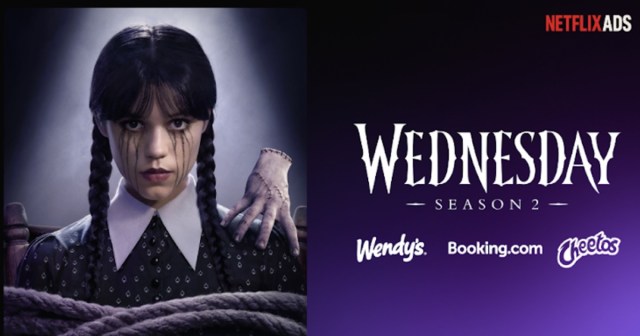
The executive noted that Cheetos, Wendy’s, and Booking.com are teaming up with the streamer for Wednesday Season 2, which premieres in two parts starting in August.

“Together, we can bring stories to life in ways none of us can do on our own. That’s our idea of the perfect partnership,” Lee said.

New programming on the way

Tentpoles are among the priorities for the streamer this year, and Bela Bajaria, Netflix’s chief content officer, said the company is taking “big, bold swings,” announcing several live events, including WWE every week, the Katie Taylor vs. Amanda Serrano rematch fight on July 11, as well as NFL Christmas Day matchups: the Dallas Cowboys at the Washington Commanders, and the Detroit Lions at the Minnesota Vikings. 

Upcoming (non-live-event) programming includes new seasons of The Diplomat, Forever, The Four Seasons, Love on the Spectrum, Million Dollar Secret, My Life With the Walter Boys, Survival of the Thickest, and Seasons 5 and 6 of Bridgerton. 

Meanwhile, new projects include such films and shows as Jamie Foxx’s Fight for ’84, an untitled Dan Levy project, Deion Sanders documentary Prime Time, Denzel Washington and Daisy Edgar-Jones in Here Comes the Flood, and Star Search.

“If you take away anything from today, I hope it’s this: The foundations of our ads business are in place. And going forward, the pace of progress will be even faster,” Reinhard said. “Plus, we already have the most important thing: the most engaged audience anywhere.”

https://www.adweek.com/convergent-tv/netflix-adtech-upfront-partnerships/


Jimmy Kimmel Roasts Bob Iger, Offers Baby Naming Rights at Disney Upfront


.article-native-ad { border-bottom: 1px solid #ddd; margin: 0 45px; padding-bottom: 20px; margin-bottom: 20px; } .article-native-ad svg { color: #ddd; font-size: 34px; margin-top: 10px; } .article-native-ad p { line-height:1.5; padding:0!important; padding-left: 10px!important; } .article-native-ad strong { font-weight:500; color:rgb(46,179,178); }

When it comes to Jimmy Kimmel’s closing monologue at Disney’s upfront event, no one’s safe. And, yes, that means you, too, babies.

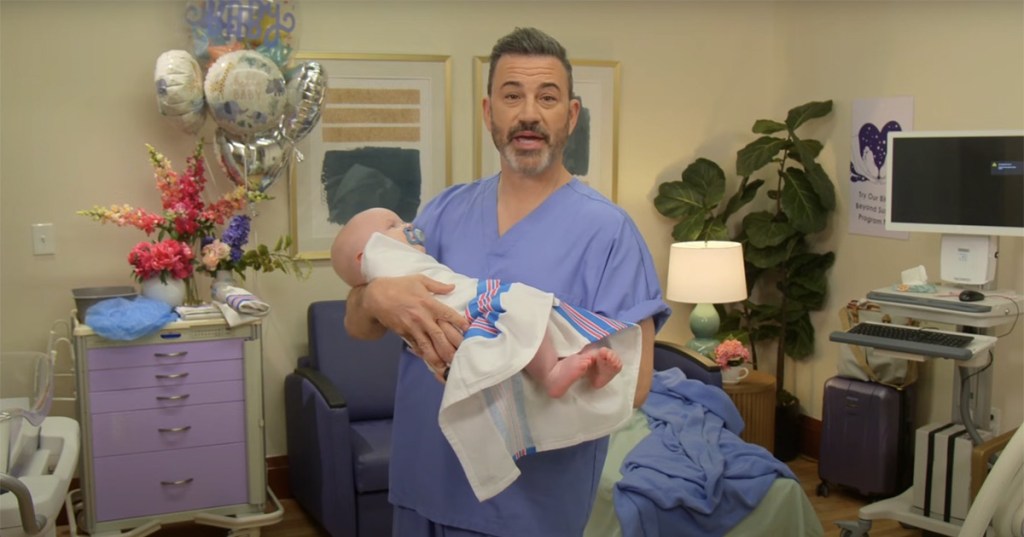
On Tuesday, the Jimmy Kimmel Live host once again closed out Disney’s annual upfront event, initially joining the event virtually from Cedars-Sinai Medical Center in Los Angeles, where he was awaiting the birth of his first grandchild.

Kimmel then proceeded to offer the baby’s naming rights to the advertisers in the room, even bringing in Dr. Dre for the bit and adding a Lion-King-inspired jingle full of brand names as examples. (Because when it comes to emotional childhood trauma from being named after a brand, Hakuna Matata, right?)

[embedded content]

Of course, the late-night host was just joking about being virtual. After the baby-naming bit, he stepped onstage and said the virtual segment was almost cut after Seth Meyers offered naming rights to his kid at the NBCUniversal upfront earlier in the week.

“I thought about killing [the segment], but then I also thought about Dr. Dre killing me for making him drive to Hollywood and put on makeup for no reason,” Kimmel said.

The Jimmy Kimmel Live host then proceeded to roast everyone, including legacy broadcasters, competitors like Netflix, and even Disney CEO Bob Iger, who helped kick off the Disney upfront for the second year in a row.

“Bob Iger has passionately led Disney for 20 years, and reluctantly for three,” Kimmel joked in his monologue, later adding, “You think Bob gives a shit about The Rookie Season 8? Bob doesn’t care if this whole room turns into Avengers Endgame dust!”

Kimmel also set his sights on ABC, which ordered only one new show for broadcast, 911: Nashville.

“At least CBS and Fox are making shows. ABC—we ordered one new show, and it’s a spinoff of an old show. Which really begs the question, ‘What are we doing here?’” Kimmel said. “We risked our lives flying into Newark for this?”

See more of Kimmel’s best jokes below:

On NBCU ad sales chief Mark Marshall saying his company had “the greatest collection of content that has ever been assembled”:

“I guess Mark has never heard of Pornhub. Although…,” Kimmel said, zooming in on a photo of Marshall smiling as Glinda from Wicked. “Based on the expression on his face … I feel like he has.”

On Dick Wolf getting a new NBC show:

“Dick Wolf, the Michael Jordan of character actors getting murdered in the park.”

On Disney beating Netflix in ad-supported viewers:

“Disney has 164 million active users per month across our ad-supported platforms, more than twice the number Netflix has. I don’t have a joke for that … I just want you to know that we finally beat those motherf****rs at something.”

On CBS winning the broadcast season:

“CBS was the most-watched network again for the 17th year in a row. Led by their hit comedy ‘Ghosts.’ Which is also what most of their viewers will be soon.”

On ABC not having new shows:

“Our fish is not fresh. But you know what we do have? Season grand-mother-f***ing two of The Golden Bachelor! Say what you will about ABC, we are still the only network where you can see pop-pop get a squeezer in a hot tub!”

On ESPN’s new streaming service being called “ESPN”:

“So what will this mysterious new streaming service be called? Well, you know, they had a conclave. And a little puff of white smoke came out of Jimmy Pitaro’s ass … And the new service bringing live content to millions of fans around the world will go by the name ‘ESPN.’ And that’s why they call us ‘Imagineers.’”

On ESPN getting a new streamer but keeping ESPN+:

“You will get less content on ESPN+. The ‘plus’ is now, in many ways, a minus. If you want the plus, you have to pay less for it. It’s all part of our plan to confuse you until you hand us the debit card of everyone in your family.”

On ABC’s audience shrinking, but CPMS going up:

“Every year, our audience gets smaller, and we tell you it’s bigger, and we want more, for less. And it’s exhausting. I know. We are annoying and unreasonable, and you have shitty jobs because of it. But at least you have the shitty jobs! All those kids we saw graduating this weekend … some of them might have to date Bill Belichick to make ends meet.”

https://www.adweek.com/convergent-tv/jimmy-kimmel-roasts-bob-iger-disney-upfront/


NFL Doubleheaders Don’t Tell Whole Story of Fox’s Upfront


.article-native-ad { border-bottom: 1px solid #ddd; margin: 0 45px; padding-bottom: 20px; margin-bottom: 20px; } .article-native-ad svg { color: #ddd; font-size: 34px; margin-top: 10px; } .article-native-ad p { line-height:1.5; padding:0!important; padding-left: 10px!important; } .article-native-ad strong { font-weight:500; color:rgb(46,179,178); }

Despite Derek Jeter using his Bob Sheppard Yankee Stadium batting intro, the company touting its broadcast rights to the 2026 World Cup, and Tom Brady hitting a random audience member with an errant throw from stage, sports were a surprisingly modest portion of the 2025 Fox upfront.

The company spent this year’s presentation in New York’s Manhattan Center, focusing on the strength and focus of its multi-pronged approach. The program hustled through MLB on Fox commentator Jeter’s introduction; Beat Shazam host Jamie Foxx’s soft-music issues, and “Love the Teslers” impression of President Donald Trump; and a segment with Fox News Outnumbered host Harris Faulkner, Celebrity Weakest Link host Jane Lynch, and NFL on Fox reporter Rob Gronkowski—whose quip about former coach Bill Belichick’s girlfriend not existing when the Fox network launched in 1986 drew mixed reactions from those assembled—to reach the relatively passionate case to buyers made by Jeff Collins, Fox president of advertising sales, marketing, and brand partnerships.

Collins hammered home the 26% growth in viewing time over all Fox properties during the last year amid declines around this industry, and cited EDO data telling buyers it would take 75 seconds of ad time anywhere else to equal the impact of 30 seconds of advertising on Fox. Roughly a quarter of those Fox ads air during programs with audiences of 1 million viewers or greater. 

After launching its OneFox converged media platform—an AdRise-powered tool that brings AI-driven media planning, optimization, predictive models, and insights across its portfolio—just before the upfront, Collins assured brands and buyers in the audience that Fox has tailored its offerings to meet their needs.

The presentation had plenty of sports—including Fox’s NFL doubleheaders, Major League Baseball personalities, World Cup audiences, and a big push for its newly acquired rights to the Indianapolis 500—but delving into the success of Tubi, and the potential of Fox News during the year ahead gave Fox a few more legs to stand on.

“Because we’ve assembled only the best assets, the most essential properties for your media plan, and nothing else,” Collins said. ”We combined two ends of the media spectrum: Big, broad reach from the largest live audiences on one end, and granular targeting of the elusive cord-cutters and cord-nevers on the other. Together, these make up a complete offering that’s foundational to your media plan—everything you need and nothing you don’t.”

Pointing to the scoreboard

Though pushed nearly an hour into the presentation, Fox News received a nearly 10-minute segment of its own, with reporter Martha MacCallum highlighting the network’s performance, the rise of its late-night host Greg Gutfield, and the work of correspondents Trey Yingst, Bill Melugin, and Jacqui Heinrich.

She introduced anchor Bret Baier on location in Saudi Arabia, who noted that viewership for his show, Special Report, increased 60% year over year. While he acknowledged that there was still a gap between Special Report and the leading news show, CBS Evening News, he said it was closing the gap and credits the company’s investments in resources and interviews for the gains.

Fox News' Martha MacCallum at Fox upfronts
Fox News’ Martha MacCallum made the case to potential advertisers.Fox

“Fox leadership has invested in news for decades, enabling us to break news around the world, like on a trip like this,” Baier said. “And viewers are coming and they are staying, which is awesome to see.”

Tubi CEO Anjali Sud broke out similarly strong metrics for the streamer’s presentation, reiterating the 97 million active user figure it released in January and noting Tubi’s role in bringing Fox 127.7 million total viewers for Super Bowl 59. 

While it brought back The QB and Me stars Noah Beck and Siena Agudong from NewFronts, it also brought in new Stubios creators and Brendan Fraser, Josh Gad, Sarah Michelle Gellar, Elizabeth Hurley, and Annie Murphy from Tubi’s new animated series Breaking Bear. Sud told the audience that Tubi isn’t just making Wattpad novels into movies or making shoppable Super Bowl red carpet shows to experiment: It’s reacting to what a younger, spending streaming audience wants.

“For the folks in this room, this audience is no longer emerging,” Sud said. “They see advertising as a part of their daily lives, and they make real purchasing decisions based on the ads they watch.”

Tubi CEO Anjali Sud
Tubi CEO Anjali Sud noted that younger viewers are setting the ad agenda at the free streamer.Fox

Still some sports

While Fox doesn’t have the Super Bowl this year, the NFL is still a big part of the advertising game plan. Fox will have 11 doubleheaders throughout the season, including a Saturday double bill on Dec. 20 featuring the defending champion Philadelphia Eagles and Washington Commanders in one game and the Chicago Bears and Green Bay Packers in another.

Its college football slate, meanwhile, featured Texas and Ohio State during opening week and the Ohio State-Michigan game on Thanksgiving weekend. 

As for the World Cup, Fox pointed out to advertisers that this is the first year the field of nations has expanded from 32 to 48, providing more opportunity for exposure to roughly 150 million viewers. Fox’s slate, meanwhile, includes a July 4 matchup in Philadelphia that’s in a stage Team USA could potentially reach during U.S. 250th anniversary celebrations, which Fox is also programming around.

Josef Newgarden, David Letterman, and Michael Strahan
Josef Newgarden wants that trophy a third time, David Letterman would prefer he didn’t get it, and Michael Strahan just wants to be liked.Fox

Finally, NFL on Fox host Michael Strahan introduced the crowd to Fox Indianapolis 500 coverage—which has seen viewership increase 25% from the circuit’s coverage last year—by bringing out late-night legend and Rahal Letterman Lanigan Racing team owner David Letterman—who let Strahan throw him around a bit as a throwback to a Late Night appearance and interviewed would-be Indy three-peat champion Josef Newgarden. 

Telling the audience, “It’s so nice to be out of the house,” and, “I haven’t worked since Bonanza,” Letterman took the temperature of the room and sensed that the crowd—which had been somewhat quiet to that point—would rather be elsewhere. With a 72-degree day and partly cloudy skies outside—and a week of rain ahead—he sensed their thoughts might be elsewhere.

“Where would you want to be on the nicest day in a decade?” Letterman asked. “Would you rather be anywhere but here, ladies and gentlemen?”

https://www.adweek.com/convergent-tv/nfl-doubleheaders-fox-upfronts/