Social media is evolving. Are you adapting? Connect with a community of brand pros and content creators at Social Media Week, May 12–14 in NYC, to learn how to keep pace with new trends and technology. Register now to save 20% on your pass.
GroupM has made an unusual bet in the generative AI space.
The holding company’s data and insights arm, Choreograph, is tapping DeepSeek—China’s answer to OpenAI—to sharpen its Audience Translator tool, which matches brands with target audiences across ad platforms.
The goal is to help brands target Chinese consumers “faster and smarter than ever,” according to a LinkedIn post by the ad giant.
Choreograph is specifically integrating DeepSeek’s open-source R1 model into its Audience Translator tool, where media planners can submit queries describing their campaign’s target audience, as well as demographics and topics of interest. Audience Translator then maps and standardizes audience data across platforms, allowing for consistent and accurate audience profiles.
“By integrating DeepSeek’s R1 model into Audience Translator, we’re able to use its Chinese Natural Language Processing (NLP) capabilities to enhance our insights into audiences in China, optimize audience descriptions, and help create the right mix of audience tags to assist with campaign planning,” a GroupM spokesperson told ADWEEK. “We’re continually testing new models and applying them where we’re confident they can accelerate our capabilities.”
GroupM is not formally partnering with DeepSeek, but rather integrating the AI company’s open-source model into a specific tool within Choreograph, the spokesperson said. “We use this tool to help reach audiences in China, for global brands advertising in the market, and for Chinese brands,” the spokesperson added.
DeepSeek’s rise has made waves in Silicon Valley, as many in the tech industry scrambles to make sense of its rapid ascent. The Chinese AI company has generated both awe and skepticism, with headlines questioning the accuracy of its gen AI model.
Concurrently, China has been racing to show how it is using DeepSeek, from courtrooms leveraging the technology to draft legal documents to doctors using it to propose treatment plans.
On the advertising front, the future of media is increasingly intertwined with gen AI. GroupM’s CEO Brian Lesser previously told ADWEEK that within the next five years, “there is no human that touches a media plan.”
Reflecting this shift, GroupM plans to invest $30 million to educate and train its workforce on how to work with AI, noting that 70% of its new hires already have experience with the technology.
Indianapolis Station to Launch Family Friendly Afternoon Local Shows
Indianapolis, Indiana station WISH will debut two new live, shows it’s calling “family-friendly.”
WISH-TV Focus on Family will air at 3 pm and WISH-TV Focus on Family & Community will air at 3:30 p.m. beginning on March 31, 2025.
The station said the shows will “inspire, educate, and strengthen family bonds while bringing communities together.”
The shows will be anchored by Phil Sanchez and Faran Fronczak. Dakarai Turner will be a contributing anchor.
“These newscasts are the first of their kind in the state. They represent WISH-TV’s commitment to the communities that we serve. This unique presentation and storytelling should be refreshing to our viewers as it will be more of an educational approach as opposed to hard news. WISH-TV will now produce over 90 hours per week of live news and entertainment programing, more than any TV station in the state,” said DuJuan McCoy, owner, president and CEO of WISH-TV.
NBCU, Netflix, and Fox Set Upfront Events to Round Out 2025 TV Upfront Week
Publishers have been less upfront with their announcements, but TV upfront week is finally taking shape—with NBCUniversal, Fox, and Netflix all setting dates.
NBCU made its announcement on Monday, with Mark Marshall, chairman, global advertising and partnerships at NBCUniversal, posting a message on LinkedIn to share his thoughts on the value of the upfront and confirm NBCU was back in the annual advertising showcase.
According to Marshall, the company will once again kick off the week at Radio City Music Hall, with an event on Monday, May 12, at 10:30 a.m. The company will present its content against the backdrop of NBCU’s 100th anniversary in 2026, showcasing offerings such as Super Bowl LX, the NBA, BravoCon, the Macy’s Thanksgiving Day Parade, and more.
“When I think about the upfronts, I think about the content,” Marshall wrote. “And I believe that content matters more today than any other point in our history.”
The NBCU announcement comes much later than in recent years when the company regularly announced its upfront events in January or even December. However, according to a source familiar with the matter, the company felt a client letter closer to the event was a fresh take, especially with Marshall being able to share his thoughts on why the upfront was valuable.
Though NBCU’s news comes later than usual, other companies haven’t made big announcements at all.
ADWEEK has confirmed Netflix’s event will take place Wednesday, May 14, at the Perelman Performing Arts Center from 2 p.m. to 5 p.m. However, the company hasn’t made a formal announcement since the day and time are the same as last year, according to a source familiar with the matter. Last year, the company also held a Netflix Experience event later in the week.
Meanwhile, ADWEEK has confirmed that Fox, which also hasn’t made a formal announcement, will have its event on Monday, May 12, at 4 p.m. at the Hammerstein Ballroom of the Manhattan Center.
Shaking up upfronts
Still, at least one publisher decided to make a big splash with its upfront announcement.
Amazon announced in January that it’s switching presentation days for its second year in upfront week. Rather than present on Tuesday morning, as it did in 2024, the company moved its event to Monday evening, May 12, at 6:30 p.m. at the Beacon Theatre.
Though the move from Tuesday morning avoids competing for time with the other Tuesday presenters, TelevisaUnivision and Disney, it also crowds Monday’s regulars, NBCU and Fox.
NBCU typically holds an event for Telemundo on Monday night, during the time Amazon will have its event and reception this year. Now, ADWEEK can confirm that NBCU is planning to hold a more intimate Telemundo celebration on Tuesday, May 13, in the evening instead.
Regarding upfront holdouts, YouTube has yet to make a formal announcement. The platform normally closes out upfront week on Wednesday night and is seemingly set to return for a fourth year in 2025.
However, with Netflix, Fox, and NBCU confirming dates—and early announcers like Disney and Amazon already locked in—here’s a look at the nearly complete 2025 upfront week schedule:
Social media is evolving. Are you adapting? Connect with a community of brand pros and content creators at Social Media Week, May 12–14 in NYC, to learn how to keep pace with new trends and technology. Register now to save 20% on your pass.
Perplexity is making its biggest marketing bet yet.
The AI search startup has launched its first celebrity-led ad campaign, starring Squid Game actor Lee Jung-jae, in a mid-seven-figure buy across major streaming platforms.
The 90-second ad spot, filmed in Korea, takes a playful jab at Google, dubbed “Poogle” in the ad.
Jung-jae, caught in a Squid Game-like scenario, is trapped in a room with three pressing questions. He first turns to Poogle for answers but is instead shown a list of links. Panicked, he then asks Perplexity—using its voice model—how to remove coffee stains from a white shirt and immediately receives a clear, step-by-step process that helps him escape. Another scene sees him ask, “How do I make cheese stick to pizza?” to which Perplexity quips, “Don’t use glue.”
Future content will show how Jung-jae uses Perplexity in daily life.
The ad marks the beginning of a yearlong partnership between Perplexity and Jung-jae’s management company, Artist United. The firm, which Jung-jae co-owns, has integrated Perplexity’s enterprise pro tier into its workflows for research, drafting, and API-based integration. Perplexity’s chief business officer, Dmitry Shevelenko, told ADWEEK that this was a natural extension of the partnership rather than a cost-offsetting tactic.
“This is a major ad purchase for us,” Shevelenko added.
The timing of the campaign is strategic. Netflix is expected to release Squid Game’s third season in June, giving Perplexity an opportunity to cement itself as a mainstream consumer brand. The startup—now valued at $9 billion—has expanded its product suite, launching an Android assistant, enhancing voice capabilities, and even dabbling in an AI-driven browser, Comet.
“We think you unlock a critical threshold of utility where it’s not just Perplexity is for tech early adopters, it truly is for everyone,” Shevelenko said. “It’s a natural evolution of becoming a staple consumer brand.”
Perplexity currently fields over 20 million queries per day and is aiming to hit 100 million daily searches within the next year.
The ad begins running today in the U.S. before expanding to Korea, Japan, and Europe over the next 10 days. It will air on Amazon Prime, Twitch, Tubi, Disney, and Hulu. Each market will see a localized version—Jung-jae speaks in Korean throughout, while on-screen text and voiceovers will be adapted to the region. Perplexity currently supports 10 languages, including Korean, French, Spanish, and German.
The creative was developed in-house with support from ad agency Sandwich, though Perplexity doesn’t have an official agency of record. Universal McCann is overseeing the social media buy, while Perplexity is managing all streaming placements internally.
Perplexity used its own product to brainstorm elements of the ad, while video production remained human-led, Shevelenko said.
WCBS Chief Weathercaster Lonnie Quinn Takes Time Off to Heal After Concussion
CBS News New York (WCBS) chief weathercaster Lonnie Quinn will be off the air for several weeks to recover from an accident.
Quinn suffered a concussion earlier this year after, he said, he “took a wallop” on his head.
The New York CBS owned station said Quinn went to the hospital and had a CAT scan, but the results were negative. When he started to suffer other symptoms weeks later, he saw a neurologist and got an MRI, which revealed what doctor’s said was a severe situation that just needed rest to heal.
“When you bang your head, your brain recovers nicely, but it only recovers while the body is sleeping,” he said.
He’ll be off the air as he takes times to rest and recuperate.
Conan O’Brien Returns to Host Oscars After Wickedly Good Ratings
Conan O’Brien’s first time hosting the Oscars had a lot of Substance, so the comedian is back to host the 98th Academy Awards.
Today, Academy CEO Bill Kramer and Academy President Janet Yang announced that O’Brien is returning for a second year to host the Oscars, which takes place on Sunday, March 15, 2026.
In addition, Raj Kapoor and Katy Mullan are returning as the show’s executive producers for the third consecutive year. Plus, Jeff Ross and Mike Sweeney will return as producers for a second time, and Sweeney will also serve as a writer.
“We are thrilled to bring back Conan, Raj, Katy, Jeff, and Mike for the 98th Oscars,” Kramer and Yang said in a statement. “This year, they produced a hugely entertaining and visually stunning show that celebrated our nominees and the global film community in the most beautiful and impactful way. Conan was the perfect host, skillfully guiding us through the evening with humor, warmth, and reverence.”
The pair added that it’d be an honor to work with the returning team again.
Meanwhile, O’Brien joked, “The only reason I’m hosting The Oscars next year is that I want to hear Adrien Brody finish his speech.”
Keeping the core team together makes sense after the Oscars produced wickedly good reviews and ratings in its 97th iteration.
Meanwhile, though the initial Oscars ratings showed a decline, mobile and PC viewing gave the final numbers a big bump. The event, held on March 2, had five-year highs in total viewers (19.69 million) and Adults 18-49 (4.54 rating). Plus, the show earned more than 104 million social interactions, which the Academy said outperformed the Grammys and the Super Bowl.
The Oscars also far outpaced other live awards events in 2025, including The Golden Globes, which averaged 9.3 million viewers, and the Grammys, which drew 15.4 million viewers.
“I think we’re going to reach a new audience this year,” Kramer said, adding, “We’re very excited about that.”
The 98th Oscars will be held Sunday, March 15, 2026, at the Dolby® Theatre at Ovation Hollywood, airing on ABC and in more than 200 territories worldwide.
Donald Trump Calls CNN and MSNBC ‘Illegal’ During DOJ Speech
President Donald Trump referred to CNN and MSNBC “illegal” during a speech at the Department of Justice on Friday. It marked the latest escalation in his language about the news media and those two networks in particular since he returned to the Oval Office in January.
In his remarks, Trump referred to MSNBC as MSDNC—an apparent reference to the Democratic National Committee.
“I believe that CNN and MSDNC, who literally write 97.6% bad about me are political arms of the Democrat Party,” he said. “In my opinion they’re really corrupt and they’re illegal. What they do is illegal.”
TVNewser has reached out to both CNN and MSNBC for comment, but none was received at press time.
The Trump administration’s antipathy for both networks is well-known. In February, Trump took to his Truth Social platform to publicly criticize Brian Roberts—CEO of MSNBC’s parent company Comcast—for running a “corrupt operation.”
“They should be forced to pay vast sums of money for the damage they’ve done to our Country,” Trump added.
That same month, Trump swatted away a question from CNN anchor and White House correspondent Kaitlan Collins during a meeting in the Oval Office saying the network had no “credibility.”
Collins was a frequent foil of the president during his first administration as well. “I think if you’re interviewing an elected official who is paid by the taxpayers, they shouldn’t like all of your questions,” she told TVNewser in an interview last year. “I always seek to be fair and respectful, but what’s the point of interviewing someone if you’re not going to go there and ask them what everyone’s thinking?”
CNN and MSNBC aren’t the only news networks to face Trump’s ire. In December, ABC News settled a defamation suit with the then-president elect over remarks made by anchor George Stephanopoulos. Trump is also in the midst of litigation against CBS News and its parent company, Paramount Global, over an interview with former Vice President Kamala Harris that aired on 60 Minutes during the 2024 election cycle.
In one of their motions to dismiss, Paramount lawyers said that Trump was seeking to “punish a news organization for constitutionally protected editorial judgments they do not like.”
Read Madwell CEO Chris Sojka’s Statement About the Agency’s Financial Status
Independent creative agency Madwell, which employs over 100 staffers in New York and Denver, is facing mounting pressure as employees report delayed paychecks, missed vendor payments, a culture of fear akin to “a dictatorship,” and increasingly aggressive messages from leadership in response to voicing their concerns.
CEO Chris Sojka has attributed ongoing financial struggles to a messy legal battle with his co-founder and former Madwell CEO David Eisenman, which he says has hindered cash flow and payroll stability.
Current and former employees also describe a workplace in crisis, with Sojka tightening his grip on the agency while failing to provide clear solutions to its financial woes.
Now, Sojka, who was named one of Crain’s New York Business’ ‘40 Under 40’ last October, has responded.
Read his full statement shared with ADWEEK below.
Statement from Chris Sojka
Madwell is the victim of a multi-year financial fraud perpetrated by its former CEO and my former business partner, aided by our former CFO and others who will, for now, remain nameless. They devised and implemented plans to hide the evidence of their actions, which date back years and amount to many millions.
I have liquidated nearly all of my personal assets to hold this company together and fund payroll, infusing the business repeatedly to compensate for the unethical and unfair debts accrued by these former company officers. Last year, I was forced to take the extraordinary step of suing our former CEO to obtain a Temporary Restraining Order and Preliminary Injunction barring his then-ongoing sabotage of company systems and stealing. Things had gotten so brazen that there were direct wires from Madwell accounts to his. In order to preserve our operational capacity I made the difficult decision to settle with him in October of 2024, largely because a 50 / 50 partnership in litigation has almost no true banking options.
I regret failing to investigate our former officers’ misconduct earlier. I was naïve. We founded Madwell when I was 24 years old and I placed my trust in the wrong people. When I finally started looking, they took measures to prevent me from even viewing the company’s financial accounts, let alone using them, as they were the same accounts being utilized to facilitate theft. I even more heavily regret the fact that this has indeed caused Madwellians to have been paid late on more than one occasion, which they have every right to be upset about. This is not the forum or method I wanted to tell this story through, but my heart is not strong enough to watch Madwell and the folks who have held it together through this chaotic journey have their reputations besmirched. They are beacons of integrity.
I may indeed be off the rails, missing a screw as they say, but I have been and continue to do my best to overcome the impossible circumstances we inherited. I want to thank the handful of angels who have offered capital (and more) to help keep Madwell alive long before the facts were organized and clear, namely Mehdi Zollo, Jasen Trautwein, and Billy Abel. And I will be forever indebted to Gabriela Benitez for being a steady hand at a time where everything was unsteady. She is a true leader and an even more true friend. Gaby deserves the chance to be the President of a Madwell that can say the dramatically dark clouds of the past have actually passed. So, just as I said to Madwellians in the email cited by Adweek, I’m going to begin setting the record straight right here, right now.”
Balancing Innovation, Authenticity, and Human Creativity With AI
This post was created in partnership with Kantar
AI is transforming marketing, pushing brands to rethink not just strategy but also how they engage consumers and balance automation with authenticity. As AI evolves from a behind-the-scenes tool to a driver of real-time decisions, marketers face a critical challenge: How do they harness its potential without sacrificing creativity and control?
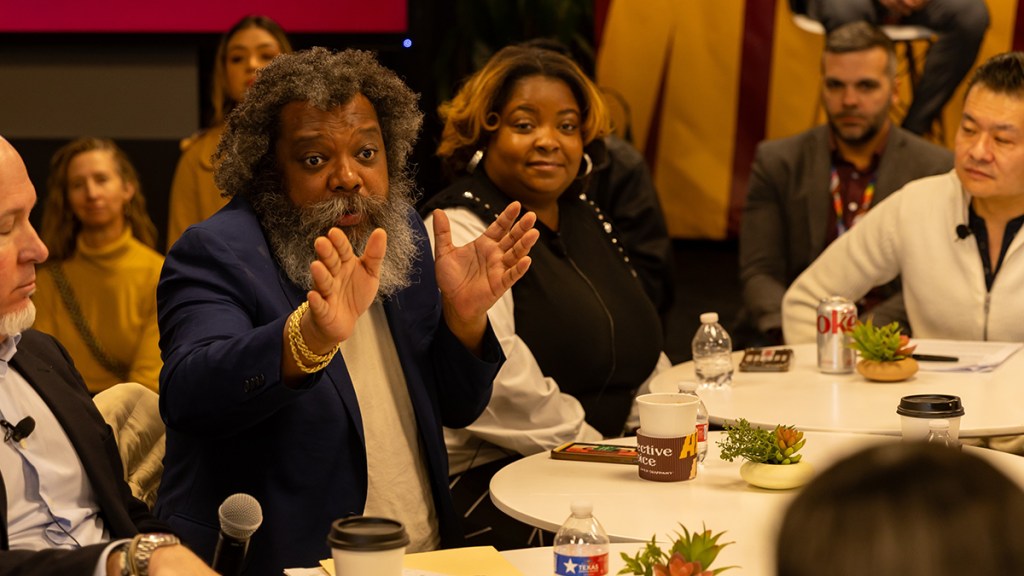
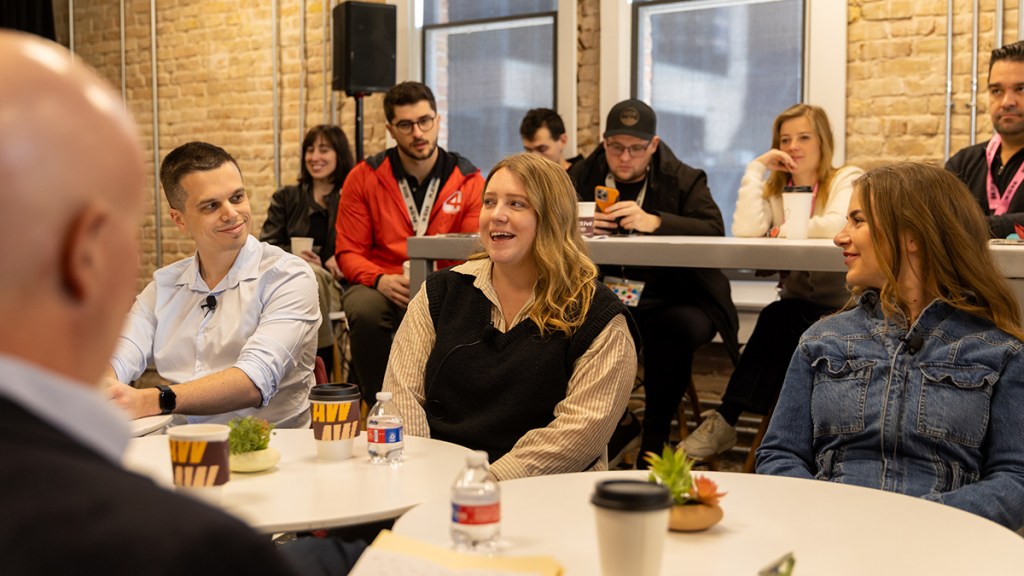
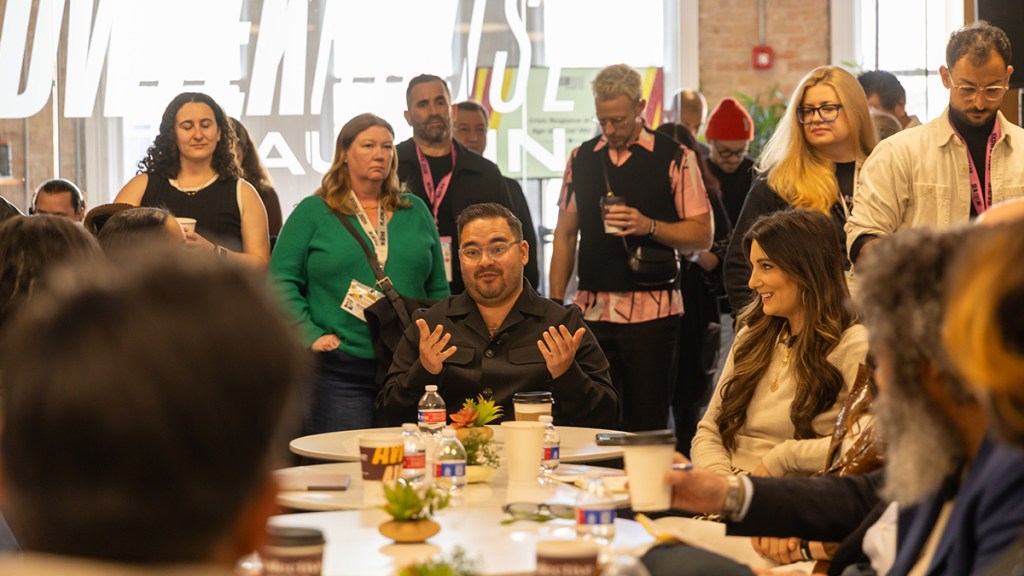
This challenge was the focus of an ADWEEK House Austin Group Chat, co-hosted with Kantar. Industry leaders explored AI’s growing role in branding, its influence on consumer behavior, and the shifting responsibilities of modern marketers—uncovering key strategies for navigating this new landscape.
To kick off the discussion, the panel examined where marketers stand in their AI adoption journey. While many are eager to integrate AI, Kantar’s research suggests marketers still feel unprepared. “We surveyed marketers globally and asked them to rate their AI readiness on a 10-point scale,” Kantar’s chief knowledge officer J. Walker Smith shared. “The average answer was 4.9. When we asked them to rate their agencies, it was 5.3. Not a huge difference, which means the whole industry is trying to catch up.”
But this lag isn’t only a technology problem. “Marketers have used AI for years without realizing it,” said Allison Stransky, CMO of Samsung Electronics America. “Now that marketers understand its potential, they feel less confident. But AI has already optimized media buying, personalizing content, and improving consumer experiences. The challenge is getting comfortable using it in new ways.”
For brands to bridge this gap, leaders must build AI literacy within their teams. “Understanding AI doesn’t mean just mastering the technology,” Smith added. “It means knowing how to ask the right questions, integrate insights effectively, and ensure AI-driven decisions align with brand values.”
Heather Hildebrand, industry U.S. Lead for Accenture Song echoed the sentiment of not only leadership being onboard, but teams as well, and what efficiencies can come out of that. “Our marketing communications team started with its content supply chain. They went from multiple emails a day to being able to consolidate that to one, reducing their content by 50% giving 20% of the budget back to their budget owner,” Hildebrand shared. “Each team can make their own changes, as well as the enterprise making an enterprise-wide change.”
AI’s expanding role
(L-R) Rocket’s Peter Giorgi, Squarespace’s David Lee, Calian IT and Cyber Solutions’ Salim Gheewalla
Panelists also noted that AI shapes consumer behavior and the creative process. First, it’s changing how consumers make decisions, with AI-powered assistants handling tasks like product recommendations, shopping, and content curation. As a result, brands need to rethink how to attract consumers and appeal to the algorithms making choices on their behalf.
“We’re marketing to AI,” Smith noted. “Consumers will increasingly delegate decisions to AI assistants, which means brands must find ways to make their messaging resonate with algorithms, too.”
At the same time, AI is an essential tool for marketers, reshaping how creative teams work and how brands connect with audiences. “We use AI for rapid ideation and validation,” said David Lee, chief creative officer at Squarespace. “It helps us test multiple concepts faster.”
AI is also redefining the creative process. “We are no longer just creating campaigns,” Stransky explained. “We are curators, refining AI-generated ideas, ensuring alignment with brand identity, and injecting emotion where automation falls short.”
Finding the balance of efficiency vs. authenticity
(L-R) Apothékary’s Shizu Okusa, Group Black’s Bonin Bough,1440’s Tim Huelskamp
While AI promises efficiency, it also raises questions about brand authenticity. “Consumers don’t want AI to replace human experiences,” said Tim Huelskamp, co-founder and CEO of 1440. “They want AI to filter out noise, not make decisions for them.”
Shizu Okusa, founder and CEO of Apothékary, pointed out AI’s potential to improve operations while maintaining emotional connections. “About 80% of our customer service is now completely automated through AI, yet our satisfaction score has increased, because we automated thoughtfully with our customers in mind” she shared.
“The real opportunity with AI is understanding its limits,” Huelskamp added. “Brands that use AI to complement, rather than replace, human creativity and emotional intelligence will come out ahead.”
AI as an enabler, not a replacement
(L-R) Accenture Song’s Heather Hildebrand, The Non-Obvious Company’s Rohit Bhargava, Kantar’s J. Walker Smith
As AI reshapes marketing, panelists agreed that success depends on integrating technology without losing the human touch. “AI can optimize campaigns, but brands still need strong identities,” Smith said. “First-party data, a distinctive brand voice, and product confidence are more critical than ever.”
It’s also essential to remember that AI’s influence extends beyond advertising. “We’re heading toward a world where AI will be the primary filter between brands and consumers,” Lee noted. “Marketers who understand how to position their brand within this AI-mediated landscape will have a competitive advantage.”
Ultimately, AI is not the end of human-driven marketing—it’s a tool to enhance the creative process. “The best AI-powered experiences are the ones where you don’t even notice the AI,” Lee said. “It’s not about AI replacing us. It’s about AI making us better at what we do.”
Social media is evolving. Are you adapting? Connect with a community of brand pros and content creators at Social Media Week, May 12–14 in NYC, to learn how to keep pace with new trends and technology. Register now to save 20% on your pass.
This post was created in partnership with Brandwatch
A brand’s response to a crisis can define public perception for years. In an era where misinformation spreads in seconds and consumers demand swift, transparent action, companies must navigate high-pressure moments with precision to maintain trust.
During an ADWEEK House Austin Group Chat, co-hosted with Brandwatch, a panel of industry leaders tackled this challenge head-on. They shared how brands can distinguish between fleeting online backlash and a true crisis—and, more importantly, the strategies that ensure an effective, trust-building response.
Defining and measuring a crisis
(L-R), Bobbie’s Kim Chappell, Brandwatch’s Christina Wu, DKC’s Sean Cassidy
With misinformation spreading online, distinguishing between a viral controversy and a real crisis is crucial. Christina Wu, customer success director and crisis response lead at Brandwatch explained how social listening tools help brands assess crisis severity. “We use a crisis index—measuring sentiment, post velocity, and engagement—to determine whether something needs immediate action or simple monitoring.”
Sean Cassidy, CEO of DKC, emphasized the importance of operational alignment during a crisis. “The best crisis management teams ensure marketing, social media, and PR are all in sync before a crisis hits,” Cassidy shared. “Speed, empathy, accuracy, and transparency are critical in managing public perception.”
Multiple panelists agreed that empathy should be at the center of a brand’s response. Brittany Brown, director of the digital and technology division at NASA, shared how her team navigated a recent misinformation crisis when false reports claimed astronauts were stranded in space.
“I saw a viral X post that said the astronauts would lose oxygen in 43 days, which was fake news. There were 7 million people who had seen this and believed it as truth. So, I made a recommendation that we publish FAQs on our website about how the space station works, what we have on the station available to the crew, and information about this mission,” Brown explained. “Within a day, 90,000 people viewed the post, 80% from Google searches. That’s a good example of being present, being transparent, and educating your audiences, especially when there’s misinformation out there.”
The role of empathy in crisis communications
(L-R) DKC’s Sean Cassidy, Group Black’s Bonin Bough, NASA’s Brittany Brown, ADWEEK’s Will Lee
Multiple panelists agreed that empathy should be at the center of a brand’s response. Brittany Brown, director of the digital and technology division at NASA, shared how her team navigated a recent misinformation crisis when false reports claimed astronauts were stranded in space.
“I saw a viral X post that said the astronauts would lose oxygen in 43 days, which was fake news. There were 7 million people who had seen this and believed it as truth. So, I made a recommendation that we publish FAQs on our website about how the space station works, what we have on the station available to the crew, and information about this mission,” Brown explained. “Within a day, 90,000 people viewed the post, 80% from Google searches. That’s a good example of being present, being transparent, and educating your audiences, especially when there’s misinformation out there.”
A common pitfall in crisis response, according to the panelists, is issuing statements without taking meaningful action. Kim Chappell, chief brand officer at Bobbie, a fast-growing infant formula company, described how her brand pivoted during the California wildfires.
“We had a major campaign launch scheduled, but within 24 hours, we shifted focus to supporting parents affected by the fires—sponsoring any parent who was impacted by this for the remainder of their feeding journey. We didn’t stop to calculate ROI. We acted. Consumers recognize real action over performative messaging,” Chappell explained.
Eden Zeilo, head of marketing at Sienna Naturals, echoed this sentiment: “We saw backlash against brands that posted ‘our hearts go out’ statements without doing anything tangible. Consumers are looking beyond words—they expect brands to step up.”
Crisis response is stronger when employees and loyal supporters are part of the conversation. Carlye Thornton, digital strategy specialist, culture and communications at Southwest Airlines explained how employee advocacy strengthens crisis response. “We empower employees with key messages so they can serve as informed brand ambassadors. Their voices often carry more weight than corporate statements.”
Brown supported this point, emphasizing the power of an engaged online community. “With a social media following of more than 400 million people, we have a network that self-polices misinformation,” she said. “The trust we establish daily helps when we need to correct false narratives.”
Navigating social media’s role in crisis response
(L-R) SolComms’ Bruno Solari, Bobbie’s Kim Chappell
With platforms like TikTok and Instagram becoming primary news sources, crisis management teams must adapt their strategies to meet audiences there. “Gen Z often turns to social media before Google for information,” explained Zeilo. “Brands must be proactive in addressing misinformation directly on these platforms.”
Wu reinforced the need for a digital-first approach, noting that brands no longer control their own narratives—the internet does. “Staying engaged, transparent, and action-oriented is the only way to maintain trust in an always-on digital landscape.”
In the end, panelists agreed: The brands that navigate crises best don’t simply react—they lead. Success comes from acting with honesty, empathy, and decisive action.