Sinclair Teams with The Salvation Army to Raise Awareness About Homelessness
Sinclair is teaming up with The Salvation Army to launch Sinclair Cares: From Homeless to Hope, a nationwide initiative dedicated to raising awareness about homelessness.
Sinclair Cares: From Homeless to Hope looks to shed light on the many faces of homelessness and highlight solutions that offer hope and stability.
The station group will produce content to air within its newscasts throughout the campaign, which runs from March 17 to March 23. Sinclair stations will air a 30-minute special on March 22 and 23 (airing on stations’ websites on March 19) that delves into the realities of homelessness across the country, told through the experiences of individuals and families impacted by housing insecurity.
“At Sinclair, we are committed to using our platforms to inform, inspire, and drive meaningful change,” said Rob Weisbord, COO and president of local media. “Sinclair Cares: From Homeless to Hope aligns with our mission to spotlight critical issues and connect people with resources. By partnering with The Salvation Army, we hope to make a tangible difference in the lives of those facing hardships and inspire others to take action-whether by lending a hand to someone in need or offering resources to those seeking support.”
“The Salvation Army is committed to providing lasting solutions for individuals and families in crisis. Through emergency assistance, transitional housing, case management, and holistic wraparound services, we strive to meet immediate needs while empowering people toward long-term stability,” said, Colonel James Betts, National Chief Secretary of The Salvation Army. “Our work would not be possible without partners like Sinclair, whose commitment to amplifying the message of urgent need for housing support drives awareness and mobilizes communities to take action. We are grateful for their commitment to sharing stories of hope and impact, inspiring others to join our vital mission-whether through volunteering, donating, or advocating, everyone has a role in ensuring no one faces homelessness alone.”
The Sinclair Cares: From Homeless to Hope newscast segments and special will also showcase the critical work being done in local communities by The Salvation Army on the front lines – combating homelessness via emergency shelters, transitional housing, and permanent supportive housing for individuals and families in need; financial assistance for families struggling with rent, utilities, and essential living expenses to prevent eviction; and empowerment through education, workforce development programs, and employment opportunities to regain financial independence.
Sinclair Cares: From Homeless to Hope will also be supported through public service campaigns across the company’s owned and/or operated television stations.
Sinclair Names David Todd Bailey as GM of KTXS in Abilene
David Todd Bailey has been named vice president and general manager of Sinclair station KTXS in Abilene, Texas.
“We’re thrilled to have David return to KTXS to lead the station,” said Rob Weisbord, COO and president of Local Media. “His deep understanding of the Texas markets, strong leadership skills, and proven track record in sales make him the perfect choice to drive KTXS’s continued success.”
Bailey began his media career at KTXS 25 years ago as an account executive. He has since held several sales leadership positions across Texas, including station manager at KTEN in Sherman and sales manager at KETK and KFXK in Tyler. Bailey also launched an advertising agency providing full-service media solutions.
“I am extremely excited to join Sinclair and the dedicated team at KTXS. The opportunity to return home and lead where I started my career in media is a true honor,” said Bailey. “I look forward to serving this great community again through the power of KTXS’s strong local news, programming, and industry leading marketing solutions.”
Family of Missing Iowa Anchor Releases Statement About Unsealing Search Warrant in Case
Jodi Huisentruit’s family has issued a statement about the 2017 search warrant concerning a person of interest in the Iowa news anchors disappearance.
Huisentruit disappeared on June 27, 1995, while on the way to her morning anchor job at KIMT in Mason City, Iowa.
The family’s statement comes days after a hearing was held on whether a 2017 search warrant related to the person of interest, John Vancise, could be unsealed.
“As a family, we’ve received a number of inquiries about the legal battle currently playing out in the courts with Jodi’s case,” the statement said. “Without getting too deep into the weeds, we all agree that if the release of the information would hinder the investigation in any way, then the search warrant should remain sealed. We are not onboard with the information being released to the public, especially while the investigation is open and ongoing. We do recognize there are a number of differing opinions on this – we respect that and ask that you respect ours as well. At this time, this is our only public comment to make on this matter.”
Jim Gaffigan, Bill Burr, and Sebastian Maniscalco Are Hularious in Hulu Campaign
Jim Gaffigan, Bill Burr, and Sebastian Maniscalco are getting more Hularious.
Today, Disney streaming platform Hulu is launching a new campaign for its stand-up brand, Hularious, recruiting Gaffigan, Burr, and Maniscalco to help. Hulu’s comedy brand features one comedian on the streamer each month, and the creative showcases the specials viewers can expect ahead.
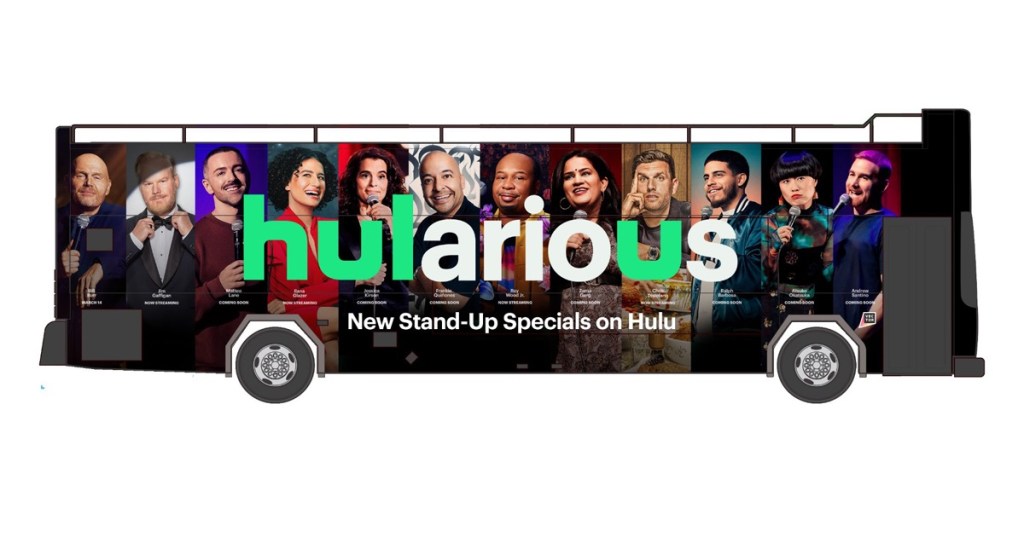
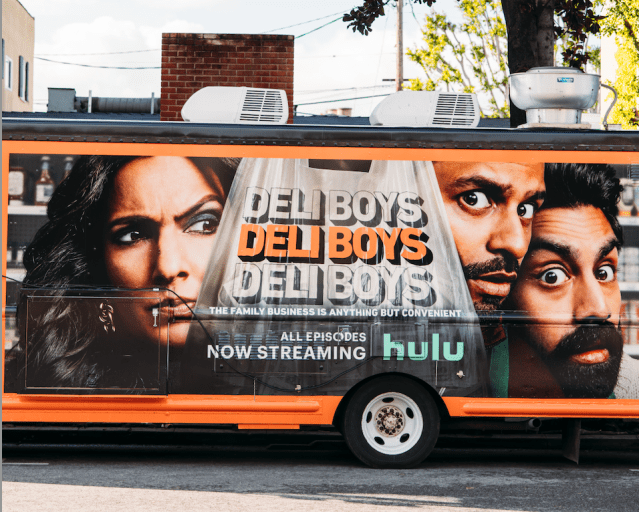
The campaign, which starts days ahead of the March 14 premiere of Burr’s Hulu special, “Drop Dead Years,” includes new out-of-home ads placed near comedy venues in L.A., New York, and Chicago; social media placements; influencer partnerships; digital banners; bus takeovers; and dedicated billboards and posters at locations like Walt Disney World, Disneyland Resort, and in Times Square.
In addition, the comedians got together for a 45-second spot, “Meet Up,” which was shot and produced in-house. In the video, Gaffigan pitches Burr and Maniscalco on the brand—also bringing in a “Hularious” mascot friend to seal the deal.
Gaffigan helped kick off Hularious in 2024, with his recent special, The Skinny, premiering last November on the platform. As such, the comedian was instrumental in the first phase of the Hularious brand launch, as well as the new creative executions.
According to Aaron Goldman, evp, creative marketing, Disney Entertainment Television, Gaffigan (who has a history in advertising) came up with the concept for the spot and was a “great partner in bringing Bill Burr and Sebastian Maniscalco together for the campaign.”
“It was a total partnership from the beginning. Jim wrote the script and collaborated with Ryan Brasno [svp, creative marketing, Hulu] and Jonny Mazur [executive creative director, brand marketing, Hulu] on our team to bring it to life,” Goldman said. “I should note that the three comedians also improvised and riffed, which added some hilarious beats that ended up in the creative.”
Example of bus art for Hularious campaign.Hulu
Goldman noted that, in addition to the full spot, there will be shorter pieces rolling out on social, and the company included several creative details to keep viewers interested.
“We also made a custom Hularious song, which is featured in the spot,” Goldman said. “Based on Duran Duran’s ‘Notorious,’ we changed the lyrics to ‘Hularious’ and hopefully created a song that you can’t get out of your head.”
Keeping it Hularious
Following Burr’s Hulu special in March, future specials are on the way from Jessica Kirson (April), Ralph Barbosa (Aug.), and Maniscalco (Nov.), to name a few. The stand-up specials are available domestically on Hulu and Hulu on Disney+ for bundle subscribers. Plus, the specials stream on Disney+ internationally.
In addition, Goldman said the Hularious (and faceless) mascot from the commercial was designed by Bill Dawson, senior designer, Hulu Creative, and it will be showing up in more places in the future—as long as it’s not casual Friday at the Hulu anyway…
“We are looking at using the Hulu mascot as a connective thread for future Hularious campaigns. In the meantime, we take turns wearing it to the office,” Goldman said.
Example of digital and billboard placement for Hularious campaign.Hulu
To that end, ADWEEK has learned that Fox has added a half dozen senior vice presidents or above in the last six months, including svps for client services, yield management, strategy, and partnership and research as it looks to augment and streamline the company’s approach to ad strategy and operations.
Among the key hires, Fox recently announced that it added Stephano Kim as chief strategy and operations officer, who the company viewed as a “huge get,” according to a source familiar with the matter.
Kim previously served in several roles at AT&T/WarnerMedia, including chief strategy officer of Turner Broadcasting, and has experience in e-commerce, data science and analytics, digital marketing and media, consumer marketplaces, and B2B software platforms.
In an effort to make its go-to-market strategy faster and more cohesive, Fox is combining several functions under Kim, with the executive overseeing advertising sales strategy, solutions, platform partnerships, and operations teams.
Kim reports directly to Jeff Collins, president of advertising, sales, marketing, and brand partnerships, and will look to build out new ad tech capabilities and experiences and increase operating leverage across the organization.
Meanwhile, the company also recently announced the addition of Julie Triolo as senior vice president of product marketing for Fox’s ad sales. The executive previously served as svp, global research and marketing, at Vevo, where she brought together the company’s research, ad product, and media and distribution marketing teams.
According to a source familiar with the matter, Triolo brings extensive technical experience to the position, which will be an asset for sales communications with clients as Fox adds more intricate technical capabilities.
“We see a lot of opportunity moving forward. We have best-in-class assets across the portfolio heading into this upfront. It’s been a healthy marketplace, so we feel good about that,” Collins told ADWEEK. “And I’m excited because I think these new hires really turbocharge our growth as we head into what should be another great year.”
According to Fox, the realigned structure was meant to maintain sales executives for Fox’s content verticals in sports, news, entertainment, and Tubi while moving the ad sales to a cross-portfolio model for operations, technology, and strategy. The company previously noted its more unified approach across those functions drives scalability in its ad products, as well as advanced data and measurement capabilities.
These moves feed into Fox’s more cohesive approach to its OneFox platform, which allows advertisers to buy across the Fox portfolio. In closing its upfront negotiations last July, the company announced that OneFox grew three times in volume year over year.
“We’re fortunate to have really world-class IP, and now we can offer our advertisers the capability to tap into that IP in more advanced and unique ways than ever before,” Collins said.
Social media is evolving. Are you adapting? Connect with a community of brand pros and content creators at Social Media Week, May 12–14 in NYC, to learn how to keep pace with new trends and technology. Register now to save 20% on your pass.
Google is apologizing to advertisers after Google Ads stopped serving ads for some accounts over the weekend, beginning on March 1. Other advertisers were met with error messages, high latency, and other unexpected issues, leading to displaced ad spend and lower conversions.
Some advertisers estimate the impact to be in the tens of thousands in terms of lost revenues.
In an update published Monday to the Google Ads Status Dashboard, the company said the issues have been resolved. But Google does not appear to have an explanation for the blackout—the company said it is “investigating” various reports and will provide an update when it has more information.
It said, “We apologize for the inconvenience and thank you for your patience and continued support.”
A Google spokesperson told ADWEEK that only a “small number of accounts” had their ads not served. These advertisers did not incur any charges, since the ads were not served.
However, some media buyers who spoke with ADWEEK estimate that displaced ad revenues from the incident amount to multiple thousands of dollars.
Alex van de Pol, a freelance media buyer, saw one client’s account stop serving ads on March 1. In his approximation, the blackout for this client translated to about €50,000, or around $52,600 in missed ad revenues.
“Given the amount of revenue lost during the client’s peak season, this was major,” van de Pol said.
Meanwhile, ADSQUIRE, a digital ad agency that caters to law firms, witnessed impression declines ranging from 13% to 95% across 30% of its managed accounts.
On one of the agency’s larger accounts, whose impressions dipped 80%, the displaced investment equated to $29,300 from March 1 to 3. Metrics have not yet returned to normal rates on the affected accounts, according to the company’s CEO and founder, Anthony Higman.
ADSQUIRE has experienced a number of other issues with Google Ads recently. In one instance, it saw a single advertiser monopolizing all three ad slots on a page. Some reports have also displayed inexplicable metrics, Higman said.
“In the last few weeks, we have seen wild inaccuracies and results across the board and have more client complaints than we have ever had before—and we have been an agency for four years now,” said Higman.
In another case, ads for two brands that work with paid search agency Ten Thousand Foot View went down during the outage this weekend. Total media investment would have amounted to around $2,000, according to the agency’s managing director Edward Goss.
“Clients weren’t happy about the issue or the lack of response from Google,” he told ADWEEK. “Even now I haven’t seen any clear explanation to what the issue was or how many accounts were affected.”
To make up for the outage, impacted clients will be forced to overspend in the coming days, Goss said. “That typically results in lower conversion performance, a kind of double whammy for advertisers.”
A fourth media buyer, Georgi Zayakov of Switzerland-based digital ad consultancy Hutter Consult AG, saw a single account impacted. While the direct impact was relatively small—around $1,670 in planned ad spend—the client missed out on an estimated 10-to-15-fold return on that investment, making the disruption more consequential.
Zayakov expressed frustration over Google’s lack of clear communication around the issue, especially given that this was not the first outage in the past year. A widespread blackout on November 25, 2024 caused issues with campaign management and reporting.
“I wish, as an advertiser, [I received] more clear communication on what exactly happened and why,” Zayakov said.
Another media buyer, speaking on condition of anonymity, told ADWEEK that ads stopped serving for one out of 12 accounts they manage, but that the financial impact was “nominal.”
Four other media buyers who spoke with ADWEEK said they did not notice any campaign disruption over the weekend.
Some advertisers have taken to the official Google Ads Help forum, as well as LinkedIn and Reddit, to air their grievances about the disruption.
Two Veteran Anchors Retiring: One in Wisconsin Another in Michigan
It seems like veteran journalists are dropping out of local TV in larger numbers than usual. Either that, or I’m just getting old.
Hopefully, no one feels shorted by this combo post where I cover two retirements in one.
In Green Bay, Wisconsin, Bill Jartz is retiring from ABC affiliate WBAY, while Sheri Jones has announced her retirement after almost 37 years from CBS affiliate WLNS in Lansing, Michigan.
WBAY general manager, Steve Lavin, said, “There is just no one like Bill. Our viewers will miss him, his co-workers will miss him, and I will miss him.”
He started his broadcasting career as the 10 o’clock sports anchor in Wausau. He joined WBAY as a sports reporter in 1983.
He left local TV in 1990 and came back three years later as sports director. He moved from sports to news in 1998.
Jones’s contributions to broadcasting have earned her a place in the Michigan Journalism Hall of Fame. In addition to her professional achievements, Jones has traveled to Japan as part of Lansing’s Sister City program, contributing to cultural understanding and international relations.
She has also spent time in China taking part in economic development efforts on behalf of the city of Lansing and the state of Michigan. She also led a team to Kenya, Africa, to build a home for a deserving family in Homa Bay as part of Habitat for Humanity Capitol Region.
Since 1994, Jones has been the spokesperson for Mid-Michigan Crime Stoppers, producing segments that have aided in the capture of many of the area’s most wanted fugitives. In 2018, Crime Stoppers had an 80 percent success rate in taking fugitive felons off the street.
Social media is evolving. Are you adapting? Connect with a community of brand pros and content creators at Social Media Week, May 12–14 in NYC, to learn how to keep pace with new trends and technology. Register now to save 20% on your pass.
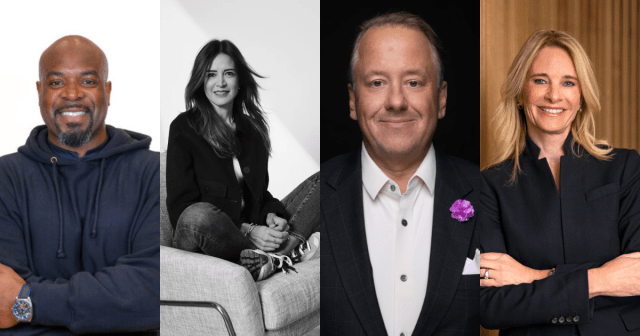
There is always activity in the chief marketing executive (CMO) role, and some big moves have been made over the last 12 months. Where OpenAI hired its first marketing chief, other brands such as Starbucks, Adobe, and McDonald’s said goodbye to execs and either promoted or welcomed new ones in their place.
There have also been several big departures this year which have left the CMO role vacant at major brands.
For some, whether they’ll be replaced like-for-like remains to be seen. However, in the meantime, ADWEEK has rounded up the brands, which are currently without a confirmed global or regional CMO following a big departure.
Here are four advertisers without CMOs, presented alphabetically. Each was approached by ADWEEK for an update on how they plan to fill the position.
While at the QSR giant, OToole helped grow traffic, accelerated sales growth, and made changes to enhance the guest experience as part of the chain’s “Reclaim the Flame” turnaround strategy.
Burger King has not shared replacement plans for O’Toole.
Bumble (CMO)
Bumble
Bumble’s CMO Selby Drummond left the dating app in January after four years in the role.
“Selby has been an outstanding steward of Bumble’s iconic brand over the last four years,” chief executive Lidiane Jones said in a statement. “Under her leadership, the Bumble brand has become well-known and respected around the globe. Selby’s many contributions leave us with a strong brand and foundation to build upon for years to come.”
Along with Drummond’s exit, Bumble appointed former Slack chief operating officer Neil Shah to the new role of chief business officer.
Bumble has not shared plans for how it will replace the CMO role.
Colgate (CMO, North America)
Colgate
Diana Haussling, Colgate’s senior vp, general manager, consumer experience and growth, and CMO for North America, left in Feb.
She stayed within the group to take on the position of CEO at Hello, a startup acquired by Colgate in 2020 which sells “naturally friendly” toothpaste, mouth rinse, toothbrushes, and floss.
The marketer recently spearheaded Colgate’s “My Smile Is My Superpower” campaign, designed to empower young adults to embrace their smiles in all “shapes, sizes, and shades.”
Colgate has not confirmed how it plans to replace the position left vacant by Haussling.
Geico (CMO)
Geico
Geico CMO Damon Burrell left in January after nearly three years as the insurance giant’s top marketer.
In a memo obtained by ADWEEK, Geico CEO Todd Combs lauded Damon for leading Geico’s marketing organization through big changes.
Combs told staff in November, before Burrell’s departure, that the search for a successor had already begun. “During the transition, the Marketing leadership team will report to me.”
Since then, there’s been no update from the business.
Disney and Hulu Respond After Oscars Streaming Glitches Affect Viewers
Due to streaming glitches, Hulu didn’t always bring viewers the best picture in its Oscars night debut.
The 97th Oscars on Sunday marked the first time Hulu aired the Academy Awards. After years of linear resistance, Hollywood’s pre-eminent awards show returned to ABC last night along with livestreams on multiple digital platforms, including Hulu, Fubo, and AT&T TV.
However, things didn’t get off to the smoothest of starts. According to multiple reports—and personal anecdotes from ADWEEK staff—Hulu had multiple glitches on the night, including viewers having issues while logging in and the stream being interrupted or ending early ahead of categories such as Best Actress and Best Picture.
After several viewers aired their grievances across social media, Hulu was eventually able to fix its log-in issues, which The Hollywood Reporter noted happened more than two hours into the event.
The streamer addressed the glitch on its support channel on X, saying it “has identified the issue,” with affected users being able to successfully get back on the service.
“We apologize for the inconvenience,” the streamer added.
Our team has identified the issue and users affected should be able to log back in again soon. We apologize for the inconvenience.
On its Disney+ help channel on X, the company addressed the glitch, noting users could restart the app to get back into the show.
Thank you for reaching out! The 97th Oscars will be broadcast live on ABC-TV and are streaming on Hulu starting at 7 p.m. ET / 3 p.m. PT. If you are having trouble accessing it, try restarting your app or checking for updates. Let us know if you need further assistance!
Hulu did not immediately reply to ADWEEK’s request for comment.
It remains to be seen if the glitches affected the show’s ratings, with Nielsen numbers likely coming out later in the day on Monday. However, even before the addition of Hulu and streaming, the Oscars numbers had been trending up in recent years.
Ahead of the show airing, Academy CEO Bill Kramer spoke with ADWEEK about the ceremony coming to Hulu for the first time. And as ADWEEK’s Ethan Alter noted, the Oscars CEO was expecting ratings to defy gravity.
“I think we’re going to reach a new audience this year,” Kramer said. “We’re very excited about that.”
Social media is evolving. Are you adapting? Connect with a community of brand pros and content creators at Social Media Week, May 12–14 in NYC, to learn how to keep pace with new trends and technology. Register now to save 20% on your pass.
Amazon has issued refunds to advertising customers whose ads appeared on the website. Google has blocked advertising on the site but did not clarify whether it will reimburse advertisers who were affected.
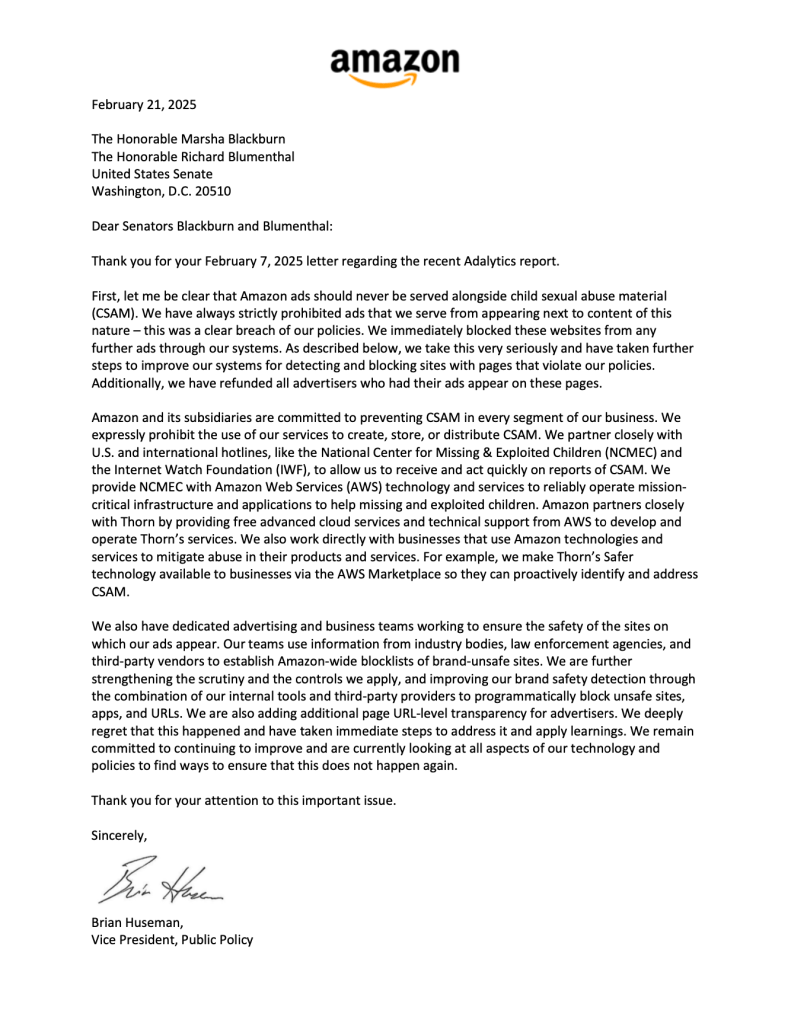
“We have always strictly prohibited ads that we serve from appearing next to content of this nature–this was a clear breach of our policies,” Amazon’s vice president of public policy Brian Huseman wrote in a letter addressed to Senators Marsha Blackburn (R-TN) and Richard Blumenthal (D-CT), obtained by ADWEEK.
Earlier this month, the two senators demanded answers from the tech giants and other advertising groups after an Adalytics report found that, through advertising networks operated by Google and Amazon, ads from Fortune 500 brands appeared on an image-hosting site and a sister site that had been flagged by the National Center for Missing and Exploited Children (NCMEC) for publishing CSAM.
Amazon and Google under fire
In his letter to lawmakers, Amazon’s Huseman said the company “immediately blocked these websites from any further ads through our systems.” The company has refunded all advertisers whose messages appeared on pages on the site in question, ibb.co and the associated img.bb, he said.
Only “a tiny portion of advertising spend for a small number of advertisers” was impacted, and the company has refunded all advertisers whose content appeared on the website in question, an Amazon spokesperson told ADWEEK.
“We regret that this occurred and took swift action to block these websites from showing our ads,” the spokesperson added. “We have strict policies in place against serving ads on content of this nature, and we are taking additional steps to help ensure this does not happen in the future.”
Meanwhile, in a response to senators issued by Google’s head of U.S. federal government affairs and public policy, Anne Wall, the company said it has “invested significant resources—in technology, specialized teams, and time—to deterring, detecting, removing, and reporting child sexual exploitation content and behavior.”
Google said it demonetized ibb.co in January 2024, and the site has generated no ad revenue since then. The associated imgbb.com, the company said, was demand-restricted last July, meaning that most ads were already disallowed on Google’s ad network. Google fully demonetized imgbb.com when it learned about the forthcoming Adalytics report.
The company also emphasized its strict publisher monetization policies, enforcement measures, and advertiser controls. Google did not announce any policy or product changes, but said it will “continue to holistically evaluate our processes to determine whether any additional steps should be taken.”
Google declined a request for comment and did not respond to questions about whether it would reimburse affected advertisers.
What about the other implicated parties?
The senators also questioned verification vendors DoubleVerify and Integral Ad Science (IAS) over apparent brand safety failures, as well as the Media Rating Council (MRC) and the Trustworthy Accountability Group (TAG), which issued stamps of approval for their technology.
All six organizations—Google, Amazon, DoubleVerify, IAS, the MRC, and TAG—have responded to senators’ inquiries in letters obtained by ADWEEK.
In its letter, DoubleVerify claimed that its tools function based on advertiser preferences and that technical limitations contributed to ads appearing alongside explicit content on the site in question.
Following the scandal, DoubleVerify has rolled out a handful of brand safety updates, expanded its blocklists, and begun working more closely with law enforcement and NCMEC to enhance detection and prevention measures. The firm has also enabled access to full URL-level reporting for clients, which allows brands to understand the exact pages on which their ads appear, not just the domains.
IAS, for its part, said it has blacklisted the flagged domains—which it found represented less than 0.00025% of its monitored impressions—and is reassessing how it classifies image-hosting sites. The verification company also outlined limitations in monitoring image-only pages, but reaffirmed its commitment to industry safety standards.
Earlier this month, IAS also expanded its exclusion list, adding domains flagged in five years of NCMEC reports. It’s also improving its user-generated content filtering tech and boosting URL-level reporting to improve transparency for advertisers.
“We are committed to working in partnership with the industry and other companies to reduce the proliferation of bad actors while preserving the open internet,” wrote IAS CEO Lisa Utzschneider.
Meanwhile, MRC head George Ivie took the opportunity to explain that both DoubleVerify and IAS hold MRC accreditation for “Property Level Ad Verification,” which examines text and keywords rather than visual content. This distinction is significant, he said, as the CSAM-hosting site in question typically contains minimal text, making the content undetectable through current accredited methods.
Moving forward, Ivie wrote, “MRC encourages services to submit Content Level Brand Safety products for audit and accreditation.” He also said MRC will consider strengthening disclosure requirements about the limitations of current verification technologies.
In a 23-page response to senators signed by vice president of policy and compliance Todd Miller, TAG claimed to be “the leading global initiative fighting criminal activity and increasing trust in the digital advertising industry.”
The company pushed back against Blackburn’s and Blumenthal’s broad labeling of platforms as “CSAM sites” merely for receiving NCMEC notifications, adding that operating on this standard would have negative implications for user-generated content platforms like Amazon, Facebook, Pinterest, X, and others.
But TAG president and CEO Mike Zaneis told ADWEEK that, since submitting its letter to lawmakers, the organization has begun working with NCMEC to set up an educational sit that will help the ad industry learn more about the details of NCMEC’s programs. NCMEC will also help train TAG’s Threat Exchange participants, which include major industry players. “We are excited to be developing these solutions to provide greater protections for children worldwide,” Zaneis said.
In the fallout since the initial report was published, the MRC and TAG have come under fire from ad industry leaders who view their approaches as insufficiently stringent.
The six letters from industry players have not been published publicly.
DoubleVerify, IAS, and MRC did not respond to requests for comment.
Update Feb. 28, 6:16 pm ET: A screenshot of Amazon’s letter to Senators Blackburn and Blumenthal has been added to this story. Additionally, a statement from TAG president and CEO Mike Zaneis has been integrated.