Google unveils Gemini 3 AI model and AI-first IDE called Antigravity

Google has kicked its Gemini rollout into high gear over the past year, releasing the much-improved Gemini 2.5 family and cramming various flavors of the model into Search, Gmail, and just about everything else the company makes.

Now, Google’s increasingly unavoidable AI is getting an upgrade. Gemini 3 Pro is available in a limited form today, featuring more immersive, visual outputs and fewer lies, Google says. The company also says Gemini 3 sets a new high-water mark for vibe coding, and Google is announcing a new AI-first integrated development environment (IDE) called Antigravity, which is also available today.

The first member of the Gemini 3 family

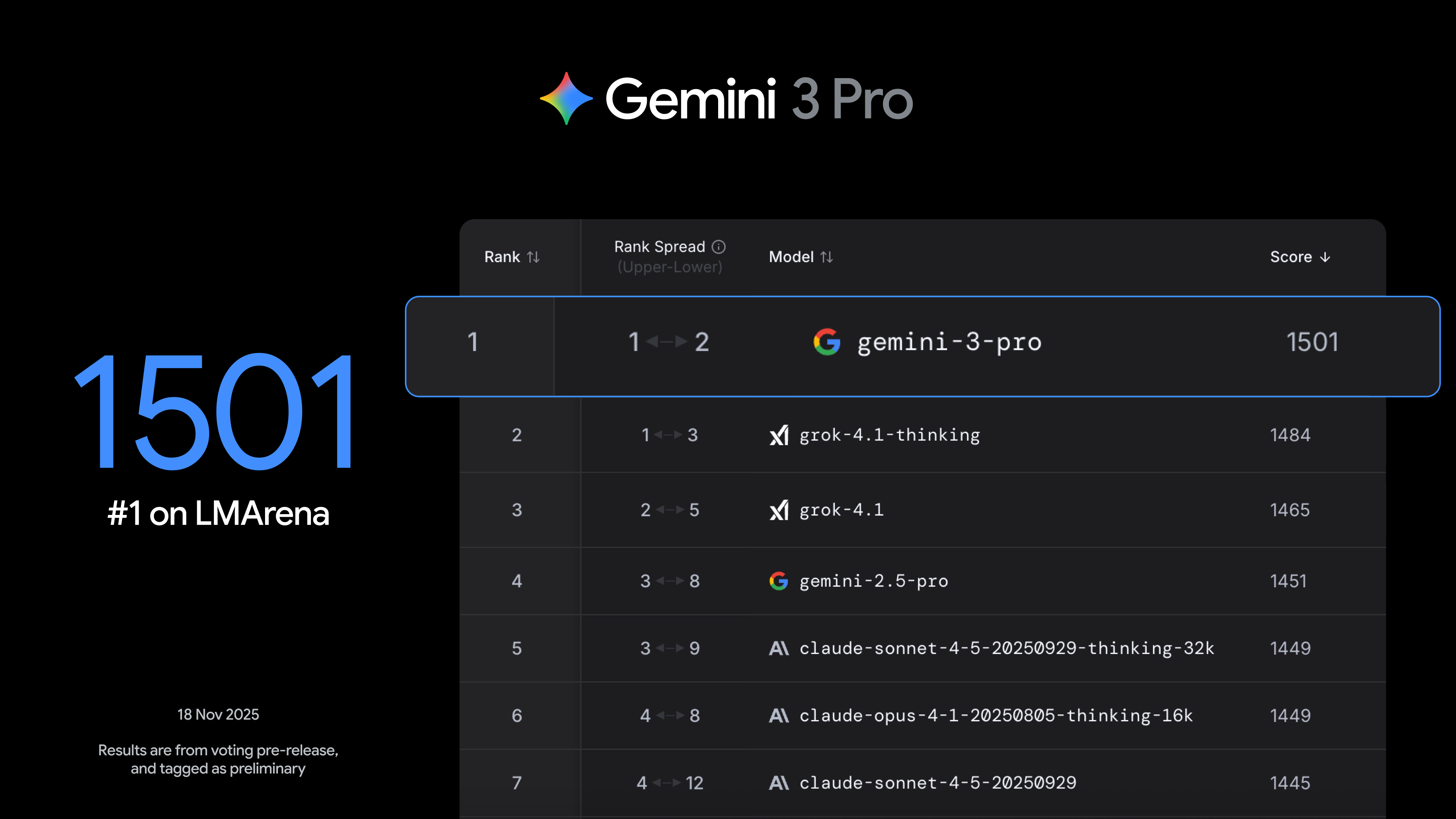
Google says the release of Gemini 3 is yet another step toward artificial general intelligence (AGI). The new version of Google’s flagship AI model has expanded simulated reasoning abilities and shows improved understanding of text, images, and video. So far, testers like it—Google’s latest LLM is once again atop the LMArena leaderboard with an ELO score of 1,501, besting Gemini 2.5 Pro by 50 points.

Gemini 3 LMArena

Credit: Google

Factuality has been a problem for all gen AI models, but Google says Gemini 3 is a big step in the right direction, and there are myriad benchmarks to tell the story. In the 1,000-question SimpleQA Verified test, Gemini 3 scored a record 72.1 percent. Yes, that means the state-of-the-art LLM still screws up almost 30 percent of general knowledge questions, but Google says this still shows substantial progress. On the much more difficult Humanity’s Last Exam, which tests PhD-level knowledge and reasoning, Gemini set another record, scoring 37.5 percent without tool use.

Math and coding are also a focus of Gemini 3. The model set new records in MathArena Apex (23.4 percent) and WebDev Arena (1487 ELO). In the SWE-bench Verified, which tests a model’s ability to generate code, Gemini 3 hit an impressive 76.2 percent.

https://arstechnica.com/google/2025/11/google-unveils-gemini-3-ai-model-and-ai-first-ide-called-antigravity/


News online. Ue: “Google penalizza i piccoli giornali”

Perché l’UE ha avviato un’indagine su Google Search per possibile violazione del DMA

La Commissione europea ha aperto un procedimento formale per verificare se Google stia rispettando la Legge sui Mercati Digitali (Digital Markets Act – DMA), il nuovo regolamento europeo che impone obblighi molto severi alle grandi piattaforme digitali considerate gatekeeper, ossia soggetti con un ruolo dominante nell’intermediazione tra imprese e utenti.

Al centro dell’indagine c’è la “politica di abuso della reputazione del sito” (site reputation abuse policy) applicata da Google nella gestione dei risultati del motore di ricerca. La Commissione sospetta che, in base a tale politica, Google stia retrocedendo nei risultati di ricerca i contenuti di editori e media che pubblicano sul proprio sito articoli o materiali prodotti da partner commerciali.

Secondo Bruxelles, questa pratica potrebbe violare gli obblighi del DMA che impongono a Google di garantire ai contenuti degli editori un trattamento equo, ragionevole e non discriminatorio su Google Search.

Virkkunen: “La nostra indagine mira a proteggere i finanziamenti degli editori, la libertà d’impresa, il pluralismo dei media e la democrazia“

“La legge sui mercati digitali garantisce mercati più equi e innovazione nell’UE, per le imprese e i consumatori. Alphabet deve rispettare gli obblighi di fornire agli editori condizioni generali di accesso a Google Search eque, ragionevoli e non discriminatorie. La nostra indagine mira a proteggere i finanziamenti degli editori, la loro libertà d’impresa e, in ultima analisi, il pluralismo dei media e la nostra democrazia”, ha dichiarato in una nota Henna Virkkunen, Vicepresidente esecutiva per la Sovranità tecnologica, la sicurezza e la democrazia.

Come ha affermato Teresa Ribera, Vicepresidente esecutiva per una Transizione pulita, giusta e competitiva: “Stiamo adottando misure per garantire che i gatekeeper digitali non limitino ingiustamente le imprese che si affidano a loro dalla promozione dei propri prodotti e servizi. Siamo preoccupati che le politiche di Google non consentano agli editori di notizie di essere trattati in modo equo, ragionevole e non discriminatorio nei risultati di ricerca. Indagheremo per garantire che gli editori di notizie non perdano entrate importanti in un momento difficile per il settore e per garantire che Google rispetti il Digital Markets Act”.

Barachini: “Importante verificare se gli OTT diano il corretto spazio all’informazione giornalistica e di interesse pubblico”

Anche il Governo italiano ha commentato la notizia, con il sottosegretario all’Editoria Alberto Barachini, che al Corriere della Sera ha detto: “Ritengo importante che l’Europa abbia aperto un procedimento per verificare se gli over-the-top diano il corretto spazio all’informazione professionale, giornalistica e di interesse pubblico. È un’istanza che abbiamo portato come governo italiano anche all’ultimo vertice di Copenaghen con i ministri dei media e della cultura europea“.

“Siamo sempre stati, dall’inizio del nostro mandato, dalla parte degli editori dell’informazione e dei giornalisti. Lo siamo adesso e lo saremo nel prosieguo della nostra attività di governo — ha spiegato il sottosegretario — perché abbiamo varato molti interventi per il sostegno alle copie distribuite, i contributi diretti per le fondazioni e per le edicole“.

Immediata la replica di Google che ha bollato l’indagine come “fuorviante” e “infondata” ed è tornata ad attaccare il Dma per aver reso “Search meno utile per le aziende e gli utenti europei“. L’indagine “rischia di danneggiare milioni di utenti europei” ha avvertito il colosso americano, ricordando che “un tribunale tedesco ha già respinto un ricorso simile, stabilendo che la nostra politica anti-spam era valida, ragionevole e applicata in modo coerente“.

Perché la Commissione europea è intervenuta

1. Possibile discriminazione nel ranking dei risultati di ricerca

Google afferma che la propria policy contro l’“abuso della reputazione del sito” serve a contrastare pratiche manipolative, come la pubblicazione di contenuti di bassa qualità con l’obiettivo artificiale di scalare le posizioni nella SERP (Search Engine Results Page).

La Commissione ritiene invece che tale politica possa colpire forme legittime di monetizzazione usate da tanti editori, come:

  • la pubblicazione di contenuti sponsorizzati;
  • l’uso di materiale prodotto in collaborazione con terzi;
  • la collaborazione con piattaforme commerciali o provider di contenuti.

Se i siti degli editori vengono automaticamente retrocessi, ciò potrebbe limitare la loro capacità di:

  • sviluppare modelli economici sostenibili;
  • innovare;
  • collaborare con partner esterni;
  • raggiungere il pubblico tramite Google, che resta una porta d’accesso quasi obbligata all’informazione online.

2. Possibile violazione di due obblighi centrali del DMA

L’indagine riguarda in particolare:

  • Art. 6(12) DMA – obbligo di garantire condizioni trasparenti, eque e non discriminatorie nei servizi di intermediazione;
  • Art. 6(5) DMA – obbligo di non favorire i propri servizi o contenuti a scapito di quelli degli altri operatori.

La Commissione vuole verificare se le retrocessioni effettuate da Google rientrino in una forma di trattamento discriminatorio non consentito.

3. Impatto sul pluralismo e sull’ecosistema dei media

Se i contenuti degli editori vengono penalizzati o resi meno visibili, l’effetto economico può essere rilevante:

  • minori ricavi pubblicitari per le testate;
  • minore visibilità di notizie verificate;
  • indebolimento del pluralismo informativo.

Il DMA nasce proprio per evitare che i gatekeeper possano utilizzare la propria posizione dominante per influenzare in modo distorsivo l’accesso alle informazioni.

Che cos’è e come funziona Google Search

Google Search è un motore di ricerca avanzato e automatizzato, che permette agli utenti di effettuare ricerche online trovando informazioni su miliardi di pagine web tramite un sistema di web crawler che esplora internet e indicizza i contenuti. È il motore di ricerca più utilizzato al mondo e funziona in tre fasi principali: scansione, indicizzazione e pubblicazione dei risultati di ricerca.

Google è accusato di discriminare altri editori di media perché, tramite le sue pratiche di mercato, favorisce i propri contenuti e riduce la visibilità dei siti d’informazione esterni. In particolare, Google integra nelle risposte AI sintetiche basate sui contenuti di altri siti, senza che gli utenti debbano cliccare sulle fonti originali, comportando una riduzione del traffico e della visibilità per gli editori.

Lo scorso mese, la Federazione Italiana Editori Giornali ha presentato all’Agcom, in qualità di Coordinatore nazionale dei Servizi Digitali, un reclamo formale contro AI Overview, il nuovo sistema di risposte generate dall’intelligenza artificiale di Google.

Inoltre, Google avrebbe imposto agli editori di scegliere tra far usare i propri contenuti per l’addestramento e i riassunti dell’IA o rischiare di essere esclusi dai risultati di ricerca. Queste pratiche sono viste come abuso di posizione dominante e cause legali sono state avviate da gruppi editoriali e autorità antitrust negli USA e in Europa.

Come procede l’indagine

L’apertura dell’indagine della Commissione, nello specifico, non implica che vi sia già una violazione accertata. È un passo formale che permette alla Commissione di:

  1. raccogliere prove e analizzare documenti, dati e criteri usati da Google;
  2. intervistare editori, esperti e stakeholder per valutare l’impatto della policy;
  3. valutare il funzionamento tecnico dell’algoritmo di ranking in relazione alla policy contestata.

La Commissione si è impegnata a concludere entro 12 mesi.
Se emergeranno elementi di non conformità, Bruxelles invierà ad Alphabet/Google una comunicazione formale con le “constatazioni preliminari”, cioè le accuse specifiche e le misure che Google dovrebbe adottare.

Quali conseguenze rischia Google

Se la Commissione dovesse accertare una violazione del DMA, le sanzioni possono essere molto severe: multe fino al 10% del fatturato globale, che per Google, significherebbe potenzialmente decine di miliardi di euro; multe fino al 20% in caso di recidiva e se la violazione venisse ripetuta, la sanzione potrebbe raddoppiare.

In caso di violazioni sistematiche, la Commissione può imporre misure drastiche, come l’obbligo di cedere parti dell’attività e il divieto di acquisire nuovi servizi collegati alla violazione.

Si tratta delle misure più severe previste dal DMA, pensate per impedire ai gatekeeper di aggirare le regole.

Perché questa indagine è importante

Questa è una delle indagini più rilevanti da quando il DMA è entrato in vigore. Dimostra che la Commissione europea vuole far rispettare rigorosamente il DMA, soprattutto nel settore della ricerca online, cruciale per l’accesso all’informazione.

Ma anche che punta a tutelare il pluralismo e la sostenibilità economica degli editori, spesso penalizzati dal potere di mercato delle piattaforme digitali, e che intende impedire che Google usi criteri opachi nel ranking, soprattutto quando questi hanno un impatto diretto sul mercato dei media.

Se l’indagine confermerà le violazioni, potrebbe rappresentare uno dei casi più significativi nella storia dell’Antitrust europeo in ambito digitale.

Leggi le altre notizie sull’home page di Key4biz

https://www.key4biz.it/news-online-ue-google-penalizza-i-piccoli-giornali/555244/


Google claims win for everyone as text scammers lost their cloud server

The day after Google filed a lawsuit to end text scams primarily targeting Americans, the criminal network behind the phishing scams was “disrupted,” a Google spokesperson told Ars.

According to messages that the “ringleader” of the so-called “Lighthouse enterprise” posted on his Telegram channel, the phishing gang’s cloud server was “blocked due to malicious complaints.”

“We will restore it as soon as possible!” the leader posted on the channel—which Google’s lawsuit noted helps over 2,500 members coordinate phishing attacks that have resulted in losses of “over a billion dollars.”

Google has alleged that the Lighthouse enterprise is a “criminal group in China” that sells “phishing for dummies” kits that make it easier for scammers with little tech savvy to launch massive phishing campaigns. So far, “millions” of Americans have been harmed, Google alleged, as scammers disproportionately impersonate US institutions, like the Postal Service, as well as well-known brands like E-ZPass.

The company’s lawsuit seeks to dismantle the entire Lighthouse criminal enterprise, so the company was pleased to see Lighthouse communities go dark. In a statement, Halimah DeLaine Prado, Google’s general counsel, told Ars that “this shutdown of Lighthouse’s operations is a win for everyone.

https://arstechnica.com/tech-policy/2025/11/google-claims-win-for-everyone-as-text-scammers-lost-their-cloud-server/


Google will let Android power users bypass upcoming sideloading restrictions

Google recently decided that the freedom afforded by Android was a bit too much and announced developer verification, a system that will require developers outside the Google Play platform to register with Google. Users and developers didn’t accept Google’s rationale and have been complaining loudly. As Google begins early access testing, it has conceded that “experienced users” should have an escape hatch.

According to Google, online scam and malware campaigns are getting more aggressive, and there’s real harm being done in spite of the platform’s sideloading scare screens. Google says it’s common for scammers to use social engineering to create a false sense of urgency, prompting users to bypass Android’s built-in protections to install malicious apps.

Google’s solution to this problem, as announced several months ago, is to force everyone making apps to verify their identities. Unverified apps won’t install on any Google-certified device once verification rolls out. Without this, the company claims malware creators can endlessly create new apps to scam people. However, the centralized nature of verification threatened to introduce numerous headaches into a process that used to be straightforward for power users.

This isn’t the first time Google has had to pull back on its plans. Each time the company releases a new tidbit about verification, it compromises a little more. Previously, it confirmed that a free verification option would be available for hobbyists and students who wanted to install apps on a small number of devices. It also conceded that installation over ADB via a connected computer would still be allowed.

Now, Google has had to acknowledge that its plans for verification are causing major backlash among developers and people who know what an APK is. So there will be an alternative, but we don’t know how it will work just yet.

How high is your risk tolerance?

Google’s latest verification update explains that the company has received a lot of feedback from users and developers who want to be able to sideload without worrying about verification status. For those with “higher risk tolerance,” Google is exploring ways to make that happen. This is a partial victory for power users, but the nature of Google’s “advanced flow” for sideloading is murky.

https://arstechnica.com/gadgets/2025/11/google-will-let-android-power-users-bypass-upcoming-sideloading-restrictions/


Google says new cloud-based “Private AI Compute” is just as secure as local processing

NPUs can’t do it all, though. While Gemini Nano is getting more capable, it can’t compete with models that run on massive, high-wattage servers. That might be why some AI features, like the temporarily unavailable Daily Brief, don’t do much on the Pixels. Magic Cue, which surfaces personal data based on screen context, is probably in a similar place. Google now says that Magic Cue will get “even more helpful” thanks to the Private AI Compute system.

Pixel 10 flat

Magic Cue debuted on the Pixel 10, but it doesn’t do much yet.

Credit: Ryan Whitwam

Magic Cue debuted on the Pixel 10, but it doesn’t do much yet. Credit: Ryan Whitwam

Google has also released a Pixel feature drop today, but there aren’t many new features of note (unless you’ve been hankering for Wicked themes). As part of the update, Magic Cue will begin using the Private AI Compute system to generate suggestions. The more powerful model might be able to tease out more actionable details from your data. Google also notes the Recorder app will be able to summarize in more languages thanks to the secure cloud.

So what Google is saying here is that more of your data is being offloaded to the cloud so that Magic Cue can generate useful suggestions, which would be a change. Since launch, we’ve only seen Magic Cue appear a handful of times, and it’s not offering anything interesting when it does.

There are still reasons to use local AI, even if the cloud system has “the same security and privacy assurances,” as Google claims. An NPU offers superior latency because your data doesn’t have to go anywhere, and it’s more reliable, as AI features will still work without an Internet connection. Google believes this hybrid approach is the way forward for generative AI, which requires significant processing even for seemingly simple tasks. We can expect to see more AI features reaching out to Google’s secure cloud soon.

https://arstechnica.com/google/2025/11/google-says-new-cloud-based-private-ai-compute-is-just-as-secure-as-local-processing/


Google announces even more AI in Photos app, powered by Nano Banana

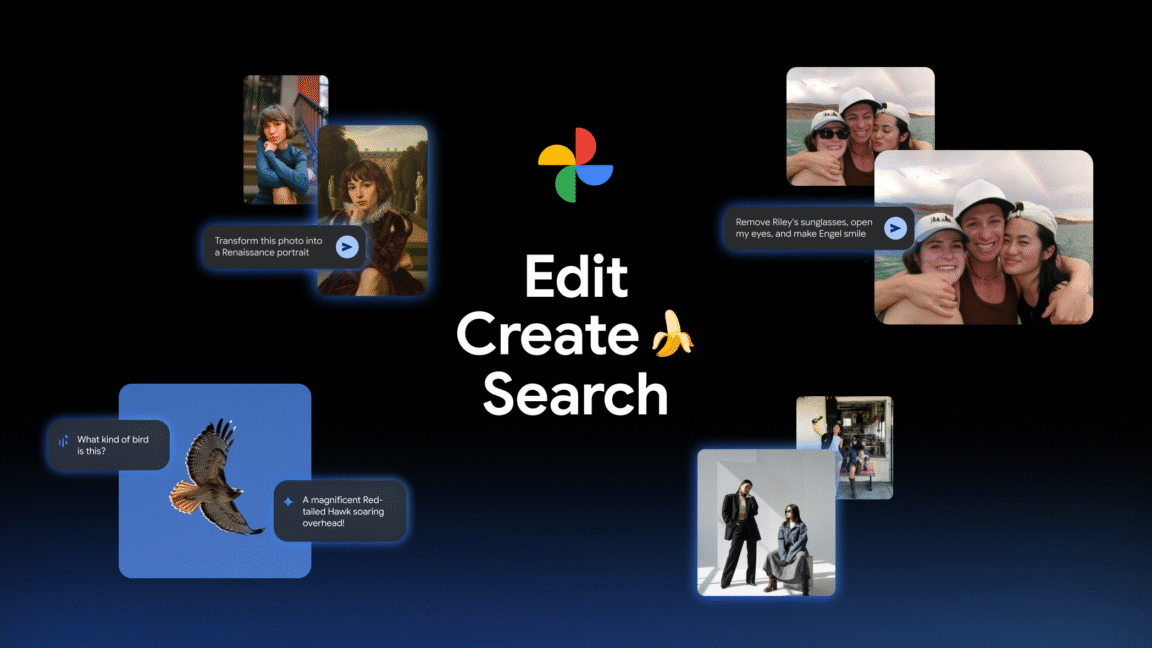
We’re running out of ways to tell you that Google is releasing more generative AI features, but that’s what’s happening in Google Photos today. The Big G is finally making good on its promise to add its market-leading Nano Banana image-editing model to the app. The model powers a couple of features, and it’s not just for Google’s Android platform. Nano Banana edits are also coming to the iOS version of the app.

Nano Banana started making waves when it appeared earlier this year as an unbranded demo. You simply feed the model an image and tell it what edits you want to see. Google said Nano Banana was destined for the Photos app back in October, but it’s only now beginning the rollout. The Photos app already had conversational editing in the “Help Me Edit” feature, but it was running an older non-fruit model that produced inferior results. Nano Banana editing will produce AI slop, yes, but it’s better slop.

Nano Banana in Help me edit

Google says the updated Help Me Edit feature has access to your private face groups, so you can use names in your instructions. For example, you could type “Remove Riley’s sunglasses,” and Nano Banana will identify Riley in the photo (assuming you have a person of that name saved) and make the edit without further instructions. You can also ask for more fantastical edits in Help Me Edit, changing the style of the image from top to bottom.

https://arstechnica.com/google/2025/11/googles-nano-banana-ai-image-editing-is-finally-coming-to-google-photos/


Oddest ChatGPT leaks yet: Cringey chat logs found in Google analytics tool

OpenAI’s response leaves users with “lingering questions”

After ChatGPT prompts were found surfacing in Google’s search index in August, OpenAI clarified that users had clicked a box making those prompts public, which OpenAI defended as “sufficiently clear.” The AI firm later scrambled to remove the chats from Google’s SERPs after it became obvious that users felt misled into sharing private chats publicly.

Packer told Ars that a major difference between those leaks and the GSC leaks is that users harmed by the prior scandal, at least on some level, “had to actively share” their leaked chats. In the more recent case, “nobody clicked share” or had a reasonable way to prevent their chats from being exposed.

“Did OpenAI go so fast that they didn’t consider the privacy implications of this, or did they just not care?” Packer posited in his blog.

Perhaps most troubling to some users—whose identities are not linked in chats unless their prompts perhaps share identifying information—there does not seem to be any way to remove the leaked chats from GSC, unlike the prior scandal.

Packer and Manić are left with “lingering questions” about how far OpenAI’s fix will go to stop the issue.

Manić was hoping OpenAI might confirm if prompts entered on https://chatgpt.com that trigger Google Search were also affected. But OpenAI did not follow up on that question, or a broader question about how big the leak was. To Manić, a major concern was that OpenAI’s scraping may be “contributing to ‘crocodile mouth’ in Google Search Console,” a troubling trend SEO researchers have flagged that causes impressions to spike but clicks to dip.

OpenAI also declined to clarify Packer’s biggest question. He’s left wondering if the company’s “fix” simply ended OpenAI’s “routing of search queries, such that raw prompts are no longer being sent to Google Search, or are they no longer scraping Google Search at all for data?

“We still don’t know if it’s that one particular page that has this bug or whether this is really widespread,” Packer told Ars. “In either case, it’s serious and just sort of shows how little regard OpenAI has for moving carefully when it comes to privacy.”

https://arstechnica.com/tech-policy/2025/11/oddest-chatgpt-leaks-yet-cringey-chat-logs-found-in-google-analytics-tool/


YouTube TV’s Disney blackout reminds users that they don’t own what they stream

“I don’t know (or care) which side is responsible for this, but the DVR is not VOD, it is your recording, and shows recorded before the dispute should be available. This is a hard lesson for us all,” an apparently affected customer wrote on Reddit this week.

For current or former cable subscribers, this experience isn’t new. Carrier disputes have temporarily and permanently killed cable subscribers’ access to many channels over the years. And since the early 2000s, many cable companies have phased out DVRs with local storage in favor of cloud-based DVRs. Since then, cable companies have been able to revoke customers’ access to DVR files if, for example, the customer stopped paying for the channel from which the content was recorded. What we’re seeing with YouTube TV’s DVR feature is one of several ways that streaming services mirror cable companies.

Google exits Movies Anywhere

In a move that appears to be best described as tit for tat, Google has removed content purchased via Google Play and YouTube from Movies Anywhere, a Disney-owned unified platform that lets people access digital video purchases from various distributors, including Amazon Prime Video and Fandango.

In removing users’ content, Google may gain some leverage in its discussions with Disney, which is reportedly seeking a larger carriage fee from YouTube TV. The content removals, however, are just one more pain point of the fragmented streaming landscape customers are already dealing with.

Customers inconvenienced

As of this writing, Google and Disney have yet to reach an agreement. On Monday, Google publicly rejected Disney’s request to restore ABC to YouTube TV for yesterday’s election day, although the company showed a willingness to find a way to quickly bring back ABC and ESPN (“the channels that people want,” per Google). Disney has escalated things by making its content unavailable to rent or purchase from all Google platforms.

Google is trying to appease customers by saying it will give YouTube TV subscribers a $20 credit if Disney “content is unavailable for an extended period of time.” Some people online have reported receiving a $10 credit already.

Regardless of how this saga ends, the immediate effects have inconvenienced customers of both companies. People subscribe to streaming services and rely on digital video purchases and recordings for easy, instant access, which Google and Disney’s disagreement has disrupted. The squabble has also served as another reminder that in the streaming age, you don’t really own anything.

https://arstechnica.com/gadgets/2025/11/youtube-tvs-disney-blackout-reminds-users-that-they-dont-own-what-they-stream/


If you want to satiate AI’s hunger for power, Google suggests going to space

It was probably always when, not if, Google would add its name to the list of companies intrigued by the potential of orbiting data centers.

Google announced Tuesday a new initiative, named Project Suncatcher, to examine the feasibility of bringing artificial intelligence to space. The idea is to deploy swarms of satellites in low-Earth orbit, each carrying Google’s AI accelerator chips designed for training, content generation, synthetic speech and vision, and predictive modeling. Google calls these chips Tensor Processing Units, or TPUs.

“Project Suncatcher is a moonshot exploring a new frontier: equipping solar-powered satellite constellations with TPUs and free-space optical links to one day scale machine learning compute in space,” Google wrote in a blog post.

“Like any moonshot, it’s going to require us to solve a lot of complex engineering challenges,” Google’s CEO, Sundar Pichai, wrote on X. Pichai noted that Google’s early tests show the company’s TPUs can withstand the intense radiation they will encounter in space. “However, significant challenges still remain like thermal management and on-orbit system reliability.”

The why and how

Ars reported on Google’s announcement on Tuesday, and Google published a research paper outlining the motivation for such a moonshot project. One of the authors, Travis Beals, spoke with Ars about Project Suncatcher and offered his thoughts on why it just might work.

“We’re just seeing so much demand from people for AI,” said Beals, senior director of Paradigms of Intelligence, a research team within Google. “So, we wanted to figure out a solution for compute that could work no matter how large demand might grow.”

Higher demand will lead to bigger data centers consuming colossal amounts of electricity. According to the MIT Technology Review, AI alone could consume as much electricity annually as 22 percent of all US households by 2028. Cooling is also a problem, often requiring access to vast water resources, raising important questions about environmental sustainability.

https://arstechnica.com/space/2025/11/if-you-want-to-satiate-ais-hunger-for-power-google-suggests-going-to-space/


Google settlement with Epic caps Play Store fees, boosts other Android app stores

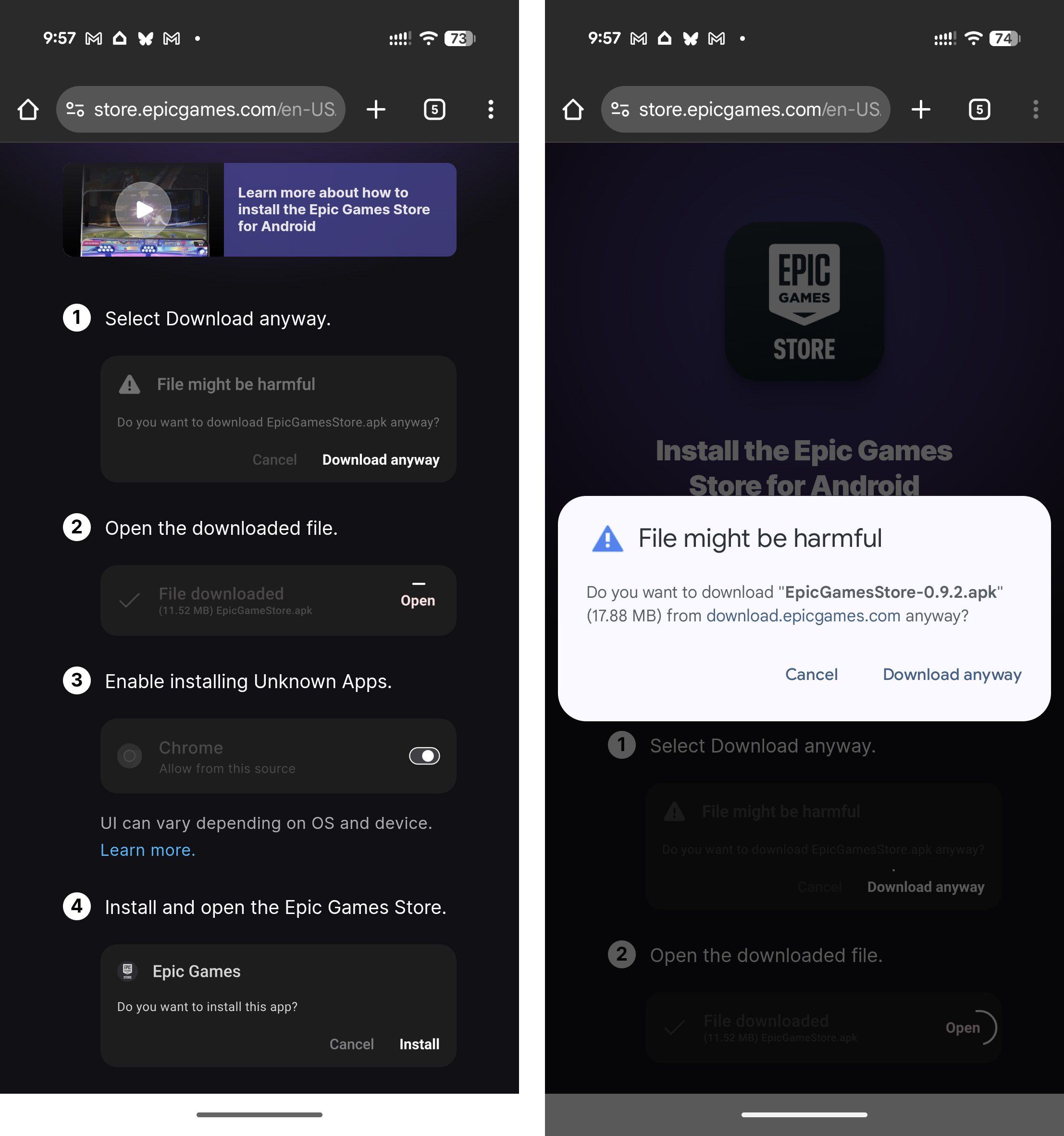
Under the terms, Google agrees to implement a system in the next version of Android that will give third-party app stores a way to become officially registered as an application source. These “Registered App Stores” will be installable from websites with a single click and without the alarming warnings that accompany traditional sideloads. Again, this will be supported globally rather than only in the US, as the previous order required.

The motion filed with the court doesn’t include much detail on how Registered App Stores will operate once installed. Given Epic’s aversion to the scare screens that appear when sideloading apps, installs managed by registered third-party stores may also be low-friction. The Play Store can install apps without forcing the user to clear a bunch of warnings, and it can update apps automatically. We may see similar capabilities for third parties once Google adds the promised support in the next version of Android.

epic harmful installation

This is the kind of “friction” the settlement would avoid.

Credit: Ryan Whitwam

This is the kind of “friction” the settlement would avoid. Credit: Ryan Whitwam

Importantly, Google is allowed to create “reasonable requirements” for certifying these app stores. Reviews may be carried out, and Google can charge fees for that process; however, the fees cannot be revenue-dependent.

The changes detailed in the settlement are not as wide-ranging as Judge Donato’s original order but still mark a shift toward openness. Third-party app stores are getting a boost, developers will enjoy lower fees, and Google won’t drag the process out for years. The parties claim in their joint motion that the agreement does not seek to undo the jury verdict or sidestep the court’s previous order. Rather, it aims to reinforce the court’s intent while eliminating potential delays in realigning the app market.

Google and Epic are going to court on Thursday to ask Judge Donato to approve the settlement, and Google could put the billing changes into practice by late this year. The app store changes would come around June next year when we expect Android 17 to begin rolling out. However, Google’s Android Canary and Beta releases may offer a glimpse of this system earlier in 2026.

https://arstechnica.com/gadgets/2025/11/google-settlement-with-epic-caps-play-store-fees-boosts-other-android-app-stores/