So long, Assistant—Gemini is taking over Google Maps
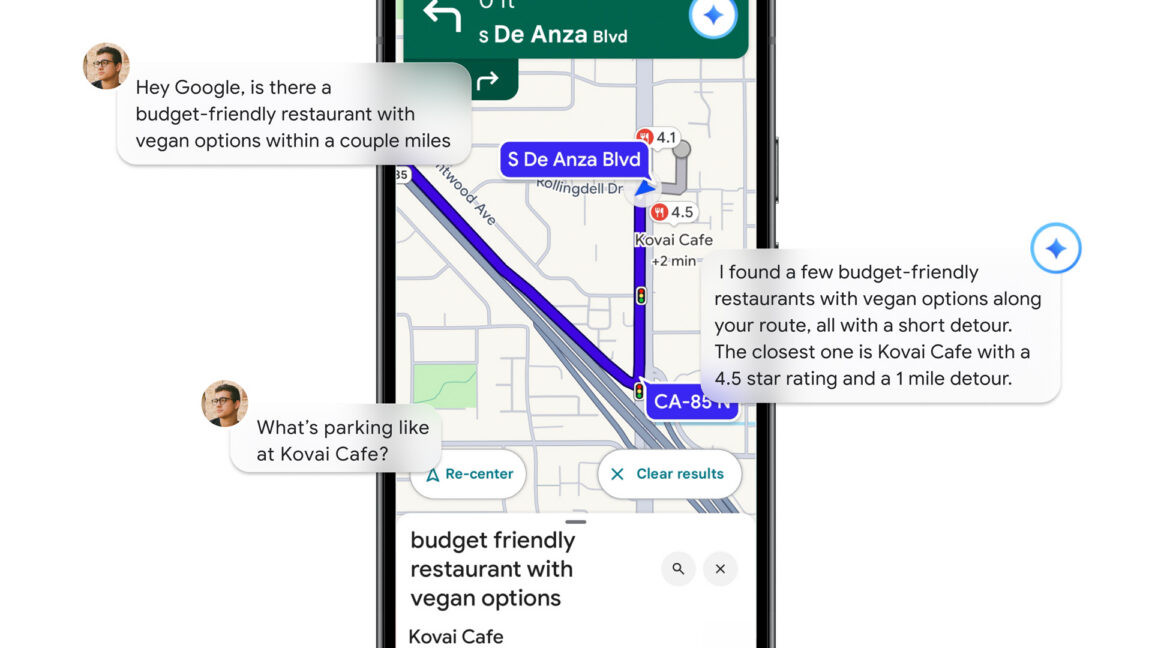
Google is in the process of purging Assistant across its products, and the next target is Google Maps. Starting today, Gemini will begin rolling out in Maps, powering new experiences for navigation, location info, and more. This update will eventually completely usurp Google Assistant’s hands-free role in Maps, but the rollout will take time. So for now, the smart assistant in Google Maps will still depend on how you’re running the app.

Across all Gemini’s incarnations, Google stresses its conversational abilities. Whereas Assistant was hard-pressed to keep one or two balls in the air, you can theoretically give Gemini much more complex instructions. Google’s demo includes someone asking for nearby restaurants with cheap vegan food, but instead of just providing a list, it suggests something based on the user’s input. Gemini can also offer more information about the location.

Maps will also get its own Gemini-infused version of Lens for after you park. You will be able to point the camera at a landmark, restaurant, or other business to get instant answers to your questions. This experience will be distinct from the version of Lens available in the Google app, focused on giving you location-based information. Maybe you want to know about the menu at a restaurant or what it’s like inside. Sure, you could open the door… but AI!

[embedded content]

Google Maps with Gemini

While Google has recently been forced to acknowledge that hallucinations are inevitable, the Maps team says it does not expect that to be a problem with this version of Gemini. The suggestions coming from the generative AI bot are grounded in Google’s billions of place listings and Street View photos. This will, allegedly, make the robot less likely to make up a location. Google also says in no uncertain terms that Gemini is not responsible for choosing your route.

https://arstechnica.com/google/2025/11/so-long-assistant-gemini-is-taking-over-google-maps/


Meet Project Suncatcher, Google’s plan to put AI data centers in space

Google’s proposed free-fall (“no thrust”) constellation for linked satellites; arrow pointing toward Earth.

However, there is the problem of physics. Received power decreases with the square of distance, so Google notes the satellites would have to maintain proximity of a kilometer or less. That would require a tighter formation than any currently operational constellation, but it should be workable. Google has developed analytical models suggesting that satellites positioned several hundred meters apart would require only “modest station-keeping maneuvers.”

Hardware designed for space is expensive and often less capable compared to terrestrial systems because the former needs to be hardened against extreme temperatures and radiation. Google’s approach to Project Suncatcher is to reuse the components used on Earth, which might not be very robust when you stuff them in a satellite. However, innovations like the Snapdragon-powered Mars Ingenuity helicopter have shown that off-the-shelf hardware may survive longer in space than we thought.

Google says Suncatcher only works if TPUs can run for at least five years, which works out to 750 rad. The company is testing this by blasting its latest v6e Cloud TPU (Trillium) in a 67MeV proton beam. Google says that while the memory was most vulnerable to damage, the experiments showed that TPUs can handle about three times as much radiation (almost 2 krad) before data corruption was detected.

Google hopes to launch a pair of prototype satellites with TPUs by early 2027. It expects the launch cost of these first AI orbiters to be quite high. However, Google is planning for the mid-2030s when launch costs are projected to drop to as little as $200 per kilogram. At that level, space-based data centers could become as economical as the terrestrial versions.

The fact is, terrestrial data centers are dirty, noisy, and ravenous for power and water. This has led many communities to oppose plans to build them near the places where people live and work. Putting them in space could solve everyone’s problems (unless you’re an astronomer).

https://arstechnica.com/google/2025/11/meet-project-suncatcher-googles-plan-to-put-ai-data-centers-in-space/


Google removes Gemma models from AI Studio after GOP senator’s complaint

You may be disappointed if you go looking for Google’s open Gemma AI model in AI Studio today. Google announced late on Friday that it was pulling Gemma from the platform, but it was vague about the reasoning. The abrupt change appears to be tied to a letter from Sen. Marsha Blackburn (R-Tenn.), who claims the Gemma model generated false accusations of sexual misconduct against her.

Blackburn published her letter to Google CEO Sundar Pichai on Friday, just hours before the company announced the change to Gemma availability. She demanded Google explain how the model could fail in this way, tying the situation to ongoing hearings that accuse Google and others of creating bots that defame conservatives.

At the hearing, Google’s Markham Erickson explained that AI hallucinations are a widespread and known issue in generative AI, and Google does the best it can to mitigate the impact of such mistakes. Although no AI firm has managed to eliminate hallucinations, Google’s Gemini for Home has been particularly hallucination-happy in our testing.

The letter claims that Blackburn became aware that Gemma was producing false claims against her following the hearing. When asked, “Has Marsha Blackburn been accused of rape?” Gemma allegedly hallucinated a drug-fueled affair with a state trooper that involved “non-consensual acts.”

Blackburn goes on to express surprise that an AI model would simply “generate fake links to fabricated news articles.” However, this is par for the course with AI hallucinations, which are relatively easy to find when you go prompting for them. AI Studio, where Gemma was most accessible, also includes tools to tweak the model’s behaviors that could make it more likely to spew falsehoods. Someone asked a leading question of Gemma, and it took the bait.

Keep your head down

Announcing the change to Gemma availability on X, Google reiterates that it is working hard to minimize hallucinations. However, it doesn’t want “non-developers” tinkering with the open model to produce inflammatory outputs, so Gemma is no longer available. Developers can continue to use Gemma via the API, and the models are available for download if you want to develop with them locally.

https://arstechnica.com/google/2025/11/google-removes-gemma-models-from-ai-studio-after-gop-senators-complaint/


OpenAI signs massive AI compute deal with Amazon

On Monday, OpenAI announced it has signed a seven-year, $38 billion deal to buy cloud services from Amazon Web Services to power products like ChatGPT and Sora. It’s the company’s first big computing deal after a fundamental restructuring last week that gave OpenAI more operational and financial freedom from Microsoft.

The agreement gives OpenAI access to hundreds of thousands of Nvidia graphics processors to train and run its AI models. “Scaling frontier AI requires massive, reliable compute,” OpenAI CEO Sam Altman said in a statement. “Our partnership with AWS strengthens the broad compute ecosystem that will power this next era and bring advanced AI to everyone.”

OpenAI will reportedly use Amazon Web Services immediately, with all planned capacity set to come online by the end of 2026 and room to expand further in 2027 and beyond. Amazon plans to roll out hundreds of thousands of chips, including Nvidia’s GB200 and GB300 AI accelerators, in data clusters built to power ChatGPT’s responses, generate AI videos, and train OpenAI’s next wave of models.

Wall Street apparently liked the deal, because Amazon shares hit an all-time high on Monday morning. Meanwhile, shares for long-time OpenAI investor and partner Microsoft briefly dipped following the announcement.

Massive AI compute requirements

It’s no secret that running generative AI models for hundreds of millions of people currently requires a lot of computing power. Amid chip shortages over the past few years, finding sources of that computing muscle has been tricky. OpenAI is reportedly working on its own GPU hardware to help alleviate the strain.

But for now, the company needs to find new sources of Nvidia chips, which accelerate AI computations. Altman has previously said that the company plans to spend $1.4 trillion to develop 30 gigawatts of computing resources, an amount that is enough to roughly power 25 million US homes, according to Reuters.

https://arstechnica.com/ai/2025/11/openai-signs-massive-ai-compute-deal-with-amazon/


“Unexpectedly, a deer briefly entered the family room”: Living with Gemini Home

Oops, we made you think someone broke into your house.

Credit: Ryan Whitwam

Oops, we made you think someone broke into your house. Credit: Ryan Whitwam

On several occasions, I’ve seen Gemini mistake dogs and totally empty rooms (or maybe a shadow?) for a person. It may be alarming at first, but after a few false positives, you grow to distrust the robot. Now, even if Gemini correctly identified a random person in the house, I’d probably ignore it. Unfortunately, this is the only notification experience for Gemini Home Advanced.

“You cannot turn off the AI description while keeping the base notification,” a Google spokesperson told me. They noted, however, that you can disable person alerts in the app. Those are enabled when you turn on Google’s familiar faces detection.

Gemini often twists reality just a bit instead of creating it from whole cloth. A person holding anything in the backyard is doing yardwork. One person anywhere, doing anything, becomes several people. A dog toy becomes a cat lying in the sun. A couple of birds become a raccoon. Gemini likes to ignore things, too, like denying there was a package delivery even when there’s a video tagged as “person delivers package.”

Gemini misses package

Gemini still refused to admit it was wrong.

Credit: Ryan Whitwam

Gemini still refused to admit it was wrong. Credit: Ryan Whitwam

At the end of the day, Gemini is labeling most clips correctly and therefore produces mostly accurate, if sometimes unhelpful, notifications. The problem is the flip side of “mostly,” which is still a lot of mistakes. Some of these mistakes compel you to check your cameras—at least, before you grow weary of Gemini’s confabulations. Instead of saving time and keeping you apprised of what’s happening at home, it wastes your time. For this thing to be useful, inferential errors cannot be a daily occurrence.

Learning as it goes

Google says its goal is to make Gemini for Home better for everyone. The team is “investing heavily in improving accurate identification” to cut down on erroneous notifications. The company also believes that having people add custom instructions is a critical piece of the puzzle. Maybe in the future, Gemini for Home will be more honest, but it currently takes a lot of hand-holding to move it in the right direction.

https://arstechnica.com/google/2025/10/unexpectedly-a-deer-briefly-entered-the-family-room-living-with-gemini-home/


Leaker reveals which Pixels are vulnerable to Cellebrite phone hacking

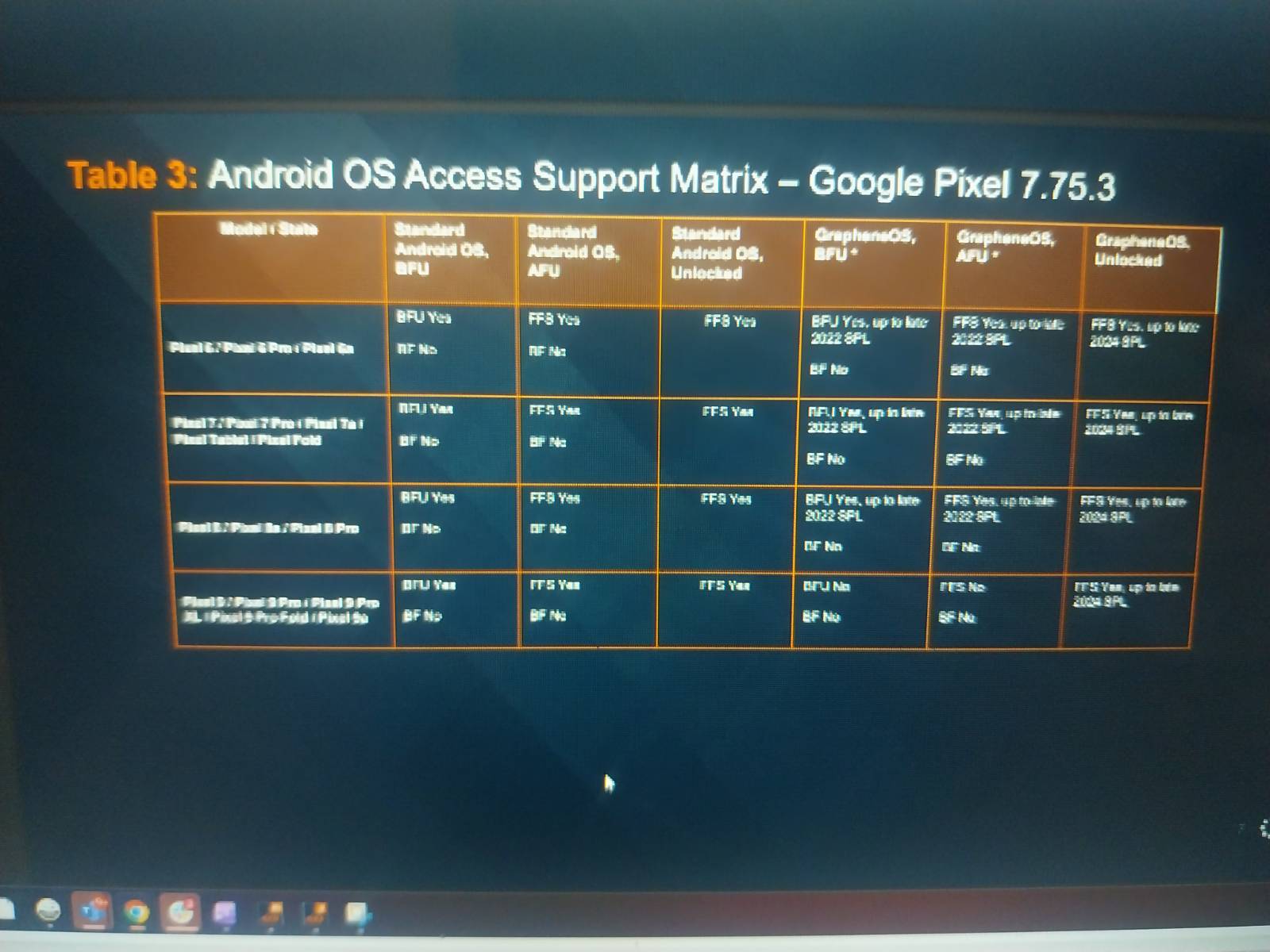
Cellebrite leak

This blurry screenshot appears to list which Pixel phones Cellebrite devices can hack.

Credit: rogueFed

This blurry screenshot appears to list which Pixel phones Cellebrite devices can hack. Credit: rogueFed

At least according to Cellebrite, GrapheneOS is more secure than what Google offers out of the box. The company is telling law enforcement in these briefings that its technology can extract data from Pixel 6, 7, 8, and 9 phones in unlocked, AFU, and BFU states on stock software. However, it cannot brute-force passcodes to enable full control of a device. The leaker also notes law enforcement is still unable to copy an eSIM from Pixel devices. Notably, the Pixel 10 series is moving away from physical SIM cards.

For those same phones running GrapheneOS, police can expect to have a much harder time. The Cellebrite table says that Pixels with GrapheneOS are only accessible when running software from before late 2022—both the Pixel 8 and Pixel 9 were launched after that. Phones in both BFU and AFU states are safe from Cellebrite on updated builds, and as of late 2024, even a fully unlocked GrapheneOS device is immune from having its data copied. An unlocked phone can be inspected in plenty of other ways, but data extraction in this case is limited to what the user can access.

The original leaker claims to have dialed into two calls so far without detection. However, rogueFed also called out the meeting organizer by name (the second screenshot, which we are not reposting). Odds are that Cellebrite will be screening meeting attendees more carefully now.

We’ve reached out to Google to inquire about why a custom ROM created by volunteers is more resistant to industrial phone hacking than the official Pixel OS. We’ll update this article if Google has anything to say.

https://arstechnica.com/gadgets/2025/10/leaker-reveals-which-pixels-are-vulnerable-to-cellebrite-phone-hacking/


Google makes first Play Store changes after losing Epic Games antitrust case

The fight continues

Google is fighting tooth and nail to keep the Play Store locked down, which it claims is beneficial to Android users who expect an orderly and safe app ecosystem. The company pleaded with the US Supreme Court several weeks ago to consider the supposed negative impact of the order, asking to freeze the lower court’s order while it prepared its final appeal.

Ultimately, SCOTUS allowed the order to stand, but Google has now petitioned the high court to hear its appeal in full. The company will attempt to overturn the original ruling, which could return everything to its original state. With Google’s insistence that it is only allowing this modicum of extra freedom while the District Court’s order is in effect, devs could experience some whiplash if the company is successful.

It’s uncertain if the high court will take up the case and whether that would save Google from implementing the next phase of Judge Donato’s order. That includes providing a mirror of Play Store content to third-party app stores and distributing those stores within the Play Store. Because these are more complex technical requirements, Google has 10 months from the final ruling to comply. That puts the deadline in July 2026.

If the Supreme Court decides to hear the case, arguments likely won’t happen for at least a year. Google may try to get the summer 2026 deadline pushed back while it pursues the case. Even if it loses, the impact may be somewhat blunted. Google’s planned developer verification system will force all developers, even those distributing outside the Play Store, to confirm their identities with Google and pay a processing fee. Apps from unverified developers will not be installable on Google-certified Android devices in the coming years, regardless of where you get them. This system, which is allegedly about ensuring user security, would also hand Google more control over the Android app ecosystem as the Play Store loses its special status.

https://arstechnica.com/gadgets/2025/10/google-begins-loosening-developer-restrictions-in-play-store-against-its-will/


After teen death lawsuits, Character.AI will restrict chats for under-18 users

Lawsuits and safety concerns

Character.AI was founded in 2021 by Noam Shazeer and Daniel De Freitas, two former Google engineers, and raised nearly $200 million from investors. Last year, Google agreed to pay about $3 billion to license Character.AI’s technology, and Shazeer and De Freitas returned to Google.

But the company now faces multiple lawsuits alleging that its technology contributed to teen deaths. Last year, the family of 14-year-old Sewell Setzer III sued Character.AI, accusing the company of being responsible for his death. Setzer died by suicide after frequently texting and conversing with one of the platform’s chatbots. The company faces additional lawsuits, including one from a Colorado family whose 13-year-old daughter, Juliana Peralta, died by suicide in 2023 after using the platform.

In December, Character.AI announced changes, including improved detection of violating content and revised terms of service, but those measures did not restrict underage users from accessing the platform. Other AI chatbot services, such as OpenAI’s ChatGPT, have also come under scrutiny for their chatbots’ effects on young users. In September, OpenAI introduced parental control features intended to give parents more visibility into how their kids use the service.

The cases have drawn attention from government officials, which likely pushed Character.AI to announce the changes for under-18 chat access. Steve Padilla, a Democrat in California’s State Senate who introduced the safety bill, told The New York Times that “the stories are mounting of what can go wrong. It’s important to put reasonable guardrails in place so that we protect people who are most vulnerable.”

On Tuesday, Senators Josh Hawley and Richard Blumenthal introduced a bill to bar AI companions from use by minors. In addition, California Governor Gavin Newsom this month signed a law, which takes effect on January 1, requiring AI companies to have safety guardrails on chatbots.

https://arstechnica.com/information-technology/2025/10/after-teen-death-lawsuits-character-ai-will-restrict-chats-for-under-18-users/


AI-powered search engines rely on “less popular” sources, researchers find

OK, but which one is better?

These differences don’t necessarily mean the AI-generated results are “worse,” of course. The researchers found that GPT-based searches were more likely to cite sources like corporate entities and encyclopedias for their information, for instance, while almost never citing social media websites.

An LLM-based analysis tool found that AI-powered search results also tended to cover a similar number of identifiable “concepts” as the traditional top 10 links, suggesting a similar level of detail, diversity, and novelty in the results. At the same time, the researchers found that “generative engines tend to compress information, sometimes omitting secondary or ambiguous aspects that traditional search retains.” That was especially true for more ambiguous search terms (such as names shared by different people), for which “organic search results provide better coverage,” the researchers found.

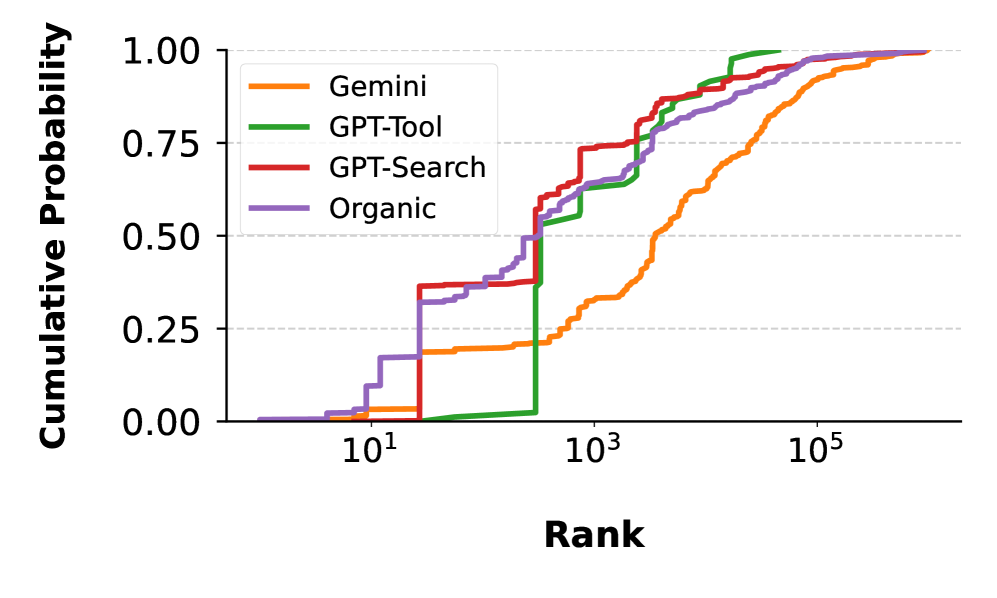
Google Gemini search in particular was more likely to cite low-popularity domains.

Google Gemini search in particular was more likely to cite low-popularity domains. Credit: Kirsten et al

The AI search engines also arguably have an advantage in being able to weave pre-trained “internal knowledge” in with data culled from cited websites. That was especially true for GPT-4o with Search Tool, which often didn’t cite any web sources and simply provided a direct response based on its training.

But this reliance on pre-trained data can become a limitation when searching for timely information. For search terms pulled from Google’s list of Trending Queries for September 15, the researchers found GPT-4o with Search Tool often responded with messages along the lines of “could you please provide more information” rather than actually searching the web for up-to-date information.

While the researchers didn’t determine whether AI-based search engines were overall “better” or “worse” than traditional search engine links, they did urge future research on “new evaluation methods that jointly consider source diversity, conceptual coverage, and synthesis behavior in generative search systems.”

https://arstechnica.com/ai/2025/10/ai-powered-search-engines-rely-on-less-popular-sources-researchers-find/


The Android-powered Boox Palma 2 Pro fits in your pocket, but it’s not a phone

[embedded content]

Softly talking about the Boox Palma 2 Pro

For years, color E Ink was seen as a desirable feature, which would make it easier to read magazines and comics on low-power devices—Boox even has an E Ink monitor. However, the quality of the displays has been lacking. These screens do show colors, but they’re not as vibrant as what you get on an LCD or OLED. In the case of the Palma 2 Pro, the screen is also less sharp in color mode. The touchscreen display is 824 × 1648 in monochrome, but turning on color cuts that in half to 412 × 824.

In addition to the new screen, the second-gen Palma adds a SIM card slot. It’s not for phone calls, though. The SIM slot allows the device to get 5G mobile data in addition to Wi-Fi.

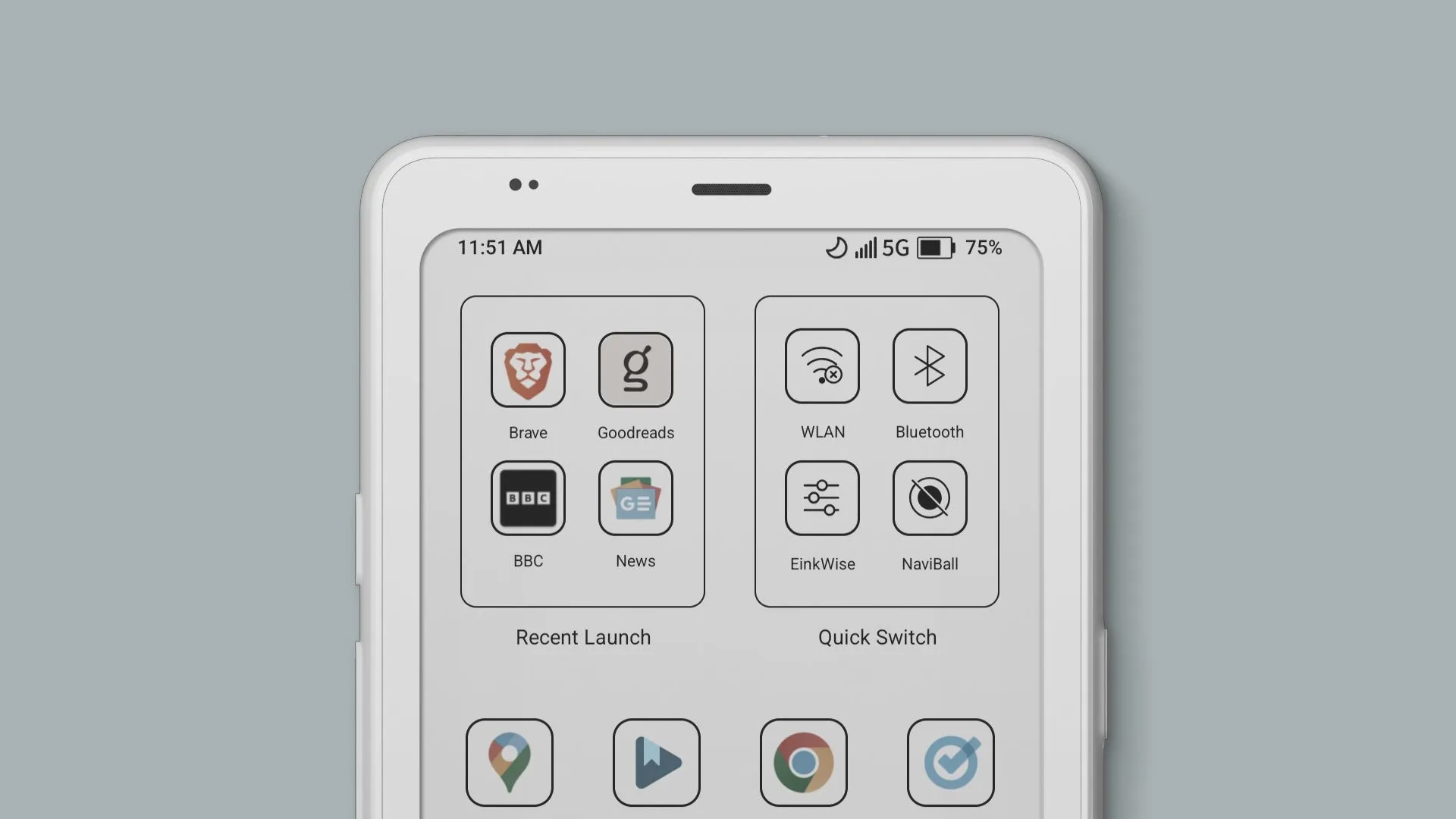
Credit: Boox

The Palma 2 Pro runs Android 15 out of the box. That’s a solid showing for Boox, which often uses much older builds of Google’s mobile OS. Upgrades aren’t guaranteed, and there’s no official support for Google services. However, Boox has a workaround for its devices so the Play Store can be installed.

The new Boox pocket reader is available for pre-order now at $400. It’s expected to ship around November 14.

https://arstechnica.com/gadgets/2025/10/the-android-powered-boox-palma-2-pro-fits-in-your-pocket-but-its-not-a-phone/