Google’s AI model just nailed the forecast for the strongest Atlantic storm this year

In early June, shortly after the beginning of the Atlantic hurricane season, Google unveiled a new model designed specifically to forecast the tracks and intensity of tropical cyclones.

Part of the Google DeepMind suite of AI-based weather research models, the “Weather Lab” model for cyclones was a bit of an unknown for meteorologists at its launch. In a blog post at the time, Google said its new model, trained on a vast dataset that reconstructed past weather and a specialized database containing key information about hurricanes tracks, intensity, and size, had performed well during pre-launch testing.

“Internal testing shows that our model’s predictions for cyclone track and intensity are as accurate as, and often more accurate than, current physics-based methods,” the company said.

Google said it would partner with the National Hurricane Center, an arm of the National Oceanic and Atmospheric Service that has provided credible forecasts for decades, to assess the performance of its Weather Lab model in the Atlantic and East Pacific basins.

All eyes on Erin

It had been a relatively quiet Atlantic hurricane season until a few weeks ago, with overall activity running below normal levels. So there were no high-profile tests of the new model. But about 10 days ago, Hurricane Erin rapidly intensified in the open Atlantic Ocean, becoming a Category 5 hurricane as it tracked westward.

From a forecast standpoint, it was pretty clear that Erin was not going to directly strike the United States, but meteorologists sweat the details. And because Erin was such a large storm, we had concerns about how close Erin would get to the East Coast of the United States (close enough, it turns out, to cause some serious beach erosion) and its impacts on the small island of Bermuda in the Atlantic.

https://arstechnica.com/science/2025/08/googles-ai-model-just-nailed-the-forecast-for-the-strongest-atlantic-storm-this-year/



Google will block sideloading of unverified Android apps starting next year

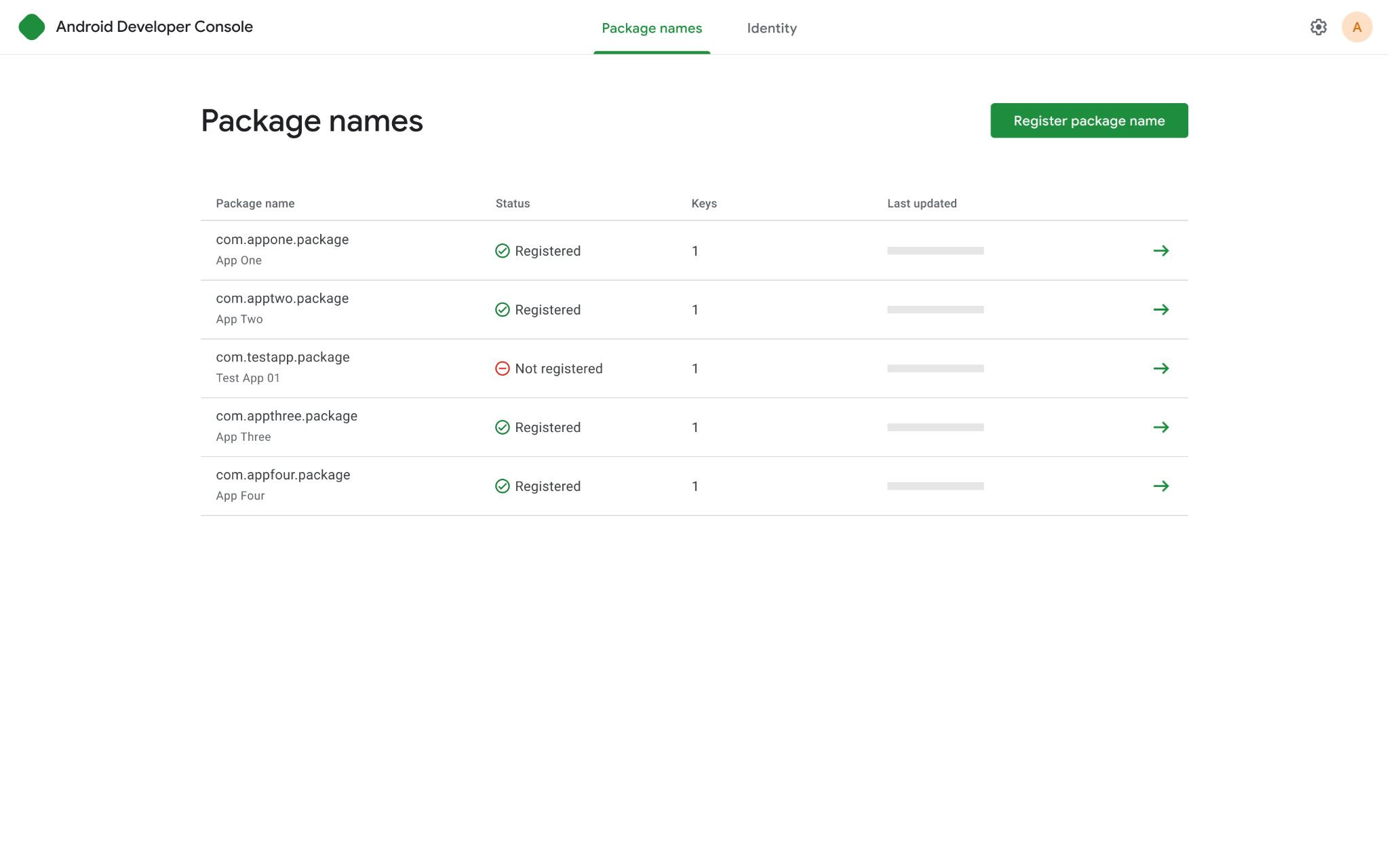
Android Developer Console

An early look at the streamlined Android Developer Console for sideloaded apps. Credit: Google

Google says that only apps with verified identities will be installable on certified Android devices, which is virtually every Android-based device—if it has Google services on it, it’s a certified device. If you have a non-Google build of Android on your phone, none of this applies. However, that’s a vanishingly small fraction of the Android ecosystem outside of China.

Google plans to begin testing this system with early access in October of this year. In March 2026, all developers will have access to the new console to get verified. In September 2026, Google plans to launch this feature in Brazil, Indonesia, Singapore, and Thailand. The next step is still hazy, but Google is targeting 2027 to expand the verification requirements globally.

A seismic shift

This plan comes at a major crossroads for Android. The ongoing Google Play antitrust case brought by Epic Games may finally force changes to Google Play in the coming months. Google lost its appeal of the verdict several weeks ago, and while it plans to appeal the case to the US Supreme Court, the company will have to begin altering its app distribution scheme, barring further legal maneuvering.

Credit: Google

Among other things, the court has ordered that Google must distribute third-party app stores and allow Play Store content to be rehosted in other storefronts. Giving people more ways to get apps could increase choice, which is what Epic and other developers wanted. However, third-party sources won’t have the deep system integration of the Play Store, which means users will be sideloading these apps without Google’s layers of security.

It’s hard to say how much of a genuine security problem this is. On one hand, it makes sense Google would be concerned—most of the major malware threats to Android devices spread via third-party app repositories. However, enforcing an installation whitelist across almost all Android devices is heavy handed. This requires everyone making Android apps to satisfy Google’s requirements before virtually anyone will be able to install their apps, which could help Google retain control as the app market opens up. While the requirements may be minimal right now, there’s no guarantee they will stay that way.

The documentation currently available doesn’t explain what will happen if you try to install a non-verified app, nor how phones will check for verification status. Presumably, Google will distribute this whitelist in Play Services as the implementation date approaches. We’ve reached out for details on that front and will report if we hear anything.

https://arstechnica.com/gadgets/2025/08/google-will-block-sideloading-of-unverified-android-apps-starting-next-year/


YouTube secretly tested AI video enhancement without notifying creators

Is it a conspiracy? For months, YouTubers have been quietly griping that something looked off in their recent video uploads. Following a deeper analysis by a popular music channel, Google has now confirmed that it has been testing a feature that uses AI to artificially enhance videos. The company claims this is part of its effort to “provide the best video quality,” but it’s odd that it began doing so without notifying creators or offering any way to opt out of the experiment.

Google’s test raised eyebrows almost immediately after it began rolling out in YouTube Shorts earlier this year. Users reported strange artifacts, edge distortion, and distracting smoothness that gives the appearance of AI alteration. If you’ve ever zoomed in close after taking a photo with your smartphone only to notice things look oversharpened or like an oil painting, that’s the effect of Google’s video processing test.

According to Rene Ritchie, YouTube’s head of editorial, this isn’t quite like the AI features Google has been cramming into every other product. In a post on X (formerly Twitter), Ritchie said the feature is not based on generative AI but instead uses “traditional machine learning” to reduce blur and noise while sharpening the image. Although, this is a distinction without a difference—it’s still AI of a sort being used to modify videos.

YouTuber Rhett Shull began investigating what was happening to his videos after discussing the issue with a fellow creator. He quickly became convinced that YouTube was applying AI video processing without notifying anyone—he calls this “upscaling,” though Google’s Ritchie contends this is not technically upscaling tech.

https://arstechnica.com/google/2025/08/youtube-secretly-tested-ai-video-enhancement-without-notifying-creators/


With AI chatbots, Big Tech is moving fast and breaking people

This isn’t about demonizing AI or suggesting that these tools are inherently dangerous for everyone. Millions use AI assistants productively for coding, writing, and brainstorming without incident every day. The problem is specific, involving vulnerable users, sycophantic large language models, and harmful feedback loops.

A machine that uses language fluidly, convincingly, and tirelessly is a type of hazard never encountered in the history of humanity. Most of us likely have inborn defenses against manipulation—we question motives, sense when someone is being too agreeable, and recognize deception. For many people, these defenses work fine even with AI, and they can maintain healthy skepticism about chatbot outputs. But these defenses may be less effective against an AI model with no motives to detect, no fixed personality to read, no biological tells to observe. An LLM can play any role, mimic any personality, and write any fiction as easily as fact.

Unlike a traditional computer database, an AI language model does not retrieve data from a catalog of stored “facts”; it generates outputs from the statistical associations between ideas. Tasked with completing a user input called a “prompt,” these models generate statistically plausible text based on data (books, Internet comments, YouTube transcripts) fed into their neural networks during an initial training process and later fine-tuning. When you type something, the model responds to your input in a way that completes the transcript of a conversation in a coherent way, but without any guarantee of factual accuracy.

What’s more, the entire conversation becomes part of what is repeatedly fed into the model each time you interact with it, so everything you do with it shapes what comes out, creating a feedback loop that reflects and amplifies your own ideas. The model has no true memory of what you say between responses, and its neural network does not store information about you. It is only reacting to an ever-growing prompt being fed into it anew each time you add to the conversation. Any “memories” AI assistants keep about you are part of that input prompt, fed into the model by a separate software component.

https://arstechnica.com/information-technology/2025/08/with-ai-chatbots-big-tech-is-moving-fast-and-breaking-people/


Is the AI bubble about to pop? Sam Altman is prepared either way.

Still, the coincidence between Altman’s statement and the MIT report reportedly spooked tech stock investors earlier in the week, who have already been watching AI valuations climb to extraordinary heights. Palantir trades at 280 times forward earnings. During the dot-com peak, ratios of 30 to 40 times earnings marked bubble territory.

The apparent contradiction in Altman’s overall message is notable. This isn’t how you’d expect a tech executive to talk when they believe their industry faces imminent collapse. While warning about a bubble, he’s simultaneously seeking a valuation that would make OpenAI worth more than Walmart or ExxonMobil—companies with actual profits. OpenAI hit $1 billion in monthly revenue in July but is reportedly heading toward a $5 billion annual loss. So what’s going on here?

Looking at Altman’s statements over time reveals a potential multi-level strategy. He likes to talk big. In February 2024, he reportedly sought an audacious $5 trillion–7 trillion for AI chip fabrication—larger than the entire semiconductor industry—effectively normalizing astronomical numbers in AI discussions.

By August 2025, while warning of a bubble where someone will lose a “phenomenal amount of money,” he casually mentioned that OpenAI would “spend trillions on datacenter construction” and serve “billions daily.” This creates urgency while potentially insulating OpenAI from criticism—acknowledging the bubble exists while positioning his company’s infrastructure spending as different and necessary. When economists raised concerns, Altman dismissed them by saying, “Let us do our thing,” framing trillion-dollar investments as inevitable for human progress while making OpenAI’s $500 billion valuation seem almost small by comparison.

This dual messaging—catastrophic warnings paired with trillion-dollar ambitions—might seem contradictory, but it makes more sense when you consider the unique structure of today’s AI market, which is absolutely flush with cash.

A different kind of bubble

The current AI investment cycle differs from previous technology bubbles. Unlike dot-com era startups that burned through venture capital with no path to profitability, the largest AI investors—Microsoft, Google, Meta, and Amazon—generate hundreds of billions of dollars in annual profits from their core businesses.

https://arstechnica.com/information-technology/2025/08/sam-altman-calls-ai-a-bubble-while-seeking-500b-valuation-for-openai/


Google unveils Pixel 10 series with improved Tensor G5 chip and a boatload of AI

Credit: Google

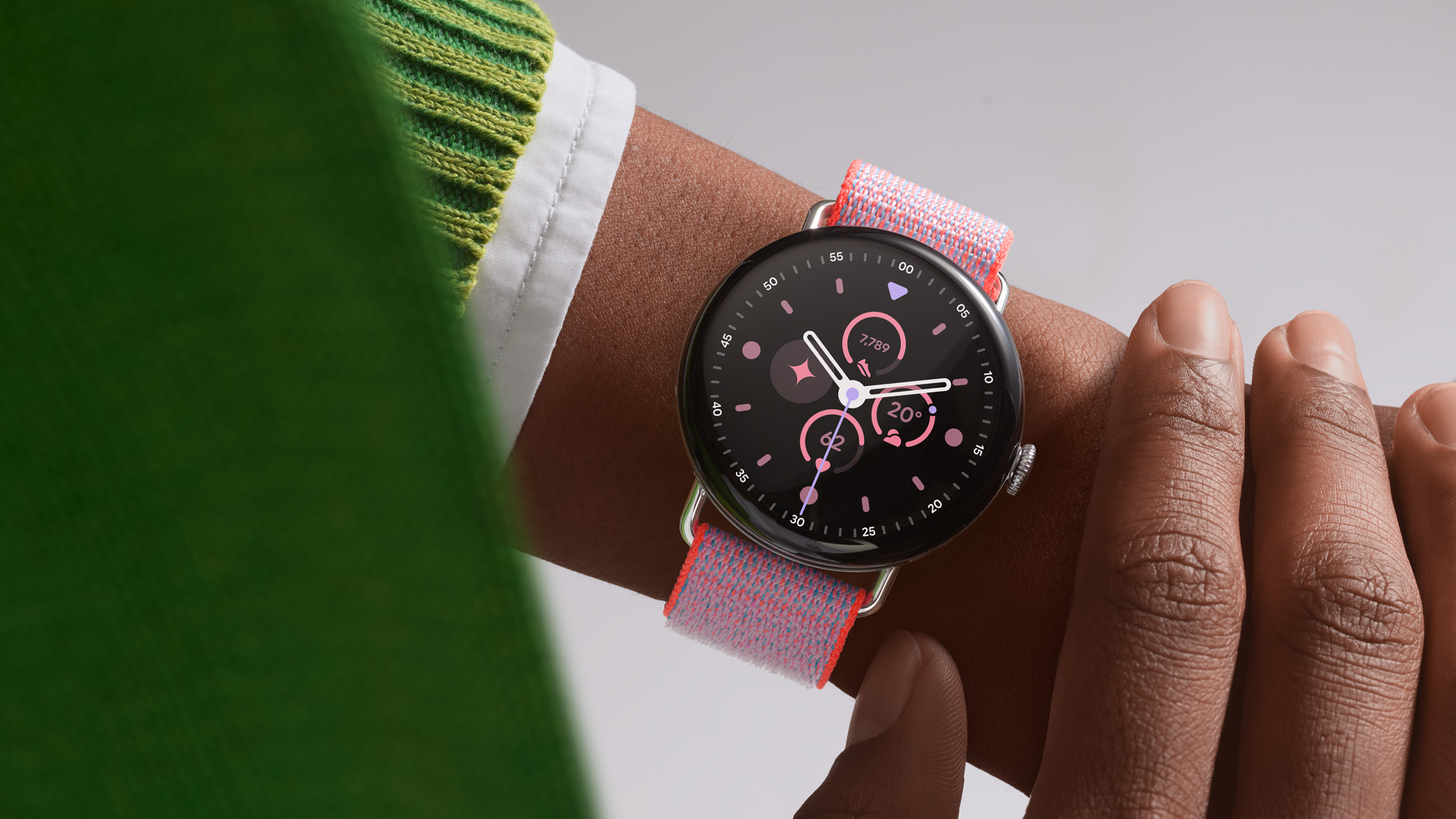
The new charger is a small dock that attaches to the side, holding the watch up so it’s visible on your desk. It can show upcoming alarms, battery percentage, or the time (duh, it’s a watch). It’s about 25 percent faster to charge compared to last year’s model, too. The smaller watch has a 325 mAh battery, and the larger one is 455 mAh. In both cases, these are marginally larger than the Pixel Watch 3. Google says the 41 mm will run 30 hours on a charge, and the 45 mm manages 40 hours.

The OLED panel under the glass now conforms to the Pixel Watch 4’s curvy aesthetic. Rather than being a flat panel under curved glass, the OLED now follows the domed shape. Google says the “Actua 360” display features 3,000 nits of brightness, a 50 percent improvement over last year’s wearable. The bezel around the screen is also 16 percent slimmer than last year. It runs a Snapdragon W5 Gen 2, which is apparently 25 percent faster and uses half the power of the Gen 1 chip used in the Watch 3.

Naturally, Google has also integrated Gemini into its new watch. It has “raise-to-talk” functionality, so you can just lift your wrist to begin talking to the AI (if you want that). The Pixel Watch 4 also boasts an improved speaker and haptics, which come into play when interacting with Gemini.

Pricing and availability

If you have a Pixel 9, there isn’t much reason to run out and buy a Pixel 10. That said, you can preorder Google’s new flat phones today. Pricing remains the same as last year, starting at $799 for the Pixel 10. The Pixel 10 Pro keeps the same size, adding a better camera setup and screen for $999. The largest Pixel 10 Pro XL retails for $1,199. The phones will ship on August 28.

If foldables are more your speed, you’ll have to wait a bit longer. The Pixel 10 Pro Fold won’t arrive until October 9, but it won’t see a price hike, either. The $1,799 price tag is still quite steep, even if Samsung’s new foldable is $200 more.

The Pixel Watch 4 is also available for preorder today, with availability on August 28 as well. The 41 mm will stay at $349, and the 45 mm is $399. If you want the LTE versions, you’ll add $100 to those prices.

https://arstechnica.com/gadgets/2025/08/google-unveils-pixel-10-series-with-improved-tensor-g5-chip-and-a-boatload-of-ai/


Google releases pint-size Gemma open AI model

Big tech has spent the last few years creating ever-larger AI models, leveraging rack after rack of expensive GPUs to provide generative AI as a cloud service. But tiny AI matters, too. Google has announced a tiny version of its Gemma open model designed to run on local devices. Google says the new Gemma 3 270M can be tuned in a snap and maintains robust performance despite its small footprint.

Google released its first Gemma 3 open models earlier this year, featuring between 1 billion and 27 billion parameters. In generative AI, the parameters are the learned variables that control how the model processes inputs to estimate output tokens. Generally, the more parameters in a model, the better it performs. With just 270 million parameters, the new Gemma 3 can run on devices like smartphones or even entirely inside a web browser.

Running an AI model locally has numerous benefits, including enhanced privacy and lower latency. Gemma 3 270M was designed with these kinds of use cases in mind. In testing with a Pixel 9 Pro, the new Gemma was able to run 25 conversations on the Tensor G4 chip and use just 0.75 percent of the device’s battery. That makes it by far the most efficient Gemma model.

Small Gemma benchmark

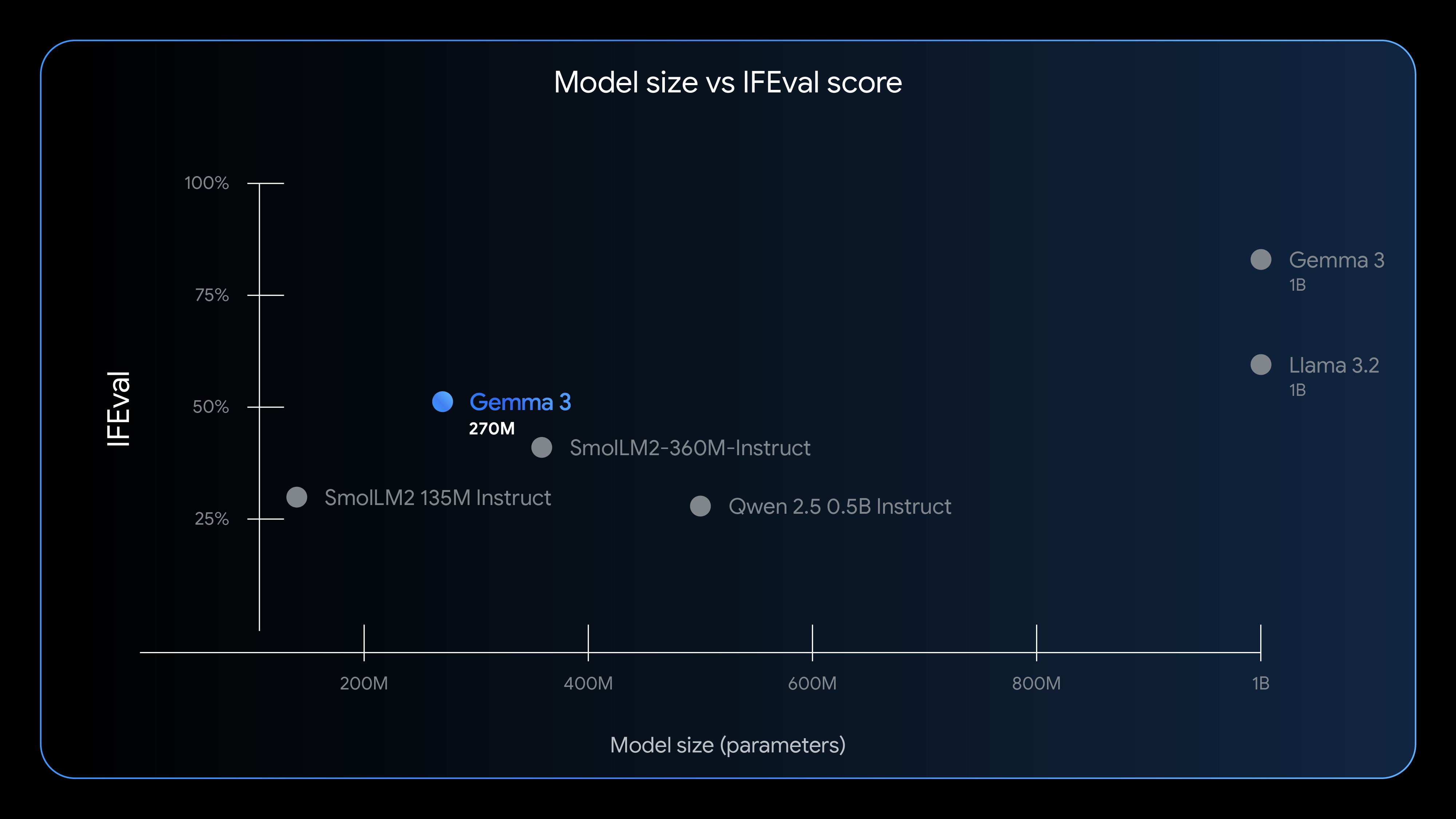
Gemma 3 270M shows strong instruction-following for its small size.

Credit: Google

Gemma 3 270M shows strong instruction-following for its small size. Credit: Google

Developers shouldn’t expect the same performance level of a multi-billion-parameter model, but Gemma 3 270M has its uses. Google used the IFEval benchmark, which tests a model’s ability to follow instructions, to show that its new model punches above its weight. Gemma 3 270M hits a score of 51.2 percent in this test, which is higher than other lightweight models that have more parameters. The new Gemma falls predictably short of 1 billion-plus models like Llama 3.2, but it gets closer than you might think for having just a fraction of the parameters.

https://arstechnica.com/google/2025/08/google-releases-pint-size-gemma-open-ai-model/


Google Gemini will now learn from your chats—unless you tell it not to

As Gemini is increasingly woven into the fabric of Google, the way the chatbot accesses and interacts with your data is in a constant state of flux. Today, Google is announcing several big changes to how its AI adapts to you, giving it the ability to remember more details about your chats for improved answers. If that’s a concern, Google also has a new temporary chat option that won’t affect the way Gemini thinks about you.

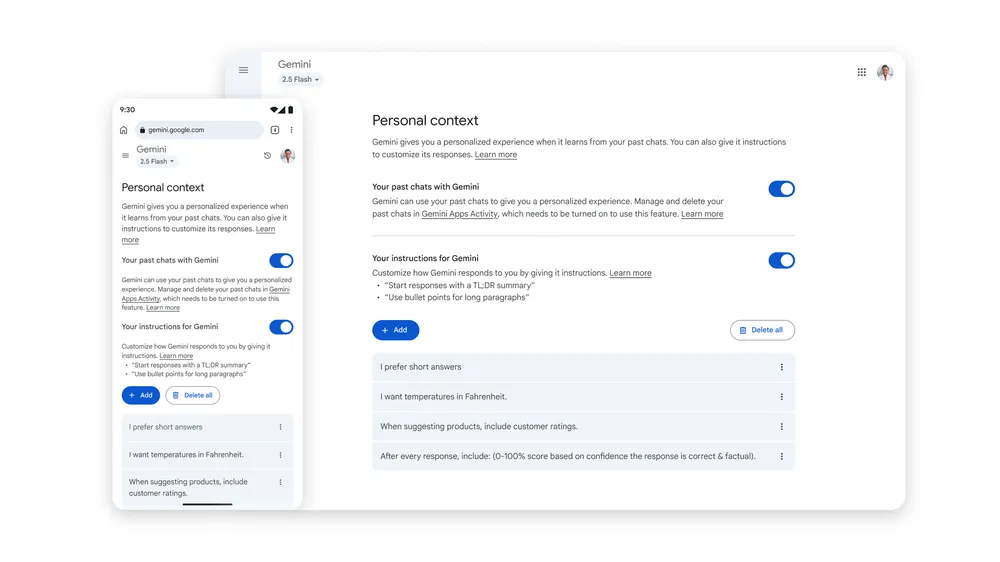
You might recall several months back when Google added a “personalization” option to the Gemini model selector. This mode leaned on your Google search history to customize responses, a feature that did not seem to appeal to many Gemini users. Google later dropped that mode, but a new attempt at customization is now rolling out. Gemini is getting an option called Personal Context. When enabled, the chatbot will remember details about your past conversations, adapting its replies without being specifically prompted.

Google claims Personal Context will produce more relevant responses, particularly when you ask the chatbot to make recommendations. This is separate from the saved instructions feature, which allows you to provide explicit instructions for Gemini to be used in crafting outputs. This does have the potential to make Gemini feel more engaging, but that’s not always a good thing. AI chatbots that get too friendly with the user can reinforce misconceptions and lead to delusional thinking, something we’ve seen distressingly often with AI models.

Credit: Google

To start, this feature will be available with the Gemini 2.5 Pro model, but you won’t get customization in the Eurpean Union,the  UK, or Switzerland. It’s also limited to users over the age of 18. Google says it will eventually release this feature in additional regions and with support for the more efficient Gemini 2.5 Flash model. You can turn Personal Context on and off at will from the main settings page.

https://arstechnica.com/ai/2025/08/google-gemini-will-now-learn-from-your-chats-unless-you-tell-it-not-to/


Perplexity offers more than twice its total valuation to buy Chrome from Google

Google has strenuously objected to the government’s proposed Chrome divestment, which it calls “a radical interventionist agenda.” Chrome isn’t just a browser—it’s an open source project known as Chromium, which powers numerous non-Google browsers, including Microsoft’s Edge. Perplexity’s offer includes $3 billion to run Chromium over two years, and it allegedly vows to keep the project fully open source. Perplexity promises it also won’t enforce changes to the browser’s default search engine.

An unsolicited offer

We’re currently waiting on United States District Court Judge Amit Mehta to rule on remedies in the case. That could happen as soon as this month. Perplexity’s offer, therefore, is somewhat timely, but there could still be a long road ahead.

This is an unsolicited offer, and there’s no indication that Google will jump at the chance to sell Chrome as soon as the ruling drops. Even if the court decides that Google should sell, it can probably get much, much more than Perplexity is offering. During the trial, DuckDuckGo’s CEO suggested a price of around $50 billion, but other estimates have ranged into the hundreds of billions. However, the data that flows to Chrome’s owner could be vital in building new AI technologies—any sale price is likely to be a net loss for Google.

If Mehta decides to force a sale, there will undoubtedly be legal challenges that could take months or years to resolve. Should these maneuvers fail, there’s likely to be opposition to any potential buyer. There will be many users who don’t like the idea of an AI startup or an unholy alliance of venture capital firms owning Chrome. Google has been hoovering up user data with Chrome for years—but that’s the devil we know.

https://arstechnica.com/gadgets/2025/08/perplexity-offers-more-than-twice-its-total-valuation-to-buy-chrome-from-google/


Reddit blocks Internet Archive to end sneaky AI scraping

“Until they’re able to defend their site and comply with platform policies (e.g., respecting user privacy, re: deleting removed content) we’re limiting some of their access to Reddit data to protect redditors,” Rathschmidt said.

A review of social media comments suggests that in the past, some Redditors have used the Wayback Machine to research deleted comments or threads. Those commenters noted that myriad other tools exist for surfacing deleted posts or researching a user’s activity, with some suggesting that the Wayback Machine was maybe not the easiest platform to navigate for that purpose.

Redditors have also turned to resources like IA during times when Reddit’s platform changes trigger content removals. Most recently in 2023, when changes to Reddit’s public API threatened to kill beloved subreddits, archives stepped in to preserve content before it was lost.

IA has not signaled whether it’s looking into fixes to get Reddit’s restrictions lifted and did not respond to Ars’ request to comment on how this change might impact the archive’s utility as an open web resource, given Reddit’s popularity.

The director of the Wayback Machine, Mark Graham, told Ars that IA has “a longstanding relationship with Reddit” and continues to have “ongoing discussions about this matter.”

It seems likely that Reddit is financially motivated to restrict AI firms from taking advantage of Wayback Machine archives, perhaps hoping to spur more lucrative licensing deals like Reddit struck with OpenAI and Google. The terms of the OpenAI deal were kept quiet, but the Google deal was reportedly worth $60 million. Over the next three years, Reddit expects to make more than $200 million off such licensing deals.

Disclosure: Advance Publications, which owns Ars Technica parent Condé Nast, is the largest shareholder in Reddit.

https://arstechnica.com/tech-policy/2025/08/reddit-blocks-internet-archive-to-end-sneaky-ai-scraping/