New portal calls out AI content with Google’s watermark

More from Ars
https://arstechnica.com/ai/2025/05/google-launches-online-portal-to-detect-watermarked-ai-content/
https://arstechnica.com/ai/2025/05/google-launches-online-portal-to-detect-watermarked-ai-content/
The rapid expansion of generative AI has changed the way Google and other tech giants design products, but most of the AI features you’ve used are running on remote servers with a ton of processing power. Your phone has a lot less power, but Google appears poised to give developers some important new mobile AI tools. At I/O next week, Google will likely announce a new set of APIs to let developers leverage the capabilities of Gemini Nano for on-device AI.
Google has quietly published documentation on big new AI features for developers. According to Android Authority, an update to the ML Kit SDK will add API support for on-device generative AI features via Gemini Nano. It’s built on AI Core, similar to the experimental Edge AI SDK, but it plugs into an existing model with a set of predefined features that should be easy for developers to implement.
Google says ML Kit’s GenAI APIs will enable apps to do summarization, proofreading, rewriting, and image description without sending data to the cloud. However, Gemini Nano doesn’t have as much power as the cloud-based version, so expect some limitations. For example, Google notes that summaries can only have a maximum of three bullet points, and image descriptions will only be available in English. The quality of outputs could also vary based on the version of Gemini Nano on a phone. The standard version (Gemini Nano XS) is about 100MB in size, but Gemini Nano XXS as seen on the Pixel 9a is a quarter of the size. It’s text-only and has a much smaller context window.

Credit: Ryan Whitwam
Not all versions of Gemini Nano are created equal. Credit: Ryan Whitwam
This move is good for Android in general because ML Kit works on devices outside Google’s Pixel line. While Pixel devices use Gemini Nano extensively, several other phones are already designed to run this model, including the OnePlus 13, Samsung Galaxy S25, and Xiaomi 15. As more phones add support for Google’s AI model, developers will be able to target those devices with generative AI features.
https://arstechnica.com/google/2025/05/google-to-give-app-devs-access-to-gemini-nano-for-on-device-ai/
I camper movie sono il genere di film che fin dai primordi del cinema, raccontavano forse l’azione che è stata più rappresentata sul grande schermo: la rapina in banca.
I titoli da ricordare sarebbero infiniti, dal 1903, anno mitico, in cui si inizia a lavorare al cantiere di Hollywood, fino ai giorni nostri, le versioni dell’attacco al luogo che rappresenta la ricchezza per antonomasia sono davvero incalcolabili, con il coinvolgimento dei maggiori registi e interpreti della storia del grande sogno nella sala buia.
Il cinema contribuì a consolidare il mito delle banche come luoghi della sicurezza, in cui i soldi erano al riparo da ogni rischio. La banca era innanzitutto la sicurezza che poteva offrire. Non a caso clienti di riguardo nei primi anni del 900, venivano accompagnati a visitare il caveau, la grande cassaforte sotterranea, in cui si custodivano i depositi.
Oggi rimane la centralità della sicurezza ad accreditare una banca, e più in generale una qualsiasi istituzione finanziaria, ma cambia l’oggetto: non sono più i soldi che devono essere protetti ma i dati.
Una banca, potremmo dire è innanzitutto la sua cybersecurity.
Ognuno di noi può infatti chiedersi quale sia la prima esigenza che espone al dirigente dell’agenzia dell’istituto di credito con cui opera: sono sicuri i miei dati?
Vale per le banche ma vale ormai per la stragrande maggioranza di aziende e professioni. I dati con cui si opera sono oggi il vero tesoro da tutelare. E per i malintenzionati, sono il vero bottino che si persegue.
Il 75% delle violazioni digitali che accadono ormai ogni ora nel nostro paese, riguardano il capillare sistema di imprese e professioni. Vengono attaccati computer, telefonini, data server, in generale depositi di documenti che rappresentano la tracciabilità della nostra vita.
Come spiega Maurizio Ferraris nel suo saggio Documanità (Laterza editore) “definisco documediale la rivoluzione in corso perchè si basa sull’intersezione fra la crescita della documentalità, ossia la produzione di documenti in quanto elemento costitutivo della realtà sociale, e quella della medialità, che nel digitale non è più segnata dalla relazione da uno a molti, bensì da molti a molti”.
Una descrizione che fotografa il modo con cui producono e si organizzano la stragrande maggioranza delle imprese, ossia tracciando ogni atto negoziale e produttivo attraverso la composizione di documenti digitali che vengono poi fatti circolare in ambiti più o meno ampio, a secondo del modello di business.
Questa dinamica è oggi inesorabilmente esposta ad un pericolo strutturale costituito dalle intrusioni di esterni che mirano a sequestrare questi documenti per ricavarne un profitto.
La sicurezza nella gestione di questa circolarità documediale, diciamo per usare il termine di Ferraris, certifica l’affidabilità dell’impresa. Ora nella progressiva accelerazione di questi scambi diventa indispensabile contare sulla riservatezza del reciproco scambio di documenti.
In questo contesto un’azienda – prendiamo ancora l’esempio della banca- deve garantire che qualsiasi trasmissione di dati possa avvenire nella più assoluta esclusività, come si dice con la certificazione del contro end to end di ogni passaggio di informazioni.
Ma per garantire questo, e qui veniamo alle dolenti note, è indispensabile che l’impresa sia titolare sia dei software gestionali con cui tratta i dati e sia dei luoghi di deposito di questi dati. Una circostanza che al momento riguarda un’infima minoranza.
Nei giorni scorsi un grande banca di interesse nazionale ha annunciato che nel proprio percorso di digitalizzazione ha stipulato un accordo con Google per l’ottimizzazione dell’intera catena del valore delle infrastrutture digitali che presidiano la propria cybersecurity. Intendiamo di conseguenza che anche le infrastrutture quali i data server dove saranno custoditi i dati sensibili dei clienti saranno condivisi con Google, ossia con un gruppo che ricava il proprio fatturato dalla capacità di trasformare ogni nostra scia digitale in una profilazione dettagliatissima delle nostre caratteristiche come utenti e consumatori.
Ci chiediamo se la banca d’Italia, come organismo di controllo del mercato bancario non debba farci sapere quali cautele saranno previste per tutelare rigidamente i correntisti. Cautele che non possono essere limitate ad un capitolato tecnico in cui si precisa che il data server sarà di esclusivo acceso da parte della banca. Progressivamente questa necessità, ossia di essere titolari dei servizi digitali strategici che assicurino la piena autonomia del sistema economico nazionale, investiranno anche aziende di dimensione meno rilevante della banca in questione. Tanto più che le interconnessioni tecnologiche fra sistemi di produzione, prodotti sofisticati e gli apparati di difesa e sicurezza nazionale stanno ingigantendosi, rendendo ogni impresa di fatto, un tassello centrale nell’intero circuito di protezione dell’indipendenza nazionale.
La legge che proprio in questi giorni è in discussione sull’intelligenza artificiale tratta sono di rimbalzo della questione dei dati, mentre è ora il momento per dare al paese indicazioni precise per riorganizzare i sistemi imprenditoriali alla luce di un fattore, la sicurezza, che lega imprese, professioni e sistema paese in un nuovo patto di solidarietà sovrana.
In un contesto geopolitico sempre più instabile, dove le minacce informatiche colpiscono con precisione chirurgica infrastrutture strategiche e account personali, e in un mondo in cui abbiamo capito quanto sia insicuro la dipendenza tecnologica delle nostre democrazie dalle autocrazie, è ora – nell’era del trumpismo – che l’Italia e l’Europa si attivino per rafforzare la propria autonomia tecnologica.
A questa chiamata fa appello la Conferenza “Indipendenza Digitale – Un patto per il futuro economico e tecnologico dell’Europa e degli europei”, promossa da Key4biz, che si terrà a Roma il 27 maggio dalle 14:30 alle 18:00 a Palazzo Wedekind.
Per partecipare all’evento “Indipendenza Digitale” a Roma il 27 maggio pomeriggio clicca qui.

Leggi le altre notizie sull’home page di Key4biz
https://www.key4biz.it/unicredit-si-affida-a-google-serve-un-patto-per-lindipendenza-digitale/531624/
Nextcloud is a host-your-own cloud platform that wants to help you “Regain control over your data.” It contains products that allow for video chat, file storage, collaborative editing, and other stuff that reads a lot like a DIY Google Workspace replacement.
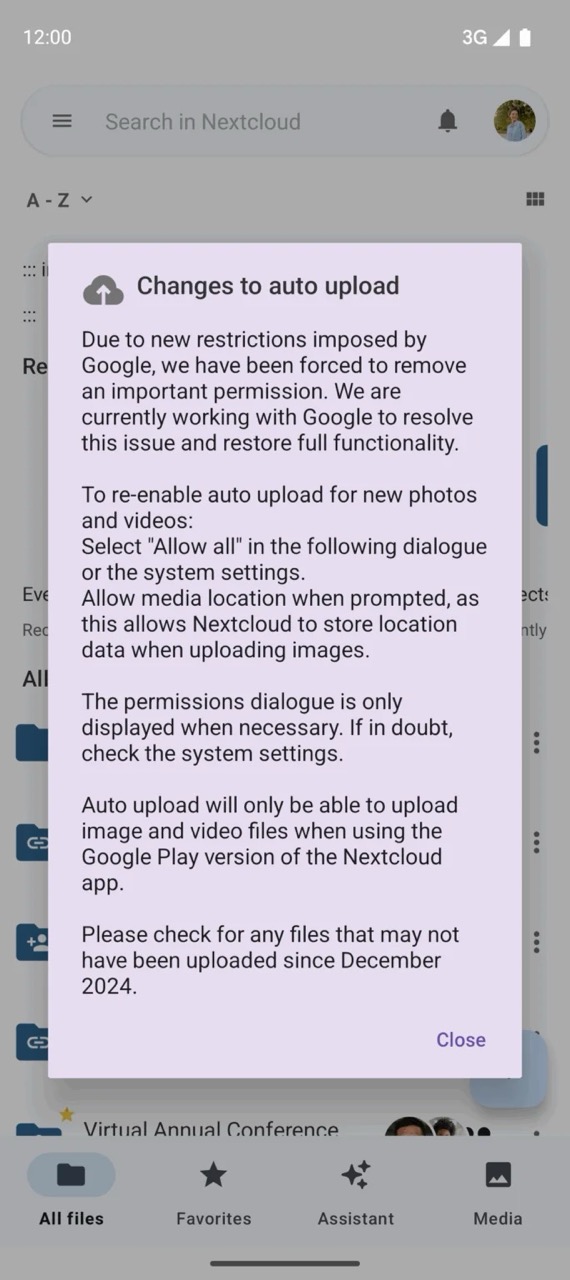
It’s hard to offer that kind of full replacement, though, if your Android app can’t upload anything other than media files. Since mid-2024, Nextcloud claims, Google has refused to reinstate the access it needs for uploading and syncing other file types.
“To make it crystal clear: All of you as users have a worse Nextcloud Files client because Google wanted that,” reads a Nextcloud blog post from May 13, attributed to its team. “We understand and share your frustration,” but there is nothing we can do.”
Credit: Nextcloud
A notice in Nextcloud’s Android app regarding file uploads. Credit: Nextcloud
Ars has reached out to Google for comment and will update this post with any response. A representative for NextCloud told Ars late Tuesday that the company had no update on its Android app.
Nextcloud states that it has had read and write access to all file types since its first Android app. In September 2024, a Nextcloud Android update with “All files access” was “refused out of the blue,” with a request that the app user “a more privacy aware replacement,” Nextcloud claims. The firm states it has provided background and explanations, but received “the same copy-and-paste answers or links to documentation” from Google.
https://arstechnica.com/gadgets/2025/05/nextcloud-accuses-google-of-big-tech-gatekeeping-over-android-app-permissions/

Google is adding a new security setting to Android to provide an extra layer of resistance against attacks that infect devices, tap calls traveling through insecure carrier networks, and deliver scams through messaging services.
On Tuesday, the company unveiled the Advanced Protection mode, most of which will be rolled out in the upcoming release of Android 16. The setting comes as mercenary malware sold by NSO Group and a cottage industry of other exploit sellers continues to thrive. These players provide attacks-as-a-service through end-to-end platforms that exploit zero-day vulnerabilities on targeted devices, infect them with advanced spyware, and then capture contacts, message histories, locations, and other sensitive information. Over the past decade, phones running fully updated versions of Android and iOS have routinely been hacked through these services.
Advanced Protection is Google’s latest answer to this type of attack. By flipping a single button in device settings, users can enable a host of protections that can thwart some of the most common techniques used in sophisticated hacks. In some cases, the protections hamper performance and capabilities of the device, so Google is recommending the new mode mainly for journalists, elected officials, and other groups who are most often targeted or have the most to lose when infected.
“With the release of Android 16, users who choose to activate Advanced Protection will gain immediate access to a core suite of enhanced security features,” Google’s product manager for Android Security, Il-Sung Lee, wrote. “Additional Advanced Protection features like Intrusion Logging, USB protection, the option to disable auto-reconnect to insecure networks, and integration with Scam Detection for Phone by Google will become available later this year.”
https://arstechnica.com/security/2025/05/google-introduces-advanced-protection-mode-for-its-most-at-risk-android-users/
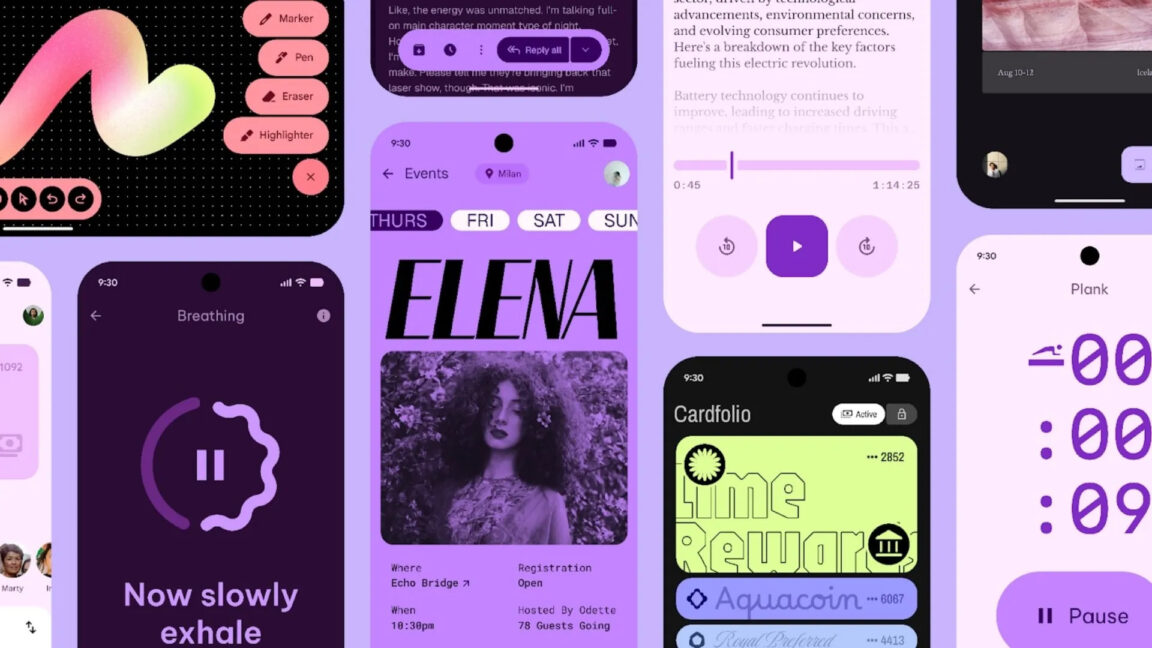
Google accidentally showed off its big Android design refresh last week, but now Material 3 Expressive is official. Google says the new interface will begin with Android OS, but it will eventually expand across the full Google app ecosystem, bringing a more lively vibe to Gmail, Google Photos, and more.
Material 3 Expressive won’t be entirely unfamiliar—it shares some basic design elements with the Material You system Google launched four years ago. Material 3 Expressive is a bolder take on the same aesthetic, featuring “springy” animations, brighter colors, and new shapes.
[embedded content]
Material 3 Expressive
As we learned from Google’s slipup, Material 3 Expressive is the result of numerous user studies, which included more than 18,000 participants. Google explored how people parse information on their phone, finding design themes that supposedly support quicker and easier interactions. Often, that seems to result in making certain UI elements larger and easier to spot. Google claims people can find these important buttons four times faster than they can with older Material You interfaces.
Animations will abound in future versions of Android, and Google emphasizes the springy aspect. The style is supposed to feel natural and fun, with more UI elements connected to dynamic haptics. Colors are also getting an overhaul, but this isn’t a complete rethink of Material You. The theming engine will pick bolder colors to improve the visual separation of UI elements, and you will see those colors in more places.
Google says it’s also updating Android’s typography, featuring more contrast between headers and body text. This will change across Google’s apps to help users parse information faster. Certain buttons will also come in a wider variety of shapes, and the labels will have varying text weights. Likewise, the style and shape of status bar icons will change to be more readable.
https://arstechnica.com/gadgets/2025/05/google-reveals-vibrant-material-3-expressive-coming-soon-to-a-pixel-near-you/
La denuncia del Gruppo Moltiply è stata depositata presso il Tribunale di Milano e al centro della causa da 2,97 miliardi di euro c’è Google e la sua casa madre Alphabet, per aver danneggiato il suo compratore di prodotti online Trovaprezzi.
Secondo quanto riportato dal Corriere della Sera, la causa intentata dalla controllata 7Pixel al gigante americano trae origine dalla multa Antitrust da 2,4 miliardi di euro inflitta dalla Commissione europea a Google nel 2017, poi confermata dalla Corte di Giustizia dell’Unione europea.
L’indagine europea ha concluso che Google ha violato, tra il 2008 ed il 2017, le norme antitrust dell’UE, in particolare l’articolo 102 del Trattato sul Funzionamento dell’Unione Europea.
Il problema è sempre lo stesso: abuso di posizione dominante. Secondo Bruxelles, il gigante tecnologico americano ha abusato della sua posizione dominante come motore di ricerca, favorendo il suo servizio di comparazione di prodotti rispetto ai suoi concorrenti.
Il caso italiano segue.
D’altronde, Google controlla il 90% delle ricerche online in gran parte dei Paesi europei, Italia compresa. L’ordinamento dei risultati in pagina è fondamentale per “orientare” in qualche modo le scelte degli utenti di rete e consumatori.
I primi risultati e quindi i primi link che vengono proposti in pagina sono quelli che avranno le maggiori probabilità di essere selezionati, più si scende verso il basso, meno saranno le visite ricevute. Al primo vanno il 33% circa dei click, al secondo poco più del 16%, al terzo circa il 10%. Basti pensare che al quinto vanno meno del 6% dei click. Oltre la decima posizione parliamo di meno dell’1%.
Ne consegue che rivali di Google Shopping, come Trovaprezzi di proprietà di 7Pixel (controllata del Gruppo Moltiply) , non hanno le stesse possibilità del servizio offerto dal padron di casa, che nel tempo “ha alterato in maniera irreversibile la struttura del mercato”, si legge nell’articolo pubblicato dal Corriere della Sera.
La cifra a risarcimento danni chiesta dagli avvocati di 7Pixel dello Studio PedersoliGattai è calcolata in basi ai ricavi e i profitti persi da Trovaprezzi e Shoppydoo (altro compratore online di proprietà di 7Pixel chiuso nel 2021), tra il 2011 ed il 2017, e la stima degli incassi mancati negli anni successivi.
Come si legge nella sentenza della Corte di Giustizia dell’Unione, nel rigettare il ricorso di Google e Alphabet Group: “La Corte precisa che non si può certo ritenere, in generale, che un’impresa dominante che applichi ai propri prodotti o ai propri servizi un trattamento più favorevole di quello che essa accorda a quelli dei suoi concorrenti tenga, indipendentemente dalle circostanze del caso di specie, un comportamento che si discosta dalla concorrenza basata sui meriti. Essa constata tuttavia che, nel caso di specie, il Tribunale ha effettivamente stabilito che, alla luce delle caratteristiche del mercato e delle circostanze specifiche del caso in esame, il comportamento di Google era discriminatorio e non rientrava nell’ambito della concorrenza basata sui meriti”.
Leggi le altre notizie sull’home page di Key4biz
https://www.key4biz.it/litaliana-moltiply-chiede-3-miliardi-di-euro-a-google-per-danni-al-suo-trovaprezzi/531191/

In the trial, Google will paint this demand as a severe overreach, claiming that few, if any, companies would have the resources to purchase and run the products. Last year, an ad consultant estimated Google’s ad empire could be worth up to $95 billion, quite possibly too big to sell. However, Google was similarly skeptical about Chrome, and representatives from other companies have said throughout the search remedy trial that they would love to buy Google’s browser.
After losing three antitrust cases in just a couple of years, Google will have a hard time convincing the judge it is capable of turning over a new leaf with light remedies. A DOJ lawyer told the court Google is a “recidivist monopolist” that has a pattern of skirting its legal obligations. Still, Google is looking for mercy in the case. We expect to get more details on Google’s proposed remedies as the next trial nears, but it already offered a preview in today’s hearing.
Google suggests making a smaller subset of ad data available and ending the use of some pricing schemes, including unified pricing, that the court has found to be anticompetitive. Google also promised not to re-implement discontinued practices like “last look,” which gave the company a chance to outbid rivals at the last moment. This was featured prominently in the DOJ’s case, although Google ended the practice several years ago.
To ensure it adheres to the remedies, Google suggested a court-appointed monitor would audit the process. However, Brinkema seemed unimpressed with this proposal.
As in its other cases, Google says it plans to appeal the verdict, but before it can do that, the remedies phase has to be completed. Even if it can get the remedies paused for appeal, the decision could be a blow to investor confidence. So, Google will do whatever it can to avoid the worst-case scenario, leaning on the existence of competing advertisers like Meta and TikTok to show that the market is still competitive.
Like the search case, Google won’t be facing any big developments over the summer, but this fall could be rough. Judge Amit Mehta will most likely rule on the search remedies in August, and the ad tech remedies case will begin the following month. Google also has the Play Store case hanging over its head. It lost the first round, but the company hopes to prevail on appeal when the case gets underway again, probably in late 2025.
https://arstechnica.com/tech-policy/2025/05/doj-confirms-it-wants-to-break-up-googles-ad-business/
This study also calls out LM Arena for what appears to be much greater promotion of private models like Gemini, ChatGPT, and Claude. Developers collect data on model interactions from the Chatbot Arena API, but teams focusing on open models consistently get the short end of the stick.
The researchers point out that certain models appear in arena faceoffs much more often, with Google and OpenAI together accounting for over 34 percent of collected model data. Firms like xAI, Meta, and Amazon are also disproportionately represented in the arena. Therefore, those firms get more vibemarking data compared to the makers of open models.
The study authors have a list of suggestions to make LM Arena more fair. Several of the paper’s recommendations are aimed at correcting the imbalance of privately tested commercial models, for example, by limiting the number of models a group can add and retract before releasing one. The study also suggests showing all model results, even if they aren’t final.
However, the site’s operators take issue with some of the paper’s methodology and conclusions. LM Arena points out that the pre-release testing features have not been kept secret, with a March 2024 blog post featuring a brief explanation of the system. They also contend that model creators don’t technically choose the version that is shown. Instead, the site simply doesn’t show non-public versions for simplicity’s sake. When a developer releases the final version, that’s what LM Arena adds to the leaderboard.

Credit: Shivalika Singh et al.
Proprietary models get disproportionate attention in the Chatbot Arena, the study says. Credit: Shivalika Singh et al.
One place the two sides may find alignment is on the question of unequal matchups. The study authors call for fair sampling, which will ensure open models appear in Chatbot Arena at a rate similar to the likes of Gemini and ChatGPT. LM Arena has suggested it will work to make the sampling algorithm more varied so you don’t always get the big commercial models. That would send more eval data to small players, giving them the chance to improve and challenge the big commercial models.
LM Arena recently announced it was forming a corporate entity to continue its work. With money on the table, the operators need to ensure Chatbot Arena continues figuring into the development of popular models. However, it’s unclear whether this is an objectively better way to evaluate chatbots versus academic tests. As people vote on vibes, there’s a real possibility we are pushing models to adopt sycophantic tendencies. This may have helped nudge ChatGPT into suck-up territory in recent weeks, a move that OpenAI has hastily reverted after widespread anger.
https://arstechnica.com/ai/2025/05/researchers-claim-lm-arenas-ai-leaderboard-is-biased-against-open-models/
Google has built an enormously successful business around the idea of putting ads in search results. Its most recent quarterly results showed the company made more than $50 billion from search ads, but what happens if AI becomes the dominant form of finding information? Google is preparing for that possibility by testing chatbot ads, but you won’t see them in Google’s Gemini AI—at least not yet.
A report from Bloomberg describes how Google began working on a plan in 2024 to adapt AdSense ads to a chatbot experience. Usually, AdSense ads appear in search results and are scattered around websites. Google ran a small test of chatbot ads late last year, partnering with select AI startups, including AI search apps iAsk and Liner.
The testing must have gone well because Google is now allowing more chatbot makers to sign up for AdSense. “AdSense for Search is available for websites that want to show relevant ads in their conversational AI experiences,” said a Google spokesperson.
If people continue shifting to using AI chatbots to find information, this expansion of AdSense could help prop up profits. There’s no hint of advertising in Google’s own Gemini chatbot or AI Mode search, but the day may be coming when you won’t get the clean, ad-free experience at no cost.
Google is racing to catch up to OpenAI, which has a substantial lead in chatbot market share despite Gemini’s recent growth. This has led Google to freely provide some of its most capable AI tools, including Deep Research, Gemini Pro, and Veo 2 video generation. There are limits to how much you can use most of these features with a free account, but it must be costing Google a boatload of cash.
https://arstechnica.com/ai/2025/05/google-is-quietly-testing-ads-in-ai-chatbots/