Google Messages can now blur unwanted nudes, remind people not to send them

Google announced last year that it would deploy safety tools in Google Messages to help users avoid unwanted nudes by automatically blurring the content. Now, that feature is finally beginning to roll out. Spicy image-blurring may be enabled by default on some devices, but others will need to turn it on manually. If you don’t see the option yet, don’t fret. Sensitive Content Warnings will arrive on most of the world’s Android phones soon enough.

If you’re an adult using an unrestricted phone, Sensitive Content Warnings will be disabled by default. For teenagers using unsupervised phones, the feature is enabled but can be disabled in the Messages settings. On supervised kids’ phones, the feature is enabled and cannot be disabled on-device. Only the Family Link administrator can do that. For everyone else, the settings are available in the Messages app settings under Protection and Safety.

To make the feature sufficiently private, all the detection happens on the device. As a result, there was some consternation among Android users when the necessary components began rolling out over the last few months. For people who carefully control the software installed on their mobile devices, the sudden appearance of a package called SafetyCore was an affront to the sanctity of their phones. While you can remove the app (it’s listed under “Android System SafetyCore”), it doesn’t take up much space and won’t be active unless you enable Sensitive Content Warnings.

https://arstechnica.com/gadgets/2025/04/google-messages-can-now-blur-unwanted-nudes-remind-people-not-to-send-them/


Google, il Dipartimento di Giustizia USA vuole lo spezzatino e chiede restrizioni dell’AI

Processo al monopolio della ricerca di Google, tra le ipotersi anche la vendita di Chrome

Il Dipartimento di Giustizia degli Stati Uniti (DoJ) ha iniziato lunedì un processo antitrust storico contro Alphabet, società madre di Google, accusata di sfruttare il suo monopolio nella ricerca online per consolidare ulteriormente la propria posizione dominante attraverso l’intelligenza artificiale (AI).

Durante l’apertura del processo, come raccontato da Jody Godoy sulla Reuters, il procuratore del DoJ David Dahlquist ha sostenuto la necessità di imporre “forti restrizioni su Google per impedirle di estendere il suo dominio tramite prodotti basati sull’AI, come Gemini”, che la società farà installare a pagamento sui dispositivi Samsung fino al 2028, un accordo descritto come “una somma enorme”, anche se per il momento non ne sono stati resi pubblici i dettagli economici.

La causa potrebbe portare alla vendita obbligata del browser Chrome, oltre alla fine degli accordi esclusivi che Google ha stretto con produttori di smartphone e tablet come Apple e Samsung per impostare Google come motore di ricerca predefinito.

Lo scorso mese è stata l’Antitrust Ue ad accusare Google di violazione delle regole europee sul digitale, ordinando nel contempo ad Apple di aumentare l’interoperabilità dei dispositivi iPhone e iPad per i concorrenti. La Commissione europea ha agito nonostante le minacce del presidente degli Stati Uniti Donald Trump di imporre dazi contro i Paesi che sanzionano le aziende statunitensi.

Nei giorni scorsi nel Regno Unito è stata avviata una class action contro Google da 6 miliardi di euro con l’accusa di abuso di posizione dominante nel mercato della pubblicità online.

Il Dipartimento di Giustizia (DoJ) chiede misure radicali

Il DoJ chiede misure radicali: tra queste, l’obbligo per Google di concedere licenze sui risultati di ricerca ai concorrenti e, nel caso in cui le altre misure risultassero inefficaci, la possibile vendita del sistema operativo Android.

Google, rappresentata dall’avvocato John Schmidtlein, ha respinto le accuse definendo le richieste del DoJ una “lista dei desideri dei concorrenti” e ha dichiarato che tali restrizioni danneggerebbero l’innovazione americana in un momento cruciale.

L’azienda sostiene inoltre che eliminare i pagamenti ai produttori di dispositivi aumenterebbe il costo degli smartphone e metterebbe a rischio la sopravvivenza di società come Mozilla.

Il giudice distrettuale Amit Mehta aveva già in precedenza stabilito che gli accordi esclusivi di Google con i produttori di dispositivi hanno contribuito a mantenere intatto ed accrescere il suo monopolio.

Tra i testimoni previsti figura Nick Turley, capo prodotto dell’app concorrente di AI, ChatGPT di OpenAI, chiamato a testimoniare martedì. Google, da parte sua, ha annunciato che chiamerà a testimoniare rappresentanti di Mozilla, Verizon e Apple.

Il processo è parte di una più ampia stretta antitrust contro i giganti tecnologici iniziata sotto la presidenza Trump e proseguita con Biden, in quello che il DoJ definisce un approccio “nonpartisan”.

Un recente caso antitrust contro Google relativo alla pubblicità online ha già visto una vittoria del Dipartimento di Giustizia giovedì scorso, rafforzando l’immagine di un fronte governativo compatto contro gli abusi di mercato.

Il processo potrebbe dunque segnare una svolta epocale nel settore digitale, con conseguenze potenzialmente rivoluzionarie per il panorama tecnologico globale.

Come risolvere l’annosa questione?

La questione in aula questa volta, che sarà discussa nelle prossime due settimane, è cosa fare per risolvere la situazione . E secondo Dahlquist, il processo deve iniziare interrompendo ogni fase del “circolo vizioso”: Google paga miliardi di dollari per essere il motore di ricerca predefinito praticamente ovunque, quindi riceve più query di ricerca, quindi ottiene dati migliori, quindi è in grado di migliorare i suoi risultati, quindi guadagna di più, quindi può permettersi più motori predefiniti su una miriade di famiglie di smartphone e tablet.

Il Dipartimento di Giustizia chiede tre cose, come ben illustrato su The Verge, David Pierce, redattore capo e co-conduttore di Vergecast. In primo luogo, vuole impedire a Google di concludere praticamente qualsiasi tipo di accordo per il posizionamento sui motori di ricerca di prima fascia, poi vuole che Google ceda Chrome, quindi come terzo punto obbligare Google a concedere in licenza praticamente tutti i suoi dati di ricerca, dall’indice di ricerca ai risultati, a qualsiasi concorrente che li richieda. Finora, questa sembra essere la disposizione che preoccupa maggiormente Google.

Gemini sul banco degli imputati

Durante il processo del 2023, il mercato dell’intelligenza artificiale è stato menzionato solo occasionalmente, ma ora sembra essere al centro dell’attenzione per entrambe le parti . I rimedi proposti dal Dipartimento di Giustizia sono così severi, ha sostenuto Dahlquist, perché “Google sta usando la stessa strategia che ha usato per la ricerca e la sta applicando a Gemini”. Ma è stato anche attento a precisare che non ritiene che l’intelligenza artificiale e la ricerca siano la stessa cosa.

Il dibattito sull’intelligenza artificiale sarà un appuntamento fisso in aula nelle prossime due settimane. Sissie Hsiao, che in precedenza ha guidato il team Gemini, sarà sul banco dei testimoni.

Lo stesso faranno i dirigenti di OpenAI e Perplexity, e una serie di esperti che cercheranno di spiegare come l’intelligenza artificiale possa integrarsi e rivoluzionare il settore della ricerca. È significativo che il primo testimone del processo sia stato un esperto di intelligenza artificiale, Greg Durrett, che ha dedicato gran parte della sua testimonianza semplicemente a spiegare il funzionamento della tecnologia.

Leggi le altre notizie sull’home page di Key4biz

https://www.key4biz.it/google-il-dipartimento-di-giustizia-usa-vuole-lo-spezzatino-e-chiede-restrizioni-dellai/529105/



Chrome on the chopping block as Google’s search antitrust trial moves forward

The remedy phase of Google’s search antitrust trial is getting underway, and the government is seeking to force major changes. The next few weeks could reshape Google as a company and significantly alter the balance of power on the Internet, and both sides have a plan to get their way.

With opening arguments beginning today, the US Justice Department will seek to convince the court that Google should be forced to divest Chrome, unbundle Android, and make other foundational changes. But Google will attempt to paint the government’s position as too extreme and rooted in past grievances. No matter what happens at this trial, Google hasn’t given up hope it can turn back time.

Advantage for Justice Dept.

The Department of Justice (DOJ) has a major advantage here: Google is guilty. It lost the liability phase of this trial resoundingly, with the court finding Google violated the Sherman Antitrust Act by “willfully acquiring and maintaining monopoly power.” As far as the court is concerned, Google has an illegal monopoly in search services and general search advertising. The purpose of this trial is to determine what to do about it, and the DOJ has some ideas.

This case, overseen by United States District Judge Amit Mehta, is taking place against a backdrop that is particularly unflattering for Google. It has been rocked by loss after loss in its antitrust cases, including the Epic-backed Google Play case, plus the search case that is at issue here. And just last week, a court ruled that Google abused its monopoly in advertising tech. The remedies in Google’s app store case are currently on hold pending appeal, but that problem is not going away. Meanwhile, Google is facing even more serious threats in the remedy phase of this trial.

https://arstechnica.com/tech-policy/2025/04/chrome-on-the-chopping-block-as-googles-search-antitrust-trial-moves-forward/


Google adds YouTube Music feature to end annoying volume shifts

Google’s history with music services is almost as convoluted and frustrating as its history with messaging. However, things have gotten calmer (and slower) ever since Google ceded music to the YouTube division. The YouTube Music app has its share of annoyances, to be sure, but it’s getting a long-overdue feature that users have been requesting for ages: consistent volume.

Listening to a single album from beginning to end is increasingly unusual in this age of unlimited access to music. As your playlist wheels from one genre or era to the next, the inevitable vibe shifts can be grating. Different tracks can have wildly different volumes, which can be shocking and potentially damaging to your ears if you’ve got your volume up for a ballad only to be hit with a heavy guitar riff after the break.

The gist of consistent volume simple—it normalizes volume across tracks, making the volume roughly the same. Consistent volume builds on a feature from the YouTube app called “stable volume.” When Google released stable volume for YouTube, it noted that the feature would continuously adjust volume throughout the video. Because of that, it was disabled for music content on the platform.

https://arstechnica.com/gadgets/2025/04/youtube-music-gets-consistent-volume-option-to-save-your-ears/


Attacco a Google: Giudice USA giudica che la società sia un Monopolio illegale

Alphabet domina illegalmente due mercati della tecnologia pubblicitaria online, ha stabilito giovedì un giudice, infliggendo un altro colpo al gigante tecnologico e aprendo la strada ai procuratori antitrust statunitensi per chiedere la scissione dei suoi servizi pubblicitari.

Il giudice distrettuale statunitense Leonie Brinkema di Alexandria, in Virginia, ha ritenuto Google responsabile di “aver acquisito e mantenuto deliberatamente il potere di monopolio” nei mercati dei server pubblicitari per editori e nel mercato degli scambi pubblicitari che si interpone tra acquirenti e venditori.

La decisione, apre una nuova scheda, apre la strada a un’altra udienza per determinare cosa deve fare Google per ripristinare la concorrenza in quei mercati, come la vendita di parti della sua attività in un altro processo che deve ancora essere programmato. Infatti non  è esattamente semplice , ne economicamente efficiente, rompere un monopolio come quello di Google. Inoltre non è detto che le società che ne nascerebbero sarebbero effettivamente competitive l’una con l’altra.

È la seconda sentenza che dichiara Google colpevole di monopolio illegale, dopo una sentenza simile in un caso riguardante la ricerca online.

I server pubblicitari degli editori sono piattaforme utilizzate dai siti web per archiviare e gestire il loro inventario di annunci digitali. Insieme agli ad exchange, questa tecnologia consente agli editori di notizie e ad altri fornitori di contenuti online di guadagnare vendendo pubblicità. Questi fondi sono la “linfa vitale” di Internet, ha scritto Brinkema.

“Oltre a privare i concorrenti della possibilità di competere, questo comportamento esclusivo ha danneggiato in modo sostanziale i clienti editori di Google, il processo competitivo e, in ultima analisi, i consumatori di informazioni sul web aperto”, ha scritto Brinkema.


Tuttavia, le autorità antitrust non sono riuscite a dimostrare una separata accusa secondo cui la società deteneva un monopolio nelle reti pubblicitarie degli inserzionisti, ha scritto.

Il procuratore generale degli Stati Uniti Pamela Bondi ha definito la sentenza “una vittoria storica nella lotta in corso per impedire a Google di monopolizzare la piazza pubblica digitale”.

“Questo Dipartimento di Giustizia continuerà a intraprendere azioni legali coraggiose per proteggere il popolo americano dalle violazioni della libertà di parola e del libero mercato da parte delle aziende tecnologiche”, ha affermato.

Lee-Anne Mulholland, vicepresidente degli affari regolatori, ha dichiarato che Google ricorrerà in appello contro la sentenza.

“Abbiamo vinto metà della causa e ricorreremo in appello per l’altra metà”, ha affermato, aggiungendo che l’azienda non è d’accordo con la decisione sui suoi strumenti per gli editori. “Gli editori hanno molte opzioni e scelgono Google perché i nostri strumenti pubblicitari sono semplici, convenienti ed efficaci”.

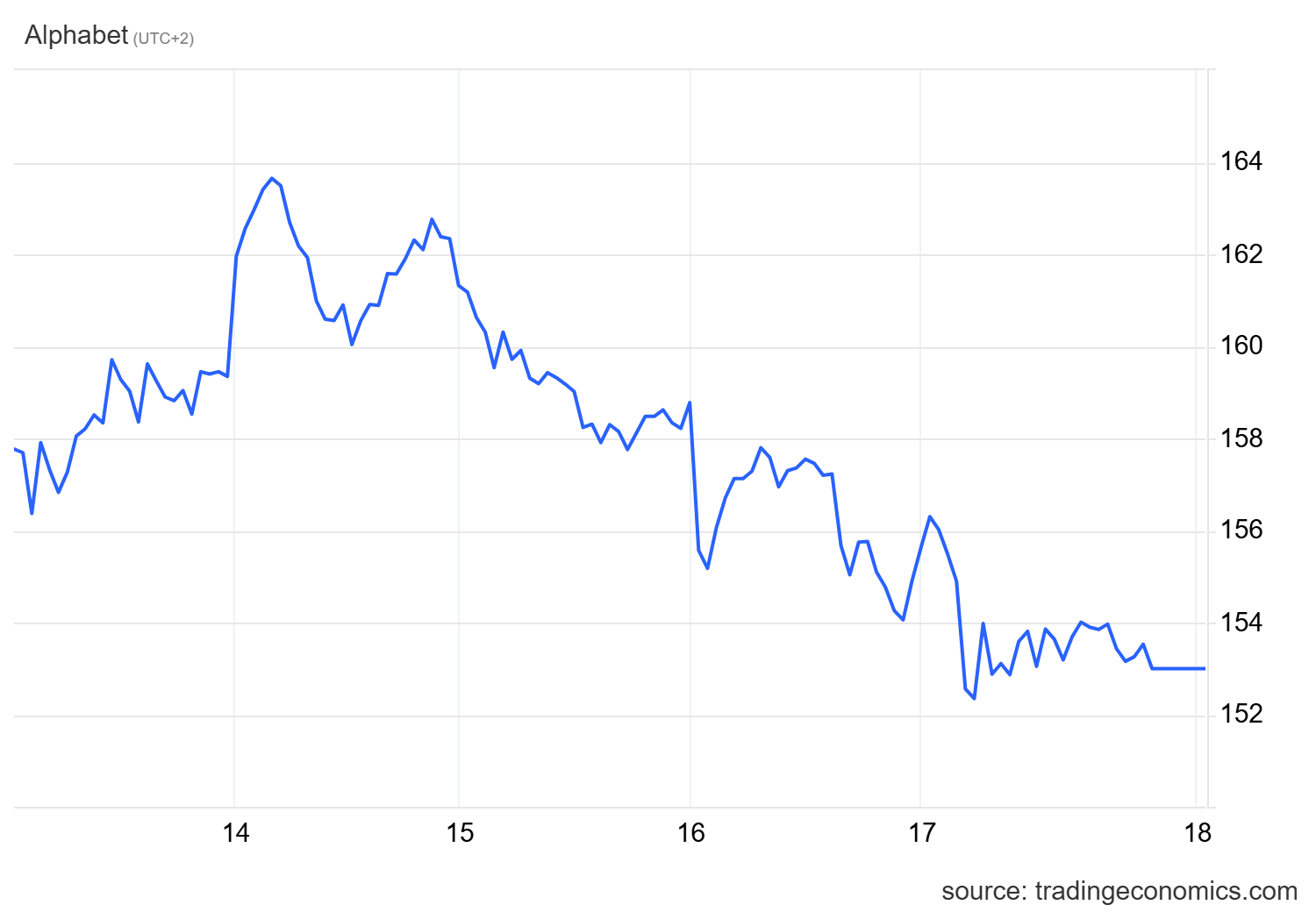
Le azioni di Google sono scese dell’1,4% dopo la sentenza di giovedì. Gli esperti avevano precedentemente dichiarato a Reuters che l’impatto finanziario di una sconfitta in questo caso sarebbe stato minimo per il gigante tecnologico noto soprattutto per il suo motore di ricerca, anche perché sarà molto complicato trovare una via per non danneggiare gli utenti e spezzare il monopolio, che è stato creato anche fornendo una serie di servizi in modo gratuito.


Il Dipartimento di Giustizia ha affermato che Google dovrebbe vendere almeno Google Ad Manager, che include il server pubblicitario e l’ad exchange dell’azienda.

Google aveva già valutato la possibilità di vendere il proprio ad exchange per placare le autorità antitrust europee, secondo quanto riportato da Reuters a settembre.

I prolemi però sono duplici: chi comprasse la divisione comunque si troverebbe in una situazione monopolistica. Inoltre semplicemente spezzare la società non garantisce che successivamente vi sarebbe una migliore efficienza nel mercato. la situazione è complessa, e ci vorrà tempo prima che venga identificata la coretta soluzione.


Telegram

Telegram
Grazie al nostro canale Telegram potete rimanere aggiornati sulla pubblicazione di nuovi articoli di Scenari Economici.

⇒ Iscrivetevi subito ⇐


MindsMinds

https://scenarieconomici.it/attacco-a-google-giudice-usa-giudica-che-la-societa-sia-un-monopolio-illegale/


Gemini 2.5 Flash comes to the Gemini app as Google seeks to improve “dynamic thinking”

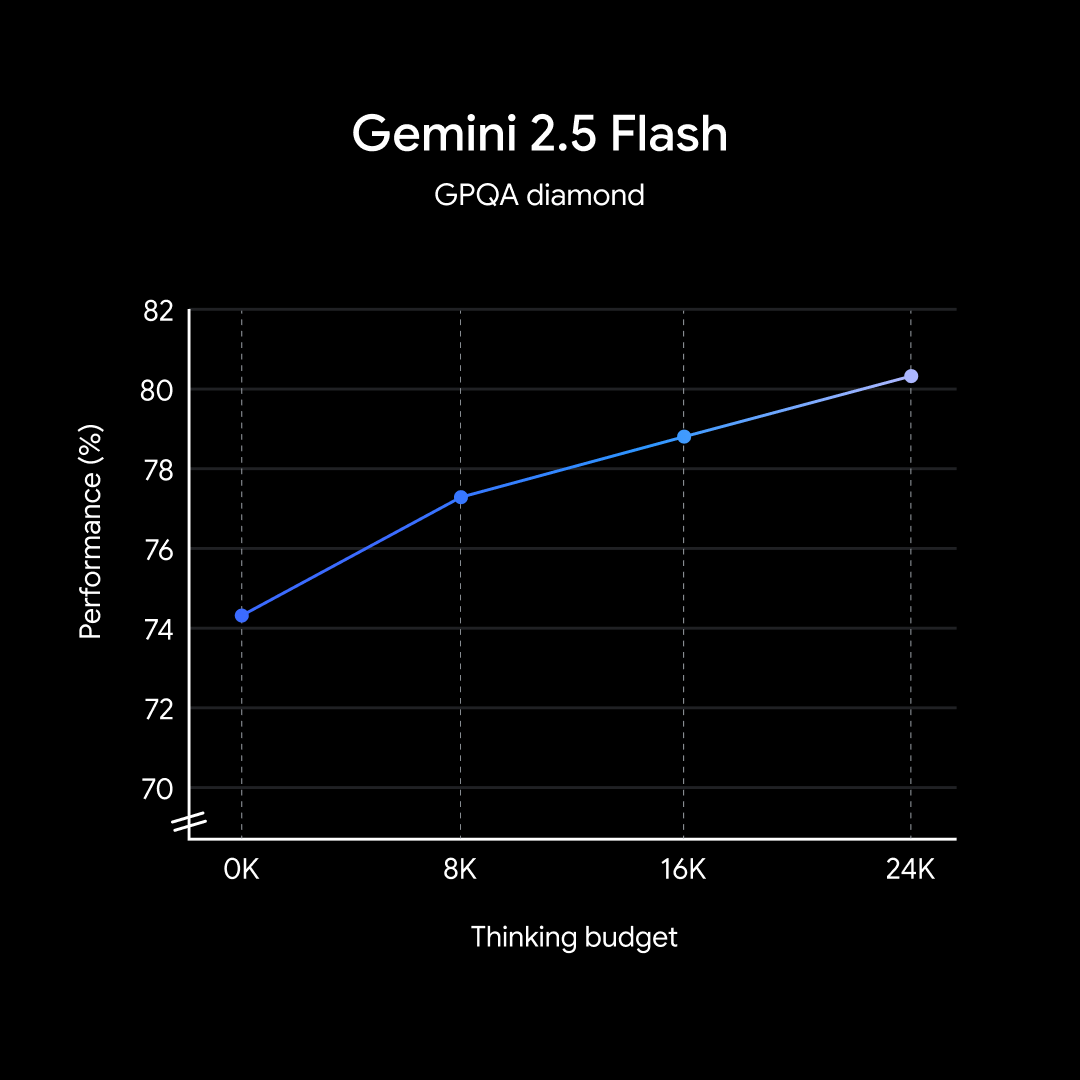
Gemini 2.5 Flash will allow developers to set a token limit for thinking or simply disable thinking altogether. Google has provided pricing per 1 million tokens at $0.15 for input, and output comes in two flavors. Without thinking, outputs are $0.60, but enabling thinking boosts it to $3.50. The thinking budget option will allow developers to fine-tune the model to do what they want for an amount of money they’re willing to pay. According to Doshi, you can actually see the reasoning improvements in benchmarks as you add more token budget.

2.5 Flash benchmark

2.5 Flash outputs get better as you add more reasoning tokens.

Credit: Google

2.5 Flash outputs get better as you add more reasoning tokens. Credit: Google

Like 2.5 Pro, this model supports Dynamic Thinking, which can automatically adjust the amount of work that goes into generating an output based on the complexity of the input. The new Flash model goes further by allowing developers to control thinking. According to Doshi, Google is launching the model now to guide improvements in these dynamic features.

“Part of the reason we’re putting the model out in preview is to get feedback from developers on where the model meets their expectations, where it under-thinks or over-thinks, so that we can continue to iterate on [dynamic thinking],” says Doshi.

Don’t expect that kind of precise control for consumer Gemini products right now, though. Doshi notes that the main reason you’d want to toggle thinking or set a budget is to control costs and latency, which matters to developers. However, Google is hoping that what it learns from the preview phase will help it understand what users and developers expect from the model. “Creating a simpler Gemini app experience for consumers while still offering flexibility is the goal,” Doshi says.

With the rapid cadence of releases, a final release for Gemini 2.5 doesn’t seem that far off. Google still doesn’t have any specifics to share on that front, but with the new developer options and availability in the Gemini app, Doshi tells us the team hopes to move the 2.5 family to general availability soon.

https://arstechnica.com/ai/2025/04/gemini-2-5-flash-comes-to-the-gemini-app-gives-developers-control-over-thinking/


Google is gifting a year of Gemini Advanced to every college student in the US

Google CEO Sundar Pichai has reportedly set a goal for the company to reach 500 million Gemini users before the end of 2025. Rolling out new models may help the company get there, but you know what else helps? Giving away premium features for free. Google has announced today that it’s giving all US college students free access to Gemini Advanced, and not just for a month or two—the offer is good for a full year of service.

With Gemini Advanced, you get access to the more capable Pro models, as well as unlimited use of the Deep Research tool based on it. Subscribers also get a smattering of other AI tools, like the Veo 2 video generator, NotebookLM, and Gemini Live. The offer is for the Google One AI Premium plan, so it includes more than premium AI models, like Gemini features in Google Drive and 2TB of Drive storage.

Google has a new landing page for the deal, allowing eligible students to sign up for their free Google One AI Premium plan. The offer is valid from now until June 30. Anyone who takes Google up on it will enjoy the free plan through spring 2026. The company hasn’t specified an end date, but we would wager it will be June of next year. Google’s intention is to give students an entire school year of Gemini Advanced from now through finals next year. At the end of the term, you can bet Google will try to convert students to paying subscribers.

As for who qualifies as a “student” in this promotion, Google isn’t bothering with a particularly narrow definition. As long as you have a valid .edu email address, you can sign up for the offer. That’s something that plenty of people who are not actively taking classes still have. You probably won’t even be taking undue advantage of Google if you pretend to be a student—the company really, really wants people to use Gemini, and it’s willing to lose money in the short term to make that happen.

https://arstechnica.com/ai/2025/04/google-is-gifting-a-year-of-gemini-advanced-to-every-college-student-in-the-us/


Google loses ad tech monopoly trial, faces additional breakups

Ultimately, Brinkema found that Google’s anticompetitive acts substantially harmed “Google’s publisher customers, the competitive process, and, ultimately, consumers of information on the open web.”

For Google, the ruling likely hits hard, despite a couple of notable wins. For one, Brinkema ruled that the DOJ did not prove Google has a monopoly in a third market “for open-web display advertiser ad networks.” Additionally, Google will not face sanctions for deleting chat histories that could have influenced her decision in the case.

“Chat deletions occurred when employees discussed substantive topics at issue in this litigation and continued after the federal government began an antitrust investigation into Google’s conduct,” Brinkema noted. And Google’s evasive tactics also included executives marking emails as “privileged” that “clearly did not involve privileged communications,” the judge said.

However, because the DOJ had enough evidence and testimony for Brinkema to find Google liable, the judge agreed with the outcome in the Google search trial and declined to sanction Google for the “adverse interference.”

“As in Google Search, the Court’s decision not to sanction ‘should not be understood as condoning Google’s failure to preserve chat evidence,'” Brinkema said.

While the DOJ largely claims the win, Google is apparently not considering this a loss yet. In a statement provided to Ars, Lee-Anne Mulholland, Google’s vice president of regulatory affairs, confirmed that Google plans to appeal.

“We won half of this case and we will appeal the other half,” Mulholland said. “The Court found that our advertiser tools and our acquisitions, such as DoubleClick, don’t harm competition. We disagree with the Court’s decision regarding our publisher tools. Publishers have many options, and they choose Google because our ad tech tools are simple, affordable, and effective.”

https://arstechnica.com/tech-policy/2025/04/google-loses-ad-tech-monopoly-trial-faces-additional-breakups/


Google rischia una multa da 6 miliardi di euro nel Regno Unito

La class action contro Google

Il più grande motore di ricerca al mondo, di proprietà del Gruppo Alphabet (casa madre di Google), è accusato in Gran Bretagna di abuso di posizione dominante. Secondo una class action, depositata presso il Competition Appeal Tribunal, avrebbe applicato prezzi molto alti per la visualizzazione degli annunci pubblicitari nei risultati delle ricerche online, ben oltre quanto consentito in un normale regime concorrenziale di mercato.

Google rischia di fatto un risarcimento danni costosissimo, stimato in 5,8 miliardi di euro (6,6 miliardi di dollari).

L’azione legale, presentata dall’esperto di Diritto della concorrenza, Or Brook, per conto di migliaia di aziende, è finalizzata a dimostrate che la Big Tech ha tagliato fuori la concorrenza stringendo accordi con i principali produttori di telefonini e smartphone con sistema operativo Android per “preinstallare” Google Search e il browser Chrome, pagando infine Apple per fare la stessa cosa con l’iPhone.

Abuso di posizione dominante sul mercato pubblicitario online britannico

In questo modo, sempre secondo l’accusa, il motore di ricerca avrebbe ottenuto una chiara ed efficace predominanza sul mercato pubblicitario, facendo in modo che per la stragrande maggioranza delle aziende fosse inevitabile rivolgersi a Google per pubblicizzare i propri prodotti e servizi.

“Google ha sfruttato la sua posizione dominante nel mercato della ricerca online e della pubblicità basata sulla ricerca per imporre prezzi eccessivi agli inserzionisti“, ha dichiarato Brook.

Secondo quanto riportato dalla CNN, un portavoce di Mountain View ha chiarito che si tratta di “accuse infondate e di carattere opportunistico”, sottolineando che “consumatori e inserzionisti usano Google perché è utile, non perché non ci siano alternative“.

Da un’indagine avviata a gennaio di quest’anno dall’Autorità antitrust britannica, proprio sui servizi di ricerca online e loro impatto sul mercato pubblicitario, è emerso che Google controlla ormai il 90% di questo mercato nel Regno Unito e che si sono rivolte ad esso più di 200 mila imprese per fare pubblicità.

Il ricco mercato della pubblicità online in Gran Bretagna

Il mercato pubblicitario online vale nel Regno Unito circa 30 miliardi di sterline (più o meno 40 miliardi di dollari) e nel 2023 (16,7 miliardi di sterline su rete mobile) è cresciuto dell’11% su base annua.
Secondo stime preliminari, nel 2023 dovrebbe arrivare a valere più di 32 miliardi di sterline.

Praticamente la pubblicità online ha raggiunto una quota del 78% del totale del mercato pubblicitario nazionale, che nel 2023 ha raggiunto i 36.6 miliardi di sterline di valore.

Rimanendo nel 2023, dai risultati finanziari del Gruppo Alphabet si evince che il 77% dei propri ricavi (238 miliardi di dollari) sono stati generati proprio dalla pubblicità online, in particolare grazie a Google Ads, YouTube Ads e il network Display.

Leggi le altre notizie sull’home page di Key4biz

https://www.key4biz.it/google-rischia-una-multa-da-6-miliardi-di-euro-nel-regno-unito/528674/


Google suspended 39.2 million malicious advertisers in 2024 thanks to AI

Google may have finally found an application of large language models (LLMs) that even AI skeptics can get behind. The company just released its 2024 Ads Safety report, confirming that it used a collection of newly upgraded AI models to scan for bad ads. The result is a huge increase in suspended spammer and scammer accounts, with fewer malicious ads in front of your eyeballs.

While stressing that it was not asleep at the switch in past years, Google reports that it deployed more than 50 enhanced LLMs to help enforce its ad policy in 2024. Some 97 percent of Google’s advertising enforcement involved these AI models, which reportedly require even less data to make a determination. Therefore, it’s feasible to tackle rapidly evolving scam tactics.

Google says that its efforts in 2024 resulted in 39.2 million US ad accounts being suspended for fraudulent activities. That’s over three times more than the number of suspended accounts in 2023 (12.7 million). The factors that trigger a suspension usually include ad network abuse, improper use of personalization data, false medical claims, trademark infringement, or a mix of violations.

Despite these efforts, some bad ads still make it through. Google says it identified and removed 1.8 billion bad ads in the US and 5.1 billion globally. That’s a small drop from 5.5 billion ads removed in 2023, but the implication is that Google had to remove fewer ads because it stopped the fraudulent accounts before they could spread. The company claims most of the 39.2 million suspended accounts were caught before they ran a single ad.

https://arstechnica.com/gadgets/2025/04/google-used-ai-to-block-three-times-more-fraudulent-advertisers-in-2024/