After market tumult, Trump exempts smartphones from massive new tariffs
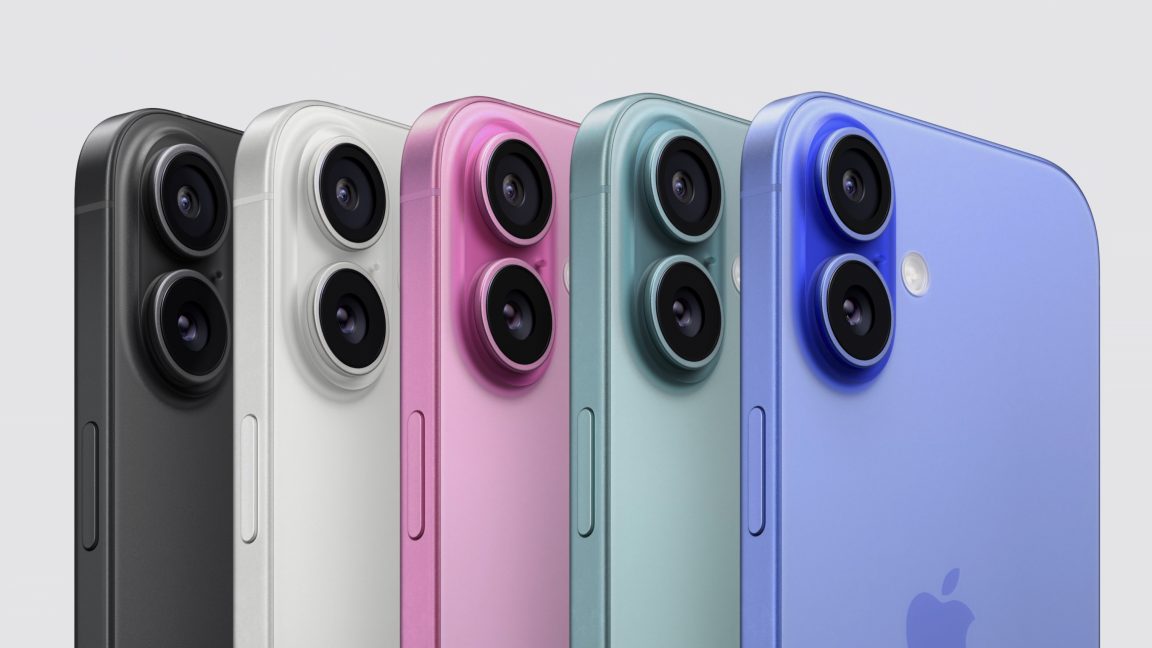
Shares in the US tech giant were one of Wall Street’s biggest casualties in the days immediately after Trump announced his reciprocal tariffs. About $700 billion was wiped off Apple’s market value in the space of a few days.

Earlier this week, Trump said he would consider excluding US companies from his tariffs, but added that such decisions would be made “instinctively.”

Chad Bown, a senior fellow at the Peterson Institute for International Economics, said the exemptions mirrored exceptions for smartphones and consumer electronics issued by Trump during his trade wars in 2018 and 2019.

“We’ll have to wait and see if the exemptions this time around also stick, or if the president once again reverses course sometime in the not-too-distant future,” said Bown.

US Customs and Border Protection referred inquiries about the order to the US International Trade Commission, which did not immediately reply to a request for comment.

The White House confirmed that the new exemptions would not apply to the 20 percent tariffs on all Chinese imports applied by Trump to respond to China’s role in fentanyl manufacturing.

White House spokesperson Karoline Leavitt said on Saturday that companies including Apple, TSMC, and Nvidia were “hustling to onshore their manufacturing in the United States as soon as possible” at “the direction of the President.”

“President Trump has made it clear America cannot rely on China to manufacture critical technologies such as semiconductors, chips, smartphones, and laptops,” said Leavitt.

Apple declined to comment.

Economists have warned that the sweeping nature of Trump’s tariffs—which apply to a broad range of common US consumer goods—threaten to fuel US inflation and hit economic growth.

New York Fed chief John Williams said US inflation could reach as high as 4 percent as a result of Trump’s tariffs.

Additional reporting by Michael Acton in San Francisco

© 2025 The Financial Times Ltd. All rights reserved. Not to be redistributed, copied, or modified in any way.

https://arstechnica.com/tech-policy/2025/04/after-market-tumult-trump-exempts-smartphones-from-massive-new-tariffs/



Chrome’s new dynamic bottom bar gives websites a little more room to breathe

The Internet might look a bit different on Android soon. Last month, Google announced its intent to make Chrome for Android a more immersive experience by hiding the navigation bar background. The promised edge-to-edge update is now rolling out to devices on Chrome version 135, giving you a touch more screen real estate. However, some websites may also be a bit harder to use.

Moving from button to gesture navigation reduced the amount of screen real estate devoted to the system UI, which leaves more room for apps. Google’s move to a “dynamic bottom bar” in Chrome creates even more space for web content. When this feature shows up, the pages you visit will be able to draw all the way to the bottom of the screen instead of stopping at the navigation area, which Google calls the “chin.”

Chrome edge-to-edge

Credit: Google

As you scroll down a page, Chrome hides the address bar. With the addition of the dynamic bottom bar, the chin also vanishes. The gesture handle itself remains visible, shifting between white and black based on what is immediately behind it to maintain visibility. Unfortunately, this feature will not work if you have chosen to stick with the classic three-button navigation option.

https://arstechnica.com/gadgets/2025/04/chrome-for-android-gets-edge-to-edge-ui-update/


Dazi, la UE minaccia le Big Tech con nuove tasse se i negoziati con Trump falliscono

L’Unione Europea si prepara a colpire le Big Tech statunitensi con nuove tasse se i negoziati commerciali con il Presidente Trump falliranno. La Presidente della Commissione Europea Ursula von der Leyen ha confermato la minaccia in un’intervista al Financial Times, affermando che l’UE sta valutando “un’ampia gamma di contromisure” se i negoziati con gli Stati Uniti non produrranno risultati.

Tra queste, potenziali nuove tasse sui ricavi pubblicitari digitali. Si tratta di un attacco diretto a giganti americani come Google, Meta e Amazon.

Il commissario al Commercio, Maros Sefcovic, volerà a Washington domenica per incontrare lunedì i suoi omologhi. Finora si è interfacciato con il segretario al Commercio, Howard Lutnick, e il rappresentante per il Commercio, Jamieson Greer. La proposta sul tavolo, da parte dell’Ue, è zero dazi da entrambe le parti dell’Oceano. Ma per gli americani non è solo una questione prettamente commerciale. L’amministrazione Trump vorrebbe eliminare le cosiddette barriere commerciali non tariffarie, tra cui inserisce l’Iva, gli standard europei sui prodotti e la regolamentazione dei servizi digitali che colpisce in particolare i big tech Usa. Bruxelles traccia però le sue linee rosse.

L’UE ritarda le ritorsioni ma mantiene la pressione

Dopo la recente decisione di Trump di sospendere i nuovi dazi sulla maggior parte dei paesi per 90 giorni, l’UE ha accettato di sospendere le ritorsioni tariffarie. Ma soltanto per per ora. Secondo Firstpost, von der Leyen ha detto che l’UE desidera ancora un accordo “completamente equilibrato” e sta usando questa pausa come una finestra per raggiungerlo. Ma se non dovesse funzionare, l’Unione è pronta a muoversi rapidamente. E questa volta non si parla soltanto di penalizzare vino o acciaio, ma di dare una botta pesante ai Big della Silicon Valley.

L’avvertimento non è stato vago. Von der Leyen ha confermato che l’UE avrebbe preso di mira specificamente i servizi digitali americani. Ciò include la tassazione delle entrate pubblicitarie che le Big Tech generano in tutta Europa, un mercato in cui gli Stati Uniti registrano un forte surplus.

Il settore tecnologico al centro delle tensioni commerciali

Questa minaccia non arriva dal nulla. Gli Stati Uniti accusano da tempo l’UE di aver ingiustamente preso di mira le aziende tecnologiche americane attraverso regolamentazioni (AI Act, GDPR ecc) e sanzioni. Ma l’UE non fa marcia indietro. Secondo il Guardian, la vicepresidente dell’UE Henna Virkkunen ha detto che l’Unione non smantellerà le sue normative digitali soltanto per raggiungere un accordo commerciale. “Le nostre regole si applicano a tutte le aziende allo stesso modo”, ha insistito.

Finora, questo ha incluso multe record, severe leggi sulla privacy e azioni antitrust di vasta portata. Ma ora, è anche una merce di scambio nei negoziati commerciali globali.

I colloqui potrebbero rimodellare l’equilibrio di potere digitale transatlantico

Se questo accordo fallisse, il risultato potrebbe cambiare le regole d’ingaggio per l’economia digitale. L’UE è pronta a usare la sua regolamentazione della tecnologia come un’arma, prendendo di mira un settore in cui gli Stati Uniti dominano.

Questo rende i prossimi 90 giorni cruciali, non soltanto per la politica commerciale, ma anche per il modo in cui Internet stessa verrà tassata, regolamentata e monetizzata.

Aziende come Meta, Alphabet, Apple e Amazon dipendono fortemente dai mercati europei per la crescita e se l’UE iniziasse a tassare i ricavi pubblicitari digitali o a inasprire ulteriormente le normative, l’impatto potrebbe essere significativo.

Leggi le altre notizie sull’home page di Key4biz

https://www.key4biz.it/dazi-la-ue-minaccia-le-big-tech-con-nuove-tasse-se-i-negoziati-con-trump-falliscono/528080/


Google takes advantage of federal cost-cutting with steep Workspace discount

Google has long been on the lookout for ways to break Microsoft’s stranglehold on US government office software, and the current drive to cut costs may be it. Google and the federal government have announced an agreement that makes Google Workspace available to all agencies at a significant discount, trimming 71 percent from the service’s subscription price tag.

Since Donald Trump returned to the White House, the government has engaged in a campaign of unbridled staffing reductions and program cancellations, all with the alleged aim of reducing federal spending. It would appear Google recognized this opportunity, negotiating with the General Services Administration (GSA) to offer Workspace at a lower price. Google claims the deal could yield up to $2 billion in savings.

Google has previously offered discounts for federal agencies interested in migrating to Workspace, but it saw little success displacing Microsoft. The Windows maker has enjoyed decades as an entrenched tech giant, leading the 365 productivity tools to proliferate throughout the government. While Google has gotten some agencies on board, Microsoft has traditionally won the lion’s share of contracts, including the $8 billion Defense Enterprise Office Solutions contract that pushed Microsoft 365 to all corners of the Pentagon beginning in 2020.

https://arstechnica.com/gadgets/2025/04/google-slashes-workspace-pricing-for-feds-to-capitalize-on-cost-cutting/


Gemini “coming together in really awesome ways,” Google says after 2.5 Pro release

Gemini models on phone

Credit: Ryan Whitwam

Google doesn’t break out earnings from its new AI ventures, but we can safely assume there’s no profit to be had. No one has managed to turn these huge LLMs into a viable business yet. OpenAI, which has the largest user base with ChatGPT, loses money even on the users paying for its $200 Pro plan. Google is planning to spend $75 billion on AI infrastructure in 2025, so it will be crucial to make the most of this very expensive hardware. Building models that don’t waste cycles on overthinking “Hi, how are you?” could be a big help.

Missing technical details

Google plays it close to the chest with Gemini, but the 2.5 Pro release has offered more insight into where the company plans to go than ever before. To really understand this model, though, we’ll need to see the technical report. Google last released such a document for Gemini 1.5. We still haven’t seen the 2.0 version, and we may never see that document now that 2.5 has supplanted 2.0.

Doshi notes that 2.5 Pro is still an experimental model. So, don’t expect full evaluation reports to happen right away. A Google spokesperson clarified that a full technical evaluation report on the 2.5 branch is planned, but there is no firm timeline. Google hasn’t even released updated model cards for Gemini 2.0, let alone 2.5. These documents are brief one-page summaries of a model’s training, intended use, evaluation data, and more. They’re essentially LLM nutrition labels. It’s much less detailed than a technical report, but it’s better than nothing. Google confirms model cards are on the way for Gemini 2.0 and 2.5.

Given the recent rapid pace of releases, it’s possible Gemini 2.5 Pro could be rolling out more widely around Google I/O in May. We certainly hope Google has more details when the 2.5 branch expands. As Gemini development picks up steam, transparency shouldn’t fall by the wayside.

https://arstechnica.com/ai/2025/04/with-the-release-of-gemini-2-5-pro-google-looks-toward-a-dynamic-ai-future/


Google’s new experimental Gemini 2.5 model rolls out to free users

Google released its latest and greatest Gemini AI model last week, but it was only made available to paying subscribers. Google has moved with uncharacteristic speed to release Gemini 2.5 Pro (Experimental) for free users, too. The next time you check in with Gemini, you can access most of the new AI’s features without a Gemini Advanced subscription.

The Gemini 2.5 branch will eventually replace 2.0, which was only released in late 2024. It supports simulated reasoning, as all Google’s models will in the future. This approach to producing an output can avoid some of the common mistakes that AI models have made in the past. We’ve also been impressed with Gemini 2.5’s vibe, which has landed it at the top of the LMSYS Chatbot arena leaderboard.

Google says Gemini 2.5 Pro (Experimental) is ready and waiting for free users to try on the web. Simply select the model from the drop-down menu and enter your prompt to watch the “thinking” happen. The model will roll out to the mobile app for free users soon.

While the free tier gets access to this model, it won’t have all the advanced features. You still cannot upload files to Gemini without a paid account, which may make it hard to take advantage of the model’s large context window—although you won’t get the full 1 million-token window anyway. Google says the free version of Gemini 2.5 Pro (Experimental) will have a lower limit, which it has not specified. We’ve added a few thousand words without issue, but there’s another roadblock in the way.

https://arstechnica.com/gadgets/2025/03/googles-new-experimental-gemini-2-5-model-rolls-out-to-free-users/


Google discontinues Nest Protect smoke alarm and Nest x Yale lock

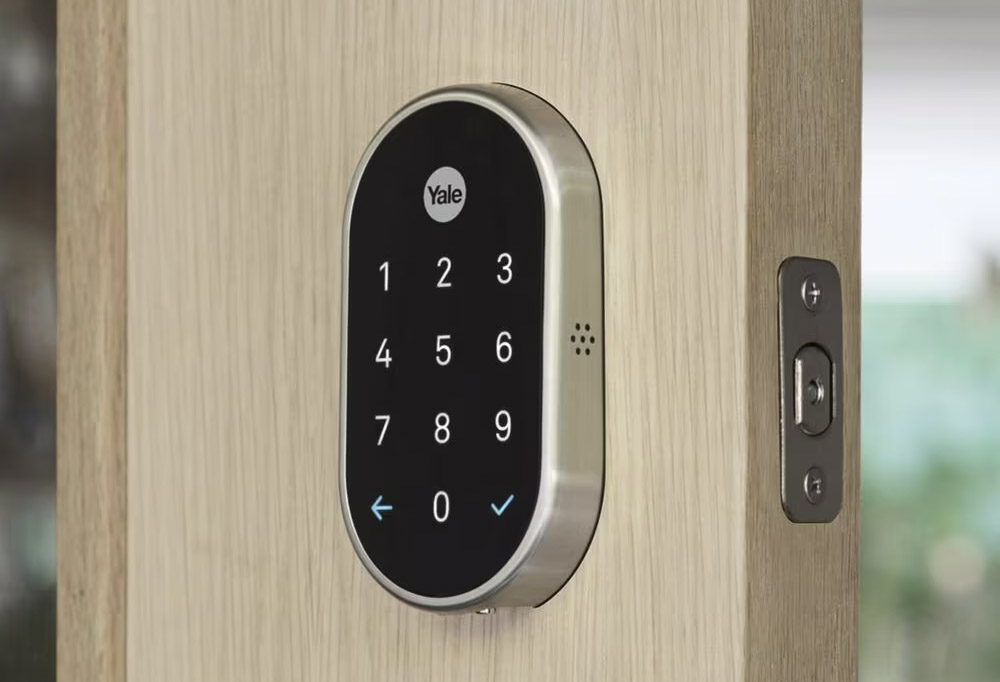
Google acquired Nest in 2014 for a whopping $3.4 billion but seems increasingly uninterested in making smart home hardware. The company has just announced two of its home gadgets will be discontinued, one of which is quite popular. The Nest Protect smoke and carbon monoxide detector is a common fixture in homes, but Google says it has stopped manufacturing it. The less popular Nest x Yale smart lock is also getting the ax. There are replacements coming, but Google won’t be making them.

Nest launched the 2nd gen Protect a year before it became part of Google. Like all smoke detectors, the Nest Protect comes with an expiration date. You’re supposed to swap them out every 10 years, so some Nest users are already there. You will have to hurry if you want a new Protect. While they’re in stock for the moment, Google won’t manufacture any more. It’s on sale for $119 on the Google Store for the time being.

The Nest x Yale lock.

Credit: Google

The Nest x Yale lock. Credit: Google

Likewise, Google is done with the Nest x Yale smart lock, which it launched in 2018 to complement the Nest Secure home security system. This device requires a Thread-enabled hub, a role the Nest Secure served quite well. Now, you need a $70 Nest Connect to control this lock remotely. If you still want to grab the Nest x Yale smart lock, it’s on sale for $229 while supplies last.

Smart home hangover

Google used to want people to use its smart home devices, but its attention has been drawn elsewhere since the AI boom began. The company hasn’t released new cameras, smart speakers, doorbells, or smart displays in several years at this point, and it’s starting to look like it never will again. TV streamers and thermostats are the only home tech still getting any attention from Google. For everything else, it’s increasingly turning to third parties.

https://arstechnica.com/gadgets/2025/03/google-discontinues-nest-protect-smoke-alarm-and-nest-x-yale-lock/


Google solves its mysterious Pixel problem, announces 9a launch date

Google revealed the Pixel 9a last week, but its release plans were put on hold by a mysterious “component quality issue.” Whatever that was, it’s been worked out. Google now says its new budget smartphone will arrive as soon as April 10. The date varies by market, but the wait is almost over.

The first wave of 9a releases on April 10 will include the US, Canada, and the UK. On April 14, the Pixel 9a will arrive in Europe, launching in Germany, Spain, Italy, Ireland, France, Norway, Denmark, Sweden, Netherlands, Belgium, Austria, Portugal, Switzerland, Poland, Czechia, Romania, Hungary, Slovenia, Slovakia, Lithuania, Estonia, Latvia, and Finland. On April 16, the phone will come to Australia, India, Singapore, Taiwan, and Malaysia.

You may think that takes care of Google’s launch commitments, but no—Japan still has no official launch date. That’s a bit strange, as Japan is not a new addition to Google’s list of supported regions. It’s unclear if this has anything to do with the previous component issue. Google says only that the Japanese launch will happen “soon.” Its statements about the delayed release were also vague, with representatives noting that the cause was a “passive component.”

https://arstechnica.com/gadgets/2025/03/google-confirms-pixel-9a-launch-for-april-10/


EU will go easy with Apple, Facebook punishment to avoid Trump’s wrath

The EU is set to impose minimal fines on Apple and Facebook-owner Meta next week under its Digital Markets Act, as Brussels seeks to avoid escalating tensions with US President Donald Trump.

According to people familiar with the decisions, the iPhone maker is expected to be fined and ordered to revise its App Store rules, following an investigation into whether they prevent app developers from sending consumers to offers outside its platform.

Regulators will also close another investigation into Apple, which was focused on the company’s design of its web browser choice screen without any further sanctions.

Meta will also be fined and ordered to change its “pay or consent” model, which forces users to either consent to data tracking or pay a subscription fee for an ad-free experience of its products.

Under the DMA, companies can face penalties of up to 10 percent of their global turnover, which could result in billions of dollars for both companies.

But the European Commission is aiming for fines that fall far below that threshold, three officials said, as the bloc’s digital rule book is relatively new and the decisions could still be challenged in court.

The moves come as Brussels attempts to enforce the DMA, which was designed to curb tech giants’ dominance of the digital marketplace, while avoiding a direct clash with Washington.

The focus of the new commission, which took office in December, is also more on the compliance of Big Tech companies with the law than on potential high fines in the billions of Euros, officials said.

https://arstechnica.com/gadgets/2025/03/eu-will-go-easy-with-apple-facebook-punishment-to-avoid-trumps-wrath/


Gemini hackers can deliver more potent attacks with a helping hand from… Gemini

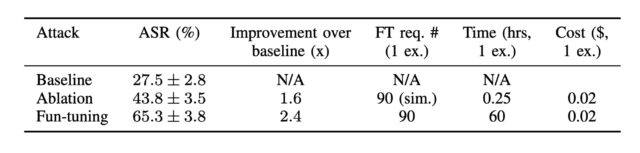
The resulting dataset, which reflected a distribution of attack categories similar to the complete dataset, showed an attack success rate of 65 percent and 82 percent against Gemini 1.5 Flash and Gemini 1.0 Pro, respectively. By comparison, attack baseline success rates were 28 percent and 43 percent. Success rates for ablation, where only effects of the fine-tuning procedure are removed, were 44 percent (1.5 Flash) and 61 percent (1.0 Pro).

Attack success rate against Gemini-1.5-flash-001 with default temperature. The results show that Fun-Tuning is more effective than the baseline and the ablation with improvements. Credit: Labunets et al.

Attack success rates Gemini 1.0 Pro. Credit: Labunets et al.

While Google is in the process of deprecating Gemini 1.0 Pro, the researchers found that attacks against one Gemini model easily transfer to others—in this case, Gemini 1.5 Flash.

“If you compute the attack for one Gemini model and simply try it directly on another Gemini model, it will work with high probability, Fernandes said. “This is an interesting and useful effect for an attacker.”

Attack success rates of gemini-1.0-pro-001 against Gemini models for each method. Credit: Labunets et al.

Another interesting insight from the paper: The Fun-tuning attack against Gemini 1.5 Flash “resulted in a steep incline shortly after iterations 0, 15, and 30 and evidently benefits from restarts. The ablation method’s improvements per iteration are less pronounced.” In other words, with each iteration, Fun-Tuning steadily provided improvements.

The ablation, on the other hand, “stumbles in the dark and only makes random, unguided guesses, which sometimes partially succeed but do not provide the same iterative improvement,” Labunets said. This behavior also means that most gains from Fun-Tuning come in the first five to 10 iterations. “We take advantage of that by ‘restarting’ the algorithm, letting it find a new path which could drive the attack success slightly better than the previous ‘path.'” he added.

Not all Fun-Tuning-generated prompt injections performed equally well. Two prompt injections—one attempting to steal passwords through a phishing site and another attempting to mislead the model about the input of Python code—both had success rates of below 50 percent. The researchers hypothesize that the added training Gemini has received in resisting phishing attacks may be at play in the first example. In the second example, only Gemini 1.5 Flash had a success rate below 50 percent, suggesting that this newer model is “significantly better at code analysis,” the researchers said.

https://arstechnica.com/security/2025/03/gemini-hackers-can-deliver-more-potent-attacks-with-a-helping-hand-from-gemini/