Google tells Trump’s DOJ that forcing a Chrome sale would harm national security
Close-up of Google Chrome Web Browser web page on the web browser. Chrome is widely used web browser developed by Google.

Credit: Getty Images

The government’s 2024 request also sought to have Google’s investment in AI firms curtailed even though this isn’t directly related to search. If, like Google, you believe leadership in AI is important to the future of the world, limiting its investments could also affect national security. But in November, Mehta suggested he was open to considering AI remedies because “the recent emergence of AI products that are intended to mimic the functionality of search engines” is rapidly shifting the search market.

This perspective could be more likely to find supporters in the newly AI-obsessed US government with a rapidly changing Department of Justice. However, the DOJ has thus far opposed allowing AI firm Anthropic to participate in the case after it recently tried to intervene. Anthropic has received $3 billion worth of investments from Google, including $1 billion in January.

New year, new Justice Department

Google naturally opposed the government’s early remedy proposal, but this happened in November, months before the incoming Trump administration began remaking the DOJ. Since taking office, the new administration has routinely criticized the harsh treatment of US tech giants, taking aim at European Union laws like the Digital Markets Act, which tries to ensure user privacy and competition among so-called “gatekeeper” tech companies like Google.

We may get a better idea of how the DOJ wants to proceed later this week when both sides file their final proposals with Mehta. Google already announced its preferred remedy at the tail end of 2024. It’s unlikely Google’s final version will be any different, but everything is up in the air for the government.

Even if current political realities don’t affect the DOJ’s approach, the department’s staffing changes could. Many of the people handling Google’s case today are different than they were just a few months ago, so arguments that fell on deaf ears in 2024 could move the needle. Perhaps emphasizing the national security angle will resonate with the newly restaffed DOJ.

After both sides have had their say, it will be up to the judge to eventually rule on how Google must adapt its business. This remedy phase should get fully underway in April.

https://arstechnica.com/google/2025/03/google-cites-national-security-as-it-urges-doj-to-drop-demand-for-breakup/

Google’s AI-powered Pixel Sense app could gobble up all your Pixel 10 data

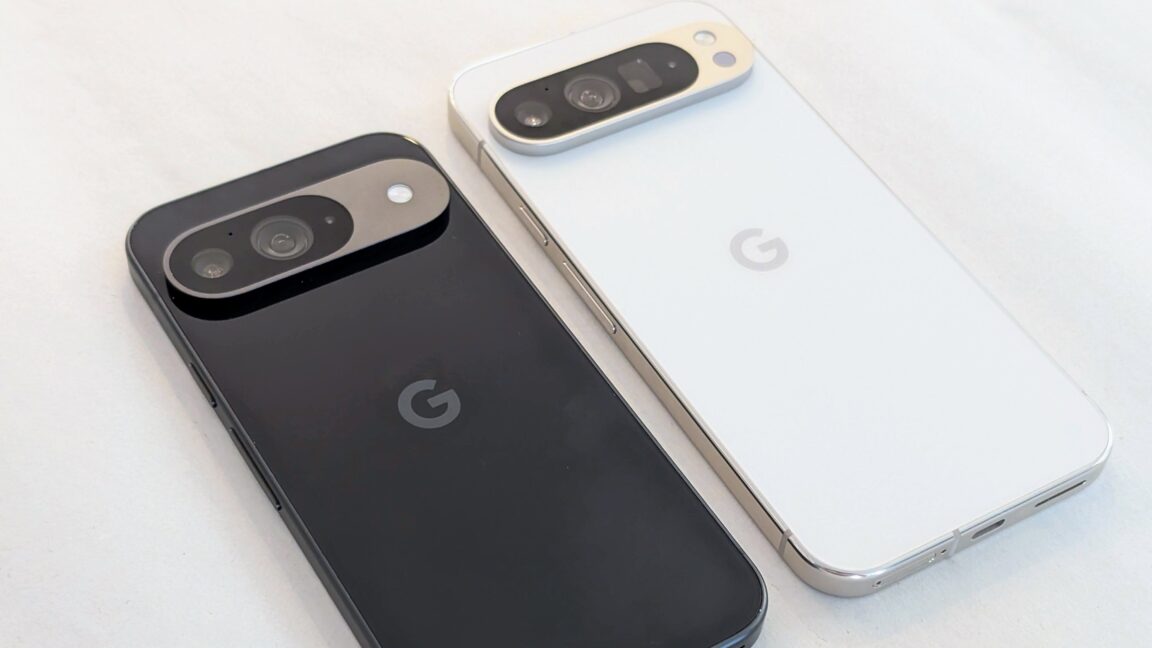
Google’s AI ambitions know no bounds. A new report claims Google’s next phones will herald the arrival of a feature called Pixel Sense that will ingest data from virtually every Google app on your phone, fueling a new personalized experience. This app could be the premiere feature of the Pixel 10 series expected out late this year.

According to a report from Android Authority, Pixel Sense is the new name for Pixie, an AI that was supposed to integrate with Google Assistant before Gemini became the center of Google’s universe. In late 2023, it looked as though Pixie would be launched on the Pixel 9 series, but that never happened. Now, it’s reportedly coming back as Pixel Sense, and we have more details on how it might work.

Pixel Sense will apparently be able to leverage data you create in apps like Calendar, Gmail, Docs, Maps, Keep Notes, Recorder, Wallet, and almost every other Google app. It can also process media files like screenshots in the same way the Pixel Screenshots app currently does. The goal of collecting all this data is to help you complete tasks faster by suggesting content, products, and names by understanding the context of how you use the phone. Pixel Sense will essentially try to predict what you need without being prompted.

Samsung is pursuing a goal that is ostensibly similar to Now Brief, a new AI feature available on the Galaxy S25 series. Now Brief collects data from a handful of apps like Samsung Health, Samsung Calendar, and YouTube to distill your important data with AI. However, it rarely offers anything of use with its morning, noon, and night “Now Bar” updates.

Pixel Sense sounds like a more expansive version of this same approach to processing user data—and perhaps the fulfillment of Google Now’s decade-old promise. The supposed list of supported apps is much larger, and they’re apps people actually use. If pouring more and more data into a large language model leads to better insights into your activities, Pixel Sense should be better at guessing what you’ll need. Admittedly, that’s a big “if.”

https://arstechnica.com/google/2025/03/googles-ai-powered-pixel-sense-app-could-gobble-up-all-your-pixel-10-data/


Gemini Live will learn to peer through your camera lens in a few weeks

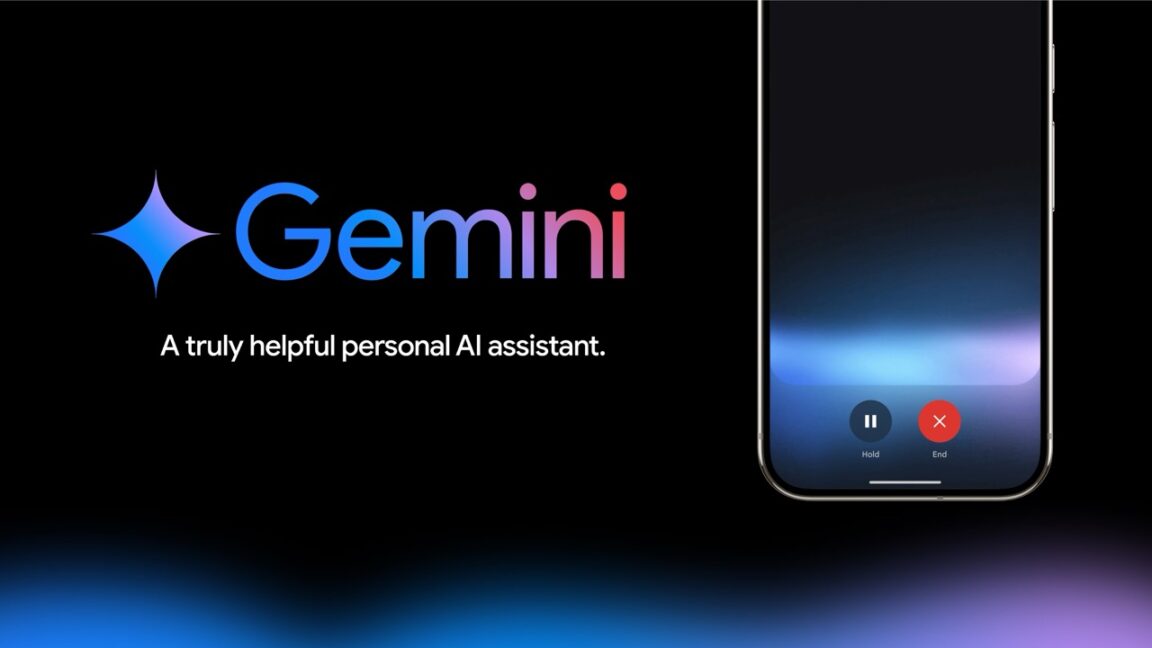
At Mobile World Congress, Google confirmed that a long-awaited Gemini AI feature it first teased nearly a year ago is ready for launch. The company’s conversational Gemini Live will soon be able to view live video and screen sharing, a feature Google previously demoed as Project Astra. When Gemini’s video capabilities arrive, you’ll be able to simply show the robot something instead of telling it.

Right now, Google’s multimodal AI can process text, images, and various kinds of documents. However, its ability to accept video as an input is spotty at best—sometimes it can summarize a YouTube video, and sometimes it can’t, for unknown reasons. Later in March, the Gemini app on Android will get a major update to its video functionality. You’ll be able to open your camera to provide Gemini Live a video stream or share your screen as a live video, thus allowing you to pepper Gemini with questions about what it sees.

[embedded content]

Gemini Live with video.

It can be hard to keep track of which Google AI project is which—the 2024 Google I/O was largely a celebration of all things Gemini AI. The Astra demo made waves as it demonstrated a more natural way to interact with the AI. In the original video, which you can see below, Google showed how Gemini Live could answer questions in real time as the user swept a phone around a room. It had things to say about code on a computer screen, how speakers work, and a network diagram on a whiteboard. It even remembered where the user left their glasses from an earlier part of the video.

https://arstechnica.com/google/2025/03/gemini-live-will-learn-to-peer-through-your-camera-lens-in-a-few-weeks/


Sergey Brin says AGI is within reach if Googlers work 60-hour weeks

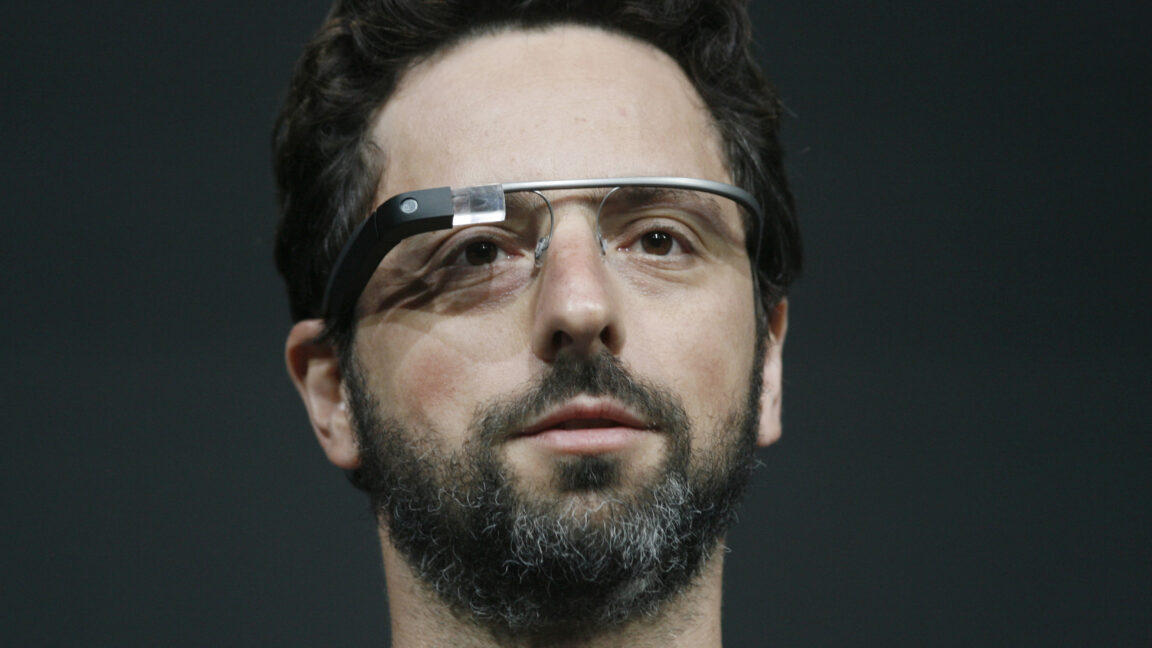
Sergey Brin co-founded Google in the 1990s along with Larry Page, but both stepped away from the day to day at Google in 2019. However, the AI boom tempted Brin to return to the office, and he thinks everyone should follow his example. In a new internal memo, Brin has advised employees to be in the office every weekday so Google can win the AI race.

Just returning to the office isn’t enough for the Google co-founder. According to the memo seen by The New York Times, Brin says Googlers should try to work 60 hours per week to support the company’s AI efforts. That works out to 12 hours per day, Monday through Friday, which Brin calls the “sweet spot of productivity.” This is not a new opinion for Brin.

Brin, like many in Silicon Valley, is seemingly committed to the dogma that the current trajectory of generative AI will lead to the development of artificial general intelligence (AGI). Such a thinking machine would be head and shoulders above current AI models, which can only do a good impression of thinking. An AGI would understand concepts and think more like a human being, which some would argue makes it a conscious entity.

To hear Brin tell it, Google is in the best position to make this AI computing breakthrough. He cites the company’s strong workforce of programmers and data scientists as the key, but he also believes the team must strive for greater efficiency by using Google’s own Gemini AI tools as much as possible. Oh, and don’t work from home.

Brin and Page handed the reins to current CEO Sundar Pichai in 2015, so his pronouncement doesn’t necessarily signal a change to the company’s current in-office policy. Google still operates on a hybrid model, with workers expected to be in the office three days per week. But as a founder, Brin’s voice carries weight. We reached out to Google to ask if the company intends to reassess its policies, but a Google rep says there are no planned changes to the return-to-office mandate.

https://arstechnica.com/google/2025/02/sergey-brin-says-agi-is-within-reach-if-googlers-work-60-hour-weeks/


Google will finally fix awesome (but broken) song detection feature for Pixels

Google’s Pixel phones include numerous thoughtful features you don’t get on other phones, like Now Playing. This feature can identify background music from the lock screen, but unlike some similar song identifiers, it works even without an Internet connection. Sadly, it has been broken for months. There is some hope, though. Google has indicated that a fix is ready for deployment, and Pixel users can expect to see it in a future OS update.

First introduced in 2017, Now Playing uses a cache of thousands of audio fingerprints to identify songs you might encounter in your daily grind. Since it works offline, it’s highly efficient and preserves your privacy. Now Playing isn’t a life-changing addition to the mobile experience, but it’s damn cool.

That makes it all the stranger that Google appears to have broken Now Playing with the release of Android 15 (or possibly a Play Services update around the same time) and has left it that way for months. Before that update, Now Playing would regularly list songs on the lock screen and offer enhanced search for songs it couldn’t ID offline. It was obvious to Pixel fans when Now Playing stopped listening last year, and despite a large volume of online complaints, Google has seemingly dragged its feet.

https://arstechnica.com/google/2025/02/google-will-finally-fix-awesome-but-broken-song-detection-feature-for-pixels/


Pixel Watch 3 gets FDA approval to alert you if you’re dying

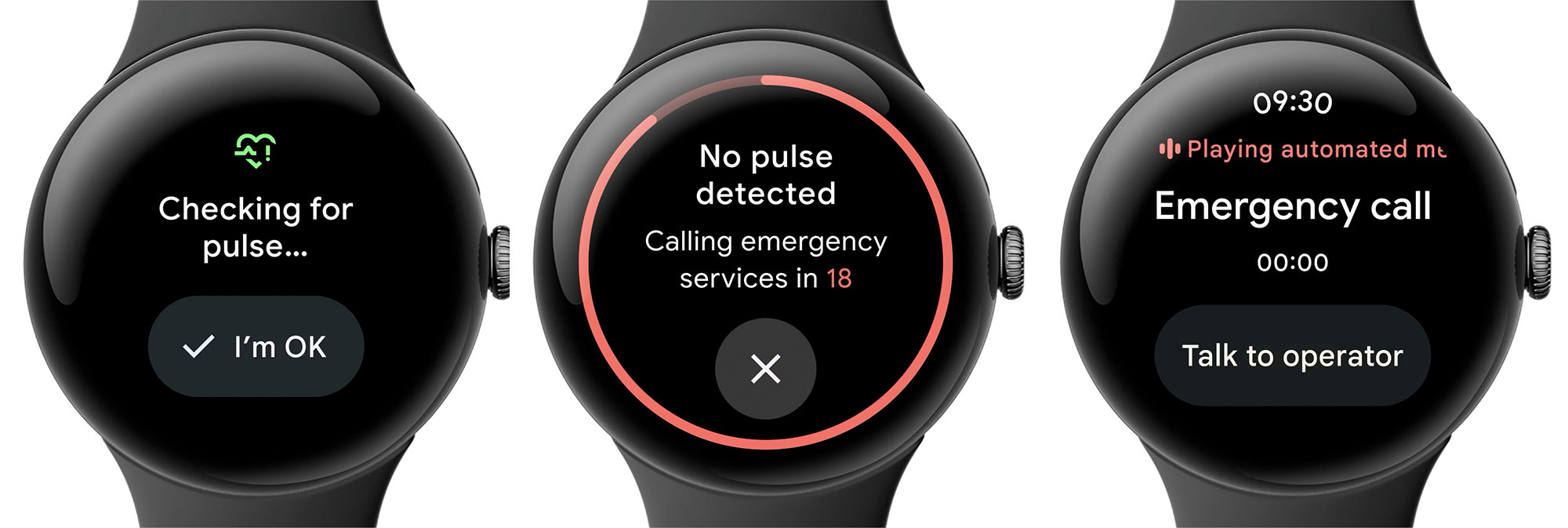
Google released the Pixel Watch 3 last fall alongside the Pixel 9 family, sporting the same curvy look as the last two versions. The Pixel Watch 3 came with a new feature called Loss of Pulse Detection, which can detect impending death due to a stopped heart. Google wasn’t allowed to unlock that feature in the US until it got regulatory approval, but the Food and Drug Administration has finally given Google the go-ahead to activate Loss of Pulse Detection.

Numerous smartwatches can use health sensors to monitor for sudden health events. For example, the Pixel Watch, Apple Watch, and others can detect atrial fibrillation (AFib), a type of irregular heartbeat that could indicate an impending stroke or heart attack. Google claims Loss of Pulse Detection goes further, offering new functionality on a consumer wearable.

Like the EKG features that became standard a few years back, Loss of Pulse Detection requires regulatory approval. Google was able to get clearance to ship the Pixel Watch 3 with Loss of Pulse Detection in a few European countries, eventually expanding to 14 nations: Austria, Belgium, Denmark, France, Germany, Ireland, Italy, Netherlands, Norway, Portugal, Spain, Sweden, Switzerland, and the United Kingdom. It noted at the time more countries would get access as regulators approved the feature, and the FDA was apparently the first to come through outside of Europe, boosting support to 15 countries.

loss of pulse pixel watch

Credit: Google

The Pixel Watch 3 doesn’t include any new or unique sensors to power Loss of Pulse Detection—it’s just using the sensors common to smartwatches in slightly different ways. The watch uses a “multi-path” heart rate sensor that is capable of taking readings once per second. When the sensor no longer detects a pulse, that usually means you’ve taken the watch off. It’s quick to make that determination, locking the watch in about a second. That’s great for security but a little annoying if you were readjusting it on your wrist.

https://arstechnica.com/gadgets/2025/02/pixel-watch-3-gets-fda-approval-to-alert-you-if-youre-dying/


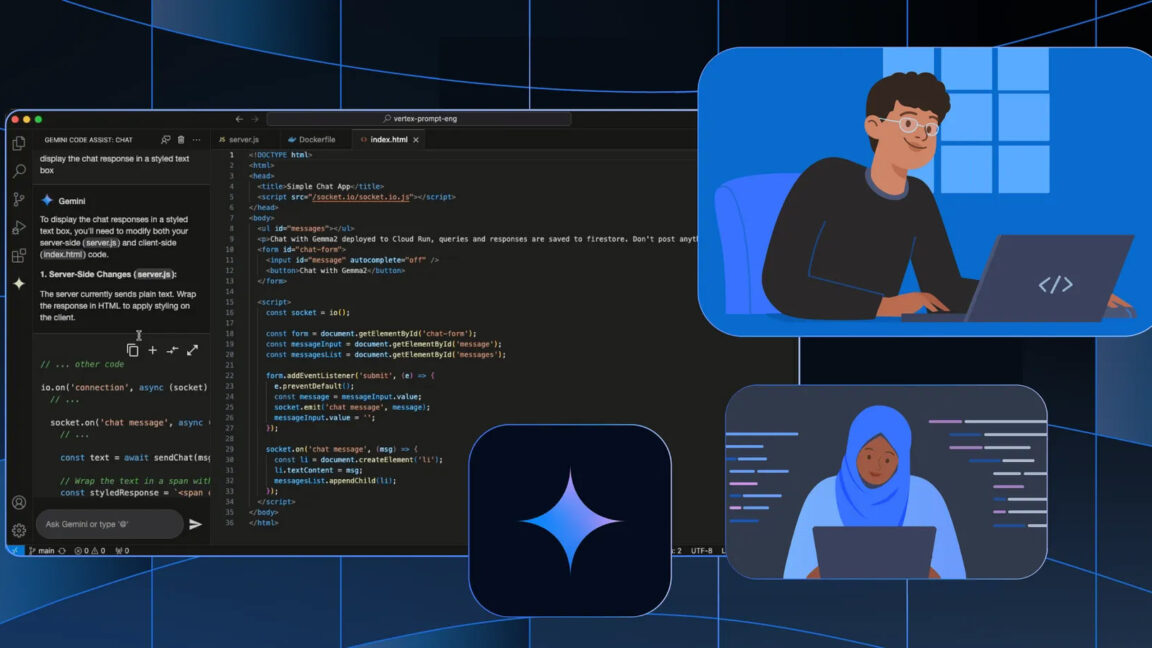
Google’s free Gemini Code Assist arrives with sky-high usage limits

Generative AI has wormed its way into myriad products and services, some of which benefit more from these tools than others. Coding with AI has proven to be a better application than most, with individual developers and big companies leaning heavily on generative tools to create and debug programs. Now, indie developers have access to a new AI coding tool free of charge—Google has announced that Gemini Code Assist is available to everyone.

Gemini Code Assist was first released late last year as an enterprise tool, and the new version has almost all the same features. While you can use the standard Gemini or another AI model like ChatGPT to work on coding questions, Gemini Code Assist was designed to fully integrate with the tools developers are already using. Thus, you can tap the power of a large language model (LLM) without jumping between windows. With Gemini Code Assist connected to your development environment, the model will remain aware of your code and ready to swoop in with suggestions. The model can also address specific challenges per your requests, and you can chat with the model about your code, provided it’s a public domain language.

At launch, Gemini Code Assist pricing started at $45 per month per user. Now, it costs nothing for individual developers, and the limits on the free tier are generous. Google says the product offers 180,000 code completions per month, which it claims is enough that even prolific professional developers won’t run out. This is in stark contrast to Microsoft’s GitHub Copilot, which offers similar features with a limit of just 2,000 code completions and 50 Copilot chat messages per month. Google did the math to point out Gemini Code Assist offers 90 times the completions of Copilot.

https://arstechnica.com/ai/2025/02/googles-free-gemini-code-assist-arrives-with-sky-high-usage-limits/


Qualcomm and Google team up to offer 8 years of Android updates

Qualcomm and Google have joined forces to extend software updates on Android devices. With Google’s assistance, the chipmaker has committed to providing extended vendor support to any OEM building on its most powerful chips, pushing the theoretical lifespan of Android devices to eight years. There are plenty of caveats, but this move could make your next phone more useful for longer.

The extended support window only applies to Android devices with the latest Qualcomm chipsets. To start, the eight-year support timeline will be extended to devices running the new Snapdragon 8 Elite mobile platform, which has powered devices like the OnePlus 13 and Galaxy S25. Later this year, the same policy will be applied to the company’s new Snapdragon 8 and Snapdragon 7-series chips, and you can expect the same deal for at least the next five generations of Qualcomm silicon.

“Through this collaboration, OEMs can more seamlessly update the software and security on their devices, ensuring a more secure and long-lasting Android experience for our users,” said Google’s Android Platform manager Seang Chau.

Snapdragon 8 and 7 chips are used in flagship and almost-flagship phones, so don’t expect a new Qualcomm-based budget phone to get anywhere near the same update commitment. There’s nothing stopping Qualcomm from offering the same deal with cheaper components, but people tend to expect phones that cost more to last longer. A cheap phone might not even make it eight years before something breaks or you get tired of how slow it is, and OEMs aren’t incentivized to spend the money supporting cheap hardware.

Currently, Samsung and Google lead the market with seven years of guaranteed security patches and OS updates. With Qualcomm’s help, other companies could reach similar heights. With Qualcomm’s support, OEMs will be able to provide eight years of security patches, and there will also be at least two updates to the vendor’s Android Common Kernel during that time. This will make it easier for OEMs to release full Android OS updates even toward the end of a device’s lifespan.

https://arstechnica.com/gadgets/2025/02/qualcomm-and-google-team-up-to-offer-8-years-of-android-updates/


Google plans to stop using insecure SMS verification in Gmail

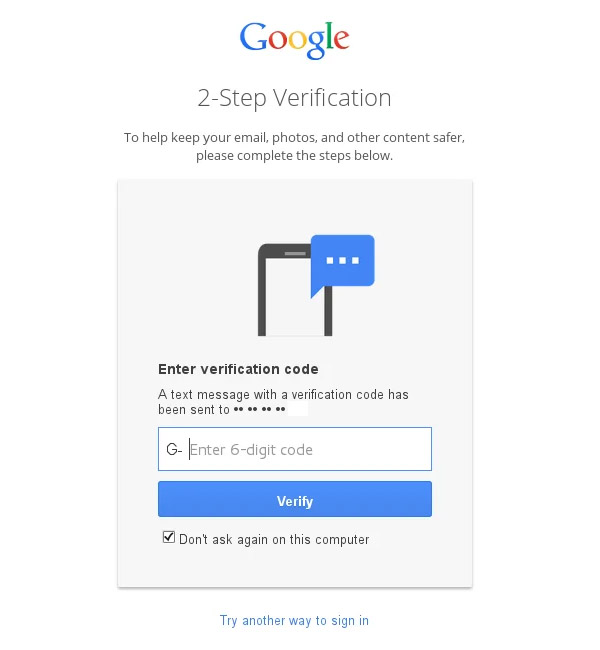
A username and password just won’t cut it anymore. Users around the world logging into Gmail have often relied on Google SMS pings to securely access their accounts, but that’s changing. Google now hopes to move beyond SMS, which has become so frequently abused that it negates any supposed security benefit. Instead of using SMS, the company will reportedly switch to using QR codes.

Currently, Google sends SMS codes for two reasons: to confirm that a new login is legitimate and to block spammers from opening Gmail accounts in bulk. You type in your credentials, and a moment later, Google texts a six-digit code for you to enter as well. It’s not a terribly arduous process, and it can help protect your account, but SMS is not very secure.

SMS messages are delivered by mobile carriers without encryption, and they often go through intermediaries that can be compromised without your knowledge. Even if the line is secure, phone numbers have very little in the way of security.

SIM swap attacks are depressingly common today, with carrier reps tricked or paid off to transfer a phone number to a fraudster’s device. At that point, the two-factor codes from Google go right to the attacker, allowing them to log in. This same attack has been used to access crypto wallets and make off with valuable digital currency. Gaining control of the target’s email is often a necessary step to unlock other accounts.

According to Forbes, Google plans to patch this vulnerability soon. The company will stop using SMS codes for verification, moving to a QR code that the user has to scan with their phone. 

“Just like we want to move past passwords with the use of things like passkeys, we want to move away from sending SMS messages for authentication,” Google spokesperson Ross Richendrfer told Forbes.

This dialog will soon be replaced with a QR code.

This dialog will soon be replaced with a QR code.

Moving to QR codes takes SMS out of the equation, which also means you don’t have to worry about your carrier’s security practices or lack thereof. Google also points out that QR-code scanning makes phishing scams harder. It’s relatively easy to trick someone into providing an SMS code. Scammers often do this by pretending to be associated with Google, but you can’t share what you don’t have.

Google has not offered much in the way of specifics here. Richendrfer says the change will roll out in “the next few months,” but it’s unclear if all markets will see this change simultaneously. If you already use two-factor on your account, for example with a code generator app or a security key, you’ll continue using that to verify your account. We’ve reached out to Google and will update with anything else we learn about this impending change.

https://arstechnica.com/gadgets/2025/02/google-plans-to-stop-using-insecure-sms-verification-in-gmail/


Google’s cheaper YouTube Premium Lite subscription will drop Music

YouTube dominates online video, but it’s absolutely crammed full of ads these days. A YouTube Premium subscription takes care of that, but ad blockers do exist. Google seems to have gotten the message—a cheaper streaming subscription is on the way that drops YouTube Music from the plan. You may have to give up more than music to get the cheaper rate, though.

Google started testing cheaper YouTube subscriptions in a few international markets, including Germany and Australia, over the past year. Those users have been offered the option of subscribing to the YouTube Premium plan, which runs $13.99 in the US, or a new plan that costs about half as much. For example, in Australia, the options are AU$23 for YouTube Premium or AU$12 for “YouTube Premium Lite.”

The Lite plan drops YouTube Music but keeps ad-free YouTube, which is all most people want anyway. Based on the early tests, these plans will probably drop a few other features that you’d miss, including background playback and offline downloads. However, this plan could cost as little as $7–$8 in the US.

Perhaps at this point, you think you’ve outsmarted Google—you can just watch ad-free music videos with the Lite plan, right? Wrong. Users who have tried the Lite plan in other markets report that it doesn’t actually remove all the ads on the site. You may still see banner ads around videos, as well as pre-roll ads before music videos specifically. If you want access to Google’s substantial music catalog without ads, you’ll still need to pay for the full plan.

Bloomberg reports that YouTube Premium Lite is on the verge of launching in the US, Australia, Germany, and Thailand.

“As part of our commitment to provide our users with more choice and flexibility, we’ve been testing a new YouTube Premium offering with most videos ad-free in several of our markets,” Google said in a statement. “We’re hoping to expand this offering to even more users in the future with our partners’ support.”

https://arstechnica.com/google/2025/02/google-plans-cheaper-ad-free-youtube-subscription-without-music/