Google begins offering free SAT practice tests powered by Gemini
It’s no secret that students worldwide use AI chatbots to do their homework and avoid learning things. On the flip side, students can also use AI as a tool to beef up their knowledge and plan for the future with flashcards or study guides. Google hopes its latest Gemini feature will help with the latter. The company has announced that Gemini can now create free SAT practice tests and coach students to help them get higher scores.
As a standardized test, the content of the SAT follows a predictable pattern. So there’s no need to use a lengthy, personalized prompt to get Gemini going. Just say something like, “I want to take a practice SAT test,” and the chatbot will generate one complete with clickable buttons, graphs, and score analysis.
Of course, generative AI can go off the rails and provide incorrect information, which is a problem when you’re trying to learn things. However, Google says it has worked with education firms like The Princeton Review to ensure the AI-generated tests resemble what students will see in the real deal.
The interface for Gemini’s practice tests includes scoring and the ability to review previous answers. If you are unclear on why a particular answer is right or wrong, the questions have an “Explain answer” button right at the bottom. After you finish the practice exam, the custom interface (which looks a bit like Gemini’s Canvas coding tool) can help you follow up on areas that need improvement.
Google adds your Gmail and Photos to AI Mode to enable “Personal Intelligence”
Google believes AI is the future of search, and it’s not shy about saying it. After adding account-level personalization to Gemini earlier this month, it’s now updating AI Mode with so-called “Personal Intelligence.” According to Google, this makes the bot’s answers more useful because they are tailored to your personal context.
Starting today, the feature is rolling out to all users who subscribe to Google AI Pro or AI Ultra. However, it will be a Labs feature that needs to be explicitly enabled (subscribers will be prompted to do this). Google tends to expand access to new AI features to free accounts later on, so free users will most likely get access to Personal Intelligence in the future. Whenever this option does land on your account, it’s entirely optional and can be disabled at any time.
If you decide to integrate your data with AI Mode, the search bot will be able to scan your Gmail and Google Photos. That’s less extensive than the Gemini app version, which supports Gmail, Photos, Search, and YouTube history. Gmail will probably be the biggest contributor to AI Mode—a great many life events involve confirmation emails. Traditional search results when you are logged in are adjusted based on your usage history, but this goes a step further.
If you’re going to use AI Mode to find information, Personal Intelligence could actually be quite helpful. When you connect data from other Google apps, Google’s custom Gemini search model will instantly know about your preferences and background—that’s the kind of information you’d otherwise have to include in your search query to get the best output. With Personal Intelligence, AI Mode can just pull those details from your email or photos.
eBay bans illicit automated shopping amid rapid rise of AI agents
On Tuesday, eBay updated its User Agreement to explicitly ban third-party “buy for me” agents and AI chatbots from interacting with its platform without permission, first spotted by Value Added Resource. On its face, a one-line terms of service update doesn’t seem like major news, but what it implies is more significant: The change reflects the rapid emergence of what some are calling “agentic commerce,” a new category of AI tools designed to browse, compare, and purchase products on behalf of users.
eBay’s updated terms, which go into effect on February 20, 2026, specifically prohibit users from employing “buy-for-me agents, LLM-driven bots, or any end-to-end flow that attempts to place orders without human review” to access eBay’s services without the site’s permission. The previous version of the agreement contained a general prohibition on robots, spiders, scrapers, and automated data gathering tools but did not mention AI agents or LLMs by name.
At first glance, the phrase “agentic commerce” may sound like aspirational marketing jargon, but the tools are already here, and people are apparently using them. While fitting loosely under one label, these tools come in many forms.
OpenAI first added shopping features to ChatGPT Search in April 2025, allowing users to browse product recommendations. By September, the company launched Instant Checkout, which lets users purchase items from Etsy and Shopify merchants directly within the chat interface. (In November, eBay CEO Jamie Iannone suggested the company might join OpenAI’s Instant Checkout program in the future.)
A fotografare l’impatto concreto delle scelte politiche è stato Andy Jassy, CEO di Amazon. Intervistato da Cnbc, Jassy ha spiegato che i consumatori continuano a spendere, ma con maggiore cautela: cercano sconti, “scendono di gamma” e rinviano l’acquisto di beni discrezionali più costosi. Un segnale chiaro di come le nuove tariffe commerciali volute dall’amministrazione Trump stiano già filtrando nei prezzi.
Amazon, con una capitalizzazione di mercato di circa 2.500 miliardi di dollari e ricavi annui attorno ai 700 miliardi (numeri superiori al PIL di molti Paesi) ha cercato di proteggersi “pre-comprando” scorte all’inizio del 2025. Ma, ha ammesso Jassy, “una parte delle tariffe inizia comunque a vedersi nei prezzi”. In un settore a margini bassi come il retail, l’assorbimento dei costi ha limiti strutturali: le tariffe non sono un concetto astratto, ma una pressione reale su milioni di prodotti e venditori.
[embedded content]
AI e lavoro: meno persone, più automazione
Lo stesso Jassy ha poi spostato l’attenzione su un tema che ha attraversato tutto Davos: l’impatto dell’AI sul lavoro. Secondo il CEO di Amazon, l’intelligenza artificiale generativa (GenAI) non ha ancora causato licenziamenti di massa, ma sta diventando sempre più efficace in attività come programmazione, analisi dei dati e customer service. “Nei prossimi anni potremmo avere meno persone rispetto a oggi”, ha detto, sottolineando che saranno colpite sia le mansioni routinarie sia il cosiddetto “thinking work”.
Una visione confermata anche dai dati. Una survey di Wing Venture su 181 top executive tecnologici rivela che il 66% delle grandi imprese (oltre 10.000 dipendenti) prevede riduzioni di organico tra il 10% e il 25% nei prossimi tre anni, man mano che gli agenti AI passeranno dalla fase pilota alla produzione. Non licenziamenti indiscriminati, ma tagli mirati nelle funzioni più automatizzabili.
Il CEO di Nvidia, Jensen Huang, ha invece affermato che il boom dell’intelligenza artificiale creerà “stipendi a sei cifre” per coloro che costruiscono le fabbriche di chip, raccomandando allo stesso tempo di continuare a tenere in vita i mestieri qualificati, mentre l’intelligenza artificiale entra sempre più rapidamente nei lavori d’ufficio.
Kristalina Georgieva, direttrice generale del Fondo monetario internazionale, ha affermato che l’intelligenza artificiale “sta colpendo il mercato del lavoro come uno tsunami e la maggior parte dei paesi e delle aziende non è preparata”.
Da sinistra Ursula Von Der Leyen, Presidente della Commissione europea, e Borge Brende, Presidente e CEO del World Economic Forum
Europa, dipendenze e “shock” geopolitici
Sul piano geopolitico, la presidente della Commissione europea, Ursula von der Leyen, ha evocato lo spettro del “Nixon shock” del 1971, quando il crollo del sistema di Bretton Woods sconvolse l’ordine economico globale. Il messaggio, neppure troppo velato, è che l’Europa sta vivendo un nuovo shock americano: il ripiegamento degli Stati Uniti da regole condivise su commercio e diplomazia.
Se lo scorso anno questi avvertimenti sembravano teorici, a Davos 2026 von der Leyen ha parlato di un “consenso reale” sulla necessità per l’Europa di ridurre le proprie dipendenze strategiche e rafforzare l’autonomia economica, tecnologica e industriale.
Concetti ribaditi con decisione anche all’evento “Shaping Horizons in Future Telecommunications”, organizzato a Roma dal programma RESTART, negli interventi ad esempio di Enrico Letta e Nicola Blefari Melazzi, che hanno posto al centro del rilancio delle telecomunicazioni la capacità di innovare e la necessità di ridurre le dipendenze tecnologiche di cui l’Europa soffre, investendo in autonomia strategica.
[embedded content]
Nadella (Microsoft): “Crescita PIL sempre più legata a costo dell’energia necessaria all’AI”
“Il compito di ogni economia è trasformare questi token in crescita”, ha spiegato. Ma chi ha energia più economica e infrastrutture migliori parte avvantaggiato. Microsoft investirà circa 80 miliardi di dollari nel 2025 in data center per l’AI, con il 50% della spesa fuori dagli Stati Uniti. Un dato che pesa soprattutto per l’Europa, dove i costi energetici – aumentati dopo l’invasione russa dell’Ucraina – restano tra i più alti al mondo.
Nadella ha anche lanciato un avvertimento politico: “se l’AI non produrrà benefici tangibili in sanità, istruzione e servizi pubblici, verrà meno la “licenza sociale” per consumare grandi quantità di energia”. E sull’Europa è stato netto: “più che concentrarsi solo sulla “sovranità”, deve puntare a rendere le proprie imprese competitive a livello globale”.
La domanda di AI è reale? Per Wei (TSMC) lo è “e lo sarà per molti anni”
Un altro tema chiave è stato la sostenibilità della domanda di AI. C.C. Wei, CEO del gigante mondiale dei semiconduttori TSMC, ha raccontato di aver verificato personalmente, parlando anche con i clienti dei suoi clienti, se l’entusiasmo sull’AI fosse giustificato e molti hanno risposto positivamente.
TSMC prevede investimenti per oltre 52 miliardi di dollari nel 2026, fino al 40% in più rispetto all’anno precedente. “L’AI sembra destinata a durare per molti anni”, ha detto Wei, spiegando che anche internamente l’uso dell’AI sta già migliorando la produttività e i margini.
[embedded content]
Tra AGI, promesse e realtà
A Davos l’AI era ovunque. Anthropic ha aperto per la prima volta un ufficio sulla via principale della città; Google ha organizzato il suo evento stampa più affollato di sempre; Meta ha lasciato filtrare l’arrivo di un nuovo modello dal team “superintelligence”.
Demis Hassabis, CEO di Google DeepMind, ha stimato l’arrivo dell’AGI (Intelligenza Artificiale generale) tra 5 e 10 anni, una previsione più prudente rispetto ad altri leader del settore che parlano del 2026-2027. Allo stesso tempo, alcune promesse iniziano a slittare: Isomorphic Labs punta ora ai primi trial clinici entro fine 2026, non più nel 2025.
Davos come specchio del mondo, dove dominano sempre più scelte politiche imprevedibili
Davos 2026 non ha offerto rivelazioni improvvise, ma ha reso più esplicite dinamiche già in atto: CEO che descrivono gli effetti delle politiche senza nominarne le cause, leader europei che parlano di autonomia senza rompere davvero con il passato e un’AI percepita come inevitabile, potente, ma non lineare.
Questo stato di cose, come hanno riconosciuto molti a Davos, tende ad aumentare i prezzi, ridurre le opzioni e rendere il futuro più incerto. L’AI resta la grande promessa, ma il mondo che la circonda appare più fragile di quanto le narrazioni ufficiali vogliano ammettere e nell’aria resta sempre puzza di bruciato, resta da capire cosa sta bruciando e dove.
Has Gemini surpassed ChatGPT? We put the AI models to the test.
Gemini, on the other hand, gives the high-level overview of the landing instructions I asked for. But when I offered both options to Ars’ own aviation expert Lee Hutchinson, he pointed out a major problem with Gemini’s response:
Gemini’s guidance is both accurate (in terms of “these are the literal steps to take right now”) and guaranteed to kill you, as the first thing it says is for you, the presumably inexperienced aviator, to disable autopilot on a giant twin-engine jet, before even suggesting you talk to air traffic control.
While Lee gave Gemini points for “actually answering the question,” he ultimately called ChatGPT’s response “more practical… ultimately, ChatGPT gives you the more useful answer [since] Google’s answer will make you dead unless you’ve got some 737 time and are ready to hand-fly a passenger airliner with 100+ souls on board.”
For those reasons, ChatGPT has to win this one.
Final verdict
This was a relatively close contest when measured purely on points. Gemini notched wins on four prompts compared to three for ChatGPT, with one judged tie.
That said, it’s important to consider where those points came from. ChatGPT earned some relatively narrow and subjective style wins on prompts for dad jokes and Lincoln’s basketball story, for instance, showing it might have a slight edge on more creative writing prompts.
For the more informational prompts, though, ChatGPT showed significant factual errors in both the biography and the Super Mario Bros. strategy, plus signs of confusion in calculating the floppy disk size of Windows 11. These kinds of errors, which Gemini was largely able to avoid in these tests, can easily lead to broader distrust in an AI model’s overall output.
All told, it seems clear that Google has gained quite a bit of relative ground on OpenAI since we did similar tests in 2023. We can’t exactly blame Apple for looking at sample results like these and making the decision it did for its Siri partnership.
OpenAI to test ads in ChatGPT as it burns through billions
Financial pressures and a changing tune
OpenAI’s advertising experiment reflects the enormous financial pressures facing the company. OpenAI does not expect to be profitable until 2030 and has committed to spend about $1.4 trillion on massive data centers and chips for AI.
According to financial documents obtained by The Wall Street Journal in November, OpenAI expects to burn through roughly $9 billion this year while generating $13 billion in revenue. Only about 5 percent of ChatGPT’s 800 million weekly users pay for subscriptions, so it’s not enough to cover all of OpenAI’s operating costs.
Not everyone is convinced ads will solve OpenAI’s financial problems. “I am extremely bearish on this ads product,” tech critic Ed Zitron wrote on Bluesky. “Even if this becomes a good business line, OpenAI’s services cost too much for it to matter!”
OpenAI’s embrace of ads appears to come reluctantly, since it runs counter to a “personal bias” against advertising that Altman has shared in earlier public statements. For example, during a fireside chat at Harvard University in 2024, Altman said he found the combination of ads and AI “uniquely unsettling,” implying that he would not like it if the chatbot itself changed its responses due to advertising pressure. He added: “When I think of like GPT writing me a response, if I had to go figure out exactly how much was who paying here to influence what I’m being shown, I don’t think I would like that.”
An example mock-up of an advertisement in ChatGPT provided by OpenAI.
An example mock-up of an advertisement in ChatGPT provided by OpenAI. Credit: OpenAI
Along those lines, OpenAI’s approach appears to be a compromise between needing ad revenue and not wanting sponsored content to appear directly within ChatGPT’s written responses. By placing banner ads at the bottom of answers separated from the conversation history, OpenAI appears to be addressing Altman’s concern: The AI assistant’s actual output, the company says, will remain uninfluenced by advertisers.
Indeed, Simo wrote in a blog post that OpenAI’s ads will not influence ChatGPT’s conversational responses and that the company will not share conversations with advertisers and will not show ads on sensitive topics such as mental health and politics to users it determines to be under 18.
“As we introduce ads, it’s crucial we preserve what makes ChatGPT valuable in the first place,” Simo wrote. “That means you need to trust that ChatGPT’s responses are driven by what’s objectively useful, never by advertising.”
TSMC says AI demand is “endless” after record Q4 earnings
TSMC posted net income of NT$505.7 billion (about $16 billion) for the quarter, up 35 percent year over year and above analyst expectations. Revenue hit $33.7 billion, a 25.5 percent increase from the same period last year. The company expects nearly 30 percent revenue growth in 2026 and plans to spend between $52 billion and $56 billion on capital expenditures this year, up from $40.9 billion in 2025.
Checking with the customers’ customers
Wei’s optimism stands in contrast to months of speculation about whether the AI industry is in a bubble. In November, Google CEO Sundar Pichai warned of “irrationality” in the AI market and said no company would be immune if a potential bubble bursts. OpenAI’s Sam Altman acknowledged in August that investors are “overexcited” and that “someone” will lose a “phenomenal amount of money.”
But TSMC, which manufactures the chips that power the AI boom, is betting the opposite way, with Wei telling analysts he spoke directly to cloud providers to verify that demand is real before committing to the spending increase.
“I want to make sure that my customers’ demand are real. So I talked to those cloud service providers, all of them,” Wei said. “The answer is that I’m quite satisfied with the answer. Actually, they show me the evidence that the AI really helps their business.”
The earnings report landed the same day the US and Taiwan finalized a trade agreement that cuts tariffs on Taiwanese goods to 15 percent, down from 20 percent. The deal commits Taiwanese companies to $250 billion in direct US investment, and TSMC is accelerating the expansion of its Arizona chip fabrication facilities to match.
Many Bluetooth devices with Google Fast Pair vulnerable to “WhisperPair” hack
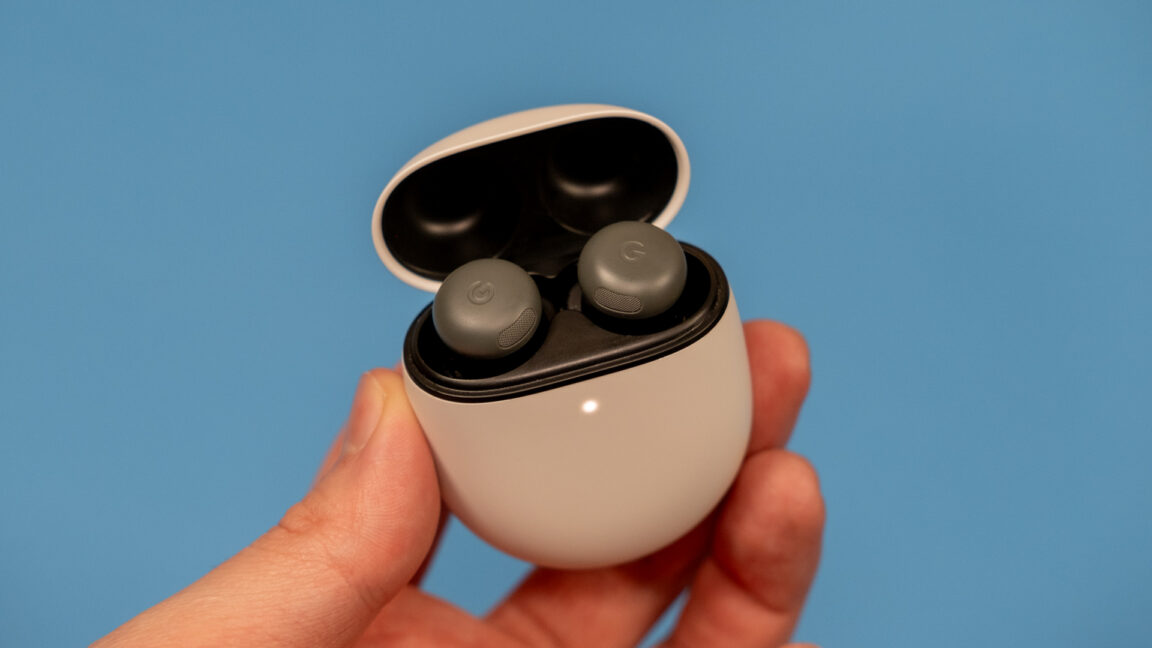
Pairing Bluetooth devices can be a pain, but Google Fast Pair makes it almost seamless. Unfortunately, it may also leave your headphones vulnerable to remote hacking. A team of security researchers from Belgium’s KU Leuven University has revealed a vulnerability dubbed WhisperPair that allows an attacker to hijack Fast Pair-enabled devices to spy on the owner.
Fast Pair is widely used, and your device may be vulnerable even if you’ve never used a Google product. The bug affects more than a dozen devices from 10 manufacturers, including Sony, Nothing, JBL, OnePlus, and Google itself. Google has acknowledged the flaw and notified its partners of the danger, but it’s up to these individual companies to create patches for their accessories. A full list of vulnerable devices is available on the project’s website.
The researchers say that it takes only a moment to gain control of a vulnerable Fast Pair device (a median of just 10 seconds) at ranges up to 14 meters. That’s near the limit of the Bluetooth protocol and far enough that the target wouldn’t notice anyone skulking around while they hack headphones.
Once an attacker has forced a connection to a vulnerable audio device, they can perform relatively innocuous actions, such as interrupting the audio stream or playing audio of their choice. However, WhisperPair also allows for location tracking and microphone access. So the attacker can listen in on your conversations and follow you around via the Bluetooth device in your pocket. The researchers have created a helpful video dramatization (below) that shows how WhisperPair can be used to spy on unsuspecting people.
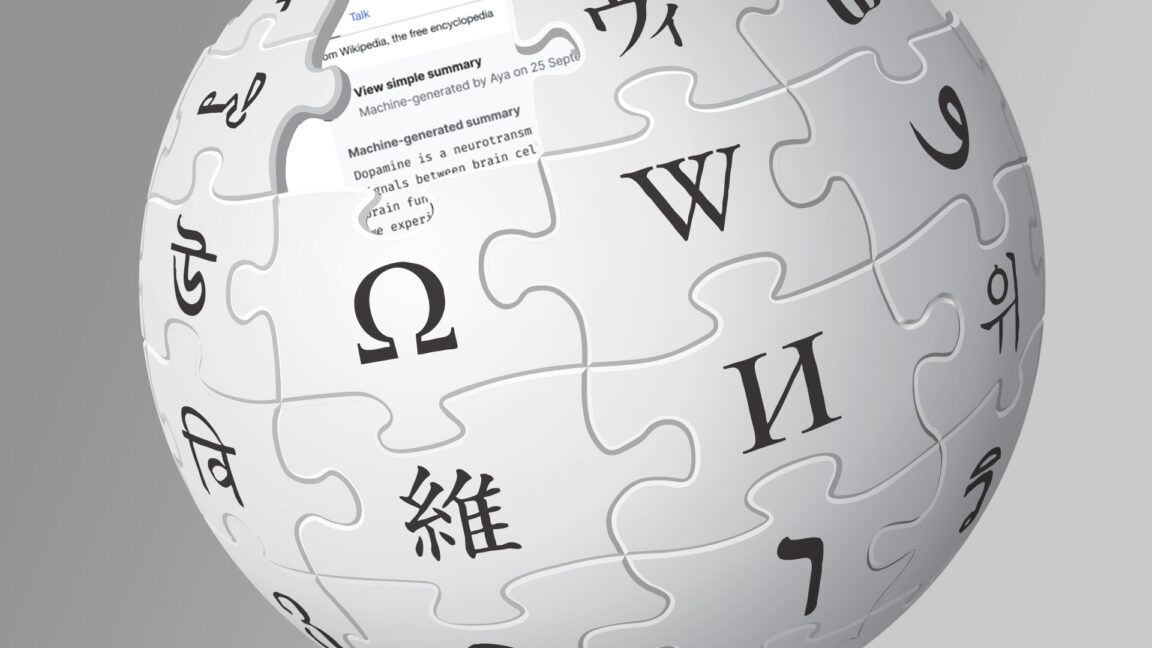
Wikipedia signs AI training deals with Microsoft, Meta, and Amazon
The cost of “free” knowledge
The push for paid licensing follows years of rising infrastructure costs as AI companies scraped Wikipedia content at an industrial scale. In April 2025, the foundation reported that bandwidth used for downloading multimedia content had grown 50 percent since January 2024, with bots accounting for 65 percent of the most expensive requests to core infrastructure despite making up just 35 percent of total pageviews.
By October, the Wikimedia Foundation disclosed that human traffic to Wikipedia had fallen approximately 8 percent year over year after the organization updated its bot-detection systems and discovered that much of what appeared to be human visitors were actually automated scrapers built to evade detection.
The traffic decline threatens the feedback loop that has sustained Wikipedia for a quarter century: Readers visit, some become editors or donors, and the content ostensibly improves. But today, many AI chatbots and search engine summaries answer questions using Wikipedia content without sending users to the site itself.
Meanwhile, the foundation’s own experiments with generative AI have met resistance from the volunteer editors who maintain the site. In June, Wikipedia paused a pilot program for AI-generated article summaries after editors called it a “ghastly idea” and warned it could undermine trust in the platform.
Wikipedia founder Jimmy Wales told The Associated Press that he welcomes AI models training on Wikipedia data. “I’m very happy personally that AI models are training on Wikipedia data because it’s human curated,” Wales said. “I wouldn’t really want to use an AI that’s trained only on X, you know, like a very angry AI.” But he drew a line at free access: “You should probably chip in and pay for your fair share of the cost that you’re putting on us.”
Gemini can now scan your photos, email, and more to provide better answers
Google’s take on AI privacy
Perhaps sensing that feeding more data into Gemini would give many people the creeps, Google’s announcement explains at great length how the company has approached privacy in Personal Intelligence. Google isn’t getting any new information about you—your photos, email, and search behaviors are already stored on Google’s servers, so “you don’t have to send sensitive data elsewhere to start personalizing your experience.”
Having the chatbot regurgitate your photos and emails might still be a little unsettling, but Google claims it has built guardrails that keep Gemini from musing on sensitive topics. For example, the chatbot won’t use any health information it finds. However, you can still ask for it to look at that information explicitly.
Getting started with Personal Intelligence
Google also stresses that your personal data is “not directly used to train the model.” So the images or search habits it references in outputs are not used for training, but the prompts and resulting outputs may be used. Woodward notes that all personal data is filtered from training data. Put another way, the system isn’t trained to learn your license plate number, but it is trained to be able to locate an image containing your license plate.
This feature will be in beta for awhile as it rolls out, and it may take several weeks to reach all paid Gemini accounts. It will work across all Gemini endpoints, including the web, Android, and iOS.
Google also says it plans to expand access to Personal Intelligence in Gemini down the road. Unless Google flip-flops on the default settings, you can leave this feature disabled. That ensures Gemini won’t get additional access to your data, but of course, all that data is still sitting on Google’s servers. This probably won’t be the last time Google tries to entice you to plug your photos into an AI tool.