VML Global President Mel Edwards to Retire After More Than Three Decades in Advertising
Mel Edwards, global president of VML, will retire in late spring 2026 after more than three decades in the advertising industry, the agency confirmed to ADWEEK. Her decision marks the culmination of a career defined by client partnership, creative excellence, and a lasting impact on WPP’s global network.
Edwards played a pivotal role in the integration of Wunderman Thompson and VMLY&R to form VML, shaping the connected culture of the new agency and expanding its technology and creative capabilities. Under her leadership, VML has become a global network known for its award-winning creativity and robust digital expertise.
“Mel has been a phenomenal leader, partner and friend, helping to shape VML’s global network over the last two years,” said Jon Cook, global CEO of VML, in a statement. “Her strategic vision, energy, and authentic leadership have touched so many people around the world. I am grateful for her friendship and her unwavering commitment to making VML what it is today.”
“My decision to retire next year has given me time to reflect on the incredible journey I’ve had—one filled with inspiring colleagues, clients, and friends from every corner of the world,” Edwards said. “I am so proud of the connected culture and expansive offerings that Jon and I have recently built together at VML. Our ability to be strategic partners with clients across both creativity and technology is truly differentiated. I’m excited to see how VML accelerates even further in the years to come.”
In an internal memo reviewed by ADWEEK, Cook praised Edwards’ partnership and her role in building VML’s culture following the merger, calling her “a phenomenal leader across Wunderman, Wunderman Thompson, and ultimately VML.” He said she will remain with the agency through 2026 to transition responsibilities before officially retiring.
Edwards’ departure follows several years of transformation across WPP’s creative network, as the holding company continues to unify its agencies and invest in technology through platforms like WPP Open Pro. Her exit comes amid ongoing leadership shifts across the group, including at AKQA and Ogilvy, as WPP leans into data, AI, and connected creativity.
Cindy Rose, CEO of WPP, added: “On behalf of WPP, I want to thank Mel for her leadership, loyalty, and passion over the last 13 years. Her influence and impact have shaped how we partner with our clients every day and her legacy will be felt well into the future. We wish her an amazing next chapter when it begins in 2026.”
The multi-hyphenate talent has held top marketing posts at Pepsi, Apple, Uber, and Netflix—all before publishing a memoir, joining the cast of The Real Housewives of Beverly Hills, launching her own line of wigs, and most recently, teaming with Jimmy Fallon to co-host the new marketing competition series On Brand.
Throughout it all, the 48-year-old talent has been guided by her own intuition and bravery—no one else’s.
“I don’t know that I’ve had many advocates in my career anyway,” she told a packed room at Brandweek 2025 in Atlanta on Monday. “Being a Black woman in this business, there aren’t very many spaces where I depend on other people to champion me. I’ve had to figure out my own championing.”
One moment that defined her ability to do so came in mid-2017, when Travis Kalanick, founder of Uber, was forced by the company’s board to resign from his post as CEO after a series of scandals. Kalanick had just hired Saint John as chief brand officer.
She found herself in the unexpected position of leading a brand with no leader. Though Kalanick’s departure rattled the business, Saint John was determined to identify a path forward for the beleaguered rideshare app.
She recognized that Uber didn’t have a tech problem, but a brand problem. It was her job to “[get] into the beat of the brand, and what was hurting” it, as she put it. “Nobody had a plan. There was nothing happening except for whatever I dreamed up.”
Under Saint John’s leadership, the brand repositioned itself with a campaign starring the then-newly appointed CEO Dara Khosrowshahi promising to steer the company in a better direction. The brand slowly but surely made strides.
Overcoming tragedy to make a new start
Saint John’s self-assuredness has been a theme throughout her professional life—and in her personal life, too.
In 2013, she lost her husband of 10 years, Peter Saint John, to cancer. Still in the throes of grief, Saint John decided to rearrange her life, quitting her job as head of music and entertainment marketing at PepsiCo and leaving New York for the west coast.
“My husband had been dead for four months when I resigned and moved across the country from New York to Los Angeles to start working for Jimmy Iovine and Dr. Dre” at Beats, she said. “Everyone thought I’d lost my mind. But the truth of the matter is that I needed to do it for myself. People didn’t understand what I was dealing with, and they thought that the answer was in hiding and laying down. And I don’t fault anybody who wants to do that when you suffer a loss like that, but for me, I needed to get back up. So I had to go.”
Then in the spring of 2014, Beats was acquired by Apple. Before long, Saint John found herself sitting in the tech giant’s headquarters in Cupertino. “Tim [Cook] said, ‘Well, you should actually just run iTunes in Apple Music,’” she recalled. “And I was like, ‘Oh, shit.’”
Just like that, her life was off in a new direction again—thanks in large part to her unwavering trust in her own intuition.
“There are so many myths about what it takes to be a leader,” she said. “Sometimes it’s misunderstood that you have to have a clear path in order to become a leader, in order to rise to the top again, and again, and again. What I want to show is the fact that I am human, and that terrible things have happened in my life, and I have found ways to navigate those tragedies and that loss and grief in order to not just survive, but to thrive.”
She added: “The adage is, ‘Look for the light at the end of the tunnel.’ That sounds so stupid. It is much better to have a light on your person,” she said. “That way, you can look around, see what’s coming, get rid of monsters, all that stuff. I have had much more success being my own light, my own champion, my own advocate, than searching for it in somebody else.”
‘It’s Pretty Surreal’: On Brand Winner Breaks Silence on Their Pitch Perfect Season
Bianca Fernandez never thought she’d be on reality TV—then came an Instagram DM from someone working on a new advertising competition show, NBC’s On Brand with Jimmy Fallon.
“I remember calling my mom and being like, ‘Do you think this is legit?’” Fernandez told ADWEEK. “‘But also, if this is legit, how perfect is this for me?’”
It was so perfect, in fact, that she won it all. On the show’s Season 1 finale that aired Oct. 31, Fallon and his co-host, Bozoma Saint John, announced Fernandez as the show’s first Innovator of the Year. Along with a cash prize of $100,000, her concept for the final client, Therabody, will be produced as a commercial.
“It’s pretty surreal,” said Fernandez, a Gen Z marketer based in New York. “Going into the experience, I had truly no idea what to expect, but I did know I really wanted to win, and I knew based off of what was described to me that I’d have a shot if I gave it my all and didn’t hold myself back.”
She embraced that ethos throughout the season, often becoming the project lead on campaigns such as creating a viral drink for drive-in QSR chain Sonic and adding a “spicy take” idea to Captain Morgan’s Super Bowl campaign. While on the show, she even proclaimed her intentions to make the Forbes 30 Under 30 List.
But success wasn’t easy. Fernandez noted there were “a lot of pressure cooker moments” throughout the season, with some of the most stressful times not even making the final cut. For instance, when meeting with graphic designers, contestants had equal but limited time—what Fernandez described as just “minutes”—to turn their ideas into campaigns, sometimes overnight.
As if that weren’t enough pressure, everything was on the contestants, with Fernandez saying NBC made sure to promote fairness so the behind-the-scenes creatives didn’t impose their own strategy while translating contestant ideas into pitch presentations, even if those ideas went awry.
The finale brought on added challenges as Fernandez and fellow finalist Ryan Winn had to create and shoot an entire commercial for Therabody, essentially by themselves and in an equal but “insanely short amount of time,” according to Fernandez.
“It was wild,” she said. “I remember in the bus on the way shot-listing [the ad] out on a piece of paper and a notepad, sketching out frame by frame each of the shots that I needed.”
But, in many ways, Fernandez had been training for that pressure for years.
You can’t just Tumbl’ into a win
The marketer’s journey to On Brand began in the early 2010s in high school, when she created a Tumblr all about preppy fashion. Fernandez built a following, met like-minded friends on the pre-influencer internet, and even scored a brand deal with Vineyard Vines. “It was my first taste of what would eventually become my career,” she said.
Though Fernandez had gone pre-law in college and even interned in politics in D.C., she eventually pivoted back to marketing, landing at TikTok in its early days to convince brands of the platform’s merits before running social at Tarte Cosmetics. Today, she serves as the head of brand engagement at actor Lili Reinhart’s beauty brand, Personal Day.
Besides her family group chat coming to life since the show’s release, Fernandez said there have been “a lot more” inbound requests for work collaborations. But she still has her day job, which requires interacting with marketers in the industry—and they have questions.
How to keep pitches On Brand
Firstly, yes, there is a ton of material that understandably didn’t make it to the screen, as pitches that could be around 5 minutes or more were cut down to seconds. Because of that, not everything translated, with Fernandez even speaking up for fellow contestant BT Hale’s out-of-this-world, alien-infused “Take Me to Your Dunkin’” pitch.
“I thought that’s genius,” she said. “That would take a lot more world-building, but I still think that’s one of my favorite ideas from the show.”
Fernandez also noted that since her day job focuses on strategy and facts, she tried to ground her campaign ideas in insights. But success on the show also required contestants to pitch more of their personal stories, as well as what they thought would play well for broad audiences and look good on television.
Actually executing their ideas also brought certain challenges. For instance, Fernandez pitched an ASMR activation for Pillsbury, complete with sensory deprivation domes, but those had to be replaced with clear structures for filming purposes, she said. That also created an emergency air conditioning situation after the clear domes and all the electronics inside overheated in the sun.
“It was all hands on deck,” Fernandez said.
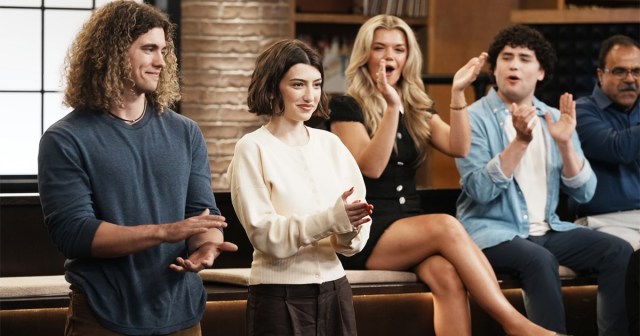
Bianca Fernandez on set for her Therabody commercial shoot. (credit: NBCUniversal)
But Fernandez was down to roll with it all: In an episode where everyone had to act excited as a CGI Pillsbury Doughboy made its way into the show, Fernandez hammed it up with the other contestants, who she said were thrilled to bring “movie magic” to life. And though she wishes some of her facial expressions hadn’t made the final cut, she said it all “made for good TV.”
“You really wear what you think on your face, don’t you?” Fernandez said, also noting that she was proud of herself for leaning in and “wasn’t afraid to take big swings and show up every day.”
Though Fernandez hasn’t made the Forbes 30 Under 30 List “yet,” she noted she recently had an interview with the outlet. Meanwhile, she’s focused on growing as a marketer, taking on more commercial and branded production work, and enjoying the reactions now that she can share her news with the world.
“I’m lucky I have the opportunity to be head of brand at a consumer brand right now, run marketing campaigns, and do that kind of work,” Fernandez said. “I’m excited to keep doing that work, keep getting better, and—yeah—ride the wave.”
WPP CEO Cindy Rose Calls Performance ‘Unacceptable’ as Full-Year Outlook Slumps
The numbers
–8.4% – revenue decline for the quarter, down 3.5% year-on-year on a like-for-like basis
–11.1% –decline in revenue less-pass-through costs down overall and 5.9% on a like-for-like basis
–5.5 – 6.0% – How much WPP now expects revenue, less pass-through costs, to decline in 2025. This is a drop from its previous forecast, which predicted a decline between 3 to 5%.
–$4.3 billion (£3.25 billion) – revenue less-pass-through costs for the quarter.
Watercooler talk
WPP has reported its first earnings under the leadership of new chief executive (CEO) Cindy Rose, who has launched a strategic review aimed at helping the embattled holdco return to growth.
As revenue dropped 8.4%, the business has downgraded its full-year guidance for the second time this year, issuing a fresh profit warning.
In her first public statement to investors and journalists, Rose said WPP’s performance was “unacceptable.”
She said the business was taking action to improve this, including making investments in AI and simplifying its operational structure.
The business has faced a challenging first half of the year thanks to client losses on the media side, including Mars, which it lost to French rival Publicis Groupe. Before Rose joined, it also undertook a restructuring of its WPP Media division, which resulted in significant layoffs.
Revenues at WPP Media were down 5.7%, while the North America market, which is about to face even stiffer competition as Omnicom Group prepares to close its acquisition of IPG, dropped 6%.
“There is a lot to do, and it will take time to see the impact, but in my first 60 days, we are already moving at a pace with some initiatives already announced and more to come,” said Rose.
“We know what it takes to win: we are optimistic, energized, and confident that we’re building the right plan and the right culture to secure a bright future for WPP, our people, our clients, and our shareholders. We look forward to sharing more details early in the new year.”
The Trade Desk Announces CRO Shakeup Ahead of Q3 Earnings
Adtech titan The Trade Desk will swap its longtime chief revenue officer Jed Dederick for Anders Mortensen on Nov. 4, the company announced Tuesday.
Mortensen, an adtech veteran and newcomer to the company, most recently served as a managing director and vice president at Google, where he helmed U.S. lead generation efforts. In his new role at The Trade Desk, he’ll report directly to CEO Jeff Green, focusing on “ensuring [the company’s] global commercial strategy harnesses the full power of Kokai, Koa AI and industry innovations such as Unified ID 2.0 and OpenPath,” Mortensen said in a statement.
“I’m excited to join Jeff and the team to accelerate this new era of growth, particularly within high-ROI channels like Connected TV and Retail Media,” he added.
In a statement, Green expressed optimism that Mortensen will provide the company with new tools for scaling its go-to-market efforts. He said: “By combining TTD’s unparalleled vision for the open internet with Anders’ passion and discipline for growing businesses, I’m extremely confident in our ability to scale our business and the open internet to heights never seen before.”
Dederick had been at The Trade Desk for more than 13 years, holding the CRO title since January of last year. He will aid Mortensen in his transition into the role through the end of 2025, the company said.
“I look forward to cheering [Mortensen] and the company on in the years ahead,” Dederick said.
Green expressed gratitude for Mortensen’s many years at the company, saying: “Jed joined The Trade Desk when we were less than 20 people with zero revenue, and he has been instrumental to much of the company’s go-to-market success as we have grown to become the world’s largest independent demand-side platform serving the world’s largest agencies and brands. We are incredibly thankful for his many contributions to our growth, our culture and his unique ability to build and grow relationships with leading marketers around the world. I know he’ll continue to be one of our biggest supporters.”
The company, which did not offer additional comment, will report its Q3 earnings Nov. 6. The Trade Desk has said it is targeting a quarterly revenue of $717 million, which would represent 14% year-over-year growth. Last quarter, the company reported $694 million in revenue, beating Wall Street estimates, but missed on earnings per share.
After three decades leading Haworth Marketing + Media, longtime chair and owner Gary Tobey is stepping down from the agency he transformed into one of retail marketing’s most influential independents.
Haworth CEO Andrea Luhtanen, who has spent nearly 30 years with the company, will succeed Tobey and add chairman to her title.
Based in Minneapolis, Haworth was founded in 1970 and became known for its decades-long relationship with Target. WPP’s GroupM acquired a 49% stake in Haworth in 2014, and the retailer moved its media account to the holding company shortly after.
Luhtanen joined the company in the mid-1990s, holding roles including vp of marketing services, evp and general manager, and president before becoming CEO in 2023. She helped lead Haworth’s transition to an employee-owned structure and later its partnership with WPP.
Tobey, who bought Haworth in the mid-1990s from founder Mary Haworth, evolved the business from a regional media shop into a full-service marketing partner. As he steps away from day-to-day leadership, he plans to focus on consulting and board advisory work across the retail, consumer, entertainment and philanthropic sectors.
“The whole industry has changed a lot,” Tobey told ADWEEK. “It’s just time for me to do consulting and do board work.”
From Media Buyer to Brand Builder
Under Tobey’s leadership, Haworth helped shape the modern image of big-box retail through work for clients including Target, Walmart, Beats Electronics, Ben & Jerry’s, Dick’s Sporting Goods, and the Academy of Motion Picture Arts & Sciences.
Tobey also led the company’s transition into an employee stock ownership plan (ESOP) roughly 16 years ago to give staff a financial stake in the agency’s success.
“I thought it’d be a great way to have the employees be owners of the company and be able to make some money when they leave,” Tobey said, adding giving equity led the team to “really care about the company’s performance.”
Tobey’s influence is strong on modern retail branding—most notably Target’s transformation in the 2000s from discount chain to design-driven cultural brand. Haworth’s work helped shape Target’s reputation for creative partnerships and entertainment tie-ins, including Tony Bennett: An American Classic, the 2006 NBC special celebrating Bennett’s 80th birthday.
Produced in collaboration with director Rob Marshall and featuring Barbra Streisand, Christina Aguilera and Michael Bublé, the project won seven Emmys and became emblematic of Target’s cultural marketing era.
Target and Haworth ended their relationship in 2016, when the retailer moved its media account to WPP Media (at the time GroupM). Last week, Target announced plans to cut approximately 1,800 corporate roles—about 8 % of its workforce—as part of a major restructuring effort to address persistent sales headwinds.
A Legacy of Purpose and Partnership
Despite career success, Tobey said his work with St. Jude Children’s Research Hospital is his proudest achievement. His involvement dates back more than 20 years, when he helped secure Target’s $100 million commitment to build family apartments on the hospital’s campus.
“We got Michael Graves to do the statue out in front, and I got Scott Hamilton and Tiger Woods and a bunch of other celebrities who really embraced it all,” he said. “It’s something I’m really proud of.”
As he moves into consulting, Tobey said his philosophy remains rooted in the fundamentals of brand experience. “We never ran an ad until we had the guest experience together,” he said. “It starts with every aspect of the company, not just marketing the brand.”
Looking back, he hopes to be remembered for the partnerships and brands he helped build.
“At the end of the day, it’s about returning to real relationships: understanding what a client stands for, building brands with purpose, and coming up with ideas that make a difference,” he said.
Feast & Fettle’s Alon Rivel Is Building a Regional Food Empire
On this episode of the Marketing Vanguard podcast, host Jenny Rooney sits down with Alon Rivel, CMO of Feast & Fettle, to discuss the Northeast meal delivery company’s contrarian approach to growth.
With his unconventional background spanning TV media buying, The New York Times, Bloomberg, and B2C tech startups, he brings a unique perspective to building authentic brands.
“People want good food, and they want to trust you, and they want to know when you mess up that you’re going to own it,” he says. “When we make a mistake, we tell our members before they catch it.”
The conversation explores how Feast & Fettle differentiates by focusing on time as currency rather than trendy diets or speed. Their approach combines locally sourced ingredients with hospitality-first service and community building.
Alon Rivel serves as the first CMO at Feast & Fettle, where he’s spent just over a year transforming their marketing approach. Previously, he worked across TV media buying, digital marketing for B2C apps, and various tech startups.
Unlocking the Creator Economy with Awin
Did you know influencer marketing drives twice as many sales as display advertising, with a 37% higher retention rate?
Awin helps brands harness this potential with tailored influencer management solutions that drive measurable results. Whether you’re looking to grow your creator roster, foster long-term relationships, or track full-funnel performance, Awin’s expertise and platform integrations make it easy to scale campaigns and optimize impact.
With partnerships across CreatorIQ, LTK, ShopMy, and more, brands gain access to powerful discovery tools and seamless tracking capabilities, ensuring transparency and efficiency at every stage.
Here’s how brands can maximize their influencer marketing:
Find the right creators: Access a diverse network of influencers, even in niche markets.
Track performance with full transparency: Measure impact from awareness to conversions in real time.
Incentivize influencers effectively: Commission-based rewards through affiliate links and coupon codes keep creators engaged.
Unlock the full potential of influencer marketing. Visit awin.link/adweek to start building high-impact partnerships today!
Episode Highlights:
[01:03] The Unconventional Marketing Path — Alon describes his diverse background: “I started out more traditional, in the TV media buying side of the industry. I grew up in New York City, and I got to go to some of those wild upfront parties that gave me a good base of people to have access to.” His journey through The New York Times, Bloomberg, and B2C tech startups taught him to read situations: “Growing up gay in a closet in the early 2000s, I’m Israeli Jewish, I had to learn how to read a room, and I had to figure people out for survival.”
[05:25] Intentional Growth Strategy — Alon explains Feast & Fettle’s approach: “We grow with intention. We’re not focusing on conquering the U.S. or going abroad. I think that’s where a lot of companies get it wrong.” The company has been around for 10 years and recently launched in New York City while acquiring two companies in the space.
[08:54] Solving for Time, Not Trends — When discussing competition, Alon emphasizes their unique positioning: “You’re solving for time as a currency. Time is what people who use us need. Time to either be with their kids, time to read, to do their job, to take a break, to be present. That is where we focus, and that makes us different.” He criticizes competitors who focus on trendy diets: “Any meal delivery company can take a picture of what I call ‘food porn’ and put their logo on it. That’s not what you want.”
[12:06] Why Not Scale Nationally — Alon defends Feast & Fettle’s regional focus: “We are growing, but we’re not growing in the way that private equity would want you to grow.” He calls it “intentional slow growth” and warns against losing quality: “You look at Panera—they grew too fast. They lose that thing [that made them special]. We’re so scared of losing that edge.”
[21:37] Cutting the Marketing Team — On his first day as CMO, Alon made dramatic changes: “There was a team, a very big team, and I scaled down. Literally, my first day, I sat with every single person on the team. I was like, ‘What do you do here?’ Do you know how many people couldn’t answer that question?”
[25:55] Vision for the Future — Alon shares his long-term goals: “My vision is that we become your right-hand operating system for your home. It’s like, ‘OK, we’ve solved dinner. What are we gonna solve next? What else are you outsourcing? And how do we do that for you?’ And no one’s doing that, and that’s really interesting to me.”
EXCLUSIVE: AKQA Exodus Continues as North America CEO and Chief Marketing & Growth Officer Exit
AKQA’s North America CEO Tesa Aragones and chief marketing and growth officer for the Americas Jabari Hearn have departed the company, the WPP-owned agency confirmed to ADWEEK.
The dual exits mark the latest leadership changes at the agency, which has undergone multiple rounds of reorganization over the past year as it shifts its regional structure and management approach.
Jonathan Bolden, AKQA’s global chief transformation officer, will oversee the Americas on an interim basis while maintaining his existing responsibilities, according to an AKQA spokesperson.
“Tesa Aragones will be stepping away from her role as regional CEO. We appreciate her leadership and the positive contributions she has made to our teams and clients,” the spokesperson told ADWEEK.
3 of Raja Rajamannar’s ‘Priceless’ Mastercard Marketing Milestones
After 12 years as Mastercard’s chief marketing and communications officer, Raja Rajamannar is leaving his post and moving into the role of senior fellow.
Under Rajamannar’s leadership, Mastercard transformed into a marketing-led, data-driven organization. A former chair of the ANA’s Global CMO Growth Council, he also founded Mastercard’s healthcare business and authored Quantum Marketing, now taught at more than 300 universities.
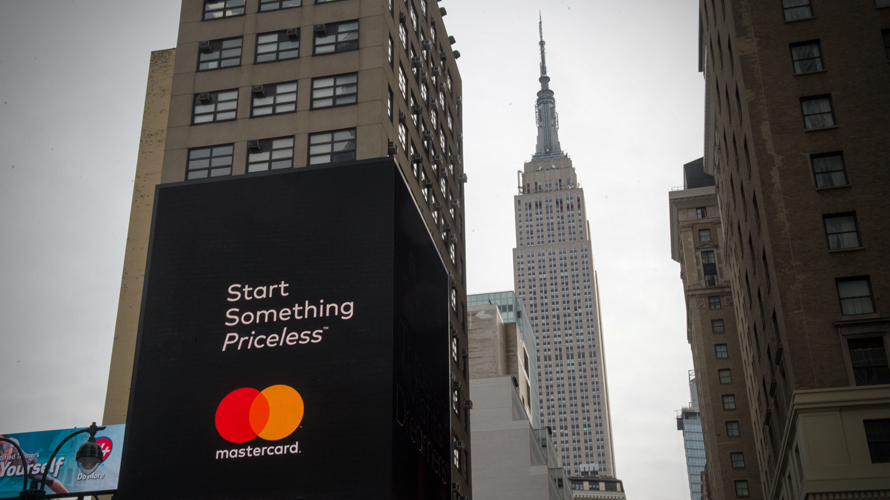
Rajamannar’s legacy is rooted in evolving Mastercard’s “Priceless” brand platform.
Debuted in 1997, long before Rajamannar joined the financial firm, the original TV commercial from McCann showcased precious moments in life, ending on the tagline: “There are some things money can’t buy; for everything else, there’s Mastercard.”
Since taking on Mastercard’s top marketing role in 2012, Rajamannar has turned the “Priceless” promise into a multidimensional brand platform, spanning experiences, innovations, and more.
ADWEEK looks back on his three standout marketing moments.
1. Evolving a ‘Priceless’ proposition
Mastercard’s ‘Priceless’ campaign has evolved over the last 30 years.Mastercard
To evolve “Priceless,” Rajamannar shifted its focus from simply delivering memorable moments to curating extraordinary experiences for customers. These have ranged from an exclusive dinner atop a Times Square billboard in New York City to unique restaurant partnerships across the U.S., Brazil, the U.K., Hong Kong, and beyond.
The brand even launched bespoke macaron flavors in partnership with luxury French patisserie Ladurée to let people “taste” the brand.
“Priceless” has also been central to Mastercard’s longtime Grammys sponsorship, including a recent partnership with Lady Gaga that gave fans the chance to be part of a fan version of the video for her 2025 single “Abracadabra.”
Speaking to ADWEEK five years into his role, Rajamannar said “Priceless” had endured the test of time because it tapped into a universal human truth: “experiences matter more than things.”
“Despite tectonic changes in the consumer landscape, it remains equally relevant today,” he said at the time. “Once you find your truth, the key is to adapt the manifestation appropriately to the current environment.”
2. Multisensory Marketing
The vibrations of the haptic logo sync with Mastercard’s sonic brand.
“Reinvention in the digital age calls for modern simplicity,” he said at the time, adding the company “felt ready to take this next step” in its brand evolution.
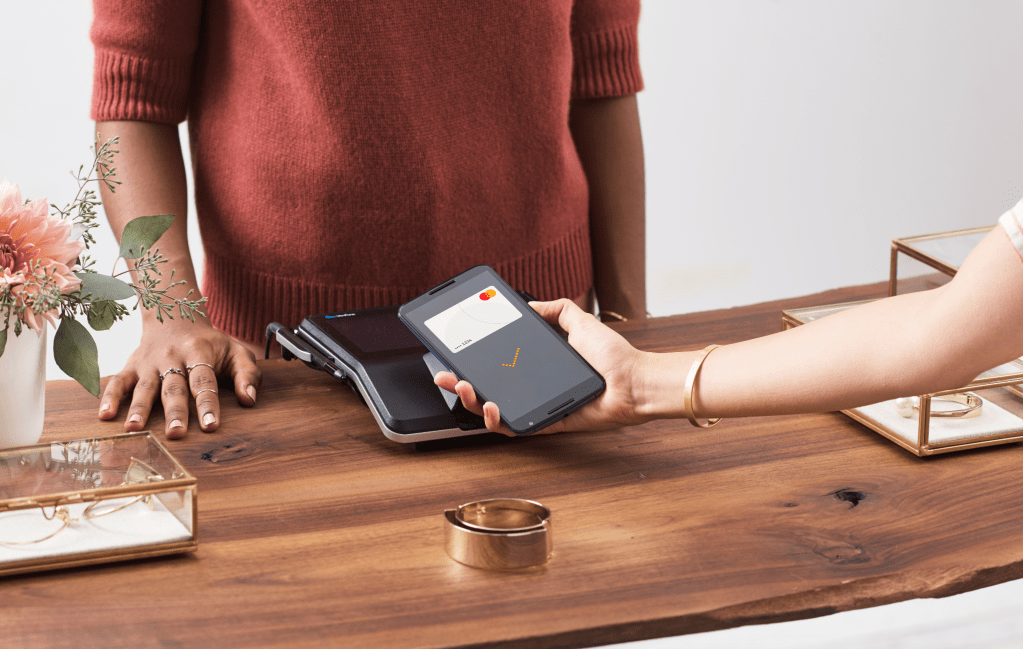
In the same year, Mastercard debuted a sonic logo, a unique 1.3-second sequence of notes presented at checkout. Mastercard said the chime had boosted trust and made customers 80% more likely to return to a merchant utilizing the sound.
Rajamannar said the innovation represented a “new frontier” for marketing. “We’re literally defining a new boundary and field altogether,” he said, adding that the tactile branding has driven a points increase in customer satisfaction within the tune of the “high teens to low 20s.”
3. Bringing Purpose to ‘Priceless’
Rajamannar has extended the “Priceless” brand promise to one that champions accessibility, inclusion, and diversity through marketing and design.
Innovations have included the “True Name” initiative, developed in 2020 to support non-binary and transgender people. The feature lets cardholders use their preferred name on their card instead of their legal name.
Until 2025, the brand was a long-time sponsor of the New York City Pride March, the city’s annual event for LGBTQ rights.
In 2023, the financial services giant launched the Touch Card, which features simple yet distinct notches to help blind and partially sighted people identify their different credit, debit, and prepaid cards.
Posting on LinkedIn about his decision to step down as CMO, Rajamannar wrote: “As I pass the baton to Jill Kramer, who brings remarkable experience from her time as CMCO at Accenture, I do so with confidence and excitement for what lies ahead.”
He added: “I’ll continue to stay close to the craft I love—and to all of you—in my new capacity as Mastercard senior fellow. But today, more than anything, I simply feel thankful—for the people, the memories, and the privilege of being part of something truly priceless.”
It marks the first time the holding company’s data business, part of its connected media unit, has had a CEO since Bryan Kennedy retired in 2021.
John Giuliani, who had been serving as Epsilon’s executive chairman, will remain in his role. Per a company release, he will work with Reardon to drive Epsilon’s growth, while also focusing on long-term strategic initiatives.
Reardon and Giuliani will report to Dave Penski, CEO of Publicis Connected Media. Reardon will also join the Publicis Groupe management committee.
“Sean’s rich understanding of the complexities of this business, alongside the opportunity found in bringing together data, digital, commerce, and influencer capabilities within our Connected Media offering, will only continue to drive growth, differentiation, and powerful outcomes for our clients,” Penski said.
Reardon’s new position marks his return to the French advertising giant. He previously served in various senior roles, including CEO positions, at its now consolidated digital media agencies, Zenith and Moxie, between 2007 and 2019.
The exec joined adtech firm MiQ as U.S. CEO in 2019, adding global to his title in 2022. The seasoned leader took on his most recent role at Dentsu in 2024.
He arrives as Publicis has been bulking up its data arsenal. It recently acquired ID business Lotame, which it is integrating into data powerhouse Epsilon to help clients reach 91% of adult internet users globally and deliver “personalized messaging at scale.”
ADWEEK understands Reardon will oversee Lotame as part of his remit, following its integration with Epsilon.
The holdco has made several big appointments since the end of last year. In December 2024, it tapped Amy Armstrong from Amazon Ads as its chief revenue officer. In March, it named former BMB creative Matt Lever as its global executive creative director.
It also recently promoted Deepti Velury to CEO of global production to lead production, as well as AI and data integration within its connected media arm.
The company ended 2024 as the largest advertising and marketing services company among the “big four” ad networks by revenue. However, that designation won’t last long following Omnicom’s impending takeover of IPG.
Changes at Dentsu
Will Swayne, global practice president of media at Dentsu, filled Reardon’s role in May with an expansion of his purview into the U.S.
“Media is the driver of Dentsu’s integrated growth solutions powered by creativity, data, and technology, and through this shift, we aim to achieve consumer connectivity for our clients’ brands at scale,” a Dentsu spokesperson said in a statement at the time of Reardon’s departure.
“The U.S. is emerging as a key driver of media opportunity and leadership and will continue to be an area in which Dentsu invests in talent and capabilities.”
Having laid off 8% of staff in August, Dentsu is reportedly mulling a sale of its international business, according to The Financial Times.



 Bianca Fernandez on set for her Therabody commercial shoot. (credit: NBCUniversal)



![Mastercard has appointed Accenture marketing boss Jill Kramer as its next chief marketing and communications officer, succeeding longtime marketing leader Raja Rajamannar effective Dec. 1. Rajamannar will move into the […]](https://rassegna.lbit-solution.it/wp-content/uploads/2025/10/3-of-raja-rajamannars-priceless-mastercard-marketing-milestones-1.png)
