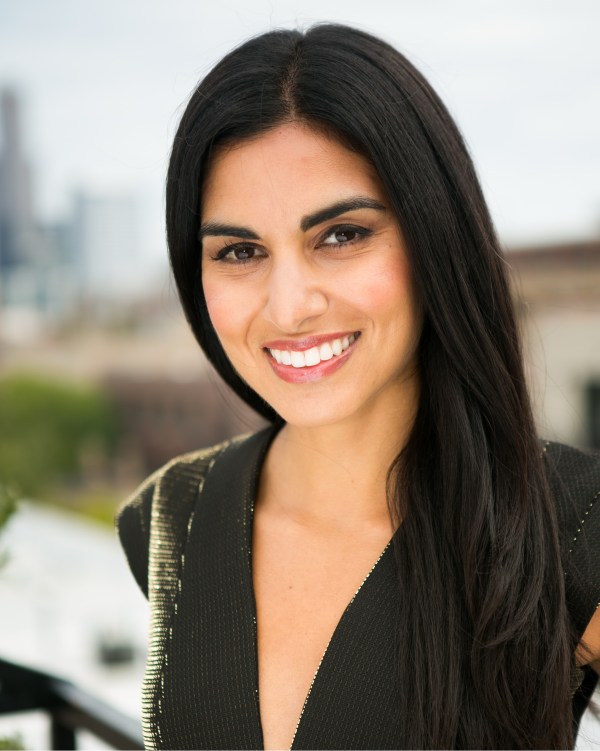
BBC Studios Names Jon Otto SVP of North America Ad Sales

Media executive Jon Otto is joining BBC Studios as a senior vice president of ad sales in North America. Otto will be responsible for overseeing direct media sales, sponsorships, and branded content for BBC Studios and BBC.com across the U.S. and Canada.

Based in New York, Otto will report to James Wildbore, senior vice president and general manager of ad sales globally.

“Jon is a dynamic leader with a proven track record of building high-performing teams and delivering innovative solutions for partners,” Wildbore said. “His deep understanding of the media landscape and passion for storytelling make him the ideal person  to lead our ad sales business into its next chapter.” 

Otto added, “Joining BBC Studios is an incredible opportunity to match one of the world’s most iconic and trusted media brands with the needs of today’s marketers. I’m thrilled to build on that foundation in North America, creating partnerships and campaigns that align with the BBC’s premium storytelling, audience, and journalism.” 

Before joining BBC Studios, Otto was SVP of client partnerships and general manager of Axios Live. He led the advertising and sponsorships division and spearheaded the growth of the company’s live events business.

Prior to that, Otto was the chief communication officer, ad sales at Crain Communications. He has also had stints at Politico, BCW Global, and American Honda Motor Co., among other companies.

https://www.adweek.com/convergent-tv/bbc-studios-names-jon-otto-svp-of-north-america-ad-sales/


Outfront Media Names Nick Brien Permanent CEO


Outfront Media has named Nick Brien as its permanent chief executive (CEO).

Brien, who has been at the helm of the out-of-home (OOH) business on an interim basis since February, stepped in following the retirement of its longtime CEO, Jeremy Male, at the end of 2024.

The new CEO previously led ad platform Amobee. Before that, he was U.S. CEO for agencies including McCann Worldgroup, iCrossing, and Dentsu.

“With his deep industry knowledge and proven track record, we’re confident he is the right leader to accelerate the company’s growth and transformation,” said Michael Dominguez, chair of the board at Outfront.

“I’m honored to lead Outfront Media into its next chapter of growth and innovation, as we strengthen our role as a valuable partner to the world’s leading brands and agencies,” said Brien in a press release. He said he would focus on modernizing the company’s operations and investing in new tech to “unlock growth and create lasting shareholder value.”

Dovetailing with Brien’s appointment, the company has added two executive members to its board: Michael Barrett, CEO of adtech company Magnite, and Nicolle Pangis, Netflix’s vp of advertising for North America.

Together, Pangis and Barrett will offer guidance on everything from inventory planning systems to sales processes.

Changing of the guard

Outfront’s leadership and board updates come weeks after it reorganized its senior sales leadership team.

At the start of August, Jim Norton was appointed as chief revenue officer (CRO) of enterprise sales; Mark Bonanni was promoted to CRO of commercial sales; and Brad Alperin named head of brand solutions.

Outfront Media’s Q2 revenues clocked in at $460.2 million in June, down 3.6% year-on-year. However, this figure was flat once the divestiture of its Canadian business (sold in 2024 as part of a shift to double down on U.S. markets) was taken into account.

https://www.adweek.com/media/outfront-media-names-nick-brien-permanent-ceo/


Dave Bernath to Succeed Ron Gutman as CEO of AppLovin’s CTV Firm Wurl 


Wurl, the streaming company owned by mobile adtech giant AppLovin, is getting a new leader. 

CEO Ron Gutman is set to retire Thursday and will be succeeded by Dave Bernath, effective immediately, the company said. 

Bernath previously served as general manager for the Americas at Wurl, where he has focused on partnerships and revenue growth. He joined Wurl in early 2021. 

As CEO, Bernath’s priority will be driving more investment into connected television, or CTV, and to Wurl specifically. With his oversight, the company aims to deepen its technology investments and expand partnerships. 

“At the core, it’s about helping to accelerate the shift of ad dollars from legacy TV to streaming,” he told ADWEEK. “There are a lot of eyeballs on streaming TV, and the ad dollars have yet to follow in a way that’s commensurate with that viewership. That’s my central focus.”

Bernath praised the company’s culture, saying: “It’s a flat structure. We’re a small team. We’re nimble. Ideas come from anywhere. There’s no hierarchy, no bureaucracy. It’s very fast-moving.” As Wurl CEO, he’ll report to AppLovin chief executive Adam Foroughi.

“It has been a privilege leading Wurl through such a transformative chapter in streaming TV,” Gutman said in a statement shared with ADWEEK. He steps down after two and a half years as CEO and a total of eight years at Wurl.

“We’ve built a generative culture rooted in innovation and building great tech,” Gutman said. “Wurl is entering its next phase of growth, and I’m proud to pass the torch to someone who will continue to push our industry forward.”

He added that Bernath “has a deep understanding of both the creative and commercial sides of this business, and knows what it takes to scale and grow the business while putting customers first.”

Prior to joining Wurl, Bernath held a variety of leadership positions in the media and entertainment space, including at Comedy Central, BBC America, and E! News. 

AppLovin acquired Wurl in 2022, and since then it has become a keystone in AppLovin’s broader push beyond mobile advertising and into other fast-growing media areas like CTV and e-commerce. With a footprint across thousands of streaming channels, Wurl streamlines the process of getting content onto streaming services and smart TVs and helps advertisers connect with relevant audiences and content through a programmatic marketplace with access to 95 billion impressions monthly. The platform’s integration with AppLovin’s AI-powered performance marketing product AXON is billed as a way to ensure brands can serve highly relevant, targeted, and measurable ads. 

“We sit in a really special place in the ecosystem,” Bernath said. “We’re a connector between all the parties. We’re really trying to help the content companies maximize the opportunity in streaming, and of course, that means helping the advertisers, the brands, and the agencies grow their businesses in streaming. It’s great to have a view into all those areas and to be a part of trying to make things better.”

AppLovin’s stock is up more than 5% since the company reported strong Q2 financials—which included a 77% year-over-year lift in revenue—earlier this month. It’s been a standout in a field of publicly traded adtech companies that have otherwise seen a decrease in value amid mounting economic anxieties and an AI-driven shakeup in adland.

https://www.adweek.com/media/dave-bernath-to-succeed-ron-gutman-wurl-ceo-applovin-ctv/


Ad Schools Race to Equip Grads for the AI Age


For decades, ad school graduates have entered agencies armed with classic creative skills like copywriting, art direction, and design. The next wave will bring something new to the table: fluency in artificial intelligence. 

When a new term begins this fall, ad schools including Miami Ad School, Brandcenter at Virginia Commonwealth University, and London’s School of Communication Arts (SCA) are rolling out curricula that incorporate AI education.

They’re doing so to prepare students for a workforce being reshaped by AI. The tech is already affecting the general job market for entry-level workers, The Wall Street Journal reported. While the national unemployment rate is about 4%, for new college graduates it was 6.6% over the past 12 months ending in May. 

The ad industry specifically appears to be shedding younger workers as AI use becomes routine at agencies, as ADWEEK reported last week.

Even before AI’s rise, the traditional ad school model was under pressure from economic factors and digital disruption. Since 2023, Miami Ad School has closed campuses in San Francisco, Toronto, and most recently Atlanta. The Chicago Portfolio School, Atlanta’s Creative Circus, and the U.K.’s Watford Course have also shut down in recent years.

Many ad schools are now racing to keep up with the pace of change and convince both prospective students and industry employers that their education is fit for the future.

As Vann Graves, executive director of Brandcenter, put it: “The industry is moving at a pace so much faster than it has ever moved. Education needs to move even faster than that.”

Cracks in the Ad School Model

Modern portfolio schools emerged in the 1990s, when agencies scaled back on-the-job training. Programs like Miami Ad School, founded in 1993, and Creative Circus, established in 1995, offered intensive instruction in advertising fundamentals and portfolio building to help graduates stand out in hiring rounds. 

But the model has drawbacks. Cost is a major barrier: Miami Ad School’s two year portfolio program costs $38,000, while SCA’s three-semester course is about $24,640.

Ad schools can also focus too narrowly on portfolio development meant to catch the eye of advertising creatives at the expense of broader business training, said Alex Grieve, global chief creative officer of BBH.

“I didn’t go to ad school, and I’ve always felt it’s given me an advantage, because I did think differently [when I entered the workforce],” Grieve said. “At ad schools, there’s this kind of obsession with building a portfolio of work that will get you noticed, and not enough on genuine problem solving for clients.”

Linda Carte, a former Miami Ad School instructor and longtime agency creative director, agreed the business side of advertising is sometimes overlooked in ad school training. 

“In an ad school or for a student, it might seem unsexy,” she said. “But the business side of it is almost 50%: knowing your client’s business, knowing their concerns, knowing their landscape.”

Since the Covid-19 pandemic, which temporarily halted in-person education, cracks in the ad school model have begun to appear. 

“The pandemic was really hard for [Miami Ad School Toronto] because they had a really great, vibrant culture at their physical location,” said Steve Miller, a former instructor. “[The school] lost some of that vibe… that was just the start.”

AI Education

The recent acceleration of AI has made it even more imperative for ad schools to evolve.

Starting with the current cohort scheduled to graduate in September, Miami Ad School introduced a 10-week boot camp called “AI for Creatives.” The course teaches students how to create with AI tools, culminating with a final project of an AI-powered campaign.

Miami Ad School launched the program after hearing from agencies that want to “bring on more juniors if they know how to use AI tools,” said Rebecca Rovirosa, its chief creative officer and academic director.

Meanwhile, just as some agencies have appointed chief AI officers, Brandcenter recently hired its first director of technical training, Micah Berry from Arts & Letters. Berry will help students and faculty keep abreast of developments in AI and emerging tech, Graves said.

“Young ad folks can’t just be an art director or copywriter now. They have to be polymaths,” he added.

SCA’s changes are more extensive. Starting with the 2025-2026 cohort, the school will conduct a series of 10 two-hour workshops teaching students how to creatively think and problem solve using AI. 

The goal is for students to leave with “AI as your personal creative partner,” said Marc Lewis, head of SCA. That’s a change from the previous system of students teaming up with peers, which will now be optional. With AI training, the cohort will also be able to create portfolios and pitch decks much faster, he added.

“They’re going to need to be able to operate like a one-person agency. They now need to think as a creative director, working with AI as your junior and giving it feedback and direction,” Lewis said. “AI should be like an exoskeleton, helping people think further and faster.”

The Future

Many educators agree that ad schools need to quickly adapt. “A school that gets it right is one that knows they need to be nimble,” Carte said. 

For Miller, that means having leadership committed to constant curriculum updates, especially as new tools emerge. “Schools need a leader who’s staying on top of the curriculum and making sure that it’s as current as possible,” he said. “With AI, art directors need to have a glimpse into Midjourney… writers [need to] learn how to use ChatGPT.”

One alternative may be agencies taking the reins of education again, giving talent real-world experience. For instance, BBH runs an eight-month program called the Barn, led by the agency’s former executive creative director Nick Gill. The Barn pays participants about $39,000 per year, and many grads get jobs at BBH or other agencies, Grieve said.

But despite the pressures on traditional talent training models, the idea of AI completely replacing entry-level talent is unrealistic, Graves said. 

“You still need juniors to train up and implement new ideas,” he said. “There’s going to be a great awakening on what junior roles look like and the expectations of students coming into the field.”

While AI is changing the industry, “it doesn’t remove you,” said Vasti Marcelo, managing director of Miami Ad School.

“This could be a very scary time for students, but please understand that AI is just a tool to help your creativity work faster,” Marcelo said.

https://www.adweek.com/agencies/ad-schools-race-to-equip-grads-for-the-ai-age/


McCann Taps Brendan Gaul to Lead Long-Form Entertainment Push


TRAVERSE32, the long-form entertainment production studio part of IPG Mediabrands, will move under creative network McCann. As part of the transition, TRAVERSE32 global president Brendan Gaul will join McCann as its first global chief entertainment officer.

In the new role, Gaul will continue to run TRAVERSE32 while leading entertainment property development at McCann. The move aims to make it easy for McCann’s clients to extend their brand platforms into long-form, Hollywood-style storytelling, while keeping brand-owned IP closer to creative teams with the infrastructure to package, distribute, and protect it.

“The role is to take the work that is being developed by our creative teams within McCann and say, ‘is there also an entertainment idea there?’” Gaul said.

TRAVERSE32’s team of six will join McCann as a dedicated, on-demand resource for its global creative teams looking to extend client work into entertainment.

“Sometimes there’s a brief that comes in and the client says, ‘I want to make a film.’ Now we have the right expertise within McCann to help tackle that challenge together,” Gaul said.

Gaul added that McCann “has a long history of creating things in culture that transcend advertising,” from A Charlie Brown Christmas for Coca-Cola to the agency’s appearance in the final episode of Mad Men. TRAVERSE32’s work includes Dear Santa, a documentary and series for the U.S. Postal Service; 5B, a documentary about an AIDS ward for Johnson & Johnson; and The Final Copy of Ilon Specht for L’Oréal Paris, about the copywriter who coined the brand’s famous “Because I’m Worth It” tagline, which won the 2025 Cannes Lions Grand Prix for Film.

Brands, Meet Hollywood

Gaul said long-form entertainment can “move some of the hardest to move metrics” for brands. He pointed to Dear Santa for the USPS, which was tested in multiple formats—a trailer, a 30-minute TV episode, and a 90-minute film—and consistently showed that “the longer the audience stays with the work, the more the metrics move in favor of the brand.”

Such projects not only engage audiences in a new way, but also “build a different kind of partnership with the most senior of brand clients,” Gaul said.

For Gaul, the new role marks a return to McCann, where he began his career 22 years ago as an art director. He has since built his career on creating Hollywood-style entertainment for major brands like L’Oréal, Johnson & Johnson, and the USPS.

“Now there’s almost a calling from the most senior brand marketers that are really looking for that kind of work,” he said.

Gaul’s new role comes after McCann Worldgroup restructured in May under global CEO Daryl Lee to serve a rise in project work and reduce silos across its network.

The reshuffling of TRAVERSE32 under McCann also comes as IPG prepares to be acquired by Omnicom; the deal is expected to clear remaining regulatory hurdles this fall.

https://www.adweek.com/agencies/mccann-taps-brendan-gaul-to-lead-long-form-entertainment-push/


Ami Palan Named Accenture Song’s Lead for the Americas

Accenture Song Tuesday named Ami Palan as its new lead for the Americas. 

In this role, she will be responsible for leading and growing Accenture Song’s business in the Americas region, which includes shaping and delivering strategy for the market, as well as collaborating across the creative agency to ensure that clients benefit from the full spectrum of its offerings and its consulting and technology expertise.

Palan takes over for Ndidi Oteh, who is transitioning over to be Accenture Song’s global CEO, beginning Sept. 1.

Prior to this appointment, Palan was Accenture Song’s global service practice lead. She has over 25 years of experience advising Fortune 500 companies on transforming marketing, sales, and service functions, having worked with over 100 clients across 20+ countries.

In addition to Palan’s appointment, Accenture Song announced leadership appointments across its Asia-Pacific business, including Junichiro Kurokawa, who becomes the new APAC lead for the company, in addition to his current role as Accenture Song’s Japan lead. He succeeds Flaviano Faleiro, who was named financial services lead for the U.S.

And Southeast Asia lead Simone Morandi takes on additional duties as Asia Oceania lead, a newly created role reporting to Kurokawa.

“I am honored to take on the role of leading Accenture Song in the Americas. Ndidi has built an exceptional foundation, and I am committed to building on that legacy of excellence,” Palan said in a statement. “I look forward to working with our talented team to drive growth, push the boundaries of creativity and innovation, and deliver outstanding value for our clients and partners.” 

Oteh added, “Under Ami’s leadership, I am certain that our team will continue to excel and deliver exceptional results. She has a proven track record of driving success, fostering collaboration, and building strong relationships with our clients and partners.”

https://www.adweek.com/agencies/ami-palan-named-accenture-songs-lead-for-the-americas/


Sally-Ann Dale, Droga5 Founding Partner and Pioneering Production Leader, Dies

Sally-Ann Dale, a founding leader of Droga5 and one of advertising’s most influential production executives, died unexpectedly on August 3. She was 55 years old.

Born in the U.K., Dale began her advertising career at just 15 years old and quickly rose through the ranks at Saatchi & Saatchi London, becoming head of TV at 18. It was there that she first worked with David Droga, forging a creative partnership that would span decades.

In 2003, Dale relocated to New York to lead production at Publicis, where Droga was worldwide chief creative officer. Three years later, she became the third employee at Droga5, playing an instrumental role in the agency’s rise to prominence.

As chief creation officer and partner, Dale helped forge a new model for modern production leadership while overseeing work for clients including Meta, Hennessy, The New York Times, Chase, and Amazon. She built a 180-person production and studio defined by creativity, excellence, and care.

Neil Heymann, global CCO at Accenture Song, remembered Dale as “a giant.”

“She led with heart, and her quiet fearlessness is woven through the entire Droga5 portfolio,” he said. “Sally’s portfolio speaks for itself: world-class work, crafted beautifully in every form. But what we’ll remember most is her love for her collaborators and co-conspirators… She was a servant leader—always making sure her team was supported, empowered, and seen.”

Outside of shaping some of the most acclaimed creative in modern advertising, Dale’s influence extended far beyond work. Her proudest role was as a mother to her children: 19-year-old Matilda and 17-year-old Saul.

“We lose a leader, a mother, a force that’s fed so many,” wrote Justin Durazzo, immersive design director at Accenture Song. “Sally-Ann set new bars. As human, colleague, mentor.”

Marianne Stefanowicz, chief community and communications officer at Mother, described Dale as “a lovely human,” adding, “she will be missed by many as her impact will continue to be felt throughout the industry, and beyond.”

Calleen Colburn, executive producer at Arts & Letters Creative Co., shared a more personal memory on LinkedIn: “I loved my time with her and looked forward to our weekly catch ups. She’d take notes and we’d bond over our love for pens and notebooks. She was the real deal—no BS and was authentic in her pursuit and approach to craft but what I enjoyed most was the sparkle in her eyes and how much she cared.”

In 2024, Dale stepped away from Droga5 to launch a consultancy exploring new forms of immersive storytelling. She also dedicated her time and skills to the nonprofit Saving Mothers, which works to prevent deaths during pregnancy and childbirth—a cause close to her heart.

In lieu of flowers, the family encourages donations to Saving Mothers. A memorial site where friends and colleagues can share memories is available here.

https://www.adweek.com/agencies/sally-ann-dale-droga5-founding-partner-and-pioneering-production-leader-dies/


Becoming CEO at 6 Months Pregnant: Rethinking Leadership, Culture, and Care


A month or so ago, I was asked to take on the role of CEO at SMG, a global retail media specialist with offices in the U.K. and the U.S. Somewhat unusually, I was six months pregnant at the time.

The reactions have been fascinating: congratulations, followed by congratulations again. There’s normally an accompanying smile that’s a combination of shock and curiosity, along with a sense that this combination of events, or certainly this timing, isn’t something people are used to seeing.

It’s not unusual because it’s unworkable. It’s unusual because, structurally and culturally, we’ve made it so.

I’ve been with SMG for a long time, through different chapters and roles, from commercial and client leadership to operations and strategy. I’ve been part of this company as it has grown from a challenger into an established retail media specialist. I’ve taken maternity leave here before, and I’ve returned, as has our chief people officer, who is currently eight months pregnant, too. I’ve seen plenty of people progress into bigger roles before, during, or after parental leave. This isn’t treated as an exception, but as part of how we’ve built our culture at SMG. It doesn’t make headlines internally because it’s just how things work here.

That kind of long-term thinking around talent, and particularly female talent, is still far too rare. Across much of the advertising industry, there remains a deeply embedded caution when it comes to progression and parenthood. It’s rarely explicit (in my experience, those days are, thankfully, mostly gone), but it surfaces subtly in the way conversations get delayed, responsibilities softened, and decisions deferred. The logic seems to be that people who are temporarily less available might also be permanently less ambitious. That assumption, however, is just that: an assumption.

The talent we risk losing in these moments is often exactly the talent businesses say they want more of—strategic, committed, experienced, resilient. I’ve seen many times, from watching people in my team, that pregnancy doesn’t diminish leadership potential. In many ways, it cements it.

Still, I recognize how uncommon it is to see pregnant leaders in visible positions. More often, it’s something quietly managed or entirely hidden. When you don’t see it, it’s easy to internalize the idea that these two identities—CEO and mother, or mother-to-be—are somehow incompatible. There’s a notion that still exists: If you’re one, you can’t fully be the other.

That perception is part of a broader story we continue to tell ourselves about what leadership looks like. For decades, the image of a CEO has been shaped by a fairly rigid set of expectations: constant availability, full-time visibility, relentless drive, total independence. The classic archetype is someone who’s always on the move, always in control, often male, and rarely encumbered by visible caregiving responsibilities. It’s a version of leadership built around stamina and individualism, and for a long time, it went largely unchallenged.

The world, however, has changed. What businesses need from leadership today is very different from what they needed 20 years ago. The pace of change, the complexity of the operating environment, the growing focus on culture, inclusion, sustainability, and adaptability—all of these demand something broader and more human. Leadership today needs range, empathy, clarity, and the ability to build strong teams that can lead together. The idea that any one person should embody an entire organization is not just outdated, it’s short-sighted and counterproductive.

The version of the CEO role I’m stepping into is different, both by necessity and by choice. It is shared, for one thing. I’m taking on this position during a time of transition, supported by strong leaders across the business who bring different perspectives, styles, and specialisms. It is more focused than all-consuming, and built on trust, not presence. It’s also designed to continue running well when I step away temporarily—which, to me, is a sign of strength in a company’s leadership, not weakness.

That doesn’t mean it’s easy. It takes conscious effort to unpick long-held beliefs about how things “should” be done, including some that I’ve held myself. It also takes systems that are genuinely flexible, not just on paper. It requires a workplace culture that values what people contribute and the impact they have above all else. At SMG, we don’t always get it perfectly right, but we do try to design roles with an awareness that our team have important lives outside of work. That matters more than ever in an industry that constantly pushes for more, faster, bigger.

The systems outside of work—the ones that are meant to support working parents—still don’t. In the U.S., childcare is now the biggest expense for many families, often exceeding the cost of housing. At the same time, the U.S. remains the only high-income country without a national paid parental leave policy. There’s no structural incentive for businesses to make space for care. So if leadership roles feel inaccessible, it’s not because women lack confidence, ambition, or capability. It’s because the infrastructure too often lacks the necessary development or investment.

In that context, appointments like mine might feel symbolic. But they shouldn’t be. They should be normal. They should follow open conversations, long-term career planning, and a recognition that leadership potential doesn’t vanish when someone becomes pregnant.

I don’t know if I’d have predicted this moment—stepping into a bigger job while preparing to step out of the business for something personal. What I do know is that the timing doesn’t undermine the role, just as the role doesn’t define the leader.

There’s still progress to be made, both in the advertising industry and across society. The more we see leaders who reflect the full reality of modern life, the closer we get to building companies and cultures that reflect the future we want.

https://www.adweek.com/agencies/becoming-ceo-at-6-months-pregnant/


US Ad Jobs Remained Flat Throughout the First Half of 2025

Under pressure from tariffs, industry consolidation, and the rise of artificial intelligence, employment across advertising agencies has held steady throughout the first half of 2025.

Preliminary figures from the Bureau of Labor Statistics released Friday show jobs at U.S. ad agencies increased to 220,500 positions in June, up slightly from the 220,400 reported in May, on a seasonally adjusted basis.

While June’s job count is 0.1% larger than January’s total, it’s down more than 3% from the April 2023 high of 228,000 positions.

Staff-level jobs at marketing and advertising firms have been hit the hardest by AI, according to Live Data Technologies. Still, a segment of independent and private equity-backed agencies continue to hire in earnest.

Overall, U.S. employment in advertising, public relations, and other related services climbed to 495,400 in July, up from 492,600 jobs the previous month—a 0.6% increase.

https://www.adweek.com/agencies/us-advertising-agency-jobs-report-june-july-2025/


Ed Couchman Joins Netflix From Spotify as UK Ad Sales Lead

Netflix brought in Ed Couchman to lead its U.K. ad sales team. He joins the streaming service from Spotify, where he was head of advertising sales, U.K. and Europe.

At Netflix, Couchman will report to Damien Bernet, vice president of EMEA (Europe, Middle East, and Africa) advertising.

He is the latest ad sales executive to depart the music service in recent weeks. Lee Brown, who was Spotify’s global head of advertising, left to join DoorDash, where he will be chief revenue officer.

Prior to Spotify, Couchman was regional general manager for DACH (Germany, Austria, and Switzerland) and the U.K. at Snap Inc. He has also held roles at Meta and the U.K.’s Channel 4 television network. 

https://www.adweek.com/convergent-tv/ed-couchman-joins-netflix-from-spotify-as-uk-ad-sales-lead/