EXCLUSIVE: Miami Ad School to Close Atlanta Campus Amid Enrollment Decline


Miami Ad School, considered one of the world’s top advertising and design schools, is closing one of its campuses. 

The Atlanta campus will shut down in six months due to declining enrollment in the region, Rebecca Rovirosa, chief creative officer and academic director of Miami Ad School, told ADWEEK. 

The current students in Atlanta will continue their Miami Ad School studies in Miami, New York, or online, Rovirosa said.

Miami Ad School has more than 150 students enrolled across its campuses with the majority in Miami and New York, Rovirosa said. The Atlanta campus, opened in 2015, “had a small cohort, and unfortunately, the campus was no longer sustainable,” she said.

The news comes after Miami Ad School’s Toronto location shut down in March. Toronto was a franchised and independently operated location, and Miami Ad School’s U.S. headquarters had no advance notice of its closure, Rovirosa said. 

Some students there have not been reimbursed for their tuition, the Toronto Star reported.  

“We care deeply about all students and alumni, and never stand behind the mistreatment of students in any way,” she said, adding that one affected Toronto student has since transferred to Miami Ad School’s online course.

“If you or someone you know was impacted, we’d love to help, whether that’s access to our online program at a reduced cost or other support options.”

The Atlanta campus shuts down two years after Miami Ad School closed its San Francisco campus in May 2023. The school was acquired by Groupe EDH, a French higher education group, in the same year. 

Like other ad schools, Miami Ad School has faced challenges since the Covid-19 pandemic temporarily halted in-person education and amid the industry’s ongoing digital disruption, as ADWEEK previously reported. Atlanta’s Creative Circus closed in 2023, and the U.K.’s Watford Course shuttered in 2021.

Miami Ad School’s remaining North American campuses are Miami and New York. It also has partnerships with international schools in cities such as Berlin, Buenos Aires, Madrid, and Mexico City.

Since its founding in 1993, Miami Ad School has gained international recognition, winning the Future Lions School of the Year award at Cannes Lions seven times, including 2025. 

“Miami Ad School remains strong and growing,” Rovirosa said, adding it has launched an AI for Creatives course and will relocate its New York campus to a new facility in Manhattan in 2026.

https://www.adweek.com/agencies/exclusive-miami-ad-school-to-close-atlanta-campus-amid-enrollment-decline/


FanDuel Sports Network Names Jim Keller Ad Sales Lead

FanDuel Sports Network named Jim Keller as the group of regional sports channels’ new executive vice president of advertising and sponsorship sales.

Main Street Sports Group, FanDuel’s parent company, announced the news Monday, stating that Keller—who will report to Eric Ratchman, chief revenue officer of the umbrella company—will be responsible for leading the entire ad sales portfolio for FanDuel Sports Network, including linear, digital, and programmatic efforts.

Keller was most recently CRO at Fuse Media, a role he had held since September 2024. He has also held executive roles at Warner Bros. Discovery, Hulu, and NBC Universal.

Main Street Sports Group, formerly Diamond Sports Group, is moving quickly to restore the luster of its 15 regional networks, which were once cash cows while part of the Fox Sports family.

It emerged from Chapter 11 bankruptcy in February 2025 and, earlier this year, hired former ESPN veteran Norby Williamson as president of production and programming, overseeing all live productions for more than 3,000 National Basketball Association, National Hockey League, and Major League Baseball events, as well as original programming.

“Jim is a proven leader with an exceptional track record across linear, streaming, and digital platforms,” Ratchman said in a statement. “As FanDuel Sports Network redefines what local sports media can be—more dynamic, more engaging, and more impactful—Jim’s leadership will be key in creating smarter advertising experiences that deliver real value to our brand partners and local fans alike.”

“There’s nothing more powerful than the connection a fan has with their local team, and FanDuel Sports Network is building a platform that truly honors that connection,” Keller added. “From my earliest days as a sports seller at NBC Sports to leading some of the industry’s most innovative ad strategies, I’ve always believed that the strongest media experiences are rooted in content and community. FanDuel Sports Network’s focus on building relevant, local, multiplatform fan experiences is exactly what the industry and advertisers need right now, and I couldn’t be more excited to help drive the next phase of growth.”

https://www.adweek.com/convergent-tv/fanduel-sports-network-names-jim-keller-ad-sales-lead/


As Ad Industry Sheds Jobs, These Agencies Are Growing—and Hiring


Layoffs, restructuring, and vanishing entry-level roles: the past year has brought little relief for agency talent navigating a volatile job market.

Since January 2022, staff-level jobs at U.S. ad agencies have declined by more than 10%, according to Live Data Technologies. Entry-level positions are being hit hardest, as agencies automate routine tasks and lean more heavily into AI.

The industry has yet to recover to its pre‑2023 peak of 228,000 jobs. Ad agency employment now sits at around 219,500 jobs, down nearly 4% year‑over‑year.

Following cost-cutting efforts at WPP and Interpublic Group—including hundreds of layoffs and sweeping reorganizations—and ahead of the latter’s acquisition by Omnicom, holding companies are increasingly adopting AI and offshoring functions to boost efficiency amid mounting profit pressures.

While executive- and director-level roles have remained relatively stable, junior talent looking to break into the ad industry are facing a shrinking pipeline of traditional entry-level roles.

“We’re seeing the erosion of the apprentice model,” said Jay Pattisall, principal analyst at Forrester. “Agencies are playing the role of editors now—orchestrating workflows, managing creators, content pipelines, influencer strategies. That requires seasoned professionals.”

AI-related job skills are also becoming standard; mentions of AI in global job listings for advertising and marketing roles have jumped more than 67% year over year, according to a recent report from Autodesk.

As the agency job market shifts, a new wave of independent and private equity-backed shops is hiring in earnest—and reshaping the profile of ad industry talent.

The New Agency Hirers

Independent full-service agency Known is currently hiring for 30 open roles, representing about 7% of its workforce. The hiring spree comes as Known is growing between 20% and 30% year over year, according to CEO Kern Schireson.

“It’s driven by demand for the things that we do—and that’s inseparable from the talent we hire,” he said.

DEPT, a global agency backed by PE firm Carlyle Group, is seeing similar momentum. It is growing double digits and has more than 130 open roles across the Americas—nearly 10% of its regional headcount. Most of those roles are mid- to senior-level.

Croud, a digital agency backed by ECI Partners, is hiring for 11 to 15 roles in the U.S., accounting for about 10% of its U.S. headcount. Open positions span mid- to senior-level, including planners, media buyers, analysts, and social strategists. Multiple director-level roles are open.

On the creative side, new shop Cape Agency recently made its first full-time hire and is recruiting for another full-time role, as well as eight fractional roles. Most are senior-level jobs in creative, strategy, and account management, though mid-level positions are expected to open soon.

And Nice&Frank, a 23-person creative agency, has seven to 10 open roles across creative, design, account, production, and strategy—primarily mid- to senior- level.

“Director-level talent is our sweet spot,” said Cape co-founder and CEO Casey Ritts. “People who are confident decision-makers but still love rolling up their sleeves.”

What They Have in Common

Many of these shops have commonalities that set them apart from the legacy agency business.

DEPT and Croud both have PE backing, fueling their investment in more senior talent as they experiment with AI. Both agencies, as well as Known, offer modern, integrated services with capabilities in data, technology, AI, commerce, influencer, and other growing media channels.

“We’re not a holding company. We’re an integrated, end-to-end business,” said Carryn Quibell, CEO of DEPT Americas. “Gone are the days of agencies with layers and layers of management and red tape.”

Integration, plus the fuel of PE investment, is allowing these agencies to grow organically by landing clients in one area and expanding the scope from there.

“We don’t tend to win $40 million AORs,” said Quibell. “We tend to win with an area of expertise like commerce and see those clients expand.”

On the creative side, clients are flocking to small, nimble agencies like Cape and Nice&Frank, which can deliver great work quickly—without as much overhead.

“In the smallest organizations, hiring is often funded by good work and over-investment,” Forrester’s Pattisall said. “They don’t suffer the same commercial model issues that large, scaled holding companies have to deal with. What CMO doesn’t want to hire a startup that’s willing to do twice the work for half the price?”

The New Skill Sets

As these agencies create new models that work at speed, they’re looking for a different breed of talent than the classically trained agency employee.

Kris Tait, chief business officer at Croud, said that though the agency is recruiting holding company talent, it is looking for people with hybrid skills that understand how to translate creative work across social platforms, “not just get the creative and put it in the platforms.”

“We need people that are open to this new world,” he said.

Schireson said Known, which receives up to 4,000 applicants per open role, has a job requirement that every employee—from legal to analytics—uses AI in their daily workflow.

“If you were an analyst spending 80% of your time crunching numbers and 20% thinking strategically, now you get to flip that,” he said.

In addition to embracing new tech, agencies want talent that’s curious and able to work cross-functionally.

“The question is, what is your mindset?” said Schireson. “What is your personal story that demonstrates to us that you have what it takes to engage and collaborate?”

“Nobody knows exactly what’s going to happen over the course of the next five years, but if you…lean into the change and the evolution, you can win,” Quibell added.

What About Junior Talent?

As agencies experiment with automation and prioritize senior and mid-level hires, junior talent are left without as many avenues to break into the industry. To combat that, agencies are broadening their internship programs and recruitment pipelines.

Croud recently expanded its 12-week summer internship program globally, giving underrepresented, early-career talent experience with clients, projects for their portfolios, mentorship, and exposure to agency talent. The agency has also partnered with COOP, a fellowship program that supports first-generation college grads, helping it recruit from schools like Columbia, Emerson, and NYU. And it has dropped degree requirements to broaden its applicant pool.

Other agencies are changing the way they train junior talent once they have broken in. At DEPT, for instance, new hires choose a subject to “major” in and another to “minor” in, allowing them to develop cross-functional expertise from the get-go.

At growing creative agencies, the path to bring in junior talent is less clear.

Cape Agency is in the early stages of hiring junior talent, working to establish a formal internship program through university partnerships. And Nice&Frank, which began with a mostly senior team, is starting to focus more on bringing in and providing support to early-career talent.

“Our youngest employees tend to hit us with the hottest takes that keep us rethinking how we’re growing a new kind of agency,” said Nice&Frank co-founder Graham North.

While these agencies are searching for ways to bring new, young talent into the fold, the reality remains that these roles are shrinking—which could lead to a dried up industry talent pipeline down the road.

“There are secular and structural things happening in our industry,” Schireson said.

https://www.adweek.com/agencies/as-ad-industry-sheds-jobs-these-agencies-are-growing-and-hiring/


Estée Lauder Hires Nestlé Marketing Chief Aude Gandon as CMO


The Estée Lauder Companies has hired Aude Gandon as its first chief digital and marketing officer (CDMO). Effective Aug. 1, she will report to Stéphane de La Faverie, the brand’s president and CEO.

Gandon joins from Nestlé, where she held the CDMO title since 2020. Before that, she worked as global brand managing director at Google for its platforms and ecosystems like Android, Google Play, and Chrome, leading integrated brand and creative strategies across five continents. She also directed accounts at agencies like Publicis, McCann, and Leo Burnett.

“Aude is an exceptional and accomplished global marketing leader with extensive experience transforming major consumer-facing businesses in the digital age,” said de La Faverie in a statement. “Her deep expertise across all facets of marketing—from brand strategy and creative development to digital transformation and data analytics—will be instrumental as we continue to build stronger consumer connections.”

As CDMO, the exec will lead the beauty company’s precision marketing, creative operations, consumer and category insights, regional store design and visual merchandising, omnichannel media strategy, and global consumer care. She will also oversee global digital commerce and partner closely with regional leadership to accelerate online performance.

Per the brand, her remit is intended to “elevate the consumer journey at every touch point.”

“As consumer behaviors continue to evolve, the opportunity to lead the digital and marketing transformation for a premier prestige beauty company is incredibly exciting,” said Gandon. “I look forward to partnering with the talented teams there to enhance our digital capabilities, deepen consumer connections, and drive growth across brands and channels.”

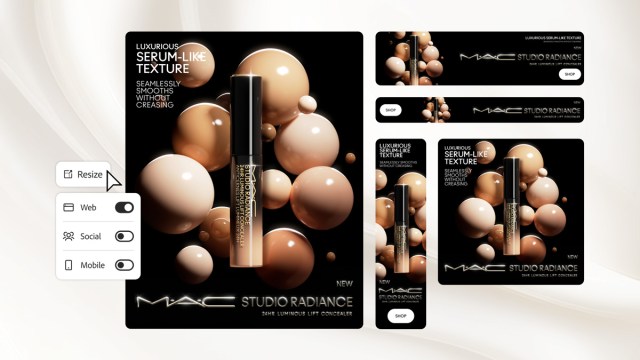
With over 20 brands like Clinique, MAC, and Tom Ford across more than 150 markets, Estée Lauder recently partnered with Adobe to incorporate generative AI into its product ads for better work efficiency.

“These tools have given our team a lot of capability to be more creative and free up their time from doing all of the media work—no one wants to do 700 versions,” Yuri Ezhkov, vp of the brand’s Creative Center of Excellence, told ADWEEK in March.

He also added that the company is firm on not using the technology for any consumer-facing material that features fully rendered humans to avoid creating unrealistic beauty standards.

https://www.adweek.com/brand-marketing/estee-lauder-hires-nestle-marketing-chief-aude-gandon-as-cmo/


X’s Future May Not Include a CEO at All


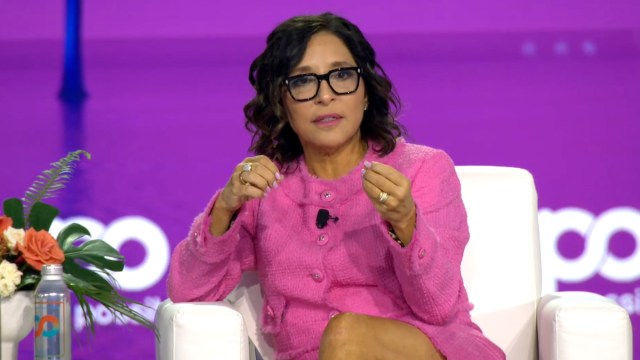
After two tumultuous years at the helm of X, CEO Linda Yaccarino announced her departure from the company last Wednesday. Who will replace her—as X is absorbed into Elon Musk’s AI venture xAI—remains uncertain.

What most agree on: the next leader will look very different.

“I don’t recall anyone who told the ad community to ‘go fuck yourselves‘ and then said, ‘you know what? We really need a strong ad-sales-based CEO,’” said Matt Prohaska, CEO and principal at media advisory firm Prohaska Consulting.

Advertising on X before Musk’s takeover generated upwards of 90% of the company’s revenue. Since Yaccarino was appointed CEO in May of 2023, following swaths of big brands abandoning the app over brand safety concerns exacerbated by Musk’s lax approach to content moderation, some brands returned with reduced spend, while others faced litigation.

But while X’s battle with the ad industry flares, advertising is becoming less central to its business model in the wake of the company’s $45 billion all-stock acquisition by Musk’s AI firm xAI in March. X’s advertising-dependent model could soon be supplanted by a primarily subscription-based AI service, with X’s rich data used to train LLMs. 

In this emerging paradigm, any successor to Yaccarino would need to offer technological know-how. 

“X’s priorities have shifted since Yaccarino became CEO in 2023,” said Jasmine Enberg, vp and principal analyst, social media at Emarketer. “While X still needs advertisers to pay the bills, the company is now focused on AI. Yaccarino’s departure paves the way for X to lean harder into this new direction, and X will likely look for someone who is more suited to the AI era.”

xAI’s takeover of X, taken with the tectonic shifts happening under X, may nullify the need for a traditional CEO altogether. As reported by the Wall Street Journal, Yaccarino was effectively demoted in X’s merger with xAI.

Musk could tap an operational leader to keep the engine of X, the social platform, running smoothly while he manages xAI, the AI powerhouse. 

X could “get by just with having a GM, or a traditional CRO,” said Prohaska. “I don’t see Musk needing or wanting a ‘name’ externally this time around.”

This kind of leader could be pulled from X’s existing talent pool, in theory. John Nitti, X’s global head of revenue operations and advertising innovation, would be an obvious contender for a CRO role, according to Andrew Buckman, chief growth officer at media company Azerion. 

“What the platform may actually need is a COO-style leader: someone to drive day-to-day execution, strengthen advertiser relationships, and run the platform with discipline—while Musk retains strategic oversight of the AI-driven future,” he said. “It is a familiar Musk playbook: centralize vision, decentralize delivery.”

Potential candidates might include current X leaders like Nitti, global head of marketing Angela Zepeda, or head of Americas Monique Pintarelli, according to a Wall Street Journal report from last week.

If he’s looking beyond X’s four walls, Musk will need a leader who can marry media, content, and monetization expertise with tech savvy, said Javier Rodriguez Horta, global marketing strategy practice lead at marketing consulting firm CvE. VidMob CEO Alex Collmer and Meta alum Carolyn Everson stand out as strong options, he said.

On the more speculative side of the spectrum, Ana Milicevic, cofounder and principal at marketing consultancy Sparrow Advisers, posited: “Perhaps the best CEO for X isn’t a person but an algorithm.” 

Still, many are skeptical that X’s business will remain focused on advertising: “Elon could tap one of those capable [internal] execs if they’re interested in leading the dwindling ad practice,” Prohaska told ADWEEK.

https://www.adweek.com/media/xs-future-may-not-include-a-ceo-at-all/


Here’s How Much Media CEOs Made in 2024 


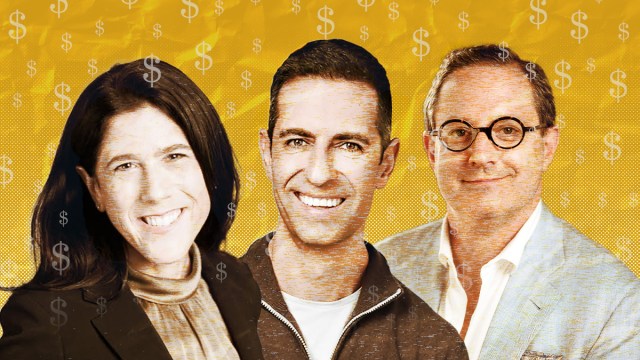
Microsoft’s Satya Nadella was the highest-paid media CEO in 2024.

Public documents show Nadella’s total compensation—including salary, bonuses, equity awards, and other compensation—amounted to $79.1 million for 2024.

The figure is nearly five times more than what the median CEO who runs a company listed in the S&P 500 received during the same period, according to executive intelligence firm Equilar. The median salary is $16.4 million.

Apple CEO Tim Cook, along with Netflix’s co-chief executive officers, Ted Sarandos and Greg Peters, also earned sums north of $60 million, well above the average for leaders in similar roles.

When comparing CEO compensation to the typical worker’s earnings, Disney’s Bob Iger finished the year with the biggest gap.

In 2024, Iger earned 746 times the median Disney employee salary.

Cook, Nadella, and Warner Bros. Discovery’s David Zaslav also appeared high on the list.

Additional figures from Equilar show the median pay ratio between S&P 500 CEOs and their employees last year was 197:1.

To generate these findings, Equilar analyzed the filings of U.S. publicly traded companies required to disclose their CEO’s annual compensation and how it compares to their median employee’s total income. Figures do not include previously acquired equity holdings.

In 2023, Cook topped the media CEO earnings list, bringing in $63.2 million with a CEO-to-employee pay ratio of 672:1.

https://www.adweek.com/media/heres-how-much-media-ceos-made-in-2024/


Eric Dolan Named Head of North America at Bolt Insight


BoltChatAI’s parent company, Bolt Insight, has named Eric Dolan as head of North America.

In this role, Dolan will be responsible for leading business activities across North America for the U.K.-based company, focusing on expanding the adoption of Bolt Insight’s research solutions, which include its AI-based qualitative research platform BoltChatAI. 

“I’ve spent my career at the intersection of insight, strategy, and innovation,” said Dolan. “What drew me to Bolt is their belief that AI should make research more human, not less. BoltChatAI combines cutting-edge technology with deep qualitative rigor. That’s the kind of change the industry needs.”

“Eric recognizes both the strategic pressures brands face and the power of AI to unlock faster, deeper consumer understanding,” said Bolt Insight CEO and co-founder Hakan Yurdakul. “He’s exactly the kind of leader we need to help more companies make smarter, behavior-based decisions at scale.”

Previously, Dolan, who has 15 years of insight leadership experience, was most recently at Kenvue, with previous stops at Procter & Gamble and Johnson & Johnson.

According to Bolt Insight, its BoltchatAI platform has already been adopted by over 100 brands worldwide, with capabilities like AI-moderated conversations, dynamic probing, stimulus upload, multilingual capabilities, and meta analysis.

https://www.adweek.com/programmatic/eric-dolan-named-head-of-north-america-at-bolt-insight/


Apple Exec Megan Imbres Is Peloton’s New CMO


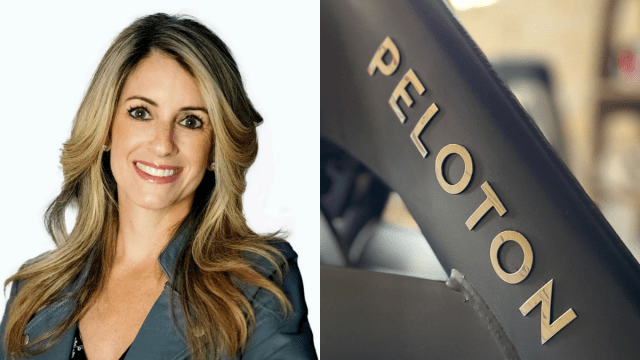
Peloton has appointed Megan Imbres as its new chief marketing officer (CMO).

It also promoted senior vice president of connected fitness software, Francis Shanahan, to chief technology officer, a newly created role at the fitness company.

“Together, the appointments represent a commitment to creative and technical innovation to empower Peloton Members to live fit, strong, long, and happy,” the brand said in a release.

Imbres succeeds Lauren Weinberg, who left in April amid a restructuring that split the company’s marketing function into two separate teams. Former vice president of global communications, Letena Lindsay, also departed at the time.

Imbres brings more than 20 years of experience in technology and entertainment marketing. She was previously a managing director on Apple’s marketing comms team since 2022, where she oversaw creative campaigns and cultural moments like the Apple Music Super Bowl Halftime Show and Apple TV’s partnership with Major League Soccer.

Before that, she served as global head of brand marketing at Amazon Ads and led brand and content marketing at mobile streaming startup Quibi. She also helped establish Netflix Originals.

At Peloton, Imbres will oversee global brand and product marketing, growth marketing, creative, consumer insights, and member engagement. She will report to chief executive officer Peter Stern.

“Megan’s experience in growing direct-to-consumer subscription businesses, her creative instincts, and her track record of delivering culturally resonant campaigns will propel us on our path towards growth,” he said in a statement.

Imbres is Peloton’s fourth CMO since 2020. The brand struggled to combat slow sales following a pandemic-era boom.

In Q3, Peloton reported $624 million in revenue, a 13% decrease year-over-year. As a result, it slashed its advertising and marketing spending by 46% year-over-year, leading to a 3% year-over-year increase in profit to $318.1 million.

https://www.adweek.com/brand-marketing/apple-exec-megan-imbres-is-pelotons-new-cmo/


EXCLUSIVE: Warby Parker Hasn’t Had a CMO For More Than a Year


Warby Parker’s longtime chief marketing officer (CMO) Lori Krauss quietly stepped down from her role April 2024, the brand confirmed to ADWEEK.

Since then, the direct-to-consumer (DTC) eyewear brand’s marketing has been led by co-founder and co-chief executive officer (CEO) Neil Blumenthal and senior team members.

A spokesperson didn’t elaborate on whether Warby Parker plans to backfill the CMO role in the future.

During Krauss’ tenure at Warby Parker, the brand released work like “Wearing Warby,” a social media campaign highlighting how special customers wear their frames, and “Editions,” centering on celebrity glasses-wearers like actress Natasha Lyonne, New Orleans Pelicans player Jordan Poole, and activist and model Zaya Wade.

She also worked on charitable efforts Warby Parker is known for, like partnerships with local communities to donate free vision screenings and glasses to kids, as well as its “Buy A Pair, Give A Pair,” a program where, for every pair of eyeglasses or sunglasses sold, the company donates a pair to someone in need.

Krauss joined Warby Parker in 2013 as vice president of brand management before rising to CMO in 2017. Before that, she served as CMO of Cole Haan and held several marketing leadership roles at Nike, Vera Wang, DKNY, and Armani Exchange.

In 2021, Warby Parker went public at a valuation of more than $6 billion. It recently reported its first net profit quarter since then, earning $224 million in Q1 2025, a 12% increase year-over-year.

“Our team delivered a strong start to 2025. We opened 11 net new stores, exceeded profitability expectations, drove the highest e-commerce growth we’ve seen since 2021, and delivered our seventh consecutive quarter of accelerating active customer growth,” Blumenthal said on the earnings call.

https://www.adweek.com/brand-marketing/exclusive-warby-parker-hasnt-had-a-cmo-for-more-than-a-year/


As Yaccarino Steps Down, Public Opinion of X Is More Divided Than Ever

After two years on the job, Linda Yaccarino is no longer CEO of the social platform X.

Survey results suggests the public’s opinion of the site is now more divided than it was prior to her arrival in June 2023, even as advertisers return.

“Being the CEO of X was always going to be a tough job, and Yaccarino lasted in the role longer than many expected,” Jasmine Enberg, an analyst at market research firm eMarketer, said in a statement.

Figures from data analytics firm Morning Consult, which tracks how consumers perceive thousands of brands daily, show X’s net favorability dipped into negative territory following Elon Musk’s $44 billion acquisition of Twitter, which he later rebranded as X, in late 2022.

Overall, perception of the site among U.S. adults has recovered since then, yet remains slightly lower than it was in early 2020.

X did not respond to a request for comment.

Differences in opinion emerge when examining the data along political lines.

While Democrats held a positive view of X throughout the pandemic, their feelings changed following Musk’s takeover and Yaccarino’s arrival.

Republicans, meanwhile, have moved in the opposite direction. At present, they hold a more positive view of X than they have at any point in the past five years, according to Morning Consult.

A similar gap has also appeared between men and women during Yaccarino’s tenure at the helm.

After sharing more or less the same impression of X for years prior to Musk and Yaccarino joining, men now have a positive view of X, while women do not.

Despite the divisions in public opinion, advertisers have returned to the site—albeit, with some reservations.

According to Guideline, which collects ad spend data from major media agencies, advertising dollars on X are up 62% during the first half of 2025 compared to the same time last year. Indeed, December 2024 marked the first month of growth on X since Musk acquired the platform in 2022.

In June, the Wall Street Journal reported that X had mounted a pressure campaign against advertisers to either spend on the platform or face legal challenges.

“To a degree, Yaccarino accomplished what she was hired to do,” said Enberg. “But the reasons for X’s ad recovery are complicated, and Yaccarino was unable to restore the platform’s reputation among advertisers.”

Estimates from eMarketer forecast X’s U.S. ad revenue will increase 17.5% this year—faster than Pinterest, YouTube, and LinkedIn.

https://www.adweek.com/media/as-yaccarino-steps-down-public-opinion-on-x-is-more-divided-than-ever/