Linda Yaccarino’s Departure Deepens Uncertainty for X’s Ad Business


Linda Yaccarino’s sudden exit as CEO of X has left advertisers cautious amid persistent brand safety concerns and lingering doubts about the platform’s future as a dependable advertising venue.

A media buyer at a digital agency, who wasn’t authorized to speak to media, said only one of their clients has consistently advertised on X, primarily to reach politically active audiences. “It didn’t seem like [Yaccarino] was actually doing the job she had hoped to: make [brands] feel more comfortable with X,” the buyer said.

Following her departure, the agency has advised clients to pull back spending—especially those relying on leftover budgets, called slush funds, to test the platform.

Amber Tinker, paid social and influencer director at PMG, said X’s sales team under Yaccarino was responsive and offered significant incentives to bring brands back, including match credits early last year. For example, if a brand spent $50,000, they could receive an equal amount in ad credit. The platform also delivered attractive CPMs, sometimes dipping below $1, she said.

Yet several PMG clients witnessed their ads appearing alongside racially charged content. “Even if the platform is super efficient, the risk I take being on it right now is far greater than the results,” Tinker said, adding that she expects X to double down on brand safety following Yaccarino’s exit. 

While X introduced tiered brand safety settings, ranging from standard to maximum control, under Yaccarino’s leadership, Tinker noted that advertisers still shoulder much of the burden. “On other platforms, I don’t have to go to that extent to protect my investment,” she said.

Since Elon Musk’s $44 billion acquisition of the platform in 2022, X has seen a roughly 50% spike in weekly hate speech incidents, including homophobic, transphobic, and racist slurs. Its subscription-driven AI chatbot, Grok, made by xAI, has also drawn criticism for spitting out antisemitic tropes. Such instances have long spooked major brands like Comcast and Disney, which fled in record numbers in 2023.

A modest rebound in ad revenue

Since onboarding Yaccarino in June 2023 to stabilize a business in freefall after Musk’s takeover, X has yet to demonstrate sustained ad revenue. The platform is projected to grow U.S. ad revenue by 17.5% this year to $1.31 billion, according to eMarketer, marking its first increase in two years.

As ad dollars began trickling back, they did so under complex motivations. “The ones that did come back came back either because they have a strong personal relationship with Linda herself, or because they did a little bit of calculus around the lawsuits Musk put in the market,” said Lou Paskalis, chief strategy officer of Ad Fontes Media. “That’s more like buying insurance than buying advertising.”

Paskalis described Yaccarino’s stint as both a victory and a defeat. “Is that a victory because she got advertisers back on the platform? Yes. Is that a defeat because they’re never going to spend as much as they used to? Also yes. Both things can be true,” he said. 

Subscriptions and AI over ads

Musk has increasingly shifted focus from ads toward subscriptions and AI. The folding of X into xAI earlier this year signaled a long-term pivot away from ad revenue, according to three industry sources. In July, xAI raised $10 billion in debt and equity, underscoring the shift.

“When X folded into xAI, it was an indication that subscription revenue was going to become much more important than ad revenue for Musk,” Paskalis said. “All of a sudden, that might be a good time to take costs out of the ad side of the business.”

Lawsuits against advertisers could ease off

X’s combative leadership leaned heavily on lawsuits to pressure brands. In August, the company sued the World Federation of Advertisers and several marketers, accusing them of orchestrating an illegal boycott in violation of antitrust laws.

Ruben Schreurs, global chief strategy officer at Ebiquity, said the lawsuit “may lose some of its momentum with fewer people in power focused and dedicated to it.”

The situation is further complicated by Musk’s ugly divorce with President Donald Trump. “This just portends an acceleration of the decline in the platform’s importance to advertisers,” said Paskalis.

ADWEEK has reached out to X for comments.

https://www.adweek.com/brand-marketing/linda-yaccarino-departure-uncertainty-x-advertising-business/


Nick Lawson Hired as Chairman of UK’s i-media

U.K.-based i-media Tuesday named Nick Lawson chairman of the data, technology, and programmatic outdoor solutions company.

Lawson was previously global chief executive at EssenceMediacom. While there, he drove business development, marketing, and product offers across 98 offices in 45 markets. During his 34 years, he transformed Mediacom from a small, independent U.K. media agency into WPP’s largest global media agency network, handling over $32 billion in billings. 

Lawson’s appointment is effective immediately as he joins i-media at a time of rapid expansion, following Mayfair Equity Partners’ investment in 2024.

i-media CEO Jonathan Lewis said in a statement, “Nick joining is a hugely exciting moment for the business, and I am thrilled to be working with him. i-media has undergone a program of rapid transformation, and Nick’s rich experience and leadership, and his deep understanding of the industry, will fuel the next stage of our journey. As a team, we are well-positioned to take advantage of the transforming media industry by leveraging data and technology to maximize and measure returns for some of the world’s biggest brands.” 

“I’m really looking forward to working with Jonathan and the whole team. i-media is one of the U.K.’s most innovative media owners, combining unrivalled audiences with first-class digital and data capabilities,” Lawson added. “The rapidly growing opportunity in programmatic OOH (out of home) advertising is transforming media like never before, and I am delighted to join a company at the forefront of this change.” 

i-media provides advertisers with access to U.K. motorists across more than 130 roadside locations.  Reaching an average of 6.6 million weekly visitors and more than 31 million unique visitors annually, the company also developed the U.K.’s largest network of full-motion, large-format digital screens at motorway service areas, via exclusive partnerships with major operators including Moto, Welcome Break, Roadchef, and Extra. 

https://www.adweek.com/agencies/nick-lawson-hired-as-chairman-of-uks-i-media/


Here’s How Much Adtech CEOs Made in 2024


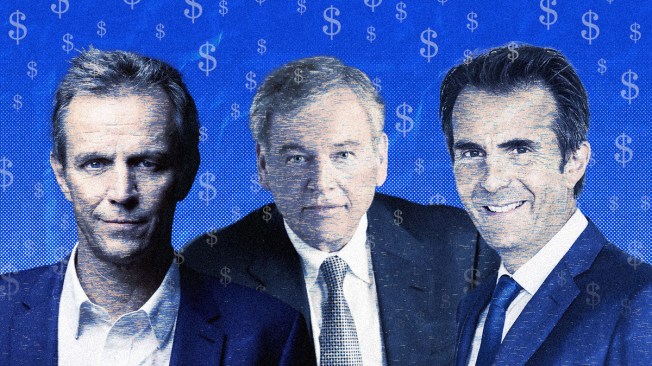
No chief executive officer working in adtech earned more last year than Unity Software’s Matthew Bromberg, according to executive intelligence firm Equilar.

Documents show Bromberg, who started the job in May 2024, received a salary of $534,541, a bonus of $2 million, and stock awards and options worth $49,612,611. The grand total: $52,147,152.

Zeta Global’s David Steinberg received $26.16 million during the same period, making him the sector’s second-highest earner. Like Bromberg, the vast majority of Steinberg’s compensation was paid in company stock.

Both men made more money than typical for someone in their position. Additional figures from Equilar show the median CEO who ran a company listed in the S&P 500 last year received $16.41 million in total compensation. The amount includes salary, bonus, equity awards, and other forms of payment.

When comparing CEO compensation to the median worker’s earnings, Bromberg and Steinberg topped the list once again.

Last year, Bromberg made 403 times more than the median pay of a Unity Software employee. Steinberg’s CEO-to-worker pay ratio was 284:1.

These ratios exceeded the S&P 500 median for 2024. Using companies included in the index as a benchmark, the median gap between chief executive and employee compensation was 197:1.

To generate these findings, Equilar analyzed the filings of U.S. publicly traded companies required to disclose their CEO’s annual compensation and how it compares to their median employee’s total income.

https://www.adweek.com/brand-marketing/how-much-adtech-ceo-salary-2024/


Amy Gilmore Named Strategy Partner at Untangld

Amy Gilmore is joining international strategy studio Untangld as a strategy partner.

Gilmore had been head of strategy at creative agency Accenture Song. She has also worked at Karmarama and Grey London. 

In this new position, Gilmore will be responsible for shaping the company’s strategy practice in the U.K. and Europe. She will drive evidence-based strategy and rapidly bring new thinking to life through prototyping for Untangld’s global team, as well as spearheading growth across the region, scaling the business while implementing the company’s evolved effectiveness practice and its “strategy in action” philosophy.

“Untangld is a rare thing; a thoroughly modern and progressive business of laser-sharp thinkers, tackling the meatiest of challenges facing marketers today. And all with a spirit of optimism and integrity,” Gilmore said in a statement to Little Black Book. “I can’t wait to play my part in the next chapter of growth across the U.K. and Europe, working alongside such a lovely, inspiring bunch of people.”

Emily Gray, founding partner at Untangld, added, “Five years into our journey, we’re growing across the strategy spectrum, from innovation to audience tooling to change management. Amy will play a vital role in making sure our quality scales with our growth.”

Founded in Australia in 2020, Untangld is a marketing agency that specializes in strategy, offering services like brand strategy, business strategy and communication strategy. It currently has a client list that includes companies like Prime Video, IKU, Shift, and Vida Glow.

It opened its U.K. office in 2023.

https://www.adweek.com/agencies/amy-gilmore-named-strategy-partner-at-untangld/


Former Huge Leaders Aim to Reinvent the Agency Model By Launching Shophouse


Martin Riley, Michelle Douglas, and Hugh Connelly didn’t leave Huge to fill a market gap. They left to make great work again with people they trusted and respected.

“We liked making great work,” Shophouse CEO Riley told ADWEEK. “We liked working with ambitious clients. We liked working with talented people who we like. And I think that just allows you to kind of point creative capability at different types of briefs.”

The trio began piloting Shophouse in late 2022, quietly building a globally distributed design house that blends strategic storytelling, digital experience, and product innovation. They are now officially launching the agency, and Shophouse has already delivered major work for Procter & Gamble’s SK-II skincare unit and Tapestry brands Kate Spade and Coach.

Besides Riley serving as CEO, Douglas leads strategy, and Connelly heads creative. They also have a rotating bench of senior freelance talent around the world to assemble bespoke teams around client briefs.

The three founding partners had previously all worked together in senior roles at Huge—Riley as global president, Douglas as group VP and client partner, and Connelly as executive creative director for Asia. Each left before Huge was acquired by private equity firm AEA Investors in December 2024.

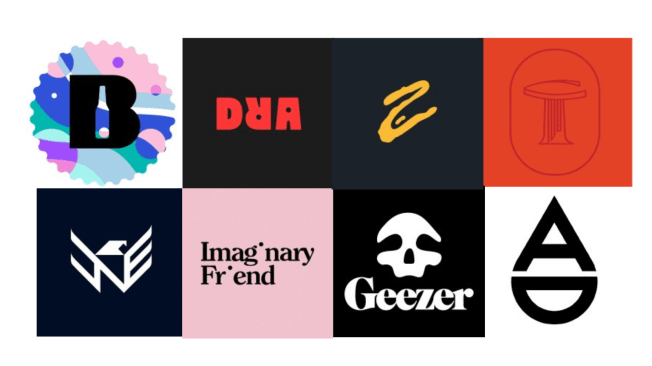
Shophouse joins a growing wave of indie agencies launched by industry veterans disillusioned with the holding company system. In the last 18 months, several indie shops like Studio.One, ImaginaryFriend, and Antidote have emerged with new models designed to be faster, leaner, and more adaptable.

For the Shophouse founders, the desire to break away was personal.

“When you’re growing, it’s fine,” said Riley, recalling his time at Huge. “When you’re shrinking, the only lever you can pull is people costs. And it sucks. You just kill your culture.”

That dissatisfaction isn’t unique. A June ADWEEK survey found that just 32% of employees at holding company-owned agencies described morale as positive—compared to a clear majority at indie shops. Nearly half of holdco employees said they were looking to leave not just their agency, but the advertising industry altogether.

Connelly, agreed. “It got harder and harder to do the world’s best work,” he said. “They tend to shed senior talent, because senior talent is the most expensive. What you’re getting rid of is people who have that sort of experience and know how to solve big problems. You start to try to solve big, ambitious problems with a junior team—and when morale is low, that gets challenging.”

While Shophouse operates like a creative agency in practice, its founders bristle at the term “advertising agency” and insist on being called a “design house.”

“Design is strategic problem-solving,” said Connelly.

They intentionally avoid the bloated overhead of legacy firms—no office leases, big support structures, or layers of middle management. “The idea is not to take funding,” said Riley. “When you start to take funding, you start to compromise your principles. I’d rather earn very little and keep that independence.”

Proving the model

Shophouse began informally when Riley approached P&G, his longtime client at Huge, with a new way of working. After securing approval from the brand, the trio took on major SK-II assignments, including brand repositioning, content libraries, and premium work across China.

“They threw everything at us,” Riley said. “They knew what they wanted us to do, they knew how to use us, they liked the model, and they’ve kept working with us since then. We’ve never had a day off from SK-II.”

The agency soon added Coach and Kate Spade to its roster. “Coach repositioned for Gen Z,” Douglas said, “and we were really able to take that repositioning and create new experiences for them.”

Shophouse also recently rebranded consulting firm Cprime as an “AI-native” brand and is currently building its new digital experience. Douglas said that Shophouse is built to be flexible.

“As marketing changes—channels, consumers, expectations—we’re in a position to flex and grow,” she said. “This model lets us do that.”

The three founders live on three continents: Riley in Singapore, Connelly in Spain, and Douglas in New York. Their teams are spread across the U.S., Europe and Asia. Their first credentials deck included a photo of a desk clock set to three time zones.

“We called ourselves the world’s smallest global agency,” said Riley. “And we’ve grown with that attitude.”

As for what’s next, the team is clear-eyed. “I would be happy if big brands bring us real problems,” said Riley. “And you build a reputation of being the agency people go to if something is big, if something’s going to be breakthrough—or if it’s broken.”

https://www.adweek.com/agencies/former-huge-leaders-aim-to-reinvent-the-agency-model-by-launching-shophouse/


Inside BET’s Transformation From Media Company to Movement

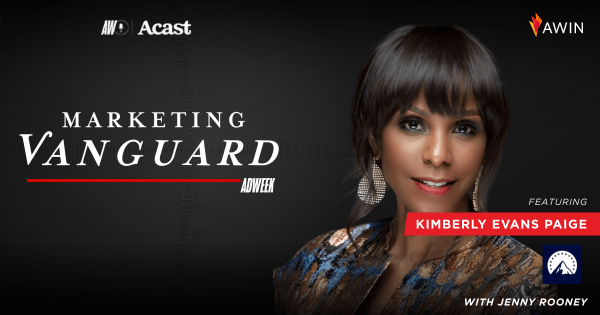
In this episode of Marketing Vanguard, host Jenny Rooney sits down with Kimberly Paige, EVP and CMO of BET, to explore the intersection of content, culture, and community in modern media. 

From judging at Cannes Lions to celebrating BET’s 45th anniversary, Kimberly shares how her extensive experience at P&G, Coca-Cola, and Coty shaped her approach to authentic storytelling and brand evolution. 

Learn how BET is pioneering change through strategic brand partnerships, streaming innovation, and a commitment to meaningful content that drives both cultural impact and commercial success. 

A must-listen for marketing leaders seeking to understand how heritage brands can stay relevant while maintaining their core mission.

With over two decades of marketing experience, Kimberly previously spent 17 years at Coca-Cola in various leadership roles, including running the global Sprite business and leading their Ventures in Emerging Brands division. She began her career at Procter & Gamble, where she developed foundational marketing skills that continue to inform her approach today.

Episode highlights:

[03:32] What Good Marketing Looks Like Today — Fresh from judging Cannes Lions, Kimberly emphasizes the importance of authentic storytelling in today’s landscape: “We really wanna get back to real true storytelling—this notion of Marketing with big M. And that really is if it’s meaningful, if it matters, it’ll move the metrics. And I think we’re really trying to get back to meaningful work.” She notes that in a world where TikTok has become a major entertainment competitor, the bar for quality storytelling has never been higher.

[10:06] Applying CPG Principles to Entertainment — Kimberly explains how her diverse background serves her in entertainment: “As marketers, our primary role is demand creation, regardless of the category. The beauty of really having this vast experience is that you see consumers in a variety of different ways in terms of their journeys.” She emphasizes how every brand must now become a great storyteller, making her entertainment experience valuable across industries.

[14:23] BET’s Evolution and Mission — Discussing BET’s 45-year journey, Kimberly explains the brand’s evolution: “Our mission is not just about providing Black content, and I think that’s the difference. It really is about changing outcomes for our community. I think we thrive at this intersection of content, culture, and community.” She emphasizes how BET has shifted from being the only place to see Black culture to focusing on meaningful impact.

[18:51] Strategic Decisions That Changed Trajectory — Kimberly shares two key decisions she’s proud of: leading Paramount Global’s first move into streaming and redesigning BET’s visual identity system. On the logo redesign, she recalls: “Our CEO saying, ‘You broke the logo.’ And I said, ‘No, I liberated it.’ It was really based off an insight around creating this beautiful black blank canvas because I think that’s what culture is. It can’t be defined. It can’t be bound.”

https://www.adweek.com/brand-marketing/inside-bets-transformation-from-media-company-to-movement/


As AI Advances, Staff-Level Jobs at Ad Agencies Decline

No longer a dim idea on the horizon, artificial intelligence has become part of everyday life at advertising agencies across the country. More than two-thirds of agency employees report using the technology a few times per week or more, according to a recent survey of ADWEEK readers.

At the same time, advertising jobs aren’t increasing.

Preliminary figures from the Bureau of Labor Statistics show employment at U.S. ad agencies rose slightly in May to 220,100 positions. On a seasonally adjusted basis, however, the number of industry jobs remains 3.5% lower than a high of 228,000 recorded in April 2023.

Several factors have contributed to this lack of growth.

Economic uncertainty related to global trade wars is one. Omnicom’s takeover of rival IPG is another.

“They are looking to be as lean as possible on paper, meaning there is a greater level of scrutiny given to any hire,” said Sasha Martens, president of recruiting firm Sasha the Mensch, about Omnicom’s planned acquisition of IPG.

AI replaces entry-level positions

Another element putting pressure on the decision to bring on more workers is the rise of AI, which agencies are embracing to do a variety of tasks, from copywriting to ad buying. Just over half of social media managers, for instance, say they can’t imagine doing their job without the technology, according to survey results from social media performance platform Hootsuite.

Additional employment statistics suggest AI is hitting entry-level jobs harder than more senior roles.

As Patrick Garvey, founding partner at ad agency We Are Pi, put it: “Now AI hoovers up the grunt work, so agencies are starting to skip the junior rung altogether.”

Examining a sample of nearly 50 U.S. marketing and advertising companies—from ad giants IPG and Omnicom to Publicis agencies Digitas and Starcom—figures from employment data provider Live Data Technologies reveal staff positions have declined more than 10% since January 2022. Manager and director jobs, meanwhile, have remained relatively steady during the same period.

“All the routine tasks once handled by junior creatives, media planners, and account coordinators are increasingly being both automated and outsourced,” said J. Scott Hamilton, president and CEO of Live Data Technologies.

A view of jobs by department offers further insight into changes occurring throughout the industry.

Information technology and business management are the only areas experiencing growth, per Live Data Technologies. Every other team—from engineering to marketing and product—has seen its numbers shrink.

Unlocking the door with AI

In June, WPP chief executive Mark Read stated AI will alter the advertising workforce, eliminating some jobs while creating others.

This shift is already well underway, with AI appearing in job requirements at a growing pace. Indeed, mentions of AI in global job listings for marketing and advertising roles have increased by more than 67% so far in 2025 compared to the same time last year, according to a recent report from software company Autodesk.

“We’ve begun to notice AI skills, training, and program knowledge appearing more in job specs, particularly in project management and operational capacities,” said Helen Kimber, founder of Creative Connections, a talent acquisition firm that works with global ad agencies.

For people looking to enter the ad industry, thinking of AI as an opportunity, rather than an obstacle, could be key to getting doors to open.

“More than once it has been mentioned to me that younger incoming talent is naturally more fluent with AI,” explained Martens from Sasha the Mensch. “Companies are keen to find people who are very comfortable with it.”

https://www.adweek.com/agencies/as-ai-advances-staff-level-jobs-at-ad-agencies-decline/


WPP Communications Chief Chris Wade Departs After 13 Years


Chris Wade, WPP’s longtime communications and corporate affairs chief, is leaving the holding company after 13 years, a company spokesperson confirmed to ADWEEK. Michael Frohlich, former Weber Shandwick EMEA CEO, will step into the role.

Wade first announced his leaving in a LinkedIn post, and described the move as a voluntary decision aligned with broader changes underway at WPP.

“After 13 wonderful, eventful years at WPP, I’ve decided it’s time for a change,” he wrote. “I’ve been considering what’s next and, as WPP prepares for a change of its own, it felt like a good moment to do something new.”

Wade used the post to reflect on his tenure, which spanned multiple crises and milestones—from the 2017 NotPetya cyberattack, its 2018 CEO transition, to WPP’s exit from Russia in 2022.

“I’m very grateful to WPP for the opportunities it has given me,” he wrote, adding that he plans to take time off with family before deciding on next steps. Wade also praised his team and thanked the journalists who covered WPP “not only with rigour but with care.”

Wade’s exit comes during a turbulent period for WPP. In recent months, the company has lost out on major business opportunities. Rival Publicis Groupe won Coca-Cola’s U.S. media business from WPP. It whiffed on securing Spectrum’s $450 million account, which went instead to Horizon. And in June, it lost both Paramount’s media business and Mars’ $1.7 billion media account to Publicis.

WPP has also faced layoffs across its media agencies following the rebrand of GroupM to “WPP Media.” Earlier this year, a mandatory four-day return-to-office policy caused disruption at the company’s New York headquarters, where staff reported overcrowding and a shortage of desks.

“I’ll miss being part of the (largely) organised chaos, I’ll miss the views from Sea Containers and 3 World Trade Center, and I’ll miss my amazing colleagues,” Wade wrote. “But above all I’m excited to make a change and explore what comes next.”

In an email to WPP staff, Mark Read praised Wade, describing how he “has built a modern communications and corporate affairs function for WPP while tirelessly promoting and defending our reputation.”

Read the full note below:

To CEOs and Leaders; WPP HQ

After 13 successful years with WPP, Chris Wade has decided to step down as our Director of Communications and Corporate Affairs.

Having achieved so much at WPP, Chris has been considering what’s next for him for some time and – with the wider changes happening in the business and following much discussion between us – he felt now was the right moment to move on to something new.

Throughout his time at WPP, and not least during periods of turbulence and global uncertainty, the company has benefited enormously from his deep experience, astute judgement and steadfast support for his colleagues.

Chris worked very closely with me on creating the “new WPP” – helping to rebrand the company and to establish a new voice and culture at the heart of the business rooted in respect and inclusion. His contribution was invaluable to me and to the company. He has also helped us navigate the pandemic, the invasion of Ukraine and the increasingly challenged social and political environment in which we operate.

Over the last seven years Chris has built a modern communications and corporate affairs function for WPP while tirelessly promoting and defending our reputation. Our leadership position in the application of creativity and technology to marketing owes a great deal to Chris and his team, who have also transformed WPP’s own online and social presence – most recently driving mass engagement with our new brand campaign. He has also established a highly effective public affairs operation which has significantly advanced our interests and reputation with policy-makers, regulators and industry bodies.

Chris is a trusted partner and friend to countless people in every part of WPP, and he is admired and respected across the business. I’m personally very grateful for the support he has given me in the years before and during my time as CEO, and I know many others feel the same. We will all miss his wise counsel, his sense of humour and his unfailing dedication to the interests of WPP and its people.

I am pleased to announce that Chris will be succeeded by Michael Frohlich who joins us from The Weber Shandwick Collective, where he has held the position of Global Chief Client Transformation Officer and EMEA CEO for the last four years. Many of you will know Michael from his prior roles with WPP which include leading Ogilvy PR in the UK and EMEA, and subsequently the wider Ogilvy Group in the UK, where as CEO he drove the integration of the agency’s different marketing disciplines. During that time, he was also a WPP client leader for IAG and British Airways.

I’m sure you will give Michael a warm welcome (back) to WPP and I will be in touch when he starts to introduce him and his role more fully.

I know you will join me in thanking Chris for his huge contribution to WPP. I want to reiterate my thanks to him for all his advice and help to me over the last seven years and to wish him all the very best for the future.

Mark

Update July 3 at 10:45AM ET: The article now includes WPP CEO Mark Read’s note to staff.

https://www.adweek.com/agencies/wpp-communications-chief-chris-wade-departs-after-13-years/


The Risk of Saying Nothing: Why Agencies Must Lead Now


The fear in our industry is real. Mergers. Layoffs. Budget cuts. AI literally threatens to replace us (shout-out Meta). And then 2025 arrived, kicking off with a wave of anti-DEI sentiment from the current administration—and, in lockstep, from many marketers.

And now, we’re witnessing the most aggressive attack on immigrants this generation has seen. Last month, when ICE raids hit Los Angeles like a bullet train, our agency spoke out—not about the financial hit to our communities or our clients, but about the emotional and human toll of such a blatant display of hostility toward immigrant families. Just as the DEI backlash was never truly about meritocracy, these raids aren’t really about legal versus illegal. They’re about targeting the most vulnerable.

For us, speaking up felt obvious. We’re an independent, minority-owned agency founded by immigrants. But what surprised me was how few others joined us. Over the past few weeks, agencies have been largely silent. I know Cannes was happening; I saw it everywhere in my feed. But while everyone was off celebrating creativity, the raids continued—and spread. 

Even before Cannes, our industry’s employees felt the silence, not just publicly but internally at their offices. Those of us who did speak out heard from some of your staff, “We wish someone at our agency would even bring this up, but it’s just BAU around here.”

This isn’t just a West Coast issue, either. Raids are happening nationwide. And according to multiple sources, nearly 70% of those being detained have no criminal record and no warrants.

So why should our industry weigh in? Thus far, I’ve seen a few posts about the potential financial impact—declining sales, reduced store traffic, and the long-term risks of alienating multicultural communities. All important, of course. But I’d like to offer two more reasons why we, as agencies and brands, should demonstrate we care.

For starters, your employees care. More than 40% of marketing professionals are under 35. That same age group is more than 40% multicultural, and 12% identify as LGBTQ+. And—this matters—65% of them oppose ICE raids. If you think they’re not watching your silence, you’re mistaken, trust me.

Secondly, your customers care. That same under-35 group is your present and future audience. In a world where AI is leveling the playing field, what’s left is your brand’s values and emotional connection. Brand love, not just brand performance, will be the differentiator.

I’m not naïve. I’ve been in this industry long enough to understand the balancing act, specifically the risks agencies take when representing brands (and sometimes, government entities), and the calculus brands do when deciding where to take a stand. But it’s equally naïve to believe this moment will pass without consequences. People are watching, young people especially. They’re waiting for leaders to lead—to speak up, to take risks, to show empathy. And as we know firsthand, in the absence of governments doing what they should be doing, people will look to brands and the business world to fill that void. Herein is the opportunity.

No, we’re not elected officials. We’re not policymakers. But we are communicators. Storytellers. If we can’t use our voice to acknowledge the truth and lived experience of the people we claim to care about, then we need to ask ourselves why we’re in this business at all.

There are many ways to speak up, support your teams, and tell these stories. So if you’re not sure how to tackle this one, reach out. I’m happy to brainstorm with you and your teams—because this is about all of us, and it isn’t about being political or apolitical. It’s about being human.

Nobody said leadership would be easy. But as David Ogilvy once said: “Leaders grasp nettles.” Now’s the time. 

https://www.adweek.com/agencies/lead-now-ice-protests-los-angeles-risk-saying-nothing/


UM Worldwide Restructures Leadership After Andrea Suarez Exits IPG


Andrea Suarez has officially exited IPG Mediabrands after a 16-year tenure, the agency confirmed to ADWEEK.

Suarez had served as global CEO of UM from mid-2023 until November 2024, when she quietly transitioned into the regional role as chair of IPG Mediabrands LATAM. She was still listed as global CEO of UM on the IPG Mediabrands’ website, as of this writing.

Suarez had previously held several top roles across IPG, including leading IPG Mediabrands’ global practice Thrive, CEO of IPG Mediabrands LATAM, president of Worldmarkets, and president of UM Latin America.

During her time as global CEO, Suarez helped guide UM through a period of operational streamlining and leadership transition.

In a statement provided to ADWEEK, IPG Mediabrands said: “We are grateful to Andrea Suarez for her significant contributions to IPG Mediabrands and her signature style of warmth, pragmatic approach, and tireless commitment as a colleague. Over the course of 16 years, Andrea was instrumental in growing our business, partnering with clients, and developing our talent. Her tenure as global CEO of UM and, most recently, as chair of IPG Mediabrands LATAM has helped us to thrive at both the brand and regional levels and paved the way for future success. Andrea will move on to her next adventure this summer. We wish her all the best as she goes forward.”

UM will not be replace its global CEO role. Instead, Suarez’s responsibilities will be distributed among several regional leaders, including Susan Kingston-Brown global brand president of UM, and Carlos Rojas Girao, regional CEO of IPG Mediabrands LATAM.

In a memo reviewed by ADWEEK, Eileen Kiernan, global CEO of IPG Mediabrands, reflected on her time working with Suarez. “Andrea and I worked together closely during much of the last 10+ years, and I can speak firsthand to her deep commitment to clients and talent,” Kiernan wrote. “She is a focused and tireless leader with a down-to-earth, warm, and pragmatic style. And I am grateful for all Andrea has done for and meant to this organization over the years.”

Suarez’s departure comes amid a wave of internal restructuring and cost-cutting across IPG Mediabrands and its parent company. In May, ADWEEK reported that the agency network laid off dozens of analytics staffers, moved roles offshore. These moves are part of a $250 million cost-reduction initiative ahead of the company’s planned merger with Omnicom Group, which was cleared by the Federal Trade Commission in late June. The $13.5 billion deal is expected to close in the second half of 2025.

https://www.adweek.com/agencies/um-worldwide-restructures-leadership-after-andrea-suarez-exits-ipg/