Eric Dolan Named Head of North America at Bolt Insight


BoltChatAI’s parent company, Bolt Insight, has named Eric Dolan as head of North America.

In this role, Dolan will be responsible for leading business activities across North America for the U.K.-based company, focusing on expanding the adoption of Bolt Insight’s research solutions, which include its AI-based qualitative research platform BoltChatAI. 

“I’ve spent my career at the intersection of insight, strategy, and innovation,” said Dolan. “What drew me to Bolt is their belief that AI should make research more human, not less. BoltChatAI combines cutting-edge technology with deep qualitative rigor. That’s the kind of change the industry needs.”

“Eric recognizes both the strategic pressures brands face and the power of AI to unlock faster, deeper consumer understanding,” said Bolt Insight CEO and co-founder Hakan Yurdakul. “He’s exactly the kind of leader we need to help more companies make smarter, behavior-based decisions at scale.”

Previously, Dolan, who has 15 years of insight leadership experience, was most recently at Kenvue, with previous stops at Procter & Gamble and Johnson & Johnson.

According to Bolt Insight, its BoltchatAI platform has already been adopted by over 100 brands worldwide, with capabilities like AI-moderated conversations, dynamic probing, stimulus upload, multilingual capabilities, and meta analysis.

https://www.adweek.com/programmatic/eric-dolan-named-head-of-north-america-at-bolt-insight/


Apple Exec Megan Imbres Is Peloton’s New CMO


Peloton has appointed Megan Imbres as its new chief marketing officer (CMO).

It also promoted senior vice president of connected fitness software, Francis Shanahan, to chief technology officer, a newly created role at the fitness company.

“Together, the appointments represent a commitment to creative and technical innovation to empower Peloton Members to live fit, strong, long, and happy,” the brand said in a release.

Imbres succeeds Lauren Weinberg, who left in April amid a restructuring that split the company’s marketing function into two separate teams. Former vice president of global communications, Letena Lindsay, also departed at the time.

Imbres brings more than 20 years of experience in technology and entertainment marketing. She was previously a managing director on Apple’s marketing comms team since 2022, where she oversaw creative campaigns and cultural moments like the Apple Music Super Bowl Halftime Show and Apple TV’s partnership with Major League Soccer.

Before that, she served as global head of brand marketing at Amazon Ads and led brand and content marketing at mobile streaming startup Quibi. She also helped establish Netflix Originals.

At Peloton, Imbres will oversee global brand and product marketing, growth marketing, creative, consumer insights, and member engagement. She will report to chief executive officer Peter Stern.

“Megan’s experience in growing direct-to-consumer subscription businesses, her creative instincts, and her track record of delivering culturally resonant campaigns will propel us on our path towards growth,” he said in a statement.

Imbres is Peloton’s fourth CMO since 2020. The brand struggled to combat slow sales following a pandemic-era boom.

In Q3, Peloton reported $624 million in revenue, a 13% decrease year-over-year. As a result, it slashed its advertising and marketing spending by 46% year-over-year, leading to a 3% year-over-year increase in profit to $318.1 million.

https://www.adweek.com/brand-marketing/apple-exec-megan-imbres-is-pelotons-new-cmo/


EXCLUSIVE: Warby Parker Hasn’t Had a CMO For More Than a Year


Warby Parker’s longtime chief marketing officer (CMO) Lori Krauss quietly stepped down from her role April 2024, the brand confirmed to ADWEEK.

Since then, the direct-to-consumer (DTC) eyewear brand’s marketing has been led by co-founder and co-chief executive officer (CEO) Neil Blumenthal and senior team members.

A spokesperson didn’t elaborate on whether Warby Parker plans to backfill the CMO role in the future.

During Krauss’ tenure at Warby Parker, the brand released work like “Wearing Warby,” a social media campaign highlighting how special customers wear their frames, and “Editions,” centering on celebrity glasses-wearers like actress Natasha Lyonne, New Orleans Pelicans player Jordan Poole, and activist and model Zaya Wade.

She also worked on charitable efforts Warby Parker is known for, like partnerships with local communities to donate free vision screenings and glasses to kids, as well as its “Buy A Pair, Give A Pair,” a program where, for every pair of eyeglasses or sunglasses sold, the company donates a pair to someone in need.

Krauss joined Warby Parker in 2013 as vice president of brand management before rising to CMO in 2017. Before that, she served as CMO of Cole Haan and held several marketing leadership roles at Nike, Vera Wang, DKNY, and Armani Exchange.

In 2021, Warby Parker went public at a valuation of more than $6 billion. It recently reported its first net profit quarter since then, earning $224 million in Q1 2025, a 12% increase year-over-year.

“Our team delivered a strong start to 2025. We opened 11 net new stores, exceeded profitability expectations, drove the highest e-commerce growth we’ve seen since 2021, and delivered our seventh consecutive quarter of accelerating active customer growth,” Blumenthal said on the earnings call.

https://www.adweek.com/brand-marketing/exclusive-warby-parker-hasnt-had-a-cmo-for-more-than-a-year/


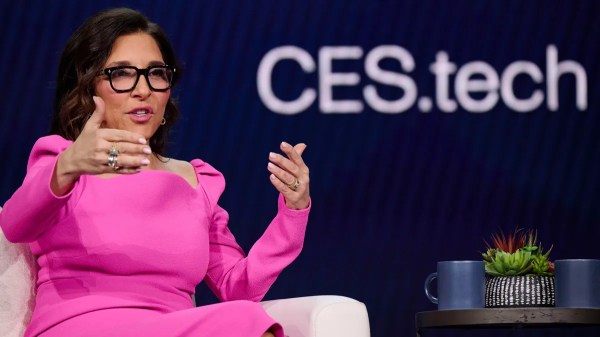
As Yaccarino Steps Down, Public Opinion of X Is More Divided Than Ever

After two years on the job, Linda Yaccarino is no longer CEO of the social platform X.

Survey results suggests the public’s opinion of the site is now more divided than it was prior to her arrival in June 2023, even as advertisers return.

“Being the CEO of X was always going to be a tough job, and Yaccarino lasted in the role longer than many expected,” Jasmine Enberg, an analyst at market research firm eMarketer, said in a statement.

Figures from data analytics firm Morning Consult, which tracks how consumers perceive thousands of brands daily, show X’s net favorability dipped into negative territory following Elon Musk’s $44 billion acquisition of Twitter, which he later rebranded as X, in late 2022.

Overall, perception of the site among U.S. adults has recovered since then, yet remains slightly lower than it was in early 2020.

X did not respond to a request for comment.

Differences in opinion emerge when examining the data along political lines.

While Democrats held a positive view of X throughout the pandemic, their feelings changed following Musk’s takeover and Yaccarino’s arrival.

Republicans, meanwhile, have moved in the opposite direction. At present, they hold a more positive view of X than they have at any point in the past five years, according to Morning Consult.

A similar gap has also appeared between men and women during Yaccarino’s tenure at the helm.

After sharing more or less the same impression of X for years prior to Musk and Yaccarino joining, men now have a positive view of X, while women do not.

Despite the divisions in public opinion, advertisers have returned to the site—albeit, with some reservations.

According to Guideline, which collects ad spend data from major media agencies, advertising dollars on X are up 62% during the first half of 2025 compared to the same time last year. Indeed, December 2024 marked the first month of growth on X since Musk acquired the platform in 2022.

In June, the Wall Street Journal reported that X had mounted a pressure campaign against advertisers to either spend on the platform or face legal challenges.

“To a degree, Yaccarino accomplished what she was hired to do,” said Enberg. “But the reasons for X’s ad recovery are complicated, and Yaccarino was unable to restore the platform’s reputation among advertisers.”

Estimates from eMarketer forecast X’s U.S. ad revenue will increase 17.5% this year—faster than Pinterest, YouTube, and LinkedIn.

https://www.adweek.com/media/as-yaccarino-steps-down-public-opinion-on-x-is-more-divided-than-ever/


Linda Yaccarino’s Departure Deepens Uncertainty for X’s Ad Business


Linda Yaccarino’s sudden exit as CEO of X has left advertisers cautious amid persistent brand safety concerns and lingering doubts about the platform’s future as a dependable advertising venue.

A media buyer at a digital agency, who wasn’t authorized to speak to media, said only one of their clients has consistently advertised on X, primarily to reach politically active audiences. “It didn’t seem like [Yaccarino] was actually doing the job she had hoped to: make [brands] feel more comfortable with X,” the buyer said.

Following her departure, the agency has advised clients to pull back spending—especially those relying on leftover budgets, called slush funds, to test the platform.

Amber Tinker, paid social and influencer director at PMG, said X’s sales team under Yaccarino was responsive and offered significant incentives to bring brands back, including match credits early last year. For example, if a brand spent $50,000, they could receive an equal amount in ad credit. The platform also delivered attractive CPMs, sometimes dipping below $1, she said.

Yet several PMG clients witnessed their ads appearing alongside racially charged content. “Even if the platform is super efficient, the risk I take being on it right now is far greater than the results,” Tinker said, adding that she expects X to double down on brand safety following Yaccarino’s exit. 

While X introduced tiered brand safety settings, ranging from standard to maximum control, under Yaccarino’s leadership, Tinker noted that advertisers still shoulder much of the burden. “On other platforms, I don’t have to go to that extent to protect my investment,” she said.

Since Elon Musk’s $44 billion acquisition of the platform in 2022, X has seen a roughly 50% spike in weekly hate speech incidents, including homophobic, transphobic, and racist slurs. Its subscription-driven AI chatbot, Grok, made by xAI, has also drawn criticism for spitting out antisemitic tropes. Such instances have long spooked major brands like Comcast and Disney, which fled in record numbers in 2023.

A modest rebound in ad revenue

Since onboarding Yaccarino in June 2023 to stabilize a business in freefall after Musk’s takeover, X has yet to demonstrate sustained ad revenue. The platform is projected to grow U.S. ad revenue by 17.5% this year to $1.31 billion, according to eMarketer, marking its first increase in two years.

As ad dollars began trickling back, they did so under complex motivations. “The ones that did come back came back either because they have a strong personal relationship with Linda herself, or because they did a little bit of calculus around the lawsuits Musk put in the market,” said Lou Paskalis, chief strategy officer of Ad Fontes Media. “That’s more like buying insurance than buying advertising.”

Paskalis described Yaccarino’s stint as both a victory and a defeat. “Is that a victory because she got advertisers back on the platform? Yes. Is that a defeat because they’re never going to spend as much as they used to? Also yes. Both things can be true,” he said. 

Subscriptions and AI over ads

Musk has increasingly shifted focus from ads toward subscriptions and AI. The folding of X into xAI earlier this year signaled a long-term pivot away from ad revenue, according to three industry sources. In July, xAI raised $10 billion in debt and equity, underscoring the shift.

“When X folded into xAI, it was an indication that subscription revenue was going to become much more important than ad revenue for Musk,” Paskalis said. “All of a sudden, that might be a good time to take costs out of the ad side of the business.”

Lawsuits against advertisers could ease off

X’s combative leadership leaned heavily on lawsuits to pressure brands. In August, the company sued the World Federation of Advertisers and several marketers, accusing them of orchestrating an illegal boycott in violation of antitrust laws.

Ruben Schreurs, global chief strategy officer at Ebiquity, said the lawsuit “may lose some of its momentum with fewer people in power focused and dedicated to it.”

The situation is further complicated by Musk’s ugly divorce with President Donald Trump. “This just portends an acceleration of the decline in the platform’s importance to advertisers,” said Paskalis.

ADWEEK has reached out to X for comments.

https://www.adweek.com/brand-marketing/linda-yaccarino-departure-uncertainty-x-advertising-business/


Nick Lawson Hired as Chairman of UK’s i-media

U.K.-based i-media Tuesday named Nick Lawson chairman of the data, technology, and programmatic outdoor solutions company.

Lawson was previously global chief executive at EssenceMediacom. While there, he drove business development, marketing, and product offers across 98 offices in 45 markets. During his 34 years, he transformed Mediacom from a small, independent U.K. media agency into WPP’s largest global media agency network, handling over $32 billion in billings. 

Lawson’s appointment is effective immediately as he joins i-media at a time of rapid expansion, following Mayfair Equity Partners’ investment in 2024.

i-media CEO Jonathan Lewis said in a statement, “Nick joining is a hugely exciting moment for the business, and I am thrilled to be working with him. i-media has undergone a program of rapid transformation, and Nick’s rich experience and leadership, and his deep understanding of the industry, will fuel the next stage of our journey. As a team, we are well-positioned to take advantage of the transforming media industry by leveraging data and technology to maximize and measure returns for some of the world’s biggest brands.” 

“I’m really looking forward to working with Jonathan and the whole team. i-media is one of the U.K.’s most innovative media owners, combining unrivalled audiences with first-class digital and data capabilities,” Lawson added. “The rapidly growing opportunity in programmatic OOH (out of home) advertising is transforming media like never before, and I am delighted to join a company at the forefront of this change.” 

i-media provides advertisers with access to U.K. motorists across more than 130 roadside locations.  Reaching an average of 6.6 million weekly visitors and more than 31 million unique visitors annually, the company also developed the U.K.’s largest network of full-motion, large-format digital screens at motorway service areas, via exclusive partnerships with major operators including Moto, Welcome Break, Roadchef, and Extra. 

https://www.adweek.com/agencies/nick-lawson-hired-as-chairman-of-uks-i-media/


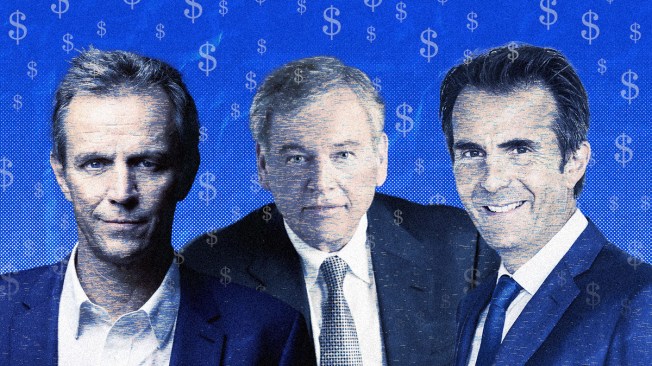
Here’s How Much Adtech CEOs Made in 2024


No chief executive officer working in adtech earned more last year than Unity Software’s Matthew Bromberg, according to executive intelligence firm Equilar.

Documents show Bromberg, who started the job in May 2024, received a salary of $534,541, a bonus of $2 million, and stock awards and options worth $49,612,611. The grand total: $52,147,152.

Zeta Global’s David Steinberg received $26.16 million during the same period, making him the sector’s second-highest earner. Like Bromberg, the vast majority of Steinberg’s compensation was paid in company stock.

Both men made more money than typical for someone in their position. Additional figures from Equilar show the median CEO who ran a company listed in the S&P 500 last year received $16.41 million in total compensation. The amount includes salary, bonus, equity awards, and other forms of payment.

When comparing CEO compensation to the median worker’s earnings, Bromberg and Steinberg topped the list once again.

Last year, Bromberg made 403 times more than the median pay of a Unity Software employee. Steinberg’s CEO-to-worker pay ratio was 284:1.

These ratios exceeded the S&P 500 median for 2024. Using companies included in the index as a benchmark, the median gap between chief executive and employee compensation was 197:1.

To generate these findings, Equilar analyzed the filings of U.S. publicly traded companies required to disclose their CEO’s annual compensation and how it compares to their median employee’s total income.

https://www.adweek.com/brand-marketing/how-much-adtech-ceo-salary-2024/


Amy Gilmore Named Strategy Partner at Untangld

Amy Gilmore is joining international strategy studio Untangld as a strategy partner.

Gilmore had been head of strategy at creative agency Accenture Song. She has also worked at Karmarama and Grey London. 

In this new position, Gilmore will be responsible for shaping the company’s strategy practice in the U.K. and Europe. She will drive evidence-based strategy and rapidly bring new thinking to life through prototyping for Untangld’s global team, as well as spearheading growth across the region, scaling the business while implementing the company’s evolved effectiveness practice and its “strategy in action” philosophy.

“Untangld is a rare thing; a thoroughly modern and progressive business of laser-sharp thinkers, tackling the meatiest of challenges facing marketers today. And all with a spirit of optimism and integrity,” Gilmore said in a statement to Little Black Book. “I can’t wait to play my part in the next chapter of growth across the U.K. and Europe, working alongside such a lovely, inspiring bunch of people.”

Emily Gray, founding partner at Untangld, added, “Five years into our journey, we’re growing across the strategy spectrum, from innovation to audience tooling to change management. Amy will play a vital role in making sure our quality scales with our growth.”

Founded in Australia in 2020, Untangld is a marketing agency that specializes in strategy, offering services like brand strategy, business strategy and communication strategy. It currently has a client list that includes companies like Prime Video, IKU, Shift, and Vida Glow.

It opened its U.K. office in 2023.

https://www.adweek.com/agencies/amy-gilmore-named-strategy-partner-at-untangld/


Former Huge Leaders Aim to Reinvent the Agency Model By Launching Shophouse


Martin Riley, Michelle Douglas, and Hugh Connelly didn’t leave Huge to fill a market gap. They left to make great work again with people they trusted and respected.

“We liked making great work,” Shophouse CEO Riley told ADWEEK. “We liked working with ambitious clients. We liked working with talented people who we like. And I think that just allows you to kind of point creative capability at different types of briefs.”

The trio began piloting Shophouse in late 2022, quietly building a globally distributed design house that blends strategic storytelling, digital experience, and product innovation. They are now officially launching the agency, and Shophouse has already delivered major work for Procter & Gamble’s SK-II skincare unit and Tapestry brands Kate Spade and Coach.

Besides Riley serving as CEO, Douglas leads strategy, and Connelly heads creative. They also have a rotating bench of senior freelance talent around the world to assemble bespoke teams around client briefs.

The three founding partners had previously all worked together in senior roles at Huge—Riley as global president, Douglas as group VP and client partner, and Connelly as executive creative director for Asia. Each left before Huge was acquired by private equity firm AEA Investors in December 2024.

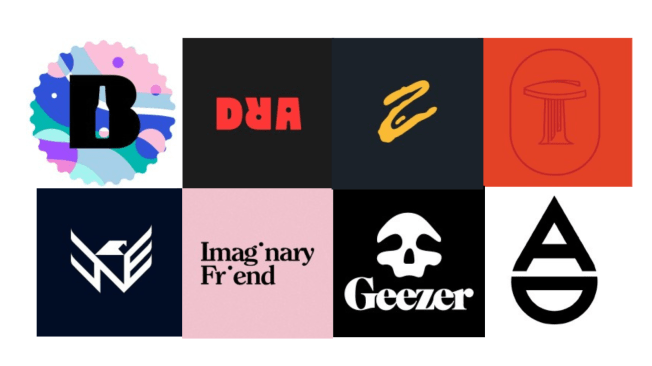
Shophouse joins a growing wave of indie agencies launched by industry veterans disillusioned with the holding company system. In the last 18 months, several indie shops like Studio.One, ImaginaryFriend, and Antidote have emerged with new models designed to be faster, leaner, and more adaptable.

For the Shophouse founders, the desire to break away was personal.

“When you’re growing, it’s fine,” said Riley, recalling his time at Huge. “When you’re shrinking, the only lever you can pull is people costs. And it sucks. You just kill your culture.”

That dissatisfaction isn’t unique. A June ADWEEK survey found that just 32% of employees at holding company-owned agencies described morale as positive—compared to a clear majority at indie shops. Nearly half of holdco employees said they were looking to leave not just their agency, but the advertising industry altogether.

Connelly, agreed. “It got harder and harder to do the world’s best work,” he said. “They tend to shed senior talent, because senior talent is the most expensive. What you’re getting rid of is people who have that sort of experience and know how to solve big problems. You start to try to solve big, ambitious problems with a junior team—and when morale is low, that gets challenging.”

While Shophouse operates like a creative agency in practice, its founders bristle at the term “advertising agency” and insist on being called a “design house.”

“Design is strategic problem-solving,” said Connelly.

They intentionally avoid the bloated overhead of legacy firms—no office leases, big support structures, or layers of middle management. “The idea is not to take funding,” said Riley. “When you start to take funding, you start to compromise your principles. I’d rather earn very little and keep that independence.”

Proving the model

Shophouse began informally when Riley approached P&G, his longtime client at Huge, with a new way of working. After securing approval from the brand, the trio took on major SK-II assignments, including brand repositioning, content libraries, and premium work across China.

“They threw everything at us,” Riley said. “They knew what they wanted us to do, they knew how to use us, they liked the model, and they’ve kept working with us since then. We’ve never had a day off from SK-II.”

The agency soon added Coach and Kate Spade to its roster. “Coach repositioned for Gen Z,” Douglas said, “and we were really able to take that repositioning and create new experiences for them.”

Shophouse also recently rebranded consulting firm Cprime as an “AI-native” brand and is currently building its new digital experience. Douglas said that Shophouse is built to be flexible.

“As marketing changes—channels, consumers, expectations—we’re in a position to flex and grow,” she said. “This model lets us do that.”

The three founders live on three continents: Riley in Singapore, Connelly in Spain, and Douglas in New York. Their teams are spread across the U.S., Europe and Asia. Their first credentials deck included a photo of a desk clock set to three time zones.

“We called ourselves the world’s smallest global agency,” said Riley. “And we’ve grown with that attitude.”

As for what’s next, the team is clear-eyed. “I would be happy if big brands bring us real problems,” said Riley. “And you build a reputation of being the agency people go to if something is big, if something’s going to be breakthrough—or if it’s broken.”
https://www.adweek.com/agencies/former-huge-leaders-aim-to-reinvent-the-agency-model-by-launching-shophouse/


Inside BET’s Transformation From Media Company to Movement

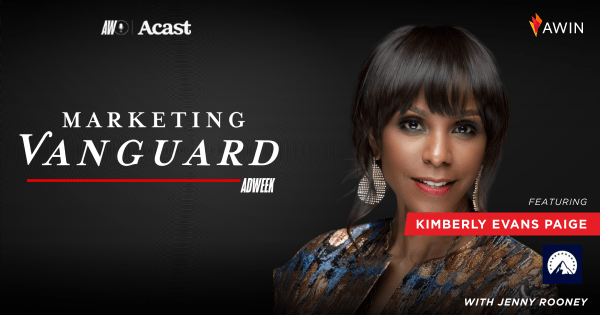
In this episode of Marketing Vanguard, host Jenny Rooney sits down with Kimberly Paige, EVP and CMO of BET, to explore the intersection of content, culture, and community in modern media. 

From judging at Cannes Lions to celebrating BET’s 45th anniversary, Kimberly shares how her extensive experience at P&G, Coca-Cola, and Coty shaped her approach to authentic storytelling and brand evolution. 

Learn how BET is pioneering change through strategic brand partnerships, streaming innovation, and a commitment to meaningful content that drives both cultural impact and commercial success. 

A must-listen for marketing leaders seeking to understand how heritage brands can stay relevant while maintaining their core mission.

With over two decades of marketing experience, Kimberly previously spent 17 years at Coca-Cola in various leadership roles, including running the global Sprite business and leading their Ventures in Emerging Brands division. She began her career at Procter & Gamble, where she developed foundational marketing skills that continue to inform her approach today.

Episode highlights:

[03:32] What Good Marketing Looks Like Today — Fresh from judging Cannes Lions, Kimberly emphasizes the importance of authentic storytelling in today’s landscape: “We really wanna get back to real true storytelling—this notion of Marketing with big M. And that really is if it’s meaningful, if it matters, it’ll move the metrics. And I think we’re really trying to get back to meaningful work.” She notes that in a world where TikTok has become a major entertainment competitor, the bar for quality storytelling has never been higher.

[10:06] Applying CPG Principles to Entertainment — Kimberly explains how her diverse background serves her in entertainment: “As marketers, our primary role is demand creation, regardless of the category. The beauty of really having this vast experience is that you see consumers in a variety of different ways in terms of their journeys.” She emphasizes how every brand must now become a great storyteller, making her entertainment experience valuable across industries.

[14:23] BET’s Evolution and Mission — Discussing BET’s 45-year journey, Kimberly explains the brand’s evolution: “Our mission is not just about providing Black content, and I think that’s the difference. It really is about changing outcomes for our community. I think we thrive at this intersection of content, culture, and community.” She emphasizes how BET has shifted from being the only place to see Black culture to focusing on meaningful impact.

[18:51] Strategic Decisions That Changed Trajectory — Kimberly shares two key decisions she’s proud of: leading Paramount Global’s first move into streaming and redesigning BET’s visual identity system. On the logo redesign, she recalls: “Our CEO saying, ‘You broke the logo.’ And I said, ‘No, I liberated it.’ It was really based off an insight around creating this beautiful black blank canvas because I think that’s what culture is. It can’t be defined. It can’t be bound.”

https://www.adweek.com/brand-marketing/inside-bets-transformation-from-media-company-to-movement/