Gymshark Hires Abercrombie Vet to Take a Swing at the U.S. Market


.article-native-ad { border-bottom: 1px solid #ddd; margin: 0 45px; padding-bottom: 20px; margin-bottom: 20px; } .article-native-ad svg { color: #ddd; font-size: 34px; margin-top: 10px; } .article-native-ad p { line-height:1.5; padding:0!important; padding-left: 10px!important; } .article-native-ad strong { font-weight:500; color:rgb(46,179,178); }

Inspiration meets innovation at Brandweek, the ultimate marketing experience. Join industry luminaries, rising talent and strategic experts in Phoenix, Arizona this September 23–26 to assess challenges, develop solutions and create new pathways for growth. Register early to save.

U.K. activewear brand Gymshark has made a series of executive hires to help it claim a bigger slice of the North American market, and it has a plan to take on its more established, homegrown U.S. rivals: Target gym-goers, not runners.

The company, known for its seamless leggings and crop tops, has appointed former Abercrombie & Fitch exec Kim Dolder to the new role of general manager, North America.

Taking on competitors such as Nike, Lululemon and Under Armour, the challenger is planning for gains in the world’s largest activewear market, which is expected to grow to $305 billion by 2030, per Fortune Business Insights.

Based in New York, Dolder will lead Gymshark’s U.S. team, with a remit to drive brand awareness and build physical experiences for its Gen Z and millennial customer base.

The exec spent four years at Abercrombie & Fitch, where she was senior vice president and general manager for the Gilly Hicks activewear brand. She’s also held senior positions at Target, Outdoor Voices and Under Armour.

Though the sports apparel sector is ripe for growth, 2023 and 2024 have been challenging for retailers contending with subdued demand and intense promotional activity.

However, digital-first retailer Gymshark has bucked this trend, reporting year-on-year sales growth of 15% in 2023 to reach $694 million.

In a statement, founder and CEO Ben Francis said North America was the brand’s biggest region by sales, responsible for half of Gymshark’s annual revenue. However, he noted the brand still had “such a small slice” of the market.

Dolder’s appointment dovetails with that of Hannah Mercer, who joined from Adidas to take on the role of general manager for Gymshark’s wholesale and retail business.

In recent months, the brand has added other execs from big-name brands to its top table, including former ASOS chief financial officer Mat Dunn; the Very Group’s Carly Natalizia as chief digital officer; and Lacoste’s Laurent Madeleine, who joined as chief supply chain officer.

Representing gym-goers

Gymshark chief marketing officer Noel Mack told ADWEEK that to differentiate itself in North America, Gymshark wants to own gym-going consumers.

“American people are adopting resistance training daily—and as of yet, no brands have truly owned that space,” he explained. “Recently, we’ve seen brands do an incredible job [being adjacent to] running and yoga but as yet, nobody has stood up and represented that gym consumer, so that’s what we are here to do.”

Co-founded by Francis from his bedroom in 2012, Gymshark started life as a DTC ecommerce business. Post-pandemic, it was valued at $1.3 billion, operating globally in 230 countries including the U.S. and Australia.

It’s found success through a robust social and influencer marketing strategy, as well as purpose-driven campaigns encouraging women, LGBTQ+ communities, and other underrepresented groups into the gym.

In 2023, the brand shuttered its 65-person Denver U.S. HQ just two years after opening its doors. Mack put this restructure down Gymshark “acting like a big business too soon,” and modeling itself off bigger athleticwear giants.

“We lost some of our authenticity with our customer,” he told Glossy at the time. 

Now, the brand is taking a different approach to its U.S. expansion, rooted in events, digital marketing and ecommerce sales.

Gymshark has already made physical forays into market, with pop-up stores in New York, Miami and L.A, each drawing more than 50,000 guests.

Following the success of its first brick-and-mortar store in London’s Regent Street shopping district, its also considering a U.S. flagship in the future.

.font-primary { } .font-secondary { } #meter-count { position: fixed; z-index: 9999999; bottom: 0; width:96%; margin: 2%; -webkit-border-radius: 4px; -moz-border-radius: 4px; border-radius: 4px; -webkit-box-shadow: 0 0px 15px 4px rgba(0,0,0,.2); box-shadow:0 0px 15px 4px rgba(0,0,0,.2); padding: 15px 0; color:#fff; background-color:#343a40; } #meter-count .icon { width: auto; opacity:.8; } #meter-count .icon svg { height: 36px; width: auto; } #meter-count .btn-subscribe { font-size:14px; font-weight:bold; padding:7px 18px; color: #fff; background-color: #2eb3b2; border:none; text-transform: capitalize; margin-right:10px; } #meter-count .btn-subscribe:hover { color: #fff; opacity:.8; } #meter-count .btn-signin { font-size:14px; font-weight:bold; padding:7px 14px; color: #fff; background-color: #121212; border:none; text-transform: capitalize; } #meter-count .btn-signin:hover { color: #fff; opacity:.8; } #meter-count h3 { color:#fff!important; letter-spacing:0px!important; margin:0; padding:0; font-size:16px; line-height:1.5; font-weight:700; margin: 0!important; padding: 0!important; } #meter-count h3 span { color:#E50000!important; font-weight:900; } #meter-count p { font-size:14px; font-weight:500; line-height:1.4; color:#eee!important; margin: 0!important; padding: 0!important; } #meter-count .close { color:#fff; display:block; position:absolute; top: 4px; right:4px; z-index: 999999; } #meter-count .close svg { display:block; color:#fff; height:16px; width:auto; cursor:pointer; } #meter-count .close:hover svg { color:#E50000; } #meter-count .fw-600 { font-weight:600; } @media (max-width: 1079px) { #meter-count .icon { margin:0; padding:0; display:none; } } @media (max-width: 768px) { #meter-count { margin: 0; -webkit-border-radius: 0px; -moz-border-radius: 0px; border-radius: 0px; width:100%; -webkit-box-shadow: 0 -8px 10px -4px rgba(0,0,0,0.3); box-shadow: 0 -8px 10px -4px rgba(0,0,0,0.3); } #meter-count .icon { margin:0; padding:0; display:none; } #meter-count h3 { color:#fff!important; font-size:14px; } #meter-count p { color:#fff!important; font-size: 12px; font-weight: 500; } #meter-count .btn-subscribe, #meter-count .btn-signin { font-size:12px; padding:7px 12px; } #meter-count .btn-signin { display:none; } #meter-count .close svg { height:14px; } }

Enjoying Adweek’s Content? Register for More Access!

https://www.adweek.com/brand-marketing/gymshark-hires-abercrombie-kim-dolder/
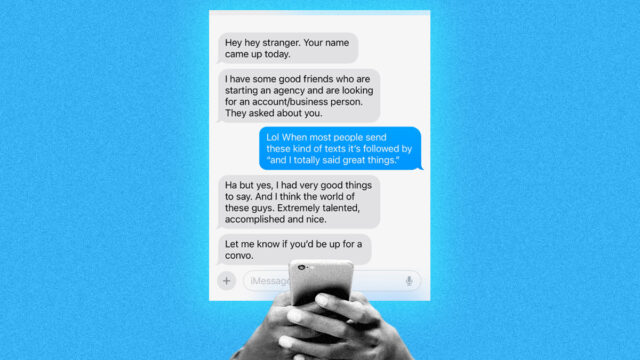


Camaraderie Over Competition: Newbie Ad Agency Founders, Unite


.article-native-ad { border-bottom: 1px solid #ddd; margin: 0 45px; padding-bottom: 20px; margin-bottom: 20px; } .article-native-ad svg { color: #ddd; font-size: 34px; margin-top: 10px; } .article-native-ad p { line-height:1.5; padding:0!important; padding-left: 10px!important; } .article-native-ad strong { font-weight:500; color:rgb(46,179,178); }

Don’t miss ADWEEK House at Cannes, June 16-19. Join us as we celebrate our 45th anniversary and explore the industry’s now and next. RSVP.

When you’re about to become a parent for the first time, even strangers will go out of their way to offer encouragement and support. Our grizzled general contractor from South Jersey would sit me down daily to discuss what Mona and I were about to experience.

This outpouring of love from unexpected places should serve as a warning to the uninitiated that what they’re about to embark on is so fantastically and universally difficult, that it has the power to create bonds between complete strangers.

I was reminded of this unifying phenomenon when we publicly announced the founding of our ad agency, Bandits & Friends.

Our network mobilized in a chorus of well-wishes along with some incredibly generous and practical help. But it was the support of the other start-up founders that really caught me off guard.

Some we knew, but many were relative strangers. They were so excited and enthusiastic about the prospect of us joining the fray. They were quick to offer tips and bits of wisdom that might pass off as cordial social graces, but then they’d follow up with introductions, recommendations and the kind of help we were in no position to reciprocate as a three-person company squatting in the back of a coffee shop. Or, more often than not, in the back of a music house (thank you New Math, Mr. Bronx and Duotone—we are forever grateful).

At one point I found myself wondering why everyone was being so nice. Part of me thought this could just be that been-there-done-that empathy from the older parents all over again. Even the founder of a company in year two can look at someone with a freshly minted LLC and think, “Oh, you have no idea what you’re in for, little buddy.”

And part of that was probably the case. But the gesture was more than mere empathy; it was real-world help. Help that could accelerate our growth into the kind of agency they might have to compete with for clients and talent and production dinner invites. Weren’t they a little worried about us? Where were the sharp elbows? Where were the cutthroat competitive antics Mad Men had prepared us for?

I’m embarrassed to admit how long it took me to relax and accept that the help wasn’t part of some elaborate ruse. There’s a real sense of camaraderie among the startups that outshines the natural competitiveness.

And embracing that community has made it so much more fun to navigate in year one. We now celebrate every win of our small agency brethren both as friends and fellow little guys. We know every win helps continue the rising tide we’re seeing across the industry.

Every time a big client strays away from a more traditional choice and discovers something amazing and unexpected, we win. We all win. Every time someone takes that leap, it makes it that much easier for the next marketer to tell their boss they’re going with that crazy little agency with the weird name and the Squarespace website. And with that positive momentum, some of the advantages of speed, collaboration and cost that come naturally when you’re small can outshine the doubts about whether or not a small shop can pull off big things. We can. We have. We will again.

So, as we move from being incredibly small to just kind of small, we want to extend the same support shown to us to the next generation of founders trying to slog their way through fear, doubt and the reams of legal documents that stand between them and the beaches of Cannes. Unless of course, we see them in the pitch room. Then we’ll return to our corners and prepare to duke it out like mortal enemies until the decision is made and we can return to our roles as friends, colleagues and occasional drinking buddies.

As we near one year of existence, I’m happy to report that the sense of gratitude is slowly overcoming the buzz of anxiety, and we have a lot of people reading this right now to thank for that.

So, thank you.

This article is part of an ongoing Voice series that takes a behind-the-scenes look at new agencies in their first year of business. For more on Bandits & Friends, see previous articles: The Dangers of Texting While Contemplating Your Future. You Might Just Start an Agency and How to Start an Agency, One Letter at a Time. Or HTSAAOLAAT, for Short.

https://www.adweek.com/agencies/camaraderie-over-competition-newbie-ad-agency-founders-unite/


Ad Sales Legend Jo Ann Ross to Exit Paramount Ahead of Upfront


.article-native-ad { border-bottom: 1px solid #ddd; margin: 0 45px; padding-bottom: 20px; margin-bottom: 20px; } .article-native-ad svg { color: #ddd; font-size: 34px; margin-top: 10px; } .article-native-ad p { line-height:1.5; padding:0!important; padding-left: 10px!important; } .article-native-ad strong { font-weight:500; color:rgb(46,179,178); }

Mark your calendar for Mediaweek, October 29-30 in New York City. We’ll unpack the biggest shifts shaping the future of media—from tv to retail media to tech—and how marketers can prep to stay ahead. Register with early-bird rates before sale ends!

After more than three decades at the company, Jo Ann Ross is exiting Paramount.

On Tuesday, Paramount announced that Ross, chairman of Paramount Advertising, is stepping down from the position at the end of the month.

In a memo to staff, Paramount CEO Bob Bakish noted the timing worked for the decision, with Ross “having helped prime our sales team for another strong upfront season.”

Ross joined CBS in 1992 as vp of Olympic sales, later becoming the first woman to serve as sales chief of a broadcast network and the longest-tenured sales head in broadcast television.

Bakish noted Ross’s many accomplishments in his staff memo, saying that the executive “steered our advertising business from one milestone to the next,” including overseeing the successful integration of a combined ad sales team in 2019 when CBS merged with Viacom and being “essential” in the company’s efforts to deliver a record-setting Super Bowl this year.

“In a career defined by firsts, Jo Ann has been a driving force for the advancement of our company and the industry at large,” Bakish wrote. “Her legacy is simply unmatched.”

Among her many highlights, following two years of virtual upfront presentations due to the Covid-19 pandemic, Ross led the company’s first in-person presentation under its new name, Paramount, in 2022. During the event, the executive turned the presentation into a live version of 60 Minutes and even performed a bit with the cast of the CBS comedy Ghosts.

“I will say very humbly that I think we all nailed it. And I think that there were a couple of jokes leading up, but we set the flag on the mountain. And [the Paramount name] rolls off everybody’s tongue very naturally now,” Ross told ADWEEK following the event.

Paramount’s ongoing transitions

Ross transitioned from her previous role of Paramount’s ad sales chief in 2022, with Paramount’s current sales head, John Halley, taking over.

When Ross announced she’d be taking the role of chairman, the former ad sales chief also noted that Halley was set to take the ad sales team to “new heights.” 

In addition to coming ahead of the upfront, Ross’s announcement happens at a time when Paramount is going through wider company transitions, with several potential buyers circling and the company exploring the sale of properties such as VidCon.

See Bakish’s full memo below:

Team,  

As our ad sales organization continues its momentum, Jo Ann Ross has decided to step down from her role as Chairman of Paramount Advertising at the end of the month, having helped prime our sales team for another strong Upfront season.

Jo Ann has steered our advertising business from one milestone to the next. She oversaw the successful integration and evolution of our combined ad sales organization in the midst of the pandemic. She was also instrumental in reimagining our Upfront last year, a format that others have tried to replicate. More recently, Jo Ann was essential in our efforts to deliver a historic Super Bowl LVIII that set a record for viewership and gross ad revenue, topping off an impressive roster of storied Super Bowls since joining CBS in 1992. 

In a career defined by “firsts,” Jo Ann has been a driving force for the advancement of our company and the industry at large. Her legacy is simply unmatched as the longest-tenured sales head in television and the first woman to serve as sales chief of a broadcast network. Again and again, she’s shown a natural ability to create tremendous value for our advertising clients and for Paramount, tapping into new areas of growth and developing game-changing partnerships. From the early days of establishing unprecedented brand integrations for now iconic franchises like Survivor, to the launch of Paramount+ and the expanded premium streaming video opportunity for advertisers, to her integral role in the formation of our ongoing partnership with TNT Sports for the NCAA Tournament, Jo Ann has had an indelible impact that will continue for years to come. 

A dedicated mentor, Jo Ann has paved the way for countless others. She was pivotal in the creation of The Exchange, which brings together women leaders in advertising to foster meaningful connections and conversation, and the ANA’s SeeHer movement to increase the representation and accurate portrayal of women and girls in media, marketing and entertainment. She also facilitated the development of Paramount’s Sales Associate program, an initiative to diversify the sales team’s entry-level workforce pipeline. Jo Ann’s unwavering commitment to making a difference extends to her longtime support of Memorial Sloan Kettering’s annual Cycle for Survival and her work as an active board member of Reisenbach Philanthropies, the Ad Council, the International Radio and Television Society, the Video Advertising Bureau and FourBlock, an organization for veteran career readiness. 

Above all, Jo Ann cares deeply about her teammates, clients and peers — relationships built around trust, respect and reliability as hallmarks of her character and trailblazing career. Her passion for her work and determination to win have made Paramount a must-buy and key partner to the biggest advertisers in the world. And, under the continued leadership of John Halley, the sales organization is well positioned for future success.

I hope you’ll join me in thanking Jo Ann for her incredible service, stewardship and contributions to Paramount and our industry. We will miss her and her infectious sense of humor, and we wish her the very best.

Bob

.font-primary { } .font-secondary { } #meter-count { position: fixed; z-index: 9999999; bottom: 0; width:96%; margin: 2%; -webkit-border-radius: 4px; -moz-border-radius: 4px; border-radius: 4px; -webkit-box-shadow: 0 0px 15px 4px rgba(0,0,0,.2); box-shadow:0 0px 15px 4px rgba(0,0,0,.2); padding: 15px 0; color:#fff; background-color:#343a40; } #meter-count .icon { width: auto; opacity:.8; } #meter-count .icon svg { height: 36px; width: auto; } #meter-count .btn-subscribe { font-size:14px; font-weight:bold; padding:7px 18px; color: #fff; background-color: #2eb3b2; border:none; text-transform: capitalize; margin-right:10px; } #meter-count .btn-subscribe:hover { color: #fff; opacity:.8; } #meter-count .btn-signin { font-size:14px; font-weight:bold; padding:7px 14px; color: #fff; background-color: #121212; border:none; text-transform: capitalize; } #meter-count .btn-signin:hover { color: #fff; opacity:.8; } #meter-count h3 { color:#fff!important; letter-spacing:0px!important; margin:0; padding:0; font-size:16px; line-height:1.5; font-weight:700; margin: 0!important; padding: 0!important; } #meter-count h3 span { color:#E50000!important; font-weight:900; } #meter-count p { font-size:14px; font-weight:500; line-height:1.4; color:#eee!important; margin: 0!important; padding: 0!important; } #meter-count .close { color:#fff; display:block; position:absolute; top: 4px; right:4px; z-index: 999999; } #meter-count .close svg { display:block; color:#fff; height:16px; width:auto; cursor:pointer; } #meter-count .close:hover svg { color:#E50000; } #meter-count .fw-600 { font-weight:600; } @media (max-width: 1079px) { #meter-count .icon { margin:0; padding:0; display:none; } } @media (max-width: 768px) { #meter-count { margin: 0; -webkit-border-radius: 0px; -moz-border-radius: 0px; border-radius: 0px; width:100%; -webkit-box-shadow: 0 -8px 10px -4px rgba(0,0,0,0.3); box-shadow: 0 -8px 10px -4px rgba(0,0,0,0.3); } #meter-count .icon { margin:0; padding:0; display:none; } #meter-count h3 { color:#fff!important; font-size:14px; } #meter-count p { color:#fff!important; font-size: 12px; font-weight: 500; } #meter-count .btn-subscribe, #meter-count .btn-signin { font-size:12px; padding:7px 12px; } #meter-count .btn-signin { display:none; } #meter-count .close svg { height:14px; } }

Enjoying Adweek’s Content? Register for More Access!

https://www.adweek.com/convergent-tv/jo-ann-ross-exit-paramount/


Sustainability Is More Than a Big Leafy Green Picture


.article-native-ad { border-bottom: 1px solid #ddd; margin: 0 45px; padding-bottom: 20px; margin-bottom: 20px; } .article-native-ad svg { color: #ddd; font-size: 34px; margin-top: 10px; } .article-native-ad p { line-height:1.5; padding:0!important; padding-left: 10px!important; } .article-native-ad strong { font-weight:500; color:rgb(46,179,178); }

Inspiration meets innovation at Brandweek, the ultimate marketing experience. Join industry luminaries, rising talent and strategic experts in Phoenix, Arizona this September 23–26 to assess challenges, develop solutions and create new pathways for growth. Register early to save.

As businesses attempt to navigate the incredibly complex, fragmented and increasingly regulated sustainability landscape, they all too often opt for a “leave no trace” approach. This is because the issue is all at once highly prioritized and also highly scrutinized, from consumers to C-suites. As a result, organizations often delegate it to the responsibility of sustainability silos, failing to meaningfully tie major efforts to the mainstays of their brands and ultimately leaving no impression and no impact.

Simply put, brands aren’t showing up to get attribution for their action.

With brands cowering behind sustainability tropes (i.e.: the babbling brook, leafy green forest) or in the shadow of their logos, the message gets lost. When deploying those obvious green tropes, we’re inadvertently saying that this product is “for” people who deeply care about sustainability. In doing so, we risk alienating a bigger group of people who often believe that a product being sustainable also means that there is a negative trade-off on another element such as taste, price or quality.

When we integrate sustainability into the brand story, we open ourselves up to more interesting design opportunities that feel intrinsic to the brand and don’t risk alienating broader audiences.

Businesses still need to show and tell in equal measure

Consider these facts: 92% of CEOs remain in support of their ESG programs with nearly three-in-four (72%) saying they have modified their approach to talk less and listen more closely to stakeholders to decide when and where to engage.

What’s more, 9-in-10 marketers agree that sustainability agendas must be more ambitious and 94% say marketers need to act more bravely and experiment to drive transformative change. This is reflected in more brands now having sustainability as a KPI in their marketing dashboards, up from 26% in 2021 to 43% in 2023.

But in the race to get something out there, amidst this baton drop, we forget our expertise as marketers in translating our credentials into compelling stories.

We do ourselves a disservice if we don’t think about how our brand might distinctively communicate sustainability (i.e. taking into consideration the channel, the category, our brand’s unique positioning and our audiences).

Sustainability at the heart of the business

The sustainability story can be carefully set as part of a narrative and values that are already known amongst a brand’s audience.

Nespresso needed a new identity to tell the story of its future as well as its commitment to responsible sourcing. It avoids all the typical ‘tropes’ of sustainability, i.e. green leaves and Earth motifs. Instead, it uses a confident monogram as a seal of quality and reassurance of responsibility, set against a natural canvas, further elevating the brand’s role in delivering a high-quality brand experience that is imbued with sustainability credentials, including B-Corp certification that it is working hard to maintain and evolve.

Guinness Clear uses the brand’s unique tone of voice and place in culture to bring warmth and connectivity to an otherwise wagging finger “drink responsibly” mandatory CSR message, It successfully showed up during the Six Nations rugby fixtures and again over Christmas, without dampening the mood.

Lego uses the same authentic human language of its “Together we can rebuild the world” brand campaign to convey its corporate sustainability commitments. As a result, it stays true to the optimism of the product and category while communicating to a broader audience.

Another solid example is AWA by Magnum, which serves as a way for the brand to bring the cocoa-sourcing story closer to people via an engaging platform. It is born from the insight that outside of the farming season, women in cocoa communities must seek alternative ways to create income. Local community programs that promote creativity, craft and financial independence are funded and their work is showcased via the AWA platform, which uses the rich visual and verbal brand world of Magnum as the basis for expression.

Find the point of maximum impact

To evolve a sustainability journey, brands need to bring together data-led materiality and brand-building principles to create a holistic assessment of a business and its brands’ role in society against a commercial backdrop. In short, leveraging how you add value as a business to add value beyond it.

A targeted approach that tackles the above unlocks the sustainability opportunity for all brands committed to the journey. It maintains relevance in peoples’ lives and broader business culture now and in the future.

This is all to say that brand and sustainability are not only intrinsic to each other’s success; they have the answers the other is looking for. Brands can potentially be epic storytellers thanks to evidence and data backing sustainability efforts. But no one can listen if they don’t have access to the most compelling aspects of the narrative across audiences.

However, when these two disciplines are brought together, they can simultaneously drive value for each other and deliver sustainability stories that are all at once clear, connected and credible.

So, suppose the biggest challenge facing sustainability today is a brand challenge. In that case, that may also be the perfect rallying cry for marketers to leverage the brilliant minds of sustainability peers and overlay with consumer and cultural needs to fuel creative problem-solving. This will help create an emotional connection with stakeholders and ultimately, build confidence in where a brand concentrates.

https://www.adweek.com/brand-marketing/sustainability-is-more-than-a-big-leafy-green-picture/


Brave Commerce: Centering the Consumer in the CPG Industry


.article-native-ad { border-bottom: 1px solid #ddd; margin: 0 45px; padding-bottom: 20px; margin-bottom: 20px; } .article-native-ad svg { color: #ddd; font-size: 34px; margin-top: 10px; } .article-native-ad p { line-height:1.5; padding:0!important; padding-left: 10px!important; } .article-native-ad strong { font-weight:500; color:rgb(46,179,178); }

Introducing the Adweek Podcast Network. Access infinite inspiration in your pocket on everything from career advice and creativity to metaverse marketing and more. Browse all podcasts.

In this episode of Brave Commerce, Luke Kigel, Kimberly-Clark’s vp of digital marketing and consumer experience for North America, joins hosts Rachel Tipograph and Sarah Hofstetter to offer insights into the evolving landscape of marketing and consumer behavior within the CPG industry.

Kigel reflects on his transition from the consumer side back to the brand side. One key theme throughout the interview is the emphasis on understanding and meeting the needs of consumers, which ultimately is people seeking meaningful experiences with brands.

He also discusses the challenges of bridging the gap between different marketing disciplines and ensuring a unified brand experience across various touch points.

Collaboration emerges as a critical factor in navigating these challenges, with Kigel advocating for partnership and open communication across functions. He acknowledges the difficulty of implementing consumer-centric strategies within large organizations but emphasizes the need for alignment and shared understanding of goals. Kigel also highlights the role of processes and ways of working as enablers for effective collaboration.

The conversation extends to the rise of retail media and the changing dynamics between brand manufacturers and retailers. Kigel emphasizes the importance of understanding consumer behavior and building direct relationships with consumers, regardless of the channel or platform. He predicts a continued shift toward personalized and integrated experiences driven by deeper consumer insights.

As the discussion concludes, Kigel reflects on the future of consumer behavior and the evolving relationship between CPG companies and commerce. He shares a personal anecdote about the changing nature of the purchase journey, emphasizing the importance of product consideration and the role of social media in brand building.

Key takeaways:

  • Embrace industry disruption and adapt to changes like retail media and connected commerce.
  • Stay adaptable and responsive to changing consumer needs.
  • Acknowledge the inverted marketing funnel and focus on product consideration and post-purchase experiences.

https://www.adweek.com/commerce/brave-commerce-kimberly-clark-luke-kigel/


Chief Sustainability Officers Aren’t Marketers, They’re Multi-Hyphenates


.article-native-ad { border-bottom: 1px solid #ddd; margin: 0 45px; padding-bottom: 20px; margin-bottom: 20px; } .article-native-ad svg { color: #ddd; font-size: 34px; margin-top: 10px; } .article-native-ad p { line-height:1.5; padding:0!important; padding-left: 10px!important; } .article-native-ad strong { font-weight:500; color:rgb(46,179,178); }

Inspiration meets innovation at Brandweek, the ultimate marketing experience. Join industry luminaries, rising talent and strategic experts in Phoenix, Arizona this September 23–26 to assess challenges, develop solutions and create new pathways for growth. Register early to save.


Between 2011 and 2019, 414 global companies appointed chief sustainability officers (CSOs), per PwC data. Now a second wave of CSO appointments is making headlines.

Since the start of 2023, Lego, Caterpillar, PepsiCo, Autodesk and Delta have all enlisted CSOs to steer them through increasingly tight greenwashing regulations in a world where people expect brands to be both environmentally responsible and honest.

CSOs are fast becoming the Swiss army knife of the C-suite as their remit expands beyond compliance, legal and marketing. The brands that Thomas Husson, vp and principal analyst at Forrester Research, advises are now baking sustainability into their corporate structure, from research and development to supply chain and communication.”

Historically, the CSO role has been dismissed by its critics as a vanity position or a greenwashing exercise. However, Husson argues the position is becoming more meaningful in the corporate sphere.

“Over the past two to three years, there’s been a shift in the strategic importance of sustainability,” he observed.

A C-suite convener

Emilio Tenuta took on the position of senior vp for corporate sustainability at water and hygiene provider Ecolab in 2011. By 2020, he was elevated to CSO.

In the four years since that promotion, Tenuta agrees the role has become more prominent and strategic, no longer confined to marketing, risk management, procurement or corporate social responsibility.

“Over the past three years, what’s changed for CSOs is that we’re moving from strategy development—which has been a key function—to implementation,” he told ADWEEK.

One of the most important aspects of Tenuta’s job is to act as a convener, bringing all the key elements and functions together to execute Ecolab’s sustainability strategy.

This extends beyond the boardroom, through peer-to-peer initiatives including the Water Resilience Coalition, of which the business is a founding member. The coalition’s main goal is to give water stress and scarcity top billing on corporate agendas and preserve the world’s freshwater resources through collective action.

“One thing that’s certain is to be an effective CSO today, you must become an effective collaborator, both internally and externally, to advance your company’s agenda for sustainable growth,” Tenuta said.

Threading sustainability throughout

Kathleen Talbot has the dual job of CSO and vp of operations at millennial fashion brand Reformation, where she’s spent the last 10 years spearheading its efforts to build a cleaner infrastructure to minimize waste, water and energy footprints.

“In my case, [the CSO role] means leading strategy and engagement across three verticals that intersect with sustainability: product, direct operations and marketing,” Talbot said.

Successes in 2023 included boosting the fashion brand’s circular economy credentials by ensuring 21% of its clothing was made from non-virgin (i.e. predominantly recycled) materials and cutting its CO2 footprint by 38%.

Talbot puts these wins down to a cross-functional model that sees her lead several teams like factory operations, facilities and retail development alongside her core remit.

“We are integrated into the fabric of the company and able to help steer and influence key decisions on a day-to-day basis,” she explained, adding that more companies will weave practitioners like herself into the nuts and bolts of their business.

One brand already doing so is Coca-Cola-owned Innocent Drinks, which in 2021 appointed Karina O’Gorman as head of force for good to oversee sustainability. Reporting to CMO Kirsty Hunter, O’Gorman has been the brand’s voice for its many nutritional and sustainability initiatives, including its commitment to reaching net zero emissions by 2040.

Upon joining, she helped the brand navigate greenwashing claims and has since been instrumental in sharpening its brand purpose. For Hunter, having her on board has been invaluable.

“She makes sure our sustainability credentials guide us at the start of every brief,” Hunter said.

The business case for a CSO

There’s not just a green case for the CSO, there’s a business one too, as Unilever revealed in 2018.

At the time, Unilever said that 28 of its 400-plus brands are classed as sustainable living brands (SLBs) that are “taking action to support positive change for people and the planet.” Though the consumer packaged goods (CPG) giant’s own green claims are currently being put under the microscope by regulators, it says these SLBs grow 69% faster than the rest of its business, and deliver 75% of the company’s overall growth.

Today’s CSOs help deliver on growth objectives through involvement from product development to promotion.

As Unilever shows, embracing sustainability can deliver profit. It can also include saving costs through resource efficiency, innovation in clean technologies, and access to new markets that value sustainable products.

Critically, by demonstrating measurable impact beyond traditional metrics such as carbon footprint reduction or waste diversion, CSOs can attract a wider pool of investors.

“CSOs will need to establish frameworks that quantify the social and environmental impact of the company’s products, services and operations,” said Tenuta.

.font-primary { } .font-secondary { } #meter-count { position: fixed; z-index: 9999999; bottom: 0; width:96%; margin: 2%; -webkit-border-radius: 4px; -moz-border-radius: 4px; border-radius: 4px; -webkit-box-shadow: 0 0px 15px 4px rgba(0,0,0,.2); box-shadow:0 0px 15px 4px rgba(0,0,0,.2); padding: 15px 0; color:#fff; background-color:#343a40; } #meter-count .icon { width: auto; opacity:.8; } #meter-count .icon svg { height: 36px; width: auto; } #meter-count .btn-subscribe { font-size:14px; font-weight:bold; padding:7px 18px; color: #fff; background-color: #2eb3b2; border:none; text-transform: capitalize; margin-right:10px; } #meter-count .btn-subscribe:hover { color: #fff; opacity:.8; } #meter-count .btn-signin { font-size:14px; font-weight:bold; padding:7px 14px; color: #fff; background-color: #121212; border:none; text-transform: capitalize; } #meter-count .btn-signin:hover { color: #fff; opacity:.8; } #meter-count h3 { color:#fff!important; letter-spacing:0px!important; margin:0; padding:0; font-size:16px; line-height:1.5; font-weight:700; margin: 0!important; padding: 0!important; } #meter-count h3 span { color:#E50000!important; font-weight:900; } #meter-count p { font-size:14px; font-weight:500; line-height:1.4; color:#eee!important; margin: 0!important; padding: 0!important; } #meter-count .close { color:#fff; display:block; position:absolute; top: 4px; right:4px; z-index: 999999; } #meter-count .close svg { display:block; color:#fff; height:16px; width:auto; cursor:pointer; } #meter-count .close:hover svg { color:#E50000; } #meter-count .fw-600 { font-weight:600; } @media (max-width: 1079px) { #meter-count .icon { margin:0; padding:0; display:none; } } @media (max-width: 768px) { #meter-count { margin: 0; -webkit-border-radius: 0px; -moz-border-radius: 0px; border-radius: 0px; width:100%; -webkit-box-shadow: 0 -8px 10px -4px rgba(0,0,0,0.3); box-shadow: 0 -8px 10px -4px rgba(0,0,0,0.3); } #meter-count .icon { margin:0; padding:0; display:none; } #meter-count h3 { color:#fff!important; font-size:14px; } #meter-count p { color:#fff!important; font-size: 12px; font-weight: 500; } #meter-count .btn-subscribe, #meter-count .btn-signin { font-size:12px; padding:7px 12px; } #meter-count .btn-signin { display:none; } #meter-count .close svg { height:14px; } }

Enjoying Adweek’s Content? Register for More Access!

https://www.adweek.com/brand-marketing/chief-sustainability-officers-multi-hyphenates/


Here’s My Beef With Ad Agencies


.article-native-ad { border-bottom: 1px solid #ddd; margin: 0 45px; padding-bottom: 20px; margin-bottom: 20px; } .article-native-ad svg { color: #ddd; font-size: 34px; margin-top: 10px; } .article-native-ad p { line-height:1.5; padding:0!important; padding-left: 10px!important; } .article-native-ad strong { font-weight:500; color:rgb(46,179,178); }

Don’t miss ADWEEK House at Cannes, June 16-19. Join us as we celebrate our 45th anniversary and explore the industry’s now and next. RSVP.

If you caught my LinkedIn post, you know I’ve got some serious beef with the current ad agency model.

I mean, let’s call a spade a spade—it’s broken. Outdated. And in desperate need of a shake-up.

Apparently, I struck a nerve because that post blew up. We’re talking over 800,000 impressions, 5,000 reactions and a flood of comments and DMs. I knew my hot take would ruffle some feathers, but I didn’t expect it to go viral.

It was equal parts validating and frustrating to see the response.

On one hand, plenty of my fellow CMOs were nodding along in agreement. But on the other, there was no shortage of agency defenders telling me I hadn’t found “the one” yet.

Newsflash: I’ve given enough agencies a shot to know it’s not a “me” problem.

So, why am I so over the traditional agency model? Let me break it down.

When I joined Taylor Morrison nearly a decade ago, we outsourced pretty much everything. But after dealing with the headaches and underwhelming results that came with that approach, one of my first moves as CMO was to start building our in-house team.

Fast forward to today, and I’ve got a marketing and communications department nearly 50 strong. And you know what? It was hands down one of the best decisions I could’ve made.

Since bringing things in-house, we’ve built a brand that means something in an industry where “brand” is usually an afterthought. People seek us out. They choose us. And that’s not by accident.

Now, I’m not saying I’m anti-agency across the board. There are times when I still need to tap outside talent. But when I do, I’m looking for something very specific and it’s not just about production capabilities.

What I need from an agency is creativity. Fresh ideas. Out-of-the-box thinking. I need them to bring a new perspective to the challenges I already know we’re facing.

But here’s the beef. So many agencies are convinced that they need to do these deep, months-long dives into the brand before they can even think about being creative. They want to run focus groups, conduct surveys and spend countless billable hours trying to “immerse” themselves.

Meanwhile, my team and I are already living and breathing this stuff every single day. We know our customers inside and out. We’ve done the research. We’ve got the insights. So, in a way, what I’m really paying an agency for is to not be immersed; it’s to bring an outsider’s perspective to the table.

But inevitably, no matter how detailed our brief is, agencies always seem to insist on this drawn-out “strategy” phase before any real work gets done.

And I get it—it’s part of their process, their revenue model. But as a CMO, it feels like I’m being held hostage. It’s the price of entry, and it’s a steep one. Because here’s the hard truth: I don’t want to outsource strategy. That’s not what I need from an agency.

If I’m coming to you, it’s because I’m looking for killer creative, not a regurgitation of the consumer insights I already have coming out of my ears.

The irony is, with so many tactical services like media buying, production and yes, even strategy being brought in-house, the one thing agencies have left to offer is their creativity. Their ability to concept big, bold ideas that move the needle. It’s their secret weapon. Or, at least, it should be.

But instead, amid all this talk about “integration” and “full-service offerings,” agencies seem to be losing sight of what makes them valuable in the first place. They’re getting bogged down in the weeds of data and analytics and, in the process, they’re letting their creative muscles atrophy.

Case in point?

When times get tough, the first thing many agencies do is cut their senior creatives to save on costs. But those are the people I’m actually hiring you for—the experienced visionaries and problem-solvers. The folks who know how to take all those data points and transform them into campaigns that make people feel something.

What the ad industry is doing today is backward. And it’s a shame.

But here’s the thing. As much as it pains me to see talented creatives getting the short end of the stick, I also think this moment presents a huge opportunity. It’s a chance for those senior leaders to strike out on their own, to build something new, better and more resilient.

To not just claim to be “partners,” but show up as true collaborators and co-conspirators. And to create the kind of work that many of my fellow CMOs, including myself, are desperately seeking. Work that is nimble, adaptable and unafraid to challenge the status quo.

Notice how I didn’t say I hope they create an agency. Because the truth is, I’m not sure they need to.

I know these creatives are out there. I’ve worked with a few of them and, because they are not an agency, they are more interested in making great work than chasing revenue or headlines. And when you find them, it’s magic.

But until going directly to creatives becomes easier, or the norm rather than the exception, I’ll be here continuing to invest in my in-house team. Because at the end of the day, I can’t afford to keep throwing good money after bad.

I’ve been burned too many times. And as much as I hate to say it, I’m not alone. CMOs talk. We compare notes. And the consensus is clear: The traditional agency model isn’t broken. The whole idea of an agency is broken.

So, consider this my plea. To agency leaders, creatives and everyone who still believes in the power of a big idea: It’s time to be bold. It’s time to take risks. It’s time to burn the old playbooks and write a new one.

Because the creative people that figure this out? The ones that aren’t afraid to put creativity first, be true partners to their clients and adapt to the way brands operate today? Those will be the creatives that don’t just survive this shift, but thrive in it.

And you can bet I’ll be first in line to work with them. Whatever they call themselves.

Even if it’s an agency.

https://www.adweek.com/agencies/cmo-ad-agency-model-broken/


Ogilvy Names Rafael Rizuto Chief Creative Officer for North America


.article-native-ad { border-bottom: 1px solid #ddd; margin: 0 45px; padding-bottom: 20px; margin-bottom: 20px; } .article-native-ad svg { color: #ddd; font-size: 34px; margin-top: 10px; } .article-native-ad p { line-height:1.5; padding:0!important; padding-left: 10px!important; } .article-native-ad strong { font-weight:500; color:rgb(46,179,178); }

Don’t miss ADWEEK House at Cannes, June 16-19. Join us as we celebrate our 45th anniversary and explore the industry’s now and next. RSVP.

The creative leadership carousel continues to turn. David Lubars recently announced his retirement after four decades at BBDO. Chris Beresford-Hill, who had been at Ogilvy as president of advertising for North America, left there to replace Lubars at BBDO. Now, Dentsu Creative chief creative officer of U.S. and LATAM, Rafael Rizuto, has departed Dentsu to take the chief creative officer for North America at Ogilvy.

At Ogilvy, Rizuto will be responsible for the agency’s creative product across its capability areas in the U.S. and Canada, one of Ogilvy’s leading global markets. He returns to Ogilvy having worked for the agency twice before, first in Dubai then again in his native Brazil.

Rizuto has also spent time at at BBH, TBWA’s 180LA, Leo Burnett, and most recently at Dentsu Creative. Rizuto also ran his agency from 2017-2020, TBD in San Francisco.

“An extraordinary talent and incredible human being, Rafa is someone I have admired for so long. Like Ogilvy, he believes in creativity’s ability to drive business—it’s an ability he has proven across his work, at agencies and as an entrepreneur. I am overjoyed at his return to Ogilvy, and for all the ways he will add to our work,” said Liz Taylor, global chief creative officer at Ogilvy.

Rizuto told ADWEEK that being back at Ogilvy is like coming home, and he is excited to collaborate with the talent at all the North American offices.

“The best creative leaders are the ones who can recognize talent everywhere, and create an environment that they can do their best, versus trying to impose like a vision,” said Rizuto of his leadership style. He added that the ultimate test of a creative leader is to be able to recognize a great idea, no matter where it comes from, and that Ogilvy has the right talent and client roster to make great creative work.

Rizuto decided to make the move from Dentsu at a time when that agency has gone through multiple changes, including blending all its creative shops into Dentsu Creative in 2022, parting ways with global chief creative officer Fred Levron, the departure of CEO Wendy Clark from Dentsu International and the naming of Abbey Klaassen as U.S. CEO.

Rizuto is proud of the work he has put out at his previous agencies, including Dentsu and BBH, where he got to work closely with founder Sir John Hegarty, but he said the opportunity to take the CCO position at Ogilvy North America was too good to pass up.

“An agency is not composed of just a creative department. It should be a creative agency,” said Rizuto, adding that Ogilvy, under Taylor and global CEO Devika Bulchandani embraces leading with creativity. It also doesn’t hurt that Ogilvy is on a hot streak, with numerous client wins over the last year, a successful Super Bowl and being named ADWEEK’s Global Agency of the Year.

The business of creativity

As a creative leader, Rizuto embraces change. Tools like AI and digital tactics are all part of the constant change in the industry. When he started his career in Brazil 22 years ago, he remembers being an intern and talking with an art director who told him that it was the worst time to get into the industry because of all the disruption from the internet and digital trends.

“Another friend of mine said, ‘advertising is the only business that writes its obituary.’… I’m excited about AI. I think we’re going to go back to creativity at its core, and I think AI is just another tool in our toolbox,” said Rizuto.

But agency creativity doesn’t happen in a vacuum. It must serve the client, so he sees that you can’t talk about creativity without having good business acumen. Running his agency helped give Rizuto a perspective outside of the creative department and showed how he could use creativity to lead an agency, which he sees at Ogilvy.

Rizuto said that Ogilvy’s leadership sees its people as being a differentiator. The technology, AI and capabilities can be commoditized, but people can’t.

“Creativity is our force, and we shouldn’t relegate it,” said Rizuto.

Rizuto has won numerous awards, including a Cannes Young Lions in 2008 when he, a Brazilian who spoke little English, represented the Middle East for Ogilvy in Dubai. His work since then has included Cannes Grand Prix campaigns like Boost Mobile’s “Boost Your Voice,” Unicef’s “UNfairy Tales” and Eurofarma’s “Scrolling Therapy,” as well as Airbnb’s first-ever global campaign, “Views,” and Coca-Cola’s largest-ever Latin American campaign pushes. At Dentsu Creative, he served as creative lead on T-Mobile and helped spur a 60%-plus conversion rate on new business in 2023, with client wins including Apple TV+, Lowe’s, Principal Financial, Walmart and Subway.

Rizuto helped 180LA become the most awarded shop in all of TBWA’s Worldwide Network for two years in a row in 2016 and 2017 and helped pull in Ogilvy’s first-ever “Network of the Year” title in 2012 by contributing to Ogilvy Brazil’s 15 Cannes Lions that year.

.font-primary { } .font-secondary { } #meter-count { position: fixed; z-index: 9999999; bottom: 0; width:96%; margin: 2%; -webkit-border-radius: 4px; -moz-border-radius: 4px; border-radius: 4px; -webkit-box-shadow: 0 0px 15px 4px rgba(0,0,0,.2); box-shadow:0 0px 15px 4px rgba(0,0,0,.2); padding: 15px 0; color:#fff; background-color:#343a40; } #meter-count .icon { width: auto; opacity:.8; } #meter-count .icon svg { height: 36px; width: auto; } #meter-count .btn-subscribe { font-size:14px; font-weight:bold; padding:7px 18px; color: #fff; background-color: #2eb3b2; border:none; text-transform: capitalize; margin-right:10px; } #meter-count .btn-subscribe:hover { color: #fff; opacity:.8; } #meter-count .btn-signin { font-size:14px; font-weight:bold; padding:7px 14px; color: #fff; background-color: #121212; border:none; text-transform: capitalize; } #meter-count .btn-signin:hover { color: #fff; opacity:.8; } #meter-count h3 { color:#fff!important; letter-spacing:0px!important; margin:0; padding:0; font-size:16px; line-height:1.5; font-weight:700; margin: 0!important; padding: 0!important; } #meter-count h3 span { color:#E50000!important; font-weight:900; } #meter-count p { font-size:14px; font-weight:500; line-height:1.4; color:#eee!important; margin: 0!important; padding: 0!important; } #meter-count .close { color:#fff; display:block; position:absolute; top: 4px; right:4px; z-index: 999999; } #meter-count .close svg { display:block; color:#fff; height:16px; width:auto; cursor:pointer; } #meter-count .close:hover svg { color:#E50000; } #meter-count .fw-600 { font-weight:600; } @media (max-width: 1079px) { #meter-count .icon { margin:0; padding:0; display:none; } } @media (max-width: 768px) { #meter-count { margin: 0; -webkit-border-radius: 0px; -moz-border-radius: 0px; border-radius: 0px; width:100%; -webkit-box-shadow: 0 -8px 10px -4px rgba(0,0,0,0.3); box-shadow: 0 -8px 10px -4px rgba(0,0,0,0.3); } #meter-count .icon { margin:0; padding:0; display:none; } #meter-count h3 { color:#fff!important; font-size:14px; } #meter-count p { color:#fff!important; font-size: 12px; font-weight: 500; } #meter-count .btn-subscribe, #meter-count .btn-signin { font-size:12px; padding:7px 12px; } #meter-count .btn-signin { display:none; } #meter-count .close svg { height:14px; } }

Enjoying Adweek’s Content? Register for More Access!

https://www.adweek.com/agencies/ogilvy-names-rafael-rizuto-chief-creative-officer-for-north-america/


CMO Tenure at Largest U.S. Advertisers Gets Even Shorter

.article-native-ad { border-bottom: 1px solid #ddd; margin: 0 45px; padding-bottom: 20px; margin-bottom: 20px; } .article-native-ad svg { color: #ddd; font-size: 34px; margin-top: 10px; } .article-native-ad p { line-height:1.5; padding:0!important; padding-left: 10px!important; } .article-native-ad strong { font-weight:500; color:rgb(46,179,178); }

Inspiration meets innovation at Brandweek, the ultimate marketing experience. Join industry luminaries, rising talent and strategic experts in Phoenix, Arizona this September 23–26 to assess challenges, develop solutions and create new pathways for growth. Register early to save.

Chief marketing officers are moving in and out of the role at a faster pace than any time in the past decade.

Last year, the average tenure of top marketers at the nation’s 100 largest advertisers was around 37 months, according to search and advisory firm Spencer Stuart. That’s down from 40 months in 2022.

The decline, however, isn’t necessarily a sign of poor performance, noted Richard Sanderson, who leads Spencer Stuart’s marketing, sales and communications practice in North America. In some cases, he noted, short stints are the result of marketers going on to bigger and better positions.

“We’re seeing chief marketing officers increasingly being put into more senior leadership roles, which is why I don’t equate low tenure with failure,” said Sanderson.

Around two-thirds of CMOs leave the job to take on bigger opportunities, he noted, either within their company or at another organization.

That said, things are more stable at Fortune 500 companies, where CMOs held onto their jobs an average of 50 months in 2023, much the same as 2022. This figure is just a touch lower than tenure across all Fortune 500 C-suite leaders, which sits at 55 months.

At the same time, top marketers at B2B Fortune 500 companies kept their spot longer than their peers working at B2C firms. Average tenure for the former group of CMOs is 54 months; the latter, 48 months.

Additional research from Spencer Stuart shows women now account for half of all Fortune 500 CMOs, up from 47% in 2022 and 44% in 2021.

As marketers take on more responsibilities to keep pace with changes in how people shop and consume media, the role is shifting. Only one-third of the top marketers at Fortune 500 companies hold the conventional chief marketing officer title, for example. Modern demands on the profession have also contributed to the rise to the fractional CMO.

As Sanderson put it to ADWEEK in March: “The marketing leadership role has become more complex than any other leadership role in the last 10 years.”

.font-primary { } .font-secondary { } #meter-count { position: fixed; z-index: 9999999; bottom: 0; width:96%; margin: 2%; -webkit-border-radius: 4px; -moz-border-radius: 4px; border-radius: 4px; -webkit-box-shadow: 0 0px 15px 4px rgba(0,0,0,.2); box-shadow:0 0px 15px 4px rgba(0,0,0,.2); padding: 15px 0; color:#fff; background-color:#343a40; } #meter-count .icon { width: auto; opacity:.8; } #meter-count .icon svg { height: 36px; width: auto; } #meter-count .btn-subscribe { font-size:14px; font-weight:bold; padding:7px 18px; color: #fff; background-color: #2eb3b2; border:none; text-transform: capitalize; margin-right:10px; } #meter-count .btn-subscribe:hover { color: #fff; opacity:.8; } #meter-count .btn-signin { font-size:14px; font-weight:bold; padding:7px 14px; color: #fff; background-color: #121212; border:none; text-transform: capitalize; } #meter-count .btn-signin:hover { color: #fff; opacity:.8; } #meter-count h3 { color:#fff!important; letter-spacing:0px!important; margin:0; padding:0; font-size:16px; line-height:1.5; font-weight:700; margin: 0!important; padding: 0!important; } #meter-count h3 span { color:#E50000!important; font-weight:900; } #meter-count p { font-size:14px; font-weight:500; line-height:1.4; color:#eee!important; margin: 0!important; padding: 0!important; } #meter-count .close { color:#fff; display:block; position:absolute; top: 4px; right:4px; z-index: 999999; } #meter-count .close svg { display:block; color:#fff; height:16px; width:auto; cursor:pointer; } #meter-count .close:hover svg { color:#E50000; } #meter-count .fw-600 { font-weight:600; } @media (max-width: 1079px) { #meter-count .icon { margin:0; padding:0; display:none; } } @media (max-width: 768px) { #meter-count { margin: 0; -webkit-border-radius: 0px; -moz-border-radius: 0px; border-radius: 0px; width:100%; -webkit-box-shadow: 0 -8px 10px -4px rgba(0,0,0,0.3); box-shadow: 0 -8px 10px -4px rgba(0,0,0,0.3); } #meter-count .icon { margin:0; padding:0; display:none; } #meter-count h3 { color:#fff!important; font-size:14px; } #meter-count p { color:#fff!important; font-size: 12px; font-weight: 500; } #meter-count .btn-subscribe, #meter-count .btn-signin { font-size:12px; padding:7px 12px; } #meter-count .btn-signin { display:none; } #meter-count .close svg { height:14px; } }

Enjoying Adweek’s Content? Register for More Access!

https://www.adweek.com/brand-marketing/cmo-tenure-largest-us-advertisers/


The Questionable Hiring Practice Catching Marketers Unaware


.article-native-ad { border-bottom: 1px solid #ddd; margin: 0 45px; padding-bottom: 20px; margin-bottom: 20px; } .article-native-ad svg { color: #ddd; font-size: 34px; margin-top: 10px; } .article-native-ad p { line-height:1.5; padding:0!important; padding-left: 10px!important; } .article-native-ad strong { font-weight:500; color:rgb(46,179,178); }

Inspiration meets innovation at Brandweek, the ultimate marketing experience. Join industry luminaries, rising talent and strategic experts in Phoenix, Arizona this September 23–26 to assess challenges, develop solutions and create new pathways for growth. Register early to save.

You’ve aced the interview process and made the final shortlist. But there’s one more step: Write a comprehensive test assignment (entirely for free) and hope you get the role.

It requires days of work with no guarantee—and often, the job isn’t even available. Employment scams vary, and there are times when companies seek your ideas without paying the cost.

Donating some time to showcase your skills is a customary part of the recruitment process, but these tips can help job seekers set their limits and avoid falling victim to creativity theft.

Clarify the company’s intentions

Before investing too much time and effort into developing, for example, a marketing strategy, clarify what the company intends to do with your work. Question the hiring manager on how they will use your ideas, the specific aspects they intend to evaluate, and whether this is a real project they plan to implement.

If it is, this isn’t a trial brief to judge your abilities; it’s unpaid work with no guarantee of a job offer.

Negotiate payment for test assignments

An hour or two spent on a mock task designed to test you is one thing, but if the company insists on a detailed strategy that would require multiple calls and days of productivity, they should be willing to negotiate fair compensation for your time and effort.

Often, hiring managers with unreasonable requests hope to catch you off guard. Come prepared, know your worth, and don’t be afraid to walk away.

Confirm the position exists

Before diving into the assignment, inquire about the current team structure and scour LinkedIn to determine whether the role you’re applying for is open.

You can also search for the job title and company name on Google to check whether the company has a history of opening and closing the same position, which may indicate a pattern of exploiting candidates rather than hiring them. Likewise, check the position’s list date: If it’s been up for an eternity without attracting a suitable candidate, chances are the company has no desire to fill the role.

Seek feedback from industry peers

Reach out to your professional network, particularly those with similar experience who might have recently applied for a role with the company, to get their thoughts. An early warning about unreasonable requests will stop you from wasting more time than you already have on a hiring process that will ultimately lead nowhere. If it’s bad news, cut your losses and spend that time applying elsewhere.

Consider the company’s reputation

Evaluate the company’s reputation by checking employee reviews on platforms such as Glassdoor and LinkedIn. Don’t let one person’s bad experience put you off if there are plenty of positives, but a pattern of exploitative and unethical practices is a major red flag.

A job might await you at the end of the process after all. But is it really a company you want to work for?

https://www.adweek.com/creativity/creativity-theft-job-interviews/