BBDO’s David Lubars to Retire After 4 Decades of Creative Leadership


.article-native-ad { border-bottom: 1px solid #ddd; margin: 0 45px; padding-bottom: 20px; margin-bottom: 20px; } .article-native-ad svg { color: #ddd; font-size: 34px; margin-top: 10px; } .article-native-ad p { line-height:1.5; padding:0!important; padding-left: 10px!important; } .article-native-ad strong { font-weight:500; color:rgb(46,179,178); }

Experience ADWEEK House at Cannes, June 16-19. We’re celebrating 45 years of reporting with Now and Next—a creative opportunity for brands to define who they are and their future in the industry. Register .

After 44 years in the business, creating some of advertising’s most iconic work, David Lubars deserves to do nothing for a while.

Lubars is set to retire from his post as chairman and chief creative officer of BBDO Worldwide, and he told ADWEEK that as he starts his retirement, he’s going to do nothing, “and then after I do that, I’m going to rest.”

Lubars said that BBDO has been on a 20-year sprint that has been “mostly great,” but now feels he needs to walk, and this industry doesn’t know how to slow down.

He has been part of many memorable and award-winning campaigns, from the “Herding Cats” Super Bowl spot to the “You’re Not You When You’re Hungry” Snickers platform to M&M’s campaigns.

Andrew Robertson, president and CEO of BBDO Worldwide, who persuaded Lubars to rejoin the agency in 2004, said in a statement, “There’s no question that David is one of the world’s most talented writers, but his real gifts are his ability to catch ideas and see the potential in other people’s work, then to help them take it from good to great. That’s why so many amazingly talented people have wanted to work with him, both in New York and across our network.”

A legacy of ‘unlearning’

Most industry legends want to leave a legacy of great work and learning to the industry. Lubars has that catalog of exceptional work, but he’d like to be remembered for the concept of “unlearning.”

“Instead of being stuck in the tropes and the things that everybody does over and over again, what is the uncharted territory that a client can show up and really surprise and delight? You have to learn everything, but then unlearn and cut a path,” said Lubars.

The industry has taught him a few things as well, from being patient to staying even keeled.

“Don’t ever get too high. Don’t get too low. Just stay even no matter what’s going on. As many songwriters [have sung], ‘Keep on keepin’ on,’” Lubars said.

Part of Lubars’ legacy will be what he leaves at BBDO: a creative department buoyed by Chris Beresford-Hill. Lubars noted the legacy left at BBDO during the “creative revolution” of the 1970s with Allen Rosenshine as CEO and Lubars’ predecessor Phil Dusenberry.

He then built up the next wave of creativity at the agency with Robertson. He now sees Beresford-Hill, who recently rejoined the agency from Ogilvy, leading up the next wave of creativity at the network.

Beresford-Hill worked at BBDO from 2010 to 2018, and Lubars always pictured him coming back. “This next 10 years, I think he’s really going to lead the next renaissance with BBDO,” said Lubars.

Beresford-Hill, who was named chief creative officer of BBDO The Americas in December, will succeed Lubars as chief creative officer for BBDO Worldwide.

“Based on the work alone, David has a place on advertising’s Mount Rushmore. If you’ve been fortunate enough to work with him, you’d probably also consider him the most reductive, decisive and supportive creative leader in the world,” said Beresford-Hill in a statement. “If it weren’t for David’s leadership, I wouldn’t be here.”

Changes in the industry

Lubars has seen many changes over the course of his career, from the longtime mainstays of print, television and radio to the digital revolution to the current state of multiple channels and platforms and near endless tactics. He said he wouldn’t have stayed in the industry if it hadn’t morphed over the years.

“It’s new and different, zero sum every day, as opposed to defined channels. Now it’s confusing and kind of messy and foggy, and for somebody who’s ADD and constantly bored like me, that was a good reason to want to wake up every day and go in and figure it out,” said Lubars.

Lubars said that figuring out what’s new and what’s going to stick around is an ongoing challenge, and, of course, AI is a tool that the industry is still trying to get a handle on. He sees good uses in the technology, including one where BBDO was able to use AI to replace dialogue in a film.

“AI copied his voice, and nobody knew the difference,” said Lubars.

Favorite work

Lubars is a believer in the big idea that moves a campaign forward.

“It’s like a pyramid of marbles. What holds it together? A big idea. But if you don’t have a big idea, all these things scatter on the floor as unconnected, random dots that don’t make sense to people,” said Lubars.

Some of his big ideas have resonated for decades, and he counts plenty as favorites. To him, people respond to a good story no matter if it’s movie-length or a six-second video on TikTok.

At BBDO, the work his team did for Mars, Snickers, GE, FedEx, HBO and AT&T are all highlights.

He also counts his work for BMW Films with Fallon as some of the highest quality, as well as his early work with Apple under Lee Clow and Steve Hayden.

“I’ve had some great clients, and we got to make some great things for them,” said Lubars.

Lubars had many mentors over the years, from Tom Monahan of Leonard/Monahan, Jon Goward at Clarke Aronson Goward, and copywriter Penny Kapasouz at Chiat/Day, who did Apple’s “1984” Mac ad.

“She taught me the most important thing ever, I think. She said, ‘You have a nice book [of work], but it all sounds like you wrote it. And on Apple, it’s got to sound like Steve Jobs wrote it,’” said Lubars, adding that since then, he has excelled in writing in the voices of his characters and clients.

Lubars has imparted plenty of wisdom of his own over the years, and he has advice for the younger generation of creatives.

“Pursue the work, not the money, at the beginning. Because if you pursue a little more money, and then the work is mediocre, then that’s really a wall, you become sort of a commodity. And then once you do, it’s hard to undercut that,” said Lubars.

Also, having a healthy sense of paranoia helps.

“I don’t know who said it, but it’s brilliant. ‘The best people are always terrified they’re about to be fired, and the mediocre ones are always shocked when they are,’” he said.

Lubars departs his role having won over 600 Cannes Lions, 700 One Show pencils and seven Emmy awards.

.font-primary { } .font-secondary { } #meter-count { position: fixed; z-index: 9999999; bottom: 0; width:96%; margin: 2%; -webkit-border-radius: 4px; -moz-border-radius: 4px; border-radius: 4px; -webkit-box-shadow: 0 0px 15px 4px rgba(0,0,0,.2); box-shadow:0 0px 15px 4px rgba(0,0,0,.2); padding: 15px 0; color:#fff; background-color:#343a40; } #meter-count .icon { width: auto; opacity:.8; } #meter-count .icon svg { height: 36px; width: auto; } #meter-count .btn-subscribe { font-size:14px; font-weight:bold; padding:7px 18px; color: #fff; background-color: #2eb3b2; border:none; text-transform: capitalize; margin-right:10px; } #meter-count .btn-subscribe:hover { color: #fff; opacity:.8; } #meter-count .btn-signin { font-size:14px; font-weight:bold; padding:7px 14px; color: #fff; background-color: #121212; border:none; text-transform: capitalize; } #meter-count .btn-signin:hover { color: #fff; opacity:.8; } #meter-count h3 { color:#fff!important; letter-spacing:0px!important; margin:0; padding:0; font-size:16px; line-height:1.5; font-weight:700; margin: 0!important; padding: 0!important; } #meter-count h3 span { color:#E50000!important; font-weight:900; } #meter-count p { font-size:14px; font-weight:500; line-height:1.4; color:#eee!important; margin: 0!important; padding: 0!important; } #meter-count .close { color:#fff; display:block; position:absolute; top: 4px; right:4px; z-index: 999999; } #meter-count .close svg { display:block; color:#fff; height:16px; width:auto; cursor:pointer; } #meter-count .close:hover svg { color:#E50000; } #meter-count .fw-600 { font-weight:600; } @media (max-width: 1079px) { #meter-count .icon { margin:0; padding:0; display:none; } } @media (max-width: 768px) { #meter-count { margin: 0; -webkit-border-radius: 0px; -moz-border-radius: 0px; border-radius: 0px; width:100%; -webkit-box-shadow: 0 -8px 10px -4px rgba(0,0,0,0.3); box-shadow: 0 -8px 10px -4px rgba(0,0,0,0.3); } #meter-count .icon { margin:0; padding:0; display:none; } #meter-count h3 { color:#fff!important; font-size:14px; } #meter-count p { color:#fff!important; font-size: 12px; font-weight: 500; } #meter-count .btn-subscribe, #meter-count .btn-signin { font-size:12px; padding:7px 12px; } #meter-count .btn-signin { display:none; } #meter-count .close svg { height:14px; } }

Enjoying Adweek’s Content? Register for More Access!

https://www.adweek.com/agencies/bbdo-dave-lubars-retire-creative-leadership/


Bayer Appoints New Consumer Health CMO for North America

.article-native-ad { border-bottom: 1px solid #ddd; margin: 0 45px; padding-bottom: 20px; margin-bottom: 20px; } .article-native-ad svg { color: #ddd; font-size: 34px; margin-top: 10px; } .article-native-ad p { line-height:1.5; padding:0!important; padding-left: 10px!important; } .article-native-ad strong { font-weight:500; color:rgb(46,179,178); }

Inspiration meets innovation at Brandweek, the ultimate marketing experience. Join industry luminaries, rising talent and strategic experts in Phoenix, Arizona this September 23–26 to assess challenges, develop solutions and create new pathways for growth. Register early to save.

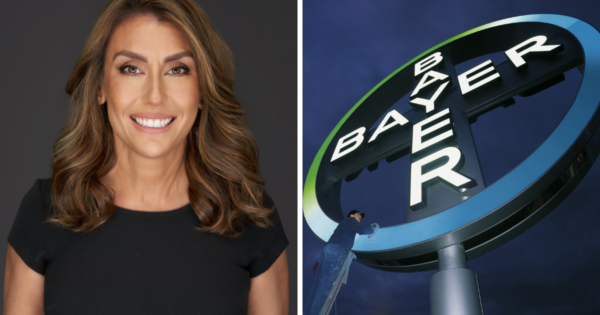
Bayer has hired Samantha Avivi as chief marketing officer of consumer health for its North America division. She will replace longtime marketer Jeff Jarrett, who is retiring in May.

Avivi was most recently CMO at Advance Auto Parts, where she spent the past year overseeing the brand’s omnichannel strategy and marketing operations. Before that, she was CMO at manufacturer Tenneco, where she led a portfolio of 31 brands across 42 product lines in 26 countries.

To Bayer, Avivi brings over 25 years of client, retail and agency experience at some of the world’s biggest advertisers including P&G, Kimberly Clark and Walmart.

As well as having a background in consumer product goods marketing, she’s also worked for agencies including BBDO and Y&R.

“I’m excited to leverage my passion for building consumer-led, purpose-driven brands across the Consumer Health portfolio, which includes many brands that I know and love like Claritin, aspirin and Midol,” she said in a statement.

Avivi will report directly to Dave Tomasi, Bayer’s president of consumer health in North America. He said she would help drive Bayer’s wider “Health for All, Hunger for None” corporate mission.

“She has expertise in setting groundbreaking visions, igniting breakthrough growth,[and] accelerating multifunctional teams with a proven track record of growing businesses, brands and, most importantly, people,” he added.

On his retirement, outgoing CMO Jarrett wrote on Linkedin: “After an incredible journey filled with creativity, growth, successes (and lots of fun), I’ve announced that I will be retiring from Bayer at the end of May.”

He added, “This moment is truly bittersweet, as I’ve had such a great experience with so many wonderful Bayer colleagues, agency and media partners along the way. But, after five years at Bayer, and nearly 55 years of life, I’m ready for the next chapter… whatever it may hold.”

Brand purpose and shareholder pressure

In recent years, Bayer has taken a more purposeful approach to marketing its consumer health brands, busting taboos and educating consumers in the process.

Its 2023 campaign for intimate health brand Canesten, “The Truth, Undressed,” featured bold creative work from creative shop AnalogFolk intended to tackle myths about vulval and vaginal health.

Speaking to ADWEEK at the time, Bayer global consumer CMO Patricia Corsi said this strategy was an important one that could be applied across many products.

Avivi arrives at Bayer USA as its German-headquartered parent company Bayer AG—which also trades in pharmaceuticals and crop science brands—is under pressure from investors to spin off its consumer goods business.

Shareholders want a solution to the financial woes that have plagued Bayer AG since its $63 billion 2018 takeover of chemical company Monsanto.

For now, though, CEO Bill Anderson has ruled out a spinoff, instead making changes to the company’s operating model to instigate a turnaround.

.font-primary { } .font-secondary { } #meter-count { position: fixed; z-index: 9999999; bottom: 0; width:96%; margin: 2%; -webkit-border-radius: 4px; -moz-border-radius: 4px; border-radius: 4px; -webkit-box-shadow: 0 0px 15px 4px rgba(0,0,0,.2); box-shadow:0 0px 15px 4px rgba(0,0,0,.2); padding: 15px 0; color:#fff; background-color:#343a40; } #meter-count .icon { width: auto; opacity:.8; } #meter-count .icon svg { height: 36px; width: auto; } #meter-count .btn-subscribe { font-size:14px; font-weight:bold; padding:7px 18px; color: #fff; background-color: #2eb3b2; border:none; text-transform: capitalize; margin-right:10px; } #meter-count .btn-subscribe:hover { color: #fff; opacity:.8; } #meter-count .btn-signin { font-size:14px; font-weight:bold; padding:7px 14px; color: #fff; background-color: #121212; border:none; text-transform: capitalize; } #meter-count .btn-signin:hover { color: #fff; opacity:.8; } #meter-count h3 { color:#fff!important; letter-spacing:0px!important; margin:0; padding:0; font-size:16px; line-height:1.5; font-weight:700; margin: 0!important; padding: 0!important; } #meter-count h3 span { color:#E50000!important; font-weight:900; } #meter-count p { font-size:14px; font-weight:500; line-height:1.4; color:#eee!important; margin: 0!important; padding: 0!important; } #meter-count .close { color:#fff; display:block; position:absolute; top: 4px; right:4px; z-index: 999999; } #meter-count .close svg { display:block; color:#fff; height:16px; width:auto; cursor:pointer; } #meter-count .close:hover svg { color:#E50000; } #meter-count .fw-600 { font-weight:600; } @media (max-width: 1079px) { #meter-count .icon { margin:0; padding:0; display:none; } } @media (max-width: 768px) { #meter-count { margin: 0; -webkit-border-radius: 0px; -moz-border-radius: 0px; border-radius: 0px; width:100%; -webkit-box-shadow: 0 -8px 10px -4px rgba(0,0,0,0.3); box-shadow: 0 -8px 10px -4px rgba(0,0,0,0.3); } #meter-count .icon { margin:0; padding:0; display:none; } #meter-count h3 { color:#fff!important; font-size:14px; } #meter-count p { color:#fff!important; font-size: 12px; font-weight: 500; } #meter-count .btn-subscribe, #meter-count .btn-signin { font-size:12px; padding:7px 12px; } #meter-count .btn-signin { display:none; } #meter-count .close svg { height:14px; } }

Enjoying Adweek’s Content? Register for More Access!

https://www.adweek.com/brand-marketing/bayer-appoints-new-consumer-health-cmo-for-north-america/


The Social Playbook Is Dead. Long Live the Social Philosophy


.article-native-ad { border-bottom: 1px solid #ddd; margin: 0 45px; padding-bottom: 20px; margin-bottom: 20px; } .article-native-ad svg { color: #ddd; font-size: 34px; margin-top: 10px; } .article-native-ad p { line-height:1.5; padding:0!important; padding-left: 10px!important; } .article-native-ad strong { font-weight:500; color:rgb(46,179,178); }

#SMW is right around the corner. Join us April 9-11 in NYC to get up to speed on all the latest strategies, technologies and trends you need to be following. Register now.

It’s the summer of 2023 and our team is putting the final touches on a 100-page social playbook for a client.

Boom, another social platform launches.

It’s not the first (or last) time this has happened. But at the time, this thought occurred: Why are we spending hundreds of hours and thousands of dollars on something that can’t possibly keep up?

Playbooks can’t keep up with the platforms, but more importantly, they can’t keep up with consumers and culture. It made me want to ditch playbooks altogether. A clearly defined philosophy is the path forward toward building a successful brand online.

A playbook inhibits speed

Social media is our most democratic creative medium. It’s where we have the freedom to take the most chances and by giving ourselves a rigid playbook, we’re eliminating the space to play.

Eliminating the space to play means eliminating the potential for making something truly memorable, impactful and scroll-stopping. The best ads from Apple, Nike and Volkswagen broke from tradition; they had a reason for being and they were not born out of a playbook.

The same is true of the social content that breaks through, from brands like Jacquemus, Heaven and Ssense. They ignore what “works” on social in favor of what defines their brand. Social platforms are not a place to chase engagement, but a new world in which to represent our brands.

Build a philosophy instead

The thing that will truly champion creative freedom is a vision statement; a philosophy or a living document to guide the spirit and purpose of brand work across platforms old and new. Create a framework that allows doing more, trying more and saying no to trends that do not align with a brand’s core values. It also enables a brand to move fast and adapt, the only way to be in the center of culture.

A philosophy allows for change without losing sight of the North Star; it’s how we confidently operate in ambiguity while staying firmly rooted in our purpose. The most successful philosophies will be concise and inspiring, edited down to the rules that give us what is needed most: Space to play.

The foundation of a genuinely successful social philosophy depends on the following five elements:

  • Intention: The cornerstone of every brand’s philosophy is defining the why for social. The best ones link closely to the mission and vision of the brand. Where should your brand be present, and why? And where should your brand not show up?
  • Value: Too often we ask what social media is doing for us. The right question is: What are we offering our fans? The fans determine success; if they’re responsive, engaged and taking action, you’ve earned a place in culture.
  • Creative fuel: Are we open to every source of story? How do our fans talk about us? Which voices are rising? Inspiring? We must use the broader cultural conversation to create impact.
  • Creative development: The game here is speed and constant adaptation. It is also essential to match the development of creative assets to the places, spaces and purpose of where it will live. How immersed is your creative team in culture? Where are they experts? Where can they keep growing?
  • Reflection: Revisit often and consider the creative lift versus the impact. Does the work still feel fresh? This is the place for KPIs and benchmarks; it’s also the place to take stock of the world around you and ensure you’ve struck the right tone. Are you listening to your community?

Impactful brand moments are fueled by a thoughtful and rigorous social philosophy. Build one and ditch your playbook.

https://www.adweek.com/social-marketing/the-social-playbook-is-dead-long-live-the-social-philosophy/


The Rise and Remit of the Chief Brand Officer


.article-native-ad { border-bottom: 1px solid #ddd; margin: 0 45px; padding-bottom: 20px; margin-bottom: 20px; } .article-native-ad svg { color: #ddd; font-size: 34px; margin-top: 10px; } .article-native-ad p { line-height:1.5; padding:0!important; padding-left: 10px!important; } .article-native-ad strong { font-weight:500; color:rgb(46,179,178); }

Inspiration meets innovation at Brandweek, the ultimate marketing experience. Join industry luminaries, rising talent and strategic experts in Phoenix, Arizona this September 23–26 to assess challenges, develop solutions and create new pathways for growth. Register early to save.

There’s a new chief in town: the chief brand officer (CBO).

Does this mean the CMO role is becoming obsolete? Not at all. It simply means many companies are recognizing the shifting landscape of customer engagement and the implications and opportunities for better brand-building.

In most organizations, the CBO role complements the CMO, where both leaders have distinct swim lanes and collaboration spheres. If well-integrated, the desired outcome is the win-win of a stronger, more cohesive brand, enhanced customer engagement and a thriving business.

But before we get to the classic 1 + 1 = 3, let’s take a step back to better understand the “why” behind the recent rise of the CBO.

Why a CBO, and why now?

Technological acceleration is transforming how people connect with brands, and thus how brand relationships are built. One casualty of technology acceleration, however, is the deceleration of a mass market—an environment that enabled a communications-led approach to brand-building.

Remember when tens of millions seeing a spectacular 30-second ad more than three times could generate brand awareness and persuasion? That is not happening today. More than 50% of U.S. households have cut the cord, which also cuts off a vast swath of traditional mass advertising.

Today, we humans skim past thousands of ad-bits daily as we surf, scroll and swipe. Yet beyond the world of scrolling ads and influencers, our everyday lives intersect with major brands through routine, always-on customer engagement channels. These experiences can engage or repel us and, in so doing, impact how we feel about the brand, our net brand impression and our willingness to recommend and even buy.

Customer-experience channels as brand-builders

In many companies, some of the aforementioned customer-experience channels can make or break a customer relationship, and many companies are investing heavily in AI and net promoter score (NPS) to optimize these touch points.

Unfortunately, across industries, AI engines often pull from the same deep data pools, and NPS measures generic industry outcomes. On their own, these strategies can reduce friction and improve the customer’s experience, but absent a differentiating brand strategy, they can also accelerate a sea of sameness. Factoring out convenience, what’s the reason to choose one company?

That’s where brand comes in—more specifically, brand strategy and its application not simply to marketing and advertising but also to the customer experience writ large. 

The world’s greatest companies offer a unique, branded experience that invites the customer into a “brand dance”—an inviting, multisensory experience that is purposefully designed to engage customers emotionally, to deliver feelings of delight, accomplishment and appreciation, on a one-to-one basis.

Think Nike House of Innovation stores blending physical and digital worlds, offering personalized services like Nike By You; think Apple retail Specialists empowered to assist selection and complete checkout where you stand; think Tesla Rangers who will service your vehicle at your home; think Spotify’s preference-empowered app complete with a member’s Discover Weekly playlist. Each represents an experience that embodies brand personality traits and behavioral characteristics, bringing each brand to life with its own brand dance.

Prescient, brand-savvy companies are recognizing every customer touch point as both a customer engagement and a brand-building opportunity. And many are creating the CBO role to sit outside of marketing. After all, marketing isn’t branding; today, branding is a much bigger umbrella. And as the system of experiences that defines the brand expands and extends well beyond the limits of the typical marketing organization, so too must caring for the brand extend beyond marketing.

The CBO-CMO relationship, or making 1 + 1 = 3

Think of the CBO as a company’s brand-driven change agent. Through both inspiration and influence, the CBO works across the enterprise to build and deliver the brand from the inside out.

The CBO role requires both brand and organizational savvy: An effective CBO defines the brand, its personality and signature behavioral characteristics, and uses this brand strategy to engage all functions touching the customer. It may start with marketing and advertising, but it extends to legal, technology, product development and innovation teams—even HR and customer service. After all, in many service industries, the people are the brand.

Marketing and advertising continue to be crucial for generating initial brand interest, while day-to-day contact and experience channels create additional opportunity to enhance customer engagement, shape brand impression and build loyalty.

And how well CBOs and CMOs respect each other’s swim lanes while collaborating is a key driver of success. Balancing the CBO’s on-brand customer experience focus with the CMO’s storytelling abilities and budgets can reap brand benefits. When the CMO and CBO are aligned, the breadth of on-brand customer touch points expands dramatically, enhancing brand and business value in an increasingly fragmented, omnichannel world.

Think about the potential of owned customer experience channels as always-on, experiential, 3D, surround-sound brand billboards, and quantify the potential value by multiplying total channel interactions with analogous ratings and CPMs. Start by applying familiar media terms, like reach, frequency and total impressions, to quantify the always-on media value of different channels. Then take it further: What’s the time spent? What’s the overall experience quality, and how does it contribute to the customer’s sense of accomplishment? Moreover, what does a customer recognize as unique to your brand that leaves them with a lasting feeling of delight and affiliation?

It’s often eye-popping to see the media value of every interaction—it makes the case that a media plan is lying dormant in each experience channel. And it begs the question: How does a company apply as much brand insight and creativity to every channel as it does to marketing?

Does your company need a CBO?

Take a holistic view of your customers across your marketing, media and customer experience touch points. What’s the frequency, duration and brand value of each individually? Of customer experience versus marketing touch points?

If you find that the moments that matter most to your customers aren’t limited to your marketing and advertising but also live in your owned channels, then you’ve also identified some brand-building potential and an opportunity to differentiate your experience from your competitors. And that’s when a CBO may be just what your company, your brand and your business really need.

https://www.adweek.com/brand-marketing/the-rise-and-remit-of-the-chief-brand-officer/


CBX’s Rick Barrack Doesn’t Just Collect Corvettes—He’s Also a Master Judge


.article-native-ad { border-bottom: 1px solid #ddd; margin: 0 45px; padding-bottom: 20px; margin-bottom: 20px; } .article-native-ad svg { color: #ddd; font-size: 34px; margin-top: 10px; } .article-native-ad p { line-height:1.5; padding:0!important; padding-left: 10px!important; } .article-native-ad strong { font-weight:500; color:rgb(46,179,178); }

Experience ADWEEK House at Cannes, June 16-19. We’re celebrating 45 years of reporting with Now and Next—a creative opportunity for brands to define who they are and their future in the industry. Register .

The night before his 16th birthday, Rick Barrack camped out at the DMV in Louisville, Ky., to get his driver’s license first thing in the morning. The eagerness to get behind the wheel of his prized silver-and-red 1979 Chevrolet Camaro didn’t end there—he was pulled over for speeding on the very first drive. “That was quite the christening of my first automobile,” he laughed.

His enthusiasm for cars was “in my DNA from a very early age,” he said.

#paywall-subscribe { margin:0; padding: 1rem 2.4rem; } #paywall-subscribe .holder { background-color:#eee; border:15px solid #f2f2f2; padding:30px; margin:0 auto!important; text-align:center; } #paywall-subscribe a.underline { color:#000; text-decoration:underline; } #paywall-subscribe img { margin-bottom:10px; width: 140px!important; height: auto!important; } #paywall-subscribe h3 { font-weight:bold; font-size:16px; text-transform:uppercase; width:80%; margin:0 auto; margin-bottom:20px; text-align:center; } #paywall-subscribe h3 span { display:block; font-size:14px; } #paywall-subscribe h2 { font-weight:800; font-size:24px; text-transform:uppercase; } #paywall-subscribe p { font-size: 16px; color:#000; padding: 0; } #paywall-subscribe .cta { margin-top:20px; margin-bottom:10px; font-size:14px; text-transform:capitalize; color: #fff; background-color: #E50000; border:none; padding:12px 28px; text-decoration:none; -webkit-transition: .3s ease; -moz-transition: .3s ease; -o-transition: .3s ease; -ms-transition: .3s ease; transition: .3s ease; } #paywall-subscribe .cta:hover { color: #fff; background-color: #181818; transform: scale(1.02); } #paywall-subscribe .already-a-member { font-size:14px; } @media (max-width: 1024px) { #paywall-subscribe .holder { border:12px solid #f2f2f2; padding:25px; } #paywall-subscribe img { width: 120px!important; } } @media (max-width: 768px) { #paywall-subscribe .holder { border:10px solid #f2f2f2; padding:20px; } #paywall-subscribe img { width: 100px!important; } #paywall-subscribe h3 { font-size:14px; } #paywall-subscribe h3 span { font-size:12px; } #paywall-subscribe h2 { font-size:18px; } #paywall-subscribe p { font-size:14px; } #paywall-subscribe .cta { font-size:12px; padding:10px 24px; } #paywall-subscribe .already-a-member { font-size:11px; } } AW+

WORK SMARTER – LEARN, GROW AND BE INSPIRED.

Subscribe today!

To Read the Full Story Become an Adweek+ Subscriber

View Subscription Options

Already a member? Sign in

https://www.adweek.com/agencies/cbx-rick-barrack-corvette-master-judge/


9 Arguments Against Timesheets and for Modern Compensation Models


.article-native-ad { border-bottom: 1px solid #ddd; margin: 0 45px; padding-bottom: 20px; margin-bottom: 20px; } .article-native-ad svg { color: #ddd; font-size: 34px; margin-top: 10px; } .article-native-ad p { line-height:1.5; padding:0!important; padding-left: 10px!important; } .article-native-ad strong { font-weight:500; color:rgb(46,179,178); }

Experience ADWEEK House at Cannes, June 16-19. We’re celebrating 45 years of reporting with Now and Next—a creative opportunity for brands to define who they are and their future in the industry. Register .

I’m no Gary Vee, but a recent LinkedIn post about my aversion to timesheets garnered over half a million impressions and sparked a surprisingly spicy debate about client-agency finances.

I was curious about the volume of pushback from folks defending the hours-based billing systems that I believe may result in the death of our industry.

The moment our business says yes to comparing the value of work based on rates instead of outputs, clients and agencies risk industrywide burnout, talent drainage, poorer relationships and even poorer work product.

So for the sake of our business, let’s tackle some of the common arguments around these outdated models and a possible better way forward.

Timesheets are the only way to measure value.

Time and value are not the same.

What if one campaign got cracked quickly because the team had a “lightning bolt” moment? What if another campaign requires double the time because the team is slow to find inspiration? In the end, both clients got great ideas; should one pay less and the other pay more?

This also assumes creativity is a punch-clock scenario. What about time spent thinking on the subway, watching Netflix or having beers with friends?

Value isn’t about time; it’s about great quality in the work relative to overall price. No one walks into a restaurant and asks for the hourly rates of a line cook on a $21 bowl of pasta. They only worry about whether the Bolognese tastes delicious.

How do you manage pricing? Timesheets help us cost things out.

A lot of factors should go into agency pricing, including services, timing and deliverables. Also difficulty. Is this client familiar or new? A simple brief or a complicated one? Streamlined or multistakeholder? Finally, what are your competitors charging? Pricing is as much an art as it is a science.

How do you manage scope creep or change? What about benchmarking?

It’s easier to manage scope change, up or down, on deliverables than hours. You either gave it to a client or didn’t. It’s more quantitative than burn. And in my experience, clients prefer quantitative.

Plus, a good project manager or account manager can tell you quickly if a client is over- or under-indexing (and needs re-costing next time) without checking a single timesheet.

How do you forecast and recognize revenue without measuring effort?

The first step here is a scope broken down by phase or service with further breakdown by deliverables or assets. With this set against a hardcore timeline (yeah, our account crüe is metal like that), you can forecast and recognize as deliverables are completed. And if timing shifts, so does revenue.

Bonus points: Ideally, invoicing also follows scope cadence so that cash flow is chef’s kiss.

How do you prevent passionate teams from going too ‘all out?‘

Some proactivity is great. I love giving my fave clients bonus work. But if you’re over-delivering on one client, you’re likely under-delivering on another.

That ain’t right.

For fairness to clients, you need account and ops to stay close to your people and their resourcing. No timesheets are needed, just a conversation.

How do you know if you’re going to be profitable?

Staffing, overhead and profit all need to be budgeted against signed and forecasted revenue. But 36 hours for this client or 47 for that client shouldn’t matter as much as overall profitability. And if resources are over-extended or profit is low, then figure out the gaps and rebalance: price higher, get average salaries down, better manage scopes or a mix of the above.

But timesheets are a way to stay honest about lift.

Even if we assume time equals value, a timesheet is almost always an inaccurate quantification of time spent.

Some culprits:

  • The dumper: “Throw your hours on the biggest accounts! They can afford it!”
  • The book balancer: “Just match the scope! We need to ‘justify’ scope, so just put 50% of your time against it!”
  • The fuzzy memory: “Hmm, it was about a month ago … I am sure I put 40 hours against it. I mean, I am kind of sure …”
  • The justifier: “There are a lot of cuts in the industry these days. I better put lots of hours on these jobs to ensure I’m ‘safe.’”

In summary, timesheets are not a reliable witness.

How do you show transparency to clients?

You can break out the cost of a job by phase, deliverable and asset to quite a granular level and then show under-delivery, delivery or over-delivery against this breakdown.

And then, again, the value is in the quality of those deliverables. Clients get a pretty rigorous scope with transparency in tracking, over or under.

How can clients compare one agency with another if they don’t have a rate card or breakdown of hours?

If two agencies each quote the same approximate price for the same remit, do rates or FTEs matter?

Scoping based on hours and rate cards guarantees only one thing—that you’ll be working to the lowest possible rate and/or the fewest hours. Which, in turn, means a race to the bottom. More junior talent. Artificially inflating hours to compensate for low rates. More frustrated clients.

It also means having convos about burn rates instead of the work itself. And I don’t know a single client keen on burn rate chats.

The bottom line is agencies and clients all got into this business for the same reason: to make great work that works.

The moment our business equates value with rates and hours vs. value as output, clients and agencies risk a much greater price including industrywide burnout, talent drains and ever-shortening and more tumultuous client-agency relationships.

So let’s focus on what matters: the work on the page. Not the work reduced to a spreadsheet.

https://www.adweek.com/agencies/9-arguments-against-timesheets-and-for-modern-compensation-models/


Red Antler Names Kiser Barnes Partner and CCO to Grow at Scale


.article-native-ad { border-bottom: 1px solid #ddd; margin: 0 45px; padding-bottom: 20px; margin-bottom: 20px; } .article-native-ad svg { color: #ddd; font-size: 34px; margin-top: 10px; } .article-native-ad p { line-height:1.5; padding:0!important; padding-left: 10px!important; } .article-native-ad strong { font-weight:500; color:rgb(46,179,178); }

Experience ADWEEK House at Cannes, June 16-19. We’re celebrating 45 years of reporting with Now and Next—a creative opportunity for brands to define who they are and their future in the industry. Register .

Brooklyn agency Red Antler named Kiser Barnes as partner and chief creative officer to elevate the work of its client roster, expand its portfolio of global business partners and solidify the agency’s creative reputation.

Barnes comes to Red Antler from Digitas, where he served as executive vice president, head of design. His years of design savvy and a varied background that found him raised in west Africa and the Middle East made him the right fit for an agency that was founded in 2007 by JB Osborne and Emily Heyward and built on a reputation of brand building and design.

Adding a partner at the top of the C-suite wasn’t easy for Osborne and Heyward, who already had solid chemistry in the agency’s executives, but Osborne said that after meeting Barnes, he knew the hire would help the agency reach the next level of success.

“The fact that Kiser has spent time within different types of agencies—he spent time in house, at brands, he’s worked across all of the different types of capabilities and disciplines of design and, beyond design, he has a tremendous passion for technology—just all lined up to feel totally obvious and easy,” Osborne told ADWEEK.

Red Antler has been at the forefront of industry trends, from the rise of direct-to-consumer ecommerce to telehealth, Web3 and, most recently, robotics and artificial intelligence, and the company has expanded its client base beyond the venture-backed ecosystem with clients including Allbirds, Casper, Dick’s Sporting Goods, Figure, Google, Hasbro, Hinge, Levain, Prose, Ramp and Supergoop.

With Barnes joining the team, Red Antler is ready to redefine brand building, thanks to his technology-forward approach to building immersive brand experiences. He has led client initiatives including Publicis Groupe’s LVMH media win, Crocs Creator’s Platform, Walmart’s entry into the metaverse with Walmart Land and the acclaimed Delta Wonder Window CES experience.

“We’ve never had an outside senior leader join our team in a role like this, so this is a big step for us. We feel like we’re at the beginning of our journey. It’s like a constant evolution and reinvention,” said Osborne.

With design and agency experience spanning two decades, Barnes will leverage a breadth of knowledge across multiple industries and a diverse set of brands including Campari Group, Google, Lincoln, Sephora, Visa and more.

“CCO at Red Antler and partner just felt like this combination of all my experiences across diverse ranges of capabilities. I’ve led design, advertising, experiential and, more recently, innovation and across industries and sectors,” Barnes told Adweek.

Barnes will lead a team of 40 creatives across brand identity, user interface/user experiuence, content, advertising, social and experiential.

An industry inflection point

Barnes sees the industry at an inflection point, with an increasingly diverse ecosystem of consumer experiences combined with accelerated innovation and technology, and AI accelerating things.

“What that’s going to lead to ultimately is an audience of one,” said Barnes, adding that the way brands are going to have to show up in the future will be differentiated and personalized.

Barnes said this will obliterate the traditional playbook and hierarchy of brand building, and brands have to now figure out the most impactful spaces for them to show up in a diverse ecosystem of consumer experiences.

In Barnes’ previous roles, working with big, global brands at scale, those brands wanted visionary agencies that could deliver not just on brand building, but on business strategy, as well, which he sees that Red Antler does well.

“There’s tremendous appetite in the big brand space, as well, for them to capture that startup energy of capturing new audiences, creating new ventures, forcing reappraisal, taking smart, creative risks, but doing all of that at the speed of culture and innovation,” said Barnes.

Osborne wants Red Antler to take the necessary risks to succeed and build deeper connections with the customer, building on the shop’s strengths in design and brand building and growing at scale.

Last year, Red Antler launched a business called Wild Fruit, a presentation design agency, working with companies that are raising capital funds. And now, Red Antler is looking for other spaces where it can build complementary services to help businesses succeed,

“Kiser’s passion for the intersection of technology and creativity is incredibly exciting and feels really relevant for this moment in time. We want to be at the forefront of thinking about how to leverage AI, and how technology can drive brand building,” said Osborne.

.font-primary { } .font-secondary { } #meter-count { position: fixed; z-index: 9999999; bottom: 0; width:96%; margin: 2%; -webkit-border-radius: 4px; -moz-border-radius: 4px; border-radius: 4px; -webkit-box-shadow: 0 0px 15px 4px rgba(0,0,0,.2); box-shadow:0 0px 15px 4px rgba(0,0,0,.2); padding: 15px 0; color:#fff; background-color:#343a40; } #meter-count .icon { width: auto; opacity:.8; } #meter-count .icon svg { height: 36px; width: auto; } #meter-count .btn-subscribe { font-size:14px; font-weight:bold; padding:7px 18px; color: #fff; background-color: #2eb3b2; border:none; text-transform: capitalize; margin-right:10px; } #meter-count .btn-subscribe:hover { color: #fff; opacity:.8; } #meter-count .btn-signin { font-size:14px; font-weight:bold; padding:7px 14px; color: #fff; background-color: #121212; border:none; text-transform: capitalize; } #meter-count .btn-signin:hover { color: #fff; opacity:.8; } #meter-count h3 { color:#fff!important; letter-spacing:0px!important; margin:0; padding:0; font-size:16px; line-height:1.5; font-weight:700; margin: 0!important; padding: 0!important; } #meter-count h3 span { color:#E50000!important; font-weight:900; } #meter-count p { font-size:14px; font-weight:500; line-height:1.4; color:#eee!important; margin: 0!important; padding: 0!important; } #meter-count .close { color:#fff; display:block; position:absolute; top: 4px; right:4px; z-index: 999999; } #meter-count .close svg { display:block; color:#fff; height:16px; width:auto; cursor:pointer; } #meter-count .close:hover svg { color:#E50000; } #meter-count .fw-600 { font-weight:600; } @media (max-width: 1079px) { #meter-count .icon { margin:0; padding:0; display:none; } } @media (max-width: 768px) { #meter-count { margin: 0; -webkit-border-radius: 0px; -moz-border-radius: 0px; border-radius: 0px; width:100%; -webkit-box-shadow: 0 -8px 10px -4px rgba(0,0,0,0.3); box-shadow: 0 -8px 10px -4px rgba(0,0,0,0.3); } #meter-count .icon { margin:0; padding:0; display:none; } #meter-count h3 { color:#fff!important; font-size:14px; } #meter-count p { color:#fff!important; font-size: 12px; font-weight: 500; } #meter-count .btn-subscribe, #meter-count .btn-signin { font-size:12px; padding:7px 12px; } #meter-count .btn-signin { display:none; } #meter-count .close svg { height:14px; } }

Enjoying Adweek’s Content? Register for More Access!

https://www.adweek.com/agencies/red-antler-names-kiser-barnes-partner-and-cco-to-grow-at-scale/


ADWEEK Announces Chief of Staff Appointment, Plus Promotions Across Company

.article-native-ad { border-bottom: 1px solid #ddd; margin: 0 45px; padding-bottom: 20px; margin-bottom: 20px; } .article-native-ad svg { color: #ddd; font-size: 34px; margin-top: 10px; } .article-native-ad p { line-height:1.5; padding:0!important; padding-left: 10px!important; } .article-native-ad strong { font-weight:500; color:rgb(46,179,178); }

It’s no secret that sports marketing is one of the hottest topics on marketers’ minds. Determine the best way for your brand to show up at ADWEEK Brand Play: A Sports Marketing Summit. Register now to join in NYC or virtually on May 9.

This afternoon, ADWEEK CEO Will Lee announced the appointment of Condé Nast veteran Mike Beyman as chief of staff/head of strategy and business operations, a new role at the brand.

In a memo, Lee also shared a number of promotions across the newsroom as well as the Experiences and Marketing, People & Culture, Finance/Operations, Sales and Technology teams. Included in the communication was also a new newsroom structure, under recently named editor in chief Ryan Joe.

Read the announcement in full below.

Team ADWEEK,  

This is an exciting, invigorating and critically important moment in our evolution. As we drive the reinvention of our brand and build for significant growth on all vectors in the years ahead, I am truly grateful to be doing this with a team full of great talent, resilience, and sense of purpose and love for ADWEEK.  

I’m proud that we’ve achieved a great deal just in the first three months of 2024: We will surpass our overall budget for revenue in the first quarter; consumer demand for our events like Social Media Week and our Sports Marketing Summit is significantly stronger than expected; and our newsroom is more vibrant than ever, with our journalists winning crucial stories and driving the industry conversation every day.  

To continue to build on that momentum, I’m pleased to announce an important addition to the Executive Team, as well as new roles and promotions for several members of the ADWEEK team. These changes will help accelerate four major goals for ADWEEK: Grow audience and impact, become a more vivid and essential resource for the industry, improve the velocity of our operational excellence, and do fewer things better.

There’s a lot of detail below—get comfortable—but I want to be as clear as I can about the changes on the way.  

New Chief of Staff/Head of Strategy and Business Operations 

Mike Beyman joins the ADWEEK team as chief of staff and head of strategy and business operations. Mike joins from Condé Nast, where, as vice president of corporate strategy and development, he developed and implemented cross-functional initiatives across its global brands, including Vogue, GQ, Vanity Fair and The New Yorker. He spearheaded and strengthened relationships with major technology platforms such as Amazon and Google as well as new AI players, including OpenAI. During his time at Condé Nast Entertainment, Mike led the effort to build its global Film & TV Studio, Audio Network, and acquire the award-winning podcast series “In the Dark.”  

Mike joined Condé Nast from McKinsey & Company, where, as a consultant, he supported and drove large-scale transformations across many industries including media, technology and retail. Mike started his career producing primetime documentaries for CNBC on economic topics such as white-collar crime, marijuana legalization and Costco’s global impact on buying habits.  

Mike will report to me, and his first day at ADWEEK will be April 1.  

Editorial reorganization and promotions 

With the arrival of Ryan Joe as editor in chief, we’re also excited to announce the new structure of the newsroom as well as some promotions, effective today. The staff will be organized across vertical groupings, led by deputies who will report into Ryan: 

  • Jameson Fleming will oversee agencies, brands and creative in a newly created role (more below). 
  • Lucinda Southern will oversee tech, platforms and emerging areas. Catherine Perloff and Trishla Ostwal will report to her. 
  • Bill Bradley will oversee TV, media and sports. Mark Stenberg and Jason Notte will report into him. And stay tuned for more additions to this important team. 
  • We’ll be creating a small team focused on commerce, also led by a deputy editor. Kathryn Lundstrom will be on this team, but in the short term report into Lucinda. More on that to come. 

The Story Desk, plus Robert Klara, Luz Corona and Will Russo will report directly to Ryan. 

As part of this new structure, Jameson has been promoted to executive editor. He will oversee agencies, brands and creative as well as focus on overarching strategy for the digital and print products. Jameson has been an invaluable member of the ADWEEK newsroom for over eight years in several key roles, most recently heading up agencies’ coverage. Jameson will report into Ryan and will manage the following team members: Rebecca Stewart, Kyle O’Brien, Olivia Morley, Brittaney Kiefer, Terry Stanley and Alexia Marrache. 

Paul Hiebert has been promoted to deputy editor for special projects. Paul joined ADWEEK over four years ago and most recently held the role of senior reporter for data and insights. He’s made a name for himself both in our newsroom and in the industry at large for being data obsessed. In his new role he’ll continue to focus on data visualization and insights across all verticals and work closely with leadership on unique content formats and storytelling to make ADWEEK essential. He will report into Ryan. 

Experience and Marketing team promotions 

Given the fundamental importance of our marketing and events capabilities as critical drivers of ADWEEK’s brand, audience and business growth as we move forward, we’re also pleased to announce the following promotions.

Sara Meletis has been promoted to vice president of event management. Sara has been integral to our event growth with her understanding of audience behavior, keen sense of design and experience, and, just as crucially, ensuring our events are both successful and profitable with her exceptional budget vigilance. Sara will lead the event operations team as we look to reimagine the events business and will play a critical role in driving our new strategy.  

Rachel Gudowitz and Lauren Astor have both been promoted to events operations manager, where they will each run point as the operations lead for select ADWEEK events. They have done tremendous work navigating the many demands and challenges of producing impeccable events and will be instrumental in ensuring the premium quality of our portfolio going forward.  

Amanda Sickler and Christine Lane have both been promoted to programming manager. Their tireless work managing the high-profile speakers and guests that appear on our stages, as well as ensuring that those stages are both engaging and high-utility for our audiences, will be a key part of the success of the portfolio in the last year.  

Kimmy Denton has been promoted to senior manager of audience development & marketing. She will be instrumental in our efforts to grow and deepen engagement with our audience, especially our event audience, as well as engaging new, high-value audiences for our new 1:1 meetings product and more intimate, invite-only events. 

Carmen Pleitez has been promoted to senior graphic designer. In this role, Carmen will bring the ADWEEK brand to life across marketing channels with her highly user-centric approach both on digital platforms and in live environments as we continue to improve our brand creative and experiences. 

In her new role as associate marketing manager, Caroline King will serve as the marketing team’s point of contact for the branded content studio and support full funnel marketing efforts to drive audiences to these industry-leading content products and directly impact campaign results. 

People & Culture, Finance/Operations, Sales, and Technology promotions 

As our new manager, people partner, Briana Mucilli will reimagine our talent acquisition, recruitment, onboarding and offboarding processes, ensuring a seamless experience for all, while continuing to support the team in an HR generalist capacity. With over 10 years of recruiting experience and four years as an HR generalist, she brings fresh insights to the role.  

Rick Rosenthal has been promoted to senior director, technology & security. Rick maintains our infrastructure platforms and oversees information security and is the gatekeeper of Salesforce and many other critical workflow platforms. He will help lead the charge on streamlining and improving our digital infrastructure as our tech needs evolve.  

Robert Noble has been promoted to director of business affairs. Robert will play an integral role in providing counsel supporting our sales contracting, vendor agreements, intellectual property, insurance and data privacy. He will also play a larger role in liaising with the Executive Team on business affairs.

Kenny Moshensky has been promoted to vice president of client partnerships. He will be working collaboratively across the sales team and with many other stakeholders in the company to drive the best outcomes for our advertising partners, aligning our Client and Brand Partnerships teams more closely than ever as our partners’ needs become ever more complex.  

Recently, Igor Khatybov was promoted to senior developer, leading all launches for the technology team and guiding the integration of Convertr and playing a role in guiding the offshore team on development tasks, as well as serving as the lead developer on the deployment of features to ADWEEK.com. 

I realize that’s a lot to digest in one note, but it reflects the investment we are making in our talent and in growing the ADWEEK business and brand. This is an important milestone in the evolution of our team, and I hope you will join me and the rest of the Executive Team in congratulating our colleagues on their promotions, and in welcoming Mike. And as always—let’s keep winning our weeks. 

.font-primary { } .font-secondary { } #meter-count { position: fixed; z-index: 9999999; bottom: 0; width:96%; margin: 2%; -webkit-border-radius: 4px; -moz-border-radius: 4px; border-radius: 4px; -webkit-box-shadow: 0 0px 15px 4px rgba(0,0,0,.2); box-shadow:0 0px 15px 4px rgba(0,0,0,.2); padding: 15px 0; color:#fff; background-color:#343a40; } #meter-count .icon { width: auto; opacity:.8; } #meter-count .icon svg { height: 36px; width: auto; } #meter-count .btn-subscribe { font-size:14px; font-weight:bold; padding:7px 18px; color: #fff; background-color: #2eb3b2; border:none; text-transform: capitalize; margin-right:10px; } #meter-count .btn-subscribe:hover { color: #fff; opacity:.8; } #meter-count .btn-signin { font-size:14px; font-weight:bold; padding:7px 14px; color: #fff; background-color: #121212; border:none; text-transform: capitalize; } #meter-count .btn-signin:hover { color: #fff; opacity:.8; } #meter-count h3 { color:#fff!important; letter-spacing:0px!important; margin:0; padding:0; font-size:16px; line-height:1.5; font-weight:700; margin: 0!important; padding: 0!important; } #meter-count h3 span { color:#E50000!important; font-weight:900; } #meter-count p { font-size:14px; font-weight:500; line-height:1.4; color:#eee!important; margin: 0!important; padding: 0!important; } #meter-count .close { color:#fff; display:block; position:absolute; top: 4px; right:4px; z-index: 999999; } #meter-count .close svg { display:block; color:#fff; height:16px; width:auto; cursor:pointer; } #meter-count .close:hover svg { color:#E50000; } #meter-count .fw-600 { font-weight:600; } @media (max-width: 1079px) { #meter-count .icon { margin:0; padding:0; display:none; } } @media (max-width: 768px) { #meter-count { margin: 0; -webkit-border-radius: 0px; -moz-border-radius: 0px; border-radius: 0px; width:100%; -webkit-box-shadow: 0 -8px 10px -4px rgba(0,0,0,0.3); box-shadow: 0 -8px 10px -4px rgba(0,0,0,0.3); } #meter-count .icon { margin:0; padding:0; display:none; } #meter-count h3 { color:#fff!important; font-size:14px; } #meter-count p { color:#fff!important; font-size: 12px; font-weight: 500; } #meter-count .btn-subscribe, #meter-count .btn-signin { font-size:12px; padding:7px 12px; } #meter-count .btn-signin { display:none; } #meter-count .close svg { height:14px; } }

Enjoying Adweek’s Content? Register for More Access!

https://www.adweek.com/media/adweek-mike-beyman-chief-of-staff-promotions/


From Rebranding to Reinvention: The Marketing Journey of Quad CMO Josh Golden


.article-native-ad { border-bottom: 1px solid #ddd; margin: 0 45px; padding-bottom: 20px; margin-bottom: 20px; } .article-native-ad svg { color: #ddd; font-size: 34px; margin-top: 10px; } .article-native-ad p { line-height:1.5; padding:0!important; padding-left: 10px!important; } .article-native-ad strong { font-weight:500; color:rgb(46,179,178); }

Inspiration meets innovation at Brandweek, the ultimate marketing experience. Join industry luminaries, rising talent and strategic experts in Phoenix, Arizona this September 23–26 to assess challenges, develop solutions and create new pathways for growth. Register early to save.

On this week’s episode of Marketing Vanguard, host Jenny Rooney welcomes Quad CMO Josh Golden for a discussion on the evolving landscape of marketing and his experiences leading change in various organizations.

During the conversation, Golden highlights the dynamic nature of the marketing industry, which demands innovative decisions and impactful actions. Golden shares his journey from the entertainment industry to agency and brand roles, focusing on his passion for helping brands evolve and identifying golden opportunities for growth.

They also discuss the role of chief marketing officer in today’s landscape and the need for adaptability and continuous learning, especially in light of economic uncertainties and shifting market dynamics while embracing new technologies like AI.

Stream the new episode below and subscribe on Apple Podcasts or find it on Spotify.

https://www.adweek.com/brand-marketing/rebranding-marketing-journey-quad-cmo-josh-golden/


The 10-Year Tension: Women Need More Time, Not More Balance


.article-native-ad { border-bottom: 1px solid #ddd; margin: 0 45px; padding-bottom: 20px; margin-bottom: 20px; } .article-native-ad svg { color: #ddd; font-size: 34px; margin-top: 10px; } .article-native-ad p { line-height:1.5; padding:0!important; padding-left: 10px!important; } .article-native-ad strong { font-weight:500; color:rgb(46,179,178); }

Experience ADWEEK House at Cannes, June 16-19. We’re celebrating 45 years of reporting with Now and Next—a creative opportunity for brands to define who they are and their future in the industry. Register .

Organizations nationwide, especially ad agencies, say offering balance is key to attracting and retaining women talent. From unlimited PTO and job-sharing opportunities to remote work and childcare allowances, we’ve received many undeniably excellent benefits to support caregiving responsibilities and promote well-being.

But the fact is, women still can’t have it all.

Promoting work/life balance as the path to leadership only compounds the pressure and onus placed on women to do it all, while concealing the real issue impacting the growth trajectory of our careers: Biology.

While flexibility on the job is greatly appreciated, it simply can’t solve women’s physiological limitations and society’s expectations. To level the professional playing field, we’ve got to hack biology. And with the right resources, like unfettered access to exceptional healthcare and fertility benefits, the ad industry can accomplish this major feat.

The 10-year tension

For women, ages 25 to 35 are considered the golden years during which our career trajectories and earning potentials are established. They’re also the years during which our fertility is highest. That presents an issue we call the 10-Year Tension.

Unfortunately, the motherhood penalty still exists, and women must choose between money and motherhood within a decade. Conversely, men have 20 years, roughly between the ages of 25 and 45, to build their careers, grow their incomes and welcome children.

With half the time to build what we aspire to, and half the time to decide what our aspirations are in the first place, women are at a loss. Faced with a physiologically imposed time constraint that puts ambition and parenthood on opposing paths, women are forced to make life-changing decisions under enormous pressure.

Because of our biology, and the way our culture is structured, it feels like men have more choice in life and at work because they have more time to make their wants and needs reality. Meanwhile, women are left to answer a difficult question: Will it be having kids or a career? Will it be now or never?

No matter what we choose, we’re sacrificing something we want or could want later. If agencies truly care about equity, they must stop promoting balance alone and shift focus to helping women buy more time.

Advertising is behind

Right now, the tech industry is leading the pack in closing the gender gap by rolling out robust healthcare plans encompassing the many facets of women’s health, from infertility to menopause.

Adobe is doing it right, offering adoption and surrogacy reimbursements with lifetime maximums of $50,000 for each event and fertility benefits including coverage for artificial insemination, ovulation induction, egg freezing and storing, IVF and much more.

Within the ad industry, Mekanism is helping drive awareness around the impact a woman’s biology has on her job with “The Menoclause,” a movement to make workplaces more menopause-friendly. But that’s just a starting point.

If advertising wants to attract and retain female talent, grow female leaders and set the workplace’s wellness standard, it must step up and provide comprehensive care for all routes to motherhood. It’s not enough to recognize that we’re built differently than men and that our biology does indeed impact our livelihood. We have to do something about it.

Decision-makers, hold your agencies accountable when it comes to investing in benefit portfolios that give women the same personal and professional opportunities as men; benefits that overwrite the traditional system by helping extend women’s fertility, giving us the time we need to fully engage at work while still planning for and starting families beyond 35.

Egg-freezing, egg-storing, IVF support, genetic testing and expanded coverage (including surrogacy) for geriatric pregnancies and LGBTQ+ talent shouldn’t be considered perks that some progressive companies offer; they should be promises. Across the board. Especially in the ad industry, where better representation internally leads to more effective campaigns, campaigns that successfully reflect the voices of the audiences so many brands are trying to reach.

How the ad industry can reflect today’s world

Women drive around 80% of purchasing decisions but account for less than 40% of C-suite positions in advertising. Ensuring women have the chance to work without sacrificing the desire to become mothers means alleviating the pressure we’re under. It means sustained career growth. It means opening the door for more women at the top.

10 years isn’t enough time to do it all and be it all. So, give us 20 like the boys and let us decide what we’ll accomplish.

https://www.adweek.com/agencies/the-10-year-tension-women-need-more-time-not-more-balance/