Former Barbarian CEO Steven Moy Is Joining L&C as Its First CEO


.article-native-ad { border-bottom: 1px solid #ddd; margin: 0 45px; padding-bottom: 20px; margin-bottom: 20px; } .article-native-ad svg { color: #ddd; font-size: 34px; margin-top: 10px; } .article-native-ad p { line-height:1.5; padding:0!important; padding-left: 10px!important; } .article-native-ad strong { font-weight:500; color:rgb(46,179,178); }

Experience ADWEEK House at Cannes, June 16-19. We’re celebrating 45 years of reporting with Now and Next—a creative opportunity for brands to define who they are and their future in the industry. Register .

Over the past 20 years, Steven Moy has worked his way through a handful of advertising’s biggest holding companies. Moy, who is leaving his post as Barbarian CEO, wanted to have a much smaller remit in his new gig as CEO of L&C, a small independent creative shop founded by Rolando Cordova and Gian Carlo Lanfranco.

He takes on leading the 15-person unit that sold a minority stake to Serviceplan and shares an office with Pereira O’Dell. L&C has a small creative studio in South America and counts AB InBev, Diageo, Dole, GE and Opendoor as clients.

Moy’s path through the industry—he started as a software engineer before working his way through Publicis Sapient, Isobar and R/GA in tech-centric roles—has given him a hankering to build something from the ground up. The Serviceplan backing gives him a support system that will supply data and tech to enable his vision of intersecting creativity and technology in a way that will help clients make every interaction with consumers a potential point of purchase.

“You can buy technology. You can buy a data platform. Creativity, you either have it or you don’t have it,” Moy told ADWEEK, adding that when he saw Cordova and Lanfranco’s work, it made him want to spend less time managing processes and spreadsheets and “really want to go back in the trenches working with the two co-founders to do some really brilliant work.”

ADWEEK asked Moy for his perspective on what readers can learn from his career, his new agency and the industry.

This interview has been lightly edited for length and clarity.

a group of people standing in the middle of a cobblestone street
From L-R: Juan Ahumada, associate creative director; Gino Cochella, finance director; Sara Knutson, copywriter; Fausto, office dog; Gian Carlo Lanfranco, co-founder and CCO; Steven Moy, CEO; Mar Ichiyanagui, associate creative director; Rolando Cordova, co-founder and CCO.L&C

Career advice

You worked closely with Bob Greenberg, who built R/GA into one of the strongest agencies of 2010s (Moy served as CTO from 2017-2019). What’s one lesson from working with him that still consistently influences your decision making?

Moy: Bob told me, “Steven, I’m always building a 90% company. You’re never done.” Meaning there’s room to innovate and pivot yourself. He told me that the advertising industry is going through deconstruction because consultancies were buying creative agencies and the traditional model had to change. I’m constantly asking, “What’s next, what’s new, how can I bring value to the customer?” Everything we do must be meaningful and with a purpose.


Building an agency

You’re walking into a small shop, with a larger backing from Serviceplan. How will this setup enable you to scale this agency?

Serviceplan is independent, so they don’t have to report to Wall Street and can make decisions with a longer and more strategic view. When I was with the other holding companies, they constantly have to report back to stakeholders and Wall Street about performance. With Serviceplan, I have access to media and global production capabilities that can help L&C grow and add more value to a client. The right combination of creativity, technology and data, and how you leverage media, is how you drive more growth. Not a lot of holding companies can say that because when you get too big, you cannot move as fast.


Views on the industry

You’ve spoken frequently about how any interaction with the consumer is now a potential purchasing opportunity. What’s a real-life example of how you’ve seen that play out?

Any touch point should be an opportunity for building relationships, creating brand awareness and more importantly an opportunity for commercial interaction. At my previous agency, Fenty Beauty’s challenge during the pandemic was to sell a perfume, but no one had ever smelled the perfume. The brand already had 20 million Instagram followers. We used the ghost kitchen idea to make a ghost store in New York, then Milan and Paris. We used the Instagram following to create a scavenger hunt for a secret location to learn more about the fragrance. We also had branded content from Rihanna herself talking about the fragrance.

A Forrester report last year was very direct in predicting that digital shops in particular are going to struggle this year. Given your background at Barbarian and R/GA, which was called out in that Forrester report, what’s the path forward for any digital shop that might be struggling right now?

There’s a couple components. One is speed is a competitive advantage. Technological innovation is really driving our culture. A lot of digital shops need to be more nimble and move faster for our clients. When I was at RGA, we couldn’t innovate on a smaller budget. You should always be able to innovate at any budget level because everything is different now and technology actually can help, especially generative AI. It can help your imagination and help clients understand that ideas should not have limits.

.font-primary { } .font-secondary { } #meter-count { position: fixed; z-index: 9999999; bottom: 0; width:96%; margin: 2%; -webkit-border-radius: 4px; -moz-border-radius: 4px; border-radius: 4px; -webkit-box-shadow: 0 0px 15px 4px rgba(0,0,0,.2); box-shadow:0 0px 15px 4px rgba(0,0,0,.2); padding: 15px 0; color:#fff; background-color:#343a40; } #meter-count .icon { width: auto; opacity:.8; } #meter-count .icon svg { height: 36px; width: auto; } #meter-count .btn-subscribe { font-size:14px; font-weight:bold; padding:7px 18px; color: #fff; background-color: #2eb3b2; border:none; text-transform: capitalize; margin-right:10px; } #meter-count .btn-subscribe:hover { color: #fff; opacity:.8; } #meter-count .btn-signin { font-size:14px; font-weight:bold; padding:7px 14px; color: #fff; background-color: #121212; border:none; text-transform: capitalize; } #meter-count .btn-signin:hover { color: #fff; opacity:.8; } #meter-count h3 { color:#fff!important; letter-spacing:0px!important; margin:0; padding:0; font-size:16px; line-height:1.5; font-weight:700; margin: 0!important; padding: 0!important; } #meter-count h3 span { color:#E50000!important; font-weight:900; } #meter-count p { font-size:14px; font-weight:500; line-height:1.4; color:#eee!important; margin: 0!important; padding: 0!important; } #meter-count .close { color:#fff; display:block; position:absolute; top: 4px; right:4px; z-index: 999999; } #meter-count .close svg { display:block; color:#fff; height:16px; width:auto; cursor:pointer; } #meter-count .close:hover svg { color:#E50000; } #meter-count .fw-600 { font-weight:600; } @media (max-width: 1079px) { #meter-count .icon { margin:0; padding:0; display:none; } } @media (max-width: 768px) { #meter-count { margin: 0; -webkit-border-radius: 0px; -moz-border-radius: 0px; border-radius: 0px; width:100%; -webkit-box-shadow: 0 -8px 10px -4px rgba(0,0,0,0.3); box-shadow: 0 -8px 10px -4px rgba(0,0,0,0.3); } #meter-count .icon { margin:0; padding:0; display:none; } #meter-count h3 { color:#fff!important; font-size:14px; } #meter-count p { color:#fff!important; font-size: 12px; font-weight: 500; } #meter-count .btn-subscribe, #meter-count .btn-signin { font-size:12px; padding:7px 12px; } #meter-count .btn-signin { display:none; } #meter-count .close svg { height:14px; } }

Enjoying Adweek’s Content? Register for More Access!

https://www.adweek.com/agencies/steven-moy-joining-lc-first-ceo/



AI Jobs in Marketing: Brands Are Reassessing Roles to Build Out New Capabilities


.article-native-ad { border-bottom: 1px solid #ddd; margin: 0 45px; padding-bottom: 20px; margin-bottom: 20px; } .article-native-ad svg { color: #ddd; font-size: 34px; margin-top: 10px; } .article-native-ad p { line-height:1.5; padding:0!important; padding-left: 10px!important; } .article-native-ad strong { font-weight:500; color:rgb(46,179,178); }

Join hundreds of creative leaders and marketing minds at ADWEEK’s ultimate brand marketing event. Experience Brandweek this September 23–26 in Phoenix Arizona for new ROI-driving business strategies. Save 50% through March 11.

As the breathless excitement around how brands can theoretically use generative AI morphs into marketers finding actual use cases for the technology, like elevating consumer experience through chatbots, some brands, in addition to making C-suite investments in AI titles, have begun adding more effective roles at the vp and director level, while bolstering their teams in product, data and engineering.

Previously, brands such as UnitedHealth Group and Dell Technologies hired a chief AI officer (CAIO). To that, there are 201 CAIOs, mostly within technology consulting firms, as seen on LinkedIn by Simon Lusty, CMO at recruiting firm Aquent. Meanwhile, CPG brand Coca-Cola was an early mover and appointed Pratik Thakar as its global head of generative AI last year.

The growing significance of gen AI for brands presents opportunities for cost-saving content production. However, AI’s soaring cost, and legal and privacy concerns make it risky for brands to rely solely on one executive for strategy development and management.

“The cascading down and building up the teams is what we’re starting to see,” said Lusty. “With that comes the need for director, vp and above level roles necessary for driving AI forward. We are seeing the job title of chief AI officer on the rise, but certainly not widespread.”

Three examples of roles

For example, Wells Fargo is hiring a generative AI director with “8+ years of quantitative analytical experience” to “identify their highest priority gen AI use cases and deliver on these priorities.” The job posting lists the role’s salary range as $207,900 – $431,900.

Meanwhile, NBC Universal is seeking a director of product, generative AI and search, and global streaming with a minimum of “6 years of product strategy/management experience within the media or consumer technology space.” This role, reporting to the vp of personalization and search, aims to enhance engagement metrics such as watch time per user and viewing frequency. The salary range for this position is $160,000 to $210,000.

Elsewhere, Citi Bank is seeking an Ops generative AI software engineer to join its operations engineering and architecture group. This role involves taking a “product-focused approach and build solutions that are robust, scalable, and easy to use” per the job description to “develop foundational components and mature technology capabilities in AI and LLMs.” The salary range for this position is $142,320 – $213,480.

Shifting budgets to AI

Brands are in an arms race, already integrating gen AI to enhance customer experiences via chatbots. Global brands such as Mondelēz International have plans to invest up to $180 million in AI over the next three years, with roughly 13% of its investment earmarked for hiring new roles, ADWEEK has learned. Meanwhile, business leaders on average plan to allocate 5.4% to 7.1% of their functions’ budget to gen AI in 2024, including 6.7% of marketing budgets per Gartner. Brands have made ambitious promises to their board members regarding gen AI strategy, but some are grappling to operationalize these investments, sources said. Regardless, the replacement of human jobs with AI looms on the horizon.

“[Brands] don’t have the level of granularity around what [new talent] and how many [new hires] they need,” and industry executive who spoke on the condition of anonymity told ADWEEK.

Mondelēz is in the early stages of exploring opportunities within AI, the company told ADWEEK, but didn’t disclose the investment specifics.

Organizational restructure

Gen AI entails a new layer of complexity for brands, prompting people within both brands and agencies to grasp the benefits of technology, such as Sora, while assessing its risks and ethical implications.

Navigating this balance could give rise to various new roles within the next year, including ethicists, conversational marketing specialists with expertise in sophisticated chatbots, and data-informed strategists on the brand side, according to Jason Snyder, CTO of IPG agency Momentum Worldwide.

Additionally, Snyder anticipates the emergence of an agency integration specialist role within brands at the corporate level.

“If you’re running a big brand marketing program, you need someone who’s responsible for integrating AI into all aspects of the marketing program,” said Snyder. “[Now] I see this role in in bits and pieces all over the place. [Eventually], whoever owns the budget for the work that’s being done will be closely aligned with that agency integration specialist.”

Shift in labor force, eliminating manual tasks

Brands are pushing the envelope to hire splashy AI leadership roles to bring in skill sets within the organization and prove to the market that brands are serious about AI, said Mark Wagman, managing director of management consultancy firm MediaLink.

Meanwhile, the use of AI varies within each industry. For example, the financial service sector is using AI for fraud detection, risk management, and product development. Whereas, the retail sector is leveraging AI for personalizing customer experiences, optimizing inventory management, and streamlining logistics, according to Lusty.

“The roles within brands are a mix of both internal and external hires,” he said.

Concurrently, brands, especially in the fast-moving consumer goods sector, are culturally pitted against big tech and nascent AI startups. This dynamic is driving a shift in the labor force, warranting a reduction in jobs focused on manual tasks like content review and copy iteration, according to the exec.

However, “I don’t think brands have figured out how they’re actually going to acquire the technical talent they need to support these processes at scale,” the exec said.

.font-primary { } .font-secondary { } #meter-count { position: fixed; z-index: 9999999; bottom: 0; width:96%; margin: 2%; -webkit-border-radius: 4px; -moz-border-radius: 4px; border-radius: 4px; -webkit-box-shadow: 0 0px 15px 4px rgba(0,0,0,.2); box-shadow:0 0px 15px 4px rgba(0,0,0,.2); padding: 15px 0; color:#fff; background-color:#343a40; } #meter-count .icon { width: auto; opacity:.8; } #meter-count .icon svg { height: 36px; width: auto; } #meter-count .btn-subscribe { font-size:14px; font-weight:bold; padding:7px 18px; color: #fff; background-color: #2eb3b2; border:none; text-transform: capitalize; margin-right:10px; } #meter-count .btn-subscribe:hover { color: #fff; opacity:.8; } #meter-count .btn-signin { font-size:14px; font-weight:bold; padding:7px 14px; color: #fff; background-color: #121212; border:none; text-transform: capitalize; } #meter-count .btn-signin:hover { color: #fff; opacity:.8; } #meter-count h3 { color:#fff!important; letter-spacing:0px!important; margin:0; padding:0; font-size:16px; line-height:1.5; font-weight:700; margin: 0!important; padding: 0!important; } #meter-count h3 span { color:#E50000!important; font-weight:900; } #meter-count p { font-size:14px; font-weight:500; line-height:1.4; color:#eee!important; margin: 0!important; padding: 0!important; } #meter-count .close { color:#fff; display:block; position:absolute; top: 4px; right:4px; z-index: 999999; } #meter-count .close svg { display:block; color:#fff; height:16px; width:auto; cursor:pointer; } #meter-count .close:hover svg { color:#E50000; } #meter-count .fw-600 { font-weight:600; } @media (max-width: 1079px) { #meter-count .icon { margin:0; padding:0; display:none; } } @media (max-width: 768px) { #meter-count { margin: 0; -webkit-border-radius: 0px; -moz-border-radius: 0px; border-radius: 0px; width:100%; -webkit-box-shadow: 0 -8px 10px -4px rgba(0,0,0,0.3); box-shadow: 0 -8px 10px -4px rgba(0,0,0,0.3); } #meter-count .icon { margin:0; padding:0; display:none; } #meter-count h3 { color:#fff!important; font-size:14px; } #meter-count p { color:#fff!important; font-size: 12px; font-weight: 500; } #meter-count .btn-subscribe, #meter-count .btn-signin { font-size:12px; padding:7px 12px; } #meter-count .btn-signin { display:none; } #meter-count .close svg { height:14px; } }

Enjoying Adweek’s Content? Register for More Access!

https://www.adweek.com/brand-marketing/ai-jobs-in-marketing-brands-are-reassessing-roles-to-build-out-new-capabilities/


CMO Job Postings Declined Last Month


.article-native-ad { border-bottom: 1px solid #ddd; margin: 0 45px; padding-bottom: 20px; margin-bottom: 20px; } .article-native-ad svg { color: #ddd; font-size: 34px; margin-top: 10px; } .article-native-ad p { line-height:1.5; padding:0!important; padding-left: 10px!important; } .article-native-ad strong { font-weight:500; color:rgb(46,179,178); }

Join hundreds of creative leaders and marketing minds at ADWEEK’s ultimate brand marketing event. Experience Brandweek this September 23–26 in Phoenix Arizona for new ROI-driving business strategies. Save 50% through March 11.

Last year ended on a bad note for chief marketing officers.

Anheuser-Busch InBev announced its U.S. CMO, Benoit Garbe, was stepping down. UPS cut ties with its chief marketing and customer experience officer, Kevin Warren. Walgreens parted ways with its CMO, Linh Peters, after hiring her the year prior. Etsy did the same with its top marketer, Ryan Scott, even as it was preparing for its first Super Bowl ad.

In some cases, the CMO title isn’t coming back. AB InBev, for instance, assigned the country’s marketing duties to U.S. chief commercial officer, Kyle Norrington. Likewise, UPS put its marketing efforts under chief commercial and strategy officer, Matt Guffey. Etsy handed its marketing responsibilities to Raina Moskowitz, who is now chief operating and marketing officer.

“Fortune 500 companies are eliminating chief marketing officer roles as the position loses C-suite clout,” declared a headline published on Fortune. “CMOs are facing an existential crisis—but there is still time to secure the future of marketing,” proclaimed Mastercard’s chief marketing and communications officer, Raja Rajamannar, in a column.

New data from LinkedIn adds more weight to the trend. In the United States, the number of chief marketing officer job postings on the platform was 62% lower in February 2024 compared to February 2023. On a global scale, CMO job postings were down 47% between the same two time periods.

Despite a decrease in demand for CMO roles, LinkedIn data shows CMO tenure is flat at Fortune 500 companies.

Lisa Sy, senior insights analyst at LinkedIn, noted these figures, along with a decline in CMO hires and slowdown in CMO titles appearing on the platform, point to a broader shift in how CMO roles are evolving into titles such as chief brand and analytics officer or chief marketing and communications officer.

Experts say the emerging pattern highlights how the marketing industry is changing, as top marketers are under increasing pressure to anticipate changes in consumer behavior, keep up with advances in technology and prove the value of their ad spend. Those who struggle to collaborate with others in the C-suite may not last long.

“Elimination of a CMO role is not necessarily a bad thing,” said Richard Sanderson, a consultant at executive search and advisory firm Spencer Stuart. “If the role is expanding to chief customer officer, I view that as a positive outcome for a marketing leader, not a negative.”

Indeed, only around one-third of top marketers at Fortune 500 companies hold the conventional chief marketing officer title, according to numbers from Spencer Stuart. The rest go by something else.

.font-primary { } .font-secondary { } #meter-count { position: fixed; z-index: 9999999; bottom: 0; width:96%; margin: 2%; -webkit-border-radius: 4px; -moz-border-radius: 4px; border-radius: 4px; -webkit-box-shadow: 0 0px 15px 4px rgba(0,0,0,.2); box-shadow:0 0px 15px 4px rgba(0,0,0,.2); padding: 15px 0; color:#fff; background-color:#343a40; } #meter-count .icon { width: auto; opacity:.8; } #meter-count .icon svg { height: 36px; width: auto; } #meter-count .btn-subscribe { font-size:14px; font-weight:bold; padding:7px 18px; color: #fff; background-color: #2eb3b2; border:none; text-transform: capitalize; margin-right:10px; } #meter-count .btn-subscribe:hover { color: #fff; opacity:.8; } #meter-count .btn-signin { font-size:14px; font-weight:bold; padding:7px 14px; color: #fff; background-color: #121212; border:none; text-transform: capitalize; } #meter-count .btn-signin:hover { color: #fff; opacity:.8; } #meter-count h3 { color:#fff!important; letter-spacing:0px!important; margin:0; padding:0; font-size:16px; line-height:1.5; font-weight:700; margin: 0!important; padding: 0!important; } #meter-count h3 span { color:#E50000!important; font-weight:900; } #meter-count p { font-size:14px; font-weight:500; line-height:1.4; color:#eee!important; margin: 0!important; padding: 0!important; } #meter-count .close { color:#fff; display:block; position:absolute; top: 4px; right:4px; z-index: 999999; } #meter-count .close svg { display:block; color:#fff; height:16px; width:auto; cursor:pointer; } #meter-count .close:hover svg { color:#E50000; } #meter-count .fw-600 { font-weight:600; } @media (max-width: 1079px) { #meter-count .icon { margin:0; padding:0; display:none; } } @media (max-width: 768px) { #meter-count { margin: 0; -webkit-border-radius: 0px; -moz-border-radius: 0px; border-radius: 0px; width:100%; -webkit-box-shadow: 0 -8px 10px -4px rgba(0,0,0,0.3); box-shadow: 0 -8px 10px -4px rgba(0,0,0,0.3); } #meter-count .icon { margin:0; padding:0; display:none; } #meter-count h3 { color:#fff!important; font-size:14px; } #meter-count p { color:#fff!important; font-size: 12px; font-weight: 500; } #meter-count .btn-subscribe, #meter-count .btn-signin { font-size:12px; padding:7px 12px; } #meter-count .btn-signin { display:none; } #meter-count .close svg { height:14px; } }

Enjoying Adweek’s Content? Register for More Access!

https://www.adweek.com/brand-marketing/cmo-job-postings-declined-last-month/


How Code and Theory’s Michael Treff Channeled Punk Energy to Fuel His Career


.article-native-ad { border-bottom: 1px solid #ddd; margin: 0 45px; padding-bottom: 20px; margin-bottom: 20px; } .article-native-ad svg { color: #ddd; font-size: 34px; margin-top: 10px; } .article-native-ad p { line-height:1.5; padding:0!important; padding-left: 10px!important; } .article-native-ad strong { font-weight:500; color:rgb(46,179,178); }

Experience ADWEEK House at Cannes, June 16-19. We’re celebrating 45 years of reporting with Now and Next—a creative opportunity for brands to define who they are and their future in the industry. Register .

Being in a punk band is not a requisite for getting into the ad industry. In fact, it’s anything but the normal starting point, but it worked for Michael Treff, who went from punk musician to record label owner to agency CEO.

Treff is CEO of Stagwell agency Code and Theory, but he followed a very unconventional route to the position. He started off playing in a band called Closure in Long Island, New York in the mid-1990s and managed to wind his way into the ad industry with a high-decibel mode of trial and error.

Treff talked with ADWEEK about how the ups and downs of the independent music industry made him a better leader, one who is able to balance creativity with the need to solve client problems through collaboration.

Learning through failure

Treff was a skateboarder and found his way into the punk scene. He played guitar, wrote songs and dreamed about scaling the heights of the punk music industry.

“When you’re 15, you join a band, you make records, you go on tour, and you’re like, ‘Wow, this is totally going to be my life.’ And then you realize quickly when you’re out of mom’s house, it’s not your life and it may not pay the bills,” said Treff.

But the DIY spirit of punk kept him in the game during the ’90s. He not only played in Closure, he started record labels, including Tiger Style Records, a label he ran for five years, putting out over 50 albums.

“I’m really proud of the work we did. That total punk ethos, 50/50 profit splits, the whole thing. It was all independent,” said Treff.

The music industry, unfortunately, started sinking at that point, but running the label gave him a sense of empowerment and creativity.

“You have to be creative to figure out how it’s going to work, and you take those lessons with you. It also sets you up for failure, which I think is so important in leadership. Being comfortable to sit in failure is OK and you learn from it, it makes you stronger,” said Treff.

In and out of the agency business

By 1999, after the label folded, Treff moved to Brooklyn and started another band. When his roommate pointed out that he was going to miss rent, he offered him a job where he was working—J. Walter Thompson, where he was told he could do whatever he wanted, which included recording with his band at the JWT studio off hours.

While Treff got to learn the agency world at JWT, he ultimately wanted to learn new digital trends and was able to land at Agency.com, which was absorbed by TBWA. He spent time working in digital strategy but sought even more tech knowledge.

“I wouldn’t say that I’ve ever been the biggest marketing person. I’m more interested in building things,” he said.

Treff left the ad industry and started a joint venture with Warner Music Group, a product innovation company called Soundscreen Design, making furniture, art books, clothing lines and digital products attached to the music industry. The position taught Treff about supply chain issues, but it wasn’t what he wanted to do professionally.

“A buddy of mine was working at Code and Theory, and he said, ‘You’re going to love it here. These people are just like you, they’re crazy,’” said Treff.

Finding a focus through collaboration

Everything Treff learned along the way led to him becoming CEO of an agency, one that has a balance of 50% creative and 50% engineers. The technology-led agency helps businesses navigate changing consumer behaviors, emerging technologies and AI, and it’s a format that fits Treff’s sensibilities.

Treff, who joined Code and Theory in 2011, loves the agency because of the ethos, ambition and mentality, especially adhering to the mantra “our goal is to only be limited by our own creativity.”

While Treff said that statement might sound like “marketing bullshit,” it’s something that cuts through the budget limitations, client difficulties and other constraints that might give other agencies excuses.

“If there’s one thing I learned in my life, from music, from art, from business—you take those constraints and you turn them into an offense,” said Treff, adding that no matter the size of the playing field and the parameters set, the agency will only be limited by the team’s own creativity and what they bring to it.

What makes the agency unique to Treff is the many employees who hadn’t worked at agencies, instead coming from startups or client side, or are career changers like himself. He added that the staff are experts at doing things they’ve never done before because they take the responsibility of figuring out how to do something very seriously.

“You put those factors together and it feels like the band I was in when I was 20. It feels like there’s a creative collaboration, there’s passion, there’s a lot of intellect; we’re focused on a goal and we’ll do whatever it takes to get there,” said Treff.

.font-primary { } .font-secondary { } #meter-count { position: fixed; z-index: 9999999; bottom: 0; width:96%; margin: 2%; -webkit-border-radius: 4px; -moz-border-radius: 4px; border-radius: 4px; -webkit-box-shadow: 0 0px 15px 4px rgba(0,0,0,.2); box-shadow:0 0px 15px 4px rgba(0,0,0,.2); padding: 15px 0; color:#fff; background-color:#343a40; } #meter-count .icon { width: auto; opacity:.8; } #meter-count .icon svg { height: 36px; width: auto; } #meter-count .btn-subscribe { font-size:14px; font-weight:bold; padding:7px 18px; color: #fff; background-color: #2eb3b2; border:none; text-transform: capitalize; margin-right:10px; } #meter-count .btn-subscribe:hover { color: #fff; opacity:.8; } #meter-count .btn-signin { font-size:14px; font-weight:bold; padding:7px 14px; color: #fff; background-color: #121212; border:none; text-transform: capitalize; } #meter-count .btn-signin:hover { color: #fff; opacity:.8; } #meter-count h3 { color:#fff!important; letter-spacing:0px!important; margin:0; padding:0; font-size:16px; line-height:1.5; font-weight:700; margin: 0!important; padding: 0!important; } #meter-count h3 span { color:#E50000!important; font-weight:900; } #meter-count p { font-size:14px; font-weight:500; line-height:1.4; color:#eee!important; margin: 0!important; padding: 0!important; } #meter-count .close { color:#fff; display:block; position:absolute; top: 4px; right:4px; z-index: 999999; } #meter-count .close svg { display:block; color:#fff; height:16px; width:auto; cursor:pointer; } #meter-count .close:hover svg { color:#E50000; } #meter-count .fw-600 { font-weight:600; } @media (max-width: 1079px) { #meter-count .icon { margin:0; padding:0; display:none; } } @media (max-width: 768px) { #meter-count { margin: 0; -webkit-border-radius: 0px; -moz-border-radius: 0px; border-radius: 0px; width:100%; -webkit-box-shadow: 0 -8px 10px -4px rgba(0,0,0,0.3); box-shadow: 0 -8px 10px -4px rgba(0,0,0,0.3); } #meter-count .icon { margin:0; padding:0; display:none; } #meter-count h3 { color:#fff!important; font-size:14px; } #meter-count p { color:#fff!important; font-size: 12px; font-weight: 500; } #meter-count .btn-subscribe, #meter-count .btn-signin { font-size:12px; padding:7px 12px; } #meter-count .btn-signin { display:none; } #meter-count .close svg { height:14px; } }

Enjoying Adweek’s Content? Register for More Access!

https://www.adweek.com/agencies/code-and-theory-michael-treff-punk-energy/


As the CMO’s Role Evolves, Companies Are Shifting How They Refer to Top Marketers


.article-native-ad { border-bottom: 1px solid #ddd; margin: 0 45px; padding-bottom: 20px; margin-bottom: 20px; } .article-native-ad svg { color: #ddd; font-size: 34px; margin-top: 10px; } .article-native-ad p { line-height:1.5; padding:0!important; padding-left: 10px!important; } .article-native-ad strong { font-weight:500; color:rgb(46,179,178); }

Announcing! Brandweek is headed to Phoenix, Arizona this September 23–26. Join us there to explore the future of marketing, discover cutting-edge strategies and network with the best in the business.

Chief marketing officer. Chief brand officer. Chief operating and marketing officer. Chief commercial and strategy officer.

None of these job titles are the same, yet various companies assign them to the same person: their top marketer. The wide range of descriptions highlights the profession’s nebulous nature, as marketers take on more responsibilities amid greater pressure to prove the financial benefit of their efforts.

“The marketing leadership role has become more complex than any other leadership role in the last 10 years,” said Richard Sanderson, a consultant at executive search and advisory firm Spencer Stuart.

Sanderson, who leads Spencer Stuart’s marketing, sales and communications officer practice in North America, noted that organizations today expect top marketers to be everything from a creative guru to an expert in marketing technology.

#paywall-subscribe { margin:0; padding: 1rem 2.4rem; } #paywall-subscribe .holder { background-color:#eee; border:15px solid #f2f2f2; padding:30px; margin:0 auto!important; text-align:center; } #paywall-subscribe a.underline { color:#000; text-decoration:underline; } #paywall-subscribe img { margin-bottom:10px; width: 140px!important; height: auto!important; } #paywall-subscribe h3 { font-weight:bold; font-size:16px; text-transform:uppercase; width:80%; margin:0 auto; margin-bottom:20px; text-align:center; } #paywall-subscribe h3 span { display:block; font-size:14px; } #paywall-subscribe h2 { font-weight:800; font-size:24px; text-transform:uppercase; } #paywall-subscribe p { font-size: 16px; color:#000; padding: 0; } #paywall-subscribe .cta { margin-top:20px; margin-bottom:10px; font-size:14px; text-transform:capitalize; color: #fff; background-color: #E50000; border:none; padding:12px 28px; text-decoration:none; -webkit-transition: .3s ease; -moz-transition: .3s ease; -o-transition: .3s ease; -ms-transition: .3s ease; transition: .3s ease; } #paywall-subscribe .cta:hover { color: #fff; background-color: #181818; transform: scale(1.02); } #paywall-subscribe .already-a-member { font-size:14px; } @media (max-width: 1024px) { #paywall-subscribe .holder { border:12px solid #f2f2f2; padding:25px; } #paywall-subscribe img { width: 120px!important; } } @media (max-width: 768px) { #paywall-subscribe .holder { border:10px solid #f2f2f2; padding:20px; } #paywall-subscribe img { width: 100px!important; } #paywall-subscribe h3 { font-size:14px; } #paywall-subscribe h3 span { font-size:12px; } #paywall-subscribe h2 { font-size:18px; } #paywall-subscribe p { font-size:14px; } #paywall-subscribe .cta { font-size:12px; padding:10px 24px; } #paywall-subscribe .already-a-member { font-size:11px; } } AW+

WORK SMARTER – LEARN, GROW AND BE INSPIRED.

Subscribe today!

To Read the Full Story Become an Adweek+ Subscriber

View Subscription Options

Already a member? Sign in

https://www.adweek.com/brand-marketing/cmo-role-complex-marketing-job-title/


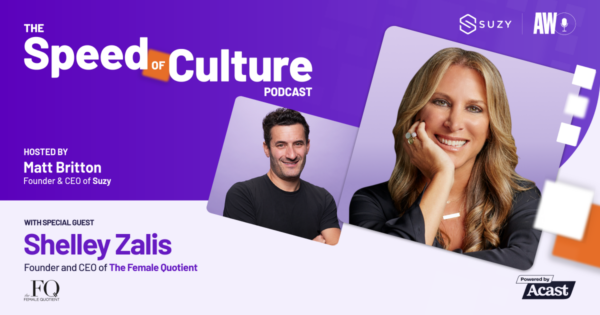
Closing the Gender Gap With Shelley Zalis, CEO of The Female Quotient

.article-native-ad { border-bottom: 1px solid #ddd; margin: 0 45px; padding-bottom: 20px; margin-bottom: 20px; } .article-native-ad svg { color: #ddd; font-size: 34px; margin-top: 10px; } .article-native-ad p { line-height:1.5; padding:0!important; padding-left: 10px!important; } .article-native-ad strong { font-weight:500; color:rgb(46,179,178); }

Come learn from the good, bad and ugly examples of what works, what doesn’t, and what you need to know now about the new era of social media at Social Media Week, April 9-11 in NYC. Register now to save 20% on your pass.

Among the United Nations’ 17 Sustainable Development Goals, one is actionable for every leader: gender equality. The existing disparities between men and women in the workplace come from a legacy mindset gap, and leaders can proactively strive to narrow this divide.

To gain insights on how to undertake this crucial initiative, we spoke to Shelley Zalis, CEO of The Female Quotient.

At The Female Quotient, Zalis collaborates with organizations to curate experiences, thought leadership and solutions aimed at fostering gender equality in the workplace. She is also the founder of OTX, a research company that was later acquired by Ipsos OTX. In recognition of her achievements, she was honored with the Matrix Award by the New York Women in Communications in 2018.

Listen to Zalis on the latest episode of The Speed of Culture podcast and find out more about being a female pioneer and closing the gender gap in the workplace.

Key takeaways:

  • 04:18 – 07:45 How to successfully innovate — Zalis encountered plenty of skepticism when she founded OTX in 2000. As a trailblazer in the field, she assumed all the roles in the innovation journey: the innovator, who makes mistakes while creating something new; the copycat, who imitates the innovator without understanding the inner workings; and the sweeper, who refines and builds upon an existing ecosystem. To embody all three roles, Zalis continually disrupted herself, emerging as a true pioneer in online research.
  • 09:34 – 17:34 Taking matters into your own hands — Before launching OTX, Zalis worked at a traditional research company. She went to her boss with the idea of migrating research from offline to online, and they all told her it was the wrong time. Simultaneously, Zalis found herself on a panel with Larry Mock, who was then the chief research officer at Procter & Gamble. Seizing the opportunity, she arranged a meeting to discuss her concept with him. However, when she informed her boss about this, he opted to send three male colleagues in her place, citing it as a “boys’ club” affair. Recognizing that her vision would only materialize if she was in charge, Zalis took her idea to Nielsen, embarking on the path that eventually led to the establishment of OTX.
  • 17:58 – 20:33 Hire for passion, train for skill — Zalis’ journey required conviction and perseverance, two crucial qualities for a successful entrepreneur. She used her passion to build resilience for her cause and ultimately created a legacy for online research. As a leader, she has sought out others who share her passion and helped them gain the skills they needed to perform at a high level.
  • 20:38 – 29:14 Creating a “Girls Lounge” — After years in a male-dominated industry, Zalis realized it was time to create a network of women supporting women, something she wished she had during her career. To kick it off, she went to CES and invited 50 women to walk the floor with her, which eventually became The Girls Lounge, the female version of the boys’ club that had been ever-present in her career. She started doing pop-ups for women in various industries to connect and collaborate and avoid feelings of isolation at male-dominated conferences. Initially, she sponsored these herself. Now, The Female Quotient is global, working toward closing the gender gap.
  • 29:50 – 32:44 Be intentional about gender equality — The Female Quotient is actively advancing gender equality in the workplace, spurred by Zalis’ own experiences. She explains that leaders need to be intentional about their actions to push for gender equality. They have the data to fix where they are going wrong and reverse the legacy issues contributing to gender inequality at work.

https://www.adweek.com/brand-marketing/closing-gender-gap-shelley-zalis-the-female-quotient/


What to Do When You Lose Your Biggest (and Only) Agency Client


.article-native-ad { border-bottom: 1px solid #ddd; margin: 0 45px; padding-bottom: 20px; margin-bottom: 20px; } .article-native-ad svg { color: #ddd; font-size: 34px; margin-top: 10px; } .article-native-ad p { line-height:1.5; padding:0!important; padding-left: 10px!important; } .article-native-ad strong { font-weight:500; color:rgb(46,179,178); }

Subscribe to Adweek’s Europe News Update for trending news, inspiring creativity and strategic insights every Thursday.

It was my first “real” vacation since the pandemic. On the morning of day three, I got a text from the CMO of a client of mine for the past thirteen years. My only client, in fact. I managed a team of 120 people who were the brand’s digital AOR.

“Can u talk tomorrow morning?”

The call came, and it was swift. The details are unimportant, save for the fact that the brand was consolidating all its agencies under a single holding company, one to which we did not belong. Thirteen years of partnership terminated, accompanied by six months’ notice and a transition period.

I kept asking myself: How could they do this? They love us! Our work is so, so good. I’ve known some of our clients for over a decade. I’ve been to their homes, I’ve met their children. We were partners! Not the typical client/agency relationship. It was like a divorce between two people who still loved each other.

After the initial shock and denial period, I had to shift into the acceptance phase and create a plan to move forward. If you’re going through the same thing right now, I encourage you not to beat yourself up and to do the following five things.

Be as honest as possible with your team

Everyone will have tons of questions and you won’t have all the answers, and that’s ok. But the more honest you are, the more you will be trusted to do what’s right. Consider weekly status meetings with the team, as well as weekly update emails to your management and finance people. Everyone will (or they should) appreciate it.

Mourn the loss

It’s ok to cry. But consider putting some time boundaries around the pity party—it shouldn’t go on for months.

Transition with dignity

Transition in the most professional, thorough and honorable way possible. Insist that your team aggregate all necessary materials, document everything and treat everyone on the new team with respect, even if they don’t show you the same.

Have a senior-level project manager oversee the entire transition operation, as it requires more rigor than you may think. You owe all of this to your clients, your team, the work and everyone’s reputation. It won’t be fun but just do it.

Scenario plan immediately

Everything takes much longer than you think it will or should. For example, finding new jobs for team members within the agency or the broader holding company. You will end up reaching out to other team leads, discipline leads, agency directors and resource managers—which all takes time (and multiple meetings).

Also, pitching new work to staff the team against can take months, so move quickly (and get your Business Development team involved asap).

Lead by example

Some days I was better at this than others. Some days all I could do was watch pottery videos and do the massive jigsaw puzzle we had in the center of our office. But I finally realized that the team was watching me do this and that it was unprofessional and full of self pity. So, I focused on moving forward, working hard and finding new things to celebrate. Again, some days were better than others.

What was next for me? Stay and be moved to a new account? Be assigned to a bunch of business development pitches? Leave and go to another agency?

An incredible opportunity presented itself. It’s exciting, hard and terrifying all at the same time. I don’t believe in adages (turn lemons into lemonade and all that) but I can say it’s true that when one door closes, another one opens.

https://www.adweek.com/agencies/what-to-do-when-you-lose-your-biggest-and-only-agency-client/


2024 Priority List: A New Partnership for the CMO and CEO


.article-native-ad { border-bottom: 1px solid #ddd; margin: 0 45px; padding-bottom: 20px; margin-bottom: 20px; } .article-native-ad svg { color: #ddd; font-size: 34px; margin-top: 10px; } .article-native-ad p { line-height:1.5; padding:0!important; padding-left: 10px!important; } .article-native-ad strong { font-weight:500; color:rgb(46,179,178); }

The evolution of digital marketing isn’t slowing down—and neither should you. Connect with a community of brand pros and content creators at Social Media Week to learn how to keep pace with the trends, challenges and technology. Register now to save 35%.

At the close of each calendar year, we editors like to ask industry leaders what they learned that year and what they’ll take away into the next. One word has dominated our conversations reflecting on 2023: resilience.

A fitting 2023 word, that. Marketing organizations and creative agencies have had to be especially resilient as they navigate macroeconomic troubles, inflation, geopolitical crises, shrunken ad budgets and technological disruptions like generative AI.

But another, more surprising word has featured prominently in conversations about the year ahead: growth-minded. Despite all the challenges wrought by 2023, leading chief marketing officers did not focus on merely surviving the year that was; they marshalled their creativity and industriousness to help their brands grow without spending as much as they did a year earlier.

#paywall-subscribe { margin:0; padding: 1rem 2.4rem; } #paywall-subscribe .holder { background-color:#eee; border:15px solid #f2f2f2; padding:30px; margin:0 auto!important; text-align:center; } #paywall-subscribe a.underline { color:#000; text-decoration:underline; } #paywall-subscribe img { margin-bottom:10px; width: 140px!important; height: auto!important; } #paywall-subscribe h3 { font-weight:bold; font-size:16px; text-transform:uppercase; width:80%; margin:0 auto; margin-bottom:20px; text-align:center; } #paywall-subscribe h3 span { display:block; font-size:14px; } #paywall-subscribe h2 { font-weight:800; font-size:24px; text-transform:uppercase; } #paywall-subscribe p { font-size: 16px; color:#000; padding: 0; } #paywall-subscribe .cta { margin-top:20px; margin-bottom:10px; font-size:14px; text-transform:capitalize; color: #fff; background-color: #E50000; border:none; padding:12px 28px; text-decoration:none; -webkit-transition: .3s ease; -moz-transition: .3s ease; -o-transition: .3s ease; -ms-transition: .3s ease; transition: .3s ease; } #paywall-subscribe .cta:hover { color: #fff; background-color: #181818; transform: scale(1.02); } #paywall-subscribe .already-a-member { font-size:14px; } @media (max-width: 1024px) { #paywall-subscribe .holder { border:12px solid #f2f2f2; padding:25px; } #paywall-subscribe img { width: 120px!important; } } @media (max-width: 768px) { #paywall-subscribe .holder { border:10px solid #f2f2f2; padding:20px; } #paywall-subscribe img { width: 100px!important; } #paywall-subscribe h3 { font-size:14px; } #paywall-subscribe h3 span { font-size:12px; } #paywall-subscribe h2 { font-size:18px; } #paywall-subscribe p { font-size:14px; } #paywall-subscribe .cta { font-size:12px; padding:10px 24px; } #paywall-subscribe .already-a-member { font-size:11px; } } AW+

Treat Yourself to the Insights, Inspiration and Information You Need to Stay Ahead in 2024

Get 4 weeks of access for $1

*offer ends January 5, 2024 at 11:59pm ET. After trial ends, you will be billed $20 every 4 weeks.

Start Your Trial

Already a member? Sign in

https://www.adweek.com/brand-marketing/2024-priority-list-a-new-partnership-for-the-cmo-and-ceo/


Telemundo Leadership Shakeup: Luis Fernández Replaces Beau Ferrari as Chairman

Telemundo is ending the year with a major leadership shakeup. Today, Cesar Conde, chairman of NBCUniversal News Group, announced that Beau Ferrari will exit his role as chairman of NBCUniversal Telemundo Enterprises, with Luis Fernandez now taking on the position. Ferrari, who has served as chairman for three years, will transition to a position as… https://www.adweek.com/convergent-tv/telemundo-leadership-shakeup-luis-fernandez-chairman/


Allyship With HBCUs Is More Than a Marketing Campaign


.article-native-ad { border-bottom: 1px solid #ddd; margin: 0 45px; padding-bottom: 20px; margin-bottom: 20px; } .article-native-ad svg { color: #ddd; font-size: 34px; margin-top: 10px; } .article-native-ad p { line-height:1.5; padding:0!important; padding-left: 10px!important; } .article-native-ad strong { font-weight:500; color:rgb(46,179,178); }

It’s no secret that collaboration is essential to growth, but the how of it isn’t always so clear—and it’s the understanding of how that is a true competitive advantage. Join Adweek X, a uniquely formatted event on December 4 in LA, to unlock fresh perspectives, true collaboration and growth.

Since the inception of Historically Black Colleges and Universities (HBCUs) in the 1800s, HBCUs have been a driving force in developing successful Black professionals in America. According to a White House report, HBCUs have produced approximately 40% of all Black engineers, 50% of all Black lawyers, 70% of Black doctors and 80% of Black judges. These prestigious colleges and universities have also produced close to 50% of the teachers in America, and many of the most accomplished names across the world of sports, business and entertainment are products of an HBCU.

Even many of the trends we see today, whether it be in fashion, music or social media, have been driven by some of the brilliant minds that have walked HBCU campuses. Collectively, these colleges and universities sit at the four-way intersection of authenticity, academia, culture and commerce. 

Markedly, HBCUs have accomplished all of these feats while being underfunded, so imagine the potential if they had meaningful support. Brands across America can bridge the gap, not only by showing up during key moments throughout the year but also making meaningful long-term investments in HBCU students and institutions.

Over the past five years, brands have begun to align themselves with HBCUs and diverse communities more often. However, it’s important that brands’ alignment transcend symbolic gestures in marketing campaigns, sponsored events and brand activations. Now is the time for brands to build a more meaningful relationship with HBCUs that nurtures campus life, professional development and talent pipelines that enhance the HBCU experience.

It’s not enough for brands to just be present—they must authentically engage with HBCU culture, their graduates, students at the university and its rich history, in an always-on approach that helps HBCUs overcome the obstacles of being underfunded for many decades.

One recent example of a brand authentically engaging with HBCU culture is when Flamin’ Hot partnered with Grammy award-winning artist Megan Thee Stallion to raise scholarship funds for HBCU students. Knowing the importance of homecoming season at HBCUs, Flamin’ Hot teamed up with the Houston rapper to launch Flamin’ Hot University, a fictitious university that offered online courses and limited-edition merchandise inspired by popular streetwear designer Melody Ehsani. 

The collection also included a Stallion Varsity Jacket and a Hot Girl Club sweater, which was inspired by Megan Thee Stallion. Proceeds from the collection went towards starting a scholarship fund of up to $150,000 at Texas Southern University, which is also Megan Thee Stallion’s alma mater. The partnership with Megan Thee Stallion was organic, the campaign was seamlessly integrated into HBCU culture and it left a meaningful impact on students at Texas Southern University. 

The campaign illustrated a successful and authentic way to engage with and invest in HBCU culture, so how else can brands tap into HBCU culture in meaningful ways?

Invest in campus infrastructure 

Long-term investments in infrastructure enable brands to be more present in the daily nuances of the HBCU experience. Financial support for infrastructure such as dorms, athletic facilities and classrooms enhances the college experience of HBCU students. These types of investments and partnerships allow brands to be authentically woven into the fabric of the everyday lives of HBCU culture and students who are pursuing their degrees. 

Empower students through mentorship

At the core, HBCUs are schools of higher learning that build leaders and some of the most esteemed professionals, not only in the Black community but in America—it’s important that brands understand this mission. Establishing mentorship programs at HBCUs seamlessly aligns with this assignment by providing students with the proper insight and guidance to help them secure jobs once they graduate. It also provides them with access to conversations with individuals who have once walked a similar path. This will not only accelerate their professional development but also help them build a strong network of professionals they can lean on to help navigate their academic and career journey. 

Build talent pipelines

Building a career pathway for students will also make a significant impact on bridging the gap for HBCUs. Create a calendar of events throughout the year that includes professional development workshops, panel discussions that provide career insight, and internship opportunities that are designed to establish clear pathways for students to have successful careers in their respective fields. Additionally, brands should also consider investing in curriculum development and campus career fairs in an effort to ensure that students are being prepared for what their respective industry looks like now, and in the future.

Allyship with HBCUs is more than just a marketing campaign. Marketing campaigns only represent a moment in time or in the world of advertising a “flight.” In an ever-changing world where budgets are getting tighter and the return on investment is more important than ever, one of the best returns on investment for a brand is investing in HBCUs. Not only are you showing up in front of an audience that is one of the driving forces behind trends for young people, but there is also an opportunity to help students become leaders in their respective fields, creating a sustainable pipeline to hire Black professionals and helping nurture the HBCU experience in a way that drives authenticity and allyship. 

This can be accomplished by forming apparel partnerships with HBCU athletic programs similar to Nike’s partnership with Florida A&M University, establishing internship and mentoring programs for HBCU students, creating unique brand activations at HBCU homecomings, hosting exclusive product launch events on HBCU campuses and by leveraging social media to engage with HBCU students in a way that lets them know you care. 

It’s one thing for brands to say that they care, but the impact comes from actions rooted in authenticity. 

https://www.adweek.com/brand-marketing/allyship-with-hbcus-is-more-than-marketing-campaign/