How One Creative Is Changing the Entrepreneurial and Design Landscape in Texas

If you live in Austin, Texas, chances are you’ve caught wind of 28-year-old Jane Claire Hervey’s work, whether or not you’ve heard her name.

Through nonprofit Boss Babes ATX and creative studio Group Work—both of which she founded and runs—Hervey’s been pushing the creative and entrepreneurial community in Austin and beyond to think differently about who gets funding, tools and opportunity. With big-name partners like Doc Martens, OkCupid, Red Bull, Tito’s Vodka and the University of Texas, the work she’s doing is reshaping the industry landscape.

“I’m just trying to figure out how to make things work for people who are not typically centered in the design of entrepreneurial and creative spaces,” Hervey explained. “It’s a design problem, in my mind.”

After graduating from the University of Texas in 2014 with a degree in journalism, Hervey spent the first few years of her career in communications and marketing at media startup Neon Cantina and boutique design agency In-House International. Through those experiences—some of which required her to participate in projects she didn’t agree with or support—Hervey sharpened her focus and strengthened her commitment to the values that guide her work today: inclusion and collaboration.

Out of a desire to act on those values, Hervey founded Boss Babes ATX in 2015 with a mission to connect women and nonbinary entrepreneurs, creatives and community organizers. Through Group Work, founded in 2017, Hervey takes branding, creative and event curation clients on a project-by-project basis in her spare time. The studio’s name, Group Work, speaks to Hervey’s philosophy of inclusive, values-driven collaboration.

“I like to challenge this concept of a target market,” said Hervey. With each project, she asks, “Who does this exclude, and why are they excluded?” Using this as a guiding principle, Boss Babes ATX has also been able to work with its partners to extend funding opportunities and connections to communities that have been historically sidelined.

She admits that digging into systems of exclusion can bring up issues that are hard to look at. “A lot of those things are rooted in sexism or racism or other discriminatory belief systems that we’re not always conscious of,” said Hervey.

Big Mistake

Early in her career, Hervey said that she often failed to trust her instinct, instead choosing to sidestep the conflict or gray area facing it would have unearthed.

“You have to be able to—at the bare minimum—trust yourself,” she said. “You have to trust your emotions; you have to trust your read; you have to trust your lived experiences.”

Lesson Learned

Focusing on the gray areas led Hervey to the harder yet more rewarding work that she does now, both through the nonprofit and creative studio. Trusting her vision has allowed her to lean into “group work,” building effective projects.

How She Got the Gig

Hervey created these gigs herself, founding Boss Babes ATX in 2015 and Group Work in 2017.

Pro Tip

“I will not work with someone who does not have a written set of values,” said Hervey.

https://www.adweek.com/agencies/creative-changing-entrepreneurial-and-design-landscape-texas/


Former Marriott Chief Marketer Joins Atlas Obscura’s Board of Directors

Atlas Obscura, the media and experiences company that promises to take travelers off the beaten path, has expanded its board of directors to include former Marriott global marketing officer Karin Timpone alongside former HuffPost editor in chief Lydia Polgreen.

Both are expected to help Atlas Obscura grow in an uncertain environment as the brand’s heavy investment in experiences and trips—like a photography course in Chernobyl and bird watching in New Zealand—have been taken online as the pandemic has in large part shuttered the travel industry. Last year, the brand nabbed nearly $20 million in funding, a significant amount of which came from Airbnb. 

In 2019, those investments accounted for nearly 60% of the brand’s revenue. And surprisingly, the site’s media revenue is expected to double this year, according to an Atlas Obscura spokesperson, putting it ahead of where it was last year by seeking out new brand partnerships with Tastemade and Graduate Hotels, with more to be announced later this year.

Former CEO David Plotz left the company last October after six years, and longtime media executive Warren Webster now holds the reins. The site currently lists nearly 100 trips scheduled internationally for 2021.

Timpone was approached by Atlas Obscura and will join the site a year after leaving Marriott, where she spent seven years creating and growing the brand’s Bonvoy loyalty program to more than 135 million members. Previously, she held positions at The Walt Disney Company, Yahoo and Universal Studios.

“They were looking to specifically expand their board, and I’ve had a very unique career that’s directed by where trends are going. I like to be in the early stage of something,” said Timpone, who spent the summer studying financial technology at Harvard University. “This feels like the right time, where the Atlas brand has already lived and where the world is heading.”

“Lydia and Karin bring an incredible depth of experience and knowledge that will be invaluable as we bring our mission of discovery to a global community of curious explorers,” CEO Webster said. “Atlas Obscura is the perfect brand for this moment in time. Getting people off the main mass tourism routes and onto the roads less traveled—and finding wonderful things to do at home or close to home—that’s what we do.”

https://www.adweek.com/programmatic/former-marriott-chief-marketer-joins-atlas-obscuras-board-of-directors/


How The Richards Group Can Keep the Business Going Amid Its Moment of Crisis

In early 2016, Campbell Ewald became embroiled in controversy after a white staffer at the agency’s San Antonio office sent an email in October 2015 inviting colleagues to participate in what was termed “Ghetto Day.”

The racist internal communication caught up to the agency with CEO Jim Palmer being terminated, handing the leadership reins to then-agency-president Kevin Wertz. In the aftermath, three clients—USAA (a major client in the San Antonio office), Edward Jones and Henry Ford Health Centers—abandoned the Detroit-based IPG shop.

Campbell Ewald’s story has shades of the current situation facing The Richards Group after its founder, Stan Richards, exited the agency under a cloud of controversy over remarks he made during a Motel 6 creative pitch.

Though The Richards Group situation is perhaps more acute and expansive—with the agency losing several long-standing clients—past lessons could inform what an agency can do to manage a crisis of this scale, especially related to business development.

According to Wertz, the agency has not shied away from the history of what happened in 2015, found ways to learn from it and has moved in a positive direction. Internally, Campbell Ewald worked to build more diversity and inclusion, backing it up with authenticity and transparency.

“It was about rebuilding trust with leadership,” Wertz said. “What people needed to see was that we were committed to actually making the changes people wanted. It wasn’t just talking about things or putting up posters. It was setting real, measurable goals for our workforce, tracking and sharing transparently. We told people, ‘Don’t just trust us, watch us.’”

The goal of the agency is to reflect the population of the United States. Based on the publicly available data, there appears to be positive momentum with the more deliberate and intentional approach outlined on Campbell Ewald’s website. From 2015 to 2020, for example, the agency notes that people of color in senior leadership improved from 3% to 18%, mid-level managers grew from 19% to 24%, and female senior leadership is at almost 50%.

Kari Shimmel, Campbell Ewald’s chief strategy officer, noted that high levels of transparency trickled down, critically, to the agency’s clients. Shimmel pointed out that the agency was asked about the incident by clients in its immediate aftermath. However, it also proactively mentions the difficult time when talking to prospective clients to underscore its commitment to change.

“People say that crisis is an opportunity and a catalyst,” Shimmel said. “For us, this wasn’t simply about making this another agency value or something that we talk about, but literally something that’s ingrained in who we are as an agency, and who we want to be.”

What it might take to get back in the game

Cambell Ewald’s experience could provide some kind of blueprint for The Richards Group, but the fact is that developing business for the agency may take herculean efforts. According to agency business development consultant Peter Levitan, the first step is to look inward.

“A part of business development that many agencies don’t understand or spend time and energy working on is growing existing accounts,” said Levitan. “In the case of The Richards Group, they have to save as many accounts as they can, and be totally upfront in dealing with the problem. There are sharks in the waters circling the accounts, so the pressure is on holding what remains.”

One East Coast-based independent agency’s chief client officer agrees with Levitan’s sentiment, noting that in the “craziness of 2020—with the pandemic and election—everybody needs to be very conscious of their own business,” as well as looking inward to address team morale and whether or not the agency is doing the right things that will then enable confidence when going outward.

https://www.adweek.com/agencies/how-richards-group-keep-going-moment-of-crisis/


Being Blind Was Never Going to Keep Josh Loebner From a Career in Advertising

Josh Loebner has spent more than two decades in advertising and marketing as an account strategist. But he wishes he could’ve gotten started sooner.

Born without sight in one eye and legally blind in the other, Loebner didn’t even know the industry was an option for him until completing an undergraduate degree in forestry that he struggled to use. It took a strategist at the agency then known as Wunderman Cato Johnson to do a SWOT analysis and ask if he’d ever considered advertising. He hadn’t, so he returned to the University of Tennessee to try it out.

“I love to have conversations, and I love to be creative,” he said. “I couldn’t see myself doing anything else.”

After graduation, he arrived in New York and “just did a lot of door-knocking” until landing at Young & Rubicam in 1999. Along the way, he has held jobs at several agencies, including Edelman. Now, he is back in Tennessee leading strategy at Designsensory, a Knoxville-based ad agency where he is currently working with the government to create Covid-19 resources for the more than 1 million disabled residents in the state.

The question you’re probably wondering: In a field where image is everything, how does a blind person fit in?

“The industry is all about celebrating differentiation,” Loebner noted. “And people with disabilities have to be able to maneuver and adapt in ways that are unique to them. And so I literally see the world with a different perspective every day.”

Loebner has been an educator almost as long as he’s been in advertising, mentoring young people with disabilities to ensure they know their career options. His advocacy has been recognized by the American Advertising Federation, which awarded him a silver medal for serving on its Mosaic Council, a premier think tank for diversity, equity and inclusion in the industry.

Loebner is also a 2020 National Federation of the Blind scholarship recipient, which he received based on his doctoral focus of disability and inclusion within the advertising industry.

“Advertising is powerful,” he said at Adweek’s recent Disability Inclusion Summit. “It shapes our reality well beyond the features and benefits of a product or a service, but really about our society and how people with disabilities should be a part of it. Not only who’s on screen, but those people in the agency.”

Big Mistake

“I didn’t get [career] guidance when I was in college,” Loebner recalled, “and I made the wrong decision that led to years of not being in an industry that I love.”

Lesson Learned

“Everybody talks about authenticity within the creative framing of a finished ad or campaign, but that human authenticity needs to be shared with colleagues, to identify as part of that community of people with disabilities so that their peers can connect with them,” he said.

How He Got the Gig

“My wife [who’s an art director] and I were looking to move to a different agency together, and so we created this plan that showed our strengths together as a professional team,” Loebner said.

Pro Tip

“To any person with a disability: Pursue a career in the creative arts. Just go for it,” he advised. “Don’t let your disability get in the way of who you are. Your ideas can define who you are as a person and how you can connect with the industry.”

https://www.adweek.com/agencies/blind-josh-loebner-career-advertising/


Entertainment Giant Peter Roth Sets Exit from Warner Bros. Television Group

Longtime Warner Bros. Television Group chairman Peter Roth will leave his role at the top of one of the most prolific television studios in the business at the beginning of next year.

Roth’s retirement, announced today by WarnerMedia Studios and Networks Group chair and CEO Ann Sarnoff, marks the end of an era for the company, which under Roth’s purview was responsible for iconic and beloved television series ranging from The West Wing to Gossip Girl and The Big Bang Theory.

His exit marks another high-profile departure from WarnerMedia as the studio continues to undergo belt-tightening and a broader transformation that centers the company’s entertainment future on streaming.

“Peter and I have been meeting for some time about this, and while there’s never a great moment to say goodbye, he felt that this was the right time to transition in a new leader for the group,” Sarnoff said in a statement. “He’s delivered hundreds of shows, thousands of episodes, millions of viewers, with one singular vision—to work with the best people and to make the best television series.

“In addition to being well respected by his colleagues and competitors, actors, writers, directors and producers, he is the force behind iconic, pop culture-defining television shows we all know and love, including The West Wing, The Big Bang Theory, Gilmore Girls, Two and a Half Men, Gossip Girl, Supernatural, The Flash and countless others. We’re thankful for his contributions to our company and wish him the very best.”

It also marks the end of an era for Warner Bros. Television Group, which was recently folded into a new Studios and Networks group at the company that encompasses all of its programming and content teams.  

Roth joined Warner Bros. in 1999 as president of Warner Bros. Television, where he quickly made his mark developing some of the longest-running and popular shows on television. Under his watch, the group developed and produced The Big Bang Theory, the longest-running multicamera comedy in TV history, as well as The West Wing, which prompted a reunion special for HBO Max, and Gossip Girl, which is in the process of being rebooted for the streaming service.

Other shows developed and produced under Roth’s watch include Arrow, The Closer, Gilmore Girls, Gossip Girl, The Mentalist, Nip/Tuck, Person of Interest, One Tree Hill, Pretty Little Liars, Shameless, Smallville, Supernatural, Two and a Half Men and The Vampire Diaries.

“Working at Warner Bros. has been the greatest, most meaningful, most rewarding experience of my career,” Roth said in a statement. “For the past 22 years, I have had the privilege to be associated with some of the most inspiring creative talent, the most impactful television series and the most dedicated and passionate people I have ever known.

“It has long been my dream to be able to say farewell at the right time in the right way and for the right reason,” he continued. “I’m grateful to Ann Sarnoff for giving me that opportunity and to my Warner Bros. colleagues, past and present, for giving me what has been the gift of a lifetime. I look forward to the next chapter of my career and remaining connected to those people who have meant so much to me.”

Roth’s mark on the television industry extends far beyond Warner Bros. itself. When he served as president of Fox Entertainment prior to joining Warner Bros., he was responsible for developing and programming shows like That ‘70s Show and Family Guy; in a prior role at president of production at Twentieth Network Television (now known as 20th Century Fox Television Productions), he oversaw development and sales of series like Buffy the Vampire Slayer, King of the Hill and The X-Files. He began his career at ABC Television Network, where he first joined as manager of children’s programs.

https://www.adweek.com/tv-video/entertainment-giant-peter-roth-leaving-warner-bros-television-group/


McCann CEO Harris Diamond Is Retiring, Handing Reins to COO Bill Kolb


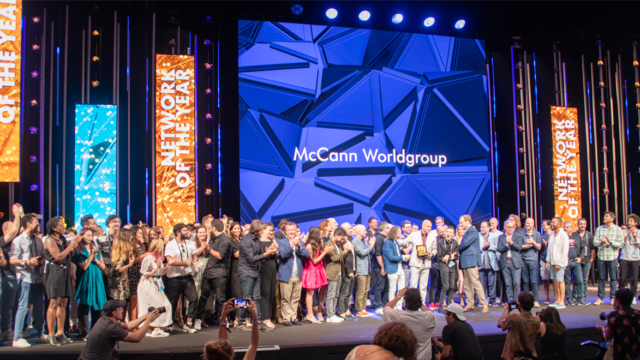
After leading McCann Worldgroup for nearly a decade, chairman and CEO Harris Diamond is retiring at the end of this year.

Bill Kolb, who was named chief operating officer of the global agency network in June, will succeed Diamond.

Kolb is a McCann veteran who’s held a number of positions at the IPG-owned network throughout his career. Prior to becoming chief operating officer, he served as global president of diversified agencies at McCann and chairman and CEO of Commonwealth//McCann, the network’s agency dedicated to Chevrolet.

Prior to that, he held a number of leadership roles at MRM and Momentum, both of which are agencies under the McCann umbrella.

“Bill understands the business needs of our clients across a range of industries, disciplines and geographies,” Michael Roth, chairman and CEO of IPG, said in a statement. “Bill’s long and successful history at McCann spans over two decades, and uniquely positions him to develop the Worldgroup model for the future. With the transition support of Harris, we’re confident the company can continue to deliver on its vision of being the world’s top creatively-driven marketing services organization.”

Under Harris’ leadership, McCann has strengthened its creative chops and won a number of accolades. In 2019, McCann racked up industry awards ranging from Cannes Network of the Year to the Most Creatively Effective Agency Network in the Effie Index. It was also named Adweek’s Global Agency of the Year in 2019. McCann’s major clients include Microsoft, Verizon and L’Oréal.

Harris has been with IPG for much of his career. He served as CEO of both PR firm Weber Shandwick and Constituency Management Group (CMG), a collection of agencies, before joining McCann.

“After 35 years of building a PR business and leading several global marketing communications networks at IPG, it’s time for me to look at new horizons. I am proud of all that the McCann Worldgroup team has accomplished and pleased that Bill will take the reins of McCann and drive us forward,” Diamond said in a statement. “I owe a tremendous debt of thanks to so many clients and colleagues, particularly the senior teams at McCann Worldgroup, Weber Shandwick, CMG, and IPG who have truly been, to the extent I have been successful, keys to that success.”

https://www.adweek.com/agencies/mccann-ceo-harris-diamond-is-retiring/


University of Texas’ Ad School Taps Lisa Bennett to Run New Real-World Program

The Stan Richards School of Advertising & Public Relations (SRS) at the University of Texas (UT) appointed longtime agency executive and Texas native Lisa Bennett as executive director of The Lab, a new practice within the school, designed to provide students with practical experience in the advertising and marketing industry.

“I feel like I’ve been preparing for this role my entire life. I grew up in Austin, graduated from UT, learned from some of the best in the business, led work across a broad range of clients and mentored some truly incredible talent over the years,” Bennett said. “Our industry is going through massive change and is facing a multitude of challenges. Creating an entity designed to prepare students for the real world will be an important next stage of my career. The Lab will be designed to give SRS students the best possible chance of succeeding in what is an incredibly competitive and demanding environment.”

Ostensibly a program and student-run agency, Bennett brings voluminous experience to the role, starting at Leo Burnett, where she spent 14 years, ascending to evp, executive creative director. From there, she joined DDB Worldwide as managing partner and CCO of DDB West. Ten years into her tenure, she moved to a North America role. After DDB, Bennett spent time at two independent agencies, including TM Advertising in Dallas, which shut down last year.

“Lisa’s impressive track record and wealth of industry expertise will add tremendous value to the faculty and students of The Lab,” Jay Bernhardt, dean of The Moody College of Communication, said. “I’m confident that under her leadership we will build a highly unique and valuable resource for both students and clients.”

Bennett’s brand resume includes several iconic brands such as Delta Air Lines, Disney, Heinz, Intel, McAfee and McDonald’s. She’s also snapped up several prestigious awards from Cannes Lions, D&AD and Clio Awards, where she was inducted into its hall of fame.

Stan Richards—the iconic advertising figure who founded The Richards Group, and whose name adorns the program—praised the decision to hire Bennett, citing the school’s unique opportunity to give students more robust skills in a more real-world environment.

“She lived the agency life for a long time, and should be able to replicate what happens in any number of agencies around the country,” he said, also noting that the pandemic has changed the dynamics. “There’s a vitality and energy within an agency, partly because of the proximity of people to each other. We’re missing that badly right now, but [students] will get a feel for that and it will better prepare them for when they take on their first job.”

Deb Morrison, the Carolyn Silva Chambers Distinguished Professor of Advertising at the University of Oregon, taught Bennett when she was a UT professor starting in the late 80s.

“Lisa was amazing from the word ‘go,’” she said. “She’s talented and tenacious. At Leo Burnett, she brought a real sense of creativity to those teams and brought them back to a streak of winning awards, transforming clients.”

UT has remained a high-quality program, but adding The Lab is crucial to take it to the next level and become more relevant within the marketing ecosystem, according to Morrison.

“Having a student agency, and that kind of experiential learning is important,” she said. “It will be wonderful to watch Lisa pay attention to feisty startups and more innovative thinking, than just focusing on big agencies. The marketing world is changing, and she has all of the right tools and context to thrive.”

https://www.adweek.com/agencies/university-of-texas-ad-school-taps-lisa-bennett-to-run-new-program/


Peloton’s Head of Marketing Dara Treseder on Making Moves Centered on Your Passions

Prior to assuming her role as svp, head of global marketing at Peloton in August, Dara Treseder was a member of the fitness brand’s app, which offers a comprehensive library of wellness classes, and a member of two community Peloton groups. So, when the opportunity arose for her to join the executive marketing leadership team at the company, she knew it was a great chance for her to continue a career directly connected to something she already had a passion for.

“Peloton is a big part of my life,” Treseder told Adweek on the CMO Moves podcast on Monday, “and motivating millions of people to stay active, centered and connected on health and wellness has always been a passion of mine personally. I’ve been on the board of the Public Health Institute for several years.”

Another aspect of the Peloton brand that Treseder is excited to continue to develop and grow? Its consistency in maintaining a strong visual identity and brand image. “I remember when I first received my Peloton bike and my shoes, and just the packaging showed how much love and care comes through and is expressed by the brand through all of the various touchpoints,” she added, noting that even as the company grows and scales—it now boasts 3 million members—that consistency remains true.

As a Peloton user and a community member of both Black Girl Magic and a Peloton working moms’ group, Treseder felt inspired to put the community at the forefront of its latest campaign, which diverges from the brand’s focus on product disruption in the industry.

“Since those early years, Peloton and our community have really grown significantly, and now we’re at a time that we think it’s so important for people to see and experience the fullness of what Peloton has to offer,” Treseder said, “And so we’re starting that journey with this campaign where we’re showcasing the Peloton experience through the lens of our members, through the lens of our community.”

That element community, which Treseder considers to be one of the most valuable offered by Peloton, is depicted in a spot from the campaign with real people in their homes sharing their authentic experiences interacting with the brand and being fully immersed in the fitness app’s culture and movement.

“I’m really, really excited for how we continue to tell that story, how we continue to really show the world the Peloton experience, because it really is unparalleled,” Treseder said.

Check out the full conversation between Treseder and Adweek’s Nadine Dietz here.

https://www.adweek.com/brand-marketing/pelotons-head-of-marketing-dara-treseder-on-making-moves-centered-on-your-passions/


Virgin’s Chief Brand Officer Steps Down as It Revamps Rewards Program, Restructures Leadership


Virgin Group’s chief brand officer Lisa Thomas is stepping down from her role, the brand announced today, as the leadership team undergoes a restructuring that will bring its Virgin Red rewards program closer to the main brand.

The conglomerate won’t be replacing Thomas when she leaves at the end of the month—instead, Virgin Red CEO Andrew Swaffield will join the Virgin Group’s senior leadership team as chief commercial officer in addition to his role with the rewards program.

Since joining Virgin in 2016, Thomas has “continued to build the Virgin brand into a force for good,” Virgin Group CEO Josh Bayliss said. In addition to her work on Virgin’s brand strategy, Bayliss noted that Thomas has “been instrumental in leading a number of initiatives focused on gender diversity,” and thanked her for her “outstanding contribution” to the company.

The restructuring will bring Virgin Red and Virgin Group branding under singular leadership. Last month, the brand shifted Virgin Atlantic’s Flying Club miles over to Virgin Points, the new reward currency that works across Virgin companies and can be used at any time. More details on the new program will be released soon, the brand said.

“Launching Virgin Red, and bringing it closer to the brand, puts the customer at the heart of Virgin,” Thomas said. The integration will create a “perfect platform” to connect Virgin’s companies and consumers, she said, giving consumers access to “truly extraordinary experiences” through Virgin Red’s reward currency.

“On a personal note, I am very sad to say goodbye,” Thomas said. “I have loved my time at Virgin but I am very excited about what the future might hold. I’m looking forward to a bit of time off and then moving onto my next challenge.”

Chief communications officer Nick Fox, who has spent the last 13 years at Virgin, is also leaving the company amid the restructuring. Over the next few months he’ll be working with the team on a handover, and then Virgin’s communications director Tamara Bennett will lead the team on an interim basis.

“Having guided both of our airlines through to stability, taken Virgin Galactic public last year and now just raised Virgin’s own SPAC, I feel it’s a good time to start a new adventure,” said Fox.

The chair of Virgin Group’s nonprofit foundation Virgin Unite, Holly Branson, is also joining the senior leadership team under the new structure. Branson will take on the role of chief purpose and vision officer in addition to her current position with the nonprofit.

https://www.adweek.com/brand-marketing/virgins-chief-brand-officer-out-as-it-revamps-rewards-program-restructures-leadership/


Former Warner Bros. TV Exec Susan Rovner Joins NBCU as Entertainment Programming Chief

Former Warner Bros. TV president Susan Rovner, who left the company Oct. 2, is heading to NBCUniversal to head up entertainment content for all platforms, the company said today. Her title is chairman, entertainment content of NBCUniversal television and streaming.  

Rovner, who spent more than two decades at Warner Bros., will oversee programming for the entire NBCU portfolio, which includes broadcast network NBC, basic cable networks USA, Bravo, E!, Syfy, Oxygen and new streaming service Peacock. Her entertainment programming division consists of separate content groups for scripted, unscripted, late-night and alternative programming.

“Susan is the bold creative force we need as we rethink the future of our business,” said Mark Lazarus, chairman of NBCU television and streaming, in a statement.  “Throughout this process I have been consistently impressed by her strong perspective, track record of success and passion for content. Susan joins a great team that is poised to begin a new era at NBCU.”

Even though news broke of Rovner’s new role in early September, and she announced her exit to Warner Bros. staff soon after, explaining in a memo that she was going “to start a new chapter in my career,” NBCUniversal had declined to confirm she would be joining the company until today.

“NBCU has a deep-rooted tradition of having the best programming from visionary creators, and I feel so grateful for the opportunity to join this incredible organization as it builds on that legacy to head into the future,” said Rovner in a statement.

Two months ago, new NBCUniversal CEO Jeff Shell unveiled a major TV and streaming reorganization he had first teased during Comcast’s July earnings call. The new structure created three horizontally integrated units, all of which will report to Mark Lazarus, who was promoted in May as part of an earlier NBCU reorganization.

At the time, Peacock chairman Matt Strauss had been tapped to head up the Direct-to-Consumer (DTC) unit. Frances Berwick—who previously ran NBCU’s Lifestyle Networks—was promoted to head up the Entertainment Business unit and tasked with creating the programming strategy and content spend across the TV entertainment brands.

But the third unit, Entertainment Programming, did not yet have a leader. The company initially looked to bring in an external hire, which ended up being Rovner.

Rovner joined Warner Bros. in 1998 and helped develop shows like Gossip Girl, The O.C. and Supernatural before being promoted to co-president of Warner Horizon Scripted in 2014. She was promoted to co-president of Warner Bros. TV last year alongside Brett Paul and given day-to-day oversight of the studio.

Prior to her exit, Rovner was seen as the likely successor to Peter Roth, president and chief content officer for Warner Bros. Television Group, whose contract is up next year.

NBCUniversal’s reorganization has already resulted in the departure of two NBCU network chiefs: NBC Entertainment chairman Paul Telegdy, who left in August, and USA Network/Syfy president Chris McCumber, who exited in mid-September.

In another high-profile exit not connected to the overhaul, NBCU vice chairman Ron Meyer resigned in August after revealing that he had been involved in an affair that led to an extortion attempt.

https://www.adweek.com/tv-video/former-warner-bros-susan-rovner-nbcu-entertainment-programming-chief/