Why Hiring Multicultural Agencies Is Good Business for Brands That Want Diverse Fans

Amid calls for brands and agencies to address systemic racism and hire more people of color in leadership positions, the heads of Chicago-based agency Ten35 want brands to improve how they hire and treat multicultural shops, too.

Advertising and communications industry veterans Ahmad Islam, Toni Harrison and Sherman Wright founded Ten35 in 2016 to provide clients with a combined solution of creative services and media engagement. With a staff composition of 85% people of color, 65% women and 10% LBGTQ+, the agency operates under the tagline “culture as a competitive advantage.” Agency founders said their diverse makeup helps clients better connect with multicultural, millennial and Gen Z consumers.

“When you look at the buying power of African Americans and the influence of culture that African Americans create, drive and amplify every day, it reaches far beyond just our community,” Islam said. “As a brand, being able to work with partners who are experts at taking that culture and bringing it to life through content, messaging and engagement is smart business.”

Ten35 has worked with clients including Pepsi, Bombay Sapphire, Mountain Dew and PrimaLoft. Islam recalls how a memorable campaign his team created for Coors Light, featuring rapper-actor Ice Cube, demonstrated how a brand investing in a minority-owned shop generated positive results across multiple demographics. He said the campaign began as a multicultural brief, but through the course of testing ended up performing better than most of the work in Coors’ portfolio at the time.

“The campaign showed that when you start running content into circles with more diverse segments of consumers, that work is still effective even if it’s created off a multicultural insight,” he said. “The work was specifically developed on a multicultural brief, but performed in a much broader sense; it used culture to connect with not just African Americans, but a millennial audience, too.”

As companies pledge to do better in hiring and amplifying diverse talent, Harrison said they need to understand that multicultural agencies are just as capable as traditional or mainstream agencies, and should be treated as such.

“It’s often the case when having a discussion with a new client, they expect the multicultural agency to have lower fees or they question our ability to scale,” she said. “Multicultural agencies deserve the same consideration and respect as general market agencies, as our work and ability to scale is not different—it’s our audience expertise and approach that’s unique.”

Harrison noted there should also be equal ownership and credit given to minority-owned agencies hired to work on campaigns—especially those themed around Black Lives Matter right now—alongside a general market agency or agency of record.

“It’s a serious blow against progress when the multicultural agency is asked to report to the general market agency instead of having a direct line of communication to the client. There’s going to be some tension, and it’s not tension because the agencies can’t work together productively,” she said. “We can and should be two worlds that coexist, not two worlds that collide. It’s necessary for brands to take steps to connect the agencies, so the threat of competition doesn’t hinder the work.”

Wright added that Ten35 has hired diversely to ensure it brings a varied lens to its work, and more companies need to adopt this notion and expand their horizons when it comes to hiring talent.

“Culture is transformational for a brand. Brands that have embraced culture, such as Nike, become more of a cultural icon than others,” Wright said. “In order for brands to thrive and survive, it’s imperative they add and embrace these lenses to the world.”

As the industry conversation around diversity and inclusion continues, Islam stressed that encouraging general market agencies to diversify and partnering with minority-owned agencies aren’t mutually exclusive—and hiring minority-owned shops will have an immediate impact on a company’s business.

https://www.adweek.com/agencies/multicultural-agencies-good-business-diverse-fans-ten35/
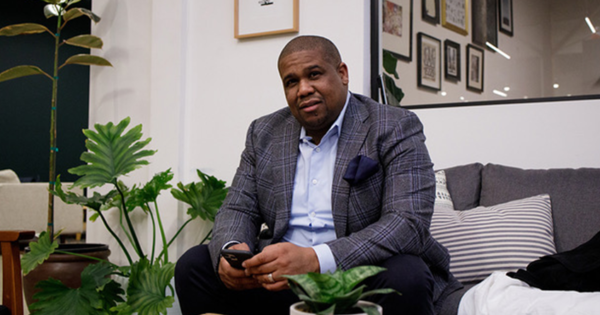


Last Year, Quantasy Acquired a Legendary Shop. Here are Some Lessons Learned

In the pantheon of multicultural agencies, Muse in Los Angeles was long considered one of its leading lights. Founder Jo Muse built a powerful presence in the space over three decades, working with major brands like Honda, Nike, the Office of National Drug Control Policy, the U.S. Army, Wells Fargo and others.

Meanwhile, in the same city, Will Campbell founded Quantasy + Associates in 2012, focused on the intersection of entertainment, advertising and culture, with an emphasis on technology. It was a crucial time for agencies as brands found rich territory in consumer behaviors like the shift to mobile, on-demand content, social sharing, and second- and third-screen experiences. Campbell got out of the gate with Honda, Google, Farmers Insurance and Wells Fargo.

The pedigree and tenure of Muse’s classic branding presence and the forward-thinking vision of Campbell and Quantasy seemed a perfect match. At first, Muse subcontracted Quantasy for digital projects and Campbell, who built interactive brand strategies earlier in his career for the likes of Disney, Fox Sports and Universal Music, forging a strong relationship from the outset.

“At the time, Quantasy was growing and finding new clients,” recalled Campbell, CEO of the combined agencies. “I had conversations with Jo about the right formula to build from, and talked to him about what an acquisition would look like.”

After some back-and-forth, the duo had a deal. Yet, unlike other agency mergers and acquisitions, both Muse and Quantasy had a successful history together.

“We had been working closely with clients for a long time,” Campbell said. “This wasn’t a scenario where it was some kind of mathematical deal. There was an alignment of values, purpose and intention. It was an elevation of something that was already working.”

Adweek caught up with Campbell, who was fresh off the agency’s first virtual Essence Festival, to find out what he’s learned over the past year-plus after the acquisition.

People may not realize what a big deal this was—especially since Muse had built a strong reputation over time, and Quantasy was a relative newcomer. What were the client conversations like?
Campbell: For me, it was about putting the needs of the client first. We put it on the table with the clients, because we knew it was important for them to be into the idea. And they unanimously supported it.

We had the benefit of the proven track record of the work we were doing together. I think that they all saw, particularly with the way the market was progressing, the need for advertising to evolve beyond just “advertising,” by bringing some of these emerging tactics into the mix more seamlessly, and to have it all on one platform. When it happened, people thought, “Wow, this [deal] is interesting,” but that’s partly what excited clients. And then it became really great for new clients to see a different approach and thinking in terms of how to build an agency.

Sometimes, cultures don’t necessarily click. How have you navigated that?
That’s probably the thing that I was warned about the most. We sought out counsel from people that have done this before. I talked to people that I know and trust in my network, and consultants to get their take on it.

Often, M&A is associated with operational efficiencies and those kinds of things. So you’ll see significant job loss and removal of duplication and those kinds of things. But because those weren’t goals that we had, we were really able to mitigate that and demonstrate that that’s not what this was about. We did have to make some pivots over the past year in terms of operational infrastructure, and how work gets developed under one roof at two different companies with two different processes. We hired a COO, Shana Pereira, and she’s been really great implementing a lot of the operational infrastructure to bring the companies together.

How have both organizations played to each others’ strengths?
One of Muse’s real strengths over the years was insights into multicultural strategy. And then, by integrating that strength with the data, analytics tools and practices that Quantasy brought to the table, it was magical and opened those two worlds up.

What are some of the most important leadership lessons you’re learned over the past year?
I learned how important it is to be prepared to pivot. Entrepreneurs, in general, are resilient and have a vision. But I think with that comes an ability to be OK with changing your mind [and direction]. That’s what I’ve learned over the past year: how important it is to walk away from an idea or a concept that you love, and to be able to anticipate change and move toward it.

https://www.adweek.com/agencies/quantasy-muse-will-campbell-multicultural-marketing/


Trio of LA Filmmakers Launch Creative Studio to Champion Underrepresented Talent

Amid calls for creative industries to do better at hiring diverse talent, three Los Angeles-based creatives have launched a collective that will give advertising and entertainment leaders access to underrepresented directors and talent.

Directors Justin Polk and Mel Jones, and producer/entrepreneur Stephen “Dr” Love have formed Invisible Collective, a hybrid production company and creative studio. The trio has previously worked with brands and talent including Netflix, Verizon, P&G, Whole Foods, Lionsgate and rapper Big Sean. Combined, their previous work has earned an Emmy, five Cannes Lions and an MTV Video Music Award.

Polk, who’s worked as a freelance producer and senior producer at Deutsch LA, said Invisible Collective’s mission is to champion underrepresented groups—including minorities, women, the LGBTQ+ community and disabled people—and help brands create content reflective of diverse audiences.

“Without diversity on the creative side, companies end up paying more in damage control when they make ads that don’t take into account how all members of society will perceive them,” Polk said. “We launched Invisible Collective to be a partner that champions creatives across all races and genders, breaks new talent and acts as a creative partner that makes content that resonates with consumers—so everyone wins.”

So far, Invisible has assembled a roster that includes Oscar-winning director Matthew A. Cherry, whose film Hair Love won Best Animated Short Film at the 2020 Academy Awards; contemporary American artist Hebru Brantley; Taiwanese-American commercial director Erin Li; and Matthew Castellanos, a Mexican-American filmmaker who produces and directs digital TV shows, music videos and ads.

“We want to take storytellers who have experience directing and creating and put them together with brands that are having a hard time connecting to their audiences, which are increasingly more diverse,” Jones said. “We bring forth an arsenal of film and television relationships, as well as our expertise, to craft and tell brand narratives speaking to the current consumer experience with fresh, authentic and innovative voices.”

For projects, the three said the collective will be involved in the execution at every stage, including creative, strategy, consulting and talent booking. Love noted they plan to tap artists of all different ilks, including photographers and animators.

“Because we have deep roots in the film and TV space, it’s just a phone call for us to bring people together,” Love said. “Our roster is super diverse and inclusive, but we won’t put people forward based on their demographic identity, but based on their talent.”

Invisible Collective offers more information on how it plans to improve representation on its website and Instagram at @_weareinvisible.


Fastest Growing Agencies

Standout amongst the industry’s best and give your employees something to celebrate. Become an Adweek Fastest Growing Agency and gain industry recognition for your success over the past three years (2017-2019). Submit today.

https://www.adweek.com/agencies/trio-of-la-filmmakers-launch-creative-studio-to-champion-underrepresented-talent/


Sleeping Giants Co-Founders Split Over Unequal Partnership

Sleeping Giants co-founder Nandini Jammi announced in a Medium post this week that she’s leaving the advertising activism organization, which has been credited with pressuring more than 4,000 companies to pull advertising dollars from Breitbart News and helping launch the recent #StopHateforProfit boycott against Facebook.

In Jammi’s post, she alleged that Sleeping Giants co-founder Matt Rivitz, who has positioned himself as the organization’s solo founder, denied her credit for the role she’s held since the early days of the movement in 2016, repeatedly sidelining her and refusing to fully acknowledge her contributions.

Rivitz responded today with an open letter on Twitter, publicly acknowledging her role as co-founder and apologizing for the way he’s handled the public-facing portion of the organization for the past two years. “[Jammi] clearly deserves a lot more credit than she has gotten for her groundbreaking work with Sleeping Giants and I’d like to apologize to her and to anyone who may have felt this way during the course of this campaign as volunteers or as followers,” he wrote.

Jammi has not commented publicly on Rivitz’s apology, which received a mixed reaction on Twitter, though she later posted a screenshot of a blog post she wrote in 2019 called “How to Write Your Next Social Media Apology.”

Sleeping Giants started as a collective movement, with Rivitz running the Twitter account and Jammi the Facebook page. Because it was entirely anonymous, roles and titles were irrelevant for the first couple years of Sleeping Giants’ operations, Jammi said in her post.

That changed in 2018 when right-wing news and opinion site The Daily Caller doxxed Rivitz. A few days later, The New York Times ran an article identifying both Rivitz and Jammi as “the people behind” Sleeping Giants, though the story did not list titles for either of them.

While Jammi said in her post that she was happy to allow Rivitz to take an increasing number the press requests and continue to work behind this scenes, until it became evident that she was being written out of the story.

“Without my knowledge, my story was being defined by someone else—a white man who could use his platform to exclude me, diminish me, or disappear me entirely,” Jammi wrote. “He never once invited me to join him. I never had any idea he was doing any of these interviews until it was too late.”

When Rivitz accepted a Gold Lion at Cannes Lions International Festival of Creativity on behalf of Sleeping Giants and Jammi found out about it on Instagram, she changed her approach, according to her Medium post. She started positioning herself as a co-founder and taking press and speaking requests despite an initial backlash from Rivitz. But after learning that Rivitz had again been leaving her out of critical conversations around the #StopHateForProfit campaign, Jammi said she decided to leave.

“I hope other brilliant WoC and marginalized folks see yourselves in me and don’t wait as long as I did,” wrote Jammi. “The stakes are too high for you to disappear.”

Last month, Jammi co-founded brand safety training organization Check My Ads with marketer and activist Claire Atkin. The company helps brands identify where their ad spend is going and how to ensure a responsible marketing strategy in today’s complex ad-tech landscape.

Neither Jammi nor Ravitz responded to Adweek’s request for comment.


Fastest Growing Agencies

Standout amongst the industry’s best and give your employees something to celebrate. Become an Adweek Fastest Growing Agency and gain industry recognition for your success over the past three years (2017-2019). Submit today.

https://www.adweek.com/agencies/sleeping-giants-co-founders-split-over-unequal-partnership/


FCB New York Hires Chief Talent Officer From Havas

FCB New York has hired Yoonjung Crosby away from Havas as chief talent officer.

Crosby will be responsible for overseeing all initiatives related to people and culture at the agency, tasked with designing programs for the attraction, retention and development of talent. She will also partner with all levels of the agency to ensure a culture of high performance, engagement and inclusion, challenges she will be navigating during the unique work dynamics presented by the coronavirus pandemic.

“I’m thrilled to welcome Yoonie—an incredible change agent in the HR and talent sector—to our team in New York,” said Emma Armstrong, who joined FCB New York as president last May, in a statement. “Great people are the foundation of great agencies. It’s as simple and as hard as that. As we continue to grow through 2020 and beyond, it was essential that we find someone who can identify and nurture the very best talent. It’s a competitive advantage, and we take that extremely seriously.”

Crosby spent nearly five years as director of talent management for Havas Worldwide, where she worked to transform that position from a service model to a strategic business partnership model, and was responsible for developing Havas’ diversity and inclusion strategy. Prior to joining Havas, she spent over four years as an HR manager at Gotham Inc., followed by a brief stint as a talent acquisition specialist at The New York Post.

“Seeing how the agency has continued to innovate, especially during these challenging times, really speaks to the character of the creative minds that comprise FCB New York,” Crosby said in a statement. “I look forward to focusing on opportunities to further innovate and evolve a purpose-driven talent strategy, because the dynamics of talent-centric work are—as FCB says—’Never Finished.’”

Crosby’s arrival at FCB New York comes in the wake of a round of layoffs across Havas offices in the U.S. due to the impact of the coronavirus pandemic. FCB’s Chicago office went through a round of layoffs last month, following executive salary reductions and other cost-cutting measures across all FCB offices in March. FCB’s New York office, meanwhile, has actually grown its headcount substantially, according to a statement from the agency. In April, FCB New York hired Samira Ansari as executive creative director.


Fastest Growing Agencies

Standout amongst the industry’s best and give your employees something to celebrate. Become an Adweek Fastest Growing Agency and gain industry recognition for your success over the past three years (2017-2019). Submit today.

https://www.adweek.com/agencies/fcb-new-york-hires-chief-talent-officer-yoonjung-crosby/


Huge Hires Judith Hoogenboom as Global Chief Strategy Officer

The executive shake-up at Huge continues with Judith Hoogenboom joining the digital agency as global chief strategy officer.

She takes over from Dick de Lange, who left Huge after roughly two years in the role. Hoogenboom spent the last seven years at SYPartners, a consultancy that’s part of Kyu, a 6-year-old “collective” of creative companies owned by Japanese holding company Hakuhodo DY Holdings.

Hoogenboom will report to Huge global CEO Pete Stein, and will be tasked with leading strategy across its 13 offices as well as building new capabilities that help clients to future-proof their businesses.

In her the new role, she plans to prioritize “unifying an already great strategy team encompassing research, data, planning, business, product and brand to help clients thrive in this next era of innovation.”

“Customers are at the center of change resulting from the pandemic, and clients need to get to know their customers—again. They can’t rely on what they think they know,” she said. “The pandemic has accelerated the future of everything—work, automation, distance learning, self-driving cars, online shopping, self-service. The seeds of the next great growth industries are taking root now.”

Prior to SYPartners, Hoogenboom led strategy at global design consultancy Frog in New York. She also has her own consulting firm. Throughout her career, she’s worked with brands including IBM, Nike and Viacom.

Her appointment is the latest in a series of executive changes at Huge, which is owned by IPG, over the past year. In May 2019, the agency hired Pete Stein to serve as CEO following Michael Koziol’s departure. Months later, its chief designer Derek Fridman left for Work & Co. In February, Fura Johannesdottir departed Publicis Sapient to join Huge as chief design officer.

Recent wins for Huge include AccuWeather, Eargo and Brooks Running.


Fastest Growing Agencies

Standout amongst the industry’s best and give your employees something to celebrate. Become an Adweek Fastest Growing Agency and gain industry recognition for your success over the past three years (2017-2019). Submit today.

https://www.adweek.com/agencies/huge-hires-judith-hoogenboom-global-chief-strategy-officer/


After Almost 2 Decades, Global Chief Experience Officer Richard Ting Leaves R/GA

A leader and agency veteran of almost two decades is leaving R/GA.

Richard Ting, who serves in the dual role of global chief experience officer and U.S. co-CCO, is leaving the agency to pursue an unspecified opportunity. His last day will be July 16.

R/GA does not have an immediate replacement lined up for Ting’s role. Tiffany Rolfe, who joined R/GA from Co:Collective to serve alongside Ting as U.S. CCO in 2018, will lead creative in the U.S., with support from svp and ecd Ben Williams on experience design.

“I’ve had such a great journey working at R/GA, it’s offered me so many opportunities to push the edges of design and technology, to work with amazing teams, and to build emerging businesses,” Ting said in a statement to Adweek. “My goal now is to continue to help companies innovate and to go deeper on the product and technology side, as I did earlier in my career. I’ll miss R/GA, but after 19 years, I’m looking forward to my next challenge.”

Ting joined R/GA as an interactive design director back in 2001 and played an instrumental role in shaping the agency. He founded R/GA’s FutureVision program, launched the Mobile and Social Platforms Group in 2007 and served as a founding partner for the R/GA Ventures program in 2013.

Ting led R/GA’s experience design team for over five years and was a crucial part in building the agency’s experience design practice. He also held a role as global chief design officer in recent years.

Throughout his career, he has worked on campaigns for clients including Kobe Bryant’s Black Mamba, Equinox Pursuit, Nike+ and R/GA Ventures’ Awair and Hammerhead.

“Rich and I began working together on Nike in 2005. Personally, he’s my friend and trusted counsel. Professionally, he’s a mentor and BRG advisor, early adopter of R/GA’s stories and systems narrative, and the creative architect behind some of the most notable work in the company’s history,” R/GA global CEO Sean Lyons, who succeeded founder Bob Greenberg in the chief executive role at the start of 2019, said in a statement. “I will greatly miss having him on my team, but look forward to seeing the impact he will have on the people and work in his next role.”


Fastest Growing Agencies

Standout amongst the industry’s best and give your employees something to celebrate. Become an Adweek Fastest Growing Agency and gain industry recognition for your success over the past three years (2017-2019). Submit today.

https://www.adweek.com/digital/after-almost-2-decades-global-chief-experience-officer-richard-ting-leaves-r-ga/


Mark Zagorski Named as DoubleVerify’s New CEO

DoubleVerify has named Mark Zagorski as CEO effective July 21, a move that follows his recent departure from Rubicon Project where he was president and COO after its merger with Telaria.

Zagorski was CEO of Telaria and oversaw the publicly listed company’s repositioning from a video ad-tech specialist to an outfit primarily known for connected TV services, before he helped to spearhead the merger with Rubicon Project.

That pairing recently unveiled a rebrand and is now known as Magnite; Zagorski’s exit was announced on June 18.

He joins DoubleVerify at a time when the verification company aims to accelerate its omnichannel measurement capabilities. Zagorski’s experience as a leader in the CTV space was likely a key aspect in securing the role.

Laura Desmond, lead director and interim CEO of DoubleVerify, said in a statement that Zagorski’s previous experience made him the ideal candidate for taking the company in the direction it wants to go in.

“He is a strong cultural fit and has a proven track record of building and growing businesses globally. We are confident he will continue to drive DV’s considerable momentum in the years ahead,” Desmond said.

“Through their innovative service and solutions, DV has developed deep customer relationships and an outstanding market reputation,” Zagorski added. “There is a huge opportunity to continue to grow the business, and I am energized and excited to leverage my experience in CTV, data and analytics to make this happen.”

DoubleVerify has been on the hunt for a new CEO since early March after Wayne Gattinella exited following a New York Post article containing allegations about his private life.


Fastest Growing Agencies

Standout amongst the industry’s best and give your employees something to celebrate. Become an Adweek Fastest Growing Agency and gain industry recognition for your success over the past three years (2017-2019). Submit today.

https://www.adweek.com/digital/mark-zagorski-doubleverify-ceo/


5 Walk Out After Periscope Parent Company Bars Posting About Black Lives Matter

Key insights:

At least five employees at Minneapolis agency Periscope walked out today in objection to the actions of parent company Quad.

The walkout was created to protest two issues: alleged interference by its parent company in Periscope’s social media communications about the Black Lives Matter movement and staffer concerns that Quad was releasing deceptive data about its employee diversity.

Quad, a Wisconsin-based printing company, acquired the formerly independent Periscope in 2018. Reached by Adweek today, the company said it is addressing the employee concerns, and after initially taking what it described as “appropriate time for assessment,” has allowed the agency to post about Black Lives Matter.

But Periscope chief strategy officer Nathan Young is among the agency employees refusing to return to work until they believe Quad has taken tangible steps to address diversity at the agency. Specifically, Young said, the participants in the walkout are demanding that Quad:

• Make diversity and inclusion training mandatory for all levels of leadership and management.
• Stop interfering with Periscope’s “editorial independence” in terms of content it releases online and elsewhere.
• Release full, accurate diversity data for Periscope.

Young recently co-founded 600 & Rising, a nonprofit dedicated to the advocacy and advancement of Black talent in advertising following the publication of an open letter to industry leadership signed by over 600 Black ad professionals that called for meaningful action to address systemic racism in advertising.

Young told Adweek that the original issue with Quad emerged when the company prevented Periscope from using the phrase “Black Lives Matter” in social media posts in the wake of Minneapolis resident George Floyd’s killing by a police officer on May 25. Young said he drafted a statement in response to Floyd’s killing but that the response was held up for a week and watered down, with Quad forcing Periscope to remove the phrase “Black Lives Matter.”

Young said he attempted to explain the importance of including Black Lives Matter to Quad CEO Joel Quadracci. But Young alleged Quadracci refused to budge on the issue, citing a personal objection to the phrase, which he associated with attempts to defund the police, according to Young’s description of the conversation.

Quad evp Eric Ashworth told Adweek that the company’s early resistance to include “Black Lives Matter” in the agency’s statements on the Floyd killing was due to Quad leadership wanting to take time in understanding the issues involved before connecting Periscope publicly with the movement.

“There was a desire at Quad to better understand what [Black Lives Matter] stands for, [and] aligning behind it was something Quad took seriously and wanted to make sure the appropriate time for assessment was given,” said Ashworth. “We’ve always been in support of the term ‘Black Lives Matter.’ The activities of what does that stand for as a social movement is what we were trying to get an understanding of.”

“We will [now] be using the hasthtag #BlackLivesMatter,” he added. “We appreciate what it stands for as a movement and as a phrase.”

Following the publication of this story, Young Tweeted that Ashworth personally directed him to delete the phrase “Black Lives Matter” from a Periscope statement and provided an image of an email from Ashworth informing him and other recipients at Periscope that “until Defund The Police efforts get better defined, we cannot support Black Lives Matter publicly via Periscope in any form.”

Walkout participants say Periscope is not at fault

Young stressed that Periscope had been supportive of employees’ attempts to address systemic racism and moved toward more progressive diversity and inclusion goals.

“Periscope leadership is not to blame here,” he said, calling agency leaders “committed and enthusiastic” about these efforts.


Fastest Growing Agencies

Standout amongst the industry’s best and give your employees something to celebrate. Become an Adweek Fastest Growing Agency and gain industry recognition for your success over the past three years (2017-2019). Submit today.

https://www.adweek.com/digital/5-walk-out-after-periscopes-parent-company-bars-agency-from-posting-blacklivesmatter/


Visa’s Chief Brand and Innovation Marketing Officer Is Leaving

Chris Curtin, Visa’s chief brand and innovation marketing officer, is leaving the company.

A representative for Visa confirmed to Adweek that Curtin, who has been with Visa for seven years, will be departing his post in September. The company did not disclose who will replace Curtin or where he will be heading next.

“Chris Curtin has announced his intention to leave Visa to explore new opportunities and will be with the company through September. During his seven years with Visa, Chris has made remarkable contributions, including leading Visa’s sponsorship initiatives and guiding the brand to a point of prominence with Brand Z, ranking Visa as the fifth most powerful brand in the world,” a statement from the company reads.

Curtin joined Visa in 2013 as global head of new platform marketing transformation and chief digital officer after working at Hewlett-Packard and The Walt Disney Company. During his time with Visa, Curtin worked on several high-profile marketing initiatives, including the Olympics and NFL sponsorships, as well as a redesign of Visa.com.

Chief marketing and communications officer Lynne Biggar continues to lead Visa’s marketing team.


Fastest Growing Agencies

Standout amongst the industry’s best and give your employees something to celebrate. Become an Adweek Fastest Growing Agency and gain industry recognition for your success over the past three years (2017-2019). Submit today.

https://www.adweek.com/brand-marketing/visas-chief-brand-and-innovation-marketing-officer-is-leaving-the-company/