This Creative Brought a Magical World to Life Using Virtual Reality

Resh Sidhu holds the top creative role at digital agency Barbarian, and as a woman of color and a mom, recognizes she’s breaking the status quo every day.

“I think my whole career has been about challenging the norm and being the oddball in the room,” she said.

Sidhu started as a graphic designer in the gaming industry around the time of the dot-com bubble. Since then, she’s gravitated to roles that allow her to creatively experiment with new technologies, which landed her a position leading Framestore’s virtual reality studio five years ago while serving as creative director. She combined her agency experience—she’d previously held creative positions at AKQA and Digitas—with her penchant for helping clients find ways to experiment with virtual reality.

While there, Sidhu led a virtual reality project for J.K. Rowling’s 2016 film Fantastic Beasts and Where to Find Them, a Harry Potter spinoff. The immersive experience gave fans the chance to step into the magical world.

“The reason why that project was so thrilling is that everything was new,” she explained. “As creative director of that project, it was tremendously challenging. We had to keep spirits high when the challenges were difficult.”

Sidhu briefly returned to AKQA before joining Barbarian earlier this year, where she leads a 20-person team working with clients including JBL, Mucinex and Samsung. At Barbarian, she feels as though she has a “tremendous responsibility to make sure that my past can pave the way for others to succeed,” particularly diverse talent.

She remembers a time not too long ago where she looked around the room during a 30-person meeting and realized she was the only person of color.

“A chill went through my spine,” she said, explaining that Barbarian’s diverse leadership team is one of the reasons that she wanted to join the agency in the first place. “I want to elevate unheard voices because I’ve been that unheard voice.”

Big Mistake

Sidhu used to hide parts of her upbringing at work, like the fact that she came from a working-class background and was the first person in her family to receive a university education. As a new mom, she would shy away from sharing how exhausted she was at the office.

Lesson Learned

She eventually realized she has an “amazing story” to tell and decided to change course, instead seeking out work environments where she can truly be herself. She encourages others to follow suit.

“We should always stop and say, ‘Is this an environment where I can bring my true self to work? Or am I beginning to mold myself into someone else to fit in?’” Sidhu said.

How She Got the Gig

She was looking to shape a department with the right partner support. During her first meeting with Barbarian CEO Steven Moy, who she refers to as her “kindred spirit,” they chatted for more than three hours.

Pro Tip

“If you don’t have a champion, it’s hard to succeed,” Sidhu said. “You’ve got to find somebody who believes in you who is willing to invest that time in you.”


Fastest Growing Agencies

Standout amongst the industry’s best and give your employees something to celebrate. Become an Adweek Fastest Growing Agency and gain industry recognition for your success over the past three years (2017-2019). Submit today.

https://www.adweek.com/agencies/this-creative-brought-a-magical-world-to-life-using-virtual-reality/





Seeing Campaign Fails, Ad Pros Launch a Multicultural Agency to Help Brands Do Better

[unable to retrieve full-text content] https://www.adweek.com/agencies/brand-fails-multicultural-agency-popn-creative/


While Agencies Lay Off Talent, We Are Rosie Launches Recruiting Practice

[unable to retrieve full-text content] https://www.adweek.com/agencies/we-are-rosie-recruiting-practice/


Verb Agency Founders Want More Black Talent to Get a ‘Seat at the Table’

When industry veterans Yadira Harrison and Shannon Simpson Jones founded Verb, a brand consultancy/experiential agency hybrid, in 2018, they combined talents to offer clients expertise for mainstream and multicultural campaigns. In two years, the co-founders have overseen creative campaigns and activations for brands like Lyft, Netflix, CRWN magazine and Nielsen at Cannes Lions.

Before launching Verb, Harrison and Jones met while working at Civic Entertainment Group, where they were vice presidents overseeing the marketing agency’s Airbnb account. They each have about 15 years of experience in the events and marketing industry, with Harrison previously leading advertising and marketing for Macy’s parade and entertainment division and Jones holding director and management positions at various agencies.

Holding executive roles at Civic, Harrison and Jones bonded over issues at forefront of the advertising industry: lack of diversity, marginalization and inaction from leaders.

As protests against police brutality and racism continue across the U.S., last week numerous agencies posted messages of solidarity on social media. This week, 600 Black advertising professionals demanded urgent action from leadership, asking for more than just vocalizing support for the Black Lives Matter movement.

Here’s what Harrison and Jones shared about their experiences in the industry, why Black-owned agencies shouldn’t be pigeonholed, and what they’d like to see from high-profile agencies and clients moving forward.

Feeling left out at the top

Harrison and Jones said they identify with senior-level Black executives who leave predominantly white companies because they don’t feel they can truly excel in those spaces. While getting their titles at Civic was a major accomplishment, they didn’t feel as if they were truly empowered to use all of their talents.

“Even if we were managing some of the largest accounts in the agency, there were still opportunities we weren’t afforded, meetings we weren’t invited to, and there wasn’t really a good explanation for why,” Jones said.

Harrison added that sometimes they were also singled out for certain meetings because of their backgrounds.

“Even with the titles, there were still some unique situations that those titles didn’t afford me,” Harrison said. “These were some of the things Shannon and I bonded over—not being invited to certain meetings or only feeling like you’re getting asked because of your Blackness or your ‘culture’ to bring to the meeting.”

Black-owned agencies aren’t interchangeable

Verb produced a campaign for the final season of Orange Is the New Black, which incorporated fan art.

When they launched Verb, Harrison and Jones decided to get clients by referral only, as a way to quickly land mainstream projects. They noted that being referral-only has helped them avoid being completely pigeonholed into multicultural projects—which is common for Black-owned agencies that often get the same RFPs.

“It seems like if you are Black-owned, you’re put in the same box because you’re interchangeable. But we’re not a monolith,” Harrison said. “We have very unique points of view. Some agencies are more entertainment focused, some are more avant-garde, some are more influencer-based. There are so many different avenues and aspects to all the work we do.”

Being a Black-owned agency, Harrison said they are still willing to bring an eye to culture for brands. For their most recent campaign, Verb teamed with HBO’s multicultural marketing division to produce “Gathering the Pieces,” an ongoing digital event series for Black and queer people promoting the network’s new series I May Destroy You.

Jones added that being granted a wider breadth of projects is unique for a Black-owned agency, and speaks to why agencies and clients should also begin hiring Black people and POC in more than just D&I-related roles.

“It’s about not limiting their services for just culture campaigns or a response to Black Lives Matter,” she said. “That’s a great start, but that certainly shouldn’t be where the conversation ends.”

Give Black talent a seat at the table

Harrison said she feels Black people often leave larger agencies or production companies because they feel overlooked. She said agencies need to simply start looking at who’s in the room when pitch meetings are being held.

Fastest Growing Agencies

Standout amongst the industry’s best and give your employees something to celebrate. Become an Adweek Fastest Growing Agency and gain industry recognition for your success over the past three years (2017-2019). Submit today.

https://www.adweek.com/agencies/verb-agency-founders-black-talent-marketing-changes/


Why Experiential Agencies and Clients Need to Be Honest and Intentional With Diversity Efforts

Ongoing protests across the U.S. in response to police brutality against Black people caused many agencies, including those that specialize in experiential marketing, to speak out against racism on social media and donate to organizations in support of Black Lives Matter. But the current climate has also forced agencies to confront their lack of Black talent as well as their lack of action to improve internally, despite investments in diversity hiring.

Larger experiential shops with high-profile brand clients last week posted messages of solidarity, pledges to donate to specific organizations and began to pivot their social platforms to celebrate BIPOC (Black, Indigenous, People of Color) and queer people. Some agencies, including MKG, were more transparent in acknowledging a lack of BIPOC employees.

“We are a predominantly white agency,” MKG posted on Instagram. “We have praised ourselves for our female leadership, workforce, and LGBTQ+ community, but we have failed in our intention to create a truly diverse workplace. We will do better here.”

Diversity and inclusion seems to be a priority for many experiential marketers when it comes to their event strategy. A 2020 research study from Chicago-based agency Agency EA found that 64% of agency-side experiential marketers said diversity and inclusion—in attendee makeup, speaker lineup and accessibility—was important or extremely important in their event strategy. But there’s a disconnect in terms of representation within the experiential and live event industry.

People who identify as African American or Black make up only 5% of those working in advertising, public relations and related sectors, according to the U.S. Bureau of Labor Statistics. MPI’s 2019 State of Inclusion in Meetings & Events report found that 56% of event professionals have written diversity and inclusion policies at their companies; but 40% lack the education and information that keep them from excelling in those areas, with 14% saying they don’t have support from leadership to make events more inclusive.

So how can larger experiential agencies, clients and the industry as a whole do better? As part of an ongoing series, Adweek is speaking with talent from Black-owned experiential marketing and other creative agencies to get their points of view and insight.

Anika Grant, founder and CEO of New York-based Idlewild Experiential, started her company in 2018 after seven years of overseeing sponsorship and client solutions for Essence Festival. Her clients have included Walmart, Sofi and Complex Networks. She’s also held roles at Madison Square Garden, Jazz at Lincoln Center and the New York City Ballet.

Here’s what Grant said about issues she’s seen in her career so far, problems she still faces as the head of her own agency, and ways agencies and clients should be taking action to improve their D&I initiatives.

Chasm between clients approaching multicultural vs. general market

Essence Festival is the largest Black cultural and music event in the U.S. In 2019, the event drew more than half a million people to New Orleans, and consistently has high-profile sponsors like Coca-Cola and McDonald’s.

Grant said Essence was the first company she worked for with a predominantly Black audience. During her time there, she said she noticed sponsor activation budgets for multicultural events and campaigns were much less than what they’d normally be for the general market.

“It was a constant reminder of the disparity from an experiential marketing standpoint,” she said. “It just became very frustrating that our experience wasn’t being as equally valued as some of our white counterparts.”

Idlewild produced the Walmart and Essence Wellfest tour in 2019.
Idlewild Experiential

Grant said that she often felt clients left out Black agencies and vendors for Essence Festival projects in favor of larger, well-established agencies in the industry that lacked diversity internally. “There would not be one person on their team that looked like me. “Not one,” she said. “But they would present to us at Essence about what we should be doing.”

https://www.adweek.com/agencies/why-experiential-agencies-and-clients-need-to-be-honest-and-intentional-with-diversity-efforts/


In the UK, Where 95% of Ad Execs Are White, Protests Spark Pledge for More Diversity

Amid global protests over the killing of George Floyd by a police officer in Minneapolis,  hundreds of U.K ad agency execs have signed an open letter committing to improving diversity by better supporting and championing Black colleagues.

U.K. agencies, along with other British businesses, have a diversity problem: according to the latest IPA (Institute of Practitioners in Advertising) snapshot of the industry, just 4.7% of execs surveyed in 2019 identified as Black, Asian and minority ethnic—a grouping commonly known as BAME in the U.K. That representation was down from 5.5% in 2018.

Creative Equals, a program in the U.K. that champions diversity and urges better representation of underrepresented people in the industry, has written an open letter calling for change that has been signed by more than 200 agency leaders.

The letter, signed and shared by industry body the IAB and its members, calls on agency leaders to commit to action.

A commitment to change

In signing the letter, agencies pledge to take action against racism, enable employees to understand their own white privilege, address racist incidents, ensure better Black representation at every level, and examine their preferred suppliers list to ensure their advertising isn’t funding white supremacy or racist content.

“We, the signatories of this letter, commit to taking deep, lasting action. Today, we say George Floyd’s name and stand with all black talent in our industry,” the letter reads.

Among the more than 200 signatories are executives from AMV BBDO, Engine Group, Leo Burnett London, Grey Europe, Group M, Havas, Karmarama, M&C Saatchi, MediaCom UK, Ogilvy, Publicis Groupe UK, S4 Capital and WPP.

Below is the full text of the letter:

#SayHisName: George Floyd

Advertising leaders commit to actions not words

Against a backdrop of uncertainty and struggle created by the pandemic, the past few months have seen a global explosion of hate crimes targeting black people. We have witnessed horrific images of African communities in China being subject to exclusion and violence; black key workers in the UK exposed to high-risk situations and even the physical assault of Belly Mujinga; in the US we have seen the killings of Ahmaud Arbery, Breonna Taylor and the violent death of George Floyd. This comes in the same week as a white woman made a ‘weaponised’ call to the police falsely accusing Christian Cooper of threatening her life in Central Park after he asked her to leash her dog.

While the brutality has brought widespread shock, the direct effect of this injustice and violence on black people cannot be overestimated. The UK Home Office reports that hate crimes have been steadily increasing over the last seven years. In 2018/19, there were 103,379 hate crimes recorded by the police in England and Wales. The majority of these hate crimes were race hate crimes, accounting for around three-quarters of offences (76%; 78,991 offences). This marks an increase of 11 per cent from 2017/18. These were only the reported and recorded crimes: thousands more go unreported. As workers are increasingly expected to operate and have a presence online it is imperative that leaders of industry are aware of the dangers both online and offline.

As a creative sector, what we do and who we represent has a profound impact on culture, yet systemic inequality continues in our industry. UK IPA industry census data, published in April 2020, confirmed minimal gains have been made in diversifying the ethnic make-up of leadership. We have gone backwards at a leadership level, with 4.7% of executives being recorded as BAME in 2019, compared to 5.5% in 2018. It has never been more important to show up as an industry and face up to our own challenges as leaders. We need to drive equity in our organisations, the people we hire, the work we produce and how we engage with clients.


On Friday, June 5th at 12pm ET, join Adweek and REVOLT Media & TV for A State of Revolt, a live discussion with Black business leaders on how they are personally and professionally navigating today’s turbulent times and what solutions they recommend for the future. RSVP now.

https://www.adweek.com/agencies/in-the-uk-where-95-of-ad-execs-are-white-protests-spark-pledge-for-more-diversity/


Orcí Begins Its Next Chapter With a New CEO

Los Angeles-based agency Orcí is moving into a new era with a new chief executive at the helm.

Marina Filippelli is taking over as Orcí’s CEO, with Andrew Orcí moving into a role as board chairman.

“Andrew has been a part of this agency since childhood and will continue to play an active role as he further follows in his dad’s footsteps to become chairman of the board. His commitment to this agency as a whole—the people, the clients and, most importantly, its mission—remains unchanged, and I look forward to working with him, the rest of the board and our leadership team to steer Orcí through 2020 and beyond,” Filippelli said in a statement.

Andrew’s parents, Hector and Norma Orcí founded what was then known as La Agencia de Orcí & Asociados in 1986 as a family-owned agency.

“Orcí is a minority and family-owned agency that has helped brands build long-lasting relationships with consumers by helping them understand that respect lays at the heart of connecting with people. As we see it, a brand has to earn the right to be a part of a consumer’s life,” Filippelli told Adweek. “That is just as relevant today as it was 30-plus years ago when Norma and Hector founded this agency.”

Orcí recently formalized a pivot to the multisegment market, an evolution Filipelli helped build during her previous tenure as COO and director of client services. The agency also recently picked up new clients Chevron ExtraMile and Stella Artois. Filipelli joined Orcí in 2013, following a year and a half as group account director at Heat.

Filippelli told Adweek she has been “honored to contribute” to the agency’s evolution in her previous role and that her transition to CEO felt like a natural one.

“As an agency, we’ve chosen to formally expand our approach to embrace multisegment marketing, which acknowledges that every consumer group is distinct and also celebrates those distinctions,” she explained. “This was a core shift for us, as we truly believe that multisegment represents the future of marketing, as it better addresses the fact that cultural segments are increasingly consuming general market media.”

Regarding the challenges of working during the novel coronavirus pandemic, Filippelli said the agency, like those around the industry, has seen clients cut budgets. But, she said, she is “working closely with our clients to stay on the path and ensure our strategies set them up for success with their opportunity segments.”

Regarding her plans for 2020 and beyond, Filippelli said she is “taking steps to make us even more flexible and nimble than we already are.” She continued, “The industry has been in constant flux for some time now, but we see this as an opportunity to challenge ourselves to do things differently.”

https://www.adweek.com/agencies/orci-begins-its-next-chapter-with-a-new-ceo/


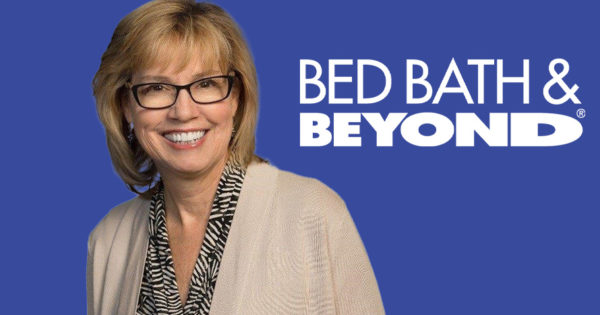
Bed, Bath & Beyond Appoints L Brands Exec as New Chief Brand Officer

Key insight:

Bed, Bath & Beyond has appointed L Brands exec Cindy Davis as chief brand officer and executive vice president. Davis will also serve as president of the company’s online interior design service, Decorist.

Davis currently serves as evp and chief digital marketing officer for L Brands, and will join Bed, Bath & Beyond officially on May 26, reporting directly to president and CEO Mark Tritton.

“Cindy has an incredible track record leading brand strategy, digital and consumer insights for some of the largest and most beloved brands in the country,” Tritton said in a statement. “Her expertise will be invaluable as we strengthen our omni-always shopping experience and deepen our relationship with customers.”

Davis’ departure from L Brands follows a long decline for the former retail conglomerate, which announced in February that it would sell a 55% stake in Victoria’s Secret to private equity firm Sycamore Partners—the last of its iconic clothing retailers. Earlier this month, however, L Brands and Sycamore Partners agreed to terminate that deal, but L Brands is still proceeding with its decision to separate Victoria’s Secret from Bath & Body Works as a standalone company. Since 2007, L Brands has slowly offloaded many of its shops, selling brands like its flagship The Limited, Lane Bryant and Express.

Bed, Bath & Beyond has struggled to keep up in a changing retail environment. After parting ways with longtime CEO Steven Temares last year, Tritton stepped in as top executive and promptly shook up the C-suite, swapping out five executives during his first month in the role. The addition of Davis as chief brand officer marks the seventh executive to join Tritton’s team since he took the reins.

Prior to her role at L Brands, Davis was evp of consumer experience at Disney/ABC Television. She also has experience in strategic leadership positions at companies such as Walmart, Sam’s Club, Yum! Brands, Starwood Hotels and Hilton Hotels.

https://www.adweek.com/brand-marketing/bed-bath-beyond-appoints-l-brands-exec-as-new-chief-brand-officer/


Peloton’s Top Marketer Is Leaving. Meanwhile, Its Ridership—and Stock—Are Soaring

Carolyn Tisch Blodgett, svp and head of global brand marketing for Peloton, announced today in a post on LinkedIn that she’s leaving her post at the end of the month.

Tisch Blodgett was the first brand hire at the company in 2016, she said on LinkedIn. Since then, the company has grown to 2.6 million members worldwide.

The announcement comes just a day after the home exercise brand reported astronomical growth in its third quarter earnings call, including 94% year-over-year growth and $524.6 million in revenue during the quarter ending March 31—a 66% increase. This morning, Peloton stock was up more than 15%.

During the earnings call on Wednesday, Peloton chief financial officer Jill Woodworth said the company halted all advertising in most markets in mid-March. Doing so, she said, allowed the brand “to see the benefits from many years of marketing investments in brand awareness and high customer satisfaction driving word-of-mouth referrals.”

Woodworth acknowledged during the call that certain pandemic-related changes, such as implementing hazard pay and pausing activities that required employees to enter customer homes, did balance out some of the unexpected growth that the company has seen over the past several weeks.

Still, the “unexpected sharp increase in sales” has meant that Peloton has well surpassed targets. As a result, customers are experiencing longer wait times than usual as the company works to fulfill equipment orders. Those delays are expected to continue throughout the fourth quarter as the company works to catch up, CEO and founder John Foley said on the call.

Peloton’s main product is its stationary bike, which costs over $2,000 plus a $39 monthly digital subscription fee to access virtual classes. In 2018, Peloton launched a treadmill at double the price, though there have been reports of a forthcoming, simpler version of the treadmill at a lower price point, as well as a rowing machine.

The success of the company, and the boost it has experienced with the closure of gyms and public places due to Covid-19, seems to indicate that last year’s infamous—and oft parodied—Peloton holiday ad didn’t have any lasting negative effects for the company. While it was reported at the time that the ad coincided with a drop in the company’s stock, experts largely agreed that the two were unrelated and merely coincidental.

Tisch Blodgett will continue to serve in a an advisory role with Peloton following her last day as head of global brand marketing on May 29. She wrote in her post that the decision “will give me needed family time as I will be welcoming my third baby into the world this summer.”

https://www.adweek.com/digital/pelotons-cmo-is-leaving-meanwhile-its-ridership-and-stock-are-soaring/


A Time Reporter Retrained Herself and Got an NBCUniversal Deal

Reporter-turned-TV writer Lisa Takeuchi Cullen has been writing professionally since college. Getting there was about seizing opportunities—but it began with a twist of fate. 

“I took a wrong turn one day while I was at school at Rutgers, into the offices of our college newspaper The Daily Targum,” she recalls, “and they asked if I wanted to work there.”

Journalism taught her about the wider world—being a reporter at a large state university opened her eyes to issues of race, religion and sexual orientation—not to mention that “journalism, I think, feels more accessible to more minorities,” says Takeuchi Cullen, “because it’s something we can see and experience in our everyday lives. Every family no matter how rich or poor—back in the day, anyway—got a newspaper or saw the news on television.”

TV writing and screenwriting, however, “feel far more inaccessible and lofty.” But the need to shift career gears arrived in 2010, when the sale of Newsweek for $1 shook Takeuchi Cullen’s confidence in the journalism industry. “Those of us at Time magazine looked around and wondered, ‘Oh my god, could that happen here?’” 

So after 12 years with the magazine, she took a buyout that included a retraining allowance, which she used to attend every class, workshop and seminar she could find about screenwriting. “I knew nothing, just nothing, about screenwriting,” so she read hundreds of scripts and wrote some “very bad” ones and then, “eventually, I wrote a decent one and off of that, I got my first deal.”

It was a lucky break: a blind script deal at Warner Bros., where Christopher Mack, then svp of the studio’s television workshop, taught her how to develop pilots, which eventually led her to the writing staff of Law & Order: SVU as part of an overall deal with NBCUniversal.

“That turned out to be the only viable career that I could have made for myself, living in New Jersey and trying to break into Hollywood,” she said, as moving was not in the cards. “I didn’t have to be in L.A. to work full time in a writers room. I could sit at home and come up with ideas for television shows, pitch those ideas and sell them to networks.”

Cullen describes the current writers room of SVU—one of the rare shows produced and shot in the same city where it’s written—as the most diverse in the series’ history, and key to continuing to tell new and relevant stories. 

“Every writer’s room should reflect our society,” she says. “That’s not just the right thing to do, it’s the smart thing to do because when your writers look like the world, they’ll bring you voices and stories that will keep your audience engaged. And I think that that’s changing; more and more, Hollywood is recognizing that.”

And as a member of the Writers Guild of America East, Takeuchi Cullen has been part of why the television and screenwriting part of the entertainment industry is becoming more accessible. She’s been with the organization for six years, beginning with a 2014 road trip with the WGAE to Albany, N.Y., to lobby for a diversity tax credit (the Television Diversity Tax Credit was eventually passed in late 2019.)

In that time, she’s risen to become an elected council member of the WGAE, advocating for inclusion and equity along the way by founding first its Women’s Salon, then co-founding the Asian-American Salon. She also currently co-chairs the Committee for Inclusion and Equity. Her efforts were recognized earlier this year with the Richard B. Jablow Award for service to the guild.

“Year after year, the [diversity] numbers don’t change, and countless people have tried and thrown a lot of money and resources at trying to make that change, and it hasn’t worked,” she says. “So, what do you do? You can throw up your hands and say, ‘I can’t change anything, so why try?’ Or, you can roll up your sleeves and try to make what little difference you can.”

https://www.adweek.com/digital/lisa-takeuchi-cullen/