WPP is saying goodbye to a global creative leader.
After 12 years, John O’Keeffe is stepping down from his role as global CCO at WPP. CEO Mark Read announced the news today in an internal memo, just a day after WPP confirmed further cost-cutting measures in its Q1 earnings report.
In the memo, Read said that under the holding company’s new strategy, it has “strengthened our agency brands and increased investment in their creative talent.”
“As part of that, we’ve placed greater responsibility for creative standards with the agencies themselves, which is the reason that John will be leaving us,” he said. “He does so with our very best wishes.”
O’Keefe first joined WPP in 2008 with the remit of “ensuring WPP was recognized as an industry leader not only for its scale, but also for its creativity and effectiveness,” Read said, noting that O’Keeffe helped WPP win Cannes Lions holding company of the year seven times, in addition to eight Effies.
Prior to joining WPP, O’Keeffe served as executive creative director for BBH London, spending 18 years in total at the agency. Read said that O’Keeffe has long been “a great champion of creative talent within our agencies and in the wider world,” including his support of the D&AD New Blood Academy.
“Current events mean that we won’t be able to give him a send off in person right now, but we will find a way to celebrate his achievements and say goodbye properly when we can,” Read said. “In the meantime, I know you will join me in wishing him well for the future and thanking him for his tremendous contribution to WPP.”
Former Xandr CEO Brian Lesser Joins InfoSum’s Board of Directors
|
10 hours ago
Former Xandr CEO Brian Lesser has joined the board of directors at U.K.-based InfoSum, a startup helping the online marketing industry take on the challenge of targeting audiences amid heightened privacy regulations.
In his new role, Lesser will advise InfoSum on potential new partnerships, including investments and new hires, as the startup seeks to expand internationally.
Lesser, who unexpectedly left the top job at Xandr last month, told Adweek the online advertising industry requires an overhaul as data privacy laws are passed across the U.S.
“I think the world is changing very rapidly with increased regulation around how data is collected and used,” he said, citing Google’s decision to axe third-party cookies by 2022. “These types of changes are very good [for consumers] and ultimately beget new types of technologies.”
InfoSum proposes a “privacy-first alternative to a centralized universal identity solution,” with the startup receiving investment from AT&T’s Xandr while Lesser was still at its helm.
“Universal identity in one party’s hands is not good for the industry. We want to democratize and decentralize identity, and allow data to flow freely, but consistent with privacy laws and regulations, to sunset what we all know to be an inferior technology in third-party cookies,” he told Adweek.
Nicholas Halstead, CEO of InfoSum, said replacing third-party cookies with an alternative universal ID would be a mistake for several reasons. “A single user ID for a [person] around the internet would just be a privacy nightmare, and to make that happen you have to have one party of the holder of that data, and they’d just hold the rest of the ecosystem to ransom by having it.”
Instead, InfoSum advocates for a system of online audience targeting whereby the industry’s various providers can effectively use a distributed model to provide the scale and anonymity the market (and regulators) are more comfortable with.
Cookies have been the lynchpin of audience targeting since the beginning of the online advertising industry. Establishing an alternative to third-party cookies—the connective tissue of ad tech—had been thehot topic for the industry, prior to the spread of Covid-19.
In the memo, Seifert said that he and WPP CEO Mark Read agreed earlier this year that the time was right to search for a successor to lead Ogilvy globally. Given the time necessary for such a search, Seifert said he will continue to act in the role until the next CEO is appointed.
“In a moment like this, I am more committed than ever to our people, our clients, and the Ogilvy brand,” Seifert said.
He concluded the memo by calling it “an extraordinary privilege” to serve the agency since first arriving as an intern in 1979, and said, “I love this company with all my heart and will be forever supportive of its success.”
Here’s the memo in full:
STATEMENT FROM JOHN SEIFERT
Chief Executive, Worldwide
The Ogilvy Group
In June I will have served Ogilvy for 41 years, the past five as worldwide CEO.
I have worked closely with Mark Read, Chief Executive of WPP, since his appointment in 2018 on leadership development and succession planning across The Ogilvy Group, and that includes me as well.
Mark and I have each embarked on ambitious journeys of business and brand transformation for the companies we lead, and nothing is more important to both of us than recruiting and developing top talent.
Earlier this year, Mark and I agreed that we should begin the process of searching for my eventual successor, knowing that this process takes time and thoughtful engagement with potential candidates internally and externally.
In a moment like this, I am more committed than ever to our people, our clients, and the Ogilvy brand. I will continue to lead Ogilvy with all my strength until a successor is appointed and a leadership transition is completed sometime in 2021.
It’s been an extraordinary privilege to serve Ogilvy since joining the company as a summer intern in 1979. I love this company with all my heart and will be forever supportive of its success.
This story is developing and may be updated as further information becomes available.
How Agency Recruiters In Lockdown Are Finding New Ways to Connect With Talent
|
16 hours ago
Key insights:
With hiring largely frozen in the agency world and many industry workers feeling immersed in a cloud of uncertainty, agency recruiters are finding new ways to connect with, nurture and energize talent.
Talent directors working under quarantine are shifting their daily tasks and expanding their roles to emphasize aspects like professional development, long-term talent scouting and increasing the internal visibility of colleagues.
Here are some of the ways they’re doing it:
Sharing professional development advice on Instagram
Sophie Worth, talent director at Wieden + Kennedy Amsterdam, and Isaac Chukwumah, her recruiting assistant, had an idea to pivot the agency’s W+K Talent Instagram page away from posting job ads and toward offering tips on personal development—directly from recruiters across the agency network’s eight offices.
At a time when many are losing jobs, being furloughed or graduating into an unprecedented era, the team found that transforming their Instagram platform to offer career advice was an engaging way to connect.
It’s earned W+K new followers, which points to the fact that there’s a growing appetite for content aimed at personal development. At the start of lockdown, the team prompted followers to ask questions, and, after receiving 100, they’ve set about to answer the most frequently asked via Instagram Stories. They’ve been posting two to three responses a week, answered by different recruiters from around the world.
“It was really important for us to put something out there that was valuable,” Worth said. “There’s a lot of noise right now, and people are spending a lot of time on screens and on Instagram, so we wanted to help in any way that we could. We know we have a lot of knowledge that people are really craving to tap into.”
“We wanted to become more human at a time where really there’s a need for human connection.”
The project has also had the benefit of putting faces to W+K’s recruiters, Worth said–something the agency wouldn’t usually have time to do.
“A lot of people know our names, but we’re nothing more than LinkedIn profiles or an email address that sometimes doesn’t reply to people,” she said, “and we wanted to become more human at a time where really there’s a need for human connection.”
Keeping an eye on future hires
Ben Major is the recruitment director for strategy, partnerships, diversity and inclusion at agency Mother in London. He only joined the company, from R/GA, one month before lockdown, so he’s found himself in the unusual situation of working remotely after only just getting his own feet under the desk.
It’s true, Major said, that there’s not much “movement” in terms of hires going on currently, but that doesn’t mean that the wheels aren’t still turning in the background. The opposite is often even true, he said, especially now that recruiters have “breathing space” to think about long-term strategic aims, like succession planning.
“The lockdown isn’t going to last forever; it’s still business as usual,” he said. In fact, he urges anyone who has found themselves concerned about the future not to give up hope but to use this opportunity of relative downtime to strike up new connections when senior managers may have more time to respond.
“Every agency is always interested [in having a chat with prospective talent], but sometimes work gets in the way. And while a lot of agencies are still very busy now, there are parts of the business that have got more time, so now, more than ever, is a great time to be in contact with an agency,” he said.
“Getting the right job is a long-term game, and it’s these small chats you have now that could have a big effect in the future.”
—Ben Major, recruitment director, Mother
Mother has hired people who started, remotely, during lockdown. And much of what Major is currently focused on, as are other talent recruiters, is strategy–so it would be unwise to assume this has all stopped.
Former FCB New York CCO Ari Halper Starts His Own Creative Company
|
5 hours ago
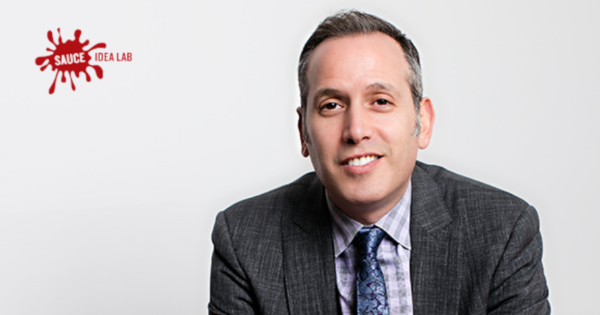
Add Ari Halper to the list of creatives who are starting a company in the middle of a global pandemic.
Halper, who was promoted to creative partner of FCB North America earlier this year, has left the IPG-owned agency to start Sauce Idea Lab, a self-described “new breed of creative company.”
“The name Sauce fully embraces the tenor of the times because, by its very nature, sauce is fluid and we are all having to adapt these days like never before,” Halper said in a statement. “So, to say that Sauce is any one thing would defeat the purpose of what I am trying to build.”
He went on to describe the firm as a consultancy mixed with creative, branding, naming, design and innovation, and noted that it plans to publish a children’s book in the fall.
“In short, I want Sauce to become an invaluable resource for anyone who believes they’ve got a good thing cooking but that it could be better,” he said.
Sauce Idea Lab already has a project under its belt. It recently responded to the United Nations’ open brief asking creatives to help spread health messages to combat coronavirus. The result is the animated film “Six Feet” that addresses the importance of social distancing. Halper said the film was created in two weeks with help from producer Kelly Fagan.
Halper said he chose to leave FCB after consulting with global creative officer Susan Credle and reassessing his role as North America creative partner in light of the pandemic. Prior to taking on the creative partner role, Halper served as FCB New York’s chief creative officer since 2016. Under his leadership, FCB New York won a Grand Prix at Cannes Lions for Burger King campaign “Whopper Detour.”
“Ari has been an incredible contributor to FCB both in New York and around the world. We are in a better place because of his talents,” Credle said in a statement. “I personally wish him all the best as he takes his talents and dives into this personal adventure.”
Walmart Taps Target Executive as Chief Marketing Officer
|
5 hours ago
After an eight-month search, Walmart has named former Target senior vice president William White its chief marketing officer.
That’s according to an email to Walmart’s U.S. employees from Janey Whiteside, the big-box retailer’s executive vice president and chief customer officer, who noted that the incoming CMO spent seven years at Target focusing on strategies to drive sales, build brand equity and inspire customer loyalty.
“William is a customer-centric, innovative marketer and is a passionate leader who loves to build and nurture teams,” she wrote. “I am so excited to see him join the Walmart family and drive us forward.”
White will start in the role on May 11. He had been with Target since 2013. Per Whiteside, he also held leadership positions at The Coca-Cola Company.
He fills a seat that has been vacant for awhile. Walmart’s last CMO, Barbara Messing, departed in August after only about a year. A Walmart spokesperson said Rich Lehrfeld, senior vice president of brand, creative and media, was named interim CMO in January 2020. It was not immediately clear who, if anyone, headed up the marketing team in between. The spokesperson said reports it was former Target CMO Michael Francis, who was consulting at the time, are erroneous.
Whiteside thanked Lehrfeld for his leadership during the search. “He stepped up to the challenge to unite the team and make us all storytellers, and we are better for it,” she added.
White also steps into a position that has seen a fair amount of turnover in recent history. Messing succeeded Tony Rogers in 2018 after his departure to Sam’s Club.
Rogers, in turn, took the helm in 2016 after the retirement of Stephen Quinn, who was CMO for nearly a decade.
Shaun Sheikh Vaulted From College Grad to Agency Co-founder
|
10 hours ago
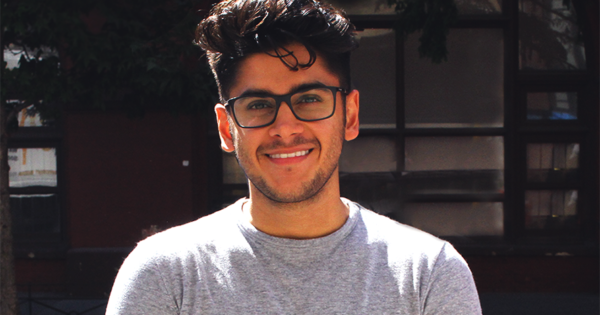
Shaun Sheikh’s advertising career began as a precocious college student.
As a college sophomore at the University of Rochester working as a content writer, he was getting a lot of requests for SEO optimization. It led him down a rabbit hole and he developed a consuming passion for the then-budding digital advertising space.
After learning how to execute marketing campaigns on his own and develop creative assets, Sheikh said he was able to generate 30% ROI and $500 in gross profits a day as an individual marketer. By the summer between his junior and senior years, Sheikh said, “That’s all I was doing.”
That success allowed him to expand into the then-emerging platform of online video.
After graduating, he moved to New York, where his obsession led him to co-found Jump 450 Media. He created it “with the thesis that media buyers in organizations were undervalued but drove a lot of revenue.”
Sheikh explained that Jump 450 was founded around three pillars: The first is revenue sharing with employees managing different brand accounts, something he believes creates a “culture of entrepreneurship” and a “triangle of incentives” contributing to the average media buyer at the agency earning six to seven times as much as at most shops.
“That structure was a game changer for us,” Sheikh said. “It allowed us to recruit some of the best marketing talent in the world.”
The second pillar involves shoring up creative resources, which he said is becoming increasingly important. And the third pillar is business intelligence, including heavy investments in building a tech stack across multiple channels. He wants to influence the entire customer journey.
“Our approach overall is holistic,” Sheikh said.
Since its launch, Jump 450 Media has grown to an internal team of 30 people, its success leading Sheikh to be named to Forbes 30 Under 30 list along the way.
Pro Tip
Develop an intimate understanding of Robert Cialdini’s six principles of influence: reciprocity, consistency, authority, social proof, commitment and liking.
Big Mistake
Not fully appreciating the importance of managerial leverage.
Lesson Learned
The importance of placing your trust in others and creating a culture of excellence to further advance your company’s mission.
How He Got the Gig
He got his start in 2011 to parlay his content-writing skills to execute Facebook media buys for a variety of different lead-generation companies. As he gained more experience in the digital advertising sphere and established a strong network, he realized that creating a team of the best marketers and media buyers was the path he wanted to take. He met his three other partners shortly after college and decided to create Jump 450 Media and actualize this vision.
Q&A: Behind Mark Read’s Plans to Protect WPP’s People, Clients and Future
|
7 hours ago
Nearly two years into his gig as WPP’s CEO, Mark Read is now faced with the challenge of guiding the massive holding company through a global pandemic.
Of all the major holding companies, WPP has perhaps been the most transparent about the steps it’s taking internally to cut costs. Last week, WPP said it is freezing new hires, reviewing freelance spend and stopping “discretionary” costs, which include travel, hotels and awards show payments.
The company, which counts the likes of Wunderman Thompson, Ogilvy, Grey, GroupM and Mindshare under its purview, is also postponing planned salary increases for 2020.
Speaking with Adweek, Read said he’s hopeful that WPP’s various agencies will find a way through this.
“We’re still seeing new business continue, which I think is reassuring,” he said. “Most of our clients, as much as possible, are continuing to plan their spend.”
Read more of what he had to say below.
This interview has been lightly edited for clarity.
What is the scale of layoffs and furloughs at WPP? Mark Read: I don’t think that we can rule out job losses as we go through this situation, but we are going to do everything we can to protect as many people as we can within WPP. One of the steps that our leadership team has taken has been a voluntary 20% pay cut for the second quarter. We’ll look at that at the end of the second quarter and see what’s appropriate.
I think we’re going to have to work our way through the budgets in the next few months. There’s never been a time as uncertain as the current environment. We’re working our way through the steps that we need to take as an organization.
How have you been communicating with WPP’s various agencies throughout all of this and quelling their anxieties? There’s been a tremendous amount of communication. The leaders of our companies have been holding regular calls with each of their companies. I’ve held virtual town halls; I did one with India this morning. We had 1,500 people on the call. I’ve done them with Brazil, Italy, Spain, France, the U.K. and our teams in New York. We’ve had 1,500-2,000 people on each of those calls. That’s been a really effective way to communicate with a large number of people and gives them the opportunity to ask me questions directly on how we see things, what our clients are telling us and how we see the outlook for the business.
What are some of the biggest concerns you’ve heard from agency leaders and their employees? It’s tough on people. It’s tough on people that have families, people that live just with a partner and people who live alone. It’s not easy for anybody. I think it’s even tougher on our more junior staff who may share apartments, live in smaller properties, not have the benefits of gardens and whose social life is often through the office. I am cognizant of the fact that it’s tougher for the more junior people in our organization.
People are extremely busy despite the lockdown. Balancing all of the competing demands on their time has been tough on lots of people, particularly with schools being shut.
Do you feel as though WPP is in survival mode right now? I don’t feel in any way that we, or our clients, are in survival mode. There’s an urgency about taking action, but what I see our people doing is helping out their clients in a tough situation. We did some research that showed that 84% of consumers will judge companies based on what they do at this time and 50% of consumers believe it’s important for companies to use their voice in this situation. We’re seeing many companies really step up and play a leadership role in terms of helping communities.
Publicis Health Introduces Chief Patient Officer Position
|
3 hours ago
Publicis Health, the wellness vertical of Publicis Groupe, has hired Susan Manber in the newly created role of chief patient officer, effective immediately.
A Publicis Health spokesperson explained that the role was conceived some time ago, well before the ongoing coronavirus crisis.
“This position has been in the works for a number of months in response to a rapidly changing healthcare marketplace, and just so happens to collide with the COVID-19 pandemic,” the spokesperson told Adweek. “Now more than ever our clients are focused on meeting patients where they are, and we believe Sue plays an essential role in developing the products and services necessary to do just that.”
“The tools, media, communications and services we develop on behalf of our clients are designed to begin conversations that equip and motivate people to take control of their health,” the spokesperson added. “The chief patient officer role is a natural extension of that corporate purpose. We knew that bringing patient-centricity to life would require an intimate understanding of patients themselves, and we needed someone with those insights at the highest level.”
In the role, Manber will be responsible for collaborating with Publicis Health’s creative, data and strategy teams to utilize a combination of real-world data, behavioral science insights and technology in uncovering insights into patient needs, as well as creating meaningful experiences and solutions across the company’s global network. She will report to Publicis Health CEO Alexandra von Plato.
“Sue serves as a connector, working across Publicis Health—and increasingly with our other hubs and Epsilon—to ensure that patient needs are prioritized and the products, services and campaigns we are developing meet their needs,” a Publicis Health spokesperson explained. “This means working with our data and analytics community, leveraging our insight tools to field research, and partnering with patient advocacy groups across a variety of therapeutic areas.”
Manber arrives at Publicis Health from Digitas Health, where she served as chief strategy officer. A survivor of Merkel cell carcinoma, a rare and aggressive form of skin cancer, Manber’s experiences inspired her to partner with the Skin Cancer Foundation and Digitas Health to create an awareness campaign entitled “The Big See,” which was designed to drive early detection of skin cancer—the most common cancer in the United States.
In light of the coronavirus pandemic, Manber’s role has proven instrumental in helping clients navigate the situation.
“Sue’s expertise has been vital as we work with our healthcare clients around the globe as they adapt marketing communications, adjust media spend, and develop new products and resources in response to COVID-19,” a Publicis Healths spokesperson said. “Our clients need insights into patients and healthcare providers more than ever before. And increasingly, with the healthcare system reaching capacity, patients are looking to our clients as they navigate the firehose of information (and misinformation!) currently in the ether.”
To that end, Manber and her team have been hard at work fielding contextual research studies to gain insight into how patients and healthcare providers are responding to the pandemic. Publicis Health has been utilizing machine learning to accelerate the process of understanding what patients and health care providers are facing and how its clients can best serve them during this challenging time, the spokesperson explained.
How Popeyes’ New Global CMO Plans to Make the Niche Brand Into a Mass Brand
|
24 mins ago
Key insights:
Paloma Azulay was quietly appointed Popeyes global chief marketing officer in January, and stepped into the role last month. Prior to that, she was global CMO for another of Restaurant Brands International’s iconic chains: Tim Hortons, the beloved Canada-based coffee-centric fast-food chain.
In her relatively new role, Azulay is reporting directly to Fernando Machado, who heads marketing for all three of RBI’s brands: Popeyes, Tim Hortons and Burger King.
Azulay brings to RBI 14 years of experience with Coca-Cola, for which she worked in her native Brazil and Europe. Now, she’s working to expand Popeyes’ presence in markets around the globe.
Adweek spoke with Azulay to discuss where she sees the brand headed in a post-chicken sandwich wars world, and how she hopes to expand Popeyes’ reach—without losing the authenticity responsible for the hype.
Editor’s note: Responses have been edited for clarity and brevity.
Adweek: What did you learn from your time at Tim Hortons that you hope to bring to Popeyes?
Paloma Azulay: Working at Tim Hortons was a big privilege. There and at Coca-Cola, which was also an iconic, established brand, I think you learn the importance of building a strong brand beyond the strong product. And I think that is a basic principle of marketing. But it’s interesting to see the legacy that Tim Hortons had with the Canadian community—the fact that the brand had very clear brand values that word like a mirror to Canadian values. And these made a very strong connection with millions of Canadians that go to things every day and they love the brand. It’s a relationship that’s really a love affair. It’s very emotional.
Popeyes has hardcore fans, but it’s still No. 3 in the market in the U.S. What Popeyes has to do now is build a strong brand beyond the super strong products that we already have. And to do that, it will take some work for us in terms of refining the brand positioning and understanding how we’re going to connect with our communities. We had this amazing hype for the sandwich last year, but when you look at the brand in the long term there is not a lot of association and loyalty in terms of having a large base of people that come to us frequently.
There are brands and then there are iconic brands. What makes a brand iconic is when it becomes part of the pop culture, and I think Popeyes is just scratching the surface in this regard. We have an authentic story to tell, we have a very clear heritage, and a very interesting and rich history coming from Louisiana. Now we need to articulate the story to the world in a way that’s relevant for today’s times. And that makes a brand that today’s very nice for say a brand for everyone and appealing for everyone.
Popeye’s just hired Gut over GSD&M, a longtime agency partner. Going forward, will Gut lead all Popeyes global marketing or will you have a bigger roster of partner agencies the way that Burger King does?
Today we have a mix. Gut is our lead creative agency for the U.S. market. Since Popeyes is still small around the world, we’re still building the basic awareness and attraction for the brand. But the idea is to have Gut as the major creative lead but still leverage local talent, which I believe is super important to help us localize and translate the brand in different countries.
“So we are right now revisiting the brand strategy, the brand positioning, to be able to articulate something that is very meaningful that goes beyond beyond a hype. … We want to be a brand that is part of the everyday life of Americans and of people around the world.”
Paloma Azulay, global CMO, Popeyes
Where do you see the most global growth potential for Popeyes?
China is a market that we are keeping an eye on very closely—we are going to open there very soon. It’s a market that KFC already developed, and there is a huge passion for fried chicken. I’m sure they will love our products and I’m very excited about the journey of getting the Popeyes brand in a market that is so different from the U.S.—to bring the heritage of the brand but also localizing it. It’s a very interesting challenge.