CPG Marketer Acosta Files for Bankruptcy

Sales and marketing agency Acosta, Inc. filed for Chapter 11 bankruptcy in Delaware on Dec. 1 in a deal with creditors that will convert $3 billion of debt into equity.

The Jacksonville-based company, which has worked with major brands like Campbell’s, Coca-Cola, Kellogg’s, Kraft Heinz and other leading consumer goods brands, argued that several factors—both company-specific and industry-wide—led to its stumble. Some of those reasons are a heavy debt load and an outdated business model. Others are changes in consumer behavior.

“Consumers have shifted away from traditional grocery retailers where Acosta has had a leadership position to discounters, convenience stores, online channels and organic-focused grocers, where Acosta has not historically focused,” Acosta said in a disclosure statement. “In addition, traffic to center aisles, where a majority of Acosta’s CPG clients are traditionally located, has suffered as health-conscious consumers gravitate toward fresh foods typically located on the edges of stores.”

Acosta also pointed to decreases in CPG manufacturers’ marketing spend, as more companies take the task on themselves. Last year, for instance, the Association of National Advertisers released survey data showing that 78% of brand marketers had some form of in-house operations, up from 58% in 2013 and 42% in 2008.

Acosta did not reply to a request for additional comments.

The disclosure statement revealed that, since its 2015 fiscal year, Acosta has lost $631 million in revenue and proceeds from its top 25 clients have decreased at a rate of around 15% per year.

Acosta, which helps CPG companies get its products on the shelves of major retailers and displayed in a compelling manner, also stated it lost “certain key clients” in July 2019, though it didn’t disclose specific names. That same month, the company announced that 28-year Acosta veteran Darian Pickett would replace Alejandro Rodriguez Bas as CEO. The company had appointed Rodriguez Bas as CEO a year prior.

Acosta initially announced the plan to reorganize on Nov. 8, stating it had secured support from 70% of its lenders and 80% of its noteholders, along with $250 million in new capital from investors.

“This is a very positive development for Acosta and our employees, clients, customers and other business partners,” Pickett said in a statement. “Through this strategic step, Acosta will be well-positioned, both operationally and financially, to make critical investments in our business and drive sales and market penetration for our clients and customers.”

The company reported that vendors and its 30,000 employees would continue to receive payment without disruption throughout the bankruptcy process. 

In 2012, Acosta acquired experiential marketing agency Mosaic Sales Solutions, which aims to connect brands with consumers through nontraditional means. At this year’s SXSW, for example, Mosaic partnered with Michelob Ultra to host a sunset mass meditation.

According to court documents, Acosta has between $500 million to $1 billion in assets and between $1 billion to $10 billion in liabilities.

Founded in 1927, Acosta is owned by private equity firm the Carlyle Group, which purchased a majority stake in the company for $4.8 billion in 2014.

https://www.adweek.com/brand-marketing/cpg-marketer-acosta-files-for-bankruptcy/


Unilever Creates New Chief Digital and Marketing Officer Role

Change is coming to Unilever, as the CPG giant recently announced the creation of a new role: chief digital and marketing officer. The spot will be filled by Conny Braams, who has served as executive vice president of Unilever Middle Europe since 2016.

“Her experience will be critical to the transformation of Unilever into a future-fit, fully digitized organization at the leading edge of consumer marketing,” said Unilever CEO Alan Jope in a statement.

Braams, who has been with Unilever for 20 years in various marketing and management roles, is scheduled to begin her new position on Jan. 1. Unilever has yet to name her replacement.

This past May, Keith Weed retired from Unilever as the company’s chief marketing and communications officer after leading the firm’s marketing efforts for nearly a decade. In his role, Weed pushed for more transparency and accountability in social media and influencer marketing. Unilever’s top marketing spot remained vacant following his departure, until now.

Neither Unilever nor Braams responded to requests for comment.

In other changes to Unilever’s executive team, Amanda Sourry, president of Unilever North America, is leaving the company after 30 years. Fabian Garcia, former president and CEO of Revlon, has been tapped to fill her position in the new year, and will report to Nitin Paranjpe, the company’s COO.

Garcia brings “deep experience of the consumer goods industry in North America and many other markets, as well as an impressive track record of high performance,” Jope said.

Apart from being one of the world’s largest suppliers of consumer goods with 400 brands, which are used by about 2.5 billion people each day, Unilever is also one of the planet’s biggest advertisers. In 2018, it dedicated $7.98 billion toward brand and marketing investment.

Last September, Unilever announced it was using 100% renewable energy to power its various offices, factories, warehouses, research and development sites in Asia, Africa, Europe, South America and North America. The company aims to be completely carbon neutral by 2030.

In 2018, Unilever reported a net profit of $10.86 billion, compared to $7.21 billion the year prior, marking a 51% increase.

https://www.adweek.com/brand-marketing/unilever-creates-new-chief-digital-and-marketing-officer-role/


JCPenney Names Karl Walsh Chief Digital Officer

The challenge of returning J.C. Penney‘s digital channel to growth now lies on the shoulders of ecommerce veteran Karl Walsh, who joined the department store chain as its chief digital officer effective Monday, the company said today.

Walsh has more than 18 years of ecommerce experience and was previously the chief digital officer at jewelry purveyor Pandora. His other stints include leading Boston Consulting Group’s U.S. consumer ecommerce and digital practice, and serving as a consultant at McKinsey & Company. He will report to Shawn Gensch, the company’s chief customer officer.

“Nearly 90 percent of shoppers begin their path to purchase online, so Karl’s background of building and executing digital strategies for global brands will help us improve our ecommerce offering and drive traffic across all channels,” said Gensch in a statement.

Indeed, Walsh’s role in developing JCPenney’s digital platform is part of the company’s broader goal of returning to profitability and growth. JCPenney declined to provider further details about the appointment at this time.

The struggling retailer hopes to reverse its fortunes under CEO Jill Soltau, who took on the role over a year ago. There are signs her plan may be working. Despite reporting in mid-November a third quarter decline in comparable sales, the company revised its outlook for EBITDA (earnings before interest, taxes, depreciation and amortization) upwards. JCPenney now expects to generate adjusted EBITDA of more than $475 million during fiscal 2019 versus the prior forecast of $440 million to $475 million. EBITDA is an indicator of a company’s financial health as it measures profitability before accounting for expenses such as interest and tax payments.

In regards to ecommerce, the retailer said in August after the end of its second quarter that it continued to strengthen its integrated omnichannel strategy in order to return its digital channel to growth, according to SEC filings. In the first quarter, for example, JCPenney said it removed over 300,000 units of “unproductive and unprofitable vendor fulfilled merchandise from its website.”

JCPenney also said in its second quarter report that it is improving navigation and presentation, while “curating” the assortment to provide an easier shopping experience across all platforms, including desktop, mobile and its app.

https://www.adweek.com/brand-marketing/jcpenney-names-karl-walsh-chief-digital-officer/


Tamara Littleton Is Passionate About Helping Brands Have a Human Connection

Tamara Littleton has made fighting against discrimination and advocating for marginalized groups an important part of both social-media-centric organizations that she runs.

Littleton is the founder and CEO behind London-based social media agency The Social Element and co-founder of social media crisis-management platform Polpeo. The former helps define brand strategies, advises on tone and assists with adhering to and defending brand values. From fostering “an inclusive environment where people can be themselves at work” to keeping a close eye on discrimination cases against platforms, Littleton and Polpeo co-founder and COO Kate Hartley keep their fingers on the pulse to ensure that their teams and clients alike are satisfied and not making avoidable mistakes.

Being gay isn’t something Littleton felt was necessary to talk about—at first. Now she talks about it at conferences and in the media when possible to help break down barriers.

“I believe in making small differences in all areas of my life. … It is incredibly important to be visible and open.”
Tamara Littleton, founder and CEO, The Social Element

“I believe in making small differences in all areas of my life,” said Littleton. “It is incredibly important to be visible and open.”

After studying psychology at Manchester University, Littleton fell into publishing “in the early days of the internet” in the ’90s and then moved on to consulting. And while falling off a ladder and breaking your arm is typically not good news, it led Littleton to a “career-defining role” at BBC Online as head of its webmaster team after her injury led her to become redundant as a consultant. This role inspired her to open her own business around social media, as she’s “passionate about helping brands have a human connection on social media.”

“I’ve always been driven by fixing business problems for brands by using social media and am in my element when I’m thinking creatively to come up with solutions,” said Littleton.

How She Got the Gig

She founded The Social Element in 2002 after working at BBC Online and “never looked back.” She co-founded Polpeo with Hartley in 2013.  

Big Mistake

After making the decision to market in Asia, Littleton chose Australia as the hub for that region. “I didn’t do enough research, but went on pure instinct,” said Littleton. “It was an expensive error.”

Lesson Learned

Her confidence and the positive environment she had created at The Social Element actually ended up being a detriment because no one felt they could challenge her enthusiasm. The big takeaway was that conflict and challenging each other can be healthy in an organization.

Pro Tip

“I’ve been really shocked to learn that even in our liberal industry, people feel they need to go back into the closet at work and hide their identity,” she said. “Being visible normalizes difference.”

https://www.adweek.com/agencies/tamara-littleton-is-passionate-about-helping-brands-have-a-human-connection/


Jeff Adkins Succeeds Tonise Paul as CEO of Energy BBDO

Key Insights

Energy BBDO’s new CEO is a familiar face at the agency. Effective Jan. 1, Jeff Adkins will succeed Tonise Paul as Energy BBDO’s chief executive, with Paul moving into a chairwoman role while focusing on client relationships as well as spending time on building culture and supporting talent.

“Tonise and I have been partnering for 17 years. As we’ve added the people that are on our leadership team, we’ve all just built partnerships,” Adkins told Adweek. “A lot of my confidence for the future comes from the point that we are a team.”

Paul called the ability to enact such a transition at this point in time, with the confidence of handing over chief executive responsibilities to a long-trusted partner, “a pinch-myself moment.”

“The agency is at an absolute peak—from a creative standpoint, a new business standpoint, a cultural standpoint, a talent standpoint. If not now, when? The agency is in a great place for Jeff to now take it to the next level,” she said.

While plans for this transition have been in the works for around a year, according to Paul, Adkins was long intended to be her successor. Adkins has spent over six years as managing director of Energy BBDO; he originally joined as chief marketing officer in 2002 and has also served as client services director.

The CEO transition follows a creative leadership transition earlier this year, when Andrés Ordóñez left the agency to succeed Liz Taylor as CCO at FCB Chicago and Energy BBDO promoted Josh Gross and Pedro Pérez to co-CCO roles.

“It’s similar to our ability to move Jeff into this role,” Paul said. “Those two have been here for five years, and we’re ready for this next step. They’re absolutely extraordinary, and they just won a massive competition based upon the quality of our work. I think that shows you the level of talent and leadership that [they possess.]”

This week, Energy BBDO was selected as global creative agency of record for Brown-Forman across the majority of its brands, including Jack Daniel’s, following a review that included Jack Daniel’s incumbent agency Arnold, as well as Cramer-Krasselt, FCB Chicago and Grey.

In addition to handling client relationships, Paul will also provide support around talent and culture at the agency, aspects which she described as paramount to Energy BBDO’s success.

“Preserving the culture is so critical, but something that you have to do every single day to uphold the values of the organization,” Paul said, adding that Adkins embodied a commitment to those values.

“We have a leadership team that has been here in many cases for 10+ years. Everybody gets it and can not only speak to the culture, they live it. The values and the culture just emanates from them.”

Paul explained that diversity and inclusion are among the values of utmost importance to Energy BBDO, as well as “a huge pride point” for the agency.

“As we have become more diverse, we have become more creative. We have become a better agency. We have for many years now been hiring people form all over the world to work here. We’ve had a high percentage of diversity represented … in terms of being multinational, not just multicultural. That has served us so well,” she said. “People talk about it all the time: that they feel so comfortable here, because it’s who we are, not just who we’re trying to be.”

The past year has seen a number of leadership shifts at top Chicago agencies. In addition to Liz Taylor joining Leo Burnett in a global creative leadership and the wave of related creative leadership shifts, FCB Chicago also parted with a number of executive creative directors earlier this year and went through a leadership restructuring in September. Britt Nolan, who’s headquartered in Chicago, left his CCO role at Leo Burnett to join DDB as North America CCO.

https://www.adweek.com/agencies/jeff-adkins-succeeds-tonise-paul-ceo-energy-bbdo/


WeWork Names Former Publicis CEO Maurice Lévy as Interim CMO

In an all-staff meeting today, WeWork announced that former Publicis CEO Maurice Lévy will be joining the beleaguered real-estate company as interim chief marketing and communications officer, according to reports from Bloomberg and Business Insider.

According to reports, company executives also announced that SoftBank’s Ralf Wenzel and Mike Bucy will be joining WeWork as chief product officer and chief transformation officer, respectively. Matt Jahansouz was promoted internally from his previous role as global head of talent, according to LinkedIn, to chief people officer.

With the four new executives, men fill WeWork’s executive team and board. WeWork executive chairman Marcelo Claure reportedly said the company was committed to adding women executives and female board members in the future. The latest additions were disclosed alongside a new five-year turnaround plan, which aims to have the company cash flow positive by 2023. Claure reportedly laid out six pillars of focus for the company as it moves forward, centered on client experience, profitability and expansion.

This comes a day after WeWork announced 2,400 layoffs–19% of its staff–and weeks after the company postponed its IPO. CEO Adam Neumann stepped down in late September.

Though the company was valued at $47 billion earlier this year, WeWork has yet to turn a profit. It posted a $1.25 billion loss this past quarter.

WeWork did not immediately respond to a request for comment.

https://www.adweek.com/brand-marketing/wework-names-former-publicis-ceo-maurice-levy-as-interim-cmo/


Wunderman Thompson Taps Bas Korsten and Daniel Bonner as Global CCOs

A little over a year ago two venerable agency brands, J. Walter Thompson and Wunderman, merged to become Wunderman Thompson. The hookup brought together what was then the world’s oldest ad agency and a network that established its chops in the digital and performance space.

Today, the WPP-owned agency appointed Bas Korsten and Daniel Bonner as global chief creative officers. Korsten will be based in Amsterdam and Bonner in London, both reporting to Mel Edwards, Wunderman Thompson’s global CEO.

“Bas and Daniel each have an eye for creative solutions and a reputation for putting innovation at the heart of everything they do,” Edwards said. “Their ability to make groundbreaking work is why they are the ideal creative leadership team at our agency. I couldn’t be more excited to see what the two of them accomplish as creative leaders.”

To date, Korsten, an Adweek 100 honoree in 2017, has won 35 Cannes Lions, including two 2016 Grand Prix awards for The Next Rembrandt for banking client ING. He was previously creative lead for Wunderman Thompson in Amsterdam.

Bonner held the role of Wunderman’s global chief creative officer and served as jury president for the Cannes Lions Creative Ecommerce category last year. Each has been recognized by other awards programs including D&AD, the ADC, Clios and One Show.

The agency has made several other big moves recently, bringing on Taras Wayner from Saatchi & Saatchi as Wunderman Thompson’s CCO in North America. Another was signing Cleve Gibbon as chief technology officer in the region in September.

“Appointments like this represent award-winning pedigrees,” Bonner said.

Charting the near- and longer-term futures in their new roles, Bonner pointed to the fact that both organizations came “from two very different starting points,” but that there is “an equal amount of ambition” even as the industry continues to grapple with constant change. The common thread, according to Bonner, is that creativity will, ultimately, be a point of differentiation.

“That’s going to be a competitive advantage,” he noted. “[And it couldn’t happen] without the union of these two organizations.”

For his part, Korsten agrees, but with a key caveat: that the gulf between the merged agencies’ heritage must begin to narrow.

“I’ve always thought about technology and data as ways to infuse the creative work,” he said. “Having so many brilliant people [in the organization] will be a great base for inspirational work. That said, [we need] to make sure that everyone speaks the same language and have the same idea on the power of creativity within that process.”

Bonner noted that he and Korsten have been reaching out to the entirety of the Wunderman Thompson network to harvest ideas, but the proof will be in getting them into the light of day.

“With 20,000 people [in the network], there’s no shortage of world-class ideas, but it’s crucial that a client buys them,” he said. “It’s the same for any creative or product-based organization. The magic is when a client invests in these ideas and solutions.”

https://www.adweek.com/agencies/wunderman-thompson-bas-korsten-daniel-bonner-global-ccos/


Chrissy Teigen and Top Marketers Shined at Brandweek

PALM SPRINGS, Calif.—Brandweek brought over 700 brand marketers to the desert oasis over Nov. 3-6 to discuss strategy, trends and the future of the advertising ecosystem. Brandweek is grateful for our partners Disney Advertising Sales, Hulu, IBM Watson Advertising, KPMG, NPR, QualtricsXM, trueX, WarnerMedia.

Guests of Brandweek’s inaugural white party.
Sean T. Smith for Adweek

Kasseem “Swizz Beatz” Dean, Grammy award-winning music producer, Harvard graduate and global entrepreneur in conversation with Adweek’s Danny Wright, chief brand officer.
Sean T. Smith for Adweek

The QualtricsXM Dream team fan craze.
Sean T. Smith for Adweek

Pooja Midha, president, trueX.
Sean T. Smith for Adweek

Jeff Litvack, CEO, Adweek shows off his new swag sneakers with StockX’s Deena Bahri, CMO.
Sean T. Smith for Adweek

Jim Babcock, VP, consumer marketing, Adult Swim poses with Jill King, SVP, marketing and partnerships, Cartoon Network, Adult Swim and Boomerang.
Sean T. Smith for Adweek

Randi Stipes, CMO, IBM Watson Media and Weather.
Sean T. Smith for Adweek

Lisa Valentino, EVP, client and brand solutions, Disney Advertising Sales; Karey Burke, president, ABC Entertainment; Anthony Anderson, Emmy and Golden Globe nominated Actor, executive producer, advocate and philanthropist.
Sean T. Smith for Adweek

Hulu’s fuel provisions.
Sean T. Smith for Adweek

A Constellation Awards celebratory moment for Deana Singleton, GM, global advertising, Microsoft with Bonin Bough, chief growth officer, Bonin Ventures.
Sean T. Smith for Adweek

NPR game cards.
Sean T. Smith for Adweek

QualtricsXM making four-legged dreams come true!
Sean T. Smith for Adweek

KPMG’s Jason Galloway, managing director, US marketing consulting lead; Julio Hernandez, principal, global customer advisory COE lead.
Sean T. Smith for Adweek

Nadine Dietz, chief community officer, Adweek; Vineet Mehra, global CMO, Walgreens Boots Alliance.
Sean T. Smith for Adweek

John Legend holds daughter, Luna.
Sean T. Smith for Adweek

Engaged and eager audience members.
Sean T. Smith for Adweek

Phil Regnault, principal, advisory, PwC set the tone for Brand Constellation Awards.
Sean T. Smith for Adweek

Attendees took a chance at the roulette table.
Sean T. Smith for Adweek

The Brand Genius awards.
Sean T. Smith for Adweek

An attendee is engaged.
Sean T. Smith for Adweek

Ko Im, who did double duty as Adweek’s senior editor and our host for Brand Genius.
Sean T. Smith for Adweek

Jon Suarez-Davis, SVP, marketing strategy and innovation, Salesforce.
Sean T. Smith for Adweek

Mike Benson, former head of marketing, Amazon Studios. (Now currently: CMO, CBS).
Sean T. Smith for Adweek

https://www.adweek.com/brand-marketing/chrissy-teigen-and-head-marketers-shined-at-brandweek/


Sid Lee Hires First Chief Creative Officer for the US

Global creative agency Sid Lee has hired Cam Levin to serve in the new role of U.S. chief creative officer.

Levin will oversee the agency’s New York, Seattle and Los Angeles offices. He previously served as chief creative officer at Digital Kitchen, a self-described creative experience company that is part of Kyu, a 5-year-old collective owned by Japan’s Hakuhodo DY Holdings.

Kyu acquired Sid Lee in 2015; the agency also has offices in Montreal, Toronto and Paris. Recently, Kyu brought several of its companies under the Sid Lee umbrella, including Digital Kitchen, design firm Hornall Anderson, branding agency RedPeak and experience marketing company Infrared.

According to the agency, Levin’s promotion will be “instrumental in bringing together the collective creative talents” of the firms under the Sid Lee umbrella. His appointment comes months after Sid Lee hired Andy Bateman to serve as CEO of the agency’s U.S. operations. Bateman previously served as national lead partner for innovation strategy at Monitor Deloitte Australia.

“What I like most about Cam is that he’s a maker with creative dexterity,” Bateman said in a statement. “He’s a compassionate, understated and thoughtful leader with a real touch for the craft of our work.”

Before joining Digital Kitchen, Levin served as a consultant at Fuse Media, which filed for bankruptcy in April. He’s held creative positions at companies including Vice Media, Sky and Viacom throughout his career.

https://www.adweek.com/agencies/sid-lee-first-us-chief-creative/


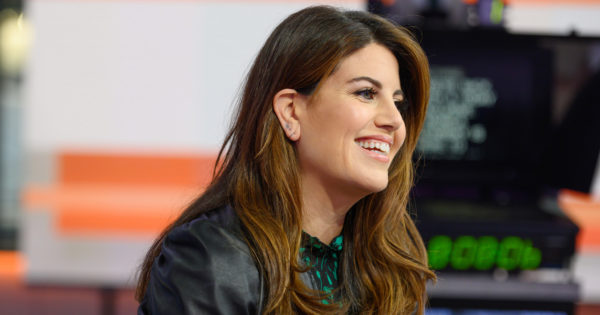
Behind Monica Lewinsky’s Mission to Rid the World of Cyberbullying

A little over four years ago at the Cannes Lions, Monica Lewinsky, fresh off a powerful TED talk on the destructive effects of public shaming, held the marketing and technology industries to task.

Her speech wasn’t filled with overtly pointed criticism, but rather with examples, research and opinion about the heavy price individuals pay when faced with cyberbullying. It was also filled with an impressive amount of self-awareness, humility and compassion, to the point that the assembled crowd of advertising people gave Lewinsky a well-earned standing ovation.

Surprisingly, it was only eight months prior that Lewinsky gave her first public talk, which amounts to a 16-year silence despite being in the public eye. From that moment, though, she began building her foundation of activism and advocacy around public shaming and online bullying.

To make her vision come to life, Lewinsky partnered with BBDO New York about three years ago to build impactful campaigns and communication around online bullying. The first work in 2017 was real-life dramatizations (in public places) of cyberbullying that netted a commercial Emmy nomination. The follow-up, in 2018, featured celebrities sharing the insults they’ve endured online, only to contrast them with the successes each has found.

In mid-October this year, BBDO New York launched what could be considered the most powerful effort yet in Lewinsky’s mission to counter the hate of cyberbullying with compassion and empathy.

The Epidemic follows the story of an average American teenager who shows the signs of a mysterious illness and ends up being rushed to the hospital. After watching the film (warning: the PSA includes images and themes that some may find upsetting or triggering), viewers enter their phone number.

From there, they see the film again, only this time they receive the same bullying text messages as the character gets in the story, revealing the actual cause and illustrating the real, human consequences of cyberbullying.

Earlier last week, Lewinsky capped off this year’s campaign by introducing a Twitter tool, @GoodnessBot, an automated account in partnership with the platform that takes the core language of negative or hateful tweets and turns them into more positive or silly versions. This allows individuals to intervene on behalf of friends or strangers in a safe and straightforward way.

“Every year, [BBDO] and I get together and discuss what I’ve seen in the field, the previous years’ campaigns and areas that I think would be really fruitful for us to [explore],” Lewinsky said. “They pitched [the @GoodnessBot] connected to a different idea, and we all fell in love with it and saw the instant tool it could be and how it could quickly help a target of bullying behavior feel less alone and help bystanders become upstanders.”

“The bot is meant to be the anecdote to this epidemic,” said Roberto Danino, creative director at BBDO who runs the account with Bianca Guimaraes, vice president and creative director at the agency. “If we are making the internet negative, just changing some of those words can completely change things from negative to positive.”

Moving forward with compassion

While these three campaigns have put a much-needed spotlight on public shaming and online bullying, the increasingly poignant approaches mirror Lewinsky’s own evolution as an activist.

Since she began speaking publicly and writing for Vanity Fair as a contributing editor, Lewinsky has continued to grow into her role. Her touchstones have been a sense of empathy and a desire to spread compassion at the most significant scale possible.

Texts in The Epidemic are inspired by real messages sent to people who have experienced online bullying. Lewinsky, before showing the PSA to Carol Todd, the mother of Amanda Todd, who died by suicide in 2012 after being harassed online, was worried the concept would trigger negative emotions.

https://www.adweek.com/agencies/monica-lewinsky-mission-cyberbullying-bbdo/