‘ClickLock Stealer’ Bypasses macOS Security With Social Engineering, Process Killing

A new macOS malware named ClickLock Stealer leverages social engineering and process killing to bypass the operating system’s protections and obtain valuable information from victims. 

Cybersecurity firm Group-IB came across ClickLock Stealer in early June, and the malware appears to have been around since at least late May. Researchers say it has targeted at least 100 users across 33 countries, more than half in Europe.

The stealer is designed to collect various types of data from compromised systems, including web browsers, cryptocurrency wallets and wallet extensions, and password manager extensions. It can also harvest blockchain addresses from six chains and target the macOS Keychain, FTP credentials, and shell history. The stolen data is added to an archive file and exfiltrated to a Telegram bot.

While Group-IB researchers could not definitively determine how ClickLock Stealer is distributed, they believe threat actors may have used SEO poisoning, social media posts, or compromised websites to lure victims to a ClickFix attack page disguised as a Cloudflare verification. 

Users who land on this page are instructed to copy a bash command, paste it into macOS’s Terminal, and execute it. Once the command is run, an orchestrator script file is downloaded and executed, which in turn fetches four other scripts representing a credential stealer, a cryptocurrency stealer, a Keychain stealer, and a backdoor installer. 

The backdoor remains on the compromised machine, but the other scripts are removed once they have harvested the targeted data and sent it back to the attacker.

Advertisement. Scroll to continue reading.

macOS’s design and built-in protections make it harder to deploy malware. However, ClickLock Stealer succeeds primarily through social engineering because the malware is downloaded and executed directly by the victim with their own privileges. Unlike other malware, it does not need exploits or privilege escalation. 

To access the targeted data, the malware employs aggressive process-killing loops. The orchestrator component displays a fake macOS dialog to capture the user’s password, killing every visible process so that only the password window is shown on the screen until the victim complies.

“A background loop also starts killing macOS NotificationCenter continuously for approximately ~6 hours, suppressing any Gatekeeper or security warnings that might alert the victim,” Group-IB explained in a blog post describing ClickLock Stealer

Other components also aggressively terminate applications that the victim may use to analyze or disrupt the attack. The credential stealer component also displays a fake macOS password dialog and keeps it open in a long loop while other applications are terminated, forcing the victim to enter the password. 

When the malware queries the macOS Keychain for the Chrome Safe Storage encryption key, which protects passwords and other browser data, the user is prompted to authorize the action. Again, all processes are killed until the user complies and Keychain access is granted.

Related: macOS Weaknesses Chained to Silently Disable Endpoint Security Agents

Related: MacSync macOS Malware Distributed via Signed Swift Application

Related: Apple Patches Dozens of Vulnerabilities Across iOS, macOS, and Safari

https://www.securityweek.com/clicklock-stealer-bypasses-macos-security-with-social-engineering-process-killing/


Microsoft and Allies Smash Shared Infrastructure of Amadey and StealC Malware

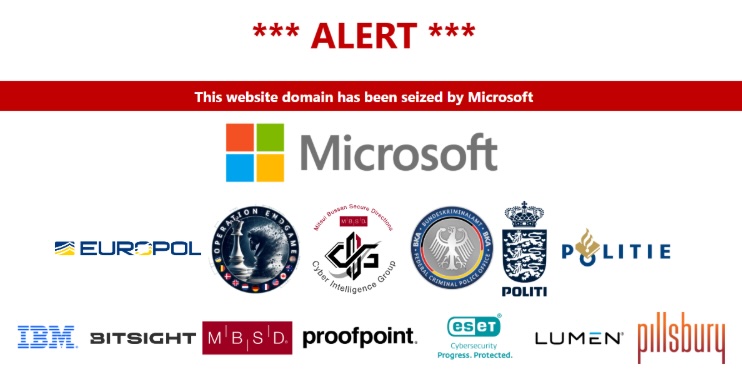
Microsoft, law enforcement, and several cybersecurity companies have collaborated to take down infrastructure shared by two widely used malware families: Amadey and StealC.

The action, part of the long-running Operation Endgame, involved the use of AI, legal action, and the exploitation of a vulnerability in a malware control panel, and resulted in hundreds of domains and servers being targeted for takedown. 

While many cybercrime operations have been disrupted in recent years as part of Operation Endgame, this one stands out because law enforcement and companies targeted what they described as the “cybercrime assembly line”. 

Making the rounds since 2018, Amadey is a malware-as-a-service loader that gives threat actors access to systems, enabling them to deliver secondary payloads. StealC is an infostealer that has been around since 2023, helping cybercriminals obtain credentials, cryptocurrency wallets, cookies, and other valuable data.

Amadey and StealC have often been used together — the former has enabled hackers to gain access to systems, while the latter has been used to steal information from the breached systems.

AI-powered analysis of the two malware families revealed that they use the same command-and-control (C&C) infrastructure, making it easier for Microsoft and its partners to conduct takedown activities.

Advertisement. Scroll to continue reading.

“This operation marked a shift in strategy: instead of focusing solely on individual threats, Europol, law enforcement and judicial authorities, as well as private industry partners disrupted the entire chain that allows cyberattacks to scale,” said Europol.

More than 25 million unique credentials stolen from over 385,000 systems were seized, and 18,000 compromised computers were identified and secured. Europol said crypto assets valued at more than $47 million were identified and flagged to restrict their use.

Researchers also discovered a vulnerability in the StealC C&C panel that enabled uploading a web shell to the server. While this flaw was exploited to collect data in support of the takedown operation, there is evidence that a StealC affiliate also used it to steal other affiliates’ data.

Microsoft, Europol, ESET, Bitsight, IBM X-Force, Proofpoint, and Japan’s Mitsui Bussan Secure Directions (MBSD) have published blog posts describing the action taken against Amadey and StealC.

The announcement comes shortly after law enforcement and cybersecurity companies worked together to take down the SocGholish botnet

Related: Russian Initial Access Broker Behind FortiBleed Campaign

Related: New ‘Mistic’ RAT Opens Door to Several Ransomware Families

Related: CryptoBandits Malware Doubles as a Backdoor, Abuses Tor

https://www.securityweek.com/microsoft-and-allies-smash-shared-infrastructure-of-amadey-and-stealc-malware/


New ‘Mistic’ RAT Opens Door to Several Ransomware Families

An initial access broker (IAB) linked to multiple ransomware families has been using a new remote access trojan (RAT) in recent attacks, Broadcom’s Symantec and Carbon Black threat hunter team reports.

The threat actor, tracked as Woodgnat and KongTuke, and active since at least May 2024, is known to have ties to ransomware groups such as Qilin, Interlock, Rhysida, Akira, 8Base, and Black Basta.

Starting in April 2026, Woodgnat has been deploying the new Backdoor.Mistic RAT against the networks of organizations across multiple industries, including education, insurance, IT, and professional services.

Previously, the threat actor was observed deploying the ModeloRAT in attacks targeting other entities.

“The targeting appears to be opportunistic, with the attackers casting a wide net and then assessing which organizations they could sell access to rather than focusing on a single sector,” Broadcom’s researchers say.

Also tracked as MLTBackdoor, Mistic provides attackers with typical capabilities, including file download and upload, file manipulation, folder creation, and code execution. The attackers can also modify the frequency at which the malware checks for new commands and can instruct it to terminate itself.

Advertisement. Scroll to continue reading.

Woodgnat has been deploying the backdoor as a DLL, executing it via sideloading. In a recent attack, the threat actor also deployed a credential stealer alongside Mistic.

Additional tools observed in the intrusion include Curl, Reg.exe, Net (net.exe), PowerShell, Certutil, and WMIC (Windows Management Instrumentation), for data exfiltration, registry manipulation, network resource management, command execution, reconnaissance, lateral movement, file download, and browser certificate installation.

The IAB is known for distributing malware via compromised WordPress sites and for relying on social engineering to entice users into executing attacker-supplied commands, including the ClickFix, FileFix, and CrashFix techniques.

“In each case the victim is ultimately tricked into running an attacker-supplied PowerShell command. While the initial compromise may be opportunistic, the attackers profile the machines for potential interest to determine their value and if they can sell access to them,” Broadcom’s threat hunter team says.

Since April 2026, the threat actor has also been using helpdesk and IT-support lures delivered via Microsoft Teams to convince victims into executing malicious code.

Related: Russian Initial Access Broker Behind FortiBleed Campaign

Related: Hackers Exploiting Cisco Unified CM Vulnerability

Related: Microsoft Teams Relay Servers Abused in DragonForce Ransomware Attack

Related: Over 1.4 Million Accounts Disrupted in Cybercrime Crackdown

https://www.securityweek.com/new-mistic-rat-opens-door-to-several-ransomware-families/


CryptoBandits Malware Doubles as a Backdoor, Abuses Tor

Microsoft warns of a Windows-based cryptocurrency clipper that establishes a lightweight backdoor blending data exfiltration and remote code execution (RCE) capabilities.

Dubbed CryptoBandits, the malware has been used in attacks since February 2026, deploying a portable Tor client on the infected systems and routing traffic through a local SOCKS5 proxy.

“The clipper in this campaign relies on Windows Script Host and ActiveX-driven logic to launch a bundled Tor proxy and poll a hidden-service C&C server. It carries out high-frequency clipboard theft, screenshot exfiltration, and wallet-address substitution,” Microsoft explains.

CryptoBandits is distributed through malicious shortcut (.lnk) payloads. On the infected systems, it deploys two components: a worm for propagation and a clipper/stealer to steal cryptocurrency wallet information. 

For propagation, the malware scans connected USB devices and creates additional malicious shortcuts of legitimate files. It can also deliver file-based payloads that it excludes from Defender scanning.

The clipper is a script that interacts with the system via WScript and ActiveXObject, and checks whether Task Manager is running as an anti-analysis defense. Persistence is achieved through scheduled tasks.

Advertisement. Scroll to continue reading.

CryptoBandits launches a renamed Tor binary to establish command-and-control (C&C) communication and register the victim device, and then enters a continuous loop, polling the C&C for instructions every 500 milliseconds.

The malware can extract seed phrases and private keys associated with cryptocurrency wallets, and can replace cryptocurrency addresses in the clipboard with attacker-provided ones to hijack them.

According to Microsoft, the malware employs multi-layered obfuscation, decrypting all components at runtime. Both the Python script that handles installation and its JavaScript payloads are also obfuscated.

The central component of the threat is the bundled Tor client, which routes communication over localhost:9050 and resolves destination domains to reduce DNS visibility and hide its C&C location.

“This malware family shows how lightweight, script-based stealers can deliver outsized impact when paired with anonymized communications and runtime tasking. Organizations should focus on hardening script execution paths, monitoring local SOCKS proxy abuse, and using behavioral hunting to connect script activity with network, clipboard, and process signals,” Microsoft notes.

Related: Rokarolla Banking Trojan Targets 200 Applications

Related: Microsoft Teams Relay Servers Abused in DragonForce Ransomware Attack

Related: OnyxC2 Stealer Offers Cybercriminals Enterprise-Grade Theft for $250 a Month

Related: Infostealers Turn Millions of Devices Into Credential Theft Machines

https://www.securityweek.com/cryptobandits-malware-doubles-as-a-backdoor-abuses-tor/


Android verification is coming: Google confirms timeline and supported app stores

  • Google (Google Play)
  • Honor (HONOR App Market)
  • OPlus (OPPO App Market)
  • Samsung (Galaxy Store)
  • Transsion (Palm Store)
  • vivo (V-Appstore)
  • Xiaomi (GetApps)

Developers will also have access to new APIs to make registering as an external developer less arduous. In the coming months, Google will release an Android Developer ID Status API that will check if a package name is already registered with Google. The Android Developer Console API will let you register and manage your app package names without leaving your development environment, too.

The countdown begins

The next step toward verifying apps will come this month as Google deploys a new system service on most certified devices. The package (com.google.android.verifier) will appear on phones and tablets running Android 8 or higher, allowing Google to block the installation of unverified apps. It will remain dormant until verification is activated in your specific region.

Credit: Google

Credit: Google

In July, Google plans to roll out the new developer APIs and begin testing for “limited distribution” accounts. This is Google’s solution for hobbyists who want to make their own apps and share them with a small group. Limited accounts won’t require a fee or government ID verification, but you can install these apps on up to 20 devices.

In August, the advanced flow will become available globally ahead of verification becoming mandatory in the first markets. As detailed a few months ago, the advanced flow will allow users to bypass verification, but the process isn’t easy. You’ll have to navigate to a buried menu, confirm you understand the risks multiple times, and wait a whole day before completing the process.

And that brings us to September, when Android devices in Brazil, Indonesia, Singapore, and Thailand will begin checking verification status before installing apps. However, things get murky after that. Google will undoubtedly monitor how verification works as millions of users are suddenly limited to verified apps, which could affect how it moves forward. Google says it intends to expand developer verification in 2027, eventually making it a global device policy.

https://arstechnica.com/gadgets/2026/06/google-shares-updated-timeline-for-rolling-out-android-developer-verification/


Il gruppo criminale cinese TA4922 adesso punta anche all’Europa


Un gruppo cybercriminale di lingua cinese fino a poco tempo fa concentrato prevalentemente sul mercato asiatico sta ampliando rapidamente il proprio raggio d’azione verso Europa e Africa. Secondo le analisi pubblicate da Proofpoint, il gruppo chiamato TA4922 ha aumentato sensibilmente il volume delle proprie operazioni nel corso del 2026, prendendo di mira organizzazioni nel Regno Unito, in Germania, in Italia e in Sudafrica, oltre a continuare le campagne già attive in Giappone, Corea del Sud, Taiwan, Singapore e altri Paesi asiatici.

Gli analisti descrivono TA4922 come uno degli attori più insoliti tra quelli monitorati. Pur essendo classificato come gruppo a motivazione prevalentemente economica, il suo comportamento operativo ricorda per complessità e varietà quello di alcuni gruppi di cyber spionaggio. L’obiettivo principale sembra essere l’ottenimento di accesso persistente agli ambienti delle vittime per attività di furto dati, frode, rivendita degli accessi compromessi e monetizzazione delle intrusioni.

Phishing localizzato e social engineering su misura

Uno degli aspetti più interessanti dell’operatività di TA4922 è la forte capacità di adattamento alle realtà locali. Le campagne osservate utilizzano email scritte nelle lingue dei Paesi bersaglio e costruite per apparire credibili all’interno dei rispettivi contesti aziendali.

I messaggi impersonano frequentemente uffici HR, reparti finanziari, autorità fiscali, fornitori o colleghi di lavoro. I temi utilizzati ruotano attorno a fatture, pagamenti, tasse, buste paga, benefit aziendali e comunicazioni amministrative, sfruttando argomenti che inducono i destinatari ad agire rapidamente senza effettuare verifiche approfondite.

Proofpoint evidenzia inoltre come il gruppo utilizzi migliaia di indirizzi email temporanei generati su servizi legittimi come Outlook, Hotmail e Gmail. Questa strategia consente agli attaccanti di aggirare più facilmente i controlli basati sulla reputazione del mittente e migliorare il tasso di consegna delle campagne malevole.

L’obiettivo è portare la conversazione fuori dalla posta elettronica

Una caratteristica che distingue TA4922 da molte altre operazioni di phishing consiste nel tentativo sistematico di spostare le comunicazioni verso piattaforme alternative come Microsoft Teams, WhatsApp e, in Asia, anche LINE. L’obiettivo è quello di uscire dal perimetro dei controlli di sicurezza implementati sulle caselle e-mail aziendali. Una volta stabilito il contatto attraverso canali meno monitorati, gli attaccanti possono proseguire le attività di social engineering, convincere la vittima a scaricare file malevoli oppure raccogliere credenziali e informazioni sensibili con minori probabilità di essere individuati.

Una cassetta degli attrezzi sempre più ricca

L’espansione geografica è stata accompagnata da una significativa crescita dell’arsenale malware utilizzato dal gruppo. Se nelle prime campagne il malware più frequentemente associato a TA4922 era ValleyRAT, noto anche come Winos 4.0, negli ultimi mesi sono comparsi nuovi strumenti che aumentano notevolmente la flessibilità operativa degli attaccanti. Tra questi figurano Atlas RAT, un trojan di accesso remoto utilizzato in diverse campagne contro organizzazioni europee e asiatiche, e due nuove famiglie individuate da Proofpoint e denominate RomulusLoader e SilentRunLoader.

Atlas RAT offre funzionalità avanzate di controllo remoto, raccolta informazioni, trasferimento file e monitoraggio del sistema compromesso. RomulusLoader agisce invece come downloader e stager per ulteriori payload, utilizzando tecniche come process hollowing, injection e cifratura per rendere più difficile il rilevamento. SilentRunLoader, scritto in Python, è stato osservato mentre sottraeva credenziali, cookie e dati di navigazione da Google Chrome prima di trasmetterli verso infrastrutture controllate dagli attaccanti.

DLL sideloading e strumenti legittimi per sfuggire ai controlli

Come molti gruppi moderni, TA4922 combina codice malevolo e software legittimo per ridurre la probabilità di intercettazione. Le campagne osservate fanno ampio uso di DLL sideloading, tecnica che consente di eseguire codice malevolo sfruttando applicazioni considerate affidabili dal sistema operativo. In altri casi gli attaccanti installano software di amministrazione remota legittimi come AnyDesk e SyncFuture, mascherando le proprie attività all’interno del normale traffico aziendale.

Gli analisti di Proofpoint continuano a classificare TA4922 come un gruppo orientato prevalentemente al profitto. Tuttavia, le capacità tecniche dimostrate e le funzionalità presenti nei malware utilizzati sollevano interrogativi sulle possibili evoluzioni future. Strumenti in grado di registrare attività degli utenti, acquisire screenshot, raccogliere dati dai browser e mantenere accessi persistenti potrebbero infatti essere utilizzati non soltanto per finalità economiche ma anche per attività di sorveglianza e raccolta informativa. Secondo Proofpoint, queste capacità potrebbero essere condivise, vendute o riutilizzate in contesti differenti rispetto alle campagne attualmente osservate.

Condividi l’articolo


Articoli correlati

Altro in questa categoria


https://www.securityinfo.it/2026/06/04/il-gruppo-criminale-cinese-ta4922-adesso-punta-anche-alleuropa/?utm_source=rss&utm_medium=rss&utm_campaign=il-gruppo-criminale-cinese-ta4922-adesso-punta-anche-alleuropa


Miasma: worm nei pacchetti npm di Red Hat, sviluppatori nel mirino

Per secoli si è creduto che le pestilenze viaggiassero nell’aria: un miasma, un alito corrotto che si insinuava nei polmoni senza volto né origine, e contaminava prima ancora di farsi vedere. Un’idea sbagliata sulla medicina, ma un’intuizione perfetta sul contagio.

Chi ha battezzato l’ultima variante del worm Shai-Hulud lo sapeva: i repository che il malware genera per trafugare i dati recano una sola, eloquente descrizione, “Miasma: The Spreading Blight“. Il flagello dilagante. Non un nome scelto a caso, ma un manifesto. Perché è esattamente così che agisce: una corruzione che si respira con la filiera del software, si diffonde a ogni installazione come un fiato malato e si porta via credenziali, ambienti di build e strumenti di sviluppo prima che lo sviluppatore si accorga del contagio.

Attacco supply chain npm, Red Hat conferma l’accaduto

Un nuovo attacco supply chain npm ha colpito i pacchetti pubblicati sotto il namespace ufficiale @redhat-cloud-services
: il 1° giugno 2026 i ricercatori di Wiz Research hanno identificato almeno 32 pacchetti compromessi con una variante del worm Shai-Hulud ribattezzata Miasma, dal nome dei repository di esfiltrazione creati dal malware con la descrizione “Miasma: The Spreading Blight”. I pacchetti coinvolti totalizzano circa 80.000 download settimanali secondo la stima di Wiz, circa 117.000 secondo i conteggi di Aikido ripresi dalla stampa di settore (le stime divergono per metodologia); le versioni compromesse accertate a fine ricognizione sono 96.

Red Hat ha confermato l’accaduto a The Register per bocca di un portavoce: i pacchetti malevoli sono stati rimossi dal registro npm e, secondo l’azienda, erano «strettamente limitati allo sviluppo interno»; al momento «non è stato identificato alcun impatto su ambienti di clienti o partner né sui sistemi di produzione Red Hat». L’indagine è però ancora in corso e Wiz classifica la campagna come minaccia attiva: il quadro va quindi considerato in evoluzione.

Come è avvenuta la compromissione

Il punto di ingresso accertato è l’account GitHub di un dipendente Red Hat. Secondo la ricostruzione di Wiz, l’account compromesso ha inviato commit orfani a tre repository dell’organizzazione RedHatInsights (frontend-components, javascript-clients e platform-frontend-ai-toolkit), aggirando la code review, in due ondate distinte nella stessa giornata.

I commit contenevano un workflow GitHub Actions minimale che si attivava su qualsiasi push: richiedeva un token OIDC con permesso id-token: write
, eseguiva un payload offuscato e pubblicava su npm le versioni avvelenate dei pacchetti, complete di attestazioni di provenienza SLSA formalmente valide. È un dettaglio rilevante: la firma di provenienza, nata proprio per dare garanzie sull’integrità della filiera, è stata prodotta dal flusso di build legittimo e non ha quindi offerto alcuna protezione.

Le versioni compromesse contenevano uno script preinstall che eseguiva automaticamente un file JavaScript pesantemente offuscato al momento dell’installazione del pacchetto, prima ancora che lo sviluppatore ne importasse il codice.

Cosa ruba Miasma e cosa cambia rispetto a Shai-Hulud

Il payload è derivato dal codice di Mini Shai-Hulud, il worm per npm che il gruppo criminale TeamPCP ha reso pubblico nelle settimane scorse. Le analisi convergenti di Wiz, Socket e altri vendor descrivono un ladro di credenziali ad ampio spettro: secret di GitHub Actions, token npm, credenziali cloud, materiale Kubernetes e Vault, chiavi SSH, credenziali Git e altri file sensibili presenti sulla macchina infetta.

I dati raccolti vengono compressi, cifrati ed esfiltrati su un doppio canale: quello primario è una POST HTTPS verso un endpoint mascherato da chiamata all’API di Anthropic (api.anthropic[.]com:443/v1/api, un percorso che non corrisponde all’API reale), un travestimento studiato per confondersi con il normale traffico verso i fornitori AI; in caso di fallimento il malware ripiega sulla Contents API di GitHub, committando i risultati cifrati in repository marcati con la descrizione “Miasma: The Spreading Blight”.

È qui che Miasma si comporta da worm in senso proprio: secondo l’analisi di StepSecurity, i token npm rubati vengono riusati per ripubblicare in autonomia versioni backdoor dei pacchetti a cui l’account vittima ha accesso, sfruttando il parametro bypass_2fa di npm per scavalcare anche l’autenticazione a due fattori. Ogni macchina infetta può così seminare da sola l’ondata successiva, senza ulteriore intervento dell’attaccante.

Due le novità principali rispetto alle ondate precedenti. La prima è l’aggiunta di collector dedicati alle identità cloud di Google Cloud e Microsoft Azure: non più solo furto di secret, ma censimento di tutte le identità a cui la macchina infetta ha accesso, segnale di un interesse crescente per l’accesso diretto agli ambienti cloud. La seconda è la generazione di un payload cifrato unico per ogni infezione, che rende gli indicatori di compromissione basati su hash validi solo per la singola versione di pacchetto e complica il lavoro di rilevamento.

Il malware mostra inoltre una notevole attenzione all’ambiente in cui gira: verifica la presenza di soluzioni di endpoint protection prima di agire, evita l’esecuzione sui sistemi configurati in lingua russa e stabilisce persistenza negli strumenti di sviluppo, iniettando un hook di sessione nella configurazione di Claude Code e un task con avvio automatico all’apertura della cartella nei progetti Visual Studio Code.

Attribuzione incerta

Le tattiche osservate coincidono con quelle di TeamPCP, il gruppo dietro le campagne Shai-Hulud. Proprio perché TeamPCP ha reso open source i propri strumenti, però, tutti i ricercatori coinvolti invitano alla prudenza: la sovrapposizione di tecniche non basta per un’attribuzione definitiva e non si può escludere un imitatore che riutilizza il codice pubblico. Secondo OX Security, citata da The Hacker News, la prima traccia della stringa “Miasma” risale al 29 maggio, indizio di una fase di test precedente all’attacco.

Cosa fare subito

Le organizzazioni che hanno installato una delle versioni compromesse devono assumere la compromissione: isolare gli host coinvolti, rimuovere le versioni malevole e ruotare tutte le credenziali potenzialmente esposte, inclusi token GitHub e npm, chiavi SSH e credenziali cloud. Socket sottolinea che disinstallare il pacchetto o cancellare la cartella node_modules non è una bonifica sufficiente, vista la persistenza negli strumenti di sviluppo: vanno verificati anche i file di configurazione di Claude Code, VS Code e i workflow GitHub. Per le pipeline CI/CD è raccomandata la sospensione delle esecuzioni interessate e l’invalidazione degli artefatti di build prodotti nella finestra di esposizione.

L’episodio si inserisce in un’ondata di attacchi alla supply chain software che negli ultimi due mesi ha toccato progetti come TanStack, Nx Console e migliaia di repository GitHub con la campagna Megalodon, al punto da spingere la statunitense CISA a pubblicare un alert dedicato il 28 maggio. La lezione per chi sviluppa software è ormai consolidata, anche alla luce degli obblighi in arrivo con il Cyber Resilience Act: dependency pinning, allowlist delle dipendenze, generazione di SBOM e monitoraggio degli ambienti di build non sono più buone pratiche opzionali, ma il perimetro minimo di difesa di una catena di fornitura sotto attacco costante.

Fonti

Condividi sui Social Network:

https://www.ictsecuritymagazine.com/notizie/attacco-supply-chain-miasma/


Russia-Linked ‘GreyVibe’ Attackers Use AI to Supercharge Cyberattacks

Attackers use AI to increase velocity, scale and sophistication. Just as AI is improving, so will attackers’ use of it. GreyVibe is one to watch.

GreyVibe, a previously undocumented threat actor, is described by WithSecure as a Russia-nexus group. The researchers are confident in their attribution of GreyVibe to Russian-speaking operators in the Moscow time zone, but are less certain whether the group is cybercriminal, nation-state – or a mix of the two.

The primary focus of the group, targeting Ukrainian military, government, civilian, and business entities since August 2025, aligns closely with Russian state interests. At the same time, the researchers have detected numerous indications that at least some GreyVibe members may be socially less than optimum elite state operators – including, for example, their use of Internet slang-based naming conventions across early-stage development artefacts, such as ‘letsrollboyos’, ‘totallyunsus’, and ‘cuteuwu’.

Another clue that may suggest GreyVibe is not a pure state actor comes from its intensive use of AI across every phase of its operations, “from building fake websites and crafting lures to developing custom malware and generating post-compromise tooling,” say the researchers. Their report adds resource development including obfuscation and loader scripts, and post-compromise scripts. This itself means nothing, since all bad actors are using AI to add velocity and scale to their attacks.

However, while the researchers detected the use of top tier AI including Ideogram AI, ChatGPT, and Google Gemini, GreyVibe introduced design flaws into its LLM-generated LegionRelay Windows malware. Mistakes are not something normally attributed to elite actors. This mistake enabled WithSecure researchers to monitor and track GreyVibe activity over an extended period since mid-2025.

Such mistakes are not expected from elite attackers, and this may be why Mohammad Kazem Hassan Nejad, senior threat intelligence researcher at WithSecure adds, “What sets GREYVIBE apart is not raw technical skill, but operational ambition powered by AI. The group uses generative AI to punch above its weight – accelerating development, filling capability gaps, and generating a largely fresh operational profile that complicates tracking and attribution. It’s a preview of how lower-sophistication actors will increasingly operate.” 

Advertisement. Scroll to continue reading.

The initial lures and approaches from GreyVibe are varied and heavily supported by AI. Spear-phishing emails (at least six distinct campaigns, but with no mention of deepfakes) directed victims to ZIP or RAR archives on third-party file-sharing services such as Google Drive and 4sync. These would launch a decoy file to take the user’s attention while simultaneously initiating a PhantomRelay (Windows malware) infection chain in the background. 

A separate campaign, which the researchers call PrincessClub, used fake adult-club websites to deliver Fallspy (Android malware) and PhantomRelay or LegionRelay on Windows. Victims were further lured to the lure by fake female personas using Telegram or dating sites to direct them.

This extensive use of AI not only compensates for capability gaps within GreyVibe but also reduces ‘historical backlinks to prior activity’. In short, we cannot be certain the group hasn’t previously been tracked under a different name by other researchers – but WithSecure has found no evidence of this. 

What it has detected, however, is the use of a unique ISO builder potentially linked to the TrickBot ecosystem and UAC-0098 (an activity cluster likely involving former TrickBot members previously also observed targeting Ukraine).

GreyVibe is still active, and its members are still unknown. Going forward, its AI expertise is likely to increase. “Given this extensive use, we expect the group’s tradecraft to continue evolving and diversifying, likely increasing the complexity of continuous detection, tracking, and attribution,” says WithSecure. 

Whether this might tempt the group to spread its activity beyond the current focus on Ukraine remains to be seen. If it really is closely aligned to Russian state activities, this is more than possible given the current state of global geopolitics.

Related: UK Cyberspying Chief Calls AI ‘an Unstoppable Force’ and Warns About Russia

Related: Admins of Bulletproof Hosting Service Used by Russian Hackers Arrested in Netherlands

Related: Germany Suspects Russia Is Behind Signal Phishing That Targeted Top Officials

Related: Sweden Blames Pro-Russian Group for Cyberattack Last Year on Its Energy Infrastructure

https://www.securityweek.com/russia-linked-greyvibe-attackers-use-ai-to-supercharge-cyberattacks/


New BTMOB Android Malware Enables Full Device Takeover

The BTMOB remote access trojan (RAT) is becoming a heightened threat to Android users due to its data theft and device takeover capabilities, ESET warns.

Believed to be based on the SpySolr malware, BTMOB is distributed via phishing attacks leveraging lures such as streaming, cryptocurrency mining, and other familiar services.

Its developers, however, sell it bundled with an APK builder interface, allowing threat actors to tailor lures and create new payloads based on their target geographies, without writing code.

“Once someone purchases the malicious kit, they can adapt its features, including the phishing lures so they impersonate the brand or agency most likely to lure victims in any given country,” ESET notes.

The malware is promoted via an open web page linking to a Telegram channel. Social media accounts on X and Instagram are also used to promote the Android malware.

BTMOB is offered for a lifetime license for $5,000, along with a monthly support fee. In January 2026, files related to the RAT were offered for free on a dark web forum that went offline.

Advertisement. Scroll to continue reading.

Threat actors have been observed delivering phishing messages that point victims to websites posing as legitimate services, which redirect to fake application stores mimicking legitimate repositories and serving the malicious APK.

Once executed on a device, BTMOB attempts to obtain excessive access, abusing Android Accessibility Services to elevate its privileges on the system without user interaction.

“Unlike banking trojans, which ‘only’ aim to steal people’s financial credentials or intercept their financial transactions, BTMOB gives adversaries broader options: exfiltrate a range of sensitive data, capture screenshots and record activity on the device, and ultimately take remote control of it,” ESET says.

The cybersecurity firm notes that the malware is mutating quickly, with numerous variants being observed within a short period of time, but that certain infrastructure patterns remained unmodified across iterations.

BTMOB has been mainly observed in attacks in Latin America, but the risk it poses stretches beyond the region, ESET warns.

Related: Critical Remote Code Execution Vulnerability Patched in Android

Related: Mirax RAT Targeting Android Users in Europe

Related: PromptSpy Android Malware Abuses Gemini AI at Runtime for Persistence

Related:New Keenadu Android Malware Found on Thousands of Devices

https://www.securityweek.com/new-btmob-android-malware-enables-full-device-takeover/


SEO poisoning e chatbot AI dirottati per un malware miner


Le campagne di SEO poisoning non sono certo una novità nel panorama cybercriminale. Da decenni gli attaccanti manipolano i motori di ricerca per spingere siti malevoli tra i primi risultati, inducendo gli utenti a scaricare malware credendo di visitare pagine legittime. Ma una nuova campagna analizzata da Microsoft Security Blog mostra un’evoluzione particolarmente interessante del fenomeno: gli attori malevoli stanno iniziando a sfruttare anche i chatbot AI per distribuire malware destinato al cryptomining GPU.

Secondo i ricercatori, gli attaccanti stanno prendendo di mira utenti molto specifici: appassionati hardware, gamer e power user che dispongono di GPU ad alte prestazioni, sistemi ideali per attività di cryptojacking ad alta redditività.

Dalla SEO poisoning ai chatbot AI

La campagna sfrutta una combinazione di tecniche di social engineering e manipolazione algoritmica. Gli utenti cercano online utility popolari come CrystalDiskInfo, HWMonitor, Display Driver Uninstaller o FurMark e vengono indirizzati verso domini controllati dagli attaccanti che imitano i siti ufficiali. La parte più interessante della ricerca riguarda però l’utilizzo dei Large Language Model. Microsoft spiega di aver osservato casi in cui utenti che chiedevano consigli di download a chatbot AI ricevevano link verso domini malevoli inseriti direttamente nelle risposte generate dal modello.

Non si tratta ancora di un attacco strutturato contro gli LLM stessi, ma piuttosto di una forma di “AI search poisoning”, cioè un’estensione della classica SEO poisoning all’interno degli ecosistemi conversazionali basati su AI. Il concetto è semplice ma estremamente efficace: se gli utenti iniziano a sostituire Google con chatbot AI per trovare software e utility, gli attaccanti seguiranno inevitabilmente lo stesso flusso.

Come funziona la catena di infezione

La campagna descritta da Microsoft non punta alla massima diffusione possibile. L’obiettivo sembra essere invece la selezione accurata delle vittime più redditizie. I software impersonati dagli attaccanti sono infatti tutti associati a utenti enthusiast, overclocker o gamer avanzati. Questo consente agli operatori della campagna di aumentare la probabilità di compromettere sistemi dotati di GPU discrete di fascia alta, molto più profittevoli per il mining rispetto ai normali PC consumer.

Secondo l’analisi tecnica, gli utenti vengono indirizzati verso siti clone costruiti per sembrare identici alle pagine ufficiali delle utility più note. Una volta scaricato il software, il payload avvia una catena di infezione che include componenti di persistenza e accesso remoto. Tra gli elementi più preoccupanti figura l’abuso di ScreenConnect, utilizzato per mantenere accesso persistente ai sistemi compromessi. Questo dettaglio è particolarmente rilevante perché suggerisce che la campagna non sia limitata al solo cryptomining. Microsoft sottolinea infatti che gli accessi ottenuti potrebbero essere successivamente sfruttati anche per furto dati, movimenti laterali e distribuzione ransomware. La presenza di strumenti di remote management rende quindi l’infezione potenzialmente molto più pericolosa di un semplice miner GPU.

Il ruolo crescente della SEO poisoning nell’ecosistema malware

La SEO poisoning sta diventando una delle tecniche preferite dai cybercriminali per ottenere accesso iniziale. Secondo ReliaQuest, le rilevazioni di malware collegate a campagne SEO poisoning sono cresciute del 60% in sei mesi tra il 2023 e il 2024. Anche Zscaler aveva già osservato campagne analoghe basate su keyword AI, utilizzate per distribuire malware come Vidar, Lumma e Legion Loader attraverso siti ottimizzati con tecniche Black Hat SEO. La novità è che ora il fenomeno sembra estendersi oltre i motori di ricerca tradizionali, entrando nei flussi conversazionali generati dai chatbot AI: non viene compromessa l’AI in sé, ma il contesto informativo che l’AI utilizza per rispondere agli utenti.

Condividi l’articolo


Articoli correlati

Altro in questa categoria


https://www.securityinfo.it/2026/05/27/seo-poisoning-e-chatbot-ai-dirottati-per-un-malware-miner/?utm_source=rss&utm_medium=rss&utm_campaign=seo-poisoning-e-chatbot-ai-dirottati-per-un-malware-miner