OpenAI, pronti 60 miliardi di dollari da Nvidia, Amazon e Microsoft
OpenAI pronto a ricevere ingenti finanziamenti da Nvidia, Microsoft e Amazon come nuovo investitore

Nvidia, Amazon e Microsoft sono in trattative per investire complessivamente fino a 60 miliardi di dollari in OpenAI. Secondo quanto riportato da The Information, il gigante tecnologico guidato da Jensen Huang, già azionista e fornitore chiave dei chip che alimentano i modelli di intelligenza artificiale di OpenAI, starebbe valutando un investimento fino a 30 miliardi di dollari.

Microsoft, che è partner storico e principale sostenitore industriale della società guidata da Sam Altman, sarebbe pronta a mettere sul tavolo meno di 10 miliardi, mentre Amazon, potenziale nuovo investitore, starebbe discutendo un impegno ben più consistente, superiore ai 10 miliardi e forse vicino ai 20 miliardi.

Segnale che le negoziazioni stanno entrando in una fase avanzata è che OpenAI sarebbe vicina a ricevere le prime term sheet, diciamo le lettere di intenti, quindi documenti preliminari non vincolanti usati nelle negoziazioni di investimento.

La notizia arriva in un momento cruciale per il settore tecnologico e, più in generale, per il ricco e rapidissimo comparto dell’intelligenza artificiale (AI). I costi per addestrare e far funzionare modelli sempre più potenti continuano a crescere rapidamente, mentre la competizione si intensifica, con Google, Anthropic e altri attori che stanno riducendo il divario rispetto al vantaggio iniziale di OpenAI.

In questo contesto, l’ingresso o il rafforzamento di grandi investitori industriali non è solo una questione finanziaria, ma anche strategica: cloud, chip e canali di distribuzione diventano leve decisive quanto gli algoritmi.

Big Tech: investitori pronti a sostenere livelli stellari di spesa in AI, solo se si traducono in crescita solida dei ricavi

Sul fronte dei mercati, la settimana degli utili delle Big Tech ha mandato un messaggio chiaro e, per certi versi, severo. Gli investitori sono disposti a tollerare e premiare livelli record di spesa in intelligenza artificiale solo se questi si traducono in una crescita solida e visibile dei ricavi.
In caso contrario, è spiegato sulla Reuters, la reazione è immediata e punitiva.
È un cambio di paradigma evidente rispetto agli anni precedenti e riflette quanto le aspettative si siano alzate dal lancio di ChatGPT, più di tre anni fa.

Meta è l’esempio più lampante di come, almeno per ora, il mercato stia premiando chi riesce a dimostrare un ritorno tangibile dagli investimenti in AI. I ricavi del gruppo sono cresciuti del 24% nell’ultimo trimestre, grazie anche a un miglioramento dell’efficacia della pubblicità basata sull’intelligenza artificiale, e le previsioni per il trimestre in corso hanno superato le attese. Questo ha dato credibilità a un piano di spesa molto aggressivo sui data center, nonostante l’impennata dei costi.

Diversa, e più delicata, la posizione di Microsoft. Pur restando uno dei leader indiscussi nell’AI per il mondo enterprise, grazie alla profonda integrazione di OpenAI nei suoi prodotti, il rallentamento relativo della crescita di Azure e l’enorme impegno in capitale stanno alimentando dubbi tra gli investitori.
Il fatto che OpenAI rappresenti una quota rilevante del backlog evidenzia il potenziale, ma anche il rischio di concentrazione, in un momento in cui la concorrenza tecnologica si fa più serrata.

AI, la promessa di una crescita futura non basta più a Wall Street

Il quadro che emerge è quello di un settore in piena corsa, ma sotto esame costante. L’intelligenza artificiale è ormai considerata una tecnologia abilitante per il futuro dell’economia digitale e le Big Tech stanno scommettendo cifre senza precedenti per non restare indietro.

Wall Street, però, chiede prove concrete: la promessa di una crescita futura non basta più. L’eventuale maxi-investimento in OpenAI da parte di Nvidia, Amazon e Microsoft si inserisce proprio in questa dinamica, come una scommessa ad altissimo valore strategico, ma anche come un banco di prova per dimostrare che l’era dell’AI può e deve generare non solo innovazione, ma anche ritorni economici sostenibili.

Leggi le altre notizie sull’home page di Key4biz

https://www.key4biz.it/openai-pronti-60-miliardi-di-dollari-da-nvidia-amazon-e-microsoft/563566/


There’s a rash of scam spam coming from a real Microsoft address

There are reports that a legitimate Microsoft email address—which Microsoft explicitly says customers should add to their allow list—is delivering scam spam.

The emails originate from no-reply-powerbi@microsoft.com, an address tied to Power BI. The Microsoft platform provides analytics and business intelligence from various sources that can be integrated into a single dashboard. Microsoft documentation says that the address is used to send subscription emails to mail-enabled security groups. To prevent spam filters from blocking the address, the company advises users to add it to allow lists.

From Microsoft, with malice

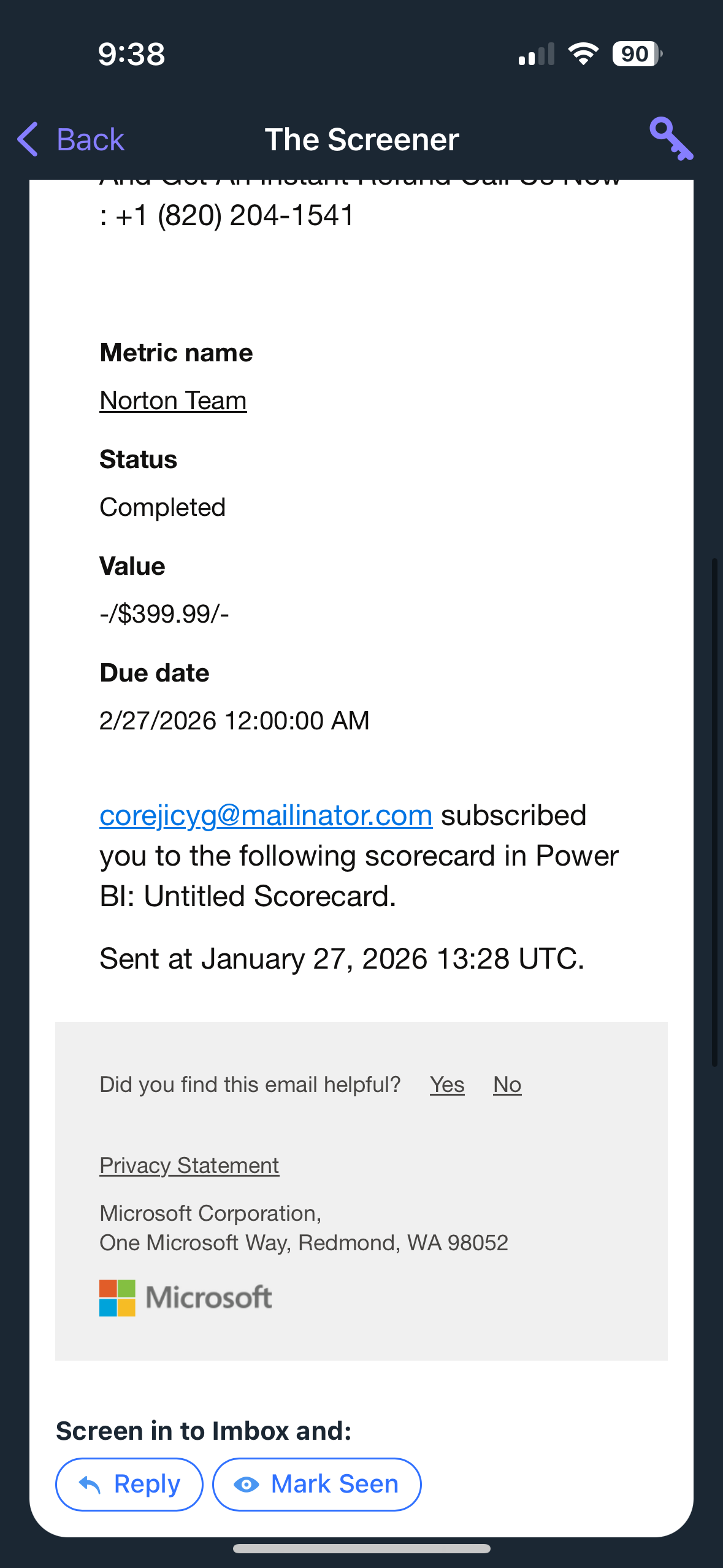
According to an Ars reader, the address on Tuesday sent her an email claiming (falsely) that a $399 charge had been made to her. It provided a phone number to call to dispute the transaction. A man who answered a call asking to cancel the sale directed me to download and install a remote access application, presumably so he could then take control of my Mac or Windows machine (Linux wasn’t allowed). The email, captured in the two screenshots below, looked like this:

Online searches returned a dozen or so accounts of other people reporting receiving the same email. Some of the spam was reported on Microsoft’s own website.

Sarah Sabotka, a threat researcher at security firm Proofpoint, said the scammers are abusing a Power Bi function that allows external email addresses to be added as subscribers for the Power Bi reports. The mention of the subscription is buried at the very bottom of the message, where it’s easy to miss. The researcher explained:

https://arstechnica.com/information-technology/2026/01/theres-a-rash-of-scam-spam-coming-from-a-real-microsoft-address/


Why has Microsoft been routing example.com traffic to a company in Japan?

From the Department of Bizarre Anomalies: Microsoft has suppressed an unexplained anomaly on its network that was routing traffic destined to example.com—a domain reserved for testing purposes—to a maker of electronics cables located in Japan.

Under the RFC2606—an official standard maintained by the Internet Engineering Task Force—example.com isn’t obtainable by any party. Instead it resolves to IP addresses assigned to Internet Assiged Names Authority. The designation is intended to prevent third parties from being bombarded with traffic when developers, penetration testers, and others need a domain for testing or discussing technical issues. Instead of naming an Internet-routable domain, they are to choose example.com or two others, example.net and example.org.

Misconfig gone, but is it fixed?

Output from the terminal command cURL shows that devices inside Azure and other Microsoft networks have been routing some traffic to subdomains of sei.co.jp, a domain belonging to Sumitomo Electric. Most of the resulting text is exactly what’s expected. The exception is the JSON-based response. Here’s the JSON output from Friday:

{"email":"email@example.com","services":[],"protocols":[{"protocol":"imap","hostname":"imapgms.jnet.sei.co.jp","port":993,"encryption":"ssl","username":"email@example.com","validated":false},{"protocol":"smtp","hostname":"smtpgms.jnet.sei.co.jp","port":465,"encryption":"ssl","username":"email@example.com","validated":false}]}

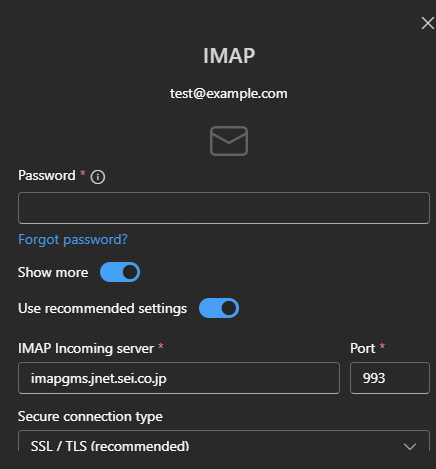
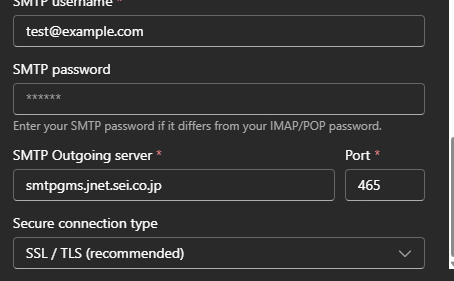
Similarly, results when adding a new account for test@example.com in Outlook looked like this:

In both cases, the results show that Microsoft was routing email traffic to two sei.co.jp subdomains: imapgms.jnet.sei.co.jp and smtpgms.jnet.sei.co.jp. The behavior was the result of Microsoft’s autodiscover service.

“I’m admittedly not an expert in Microsoft’s internal workings, but this appears to be a simple misconfiguration,” Michael Taggart, a senior cybersecurity researcher at UCLA Health, said. “The result is that anyone who tries to set up an Outlook account on an example.com domain might accidentally send test credentials to those sei.co.jp subdomains.”

When asked early Friday afternoon why Microsoft was doing this, a representative had no answer and asked for more time. By Monday morning, the improper routing was no longer occurring, but the representative still had no answer.

https://arstechnica.com/information-technology/2026/01/odd-anomaly-caused-microsofts-network-to-mishandle-example-com-traffic/


AI, cosa chiedono CEO e Big Tech? L’Europa stretta tra shock geopolitici e dipendenze tecnologiche

World Economic Forum di Davos 2026 tra dialogo, tensioni geopolitiche e la grande scommessa dell’AI

Il World Economic Forum (WEF) di Davos 2026 si è aperto sotto il segno ufficiale dello “spirito di dialogo”, ma ciò che è emerso tra i corridoi, i panel e le interviste è stato soprattutto lo scarto sempre più evidente tra le parole e la realtà. Oltre 60 capi di Stato e centinaia di CEO delle principali multinazionali si sono confrontati in un contesto segnato da instabilità geopolitica, ritorno del protezionismo tariffario e una trasformazione tecnologica accelerata dall’intelligenza artificiale (AI) che promette di ridisegnare economia, lavoro e rapporti di potere globali.

Tariffe, consumatori e un’economia più fragile

A fotografare l’impatto concreto delle scelte politiche è stato Andy Jassy, CEO di Amazon. Intervistato da Cnbc, Jassy ha spiegato che i consumatori continuano a spendere, ma con maggiore cautela: cercano sconti, “scendono di gamma” e rinviano l’acquisto di beni discrezionali più costosi. Un segnale chiaro di come le nuove tariffe commerciali volute dall’amministrazione Trump stiano già filtrando nei prezzi.

Amazon, con una capitalizzazione di mercato di circa 2.500 miliardi di dollari e ricavi annui attorno ai 700 miliardi (numeri superiori al PIL di molti Paesi) ha cercato di proteggersi “pre-comprando” scorte all’inizio del 2025. Ma, ha ammesso Jassy, “una parte delle tariffe inizia comunque a vedersi nei prezzi”. In un settore a margini bassi come il retail, l’assorbimento dei costi ha limiti strutturali: le tariffe non sono un concetto astratto, ma una pressione reale su milioni di prodotti e venditori.

[embedded content]

AI e lavoro: meno persone, più automazione

Lo stesso Jassy ha poi spostato l’attenzione su un tema che ha attraversato tutto Davos: l’impatto dell’AI sul lavoro. Secondo il CEO di Amazon, l’intelligenza artificiale generativa (GenAI) non ha ancora causato licenziamenti di massa, ma sta diventando sempre più efficace in attività come programmazione, analisi dei dati e customer service. “Nei prossimi anni potremmo avere meno persone rispetto a oggi”, ha detto, sottolineando che saranno colpite sia le mansioni routinarie sia il cosiddetto “thinking work”.

Una visione confermata anche dai dati. Una survey di Wing Venture su 181 top executive tecnologici rivela che il 66% delle grandi imprese (oltre 10.000 dipendenti) prevede riduzioni di organico tra il 10% e il 25% nei prossimi tre anni, man mano che gli agenti AI passeranno dalla fase pilota alla produzione. Non licenziamenti indiscriminati, ma tagli mirati nelle funzioni più automatizzabili.

Il CEO di Nvidia, Jensen Huang, ha invece affermato che il boom dell’intelligenza artificiale creerà “stipendi a sei cifre” per coloro che costruiscono le fabbriche di chip, raccomandando allo stesso tempo di continuare a tenere in vita i mestieri qualificati, mentre l’intelligenza artificiale entra sempre più rapidamente nei lavori d’ufficio.

Kristalina Georgieva, direttrice generale del Fondo monetario internazionale, ha affermato che l’intelligenza artificiale “sta colpendo il mercato del lavoro come uno tsunami e la maggior parte dei paesi e delle aziende non è preparata”.

Da sinistra Ursula Von Der Leyen, Presidente della Commissione europea, e Borge Brende, Presidente e CEO del World Economic Forum

Europa, dipendenze e “shock” geopolitici

Sul piano geopolitico, la presidente della Commissione europea, Ursula von der Leyen, ha evocato lo spettro del “Nixon shock” del 1971, quando il crollo del sistema di Bretton Woods sconvolse l’ordine economico globale. Il messaggio, neppure troppo velato, è che l’Europa sta vivendo un nuovo shock americano: il ripiegamento degli Stati Uniti da regole condivise su commercio e diplomazia.

Se lo scorso anno questi avvertimenti sembravano teorici, a Davos 2026 von der Leyen ha parlato di un “consenso reale” sulla necessità per l’Europa di ridurre le proprie dipendenze strategiche e rafforzare l’autonomia economica, tecnologica e industriale.

Concetti ribaditi con decisione anche all’evento “Shaping Horizons in Future Telecommunications, organizzato a Roma dal programma RESTART, negli interventi ad esempio di Enrico Letta e Nicola Blefari Melazzi, che hanno posto al centro del rilancio delle telecomunicazioni la capacità di innovare e la necessità di ridurre le dipendenze tecnologiche di cui l’Europa soffre, investendo in autonomia strategica.

[embedded content]

Nadella (Microsoft): “Crescita PIL sempre più legata a costo dell’energia necessaria all’AI”

Tra gli interventi più chiari sul futuro dell’AI c’è stato quello di Satya Nadella, CEO di Microsoft. Il messaggio è stato diretto: la crescita del PIL sarà sempre più correlata al costo dell’energia necessaria per far funzionare l’AI. Nadella ha parlato di una nuova commodity globale, i “token”, le unità di calcolo acquistate per usare i modelli di Intelligenza Artificiale.

Il compito di ogni economia è trasformare questi token in crescita”, ha spiegato. Ma chi ha energia più economica e infrastrutture migliori parte avvantaggiato. Microsoft investirà circa 80 miliardi di dollari nel 2025 in data center per l’AI, con il 50% della spesa fuori dagli Stati Uniti. Un dato che pesa soprattutto per l’Europa, dove i costi energetici – aumentati dopo l’invasione russa dell’Ucraina – restano tra i più alti al mondo.

Nadella ha anche lanciato un avvertimento politico: “se l’AI non produrrà benefici tangibili in sanità, istruzione e servizi pubblici, verrà meno la “licenza sociale” per consumare grandi quantità di energia”. E sull’Europa è stato netto: “più che concentrarsi solo sulla “sovranità”, deve puntare a rendere le proprie imprese competitive a livello globale”.

La domanda di AI è reale? Per Wei (TSMC) lo è “e lo sarà per molti anni”

Un altro tema chiave è stato la sostenibilità della domanda di AI.
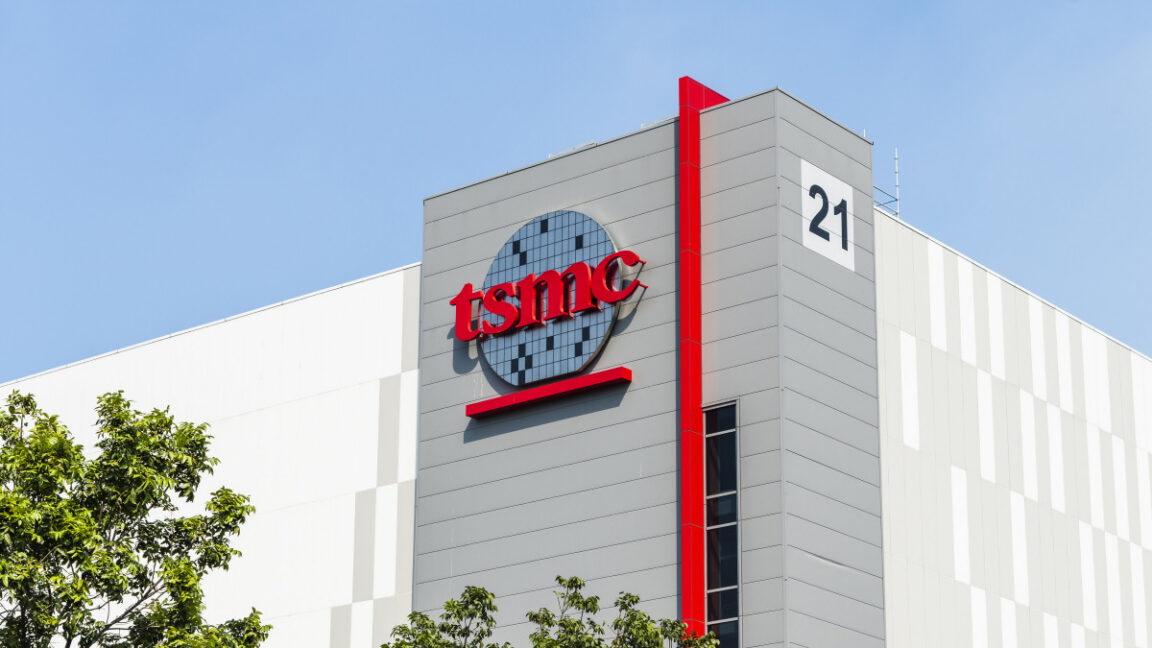
C.C. Wei, CEO del gigante mondiale dei semiconduttori TSMC, ha raccontato di aver verificato personalmente, parlando anche con i clienti dei suoi clienti, se l’entusiasmo sull’AI fosse giustificato e molti hanno risposto positivamente.

TSMC prevede investimenti per oltre 52 miliardi di dollari nel 2026, fino al 40% in più rispetto all’anno precedente. “L’AI sembra destinata a durare per molti anni”, ha detto Wei, spiegando che anche internamente l’uso dell’AI sta già migliorando la produttività e i margini.

[embedded content]

Tra AGI, promesse e realtà

A Davos l’AI era ovunque. Anthropic ha aperto per la prima volta un ufficio sulla via principale della città; Google ha organizzato il suo evento stampa più affollato di sempre; Meta ha lasciato filtrare l’arrivo di un nuovo modello dal team “superintelligence”.

Demis Hassabis, CEO di Google DeepMind, ha stimato l’arrivo dell’AGI (Intelligenza Artificiale generale) tra 5 e 10 anni, una previsione più prudente rispetto ad altri leader del settore che parlano del 2026-2027. Allo stesso tempo, alcune promesse iniziano a slittare: Isomorphic Labs punta ora ai primi trial clinici entro fine 2026, non più nel 2025.

Davos come specchio del mondo, dove dominano sempre più scelte politiche imprevedibili

Davos 2026 non ha offerto rivelazioni improvvise, ma ha reso più esplicite dinamiche già in atto: CEO che descrivono gli effetti delle politiche senza nominarne le cause, leader europei che parlano di autonomia senza rompere davvero con il passato e un’AI percepita come inevitabile, potente, ma non lineare.

La sensazione diffusa è che la “disruption” in corso non sia guidata solo dall’innovazione, ma anche da scelte politiche imprevedibili.
Ma l’instabilità e l’incertezza, chiaramente impiegate come armi in strategie di competizione globale da attori statali e grandi gruppi industriali, hanno sempre un prezzo, che qualcuno dovrà pagare (spesso noi cittadini su cui tutto ricade).

Questo stato di cose, come hanno riconosciuto molti a Davos, tende ad aumentare i prezzi, ridurre le opzioni e rendere il futuro più incerto. L’AI resta la grande promessa, ma il mondo che la circonda appare più fragile di quanto le narrazioni ufficiali vogliano ammettere e nell’aria resta sempre puzza di bruciato, resta da capire cosa sta bruciando e dove.

Leggi le altre notizie sull’home page di Key4biz

https://www.key4biz.it/ai-cosa-chiedono-ceo-e-big-tech-leuropa-stretta-tra-shock-geopolitici-e-dipendenze-tecnologiche/562756/


TSMC says AI demand is “endless” after record Q4 earnings

TSMC posted net income of NT$505.7 billion (about $16 billion) for the quarter, up 35 percent year over year and above analyst expectations. Revenue hit $33.7 billion, a 25.5 percent increase from the same period last year. The company expects nearly 30 percent revenue growth in 2026 and plans to spend between $52 billion and $56 billion on capital expenditures this year, up from $40.9 billion in 2025.

Checking with the customers’ customers

Wei’s optimism stands in contrast to months of speculation about whether the AI industry is in a bubble. In November, Google CEO Sundar Pichai warned of “irrationality” in the AI market and said no company would be immune if a potential bubble bursts. OpenAI’s Sam Altman acknowledged in August that investors are “overexcited” and that “someone” will lose a “phenomenal amount of money.”

But TSMC, which manufactures the chips that power the AI boom, is betting the opposite way, with Wei telling analysts he spoke directly to cloud providers to verify that demand is real before committing to the spending increase.

“I want to make sure that my customers’ demand are real. So I talked to those cloud service providers, all of them,” Wei said. “The answer is that I’m quite satisfied with the answer. Actually, they show me the evidence that the AI really helps their business.”

The earnings report landed the same day the US and Taiwan finalized a trade agreement that cuts tariffs on Taiwanese goods to 15 percent, down from 20 percent. The deal commits Taiwanese companies to $250 billion in direct US investment, and TSMC is accelerating the expansion of its Arizona chip fabrication facilities to match.

https://arstechnica.com/ai/2026/01/tsmc-says-ai-demand-is-endless-after-record-q4-earnings/


Wikipedia signs AI training deals with Microsoft, Meta, and Amazon

The cost of “free” knowledge

The push for paid licensing follows years of rising infrastructure costs as AI companies scraped Wikipedia content at an industrial scale. In April 2025, the foundation reported that bandwidth used for downloading multimedia content had grown 50 percent since January 2024, with bots accounting for 65 percent of the most expensive requests to core infrastructure despite making up just 35 percent of total pageviews.

By October, the Wikimedia Foundation disclosed that human traffic to Wikipedia had fallen approximately 8 percent year over year after the organization updated its bot-detection systems and discovered that much of what appeared to be human visitors were actually automated scrapers built to evade detection.

The traffic decline threatens the feedback loop that has sustained Wikipedia for a quarter century: Readers visit, some become editors or donors, and the content ostensibly improves. But today, many AI chatbots and search engine summaries answer questions using Wikipedia content without sending users to the site itself.

Meanwhile, the foundation’s own experiments with generative AI have met resistance from the volunteer editors who maintain the site. In June, Wikipedia paused a pilot program for AI-generated article summaries after editors called it a “ghastly idea” and warned it could undermine trust in the platform.

Wikipedia founder Jimmy Wales told The Associated Press that he welcomes AI models training on Wikipedia data. “I’m very happy personally that AI models are training on Wikipedia data because it’s human curated,” Wales said. “I wouldn’t really want to use an AI that’s trained only on X, you know, like a very angry AI.” But he drew a line at free access: “You should probably chip in and pay for your fair share of the cost that you’re putting on us.”

https://arstechnica.com/ai/2026/01/wikipedia-will-share-content-with-ai-firms-in-new-licensing-deals/


Microsoft smantella RedVDS, rete globale di cybercrime-as-a-service


Microsoft ha annunciato di aver smantellato RedVDS, una rete cybercrime-as-a-service che ha alimentato frodi multimilionarie in tutto il mondo. “Questi sforzi fanno parte di un’operazione congiunta più ampia con le forze dell’ordine internazionali, tra cui le autorità tedesche e l’Europol, che ha permesso a Microsoft e ai suoi partner di sequestrare infrastrutture dannose chiave e chiudere il marketplace di RedVDS, un passo importante verso lo smantellamento della rete dietro le frodi basate sull’intelligenza artificiale, come le truffe immobiliari” si legge nell’annuncio di Microsoft.

RedVDS operava come fornitore di server virtuali dedicati (VDS) a basso costo: per 24 dollari al mese (circa 20 euro), i cybercriminali potevano affittare macchine virtuali pre-configurate con software Windows senza licenza. Usando questi server, gli attaccanti potevano eseguire attacchi su scala globale con pochi dollari e rimanere nell’anonimato. Gli utenti che acquistavano il servizio ottenevano privilegi di amministratore completi grazie ai quali potevano installare qualsiasi kit di phishing e tool per l’intrusione.

RedVDS

I cybercriminali usavano l’infrastruttura di RedVDS per vari tipi di attività malevole, compresi l’hosting di infrastrutture scam e l’invio di grandi volumi di email di phishing. “In un solo mese, più di 2.600 macchine RedVDS distinte hanno inviato in media un milione di messaggi di phishing al giorno, solo ai clienti Microsoft” specifica Steven Masada, Assistant General Counsel della Digital Crimes Unit di Microsoft.

I ricercatori della compagnia hanno inoltre individuato un uso significativo dell’intelligenza artificiale, in particolare per tecniche di face swapping, manipolazione di video e clonazione di voci per impersonare dirigenti o partner commerciali e ingannare le vittime.

Una delle modalità di attacco più comuni abilitate da RedVDS era la business email compromise (BEC) nella quale gli attaccanti accedevano ad account email e monitoravano le conversazioni per individuare il momento propizio per colpire, per esempio la richiesta di un pagamento; a quel punto, impersonavano terze parti legittime e deviavano i fondi verso conti controllati da loro.

L’impatto di RedVDS

Dall’inizio del monitoraggio a marzo 2025, le attività facilitate da RedVDS hanno causato circa 40 milioni di dollari di perdite solo negli Stati Uniti. Tuttavia, Microsoft stima che il danno reale sia molto superiore, dato che molte frodi non vengono denunciate.

Per quanto riguarda l’Italia, Microsoft riporta che tra settembre 2025 e gennaio 2026 gli attacchi hanno compromesso circa 2480 account email di clienti nel nostro Paese. Il settore dei beni di consumo è stato il più colpito in termini di numero di account compromessi nello stesso periodo.

Tra le oltre 191.000 organizzazioni compromesse in tutto il mondo, spiccano due casi emblematici che si sono uniti a Microsoft come co-querelanti nell’azione legale: H2-Pharma, un’azienda farmaceutica dell’Alabama che ha perso oltre 7,3 milioni di dollari, e Gatehouse Dock Condominium Association, un’associazione condominiale in Florida truffata per quasi 500.000 dollari.

La collaborazione tra Microsoft e le autorità ha permesso non solo di mettere offline l’intera infrastruttura, ma anche di raccogliere prove cruciali per identificare le figure chiave dietro l’organizzazione.

Il successo dell’operazione non deve far abbassare la guardia, sottolinea Microsoft: nuovi servizi come questo, probabilmente ancora più strutturati, emergeranno in futuro. Per rendere più efficaci le difese, la compagnia consiglia innanzitutto di mettere sempre in discussione l’urgenza delle comunicazioni, contattare i partner commerciali su canali già noti prima di effettuare transazioni e fare attenzione a possibili piccole modifiche negli indirizzi email, spesso l’unico segnale di attacchi in corso. Contro il furto di account, inoltre, l’arma più efficace rimane la MFA.

Condividi l’articolo


Articoli correlati

Altro in questa categoria


https://www.securityinfo.it/2026/01/15/microsoft-smantella-redvds-rete-globale-di-cybercrime-as-a-service/?utm_source=rss&utm_medium=rss&utm_campaign=microsoft-smantella-redvds-rete-globale-di-cybercrime-as-a-service


RedVDS Cybercrime Service Disrupted by Microsoft and Law Enforcement

Microsoft announced on Wednesday that it has teamed up with law enforcement to target RedVDS, a cybercrime service that has facilitated a wide range of malicious activities. 

Launched in 2019, RedVDS is a virtual dedicated server (VDS) service that enables cybercriminals to set up disposable Windows-based RDP servers that they can then leverage for mass phishing, BEC attacks, financial fraud, and account takeover.

A subscription costs as little as $24 per month, but reported fraud losses tied to RedVDS total $40 million in the US alone, Microsoft said. As an example, the tech giant named an Alabama pharmaceutical company that lost over $7.3 million following a BEC attack that involved the cybercrime service.

According to Microsoft, cybercriminals have used RedVDS to target organizations in the United States, the United Kingdom, Canada, France, Germany, and Australia, including sectors such as legal, manufacturing, healthcare, real estate, construction, and education. 

The tech giant tracks the threat group that operates and develops RedVDS as Storm-2470.

Microsoft was able to link many attacks to RedVDS due to most of the virtual servers using the same base Windows installation. The servers were generated from the same Windows Server 2022 image, and the server instances had the same computer name.

Advertisement. Scroll to continue reading.

“This host fingerprint appears in RDP certificates and system telemetry, serving as a core indicator of RedVDS activity. The underlying trick is that Storm-2470 created one Windows virtual machine (VM) and repeatedly cloned it without customizing the system identity,” Microsoft explained.

These RedVDS servers do not conduct the actual malicious activity on their own. Instead, they can be provisioned by threat actors for malicious activities.

The company’s analysis showed that the RedVDS servers were used for a wide range of purposes. Some cybercriminals installed mass mailer utilities that they used to send out spam and phishing emails. Others installed email address harvesters that enabled them to create target lists.

Cybercriminals also installed privacy-focused browsers and VPNs on their servers, as well as remote access tools such as AnyDesk. Some of the service’s users also leveraged AI tools to improve their operations, Microsoft reported. 

The company saw, in just one month, 2,600 RedVDS VMs sending an average of one million phishing emails per day to Microsoft customers.

“While most were blocked or flagged as part of the 600 million cyberattacks Microsoft blocks per day, the sheer volume meant a small percentage may have succeeded in reaching the targets’ inbox,” Microsoft said. “Since September 2025, RedVDS‑enabled attacks have led to the compromise or fraudulent access of more than 191,000 Microsoft email accounts across over 130,000 organizations worldwide.”

RedVDS disrupted

Microsoft has teamed up with international law enforcement to disrupt RedVDS. Actions taken against the cybercrime service include the seizure of domains associated with the RedVDS marketplace and customer portal.

Key servers have also been seized, and Microsoft is working with law enforcement to disrupt payment networks associated with the service.

Microsoft has filed legal action in the United States — and for the first time in the United Kingdom — in an effort to disrupt RedVDS infrastructure and identify the individuals behind the operation.

The news comes just months after Microsoft and Cloudflare teamed up to disrupt the RaccoonO365 phishing service. Some of the threat actors that used the RaccoonO365 service before its takedown have also used RedVDS.

Related: Microsoft Disrupts ONNX Phishing Service, Names Its Operator

Related: Google Says Chinese ‘Lighthouse’ Phishing Kit Disrupted Following Lawsuit 

Related: RaccoonO365 Phishing Service Disrupted, Leader Identified

https://www.securityweek.com/redvds-cybercrime-service-disrupted-by-microsoft-and-law-enforcement/


Remembering what Windows 10 did right—and how it made modern Windows more annoying

Even the mandatory Microsoft Account sign-in, one of the most frequently complained-about aspects of Windows 11, was a Windows 10 innovation—it was easier to circumvent than it is now, and it was just for the Home edition of the software, but in retrospect, it was clearly a step down the road that Windows 11 is currently traveling.

Windows 11 did make things worse, though

A desktop with an extra informational wallpaper icon, a Start menu full of apps you may or may not use, and a busy taskbar will greet you the first time you log into Windows 11.

A desktop with an extra informational wallpaper icon, a Start menu full of apps you may or may not use, and a busy taskbar will greet you the first time you log in to Windows 11.

Andrew Cunningham

A clean Windows 11 desktop and Start menu.

A cleaner desktop, taskbar, and Start menu, with many extraneous elements removed. With the exception of Edge, most Windows apps can be retained or removed as you prefer.

Andrew Cunningham

But many of Windows 11’s annoyances are new ones. And the big problem is that these annoyances have been stacked on top of the annoying things that Windows 10 was already doing, gradually accumulating to make the new PC setup process go from “lightly” to “supremely” irritating.

The Microsoft Account sign-in requirement is ground zero for a lot of this since signing in with an account unlocks a litany of extra ads for Microsoft 365, Game Pass, and other services you may or may not need or want. Connecting to the Internet and signing in became a requirement for new installations of both the Home and the Pro versions of Windows 11 starting with version 22H2, and while workarounds existed then and continue to exist now, you have to know about them beforehand or look them up yourself—the OS doesn’t offer you an option to skip. Microsoft will also apparently be closing some of these loopholes in future updates, making circumvention even more difficult.

And if getting through those screens when setting up a new PC wasn’t annoying enough, Windows 11 will regularly remind you about other Microsoft services again through its Second Chance Out-Of-Box Experience screen, or SCOOBE. This on-by-default “feature” has offered to help me “finish setting up” Windows 11 installations that are years old and quite thoroughly set up. It can be turned off via a buried checkbox in the Notifications settings, but removing it or making it simpler to permanently dismiss from the SCOOBE screen itself would be the more user-friendly change, especially since Microsoft already bombards users with “helpful reminders” about many of these same services via system notifications.

https://arstechnica.com/gadgets/2025/12/remembering-the-best-and-worst-about-windows-10-on-the-year-it-technically-died/


LG TVs’ unremovable Copilot shortcut is the least of smart TVs’ AI problems

But Copilot will still be integrated into Tizen OS, and Samsung appears eager to push chatbots into TVs, including by launching Perplexity’s first TV app. Amazon, which released Fire TVs with Alexa+ this year, is also exploring putting chatbots into TVs.

After the backlash LG faced this week, companies may reconsider installing AI apps on people’s smart TVs. A better use of large language models in TVs may be as behind-the-scenes tools to improve TV watching. People generally don’t buy smart TVs to make it easier to access chatbots.

But this development is still troubling for anyone who doesn’t want an AI chatbot in their TV at all.

Some people don’t want chatbots in their TVs

Subtle integrations of generative AI that make it easier for people to do things like figure out the name of “that movie” may have practical use, but there are reasons to be wary of chatbot-wielding TVs.

Chatbots add another layer of complexity to understanding how a TV tracks user activity. With a chatbot involved, smart TV owners will be subject to complicated smart TV privacy policies and terms of service, as well as the similarly verbose rules of third-party AI companies. This will make it harder for people to understand what data they’re sharing with companies, and there’s already serious concern about the boundaries smart TVs are pushing to track users, including without consent.

Chatbots can also contribute to smart TV bloatware. Unwanted fluff, like games, shopping shortcuts, and flashy ads, already disrupts people who just want to watch TV.

LG’s Copilot web app is worthy of some grousing, but not necessarily because of the icon that users will eventually be able to delete. The more pressing issue is the TV industry’s shift toward monetizing software with user tracking and ads.

If you haven’t already, now is a good time to check out our guide to breaking free from smart TV ads and tracking.

https://arstechnica.com/gadgets/2025/12/lg-tvs-unremovable-copilot-shortcut-is-the-least-of-smart-tvs-ai-problems/