Karlie Kloss, Josh Kushner Announce Plans to Relaunch Life Magazine, 16 Years After Its Last Print Issue

Karlie Kloss, founder of Kode with Klossy and 40-time Vogue cover model, and husband Joshua Kushner, managing partner of venture capital firm Thrive Global, are joining forces to revive Life Magazine about 16 years after its last print issue.

Kloss is CEO of Bedford Media, a new media holding company that will take charge of operations for the new Life Magazine, including revenue and editorial strategy, according to a press announcement released on Thursday.

“We see Life as an uplifting and unifying voice in a chaotic media landscape,” Kloss stated. Joshua Kushner and Karlie Kloss. (Photo by Dia Dipasupil/FilmMagic)

Kushner will take the role of publisher of the new Life Magazine.

Related: Karlie Kloss Looks to These Female Founders for Inspiration

The magazine will come back to both print and digital forms, with a Bedford Media representative telling the Los Angeles Times that the publication will “most likely” relaunch as a quarterly, scheduled for early 2025.

Bedford Media acquired i-D Magazine in November; that publication is slated to start publishing print issues this fall.

i-D laid off 10 members of its London staff earlier this week.

Life launched in 1883 and gained recognition over the years for its photography, including Alfred Eisenstaed’s photo of a sailor kissing a nurse in Times Square.

Life has shut down and reopened multiple times since its founding, with its last print issue published in 2008.

https://www.entrepreneur.com/business-news/karlie-kloss-josh-kushner-relaunching-life-magazine/471842


Starbucks Is the Latest Brand to Eliminate Its Global CMO Role, but Chime’s Vineet Mehra Rejects the View That the Position Faces an Existential Threat

This role originally appeared on Business Insider.

UPS last December eliminated the role of the chief marketing officer, replacing it with a chief commercial and strategy officer who would oversee product management and business transformation.

The news fueled articles and thought pieces on the demise of the CMO. The topic stokes big feelings and industry chatter — including a panel at the World Economic Forum at Davos over whether marketing is a viable career choice.

Now the news that Starbucks is reorganizing to replace the CMO role with regional leadership is certain to launch a whole new round of speculation.

Vineet Mehra, CMO of Chime, told Business Insider that he believes CMOs have never been more relevant. He talked about how the rise of DTC spawned a new perception of value, and how marketers need to be strategic in planning their careers.

The following Q&A with Mehra has been edited for clarity.

There have been a few high-profile examples of companies eliminating the chief marketing officer position. But you don’t see this as a growing trend?

Every time a CMO gets let go, or leaves, it’s like, “Here’s yet another company doing this.'”

It’s almost become clickbait fodder. I am really worried that we have divided ourselves within our industry over the last decade. And that we did this to ourselves. We’re the ones clicking on all this stuff, talking about it, and propagating the myth.

I don’t think any of it is true, and my headline is that we’re entering a new golden age of marketing. All the tools CMOs always wanted now exist, in ways that I have dreamed about my whole career. CMOs are needed more than ever. And I don’t think marketing has ever been in a better spot in terms of how we can impact business.

What’s changed over the past 10 years to fuel this pessimism about the role of marketing and the CMO – is it a byproduct of the rise of performance marketing?

By no means are traditional marketing tactics less important. Areas like brand management, media buying, consumer insights, measurement, and integrated marketing are all very important and will continue to be.

Many of these skills were honed, perfected, and scaled by CPG’s original brand builders and growth marketers. Go back 20-plus years, and CPG companies were the academy companies and Ivy League education for any aspiring future CMO.

Then the DTC brands entered in the late 2000s and approached growth, brand-building, and go-to-market in totally new ways. DTC’s coincided with the rise of Facebook, which democratized access to an unlimited total addressable market, and lowered barriers to entry for new brands to challenge industry leaders with pay-as-you-go media budgets.

This ushered in the rise of performance marketing — though I prefer to call it direct response, as all marketing should be performative.

As performance marketing began to scale with DTC brands, it brought along with it the proliferation of marketing technology, high velocity creative, focus on lifetime value, customer acquisition cost, and short-term attribution — all of which won a ton of favor with investors as the preferred and highest ROI way to drive growth for new brands.

Brand marketing almost became taboo, a sin for those responsible marketers who focused on customer-acquisition cost as their primary metric.

As a result of all this success, the CMOs of these DTC brands were rewarded with even bigger budgets, fueled by the long-lasting zero-interest-rate policy era, which continued this surge around the rise, importance, and attention on performance marketing.

It was almost as if CPG marketers, the original celebrity rockstar CMOs, and DTC marketing leaders lived on different planets – East Coast vs West Coast – and ultimately brand versus performance became a major narrative in the industry.

So how do these disparate marketing tracks come together? Can a CMO still strategically lead all parts of this fragmenting universe?

The truth of the matter is that brand marketing and direct response marketing are all marketing — there is no competition.

All marketing spending should be driving performance, just in different parts of the funnel that ultimately support each other. I call it “performance storytelling.” The more we as CMOs and an industry can intentionally build our individual and collective skill sets across the entirety of today’s marketing ecosystem, the more our industry will thrive.

This brand versus performance marketing debate is just one aspect. CMOs are now technologists, analysts, content creators, storytellers, leaders, editors, strategists, and scientists. We build brands, we curate purpose, we drive growth, and we build for both the short and long term.

We are firmly in the spotlight, every day, with every decision we make. We also must be technologists and the earliest adopters of many new growth-enabling tech platforms in our organizations. Just look at the rise and value we created as CMOs in the marketing technology industry over the past decade —we were the capital allocators of that renaissance.

I firmly believe that we will also be the earliest at-scale adopters of artificial intelligence in our organizations, the next systemic change that is upon us as CMOs.

It’s on us to restore the reputation of the CMO in the C-suite and in board rooms across the globe. Nothing external can be blamed for affecting the reputation of the CMO — we did it to ourselves. Let’s win back the narrative is what I say!

How have you managed your career to avoid being pigeonholed?

I believe we are living in the golden age of marketing. But to embrace this moment of tremendous evolution in our profession a career full of horizontal experiences, not traditional career ladders and job titles, is the key to staying relevant.

I have taken plenty of risks and even took a few pay cuts along the way to learn as much as I could. Curiosity and the humility to admit what you still have to learn are key.

I spent the first half of my career in the more legacy world of CPG, and I’ve spent the last decade in Silicon Valley on the tech and consumer DTC parts of the ecosystem. As I saw the world fracturing and dividing, I knew I didn’t want to be stuck on one side or the other.

My first “risky move”, at least according to others, was in my early 30’s. I thought I had “made it” and achieved my dreams as the global president of a multi-billion dollar division at Johnson & Johnson consumer. And then, I got a call to move to Silicon Valley and join this company called Ancestry that was thinking of bringing this thing called consumer genetics and DNA into the world through a DTC business model.

Pay cut number two, I was the global CMO of Walgreens Boots with thousands of people in my organization, and I left for a Series C startup with an 80% pay cut.

But things happen for a reason, and because of the experiences I had curated for myself, I found a fit here at Chime. It’s been one of the most rewarding and fulfilling periods of my career.

Today, I sit as a board member of a very hot marketing AI company, and on a couple of public boards, including one phenomenal data-science-powered ad tech company, and a DTC brand, where I am also a member of the audit committee.

All of this is an effort to remain relevant for as long as possible in my career. Being “dangerous” across the entire modern marketing ecosystem is so important to me, especially in a time of such fundamental shifts in our craft and profession. I want to be part of the solution.

What advice do you give to those who aspire to become CMOs? What should they be doing to move their career in the right direction?

I talk about managing your career like a jungle gym instead of a career ladder. Horizontal careers are the new lateral careers.

I never think of myself as just a marketer. You need to be a P&L leader who happens to play a role on the marketing team, and ultimately the team is about shareholder value creation — whether that’s private or public value creation. Don’t be defined as just a marketer if you want to be a CMO one day.

There’s also nothing wrong with focusing on the specialist careers we will need.

At Chime, we’re creating tracks where you can follow a specialist career and ultimately make the same money as a manager. It used to be you needed to manage people. But for some people, we want you to be the best at the Google algorithm on the planet.

That’s one way we’ll eliminate this malaise in our industry — by respecting all the different tracks.

https://www.entrepreneur.com/business-news/is-the-cmo-extinct-starbucks-big-brands-ditching-the-role/471845


From Tom Brady to Kevin O’Leary – See Who Lost Big in the Wake of the FTX Crypto Collapse

Opinions expressed by Entrepreneur contributors are their own.

Additional reporting by Sherin Shibu.

The collapse of Sam Bankman-Fried’s FTX crypto empire was not only felt by those deep in the crypto community — some big-name entrepreneurs and celebrities lost a lot of money, too.

Although SBF allegedly led investors to believe he could bring them high returns with little risk, more than a million people may have been affected by the collapse, and big-spending-crypto-newbies quickly found out that trading crypto isn’t for the faint of heart.

RELATED: Sam Bankman-Fried Sentenced to 25 Years in Prison for Multibillion-Dollar Crypto Fraud

In November, Bankman Fried was found guilty on seven counts of fraud, embezzlement, and criminal conspiracy for orchestrating “one of the biggest financial frauds in American history” after a bank run exposed an $8 billion hole in company accounts and a piggy bank relationship with Alameda Research crypto trading firm.

Bankman-Fried was sentenced on Thursday in a Manhattan federal court to 25 years in prison.

Southern District of New York Judge Lewis Kaplan said that Bankman-Fried was “extremely smart” and agreed with prosecutors that Bankman-Fried “wanted to be a hugely, hugely politically influential person in this country.”

Kaplan stated that the loss amount to the victims of Bankman-Fried’s crimes surpassed $550 million and that investors lost billions.

Meanwhile, FTX’s new CEO John Ray, who stepped in for SBF after the company filed for bankruptcy, said the company has located $5 billion in cash and other assets, and while they are not done discovering unearthed funds, they plan to also sell over $4.6 billion in additional holdings as well.

It’s unclear how the recovered funds will be divvied up, but typically in bankruptcy proceedings, only bond-holders are eligible to recoup a portion of their losses, while those with equity stakes are left at a loss, according to Markets Insider.

Sequoia Capital likely suffered the greatest loss for an outside investor in the exchange with its $200 million investment, which peaked at $350 million in January 2022, according to data obtained by Forbes.

RELATED: Who Is FTX Founder Sam Bankman-Fried?

While Sequoia reportedly told investors its FTX investment was offset by its $7.5 billion in realized and unrealized gains, Singapore investment company Temasek didn’t get as lucky.

The company reportedly invested $210 million for 1% of FTX and $65 million for 1.5% of FTX U.S. but has since determined its stakes to zero.

Additionally, investment company Paradigm is said to have invested $215 million, while the Ontario Teachers’ Pension Plan invested $75 million, and has since written its investment to zero.

Here’s a look at some of the famous faces who lost big in the FTX crypto collapse.

Tom Brady

Tom Brady is the most famous face to promote and invest in FTX — and he also may have suffered the greatest individual loss. The Tampa Bay Buccaneers quarterback owned over 1.1 million common shares of FTX Trading, which equaled about $45 million before the company went bankrupt, according to Bloomberg.

While his investment is now zero in the wake of the collapse, he previously advocated for the exchange and appeared in several promotional ads with his now ex-wife Gisele Bündchen.

[embedded content]

Gisele Bündchen

Along with her now ex-husband, Tom Brady, the supermodel also lost a significant portion of her wealth in the exchange. Bündchen reportedly owned 680,000 FTX shares, which were valued at about $25 million.

Kevin O’Leary

The Shark Tank entrepreneur was a fierce advocate for SBF’s FTX before the crypto exchange’s fall. As a paid spokesperson for the company, O’Leary owned 32,000 shares in FTX and 110,000 shares of FTX US. He said his shares were valued at $1 million during a U.S. Senate Banking Committee in December, adding that he has since “written them off to zero.”

O’Leary told CNBC’s “Squawk Box” in December that he was paid around $15 million to act as a paid spokesperson for the brand and put just under $10 million into the crypto exchange. But he said his crypto investment is now equal to zero.

Robert Kraft

New England Patriots owner Robert Kraft also fell victim to FTX. He reportedly owned about 630,000 total FTX-related shares through KPC Venture Capital LLC, an entity connected to the Kraft Group.

Using O’Leary’s valuation, the NFL team owner may have lost an eight-figure investment.

Robert Belfer

Billionaire oil baron Robert Belfer, who was once known as the heir to bankrupt gas company Enron, also reportedly lost millions with FTX’s collapse. Two firms linked to the Belfer family held shares in both FTX and FTX US with a combined stake of $34.5 million, according to court documents obtained by the Financial Times. Belfer was also notably entangled in Bernie Madoff’s infamous Ponzi Scheme.

Anthony Scaramucci

Donald Trump’s former communications director was also wrapped up in the FTX collapse with his alternative investment company, SkyBridge Capital. Last September, FTX acquired 30% of SkyBridge Capital, per The Street, and while the details of the deal are unknown, Scaramucci said he was also at a loss despite the purchase.

“We lost money in general because the overall portfolio is going down as a result of this debacle, so yes I guess yes,” he said when asked about the collapse in November at the Bloomberg New Economy Forum in Singapore.

RELATED: ‘I Didn’t Steal Funds, and I Certainly Didn’t Stash Billions Away’: Sam Bankman-Fried Speaks for the First Time Since His Arrest

Stephen Curry

Stephen Curry was one of the many celebrities to endorse FTX with his various commercials and his 2021 partnership with the brand. Like Brady and Bündchen, Curry also got a stake in FTX for his work with the company.

Curry’s team, the Golden State Warriors, was also entangled in the scandal after FTX agreed to pay $10 million for an international rights sponsorship deal that gave the exchange in-area signage, exclusive brand placements, and the rights to the team’s NFTs in December 2021.

Curry is also named in a class action lawsuit that claims the celebrities who endorsed FTX participated in deceptive strategies to “induce confidence and to drive consumers to invest in what was ultimately a Ponzi scheme,” according to the lawsuit.

Sam Bankman-Fried, Tom Brady, Gisele Bundchen, Kevin O’Leary, Shaquille O’Neal, Udonis Haslem, David Ortiz, William Trevor Lawrence, Shohei Ohtani, Naomi Osaka, and Larry David were also mentioned in the suit.

Naomi Osaka

Tennis star Naomi Osaka also signed a long-term partnership agreement with FTX in March that was supposed to help bring women into the crypto world, according to Reuters. She was given an equity stake in the company and received compensation in the form of crypto.

David Ortiz

Red Sox baseball legend David Ortiz also signed on to be an FTX ambassador in October 2021 and agreed to be compensated in cryptocurrency, per CoinDesk. At the time, he agreed to release multiple NFT collections, while FTX agreed to sponsor the David Ortiz Celebrity Golf Classic and donate to the David Ortiz’s Children’s Fund. It’s unclear if the fund will be required to repay the donations if they are found to have been made with customer money.

Check out our Dirty Money Podcast for our take on Crypto Crook Sam Bankman-Fried.

https://www.entrepreneur.com/business-news/who-lost-money-in-ftx-tom-brady-kevin-oleary-and-more/443653


Popular Appetite Suppressant Ozempic Can Be Made For Less Than $5 a Month, New Research Suggests

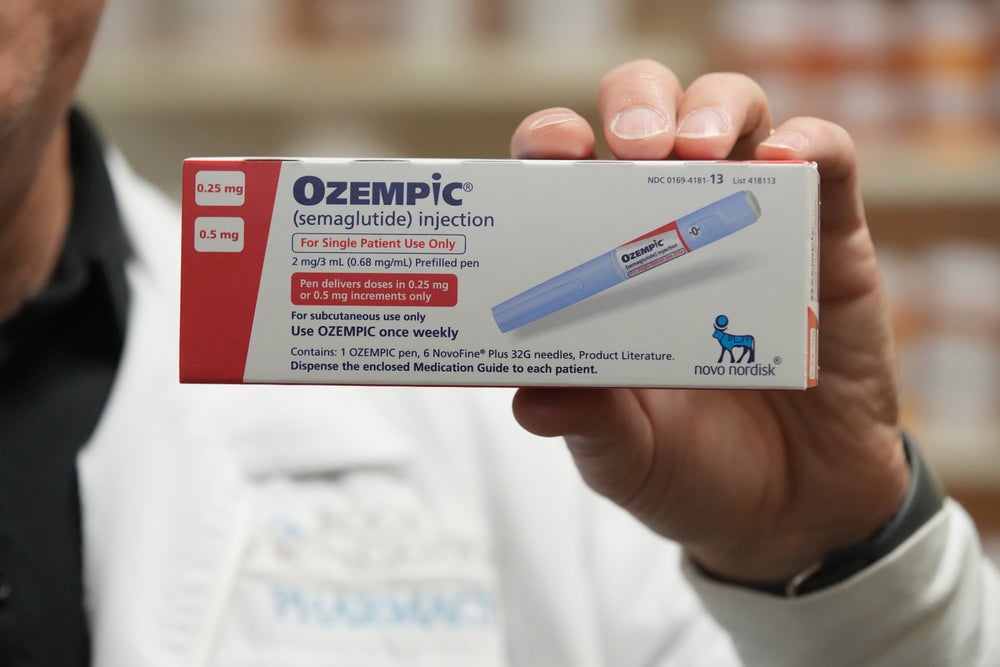
Ozempic, the appetite-suppressing injection also known as semaglutide, currently costs $935.77 in the U.S. without insurance. But a new research report from Yale University, King’s College Hospital in London, and Doctors Without Borders published in JAMA Network Open Wednesday suggests that the price of the prescription drug could be lowered to a fraction of what it is right now, while still generating a profit.

The researchers calculated cost-based prices for one month of Ozempic, administered as an injectable of 0.77 mg weekly, by combining commercial trade shipment data from January 1, 2016 to March 31, 2023 with the cost of creating the drug, other operating expenses, a profit margin, and tax. They found that the cost-based prices of Ozempic ranged from $0.89 to $4.73 per month.

“The findings of this study suggest that insulins, SGLT2Is, and GLP1As can likely be manufactured for prices far below current prices, enabling wider access,” the researchers wrote.

A pharmacist holds a box of Novo Nordisk A/S Ozempic brand semaglutide medication. Photographer: George Frey/Bloomberg via Getty Images
Ozempic costs less outside of the U.S. — a Bloomberg report found that a month’s supply of the injectable costs under $300 in Mexico.

“Outside the US, countries have different regulatory requirements with regard to the pricing of medicines, including negotiating with respective government entities,” Ozempic maker Novo Nordisk told Bloomberg.

Related: FDA Has Seized ‘Thousands’ of Fake Units of Ozempic Amid Reported Cases of ‘Adverse Reactions’ in Patients

Drug markups have long come under national scrutiny, with Martin Shkreli, the former head of Turing Pharmaceuticals, forced to pay $64 million in 2022 after inflating the price of a life-saving drug by 4,000%.

Ozempic falls under the category of a GLP-1 drug, meaning that it addresses type 2 diabetes by improving blood sugar control and also potentially leading to weight loss, according to the Mayo Clinic.

Prescriptions of GLP-1 drugs increased by 300% between 2020 and 2022, Trilliant Health researchers found. Ozempic first made headlines in 2021 when it was featured on the Dr. Oz Show.

Related: Novo Nordisk, the Maker of Ozempic, Is Suing Spas and Clinics For Allegedly Selling Knockoffs

Ozempic and other similar drugs could cause an average weight loss of 15% to 20%, “significantly higher than previous options,” as per Columbia Surgery.

The same publication warns of the life-long commitment Ozempic requires, as discontinuing the drug could lead to gaining all of the weight back. The drug could also cause nausea, cramps, and other unpleasant side effects.

Despite the high cost and potential downsides, Ozempic skyrocketed in popularity last year, with 66% of its more than $13 billion sales coming from the US, according to Novo Nordisk’s 2023 annual report.

Related: Novo Nordisk Is Worth More Than Denmark’s GDP Thanks to America’s Ozempic and Wegovy Craze

https://www.entrepreneur.com/business-news/ozempic-could-be-profitably-manufactured-much-cheaper-study/471823


This Highly-Debated Piece of Cinematic History Just Sold For Over $700,000 at Auction

“Could Jack have fit on the door” is a highly Googled phrase and there are countless Reddit threads dedicated to one of the most infamously debated scenarios in pop culture.

In the 1997 classic, “Titanic” Jack (spoiler alert) dies in the water, after being unable to climb on the wood panel that Rose is floating on. But whether or not he actually had enough room has had people arguing for decades. Even the movie’s writer and director, James Cameron, has weighed in.

Now, that famous, floating piece of wood is still generating buzz nearly 27 years later — but this time for a pricey reason.

Related: ‘Succession’ Set Auction Features Clothes, Art, Credit Cards

Heritage Auctions announced that it had sold the iconic prop in an auction last week for $718,000 as a part of a five-day long lot that featured costumes and props previously displayed at Planet Hollywood including Indiana Jones’ whip and the bowling ball from “Kingpin.”

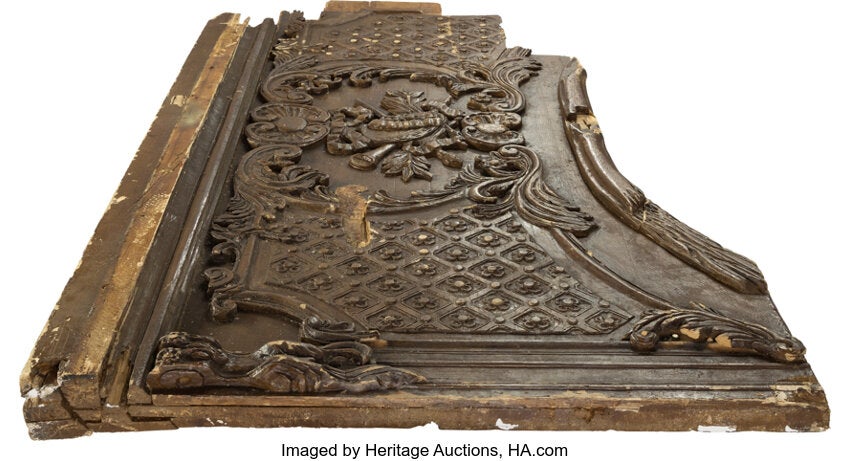
“Often mistakenly referred to as a door, the ornate structure was in reality part of the door frame just above the first-class lounge entrance,” Heritage Auctions wrote. “The iconic prop has caused much debate from fans, many of whom have argued that the floating wood panel could have supported both Jack and Rose – making his fateful decision to stay in the frigid water an empty gesture.”

The panel is made of balsa wood and contains curves and floral accents that are typical of rococo architecture that would have been popular in 1912 when the ship sank.

The infamous prop was created as a replica of an actual piece of debris found from the Titanic’s wreckage.

Related: A First-Class Dinner Menu From the Titanic Is Up For Auction

The larger lot of Hollywood props, called “Treasures of Planet Hollywood” closed on March 25 and fetched an estimated $15.6 million. It’s the second priciest auction of Hollywood props and costumes.

The current reigning champion of Hollywood auctions is Debbie Reynolds’ from 2011, which was held by Joe Maddalena, and fetched $22.8 million.

https://www.entrepreneur.com/business-news/infamous-titanic-wood-panel-fetches-thousands-at-auction/471833


A Woman Has Made a Career Out of Bedazzling Stanley Cups, Which She Can Sell for Over $1,000 Each

This article originally appeared on Business Insider.

Owning a single Stanley cup has become the ultimate cool-girl status symbol.

Ashley Kosko has a collection of at least 80.

The 37-year-old is a die-hard fan, collector, and bedazzler of the coveted, cult-favorite drinkware.

She got her first Stanley in 2022, covered it in rhinestones as a gift for a friend, and has been obsessed with decorating the cups ever since.

Kosko now sells her creations for upwards of $400 each, and she has a loyal customer base that regularly returns to have their trendy cups turned into sparkling, personalized accessories.

She’s also grown her personal stash and uses the cups daily.

Speaking with Business Insider, the Tennessee local explained why she loves Stanleys so much, her thoughts on criticism aimed at fans, and how she feels about spending more than $30,000 on her hobby.

Some of Ashley Kosko's collection of Stanley cups.

Some of the Stanley cups owned by Ashley Kosko. Ashley Kosko

Love at first Stanley cup

In 2022, Kosko was bedridden, facing medical issues, and in need of a hobby. So she turned to YouTube and learned how to rhinestone.

She enjoyed the craft so much that she even opened an online storefront to sell bedazzled items and supplies for people to make their own.

But business was slow, and Kosko was ready to give up — until she began bedazzling Stanley cups and posting videos of the process on TikTok.

“It happened at midnight on New Year’s Day, and the orders just started rolling in,” she told BI. “It was insane. I had to start raising my prices because I couldn’t keep up with the orders.”

A Stanley cup bedazzled by Ashley Kosko.

A Stanley cup bedazzled by Ashley Kosko. Ashley Kosko

Kosko currently charges between $400 and $1,100 per cup, depending on which design her clients choose.

Those prices reflect the materials needed to rhinestone the cups and the time she spends crafting each one, which can take between eight and 50 hours.

The prices of the cups themselves can also impact her prices. As demand for Stanleys has risen, fans have found it nearly impossible to purchase some designs — something Stanley is now working to combat online.

Many of Kosko’s orders are from repeat customers, she told BI, and she’s even been approached by major companies to bedazzle Stanley cups for events like the Super Bowl.

Two Stanley cups bedazzled by Ashley Kosko.

Two Stanley cups bedazzled by Ashley Kosko. Ashley Kosko

A surplus of Stanleys

Naturally, Kosko’s business of bedazzling Stanley cups has morphed into a personal affection for the drinkware.

“At one point, I had over 140 of them,” she told BI. “But I’ve honed down which ones I really love, and I’ve sold some that I don’t really care for. I mean, I still have 80-something — my collection isn’t small.”

She said she tries to buy the cups at retail prices, but has splurged on cups in limited-edition colors and designs that were only sold in other countries.

She recalls spending $180 on a cup from Thailand and $230 on another limited-edition design from overseas.

“It’s basically a moving inventory,” she said.

Ashley Kosko and one of her Stanley cups.

Ashley Kosko and one of her Stanley cups. Ashley Kosko

She said she prefers Stanley’s 30-ounce cups while on the go but utilizes the larger 40-ounce style at home.

“I fill it with pineapple-cranberry juice and ice, which is actually a faux pas in the Stanley world,” she said, noting that some fans are afraid of staining their cups and only drink water from them. “But it’s my cup. I’m going to put juice.”

A 30-ounce Stanley cup bedazzled by Ashley Kosko.

A 30-ounce Stanley cup bedazzled by Ashley Kosko. Ashley Kosko

And the hobby is an expensive one. While Kosko said she’s made tens of thousands selling her rhinestone art, she’s also spent more than $30,000 on Stanley cups between her business, gifts for friends, and her personal collection.

But she doesn’t mind if people criticize the price tag that comes with collecting them.

“Do you get your nails done, lashes done, wear makeup, or get your hair done? Those things are incredibly expensive, and they last three weeks,” she said. “A Stanley cup, it’s going to last forever.”

She also stands by her decision to own dozens of the cups — even when people say collectors are promoting overconsumption and waste.

“Does anybody have one glass cup in their cupboard, or do they have multiple?” she said. “I have five Stanley cups on my counter because I hate doing dishes. So I don’t need only one; I need multiple. And I like to match my cup to my shoes or outfit. It’s an accessory — not just a cup.”

@rhinestoningcowgirl #CapCut Haters will say it’s fake #blingstanleycollection #stanleycup #stanleytumbler #blingstanleytumbler #stanleyaddict #momcup #momlife #mom #livingevida #rhinestoningcowgirl #glamsquad #glam #fashion #watercup #giftideas #valentinesdaygift #galentines #treatyourself #selflove ♬ original sound – ?.

Community is another big part of what draws fans like Kosko to the cups.

“In my everyday life, people will stop me and say, ‘Oh, I love your Stanley cup,'” she said. “We also have Stanley Facebook groups where we show our cups of the day. In a world that’s become so disconnected, it’s a way of connecting.”

But most importantly to Kosko, she knows her hobby isn’t that serious. And she loves it anyway.

“In all reality, it’s just a cup,” she told BI. “It’s just fun. It’s a hobby. It’s not do-or-die craziness.”

https://www.entrepreneur.com/business-news/bedazzled-stanley-cup-side-hustle-earns-hundreds-a-tumbler/471827


Uber Is Fixing One of the Biggest Complaints Families and Parents Have With the Company

Getting in an Uber is about to be easier for parents traveling with children.

The rideshare company announced on Tuesday that it would be rolling out Uber Car Seat in New York and Los Angeles, a new option where users can select a vehicle that comes equipped with a car seat.

The company did not specify whether or not it plans to roll the new feature out nationwide.

Related: Uber and Lyft Are Leaving a Major U.S. Metro After City Council Bumps Up Drivers’ Minimum Wage

Uber partnered with car seat company, Nuna, to provide RAVA car seats, which can accommodate children ranging from 5 to 65 pounds. The company claims the seats boast extra legroom and an “effortless” setup when It comes to getting children in the seat.

“As spring break is in full swing and summer is on the horizon, we’re aiming to make your time on the go a little easier, so you can focus on what’s really important: spending time with loved ones,” Uber said in a release. “Whether you’re planning a family getaway or staying local, Uber Car Seat will help bring peace of mind when getting your little one around town.”

To launch the new feature, Uber is offering $10 off of two rides using Car Seat in the two cities from March 26 to April 21 using the code CARSEAT2024.

Uber had a strong 2023, reporting a 24% increase in trips booked year over year and a 17% increase in overall revenue over the same period.

“2023 was an inflection point for Uber, proving that we can continue to generate strong, profitable growth at scale,” Uber CEO Dara Khosrowshahi, said in a company release. “Our audiences are larger and more engaged than ever, with our platform powering an average of nearly 26 million daily trips last year.”

Related: DoorDash, Uber Eats Adding New Fees in NYC to Offset Costs

On Wednesday, Uber also teased an upcoming collaboration.

The combination of the emojis and imagery used led many commenters to assume the rideshare company is partnering with Beyoncé, who is releasing a new album, “Cowboy Carter,” on March 29.

Uber was up an impressive 155% year over year as of Wednesday afternoon.

https://www.entrepreneur.com/business-news/uber-launches-a-car-seat-option-for-families-parents/471777


Founders of Companies Worth Over a Billion Dollars Have These Simple Things in Common

Ever wonder what founders of “unicorn” companies, or startups worth at least a billion dollars, have in common?

After looking at data from 845 unicorns and 2,018 unicorn founders in the U.S. and U.K. from the past decade, Defiance Capital found three common, qualitative traits in the “DNA” of unicorn founders:

  1. They do not have a backup plan
  2. They have personal stories of feeling limited or unfairly treated
  3. They believe in themselves.

“The stories that are coming out show crazy determination,” Defiance Capital founder Christian Dorffer told TechCrunch.

Dorffer said the founders all shared “hunger, self-belief, ingenuity, and resilience.”

Related: A New AI Startup from Unicorn Founders Wants Businesses to Know Their ‘Worth’

The report found that 70% of unicorns had “underdog” founders, which the researchers defined as founders who were immigrants, women, or people of color.

The study also found that more than half of the founders (53%) had degrees from top global universities. Most founder teams (70%) had at least one person with a STEM degree (science, technology, engineering, or math).

Founder teams were more common in the billion-dollar startup bracket than solo founders, with 80% of unicorns led by a team. Half of the founders surveyed were serial entrepreneurs, so they had created at least one other company before reaching a billion-dollar-plus valuation with their unicorn startup.

Related: Want to Start a Billion-Dollar Business? Look to These Two Industries, Which Have the Most Unicorn Growth

A separate February study found that two industries stood out last year in producing unicorns: cybersecurity and artificial intelligence. As of March 2024, there are more than 1,000 unicorns around the world, including OpenAI, Canva, and SpaceX, according to CB Insights.

Dorffer is now planning to create a podcast and interview many of the unicorn founders surveyed in the study.

https://www.entrepreneur.com/business-news/unicorn-founders-have-three-simple-things-in-common-study/471772


‘Wildly Inappropriate’: Woman Says She Was Denied a Job Because She Didn’t Wear Makeup During the Interview

A New York woman is alleging that she was denied a high-level job because a recruiter did not believe her appearance showed enough effort.

In a viral TikTok that has been viewed over 266,500 times, Melissa Weaver, 30, said she did all of the things that would be in line with an office dress code in her video interview for a vice president role in human resources at a tech company.

Weaver says she was wearing a black blazer and white button-up shirt — both ironed — styled her hair in a blowout look, and painted her nails a neutral color.

But one thing she didn’t have on? Makeup.

@_melissaweaver Does wearing make up to work make a difference? #work #corporate #career #interview #job #jobsearch #makeup #jobinterview #opinion #advice #women ♬ original sound – Melissa

“I didn’t think was a big deal,” Weaver penned in an essay to Insider about the incident. “But apparently, it was to her.”

Weaver said she thought the interview went well — it even went 10 minutes longer than scheduled — but was surprised when she received an email days later saying that though she was “in line” with what the company wanted in terms of experience and values, she would not be moving on to the next round.

Related: Woman Goes Viral For Live-Recording Her Layoff, Talking Back

As an HR expert herself, Weaver pushed for feedback, which is when she was told via email by the recruiter that the company was “concerned that you didn’t put forth enough effort into your appearance given you were interviewing for a Vice President role.”

My reaction was a bit of shock. One, that someone would write that in an email. But more so, that in 2024, this is still happening,” she said. “Hearing that because I hadn’t done that, I was somehow less qualified or didn’t seem like I was as enthusiastic about the job was just baffling.”

People in the comments jumped to Weaver’s defense, calling the recruiter’s decision “wildly inappropriate” and urging her to forward the email to the company’s head of HR.

“It’s wild she said that in an email to you,” one person wrote. “This would never be said to a man.”

“That honestly feels like discrimination,” another said. “Not hiring you based on your looks?”

Related: The Emotional and Financial Cost of Workplace Bias

Weaver did not call out the company by name.

According to LinkedIn, Weaver last worked as a Senior People Business Partner at Action Network before being laid off in December 2023.

https://www.entrepreneur.com/business-news/recruiter-rejects-woman-from-vp-job-for-not-wearing-makeup/471771


Robinhood Is Offering a Credit Card for the First Time — and It’s Available in 10-Karat Gold

Robinhood introduced a credit card on Tuesday with no annual or foreign transaction fees and a minimum of 3% cash back to the general public. However, the card is only available to Robinhood Gold subscribers who pay $5 per month or $50 per year for a membership.

Robinhood announced the card and its waitlist on Tuesday, marking the first time that the online trading app has expanded to credit cards. The company began offering a debit card two years ago and acquired no-fee credit card startup X1 Inc for about $95 million last year.

The card offers 5% cash back on travel bookings through Robinhood’s new portal.

Credit: Robinhood

Similar to the Apple Card, the Robinhood Gold card has a clean look with no numbers, so users won’t have to worry about their information being stolen if they lose their cards. Other cards, such as one from Mastercard, also have this kind of design.

Related: Apple Moves to Sever Ties With Goldman Sachs — Here’s What That Means for Apple Card and Savings Holders

Robinhood allows for the same family opt-ins as the Apple Card but with up to six people able to access one shared account.

The Robinhood card has a similar sheen to the American Express Gold Rewards Card, without the $250 annual fee, and it offers the same 3% cashback percentage as the Apple Card, which also has zero fees.

Robinhood aims to “open up” a “high-net-worth experience” with the Gold membership, which is $5 per month, according to co-founder and CEO Vlad Tenev.

Instead of requiring a minimum income or balance, Robinhood is trying to make its offerings available to “as many people as possible,” Tenev told CNBC.

Related: Robinhood CEO Says Big Banks Are Taking Advantage of Americans. Now His Company Wants to Put More Money Into Your Wallet — No Investing Required.

For example, Tenev said that when Robinhood looked at the entire credit card landscape, they found that the highest cashback percentage with no limits was usually around 2%.

Most 2% cards come with some kind of a catch, according to NerdWallet. Credit cards from Bank of America and U.S. Bank do offer 3% cash back but in limited categories.

“3% is beyond what anyone else offers with no limit, no minimum balance, no net worth requirement to be part of the program,” Tenev claimed.

How to Get a Real 10-Karat Gold Card

Robinhood is rewarding its Gold members who share news about the credit card by offering a solid gold version of the card.

If Gold members share the news with their network and can get 10 people to sign up for the card, they will receive a 10-karat real gold card that weighs 36 grams.

The regular card comes in stainless steel.

Related: Sorry, Point-Lovers—Buying With a Credit Card Can Be Costly For Small Businesses https://www.entrepreneur.com/business-news/robinhood-introduces-a-credit-card-comes-in-10-karat-gold/471756