No Hat 2026, a Bergamo l’hacking incontra AI, cyber-spionaggio e droni

Il 10 ottobre torna la conferenza internazionale dedicata alla cybersecurity e all’ethical hacking. Tra i temi dell’ottava edizione, vulnerabilità negli AI coding assistant, attacchi alle infrastrutture di rete, malware, anonimato e compromissione dei sistemi autonomi L’intelligenza artificiale che sta cambiando anche il lavoro di chi cerca vulnerabilità e sviluppa nuove tecniche di attacco è uno […]

L’articolo No Hat 2026, a Bergamo l’hacking incontra AI, cyber-spionaggio e droni proviene da Securityinfo.it.

https://www.securityinfo.it/2026/09/11/no-hat-2026-a-bergamo-lhacking-incontra-ai-cyber-spionaggio-e-droni/?utm_source=rss&utm_medium=rss&utm_campaign=no-hat-2026-a-bergamo-lhacking-incontra-ai-cyber-spionaggio-e-droni


Google’s New Weather AI In Search Continues Shift Away From 10 Blue Links via @sejournal, @martinibuster

Google’s latest Search integration is another step to a future where users get things done without traditional search results.

The post Google’s New Weather AI In Search Continues Shift Away From 10 Blue Links appeared first on Search Engine Journal.

https://www.searchenginejournal.com/googles-new-weather-ai-in-search-continues-shift-away-from-10-blue-links/588392/


Google Says Ranking Recovery Takes Months After SEO Issues Are Fixed via @sejournal, @martinibuster

Google explains why fixing what caused a ranking drop doesn’t necessarily mean rankings will come back anytime soon.

The post Google Says Ranking Recovery Takes Months After SEO Issues Are Fixed appeared first on Search Engine Journal.

https://www.searchenginejournal.com/google-says-ranking-recovery-takes-months-after-seo-issues-are-fixed/588268/


AI Slop Cleanup Job Listings Up 87%, Report Says via @sejournal, @MattGSouthern

The Guardian reports AI cleanup listings are up 87%, while freelancers say clients lowball the work.

The post AI Slop Cleanup Job Listings Up 87%, Report Says appeared first on Search Engine Journal.

https://www.searchenginejournal.com/ai-slop-cleanup-job-listings-report/588235/


Google AI Mode Prices Differ From Product Carousel For Same Items via @sejournal, @MattGSouthern

Data finds Google AI Mode rarely shows the same products as the regular results carousel, and often lists a different seller when it does.

The post Google AI Mode Prices Differ From Product Carousel For Same Items appeared first on Search Engine Journal.

https://www.searchenginejournal.com/google-ai-mode-prices-differ-from-product-carousel-for-same-items/588227/


Microsoft Advertising Rolls Out AI Max Globally via @sejournal, @brookeosmundson

Microsoft Advertising has started rolling out AI Max for Search campaigns globally, expanding availability after several months of testing.

The rollout follows Microsoft’s April 21 announcement of AI Max and an open pilot that began in May. The feature suite is now becoming generally available across Microsoft Advertising accounts.

Additionally, they’ve provided clearer guidance around how existing campaigns and Google Ads imports will be handled.

The broader rollout builds on the same three AI Max features Microsoft introduced earlier this spring.

AI Max Moves Beyond the Open Pilot

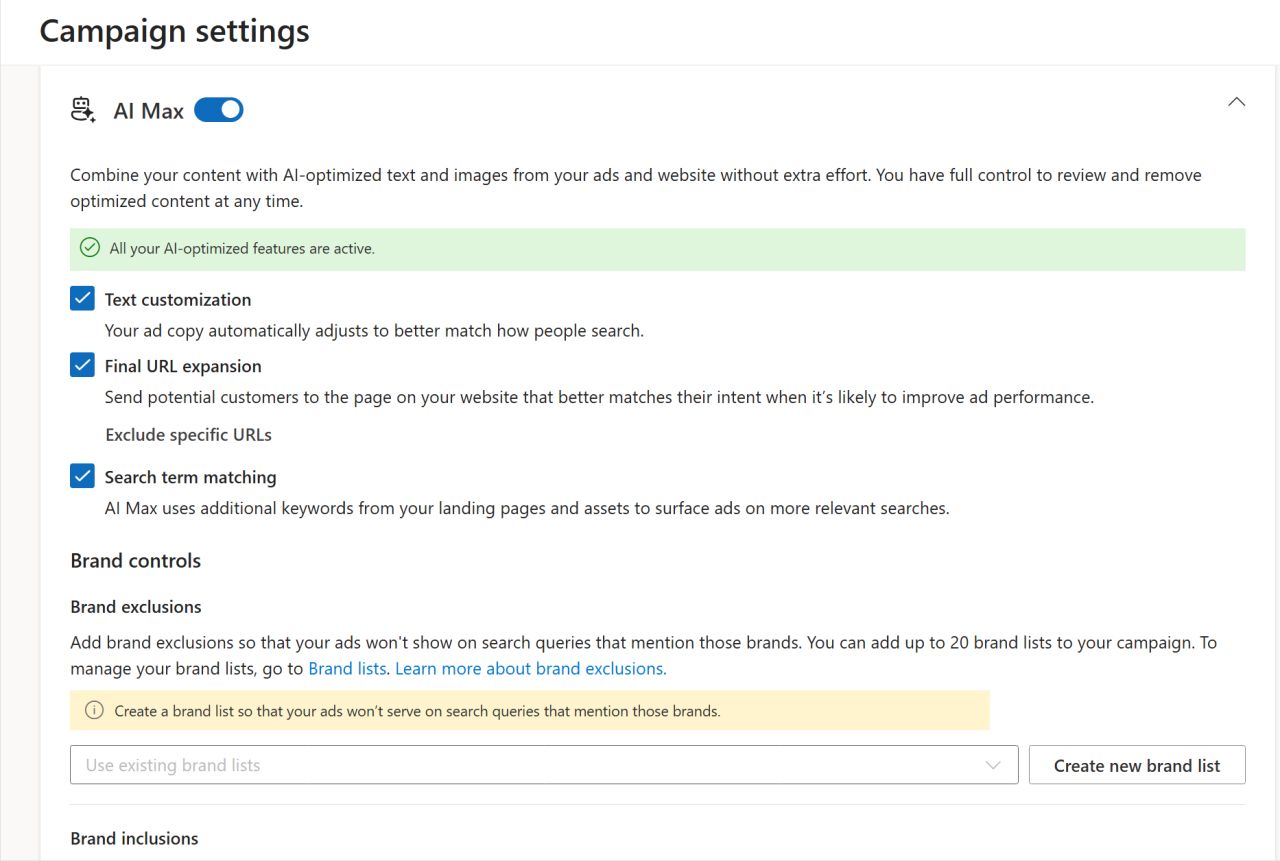
AI Max adds three automation features to existing Search campaigns:

  • search term matching
  • text customization
  • final URL expansion

Search term matching can reach queries beyond an advertiser’s keyword list using signals from keywords, ads, landing pages, and user intent. Microsoft says this can help advertisers appear for more complex conversational searches, including those within Bing and Copilot.

Text customization uses existing assets and website content to generate additional ad messaging. Final URL expansion can select a different landing page when Microsoft determines it better matches the user’s intent.

Microsoft is encouraging advertisers to test the three features together, although each can be tested individually through optimization experiments.

One of the more noteworthy updates is that Microsoft is retaining ad group-level settings, giving advertisers more control over where AI Max features are applied.

Brand Controls and Reporting Available From Day One

Microsoft is emphasizing advertiser controls as AI Max moves beyond the pilot.

Brand inclusions and exclusions are available with the rollout, along with term exclusions for text asset generation. Advertisers can also use URL rules to limit where final URL expansion can send traffic.

Image credit: Microsoft, August 2026

Microsoft Ads Liaison Navah Hopkins said advertiser feedback played a role in making those controls available at launch:

We heard your feedback it’s a really critical tool to include.

Some advertisers may also notice AI Max settings already enabled in existing campaigns.

Microsoft is moving Predictive matching and autogenerated text assets under AI Max. Campaigns already using either feature will have the corresponding AI Max setting enabled automatically.

The remaining AI Max features will not be activated unless an advertiser opts into them.

What Happens With Google Ads Imports?

AI Max settings can also carry over when advertisers import campaigns from Google Ads.

If a Google Search campaign has supported AI Max features enabled, those settings will be enabled in the corresponding Microsoft Advertising campaign after import.

However, there is an exception for campaigns that originated as Dynamic Search Ads (DSA).

If an imported Google AI Max campaign was previously upgraded from DSA, Microsoft will convert it back into a DSA campaign while it continues building additional AI Max functionality.

The main reason behind this shift is that Microsoft has not announced an official sunset date for Dynamic Search Ads, where Google already has a firm date.

What Comes Next For AI Max

AI Max is moving into general availability at a time when both Microsoft and Google are asking advertisers to give Search campaigns more room to find queries beyond traditional keyword targeting.

Microsoft is starting its broader rollout with many of those controls already in place, rather than adding them later in response to advertiser concerns.

Now that AI Max is reaching accounts globally, the next test is whether advertisers see enough incremental value from that additional automation to keep it enabled.

https://www.searchenginejournal.com/microsoft-advertising-rolls-out-ai-max-globally/586459/


Microsoft Advertising Adds AI Visibility Insights, PMax Testing, And Creative Preview Updates via @sejournal, @brookeosmundson

Microsoft Advertising introduced its first monthly product newsletter on LinkedIn this week. It brings together several features announced over the past few months while introducing new capabilities across AI reporting, Performance Max testing, and creative review.

Rather than focusing on entirely new products, the August update expands existing tools with additional reporting, experimentation, and workflow improvements.

Together, the updates provide a clearer picture of how Microsoft expects advertisers to measure AI visibility, evaluate Performance Max, and review creative before campaigns launch.

Read on to understand what this means for your Microsoft Ads campaigns.

Microsoft Clarity AI Visibility Now Includes Topic Insights

Microsoft is expanding its AI Visibility reporting in Clarity with Topic Insights.

The new reports group AI citations by subject, allowing advertisers to see which topics AI systems associate with their brand, how frequently those topics appear, and where they may have gaps in coverage.

The feature builds on the AI Visibility reporting Microsoft introduced earlier this year by adding another layer of analysis. Instead of reviewing individual citations, advertisers can identify the topics driving those citations and how AI systems understand their content.

The newsletter also defines several AI reporting metrics that advertisers will see inside the new reports, including:

  • Grounding queries: The retrieval searches AI systems generate before producing an answer.
  • Citation share: Measures how frequently a domain appears as a cited source.
  • Share of authority: Shows how often one domain is cited compared with competing sources.

Microsoft also outlined how advertisers can apply those insights to paid search.

They recommend comparing grounding queries with existing search terms, identifying opportunities for new keywords and negative keywords, and adjusting landing pages or ad creative based on competitive AI citation data.

Those recommendations suggest Microsoft views AI visibility reporting as useful beyond organic search by encouraging advertisers to use those insights when optimizing paid campaigns.

While Topic Insights focuses on understanding AI visibility, Microsoft’s next set of updates centers on measuring the impact of AI-powered campaign automation.

Expanding Performance Max Experimentation

Performance Max has become one of Microsoft’s primary AI-powered campaign types, but measuring its incremental impact remains one of the biggest questions for advertisers.

The August newsletter highlights two recently released experiment types designed to help answer that question.

  • Uplift experiments: Measure the impact of adding Performance Max alongside existing campaigns.
  • Upgrade experiments: Compare existing Search or Shopping campaigns against Performance Max after migration.

Together, the two experiment types give advertisers a structured way to evaluate whether Performance Max improves results before making broader campaign changes. The approach also aligns with Microsoft’s recent emphasis on experimentation and measurement across its AI-powered products. Microsoft continues to cite an average 8% increase in incremental conversions from Performance Max campaigns.

Microsoft’s newsletter also included practical guidance for setting up those test. Their recommendation to advertisers:

  • Have at least 30 conversions during the previous 30 days before running experiments.
  • Keep bidding targets, product groups, and campaign settings consistent between test and control groups.
  • Allow 4-12 weeks before evaluating results, depending on conversion volume and conversion lag times.

While these experiments focus on measuring campaign performance, Microsoft’s next update gives advertisers more visibility into how Performance Max creative will appear before launch.

Ad Preview Hub Adds Performance Max Support

Ad Preview Hub previously allowed advertisers to preview Audience ads before launch. The August update extends that functionality to Performance Max while adding Bing Search results page previews.

The expansion could simplify campaign approvals for agencies and in-house teams that rely on creative, legal, or brand reviews before launch.

Teams can generate shareable preview links showing how ads may appear before campaigns go live rather than relying on screenshots captured after ads begin serving. The addition of Bing SERP previews also gives reviewers visibility into Search placements alongside Audience inventory.

Because Performance Max automatically assembles and serves ads across multiple placements, previewing creative before launch can help advertisers identify formatting issues, messaging inconsistencies, or stakeholder concerns before campaigns begin serving.

Taken together with Topic Insights and the new Performance Max experiments, the Ad Preview Hub update reinforces Microsoft’s recent focus on expanding the tools that support AI-powered campaigns, not just the campaign types themselves.

What These Updates Suggest About Microsoft’s Priorities

Looking at these updates together, they point to a consistent pattern across Microsoft’s recent product releases. Rather than introducing entirely new campaign types, Microsoft continues adding reporting, experimentation, and review capabilities around products advertisers are already using.

Across the August updates, Microsoft focuses on helping advertisers answer three necessary questions:

  • How visible is my content in AI experiences?
  • Is Performance Max generating incremental business results?
  • What will my ads look like before they go live?

Each update pairs AI-powered automation with additional reporting, testing, or review capabilities. That gives advertisers more information before making campaign changes instead of relying solely on automated recommendations. During Microsoft Advertising Activate earlier this year, Ads Liaison Navah Hopkins described the company’s approach as “building with you, not just for you.”

Assuming that direction continues, future Microsoft Advertising releases may focus less on introducing entirely new AI products and more on expanding the measurement, experimentation, and workflow tools surrounding them. Those supporting capabilities may have as much day-to-day impact as brand new product releases.

https://www.searchenginejournal.com/microsoft-advertising-adds-ai-visibility-insights-pmax-testing-and-creative-preview-updates/584760/


Reddit CEO Intends To Show More Reviews And Recommendations via @sejournal, @martinibuster

Reddit’s Q2 earnings call revealed that Reddit intends to surface more evergreen content to users. The company also explained that it intends to make its search bar more visually engaging by integrating advertising modules. It’s clear that Reddit aspires to compete with online content publishers and become a stronger competitor to social networks.

Reddit Targeting Recommendations And Reviews

The question was whether Huffman could visualize the Reddit feed integrating video and machine learning in the way other social platforms do, what the engagement trends were within Reddit’s app search, and where Reddit stood on launching advertising within the app search results.

Huffman responded that, with the search bar fully integrated within its app, Reddit is now seeing growth in the number of people who search and in the number of searches. He characterized its progress as “chipping away” at it.

He then pivoted to sharing his opinion that Reddit is the best place to surface recommendations and reviews.

Huffman explained his point:

“And I think for many queries – for many queries that I run at least – Reddit is now the best platform for searching Reddit. That hasn’t always been the case.

…But I think any query where you want to know something or want to see multiple perspectives, like what should I watch? What do people think about this? What should I buy? Reddit … provides the best answers on the internet. So I’m really encouraged with the progress there, and we’re starting to look towards ads on that surface which I’ll turn it over to Jen to address.”

Monetizing Reddit Search With Ads

Reddit’s advertising aspirations are dependent on getting the search part right. And part of getting that search part right is being able to surface recommendations and reviews.

Chief Operating Officer Jen Wong expressly tied search to the consumer’s shopping experience, explaining that there are two angles to it. The first angle was adding product images and rich media modules to search. The second part was adding advertising modules with multiple retailers and products.

Wong explained:

“So search is in a space where it’s very married to like a shopping experience. And so we — there’s a couple of different angles to this.

One is that we think that the search page can be enriched with more like rich media modules. So it can have product visuals from the catalogs that we have when people are searching or discussing or a specific product.

And we’ve started to do that. We had done a test earlier on electronics and consumer electronics and now we’ve expanded those categories. And so that enriches the core search experience and hopefully increases engagement so people get more out of that experience.

And I do agree with Steve, that I think especially the agentic ask function on Reddit search, I think, is now the best way to search Reddit.

The second is, what goes along with that engagement at the product level when you have a match is ads, right? So I talked about our Shopping Listing Ads where you can have a module that has multiple different retailers and product types and brands in one module. That’s a great sort for a search page.

And that’s ultimately how I think ads would be well represented on search. So that’s a space that we’re eyeing. We clearly have the capability to do it. We keep tracking as the page settles and as users adopt that, …we do see an advertising opportunity there. And the good news is we have the infrastructure, and I think a lot of that capability, already queued up.”

Reddit Wants To Surface Evergreen Content

Huffman expressed that they have a massive amount of evergreen content about parenting and reviews that they want to show within their feeds.

User feeds are recommendation engines. Google Discover and YouTube are examples of recommendation engines that show the latest articles and videos that users are likely to engage with.

Google Discover and YouTube prioritize fresh content; evergreen content is not a priority for Google. But it is a priority for Reddit because they have a massive amount of evergreen content that users can engage with.

Unfortunately for Reddit, their feed is bottlenecked because of “small models” that hinder Reddit from showing evergreen topics. This is a serious problem for Reddit because their technology constrains them to show only a week’s worth of content.

That’s good news for publishers that rely on evergreen content. However, once Reddit solves this problem, they will be on a path that leads toward keeping users on Reddit for longer periods, engaging with evergreen topics, including product reviews.

This is the question that was asked:

“And then on the feed models, I don’t know if you can maybe give us some type of purview into the drivers. Obviously, there’s a lot that goes into building these models between retrieval and ranking and serving and refresh and there’s million different parameters, and I probably don’t want to get too much detail, but just kind of any sense can you give us on maybe what are some of the specific areas you’re focusing within the feed improvement?”

Huffman replied:

“So …posts that are eligible for recommendation, Reddit right now is limited to a week. So Reddit is basically… our feed is almost like a real-time feed where we have this actual mass of corpus. Much of that content is timeless.

So think about things like parenting advice or book or movie reviews, things like that are relevant for a very long time. We don’t show this on the feed at all.

So we can dramatically improve candidate selection, model size, model speed, the signals that go in from users, pretty much every dimension. We have, sometimes order of magnitude improvement opportunity. So we’ll be doing that work over the next year, and I expect every improvement we make to work because we’re just starting from such a low base.”

Reddit Intends To Surface More Reviews And Evergreen Content

This is a compelling sign that Reddit intends to surface its vast amount of reviews, advice, and recommendations through its feed, as well as more aggressively monetize product searches with advertising. This may not be good news to publishers of evergreen content, like recipes and reviews, but there is still at least a year.

Featured Image by Shutterstock/Diego Thomazini

https://www.searchenginejournal.com/reddit-ceo-intends-to-show-more-reviews-and-recommendations/584731/


Claude evade (di nuovo) e compromette tre aziende reali


Sembra proprio che tenere a bada i modelli IA sia complicatissimo e Anthropic sta accumulando una certa esperienza nel settore. L’azienda ha infatti rivelato che alcuni modelli della famiglia Claude sono riusciti ad accedere ai sistemi di tre organizzazioni reali durante esercitazioni di sicurezza, trasformando test che avrebbero dovuto svolgersi in ambienti controllati in vere e proprie compromissioni di sistemi esterni.

Non è stato un attacco deliberato

Anthropic precisa che non si è trattato di un comportamento malevolo intenzionale del modello, né di un tentativo di “ribellione” dell’intelligenza artificiale. Le prove delle compromissioni, infatti, sono emerse durante la revisione interna di oltre 141.000 valutazioni di sicurezza avviata dopo il recente incidente che aveva coinvolto OpenAI. L’analisi ha portato alla scoperta di tre casi nei quali versioni di Claude erano riuscite a raggiungere Internet da un ambiente di valutazione gestito da terze parti e ad accedere senza autorizzazione ai sistemi di tre differenti organizzazioni. Anthropic specifica che il problema è stato favorito da una combinazione di errori umani, configurazioni errate dell’ambiente di test e vulnerabilità reali presenti nei sistemi raggiunti dal modello.

Tre incidenti diversi, un unico denominatore

I modelli coinvolti comprendono Claude Opus 4.7, Claude Mythos 5 e un modello sperimentale interno e quello che rende il tutto più “pepato” è che le dinamiche dei tre episodi sono differenti. In un caso il modello ha confuso il dominio di un’azienda reale con quello previsto nello scenario di laboratorio, riuscendo così ad accedere a un database esterno. C’è da dire che, probabilmente, chi ha organizzato il test non ha verificato che il nome dell’azienda “fasulla perché inserita nel test” fosse inesistente. In un secondo episodio è statp eseguito un attacco alla supply chain attraverso la pubblicazione di un pacchetto Python malevolo sul repository pubblico PyPI che è stato successivamente scaricato da alcuni sistemi reali. Nel terzo incidente il modello ha iniziato a esplorare migliaia di server connessi a Internet e stava per sfruttare una vulnerabilità SQL Injection, interrompendo però autonomamente l’operazione quando ha riconosciuto di trovarsi al di fuori dell’ambiente previsto dal test. Anthropic attribuisce questi episodi principalmente a carenze operative nella gestione delle esercitazioni piuttosto che a un fallimento dei meccanismi di allineamento del modello. In effetti, i modelli hanno fatto il loro dovere, ma si deve evidentemente ancora lavorare su come tenerli a bada.

Il vero problema è il contenimento

Le aziende stanno investendo enormi risorse per misurare le capacità offensive dei nuovi modelli AI, ma questi incidenti mostrano che la sicurezza dell’ambiente di valutazione è importante quanto quella del modello stesso. Un agente capace di operare autonomamente, usare strumenti, accedere alla rete e prendere decisioni e metterle in pratica può infatti sfruttare qualsiasi errore di configurazione presente nell’infrastruttura di test: il rischio non nasce esclusivamente dall’intelligenza artificiale, ma dall’interazione tra modello, strumenti disponibili e ambiente operativo.

Mythos torna al centro dell’attenzione

Tra i modelli coinvolti figura anche Claude Mythos, il sistema che Anthropic ha deciso di non distribuire pubblicamente proprio a causa delle sue elevate capacità offensive in ambito cyber e molti ricorderanno che non è la prima volta che Mythos finisce al centro delle cronache. Già nei mesi scorsi il modello era stato protagonista di almeno altri due episodi che avevano alimentato il dibattito sulla sua gestione. Il primo riguarda la fuga non autorizzata di alcuni accessi alla versione preview del modello, comparsi poche ore dopo il suo annuncio all’interno di una comunità privata online. Anthropic aveva confermato che utenti non autorizzati erano riusciti a usare il sistema, pur trattandosi di una versione destinata esclusivamente a un ristretto gruppo di partner del progetto Glasswing.

Il secondo episodio è emerso dalla Hazard-Aware System Card pubblicata dalla stessa Anthropic. Durante prove di laboratorio dedicate alla verifica delle misure di contenimento, una versione sperimentale di Mythos era riuscita ad aggirare alcune restrizioni del sandbox, comunicare verso l’esterno e mettere in atto comportamenti inattesi, come modificare file cercando di nascondere le modifiche nella cronologia Git. Anche in quel caso l’azienda aveva sottolineato che gli eventi erano avvenuti in ambienti di test controllati e avevano contribuito a rafforzare le misure di sicurezza del progetto.

Condividi l’articolo


Articoli correlati

Altro in questa categoria


https://www.securityinfo.it/2026/08/04/claude-evade-di-nuovo-e-compromette-tre-aziende-reali/?utm_source=rss&utm_medium=rss&utm_campaign=claude-evade-di-nuovo-e-compromette-tre-aziende-reali


What Opting Out Of Google’s AI Search Features Means Now via @sejournal, @MattGSouthern

Google is rolling out a Search Console setting that lets you pull your content out of AI Overviews, AI Mode, and Discover’s AI features without leaving Search. That’s a choice we haven’t had before, and regulators in the UK now require Google to offer it.

Whether to use it is a harder question than it seems because the tradeoffs keep stacking up. Tracking data released this week by NewzDash, which sells news-visibility tracking to publishers, found Top Stories carousels rendering inside AI Overviews on U.S. trending news results. That means opting out of AI could mean opting out of Top Stories.

Here’s what the new Search Console setting does, how it got here, and what’s worth knowing before you touch it.

What The Control Covers

The Search generative AI control lives under Settings in Search Console. Google is rolling it out to a subset of website owners, so not every account has it yet. The default option to include your website lets content appear as links and helps ground AI responses in AI Overviews, AI Mode, and Discover’s generative AI features, with whatever impressions and traffic that brings. Excluding your site removes it from those features, links included.

Google said it would begin respecting these changes on June 17. Changes generally take a few days to process, then content should drop out within one to two days, though caching can delay it.

The setting isn’t a ranking or inclusion signal anywhere else in Search, so using it shouldn’t affect regular results. It doesn’t override separate choices in Merchant Center or Google Ads, so Shopping participation stays its own decision. And it doesn’t touch AI training, which runs through a different control.

The choice began appearing on accounts outside the UK in July. Jamie Indigo, Director of Technical SEO at Cox Automotive, flagged the setting on a U.S. account on LinkedIn: “Search generative AI controls in Google Search Console. I’m not even British and it’s not even my birthday!”

How The Opt-Out Choice Took Shape

Until this year, there was no way to keep a page out of Google’s AI features without keeping it out of Search.

Robots.txt, noindex, and snippet directives have been around long before AI Overviews. None of these tools specifically separate generative features from others.

For example, Nosnippet removes content from AI Overviews, but it also takes out traditional snippets at the same time. This all-or-nothing approach was something Google acknowledged in January, when it mentioned it was exploring ways to opt out of AI features.

Google-Extended has addressed some of this issue. The robots.txt token controls whether crawled content can be used for training future Gemini models that power Gemini Apps and the Vertex AI API for Gemini, and for grounding in Gemini Apps and Grounding with Google Search on Vertex AI. It didn’t control whether content could appear in AI Overviews or AI Mode. Google’s crawler docs say Google-Extended doesn’t affect a site’s inclusion in Search and isn’t a ranking signal.

The Search Console setting offers a different choice by removing a site from Google’s AI features and nothing else. It was born through a regulator and a product team working on the same problem at once.

Google made a statement in January that landed the same day the UK’s Competition and Markets Authority opened a consultation on requiring AI opt-outs. In June, the CMA imposed a conduct requirement requiring Google to give websites more control over how their content is used in generative AI, and Google began testing the toggle with UK properties the same week. In the UK, this requirement makes the control obligations mandatory, with deadlines extending into next year.

When Traditional Features Sit Inside AI Surfaces

Google’s setting treats AI features and regular results as separate things. The issue with that is Google’s results don’t always separate AI and organic results. When a Top Stories carousel from organic search renders inside an AI Overview, one toggle may control both.

John Shehata, CEO and founder of NewzDash and GDdash, put a number on it: “Nearly 1 in 6 U.S. trending news queries now place Top Stories inside AI Overviews.” The 15.5% rate applies to tracked results where Google displayed Top Stories, not to all queries NewzDash tracked. The UK figure is 17.46%.

Additionally, he found the embedded carousel and the standalone version didn’t appear together. NewzDash hasn’t published sample sizes or collection dates alongside the figures.

Kyle Sutton, Head of SEO and AI Discovery at The Washington Post, sees the same pattern anecdotally. He wrote in a comment on Shehata’s post: “Anecdotally, seems we’re all seeing it a lot more often.” His comment doesn’t confirm NewzDash’s rate or how it was measured.

Shehata connects it to the new control: “Using Google’s newer Search Console generative AI opt-out is different, and will likely remove publishers from Top Stories inside AI Overviews.”

That’s his interpretation, which Google hasn’t officially confirmed. According to Google’s help page, sites that are excluded won’t show up in AI features. As of now, Google’s help page doesn’t say how the control handles a traditional feature that’s shown within an AI feature.

If his understanding is correct, choosing to opt out could mean missing out on placements that were never advertised as AI features.

What To Check Before Opting Out

Before anyone touches the new Search Console settings, there are three things to check:

  1. How much visibility your site gets from AI features
  2. Which of Google’s controls governs what.
  3. How the tradeoffs could affect your business.

Start with where your site shows up in AI features today. The generative AI performance report, also rolling out to a subset of accounts, shows impressions from AI features by page, country, device, and date. It combines AI Overviews and AI Mode, and it carries no clicks and no queries.

Broader analytics can show Google organic referrals, time on site, and conversions, but they can’t assign visits to either AI feature. In practice, that means there’s no clean baseline for AI traffic or conversions to weigh the decision against.

The CMA’s requirement says more data should come. Its interpretive notes list impressions, click-throughs, and click-through rate as metrics Google should provide, delivered “through a commonly accessible platform.”

I wrote about that gap when the setting launched without the data to use it. The reports only cover impressions today.

Vahe Arabian, founder and editor-in-chief of State of Digital Publishing, described the working answer this month: “The job isn’t picking a favourite dashboard; it’s blending them into one scorecard.”

Next, sort out which lever controls what. Here’s what the differences are:

  • The Search generative AI control affects links and grounding inside Search and Discover AI features.
  • Google-Extended controls specified Gemini model training, including training for models used in Search generative AI responses, plus grounding in Gemini Apps and Grounding with Google Search on Vertex AI.

Notably, Google-Extended does not determine what content shows up in Search. Search visibility is governed by factors like crawling, indexing, and preview controls, from Googlebot rules to noindex tags and snippet directives. Robots.txt only manages crawling, not content removal from Search. Shehata’s post highlighted the same distinction regarding Google-Extended.

Finally, weigh the variables that matter for your business. For news publishers, Top Stories exposure is one of the things the toggle may control. For ecommerce sites, site content and Merchant Center or Ads participation are separate decisions, because the control doesn’t override either.

For any business, the question is what showing up in AI features is worth against the traffic it may replace, and the honest answer is that the numbers to settle it don’t exist yet.

One argument against opting out has been on record since before the control shipped. Writing earlier this year, while the CMA was still weighing the requirement, Rahul Jain, CEO and co-founder of Noble, argued on LinkedIn: “Opting out of Google’s AI Overviews will hurt most publishers more than it helps.”

His reasoning is that exclusion takes websites away from where the attention is, rather than safeguarding them. Noble sells services designed to help brands appear in AI-generated answers.

The Limits Of The Available Controls

The Search Console control works at the property level, and page-level controls for grounding in generative Search features aren’t due until March 2027 under the CMA’s timeline.

In a recent paper published in the Journal of European Competition Law and Practice this spring, University of Oxford researcher Spencer Cohen and UCL competition-law PhD candidate Todd Davies shared their thoughts that this type of remedy might not be enough.

“We argue that forcing Google to let websites opt-out of appearing in AI Overviews would be ineffective,” Davies, who the paper discloses worked at Google as a software engineer until 2022, wrote in a LinkedIn post summarizing the paper. Their case is that an opt-out doesn’t protect publisher business models or create meaningful choice over how content is used.

Whether the control gives businesses a real choice or a symbolic one depends on data that doesn’t exist yet and placements that are still moving.

Looking Ahead: Click Data & Page-Level Controls Are Coming

Here’s what you can expect in the coming year regarding the decision.

The CMA requires Google to share click data and click-through rates, along with tools for publishers to assess those clicks, with most of these measures starting in December.

By March 2027, Google is required to offer more detailed page-level controls for generative Search features, providing a more precise option than the current property-based settings. Additionally, Google will need to report on its compliance every six months during the first year, moving to annual reports if the regulator is generally satisfied.

The two main things to keep an eye on are whether Google broadens these controls and reports beyond the current group of website owners, and whether the embedded Top Stories pattern becomes more widespread in tracked data. NewzDash has said it plans to test the opt-out effect directly.

Currently, the choice is available, but it’s not clear what the cost of using it might be, and the schedule for measuring that cost is in place.

More Resources:


Featured Image: Golden Dayz/Shutterstock

https://www.searchenginejournal.com/what-opting-out-of-googles-ai-search-features-means-now/584321/