Kyber annuncia il ransomware “post-quantum”, ma…


Kyber è un gruppo ransomware relativamente recente che ha attirato un po’ di attenzione su di sé per le ultime operazioni condotte e una postura piuttosto esibizionista nel dark Web. Questa settimana, ha pubblicato un post a proposito di un attacco riuscito usando un sistema di cifratura post-quantum per bloccare i dati della vittima.  Dietro la narrativa tecnologica avanzata si nasconde, però, una realtà più complessa, in cui marketing criminale e implementazione tecnica non sempre coincidono.

Secondo l’analisi pubblicata da Rapid7, la gang ha sviluppato due varianti distinte del ransomware, entrambe utilizzate nello stesso attacco per massimizzare l’impatto su infrastrutture eterogenee.

Attacchi coordinati tra Windows e VMware ESXi

La strategia operativa di Kyber è ben precisa: colpire simultaneamente ambienti virtualizzati e server tradizionali, ogni ambiente con una versione dedicata del malware. Le due varianti analizzate condividono infatti lo stesso campaign ID e la stessa infrastruttura di pagamento basata su Tor, suggerendo l’azione di un unico affiliato.

Ci sono, però, differenze evidenti tra le due. La variante dedicata a VMware ESXi è progettata per ambienti virtualizzati enterprise, dove può censire tutte le macchine virtuali, cifrare i datastore e modificare le interfacce di gestione con messaggi di riscatto, guidando le vittime nel processo di pagamento.

Parallelamente, la versione Windows — sviluppata in Rust — prende di mira i file server e introduce anche funzionalità sperimentali per interagire con ambienti Hyper-V, ampliando ulteriormente la superficie d’attacco.

Il “falso” post-quantum e la realtà crittografica

Il punto più interessante di tutta la vicenda riguarda la presunta adozione di crittografia post-quantum. La gang pubblicizza l’uso di Kyber1024, un algoritmo di key encapsulation appartenente alla famiglia delle tecnologie post-quantum. Tuttavia, l’analisi tecnica rivela una situazione diversa. Nella variante Linux/ESXi, il post-quantum non è realmente utilizzato perché il ransomware impiega ChaCha8 per la cifratura dei file e RSA-4096 per la protezione delle chiavi, seguendo schemi già consolidati nel panorama ransomware.

Diverso il caso della variante Windows, dove Kyber1024 viene effettivamente implementato — ma con un ruolo limitato. Come chiarisce Rapid7, Kyber non cifra direttamente i dati, ma protegge le chiavi simmetriche utilizzate da algoritmi tradizionali come AES-CTR.

Il risultato è che l’introduzione del post-quantum non cambia l’impatto operativo dell’attacco. Senza la chiave privata degli attaccanti, i dati restano comunque irrecuperabili, indipendentemente dall’algoritmo utilizzato.

Tecniche di distruzione e anti-recovery sempre più aggressive

La variante Windows appare più evoluta anche per quanto riguarda le tecniche di sabotaggio dei sistemi compromessi. Il malware è progettato per eliminare ogni possibile via di recupero dei dati, attraverso una serie coordinata di azioni.

Tra queste emergono la cancellazione delle shadow copies, la disattivazione dei meccanismi di ripristino, l’interruzione di servizi critici come SQL Server ed Exchange e la rimozione dei backup. Inoltre, il ransomware procede con la pulizia dei log di sistema e del cestino, rendendo più difficile anche l’attività forense post-incidente.

Interessante — e quasi ironico — è la presenza di un mutex che sembra fare riferimento a una canzone sulla piattaforma Boomplay, un dettaglio che suggerisce un certo grado di personalizzazione o “firma” degli sviluppatori.

Resta il fatto che in questa fase Kyber sta facendo più marketing che sfoggio di capacità tecnologiche avanzate. Il motivo non è chiarissimo dal momento che non c’è alcun motivo per un gruppo ransomware di “farsi pubblicità”, ma evidentemente anche l’ego dei criminali vuole la sua parte.

Condividi l’articolo


Articoli correlati

Altro in questa categoria


https://www.securityinfo.it/2026/04/22/kyber-annuncia-il-ransomware-post-quantum-ma/?utm_source=rss&utm_medium=rss&utm_campaign=kyber-annuncia-il-ransomware-post-quantum-ma


AI Adoption Outpaced The PC & Internet: Dive Into The Stanford Report Data via @sejournal, @MattGSouthern

Stanford’s Human-Centered Artificial Intelligence Institute published its 2026 AI Index Report. The report runs over 400 pages across nine chapters covering technical performance, investment, workforce effects, and public sentiment.

The number getting the most attention is that Generative AI reached 53% adoption among the global population within three years of ChatGPT’s launch. That’s faster than either the personal computer or the internet reached comparable levels.

For anyone working in search, the report contains data that connects directly to the changes you’ve been navigating all year.

What The Report Found

This is the ninth annual AI Index, and it covers a lot of ground. A few findings matter most for the search industry.

In terms of capability, frontier models now exceed human performance on PhD-level science questions and in competitive mathematics. AI agents handling real-world tasks improved from a 20% success rate in 2025 to 77% today. Coding benchmarks that models struggled with a year ago are now nearly solved.

On investment, global corporate AI investment hit $581 billion in 2025, up 130% from the prior year. US private AI investment reached $285 billion. More than 90% of frontier models now come from private companies, not academic labs.

Regarding workforce effects, employment among software developers aged 22 to 25 has dropped by nearly 20% since 2024. A similar pattern appeared in customer service and other roles with higher AI exposure.

Transparency is declining. The Foundation Model Transparency Index fell from 58 to 40. The most capable models now disclose the least about their training data, parameters, and methods. Of the 95 most notable models launched last year, 80 were released without their training code.

The Adoption Number Everyone Is Citing

Understanding the 53% figure, what it includes, and what it doesn’t, matters for how you interpret it.

The comparison to PCs and the internet is based on research by the St. Louis Fed, Vanderbilt, and Harvard Kennedy School. The team compared adoption rates by years since each technology’s first mass-market product. The IBM PC launched in 1981. Commercial internet traffic opened in 1995. ChatGPT launched in November 2022.

At comparable points after launch, generative AI adoption runs well ahead of both earlier technologies.

But the comparison isn’t apples-to-apples, and the researchers said so themselves. Harvard’s David Deming pointed out that AI is built on top of PCs and the internet. People already had the hardware and the connectivity. Nobody needed to buy new equipment or wait for connectivity to reach their area. AI adoption rode on decades of prior technology investment.

Adoption numbers also vary depending on who’s counting and how. The Stanford report puts US adoption at 28%, ranking the country 24th globally. The St. Louis Fed’s own tracker puts US adoption at 54% as of August 2025. Same country, nearly double the rate, measured differently. The Fed team even revised its earlier estimate upward from 39% to 44% after changing the order of its survey questions.

“Adoption” also doesn’t distinguish intensity. Someone who signed up for a free ChatGPT account and tried it once counts the same as someone who uses it eight hours a day. The Stanford report notes that most users access free or near-free tiers. That’s a different picture than the one the headline number implies.

None of this means the adoption data is wrong. Generative AI is spreading faster than comparable technologies did at the same stage. But the speed of adoption alone doesn’t tell you how deeply it’s embedded in workflows or how much it’s changing search behavior specifically.

The Jagged Frontier

The report’s most useful concept for search professionals might be its “jagged frontier” of AI capability.

The same models that win gold at the International Mathematical Olympiad read analog clocks correctly only 50% of the time. IEEE Spectrum reported that Claude Opus 4.6 scores at the top of Humanity’s Last Exam while reading clocks at just 8.9% accuracy. Models that ace PhD-level science questions still struggle with video understanding and multi-step planning.

Ray Perrault, co-director of the AI Index steering committee, told IEEE Spectrum that benchmarks don’t map cleanly to real-world results. Knowing a model scores 75% on a legal reasoning benchmark “tells us little about how well it would fit in a law practice’s activities,” he said.

Search professionals have seen similar unevenness in AI search products. Ahrefs research showed that AI Mode and AI Overviews cite different URLs for the same queries, with only 13% overlap. Google’s Robby Stein acknowledged that the system pulls AI Overviews back when people don’t engage with them. Those signals suggest AI search performance is uneven across contexts, even if Google hasn’t fully explained where those differences are most pronounced.

Stanford’s data suggest that strong benchmark performance doesn’t guarantee reliable results across all tasks or query types. Whether that unevenness improves with future models is an open question the report doesn’t answer.

What’s Happening To Transparency

What the report says about transparency connects directly to search.

The Foundation Model Transparency Index dropped from 58 to 40 in a single year. The most capable models score lowest. Google, Anthropic, and OpenAI have all stopped disclosing dataset sizes and training duration for their latest models. 80 of the 95 most notable models launched in 2025 shipped without training code.

TechCrunch noted a disconnect between expert optimism about AI and public anxiety about it. The US reported the lowest trust in its government’s ability to regulate AI among the countries surveyed, at 31%.

For context on the index itself, a drop from 58 to 40 could indicate that companies are becoming more secretive. It could also reflect that the index penalizes closed-source models by design, and the most capable models happen to be closed-source. Both explanations can be true at the same time.

What matters for practitioners is the implication. The models powering AI Overviews, AI Mode, and ChatGPT Search are getting more capable and less explainable simultaneously. You’re optimizing for systems where the companies building them are sharing less about how they work, not more.

The report’s acknowledgments disclose that Stanford HAI receives financial support from Google, OpenAI, and others, and that the report was produced with assistance from ChatGPT and Claude.

The Entry-Level Question

Employment among software developers aged 22 to 25 dropped nearly 20% since 2024, according to the report. Older developers’ headcounts grew over the same period. A similar pattern appeared in customer service roles.

At first glance, that looks like AI replacing entry-level work. But the report included a caveat that complicates that conclusion. Unemployment is rising across many occupations, and workers least exposed to AI have seen it rise more than those most exposed.

That doesn’t rule out AI as a factor. It means the 20% decline could reflect AI displacement, broader hiring slowdowns, companies restructuring their entry-level hiring, or all three at once. The report presents correlation, not causation.

For search and content teams, the signal is directional even if the cause is mixed. The Stanford data is consistent with what the Tufts AI Jobs Risk Index showed earlier this year. Roles that involve assembling information from existing sources face more pressure than roles that require judgment, experience, and original analysis.

Why This Matters For Search Professionals

Even with its caveats, the adoption speed explains the pace of what you’ve been seeing.

Google expanded AI Overviews to 1.5 billion monthly users by Q1 2025. AI Mode reached 75 million daily active users by Q3 2025, then went global. Google expanded Search Live to 200+ countries. Personal Intelligence rolled out to free US users this year.

The adoption curve helps explain why Google has been expanding AI search features at this pace. It doesn’t tell us how much of that usage is happening inside search rather than standalone AI tools.

The “jagged frontier” means you can’t make blanket assumptions about AI search quality across query categories. A query type that returns accurate AI Overviews today might hallucinate with slight variations. Monitoring needs to happen at the query level, not the category level. Search Console doesn’t currently separate AI Overview or AI Mode performance from traditional search metrics, which makes this harder.

The decline in transparency affects how well you can understand why your content appears or doesn’t appear in AI-generated answers. When Google shares less about the models powering its search features, the feedback loop between what you publish and what gets surfaced becomes harder to read.

Shelley Walsh spoke at SEJ Live and referenced Grant Simmons, “golden knowledge” is content built on original data, firsthand experience, and depth that AI summaries can’t replicate from training data. The Stanford report’s data on adoption speed and model limitations support that position. The models are fast and widely used, but they’re uneven. Content that fills the gaps where AI is unreliable has a structural advantage.

What The Report Doesn’t Tell Us

The Stanford report doesn’t break out search-specific adoption data. We don’t know what percentage of that 53% uses AI via search specifically, rather than via ChatGPT, Gemini, or other standalone tools.

Google’s AI search usage numbers are limited. The company reported that AI Overviews reached 1.5 billion monthly users in Q1 2025, and AI Mode reached 75 million daily active users in Q3 2025. Updated figures should be included in the next earnings call.

The report also can’t tell us whether the jagged frontier problem is improving or worsening in search applications. The benchmark data shows models improving overall, but the clock-reading example shows that improvement isn’t uniform. Whether AI Overviews and AI Mode are getting more reliable for the specific queries that matter to your business requires your own monitoring, not aggregate benchmark data.

Looking Ahead

The Stanford report lands one week after Google’s March core update completed. Alphabet’s next earnings call will likely include updated AI search usage numbers.

The adoption data doesn’t predict what search will look like by year-end. But it does confirm that AI-first behavior isn’t speculative anymore. The question is whether Google’s AI search products will get reliable enough to match the pace of adoption.

Read More Resources:


Featured Image: n_a vector/Shutterstock

https://www.searchenginejournal.com/ai-adoption-outpaced-the-pc-internet-dive-into-the-stanford-report-data/572305/


L’App europea di verifica dell’età è stata bucata in due minuti


La nuova app europea per la verifica dell’età, presentata come soluzione privacy-friendly per l’accesso ai servizi online, è finita immediatamente sotto scrutinio e non ne è uscita bene. A poche ore dal lancio, un ricercatore di sicurezza ha dimostrato come sia possibile aggirare i meccanismi di protezione in meno di due minuti, sollevando dubbi sulla solidità dell’architettura e sulla reale efficacia del sistema.

Il progetto, promosso dalla Commissione europea, nasce con l’obiettivo di consentire agli utenti di dimostrare la propria età senza condividere dati personali con le piattaforme, riducendo la necessità di raccolta e gestione di informazioni sensibili. Un approccio che punta a coniugare compliance normativa e tutela della privacy, ma che, secondo i primi riscontri tecnici, potrebbe introdurre nuove superfici di attacco.

Un bypass semplice ma strutturale

Le criticità evidenziate non riguardano una vulnerabilità isolata, ma scelte progettuali che espongono il sistema a manipolazioni dirette da parte dell’utente. Secondo quanto emerso, l’app memorizza localmente un PIN cifrato, ma senza legarlo in modo sicuro al vault identitario che contiene i dati di verifica.

Questo dettaglio apre la strada a un attacco relativamente semplice. Modificando alcuni file di configurazione e riavviando l’applicazione, è possibile reimpostare il PIN mantenendo l’accesso alle credenziali già generate, di fatto riutilizzando dati di identità sotto un nuovo controllo di accesso. Il risultato è un sistema che accetta credenziali precedenti senza una reale validazione del contesto.

Controlli aggirabili e sicurezza “resettable”

Ulteriori criticità emergono nei meccanismi di difesa contro attacchi più aggressivi. Il sistema di rate limiting, fondamentale per prevenire tentativi ripetuti di accesso, è implementato come un semplice contatore salvato nello stesso file di configurazione modificabile. Azzerando questo valore, l’app perde memoria dei tentativi effettuati, rendendo possibili attacchi di forza bruta.

Anche l’autenticazione biometrica risulta vulnerabile. La sua attivazione è gestita tramite un flag booleano: modificandolo manualmente, è possibile disabilitare completamente il controllo, bypassando uno dei principali livelli di sicurezza previsti.

In altre parole: i controlli di sicurezza possono essere alterati direttamente dall’utente, compromettendo l’intero modello di fiducia dell’applicazione.

Un problema di design più che di bug

La reazione della comunità di sicurezza è stata immediata. Diversi esperti hanno sottolineato come il problema non sia riconducibile a un semplice bug, ma a una progettazione che non tiene conto dei principi fondamentali della sicurezza mobile.

In particolare, è stata evidenziata l’assenza di integrazione con componenti hardware sicuri, come il secure enclave presente sui dispositivi moderni, che avrebbe potuto proteggere le informazioni critiche da modifiche locali.

Altri dubbi riguardano la logica stessa del sistema, inclusa la presenza di limiti temporali sulle credenziali di età. Un approccio che solleva interrogativi sull’effettiva coerenza del modello, considerando che l’età anagrafica non è un attributo soggetto a variazioni retroattive.

Una sicurezza ancora da dimostrare

L’episodio evidenzia un punto critico per il futuro della regolamentazione digitale: la sicurezza non può essere un elemento secondario rispetto alla compliance normativa. Soluzioni progettate per proteggere gli utenti rischiano di ottenere l’effetto opposto se non supportate da architetture robuste e da una corretta implementazione dei controlli.

C’è da dire che l’approccio di rendere open source il codice dell’app testimonia la buona volontà dell’Unione e traccia un bel precedente di trasparenza e solidità. L’app, infatti, non è ancora scaricabile e la community si è attivata su Github per studiarla prima che potesse far danni. Chi è stato incaricato dello sviluppo è già al lavoro per tappare le numerose falle trovate e seguire i (saggi) consigli ricevuti dalla comunità di sicurezza.

D’altro canto, è abbastanza desolante il fatto che l’Unione costringa le aziende ad assumere una postura di sicurezza ben strutturata con norme severe e poi crei un’app che sembra un colabrodo per la gestione degli accessi online basati sull’età. Speriamo che questa cantonata insegni qualcosa per i progetti futuri.

Condividi l’articolo


Articoli correlati

Altro in questa categoria


https://www.securityinfo.it/2026/04/17/lapp-europea-di-verifica-delleta-e-stata-bucata-in-meno-di-due-minuti/?utm_source=rss&utm_medium=rss&utm_campaign=lapp-europea-di-verifica-delleta-e-stata-bucata-in-meno-di-due-minuti


Google AI Mode in Chrome Gets Side-by-Side Browsing via @sejournal, @MattGSouthern

  • Google is rolling out updates to AI Mode in Chrome.
  • Clicking a link in AI Mode on Chrome desktop now opens the webpage in a side panel.
  • The updates are live in the U.S. and will expand to more countries soon.

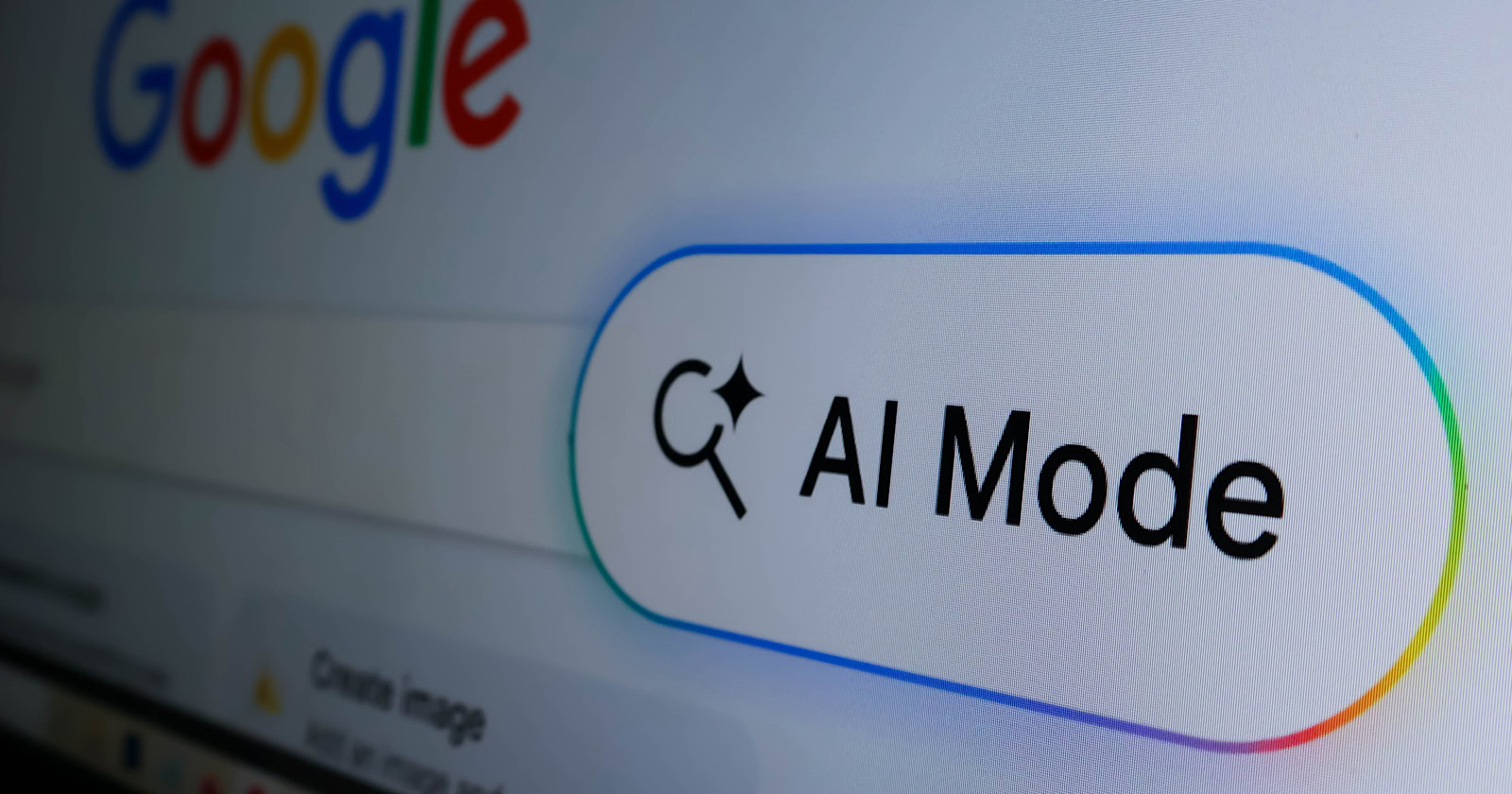
Google is updating AI Mode in Chrome with side-by-side page viewing and a plus menu for adding tabs, images, and files as context.

https://www.searchenginejournal.com/google-ai-mode-in-chrome-gets-side-by-side-browsing/572273/


Google AI Mode in Chrome Gets Side-by-Side Browsing via @sejournal, @MattGSouthern

  • Google is rolling out updates to AI Mode in Chrome.
  • Clicking a link in AI Mode on Chrome desktop now opens the webpage in a side panel.
  • The updates are live in the U.S. and will expand to more countries soon.

Google is updating AI Mode in Chrome with side-by-side page viewing and a plus menu for adding tabs, images, and files as context.

https://www.searchenginejournal.com/google-ai-mode-in-chrome-gets-side-by-side-browsing/572273/


ChatGPT Often Retrieves But Rarely Cites Reddit Pages, Data Shows via @sejournal, @MattGSouthern

An Ahrefs analysis of 1.4 million ChatGPT prompts found that pages from a dedicated Reddit source were rarely cited in ChatGPT responses, even though they were often retrieved.

Ahrefs highlights this pattern in a new report.

What The Report Looked At

Ahrefs examined 1.4 million ChatGPT 5.2 prompts, tracking which pages were retrieved and later cited in the final response. About half of the retrieved pages were cited overall.

The citation rate varied by source, with pages from general web searches cited most frequently. In contrast, pages from a Reddit source, described by Ahrefs, were cited only 1.93% of the time. This highlights the Reddit gap: while the Reddit source was often retrieved, it rarely appeared as a visible citation.

The Reddit Finding

Of all the pages retrieved but not cited in Ahrefs’ dataset, 67.8% originated from the specific Reddit source Ahrefs identified.

Ahrefs writes that ChatGPT “is using Reddit extensively to understand topics, gauge consensus, and build context—but it almost never gives Reddit the credit.”

One point to clarify is that Reddit pages can still be cited by ChatGPT when they appear in standard web search results. The 1.93% figure refers to what Ahrefs calls a separate Reddit source, distinct from general web searches. In May 2024, OpenAI and Reddit announced a data partnership granting OpenAI access to Reddit’s data.

What Does Help A Page Get Cited

Ahrefs examined how closely page titles and URLs aligned with the specific sub-questions generated by ChatGPT during the search process. To do this, Ahrefs used open-source tools to compute similarity scores, approximating ChatGPT’s internal matching process. Pages with higher scores for matching those sub-questions were cited more frequently in the dataset.

When ChatGPT Search responds to a prompt, it often breaks the prompt down into several narrower queries and searches for pages related to each. In Ahrefs’ data, titles and URLs matching these narrower queries had a stronger correlation with citations than pages that only broadly matched the original prompt. URL structure also played a role. Pages with clear, descriptive URL slugs were cited about 89.78% of the time they appeared in search results, compared to 81.11% for pages with less descriptive URLs. This aligns with SE Ranking’s analysis, which found that ChatGPT tends to favor URLs describing broader topics over those focused on a single keyword.

Why This Matters

Ahrefs data indicates that Reddit’s impact on answer development differs from what businesses might anticipate. It appears Reddit can shape answers indirectly without being explicitly cited. This kind of influence is still important, but is more about the upstream effect rather than direct citation acknowledgment.

For clear citation credit, Ahrefs’ data shows the best indicator is whether your page titles and URLs align with the specific sub-queries that ChatGPT Search produces from a prompt. Simply matching the broad keyword doesn’t suffice.

Looking Ahead

The study evaluates ChatGPT 5.2 on desktop in February 2025. Since then, OpenAI has launched several model updates, such as the GPT-5.3 Instant transition, which Resoneo links to a 20% decrease in the number of cited domains per ChatGPT response. It’s uncertain whether the Reddit gap and title-matching patterns observed by Ahrefs still apply to these newer models.


Featured Image: Koshiro K/Shutterstock

https://www.searchenginejournal.com/chatgpt-often-retrieves-but-rarely-cites-reddit-pages-data-shows/572243/


ChatGPT Often Retrieves But Rarely Cites Reddit Pages, Data Shows via @sejournal, @MattGSouthern

An Ahrefs analysis of 1.4 million ChatGPT prompts found that pages from a dedicated Reddit source were rarely cited in ChatGPT responses, even though they were often retrieved.

Ahrefs highlights this pattern in a new report.

What The Report Looked At

Ahrefs examined 1.4 million ChatGPT 5.2 prompts, tracking which pages were retrieved and later cited in the final response. About half of the retrieved pages were cited overall.

The citation rate varied by source, with pages from general web searches cited most frequently. In contrast, pages from a Reddit source, described by Ahrefs, were cited only 1.93% of the time. This highlights the Reddit gap: while the Reddit source was often retrieved, it rarely appeared as a visible citation.

The Reddit Finding

Of all the pages retrieved but not cited in Ahrefs’ dataset, 67.8% originated from the specific Reddit source Ahrefs identified.

Ahrefs writes that ChatGPT “is using Reddit extensively to understand topics, gauge consensus, and build context—but it almost never gives Reddit the credit.”

One point to clarify is that Reddit pages can still be cited by ChatGPT when they appear in standard web search results. The 1.93% figure refers to what Ahrefs calls a separate Reddit source, distinct from general web searches. In May 2024, OpenAI and Reddit announced a data partnership granting OpenAI access to Reddit’s data.

What Does Help A Page Get Cited

Ahrefs examined how closely page titles and URLs aligned with the specific sub-questions generated by ChatGPT during the search process. To do this, Ahrefs used open-source tools to compute similarity scores, approximating ChatGPT’s internal matching process. Pages with higher scores for matching those sub-questions were cited more frequently in the dataset.

When ChatGPT Search responds to a prompt, it often breaks the prompt down into several narrower queries and searches for pages related to each. In Ahrefs’ data, titles and URLs matching these narrower queries had a stronger correlation with citations than pages that only broadly matched the original prompt. URL structure also played a role. Pages with clear, descriptive URL slugs were cited about 89.78% of the time they appeared in search results, compared to 81.11% for pages with less descriptive URLs. This aligns with SE Ranking’s analysis, which found that ChatGPT tends to favor URLs describing broader topics over those focused on a single keyword.

Why This Matters

Ahrefs data indicates that Reddit’s impact on answer development differs from what businesses might anticipate. It appears Reddit can shape answers indirectly without being explicitly cited. This kind of influence is still important, but is more about the upstream effect rather than direct citation acknowledgment.

For clear citation credit, Ahrefs’ data shows the best indicator is whether your page titles and URLs align with the specific sub-queries that ChatGPT Search produces from a prompt. Simply matching the broad keyword doesn’t suffice.

Looking Ahead

The study evaluates ChatGPT 5.2 on desktop in February 2025. Since then, OpenAI has launched several model updates, such as the GPT-5.3 Instant transition, which Resoneo links to a 20% decrease in the number of cited domains per ChatGPT response. It’s uncertain whether the Reddit gap and title-matching patterns observed by Ahrefs still apply to these newer models.


Featured Image: Koshiro K/Shutterstock

https://www.searchenginejournal.com/chatgpt-often-retrieves-but-rarely-cites-reddit-pages-data-shows/572243/


Gen Z Workers Pick Human-Only Output Over AI-Assisted via @sejournal, @MattGSouthern

  • Surveyed Gen Z workers leaned toward human-only output.
  • AI-assisted work remained a secondary choice.
  • Workplace attitudes toward AI look more skeptical than last year.

Gen Z workers surveyed by Gallup said they would trust work done without AI over AI-assisted output by more than 2-to-1, with the gap widening.

https://www.searchenginejournal.com/gen-z-workers-pick-human-only-output-over-ai-assisted/572230/


Gen Z Workers Pick Human-Only Output Over AI-Assisted via @sejournal, @MattGSouthern

  • Surveyed Gen Z workers leaned toward human-only output.
  • AI-assisted work remained a secondary choice.
  • Workplace attitudes toward AI look more skeptical than last year.

Gen Z workers surveyed by Gallup said they would trust work done without AI over AI-assisted output by more than 2-to-1, with the gap widening.

https://www.searchenginejournal.com/gen-z-workers-pick-human-only-output-over-ai-assisted/572230/


Recovery scam: quando la truffa colpisce due volte


Nel panorama delle minacce informatiche, esiste una categoria di attacchi particolarmente insidiosa di cui si parla poco, ma che gode di pessima fama perché colpisce le vittime nel momento di maggiore vulnerabilità: le recovery scam, ovvero le truffe che promettono di recuperare il denaro già sottratto. Secondo Eset, si tratta di una strategia sempre più diffusa, che sfrutta dati, contesto e stato emotivo delle vittime per mettere a segno un secondo attacco dopo una prima estorsione (o furto) andata a buon fine.

Il principio è tanto semplice quanto efficace: chi è già stato truffato rappresenta un target ad alta probabilità di successo. Non a caso, secondo le stime più recenti, solo negli Stati Uniti si sono registrati oltre 7.000 casi nel 2024, con un danno economico superiore ai 102 milioni di dollari. E come spesso accade nel cybercrime, questi numeri rappresentano probabilmente solo una parte del fenomeno reale.

Le “sucker list”: il mercato nascosto delle vittime e come funziona la seconda truffa

Alla base delle recovery scam c’è un meccanismo ben rodato nel mondo del cybercrime: la condivisione di informazioni tra gruppi criminali. Le cosiddette “sucker list” funzionano come veri e propri database di potenziali vittime, contenenti nomi, contatti e in alcuni casi anche dettagli sul comportamento e sulla propensione a cadere in specifiche truffe.

Questi elenchi includono spesso persone che hanno già subito una frode o che hanno risposto a campagne di spam, rendendole particolarmente appetibili per nuovi attacchi. In pratica, la vittima entra in un circuito in cui viene continuamente esposta a tentativi di frode sempre più mirati.

Le recovery scam seguono schemi ricorrenti, basati su tecniche di social engineering e impersonificazione. Gli attaccanti si presentano come società di recupero crediti, autorità governative, forze dell’ordine o specialisti antifrode, dichiarando di poter recuperare il denaro sottratto.

Spesso dispongono già di informazioni dettagliate sulla truffa subita, elemento che aumenta la credibilità dell’attacco. A questo punto, la richiesta è quasi sempre la stessa: un pagamento anticipato per avviare la procedura di recupero, mascherato da commissione amministrativa, tassa o costo di gestione.

In altri casi, i criminali sostengono di aver già recuperato il denaro e chiedono dati bancari o informazioni su wallet crypto per procedere al rimborso. Questa variante è particolarmente pericolosa perché può portare a furti di identità, accessi non autorizzati ai conti e ulteriori frodi finanziarie.

Il ruolo del social engineering

Uno degli elementi chiave di queste truffe è la componente psicologica. I criminali sfruttano la frustrazione e il desiderio di recuperare il denaro perso, facendo leva su urgenza e pressione emotiva. Le comunicazioni sono spesso non richieste e arrivano tramite email, social network, SMS o telefonate.

Le promesse sono volutamente ambiziose, con garanzie di recupero o affermazioni secondo cui i fondi sarebbero già disponibili. In parallelo, vengono utilizzate tecniche di impersonificazione per simulare l’affidabilità di enti ufficiali, mentre i metodi di pagamento richiesti sono spesso difficili da tracciare, come criptovalute o gift card.

Questo mix di elementi rende la truffa particolarmente efficace, soprattutto nei confronti di utenti già colpiti in precedenza.

Difendersi da un attacco “di ritorno”

Dal punto di vista della sicurezza, le recovery scam rappresentano un’evoluzione delle tradizionali frodi advance fee, con un livello più alto di personalizzazione e targeting. La difesa passa innanzitutto dalla consapevolezza: nessun soggetto legittimo contatterà una vittima senza richiesta per offrire servizi di recupero fondi a pagamento anticipato.

È fondamentale verificare sempre l’identità di chi propone questi servizi attraverso canali indipendenti e diffidare da richieste di pagamento immediate. Allo stesso modo, la condivisione di informazioni personali o finanziarie deve essere evitata, soprattutto in contesti non verificati.

Condividi l’articolo


Articoli correlati

Altro in questa categoria


https://www.securityinfo.it/2026/04/16/recovery-scam-quando-la-truffa-colpisce-due-volte/?utm_source=rss&utm_medium=rss&utm_campaign=recovery-scam-quando-la-truffa-colpisce-due-volte