Google Chrome Zero-Day Under Attack, Again

For the third time this year, Google has shipped an urgent fix to block in-the-wild zero-day attacks hitting its flagship Chrome browser.

The latest emergency Chrome patch, available for Windows, MacOS and Linux, provides cover for at least five (5) documented vulnerabilities. Three of the five bugs are rated “high-risk,” Google’s highest severity rating.

Buried in Google’s advisory is a throwaway line that “Google is aware of reports that an exploit for CVE-2021-21193 exists in the wild.”

The company did not release any additional information on the live attacks or the operating system platforms being targeted.  

It is the third in-the-wild zero-day attack hitting Chrome users in 2021, and in all three cases, Google has been stingy with information on the malware used, the OS platforms targeted or the indicators of compromise that help enterprise defenders.  

In one prominent case, the North Korean state-sponsored hacks against security researchers, Google has barely confirmed the existence of the Chrome zero-day with a one-line mentioned that fully-patched Chrome installations were being compromised. 

The latest zero-day is described simply as a use-after-free vulnerability in Chrome’s Blink rendering engine that was anonymously reported to Google.

By contrast, when Google research teams discovered a massive cyber-espionage operation rampant on Apple’s iOS platform, the company produced a riveting blog post with “a very deep dive into iOS Exploit chains found in the wild.”

The Chrome patch is being pushed to Chrome users via the browser’s automatic updating mechanism but users are urged to restart browser sessions to properly apply the fixes.

Related: Google Chrome, Microsoft IE Zero-Days in Crosshairs

Related: Google Warns of North Korean Gov Hackers Targeting Security Researchers

view counter

Ryan Naraine is Editor-at-Large at SecurityWeek and host of the popular Security Conversations podcast series. Ryan is a journalist and cybersecurity strategist with more than 20 years experience covering IT security and technology trends. He is a regular speaker at cybersecurity conferences around the world.
Ryan has built security engagement programs at major global brands, including Intel Corp., Bishop Fox and Kaspersky GReAT. He is a co-founder of Threatpost and the global SAS conference series. Ryan’s career as a journalist includes bylines at major technology publications including Ziff Davis eWEEK, CBS Interactive’s ZDNet, PCMag and PC World.
Follow Ryan on Twitter @ryanaraine.

Previous Columns by Ryan Naraine:
Tags:

http://feedproxy.google.com/~r/Securityweek/~3/dQMekthiDUo/google-chrome-zero-day-under-attack-again


Research: Security Agencies Expose Information via Improperly Sanitized PDFs

Most security agencies fail to properly sanitize Portable Document Format (PDF) files before publishing them, thus exposing potentially sensitive information and opening the door for attacks, researchers have discovered.

An analysis of roughly 40,000 PDFs published by 75 security agencies in 47 countries has revealed that these files can be used to identify employees who use outdated software, according to Supriya Adhatarao and Cédric Lauradoux, two researchers with the University Grenoble Alpes and France’s National Institute for Research in Computer Science and Automation (Inria).

The analysis also revealed that the adoption of sanitization within security agencies is rather low, as only 7 of them used it to remove hidden sensitive information from some of their published PDF files. What’s more, 65% of the sanitized files still contained hidden data.

“Some agencies are using weak sanitization techniques: it requires to remove all the hidden sensitive information from the file and not just to remove the data at the surface. Security agencies need to change their sanitization methods,” the academic researchers say.

PDF files, the researchers note, represent collections of indirect objects (eight types of objects: arrays, boolean, dictionaries, names, numbers, streams, strings, and the null object) that are used to store data. These objects may include hidden data not visible when viewing the PDF.

Per the NSA, there are 11 main types of hidden data in PDF files, namely metadata; embedded content and attached files; scripts; hidden layers; embedded search index; stored interactive form data; reviewing and commenting; hidden page, image and update data; obscured text and images; PDF comments that are not displayed; and unreferenced data.

Metadata associated with images within a PDF file can be used to gather information about the author, the same as comments and annotations that haven’t been removed before publishing, and PDF metadata.

There are several tools that can be used for sanitizing PDF files, including Adobe’s Acrobat, and there are four levels of sanitization: Level-0: full metadata (no sanitization), Level-1: partial metadata, Level-2: no metadata, and Level-3: properly cleaned files (full sanitization, with all objects having been removed).

For their research, the academics used a set of 39,664 PDF files. Of these, 1,783 (4%) were found to include author name, 30,155 (76%) contained metadata on the PDF producer tool, and 16,805 (42%) revealed the operating system used.

The files also leaked email addresses – including official ones – (in 52 files), hardware brand (581 files), and paths (1,814 PDFs).

“During our analysis we observed that many agencies include more than one author publishing the PDF files. It is possible to download all the PDF files published on a security agency’s website and observe the author habits, OS trends,” the researchers note.

The analysis also allowed for the identification of 159 employees at 19 agencies that haven’t updated tools over a period of two years, which could be abused by threat actors in targeted attacks, especially since nearly half of the PDF files leaked operating system data.

While 9,509 (24%) of the analyzed PDF files have been sanitized before publishing, only 3,313 (8%) were sanitized with Level-3. The researchers note that only 3 agencies out of 7 that appear to care about sanitization are doing it properly.

“The issue is that popular PDF producer tools are keeping metadata by default with many other information while creating a PDF file. They provide no option for sanitization or it can only be achieved by following a complex procedure. Software producing PDF files need to enforce sanitization by default. The user should be able to add metadata only as an option,” the academics conclude.

Related: Adobe Open Sources Tool for Sanitizing Logs, Detecting Exposed Credentials

Related: Researchers Disclose New Methods for Replacing Content in Signed PDF Files

view counter

Ionut Arghire is an international correspondent for SecurityWeek.

Previous Columns by Ionut Arghire:
Tags:

http://feedproxy.google.com/~r/Securityweek/~3/EN-iO9AUvgc/research-security-agencies-expose-information-improperly-sanitized-pdfs


AMD Unveils New Security Features With Launch of EPYC 7003 Series Processors

Chipmaker AMD on Monday announced the launch of its new EPYC 7003 series server processors — codenamed Milan — and the company has shared some information about new and improved security features.

The new CPUs are based on the Zen 3 architecture and AMD says they bring significantly improved performance for enterprise, cloud and HPC workloads. The EPYC 7003 series processors are available immediately — device manufacturers have started announcing new products that use them, and major cloud providers will use servers powered by these CPUs.

Security features in the new AMD EPYC 7003 series CPU

According to AMD, its 3rd Gen EPYC processors include several new or enhanced security features, including a dedicated security subsystem, hardware-validated secure boot, hardware root of trust, Secure Memory Encryption (SME), Secure Encrypted Virtualization-Encrypted State (SEV-ES), and Secure Nested Paging (SNP).

One important new feature is SNP, which provides enhanced memory protections to prevent malicious hypervisors from conducting replay, corruption or remapping attacks. Specifically, SNP adds memory integrity protection capabilities designed to prevent hypervisor attacks by creating an isolated execution environment.

In the case of SEV-ES, which provides a layer of protection for CPU registers, AMD has added interrupt restrictions that should prevent malicious hypervisors from injecting interrupts and attacking ES guests.

Other security features present in the new processors include memory protection keys for users, and Shadow Stack, a new feature that helps protect against ROP (return-oriented programming) attacks.

AMD also noted during a briefing ahead of the launch of its new product that with the 3rd Gen EPYC processors they have been able to implement better mitigations against Spectre attacks.

Related: AMD Confirms Hacker Stole Information on Graphics Products

Related: Security Firm Under Fire Over Disclosure of AMD Chip Flaws

Related: AMD Preparing Patches for UEFI SMM Vulnerability

Related: Google Cloud Unveils Confidential VMs Powered by AMD EPYC Processors

view counter

Eduard Kovacs (@EduardKovacs) is a contributing editor at SecurityWeek. He worked as a high school IT teacher for two years before starting a career in journalism as Softpedia’s security news reporter. Eduard holds a bachelor’s degree in industrial informatics and a master’s degree in computer techniques applied in electrical engineering.

Previous Columns by Eduard Kovacs:
Tags:

http://feedproxy.google.com/~r/Securityweek/~3/pMFFy9XRl54/amd-unveils-new-security-features-launch-epyc-7003-series-processors


Cybersecurity M&A Roundup for Week of Mar. 8, 2021

Cybersecurity mergers and acquisitions in the week of March 8

Several cybersecurity-related acquisitions and mergers were announced in the second week of March 2021.

APPS acquires Conformance Technologies

Fintech holding firm Atlantic-Pacific Processing Systems (APPS) has acquired Conformance Technologies, which specializes in solutions for assessing and monitoring risk and compliance for SMBs. APPS, which provides a wide range of solutions for financial services and banking organizations (including security solutions), says the deal is part of its expansion strategy. Conformance will become a standalone wholly-owned subsidiary of APPS.

Claranet acquires ID Grup

UK-based managed cloud and cybersecurity services provider Claranet announced buying Spain-based ID Group, which provides cloud and managed IT infrastructure services in Spain. Claranet said the goal of the acquisition is to consolidate its presence in Spain.

Datto acquires BitDam

Cloud-based software and technology solutions firm Datto acquired Israel-based BitDam, which provides threat detection and protection solutions for email and collaboration tools. BitDam’s security technology will be added to Datto’s offering, which is purpose-built for MSPs.

Jamf acquires cmdSecurity

Apple enterprise management solutions provider Jamf has acquired the technical assets of IT security firm cmdSecurity. cmdSecurity has developed the macOS security and compliance suite cmdReporter, which Jamf believes will help it further extend the security capabilities of its platform.

Kape Technologies acquires Webselenese

Consumer privacy and security firm Kape has acquired Israel-based Webselenese, which provides consumer-focused privacy and security content, including user-generated reviews. Kape will pay nearly $150 million for Webselenese.

SailPoint acquires ERP Maestro

Identity security firm SailPoint announced its intent to purchase ERP Maestro, a provider of SaaS governance, risk and compliance solutions. As a result of the deal, SailPoint plans on combining its identity security solutions with ERP Maestro’s Separation-of-Duty (SoD) controls monitoring solution.

Sontiq acquires Breach Clarity

Identity security firm Sontiq acquired data breach intelligence company Breach Clarity. Following the acquisition, Breach Clarity’s BreachIQ personalized breach risk intelligence technology will be added to Sontiq’s IdentityForce, Cyberscout, and EZShield products.

Smith Micro Software acquires Avast’s Family Safety Mobile Business

Smith Micro is acquiring Avast’s Family Safety Mobile Business, which includes mobile parental controls services, for $66 million. Smith Micro says the new technology will help it further expand its white label digital safety solutions.

Sumo Logic acquires DFLabs

Cloud monitoring, log management and SIEM tools provider Sumo Logic is buying security orchestration, automation and response (SOAR) firm DFLabs. The acquisition will allow Sumo Logic to extend its cloud-native SIEM solution.

TiG acquires ThirdSpace

UK-based cloud, data analytics and managed services provider TiG announced the strategic acquisition of ThirdSpace, a UK-based professional services provider of Microsoft identity and cybersecurity solutions. TiG, which caters to the financial services sector, says the acquisition will enable it to deliver what it described as a “fully comprehensive suite of services based on Microsoft technology.”

YL Ventures sells stake in Axonius

Cybersecurity-focused venture capital firm YL Ventures has sold its stake in cybersecurity asset management company Axonius for $270 million to IPO-focused investors ICONIQ Growth, Alkeon Capital, DTCP, and Harmony Partners. Axonius recently announced raising $100 million at a valuation that exceeded 1 billion.

Related: Root9B, Fidem in Cybersecurity M&A Round-Up for January 2021

Related: Cybersecurity M&A Round-Up for February 2021

view counter

Eduard Kovacs (@EduardKovacs) is a contributing editor at SecurityWeek. He worked as a high school IT teacher for two years before starting a career in journalism as Softpedia’s security news reporter. Eduard holds a bachelor’s degree in industrial informatics and a master’s degree in computer techniques applied in electrical engineering.

Previous Columns by Eduard Kovacs:
Tags:

http://feedproxy.google.com/~r/Securityweek/~3/TqbYxPkGh_I/cybersecurity-ma-roundup-week-mar-8-2021


US Indicts Head of Alleged Crime Chat Comms Service

The CEO of a Canada-based company that provides encrypted communications and a former associate have been indicted in the US on charges of facilitating international drug trafficking, the Justice Department said.

The indictments were presented Friday against Jean-Francois Eap, the head of Sky Global, and Thomas Herdman, a former high-level distributor of Sky Global devices, the department said Friday.

Warrants have been issued for the arrest of the two men.

“The indictment alleges that Sky Global generated hundreds of millions of dollars providing a service that allowed criminal networks around the world to hide their international drug trafficking activity from law enforcement,” said Acting US Attorney Randy Grossman.

“Sky Global’s devices are specifically designed to prevent law enforcement from actively monitoring the communications between members of transnational criminal organizations involved in drug trafficking and money laundering,” the indictment alleges.

It said there are at least 70,000 Sky Global devices in use around the world.

The indictment comes after police in Europe said Wednesday they had arrested at least 80 people and carried out hundreds of raids in two countries after shutting down the Sky ECC encrypted phone network — Sky Global’s actual product — used by organized crime groups.

Belgian, Dutch and French police said they hacked into the Sky ECC network, allowing them to look “over the shoulders” of suspects as they communicated with customized devices to plot drug deals and murders.

In France, law officials identified some 2,000 users of Sky ECC “allowing for procedures to be opened relating to large-scale drug operations and attacks on people,” the Paris prosecutor said.

“The network we are dealing with seems to be almost exclusively used by large-scale criminals.”

Related: CEO of Cyber Fraud Prevention Firm NS8 Charged With Fraud

Related: Former Uber CSO Charged Over 2016 Data Breach Cover-Up

view counter

© AFP 2020

Previous Columns by AFP:
Tags:

http://feedproxy.google.com/~r/Securityweek/~3/izPJWlVLuyA/us-indicts-head-alleged-crime-chat-comms-service


Google Releases PoC Exploit for Browser-Based Spectre Attack

Google last week announced the release of proof-of-concept (PoC) code designed to exploit the notorious Spectre vulnerability and leak information from web browsers.

Initially detailed in early 2018 alongside Meltdown, the side-channel attack could allow a malicious application to access data being processed on the device. The vulnerability could expose passwords, documents, emails, data from instant messaging apps, and more.

Since the public disclosure of Meltdown and Spectre, both hardware makers and software developers alike have been working on devising protections against similar flaws, and browser makers too have been implementing application-level mitigations.

In 2019, the Google team responsible for Chrome’s V8 JavaScript engine said that the attack can’t be mitigated at the software level, arguing that security boundaries in browsers should be aligned with low-level primitives, such as process-based isolation.

To keep their users safe, browser makers have already implemented protections such as Site Isolation, Cross-Origin Read Blocking, and out-of-process iframes, with a variety of security features available for other application developers as well, including Cross-Origin Resource and Cross-Origin Opener Policies, and more.

The purpose of these mechanisms is to prevent sensitive data from being present in memory sections that an attacker could read. However, they do not prevent Spectre exploitation.

In order to assess the effectiveness of such mitigations, Google’s researchers have released JavaScript PoC code functional across multiple operating systems, architectures, and hardware variants, and which “confirms the practicality of Spectre exploits against JavaScript engines.”

While Chrome has been used to demonstrate the attack, the exploited issues are not specific to Google’s browser, but affect other modern browsers as well. An interactive demonstration of the attack can be accessed on this page, while the code and technical details were published on Github.

“The demonstration website can leak data at a speed of 1kB/s when running on Chrome 88 on an Intel Skylake CPU. Note that the code will likely require minor modifications to apply to other CPUs or browser versions; however, in our tests the attack was successful on several other processors, including the Apple M1 ARM CPU, without any major changes,” Google explains.

In addition to releasing the PoC, Google is making recommendations (Post-Spectre Web Development and Mitigating Side-Channel Attacks) on how web developers can improve site isolation to deny access to cross-origin resources, thus effectively mitigating Spectre-style hardware attacks, among others.

Such mitigations include Cross-Origin Resource Policy (CORP) and Fetch Metadata Request Headers, Cross-Origin Opener Policy (COOP), and Cross-Origin Embedder Policy (COEP), along with standard protections, such as the X-Frame-Options and X-Content-Type-Options headers, along with SameSite cookies.

“It’s important to note that while […] the mechanisms […] are important and powerful security primitives, they don’t guarantee complete protection against Spectre; they require a considered deployment approach which takes behaviors specific to the given application into account,” Google notes.

Related: Microsoft Brings Hardware-Based Isolation to Chrome, Firefox

Related: Should You Be Concerned About the Recently Leaked Spectre Exploits?

view counter

Ionut Arghire is an international correspondent for SecurityWeek.

Previous Columns by Ionut Arghire:
Tags:

http://feedproxy.google.com/~r/Securityweek/~3/fRZF95Bg-ZQ/google-releases-poc-exploit-browser-based-spectre-attack


Pathlock Raises $20 Million to Grow Data Access Control Platform

Application data security provider Pathlock this week announced that it has raised $20 million in strategic funding led by Vertica Capital Partners.

The funding round was announced in conjunction with a rebranding from Greenlight Technologies to Pathlock.

Founded in 2004, Flemington, NJ-based Pathlock plans to use the new injection of cash to accelerate development of its automated application governance solution and enhance its insider threat prevention capabilities.

Pathlock LogPathlock’s orchestration platform can provide real-time data protection to more than 140 on-premise and cloud applications, including SAP, Oracle, Salesforce, NetSuite, Workday, and others. Security and privacy controls include conditional access, including user provisioning and temporary elevation, ongoing User Access Reviews, internal control testing, transaction monitoring, and audit preparation.

“Unlike traditional risk, audit, and security systems, Pathlock continuously monitors and synthesizes transactions across all enterprise applications where sensitive activities and data are concentrated,” the company explains. “It surfaces actual violations, not theoretical possibilities. With Pathlock as the hub, all lines of defense work together to make informed decisions.”

Related: Data Privacy Management Firm DataGrail Raises $30 Million

Related: Data Security and Governance Provider Privacera Raises $50 Million

Related: Tausight Raises $20M to Protect Healthcare Data

view counter

Ionut Arghire is an international correspondent for SecurityWeek.

Previous Columns by Ionut Arghire:
Tags:

http://feedproxy.google.com/~r/Securityweek/~3/L0jsHo98OW8/pathlock-raises-20-million-grow-data-access-control-platform


Despite Hacks, US Not Seeking Widened Domestic Surveillance

The Biden administration is not planning to step up government surveillance of the U.S. internet even as state-backed foreign hackers and cybercriminals increasingly use it to evade detection, a senior administration official said Friday.

The official said the administration, mindful of the privacy and civil liberties implications that could arise, is not currently seeking additional authority to monitor U.S.-based networks. Instead, the administration will focus on tighter partnerships and improved information-sharing with the private-sector companies that already have broad visibility into the domestic internet, said the official, who spoke to reporters on condition of anonymity.

The comment was an acknowledgement of the fraught political debate surrounding domestic government surveillance — nearly eight years after former National Security Agency contractor Edward Snowden triggered a scandal with leaked agency documents — and a recognition of the challenges in balancing the growing cyber defense imperative against privacy concerns that come with stepped-up monitoring.

Foreign state hackers are increasingly using U.S.-based virtual private networks, or VPNs, to evade detection by U.S. intelligence agencies, who are legally constrained from monitoring domestic infrastructure.

In the crucial second stage of the SolarWinds hacking campaign, for instance, the suspected Russian intelligence operatives used U.S.-based VPNs to siphon off data through backdoors in victims’ networks, establishing an account that made it seem like they were in the U.S.

That hack detected in December compromised at least nine federal agencies, and exposed “significant gaps in modernization and in technology of cybersecurity across the federal government,” the official said. Dozens of private-sector companies were also hit, the telecommunications and software sector most heavily.

The U.S. is also addressing a separate, far more widespread and indiscriminate hack that cyber sleuths blame on China and which became a global crisis last week.

It has exposed tens of thousands of servers running Microsoft’s Exchange email program to intrusion. Though Microsoft has patched the vulnerability, affected server owners had only a “short window” to get vulnerable servers fixed, the official said. Criminal and state-backed hackers seeking to exploit the underlying flaw are apt to cause more havoc, the administration says.

The official said President Joe Biden has been briefed on the incident, and private-sector cybersecurity sleuths were brought in to confer with White House officials on a response.

When it comes to the pursuit of new surveillance or monitoring authorities, the official described the administration’s posture as “not yet, not now.” The official said the administration is committed at the moment to improving the flow of information with cloud providers and private companies who have good visibility into U.S. networks but aren’t bound by the same government constraints.

Predictions from the cybersecurity community were proving correct, meanwhile, that ransomware attacks leveraging compromised Exchange servers would be inevitable given the scope of the hack.

Microsoft said it has detected a new family of ransomware, dubbed DearCry, exploiting the compromises. Ransomware expert Brett Callow of the cybersecurity firm Emsisoft said the website ID Ransomware had so far received six submissions of the malware — from victims in the United States, Australia, Austria, Canada and Denmark.

Microsoft said in a tweet that it was blocking the ransomware, but, said Callow, “That’ll not necessary stop attacks.” Antivirus products detect and block a lot of known ransomware — but hackers often disable those products prior to deployment, he said.

The global ransomware scourge — primarily the work of Russian-speaking and North Korean cybercriminals — has cost businesses, local governments, health care providers and even K-12 school districts tens of billions of dollars in the past few years.

view counter

Previous Columns by Associated Press:
Tags:

http://feedproxy.google.com/~r/Securityweek/~3/OzXP7DYiEWc/despite-hacks-us-not-seeking-widened-domestic-surveillance


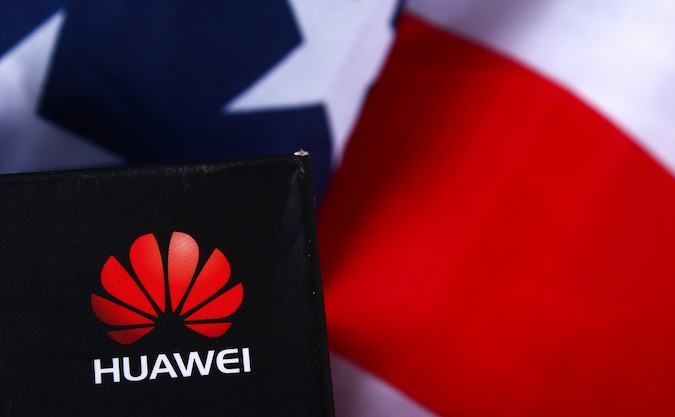
Huawei Listed Anew as Threat to US National Security

Huawei a National Security Threat

US regulators on Friday listed Huawei among Chinese telecom gear firms deemed a threat to national security, signaling that a hoped for softening of relations is not in the cards.

A roster of communications companies thought to pose “an unacceptable risk” to national security included Huawei Technologies; ZTE; Hytera Communications; Hangzhou Hikvision Digital Technology, and Dahua Technology.

“This list is a big step toward restoring trust in our communications networks,” said Federal Communications Commission acting chairwoman Jessica Rosenworcel.

“This list provides meaningful guidance that will ensure that as next-generation networks are built across the country, they do not repeat the mistakes of the past or use equipment or services that will pose a threat to US national security or the security and safety of Americans.”

The five Chinese companies that provide communications equipment or services were on a roster compiled by the FCC and the Homeland Security Bureau as per US law.

Huawei chief and founder Ren Zhengfei last month called for a reset with the United States under President Joe Biden, after the firm was battered by sanctions imposed by Donald Trump’s administration.

In his first appearance before journalists in a year, Ren Zhengfei said his “confidence in Huawei’s ability to survive has grown” despite its travails across much of the western world where it is maligned as a potential security threat.

The comments came as the firm struggled under rules that have effectively banned US firms from selling it technology such as semiconductors and other critical components, citing national security concerns.

Insisting that Huawei remained strong and ready to buy from US companies, Ren called on the Biden White House for a “mutually beneficial” change of tack that could restore its access to the goods.

Continuing to do so, he warned, would hurt US suppliers.

[Also Read: Huawei and Supply Chain Security – The Great Geopolitical Debate]

Founded by Ren in 1987, Huawei largely flew under the global radar for decades as it became the world’s largest maker of telecoms equipment and a top mobile phone producer.

That changed under former president Donald Trump, who targeted the firm as part of an intensifying China-US trade and technology standoff.

Trump from 2018 imposed escalating sanctions to cut off Huawei’s access to components and bar it from the US market, while he also successfully pressured allies to shun the firm’s gear in their telecoms systems.

Ren also has had to deal with the December 2018 arrest of his daughter, Huawei executive Meng Wanzhou, on a US warrant during a Vancouver stopover.

Meng, 49, faces fraud and conspiracy charges in the United States over alleged Huawei violations of US sanctions against Iran, and separate charges of theft of trade secrets.

view counter

© AFP 2020

Previous Columns by AFP:
Tags:

http://feedproxy.google.com/~r/Securityweek/~3/lNDgoMXgjwY/huawei-listed-anew-threat-us-national-security


WSJ: Microsoft Probing Possible PoC Exploit Code Leak

Software giant Microsoft Corp. has launched an investigation to determine whether one of its flagship information-sharing programs sprung a leak that led to the widespread exploitation of Exchange server deployments around the world.

According to a bombshell report in the Wall Street Journal, Redmond is looking closely at its Microsoft Active Protections Program (MAPP) to figure out if an anti-malware partner in China leaked proof-of-concept code ahead of the availability of security updates.

The MAPP program lets Microsoft share vulnerability data to give anti-malware, intrusion prevention/detection and corporate network security vendors a head-start to add signatures and filters to protect against Microsoft software vulnerabilities. 

The program is popular with defenders but it has long been controversial because of there is legitimate risk that data on serious, unpatched vulnerabilities could land in the wrong hands.

[ ALSO SEE: Microsoft Drops Chinese Vendor From MAPP  ]

In 2012, Microsoft dropped a Chinese vendor from the program after violations and there is rampant speculation that something similar happened in late February this year ahead of the Exchange Server patches.

The WSJ says Microsoft’s new investigation centers on the question of how a stealthy attack that began in early January picked up steam in the week before the company was able to send a software fix to customers. 

From the WSJ article:

Some of the tools used in the second wave of the attack, which is believed to have begun Feb. 28, bear similarities to “proof-of-concept” attack code that Microsoft distributed to antivirus companies and other security partners Feb. 23, investigators at security companies say. Microsoft had planned to release its security fixes two weeks later, on March 9, but after the second wave began it pushed out the patches a week early, on March 2, according to researchers.

One focus of the investigation has been an information-sharing program called the Microsoft Active Protections Program, which was created in 2008 to give security companies a head start in detecting emerging threats. Mapp includes about 80 security companies world-wide, about 10 of which are based in China. A subset of the Mapp partners were sent the Feb. 23 Microsoft notification, which included the proof-of-concept code, according to sources familiar with the program. 

The report said Microsoft declined to say whether any Chinese companies were included in this release.

Microsoft’s probe comes amidst news that ransomware gangs are starting to take aim at the Exchange Server vulnerabilities, adding a new sense of urgency to the need for organization to apply patches and disinfect backdoors from networks.

Related: Microsoft Shares Additional Exchange Server Mitigations 

Related: Microsoft to Share Vulnerability Data with Incident Responders

Related: Microsoft Drops Chinese Vendor From MAPP After NDA Violations

view counter

Ryan Naraine is Editor-at-Large at SecurityWeek and host of the popular Security Conversations podcast series. Ryan is a journalist and cybersecurity strategist with more than 20 years experience covering IT security and technology trends. He is a regular speaker at cybersecurity conferences around the world.
Ryan has built security engagement programs at major global brands, including Intel Corp., Bishop Fox and Kaspersky GReAT. He is a co-founder of Threatpost and the global SAS conference series. Ryan’s career as a journalist includes bylines at major technology publications including Ziff Davis eWEEK, CBS Interactive’s ZDNet, PCMag and PC World.
Follow Ryan on Twitter @ryanaraine.

Previous Columns by Ryan Naraine:
Tags:

http://feedproxy.google.com/~r/Securityweek/~3/xpMh1Fe8qkQ/wsj-microsoft-probing-possible-poc-exploit-code-leak