Washington Senate OKs Measure Creating State Office of Cybersecurity

In response to a security breach that exposed personal information from around 1.6 million unemployment claims filed last year, the Washington Senate has unanimously passed a measure that creates a state Office of Cybersecurity.

Washington State Senate

The measure, passed by the chamber on Wednesday, creates the new office within the Office of the Chief Information Officer. The bill now heads to the House for consideration.

If passed by the full Legislature and signed by Gov. Jay Inslee, the office would set security policies and develop centralized protocols for managing the state’s information technology assets.

Earlier this month, the state auditor’s office said the breach involved third-party software used by the auditor’s office to transmit files. The software vendor, Accellion, announced last month that it had been attacked in December.

The measure would direct all state entities — institutions of higher education, the Legislature, the judiciary, and state agencies — to adopt programs that incorporate cybersecurity standards set by the office and to report any major cybersecurity incident within 24 hours.

The new office would be the point of contact for all policy related to data privacy and protection, and would be charged with investigating all major cybersecurity incidents.

Related: Washington State Targeted by Phishing Campaign

Related: Over 1 Million Impacted by Data Breach at Washington State Auditor

view counter

Previous Columns by Associated Press:
Tags:

http://feedproxy.google.com/~r/Securityweek/~3/GmyK1f_D7jI/washington-senate-oks-measure-creating-state-office-cybersecurity


PerimeterX Banks $57 Million for Bot Protection Expansion

Looking to take advantage of a growing global market for its bot protection technologies, PerimeterX has banked a new $57 million round of venture capital funding.

The San Mateo, Calif,-based company said the new money would drive its push into new geographies and verticals.

The six-year-old startup has raised a total of $144 million from a range of venture capital investors.  

PerimeterX said AllianceBernstein led the new capital raise, and was joined by new investors Stereo Capital, JS Capital and Golden Arc Capital. Adams Street Partners, Canaan Partners, DTCP, Scale Venture Partners and Vertex Ventures US also participated.

PerimeterX sells behavior-based threat protection technology to help e-commerce giants deal with the pesky problem of bots ruining the online shopping experience. Big-name companies like Nike, Walmart, Target and others routinely struggle to manage bots during shopping seasons and companies like PerimeterX have helped to fill that gap.

“Our investors deeply believe in our vision of protecting the modern web apps that fuel today’s digital businesses with a single platform that works across hybrid edge-based infrastructure,” said PerimeterX CEO Omri Iluz.

He said PerimeterX grew its customer base by 50 logos, including some of the top brands in retail e-commerce and financial services.

The company claims it protected more than $100 billion in e-commerce revenue in 2020 and processed over 2 billion login requests per day. During the holiday shopping period from Thanksgiving to Cyber Monday, PerimeterX said it protected over $12 billion in e-commerce revenue and processed a record 93 billion requests. 

Related: Bot Protection Firm PerimeterX Raises $43 Million

Related: PerimeterX Raises Another $14 Million in Series C Round

view counter

Previous Columns by SecurityWeek News:
Tags:

http://feedproxy.google.com/~r/Securityweek/~3/iOjAl6FK6kg/perimeterx-banks-57m-bot-protection-expansion


GitHub Hires Mike Hanley as Chief Security Officer

Software development platform GitHub announced on Wednesday that it has hired Mike Hanley as its new Chief Security Officer (CSO).

Hanley joins GitHub from Cisco, where he served as Chief Information Security Officer (CISO) for less than a year. He arrived at Cisco via its $2.3 billion acquisition of Duo Security in 2018.

“As the largest global network of developers, GitHub is also crucial to supply chain security, giving developers the tools and knowledge to secure software following major breaches like SolarWinds,” a company spokesperson told SecurityWeek.

“As a security practitioner, this is also an exciting transition for me as much of the security community, and many of my favorite security projects, live on GitHub, like CloudMapper, stethoscope, GoPhish, and osquery,” Hanley wrote in a blog post. “I couldn’t be more excited to help secure the platform that’s made these influential projects possible and expanded their reach in incredible ways.”

GitHub, which Microsoft acquired for $7.5 billion in 2018, said last year that it had paid out a total of more than $1 million through its bug bounty program on HackerOne, where it has no maximum reward limit for critical vulnerabilities.

News of Hanley’s hire is one of several prominent industry moves announced this week, as Reddit announced that former Bank of America security executive Allison Miller would be its new CISO, and stock trading firm Robinhood has hired veteran cybersecurity practitioner Caleb Sima as Chief Security Officer.

view counter

For more than 10 years, Mike Lennon has been closely monitoring the threat landscape and analyzing trends in the National Security and enterprise cybersecurity space. In his role at SecurityWeek, he oversees the editorial direction of the publication and is the Director of several leading security industry conferences around the world.

Previous Columns by Mike Lennon:
Tags:

http://feedproxy.google.com/~r/Securityweek/~3/sKU2I3kJhDo/github-hires-mike-hanley-chief-security-officer


Webinar Today: Evaluating Vendor Risk With Security Ratings

Why 2021 Is The Year of Security Ratings

Learn About the Benefits of Security Ratings – Register

Leveraging security ratings as part of your cyber risk management program provides metrics that help you cut through the complexity to understand where the risk lies in your digital and vendor ecosystem.

Join SecurityWeek and BitSight for a live webinar on Wednesday, February 24th at 1PM ET to learn how you can use security ratings to:

• Target the areas of specific risk in your entire ecosystem

• Gain insight into the risk posed by your supply chain vendors

• Establish a benchmark for security performance against industry standards

• Evaluate your cybersecurity hygiene measures to understand which have the greatest impact

Register for Webinar

Can’t make the live event? Register now and you’ll get a link to watch on demand at your convenience.

view counter

Previous Columns by SecurityWeek News:
Tags:

http://feedproxy.google.com/~r/Securityweek/~3/B-2L-actU1A/webinar-today-evaluating-vendor-risk-security-ratings


New ‘LazyScripter’ Hacking Group Targets Airlines

A recently identified threat actor that remained unnoticed for roughly two years appears focused on the targeting of airlines that are using the BSPLink financial settlement software made by the International Air Transport Association (IATA), cybersecurity firm Malwarebytes reported on Wednesday.

Initially identified in December 2020, the threat actor is targeting IATA and airlines, with the most recent attacks employing a phishing lure mimicking the newly introduced IATA ONE ID (Contactless Passenger Processing tool).

Dated 2018, one of the earliest attacks attributed to the adversary, which Malwarebytes refers to as LazyScripter, was aimed at individuals looking to immigrate to Canada. Over time, the group evolved its toolset from PowerShell Empire to the Koadic and Octopus RATs, and used LuminosityLink, RMS, Quasar, njRat and Remcos RATs in between.

The phishing emails used in these attacks used the same loader to drop both Koadic and Octopus. Referred to as KOCTOPUS, it was preceded by Empoder, a loader for PowerShell Empire.

IATA- or job-related themes were typically used as lures, but additional lures were also observed: IATA security, IATA ONE ID, user support kits for IATA users, BSPlink Updater or Upgrade, Tourism (UNWTO), COVID-19, Canada skill worker program, Canada Visa, and Microsoft Updates.

The phishing emails carry either archive or document files containing a variant of a loader. The malicious tools were mainly hosted using two GitHub accounts, both deleted on January 12 and 14, 2021, respectively, with a new account being created on February 2.

The latest campaign launched by the threat actor was spotted on February 5, with a variant of KOCTOPUS being delivered, masquerading as BSPLink Upgrade.exe. In addition to Octopus and Koadic, the loader also delivered a variant of Quasar RAT.

Malwarebytes’ researchers have identified 14 malicious documents that the threat actor has used since 2018, all carrying embedded objects that are variants of the KOCTOPUS or Empoder loaders.

To date, the researchers have identified four different versions of the KOCTOPUS loader, used to load Octopus, Koadic, LuminosityLink, RMS, and Quadar RATs.

The Koadic RAT is known to have been previously used by the Iran-linked Muddy Water and Russia-linked APT28 threat actors. Malwarebytes was able to identify some similarities between the activities of LazyScripter and Muddy Water, but also a series of differences that resulted in the tracking of this group separately.

Related: Elusive Lebanese Threat Actor Compromised Hundreds of Servers

Related: Chinese Threat Actor ‘Mustang Panda’ Updates Tools in Attacks on Vatican

Related: U.S. Shares Information on North Korean Threat Actor ‘Kimsuky’

view counter

Ionut Arghire is an international correspondent for SecurityWeek.

Previous Columns by Ionut Arghire:
Tags:

http://feedproxy.google.com/~r/Securityweek/~3/iFTAa9Qccvg/new-lazyscripter-hacking-group-targets-airlines


Four Additional Threat Groups Seen Targeting Industrial Organizations in 2020

A total of 15 threat groups have been observed targeting industrial organizations, according to industrial cybersecurity firm Dragos.

Dragos on Wednesday released its ICS Cybersecurity Year in Review report for 2020, which covers the industrial control systems (ICS) threat landscape and vulnerabilities disclosed last year. It also shares insights from the lessons learned by Dragos as a result of its work in 2020, and provides recommendations for industrial organizations on securing their networks.

In 2018, Dragos reported seeing five groups that had either attacked ICS directly or had shown an interest in gathering information on these types of systems. The next year, the company reported that the number had grown to nine, and now there are a total of 15 activity groups.

Dragos said it added four new groups to the list in 2020. These threat actors have shown an interest in targeting operational technology (OT) systems. In addition, the previously described 11 groups remained active.

The company told SecurityWeek that the newly added groups “have the potential to disrupt control systems, but have not been seen exclusively targeting control systems.”
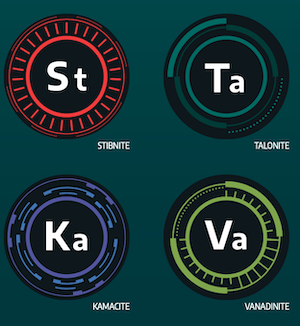
Hacker groups targeting ICSOne of the new groups is tracked by Dragos as STIBNITE and it has been observed targeting electric energy companies — specifically wind turbines — in Azerbaijan. While there is an ongoing conflict between Armenia and Azerbaijan, the cybersecurity firm said there is “only a loose correlation between the conflict and STIBNITE operations, and the Dragos team is not making an assessment on who may be responsible for the targeting.”

STIBNITE, which has been seen using PoetRAT malware to gather information from victims, may have targeted the supplier and maintainer of the wind farms, which are based in Ukraine.

Another new group is tracked by Dragos as VANADINITE, which has been observed targeting the energy, manufacturing and transportation sectors in North America, Asia, Europe and Australia. The hackers have focused on harvesting information, including related to ICS processes and design, which experts believe could enable its sponsor to develop ICS-targeting capabilities.

Dragos believes VANADINITE could be behind the ransomware known as ColdLock, which has been used to target Taiwan, including state-owned industrial companies whose operations were indirectly disrupted by the ransomware.

VANADINITE has been linked to Winnti — which has been around for over a decade and is believed to have Chinese origins — and a Winnti-related activity group tracked as LEAD.

Learn More About Threats to Industrial Systems at SecurityWeek’s ICS Cyber Security Conference and SecurityWeek’s Security Summits Virtual Event Series

The third new group has been named TALONITE and it appears to focus on initial access to organizations in the U.S. electric sector. The hackers have been conducting phishing campaigns that leverage power grid-related themes. They have been known for the use of malware such as LookBack, a remote access trojan (RAT) that emerged in 2019 when it was used to target U.S. utilities, and FlowCloud, a RAT analyzed by researchers in 2020.

Dragos also started tracking a threat group dubbed KAMACITE, which also targeted U.S. energy companies. KAMACITE’s operations have overlapped with the activities of Sandworm (ELECTRUM), a notorious Russia-linked group that is believed to have launched disruptive attacks against Ukraine’s power grid. Despite the overlaps, Dragos believes KAMACITE is a distinct group that should be tracked separately.

The company believes KAMACITE is an “access-enablement team” that aids other teams specializing in disruptive operations.

“These types of events, where adversaries gain access to ICS networks but do not have the intention of currently disrupting them, are much more common than is publicly reported,” Dragos said. “The threats are learning ICS. Although not every compromise will relate to an impact today, many may inform the attacks of the future.”

It added, “Threats are growing at a rate three times faster than they are going dormant. This is likely due to the increased investment made by adversaries in targeting ICS over the last five to 10 years, and whose investment will continue to accelerate the ICS threat environment.”

Related: More Threat Groups Target Electric Utilities in North America

Related: Manufacturing Sector Targeted by Five ICS-Focused Threat Groups

Related: Over 400 ICS Vulnerabilities Disclosed in 2019: Report

view counter

Eduard Kovacs (@EduardKovacs) is a contributing editor at SecurityWeek. He worked as a high school IT teacher for two years before starting a career in journalism as Softpedia’s security news reporter. Eduard holds a bachelor’s degree in industrial informatics and a master’s degree in computer techniques applied in electrical engineering.

Previous Columns by Eduard Kovacs:
Tags:

http://feedproxy.google.com/~r/Securityweek/~3/fEBgnqp4334/four-additional-threat-groups-seen-targeting-industrial-organizations-2020


Hackers Leak Data Stolen From Jet Maker Bombardier

Just as the cybercriminals behind the Clop ransomware operation made public information supposedly stolen from Canadian business jet manufacturer Bombardier, the company confirmed suffering a data breach.

In a Thursday statement, the jet maker revealed that an unauthorized party was able to access and steal data by exploiting a vulnerability in “a third-party file-transfer application.” While the company did not say which third-party software was compromised, the general characteristics of the incident suggest it was Accellion’s FTA service.

A 20-year-old file sharing service set to be retired on April 30, FTA was recently targeted in a cyber-attack that affected up to 100 Accellion customers, out of a total of 300 that were still using the application at the time of the attack.

These include Australian health and transport agencies, U.S.-based law firm Jones Day, and grocery and pharmacy chain Kroger. The attacks, security researchers with FireEye say, appear linked to the TA505 spin-off FIN11.

The threat actors behind the attack on Accellion’s software have been sending extortion emails to organizations affected by the incident, threatening to share the stolen data publicly on the “CL0P^_- LEAKS” Tor website.

With data pertaining to Bombardier emerging on the website and the company disclosing a data breach caused by a third-party application used for file transfer, it’s clear that Accellion’s FTA was responsible for this incident.

“Forensic analysis revealed that personal and other confidential information relating to employees, customers and suppliers was compromised. Approximately 130 employees located in Costa Rica were impacted,” Bombardier says.

The company also notes that it has launched an investigation into the incident and that law enforcement was informed on the issue. It also claims that only the “data stored on the specific servers” was affected, and that its network was not compromised.

“Manufacturing and customer support operations have not been impacted or interrupted. Bombardier can also confirm the company was not specifically targeted—the vulnerability impacted multiple organizations using the application,” Bombardier also says.

In addition to data taken from Bombardier, the attackers behind the Clop operation also leaked information supposedly stolen from Pentair and CSA Group. However, neither of these companies has confirmed a data breach yet.

Related: Over 1 Million Impacted by Data Breach at Washington State Auditor

Related: New Zealand Central Bank Says Accellion Service at Heart of Cyberattack

Related: Australian Corporate Regulator Discloses Breach Involving Accellion Software

view counter

Ionut Arghire is an international correspondent for SecurityWeek.

Previous Columns by Ionut Arghire:
Tags:

http://feedproxy.google.com/~r/Securityweek/~3/DZlIyOAE4uo/hackers-leak-data-stolen-jet-maker-bombardier


Vietnamese Hackers Target Human Rights Defenders: Amnesty

Between February 2018 and November 2020, Vietnam-linked hacking group Ocean Lotus targeted Vietnamese human rights activists in the country and abroad with spyware, a new report from Amnesty International reveals.

Also referred to as APT32, APT-C-00, SeaLotus, and Cobalt Kitty, Ocean Lotus is a highly sophisticated group that has been active since at least 2012, mainly focused on media, human rights, and civil society organizations, but also targeting Vietnamese political dissidents, foreign governments and companies.

The recently observed attacks were aimed at Vietnamese activists at home and abroad, clearly falling in line with previously observed targeting.

“The investigation conducted by Amnesty International’s Security Lab revealed that two HRDs and a non-profit human rights organization from Viet Nam have been targeted by a coordinated spyware campaign,” Amnesty reveals.

The first of the targets is blogger and pro-democracy activist Bui Thanh Hieu, also known as Nguoi Buon Gio (The Wind Trader), who covers topics such as social and economic justice, as well as human rights. A critic of the Vietnamese government’s policies, he has been living in Germany since 2013.

Between February 2018 and November 2020, Ocean Lotus also targeted Vietnamese Overseas Initiative for Conscience Empowerment (VOICE), a non-profit human rights organization that provides support to Vietnamese refugees.

Reprisal the organization and its staff faced over the years included harassment, travel bans, and confiscation of passports. Additionally, state-owned media in Vietnam has run a smear campaign against VOICE, calling the organization a terrorist group.

Ocean Lotus also targeted a blogger residing in Vietnam, who spoke out publicly about a January 2020 incident where thousands of security officers raided the Dong Tam village and killed several people.

“Activists and bloggers were at the forefront of the public debate online, prompting a nationwide crackdown on online expression by the government. VOICE and the two bloggers all received emails containing spyware between February 2018 and November 2020,” Amnesty says.

The emails claimed to be carrying an important document, but instead included spyware, either attached or as a link. After execution, the malware would open a decoy document to trick the victim into believing the file was benign. The spyware targeted either macOS or Windows systems.

On Windows machines, a variant of the Ocean Lotus-exclusive malware Kerrdown was being deployed, to fetch additional spyware — in this case Cobalt Strike — thus providing the attackers with full access to the victim system.

On macOS systems, a variant of a spyware exclusively used by Ocean Lotus to target Apple’s desktop platform was used. The malware would offer access to system information, as well as the ability to download, upload, and execute files, or run commands.

“Our investigation was not able to attribute Ocean Lotus’ activities to any company or government entity. However, the extensive list of people and organizations targeted by Ocean Lotus over the years shows that it has a clear focus on targeting human rights and media groups from Viet Nam and neighboring countries. This raises questions about whether Ocean Lotus is linked to Vietnamese state actors,” Amnesty notes.

Related: Operations of Hacker Groups in Vietnam, Bangladesh Disrupted by Facebook

Related: Vietnamese Hackers Mount COVID-19 Espionage Campaigns Against China

Related: Vietnamese Spies Rival Notorious Russian Group in Sophistication

view counter

Ionut Arghire is an international correspondent for SecurityWeek.

Previous Columns by Ionut Arghire:
Tags:

http://feedproxy.google.com/~r/Securityweek/~3/vz_bQiZcJU8/vietnamese-hackers-target-human-rights-defenders-amnesty


Twitter Shuts Down Four Networks of State-Sponsored Disinformation Accounts

Twitter this week announced that it has suspended multiple accounts that were found to be part of four networks involved in disinformation activities associated with Armenia, Iran, and Russia.

The threat actors behind these accounts are believed to be state-sponsored, and Twitter permanently suspended all four networks, for violating its manipulation policies.

The Iran-linked accounts, the social media platform says, were part of a network that was initially dismantled in October 2020. Roughly 130 accounts part of that network were suspended at the time, based on information provided by the FBI.

The accounts were “attempting to disrupt the public conversation during the first 2020 US Presidential Debate,” Twitter says. The investigation into the network has resulted in an additional 108 accounts operating from Iran being suspended.

The accounts in this network, Twitter underlines, had low engagement, with little impact on public conversation.

A total of 35 accounts linked to the government of Armenia were recently removed from Twitter, all created to “advance narratives that were targeting Azerbaijan and were geostrategically favorable to the Armenian government,” the company says.

Some of the fake accounts claimed to represent government and political figures or news entities in Azerbaijan. The network engaged in spam campaigns to attract followers and amplify the narrative.

Other networks that were recently suspended were found to be linked to Russia, Twitter reveals.

Consisting of 69 fake accounts, the first of the networks was tied to Russian state actors and was meant to amplify narratives aligned with the interests of the Russian government. A subset of the network was focused on “undermining faith in the NATO alliance and its stability.”

An additional 31 accounts that were part of two other networks were believed to be affiliated with the Internet Research Agency (IRA) and with Russian government-linked actors.

“These accounts amplified narratives that had been previously associated with the IRA and other Russian influence efforts targeting the United States and European Union,” Twitter explains.

All of these accounts have been added to Twitter’s archive of state-linked information operations, allowing researchers to conduct their own investigations and analysis. Since October 2018, Twitter has suspended more than 85,000 accounts associated with manipulation campaigns.

Related: Facebook Closes Disinformation Accounts Linked to French Military

Related: U.S. Seizes More Domains Used by Iran for Disinformation

Related: ‘Ghostwriter’ – Widespread Disinformation Campaign Associated with Russia

view counter

Ionut Arghire is an international correspondent for SecurityWeek.

Previous Columns by Ionut Arghire:
Tags:

http://feedproxy.google.com/~r/Securityweek/~3/7MMdKcpc8Q8/twitter-shuts-down-four-networks-state-sponsored-disinformation-accounts


Critical VMware vCenter Server Flaw Can Expose Organizations to Remote Attacks

VMware on Tuesday informed customers that its vCenter Server product is affected by a critical vulnerability that can be exploited by an attacker to execute commands with elevated privileges.

vCenter Server is a management software designed to provide a centralized platform for controlling VMware vSphere environments. The critical vulnerability, discovered by Positive Technologies researcher Mikhail Klyuchnikov, impacts a vCenter Server plugin used by the vSphere Client.

The flaw, tracked as CVE-2021-21972 with a CVSS score of 9.8, can be exploited by an attacker with network access to port 443 to “to execute commands with unrestricted privileges on the underlying operating system that hosts vCenter Server,” VMware said in its advisory.

According to Positive Technologies, while 90 percent of vCenter devices are only accessible from within an organization’s perimeter — exploitation of the vulnerability in this case requires access to the target’s internal network — there are more than 6,000 systems that are accessible directly from the internet.

The cybersecurity firm said more than a quarter of these devices are located in the United States, followed by Germany (7%), France (6%), China (6%), the UK (4%), Canada (4%), Russia (3%), Taiwan (3%), Iran (3%), and Italy (3%).

“In our opinion, the RCE vulnerability in the vCenter Server can pose no less a threat than the infamous vulnerability in Citrix (CVE-2019-19781),” Positive Technologies’ Klyuchnikov explained. “The error allows an unauthorized user to send a specially crafted request, which will later give them the opportunity to execute arbitrary commands on the server.”

He added, “After receiving such an opportunity, the attacker can develop this attack, successfully move through the corporate network, and gain access to the data stored in the attacked system (such as information about virtual machines and system users). If the vulnerable software can be accessed from the Internet, this will allow an external attacker to penetrate the company’s external perimeter and also gain access to sensitive data. Once again, I would like to note that this vulnerability is dangerous, as it can be used by any unauthorized user.”

Klyuchnikov has also been credited for a medium-severity server-side request forgery (SSRF) flaw in vCenter Server, specifically in a plugin used by the vSphere Client. An attacker with network access to port 443 could exploit this vulnerability to obtain information — including on open ports associated with various services — that could be useful for further attacks.

VMware has also informed users about CVE-2021-21974, a high-severity heap overflow in ESXi that can be exploited by an attacker with network access to port 427 to execute arbitrary code.

The issue was reported to VMware by Lucas Leong of Trend Micro’s Zero Day Initiative (ZDI). ZDI has yet to make its own advisory for this vulnerability public.

VMware has released patches and workarounds for each of the affected products and versions.

It’s important that organizations using affected products apply the patches or workarounds since VMware product vulnerabilities being targeted by threat actors is not unheard of. The NSA warned recently that a state-sponsored threat actor linked to Russia had exploited a flaw in VMware Workspace ONE, likely even before a patch was released by the virtualization giant.

Related: VMware Patches Vulnerabilities Exploited at Chinese Hacking Contest

Related: VMware Patches Workspace ONE Access Vulnerability Reported by NSA

Related: Patch for Critical VMware ESXi Vulnerability Incomplete

view counter

Eduard Kovacs (@EduardKovacs) is a contributing editor at SecurityWeek. He worked as a high school IT teacher for two years before starting a career in journalism as Softpedia’s security news reporter. Eduard holds a bachelor’s degree in industrial informatics and a master’s degree in computer techniques applied in electrical engineering.

Previous Columns by Eduard Kovacs:
Tags:

http://feedproxy.google.com/~r/Securityweek/~3/1nMV3DFn9Ag/critical-vmware-vcenter-server-flaw-can-expose-organizations-remote-attacks