Meta Tops Q1 Expectations With $42B in Revenue, Zuckerberg Talks Up Meta AI App
.article-native-ad { border-bottom: 1px solid #ddd; margin: 0 45px; padding-bottom: 20px; margin-bottom: 20px; } .article-native-ad svg { color: #ddd; font-size: 34px; margin-top: 10px; } .article-native-ad p { line-height:1.5; padding:0!important; padding-left: 10px!important; } .article-native-ad strong { font-weight:500; color:rgb(46,179,178); }

The numbers

$42 billion: Meta’s Q1 revenue, up 16% YoY 
$41.4 billion: Meta’s ad revenue, up 13% YoY
$16.6 billion: Net income for January-to-March period
3.4 billion: People now using at least one of Meta’s apps each day

The water cooler talk

Meta CEO Mark Zuckerberg, on a call with investors, touted the company’s ambitious AI investments, with a focus on deploying AI agents—technology that performs tasks on behalf of humans—in the coming years. He envisions this technology playing a crucial role in making advertising a significantly larger contributor to global GDP.

“AI is generating better creative options for many businesses. That is really redefining what advertising is into an AI agent that delivers measurable business results at scale,” he said.

Zuckerberg also highlighted business messaging on Messenger and WhatsApp as the next major growth pillar for Meta, with plans to scale its ad business beyond Facebook and Instagram. WhatsApp now boasts more than 3 billion monthly active users, including over 100 million in the U.S., while Messenger is used by over a billion people each month.

In addition, Meta launched its ChatGPT rival app, Meta AI, with Zuckerberg predicting advertising potential on the platform.

On the tariff front, Meta has seen reduced ad spend from Asia-based ecommerce exporters, according to chief financial officer Susan Li. She attributed the slowdown to the upcoming end of the de minimis exemption, set to expire May 2.

“A portion of that spend has been redirected to other markets, but overall spend for those advertisers is below levels seen prior to April,” Li said, noting uncertainty about the impact on Q2.

Meta also does not expect ads on Threads to drive meaningful revenue growth in 2025.

Key quotes

“The next few years, I expect that just like every business today has an email address, social media account, and website, they’ll also have an AI business agent that can do customer support and sales, and they should be able to set that up very easily into our business platforms,” Zuckerberg said.

https://www.adweek.com/commerce/meta-q1-earnings-report-revenue/


X CEO Linda Yaccarino Says Community Notes Reach 1M Users


.article-native-ad { border-bottom: 1px solid #ddd; margin: 0 45px; padding-bottom: 20px; margin-bottom: 20px; } .article-native-ad svg { color: #ddd; font-size: 34px; margin-top: 10px; } .article-native-ad p { line-height:1.5; padding:0!important; padding-left: 10px!important; } .article-native-ad strong { font-weight:500; color:rgb(46,179,178); }

X has doubled the number of users for its real-time, fact-checking tool over the past year, revealed X CEO Linda Yaccarino while speaking at the marketing conference Possible Miami.

Yaccarino said that the platform’s Community Notes feature now boasts 1 million contributors across 200 countries and every major language. In May 2024, there were half a million Community Noters across in 70 countries.

Yaccarino emphasized that this scale gives X a “megaphone” for truth, while legacy media is left “whispering.” Unlike traditional content moderation, posts on X are flagged after users engage with them. According to Yaccarino, posts that receive notes are 60% less likely to be shared, and their authors are 80% more likely to delete them.

“It’s retraining us to respect the truth,” she said. 

Community Notes predate Elon Musk’s acquisition of X in 2022. Musk and Yaccarino have positioned Community Notes as the platform’s primary defense against misinformation, especially as Musk scaled back traditional content moderation approaches.

However, a 2024 study from the nonprofit Center for Countering Digital Hate (CCDH) and a separate analysis by The Washington Post found that Community Notes is struggling to provide a meaningful check on misinformation. The research showed that the platform is particularly ineffective at responding to political falsehoods, even when contributors correctly identify posts that lack context.

X’s ad sales, which accounted for around 90% of the platform’s revenue in 2021, plummeted drastically after Musk’s takeover, citing brand safety concerns. In response, X has been offering deep discounts and added value to lure advertisers back—most notably, offering ad agencies like Omnicom up to $200,000 in added value for clients’ 2025 investments.

Yaccarino remained optimistic about Musk’s leadership. 

“The man is the ultimate visionary of our time,” she said at Possible. “I’ve never seen in my whole career someone set out a crystal-clear vision and mobilize to execute on that vision.”

Doubling down on video

Yaccarino’s pitch to advertisers also highlighted X’s growing video capabilities, evolving from short, two-minute promo clips to four-hour videos in the past two years, with plans for unlimited video in the near future.

As part of its ongoing push, X is launching 4K video for premium creators. Video consumption on X has increased by 50% year-over-year, Yaccarino added. 

Betting on live sports 

X is also tapping into the power of second-screen fandom, particularly for live sports events. 

X launched a sports portal this year in collaboration with the NFL that aggregates conversations and highlights from all teams in one place, according to Yaccarino. She noted a “wild participation” during the NFL Draft, describing it as a huge success for their marketing efforts, with partners seeing double or even triple the usual impact. 

She noted partnerships with ESPN, FIFA, and the Olympics are set to elevate X’s role in sports media and fan engagement.

https://www.adweek.com/media/x-ceo-linda-yaccarino-says-community-notes-reach-1m-users/


OpenAI Rolls Out AI-Powered Shopping, Taking on Perplexity and Giants Like Amazon


.article-native-ad { border-bottom: 1px solid #ddd; margin: 0 45px; padding-bottom: 20px; margin-bottom: 20px; } .article-native-ad svg { color: #ddd; font-size: 34px; margin-top: 10px; } .article-native-ad p { line-height:1.5; padding:0!important; padding-left: 10px!important; } .article-native-ad strong { font-weight:500; color:rgb(46,179,178); }

OpenAI is taking aim at ecommerce.

The company is rolling out a new, AI-powered shopping experience within ChatGPT that lets people find, compare, and buy products. The feature shows visual details, pricing, and reviews of products with shoppable links to retailers like Walmart.

The updates are rolling out to ChatGPT’s Plus, Pro, and Free users. 

According to OpenAI, product results are chosen independently and are not ads.

A spokesperson for OpenAI did not immediately respond to a request for more detail about the commerce feature.

The move comes as search has become one of ChatGPT’s fastest-growing features, generating more than one billion web searches in the past week, according to OpenAI.

OpenAI enters a competitive commerce world

OpenAI’s move pits it against rival Perplexity, which introduced a similar shopping experience last year. ChatGPT’s shopping feature also competes against ecommerce giants like Amazon and Google.

OpenAI, which is reportedly valued at $300 billion, has signaled an interest in advertising revenue as it moves towards a for-profit structure. For example, OpenAI has hired top ad talent, including former Coinbase CMO Kate Rouch.

OpenAI’s move closely mirrors Google and Meta’s moves into advertising, said Debra Aho Williamson, founder and chief analyst at Sonata Insights.

“We’ve seen this playbook before, including with Google and Facebook, where brands first made their organic presence and then the platforms turned towards advertising,” she said.

https://www.adweek.com/commerce/openai-rolls-out-ai-powered-shopping-taking-on-perplexity-and-giants-like-amazon/


YouTube Tests Video Carousel in Google’s AI Overview for Product and Location Searches


.article-native-ad { border-bottom: 1px solid #ddd; margin: 0 45px; padding-bottom: 20px; margin-bottom: 20px; } .article-native-ad svg { color: #ddd; font-size: 34px; margin-top: 10px; } .article-native-ad p { line-height:1.5; padding:0!important; padding-left: 10px!important; } .article-native-ad strong { font-weight:500; color:rgb(46,179,178); }

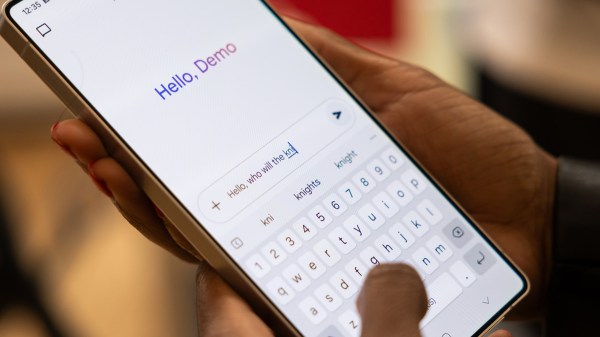
YouTube is experimenting with a video carousel of search results that appears in AI Overviews, Google’s AI-powered search experience.

A Google spokesperson confirmed the test with ADWEEK, noting that relevant videos will surface for queries like “best noise cancelling headphones” or “museums to visit in San Francisco.” The spokesperson declined to share further details about the program.

The feature is being tested with a small group of YouTube Premium members in the U.S. for select English-language queries, according to a company blog post. The search results are tailored to queries focused on shopping and location-based information.

YouTube’s foray into AI Overviews is Google’s latest move in the AI search race as platforms compete to capture user attention. While Google is leaning on video to make search results more dynamic, startups like Perplexity and ChatGPT-maker OpenAI are striking content deals with publishers to bring more contemporaneous answers into AI-generated responses.

Google is also testing a dedicated “AI Mode” in Search, which generates a full page of AI-powered results in response to user queries. The company already runs ads in AI Overviews and has indicated plans to introduce advertising in AI Mode as well.

https://www.adweek.com/media/youtube-tests-video-carousel-in-googles-ai-overview-for-product-and-location-searches/


DOJ Accuses Google of Using Search Monopoly Tactics To Push AI Product Gemini

.article-native-ad { border-bottom: 1px solid #ddd; margin: 0 45px; padding-bottom: 20px; margin-bottom: 20px; } .article-native-ad svg { color: #ddd; font-size: 34px; margin-top: 10px; } .article-native-ad p { line-height:1.5; padding:0!important; padding-left: 10px!important; } .article-native-ad strong { font-weight:500; color:rgb(46,179,178); }

The Department of Justice accused Google of using the same playbook to push its AI assistant, Gemini, that it once used to dominate search.

In the ongoing antitrust trial about Google’s dominance in search, DOJ attorney David Dahlquist told the court on April 21 that Google is paying Samsung “an enormous sum” in fixed monthly payments to make Gemini the default assistant on its devices, mirroring the exclusionary methods at the heart of Google’s $20 billion deal with Apple.

“Google has agreed with its partner, Samsung, to pay an enormous sum of money in a fixed monthly payment, as well as additional payments, activation bonuses, and ad-revenue payments,” Dahlquist argued during his opening statement. “This is the monopolist playbook at work.”

He added that the commercial agreements for Gemini are “remarkably similar to the exclusionary contracts the court previously ruled illegal.”

The precise payment figures were redacted from public view.

Google’s dominance in AI is questioned

In January, Google’s Gemini became the default assistant on Samsung’s newest smartphones.

Last year, in response to antitrust scrutiny, Google proposed new rules designed to prevent it from forcing Gemini onto devices through exclusive deals. While the company can still strike promotional deals—such as paying Samsung to feature Gemini—it cannot require Samsung or other manufacturers to promote the assistant in exchange for access to Google Search, Chrome, or the Play Store.

These proposals were in response to the DOJ’s claims that Google’s reported dominance in search was built on exclusivity agreements with manufacturers, which the court has already ruled to be monopolistic.

As AI products like ChatGPT and Perplexity gain traction as alternative search tools, the DOJ is focused on ensuring Google doesn’t extend its search dominance into the growing AI market, a key point in the ongoing trial.

“Google wants to expressly carve out their GenAI products so that they can repeat the monopoly playbook on those products going forward,” Dahlquist said. “The risk of excluding GenAI, as well as Gemini [from remedies], is too great.”

To that, the DOJ has urged the court to address Google’s search monopoly by requiring the company to sell off Chrome as part of its remedy.

Separately, a federal court ruled on April 17 that the publisher side of Google’s adtech violates antitrust law.

In a statement, Lee-Anne Mulholland, vp of regulatory affairs at Google, said the company will appeal the court’s decision. “At trial we will show how DOJ’s unprecedented proposals go miles beyond the Court’s decision, and would hurt America’s consumers, economy, and technological leadership,” she wrote.

Editor’s note: This story was updated after publication to include a statement from Google.

https://www.adweek.com/media/doj-accuses-google-of-using-search-monopoly-tactics-to-push-ai-product-gemini/


Federal Court Finds Google Violated Antitrust Law in Adtech, Potentially Reshaping the Digital Advertising Industry


.article-native-ad { border-bottom: 1px solid #ddd; margin: 0 45px; padding-bottom: 20px; margin-bottom: 20px; } .article-native-ad svg { color: #ddd; font-size: 34px; margin-top: 10px; } .article-native-ad p { line-height:1.5; padding:0!important; padding-left: 10px!important; } .article-native-ad strong { font-weight:500; color:rgb(46,179,178); }

In a landmark decision, a federal judge ruled that Google illegally maintained a monopoly over some of its adtech business, a move that could force the tech giant to divest one of its most profitable divisions and upend the infrastructure underpinning much of the online ad industry.

Following a three-week bench trial, the court found that Google violated antitrust law by maintaining monopoly power in two critical areas: publisher ad servers and ad exchanges. Ad servers are used by publishers to manage their ad inventory, and ad exchanges helps publishers sell ad space through supply-side platforms—in this case, specifically through Google’s AdX product. The judge also found that Google unlawfully tied its ad server, formerly known as DoubleClick for Publishers (or DFP), with AdX in violation of antitrust laws.

“In addition to depriving rivals of the ability to compete, this exclusionary conduct substantially harmed Google’s publisher customers, the competitive process, and, ultimately, consumers of information on the open web,” wrote Judge Brinkema.

Andrew Casale, president and CEO of Index Exchange told ADWEEK: “The judge got it right and this ultimately marks a check on big tech.” Casale testified on opening day at the trial in Virginia, describing it as “one of the most intimidating experiences” of his life. 

“This is going to usher in an era of a more competitive open Internet,” he added. 

Google’s publisher tech is hit

Google’s advertiser-focused products were not found in violation. Brinkema dismissed the DOJ’s claims to establish a distinct market for advertiser’s ad networks. The ruling means Google has a monopoly on its sell-side tools but not on its buy-side tools.

Court documents also reveal that the judge found no valid security or quality justification for Google’s AdX-DFP tie.

Industry experts, including Casale and Jay Friedman, CEO of ad agency Goodway Group, testified that Google’s adtech was no more effective at preventing fraud, malware, or spam than other providers.

Per Casale, header bidding posed no greater risk of fraud or malware than bidding within Google’s adtech stack. Meanwhile, Friedman stated that all large ad exchanges provide “similar quality inventory to … any of the other ones.”

However, Brinkema stated that Google’s justification for the AdX-DFP tie was either “pretextual or, at best, incidental to the primary purpose of the tie, which was to acquire and maintain market power in the open-web ad exchange and publisher ad server markets.”

The ruling opens the door to remedies that could dramatically reshape how digital ads are bought and sold. Google holds a solid grip on 25.6% of the $303 billion U.S. digital ad market, according to eMarketer. Meta follows with 21.3%, and Amazon holds 13.9%.

While the court has not yet determined what structural changes—if any—will be imposed, the case stands as one of the most aggressive antitrust actions against a U.S. tech company in decades.

It also marks Google’s second major legal defeat in the past year, following a separate DOJ antitrust case targeting the company’s dominance in search. In that trial, the DOJ called for Google to divest its Chrome browser. 

Next, Brinkema will determine appropriate remedies for the adtech antitrust trial, which could include forcing Google to divest all or part of its lucrative adtech stack that could have far reaching implications. 

“We commend this ruling, and this is a good day for advertisers, publishers, the industry, and the public at large,” said Arielle Garcia, chief operating officer at industry watchdog Check My Ads. 

In a statement, Google’s VP of regulatory affairs, Lee-Anne Mulholland, said the tech giant won half of the case.

“We won half of this case, and we will appeal the other half,” Mulholland wrote. “The Court found that our advertiser tools and our acquisitions, such as DoubleClick, don’t harm competition. We disagree with the Court’s decision regarding our publisher tools. Publishers have many options, and they choose Google because our adtech tools are simple, affordable and effective.”

Editor’s note: This story was updated after publication to include a statement from Google.

https://www.adweek.com/media/federal-court-finds-google-violated-antitrust-law-in-adtech-potentially-reshaping-the-digital-advertising-industry/


Roku, Adobe Partner on Secure Data Collaboration Platform

.article-native-ad { border-bottom: 1px solid #ddd; margin: 0 45px; padding-bottom: 20px; margin-bottom: 20px; } .article-native-ad svg { color: #ddd; font-size: 34px; margin-top: 10px; } .article-native-ad p { line-height:1.5; padding:0!important; padding-left: 10px!important; } .article-native-ad strong { font-weight:500; color:rgb(46,179,178); }

Roku is partnering with Adobe to create a new data platform that allows advertisers and publishers to jointly discover, activate, and measure high-value audiences while prioritizing privacy.

This new collaboration sees Roku Data Cloud and Adobe’s Real-Time Customer Data Platform integrate, giving advertisers improved insights into streaming behavior and enabling them to drive more effective media strategies and discover new audiences. 

“Our partnership with Adobe is another step forward for the Roku Data Cloud. Advertisers can now better understand their audience, make use of valuable proprietary Roku data, and ultimately maximize their TV investment,” said Miles Fisher, senior director of strategic advertising partnerships at Roku, in a statement. “This integration will unlock the opportunity for traditional performance marketers—like search and social buyers—to plan, activate, and measure campaigns on Roku.” 

Ryan Fleisch, senior director of product marketing for Adobe Real-Time CDP and Audience Manager, added, “As consumers play a more active role in customizing their privacy preferences, brands are now focused on leveraging consent-driven data to personalize ad experiences and drive performance.” 

He continued, “Adobe Real-Time CDP collaboration empowers brands to jointly discover high-value audiences without moving or exposing directly identifiable customer data, and with Roku as a publisher partner, users can easily activate and measure campaigns that connect directly with streaming audiences.”

Some of the benefits advertisers will gain include real-time audience planning where campaigns are built to achieve specific business objectives; seamless audience activation where brands can build custom audiences and seamlessly activate them across Roku’s ad product suite; and optimized campaign measurement, which gives advertisers on-demand dashboards where they will be able to gain clear visibility into campaign attribution and overall performance to inform future optimizations. 

Roku recently relaunched its Roku Data Cloud service, which provides seamless connections for its partners to access, analyze, and leverage the streaming platform’s proprietary data to enhance connected TV media efforts.

https://www.adweek.com/convergent-tv/roku-adobe-partner-on-secure-data-collaboration-platform/


 Grace Kao Promoted to CMO of Snap


.article-native-ad { border-bottom: 1px solid #ddd; margin: 0 45px; padding-bottom: 20px; margin-bottom: 20px; } .article-native-ad svg { color: #ddd; font-size: 34px; margin-top: 10px; } .article-native-ad p { line-height:1.5; padding:0!important; padding-left: 10px!important; } .article-native-ad strong { font-weight:500; color:rgb(46,179,178); }

Snap has appointed Grace Kao as its new chief marketing officer. She is being promoted after serving for less than six months as the company’s vice president of consumer and business marketing.

She will take the place of chief creative officer Colleen DeCourcy, who joined Snap in May 2022. DeCourcy will stay on as an advisor to help with the transition before departing the company later this year. 

Kao previously held marketing leadership roles at Spotify, Instagram, and Yahoo. She also worked at ad agencies TBWA\Chiat\Day and Goodby, Silverstein & Partners from the late ’90s through early 2010s, where she led projects for major commercial clients including Pepsi, Apple, Sony, and HP. 

She was behind Spotify’s Spreadbeats B2B campaign, which took home multiple Cannes Lions last year, including a Grand Prix in digital craft.

The announcement, made in an internal company memo from Snap CEO and co-founder Evan Spiegel, comes just two weeks ahead of the social media company’s Q1 earnings report and three weeks out from its NewFronts presentation. 

“Since joining Snap in December, Grace has already demonstrated significant impact across the marketing organization, and I’m excited to deepen our work together in her new role,” Spiegel said. “At the same time, we are incredibly grateful to Colleen for her contributions leading our brand work over the past three years, for her energy and creativity, and for her instrumental role in building our talented in-house creative team.”

Snap hasn’t had a CMO role since Kenny Mitchell departed in April 2023 to lead marketing at Levi Strauss & Co. DeCourcy has been leading the platform’s marketing since then. 

A spokesperson said Snap does not plan to fill the CCO role.

Less social media, more Snapchat

DeCourcy joined Snap in 2022 after nearly a decade at Wieden+Kennedy, where she ended her tenure as co-president and CCO. She took on the role at Snap six months after announcing her retirement from the ad industry. 

During her time at Snap, DeCourcy spearheaded a new brand campaign, “Less Social Media. More Snapchat,” which positioned Snap as a positive alternative to the toxicity found on other social platforms. 

Snap also released a campaign in January amid drama surrounding the potential TikTok ban reminding advertisers that they can find creators on Snapchat and promoting new creator tools.

Earlier this month, Snap expanded its agency partner program in a bid to get more performance media budgets. 

The platform’s revenue grew 16% year-over-year in 2024 to $4.6 billion, per its Q4 2024 earnings report. Snap has more than 850 million monthly active users.

https://www.adweek.com/brand-marketing/grace-kao-cmo-snap/


TikTok Lays Off Staff in Its US-Based Ecommerce Unit

.article-native-ad { border-bottom: 1px solid #ddd; margin: 0 45px; padding-bottom: 20px; margin-bottom: 20px; } .article-native-ad svg { color: #ddd; font-size: 34px; margin-top: 10px; } .article-native-ad p { line-height:1.5; padding:0!important; padding-left: 10px!important; } .article-native-ad strong { font-weight:500; color:rgb(46,179,178); }

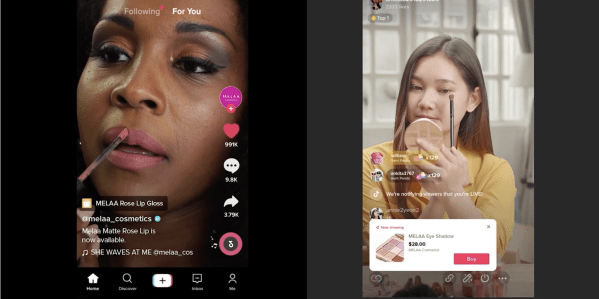
U.S.-based TikTok ecommerce global governance and experience team staffers were recently laid off. This is the latest restructuring to afflict the social media company, which underwent a round of layoffs affecting its trust and security team in February.

According to Business Insider, the global governance and experience team monitors product listings, seller compliance, and protecting intellectual property in TikTok Shop.

The number of staffers laid off is currently unknown, but this latest move comes as the unit’s performance comes under closer scrutiny. In February, TikTok’s ecommerce head, Bob Kang, highlighted the team’s shortcomings during an all-hands meeting. 

It’s been reported that some staffers within the department were hit with low scores during annual performance reviews and given performance improvement plans, while some were simply let go.

In addition to the layoffs, several senior members of TikTok’s executive team have left the company in recent months, including global business solutions head Blake Chandlee, head of partnership solutions and global business marketing for Europe Lucy Banks, global head of music business development Ole Obermann, global head of litigation Emily Stubbs, U.S. general manager of agency business Jack Bamberger, and head of ad sales for North America Sameer Singh.

TikTok is facing challenging times in the U.S. market. It still has not found a buyer for its U.S. operations, leading President Donald Trump to declare a 75-day extension.

In addition, its parent company, ByteDance, is a China-based company caught up in the tariff wars between the two countries, which could further complicate TikTok’s divesture.

https://www.adweek.com/commerce/tiktok-lays-off-staff-in-its-us-based-ecommerce-unit/


Trump Grants TikTok a Second 75-Day Extension, Pushing Deadline to Mid-June


.article-native-ad { border-bottom: 1px solid #ddd; margin: 0 45px; padding-bottom: 20px; margin-bottom: 20px; } .article-native-ad svg { color: #ddd; font-size: 34px; margin-top: 10px; } .article-native-ad p { line-height:1.5; padding:0!important; padding-left: 10px!important; } .article-native-ad strong { font-weight:500; color:rgb(46,179,178); }

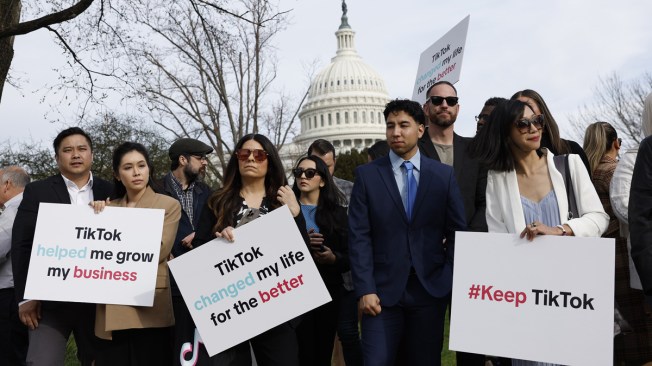
President Donald Trump has granted TikTok a second 75-day extension for its U.S. sale, pushing the deadline to mid-June.

“My Administration has been working very hard on a Deal to SAVE TIKTOK, and we have made tremendous progress,” he wrote in a TruthSocial post. “The Deal requires more work to ensure all necessary approvals are signed, which is why I am signing an Executive Order to keep TikTok up and running for an additional 75 days.”

This move mirrors a similar extension granted in January until April 5, allowing more time for negotiations as the clock continues to tick on the app’s future.

In a statement, a ByteDance spokesperson said that “key matters” of the deal had not been resolved.

“ByteDance has been in discussion with the U.S. Government regarding a potential solution for TikTok U.S.,” the statement said. “An agreement has not been executed. There are key matters to be resolved. Any agreement will be subject to approval under Chinese law.”

Several high-profile suitors lined up to acquire TikTok from its parent company, ByteDance, including Oracle, Amazon, and AppLovin. These companies are vying for control of the popular app amid ongoing security concerns and pressure from U.S. regulators to divest TikTok’s U.S. operations.

However, it remains unclear how seriously these bids are being considered by the Trump Administration.

Despite the flurry of acquisition activity, Americans appear largely indifferent to the outcome, reflecting broader apathy toward TikTok’s uncertain future.

https://www.adweek.com/media/trump-grants-tiktok-a-second-75-day-extension-pushing-deadline-to-mid-june/