Spotify’s Biggest Campaign Since ‘Wrapped’ Is Deeply Personal and Relatable


.article-native-ad { border-bottom: 1px solid #ddd; margin: 0 45px; padding-bottom: 20px; margin-bottom: 20px; } .article-native-ad svg { color: #ddd; font-size: 34px; margin-top: 10px; } .article-native-ad p { line-height:1.5; padding:0!important; padding-left: 10px!important; } .article-native-ad strong { font-weight:500; color:rgb(46,179,178); }

ADWEEK will be all over Cannes. Subscribe to unlock unlimited access to all our coverage and analysis.

Spotify unveiled its largest global marketing campaign since 2023’s Wrapped, with a similar message about the intensely personal relationship that many users have with the platform. 

Like the nine-year-old Wrapped, the new campaign, “My Spotify,” is personalized and rooted in insights from the platform’s own data. The ads feature real fans and highlight their unique listening habits and connections to Spotify’s content. 

The lines in the campaign are intentionally relatable, playing up how the Spotify listening experience can feel as personal and intimate as a human relationship. For example, one ad reads, “My Spotify knows me better than my therapist,” while another says, “My Spotify is my own planet.”

My Spotify
The global ads feature real fans, as well as cultural icons.Spotify

Along with real listeners, cultural icons including artist and designer Carly Mark, English soccer player Lauren James, actor Ewen Bremner and power publicist Gia Kuan appear in the campaign. 

Spotify also designed the campaign so that each fan will have a different experience. Personalized messages will appear in the application to reveal listeners’ unique listening habits and recommend certain features tailored to them. 

For example, Spotify may serve a reader a card that says, “Me in the morning,” with a user’s most played song in the morning, followed by, “Me in the afternoon,” with their favorite afternoon song. 

The “Made for You” hub on the app will also share personalized playlists, podcasts and recommendations for every user.  

My Spotify
The data-driven approach in ‘Wrapped’ translates to ‘My Spotify.’Spotify

This approach is similar to Wrapped, which delivers personalized year-in-review playlists and content for users and has become one of the streaming giant’s biggest marketing moments. 

Created in-house, the new campaign will run across digital, social and out-of-home sites in the U.S., Canada, U.K., Ireland and Australia before expanding to more markets in the coming months. 

“Spotify’s world-class personalization is at the heart of this campaign, celebrating the unique relationship between each listener and their Spotify,” Marc Hazan, vice president of marketing and partnerships at Spotify, said in a statement. “Our goal is to capture those hyperpersonal moments that occur when fans use Spotify. With our products and features, we strive to connect fans with the audio they love in a way that can’t be found anywhere else.”

.font-primary { } .font-secondary { } #meter-count { position: fixed; z-index: 9999999; bottom: 0; width:96%; margin: 2%; -webkit-border-radius: 4px; -moz-border-radius: 4px; border-radius: 4px; -webkit-box-shadow: 0 0px 15px 4px rgba(0,0,0,.2); box-shadow:0 0px 15px 4px rgba(0,0,0,.2); padding: 15px 0; color:#fff; background-color:#343a40; } #meter-count .icon { width: auto; opacity:.8; } #meter-count .icon svg { height: 36px; width: auto; } #meter-count .btn-subscribe { font-size:14px; font-weight:bold; padding:7px 18px; color: #fff; background-color: #2eb3b2; border:none; text-transform: capitalize; margin-right:10px; } #meter-count .btn-subscribe:hover { color: #fff; opacity:.8; } #meter-count .btn-signin { font-size:14px; font-weight:bold; padding:7px 14px; color: #fff; background-color: #121212; border:none; text-transform: capitalize; } #meter-count .btn-signin:hover { color: #fff; opacity:.8; } #meter-count h3 { color:#fff!important; letter-spacing:0px!important; margin:0; padding:0; font-size:16px; line-height:1.5; font-weight:700; margin: 0!important; padding: 0!important; } #meter-count h3 span { color:#E50000!important; font-weight:900; } #meter-count p { font-size:14px; font-weight:500; line-height:1.4; color:#eee!important; margin: 0!important; padding: 0!important; } #meter-count .close { color:#fff; display:block; position:absolute; top: 4px; right:4px; z-index: 999999; } #meter-count .close svg { display:block; color:#fff; height:16px; width:auto; cursor:pointer; } #meter-count .close:hover svg { color:#E50000; } #meter-count .fw-600 { font-weight:600; } @media (max-width: 1079px) { #meter-count .icon { margin:0; padding:0; display:none; } } @media (max-width: 768px) { #meter-count { margin: 0; -webkit-border-radius: 0px; -moz-border-radius: 0px; border-radius: 0px; width:100%; -webkit-box-shadow: 0 -8px 10px -4px rgba(0,0,0,0.3); box-shadow: 0 -8px 10px -4px rgba(0,0,0,0.3); } #meter-count .icon { margin:0; padding:0; display:none; } #meter-count h3 { color:#fff!important; font-size:14px; } #meter-count p { color:#fff!important; font-size: 12px; font-weight: 500; } #meter-count .btn-subscribe, #meter-count .btn-signin { font-size:12px; padding:7px 12px; } #meter-count .btn-signin { display:none; } #meter-count .close svg { height:14px; } }

Enjoying Adweek’s Content? Register for More Access!

https://www.adweek.com/creativity/spotifys-biggest-campaign-since-wrapped-is-deeply-personal-and-relatable/


TikTok Shop Has Become a Huge Online Beauty Retailer as the Category Has Grown

.article-native-ad { border-bottom: 1px solid #ddd; margin: 0 45px; padding-bottom: 20px; margin-bottom: 20px; } .article-native-ad svg { color: #ddd; font-size: 34px; margin-top: 10px; } .article-native-ad p { line-height:1.5; padding:0!important; padding-left: 10px!important; } .article-native-ad strong { font-weight:500; color:rgb(46,179,178); }

Leaders from Glossier, Shopify, Mastercard and more will take the stage at Brandweek to share what strategies set them apart and how they incorporate the most valued emerging trends. Register to join us this September 23–26 in Phoenix, Arizona.

Just nine months after hitting the market, TikTok’s in-application shopping tool is giving online beauty retailers a run for their money.

TikTok Shop is now the ninth-largest beauty and wellness ecommerce retailer in the U.S. market and the second-largest in the U.K. market, according to data from Dash Hudson and NielsenIQ. It has blown past competitors, changing the game for beauty brands that have figured out how to make the short-form video app’s algorithm work for them.

“[TikTok Shop] has surpassed most major department stores, most DTC (direct-to-consumer) players and the smaller beauty specialty retailers,” Anna Mayo, vice president of NielsenIQ’s beauty vertical, told ADWEEK.

Strong beauty growth continues

Last year, dollar sales of U.S. prestige beauty products climbed 14% to $31.7 billion, according to market research firm Circana. The mass market beauty industry also grew by 6%.

Larissa Jensen, a global beauty industry advisor at Circana, noted that despite the category’s strength, brands shouldn’t get comfortable.

“Consumers continue to cope with economic pressures, and being in tune with their shifting mindset is a must,” Jensen said in a statement. “Flexibility, creative thinking and effectively harnessing high consumer engagement are all part of the winning formula to drive continued growth.”

Finding success on TikTok Shop

Over its first seven months, shoppers bought an average of 2.5 times on TikTok Shop, according to the report from Dash Hudson and NielsenIQ, demonstrating that shoppers are coming back to the platform after their first purchase.

Health and beauty continues to outperform all other categories in terms of both brand follower growth and category sales, but apparel and accessories aren’t far behind.

Still, it’s not a perfect fit for every brand. TikTok controls the discounting on its ecommerce platform, and while that trade-off often makes sense for digital-first or challenger brands, more traditional brands have been hesitant to cede that control.

Companies like GuruNanda, Lattafa, MySmile, Tarte Cosmetics and VeyesBeauty have seen significant growth on TikTok Shop despite those discounts. They do so by tapping into trending topics and working with creators well-versed in what works for their audiences.

For Tarte, video views correlated with sales between October 2023 and February 2024, suggesting that more engagement leads to better performance within Shop, according to the report. NielsenIQ declined to disclose brand-level sales numbers with ADWEEK.

“It all comes back to the quality of content that’s pushing people to purchase those products,” Mayo said. “It really is a mix of brands that you would know from other places, as well as some new-to-the-world brands that are making this their platform of choice and finding success in doing that.”

.font-primary { } .font-secondary { } #meter-count { position: fixed; z-index: 9999999; bottom: 0; width:96%; margin: 2%; -webkit-border-radius: 4px; -moz-border-radius: 4px; border-radius: 4px; -webkit-box-shadow: 0 0px 15px 4px rgba(0,0,0,.2); box-shadow:0 0px 15px 4px rgba(0,0,0,.2); padding: 15px 0; color:#fff; background-color:#343a40; } #meter-count .icon { width: auto; opacity:.8; } #meter-count .icon svg { height: 36px; width: auto; } #meter-count .btn-subscribe { font-size:14px; font-weight:bold; padding:7px 18px; color: #fff; background-color: #2eb3b2; border:none; text-transform: capitalize; margin-right:10px; } #meter-count .btn-subscribe:hover { color: #fff; opacity:.8; } #meter-count .btn-signin { font-size:14px; font-weight:bold; padding:7px 14px; color: #fff; background-color: #121212; border:none; text-transform: capitalize; } #meter-count .btn-signin:hover { color: #fff; opacity:.8; } #meter-count h3 { color:#fff!important; letter-spacing:0px!important; margin:0; padding:0; font-size:16px; line-height:1.5; font-weight:700; margin: 0!important; padding: 0!important; } #meter-count h3 span { color:#E50000!important; font-weight:900; } #meter-count p { font-size:14px; font-weight:500; line-height:1.4; color:#eee!important; margin: 0!important; padding: 0!important; } #meter-count .close { color:#fff; display:block; position:absolute; top: 4px; right:4px; z-index: 999999; } #meter-count .close svg { display:block; color:#fff; height:16px; width:auto; cursor:pointer; } #meter-count .close:hover svg { color:#E50000; } #meter-count .fw-600 { font-weight:600; } @media (max-width: 1079px) { #meter-count .icon { margin:0; padding:0; display:none; } } @media (max-width: 768px) { #meter-count { margin: 0; -webkit-border-radius: 0px; -moz-border-radius: 0px; border-radius: 0px; width:100%; -webkit-box-shadow: 0 -8px 10px -4px rgba(0,0,0,0.3); box-shadow: 0 -8px 10px -4px rgba(0,0,0,0.3); } #meter-count .icon { margin:0; padding:0; display:none; } #meter-count h3 { color:#fff!important; font-size:14px; } #meter-count p { color:#fff!important; font-size: 12px; font-weight: 500; } #meter-count .btn-subscribe, #meter-count .btn-signin { font-size:12px; padding:7px 12px; } #meter-count .btn-signin { display:none; } #meter-count .close svg { height:14px; } }

Enjoying Adweek’s Content? Register for More Access!

https://www.adweek.com/commerce/tiktok-shop-has-become-a-huge-online-beauty-retailer-as-the-category-has-grown/


Disillusioned DTC Brands Reject Walled Garden Measurement


.article-native-ad { border-bottom: 1px solid #ddd; margin: 0 45px; padding-bottom: 20px; margin-bottom: 20px; } .article-native-ad svg { color: #ddd; font-size: 34px; margin-top: 10px; } .article-native-ad p { line-height:1.5; padding:0!important; padding-left: 10px!important; } .article-native-ad strong { font-weight:500; color:rgb(46,179,178); }

Mark your calendar for Mediaweek, October 29-30 in New York City. We’ll unpack the biggest shifts shaping the future of media—from tv to retail media to tech—and how marketers can prep to stay ahead. Register with early-bird rates before sale ends!

Direct-to-consumer brands, historically very performance-driven, are breaking away from walled garden metrics from platforms like Meta and Google, relying on third-party measurement firms and their own data to measure effectiveness, according to four sources.

Over the past decade, walled gardens helped launch thousands of startups by letting them buy cheap ads to reach new audiences and bypass retailers. That symbiotic relationship was disrupted in 2021, when Apple killed third-party tracking on iPhones, making finding the right customers harder and more expensive.

Growth-oriented businesses diversified media channels but never fully abandoned Google and Meta.

Now, performance-oriented brands are taking the next step toward platform independence by hiring third-party firms like Measured, Triple Whale, Rockerbox and Northbeam to measure campaigns. The move is motivated by a growing distrust of walled gardens, economic pressures and a desire to prepare for further privacy changes.

At digital agency Juice, 30% to 40% of clients have adopted a third-party measurement solution in the past 12 months, said co-founder Michael Lisovetsky.

At DTC agency DigiShopGirl Media, around 10% to 15% of clients are using third-party measurement solutions, which was relatively rare before the fourth quarter of last year, said CEO Katya Constantine.

“In some cases, we’ve recommended it, but many clients are naturally bringing up topics of ‘how can I better understand what’s actually driving results?’” Lisovetsky said, “And ‘what do I do when every ad platform takes credit?’”

Meta didn’t respond to comment by press time.

Platform disillusionment

In 2022, Meta introduced Advantage+, which uses artificial intelligence to choose who to show an ad to. Initially, some marketers said Advantage+ was so effective that it made up for signal loss on Apple.

Nearly two years later, the product has lost some of its initial luster, said Chris Rigas, vice president of media at agency Markacy. In fact, third-party measurement firm Measured found that the incremental performance of Advantage+ was consistently worse than the metrics Meta gives to advertisers.

Disappointment with the performance of Advantage+ led to Juice clients using third-party measurement solutions, Lisovetsky said. Clients were frustrated that Advantage+ includes retargeting (ads served to people who have already shown interest), inflating the tool’s return on ad spend and wasting money on customers already primed, he noted.

“[Meta] has tried to create a product that gives the appearance of a higher ROAS and abstracts away from where that ROAS is coming from,” Lisovetsky said, noting that many of the clients that have sought third-party measurement have also decreased their investment in Advantage+ campaigns.

A cautious mindset

Brands are also adopting third-party solutions because the cost of ads is more expensive, meaning companies want to be sure that they’re only spending on media that works.

Lisovetsky said the cost per thousand impressions (CPMs) on Meta has risen by 100% year-over-year for some accounts, spurring clients to use third-party measurement solutions to invest in cheaper channels like TikTok.

With third-party measurement tools, Markacy clients cut channels where they were paying to reach existing customers rather than finding new ones. Those include retargeting campaigns on Facebook and display, as well as branded search campaigns on Google (bidding on a brand’s own name), said Rigas. People searching for a brand are probably already existing customers.

Beyond high ad prices, economic headwinds facing DTC businesses are pushing brands to adopt more measurement tools, said Tucker Matheson, co-CEO of Markacy.

“Brands are trying to rationalize costs. There have been a lot of layoffs,” he said. “They need to be really smart [about] where to cut.”

Caution doesn’t just apply to wallets: Brands want to avoid having to rework their media strategy on the fly as cookie deprecation looms, Constantine said.

“No one wants to have another iOS 14,” she added.

Still no perfect solution

Third-party measurement tools can give brands a clearer picture of how their media is performing, but for digitally native brands that have spent years building up first-party data, the job can be done without outside help.

“You have to triangulate,” said Ankur Goyal, vp of growth at DTC diaper brand Coterie. “The goal is not to be a scientist and find the exact contribution of each channel. Then the ends become the means. The goal is to have an analytic framework that is easy enough to make decisions for me.”

Goyal has looked for a third-party solution to provide this analytic framework. So far, the more cost-effective solution is looking at upper-funnel data like post-purchase surveys, mid-funnel data from the platforms and lower-funnel data that includes last-click attribution. If all three metrics show that a channel is underperforming, it probably is, Goyal said.

And while Markacy clients have been increasingly using third-party measurement solutions, they don’t get granular data from Meta and other walled gardens, making the inferences they draw useful for only some DTC clients.

“There is not a perfect solution,” Rigas said. “What we have most success with is working with brands in really data-driven ways with all the different signals. It’s hard to say there is a panacea.”


.font-primary { } .font-secondary { } #meter-count { position: fixed; z-index: 9999999; bottom: 0; width:96%; margin: 2%; -webkit-border-radius: 4px; -moz-border-radius: 4px; border-radius: 4px; -webkit-box-shadow: 0 0px 15px 4px rgba(0,0,0,.2); box-shadow:0 0px 15px 4px rgba(0,0,0,.2); padding: 15px 0; color:#fff; background-color:#343a40; } #meter-count .icon { width: auto; opacity:.8; } #meter-count .icon svg { height: 36px; width: auto; } #meter-count .btn-subscribe { font-size:14px; font-weight:bold; padding:7px 18px; color: #fff; background-color: #2eb3b2; border:none; text-transform: capitalize; margin-right:10px; } #meter-count .btn-subscribe:hover { color: #fff; opacity:.8; } #meter-count .btn-signin { font-size:14px; font-weight:bold; padding:7px 14px; color: #fff; background-color: #121212; border:none; text-transform: capitalize; } #meter-count .btn-signin:hover { color: #fff; opacity:.8; } #meter-count h3 { color:#fff!important; letter-spacing:0px!important; margin:0; padding:0; font-size:16px; line-height:1.5; font-weight:700; margin: 0!important; padding: 0!important; } #meter-count h3 span { color:#E50000!important; font-weight:900; } #meter-count p { font-size:14px; font-weight:500; line-height:1.4; color:#eee!important; margin: 0!important; padding: 0!important; } #meter-count .close { color:#fff; display:block; position:absolute; top: 4px; right:4px; z-index: 999999; } #meter-count .close svg { display:block; color:#fff; height:16px; width:auto; cursor:pointer; } #meter-count .close:hover svg { color:#E50000; } #meter-count .fw-600 { font-weight:600; } @media (max-width: 1079px) { #meter-count .icon { margin:0; padding:0; display:none; } } @media (max-width: 768px) { #meter-count { margin: 0; -webkit-border-radius: 0px; -moz-border-radius: 0px; border-radius: 0px; width:100%; -webkit-box-shadow: 0 -8px 10px -4px rgba(0,0,0,0.3); box-shadow: 0 -8px 10px -4px rgba(0,0,0,0.3); } #meter-count .icon { margin:0; padding:0; display:none; } #meter-count h3 { color:#fff!important; font-size:14px; } #meter-count p { color:#fff!important; font-size: 12px; font-weight: 500; } #meter-count .btn-subscribe, #meter-count .btn-signin { font-size:12px; padding:7px 12px; } #meter-count .btn-signin { display:none; } #meter-count .close svg { height:14px; } }

Enjoying Adweek’s Content? Register for More Access!

https://www.adweek.com/media/disillusioned-dtc-brands-start-rejecting-walled-garden-measurement/


5 Reveals From Google’s Leaked Search Docs


.article-native-ad { border-bottom: 1px solid #ddd; margin: 0 45px; padding-bottom: 20px; margin-bottom: 20px; } .article-native-ad svg { color: #ddd; font-size: 34px; margin-top: 10px; } .article-native-ad p { line-height:1.5; padding:0!important; padding-left: 10px!important; } .article-native-ad strong { font-weight:500; color:rgb(46,179,178); }

Mark your calendar for Mediaweek, October 29-30 in New York City. We’ll unpack the biggest shifts shaping the future of media—from tv to retail media to tech—and how marketers can prep to stay ahead. Register with early-bird rates before sale ends!

A little light is shining on Google’s Search black box.

A leak of 2,500 internal documents, which Google has confirmed are real, sheds some light on the workings of its search engine—which has long been a mystery for search-engine-optimization experts and businesses—like what data Google collects, how it relies on links and how it views small websites.

“SEO has always been a black box,” said Travis Tallent, vice president of SEO at Brainlabs. “It’s always been experimental and largely driven by testing. This documentation is something we’ve been waiting on for for a very long time.”

On March 13, the leaked documents surfaced on Github, prompting analysis from SEO experts Rand Fishkin, co-founder of SparkToro, and Michael King, CEO of iPullRank.

Some details in the docs cast doubt on the accuracy of Google’s public statements. But listening to Google’s public statements about how its systems work is foolish, Fishkin told ADWEEK.

“We would caution against making inaccurate assumptions about Search based on out-of-context, outdated or incomplete information,” a Google spokesperson told ADWEEK. “We’ve shared extensive information about how search works and the types of factors that our systems weigh, while also working to protect the integrity of our results from manipulation.”

Chrome factors in search

Although Google representatives have asserted that Chrome data isn’t utilized in page ranking algorithms, references to Chrome appear in sections detailing how website links are displayed in search. The docs also reveal a module called ‘Chrome in Total.’

Chrome is referenced in a section detailing the creation of additional links.Rand Fishkin

According to Fishkin, pages like “Pricing” are among SparkToro’s most visited pages. Google surfaces this link by analyzing billions of Chrome users’ clickstreams.

“My read is that Google likely uses the number of clicks on pages in Chrome browsers and uses that to determine the most popular or important URLs on a site, which go into the calculation of which to include in the site links feature,” Fishkin said in his blog.

Quality, relevant sites really matter

The docs reveal Google’s machine-learning tool called Site Authority or Domain Authority, according to Tallent. This tool evaluates a site’s ability to be indexed in Google search based on how relevant it is to a particular subject area or industry.

Google executives including John Mueller, who leads Google Search Relations as a search advocate, have publicly contradicted this notion. In a video, Mueller stated, “We don’t have a website authority score.” And Google itself has refuted the claim of maintaining a website authority score.

“Things like Domain Authority and Chrome data have all been touted as ‘not inputs’ for Google for a long time,” said Tallent.

While SEO experts aren’t surprised by Domain Authority’s role in search, for brands, it’s a reminder that quality content matters more than quantity for visibility in search results, said King.

Popular sites receive higher search

Leaked documents hint that Google has been measuring clicks to rank its algorithm through the Navboost system, which has been operational since 2005.

This means a site Google sees as popular might get a higher search rank for a query, even if a lesser-known site contains better information.

According to King, Navboost tweaks search results by boosting or demoting links with features such as goodClicks, badClicks or lastLongestClicks.

However, Google reps have previously said that clicks are not utilized in the ranking of sites.

Thwarting small websites

The docs also indicate that search is not set up for smaller sites to win, said King. A feature called smallPersonalSite indicates that Google isn’t pushing small personal sites or blogs.

Small publishers have previously raised concerns that they have “virtually disappeared” from search results, with HouseFresh noting a 91% decrease in search traffic in recent months.

Learning on external devices

The document refers to using external device data like Chromecast for Google search, but how this data is used isn’t fully understood.

“This is a Google search engineering documentation,” said Tallent. “This shows that they’re using external device data and storing this information to potentially help make decisions on search.”

.font-primary { } .font-secondary { } #meter-count { position: fixed; z-index: 9999999; bottom: 0; width:96%; margin: 2%; -webkit-border-radius: 4px; -moz-border-radius: 4px; border-radius: 4px; -webkit-box-shadow: 0 0px 15px 4px rgba(0,0,0,.2); box-shadow:0 0px 15px 4px rgba(0,0,0,.2); padding: 15px 0; color:#fff; background-color:#343a40; } #meter-count .icon { width: auto; opacity:.8; } #meter-count .icon svg { height: 36px; width: auto; } #meter-count .btn-subscribe { font-size:14px; font-weight:bold; padding:7px 18px; color: #fff; background-color: #2eb3b2; border:none; text-transform: capitalize; margin-right:10px; } #meter-count .btn-subscribe:hover { color: #fff; opacity:.8; } #meter-count .btn-signin { font-size:14px; font-weight:bold; padding:7px 14px; color: #fff; background-color: #121212; border:none; text-transform: capitalize; } #meter-count .btn-signin:hover { color: #fff; opacity:.8; } #meter-count h3 { color:#fff!important; letter-spacing:0px!important; margin:0; padding:0; font-size:16px; line-height:1.5; font-weight:700; margin: 0!important; padding: 0!important; } #meter-count h3 span { color:#E50000!important; font-weight:900; } #meter-count p { font-size:14px; font-weight:500; line-height:1.4; color:#eee!important; margin: 0!important; padding: 0!important; } #meter-count .close { color:#fff; display:block; position:absolute; top: 4px; right:4px; z-index: 999999; } #meter-count .close svg { display:block; color:#fff; height:16px; width:auto; cursor:pointer; } #meter-count .close:hover svg { color:#E50000; } #meter-count .fw-600 { font-weight:600; } @media (max-width: 1079px) { #meter-count .icon { margin:0; padding:0; display:none; } } @media (max-width: 768px) { #meter-count { margin: 0; -webkit-border-radius: 0px; -moz-border-radius: 0px; border-radius: 0px; width:100%; -webkit-box-shadow: 0 -8px 10px -4px rgba(0,0,0,0.3); box-shadow: 0 -8px 10px -4px rgba(0,0,0,0.3); } #meter-count .icon { margin:0; padding:0; display:none; } #meter-count h3 { color:#fff!important; font-size:14px; } #meter-count p { color:#fff!important; font-size: 12px; font-weight: 500; } #meter-count .btn-subscribe, #meter-count .btn-signin { font-size:12px; padding:7px 12px; } #meter-count .btn-signin { display:none; } #meter-count .close svg { height:14px; } }

Enjoying Adweek’s Content? Register for More Access!

https://www.adweek.com/media/5-reveals-from-googles-leaked-search-docs/


Snapchat Bolsters Lower Funnel Tools for Performance Marketers

.article-native-ad { border-bottom: 1px solid #ddd; margin: 0 45px; padding-bottom: 20px; margin-bottom: 20px; } .article-native-ad svg { color: #ddd; font-size: 34px; margin-top: 10px; } .article-native-ad p { line-height:1.5; padding:0!important; padding-left: 10px!important; } .article-native-ad strong { font-weight:500; color:rgb(46,179,178); }

Mark your calendar for Mediaweek, October 29-30 in New York City. We’ll unpack the biggest shifts shaping the future of media—from tv to retail media to tech—and how marketers can prep to stay ahead. Register with early-bird rates before sale ends!

Snapchat is shifting how advertisers buy ads on the platform, emphasizing immediate purchases that aim to deliver higher returns for brands.

Over the past six to nine months, the company has upgraded its lower funnel ad products and is venturing into political advertising, Snapchat revealed this week.

As part of its changes, Snapchat has redesigned and unified its ad formats, including a streamlined process that enables users to install apps within Snapchat in just two clicks, down from three, without redirecting to an app store.

Snapchat has reported a decrease in cost per install and an improved ROI for advertisers, per the company.

To guarantee purposeful clicks on ads by Snapchatters, the company is eliminating inadvertent clicks and introducing a delayed call-to-action button.

Snapchat is also introducing state-level targeting, in response to requests from ad buyers, enabling them to focus on specific states, including political ads for swing states, Senate races and down-ballot elections.

Related video

For U.S. elections, Snap collaborates with the nonpartisan Poynter Institute to independently fact-check political ad statements, a spokesperson told ADWEEK.

Positioning itself as an antidote to traditional social media platforms, Snap reported a higher-than-anticipated Q1 revenue of nearly $1.2 billion, marking a 21% year-over-year increase. Additionally, the number of small and medium advertisers on the platform surged by 85% year-over-year in Q1, according to the company.

However, Darshan Kantak, Snap’s svp of revenue product, acknowledged the platform had faced challenges with direct response capabilities, exacerbated by Apple’s App Tracking Transparency (ATT) framework and Google’s decision to phase out third-party cookies.

“For performance advertisers, we know that ROI, ROAS or CPI is king,” said Patrick Harris, president of the Americas at Snap. “That’s why we’ve been putting so much energy into our lower funnel solutions. And at the end of the day, the improvements we’ve made are helping clients get more bang for their bucks.”

Snapchat’s recent changes also include adding generative AI-powered creative capabilities, enabling advertisers to alter backgrounds for existing product images and create dynamic ads on the fly, similar to tools launched by giants like Meta. These features are set to roll out soon.

Snap CEO Evan Spiegel acknowledged to Bloomberg that Snapchat has lagged in AI development, with plans to invest $1.5 billion annually to catch up.

Snap’s biggest strategic investment, per Kantak, is in its third iteration of Conversion API (CAPI), designed to combat signal loss by reducing integration time for advertisers to mere minutes.

CAPI allows advertisers to send data to Snap’s servers in real time, optimizing and measuring campaigns for a detailed view of ad performance. Advertisers who integrated Snap Pixel and CAPI saw a 22% increase in attributed purchases, a 25% improvement in purchase value, and an 18% improvement in cost per purchase.

Snap is also integrating CAPI with partners such as Snowflake, Tealium and Shopify to benefit their customers.

To that, Snap has introduced a four-tile ad format to enhance product showcases for brands. Previously, these products were displayed as thumbnails at the bottom of the screen.

.font-primary { } .font-secondary { } #meter-count { position: fixed; z-index: 9999999; bottom: 0; width:96%; margin: 2%; -webkit-border-radius: 4px; -moz-border-radius: 4px; border-radius: 4px; -webkit-box-shadow: 0 0px 15px 4px rgba(0,0,0,.2); box-shadow:0 0px 15px 4px rgba(0,0,0,.2); padding: 15px 0; color:#fff; background-color:#343a40; } #meter-count .icon { width: auto; opacity:.8; } #meter-count .icon svg { height: 36px; width: auto; } #meter-count .btn-subscribe { font-size:14px; font-weight:bold; padding:7px 18px; color: #fff; background-color: #2eb3b2; border:none; text-transform: capitalize; margin-right:10px; } #meter-count .btn-subscribe:hover { color: #fff; opacity:.8; } #meter-count .btn-signin { font-size:14px; font-weight:bold; padding:7px 14px; color: #fff; background-color: #121212; border:none; text-transform: capitalize; } #meter-count .btn-signin:hover { color: #fff; opacity:.8; } #meter-count h3 { color:#fff!important; letter-spacing:0px!important; margin:0; padding:0; font-size:16px; line-height:1.5; font-weight:700; margin: 0!important; padding: 0!important; } #meter-count h3 span { color:#E50000!important; font-weight:900; } #meter-count p { font-size:14px; font-weight:500; line-height:1.4; color:#eee!important; margin: 0!important; padding: 0!important; } #meter-count .close { color:#fff; display:block; position:absolute; top: 4px; right:4px; z-index: 999999; } #meter-count .close svg { display:block; color:#fff; height:16px; width:auto; cursor:pointer; } #meter-count .close:hover svg { color:#E50000; } #meter-count .fw-600 { font-weight:600; } @media (max-width: 1079px) { #meter-count .icon { margin:0; padding:0; display:none; } } @media (max-width: 768px) { #meter-count { margin: 0; -webkit-border-radius: 0px; -moz-border-radius: 0px; border-radius: 0px; width:100%; -webkit-box-shadow: 0 -8px 10px -4px rgba(0,0,0,0.3); box-shadow: 0 -8px 10px -4px rgba(0,0,0,0.3); } #meter-count .icon { margin:0; padding:0; display:none; } #meter-count h3 { color:#fff!important; font-size:14px; } #meter-count p { color:#fff!important; font-size: 12px; font-weight: 500; } #meter-count .btn-subscribe, #meter-count .btn-signin { font-size:12px; padding:7px 12px; } #meter-count .btn-signin { display:none; } #meter-count .close svg { height:14px; } }

Enjoying Adweek’s Content? Register for More Access!

https://www.adweek.com/media/snapchat-bolsters-lower-funnel-tools-for-performance-marketers/


TikTok Unveils New Self-Serve and AI-Powered Ad Automation Tools


.article-native-ad { border-bottom: 1px solid #ddd; margin: 0 45px; padding-bottom: 20px; margin-bottom: 20px; } .article-native-ad svg { color: #ddd; font-size: 34px; margin-top: 10px; } .article-native-ad p { line-height:1.5; padding:0!important; padding-left: 10px!important; } .article-native-ad strong { font-weight:500; color:rgb(46,179,178); }

Mark your calendar for Mediaweek, October 29-30 in New York City. We’ll unpack the biggest shifts shaping the future of media—from tv to retail media to tech—and how marketers can prep to stay ahead. Register with early-bird rates before sale ends!

TikTok announced new tools for advertisers today at its fourth annual TikTok World event, focusing on artificial-intelligence-powered automation and measurement tools that make it quicker and easier for marketers to create relevant ads on the platform.

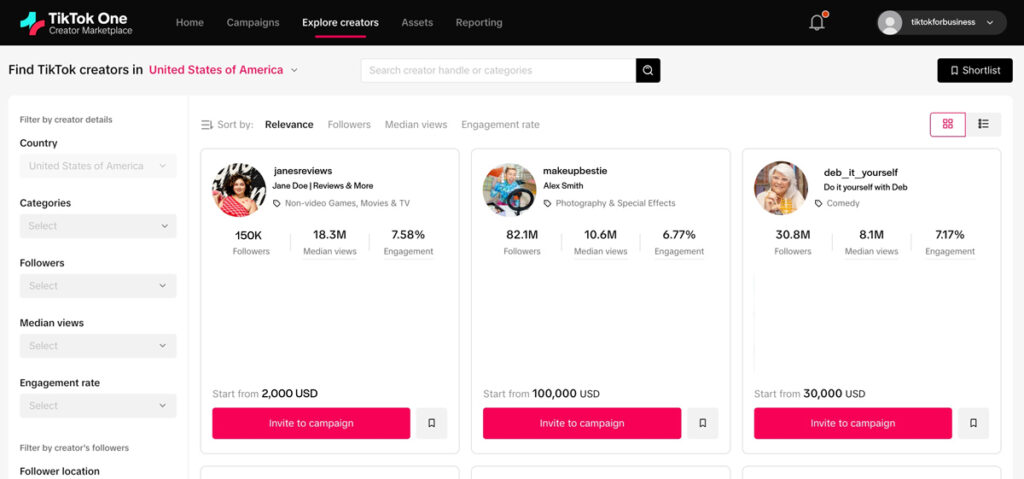
The first set of tools, TikTok One, is a hub that gives advertisers access to creators, creative tools, agency partners and measurement. all in one place.

The second, TikTok Symphony, serves as an umbrella for the platform’s AI-powered tools, which includes support for scriptwriting, video production and asset optimization.

TikTok

“We are supercharging productivity to help brands create at scale,” Adrienne Lahens, global head of operations for TikTok Creator Marketing Solutions, told reporters during a media briefing Tuesday. “We’re building for the future of creative, and we’re inviting brands to come and test and learn with us as we look to simplify and empower creative that breaks through.”

The company declined to comment on whether the threat of a TikTok ban has impacted its advertising business, following one reporter’s question.

“Coming off of NewFronts, we’ve seen so much excitement from our advertising and brand partners that are fully leaned in and ready to come and continue building, learning and testing with us,” Kate Amery, global B2B communications manager, said in response.

TikTok

Media partner to business partner

TikTok also announced tools that let advertisers set the criteria to reach certain campaign goals, using AI and machine learning. After selecting budget, creative assets and goals, the predictive automation tools will choose the right creative, audience and time to achieve the advertiser’s goals.

Research from Kantar showed that TikTok-first ads boost purchase intent and brand favorability by nearly 40%, the company noted. The company also touted that close to 80% of users prefer brands that demonstrate an understanding of how to create content for the platform, according to a 2022 survey conducted by Ipsos. The new tools aim to make it simpler and quicker for brands to create ads that resonate with TikTok’s 1 billion-plus global users.

Automation tools will also be available in TikTok Shop ads to optimize bidding, budgeting, ads management and creative, as well as merchant costs like affiliate payouts, ad spend and platform fees.

TikTok

“Moving from return on ad spend to overall return on investment is a major step forward in our vision moving from being a media partner to becoming a true business partner for our customers,” said Adolfo Fernández, global head of performance solutions and operations for TikTok.

Triquetra Health, an Ohio-based health and wellness brand that piloted the TikTok Shop automation tools, saw its ROI increase fourfold and sales jump by 136%, while also saving 10 hours per week that was previously spent tweaking campaigns, Fernández said.

TikTok

For brands, the company debuted two new tools: Interactive Add-Ons for TopView, which lets advertisers add pop-out elements and countdown stickers, and Duet with Branded Mission, which lets advertisers participate in duets alongside creators.

TikTok also launched Unified Lift, a tool that combines conversion and brand data to give a more comprehensive view of a campaign’s impact.

TikTok

“The ability to turn audience attention and engagement into impulse purchasing will be a game changer for brands, especially emerging brands in cluttered categories,” Dave Kersey, chief media officer at GSD&M, told ADWEEK.

Automation around performance and improvements in measurement tools are welcome developments, another buyer told ADWEEK, noting that “connecting the dots between social in-platform results versus clients’ first-party sources has been a challenge.”

The tools and products TikTok offers to advertisers rival The Trade Desk and Google’s Display & Video 360, the buyer argued, raising the bar for social platforms across the board. “Even with the potential ban pending, they’ve changed the way we think about paid social, and how we use it in the advertising industry, for the better.”

.font-primary { } .font-secondary { } #meter-count { position: fixed; z-index: 9999999; bottom: 0; width:96%; margin: 2%; -webkit-border-radius: 4px; -moz-border-radius: 4px; border-radius: 4px; -webkit-box-shadow: 0 0px 15px 4px rgba(0,0,0,.2); box-shadow:0 0px 15px 4px rgba(0,0,0,.2); padding: 15px 0; color:#fff; background-color:#343a40; } #meter-count .icon { width: auto; opacity:.8; } #meter-count .icon svg { height: 36px; width: auto; } #meter-count .btn-subscribe { font-size:14px; font-weight:bold; padding:7px 18px; color: #fff; background-color: #2eb3b2; border:none; text-transform: capitalize; margin-right:10px; } #meter-count .btn-subscribe:hover { color: #fff; opacity:.8; } #meter-count .btn-signin { font-size:14px; font-weight:bold; padding:7px 14px; color: #fff; background-color: #121212; border:none; text-transform: capitalize; } #meter-count .btn-signin:hover { color: #fff; opacity:.8; } #meter-count h3 { color:#fff!important; letter-spacing:0px!important; margin:0; padding:0; font-size:16px; line-height:1.5; font-weight:700; margin: 0!important; padding: 0!important; } #meter-count h3 span { color:#E50000!important; font-weight:900; } #meter-count p { font-size:14px; font-weight:500; line-height:1.4; color:#eee!important; margin: 0!important; padding: 0!important; } #meter-count .close { color:#fff; display:block; position:absolute; top: 4px; right:4px; z-index: 999999; } #meter-count .close svg { display:block; color:#fff; height:16px; width:auto; cursor:pointer; } #meter-count .close:hover svg { color:#E50000; } #meter-count .fw-600 { font-weight:600; } @media (max-width: 1079px) { #meter-count .icon { margin:0; padding:0; display:none; } } @media (max-width: 768px) { #meter-count { margin: 0; -webkit-border-radius: 0px; -moz-border-radius: 0px; border-radius: 0px; width:100%; -webkit-box-shadow: 0 -8px 10px -4px rgba(0,0,0,0.3); box-shadow: 0 -8px 10px -4px rgba(0,0,0,0.3); } #meter-count .icon { margin:0; padding:0; display:none; } #meter-count h3 { color:#fff!important; font-size:14px; } #meter-count p { color:#fff!important; font-size: 12px; font-weight: 500; } #meter-count .btn-subscribe, #meter-count .btn-signin { font-size:12px; padding:7px 12px; } #meter-count .btn-signin { display:none; } #meter-count .close svg { height:14px; } }

Enjoying Adweek’s Content? Register for More Access!

https://www.adweek.com/media/tiktok-unveils-new-self-serve-and-ai-powered-ad-automation-tools/


Google Expands Advertising Into AI Search Engine


.article-native-ad { border-bottom: 1px solid #ddd; margin: 0 45px; padding-bottom: 20px; margin-bottom: 20px; } .article-native-ad svg { color: #ddd; font-size: 34px; margin-top: 10px; } .article-native-ad p { line-height:1.5; padding:0!important; padding-left: 10px!important; } .article-native-ad strong { font-weight:500; color:rgb(46,179,178); }

Mark your calendar for Mediaweek, October 29-30 in New York City. We’ll unpack the biggest shifts shaping the future of media—from tv to retail media to tech—and how marketers can prep to stay ahead. Register with early-bird rates before sale ends!

Google shared how AI will reimagine the traditional search experience at its annual event for marketers, Google Marketing Live, with many highly anticipated details on how ads will fit into this new interface.

Ads will be available in Google’s AI Overview, formerly known as Search Generative Experience—its AI-powered conversational interface that answers search queries—and will soon appear at the top of Google search results.  

For instance, a query asking how to de-wrinkle clothes featured Google’s AI-generated answer followed by Shopping product listing ads. Traditional search ad formats can also appear in the AI Overview. All ads will be labeled as such within the format.

Right now, marketers don’t need to change the ads they upload to regular Search, standard Shopping and Performance Max campaigns—existing ads bought via these formats can appear in the new AI Overview format.

Related video

Google announced it was testing this ad format at GML last year. As Google’s AI Overview expands in the U.S., the format will be tested more widely. The company was light on any further details on how search advertising will change.

Similarly, as Microsoft has introduced ads in its OpenAI-powered Bing search engine, it’s also opting not to create a new buying interface to make less work for advertisers.

The search giant also announced new AI-driven formats to create ads driving people toward a purchase, more ways for brands to have a visual identity on Google and new tools using AI to generate creative assets.

“We believe the investments will put Google at the forefront of this AI paradigm shift,” said Kristen O’Hara, vp of agency, platforms and client solutions at Google, at a press event ahead of GML in New York.

Enhancing the consumer journey

Google is making it easier for brands to guide customers toward a purchase with the help of AI.

For example, with a new AI search experience, someone searching for storage facilities might click on the ad of a particular brand. Then the user could upload photos of the items they needed stored, and that storage site could recommend the most suitable containers.

Google executives said this new format was in early tests and wouldn’t share further examples of how this might work outside of this storage example.

Google is also expanding its virtual try-on technology to advertising, specifically for men’s and women’s tops in the apparel category. The tech lets shoppers see clothing on various body types.

Visual upgrade

Google has also rolled out tools to make brands look more compelling in Search and Shopping results.

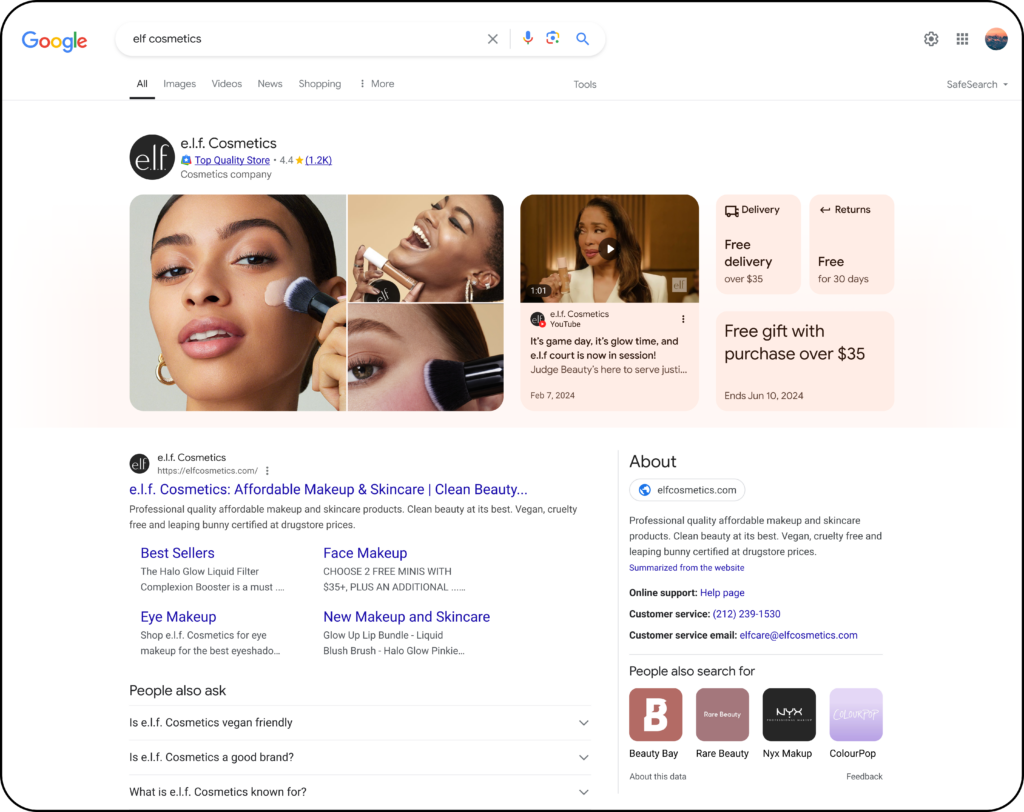
When users search for a brand, Google will create a visual profile for that company: a collage of images, videos and other information that comes from what the brand has already uploaded into Google and Google’s Shopping Graph, a data set of what Google knows about the world’s products and sellers.

An example of Google’s new visual brand profiles.Google

Additionally, Google is letting brands link short-form videos to their Shopping ads. Searching for a shirt in Shopping results could pull up a clip of how it looks on a creator, or different ways to style it.

Like other platforms, Google also announced generative AI tools for creative. They include the ability to generate videos from a single photo within Google’s Product Studio suite, and the ability for brands to give guidelines to the AI-buying tool Performance Max on attributes like font and color, which the tool will then use in image generation.

.font-primary { } .font-secondary { } #meter-count { position: fixed; z-index: 9999999; bottom: 0; width:96%; margin: 2%; -webkit-border-radius: 4px; -moz-border-radius: 4px; border-radius: 4px; -webkit-box-shadow: 0 0px 15px 4px rgba(0,0,0,.2); box-shadow:0 0px 15px 4px rgba(0,0,0,.2); padding: 15px 0; color:#fff; background-color:#343a40; } #meter-count .icon { width: auto; opacity:.8; } #meter-count .icon svg { height: 36px; width: auto; } #meter-count .btn-subscribe { font-size:14px; font-weight:bold; padding:7px 18px; color: #fff; background-color: #2eb3b2; border:none; text-transform: capitalize; margin-right:10px; } #meter-count .btn-subscribe:hover { color: #fff; opacity:.8; } #meter-count .btn-signin { font-size:14px; font-weight:bold; padding:7px 14px; color: #fff; background-color: #121212; border:none; text-transform: capitalize; } #meter-count .btn-signin:hover { color: #fff; opacity:.8; } #meter-count h3 { color:#fff!important; letter-spacing:0px!important; margin:0; padding:0; font-size:16px; line-height:1.5; font-weight:700; margin: 0!important; padding: 0!important; } #meter-count h3 span { color:#E50000!important; font-weight:900; } #meter-count p { font-size:14px; font-weight:500; line-height:1.4; color:#eee!important; margin: 0!important; padding: 0!important; } #meter-count .close { color:#fff; display:block; position:absolute; top: 4px; right:4px; z-index: 999999; } #meter-count .close svg { display:block; color:#fff; height:16px; width:auto; cursor:pointer; } #meter-count .close:hover svg { color:#E50000; } #meter-count .fw-600 { font-weight:600; } @media (max-width: 1079px) { #meter-count .icon { margin:0; padding:0; display:none; } } @media (max-width: 768px) { #meter-count { margin: 0; -webkit-border-radius: 0px; -moz-border-radius: 0px; border-radius: 0px; width:100%; -webkit-box-shadow: 0 -8px 10px -4px rgba(0,0,0,0.3); box-shadow: 0 -8px 10px -4px rgba(0,0,0,0.3); } #meter-count .icon { margin:0; padding:0; display:none; } #meter-count h3 { color:#fff!important; font-size:14px; } #meter-count p { color:#fff!important; font-size: 12px; font-weight: 500; } #meter-count .btn-subscribe, #meter-count .btn-signin { font-size:12px; padding:7px 12px; } #meter-count .btn-signin { display:none; } #meter-count .close svg { height:14px; } }

Enjoying Adweek’s Content? Register for More Access!

https://www.adweek.com/media/google-expands-advertising-into-ai-search-engine/


Leaked Presentation Shows How Google Is Pitching Its 2024 AI Agenda to Ad Buyers


.article-native-ad { border-bottom: 1px solid #ddd; margin: 0 45px; padding-bottom: 20px; margin-bottom: 20px; } .article-native-ad svg { color: #ddd; font-size: 34px; margin-top: 10px; } .article-native-ad p { line-height:1.5; padding:0!important; padding-left: 10px!important; } .article-native-ad strong { font-weight:500; color:rgb(46,179,178); }

Mark your calendar for Mediaweek, October 29-30 in New York City. We’ll unpack the biggest shifts shaping the future of media—from tv to retail media to tech—and how marketers can prep to stay ahead. Register with early-bird rates before sale ends!

Google’s big bet on using AI to power ads is getting even bigger in 2024.

At Google’s Marketing Live event, which kickstarts today, the tech giant is expected to reveal how ads will look in generative AI-powered search, one week after its full U.S. roll-out. Generative AI search is already poised to change how buyers use search to drive traffic and place ads. Google has also invested heavily in Performance Max, a tool that uses AI to place ads across search, video and display, based on where those ads will drive the best results.

But

#paywall-subscribe { margin:0; padding: 1rem 2.4rem; } #paywall-subscribe .holder { background-color:#eee; border:15px solid #f2f2f2; padding:30px; margin:0 auto!important; text-align:center; } #paywall-subscribe a.underline { color:#000; text-decoration:underline; } #paywall-subscribe img { margin-bottom:10px; width: 140px!important; height: auto!important; } #paywall-subscribe h3 { font-weight:bold; font-size:16px; text-transform:uppercase; width:80%; margin:0 auto; margin-bottom:20px; text-align:center; } #paywall-subscribe h3 span { display:block; font-size:14px; } #paywall-subscribe h2 { font-weight:800; font-size:24px; text-transform:uppercase; } #paywall-subscribe p { font-size: 16px; color:#000; padding: 0; } #paywall-subscribe .cta { margin-top:20px; margin-bottom:10px; font-size:14px; text-transform:capitalize; color: #fff; background-color: #E50000; border:none; padding:12px 28px; text-decoration:none; -webkit-transition: .3s ease; -moz-transition: .3s ease; -o-transition: .3s ease; -ms-transition: .3s ease; transition: .3s ease; } #paywall-subscribe .cta:hover { color: #fff; background-color: #181818; transform: scale(1.02); } #paywall-subscribe .already-a-member { font-size:14px; } @media (max-width: 1024px) { #paywall-subscribe .holder { border:12px solid #f2f2f2; padding:25px; } #paywall-subscribe img { width: 120px!important; } } @media (max-width: 768px) { #paywall-subscribe .holder { border:10px solid #f2f2f2; padding:20px; } #paywall-subscribe img { width: 100px!important; } #paywall-subscribe h3 { font-size:14px; } #paywall-subscribe h3 span { font-size:12px; } #paywall-subscribe h2 { font-size:18px; } #paywall-subscribe p { font-size:14px; } #paywall-subscribe .cta { font-size:12px; padding:10px 24px; } #paywall-subscribe .already-a-member { font-size:11px; } } AW+

WORK SMARTER – LEARN, GROW AND BE INSPIRED.

Subscribe today!

To Read the Full Story Become an Adweek+ Subscriber

View Subscription Options

Already a member? Sign in

https://www.adweek.com/media/leaked-presentation-shows-how-google-is-pitching-its-2024-ai-agenda-to-ad-buyers/


Some Advertisers Are Rebuilding Their Search Strategies as Google’s AI Search Engine Grows


.article-native-ad { border-bottom: 1px solid #ddd; margin: 0 45px; padding-bottom: 20px; margin-bottom: 20px; } .article-native-ad svg { color: #ddd; font-size: 34px; margin-top: 10px; } .article-native-ad p { line-height:1.5; padding:0!important; padding-left: 10px!important; } .article-native-ad strong { font-weight:500; color:rgb(46,179,178); }

Mark your calendar for Mediaweek, October 29-30 in New York City. We’ll unpack the biggest shifts shaping the future of media—from tv to retail media to tech—and how marketers can prep to stay ahead. Register with early-bird rates before sale ends!

Google has fundamentally transformed the online search experience with its AI search engine AI Overview, which incorporates videos and images, and encourages users to ask complex and detailed questions. 

While it’s clear that traditional SEO methods will not work with AI-powered search (Max Gomez Montejo, CMO of digital marketing firm Next Net Media, anticipates organic traffic going down by 25%), it is still too early for the ad industry to have best practices around AI-powered search. But more forward-thinking marketers are already scrambling to experiment.

Some marketers are overhauling their sites with videos and images to their websites, which will improve visibility in AI-powered search results. These marketers are, for instance, converting text-based FAQs into videos, so the content will be more visible in this new era of AI-informed search.

“Brands that are able to bring together their video and image assets into the same strategy as their SEO are the ones taking an early lead in AI Overview,” said Jeremy Hull, chief product officer of Brainlabs. “It will mean creating more videos, and that’s a big lift.”

Others are experimenting with trying to make sure their sites show up when people search using long-tail keywords (i.e., phrases above four or five words), such as, “I live in Texas. What are ideal weekend getaways with my family?” As these questions get more detailed, marketers have to make sure their websites contain the right information about their products and services.

Still others are dedicating more resources to appearing organically on sites like Reddit, as Google increasingly surfaces content from that site, said Sam Tomlinson, executive vice president at boutique agency Warschawski.

Even though marketers have to rethink their search strategies due to AI-generated search, Tomlinson is not panicking.

“Lots of people are overblowing this,” he said. “This is just another evolution in search.”

Building content expertise to achieve AI search visibility

Not all keywords prompt an AI Overview response.

For instance, long-tailed queries such as, “I am planning a vacation with my kids, a 5-year-old and a 3-year-old, in the Outer Banks of North Carolina. What are some activities I can do?” triggers an AI response. Straightforward searches like “Nike running shoes” do not.

“AI output tends to lean more informational than transactional,” said Joel Swaney, principal SEO at media agency Collective Measures. The agency is conducting brand audits to analyze content gaps so that they will likely be indexed in AI search results for informational queries.

Through its SEO tools, the agency is collecting user questions via keyword or query-based methods to identify content gaps within brand websites. Simultaneously, it’s drawing insights from inquiries received through the brand’s customer services and social listening efforts.

Collective Measures

Additionally, Collective Measures is gearing up for mid-funnel queries that contain comparison questions for products and services, to maximize ranking within regular search.

“That is where clients have an opportunity to capture potential impression or click loss coming from AI Overview,” said Swaney.

Google is aggressively combining its AI tools

Although a huge chunk of Google’s revenue comes from Search ads, Google hasn’t yet revealed what AI Overview’s ad units will look like. The tech giant has said it plans to unveil this at its Marketing Live event this week.

There have been hints.

Google has been testing product carousels that suggest additional products consumers may like in its AI-generated responses, said Evan Finkelstein, senior manager of SEO and performance content at the insurance company New York Life. 

Google also seems to have plans to combine generative AI search with its more conventional AI tool Performance Max, which uses AI to determine where ads should be placed to get the best results.

Google, for instance, is nudging advertisers to integrate a tool called Broad Match. It targets based on keywords in text-based campaigns with Performance Max campaigns, according to a pitch deck that Google sent to advertisers in February shared with ADWEEK. Google is telling advertisers this will help ensure relevant AI search results.

The tech giant labels the combination of Performance Max and Broad Match its “Ads Power Pair.”

Some marketers are still unsure if harnessing Performance Max impacts how brands appear in AI Overview results.

“We have tested Performance Max [but] are not able to see its impact in SGE,” said Michael Robbins, senior manager of paid search at Exverus Media.

But Google continues to aggressively combine Performance Max with AI Overview.

New tools that use both include Automatically Created Assets, which generates creatives based on keywords; and New Customer Acquisition, which uses advertisers’ first-party data and lets marketers bid at a higher amount to target new and existing customers.

Some ad buyers, however, say these tools will help advertisers transition into a world of AI-powered search.

“This advanced value-based bidding feature lets [advertisers] have more control by steering the bidder toward their preferred customer type,” said Michelle Merklin, vp of paid search innovation and growth at Tinuiti. “Such hybrid tools are going to help advertisers maintain the control and the performance they need as more changes are happening to the search results page.”

.font-primary { } .font-secondary { } #meter-count { position: fixed; z-index: 9999999; bottom: 0; width:96%; margin: 2%; -webkit-border-radius: 4px; -moz-border-radius: 4px; border-radius: 4px; -webkit-box-shadow: 0 0px 15px 4px rgba(0,0,0,.2); box-shadow:0 0px 15px 4px rgba(0,0,0,.2); padding: 15px 0; color:#fff; background-color:#343a40; } #meter-count .icon { width: auto; opacity:.8; } #meter-count .icon svg { height: 36px; width: auto; } #meter-count .btn-subscribe { font-size:14px; font-weight:bold; padding:7px 18px; color: #fff; background-color: #2eb3b2; border:none; text-transform: capitalize; margin-right:10px; } #meter-count .btn-subscribe:hover { color: #fff; opacity:.8; } #meter-count .btn-signin { font-size:14px; font-weight:bold; padding:7px 14px; color: #fff; background-color: #121212; border:none; text-transform: capitalize; } #meter-count .btn-signin:hover { color: #fff; opacity:.8; } #meter-count h3 { color:#fff!important; letter-spacing:0px!important; margin:0; padding:0; font-size:16px; line-height:1.5; font-weight:700; margin: 0!important; padding: 0!important; } #meter-count h3 span { color:#E50000!important; font-weight:900; } #meter-count p { font-size:14px; font-weight:500; line-height:1.4; color:#eee!important; margin: 0!important; padding: 0!important; } #meter-count .close { color:#fff; display:block; position:absolute; top: 4px; right:4px; z-index: 999999; } #meter-count .close svg { display:block; color:#fff; height:16px; width:auto; cursor:pointer; } #meter-count .close:hover svg { color:#E50000; } #meter-count .fw-600 { font-weight:600; } @media (max-width: 1079px) { #meter-count .icon { margin:0; padding:0; display:none; } } @media (max-width: 768px) { #meter-count { margin: 0; -webkit-border-radius: 0px; -moz-border-radius: 0px; border-radius: 0px; width:100%; -webkit-box-shadow: 0 -8px 10px -4px rgba(0,0,0,0.3); box-shadow: 0 -8px 10px -4px rgba(0,0,0,0.3); } #meter-count .icon { margin:0; padding:0; display:none; } #meter-count h3 { color:#fff!important; font-size:14px; } #meter-count p { color:#fff!important; font-size: 12px; font-weight: 500; } #meter-count .btn-subscribe, #meter-count .btn-signin { font-size:12px; padding:7px 12px; } #meter-count .btn-signin { display:none; } #meter-count .close svg { height:14px; } }

Enjoying Adweek’s Content? Register for More Access!

https://www.adweek.com/media/some-advertisers-are-rebuilding-their-search-strategies-as-googles-ai-search-engine-grows/


Meta Continues AI Push With New Generative Image and Text Tools


.article-native-ad { border-bottom: 1px solid #ddd; margin: 0 45px; padding-bottom: 20px; margin-bottom: 20px; } .article-native-ad svg { color: #ddd; font-size: 34px; margin-top: 10px; } .article-native-ad p { line-height:1.5; padding:0!important; padding-left: 10px!important; } .article-native-ad strong { font-weight:500; color:rgb(46,179,178); }

Mark your calendar for Mediaweek, October 29-30 in New York City. We’ll unpack the biggest shifts shaping the future of media—from tv to retail media to tech—and how marketers can prep to stay ahead. Register with early-bird rates before sale ends!

Meta introduced new products today that let advertisers use generative AI to create images and text. As artificial intelligence becomes more foundational to how marketers approach their jobs, Meta wants to maintain its reputation for being a one-stop easy button for brands.

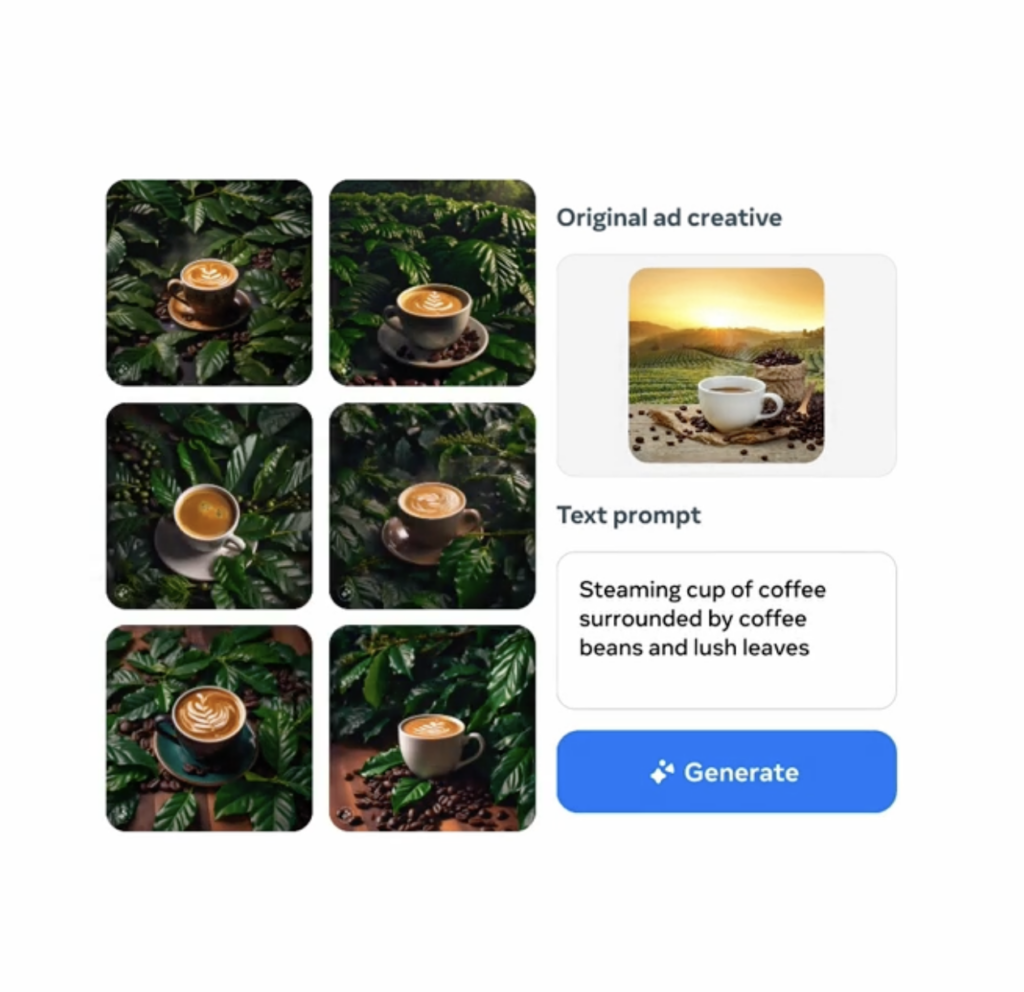
The social network will offer the capability for brands to upload existing creative, and then let the generative AI create new images based on these inputs. Eventually, brands will be able to use text to adjust the images Meta produces.

This is an advancement beyond previous Meta gen AI offerings for images last year, which allowed brands to change the background of images or resize them across multiple Meta ad formats.

An example of Meta’s new image generation toolMeta

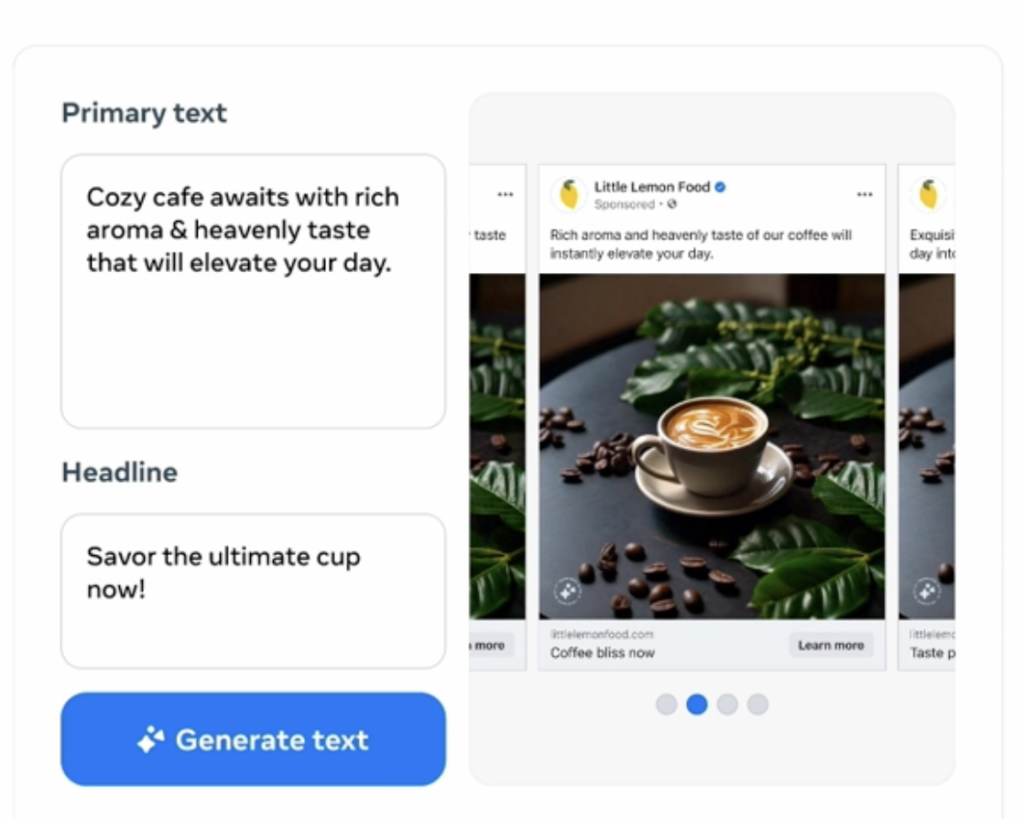
Meta is also offering a text generation tool which will use AI to create variations on an ad’s headline or primary text. A previous text gen AI tool that Meta released in October was limited to the ad’s text and not its headline.

An example of Meta’s new text generation toolMeta

These tools will be available globally by the end of the year.

Meta is far from the only destination marketers can go to get AI help on their creative. ChatGPT can write marketing copy, and Midjourney can make images, two among hundreds of other AI firms. But Meta is rooting this product rollout in what has always been Meta’s secret sauce: knowing who to show an ad to.

“Why are these updates going to be important?” asked John Hegeman, Meta’s head of monetization, rhetorically at press briefing today in New York. “We know that continually iterating on your ad creative is one of the most effective performance levers that advertisers have.” If marketers have more creative assets, they can better test which work to drive results.

These tools will live in the suite of Advantage+ creative products, which optimizes images and videos to versions the brand’s audiences will likely interact with, per Meta.

Advantage+ Creative is distinct from Advantage+ campaigns, where AI tech is used in a media buying capacity—automating who gets served what ad—and not for creativity. But the tools all involve automation and making less work for marketers.

Almost all Meta advertisers use at least one Advantage product, according to Hegeman. Revenue from Meta’s Advantage+ Shopping Campaigns more than doubled year-over-year, the company announced on its most recent earnings call.

.font-primary { } .font-secondary { } #meter-count { position: fixed; z-index: 9999999; bottom: 0; width:96%; margin: 2%; -webkit-border-radius: 4px; -moz-border-radius: 4px; border-radius: 4px; -webkit-box-shadow: 0 0px 15px 4px rgba(0,0,0,.2); box-shadow:0 0px 15px 4px rgba(0,0,0,.2); padding: 15px 0; color:#fff; background-color:#343a40; } #meter-count .icon { width: auto; opacity:.8; } #meter-count .icon svg { height: 36px; width: auto; } #meter-count .btn-subscribe { font-size:14px; font-weight:bold; padding:7px 18px; color: #fff; background-color: #2eb3b2; border:none; text-transform: capitalize; margin-right:10px; } #meter-count .btn-subscribe:hover { color: #fff; opacity:.8; } #meter-count .btn-signin { font-size:14px; font-weight:bold; padding:7px 14px; color: #fff; background-color: #121212; border:none; text-transform: capitalize; } #meter-count .btn-signin:hover { color: #fff; opacity:.8; } #meter-count h3 { color:#fff!important; letter-spacing:0px!important; margin:0; padding:0; font-size:16px; line-height:1.5; font-weight:700; margin: 0!important; padding: 0!important; } #meter-count h3 span { color:#E50000!important; font-weight:900; } #meter-count p { font-size:14px; font-weight:500; line-height:1.4; color:#eee!important; margin: 0!important; padding: 0!important; } #meter-count .close { color:#fff; display:block; position:absolute; top: 4px; right:4px; z-index: 999999; } #meter-count .close svg { display:block; color:#fff; height:16px; width:auto; cursor:pointer; } #meter-count .close:hover svg { color:#E50000; } #meter-count .fw-600 { font-weight:600; } @media (max-width: 1079px) { #meter-count .icon { margin:0; padding:0; display:none; } } @media (max-width: 768px) { #meter-count { margin: 0; -webkit-border-radius: 0px; -moz-border-radius: 0px; border-radius: 0px; width:100%; -webkit-box-shadow: 0 -8px 10px -4px rgba(0,0,0,0.3); box-shadow: 0 -8px 10px -4px rgba(0,0,0,0.3); } #meter-count .icon { margin:0; padding:0; display:none; } #meter-count h3 { color:#fff!important; font-size:14px; } #meter-count p { color:#fff!important; font-size: 12px; font-weight: 500; } #meter-count .btn-subscribe, #meter-count .btn-signin { font-size:12px; padding:7px 12px; } #meter-count .btn-signin { display:none; } #meter-count .close svg { height:14px; } }

Enjoying Adweek’s Content? Register for More Access!

https://www.adweek.com/media/meta-ai-advantage-creative-generative-image-text-tools/