Google CEO details how Chrome helped grow Google Search

Google knew as far back as 2010 that Google Chrome would help drive more Google searches. We learned some exact figures today during testimony from Alphabet and Google CEO Sundar Pichai at the ongoing U.S. vs. Google antitrust trial.

  • Users who switched to Chrome from Microsoft’s Internet Explorer performed 48% more Google searches. 
  • Users who switched to Chrome from Mozilla’s Firefox performed 27% more Google searches.

“The correlation was pretty clear to see,” Pichai said, CNN reported. Pichai also said, via WSJ:

  • “We realized early on that browsers are critical to how people are able to navigate and use the web.”
  • “It became very clear early on that if you make the user’s experience better, they would use the web more, they would enjoy using the web more, and they would search more in Google as well.”

$26.3 billion. Meanwhile, we also learned Google paid $26.3 billion to be the default search engine on various browsers, platforms and devices, with the biggest share going to Apple. That was according to testimony from Prabhakar Raghavan, a Google senior VP and head of Search, on Friday.

  • Google Search made $146 billion in 2021 – so that means Google spent around 18% of its search revenue on these deals.

The Apple deal. It made “it very, very seamless and easy for users to use our services,” Pichai said, per WSJ. “We know that making it the default will lead to increased usage of our products and services, particularly Google search in this case. So there is clear value in that and that’s what we were looking for.”

Google vs. Microsoft. The never-ending rivalry came up during Pichai’s testimony at a couple of different points:

  • In a flashback to 2005, when Google’s David Drummond sent a letter to Microsoft, complaining about Internet Explorer 7’s search defaults. Drummond wanted a choice screen because Google was worried about the anti-competitive nature of Microsoft prioritizing its own engine, MSN Search. From the letter:
    • “We are deeply concerned about the potential for harm to the competitive process from Microsoft’s actions, particularly given Microsoft’s monopoly position with its Windows OS and its IE browser.”
      “By pushing out an update of IE with a new search box that will default to Microsoft’s own search product in the vast majority of cases, Microsoft would gain a large number of search users for reasons having nothing to do with the merits of Microsoft’s search offering.”
    • “Finally, although Google hopes that legal action will not be necessary, we recognize that it is a foreseeable possibility. Accordingly, Google requests that Microsoft take care to retain all past and future records relating to any plans to tie search to any Microsoft product or otherwise deprive consumers of a competitive choice in search…”
  • In a flashback to 2007, when Pichai talked about how the browser market had “kind of stagnated” because Microsoft wasn’t “incented to improve the browser,” according to Reuters. (Chrome launched in 2008. Pichai led its development.)

Europe has a choice. Speaking of choice screens, since the 2020 arrival of a search choice screen Microsoft Bing has seen no positive gains in market share in Europe. Here’s Google vs. Microsoft Bing search market share, as of September in Europe, according to Statcounter:

  • Google: 90.87% (in the U.S., Google’s market share is lower – 88.48%)
  • Microsoft Bing: 3.4% (in the U.S., Microsoft Bing’s market share is higher – 6.35%)

So, yes, Google has spent $26.3 billion to be the search default everywhere it wants. But Europe shows that on all platforms, where explicitly given a choice, people still overwhelmingly choose Google.

Why we care. It has been interesting to learn just how important Chrome has been to fueling Google Search through the years. Clearly, the Apple deal (and all the other default deals) are valuable to Google. But we’re still weeks away from knowing what this all means when we’ll finally get a verdict from Judge Amit Mehta.


Related stories

New on Search Engine Land

@media screen and (min-width: 800px) { #div-gpt-ad-3191538-7 { display: flex !important; justify-content: center !important; align-items: center !important; min-width:770px; min-height:260px; } } @media screen and (min-width: 1279px) { #div-gpt-ad-3191538-7 { display: flex !important; justify-content: center !important; align-items: center !important; min-width:800px!important; min-height:440px!important; } }

About the author

Danny Goodwin

Danny Goodwin has been Managing Editor of Search Engine Land & Search Marketing Expo – SMX since 2022. He joined Search Engine Land in 2022 as Senior Editor. In addition to reporting on the latest search marketing news, he manages Search Engine Land’s SME (Subject Matter Expert) program. He also helps program U.S. SMX events. Goodwin has been editing and writing about the latest developments and trends in search and digital marketing since 2007. He previously was Executive Editor of Search Engine Journal (from 2017 to 2022), managing editor of Momentology (from 2014-2016) and editor of Search Engine Watch (from 2007 to 2014). He has spoken at many major search conferences and virtual events, and has been sourced for his expertise by a wide range of publications and podcasts.

https://searchengineland.com/google-ceo-details-how-chrome-helped-grow-google-search-433932



Ahrefs again calls out Semrush for ‘unethical practices’

Ahrefs leadership is once again calling out Semrush for making “7 shameless edits” to an Ahrefs vs. Semrush comparison article written by Brian Dean before his site, Backlinko, was acquired by Semrush.

The saga continues. That would actually be seven additional edits. Because previously, in Ahrefs mentions vanishing from Semrush-owned Backlinko, Ahrefs called out Semrush for, among other edits, changing Dean’s recommendation from Ahrefs to Semrush in a sentence preceded by “if you had to make me pick ONE tool to use for SEO, I’d have to go with…”

The 7 ‘shameless edits’. So what’s changed now? In his own words, Ahrefs CMO Tim Soulo said these changes were made:

  1. Erased the fact that Brian used to be our customer for many years (since 2013)
  2. Changed Brian’s preference from Ahrefs to Semrush
  3. Tried to upend the narrative that backlink analysis is Ahrefs’ “bread and butter feature”
  4. Link Intersect is no longer “awesome:”
  5. No more praise for “Best by links” report
  6. Erased the statement about the accuracy of our traffic estimations
  7. Relegated our Site Audit tool from “web-based version of ScreamingFrog” to a “toned-down version of ScreamingFrog:”

The one edit Ahrefs wants. What Soulo and Dmytro Gerasymenko, founder and CEO, want is a disclosure that the article was edited by Semrush. The only mention of a connection between Backlinko and Semrush is in the footer of the page:

  • © 2023 Backlinko is a Trademark of Semrush Inc

Deceptive endorsement? Ahrefs seemed to indicate they believe the article (which now has the title of Ahrefs vs Semrush: Which SEO Tool Should You Use in 2023?) could be violating Federal Trade Commision’s Endorsement Guides, which, in part say:

  • “If there’s a connection between an endorser and the marketer that a significant minority of consumers wouldn’t expect and it would affect how they evaluate the endorsement, that connection should be disclosed clearly and conspicuously.”

You can dig deeper into the FTC rules here.

Semrush response. “Overreach” was the word used by Nick Eubanks, Semrush’s head of digital asset acquisition:

  • “’Intentionally deceptive’ is overreaching here. ‘Doing business’ as in strategically owning media.. Semrush is far from the first company to do this,” Eubanks posted.

Little sympathy for Ahrefs. Reaction within the industry has been mixed. While both companies have their die-hard supporters/customers, various X posts accused Ahrefs of whining. Here are a couple of the negative reactions.

But Ahrefs also had supporters:

Why we care. Nobody really “wins” here from a reputation perspective. Ahrefs is viewed negatively for complaining about a competitor. Semrush looks like it’s being deceptive (and perhaps a tad arrogant). But for Gerasymenko, this battle won’t be won in X posts. As Terry Van Horne put it on X, “report them to the FTC and move on”:


Related stories

New on Search Engine Land

@media screen and (min-width: 800px) { #div-gpt-ad-3191538-7 { display: flex !important; justify-content: center !important; align-items: center !important; min-width:770px; min-height:260px; } } @media screen and (min-width: 1279px) { #div-gpt-ad-3191538-7 { display: flex !important; justify-content: center !important; align-items: center !important; min-width:800px!important; min-height:440px!important; } }

About the author

Danny Goodwin

Danny Goodwin has been Managing Editor of Search Engine Land & Search Marketing Expo – SMX since 2022. He joined Search Engine Land in 2022 as Senior Editor. In addition to reporting on the latest search marketing news, he manages Search Engine Land’s SME (Subject Matter Expert) program. He also helps program U.S. SMX events. Goodwin has been editing and writing about the latest developments and trends in search and digital marketing since 2007. He previously was Executive Editor of Search Engine Journal (from 2017 to 2022), managing editor of Momentology (from 2014-2016) and editor of Search Engine Watch (from 2007 to 2014). He has spoken at many major search conferences and virtual events, and has been sourced for his expertise by a wide range of publications and podcasts.

https://searchengineland.com/ahrefs-vs-semrush-unethical-practices-433839


Meta ad revenue fuels blowout Q3, $11.6 billion in profits

Meta’s third-quarter revenue jumped 23% to $34.15 billion, the latest indicator of a rebound in digital advertising.

Meta, the parent company of Instagram, WhatsApp, Threads and Messenger, reported that:

  • Ads viewed in the quarter increased by 31% from a year earlier.
  • Average price per ad decreased by 6%, the smallest decline in seven quarters.

The company reported $11.6 billion in profit, more than twice the $4.4 billion from a year earlier. Its operating income of $13.7 billion also more than doubled year-over-year.

  • “The year-over-year decline in pricing was driven by strong impression growth, especially from lower monetizing surfaces and regions. While overall pricing remains under pressure from these factors, we believe our ongoing improvements to ad targeting and measurement are continuing to drive improved results for advertisers,” said Meta CFO Susan Li said in an analyst call yesterday.

Cost cutting. Earnings were also helped by its cost cuts, with expenses falling 7% from a year earlier to $20.4 billion. In the past year, Meta has reduced its workforce by roughly a third and flattened its organizational structure.

User growth. This continued in some of Meta’s key markets, including the United States and Canada.

  • About 3.14 billion people use one or more of the company’s apps every day, up 7% from last year.
  • Nearly 4 billion people, about half the world’s population, use at least one of Meta’s apps each month.

Prioritizing AI. AI has been and will continue to be a big part of Meta’s drive to increase efficiency and lower costs. The company has depended on AI-powered marketing planning and ad measurement in particular in recent years to drive growth.

Customer use of chatbots is still in its infancy, said Meta CEO Mark Zuckerberg.

  • “It’s going to take time to tune all of these experiences before hundreds of millions or billions of people are going to use them,” he said on the earnings call.

Hiring to increase. Zuckerberg said Meta plans to start hiring more AI-focused technologists for that and that the will increase headcount overall as it works through its “sizable hiring backlog.”

In the current quarter, the company expects to do well but warned of volatility because of events in the Middle East. Li said the company has “seen broader demand softness follow other regional conflicts in the past, such as in the Ukraine war” after Russia invaded in 2022.

  • “We have observed softer ads in the beginning of the fourth quarter, correlating with the start of the conflict, which is captured in our Q4 revenue outlook. It’s hard for us to attribute demand softness directly to any specific geopolitical event,” Li said.

Related stories

New on Search Engine Land

@media screen and (min-width: 800px) { #div-gpt-ad-3191538-7 { display: flex !important; justify-content: center !important; align-items: center !important; min-width:770px; min-height:260px; } } @media screen and (min-width: 1279px) { #div-gpt-ad-3191538-7 { display: flex !important; justify-content: center !important; align-items: center !important; min-width:800px!important; min-height:440px!important; } }

About the author

Constantine von Hoffman

Constantine von Hoffman is managing editor of MarTech. A veteran journalist, Con has covered business, finance, marketing and tech for CBSNews.com, Brandweek, CMO, and Inc. He has been city editor of the Boston Herald, news producer at NPR, and has written for Harvard Business Review, Boston Magazine, Sierra, and many other publications.

https://searchengineland.com/meta-ad-revenue-fuels-blowout-q3-11-6-billion-in-profits-433830


Microsoft relaunches pubCenter, its Google AdSense alternative

Microsoft wants small and mid-sized publishers to use pubCenter to monetize their websites, using display and native ads from the Microsoft Advertising Network.

Not new, or is it? Microsoft pubCenter is not new – it dates back to 2008 and has its own Wikipedia page – so I guess this is technically a relaunch? Or maybe a reboot? Perhaps a reimagining?

Basically, Microsoft today is positioning its 15-year-old Google AdSense alternative as a U.S.-only “pilot program.”

This is also not to be confused with Microsoft Start, its Google News alternative, which also has numerous partnerships with publishers who can earn revenue when their content is read on the Start app.

How it works. Just like AdSense, you pick an ad format, add some code to your website and get paid every time an ad is served on your website. There are “no sign-up costs, revenue minimums, or volume requirements to get started,” Microsoft wrote in its announcement.

What Microsoft is saying. The typical – higher engagement and more revenue. It seems to be promising more revenue than Google AdSense.

  • “We offer flexible mediation—simply use our ads in the same units with Google AdSense, and we’ll only serve our ads when we can predict a higher bid for you. You can also place the Microsoft ad code on the same page alongside your other ads.”

U.S. only. It’s now open to all SMBs/publishers in the U.S. Those outside of the U.S. will have to join a waitlist, if/when Microsoft adds international support. You can sign up here.

First spotted in May? In Microsoft pubCenter, Google AdSense Alternative, Looking To Expand? on May 18 Barry Schwartz reported on a Microsoft Advertising console pop-up that seemed to indicate something was happening with pubCenter. He also provided a walk-through for configuring the next/latest version of pubCenter.


Related stories

New on Search Engine Land

@media screen and (min-width: 800px) { #div-gpt-ad-3191538-7 { display: flex !important; justify-content: center !important; align-items: center !important; min-width:770px; min-height:260px; } } @media screen and (min-width: 1279px) { #div-gpt-ad-3191538-7 { display: flex !important; justify-content: center !important; align-items: center !important; min-width:800px!important; min-height:440px!important; } }

About the author

Danny Goodwin

Danny Goodwin has been Managing Editor of Search Engine Land & Search Marketing Expo – SMX since 2022. He joined Search Engine Land in 2022 as Senior Editor. In addition to reporting on the latest search marketing news, he manages Search Engine Land’s SME (Subject Matter Expert) program. He also helps program U.S. SMX events. Goodwin has been editing and writing about the latest developments and trends in search and digital marketing since 2007. He previously was Executive Editor of Search Engine Journal (from 2017 to 2022), managing editor of Momentology (from 2014-2016) and editor of Search Engine Watch (from 2007 to 2014). He has spoken at many major search conferences and virtual events, and has been sourced for his expertise by a wide range of publications and podcasts.

https://searchengineland.com/microsoft-relaunches-pubcenter-google-adsense-alternative-433765


Snap revenue up 5%, promises better ROI for advertisers

Snap, the parent company of Snapchat, reported its revenue rose 5% in the latest quarter after two straight quarters of declines on a rebound in the digital advertising market.

Advertising is the biggest source of Snap’s revenue – and the company cautioned the ad market remains volatile, pointing to the impact of war in the Middle East:

  • “We have had a number of primarily brand-oriented campaigns pause spending in the early period, I will say that we have seen a lot of those campaigns resume spending and the impact to our daily run rate has reduced significantly as a result of that but we also have seen a very small amount of incremental campaign pauses trickle in more recently,” said Snap CFO Derek Andersen said in an analyst call yesterday.

Revenue for the third quarter was $1.19 billion, up from $1.13 billion a year ago. In the previous two quarters, Snap’s revenue had fallen between 4% and 7%.

The company remains unprofitable – its net loss of $368 million for the third quarter is wider than a loss of $360 million a year ago.

Ad platform improvements. In a letter to investors, Snap said the company has “focused on improving our advertising platform” to generate higher returns for advertisers.

  • “We continue to make really significant investments in the ad ranking and optimization of creating a much broader range of signals into the ad platform and driving much larger models. And we’ve also instituted a much faster pace of experimentation. All of that’s leading to more precise conversion predictions, improved ROI for advertisers,” Andersen said.

Snap invested in improving ad ranking and optimization using ML models. This has led to a significant improvement in ROI for advertisers and an increase in lower-funnel revenue year-over-year and quarter-over-quarter. Also, its 7/0 Pixel Purchase optimization now lets advertisers bid for attributed seven-day clickthrough conversions.

Snapchat also reported working with advertisers to improve the effectiveness of their privacy-centric integrations with the ad platform. This resulted in significantly higher signal quality for those advertisers.

Last quarter, Snapchat introduced the Event Quality Score (EQS) system for advertisers to measure the quality and integrity of their data and identify opportunities to optimize their integrations with the ad platform. 

Increase in paid subscribers. Daily active users for the third quarter were 406 million, up 12% from a year ago. Last month, Snap said it had reached five million users for its paid subscription services, up from 4 million in June.

Because Snap is primarily used as a messaging platform – and doesn’t run ads in those messages – it’s had a hard time monetizing its users.

To rectify that it has ads in features like Stories and Spotlight, scrollable feeds of photos and videos from creators. Last month, Snap partnered with Microsoft to include sponsored links in Snap’s AI chatbot My AI.

Snap reported more than 200 million people have used My AI, sending more than 20 billion messages. CEO Evan Spiegel said in yesterday’s analyst call that while My AI is just getting started, it will eventually be a revenue driver.

  • “Our primary focus right now is just improving response quality. We’re seeing some of the work we’re doing to improve those responses lead to higher retention with the product overall. There’s certainly plenty of commercial intent. We are taking steps to integrate into our models to help folks see more relevant content and advertising,” Spiegel said.

Related stories

New on Search Engine Land

@media screen and (min-width: 800px) { #div-gpt-ad-3191538-7 { display: flex !important; justify-content: center !important; align-items: center !important; min-width:770px; min-height:260px; } } @media screen and (min-width: 1279px) { #div-gpt-ad-3191538-7 { display: flex !important; justify-content: center !important; align-items: center !important; min-width:800px!important; min-height:440px!important; } }

About the author

Constantine von Hoffman

Constantine von Hoffman is managing editor of MarTech. A veteran journalist, Con has covered business, finance, marketing and tech for CBSNews.com, Brandweek, CMO, and Inc. He has been city editor of the Boston Herald, news producer at NPR, and has written for Harvard Business Review, Boston Magazine, Sierra, and many other publications.

https://searchengineland.com/snap-revenue-up-5-promises-better-roi-for-advertisers-433753


Amazon Ads launches AI image generation

Select Amazon advertisers can now create AI-generated images to use in ad campaigns.

Essentially, what the tool offers advertisers is the ability to add backgrounds or scenery to plain product images.

Why we care. Amazon said its tool could lead to better ad performance. Products shown within a “lifestyle scene” can get 40% higher click-through rates, the company said.

How it works. Head to Amazon Ad Console, select your product, then click Generate. Using generative AI, Amazon will show you various “lifestyle and brand-themed images, based on product details, in a matter of seconds,” Amazon explained.

You can then further customize your AI-generated images using short text prompts or “enhance” them with a pre-set theme. You can save multiple versions to test and optimize performance, the company said.

You can add up to five images in your Amazon ad. Choosing multiple images will automatically create a looping slideshow.

Here’s a video showing it in action:

[embedded content]

Limited availability. AI-generated images is only available to “select” advertisers now. But Amazon said it will “expand availability over time.”

What Amazon is saying. The image generation tool is easy to use and requires no technical expertise, according to Amazon.

  • “This solution is helpful for advertisers of all sizes—enabling those that do not have in-house capabilities or agency support to more easily create brand-themed imagery, while also supporting bigger brands, who are constantly looking for ways to be more efficient around creative development,” the company wrote in its announcement.

This was expected. Like most ad platforms, Amazon has been working to add generative AI capabilities. We reported that Amazon was working on AI tools to generate images for advertisers in May. Now it’s finally here, nearly six months later.


Related stories

New on Search Engine Land

@media screen and (min-width: 800px) { #div-gpt-ad-3191538-7 { display: flex !important; justify-content: center !important; align-items: center !important; min-width:770px; min-height:260px; } } @media screen and (min-width: 1279px) { #div-gpt-ad-3191538-7 { display: flex !important; justify-content: center !important; align-items: center !important; min-width:800px!important; min-height:440px!important; } }

About the author

Danny Goodwin

Danny Goodwin has been Managing Editor of Search Engine Land & Search Marketing Expo – SMX since 2022. He joined Search Engine Land in 2022 as Senior Editor. In addition to reporting on the latest search marketing news, he manages Search Engine Land’s SME (Subject Matter Expert) program. He also helps program U.S. SMX events. Goodwin has been editing and writing about the latest developments and trends in search and digital marketing since 2007. He previously was Executive Editor of Search Engine Journal (from 2017 to 2022), managing editor of Momentology (from 2014-2016) and editor of Search Engine Watch (from 2007 to 2014). He has spoken at many major search conferences and virtual events, and has been sourced for his expertise by a wide range of publications and podcasts.

https://searchengineland.com/amazon-ads-launches-ai-image-generation-433747


Google Rolls Up More Formats Into YouTube Ad Buys


.article-native-ad { border-bottom: 1px solid #ddd; margin: 0 45px; padding-bottom: 20px; margin-bottom: 20px; } .article-native-ad svg { color: #ddd; font-size: 34px; margin-top: 10px; } .article-native-ad p { line-height:1.5; padding:0!important; padding-left: 10px!important; } .article-native-ad strong { font-weight:500; color:rgb(46,179,178); }

Experience the buzz at NexTech, Adweek’s innovative conference for the newest tools in marketing technology. Talk with experts on generative AI, audience management, automation, the metaverse and more. Register.

Earlier this month, Google made changes to the types of inventory that get included in certain YouTube ad buys by default, the latest example of platform algorithms choosing where ads ultimately run.

Google introduced brand consideration tool, Video View campaigns, which places ads across in-stream, in-feed and Shorts placements. The company introduced the format in beta in June. By October, the tool was availability widely. It became the default brand consideration campaign in Demand & Video 360 and Google Ads. Previously, the default for these consideration campaigns was only in-stream videos, which are ads that play on a horizontal video player.

In-feed placements appear in YouTube search results, YouTube Watch Next and the YouTube app home feed. Shorts are YouTube’s vertical video TikTok replica. Google uses machine learning technology to reformat horizontal ads for Shorts.

The change rankled some buyers who see this as another move by Google to give buyers less control over ad buying. As the tech giant embraces artificial intelligence in its media buying products, algorithms are starting to get more of a say in where ads run, a decision previously made by media executives.

This is also playing out in the growing popularity of Google’s AI-powered tool Performance Max, which buyers have complained does not ultimately place ads where they would want and lacks transparency.

“It’s Performance Max for awareness and consideration advertisers,” said one media buyer of the new default, who requested anonymity to protect industry relations. “The changes that they make continue to be combining things and less transparent. It just seems that they’re on that path.”

Buyers, however, still can opt-out of Video View Campaigns with one click and run campaigns that are either exclusively in-stream or in-feed, said Austin Wignall, managing director of product management for YouTube Brand Advertising. Buyers using the tool can see how impressions and spending break down by ad format in their campaign reports, he added.

“We recently introduced YouTube Video View Campaigns in both Display & Video 360 and Google Ads to provide advertisers with a simple way to get the most views across ad formats, while improving performance,” Wignall told Adweek. “On average, VVC campaigns get up to 40% more views and 30% lower cost per view than in-stream skippable CPV campaigns.” 

Jack of all trades, master of none?

Buyers are most concerned that YouTube’s new default to multiple formats for campaigns optimized for views will end up placing ads where they aren’t as effective.

For example, a makeup brand might want to use in-feed placements for a how-to video on creating a smoky eye, something that would catch a viewer and fit within a brand’s content strategy, said a second media buyer who requested anonymity. A more persuasion-focused ad with a message might make more sense in-stream. The current default would place ads indiscriminately, though buyers can still opt out.

“We wouldn’t want to run on it because it expands the potential inventory pull to in-feed and Shorts which are fundamentally different than in-stream,” said a third buyer who requested anonymity. This buyer doesn’t currently buy campaigns optimized for brand consideration but said this change would discourage them from doing so in the future.

Shorts would auto-crop a client’s ad, which for a movie studio client would be a problem, the buyer added.

Of note, the multi-format default is only new for campaigns designed to drive video views, not performance-oriented campaigns, such as video-action campaigns that can drive viewers to websites, where multi-format has been a norm for longer.

Sacrificing control for performance

Other buyers weren’t sure a default of Video View campaigns would have major performance impacts.

“I generally have less concern from a performance perspective about Google mixing different video placements together,” said Chris Rigas, vp of media at digital agency Markacy. “Whereas with Pmax, the incrementality of a conversion after a shopping ad tends to be much higher than that of a conversion after an open web ad. I don’t think that holds true as much for an in-stream YouTube placement versus an in-feed YouTube placement.”

YouTube opening up more new inventory sources to buyers is welcomed, said David Mirsky, group director at Crispin Porter and Bogusky, and products like Video View campaigns satisfy the demands of some buyers.

“That’s the game we as media buyers play in the digital space,” Mirsky said. “We can either go full performance and open inventory to allow for less expensive impressions, but we sacrifice control in the process. If you want control and selection, you need to be ready to be more hands-on.”

.font-primary { } .font-secondary { } #meter-count { position: fixed; z-index: 9999999; bottom: 0; width:96%; margin: 2%; -webkit-border-radius: 4px; -moz-border-radius: 4px; border-radius: 4px; -webkit-box-shadow: 0 0px 15px 4px rgba(0,0,0,.2); box-shadow:0 0px 15px 4px rgba(0,0,0,.2); padding: 15px 0; color:#fff; background-color:#343a40; } #meter-count .icon { width: auto; opacity:.8; } #meter-count .icon svg { height: 36px; width: auto; } #meter-count .btn-subscribe { font-size:14px; font-weight:bold; padding:7px 18px; color: #fff; background-color: #2eb3b2; border:none; text-transform: capitalize; margin-right:10px; } #meter-count .btn-subscribe:hover { color: #fff; opacity:.8; } #meter-count .btn-signin { font-size:14px; font-weight:bold; padding:7px 14px; color: #fff; background-color: #121212; border:none; text-transform: capitalize; } #meter-count .btn-signin:hover { color: #fff; opacity:.8; } #meter-count h3 { color:#fff!important; letter-spacing:0px!important; margin:0; padding:0; font-size:16px; line-height:1.5; font-weight:700; margin: 0!important; padding: 0!important; } #meter-count h3 span { color:#E50000!important; font-weight:900; } #meter-count p { font-size:14px; font-weight:500; line-height:1.4; color:#eee!important; margin: 0!important; padding: 0!important; } #meter-count .close { color:#fff; display:block; position:absolute; top: 4px; right:4px; z-index: 999999; } #meter-count .close svg { display:block; color:#fff; height:16px; width:auto; cursor:pointer; } #meter-count .close:hover svg { color:#E50000; } #meter-count .fw-600 { font-weight:600; } @media (max-width: 1079px) { #meter-count .icon { margin:0; padding:0; display:none; } } @media (max-width: 768px) { #meter-count { margin: 0; -webkit-border-radius: 0px; -moz-border-radius: 0px; border-radius: 0px; width:100%; -webkit-box-shadow: 0 -8px 10px -4px rgba(0,0,0,0.3); box-shadow: 0 -8px 10px -4px rgba(0,0,0,0.3); } #meter-count .icon { margin:0; padding:0; display:none; } #meter-count h3 { color:#fff!important; font-size:14px; } #meter-count p { color:#fff!important; font-size: 12px; font-weight: 500; } #meter-count .btn-subscribe, #meter-count .btn-signin { font-size:12px; padding:7px 12px; } #meter-count .btn-signin { display:none; } #meter-count .close svg { height:14px; } }

Enjoying Adweek’s Content? Register for More Access!

https://www.adweek.com/media/google-rolls-up-more-formats-into-youtube-ad-buys/


LinkedIn to give Collaborative Articles more reach in search

Linkedin Collaborative Articles Home Search Notifications

LinkedIn is giving users more incentives to contribute to Collaborative Articles, promising greater visibility in search, feeds and notifications, the company announced today.

More visibility. LinkedIn plans to include more Collaborative Articles when people search for specific problems or topics. So if you’ve contributed to a Collaborative Article, this increases the odds your answer could be featured in LinkedIn’s search results.

Other ways LinkedIn is increasing visibility for Collaborative Article contributors:

  • People outside your network may be exposed to your contribution, not just people you are already connected to.
  • LinkedIn may also notify members “who would benefit” from your expertise.

Why we care. Contributing to Collaborative Articles provides a way to increase your visibility and your LinkedIn network and possibly even get leads. However, the format still is imperfect and needs more human editorial oversight.

Smart SEO play. LinkedIn Collaborative articles have been a smart and effective SEO play for LinkedIn so far. Just look at this growth (as shared on LinkedIn by Olga Andrienko, VP of brand marketing at Semrush):

Linkedin Collaborative Articles Semrush

But. It’s also resulting in a lot of SEO misinformation.

  • “It’s churning out content about SEO talking about bounce rate, toxic links, and how you need to spend hours agnosing over meta descriptions. Just drowning in half-truths and misinformation. SEO is going to be particularly interesting in the next few years!” Mark Williams-Cook, Director at Candour, wrote on LinkedIn.

What else is changing. LinkedIn announced multiple additional updates to Collaborative Articles:

  • Top Community Voice badges: Badges for a skill will appear next to your contributions to an article, no longer just on your profile.
  • New layout: LinkedIn is putting a greater focus on member contributions instead of AI-generated text.
  • All reactions available: Plus, you can see who has reacted to your contributions.
  • Follow: People can now follow you directly from your contributions.
  • Top Contributor section: Noteworthy contributors will be featured at the top of an article (most likely based on reactions).
  • Cross-article linking: Internal links are being added to articles to make it easier to discover and read more articles.
  • And more: LinkedIn is promising better quality and depth for articles; better algorithmic recommendations based on your posts/articles/comments; that filling in your Top Skills section will “explicitly pick the skills you want to contribute to”; and a refresh of linkedin.com/advice that makes it easier to find and contribute to articles.

Related stories

New on Search Engine Land

@media screen and (min-width: 800px) { #div-gpt-ad-3191538-7 { display: flex !important; justify-content: center !important; align-items: center !important; min-width:770px; min-height:260px; } } @media screen and (min-width: 1279px) { #div-gpt-ad-3191538-7 { display: flex !important; justify-content: center !important; align-items: center !important; min-width:800px!important; min-height:440px!important; } }

About the author

Danny Goodwin

Danny Goodwin has been Managing Editor of Search Engine Land & Search Marketing Expo – SMX since 2022. He joined Search Engine Land in 2022 as Senior Editor. In addition to reporting on the latest search marketing news, he manages Search Engine Land’s SME (Subject Matter Expert) program. He also helps program U.S. SMX events. Goodwin has been editing and writing about the latest developments and trends in search and digital marketing since 2007. He previously was Executive Editor of Search Engine Journal (from 2017 to 2022), managing editor of Momentology (from 2014-2016) and editor of Search Engine Watch (from 2007 to 2014). He has spoken at many major search conferences and virtual events, and has been sourced for his expertise by a wide range of publications and podcasts.

https://searchengineland.com/linkedin-collaborative-articles-more-reach-updates-433465


Verified Accounts on X Spread 74% of Wartime Misinformation


.article-native-ad { border-bottom: 1px solid #ddd; margin: 0 45px; padding-bottom: 20px; margin-bottom: 20px; } .article-native-ad svg { color: #ddd; font-size: 34px; margin-top: 10px; } .article-native-ad p { line-height:1.5; padding:0!important; padding-left: 10px!important; } .article-native-ad strong { font-weight:500; color:rgb(46,179,178); }

Media and marketing pros from Warner Bros, YouTube, Tubi and more will share insights, perspectives and advice on how to keep up in this ever-changing industry. Join them in LA at the Convergent TV Summit on October 25.

As the latest Israel and Hamas war reaches its two-week mark, an overwhelming surge of videos and photos claiming to portray the ongoing turmoil has inundated social media platforms.

So far, Elon Musk’s X (formerly Twitter) is struggling to combat wartime misinformation, making advertisers even more cautious about returning to the beleaguered platform.

The platform’s “verified” users, who now pay to have a blue check, pushed 74% of X’s most viral false Israel-Hamas war-related claims, according to a NewsGuard analysis shared with Adweek.

“This is another nail in the coffin for X in terms of deteriorating advertisers’ trust,” said Ruben Schreurs, chief strategy officer at independent marketing and media consultancy Ebiquity. “And they’re enforcing their decision not to return to X.”

In its first week of conflict beginning Oct. 7, the news rating company analyzed the top 250 posts containing misinformation that received the most likes, reposts, replies and bookmarks, and found 186 accounts of the 250—74%—were verified by X. NewsGuard identifies misinformation using a combination of humans and artificial intelligence.

The verified accounts promoted 10 false narratives, such as claims that Ukraine sold weapons to Hamas and a video of Israeli senior officials being captured by Hamas.

Collectively, posts promoting false claims garnered 1,349,979 likes, reposts, replies and bookmarks, and were viewed by more than 100 million people globally in a week, per NewsGuard.

Combating wartime misinformation has been X’s biggest content moderation test as advertisers grow increasingly leery about the platform. In March, Musk began un-checking accounts and selling verification (blue check marks), a feature that was once reserved for high-profile users and professional journalists. Since then, Musk has also slashed the number of content and safety policy positions within the company. 

“That decision [to let people pay for verification] turned out to be a boon for bad actors sharing misinformation about the Israel-Hamas war,” according to NewsGuard.

Under Musk’s leadership, advertisers have grown increasingly uneasy, leading to a stop in ad spend. Since the acquisition, the platform’s ad revenue has declined each month, per Reuters. Meanwhile, ad rates have plummeted by more than 75% and X hit a three-year low, with CPMs as low as 61 cents as of August, according to the 2023 State of Social Media CPM report by Gupta Media.

Former NBCUniversal ad chief Linda Yaccarino’s hiring as CEO in June instilled some degree of confidence among advertisers, but the rampant outbreaks of disturbing content on X have further gutted advertisers’ trust, three sources told Adweek. 

Following discussions with senior leadership across its 75 clients, “the absolute overwhelming majority of our brand advertisers are incredibly concerned with the ongoing misinformation,” Schreurs said. Audi and Sony are both Ebiquity clients—the former ceased organic posting on X in November last year, while Sony has continued.

Adweek has contacted X for a response.

EU’s involvement a ‘key driver of concern’

The platform’s struggle to curb rampant misinformation has brand leaders even more cautious to return.

“Most brand partners hoped that Yaccarino would bring some maturity back to the platform,” Christopher Spong, associate director of social media and communications at media agency Collective Measures, told Adweek. “It quickly became clear that Musk was still running the show.”

Meanwhile, European regulators last week made a formal request for information from Musk’s platform concerning its procedures and practices to address hate speech, dissemination of misinformation and the presence of violent terrorist content pertaining to the Israel-Hamas war.

The flagging by the EU was a “key driver of immediate concern” for brand partners at Ebiquity. 

In response, Yaccarino sent a letter to the EU outlining the platform’s efforts to curb war-related disinformation, including “redistributing resources” and “refocusing internal teams.” X has introduced new enhancements to its Community Notes, a crowdsourced fact-checking feature and has taken action to remove hundreds of Hamas-affiliated accounts.

However, per NewsGuard’s analysis, Community Notes failed to successfully debunk misinformation 68% of the time. Only 79 of the 250 posts that perpetuated wartime misinformation were flagged by the platform with Community Notes.

.font-primary { } .font-secondary { } #meter-count { position: fixed; z-index: 9999999; bottom: 0; width:96%; margin: 2%; -webkit-border-radius: 4px; -moz-border-radius: 4px; border-radius: 4px; -webkit-box-shadow: 0 0px 15px 4px rgba(0,0,0,.2); box-shadow:0 0px 15px 4px rgba(0,0,0,.2); padding: 15px 0; color:#fff; background-color:#343a40; } #meter-count .icon { width: auto; opacity:.8; } #meter-count .icon svg { height: 36px; width: auto; } #meter-count .btn-subscribe { font-size:14px; font-weight:bold; padding:7px 18px; color: #fff; background-color: #2eb3b2; border:none; text-transform: capitalize; margin-right:10px; } #meter-count .btn-subscribe:hover { color: #fff; opacity:.8; } #meter-count .btn-signin { font-size:14px; font-weight:bold; padding:7px 14px; color: #fff; background-color: #121212; border:none; text-transform: capitalize; } #meter-count .btn-signin:hover { color: #fff; opacity:.8; } #meter-count h3 { color:#fff!important; letter-spacing:0px!important; margin:0; padding:0; font-size:16px; line-height:1.5; font-weight:700; margin: 0!important; padding: 0!important; } #meter-count h3 span { color:#E50000!important; font-weight:900; } #meter-count p { font-size:14px; font-weight:500; line-height:1.4; color:#eee!important; margin: 0!important; padding: 0!important; } #meter-count .close { color:#fff; display:block; position:absolute; top: 4px; right:4px; z-index: 999999; } #meter-count .close svg { display:block; color:#fff; height:16px; width:auto; cursor:pointer; } #meter-count .close:hover svg { color:#E50000; } #meter-count .fw-600 { font-weight:600; } @media (max-width: 1079px) { #meter-count .icon { margin:0; padding:0; display:none; } } @media (max-width: 768px) { #meter-count { margin: 0; -webkit-border-radius: 0px; -moz-border-radius: 0px; border-radius: 0px; width:100%; -webkit-box-shadow: 0 -8px 10px -4px rgba(0,0,0,0.3); box-shadow: 0 -8px 10px -4px rgba(0,0,0,0.3); } #meter-count .icon { margin:0; padding:0; display:none; } #meter-count h3 { color:#fff!important; font-size:14px; } #meter-count p { color:#fff!important; font-size: 12px; font-weight: 500; } #meter-count .btn-subscribe, #meter-count .btn-signin { font-size:12px; padding:7px 12px; } #meter-count .btn-signin { display:none; } #meter-count .close svg { height:14px; } }

Enjoying Adweek’s Content? Register for More Access!

https://www.adweek.com/media/verified-accounts-x-spread-wartime-misinformation/


Survey: 70% of marketers feel overwhelmed by AI changes

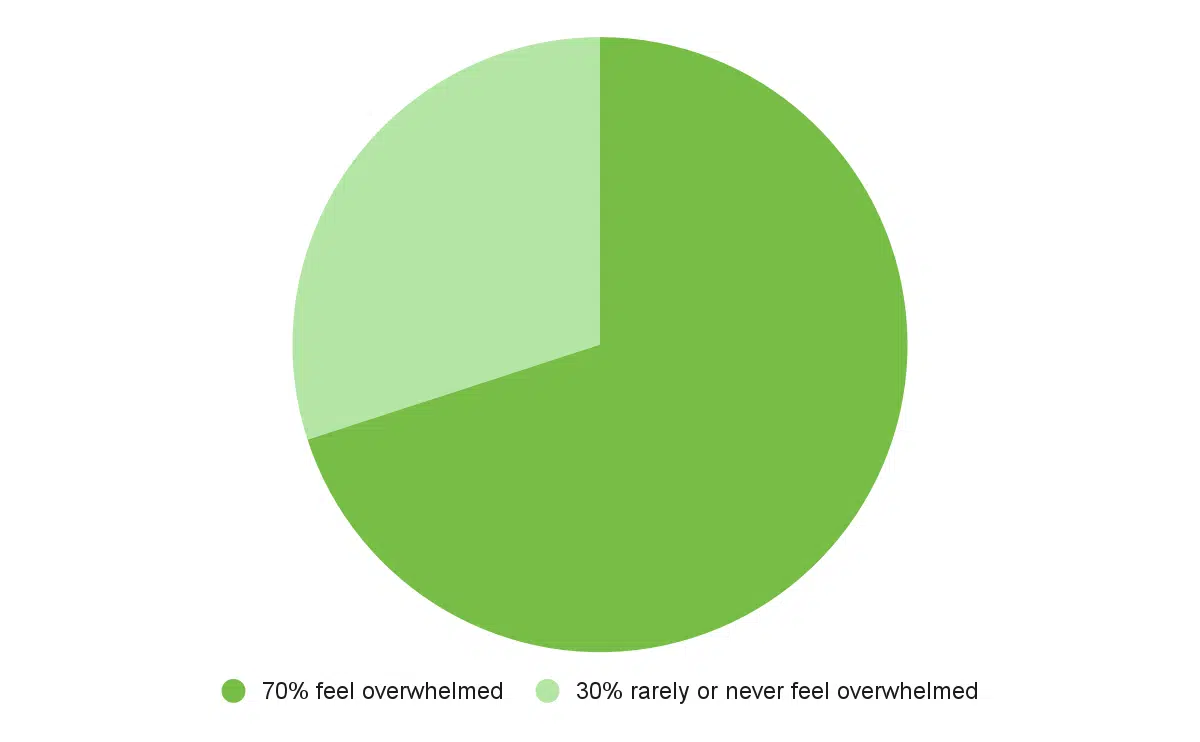
Marketing professionals say they are overwhelmed by the pace of AI developments, according to a new survey.

While 70% of marketers often or always feel overwhelmed, just 30% rarely or never feel overwhelmed, according to a survey released by SOCi, a marketing platform for multi-location brands.

Marketers Feeli Overwhelmed By AI Development SOCi
  • “It’s a call to action for organizations to prioritize continuous learning and offer support to their teams. Otherwise, millions and billions invested in AI will be wasted,” said Monica Ho, CMO of SOCi.

No training or education. Perhaps contributing to some of that overwhelmed feeling is this survey finding:

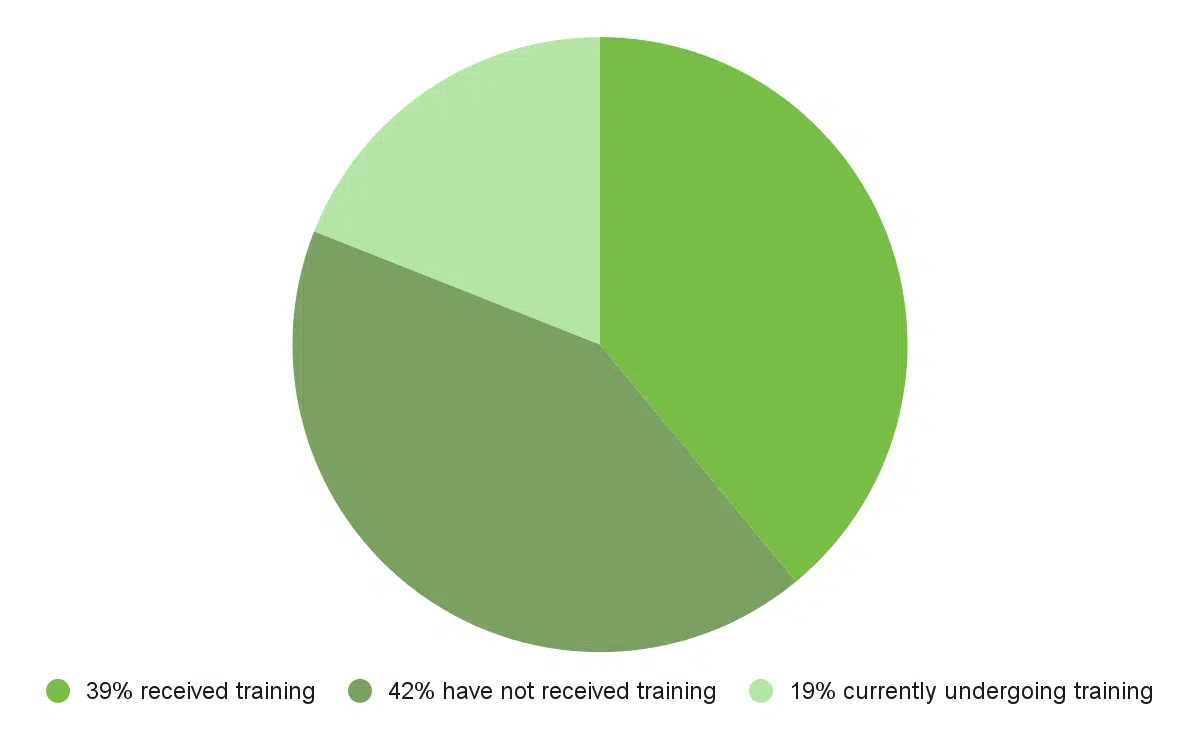
  • 42% of marketers haven’t received any formal training on AI and its applications in marketing.
Formal Education On AI In Marketing SOCi

As for the rest, 39% have received training while 19% are currently undergoing training.

  • “We need to better equip our marketing teams with the right AI training and resources. A better understanding of AI and its applications is pivotal to harnessing its capabilities for our marketing strategies and unlocking its full potential,” Ho said.

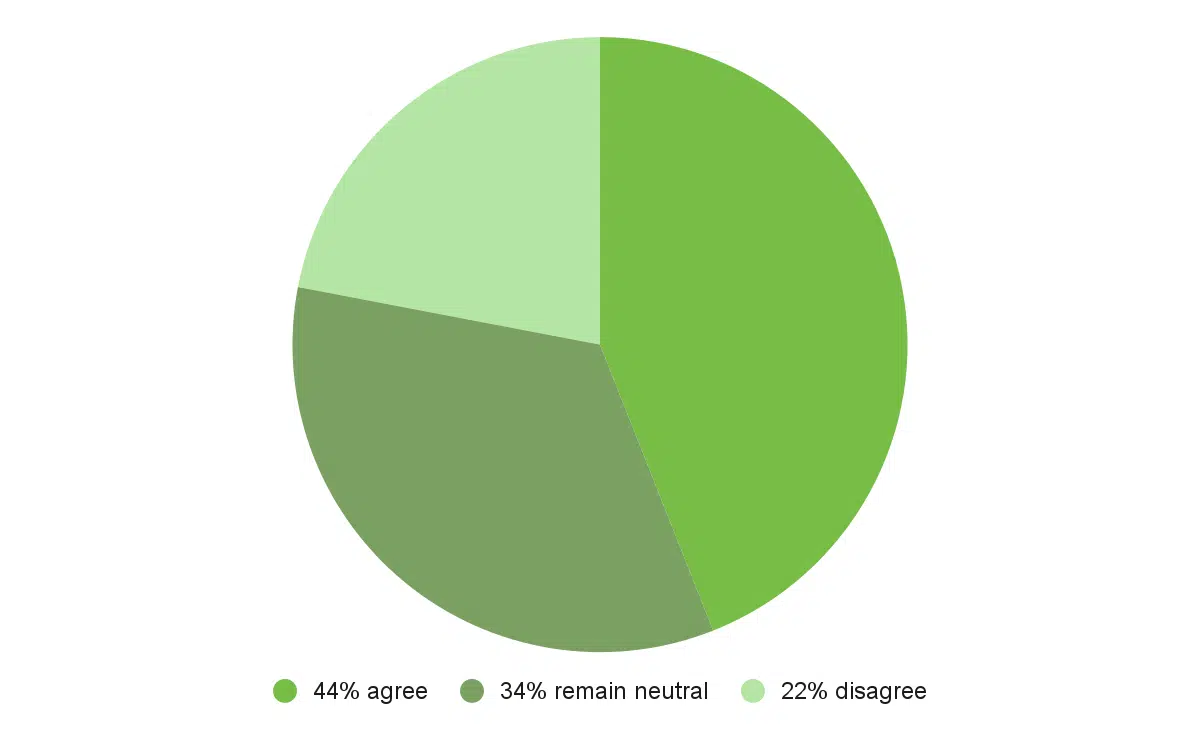
More tools, more confusion. Rather than help marketers do their jobs better, the frequent introduction of new AI tools has caused confusion, according to 44% of respondents.

AI Tools Confusion Vs Assistance SOCi

Why we care. If you’re feeling overwhelmed like the marketers in this survey, know you’re not alone. The speed of change we’ve seen this year in search marketing has been incredible and unlike any other year that I’ve seen covering this industry for 16 years.

The search marketer’s generative AI survival guide. Make sure to join me at SMX Next for my keynote presentation that will address this topic. (Register for free here.)

About the survey. Soci surveyed 317 digital marketing professionals, 55% of whom were decision-makers (including marketing managers, marketing analysts, marketing directors, CMOs and VPs), working at U.S. B2C companies.


Related stories

New on Search Engine Land

@media screen and (min-width: 800px) { #div-gpt-ad-3191538-7 { display: flex !important; justify-content: center !important; align-items: center !important; min-width:770px; min-height:260px; } } @media screen and (min-width: 1279px) { #div-gpt-ad-3191538-7 { display: flex !important; justify-content: center !important; align-items: center !important; min-width:800px!important; min-height:440px!important; } }

About the author

Danny Goodwin

Danny Goodwin has been Managing Editor of Search Engine Land & Search Marketing Expo – SMX since 2022. He joined Search Engine Land in 2022 as Senior Editor. In addition to reporting on the latest search marketing news, he manages Search Engine Land’s SME (Subject Matter Expert) program. He also helps program U.S. SMX events. Goodwin has been editing and writing about the latest developments and trends in search and digital marketing since 2007. He previously was Executive Editor of Search Engine Journal (from 2017 to 2022), managing editor of Momentology (from 2014-2016) and editor of Search Engine Watch (from 2007 to 2014). He has spoken at many major search conferences and virtual events, and has been sourced for his expertise by a wide range of publications and podcasts.

https://searchengineland.com/survey-70-of-marketers-feel-overwhelmed-by-ai-changes-433440