Amazon may launch ads on Prime Video

Amazon is reportedly planning to launch ads on its Prime Video streaming service. The move, which would see the introduction of short commercial breaks, has been in discussion for weeks, the Wall Street Journal reported.

Amazon has not officially confirmed the news, but industry insiders have said that Prime subscribers would have the option to pay extra for ad-free shows and films if plans do go ahead.

Why we care: Both Netflix and Disney launched ad tiers to their streaming services last year. Netflix’s ad tier already has nearly 5 million monthly active users. Meanwhile, Disney expects up to 70% of subscribers to switch to its ad-supported tier.

If Amazon follows in its rivals’ footsteps, it would create huge opportunities for digital marketers to team up with the third fastest-growing ad business in the U.S., having made $9.5 billion in the first quarter of 2023 (a year-on-year increase of 21%). Currently, the company sells the majority of ads to retailers looking to promote products on Amazon’s search results. But more doors could open for premium advertising if plans go ahead.

Why the change? An increasing number of streaming giants have been introducing ad-supported tiers to increase revenue and grow subscribers, such as HBO’s Max and NBCUniversal’s Peacock.

Amazon has been exploring new ways to boost revenue after the company made tens of thousands of layoffs, which impacted its ad division in April. It was the largest number of layoffs in the business’ 29-year history following a recruitment surge during the COVID pandemic.

The company is now shifting its focus on investing in new original shows, concerts and live sports, which premium advertising can be sold around.  

What has Amazon said? Amazon has reportedly been in discussions about Prime Video ad tiers with Warner Bros, Discovery and Paramount Global. However, as talks are believed to be in the very early stages, representatives from all three brands have refused to comment just yet.

However, in April, Amazon CEO Andy Jassy hinted at the huge potential he sees in ads, despite the recent layoffs. He said:  “Even in difficult economies, most people still shop and with the largest e-commerce shopping venue, we have a lot of customers that companies seek to reach.”

How else will things change for advertisers? In addition to creating more advertising opportunities on Prime Video, Amazon has confirmed that it is working on giving digital marketers the tools to create AI images and videos in ad campaigns. This could significantly help boost listings and sales. However, a timeline is yet to be confirmed.


Related stories

New on Search Engine Land

@media screen and (min-width: 800px) { #div-gpt-ad-3191538-7 { display: flex !important; justify-content: center !important; align-items: center !important; min-width:770px; min-height:260px; } } @media screen and (min-width: 1279px) { #div-gpt-ad-3191538-7 { display: flex !important; justify-content: center !important; align-items: center !important; min-width:800px!important; min-height:440px!important; } }

About the author

Nicola Agius

Nicola Agius is Paid Media Editor of Search Engine Land after joining in 2023. She covers paid search, paid social, retail media and more. Prior to this, she was SEO Director at Jungle Creations (2020-2023), overseeing the company’s editorial strategy for multiple websites. She has over 15 years of experience in journalism and has previously worked at OK! Magazine (2010-2014), Mail Online (2014-2015), Mirror (2015-2017), Digital Spy (2017-2018) and The Sun (2018-2020). She also previously teamed up with SEO agency Blue Array to co-author Amazon bestselling book ‘Mastering In-House SEO’.

https://searchengineland.com/amazon-may-launch-prime-ads-428013



Best practices for mobile app messaging by Digital Marketing Depot

Smartphones Multiple Colors People 1920x1080 1 800x450
As marketers increasingly seek to personalize the customer experience, capture attention, and foster loyalty, mobile apps have emerged as a game-changer. In fact, 70% of consumers report using mobile apps more frequently for shopping than just a year ago.

This comprehensive guide from Cordial will equip you with the knowledge and strategies to harness the full potential of mobile app messaging. Learn when to leverage different messaging types, such as push notifications, in-app messages, or inbox messages, to optimize engagement and drive conversions. Discover how to seamlessly integrate your mobile app with other messaging channels like email and SMS to create cohesive and impactful campaigns that resonate with your audience across touchpoints.

Get ready to take your brand to the next level with cutting-edge mobile app strategies that will set you apart from the competition. Visit Digital Marketing Depot to download Best Practices for Mobile App Messaging.


Related stories

New on Search Engine Land

@media screen and (min-width: 800px) { #div-gpt-ad-3191538-7 { display: flex !important; justify-content: center !important; align-items: center !important; min-width:770px; min-height:260px; } } @media screen and (min-width: 1279px) { #div-gpt-ad-3191538-7 { display: flex !important; justify-content: center !important; align-items: center !important; min-width:800px!important; min-height:440px!important; } }

About the author

Digital Marketing Depot

Digital Marketing Depot is the resource center for digital marketing strategies and tactics. Created by Third Door Media, Digital Marketing Depot features a robust library of hosted white papers, eBooks, original research, and webinars on a wide range of digital marketing topics- from advertising, analytics, data and content management, to email marketing, SEO and PPC campaign management, and much more. Visit us at http://digitalmarketingdepot.com.

https://searchengineland.com/meet-consumers-where-they-are-with-compelling-well-timed-communication-428022


Google Ads is changing how it processes trademark complaints

Google will only consider trademark complaints against specific advertisers and ads starting July 24. That’s the date when Google Ads will roll out global changes to its Trademark Policy.

Google is notifying advertisers about these trademark policy changes today.

Why we care. Google said this will policy update should make resolutions faster and easier and reduce industry-wide restrictions, which can be frustrating for advertisers.  

Why the change. Under the current Google Ads Trademarks policy, all ads in an entire industry can be restricted from using trademarked material when complaints are filed. This has resulted in over-flagging and industry-wide blocks, causing major problems for advertisers.

Google hopes its new policy will reduce these issues and give advertisers more clarity and transparency. The updated policy should also help Google respond to advertisers’ trademark complaints more quickly.

What Google is saying. A Google spokesperson told Search Engine Land: 

  • “To address feedback from advertisers, we are updating ourTrademark Policy to focus solely on complaints against specific advertisers in order to simplify and speed up resolution times, as opposed to industry-wide blocks that were prone to over-flagging.”
  • “We believe this update best protects our partners with legitimate complaints while still giving consumers the ability to discover information about new products or services.”

Timeline. Trademark restrictions implemented before July 24 under its current policy will continue to apply. Google will gradually phase out these limitations for most advertisers over the next 12-18 months.

The policy. You can see the Google Ads Trademarks policy here.


Related stories

New on Search Engine Land

@media screen and (min-width: 800px) { #div-gpt-ad-3191538-7 { display: flex !important; justify-content: center !important; align-items: center !important; min-width:770px; min-height:260px; } } @media screen and (min-width: 1279px) { #div-gpt-ad-3191538-7 { display: flex !important; justify-content: center !important; align-items: center !important; min-width:800px!important; min-height:440px!important; } }

About the author

Nicola Agius

Nicola Agius is Paid Media Editor of Search Engine Land after joining in 2023. She covers paid search, paid social, retail media and more. Prior to this, she was SEO Director at Jungle Creations (2020-2023), overseeing the company’s editorial strategy for multiple websites. She has over 15 years of experience in journalism and has previously worked at OK! Magazine (2010-2014), Mail Online (2014-2015), Mirror (2015-2017), Digital Spy (2017-2018) and The Sun (2018-2020). She also previously teamed up with SEO agency Blue Array to co-author Amazon bestselling book ‘Mastering In-House SEO’.

https://searchengineland.com/google-ads-trademark-policy-change-advertisers-ads-428001


Microsoft Advertising is updating its Cross-Device attribution model

Microsoft Advertising will soon roll out a new Cross-Device attribution model.

What Microsoft is saying. The news about the conversion attribution update was announced in Microsoft’s June roundup of product updates:

  • “The new Cross-Device attribution model allows us to better track and connect your customers’ conversion journeys across different devices and sessions. For example, if a user clicks on an ad using their laptop but converts on their phone, we’ll now credit that conversion to the initial ad click on the laptop.”

Why we care. Microsoft said you may see a small increase in conversions in your performance reports. So watch your reports. If you see an increase in conversions, this may be the reason why.

When. The update will roll out later this month.

No other changes. No new features or settings are coming as part of this cross-device attribution update.


Related stories

New on Search Engine Land

@media screen and (min-width: 800px) { #div-gpt-ad-3191538-7 { display: flex !important; justify-content: center !important; align-items: center !important; min-width:770px; min-height:260px; } } @media screen and (min-width: 1279px) { #div-gpt-ad-3191538-7 { display: flex !important; justify-content: center !important; align-items: center !important; min-width:800px!important; min-height:440px!important; } }

About the author

Danny Goodwin

Danny Goodwin has been Managing Editor of Search Engine Land & Search Marketing Expo – SMX since 2022. He joined Search Engine Land in 2022 as Senior Editor. In addition to reporting on the latest search marketing news, he manages Search Engine Land’s SME (Subject Matter Expert) program. He also helps program U.S. SMX events. Goodwin has been editing and writing about the latest developments and trends in search and digital marketing since 2007. He previously was Executive Editor of Search Engine Journal (from 2017 to 2022), managing editor of Momentology (from 2014-2016) and editor of Search Engine Watch (from 2007 to 2014). He has spoken at many major search conferences and virtual events, and has been sourced for his expertise by a wide range of publications and podcasts.

https://searchengineland.com/microsoft-advertising-is-updating-its-cross-device-attribution-model-427963


Twitter’s U.S. ad revenue drops 59%

Linda Yaccarino today became Twitter CEO – and she’s got some hard work ahead of her. That’s because Twitter’s advertising revenue has declined 59% year on year, according to an internal presentation acquired by The New York Times.

Despite Elon Musk’s recent optimism about Twitter’s advertising progress, stating that “almost all advertisers have returned” and predicting profitability for the platform, the situation remains uncertain.

Something doesn’t add up. During the five weeks from April 1 to the first week of May, Twitter’s U.S. advertising revenue was $88 million. Twitter frequently fell short of its weekly sales forecasts, sometimes by as much as 30%, The Times reported.

Why advertisers are fleeing. A surge in hate speech and explicit content, along with an increase in advertisements for online gambling and marijuana products, caused concern. 

Twitter’s U.S. ad revenue is projected to drop by at least 56% each week compared to the previous year, according to the internal document.

Twitter’s advertising sector is crucial to its success and value, accounting for 90% of its revenue.

When he acquired Twitter for $44 billion in October and privatized the company, Musk pledged to create “the most respected ad platform.” However, he soon strained relationships with advertisers by terminating key sales executives, promoting a conspiracy theory on the platform and reinstating previously banned Twitter users.

How brands reacted. Several major ad agencies and brands, including General Motors and Volkswagen, suspended their Twitter ad investments. Musk had projected that Twitter’s revenue for 2023 will reach $3 billion, a reduction from $5.1 billion in 2021 when Twitter was a publicly-traded company.

Several of Twitter’s major advertisers, such as Apple, Amazon, and Disney, have reportedly reduced their spending on the platform compared to the previous year, according to three former and current Twitter employees. They also noted that high-value banner ads on Twitter’s trends page, typically purchased by large brands for promotional purposes, are frequently remaining unsold.

Twitter has faced public relations issues with major advertisers, including Disney. In April, Twitter mistakenly gave a gold checkmark, indicating a paying advertiser, to an unaffiliated account called @DisneyJuniorUK. The account then posted offensive content, causing Disney to demand an explanation and assurances from Twitter to prevent such errors in the future.

Why we care. Despite its challenges, Twitter is still a powerful platform that reaches a vast, global audience. The platform still has a user base of millions who engage daily, offering unique opportunities for brand visibility and interaction. 

Changes are starting. Yaccarino, the NBCUniversal executive recently appointed as Twitter’s CEO by Musk, is inheriting several challenges. She has taken over as CEO today – weeks earlier than expected, BBC reported.

Damage done? The new leadership under Yaccarino could signal upcoming changes in their approach to problematic content, potentially improving the advertising environment. Twitter has also added Joe Benarroch, formerly NBCUniversal’s senior vice president of communications, advertising and partnerships.

Advertisers should watch Twitter’s changes, as it may continue to be a potential key player in digital marketing strategies.


Opinions expressed in this article are those of the guest author and not necessarily Search Engine Land. Staff authors are listed here.


Related stories

New on Search Engine Land

@media screen and (min-width: 800px) { #div-gpt-ad-3191538-7 { display: flex !important; justify-content: center !important; align-items: center !important; min-width:770px; min-height:260px; } } @media screen and (min-width: 1279px) { #div-gpt-ad-3191538-7 { display: flex !important; justify-content: center !important; align-items: center !important; min-width:800px!important; min-height:440px!important; } }

About the author

Nicole Farley

Nicole Farley is the founder of Web Sprout, an inbound marketing agency. She formerly was PPC Editor for Search Engine Land (from 2022-2023), covering paid search, paid social, Google Analytics and more. In addition to being a Marine Corps veteran, she has an extensive background in digital marketing, an MBA and a penchant for true crime, podcasts, travel, and snacks.

https://searchengineland.com/twitters-u-s-ad-revenue-drops-59-427883


Ask Instacart brings generative AI to Instacart’s search experience

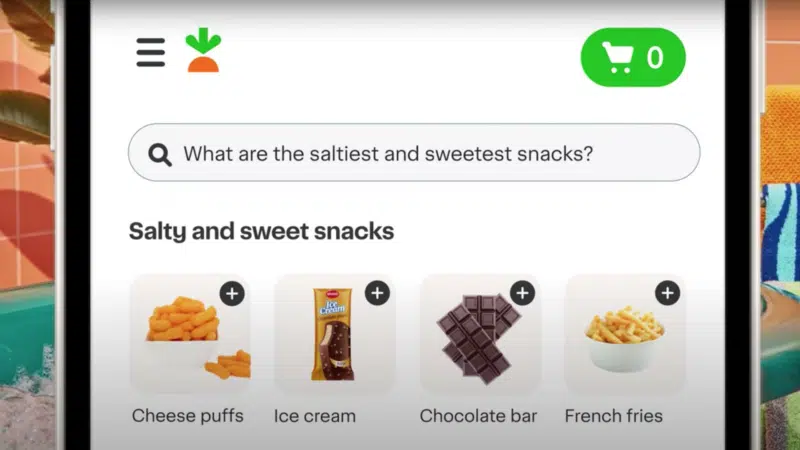
Instacart is adding generative AI to its search experience. Called Ask Instacart, the new search feature is designed to help answer shoppers’ grocery-related questions and give a boost to sponsored product campaigns.

How it works. Just like with Google and Microsoft Bing, Instacart users will be able to search via natural language queries and get personalized recommendations. For example:

  • “What kind of side dishes should I serve with lamb chops?”
  • “What are dairy-free snacks for kids?”
  • “What are the best veggies to roast?”

Ask Instacart is built using OpenAI’s ChatGPT plus Instacart’s own AI models. Instacart said this is “a highly specialized model designed to only respond to relevant food-related questions.”

What it looks like. Here’s a screenshot of Ask Instacart:

Ask Instacart

Search prompts. Instacart has also added “personalized question prompts” to the search bar. Instacart said these prompts “anticipate customer preferences, remind them of their needs based on their shopping history, and inspire them to discover new products.”

Why we care. For CPG brands and retailers, this AI-powered search offers a new way to potentially get your product campaign seen by more shoppers – aiding in discovery and driving more sales.

Rollout timeline. More than half of Instacart app users now have access to generative AI search. It will roll out to all U.S. customers “over the coming weeks.”

Intro video. Here’s the video introducing Ask Instacart:

[embedded content]

Related stories

New on Search Engine Land

@media screen and (min-width: 800px) { #div-gpt-ad-3191538-7 { display: flex !important; justify-content: center !important; align-items: center !important; min-width:770px; min-height:260px; } } @media screen and (min-width: 1279px) { #div-gpt-ad-3191538-7 { display: flex !important; justify-content: center !important; align-items: center !important; min-width:800px!important; min-height:440px!important; } }

About the author

Danny Goodwin

Danny Goodwin has been Managing Editor of Search Engine Land & Search Marketing Expo – SMX since 2022. He joined Search Engine Land in 2022 as Senior Editor. In addition to reporting on the latest search marketing news, he manages Search Engine Land’s SME (Subject Matter Expert) program. He also helps program U.S. SMX events. Goodwin has been editing and writing about the latest developments and trends in search and digital marketing since 2007. He previously was Executive Editor of Search Engine Journal (from 2017 to 2022), managing editor of Momentology (from 2014-2016) and editor of Search Engine Watch (from 2007 to 2014). He has spoken at many major search conferences and virtual events, and has been sourced for his expertise by a wide range of publications and podcasts.

https://searchengineland.com/ask-instacart-generative-ai-launch-427831


YouTube is the most profitable platform for creators, survey shows

Creators earn the most from their brand partnerships on YouTube – more than Instagram and TikTok, according to a new survey.

By the numbers. On YouTube, 6% of creators earned more than $10,001 per month – compared to 3% of Instagram creators and 2% of TikTok creators.

  • 50% of YouTube creators earn more than $500 per month vs. Instagram (40%) and TikTok (36%).

More expensive, but. While it’s more expensive to work with YouTube creators, brands should work with them because the platform has high engagement metrics.

Creators get a 50% engagement rate, on average, which beats all other platforms by far (TikTok and Instagram had a 3% and 2% engagement rate, respectively). Engagement on YouTube was defined as views, likes, comments and shares. Also:

  • “YouTube’s longer video format allows creators to dive deeper into your products in each video — which is especially helpful if you’re selling products like tech gear or ready-to-build furniture, which may need step-by-step tutorials.”

About the survey. It is a combination of internal data from Aspire, an influencer marketing platform, plus a survey of 1,000 “diverse creators, varying in audience size, main platform of choice, industry, and more.” Most of the creators were U.S.-based.

Why we care. Influencers can help your SEO campaigns. And with big investments continuing in influencer marketing, YouTube seems to offer brands the most ROI for working with influencers right now.

Go deeper. If you want to learn more about how much to pay influencers, you can download the survey results for free from Aspire.

Creators frustrated with TikTok. Disappointed about how much they were being paid, creators were leaving TikTok claiming mental health blows and burnout, as we reported last year. Some creators claimed they were being paid between $0.02 – $0.03 per 1,000 video views.


Related stories

New on Search Engine Land

@media screen and (min-width: 800px) { #div-gpt-ad-3191538-7 { display: flex !important; justify-content: center !important; align-items: center !important; min-width:770px; min-height:260px; } } @media screen and (min-width: 1279px) { #div-gpt-ad-3191538-7 { display: flex !important; justify-content: center !important; align-items: center !important; min-width:800px!important; min-height:440px!important; } }

About the author

Danny Goodwin

Danny Goodwin has been Managing Editor of Search Engine Land & Search Marketing Expo – SMX since 2022. He joined Search Engine Land in 2022 as Senior Editor. In addition to reporting on the latest search marketing news, he manages Search Engine Land’s SME (Subject Matter Expert) program. He also helps program U.S. SMX events. Goodwin has been editing and writing about the latest developments and trends in search and digital marketing since 2007. He previously was Executive Editor of Search Engine Journal (from 2017 to 2022), managing editor of Momentology (from 2014-2016) and editor of Search Engine Watch (from 2007 to 2014). He has spoken at many major search conferences and virtual events, and has been sourced for his expertise by a wide range of publications and podcasts.

https://searchengineland.com/youtube-most-profitable-platform-creators-survey-427813


How Instagram ranks content in 2023: Feed, Stories, Explore, Reels, Search

Instagram has updated its resource explaining how ranking works across each part of its app – Feed, Stories, Explore and Reels.

Why we care. It’s critical to understand how Instagram ranking works if you want to maximize your visibility and engagement on this platform.

What’s new. Instagram Ranking Explained is an update to a 2021 post – so most of the changes are fairly minimal. Of note, Instagram:

  • Separated Feed and Stories into two separate sections.
  • Put a heavier emphasis on following its Recommendation and Community guidelines.
  • Added a section called Personalize your Feed and Stories, adding new tips on how to personalize Feed and Stories.
  • Expanded its discussion around Shadowbanning.

Instagram uses multiple algorithm

Instagram doesn’t use one algorithm to rank content. Multiple algorithms, classifiers and processes – each serving a specific purpose – determine what Instagram users see.

Instagram ranks content differently in different parts of the app (e.g., Feed, Stories, Explore, Reels and Search).

How Instagram ranks Feed

Instagram’s Feed is a mix of content from accounts that a user follows, recommended content and ads. There is also a mix of formats – videos, images and carousels.

Instagram said Feed ranking takes thousands of signals into account. The signals Instagram discussed all fall into three big buckets – the user, the creator and the post.

User signals:

  • Engagements – likes, shares, saves, comments and time spent interacting with a post.
  • Accounts the user has recently followed.
  • Accounts a user has recently liked or engaged with.
  • Format preference (e.g., Instagram will show more images if you engage more with images vs. videos or other formats).
  • History of interacting with another account.
  • Recent posts shared by the accounts a user follows.
  • Posts from accounts users doesn’t already follow that Instagram thinks they might be interested in. As Instagram explained:
    • “These are educated guesses at how likely you are to interact with a post in different ways. There are roughly a dozen of these. In Feed, the five interactions we look at most closely are how likely you are to spend a few seconds on a post, comment on it, like it, share it, and tap on the profile photo.”
  • Account preferences.

Creator signals:

  • Information about the post creator.
  • How many times people have interacted with that person in the past few weeks.
  • If the content follows Instagram’s Guidelines for Content Lowered in Feed.

Post information:

  • Popularity:
    • Number of likes.
    • How quickly people like it.
    • Number of comments.
    • Number of shares.
    • Number of saves.
  • Time it was posted.
  • Location.

Instagram also tries to avoid showing too many of these in a row:

  • Posts from the same person.
  • Suggested posts.

How Instagram ranks Stories

The “input signals” Instagram looks at for Stories include:

  • Shared by accounts you follow (that don’t violate Instagram’s Community Guidelines).
  • Viewing history (how often a user views an account’s stories).
  • Engagement history (how often a user engages with an account’s stories – eg., a like or a DM).
  • Closeness (a user’s relationship with the creator and how likely they are to be connected as friends or family).

How Instagram ranks Explore

Explore is where Instagram recommends images and videos from accounts a user doesn’t follow. Ranking in Explore is similar to ranking of Feed and Stories.

Instagram looks at:

  • A user’s past Instagram activity (e.g., post likes, saves, shares and comments).
  • A user’s past Explore activity (posts a user has liked, saved, shared or commented on; how the user has interacted with posts in Explore).
  • Post information (how many and how quickly other users like, comment, share and save a post). Instagram said “these signals matter much more in Explore than they do in Feed or in Stories.
  • The user’s history of Interactions with an account.
  • Creator information (e.g., the number of times users have interacted with that creator in the past few weeks).
  • Whether the content follows Instagram’s Recommendation Guidelines.

How Instagram ranks Reels

The most important signals Instagram looks at:

  • User activity (Reels a user has liked, saved, reshared, commented on, or engaged with).
  • The user’s history of Interactions with an account.
  • Reel information (e.g., popularity, the audio track, visuals in the video).
  • Creator information (popularity signals include number of followers, engagement level).

Reels can be less visible if they are:

  • Low-resolution.
  • Watermarked.
  • Muted or containing borders.
  • Mostly text.
  • Focused on political issues.
  • Previously posted on Instagram.

How Instagram Search works

Not mentioned in Instagram’s newest resource was how the Instagram search algorithm works. However, Instagram did that in a 2021 post, Breaking Down How Instagram Search Works.

What signals matter in Instagram Search:

  • The query. Instagram tries to match that to relevant usernames, bios, captions, hashtags and places.
  • User activity. Accounts a user follows, posts they’ve viewed and how often they have interacted with an account in the past. Instagram more often shows accounts and hashtags that a user follows or visits.
  • Popularity signals. The number of clicks, likes, shares and follows for accounts, hashtags and places.

Instagram’s SEO advice:

  • Choose an Instagram handle or profile name that’s related to the content of your posts.
  • Include relevant keywords and locations in your bio.
  • Use relevant keywords and hashtags in your captions.

You can also add up to five links in your Instagram bio.


Related stories

New on Search Engine Land

@media screen and (min-width: 800px) { #div-gpt-ad-3191538-7 { display: flex !important; justify-content: center !important; align-items: center !important; min-width:770px; min-height:260px; } } @media screen and (min-width: 1279px) { #div-gpt-ad-3191538-7 { display: flex !important; justify-content: center !important; align-items: center !important; min-width:800px!important; min-height:440px!important; } }

About the author

Danny Goodwin

Danny Goodwin has been Managing Editor of Search Engine Land & Search Marketing Expo – SMX since 2022. He joined Search Engine Land in 2022 as Senior Editor. In addition to reporting on the latest search marketing news, he manages Search Engine Land’s SME (Subject Matter Expert) program. He also helps program U.S. SMX events. Goodwin has been editing and writing about the latest developments and trends in search and digital marketing since 2007. He previously was Executive Editor of Search Engine Journal (from 2017 to 2022), managing editor of Momentology (from 2014-2016) and editor of Search Engine Watch (from 2007 to 2014). He has spoken at many major search conferences and virtual events, and has been sourced for his expertise by a wide range of publications and podcasts.

https://searchengineland.com/how-instagram-ranks-content-feed-stories-explore-reels-search-427774


Programmatic Advertising Comes to the New York Subway


.article-native-ad { border-bottom: 1px solid #ddd; margin: 0 45px; padding-bottom: 20px; margin-bottom: 20px; } .article-native-ad svg { color: #ddd; font-size: 34px; margin-top: 10px; } .article-native-ad p { line-height:1.5; padding:0!important; padding-left: 10px!important; } .article-native-ad strong { font-weight:500; color:rgb(46,179,178); }

Transforming your ad sales process just got a lot easier. Learn how to extract more value for existing technology and ultimately drive revenue, ratings and retention in Slack’s new ebook.

Buying ads on the New York City subway is moving into the digital age.

In recent years, ads on the Metropolitan Transportation Authority’s trains and platforms have helped grow digitally native startups, firms like Casper and Hims, into household names.

But despite being a place for buzzy brands to advertise, the process of buying ads on the MTA has remained low-tech, with inventory only available via directly sold insertion orders.

Last December, Outfront Media—the digital out-of-home advertising company that contracts with the MTA to sell ads—began offering some subway inventory programmatically, meaning advertisers could buy ad space via a demand-side platform. The MTA is first publicizing these efforts now, Adweek can exclusively report.

For the MTA, programmatic doesn’t mean real-time bidding or identity-based targeting. Buyers can bid within the MTA’s available inventory, which, for now, includes the digital screens above subway entrances and exits, though that is expanding to screens in subway stations and Long Island Rail Road and Metro North platforms, according to Neil Shapiro, vp of programmatic at Outfront.

Advertisers can target by several variables including time of day, day of the week and location. Post-campaign reporting includes impression delivery, spend and timing of ad plays.

“Transit advertising is so effective because of its ability to reach consumers as they go about their daily journey, reaching them multiple times a day,” Shapiro said. “When coupled with the flexibility, speed to market, audience targeting, measurement and the ability to see campaign-wide reporting in one platform provided by programmatic, it’s a powerful combination.”

The large majority of campaigns are still direct buys, though programmatic is growing, Shapiro said. The goal of the MTA and Outfront is to attract new brands that might not have previously considered advertising with the MTA.

Those efforts are paying off: 78% of advertisers who bought ads programmatically are new to the MTA, according to Victoria Mottesheard, vp of marketing for the New York/East region at Outfront Media.

New revenue streams are important for the MTA, which has long faced financial struggles, particularly as ridership sagged during the pandemic. Last month, New York Gov. Kathy Hochul passed a budget bill that helped the MTA allay a nearly $3 billion deficit.

Meanwhile, digital out-of-home has rebounded steadily since dipping during the pandemic. U.S. investment in the sector is anticipated to reach $2.94 billion in 2023, according to Statista.

The efficiencies of programmatic

While bidding programmatically on subway panels doesn’t necessarily open up buyers to more inventory or a more targeted audience, it can put an ad buyer’s budget to work more efficiently.

“[If a brand campaign] has $15,000 for one week on digital screens, it’s going to be a lot more tricky to do manually,” said Brian Rappaport, CEO of out-of-home agency Quan Media Group, which has worked with Casper, Skims and Away. “[With programmatic], they’re going to help make those dollars work as hard as they possibly can.”

Plus, programmatic provides more flexibility than upfront deals for brands new to transit advertising, Rappaport said.

“A lot of brands are a lot more reactionary and don’t want as many restrictions having to cancel things,” he said.

Programmatic makes it easier for brands to purchase inventory, as they can see all their digital media buys in one spot, said Geoff Litwer, vp of programmatic and display media at Tinuiti.

“We look at that as a major enhancement or upgrade to make [the MTA] available programmatically,” Litwer said. “It’s the workflow automation. It’s the unification of reporting.”

Buying programmatically can be more expensive because of the introduction of tech fees.

When to go direct

Despite the potential value gained from buying programmatically, some of the most popular kinds of transit advertising are when a brand takes over an entire subway station, Rappaport said, a kind of inventory that wouldn’t make sense to buy programmatically.

“Generally, we’re big fans of outdoor advertising. It’s been having a resurgence, or a moment. A lot of it is predicated on the fragmentation of media and the opportunity to create a tangible presence in a real-world moment,” said Eric Perko, CEO of media agency Apollo Partners. “Programmatic is not totally in line with that because you’re buying it fractionally.”

Perko said that while programmatic might be useful for a new advertiser to experiment with transit, he can’t see it completely replacing direct.

“It makes a lot of sense as a complement to a bigger buy,” Perko said. “When given the option, and assuming the brand has a budget to do it, we would still… want to buy directly.”

.font-primary { } .font-secondary { } #meter-count { position: fixed; z-index: 9999999; bottom: 0; width:96%; margin: 2%; -webkit-border-radius: 4px; -moz-border-radius: 4px; border-radius: 4px; -webkit-box-shadow: 0 0px 15px 4px rgba(0,0,0,.2); box-shadow:0 0px 15px 4px rgba(0,0,0,.2); padding: 15px 0; color:#fff; background-color:#343a40; } #meter-count .icon { width: auto; opacity:.8; } #meter-count .icon svg { height: 36px; width: auto; } #meter-count .btn-subscribe { font-size:14px; font-weight:bold; padding:7px 18px; color: #fff; background-color: #2eb3b2; border:none; text-transform: capitalize; margin-right:10px; } #meter-count .btn-subscribe:hover { color: #fff; opacity:.8; } #meter-count .btn-signin { font-size:14px; font-weight:bold; padding:7px 14px; color: #fff; background-color: #121212; border:none; text-transform: capitalize; } #meter-count .btn-signin:hover { color: #fff; opacity:.8; } #meter-count h3 { color:#fff!important; letter-spacing:0px!important; margin:0; padding:0; font-size:16px; line-height:1.5; font-weight:700; margin: 0!important; padding: 0!important; } #meter-count h3 span { color:#E50000!important; font-weight:900; } #meter-count p { font-size:14px; font-weight:500; line-height:1.4; color:#eee!important; margin: 0!important; padding: 0!important; } #meter-count .close { color:#fff; display:block; position:absolute; top: 4px; right:4px; z-index: 999999; } #meter-count .close svg { display:block; color:#fff; height:16px; width:auto; cursor:pointer; } #meter-count .close:hover svg { color:#E50000; } #meter-count .fw-600 { font-weight:600; } @media (max-width: 1079px) { #meter-count .icon { margin:0; padding:0; display:none; } } @media (max-width: 768px) { #meter-count { margin: 0; -webkit-border-radius: 0px; -moz-border-radius: 0px; border-radius: 0px; width:100%; -webkit-box-shadow: 0 -8px 10px -4px rgba(0,0,0,0.3); box-shadow: 0 -8px 10px -4px rgba(0,0,0,0.3); } #meter-count .icon { margin:0; padding:0; display:none; } #meter-count h3 { color:#fff!important; font-size:14px; } #meter-count p { color:#fff!important; font-size: 12px; font-weight: 500; } #meter-count .btn-subscribe, #meter-count .btn-signin { font-size:12px; padding:7px 12px; } #meter-count .btn-signin { display:none; } #meter-count .close svg { height:14px; } }

Enjoying Adweek’s Content? Register for More Access!

https://www.adweek.com/programmatic/programmatic-advertising-comes-to-the-new-york-subway/


Are you getting the most from your martech stack? Take the 2023 Replacement Survey

Under budget constraints but also under pressure to generate growth, marketing and marketing ops leaders have been taking a close look at the ROI on martech solutions.

We want to know what conclusions you have been reaching. Have you been consolidating your existing stack? Have you been gambling on promising new tools? Are you perhaps reducing your tech holdings?

The need for better features. The 2022 survey showed solutions being replaced in a quest for better features, in particular:

  • Better integrations/open API.
  • Improved data capabilities.
  • Ability to measure ROI.
  • Better customer experience.

Those were all higher on the list than cost. What, if anything, has changed?

We’re in a very different place than we were just a year ago. The world opened for business again. Many people returned to the workplace. It was no longer necessary to do almost everything – from shopping to hanging out with friends – digitally.

That doesn’t mean we’ve abandoned our multi-faceted digital environments. We discovered that many virtual experiences worked just fine. There was, however, something of a deceleration in digital transformation (after the insane acceleration of 2020), arguably leading to the retrenchment we saw in a number of marketing tech companies that had perhaps grown too fast.

Taking the temperature. Against a backdrop of economic uncertainty, our hunch is that there’s still a thirst out there for innovation, for tech-enhanced efficiency, and for better-supported data-based decision making. After all, marketers have hardly hesitated to get their hands on generative AI.

But we need data to see whether our hunch is right. So please take about three minutes or so to complete our Replacement Survey and let us know how your martech world is evolving.

The 2023 MarTech Replacement Survey is here.


Related stories

New on Search Engine Land

@media screen and (min-width: 800px) { #div-gpt-ad-3191538-7 { display: flex !important; justify-content: center !important; align-items: center !important; min-width:770px; min-height:260px; } } @media screen and (min-width: 1279px) { #div-gpt-ad-3191538-7 { display: flex !important; justify-content: center !important; align-items: center !important; min-width:800px!important; min-height:440px!important; } }

About the author

Kim Davis

Kim Davis is the Editorial Director of MarTech Today. Born in London, but a New Yorker for over two decades, Kim started covering enterprise software ten years ago. His experience encompasses SaaS for the enterprise, digital- ad data-driven urban planning, and applications of SaaS, digital technology, and data in the marketing space. He first wrote about marketing technology as editor of Haymarket’s The Hub, a dedicated marketing tech website, which subsequently became a channel on the established direct marketing brand DMN. Kim joined DMN proper in 2016, as a senior editor, becoming Executive Editor, then Editor-in-Chief a position he held until January 2020. Prior to working in tech journalism, Kim was Associate Editor at a New York Times hyper-local news site, The Local: East Village, and has previously worked as an editor of an academic publication, and as a music journalist. He has written hundreds of New York restaurant reviews for a personal blog, and has been an occasional guest contributor to Eater.

https://searchengineland.com/take-2023-martech-replacement-survey-427581