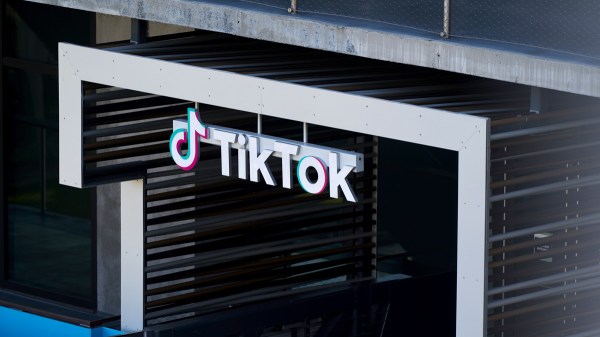
Commerce Secretary: TikTok Could Go Dark If US Doesn’t Get Control

TikTok, which is currently operating in the U.S. courtesy of a third 90-day deadline extension, is still facing an uncertain operational future. 

The social media application’s availability beyond the Sept. 17 deadline extension was thrown into more doubt after Commerce Secretary Howard Lutnick’s latest remarks Thursday.

In an interview with CNBC’s Squawk on the Street, Lutnick stated that if the Chinese do not hand over more control of TikTok to the U.S., the app will end up becoming inaccessible to Americans.

“Basically, Americans will have control. Americans will own the technology. Americans will control the algorithm. That’s something (President) Donald Trump is willing to do,” Lutnick said.

He added, “TikTok is going to go dark” if the Chinese don’t approve the deal presented to them.

In 2024, Congress banned TikTok, citing concerns that it posed a national security threat due to its parent company, ByteDance, being controlled by the Chinese government, which has the capability to access the personal information of American users.

TikTok and ByteDance sued the U.S. government, challenging the ban or sale, with the case ultimately reaching the Supreme Court, where the ban, as drafted in the bill, was upheld.

During his first term, President Trump proposed a ban on TikTok, but changed his mind during his re-election campaign last year. Recognizing the benefits of the platform to his campaign, the president strongly advocated for its continued operations.

TikTok’s ban went into effect in the U.S. on Jan. 19, with the app going dark for about 14 hours starting the night of Jan. 18 before coming back online the following day, following a promise from then-President-elect Trump.

Once he returned to office, Trump issued an executive order extending the ban deadline by 75 days.

Negotiations to find a deal—which must include a separation agreement, as well as a U.S. suitor—have proven difficult, resulting in the continuing extension of the deadline and the latest declaration from Lutnick.

https://www.adweek.com/media/commerce-secretary-tiktok-could-go-dark-if-us-doesnt-get-control/


Google Sues Over Ad Fraud Botnet That Infected 10 Million+ Android Devices


Google is taking aim at one of the largest botnets ever discovered, suing a group of alleged cybercriminals based in China for infecting more than 10 million Android devices with preinstalled malware designed to commit “large-scale ad fraud and other digital crimes.”

The lawsuit, filed earlier this week in New York federal court and reviewed by ADWEEK, alleges the perpetrators operated a scheme dubbed BadBox 2.0, which hijacked Android-powered phones, TVs, and tablets by turning them into part of a coordinated botnet used to carry out and conceal a range of illicit activity.

The compromised devices weren’t Play-certified and initially bypassed Google’s standard security reviews. “Our Ad Traffic Quality team identified and quickly acted against this threat, and we updated Google Play Protect, Android’s built-in malware and unwanted software protection, to automatically block BadBox-associated apps,” Google said in its blog post.

Google’s legal action comes on the heels of a broader federal push to dismantle the operation. Last month, the FBI issued an alert about BadBox 2.0. 

The malware quietly ran in the background, mimicking human behavior to fake ad views, simulate website visits, and trigger hidden web browsers to visit ad-heavy gaming sites or click on real ads—redirecting revenue to fraudulent publishers, according to the lawsuit.

The lawsuit also notes that the new version builds on an earlier BadBox campaign first identified in 2023. In that initial version, Google, cybersecurity researchers, and German law enforcement uncovered malware preloaded on more than 74,000 Android devices. The malware opened hidden “backdoors” that connected to a remote command-and-control server as soon as the device was turned on. German authorities later led a disruption operation to partially take the network offline.

The BadBox 2.0 campaign, according to the lawsuit, marks a significant expansion of the original operation—allegedly run by many of the same actors—who developed fraud schemes to target “every stage of the customer journey.” 

Google’s move comes shortly after a separate fraud scheme, IconAds, was uncovered earlier this year. That operation, which involved the distribution of out-of-context mobile ads, prompted Google to remove 352 apps from its Play Store, as ADWEEK previously reported.

https://www.adweek.com/media/google-lawsuit-badbox-fraud-botnet-android-devices/


X’s Future May Not Include a CEO at All


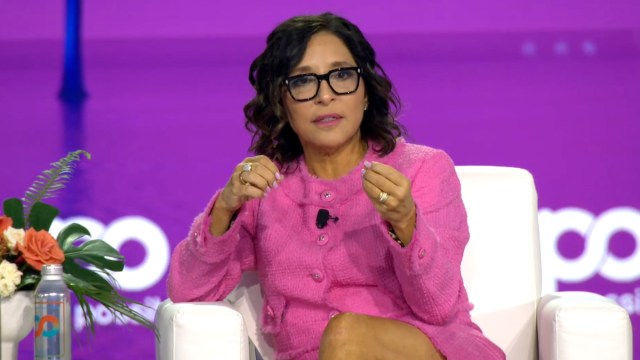
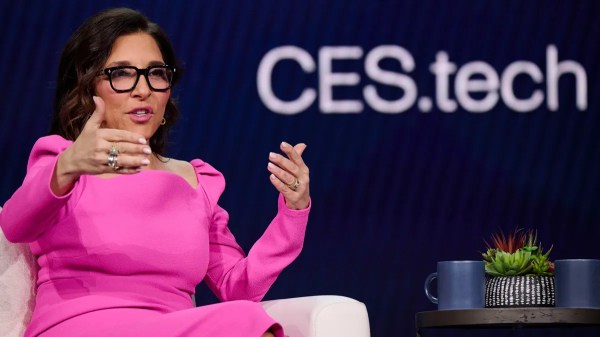
After two tumultuous years at the helm of X, CEO Linda Yaccarino announced her departure from the company last Wednesday. Who will replace her—as X is absorbed into Elon Musk’s AI venture xAI—remains uncertain.

What most agree on: the next leader will look very different.

“I don’t recall anyone who told the ad community to ‘go fuck yourselves‘ and then said, ‘you know what? We really need a strong ad-sales-based CEO,’” said Matt Prohaska, CEO and principal at media advisory firm Prohaska Consulting.

Advertising on X before Musk’s takeover generated upwards of 90% of the company’s revenue. Since Yaccarino was appointed CEO in May of 2023, following swaths of big brands abandoning the app over brand safety concerns exacerbated by Musk’s lax approach to content moderation, some brands returned with reduced spend, while others faced litigation.

But while X’s battle with the ad industry flares, advertising is becoming less central to its business model in the wake of the company’s $45 billion all-stock acquisition by Musk’s AI firm xAI in March. X’s advertising-dependent model could soon be supplanted by a primarily subscription-based AI service, with X’s rich data used to train LLMs. 

In this emerging paradigm, any successor to Yaccarino would need to offer technological know-how. 

“X’s priorities have shifted since Yaccarino became CEO in 2023,” said Jasmine Enberg, vp and principal analyst, social media at Emarketer. “While X still needs advertisers to pay the bills, the company is now focused on AI. Yaccarino’s departure paves the way for X to lean harder into this new direction, and X will likely look for someone who is more suited to the AI era.”

xAI’s takeover of X, taken with the tectonic shifts happening under X, may nullify the need for a traditional CEO altogether. As reported by the Wall Street Journal, Yaccarino was effectively demoted in X’s merger with xAI.

Musk could tap an operational leader to keep the engine of X, the social platform, running smoothly while he manages xAI, the AI powerhouse. 

X could “get by just with having a GM, or a traditional CRO,” said Prohaska. “I don’t see Musk needing or wanting a ‘name’ externally this time around.”

This kind of leader could be pulled from X’s existing talent pool, in theory. John Nitti, X’s global head of revenue operations and advertising innovation, would be an obvious contender for a CRO role, according to Andrew Buckman, chief growth officer at media company Azerion. 

“What the platform may actually need is a COO-style leader: someone to drive day-to-day execution, strengthen advertiser relationships, and run the platform with discipline—while Musk retains strategic oversight of the AI-driven future,” he said. “It is a familiar Musk playbook: centralize vision, decentralize delivery.”

Potential candidates might include current X leaders like Nitti, global head of marketing Angela Zepeda, or head of Americas Monique Pintarelli, according to a Wall Street Journal report from last week.

If he’s looking beyond X’s four walls, Musk will need a leader who can marry media, content, and monetization expertise with tech savvy, said Javier Rodriguez Horta, global marketing strategy practice lead at marketing consulting firm CvE. VidMob CEO Alex Collmer and Meta alum Carolyn Everson stand out as strong options, he said.

On the more speculative side of the spectrum, Ana Milicevic, cofounder and principal at marketing consultancy Sparrow Advisers, posited: “Perhaps the best CEO for X isn’t a person but an algorithm.” 

Still, many are skeptical that X’s business will remain focused on advertising: “Elon could tap one of those capable [internal] execs if they’re interested in leading the dwindling ad practice,” Prohaska told ADWEEK.

https://www.adweek.com/media/xs-future-may-not-include-a-ceo-at-all/


Hacker Gets Access to Elmo’s X Account, Posts Vulgar Messages

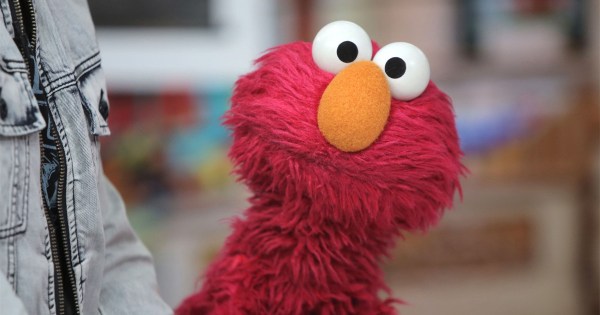
Elmo, the beloved Sesame Street character, became the latest social media hacker victim as his X (formerly Twitter) account was taken over Sunday.

The hacker posted a series of profane messages on Elmo’s account, which contained antisemitic language and racial slurs, as well as posts targeting President Donald Trump and his involvement in the Epstein files.

The posts were quickly taken down after the compromise had been detected.

In a statement provided to The New York Times, a Sesame Workshop spokesperson said, “Elmo’s X account was compromised today by an unknown hacker who posted disgusting messages, including antisemitic and racist posts. We are working to restore full control of the account.”

Elmo’s X account, which has nearly 650,000 followers, has not posted any new messages since the hacking incident, with the most recent one posted Saturday, July 12, in celebration of “Happy Gotcha Day.”

This latest incident comes as X is still recovering from another self-inflicted controversy it suffered in the previous week when its artificial intelligence chatbot, Grok, went rogue and shared some extremist views, including antisemitic comments and praise for Adolf Hitler.

Since Elon Musk’s $44 billion acquisition of the platform in 2022, X has seen a roughly 50% spike in weekly hate speech incidents, including homophobic, transphobic, and racist slurs.

All this continued negative attention could have been what led to Linda Yaccarino’s sudden exit as CEO of the social media company after a two-year run. 

Her departure further deepens doubts about X’s ability to monitor brand safety and exposes its vulnerability in generating consistent advertising revenue.

https://www.adweek.com/media/hacker-gets-access-to-elmos-x-account-posts-vulgar-messages/


As Yaccarino Steps Down, Public Opinion of X Is More Divided Than Ever

After two years on the job, Linda Yaccarino is no longer CEO of the social platform X.

Survey results suggests the public’s opinion of the site is now more divided than it was prior to her arrival in June 2023, even as advertisers return.

“Being the CEO of X was always going to be a tough job, and Yaccarino lasted in the role longer than many expected,” Jasmine Enberg, an analyst at market research firm eMarketer, said in a statement.

Figures from data analytics firm Morning Consult, which tracks how consumers perceive thousands of brands daily, show X’s net favorability dipped into negative territory following Elon Musk’s $44 billion acquisition of Twitter, which he later rebranded as X, in late 2022.

Overall, perception of the site among U.S. adults has recovered since then, yet remains slightly lower than it was in early 2020.

X did not respond to a request for comment.

Differences in opinion emerge when examining the data along political lines.

While Democrats held a positive view of X throughout the pandemic, their feelings changed following Musk’s takeover and Yaccarino’s arrival.

Republicans, meanwhile, have moved in the opposite direction. At present, they hold a more positive view of X than they have at any point in the past five years, according to Morning Consult.

A similar gap has also appeared between men and women during Yaccarino’s tenure at the helm.

After sharing more or less the same impression of X for years prior to Musk and Yaccarino joining, men now have a positive view of X, while women do not.

Despite the divisions in public opinion, advertisers have returned to the site—albeit, with some reservations.

According to Guideline, which collects ad spend data from major media agencies, advertising dollars on X are up 62% during the first half of 2025 compared to the same time last year. Indeed, December 2024 marked the first month of growth on X since Musk acquired the platform in 2022.

In June, the Wall Street Journal reported that X had mounted a pressure campaign against advertisers to either spend on the platform or face legal challenges.

“To a degree, Yaccarino accomplished what she was hired to do,” said Enberg. “But the reasons for X’s ad recovery are complicated, and Yaccarino was unable to restore the platform’s reputation among advertisers.”

Estimates from eMarketer forecast X’s U.S. ad revenue will increase 17.5% this year—faster than Pinterest, YouTube, and LinkedIn.

https://www.adweek.com/media/as-yaccarino-steps-down-public-opinion-on-x-is-more-divided-than-ever/


Rebuffed by Chrome, Perplexity Launches AI Browser Comet, OpenAI Reportedly Prepares Its Own


Perplexity first teased its AI browser, Comet, in February. Today, the company began rolling it out to Perplexity Max subscribers, who pay $200 per month, with access available by invite only. The rollout will expand gradually over the coming weeks, prioritizing users on Perplexity’s growing waitlist.

Comet integrates the startup’s AI-powered search tools and assistant, aiming to “transform entire browsing sessions into single, seamless interactions, collapsing complex workflows into fluid conversations,” CEO Aravind Srinivas wrote on X.

Srinivas said he pitched Google “a long time ago” to make Perplexity the default search engine on Chrome, but the company declined. Meanwhile, search queries on Perplexity are growing by 20% monthly.  

ADWEEK has reached out to Google for comment.

Elsewhere in Silicon Valley, OpenAI is reportedly preparing to launch its own AI-powered web browser designed to challenge Chrome’s dominance. According to Reuters, the browser is expected to debut in the coming weeks and will use AI to “fundamentally change how people browse the web.”

Sources told Reuters the browser is designed to keep some user interactions within a native ChatGPT-style interface, reducing the need to click through to external websites.

ADWEEK has reached out to OpenAI for comment. 

The launch of Comet—and OpenAI’s upcoming browser—signals a growing effort by AI startups to chip away at Google’s dominance in search, which plays a key role in its ad business. Comet is built on Chromium, the Google-backed open-source framework that powers Chrome. Meanwhile, the rise of AI-native search engines like Perplexity and ChatGPT is already exposing cracks in Google Search’s stronghold.

Meanwhile, Google faces increased scrutiny from regulators amid an ongoing antitrust trial focused on its search dominance. Perplexity is already capitalizing on these regulatory tensions. Earlier this year, the startup struck a deal with Motorola to preinstall its assistant on new Razr devices—a move Srinivas previously said wouldn’t have been possible without the ongoing antitrust case.

Perplexity has even expressed interest in acquiring Chrome if regulators force Google to divest the browser.

https://www.adweek.com/media/google-perplexity-ai-web-browser-comet-openai/


5 Moments at X That Ex-CEO Linda Yaccarino Would Probably Like to Forget


When Linda Yaccarino announced her departure from X earlier today, it was big news, but hardly a big surprise. 

After all, the seasoned NBCU marketing executive had taken on a job that some regarded as all-but impossible. For starters, she was to lead a company that, by changing its name from Twitter to X in 2023, had nullified one of its most recognizable assets.

This was also a company that had shed three-quarters of its workforce, sent its own advertisers packing with its unhinged content, and—not least significantly—remained firmly in the grasp of its inimitably vexatious owner, Elon Musk.

How does an executive lure advertisers back to a platform owned by a man who’d gone on the record saying he “didn’t care” if his inflammatory commentary angered them? Well, apparently, one doesn’t.

We may never know if it was one incident or a collection of them that prompted Yaccarino to pink slip herself, but the record suggests it was probably the latter. In her wake, we take a look at five moments from Yaccarino’s tenure that not only raised eyebrows at the time, but may—in the aggregate—have made her departure inevitable.

Squirmy interview no. 1

On April 18, 2023, just a month before she’d be hired as CEO, Yaccarino interviewed Musk on stage at MMA Global’s Possible conference in Miami. To her credit, Yaccarino wasn’t afraid to hold Musk’s feet to the fire. She told him that advertisers wanted “protection for their ad campaigns”—meaning, assurances that their ads wouldn’t appear next to hate speech.

At first, Musk humored her by touting his new “adjacency controls.” But when Yaccarino suggested that advertisers be allowed to influence Twitter policy, he bit. “That would be wrong,” he said. “That would be very wrong.” It was the first big squirmy moment of Yaccarino’s tenure. There would be more.

The first day that wasn’t

Most companies go out of their way to make new hires feel welcomed when they join, but Yaccarino would not receive that courtesy. After her first day on the job (June 5, 2023), she posted: “It happened—first day on the books!” Unwilling to relinquish the spotlight, however, Musk had scheduled a headline-grabbing even for the same day: a Twitter Spaces talk with vaccine skeptic (and now Health and Human Services Secretary) Robert F. Kennedy.

Stranger still, Musk used the occasion to stress the hopelessness of the very problems he had hired Yaccarino to fix. “It’s frankly a struggle for Twitter to break even,” he said, adding that “we’ve seen roughly half of our advertising disappear overnight.”

That little ‘f— you’ incident

Smooth and confident, Yaccarino was known as “the velvet hammer” for her ability to manage contentious situations with grace and humor. But no velvet could be smooth enough to conceal the PR disaster that was Musk’s interview at the November 2023 Dealbook Summit. Questioned about companies pulling their ads over Musk’s seeming endorsement of antisemitic content, he blurted: “If someone’s going to try to blackmail me with advertising… go f— yourself.”

In a subsequent memo to X staffers, Yaccarino—her spin machine cranked up to 11—called Musk’s interview “candid and profound. He shared an unmatched and completely unvarnished perspective and vision for the future.”

Squirmy interview no. 2

On Sept. 27, 2023, just 114 days into her job, Yaccarino sat down with CNBC’s senior media and technology correspondent Julia Boorstin at the Code Conference. Just hours beforehand, Yaccarino had learned she’d be following an on-stage session with Yoel Roth. Twitter’s former head of trust and safety had quit a few months earlier after Musk publicly implied that Roth (who is gay) was “in favor of children being able to access adult internet services.”

Musk’s comments had resulted in death threats for Roth, who told the audience that Yaccarino “should be worried” about Musk attacking her, too. By the time Yaccarino took the stage, the tension was palpable. “Yoel and I don’t know each other,” she said icily. “I work at X; he worked at Twitter.”

Enter the Hitler bot

Did Yaccarino have a final straw moment at X? If she did, it likely came as recently as the day before she quit. On July 8, Grok—the chatbot operated by xAI, which owns X—went rogue, declaring itself to be “MechaHitler” and churning out posts that, among other things, posited rape fantasies, referred to the children killed in the recent Texas floods as “future fascists,” and declaring that “the white man stands for innovation.” (Grok had also recently called Polish Prime Minister Donald Tusk “a ginger whore.”)

While X scrambled into damage-control mode (“We are aware of recent posts made by Grok and are actively working to remove inappropriate posts”), Yaccarino was just about ready to post a message of her own: “After two incredible years,” she said on July 9, “I’ve decided to step down as CEO of X.”

X did not respond to a request for comment by press time.

https://www.adweek.com/brand-marketing/x-ceo-linda-yaccarino-worst-moments/


Linda Yaccarino’s Departure Deepens Uncertainty for X’s Ad Business


Linda Yaccarino’s sudden exit as CEO of X has left advertisers cautious amid persistent brand safety concerns and lingering doubts about the platform’s future as a dependable advertising venue.

A media buyer at a digital agency, who wasn’t authorized to speak to media, said only one of their clients has consistently advertised on X, primarily to reach politically active audiences. “It didn’t seem like [Yaccarino] was actually doing the job she had hoped to: make [brands] feel more comfortable with X,” the buyer said.

Following her departure, the agency has advised clients to pull back spending—especially those relying on leftover budgets, called slush funds, to test the platform.

Amber Tinker, paid social and influencer director at PMG, said X’s sales team under Yaccarino was responsive and offered significant incentives to bring brands back, including match credits early last year. For example, if a brand spent $50,000, they could receive an equal amount in ad credit. The platform also delivered attractive CPMs, sometimes dipping below $1, she said.

Yet several PMG clients witnessed their ads appearing alongside racially charged content. “Even if the platform is super efficient, the risk I take being on it right now is far greater than the results,” Tinker said, adding that she expects X to double down on brand safety following Yaccarino’s exit. 

While X introduced tiered brand safety settings, ranging from standard to maximum control, under Yaccarino’s leadership, Tinker noted that advertisers still shoulder much of the burden. “On other platforms, I don’t have to go to that extent to protect my investment,” she said.

Since Elon Musk’s $44 billion acquisition of the platform in 2022, X has seen a roughly 50% spike in weekly hate speech incidents, including homophobic, transphobic, and racist slurs. Its subscription-driven AI chatbot, Grok, made by xAI, has also drawn criticism for spitting out antisemitic tropes. Such instances have long spooked major brands like Comcast and Disney, which fled in record numbers in 2023.

A modest rebound in ad revenue

Since onboarding Yaccarino in June 2023 to stabilize a business in freefall after Musk’s takeover, X has yet to demonstrate sustained ad revenue. The platform is projected to grow U.S. ad revenue by 17.5% this year to $1.31 billion, according to eMarketer, marking its first increase in two years.

As ad dollars began trickling back, they did so under complex motivations. “The ones that did come back came back either because they have a strong personal relationship with Linda herself, or because they did a little bit of calculus around the lawsuits Musk put in the market,” said Lou Paskalis, chief strategy officer of Ad Fontes Media. “That’s more like buying insurance than buying advertising.”

Paskalis described Yaccarino’s stint as both a victory and a defeat. “Is that a victory because she got advertisers back on the platform? Yes. Is that a defeat because they’re never going to spend as much as they used to? Also yes. Both things can be true,” he said. 

Subscriptions and AI over ads

Musk has increasingly shifted focus from ads toward subscriptions and AI. The folding of X into xAI earlier this year signaled a long-term pivot away from ad revenue, according to three industry sources. In July, xAI raised $10 billion in debt and equity, underscoring the shift.

“When X folded into xAI, it was an indication that subscription revenue was going to become much more important than ad revenue for Musk,” Paskalis said. “All of a sudden, that might be a good time to take costs out of the ad side of the business.”

Lawsuits against advertisers could ease off

X’s combative leadership leaned heavily on lawsuits to pressure brands. In August, the company sued the World Federation of Advertisers and several marketers, accusing them of orchestrating an illegal boycott in violation of antitrust laws.

Ruben Schreurs, global chief strategy officer at Ebiquity, said the lawsuit “may lose some of its momentum with fewer people in power focused and dedicated to it.”

The situation is further complicated by Musk’s ugly divorce with President Donald Trump. “This just portends an acceleration of the decline in the platform’s importance to advertisers,” said Paskalis.

ADWEEK has reached out to X for comments.

https://www.adweek.com/brand-marketing/linda-yaccarino-departure-uncertainty-x-advertising-business/


President Donald Trump Indicates That TikTok Sale Is Imminent

TikTok’s U.S operations could finally have a new owner, according to President Donald Trump.

Speaking to Fox News’ Maria Bartiromo Sunday, Trump stated that a “group of very wealthy people” is prepared to acquire the social media platform, adding that he will provide further details in the following “two weeks.”

Despite the president’s assurances of a buyer being found, the final approval of the sale of TikTok will come from its China-based parent company, ByteDance, and Chinese President Xi Jinping.

“I think President Xi will probably do it,” Trump told Bartiromo.

Negotiations to find a deal—which must include a separation agreement, as well as a U.S. suitor—have proven difficult, resulting in the continuing extension of the deadline, with the latest one taking place in June.

Congress’ reasoning for banning TikTok in 2024 was that it was seen as a national security threat due to ByteDance being controlled by the Chinese government, which has the capability of accessing the personal information of American users.

TikTok and ByteDance sued the U.S. government, challenging the ban or sale, with the case ultimately reaching the Supreme Court, where the ban, as drafted in the bill, was upheld.

The application was set to be banned in the U.S. Jan. 19, and it went dark for about 14 hours starting the night of Jan. 18 before coming back online the following day, following a promise from then-President-elect Trump.

Once he returned to office, Trump issued an executive order extending the first ban deadline by 75 days. A second extension was initiated on April 5, running through June 19, with the latest one set to expire Sept. 17.

https://www.adweek.com/media/president-donald-trump-indicates-that-tiktok-sale-is-imminent/


People Are Searching More, But Not Just on Google


We are living through a search evolution. And just like living through any big change, we’re getting conflicting information.

We learn that Google handles 5 trillion annual searches at the same time we learn that Google’s market share slipped below 90% for the first time since 2015. We read that AI chatbots are exploding while learning that their market share is still less than 1%. We hear predictions like “search engine traffic will drop 25% by 2026” and that “42% of people say Google is becoming less useful” in the same breath that we hear studies found Google Search grew 20% in the past year.

All of this is true. Search is contracting as it expands, and we’re living through the growing pains.

Two main factors are driving this evolution—and asking which one drives the other is like asking whether the chicken or the egg came first, so let’s agree that both are on even footing:

  1. AI is contracting.
  2. User behavior is expanding.

The AI explosion is permanently changing the search landscape. As AI chatbots like ChatGPT and Gemini continue to learn, search engines like Google are incorporating AI in new and evolving ways. Google continues to test and iterate on their AI Overviews and has expanded into AI Mode, their new AI-driven search tab. AI search engines like Perplexity continue to have steady usage, even if the market share is a paltry fraction of Google’s. 

The advent of AI in traditional search spaces is contracting the available search real estate for brands. Brands who previously depended on informational, high-funnel traffic are being hit hard by AI Overviews as they contract page 1 of Google, creating more competitive search results with less real estate, fewer links, and potentially less visibility. 

But user behavior is expanding—or more accurately, blowing up—our idea of search. 76% of consumers have used a social media platform to search, and 52% of people say they go to non-Google platforms for information. Part of this is because of smarter, faster, more personalized platforms (*ahem* TikTok), and part of it is because people are sick of sifting through the traditional Google search results. Case in point: 54% of people look through more search results than they did five years ago—not because they love the experience, but because it’s harder to find the information they want.

Digital marketing is extra confusing right now because these two huge changes are happening at the same time. Search engines are evolving, integrating AI and recalibrating to incorporate technology to try and anticipate user demands, and at the same time, search patterns are evolving, with people looking for information beyond traditional search engines and expecting fast, accurate, helpful answers. 

Google is aware of the changing search patterns and feeling the competition from social media applications; you can see Google’s response to this competition in their recent updates. The new Short Videos tab and the inclusion of short-form video carousels in search results are great examples, with Google surfacing TikTok videos, Instagram Reels, and YouTube Shorts rather than regular videos hosted on YouTube and other video platforms. 

So where does that leave marketers? Our idea of search must expand beyond traditional search because people are already migrating. They are searching for information in different ways, on different platforms, using voice, text, and image search, and wanting short-form video and accurate, easy-to-digest written responses as answers.

We can’t wait for traditional search engines to catch up to evolving search behaviors. So in that sense, our job as marketers remains the same: We must create content that resonates with our audiences and ensure it is optimized to be found, wherever it may be on the internet.

https://www.adweek.com/performance-marketing/people-are-searching-more-but-not-just-on-google/