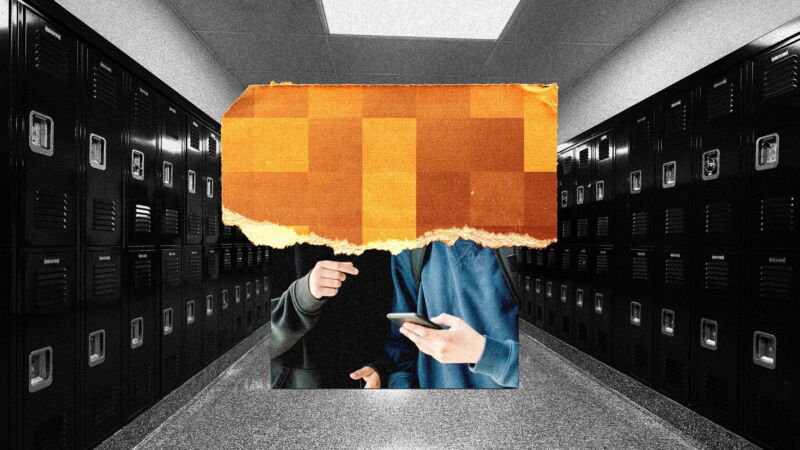
IRS has launched its free tax filing service, Direct File, in 12 states
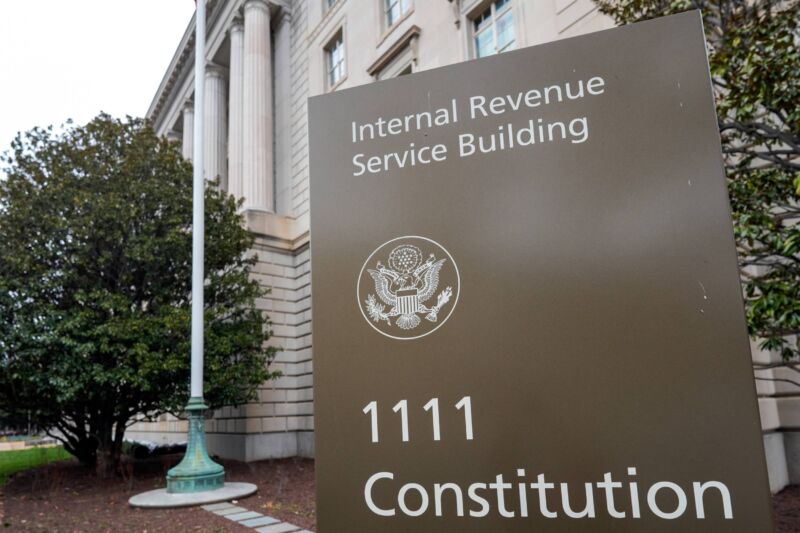
A sign outside the IRS headquarters displays the words
Enlarge / Internal Revenue Service (IRS) headquarters building on January 30, 2024, in Washington, DC.
Getty Images | J. David Ake

The Internal Revenue Service’s free tax filing service, Direct File, is now available in 12 states for taxpayers with simple tax returns. The service available in English and Spanish underwent “weeks of successful testing” before the launch, the US Treasury Department said today.

“Direct File provides a free, secure option for taxpayers with simple tax situations in 12 states to file their taxes directly with the IRS,” the Treasury Department said. “Direct File is easy to use, with no hidden junk fees, and works as well on a smartphone as it does on a laptop, tablet, or desktop computer. Direct File shows taxpayers the math so they can be sure that their return is accurate, and they are getting the refund they are entitled to.”

You can check whether you qualify to use the system at directfile.irs.gov. Based on the eligibility restrictions in the IRS program, the Treasury Department said it “estimates that one-third of all federal income tax returns filed could be prepared using Direct File.”

In the 12 eligible states combined, the department estimates that 18.7 million taxpayers are eligible for Direct File. That includes a high of 5.2 million taxpayers in California and a low of 80,000 in Wyoming. “Thousands of taxpayers across all 12 states have already successfully filed returns during the pilot’s testing phase,” the Treasury Department said.

The government is calling this year’s version of Direct File a pilot program. It will presumably expand to more states and perhaps have fewer restrictions on who can file in future years.

State tax options vary

Arizona, California, Massachusetts, and New York worked with the IRS to integrate their state taxes into the Direct File pilot, the IRS said in October 2023. The pilot is also available in eight states without an income tax: Florida, New Hampshire, Nevada, South Dakota, Tennessee, Texas, Washington, and Wyoming.

The IRS originally said that Alaska, which also has no income tax, was slated to be part of the pilot. But the state was not included in the end. “The Direct File pilot does not support reporting the Alaska Permanent Fund Dividend for federal income tax reporting purposes,” the IRS was quoted as saying in January.

There are different options for state taxes depending on what state you live in. There’s a free state filing tool for Arizona and New York that integrates with IRS Direct File. Users in California and Massachusetts will be directed to their respective state’s online tax tools for filing state taxes.

What you can and can’t file

Direct File supports employment income, unemployment compensation, Social Security benefits, and $1,500 or less in interest income. But there are many limits that would prevent taxpayers from using the system.

Income types that cannot be reported with Direct File include income from payment apps, online marketplaces, or payment cards; income from independent contractor and gig work; income from rent, prizes, and awards; income from pension and retirement account distributions; allocated tips and unreported tips; and alimony.

Direct File is further limited by the amount of income. You can’t use Direct File if your wages were over $200,000, or $160,200 if you had more than one employer. Direct File also isn’t available to those who use the filing status “Married Filing Separately” and had wages of more than $125,000. For a married couple filing a joint return, there is a combined wage limit of $250,000.

There’s another limit related to how you obtain health insurance. Direct File won’t work if you bought health insurance from a HealthCare.gov marketplace or if you withdrew money from a health savings account. Other types of health insurance are supported.

Direct File supports the Child Tax Credit, the Earned Income Tax Credit, and the Credit for Other Dependents, but does not support other types of credits. Itemized deductions also are not supported, though the IRS says that about 90 percent of people filing federal taxes use the standard deduction.

https://arstechnica.com/?p=2009741


Apple to allow iOS app installs from websites, but small devs don’t qualify

App icons displayed on an iPhone screen.
Getty Images | NurPhoto

Apple will let European app developers distribute iPhone and iPad applications to users directly from a website, instead of through an app store. It’s the latest app-installation option announced by Apple as it seeks to comply with new European rules, but this one will only be available to developers who had an app installed by over 1 million users the previous year.

In an announcement today, Apple said it plans to introduce “a new way to distribute apps directly from a developer’s website.” The Web Distribution option will become available after a software update “later this spring,” letting developers “distribute their iOS apps to EU users directly from a website owned by the developer.”

“Apple will provide authorized developers access to APIs that facilitate the distribution of their apps from the web, integrate with system functionality, back up and restore users’ apps, and more,” the company said.

New developers or those who didn’t rack up at least a million downloads in the EU last year won’t be eligible. To qualify for Web Distribution, a developer must be “a member of good standing in the Apple Developer Program for two continuous years or more, and have an app that had more than one million first annual installs on iOS in the EU in the prior calendar year,” Apple said in a post describing how the option will work.

Apple has indicated elsewhere that fewer than 1 percent of developers meet the annual-install threshold. The “two continuous years” requirement could also rule out Epic Games, whose iOS developer account was temporarily rescinded by Apple in a recent dispute.

Websites and third-party app stores

Under the new system announced today, apps distributed from a developer’s website “must meet Notarization requirements to protect platform integrity, like all iOS apps, and can only be installed from a website domain that the developer has registered in App Store Connect,” Apple said.

Users will need to approve a developer in the iOS settings before downloading apps from that developer’s website. “When installing an app, a system sheet will display information that developers have submitted to Apple for review, like the app name, developer name, app description, screenshots, and system age rating,” Apple said.

In January, Apple announced it would let EU developers offer iOS apps from “alternative app marketplaces.” Third-party app stores will be able to offer apps from a variety of developers, similar to the official App Store.

Another change announced by Apple today is that the new alternative app marketplaces will be allowed to “choose to offer a catalog of apps solely from the developer of the marketplace.” That means if a developer wants to offer an installation platform for only its own apps, it can create its own marketplace or use the Web Distribution method. It appears that only the Web Distribution method includes the requirements to have two continuous years in the Apple Developer Program and a million first installs in the previous calendar year.

Apple is also making one of its earlier requirements optional. When an EU app developer “direct[s] users to complete a transaction for digital goods or services on an external webpage, developers can choose how to design promotions, discounts, and other deals,” Apple said today. “The Apple-provided design templates, which are optimized for key purchase and promotional use cases, are now optional.”

New fee applies to app stores and Web Distribution

EU-based developers who accept Apple’s new business terms will pay reduced commissions of 10 percent or 17 percent for apps distributed on Apple’s App Store. Developers can also avoid Apple’s commission by distributing apps outside Apple’s App Store.

But Apple will charge a Core Technology Fee (CTF) for app installs whether they are delivered from Apple’s own App Store, from an alternative app marketplace, or from a developer’s own website. The first million installs each year are free, Apple says:

Membership in the Apple Developer Program includes one million first annual installs per year for free for apps distributed from the App Store, alternative marketplaces, and/or Web Distribution.

Developers will pay a CTF of €0.50 for each first annual install over one million in the past 12 months.

Apple says it estimates that, due to the 1 million-install threshold, “less than 1 percent of developers would pay a Core Technology Fee on their EU apps.” Nonprofits, accredited schools, and government entities can apply for fee waivers.

Spotify, Epic Games, Deezer, and other companies recently complained about the Core Technology Fee and other terms, alleging that Apple is not complying with Europe’s Digital Markets Act (DMA). “These fees will deter app developers from providing seamless in-app experiences for consumers, and will hamper fair competition with potential alternative payment providers,” a letter from the companies to EU officials said.

Apple last week said it has listened to feedback from thousands of developers and made several changes in response. One change announced last week will let developers create alternative app marketplaces without a standby letter of credit.

There are still various terms and conditions imposed by Apple that third-party app stores must follow. The DMA took effect last week, and European regulators are examining the changes made by Apple and other companies designated as “gatekeepers” to determine whether they have complied with the new rules.

https://arstechnica.com/?p=2009618


NYT to OpenAI: No hacking here, just ChatGPT bypassing paywalls

NYT to OpenAI: No hacking here, just ChatGPT bypassing paywalls

Late Monday, The New York Times responded to OpenAI’s claims that the newspaper “hacked” ChatGPT to “set up” a lawsuit against the leading AI company.

“OpenAI is wrong,” The Times repeatedly argued in a court filing opposing OpenAI’s motion to dismiss the NYT’s lawsuit accusing OpenAI and Microsoft of copyright infringement. “OpenAI’s attention-grabbing claim that The Times ‘hacked’ its products is as irrelevant as it is false.”

OpenAI had argued that NYT allegedly made “tens of thousands of attempts to generate” supposedly “highly anomalous results” showing that ChatGPT would produce excerpts of NYT articles. The NYT’s allegedly deceptive prompts—such as repeatedly asking ChatGPT, “what’s the next sentence?”—targeted “two uncommon and unintended phenomena” from both its developer tools and ChatGPT: training data regurgitation and model hallucination. OpenAI considers both “a bug” that the company says it intends to fix. OpenAI claimed no ordinary user would use ChatGPT this way.

But while defending tactics used to prompt ChatGPT to spout memorized training data—including more than 100 NYT articles—NYT pointed to ChatGPT users who have frequently used the tool to generate entire articles to bypass paywalls.

According to the filing, NYT today has no idea how many of its articles were used to train GPT-3 and OpenAI’s subsequent AI models, or which specific articles were used, because OpenAI has “not publicly disclosed the makeup of the datasets used to train” its AI models. Rather than setting up a lawsuit, NYT was prompting ChatGPT to discover evidence in attempts to track the full extent of copyright infringement of the tool, NYT argued.

To figure out if ChatGPT was infringing its copyrights on certain articles, NYT “elicited examples of memorization by prompting GPT-4 with the first few words or sentences of Times articles,” the court filing said.

OpenAI had tried to argue that “in the real world, people do not use ChatGPT or any other OpenAI product” to generate precise text from articles behind paywalls. But the “use of ChatGPT to bypass paywalls” is “widely reported,” NYT argued.

“In OpenAI’s telling, The Times engaged in wrongdoing by detecting OpenAI’s theft of The Times’s own copyrighted content,” NYT’s court filing said. “OpenAI’s true grievance is not about how The Times conducted its investigation, but instead what that investigation exposed: that Defendants built their products by copying The Times’s content on an unprecedented scale—a fact that OpenAI does not, and cannot, dispute.”

NYT declined Ars’ request to comment. OpenAI did not immediately respond to Ars’ request to comment.

ChatGPT users bypassing paywalls

According to the NYT’s court filing, ChatGPT outputs initially only infringed copyright by “showing copies and/or derivatives of Times works that were copied to build the model.” But then, in May 2023, a “Browse By Bing” plug-in was introduced to ChatGPT that “enabled ChatGPT to retrieve content beyond what was included in the underlying model’s training dataset,” infringing copyright by “showing synthetic search results that paraphrase Times works retrieved and copied in response to user search queries in real time.”

This feature enabled ChatGPT users to bypass paywalls and access more recent content from outlets like NYT, which caused OpenAI to temporarily disable “Browse By Bing” last July.

“We’ve learned that the browsing beta can occasionally display content in ways we don’t want, e.g. if a user specifically asks for a URL’s full text, it may inadvertently fulfill this request,” OpenAI’s help page said. “We are temporarily disabling Browse while we fix this.”

OpenAI’s decision to disable this feature riled some users who were using ChatGPT to bypass paywalls. In a ChatGPT subreddit, thousands took notice of a post calling attention to the unintended feature, commenting “Wow, so useful!” and joking, “Enjoy it while it lasts.”

On an OpenAI community page, one paid ChatGPT user complained that OpenAI is “working against the paid users of ChatGPT Plus. This time they’re taking away Browsing, because it reads the content of a site that the user asks for? Please, that’s what I pay for Plus for.”

“I know it’s no use complaining, because OpenAI is going to increasingly ‘castrate’ ChatGPT 4,” the ChatGPT user continued, “but there’s my rant.”

NYT argued that public reports of users turning to ChatGPT to bypass paywalls “contradict OpenAI’s contention that its products have not been used to serve up paywall-protected content, underscoring the need for discovery” in the lawsuit, rather than dismissal.

https://arstechnica.com/?p=2009620


50 injured on Boeing 787 as “strong shake” reportedly sent heads into ceiling

A Boeing airplane on a runway. The LATAM Airlines logo is printed on the side of the plane.
Enlarge / A LATAM Airlines Boeing 787-9 Dreamliner taxiing at Arturo Merino Benítez International Airport in Chile on March 20, 2019.
Getty Images | SOPA Images

About 50 people were injured on a LATAM Airlines flight today in which a Boeing 787-9 Dreamliner suffered a technical problem that caused a “strong shake,” reportedly causing some passengers’ heads to hit the ceiling.

The plane flying from Australia to New Zealand “experienced a strong shake during flight, the cause of which is currently under investigation,” LATAM said on its website today. LATAM, a Chilean airline, was also quoted in news reports as saying the plane suffered “a technical event during the flight which caused a strong movement.”

The Boeing plane, carrying 263 passengers and nine flight and cabin crew members, landed at Auckland Airport as scheduled. New Zealand ambulance service Hato Hone St. John published a statement saying that its “ambulance crews assessed and treated approximately 50 patients, with one patient in a serious condition and the remainder in a moderate to minor condition.” Twelve patients were taken to hospitals, the statement said.

Most of the patients were “discharged shortly after,” LATAM said on its website. “Only one passenger and one cabin crew member required additional attention, but without any life-threatening risks.”

The plane was originally supposed to continue from New Zealand to Chile, but that leg of the trip was rescheduled. LATAM said it is “working in coordination with the respective authorities to support the investigations into the incident.”

Boeing told news outlets that it is “working to gather more information about the flight and will provide any support needed by our customers.” We contacted Boeing today and will update this article if it provides more information.

Passenger describes nosedive, people hitting the ceiling

Passenger Brian Jokat described the frightening incident in interviews with several media outlets. “The ceiling’s broken from people’s heads and bodies hitting it,” Jokat said, according to ABC News. “Basically neck braces were being put on people, guys’ heads were cut and they were bleeding. It was just crazy.”

Jokat was also quoted as saying that he “felt the plane take a nosedive—it felt like it was at the top of a roller coaster, and then it flattened out again.” It all happened in “split seconds,” he reportedly said.

Today’s flight came about two months after a near-disaster involving a Boeing 737 Max 9 plane used by Alaska Airlines. On January 5, the plane was forced to return to Portland International Airport in Oregon after a passenger door plug blew off the aircraft during flight.

The National Transportation Safety Board concluded that four bolts were missing from the plane. The Justice Department has opened a criminal investigation into the incident, The Wall Street Journal reported Saturday.

Boeing was seeking a safety exemption from the US Federal Aviation Administration related to its 737 Max 7 aircraft, but withdrew the application in January after the 737 Max 9 door-plug blowout.

https://arstechnica.com/?p=2009438


Airbnb bans creepy surveillance cameras inside rentals starting April 30

camera hidden in flower pot indoors

Airbnb, like hotels and rival vacation rental site Vrbo, will no longer allow hosts to record guests while they’re inside the property. Airbnb previously allowed hosts to have disclosed cameras outside the property and in “common areas” inside, but Airbnb’s enforcement of the policy and the rules’ lack of specificity made camera use troubling for renters.

Airbnb announced today that as of April 30, it’s “banning the use of indoor security cameras in listings globally as part of efforts to simplify our policy on security cameras and other devices” and to prioritize privacy.

Cameras that are turned off but inside the property will also be banned, as are indoor recording devices. Airbnb’s updated policy defines cameras and recording devices as “any device that records or transmits video, images, or audio, such as a baby monitor, doorbell camera, or other camera.”

Also starting April 30, Airbnb will require hosts to disclose the presence of noise decibel monitors. Airbnb said it will only allow noise-monitoring devices that “do not record or transmit sounds or conversations” and that these are also “only allowed in common spaces of listings.”

Room for interpretation

Airbnb’s old policy allowed hosts to have cameras inside the property as long as the cameras weren’t hidden. The policy stated that Airbnb allowed: “Devices that allow for viewing or monitoring of only a public space (ex: a front door or a driveway) or a common space that are clearly identified and disclosed ahead of a reservation,” per an archived version of the policy. The policy added that “common spaces do not include sleeping areas or bathrooms” and listed “bedrooms, bathrooms, or common areas that are being used as sleeping areas, like a living room with a sofa bed)” as examples of private spaces.

This policy dramatically differed from the rules of other hospitality businesses. Hotels typically don’t surveil guests after they’re in their room, for example.

Also alarming was the vagueness of Airbnb’s policy. What about rooms with a futon or a couch that isn’t literally listed as a “sofa bed” but is roomy enough for slumber? Could a policy-abiding camera be placed in that room? Airbnb’s updated policy for noise decibel monitors, which allows them inside but only “in a common space,” still doesn’t address the potential for broad interpretations of the phrase.

Renters can see if a listing has cameras or noise-monitoring devices under the “Home safety” section of a listing’s amenities section, but that could include dozens of so-called amenities.

Airbnb’s old policy didn’t force hosts to state cameras’ locations. A rental I currently have booked under the old policy, for example, merely states that it has “security cameras to ensure the safety of guests and property.” That doesn’t clearly specify where the cameras are and if they’re indoors or only outdoors.

Another example of gaps in Airbnb’s policy for unspecified surveillance comes from Jeffrey Bigham. In 2019, he detailed his experience when Airbnb originally told him that a photo in an Airbnb listing with a camera subtly sitting in the walls’ corner counted as disclosure of indoor camera usage (after the blog went viral, the user reported receiving a refund). Bigham noted that even though the camera was technically in a common area (the living room), it was “very likely that my 2-year-old ran in front of this camera naked (the field of view of the camera was close to the exit of the bathroom).”

Airbnb’s announcement today said those who break the new policies will be subject to investigation and disciplinary action, which may include the removal of a listing or account.

However, Airbnb has a spotted history of responding to renter surveillance complaints. For example, in 2019, Ars Technica reported on a family finding a hidden camera inside their Airbnb that was disguised as a smoke or carbon monoxide detector. Airbnb initially “exonerated” the host of wrongdoing but eventually refunded the family and banned the host. Other Airbnb hosts have also previously claimed to see lax response from Airbnb after upsetting renters with surveillance cameras.

Airbnb hosts have long relied on technology to help spot problems like unwarranted guests, messes, parties, and robberies. But even outdoor surveillance can perturb renters, as the use of outdoor cameras can be overbearing and uncomfortable.

Airbnb previously claimed that hidden cameras are an exception. The company said today that the majority of its listings “do not report having a security camera” but didn’t share specific numbers.

https://arstechnica.com/?p=2009366


Texas can require age-verification on porn sites, 5th Circuit judges rule

A Texas state flag blowing in the wind.
Getty Images | PA Thompson

Texas can enforce a law requiring age-verification systems on porn websites, the US Court of Appeals for the 5th Circuit ruled Thursday. The appeals court vacated an injunction against the law’s age-verification requirement but said that Texas cannot enforce a provision requiring porn websites to “display health warnings about the effects of the consumption of pornography.”

In a 2-1 decision, judges ruled that “the age-verification requirement is rationally related to the government’s legitimate interest in preventing minors’ access to pornography. Therefore, the age-verification requirement does not violate the First Amendment.”

The Texas law was challenged by the owners of Pornhub and other adult websites and an adult-industry lobby group called the Free Speech Coalition. “We disagree strenuously with the analysis of the Court majority,” the Free Speech Coalition said. “As the dissenting opinion by Judge [Patrick] Higginbotham makes clear, this ruling violates decades of precedent from the Supreme Court.”

A US District Court judge issued a preliminary injunction blocking enforcement of the law in August 2023, finding that “Plaintiffs have shown that their First Amendment rights will likely be violated if the statute takes effect, and that they will suffer irreparable harm absent an injunction.”

But a few weeks later, the 5th Circuit issued a temporary stay that allowed the law to take effect in September 2023. The new ruling issued last week was on the merits of the preliminary injunction.

Court cites “girlie” magazine precedent

The 5th Circuit, generally regarded as one of the most conservative appeals courts, found that the Texas porn-site law should be reviewed on the “rational-basis” standard and not under strict scrutiny. The court panel majority pointed to Ginsberg v. New York, a 1968 Supreme Court ruling about the sale of “girlie” magazines to a 16-year-old at a lunch counter. The Supreme Court in that case upheld a New York criminal obscenity statute that prohibited the knowing sale of obscene materials to minors.

The same principle applies to the Internet, the 5th Circuit majority found. “Because it is never obvious whether an Internet user is an adult or a child, any attempt to identify the user will implicate adults in some way… To suggest protecting children would be so difficult is inconsistent with Ginsberg, where rational basis review was sufficient even though adults would presumably have to identify themselves to buy girlie magazines,” the ruling said.

As Santa Clara University law professor Eric Goldman wrote, the 5th Circuit “panel majority claims the 56-year-old Ginsberg opinion, which dealt with offline retailers, governs the Conlaw [constitutional law] analysis of the Texas law instead of the squarely on-point 1997 Reno v. ACLU and 2004 Ashcroft v. ACLU opinions, both of which dealt with the Internet.”

In his dissent, Judge Higginbotham said the majority’s attempts to distinguish Ginsberg from later rulings “are unconvincing.” Although “Ginsberg remains good law and indubitably recognizes the government’s power to protect children from age-inappropriate materials,” the Supreme Court “has unswervingly applied strict scrutiny to content-based regulations that limit adults’ access to protected speech,” he wrote.

The Texas law “limits access to materials that may be denied to minors but remain constitutionally protected speech for adults,” Higginbotham wrote. “It follows that the law must face strict scrutiny review because it limits adults’ access to protected speech using a content-based distinction—whether that speech is harmful to minors.”

https://arstechnica.com/?p=2009339


Florida middle-schoolers charged with making deepfake nudes of classmates

Florida middle-schoolers charged with making deepfake nudes of classmates
Jacqui VanLiew; Getty Images

Two teenage boys from Miami, Florida, were arrested in December for allegedly creating and sharing AI-generated nude images of male and female classmates without consent, according to police reports obtained by WIRED via public record request.

The arrest reports say the boys, aged 13 and 14, created the images of the students who were “between the ages of 12 and 13.”

The Florida case appears to be the first arrests and criminal charges as a result of alleged sharing of AI-generated nude images to come to light. The boys were charged with third-degree felonies—the same level of crimes as grand theft auto or false imprisonment—under a state law passed in 2022 which makes it a felony to share “any altered sexual depiction” of a person without their consent.

The parent of one of the boys arrested did not respond to a request for comment in time for publication. The parent of the other boy said that he had “no comment.” The detective assigned to the case, and the state attorney handling the case, did not respond for comment in time for publication.

As AI image-making tools have become more widely available, there have been several high-profile incidents in which minors allegedly created AI-generated nude images of classmates and shared them without consent. No arrests have been disclosed in the publicly reported cases—at Issaquah High School in Washington, Westfield High School in New Jersey, and Beverly Vista Middle School in California—even though police reports were filed. At Issaquah High School, police opted not to press charges.

The first media reports of the Florida case appeared in December, saying that the two boys were suspended from Pinecrest Cove Academy in Miami for 10 days after school administrators learned of allegations that they created and shared fake nude images without consent. After parents of the victims learned about the incident, several began publicly urging the school to expel the boys.

Nadia Khan-Roberts, the mother of one of the victims, told NBC Miami in December that for all of the families whose children were victimized the incident was traumatizing. “Our daughters do not feel comfortable walking the same hallways with these boys,” she said. “It makes me feel violated, I feel taken advantage [of] and I feel used,” one victim, who asked to remain anonymous, told the TV station.

WIRED obtained arrest records this week that say the incident was reported to police on December 6, 2023, and that the two boys were arrested on December 22. The records accuse the pair of using “an artificial intelligence application” to make the fake explicit images. The name of the app was not specified and the reports claim the boys shared the pictures between each other.

“The incident was reported to a school administrator,” the reports say, without specifying who reported it, or how that person found out about the images. After the school administrator “obtained copies of the altered images” the administrator interviewed the victims depicted in them, the reports say, who said that they did not consent to the images being created.

After their arrest, the two boys accused of making the images were transported to the Juvenile Service Department “without incident,” the reports say.

A handful of states have laws on the books that target fake, nonconsensual nude images. There’s no federal law targeting the practice, but a group of US senators recently introduced a bill to combat the problem after fake nude images of Taylor Swift were created and distributed widely on X.

The boys were charged under a Florida law passed in 2022 that state legislators designed to curb harassment involving deepfake images made using AI-powered tools.

Stephanie Cagnet Myron, a Florida lawyer who represents victims of nonconsensually shared nude images, tells WIRED that anyone who creates fake nude images of a minor would be in possession of child sexual abuse material, or CSAM. However, she claims it’s likely that the two boys accused of making and sharing the material were not charged with CSAM possession due to their age.

“There’s specifically several crimes that you can charge in a case, and you really have to evaluate what’s the strongest chance of winning, what has the highest likelihood of success, and if you include too many charges, is it just going to confuse the jury?” Cagnet Myron added.

Mary Anne Franks, a professor at the George Washington University School of Law and a lawyer who has studied the problem of nonconsensual explicit imagery, says it’s “odd” that Florida’s revenge porn law, which predates the 2022 statute under which the boys were charged, only makes the offense a misdemeanor, while this situation represented a felony.

“It is really strange to me that you impose heftier penalties for fake nude photos than for real ones,” she says.

Franks adds that although she believes distributing nonconsensual fake explicit images should be a criminal offense, thus creating a deterrent effect, she doesn’t believe offenders should be incarcerated, especially not juveniles.

“The first thing I think about is how young the victims are and worried about the kind of impact on them,” Franks says. “But then [I] also question whether or not throwing the book at kids is actually going to be effective here.”

This story originally appeared on wired.com.

https://arstechnica.com/?p=2008981


Tesla drivers who sued over exaggerated EV range are forced into arbitration

Four Tesla charging stations inside a parking garage.
Enlarge / Tesla Superchargers.
Getty Images | NurPhoto

Tesla drivers who say the carmaker “grossly” exaggerated the ranges of its electric vehicles have lost their attempt to sue Tesla as a class. They will have to pursue claims individually in arbitration, a federal judge ruled yesterday.

Two related lawsuits were filed after a Reuters investigation last year found that Tesla consistently exaggerated the driving range of its electric vehicles, leading car owners to think something was broken when the actual driving range was much lower than advertised. Tesla reportedly created a “Diversion Team” to handle these complaints and routinely canceled service appointments because there was no way to improve the actual distance Tesla cars could drive between charges.

Several Tesla drivers sued in US District Court for the Northern District of California, seeking class-action status to represent buyers of Tesla cars.

When buying their Teslas, each named plaintiff in the two lawsuits signed an order agreement that included an arbitration provision, US District Judge Yvonne Gonzalez Rogers wrote. The agreement says that “any dispute arising out of or relating to any aspect of the relationship between you and Tesla will not be decided by a judge or jury but instead by a single arbitrator in an arbitration administered by the American Arbitration Association.”

The agreement has a severance clause that says, “If a court or arbitrator decides that any part of this agreement to arbitrate cannot be enforced as to a particular claim for relief or remedy, then that claim or remedy (and only that claim or remedy) must be brought in court and any other claims must be arbitrated.”

Tesla drivers argued that the arbitration agreement is not enforceable under the McGill v. Citibank precedent, in which the California Supreme Court ruled that arbitration provisions are unenforceable if they waive a plaintiff’s right to seek public injunctive relief. However, the McGill precedent doesn’t always give plaintiffs the right to pursue claims as a class, Gonzalez Rogers wrote. In the Tesla case, “the Arbitration Provision does not prohibit plaintiffs from pursuing public injunctive relief in their individual capacities,” the ruling said.

Tesla could still be hit with injunction

Public injunctive relief is “brought on behalf of an individual for the benefit of the public, not as a class or representative claim,” the judge wrote. Public injunctive relief is supposed to benefit the public at large. When an injunction benefits the plaintiff, it does so “only incidentally and/or as a member of the general public.”

In other words, a Tesla driver could win an arbitration case and seek an injunction that forces Tesla to change its practices. In a case won by Comcast, the US Court of Appeals for the 9th Circuit in 2021 stated that “public injunctive relief within the meaning of McGill is limited to forward-looking injunctions that seek to prevent future violations of law for the benefit of the general public as a whole, as opposed to a particular class of persons… without the need to consider the individual claims of any non-party.”

Gonzalez Rogers ruled that Tesla’s arbitration agreement “permits plaintiffs to seek public injunctive relief in arbitration.” The US District Court could also issue an injunction against Tesla after an arbitration case.

The Tesla drivers are seeking remedies under the California Consumer Legal Remedies Act (CLRA), the California Unfair Competition Law (UCL), and the California False Advertising Law (FAL). After arbitration, the court “will be able to craft appropriate public injunctive relief if plaintiffs successfully arbitrate their UCL, FAL, and CLRA claims and such relief is deemed unavailable,” Gonzalez Rogers wrote.

The judge stayed the case “pending resolution of the arbitration in case it is required to adjudicate any request for public injunctive relief… The Court finds that the Arbitration Provision does not prohibit plaintiffs from pursuing public injunctive relief in their individual capacities. To the extent an arbitrator finds otherwise, the Court STAYS the action as such relief is severable and can be separately adjudicated by this Court.”

Tesla arbitration clause upheld in earlier case

Tesla previously won a different case in the same court involving its arbitration clause. In September 2023, Judge Haywood Gilliam Jr. ruled that four Tesla drivers who sued the company over its allegedly deceptive “self-driving” claims would have to go to arbitration instead of pursuing a class action.

The plaintiffs in that case argued that “Tesla’s arbitration agreement is unconscionable, and thus [un]enforceable.” They said the arbitration agreement “is not referenced on the Order page” and “is buried in small font in the middle of an Order Agreement, which is only accessible through an inconspicuous hyperlink.”

Ruling against the plaintiffs, Gilliam found that Tesla’s “order payment screens provided conspicuous notice of the order agreements.” He also found that provisions such as a 30-day opt-out clause were enforceable, even though Tesla drivers argued it was too short because it “typically takes much more than 30 days for Tesla to configure and deliver a car.”

https://arstechnica.com/?p=2008927


US lawmakers vote 50-0 to force sale of TikTok despite angry calls from users

A large TikTok ad at a subway station.
Getty Images | Bloomberg

The House Commerce Committee today voted 50-0 to approve a bill that would force TikTok owner ByteDance to sell the company or lose access to the US market.

The Protecting Americans from Foreign Adversary Controlled Applications Act “addresses the immediate national security risks posed by TikTok and establishes a framework for the Executive Branch to protect Americans from future foreign adversary controlled applications,” a committee memo said. “If an application is determined to be operated by a company controlled by a foreign adversary—like ByteDance, Ltd., which is controlled by the People’s Republic of China—the application must be divested from foreign adversary control within 180 days.”

If the bill passes in the House and Senate and is signed into law by President Biden, TikTok would eventually be dropped from app stores in the US if its owner doesn’t sell. It also would lose access to US-based web-hosting services.

“If the application is not divested, entities in the United States would be prohibited from distributing the application through an application marketplace or store and providing web hosting services,” the committee memo said.

Chair: “CCP weaponizes applications it controls”

The bill was introduced on Tuesday and had 20 sponsors split evenly between Democrats and Republicans. TikTok urged its users to protest the bill, sending a notification that said, “Congress is planning a total ban of TikTok… Let Congress know what TikTok means to you and tell them to vote NO.”

Many users called lawmakers’ offices to complain, congressional staffers told Politico. “It’s so so bad. Our phones have not stopped ringing. They’re teenagers and old people saying they spend their whole day on the app and we can’t take it away,” one House GOP staffer was quoted as saying.

House Commerce Committee Chair Cathy McMorris Rodgers (R-Wash.) said that TikTok enlisting users to call lawmakers showed “in real time how the Chinese Communist Party can weaponize platforms like TikTok to manipulate the American people.”

“This is just a small taste of how the CCP weaponizes applications it controls to manipulate tens of millions of people to further their agenda. These applications present a clear national security threat to the United States and necessitate the decisive action we will take today,” she said before the vote.

The American Civil Liberties Union opposes the TikTok bill, saying it “would violate the First Amendment rights of hundreds of millions of Americans who use the app to communicate and express themselves daily.”

Bill sponsor: “It’s not a ban”

Bill sponsor Rep. Mike Gallagher (R-Wis.) expressed anger at TikTok for telling its users that the bill would ban the app completely, pointing out that the bill would only ban the app if it isn’t sold.

“If you actually read the bill, it’s not a ban. It’s a divestiture,” Gallagher said, according to Politico. Gallagher also said his bill puts the decision “squarely in the hands of TikTok to sever their relationship with the Chinese Communist Party.”

TikTok issued a statement calling the bill “an outright ban of TikTok, no matter how much the authors try to disguise it.” The House Commerce Committee responded to TikTok’s claim, calling it “yet another lie.”

While the bill text could potentially wrap in other apps in the future, it specifically lists the ByteDance-owned TikTok as a “foreign adversary controlled application.”

“It shall be unlawful for an entity to distribute, maintain, or update (or enable the distribution, maintenance, or updating of) a foreign adversary controlled application,” the bill says. An app would be allowed to stay in the US market after a divestiture if the president determines that the sale “would result in the relevant covered company no longer being controlled by a foreign adversary.”

https://arstechnica.com/?p=2008851


“Disgraceful”: Messy ToS update allegedly locks Roku devices until users give in

A promotional image for a Roku TV.
Enlarge / A promotional image for a Roku TV.

Roku customers are threatening to stop using, or to even dispose of, their low-priced TVs and streaming gadgets after the company appears to be locking devices for people who don’t conform to the recently updated terms of service (ToS).

This month, users on Roku’s support forums reported suddenly seeing a message when turning on their Roku TV or streaming device reading: “We’ve made an important update: We’ve updated our Dispute Resolution Terms. Select ‘Agree’ to agree to these updated Terms and to continue enjoying our products and services. Press * to view these updated Terms.” A large button reading “Agree” follows. The pop-up doesn’t offer a way to disagree, and users are unable to use their device unless they hit agree.

Customers have left pages of complaints on Roku’s forum. One user going by “rickstanford” said they were “FURIOUS!!!!” and expressed interest in sending their reported six Roku devices back to the company since “apparently I don’t own them despite spending hundreds of dollars on them.”

Another user going by Formercustomer, who, I suspect, is aptly named, wrote:

So, you buy a product, and you use it. And they want to change the terms limiting your rights, and they basically brick the device … if you don’t accept their new terms. … I hope they get their comeuppance here, as this is disgraceful.

Roku has further aggravated customers who have found that disagreeing to its updated terms is harder than necessary. Roku is willing to accept agreement to its terms with a single button press, but to opt out, users must jump through hoops that include finding that old book of stamps.

To opt out of Roku’s ToS update, which primarily changes the “Dispute Resolution Terms,” users must send a letter to Roku’s general counsel in California mentioning: “the name of each person opting out and contact information for each such person, the specific product models, software, or services used that are at issue, the email address that you used to set up your Roku account (if you have one), and, if applicable, a copy of your purchase receipt.” Roku required all this to opt out of its terms previously, as well.

But the new update means that while users read this information and have their letter delivered, they’re unable to use products they already paid for and used, in some cases for years, under different “dispute resolution terms.”

“I can’t watch my TV because I don’t agree to the Dispute Resolution Terms. Please help,” a user going by Campbell220 wrote on Roku’s support forum.

Based on the ToS’s wording, users could technically choose to agree to the ToS on their device and then write a letter saying they’d like to opt out. But opting into an agreement only to use a device under terms you don’t agree with is counterintuitive.

Even more pressing, Roku’s ToS states that users only have “within 30 days of you first becoming subject to” Roku’s updated terms, which was February 20, to opt out. Otherwise, you’re opted in automatically.

Archived records of Roku’s ToS website seem to show the new ToS being online since at least August. But it was only this month that users reported that their TVs were useless unless they accepted the terms via an on-screen message. Roku declined to answer Ars Technica’s questions about the changes, including why it didn’t alert users about them earlier. But a spokesperson shared a statement saying:

Like many companies, Roku updates its terms of service from time to time. When we do, we take steps to make sure customers are informed of the change.

What Roku changed

Customers are criticizing Roku for aggressively pushing them to accept ToS changes. The updates focus on Roku’s terms for dispute resolution, which prevent users from suing Roku. The terms have long forced a described arbitration process for dispute resolution. The new ToS is more detailed, including specifics for “mass arbitrations.” The biggest change is the introduction of a section called “Required Informal Dispute Resolution.” It states that except for a small number of described exceptions (which include claims around intellectual property), users must make “a good-faith effort” to negotiate with Roku, or vice versa, for at least 45 days before entering arbitration.

Roku is also taking heat for using forced arbitration at all, which some argue can have one-sided benefits. In a similar move in December, for example, 23andMe said users had 30 days to opt out of its new dispute resolution terms, which included mass arbitration rules (the genetics firm let customers opt out via email, though). The changes came after 23andMe user data was stolen in a cyberattack. Forced arbitration clauses are frequently used by large companies to avoid being sued by fed-up customers.

Roku’s forced arbitration rules aren’t new but are still making customers question their streaming hardware, especially considering that there are rivals, like Amazon, Apple, and Google, that don’t force arbitration on users.

Based on comments in Roku’s forums, some users were unaware they were already subject to arbitration rules and only learned this as a result of Roku’s abrupt pop-up.

But with the functionality of already-owned devices blocked until users give in, Roku’s methods are questionable, and Roku may lose customers over it. Per an anonymous user on Roku’s forum:

I’m unplugging right now.

https://arstechnica.com/?p=2008691