Actor paid to pose as crypto CEO “deeply sorry” about $1.3 billion scam
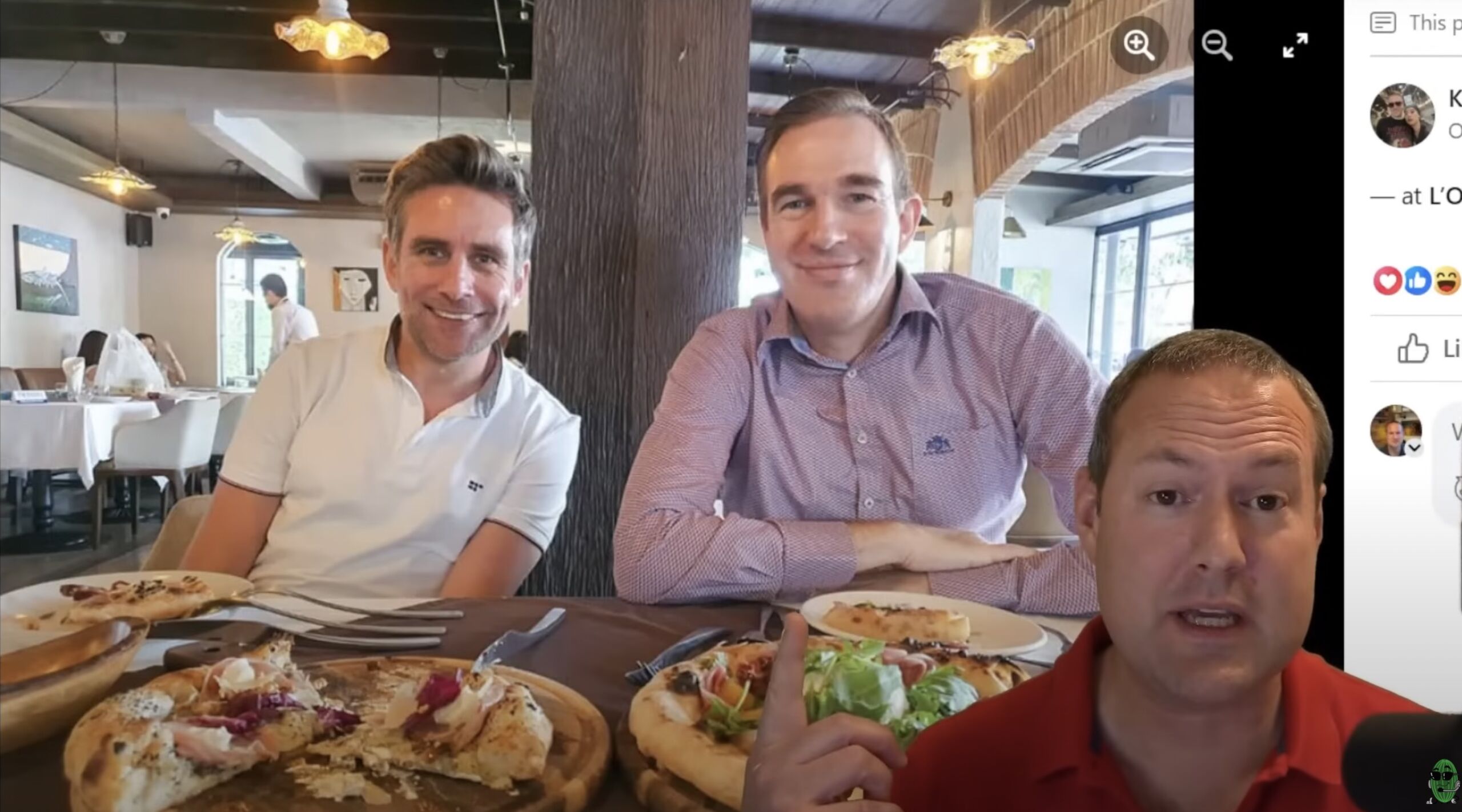
A screenshot from Jack Gamble's video outing Stephen Harrison as HyperVerse's fake CEO, posted on Gamble's "Nobody Special Finance" YouTube channel.
Enlarge / A screenshot from Jack Gamble’s video outing Stephen Harrison as HyperVerse’s fake CEO, posted on Gamble’s “Nobody Special Finance” YouTube channel.

An actor who was hired to pretend to be the highly qualified CEO of a shady, collapsed cryptocurrency hedge fund called HyperVerse has apologized after a YouTuber unmasked his real identity last week.

An Englishman currently living in Thailand, Stephen Harrison confirmed to The Guardian that HyperVerse hired him to pose as CEO Steven Reece Lewis. Harrison told The Guardian that he was “deeply sorry” to HyperVerse investors—who lost a reported $1.3 billion after buying into a cryptocurrency-mining operation that promised “double or triple returns,” but did not exist, Court Watch reported.

Harrison claimed that he had “certainly not pocketed” any portion of those funds. Instead, he told The Guardian that he was paid about $7,500 over nine months. To play the part of CEO, he was also given a “wool and cashmere suit, two business shirts, two ties, and a pair of shoes,” The Guardian reported.

Harrison said that he had no part in HyperVerse’s alleged scheme to woo investors with false promises of high returns.

“I am sorry for these people,” Harrison said. “Because they believed some idea with me at the forefront and believed in what I said, and God knows what these people have lost. And I do feel bad about this.”

He also said that he was “shocked” to find out that HyperVerse had falsified his credentials, telling investors that Harrison was a fintech whiz—supposedly earning prestigious degrees before working at Goldman Sachs, then selling a web development company to Adobe before launching his own IT startup.

Harrison claimed that he only found out about this resume fraud when The Guardian investigated and found that nothing on his resume checked out.

“When I read that in the papers, I was like, blooming heck, they make me sound so highly educated,” Harrison told The Guardian.

He confirmed that he had received general certificates of secondary education but that his expertise was “certainly not on that level” that HyperVerse claimed that it was.

“They painted a good picture of me, but they never told me any of this,” Harrison told The Guardian.

Getting hired as fake CEO

According to The Guardian, Harrison was working as an unpaid freelance sports commentator when a “friend of a friend” told him about the HyperVerse gig.

The contract that Harrison signed was with an Indonesian-based talent agency called Mass Focus Ltd. It stated that he would be hired as “presenter talent,” The Guardian reported. However, The Guardian could find “no record of a company of this name on the Indonesian company register.”

Harrison’s agent allegedly told him that it was common for companies to hire corporate “presenters” to “represent the business” and reassured him that HyperVerse was “legitimate.”

Even after those assurances, Harrison said that he was still worried that HyperVerse might be a “scam,” researching the company online but ultimately deciding that “everything seemed OK.”

“So, I rolled with it,” Harrison told The Guardian.

Harrison said that promotional videos that he recorded as HyperVerse CEO were filmed in “makeshift studios” in Bangkok. He said that he was asked to start using the fake name Steven Reece Lewis while filming the second video. When he questioned why a fake name was necessary, HyperVerse allegedly told him that he was “acting the role.”

His agent allegedly told him that this was “perfectly normal” and after that, he “never went online and checked about Steven Reece Lewis,” he told The Guardian.

“I looked on YouTube occasionally, way back when they put the presentations up, but apart from that I was detached from this role,” Harrison said.

Over nine months, Harrison mostly worked one to two hours monthly, making videos posing as HyperVerse’s CEO.

There was also a Twitter account launched under the fake name Steven Reece Lewis. The Guardian noted that the date of Harrison’s final paycheck from HyperVerse “coincided with the last date the Twitter account was active,” but Harrison told The Guardian that he “had no oversight” of that account. When he was ending his stint as fake CEO, Harrison told The Guardian that he “requested that the Twitter account be shut down.”

Harrison also told The Guardian that he had “no contact at any point” with HyperVerse heads Sam Lee and Ryan Xu, exclusively dealing with a local contact in Thailand.

https://arstechnica.com/?p=1995403


US judge blocks Ohio Republicans’ “troublingly vague” social media law

A boy's hands holding an iPhone showing the icons of various social media apps including YouTube, Facebook, X, TikTok, and Instagram.
Getty Images | Matt Cardy

A federal judge blocked an Ohio state law that would prevent minors from using social networks without parental consent, calling it a “troublingly vague” law that likely violates the First Amendment. Ohio’s “Parental Notification by Social Media Operators Act” affects websites including Facebook, X (formerly Twitter), and YouTube.

“Foreclosing minors under sixteen from accessing all content on websites that the Act purports to cover, absent affirmative parental consent, is a breathtakingly blunt instrument for reducing social media’s harm to children,” US District Judge Algenon Marbley wrote in an order issued Tuesday. “The approach is an untargeted one, as parents must only give one-time approval for the creation of an account, and parents and platforms are otherwise not required to protect against any of the specific dangers that social media might pose.”

While more in-depth arguments will be made later, Marbley called it “unlikely that the government will be able to show that the Act is narrowly tailored to any ends that it identifies.” Marbley, a judge in US District Court for the Southern District of Ohio, granted a motion for a temporary restraining order sought by tech-industry lobby group NetChoice. Marbley did not rule on NetChoice’s related motion for a preliminary injunction but scheduled a February 7 hearing on the injunction request.

The temporary restraining order was granted quickly, as NetChoice sued to block the law on January 5. The state law was due to take effect on January 15, but the temporary restraining order will preserve the status quo while the motion for preliminary injunction is considered. A preliminary injunction would prevent the law from being enforced while the case goes to trial. The law was proposed by Gov. Mike DeWine, a Republican, and approved by the state’s Republican-majority legislature last year.

NetChoice is separately challenging Florida and Texas state laws that regulate social networks in a First Amendment case that the US Supreme Court agreed to hear. The Supreme Court is holding oral arguments on the Florida and Texas laws on February 26.

Ohio law fails to define key terms

The Ohio law purports to apply to websites that target children or are “reasonably anticipated to be accessed by children.” This “expansive language” makes it hard to determine exactly which websites are affected, the judge wrote.

“The Act provides an eleven-factor list that the Attorney General or a court may use to determine if a website is indeed covered, which includes malleable and broad-ranging considerations like ‘[d]esign elements’ and ‘[l]anguage.’ All of the listed considerations are undefined,” Marbley wrote.

Moreover, the law has what Marbley called “an eyebrow-raising exception for ‘established’ and ‘widely recognized’ media outlets whose ‘primary purpose’ is to ‘report news and current events.'” Marbley wrote that the law “provides no guardrails or signposts for determining which media outlets are ‘established’ and ‘widely recognized.’ Such capacious and subjective language practically invites arbitrary application of the law.”

DeWine said he was disappointed by the court’s ruling “and hope[s] it will be lifted as the case further proceeds so these important protections for children can take effect.” Ohio Lt. Governor Jon Husted said that Big Tech companies “were included in the legislative process to make sure the law was clear and easy to implement” but “were disingenuous participants in the process and have no interest in protecting children.”

“The negative effects that social media sites and apps have on our children’s mental health have been well documented, and this law was one way to empower parents to have a role in their kids’ digital lives,” DeWine said.

In a statement praising the judge’s ruling, NetChoice said the Ohio law “violates constitutional rights and rips away a parent’s authority to care for their child as they find appropriate.”

Ohio Attorney General Dave Yost hasn’t submitted a written response to the NetChoice lawsuit yet, but the state made arguments during a conference on January 8. Ohio “seeks to cast the Act—and this case—as not about the First Amendment, but about the right to contract,” Marbley wrote. “At the Rule 65.1 conference, Defendant’s counsel explained that any effect that the Act has on First Amendment rights is incidental to its primary purpose, which is to require parental consent before minors under the age of sixteen enter into contracts with the operators to which the Act applies.”

https://arstechnica.com/?p=1995355


Amazon lays off 500 Twitch employees, hundreds more at MGM and Prime Video

Twitch logo displayed on a phone screen.
Getty Images | NurPhoto

Amazon today is laying off 500 employees at Twitch and several hundred more at its MGM and Prime Video divisions, the company announced. The 500 job cuts at Twitch reportedly amount to 35 percent of the game-focused live-streaming platform’s staff.

Twitch CEO Dan Clancy announced the cuts in a blog post and email to staff. “As you all know, we have worked hard over the last year to run our business as sustainably as possible. Unfortunately, we still have work to do to rightsize our company and I regret having to share that we are taking the painful step to reduce our headcount by just over 500 people across Twitch,” Clancy wrote.

Twitch is reportedly still unprofitable nine years after Amazon acquired it. Meanwhile, Senior VP of Prime Video and Amazon MGM Studios Mike Hopkins sent a memo to staff announcing the elimination of “several hundred roles across the Prime Video and Amazon MGM Studios organization.”

Amazon is also aiming to boost Prime Video revenue by showing ads to viewers unless they pay an extra $2.99 per month on top of their Amazon Prime subscription. Amazon completed an $8.5 billion acquisition of MGM in March 2022.

Amazon’s latest quarterly earnings report was issued in October. The company said its net sales “increased 13 percent to $143.1 billion in the third quarter.” Amazon’s net income rose to $9.9 billion in Q3 2023, compared to $2.9 billion in Q3 2022.

Amazon declined to answer specific questions about the layoffs but provided Ars with a copy of Hopkins’ memo. The Prime Video and MGM division has “identified opportunities to reduce or discontinue investments in certain areas while increasing our investment and focus on content and product initiatives that deliver the most impact,” Hopkins wrote.

Amazon previously cut 27,000 jobs

Amazon already cut 27,000 jobs in the past year or so, including 400 at Twitch in March 2023. Amazon still had about 1.5 million full-time and part-time employees globally, excluding contractors and temporary personnel.

Previous job cuts included many roles in the Amazon hardware division that makes products, including Echo, Alexa, Fire, and Kindle devices. There were also cuts in Amazon Stores and human resources.

Clancy’s memo today said that despite previous cuts at Twitch, “it has become clear that our organization is still meaningfully larger than it needs to be given the size of our business. Last year we paid out over $1 billion to streamers. So while the Twitch business remains strong, for some time now the organization has been sized based upon where we optimistically expect our business to be in 3 or more years, not where we’re at today.”

Today’s Twitch cuts are about “sizing our organization based upon the current scale of our business and conservative predictions of how we expect to grow in the future,” he wrote. The Twitch employees being laid off include workers in the US, Canada, Brazil, Mexico, Singapore, and elsewhere.

Twitch recently announced plans to stop providing service in South Korea because “sending-party-pays” fees charged by network operators made it impossible to run without a significant loss in the country.

Hopkins’ memo about the Prime Video and MGM cuts said that “our industry continues to evolve quickly and it’s important that we prioritize our investments for the long-term success of our business, while relentlessly focusing on what we know matters most to our customers.”

Layoff notifications were scheduled to be sent to affected employees this morning. “Notifications will be sent out shortly, and we expect all notifications in the Americas to be completed this morning (Pacific time), and most other regions by the end of the week,” Hopkins wrote.

https://arstechnica.com/?p=1995102


Facebook, Instagram block teens from sensitive content, even from friends

Facebook, Instagram block teens from sensitive content, even from friends

Meta has begun hiding sensitive content from teenagers under the age of 18 on Facebook and Instagram, a company blog announced on Tuesday.

Starting now, Meta will begin removing content from feeds and Stories about sensitive topics that have been flagged as harmful to teens by experts in adolescent development, psychology, and mental health. That includes content about self-harm, suicide, and eating disorders, as well as content discussing restricted goods or featuring nudity.

Even if sensitive content is shared by friends or accounts that teens follow, the teen will be blocked from viewing it, Meta confirmed.

Any teen searching for sensitive content will instead be prompted to contact a friend or consult “expert organizations like the National Alliance on Mental Illness,” Meta said.

In addition to hiding more content from teens, Meta has also announced that in the coming weeks, it will be blocking everyone on its apps from searching for a wider range of sensitive terms “that inherently break” Meta’s rules. Meta did not specify what new terms might be blocked but noted that it was already hiding results for suicide and self-harm search terms.

A Meta spokesperson told Ars that the company can’t “share a more comprehensive list of those terms since we don’t want people to be able to go around them or develop workarounds.”

On top of limiting teens’ access to content, Meta is “sending new notifications encouraging” teens “to update their settings to a more private experience with a single tap.” Teens who opt in to Meta’s “recommended settings” will enjoy more privacy on Facebook and Instagram, restricting unwanted tags, mentions, or reposting of their content to only approved followers. Teens opting in will also be spared from viewing some “offensive” comments. Perhaps most importantly, recommended settings will “ensure only their followers can message them.”

Meta said that previously, any new teens joining Facebook or Instagram have defaulted to “the most restrictive settings,” but now Meta is expanding that effort to “teens who are already using these apps.” These restrictive settings, Meta said, will prevent teens from stumbling across sensitive content.

Last year, 41 states sued Meta for allegedly addicting kids to Facebook and Instagram. States accused Meta of intentionally designing its apps to be unsafe for young users. Massachusetts Attorney General Andrea Joy Campbell went so far as to allege that Meta “deliberately” exploited “young users’ vulnerabilities for profit.”

At that time, Meta said it was disappointed that instead of working productively with companies across the industry to create clear, age-appropriate standards for the many apps teens use,” state attorneys general chose to pursue legal action.

Experts considered the states’ push to hold Meta accountable for its allegedly harmful design choices as the most significant effort yet. It followed disturbing testimony from a whistleblower, former Meta employee Arturo Bejar, who told a US Senate subcommittee in November that “Meta continues to publicly misrepresent the level and frequency of harm that users, especially children, experience on the platform.”

Bejar claimed that Meta could easily make its apps safer for kids, “if they were motivated to do so.” He also provided recommendations to regulators, including suggesting new laws requiring social media platforms to develop ways for teens to report content that causes them discomfort.

That policy shift, Bejar said, would “generate extensive user experience data, which then should be regularly and routinely reported to the public, probably alongside financial data.” Bejar said that “if such systems are properly designed, we can radically improve the experience of our children on social media” without “eliminating the joy and value they otherwise get from using such services.”

Intensified legal scrutiny on Meta isn’t restricted only to the US, though. In the European Union, Meta has also been asked to inform regulators about how it designs apps to shield kids from potentially harmful content.

It’s possible that the EU probe prompted Meta’s updates this week.

Meta said it expects all these changes to be “fully in place on Instagram and Facebook in the coming months.”

Even with these updates, though, Bejar said on Tuesday that Meta still wasn’t doing enough to protect teens. Bejar pointed out that Meta’s platforms still lack a meaningful way for teens to report unwanted advances, Reuters reported.

https://arstechnica.com/?p=1994843


Canada vows to defend its drug supply against Florida importation plan

A Royal Canadian Mounted Police officer stands guard outside the Senate of Canada prior to the Speech from the Throne on September 23, 2020, in Ottawa.
Enlarge / A Royal Canadian Mounted Police officer stands guard outside the Senate of Canada prior to the Speech from the Throne on September 23, 2020, in Ottawa.

Canada issued a warning Monday that it stands ready to defend its prescription drug supply from US importation plans—and also said the plans wouldn’t work for the US, anyway. “Bulk importation will not provide an effective solution to the problem of high drug prices in the US,” Health Canada said in a statement.

The defensive stance comes just days after the US Food and Drug Administration granted Florida authorization to directly import cheaper prescription drugs from Canada in an effort to help drag down America’s uniquely stratospheric drug pricing. Florida is the first state to win such an authorization, and Florida Governor Ron DeSantis celebrated it, claiming the drug imports will save the state “up to $180 million in the first year alone.” There are caveats, though. Before Florida can import any drugs, it must complete several obligations, including submitting to the FDA additional drug-specific information, testing the drugs for authenticity and FDA compliance, and relabeling them in accordance with FDA labeling.

The FDA authorized the importation program in accordance with section 804 of the Federal Food, Drug, and Cosmetic Act (FD&C Act). The move stems from President Biden’s “Executive Order on Promoting Competition in the American Economy,” which directed the FDA to help develop such programs.

“The FDA is committed to working with states and Indian tribes that seek to develop successful section 804 importation proposals,” FDA Commissioner Robert Califf said in the agency’s authorization announcement. “These proposals must demonstrate the programs would result in significant cost savings to consumers without adding risk of exposure to unsafe or ineffective drugs.”

Proponents of the program in the US say that importing cheaper drugs from abroad could help lower US drug prices by offering more competition on the market. Canada, like other countries, has lower drug prices than the US, partly because the country’s national health system negotiates prices for prescription drugs. The US government only began negotiating prices last year—and is currently being sued by several pharmaceutical companies over the move.

But Canada, which has a population around nine times smaller than the US, has been staunchly opposed to the US importing its drugs. It has repeatedly said that diverting medicines to the US could lead to drug shortages in Canada, make existing shortages worse, and/or cause price spikes.

In its statement Monday, Canada said it was mounting defenses against such possibilities in light of the FDA’s authorization. “The Government of Canada is taking all necessary action to safeguard the drug supply and ensure Canadians have access to the prescription drugs they need,” it said.

“Health Canada is actively monitoring the Canadian drug supply,” it continued and cited recent Canadian regulations that prevent the distribution of drugs outside the country if it could cause or worsen a drug shortage within Canada. “The Department will not hesitate to take immediate action to address non-compliance, ranging from requesting a plan for corrective measures, issuing a public advisory or other forms of communication, to taking action on the licenses of regulated parties who contravene the export prohibition if warranted.”

Drug makers in the US also intend to fight the plans. Stephen Ubl, CEO of the powerful trade group PhRMA—Pharmaceutical Research and Manufacturers of America—said in a statement that the group is “deeply concerned with the FDA’s reckless decision to approve Florida’s state importation plan” and claimed importation “poses a serious danger to public health.” Ubl concluded that “PhRMA is considering all options for preventing this policy from harming patients.”

https://arstechnica.com/?p=1994816


HP sued (again) for blocking third-party ink from printers, accused of monopoly

HP printer on a shelf

HP has used its “Dynamic Security” firmware updates to “create a monopoly” of replacement printer ink cartridges, a lawsuit filed against the company on January 5 claims. The lawsuit, which is seeking class-action certification, represents yet another form of litigation against HP for bricking printers when they try to use ink that doesn’t bear an HP logo.

The lawsuit (PDF), which was filed in US District Court in the Northern District of Illinois, names 11 plaintiffs and seeks an injunction against HP requiring the company to disable its printer firmware updates from preventing the use of non-HP branded ink. The lawsuit also seeks monetary damages greater than $5,000,000 and a trial by jury.

The lawsuit focuses on HP printer firmware updates issued in late 2022 and early 2023 that left users seeing this message on their printers when they tried to print with non-HP ink:

The lawsuit cites this pop-up message users saw.
Enlarge / The lawsuit cites this pop-up message users saw.

HP was wrong to issue a firmware update affecting printer functionality, and users were not notified that accepting firmware updates “could damage any features of the printer,” the lawsuit says. The lawsuit also questions HP’s practice of encouraging people to register their printers and then quietly releasing updates that change the printers’ functionality. Additionally, the lawsuit highlights the fact that the use of non-HP ink cartridges doesn’t break HP’s printer warranty.

The filing reads:

… it is not practical or economically rational to purchase a new printer in order to avoid purchasing HP replacement ink cartridges. Therefore, once consumers purchase their printers, the Dynamic Security firmware updates lock them into purchasing HP-branded ink.

HP is proud of its strategy of locking in printer customers. Last month, HP CFO Marie Myers praised the company’s movement from transactional models to forcing customers into continuous buys through offerings like Instant Ink, HP’s monthly ink subscription program.

“We absolutely see when you move a customer from that pure transactional model … whether it’s [to] Instant Ink, plus adding on that paper, we sort of see a 20 percent uplift on the value of that customer because you’re locking that person, committing to a longer-term relationship,” Myers said, as quoted by The Register.

HP says Dynamic Security is meant to “protect the quality of our customer experience, maintain the integrity of our printing systems, and protect our intellectual property.” HP’s Dynamic Security page says that HP printers with the feature “are intended to work only with cartridges that have new or reused HP chips or electronic circuitry. The printers use the Dynamic Security measures to block cartridges using non-HP chips or modified or non-HP electronic circuitry.”

Conveniently timed priced hikes?

The new lawsuit claims that HP’s firmware updates forced customers to buy HP-brand ink that costs more than competitors.

When reached for comment, Peggy Wedgworth, a senior partner at the Milberg law firm and one of the lawyers representing the plaintiffs in this case, told Ars Technica:

HP effectively monopolized the aftermarket for replacement ink cartridges in violation of federal and state antitrust laws, which forced HP printer owners to purchase only HP-branded ink at high prices and lose the value of any non-HP branded replacement ink cartridges.

The lawsuit accuses HP of raising prices on its ink “in the same time period” that it issued its late 2022 and early 2023 firmware updates, which “create[d] a monopoly in the aftermarket for replacement cartridges, permitting [HP] to raise prices without fear of being undercut by competitors.

The lawsuit doesn’t cite a source to back up its price-hike claims. But Ars Technica had a quick look at Amazon pricing, via Camelcamelcamel, for some of HP’s ink offerings that, as of this writing, closely match (within cents) the pricing on HP’s website. We found that ink prices for some—but not all— of HP’s ink cartridges did, in fact, increase in late 2022 and early 2023. There are various factors that could contribute to a product’s price increasing, though.

https://arstechnica.com/?p=1994620


Regulators aren’t convinced that Microsoft and OpenAI operate independently

Regulators aren’t convinced that Microsoft and OpenAI operate independently

European Union regulators are concerned that Microsoft may be covertly controlling OpenAI as its biggest investor.

On Tuesday, the European Commission (EC) announced that it is currently “checking whether Microsoft’s investment in OpenAI might be reviewable under the EU Merger Regulation.”

The EC’s executive vice president in charge of competition policy, Margrethe Vestager, said in the announcement that rapidly advancing AI technologies are “disruptive” and have “great potential,” but to protect EU markets, a forward-looking analysis scrutinizing antitrust risks has become necessary.

Hoping to thwart predictable anticompetitive risks, the EC has called for public comments. Regulators are particularly keen to hear from policy experts, academics, and industry and consumer organizations who can identify “potential competition issues” stemming from tech companies partnering to develop generative AI and virtual world/metaverse systems.

The EC worries that partnerships like Microsoft and OpenAI could “result in entrenched market positions and potential harmful competition behavior that is difficult to address afterwards.” That’s why Vestager said that these partnerships needed to be “closely” monitored now—”to ensure they do not unduly distort market dynamics.”

Microsoft has denied having control over OpenAI.

A Microsoft spokesperson told Ars that, rather than stifling competition, since 2019, the tech giant has “forged a partnership with OpenAI that has fostered more AI innovation and competition, while preserving independence for both companies.”

But ever since Sam Altman was bizarrely ousted by OpenAI’s board, then quickly reappointed as OpenAI’s CEO—joining Microsoft for the brief time in between—regulators have begun questioning whether recent governance changes mean that Microsoft’s got more control over OpenAI than the companies have publicly stated.

OpenAI did not immediately respond to Ars’ request to comment. Last year, OpenAI confirmed that “it remained independent and operates competitively,” CNBC reported.

Beyond the EU, the UK’s Competition and Markets Authority (CMA) and reportedly the US Federal Trade Commission have also launched investigations into Microsoft’s OpenAI investments. On January 3, the CMA ended its comments period, but it’s currently unclear whether significant competition issues were raised that could trigger a full-fledged CMA probe.

A CMA spokesperson declined Ars’ request to comment on the substance of comments received or to verify how many comments were received.

Antitrust legal experts told Reuters that authorities should act quickly to prevent “critical emerging technology” like generative AI from being “monopolized,” noting that before launching a probe, the CMA will need to find evidence showing that Microsoft’s influence over OpenAI materially changed after Altman’s reappointment.

The EC is also investigating partnerships beyond Microsoft and OpenAI, questioning whether agreements “between large digital market players and generative AI developers and providers” may impact EU market dynamics.

Microsoft observing OpenAI board meetings

In total, Microsoft has pumped $13 billion into OpenAI, CNBC reported, which has a somewhat opaque corporate structure. OpenAI’s parent company, Reuters reported in December, is a nonprofit, which is “a type of entity rarely subject to antitrust scrutiny.” But in 2019, as Microsoft started investing billions into the AI company, OpenAI also “set up a for-profit subsidiary, in which Microsoft owns a 49 percent stake,” an insider source told Reuters. On Tuesday, a nonprofit consumer rights group, the Public Citizen, called for California Attorney General Robert Bonta to “investigate whether OpenAI should retain its non-profit status.”

A Microsoft spokesperson told Reuters that the source’s information was inaccurate, reiterating that the terms of Microsoft’s agreement with OpenAI are confidential. Microsoft has maintained that while it is entitled to OpenAI’s profits, it does not own “any portion” of OpenAI.

After OpenAI’s drama with Altman ended with an overhaul of OpenAI’s board, Microsoft appeared to increase its involvement with OpenAI by receiving a non-voting observer role on the board. That’s what likely triggered lawmaker’s initial concerns that Microsoft “may be exerting control over OpenAI,” CNBC reported.

The EC’s announcement comes days after Microsoft confirmed that Dee Templeton would serve as the observer on OpenAI’s board, initially reported by Bloomberg.

Templeton has spent 25 years working for Microsoft and is currently vice president for technology and research partnerships and operations. According to Bloomberg, she has already attended OpenAI board meetings.

Microsoft’s spokesperson told Ars that adding a board observer was the only recent change in the company’s involvement in OpenAI. An OpenAI spokesperson told CNBC that Microsoft’s board observer has no “governing authority or control over OpenAI’s operations.”

By appointing Templeton as a board observer, Microsoft may simply be seeking to avoid any further surprises that could affect its investment in OpenAI, but the CMA has suggested that Microsoft’s involvement in the board may have created “a relevant merger situation” that could shake up competition in the UK if not appropriately regulated.

https://arstechnica.com/?p=1994697


Elon Musk’s X loses fight to disclose federal surveillance of users

Elon Musk’s X loses fight to disclose federal surveillance of users

On Monday, the Supreme Court declined to review an appeal from X (formerly Twitter), alleging that the US government’s censorship of X transparency reports served as a prior restraint on the platform’s speech and was unconstitutional.

This free speech battle predates Elon Musk’s ownership of the platform. Since 2014, the social media company has “sought to accurately inform the public about the extent to which the US government is surveilling its users,” X’s petition said, while the government has spent years effectively blocking precise information from becoming public knowledge.

Current law requires that platforms instead only share generalized statistics regarding government information requests—using government-approved reporting bands such as “between 0 and 99 times”—so that people posing as national security threats can never gauge exactly how active the feds are on any given platform.

But that law also gives the government and platforms discretion to agree when sharing exact statistics might pose no security risk. X argued that government censorship of its transparency reports should only occur when the government can prove there is a serious and imminent risk to national security if precise data is shared with the public. Due to the conflicting opinions in lower courts, X hoped that the Supreme Court would review the case and mandate judicial review of government requests to censor its transparency reports.

So far, the Supreme Court has not explained its decision not to take on the case, and it remains unclear if any justices have expressed interest in reviewing the case, CNBC reported.

Soon after the court’s decision was announced, X owner Elon Musk expressed his dissatisfaction with the decision.

“Disappointing that the Supreme Court declined to hear this matter,” Musk posted on X.

X had argued that the public has a “significant interest” in knowing how often the US government requests information on X users. Prior restraints on speech are “highly dangerous,” X warned, and require prompt judicial oversight.

“It would be profoundly dangerous to democratic governance if the government, without first (or promptly) having to justify the speech restrictions before a court, could prevent citizens from reporting their encounters with government officials,” X argued.

A spokesperson for the Electronic Frontier Foundation—a nonprofit digital rights group that filed a brief in support of X in the lawsuit—shared a statement with Ars, expressing EFF’s disappointment in the SCOTUS decision.

“Companies should be able to tell us how often the government seeks information from them about us,” EFF said. “This ruling confirms that the government, in the guise of national security, can censor companies from giving us even the most basic, aggregated information about its demands from them, information that could allow us to evaluate the government’s near-constant claims for more power to surveil us.”

Since the lawsuit was filed, X has arguably taken a stronger stance toward resisting federal surveillance on the platform. In perhaps the most prominent example, X was fined $350,000 last year for contempt after delaying responding to a Department of Justice search warrant seeking information on Donald Trump’s account on the social media platform, CNBC reported. X unsuccessfully attempted to block an order banning the platform from informing Trump about the warrant, arguing that it had a right to communicate with its subscriber. However, ultimately, a DC appeals court upheld the non-disclosure order.

https://arstechnica.com/?p=1994466


iPhone owners get $92 payouts from Apple in phone-throttling settlement

An iPhone that has run out of power displays a black screen with a low-battery icon.
Enlarge / An iPhone 6.
Getty Images | Chesnot

US-based iPhone users are finally getting long-awaited payments to compensate them for Apple’s decision to throttle the performance of iPhones with degraded batteries.

Apple agreed to settle with iPhone users in March 2020, but class-action lawsuits and settlements often take years to be resolved and paid out. This case took a few years because the settlement’s court approval was temporarily vacated on appeal but later reinstated.

The settlement was for a minimum of $310 million and a maximum of $500 million, including attorney’s fees of $80.6 million and the costs of distributing the settlement fund. Apple agreed to provide $25 payments to affected users for each eligible iPhone, though that amount could have increased or decreased based on the number of approved claims.

It seems the standard payment increased, as various people reported getting $92.17 payments this past weekend. I was one of the people who received an email notice stating I was eligible for the settlement about 3.5 years ago, and I submitted a claim on July 24, 2020. I received a $92.17 deposit to my bank account on Saturday that was labeled “IN RE APPLE INC Payouts.”

iPhone owners were required to submit their claims by October 6, 2020. The payments were for US-based owners of an iPhone 6, 6 Plus, 6s, 6s Plus, 7, 7 Plus, or SE who “experienced diminished performance” on their devices while running affected versions of iOS before December 21, 2017.

Why it took over three years

As the most recent update on the settlement website notes, the US Court of Appeals for the 9th Circuit “has dismissed the last remaining appeal in the In re Apple Inc. Device Performance Litigation, and the Effective Date of the Settlement, as described in the Settlement Agreement, occurred on November 6, 2023.” Payments were scheduled for January 2024 based on the timeline that was set forth in the settlement.

So what happened in the three-plus years since Apple agreed to the settlement? Here’s a summary.

After all iPhone owners’ claims were submitted in 2020, the US District Court for the Northern District of California heard arguments on the named plaintiffs’ motion for final approval of the settlement. The district court judge granted that “final” approval in March 2021.

Several parties objected to the settlement, requiring the 9th Circuit appeals court to hear challenges. One appellant, called Best Companies, Inc., claimed that the district court provided inadequate notice of the settlement to “nonnatural persons” such as private companies. Best Companies is an Oklahoma-based construction company that said it bought at least 10 iPhones subject to the settlement for its employees.

The construction company’s objections were rejected by the 9th Circuit in its October 2022 order. A panel of judges agreed with the district court that “the free media coverage and individual notice to device users was more than adequate to reach nonnatural persons.”

The October 2022 ruling also handled an appeal filed by several individuals who objected to the settlement. They didn’t succeed in changing the settlement in any significant way, but their appeal forced the district court to fix problems in its original order.

https://arstechnica.com/?p=1994415


Elon Musk drops price of X gold checks amid rampant crypto scams

Elon Musk drops price of X gold checks amid rampant crypto scams

There’s currently a surge in cryptocurrency and phishing scams proliferating on X (formerly Twitter)—hiding under the guise of gold and gray checkmarks intended to mark “Verified Organizations,” reports have warned this week.

These scams seem to mostly commandeer dormant X accounts purchased online through dark web marketplaces, according to a whitepaper released by the digital threat monitoring platform CloudSEK. But the scams have also targeted high-profile X users who claim that they had enhanced security measures in place to protect against these hacks.

This suggests that X scammers are growing more sophisticated at a time when X has launched an effort to sell even more gold checks at lower prices through a basic tier announced this week.

Most recently, the cyber threat intelligence company Mandiant—which is a subsidiary of Google—confirmed its X account was hijacked despite enabling two-factor authentication. According to Bleeping Computer, the hackers used Mandiant’s account to “distribute a fake airdrop that emptied cryptocurrency wallets.”

A Google spokesperson declined to comment on how many users may have been scammed, but Mandiant is investigating and promised to share results when its probe concludes.

In September, a similar fate befell Ethereum co-founder Vitalik Buterin, who had his account hijacked by hackers. The bad actors posted a fake offer for free non-fungible tokens (NFTs) with a link to a fake website designed to empty cryptocurrency wallets. The post was only up for about 20 minutes but drained $691,000 in digital assets from Buterin’s unsuspecting followers, according to CloudSEK’s research.

Another group monitoring cryptocurrency and phishing scams linked to X accounts is MalwareHunterTeam (MHT), Bleeping Computer reported. This week, MHT has flagged additional scams targeting politicians’ accounts, including a Canadian senator, Amina Gerba, and a Brazilian politician, Ubiratan Sanderson.

On X, gold ticks are supposed to reassure users that an account can be trusted by designating that an account is affiliated with an official organization or company. Gray ticks signify an account is linked to government organizations. CloudSEK estimated that hijacked gold and gray checks could be sold online for between $1,200 to $2,000, depending on how old the account is or how many followers it has. Bad actors can also buy accounts affiliated with gold accounts for $500 each.

A CloudSEK spokesperson told Ars that its team is “in the process of reporting the matter” to X.

X did not immediately respond to Ars’ request to comment.

CloudSEK predicted that scams involving gold checks would continue to be a problem so long as selling gold and gray checks remains profitable.

“It is evident that threat actors would not budge from such profit-making businesses anytime soon,” CloudSEK’s whitepaper said.

For organizations seeking to avoid being targeted by hackers on X, CloudSEK recommends strengthening brand monitoring on the platform, enhancing security settings, and closing out any dormant accounts. It’s also wise for organizations to cease storing passwords in a browser, and instead use a password manager that’s less vulnerable to malware attacks, CloudSEK said. Organizations on X may also want to monitor activity on any apps that become connected to X, Bleeping Computer advised.

https://arstechnica.com/?p=1994036