Consumer group wants to end $255M “gift card loophole” for Starbucks and others

Starbucks app showing on an iPhone
Enlarge / Starbucks’ Rewards programs are a key part of their revenue. How the company deals with unspent amounts in that app could change under new Washington state proposals.
Getty Images

When you get a Starbucks gift card, or keep reloading one on your phone, you often end up with awkward amounts that can be difficult to spend.

For most people, the remainders are a few bucks of wasted potential caffeine and sugar. For Starbucks, they are worth hundreds of millions of dollars each year, according to a consumer advocacy group in Washington state that wants to end the “Gift Card Loophole.” Changes in the coffee giant’s home state could affect gift and loyalty cards nationwide.

The Washington Consumer Protection Coalition (which notes that its top funding contributor is the Service Employees International Union) is pushing state legislators to remove a provision dating back to 2004. While that 2004 legislation was relatively consumer-friendly for its time by barring gift cards from fully expiring and eliminating maintenance fees, it allowed funds left on cards, or now on mobile apps, to be claimed as revenue by companies.

Under proposed legislation backed by the WCPC, those funds would instead go to the unclaimed property division of the Washington Department of Revenue. Before that happens, other reforms would allow for cashing out small amounts left on gift cards (by combining them with cash for payment, for example), requiring companies to inform customers of unspent funds before they are diverted, and potentially removing minimum “reload” amounts on phone apps. Customers could still spend their old funds after they are diverted, with the state reimbursing the card-issuing company.

The reforms are aimed at larger corporations, like Washington state’s Starbucks, and would exempt businesses that generate less than $25 million in annual revenue. Making these changes would generate roughly $250 million per year for the state, according to the WCPC, though it’s unclear if that means residents or the state itself.

Along with Starbucks, which sells billions of dollars in gift cards every year, Washington is home to outdoor retailer REI and department store Nordstrom. Costco, based in Washington state, is exempt from the proposed legislation because customers have to spend at least $50 on memberships and have “a direct and ongoing relationship” with the company.

More than 70 percent of Fortune 500 companies are required to transfer unspent gift balances to unclaimed property programs in the states where they incorporate, according to the WCPC and legislators, including Amazon and Walmart. Starbucks claimed $215 million in unspent gift card revenue in its 2023 fiscal year, according to its filing with the Securities and Exchange Commission. The WCPC claims the firm kept $894 million in the last five years.

A spokesperson for the Washington Hospitality Association said in a statement that there “is no loophole in Washington law” regarding gift cards and claimed that the proposed legislation would make it more difficult for gift card holders to use their balances.

“The existing law where gift cards are forever redeemable is good for consumers; this proposal to limit the time when gift cards can be redeemed and then claim unspent balances as state revenue will likely prove to be equally as unpopular with consumers as current law is popular,” the statement said.

A spokesperson for Starbucks noted that more than one in six American adults are gifted a Starbucks gift card each year. They, too, noted that Starbucks cards have no expiration.

Starbucks’ rewards programs, centered on the regular use of digital cards, are crucial to its revenue. During a Q4 2021 earnings call, executives said that more than 50 percent of company-owned stores’ revenues were generated by customers who had earned or used rewards points in the last 90 days. The company expected nearly $3 billion in funds to be loaded onto Starbucks cards that holiday season.

This post was updated at 3:45 pm ET on January 5 to note the WCPC’s top sponsor, add context to a claim of state revenue, and add statements from spokespeople for both Starbucks and the Washington Hospitality Association.

https://arstechnica.com/?p=1993919


SpaceX sues US labor board, claims agency structure is unconstitutional

Elon Musk on stage at an event, resting his chin on his hand
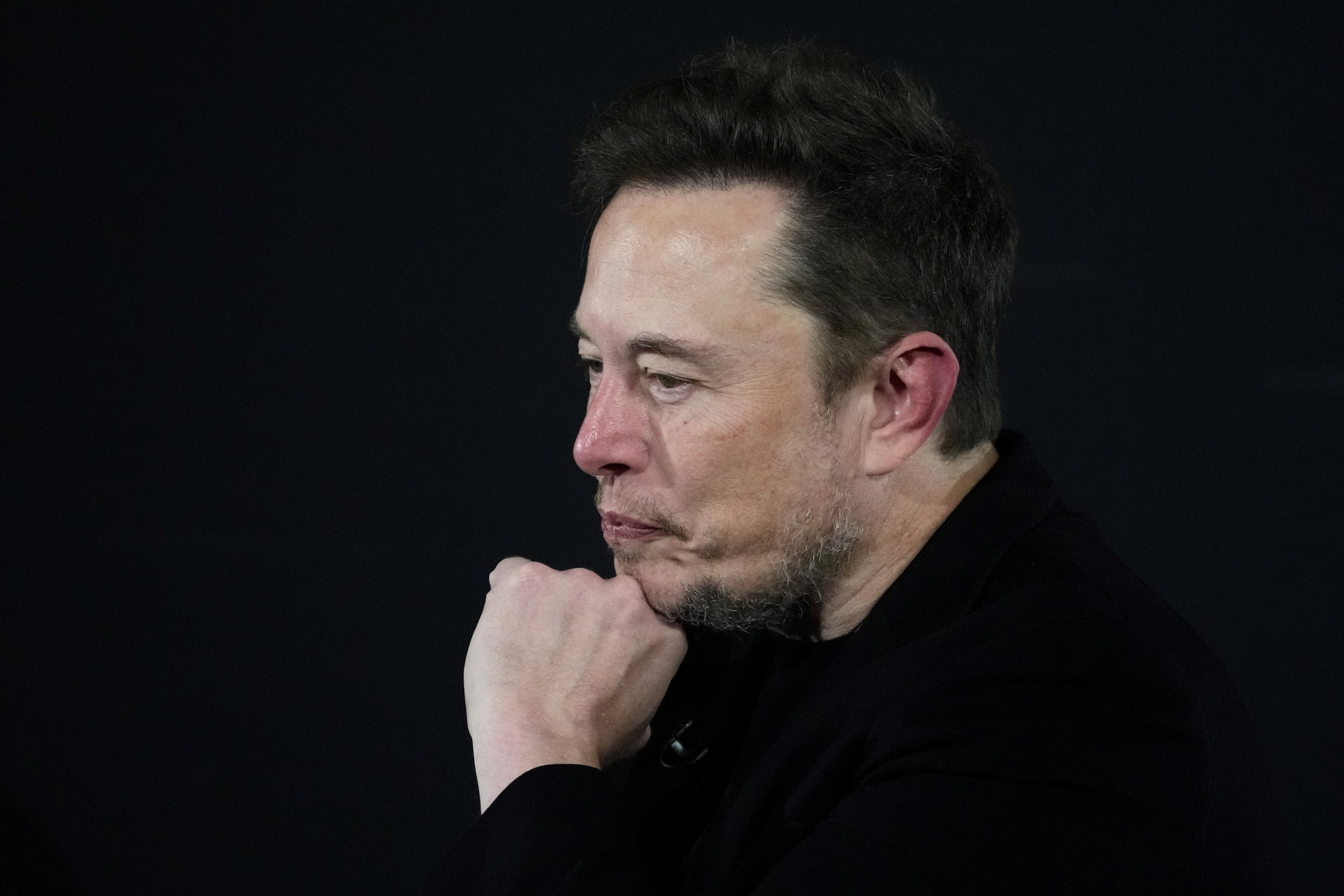
Enlarge / Elon Musk at an AI event with Britain Prime Minister Rishi Sunak in London on Thursday, Nov. 2, 2023.
Getty Images | WPA Pool

After being charged with illegally firing workers who criticized Elon Musk, SpaceX yesterday sued the National Labor Relations Board (NLRB) in a lawsuit that claims the US labor agency’s structure is unconstitutional.

On Wednesday, an NLRB regional director filed a complaint against SpaceX alleging that it illegally fired eight employees who drafted and distributed an open letter about Musk in 2022. If SpaceX doesn’t settle the charges, the company is scheduled to face a hearing with an NLRB administrative law judge (ALJ) starting on March 5.

SpaceX filed its lawsuit against the NLRB in US District Court for the Southern District of Texas, claiming that the NLRB structure violates US law because the administrative law judge cannot be removed by the president of the United States. SpaceX made a virtually identically argument recently when it sued the US attorney general and two other Department of Justice officials in an attempt to stop a separate hiring-discrimination case.

“NLRB ALJs are ‘Officers of the United States’ under the Constitution’s Appointments Clause—not mere employees—because among other things, they hold continuing offices through which they preside over adversarial hearings, receive testimony, shape the administrative record, and prepare proposed findings and opinions,” SpaceX argued.

SpaceX: “The very definition of tyranny”

The NLRB administrative law judges have “at least two layers of removal protection,” which “prevents that exercise of presidential authority and thus violates Article II of the Constitution,” SpaceX told the court. “But for these unlawful removal restrictions, either the ALJ assigned to SpaceX’s administrative case or the NLRB Members who bear responsibility to supervise and exercise control over the ALJ would face the prospect of removal by the President based on their conduct during the proceedings.”

Musk’s company asked for a preliminary injunction that would stop the proceeding, saying that “without interim injunctive relief from this Court, SpaceX will be required to undergo an unconstitutional proceeding before an insufficiently accountable agency official.”

The NLRB declined to comment today on SpaceX’s lawsuit. The NLRB complaint and notice of hearing to SpaceX said that during the scheduled administrative hearing, the company has “the right to call, examine, and cross-examine witnesses and to introduce into the record documents and other evidence.”

SpaceX’s lawsuit argues that NLRB members act as both prosecutor and judge. Quoting The Federalist No. 47 by James Madison, SpaceX wrote that the “NLRB’s current way of functioning is miles away from the traditional understanding of the separation of powers, which views ‘[t]he accumulation of all powers legislative, executive and judiciary in the same hands’ as ‘the very definition of tyranny.'”

SpaceX is banking in part on an April 2023 Supreme Court ruling in a case involving the Federal Trade Commission and Securities and Exchange Commission. That ruling didn’t resolve challenges to the agencies’ use of administrative law judges, but found that federal district courts have jurisdiction to hear lawsuits over whether the agency structure is unconstitutional.

https://arstechnica.com/?p=1993909


TurboTax maker Intuit’s $100 million tax credits challenged by US lawmakers

The Intuit TurboTax logo displayed on a smartphone screen.
Getty Images | SOPA Images

TurboTax maker Intuit’s tax breaks are being questioned by four US lawmakers who object to the federal research tax credits claimed by the company. A letter sent this week claims that the amount of Intuit’s tax credit could have been used by the Internal Revenue Service to offer free online tax filing to many Americans.

“We write regarding Intuit’s recent disclosure that your company received $94 million in federal research tax credits in 2022,” the letter said. “For years, Intuit’s corporate lobbyists have argued that the federal government should not set up a program for Americans to file their taxes online and for free because it would be too costly for taxpayers. Your company’s disclosure reveals that Intuit’s research tax break from 2022 alone could have been enough to fund a year of a free eFile program for millions of Americans.”

The letter was sent to Intuit CEO Sasan Goodarzi by US Senators Elizabeth Warren (D-Mass.), Richard Blumenthal (D-Conn.), Bernie Sanders (I-Vt.), and US Representative Katie Porter (D-Calif.)

Intuit’s regulatory filing said the company’s federal research and experimentation tax credits were $70 million in fiscal 2021, $94 million in 2022, and $106 million in 2023. Intuit’s fiscal year runs through July 31.

Intuit criticized the lawmakers’ letter in a statement provided to Ars. “Don’t take the bait—this letter is actually about Capitol Hill budget negotiations and desperation around a Direct File scheme that will cost taxpayers billions of dollars for something already free of charge and with potentially disastrous effects on the finances of millions of Americans,” Intuit said. The company also defended its tax credits, saying they cover research on AI and other technology that improves “personalized financial recommendations.”

Lawmakers want “full accounting” of research

Congress created the research tax credit in 1981 and made it permanent in 2015. “Typically, 6% to 8% of a company’s annual qualifying R&D expenses can be applied, dollar for dollar, against its federal income tax liability,” ADP explains.

Businesses can claim a wide variety of expenses for the credit, ADP says. It can cover “developing processes, patents, formulas, techniques, prototypes or software; improving or redesigning existing products; hiring scientists, designers or engineers that are engaged in qualified activities; devoting time and resources to creating (manufacturing or developing) new or innovative products; developing intellectual property; [and] paying certain amounts for salaries, supplies, contract research and cloud hosting.”

Warren previously criticized other companies’ use of the research tax credit. The lawmakers’ letter to Intuit said the tax credit’s purpose “is to spur innovation and growth for the economy as a whole, not to subsidize the profits of already dominant companies.”

“Accordingly, we request that Intuit provide a full accounting of the research expenses underlying your massive tax breaks to better understand whether these corporate subsidies are in the best interest of the American people,” the letter said.

The letter cited IRS estimates that “it would cost somewhere between $64 million and $249 million each year to run a free e-File program.” That IRS estimate covers a range of scenarios from “5 million users and a narrow scope of covered tax situations” to “25 million users and a broad scope of covered tax situations.”

“Intuit’s research tax break from 2022—which helped drive down your company’s federal tax rate to a paltry 10.5%, a lower rate than many middle-class Americans pay on their income—exceeds the lower bound of those estimates,” the lawmakers’ letter said. “In other words, with the money that the federal government used to subsidize Intuit’s research, the IRS could have offered free, online tax filing to millions of Americans, saving taxpayers the cost and risk of putting their data in the hands of the private tax preparation industry.”

https://arstechnica.com/?p=1993732


23andMe told victims of data breach that suing is futile, letter shows

23andMe told victims of data breach that suing is futile, letter shows

23andMe is “shamelessly” blaming victims of a data breach impacting 6.9 million users, a lawyer representing victims pursuing a class-action lawsuit, Hassan Zavareei, told TechCrunch.

Zavareei shared a letter from 23andMe lawyers that urged users suing to “consider the futility of continuing to pursue an action in this case,” because their claims are allegedly meritless and “the information that was potentially accessed cannot be used for any harm.”

Last year, hackers accessed 14,000 accounts on 23andMe by using passwords that had been previously breached during security incidents on other websites. By using this tactic, known as credential stuffing, hackers could access the personal data of millions of 23andMe users who opted into a DNA Relatives feature, including genetic information like the percentage of DNA shared with compromised users.

While 23andMe claimed that the case had no merits, the courts have not yet weighed the many questions raised by users suing the company over alleged harms. In December, a US District Court in Illinois found that more than 100 users represented by Zavareei’s firm had “plausibly” demanded damages that exceeded $5 million. Those victims have alleged that 23andMe owed them compensation for the loss of the value of their personally identifiable information, costs of “remediating the impacts of the breach,” and emotional distress. Victims also want the court to order 23andMe to disgorge all profits retained by its “failed promise to safeguard their data.”

So far, 23andMe has been hit with more than 30 lawsuits filed in US federal and state courts, as well as courts in British Columbia and Ontario, Canada, as a result of the breach, suggesting that 23andMe could end up owing much more than $5 million. Due to the number of victims suing, there is an effort to consolidate these cases through multidistrict litigation to decrease the burden on courts.

Did 23andMe do enough to safeguard data?

In the class action filed by Zavareei’s firm, more than 100 victims have accused 23andMe of violating various state laws, including the California Privacy Rights Act (CPRA)—considered the US’s toughest consumer privacy law.

Under the CPRA, businesses that collect sensitive data must provide “reasonable security procedures,” but the law remains vague and does not stipulate what’s considered reasonable.

“A business that collects a consumer’s personal information shall implement reasonable security procedures and practices appropriate to the nature of the personal information to protect the personal information from unauthorized or illegal access, destruction, use, modification, or disclosure,” the law says.

This vagueness has seemingly left room for 23andMe to argue that users who “negligently recycled and failed to update their passwords” following “past security incidents” were to blame for the breach, and “therefore, the incident was not a result of 23andMe’s alleged failure to maintain reasonable security measures under the CPRA.”

“The incident was a result of users’ failure to safeguard their own account credentials, for which 23andMe bears no responsibility,” 23andMe’s letter said.

But Zavareei told TechCrunch that 23andMe’s “finger-pointing is nonsensical.” Zavareei offered a different legal interpretation of what should have been considered “reasonable security procedures” for a website collecting data so sensitive, it’s sometimes considered more valuable on the black market, like health and genetic data.

“23andMe knew or should have known that many consumers use recycled passwords and thus that 23andMe should have implemented some of the many safeguards available to protect against credential stuffing—especially considering that 23andMe stores personal identifying information, health information, and genetic information on its platform,” Zavareei said.

https://arstechnica.com/?p=1993685


SpaceX charged with illegally firing workers behind anti-Musk open letter

Elon Musk speaks to reporters at a conference.
Enlarge / Elon Musk speaks with members of the media at the AI Safety Summit on November 1, 2023 in Bletchley, England.
Getty Images | Leon Neal

SpaceX illegally fired eight employees who criticized CEO Elon Musk in an open letter, a National Labor Relations Board regional director alleged in a complaint filed against the company today.

“Today, the NLRB Regional Director in Region 31 (Los Angeles) issued a consolidated complaint against SpaceX in Hawthorne, CA, covering eight unfair practice charges,” the NLRB said in a statement provided to Ars. “The complaint alleges that the employer unlawfully discharged eight employees who drafted and distributed an open letter detailing workplace concerns.”

A complaint is not a board decision, the statement noted. It means the regional office investigated the charges and found merit in them. The complaint and notice of hearing is confirmed on the NLRB website, and you can read the complaint here.

The NLRB said the complaint seeks reinstatement of the employees, back pay, and letters of apology to the fired employees. If SpaceX doesn’t settle the charges, there will be a hearing with an NLRB administrative law judge starting on March 5.

In June 2022, SpaceX employees circulated a letter that urged company executives to condemn CEO Elon Musk’s public behavior. The letter made a reference to a report of a sexual misconduct allegation, called out “Elon’s harmful Twitter behavior,” and said that “SpaceX must swiftly and explicitly separate itself from Elon’s personal brand.”

“Elon’s behavior in the public sphere is a frequent source of distraction and embarrassment for us,” the employees’ letter said.

SpaceX called employee activity “not acceptable”

SpaceX quickly fired the employees, with President Gwynne Shotwell explaining in an email to the remaining staff that the “letter, solicitations and general process made employees feel uncomfortable, intimidated and bullied, and/or angry because the letter pressured them to sign onto something that did not reflect their views.”

“Blanketing thousands of people across the company with repeated unsolicited emails and asking them to sign letters and fill out unsponsored surveys during the work day is not acceptable,” Shotwell wrote to SpaceX staff. The fired employees filed charges with the NLRB in November 2022.

Today’s NLRB statement said that SpaceX “told other employees that the eight were discharged for participating in the open letter, interrogated other employees about the open letter (and instructed employees not to discuss the investigatory interviews), created an impression of surveillance (including reading and showing screenshots of communications between employees), disparaged participation in the open letter, and restricted employees from distributing the open letter. The employer also invited employees to quit and threatened discharge if employees engaged in protected concerted activities.”

We contacted SpaceX today and will update this article if it provides a response.

“Campaign of intimidation and coercion”

The fired employees’ law firm issued a press release saying that the NLRB complaint alleges 37 labor law violations for coercive statements, implied threats, interrogation, unlawful instructions, creating the impression of surveillance, and retaliation for involvement in protected concerted activity.

“The charges stem from the company’s response to the employees’ letter to SpaceX’s executive team, which expressed concern about allegations of sexual harassment by CEO Elon Musk, and his harmful behavior on Twitter that hurt the company’s reputation, infected the company culture and created a toxic work environment,” the law firm said. “In response to the employees’ plea for systemic change to correct these concerns, SpaceX launched a campaign of intimidation and coercion: pulling employees into clandestine interrogations by HR, falsely claiming the meetings were attorney-client privileged, and telling employees to keep the meetings a secret even from their managers.”

Though eight employees filed charges with the NLRB, the press release said that SpaceX fired nine people for their involvement in the letter.

Fired employee Deborah Lawrence said that “SpaceX’s ‘mission above all else’ mentality hurts everyone in the organization by allowing people to get away with harmful behavior, including harassment, groping, and physical violence, directed disproportionately at women. The toxic culture has resulted in many hard-working people, who were otherwise highly motivated by the company’s mission, quitting. We wrote the open letter to leadership not out of malice, but because we cared about the mission and the people around us.”

Tom Moline, another fired employee involved in the case, said, “I had no doubt that the NLRB would recognize SpaceX’s actions for what they were: feeble attempts to punish, intimidate, and silence me and hundreds of other workers who simply sought to improve workplace conditions and address the toxic culture set by Elon Musk, enforced by Gwynne Shotwell, and enabled by all levels of SpaceX leadership. We will not be silenced, and I am confident that SpaceX will be held accountable for their illegal actions.”

https://arstechnica.com/?p=1993522


Crypto hedge fund CEO may not exist; probe finds no record of identity

A still from a HyperVerse video featuring CEO Steven Reece Lewis.
Enlarge / A still from a HyperVerse video featuring CEO Steven Reece Lewis.

For years, rumors spread on social media that Steven Reece Lewis, the chief executive officer of a now-shuttered cryptocurrency hedge fund called HyperVerse, was a “fake person” who “doesn’t exist.” After its investigation, The Guardian has confirmed that no organization cited on his resume “can find any record of him.”

According to The Guardian, Reece Lewis’s qualifications all appear to be falsified in an effort to woo investors to sink money into HyperVerse. After HyperVerse collapsed, accused of operating as a pyramid scheme, the company suspended withdrawals. According to blockchain analysts, Chainalysis consumer losses in 2022 were estimated to exceed $1.3 billion. Thousands of consumers lost millions, The Guardian reported.

In a December 2021 video, Reece Lewis was introduced as CEO and touted for making big moves before joining HyperVerse. He supposedly went from working at Goldman Sachs to selling a web development company to Adobe before launching his own IT startup.

Digging into his academic history, The Guardian found that neither of the universities that Reece Lewis allegedly attended— the University of Leeds and the University of Cambridge—had a record of him in their databases.

His career background appeared similarly suspicious. Adobe “has no record of any acquisition of a company owned by a Steven Reece Lewis in any of its public SEC filings,” and “Goldman Sachs could find no record of Reece Lewis having worked for the company,” The Guardian reported.

Fanning out their search, The Guardian uncovered no LinkedIn account for Reece Lewis “or any Internet presence other than HyperVerse promotional material.” It appeared, too, that Reece Lewis’ Twitter account was created just a month before the 2021 video launched.

Celebrities and influencers, including Apple co-founder Steve Wozniak, endorsed Reece Lewis as a strong leader for the HyperVerse. Reece Lewis’ company offered a bold vision that was supposed to compete with Facebook’s Metaverse by creating a “new frontier of a galactic universe” and bringing “to life a complete virtual world,” Reece Lewis’ promo promised. Wozniak said in a video that he supported “Steven,” proclaiming, “I can’t wait for the HyperVerse.”

In 2022, a writer for the British tabloid called The Mirror, Andrew Penman, attempted to raise a red flag, noting that all three of the celebrities (Wozniak, Chuck Norris, and Lance Bass) who endorsed Reece Lewis declined to confirm ever knowing him.

“I suspect that he’s a figment of someone’s imagination, created to give a false sense of security to this sham,” Penman wrote. “I can find no record of such a person other than a Twitter account started last year, and HyperVerse has refused to answer my questions about him or even give me an email address so that I can put questions to him directly.”

The influencers, as well as HyperVerse leaders like Sam Lee and Ryan Xu, remain silent on Reece Lewis’ identity today. None of the famous figures has ever confirmed that they’ve met or spoken to Reece Lewis, the Guardian reported, suggesting that it was possible that all three may have been hired to do the marketing videos through Cameo. Penman suggested in 2022 that the influencers were likely “innocently misled” when agreeing to endorse HyperVerse.

Perhaps more glaringly, however, Lee did not respond to The Guardian’s questions about Reece Lewis. Instead, Lee disputed The Guardian’s alleged “misstatements” about Lee’s involvement as the alleged founder of HyperVerse and claimed that “people on the Internet” continue to “make things up.”

One of the earliest reports alleging that Reece Lewis was not real appeared on Reddit two years ago. A user called “roamingandy” criticized Xu for disappearing and wrote that HyperVerse’s “new CEO Steven Reece Lewis, touted as a business expert, doesn’t exist outside of one video created by HyperVerse. He has no LinkedIn, no Twitter, no mention of him on the board of any previous companies.”

After concluding its investigation, The Guardian agreed that “Reece Lewis’s identity could not be verified.”

On his only known social media account, Reece Lewis stopped tweeting in June 2022, around when HyperVerse was suspending customer withdrawals. While his identity remains in question, his pinned tweet has a link to a promo video for the HyperVerse, with a caption that reads, “where reality ends and imagination begins.”

https://arstechnica.com/?p=1993491


Vizio settles for $3M after saying 60 Hz TVs had 120 Hz “effective refresh rate”

A marketing image for Vizio's P-series Q9 TV.
Enlarge / A marketing image for Vizio’s P-series Q9 TV.

Vizio has agreed to pay $3 million to settle a class-action lawsuit that alleged the company misled customers about the refresh rates of its TVs.

In 2018, a lawsuit [PDF], which was later certified as a class action, was filed against Vizio for advertising its 60 Hz and 120 Hz LCD TVs as having an “effective” refresh rate of 120 Hz and 240 Hz, respectively. Vizio was referring to the backlight scanning (or black frame insertion) ability, which it claimed made the TVs look like they were operating at a refresh rate that was twice as fast as they are capable of. Vizio’s claims failed to address the drawbacks that can come from backlight scanning, which include less brightness and the potential for noticeable flickering. The lawsuit complained about Vizio’s language in marketing materials and user manuals.

The lawsuit read:

Vizio knows, or at the very least should know, that its television with 60Hz display panels have a refresh rate of 60 images per second and that backlight manipulation methods cannot and do not increase the effective Hz (refresh rate) of a television.

The lawsuit, filed in the Superior Court of California, County of Los Angeles, accused Vizio of using misleading tactics to persuade retailers to sell and recommend Vizio TVs. It accused Vizio of trying “to sell its lesser-quality product at a higher price and allowed Vizio to realize sales it may not have otherwise made if it were truthful regarding the performance capabilities of its televisions.”

Under the settlement terms [PDF] spotted by The Verge, people who bought a Vizio TV in California after April 30, 2014, can file a claim. They’ll receive $17 or up to $50 if the fund allows it. The individual payout may also be under $17 if the claims exceed the $3 million fund. Vizio will also pay attorney fees. People have until March 30 to submit their claims. The final approval hearing is scheduled for June 20.

Vizio also agreed to stop advertising their TVs with 120 and 240 Hz “effective” refresh rates but “will not be obligated to recall or modify labeling for any Vizio-branded television model that has already been sold or distributed to a third party,” according to the agreement. Further, the California-headquartered company will also offer affected customers a “service and limited warranty package conservatively valued at $25” per person.

Vizio, per the settlement, denies any wrongdoing. The company declined to comment on the settlement to Ars.

The settlement comes as tactics for fighting motion blur, like backlight scanning and frame interpolation (known for causing the “soap opera effect“), have been maligned for often making the viewing experience worse. LG and TCL have also faced class-action lawsuits for boosting refresh rate claims by saying that their motion blur-fighting techniques make it seem like their TVs are running at a higher refresh rate than possible. While the case against LG was dismissed, TCL settled for $2,900,000 [PDF].

Despite the criticisms, backlight scanning and motion smoothing remain on default across countless TVs belonging to unsuspecting owners. Class-action cases like Vizio’s that end up having a negative cost for OEMs provide further incentive for them to at least stop using the ability as a way to superficially boost spec sheets.

https://arstechnica.com/?p=1993296


Since Elon Musk’s Twitter purchase, firm reportedly lost 72% of its value

A businessman places his hand on his head as he looks up and is perplexed by a chart indicating a drop in value.
Getty Images | DNY59

Fidelity’s latest valuation of its stake in X implies that Elon Musk’s social network is worth about 71.5 percent less than when Musk bought the company in October 2022.

Fidelity’s Blue Chip Growth Fund has a relatively small stake in X. A monthly update for the fund listed the value of its “X Holdings Corp.” stake at $5.6 million as of November 30, 2023. The fund’s share of X was originally worth $19.7 million but lost about two-thirds of its value by April 2023 and has dropped more modestly since then.

Fidelity cut its valuation of X by 10.7 percent in November, according to Axios. One question is whether Fidelity sold any of its stake during November, but the latest drop in value isn’t surprising given the recent Musk-related controversies that drove advertisers away from the platform.

“As of Oct. 30 the fund hadn’t sold any of its stake, but the monthly report with the updated valuation doesn’t disclose whether the size of the holding changed,” Bloomberg wrote. “Assuming the fund hasn’t reduced its holding in X, the latest report implies the value of the entire company has also fallen by 72 percent. Fidelity declined to comment.”

X’s ad woes hurt value

Based on the $44 billion that Musk paid for Twitter over a year ago, the drop in Fidelity’s valuation would make the company worth about $12.5 billion. X reportedly valued itself at about $19 billion in October, based on the value of stock grants to employees.

Since Musk took Twitter private, the company’s value and revenue are harder to determine from the outside. As Axios noted, “Fidelity doesn’t necessarily have much, if any, inside information on X’s financial performance, despite being a shareholder in the privately held business. Other shareholders may value their X stock differently.”

X’s finances were shaky enough at the end of October, the one-year anniversary of Musk’s purchase. Musk made things worse in mid-November when he posted a favorable response to an antisemitic tweet. He addressed the antisemitism controversy in a public interview on November 29, telling businesses that pulled advertising from X to “go fuck yourself.”

X has had trouble retaining advertisers throughout Musk’s tenure, due largely to his approach to content moderation. Musk eliminated most of the company’s staff shortly after becoming its owner.

X loses bid to block California law

X is dealing with new regulations on content moderation, both in Europe and the US. Musk’s company sued California in September in an attempt to block the state’s content-moderation law but last week lost a key ruling in the court case.

On Thursday, US District Judge William Shubb denied X’s motion for a preliminary injunction that would have blocked enforcement of the California content-moderation law. The state law requires companies to file two reports each year with terms of service and detailed descriptions of content-moderation practices.

Shubb rejected X’s claim that the law violates the First Amendment. “While the reporting requirement does appear to place a substantial compliance burden on social medial companies, it does not appear that the requirement is unjustified or unduly burdensome within the context of First Amendment law,” Shubb wrote.

The judge agreed with California that there is “a substantial government interest in requiring social media companies to be transparent about their content moderation policies and practices so that consumers can make informed decisions about where they consume and disseminate news and information.”

https://arstechnica.com/?p=1993311


Michael Cohen gave his lawyer fake citations invented by Google Bard AI tool

Michael Cohen photographed outside while walking toward a courthouse.
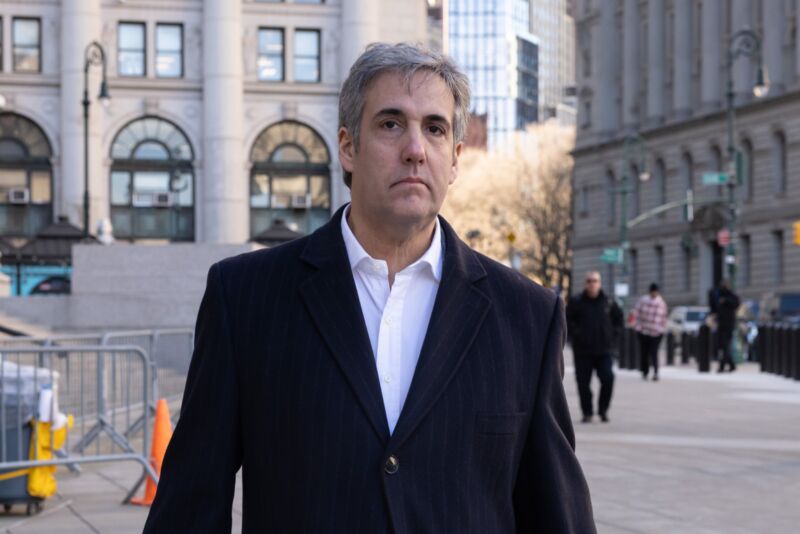
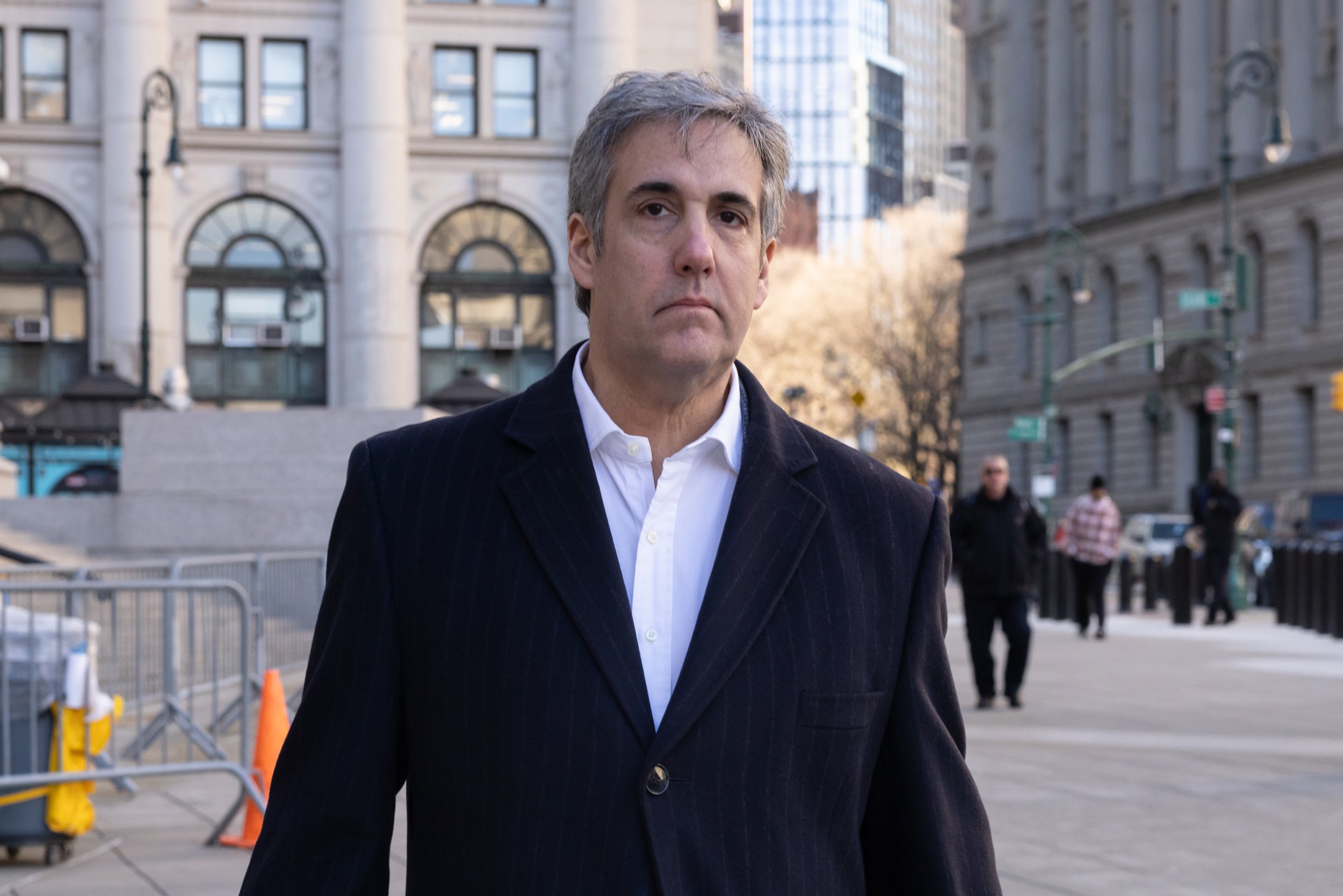
Enlarge / Michael Cohen, former personal lawyer to US President Donald Trump, arrives at federal court in New York on December 14, 2023.
Getty Images | Bloomberg

Donald Trump’s former attorney, Michael Cohen, admitted providing fake AI-generated court citations to his own lawyer, who failed to check whether the cited cases were real before submitting them in a court brief. Cohen said the fake court cases came from Google Bard and that he thought Bard was like “a super‑charged search engine” rather than a generative AI tool.

As previously reported, Cohen’s lawyer, David Schwartz, cited three cases that do not exist in a motion seeking early termination of Cohen’s supervised release. The fake citations were meant to show previous instances in which defendants were allowed to end supervised release early—two involved fictional cocaine distributors and the other an invented tax evader.

The brief provided case numbers, summaries, and ruling dates for the citations, but the judge determined that the cases never happened. Facing punishment for violating federal rules, Schwartz filed an explanation that apologized “for not checking these cases personally before submitting them to the court,” but also blamed “the conduct of his client.”

A response last week by Cohen’s other lawyer, E. Danya Perry, said that “Mr. Schwartz’s recollection of the events is largely consistent with Mr. Cohen’s… To summarize: Mr. Cohen provided Mr. Schwartz with citations (and case summaries) he had found online and believed to be real. Mr. Schwartz added them to the motion but failed to check those citations or summaries. As a result, Mr. Schwartz mistakenly filed a motion with three citations that—unbeknownst to either Mr. Schwartz or Mr. Cohen at the time—referred to nonexistent cases.”

Perry, who made her first appearance in the case a week after the November 29 brief that included fake cases, noted that she “alerted the Court to likely issues with Mr. Schwartz’s citations” after discovering the nonexistent cases. The Cohen case is in US District Court for the Southern District of New York.

“To be clear, Mr. Cohen did not know that the cases he identified were not real and, unlike his attorney, had no obligation to confirm as much. While there has been no implication to the contrary, it must be emphasized that Mr. Cohen did not engage in any misconduct,” Perry wrote.

Cohen was disbarred 5 years ago

Perry’s filing included a declaration from Cohen, who served time in prison after pleading guilty to five counts of evasion of personal income tax, making false statements to a bank, excessive campaign contribution, and causing an unlawful corporate contribution. The charges against Cohen included payments to two women to prevent them from publicizing allegations about affairs with Trump before the 2016 presidential election.

“I must rely on my attorneys in this matter because I was disbarred nearly five years ago; litigation of this sort was not a meaningful part of my practice before then; and I do not currently have access to Westlaw or a similar legal database to research or verify relevant case law,” Cohen wrote last week.

Cohen was unsatisfied with Schwartz’s first draft of the motion and asked Perry, who had represented him in unrelated matters, to review it. Cohen said he texted Perry’s notes to Schwartz and provided several “citations and descriptions [that] came from Google Bard.” Cohen explained that he misunderstood what Google Bard is:

As a nonlawyer, I have not kept up with emerging trends (and related risks) in legal technology and did not realize that Google Bard was a generative text service that, like Chat-GPT, could show citations and descriptions that looked real but actually were not. Instead, I understood it to be a super‑charged search engine and had repeatedly used it in other contexts to (successfully) find accurate information online. I did not know that Google Bard could generate non-existent cases, nor did I have access to Westlaw or other standard resources for confirming the details of cases. Instead, I trusted Mr. Schwartz and his team to vet my suggested additions before incorporating them.

The incident is reminiscent of a previous one in the same District Court in which a judge imposed a $5,000 fine on two lawyers and their law firm after they admitted to using ChatGPT to help write court filings that cited six nonexistent cases invented by the AI chatbot.

https://arstechnica.com/?p=1993209


US dodges delay of Sam Bankman-Fried’s sentencing by dropping second trial

US dodges delay of Sam Bankman-Fried’s sentencing by dropping second trial

After FTX co-founder Sam Bankman-Fried was convicted of seven charges related to wire fraud and money laundering in 2023, the US recently decided not to proceed with a second trial over additional charges in 2024.

During the second trial, Bankman-Fried could have been convicted on additional charges of conspiracy to bribe foreign officials, conspiracy to commit bank fraud, conspiracy to operate an unlicensed money-transmitting business, and substantive securities fraud and commodities fraud.

However, in a letter to Judge Lewis Kaplan, US attorney Damian Williams wrote that the “strong public interest” in a prompt resolution of the FTX scandal outweighed the benefits of holding a second trial—especially since “much of the evidence that would be offered in a second trial was already offered in the first trial.”

That evidence included witness testimony and documentary evidence that Bankman-Fried engaged in conspiracies to bribe Chinese officials and to induce a US bank to open an account for his fraudulent schemes, Williams said. It also included evidence of conspiracy to make unlawful campaign contributions.

The US government’s indictment said that Bankman-Fried “misappropriated and embezzled FTX customer deposits and used billions of dollars in stolen funds… to enrich himself; to support the operations of FTX; to fund speculative venture investments; to help fund over a hundred million dollars in campaign contributions to Democrats and Republicans to seek to influence cryptocurrency regulation; and to pay for Alameda’s operating costs.” He was also accused of building a “pyramid of deceit” by making “false and fraudulent statements and representations to FTX’s investors” and lenders to FTX’s cryptocurrency trading firm, Alameda Research.

After losing the first trial, Bankman-Fried is expected to appeal the ruling but is now facing a maximum sentence of 110 years, which will be decided this March. At Bankman-Fried’s upcoming sentencing hearing, Williams suggested that Kaplan could weigh evidence of all relevant conduct, including evidence connected to the additional charges.

By dropping plans to proceed with a separate trial, the US government appears to be eliminating some red tape, causing unnecessary delays in providing restitution to victims of the FTX fraud.

In December 2022, Bankman-Fried was living in The Bahamas when the US sought his extradition to pursue charges. At that time, however, the Bahamas had only approved extradition of Bankman-Fried for the initial seven charges. The second trial was seemingly indefinitely delayed after the Bahamas failed to respond to a US request to waive a rule stopping the government from pursuing additional charges.

Williams wrote that because “the government does not have a timeline for when The Bahamas may respond to its request” and “a second trial would not affect” the US sentencing guidelines range for Bankman-Fried, the US decided the second trial wasn’t worth delaying “orders of forfeiture and restitution for the victims of” Bankman-Fried’s crimes.

Part of the US’s decision to drop the additional charges may have also been in response to Bankman-Fried’s efforts to delay sentencing in the trial until the second trial concluded.

In December, Bankman-Fried’s lawyers tried to push back the sentencing hearing, arguing that “for fairness and efficiency, the Court should consider the relevant conduct all at once in a single sentencing hearing.” Bankman-Fried’s lawyers had hoped to delay sentencing until May 2024, but as of this writing, his sentencing remains scheduled for March 28.

According to Reuters, prosecutors had accused Bankman-Fried of “looting $8 billion from FTX customers out of sheer greed.” In his defense, Bankman-Fried has argued that he made mistakes managing FTX but always acted in good faith. His attorney, Mark Cohen, said at trial that “poor risk management is not a crime… bad business judgments are not a crime,” Reuters reported.

Before the trial started, Kaplan had warned Bankman-Fried’s lawyers that any convictions could result in “a very long sentence.”

https://arstechnica.com/?p=1993195