Binance to pay $2.7 billion fine after hiding shady transactions from feds

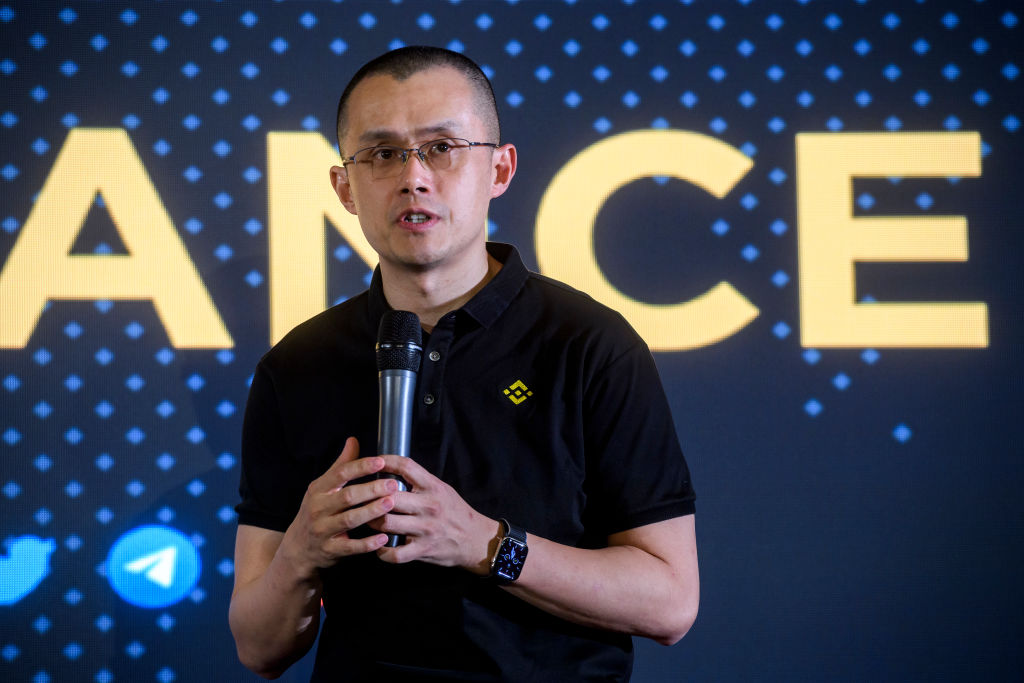
Founder and CEO of Binance Changpeng Zhao, commonly known as "CZ," in May 10, 2022, in Rome, Italy.
Enlarge / Founder and CEO of Binance Changpeng Zhao, commonly known as “CZ,” in May 10, 2022, in Rome, Italy.

Now that a federal court has approved a settlement with Binance, the world largest cryptocurrency exchange is hoping to move past a money-laundering scandal that forced its founder and CEO, Changpeng Zhao, to resign and overnight drained more than $1 billion in assets from its platform.

Under the settlement, Binance will “disgorge $1.35 billion of ill-gotten transaction fees and pay a $1.35 billion penalty” to the Commodity Futures Trading Commission (CFTC), the federal agency announced in a press release.

Additionally, Zhao will personally pay a $150 million civil monetary penalty. According to a plea agreement with the US Department of Justice—which ordered Binance to pay a “historic” penalty of $4.3 billion—Zhao’s previously ordered $50 million fine can be credited under certain terms against the amount that Zhao owes the CFTC.

The CFTC found that Zhao directed Binance to dodge US regulatory requirements and violate Binance’s own terms of use to hide unauthorized US trading on the exchange. Binance did this by soliciting US customers to trade on the platform without being subjected to Binance’s know-your-customer (KYC) procedures.

“Zhao and Binance were aware of US regulatory requirements, but chose to ignore them and knowingly concealed the presence of US customers on the platform,” the CFTC’s press release said. “The order also finds Zhao and other members of Binance’s senior management actively facilitated violations of US law, including instructing US customers to evade compliance controls.”

Among those “aiding and abetting Binance’s violations,” the CFTC said, was Binance’s former compliance-control officer, Samuel Lin. Under a separate order, Lin must pay a $1.5 million civil monetary penalty, the CFTC noted.

As part of the settlement, Binance will no longer allow customers to use sub-accounts to skirt KYC procedures and has agreed to remove all non-compliant accounts from the platform. Moving forward, Binance has agreed to “no longer allow existing sub-accounts, including those opened by prime brokers, to bypass the platform’s compliance controls,” the CFTC said.

Binance must also implement a new corporate governance structure, adding a board of directors with independent members and compliance and audit committees. This structure is intended to prevent Binance from approving suspicious transactions linked to terrorism, child sexual abuse, and ransomware attacks, as well as from violating anti-money laundering and sanctions laws.

In November, when Zhao resigned, Binance said that settling these lawsuits would help the crypto exchange “turn the page,” Reuters reported.

Zhao’s plea agreement prevents him from making any public statements contradicting his acceptance of responsibility for Binance’s schemes, and he has kept his word on that front. Shortly after resigning, Zhao wrote on the social media platform X (formerly Twitter) that he had made mistakes and must take responsibility “for our community, for Binance, and for myself.”

Within one day after Zhao resigned, though, some Binance users immediately did not appear confident in the platform, withdrawing more than $1 billion from the exchange, CNBC reported. A market analyst told CNBC that Binance’s token suffered most from the CEO stepping down.

However, the majority of Binance’s assets—more than $65 billion—remained on the platform, CNBC reported, indicating that Binance is likely big enough to survive this year’s legal storms.

Zhao said he was “proud to point out” that the plea deals “do not allege that Binance misappropriated any user funds” or “that Binance engaged in any market manipulation.” Naming his successor as CEO—Binance’s former global head of regional markets, Richard Teng—Zhao expressed confidence that Teng would “ensure Binance delivers on our next phase of security, transparency, compliance, and growth.”

https://arstechnica.com/?p=1992001


This “smoking gun” killed the McDonald’s ice cream hackers’ startup

Vanilla Soft Serve Ice Cream Cone

A little over three years have passed since McDonald’s sent out an email to thousands of its restaurant owners around the world that abruptly cut short the future of a three-person startup called Kytch—and with it, perhaps one of McDonald’s best chances for fixing its famously out-of-order ice cream machines.

Until then, Kytch had been selling McDonald’s restaurant owners a popular Internet-connected gadget designed to attach to their notoriously fragile and often broken soft-serve McFlurry dispensers, manufactured by McDonald’s equipment partner Taylor. The Kytch device would essentially hack into the ice cream machine’s internals, monitor its operations, and send diagnostic data over the Internet to an owner or manager to help keep it running. But despite Kytch’s efforts to solve the Golden Arches’ intractable ice cream problems, a McDonald’s email in November 2020 warned its franchisees not to use Kytch, stating that it represented a safety hazard for staff. Kytch says its sales dried up practically overnight.

Now, after years of litigation, the ice-cream-hacking entrepreneurs have unearthed evidence that they say shows that Taylor, the soft-serve machine maker, helped engineer McDonald’s Kytch-killing email—kneecapping the startup not because of any safety concern, but in a coordinated effort to undermine a potential competitor. And Taylor’s alleged order, as Kytch now describes it, came all the way from the top.

On Wednesday, Kytch filed a newly unredacted motion for summary adjudication in its lawsuit against Taylor for alleged trade libel, tortious interference, and other claims. The new motion, which replaces a redacted version from August, refers to internal emails Taylor released in the discovery phase of the lawsuit, which were quietly unsealed over the summer. The motion focuses in particular on one email from Timothy FitzGerald, the CEO of Taylor parent company Middleby, that appears to suggest that either Middleby or McDonald’s send a communication to McDonald’s franchise owners to dissuade them from using Kytch’s device.

“Not sure if there is anything we can do to slow up the franchise community on the other solution,” FitzGerald wrote on October 17, 2020. “Not sure what communication from either McD or Midd can or will go out.”

In their legal filing, the Kytch co-founders, of course, interpret “the other solution” to mean their product. In fact, FitzGerald’s message was sent in an email thread that included Middleby’s then COO, David Brewer, who had wondered earlier whether Middleby could instead acquire Kytch. Another Middleby executive responded to FitzGerald on October 17 to write that Taylor and McDonald’s had already met the previous day to discuss sending out a message to franchisees about McDonald’s lack of support for Kytch.

But Jeremy O’Sullivan, a Kytch co-founder, claims—and Kytch argues in its legal motion—that FitzGerald’s email nonetheless proves Taylor’s intent to hamstring a potential competitor. “It’s the smoking gun,” O’Sullivan says of the email. “He’s plotting our demise.”

Although FitzGerald’s email doesn’t actually order anyone to act against Kytch, the company’s motion argues that Taylor played a key role in what happened next. It’s an “ambiguous yet direct message to his underlings,” argues Melissa Nelson, Kytch’s other co-founder. “It’s just like a mafia boss giving coded instructions to his team to whack someone.”

On November 2, 2020, a little over two weeks after FitzGerald’s open-ended suggestion that perhaps a “communication” from McDonald’s or Middleby to franchisees could “slow up” adoption of “the other solution,” McDonald’s sent out its email blast cautioning restaurant owners not to use Kytch’s product.

The email stated that the Kytch gadget “allows complete access to all aspects of the equipment’s controller and confidential data”—meaning Taylor’s and McDonald’s data, not the restaurant owners’ data; that it “creates a potential very serious safety risk for the crew or technician attempting to clean or repair the machine”; and finally, that it could cause “serious human injury.” The email concluded with a warning in italics and bold: “McDonald’s strongly recommends that you remove the Kytch device from all machines and discontinue use.”

https://arstechnica.com/?p=1991363


Marketer sparks panic with claims it uses smart devices to eavesdrop on people

Couple on couch with smart speaker

We’ve all experienced it or heard about it happening: Someone has a conversation about wanting a red jacket, and then suddenly, it seems like they’re seeing ads for red jackets all over the place.

Makers of microphone-equipped electronics sometimes admit to selling voice data to third parties (advertisers). But that’s usually voice data accumulated after a user has prompted their device to start listening to them and after they’ve opted into (preferably not by default) this sort of data collection.

But a marketing company called CMG Local Solutions sparked panic recently by alluding that it has access to people’s private conversations by tapping into data gathered by the microphones on their phones, TVs, and other personal electronics, as first reported by 404 Media on Thursday. The marketing firm had said it uses these personal conversations for ad targeting.

Active Listening

CMG’s Active Listening website starts with a banner promoting an accurate but worrisome statement, “It’s true. Your devices are listening to you.”

A screenshot from CMG's Active Listening website.
Enlarge / A screenshot from CMG’s Active Listening website.

A November 28 blog post described Active Listening technology as using AI to “detect relevant conversations via smartphones, smart TVs, and other devices.” As such, CMG claimed that it knows “when and what to tune into.”

The blog also shamelessly highlighted advertisers’ desire to hear every single whisper made that could help them target campaigns:

This is a world where no pre-purchase murmurs go unanalyzed, and the whispers of consumers become a tool for you to target, retarget, and conquer your local market.

The marketing company didn’t thoroughly detail how it backs its claims. An archived version of the Active Listening site provided a vague breakdown of how Active Listening purportedly works.

The website previously pointed to CMG uploading past client data into its platform to make “buyer personas.” Then, the company would identify relevant keywords for the type of person a CMG customer would want to target. CMG also mentioned placing a tracking pixel on its customers’ sites before entering the Listening Stage, which was only described as: “Active Listening begins and is analyzed via AI to detect pertinent conversations via smartphones, smart TVs, and other devices.”

The archived version of the page discussed an AI-based analysis of the data and generating an “encrypted evergreen audience list” used to re-target ads on various platforms, including streaming TV and audio, display ads, paid social media, YouTube, Google, and Bing Search.

That explanation doesn’t appear to be on the Active Listening page anymore, but CMG still says it can target people who are actively saying things like, “A minivan would be perfect for us” or “This AC is on it’s [sic] last leg!” in conversations.

But are they actively listening?

In a statement emailed to Ars Technica, Cox Media Group said that its advertising tools include “third-party vendor products powered by data sets sourced from users by various social media and other applications then packaged and resold to data servicers.” The statement continues:

Advertising data based on voice and other data is collected by these platforms and devices under the terms and conditions provided by those apps and accepted by their users, and can then be sold to third-party companies and converted into anonymized information for advertisers. This anonymized data then is resold by numerous advertising companies.

The company added that it does not “listen to any conversations or have access to anything beyond a third-party aggregated, anonymized and fully encrypted data set that can be used for ad placement” and “regret[s] any confusion.”

Before Cox Media Group sent its statement, though, CMG’s claims of collecting data on “casual conversations in real-time,” as its blog stated, were questionable. CMG never explained how our devices would somehow be able to garner the computing and networking power necessary to record and send every conversation spoken within the device’s range in “real-time,” unbeknownst to the device’s owner. The firm also never explained how it acquired the type of access that requires law enforcement to obtain a warrant. This is despite CMG’s blog claiming that with Active Listening, advertisers would be able to know “the second someone in your area is concerned about mold in their closet,” for example.

CMG’s November blog post pointed to an unnamed technology partner that can “aggregate and analyze voice data during pre-purchase conversations,” as well as a “growing ability to access microphone data on devices.”

https://arstechnica.com/?p=1991469


Twitch quickly reverses policy that “went too far” allowing nudity

Twitch quickly reverses policy that “went too far” allowing nudity

Just two days after updating its policy to allow for more nudity, Twitch has announced that it’s immediately “rolling back the artistic nudity changes.”

“Moving forward, depictions of real or fictional nudity won’t be allowed on Twitch, regardless of the medium,” Twitch CEO Dan Clancy wrote in a blog post on Friday.

Clancy explained the decision to reverse course, writing that the policy was updated in response to user requests that Twitch “allow the thriving artist community on Twitch to utilize the human form in their art.”

However, soon after the policy was changed, Clancy said that an unquantified number of streamers “created content that was in violation of our new policy.” Twitch also received complaints about other uploaded content “that was allowed under the updated policy” but sparked concerns that Twitch shared.

“Upon reflection, we have decided that we went too far with this change,” Clancy wrote. “Digital depictions of nudity present a unique challenge—AI can be used to create realistic images, and it can be hard to distinguish between digital art and photography.”

Clancy confirmed that there are currently no other changes to the sexual content policy recently announced that briefly allowed more nudity after years of banning mostly female-presenting streamers who were penalized for violating sexual content policies that Twitch now admits were too confusing.

In one prominent example, just two days before the policy change, Twitch banned OnlyFans model Morgpie for posting “topless” streams. Although Morgpie’s videos were shot to imply nudity, they “never actually showed content that explicitly violated Twitch’s sexual content policies,” TechCrunch reported. To critics, Twitch’s rationale for banning Morgpie remains unclear.

In a blog post on Wednesday, Twitch Chief Customer Trust Officer Angela Hession wrote that Twitch “received consistent feedback from streamers that our current policies around sexual content are confusing and that it can be difficult to know how their content will be interpreted based on these policies.”

Hession confirmed that Twitch’s policy prohibiting “content that ‘deliberately highlighted breasts, buttocks or pelvic region,’ even when fully clothed” was confusing.

“Streamers found it difficult to determine what was prohibited and what was allowed and often evaluating whether or not a stream violated this portion of the policy was subjective,” Hession wrote.

Combined with another policy that restricted “sexually suggestive” content, Twitch’s former policy was found to be “overly punitive” and “resulted in female-presenting streamers being disproportionately penalized,” Hession wrote.

In an effort to eliminate confusion, Twitch announced that it had consolidated two separate policies that addressed sexual content under Twitch’s community guidelines into one single sexual content policy. That policy “specifies the types of sexual content that are prohibited on Twitch” and clarifies enforcement.

Another key part of the policy overhaul, Twitch has also begun allowing some sexual content that was previously restricted, so long as appropriate Content Classification Labels (CCLs) indicating sexual themes are applied.

Now, labeled content is allowed that features “body writing on female-presenting breasts and/or buttocks regardless of gender” and “erotic dances that involve disrobing or disrobing gestures, such as strip teases.”

These labels will ensure that content is not removed but also prevent mature content from being promoted on the homepage, Hession wrote, ensuring that no Twitch user ever encounters inappropriate content that they do not wish to see. The only exceptions will be made for streams labeled as including mature-rated games and profanity, which will still appear in the main feed on the homepage. Streams with sexual themes label will, however, still be recommended in the left bar of the homepage, where a thumbnail isn’t displayed.

“We believe that accurate content labeling is key to helping viewers get the experience they expect, and now that we can enable appropriate labeling of sexual content using CCLs we believe that some of the restrictions in our former policies are no longer required,” Hession wrote. “In addition to providing clarity, these updates will also reduce the risk of inconsistent enforcement and bring our policy more in line with other social media services.”

Failing to label sexual content can result in penalties, like warnings, but not suspensions, Hession wrote. Twitch will automatically apply labels to sexual content missing labels, and any repeated failure to label content could result in a label “temporarily locked onto the stream.”

In addition to real and fictional nudity, some other sexual content is still prohibited, including pornographic content, youth nudity, “fictionalized sexual acts or masturbation,” and “simulated sexual activity or erotic roleplay with other players in online games.” Uploading such prohibited content can result in content removals or account suspensions. A complete overview of what’s still banned can be found here.

Clancy wrote that Twitch is now “in the process of pushing out updates” to its community guidelines that reflect the latest changes to the sexual content policy.

“While I wish we would have predicted this outcome, part of our job is to make adjustments that serve the community,” Clancy wrote. “I apologize for the confusion that this update has caused.”

This story was updated on December 15 to reflect changes to Twitch’s policy.

https://arstechnica.com/?p=1991225


TikTok requires users to “forever waive” rights to sue over past harms

TikTok requires users to “forever waive” rights to sue over past harms

Some TikTok users may have skipped reviewing an update to TikTok’s terms of service this summer that shakes up the process for filing a legal dispute against the app. According to The New York Times, changes that TikTok “quietly” made to its terms suggest that the popular app has spent the back half of 2023 preparing for a wave of legal battles.

In July, TikTok overhauled its rules for dispute resolution, pivoting from requiring private arbitration to insisting that legal complaints be filed in either the US District Court for the Central District of California or the Superior Court of the State of California, County of Los Angeles. Legal experts told the Times this could be a way for TikTok to dodge arbitration claims filed en masse that can cost companies millions more in fees than they expected to pay through individual arbitration.

Perhaps most significantly, TikTok also added a section to its terms that mandates that all legal complaints be filed within one year of any alleged harm caused by using the app. The terms now say that TikTok users “forever waive” rights to pursue any older claims. And unlike a prior version of TikTok’s terms of service archived in May 2023, users do not seem to have any options to opt out of waiving their rights.

TikTok did not immediately respond to Ars’ request to comment, but has previously defended its “industry-leading safeguards for young people,” the Times noted.

Lawyers told the Times that these changes could make it more challenging for TikTok users to pursue legal action at a time when federal agencies are heavily scrutinizing the app and complaints about certain TikTok features allegedly harming kids are mounting.

In the past few years, TikTok has had mixed success defending against user lawsuits filed in courts. In 2021, TikTok was dealt a $92 million blow after settling a class-action lawsuit filed in an Illinois court, which alleged that the app illegally collected underage TikTok users’ personal data. Then, in 2022, TikTok defeated a Pennsylvania lawsuit alleging that the app was liable for a child’s death because its algorithm promoted a deadly “Blackout Challenge.” The same year, a bipartisan coalition of 44 state attorneys general announced an investigation to determine whether TikTok violated consumer laws by allegedly putting young users at risk.

Section 230 shielded TikTok from liability in the 2022 “Blackout Challenge” lawsuit, but more recently, a California judge ruled last month that social media platforms—including TikTok, Facebook, Instagram, and YouTube—couldn’t use a blanket Section 230 defense in a child safety case involving hundreds of children and teens allegedly harmed by social media use across 30 states.

Some of the product liability claims raised in that case are tied to features not protected by Section 230 immunity, the judge wrote, opening up social media platforms to potentially more lawsuits focused on those features. And the Times reported that investigations like the one launched by the bipartisan coalition “can lead to government and consumer lawsuits.”

As new information becomes available to consumers through investigations and lawsuits, there are concerns that users may become aware of harms that occurred before TikTok’s one-year window to file complaints and have no path to seek remedies.

However, it’s currently unclear if TikTok’s new terms will stand up against legal challenges. University of Chicago law professor Omri Ben-Shahar told the Times that TikTok might struggle to defend its new terms in court, and it looks like TikTok is already facing pushback. One lawyer representing more than 1,000 guardians and minors claiming TikTok-related harms, Kyle Roche, told the Times that he is challenging TikTok’s updated terms. Roche said that the minors he represents “could not agree to the changes” and intended to ignore the updates, instead bringing their claims through private arbitration.

TikTok has also spent the past year defending against attempts by lawmakers to ban the China-based app in the US over concerns that the Chinese Communist Party (CCP) may use the app to surveil Americans. Congress has weighed different bipartisan bills with names like “ANTI-SOCIAL CCP Act” and “RESTRICT Act,” each intent to lay out a legal path to ban TikTok nationwide over alleged national security concerns.

So far, TikTok has defeated every attempt to widely ban the app, but that doesn’t mean lawmakers have any plans to stop trying. Most recently, a federal judge stopped Montana’s effort to ban TikTok statewide from taking effect, but a more limited TikTok ban restricting access on state-owned devices was upheld in Texas, Reuters reported.

https://arstechnica.com/?p=1991450


Judge rejects Elon Musk’s attempt to avoid testifying in Twitter stock probe

Illustration of a stamp that prints the word
Getty Images | Bet_Noire

Elon Musk can’t avoid testifying in an investigation into whether he violated federal securities laws, a magistrate judge said during a court hearing yesterday.

The Securities and Exchange Commission sued Musk in October to force him to testify for a third time in a probe related to purchases of Twitter stock he made before he bought the company. Musk responded in November by asking the court to block the SEC’s subpoena, claiming the agency is “harassing” him, exceeding its authority to investigate, and making “overly burdensome” demands for “irrelevant evidence.”

Musk’s arguments were rejected during a hearing yesterday in US District Court for the Northern District of California. No formal ruling has been issued yet, but a magistrate judge made it clear she will rule in the SEC’s favor if Musk doesn’t appear for testimony.

“During a hearing in San Francisco, US Magistrate Judge Laurel Beeler quickly rejected arguments by Musk’s attorney that SEC officials do not have the authority to issue subpoenas, saying the agency has broad investigative powers and that no judge would ‘second guess’ an SEC probe,” Reuters reported.

According to Reuters, “Beeler told the sides to figure out when Musk would sit for one more four-hour deposition, or she would issue an order” compelling Musk to testify. “If you don’t work it out, then it’s in San Francisco in February,” Beeler said.

SEC probing Twitter stock purchases

The SEC lawsuit said the subpoena that Musk failed to comply with is for an investigation into whether “Musk violated various provisions of the federal securities laws in connection with (1) his 2022 purchases of Twitter stock, and (2) his 2022 statements and SEC filings relating to Twitter.”

The SEC began its investigation in April 2022 after Musk acquired a 9 percent stake in Twitter and failed to disclose it within 10 days as required under US law. Musk testified twice in July 2022, but the SEC said it has obtained thousands of new documents since then and “has not yet had an opportunity to question Musk about those documents and other substantial information it has obtained in its investigation.”

The SEC told the court that its investigation into whether Musk violated securities laws “pertains to considerably more than the timing and substance of a particular SEC filing; it also relates to all of Musk’s purchases of Twitter stock in 2022 and his 2022 statements and SEC filings.”

Musk’s response complained that “the SEC has opened one investigation after another into Mr. Musk and companies related to him, often targeting its inquiries into his constitutionally protected rights.” Musk alleged that the SEC probe has focused on his political beliefs and “passion for the First Amendment,” and “reeks of McCarthyism that has no place in a free country.”

Judge “emphatically” rejected Musk argument

Beeler “emphatically” dismissed arguments put forward by Musk’s attorney yesterday, according to Reuters. “You’ve got one more four-hour deposition, one more day of depositions to survive and it’s over. It seems unlikely there’s going to be any more hassle,” Beeler was quoted as saying.

Musk’s filing also claimed that SEC enforcement staff members cannot issue subpoenas due to requirements in the Constitution’s Appointments Clause. “The issuance of an administrative subpoena demanding Mr. Musk’s testimony is an exercise of significant governmental authority of the kind that can be performed only by ‘Officers of the United States,'” Musk’s filing said. “And under Article II, such officers can be appointed only by the President, a court, or the head of a department.”

According to Reuters, Beeler “said she is inclined to take the SEC’s view on the [Appointments Clause] issue but would take a closer look before issuing her order.”

Separately, Musk last week asked the Supreme Court to terminate a settlement that requires him to get Tesla’s pre-approval for tweets or other social media posts that may contain information material to the company or its shareholders. Musk agreed to the settlement after the SEC said his August 2018 tweets claiming he had secured funding to take Tesla private were false and caused significant market disruption.

Musk’s attempts to terminate the settlement with the SEC were previously rejected by a US district court and a federal appeals court.

https://arstechnica.com/?p=1991415


Elon Musk told bankers they wouldn’t lose any money on Twitter purchase

Elon Musk and a twitter logo

Elon Musk privately told some of the bankers who lent him $13 billion to fund his leveraged buyout of Twitter that they would not lose any money on the deal, according to five people familiar with the matter.

The verbal guarantees were made by Musk to banks as a way to reassure the lenders as the value of the social media site, now rebranded as X, fell sharply after he completed the acquisition last year.

Despite the assurances, the seven banks that lent money to the billionaire for his buyout—Morgan Stanley, Bank of America, Barclays, MUFG, BNP Paribas, Mizuho and Société Générale—are facing serious losses on the debt if and when they eventually sell it.

The sources did not specify when Musk’s assurances were made, although one noted Musk had made them on several occasions. But the billionaire’s behavior, both in attempting to back out of the takeover in 2022 and more recently in alienating advertisers, has more broadly stymied the banks’ efforts to offload the debt since he engineered the takeover.

Large hedge funds and credit investors on Wall Street held conversations with the banks late last year, offering to buy the senior-most portion of the debt at roughly 65 cents on the dollar. But in recent interviews with the Financial Times, several said there was no price at which they would buy the bonds and loans, given their inability to gauge whether Linda Yaccarino, X’s chief executive, could turn the business around.

One multibillion-dollar firm that specializes in distressed debt called X’s debt “uninvestable.”

Selling the $12.5 billion of bonds and loans below 60 cents on the dollar—a price many investors believe the banks would be lucky to achieve in the current market—would imply losses before accounting for X’s interest payments of $4 billion or more, writedowns that have not yet been publicly reported by the syndicate of lenders, according to FT calculations. The debt is split between $6.5 billion of term loans, as well as $6 billion of senior and junior bonds and a $500 million revolver.

Morgan Stanley, Bank of America, Barclays, MUFG, BNP Paribas, Mizuho and Société Générale declined to comment. A spokesperson for X declined to comment. Musk did not return a request for comment.

The banks have held the debt on their balance sheets instead of selling at a steep loss in the hope that X’s performance will improve following a series of cost-cutting measures. Several people involved in the transaction noted that there was no plan to sell the debt imminently, with one saying there was no guarantee the banks would be able to offload the debt even in 2024.

The people involved in the deal cautioned that Musk’s guarantee was not based on any formal contract. One said they understood it as a boastful statement that the entrepreneur had never let his lenders down.

“I have never lost money for those who invest in me and I am not starting now,” he told Axios earlier this month, when asked about a separate fundraising push by his company X.ai Corp.

Some on Wall Street view Musk’s personal guarantees with skepticism, given that he tried to back out of his agreement to buy Twitter despite a watertight contract, before relenting.

Nevertheless, the guarantee from a man whose net worth Forbes pegs at about $243 billion has helped some of the bankers make the pitch to their internal committees that they can ascribe a higher price to the debt while they hold it on their balance sheets.

Morgan Stanley, the largest lender on the deal, in January disclosed $356 million in mark to market losses on corporate loans it planned to sell and loan hedges. Banks rarely report specific losses tied to an individual bond or loan, and often report write downs of multiple deals together.

Wall Street was saddled with the Twitter buyout loan at the same time they were holding a smattering of other hung bridge loans—deals they were forced to fund themselves after failing to raise cash in public bond and loan markets. The FT has previously reported on large losses tied to other hung loans at the time, including the buyouts of technology company Citrix and television rating provider Nielsen.

How the debt has been marked on bank balance sheets has been an open question for traders and investors across Wall Street, given how much X’s business has deteriorated since Musk bought the company.

Musk, already out of favor with marketers for loosening content moderation, last month lost more advertisers after endorsing an antisemitic post. In November he followed by telling brands that were boycotting the business over his actions to “go fuck” themselves, criticising Disney’s Bob Iger in particular.

According to a report last week from market intelligence firm Sensor Tower, in November 2023 total US ad spend among the top 100 advertisers on X was down nearly 45 percent compared with October 2022, prior to Musk’s takeover.

© 2023 The Financial Times Ltd. All rights reserved. Not to be redistributed, copied, or modified in any way.

https://arstechnica.com/?p=1991371


Suspects can refuse to provide phone passcodes to police, court rules

A person's hand holding a smartphone while entering the screen-lock passcode.
Getty Images | releon8211

Criminal suspects can refuse to provide phone passcodes to police under the US Constitution’s Fifth Amendment privilege against self-incrimination, according to a unanimous ruling issued today by Utah’s state Supreme Court. The questions addressed in the ruling could eventually be taken up by the US Supreme Court, whether through review of this case or a similar one.

The case involves Alfonso Valdez, who was arrested for kidnapping and assaulting his ex-girlfriend. Police officers obtained a search warrant for the contents of Valdez’s phone but couldn’t crack his passcode.

Valdez refused to provide his passcode to a police detective. At his trial, the state “elicited testimony from the detective about Valdez’s refusal to provide his passcode when asked,” today’s ruling said. “And during closing arguments, the State argued in rebuttal that Valdez’s refusal and the resulting lack of evidence from his cell phone undermined the veracity of one of his defenses. The jury convicted Valdez.”

A court of appeals reversed the conviction, agreeing “with Valdez that he had a right under the Fifth Amendment to the United States Constitution to refuse to provide his passcode, and that the State violated that right when it used his refusal against him at trial.” The Utah Supreme Court affirmed the court of appeals ruling.

Case possibly ripe for Supreme Court review

The ruling offered some commentary on the developing legal questions about device passcodes:

The prevalence of passcodes that encrypt the information on electronic devices—which are often seized by law enforcement while investigating criminal conduct—has raised important questions about how the Fifth Amendment extends to law enforcement’s efforts to unlock these devices and decrypt the contents inside. These questions have proven to be especially complex where law enforcement attempts to access the contents of a seized device by means that do not require the suspect to disclose the actual passcode—like, for example, obtaining an order to compel the suspect to provide an unlocked device.

The Valdez case does not involve an order to compel a suspect to unlock a device. Instead, “law enforcement asked Valdez to verbally provide his passcode,” Utah justices wrote. “While these circumstances involve modern technology in a scenario that the Supreme Court has not yet addressed, we conclude that these facts present a more straightforward question that is answered by settled Fifth Amendment principles.”

Ruling against the state, the Utah Supreme Court said it “agree[s] with the court of appeals that verbally providing a cell phone passcode is a testimonial communication under the Fifth Amendment.”

Berkeley Law Professor Orin Kerr wrote today that the case could head to the US Supreme Court. “One of the major issues in the law of digital evidence investigations is how the Fifth Amendment privilege against self-incrimination applies to unlocking phones,” Kerr wrote.

So far, “the lower court case law is a total mess,” according to Kerr. “No one can say what the law is. And I’ve been waiting for a case to come down that might be a good candidate for US Supreme Court review to clear up the mess.”

https://arstechnica.com/?p=1991289


Michael Cohen’s lawyer cited three fake cases in possible AI-fueled screwup

Attorney David Schwartz poses for a picture in front of the New York Public Library.
Enlarge / Picture of attorney David Schwartz from his website.

A lawyer representing Donald Trump’s former attorney Michael Cohen filed a court brief that cited three cases that do not exist, according to a federal judge. The incident is similar to a recent one in which lawyers submitted fake citations originally provided by ChatGPT, but it hasn’t yet been confirmed whether Cohen’s lawyer also used an AI tool.

“On November 29, 2023, David M. Schwartz, counsel of record for Defendant Michael Cohen, filed a motion for early termination of supervised release,” US District Judge Jesse Furman wrote in an order to show cause yesterday. “In the letter brief, Mr. Cohen asserts that, ‘[a]s recently as 2022, there have been District Court decisions, affirmed by the Second Circuit Court, granting early termination of supervised release.'”

Schwartz’s letter brief named “three such examples,” citing United States v. Figueroa-Florez, United States v. Ortiz, and United States v. Amato. The brief provided case numbers, summaries, and ruling dates, but Furman concluded that the cases are fake.

“As far as the Court can tell, none of these cases exist,” Furman wrote. Furman, a judge in US District Court for the Southern District of New York, ordered Schwartz to provide copies of the three cited decisions by December 19.

“If he is unable to do so, Mr. Schwartz shall, by the same date, show cause in writing why he should not be sanctioned pursuant to (1) Rule 11(b)(2) & (c) of the Federal Rules of Civil Procedure, (2) 28 U.S.C. § 1927, and (3) the inherent power of the Court for citing non-existent cases to the Court,” Furman wrote.

Assuming he can’t turn up those cases, Schwartz must also provide “a thorough explanation of how the motion came to cite cases that do not exist and what role, if any, Mr. Cohen played in drafting or reviewing the motion before it was filed.”

Cohen’s new lawyer couldn’t verify citations

Schwartz advertises his criminal defense services on a personal website with a tagline that says, “The power of the lawyer is in the uncertainty of the law.”

We contacted Schwartz today and will update this article if we get a response. A Politico reporter called Cohen yesterday but reported that “Cohen hung up the phone” when asked for comment.

In a footnote on his order, Furman notes that the court “is apparently not alone in being unable to find these cases.” On December 6, attorney E. Danya Perry notified the court that she would be representing Cohen. On December 9, Perry wrote to support the motion for terminating supervised release but acknowledged that she could not verify the cases cited by Schwartz.

“While several cases were cited in the initial Motion filed by different counsel, undersigned counsel was not engaged at that time and must inform the Court that it has been unable to verify those citations,” Perry wrote.

This may be another instance of a lawyer citing fake cases hallucinated by an artificial intelligence tool. In May, a federal judge in the same District Court imposed a $5,000 fine on two lawyers and their law firm after they admitted to using ChatGPT to help write court filings that cited six nonexistent cases invented by the AI chatbot. The lawyers also had to write letters to the six real judges who were “falsely identified as the author of the fake” opinions cited in their legal filings.

In Texas, one federal judge imposed a rule banning submissions written by artificial intelligence unless the AI’s output is checked by a human. In another federal court in the District of Columbia, convicted rapper Prakazrel “Pras” Michel argued that he should get a new trial because his lawyer “used an experimental AI program to write” a “frivolous and ineffectual closing argument.”

https://arstechnica.com/?p=1990748


Google’s Android app store monopoly violates antitrust law, jury finds

Artist's conception of Epic Games CEO Tim Sweeney jumping for joy at news of the verdict.
Enlarge / Artist’s conception of Epic Games CEO Tim Sweeney jumping for joy at news of the verdict.
Epic Games

While Epic’s antitrust arguments against Google had many similarities to those in the company’s earlier case against Apple, the verdicts could not have been more different. A federal jury took only a few hours of deliberation Monday afternoon to determine that Google had an illegal monopoly in the markets for Android app distribution and in-app billing services.

The jury unanimously answered “yes” to all 11 questions on the verdict form, indicating that Epic had proven those monopolies existed in every worldwide market except for China. Google “engaged in anticompetitive conduct” to establish or maintain the monopoly and illegally tied the Google Play store to the use of Google Play billing, according to the verdict. The jury also agreed with Epic’s arguments that programs like “Project Hug” and agreements signed with Android phone OEMs represented an “unreasonable restraint on trade,” harming Epic in the process.

With the verdict set, U.S. District Judge James Donato will hold hearings next month to determine the best way to remedy Google’s anticompetitive monopoly power. During the trial, Epic did not ask for monetary damages, but did ask that it and other developers be able to introduce their own Android app stores and use their own billing systems on Android devices “without restriction.”

The verdict came after closing arguments where Epic lawyer Gary Bornstein argued that Google’s actions “led to higher prices for developers and consumers, as well as less innovation and quality.” In its own closing arguments, Google lawyer Jonathan Kravis said that the Android-maker is effectively constrained in the mobile app market by Apple, and that “Android phones cannot compete against the iPhone without a great app store on them.”

“Today’s verdict is a win for all app developers and consumers around the world. It proves that Google’s app store practices are illegal and they abuse their monopoly to extract exorbitant fees, stifle competition and reduce innovation,” Epic said in a statement posted to its website. “The evidence presented in this case demonstrates the urgent need for legislation and regulations that address Apple and Google strangleholds over smartphones, including with promising legislation in progress right now with the Digital Markets, Competition and Consumer Bill in the UK and the Digital Markets Act in the EU.”

Google Government Affairs & Public Policy VP Wilson White said in a statement provided to press that the company would challenge the verdict, and that Android and Google Play “provide more choice and openness than any other major mobile platform. The trial made clear that we compete fiercely with Apple and its App Store, as well as app stores on Android devices and gaming consoles. We will continue to defend the Android business model and remain deeply committed to our users, partners, and the broader Android ecosystem.”

A long road

<a href="https://rassegna.lbit-solution.it/wp-content/uploads/2023/12/googles-android-app-store-monopoly-violates-antitrust-law-jury-finds-1.jpg" class="enlarge" data-height="450" data-width="800" alt="Epic says launching Fortnite on Android without Google Play is as difficult as playing Fortnite while skydiving. OK, they didn’t literally say that, but work with me here…”><img alt="Epic says launching Fortnite on Android without Google Play is as difficult as playing Fortnite while skydiving. OK, they didn’t literally say that, but work with me here…” src=”https://rassegna.lbit-solution.it/wp-content/uploads/2023/12/googles-android-app-store-monopoly-violates-antitrust-law-jury-finds.jpg” width=”640″ height=”360″ srcset=”https://rassegna.lbit-solution.it/wp-content/uploads/2023/12/googles-android-app-store-monopoly-violates-antitrust-law-jury-finds-1.jpg 2x”>
Enlarge / Epic says launching Fortnite on Android without Google Play is as difficult as playing Fortnite while skydiving. OK, they didn’t literally say that, but work with me here…
Epic Games

The verdict comes over three years after Epic first introduced its own “Epic Direct Payment” option into mobile versions of Fortnite. That move quickly triggered the game’s removal from both the iOS App Store and Google Play, leading Epic to unleash pre-planned lawsuit against both Apple and Google.

Proceedings in the Google trial largely waited until the conclusion of Epic’s trial against Apple. In that case, a judge (and not a jury) decided in late 2021 that Apple had not violated antitrust law, a decision that was upheld by an appeals court in April.

While Google does allow competing App Stores to run on Android (unlike Apple on iOS), Epic argued that Google engaged in a “bribe and block” strategy that prevented those competing stores from gaining an effective foothold in the market. Google also spent “hundreds of millions of dollars” to top Android developers in a program called Project Hug to prevent the “contagion risk” of those companies distributing their apps outside of the Google Play store, Epic argued during the case.

“Victory over Google,” Epic CEO Tim Sweeney wrote on social media after the verdict was handed down. “After 4 weeks of detailed court testimony, the California jury found against the Google Play monopoly on all counts. … Thanks for everyone’s support and faith! Free Fortnite!”

https://arstechnica.com/?p=1990262