Tesla again threatens to sue Cybertruck buyers who try to resell the cars

Tesla's boxy cybertruck displayed outdoors in New York.
Enlarge / Tesla Cybertruck displayed at Lincoln Center in New York.
Getty Images | Roman Tiraspolsky

Tesla has revived a contract clause that says the electric carmaker could sue Cybertruck buyers for $50,000 or more if they resell during their first year of ownership.

As we reported a month ago, the Cybertruck-only clause was added to the public version of Tesla’s Motor Vehicle Order Agreement Terms & Conditions and then deleted after the lawsuit threat attracted some attention. But now, people who ordered the limited launch edition “Foundation Series” Cybertruck say the order agreement they received from Tesla has the clause added back in.

The clause says Cybertruck buyers must offer the car back to Tesla at a reduced price before any attempt to resell the vehicle within one year of delivery. If Tesla declines to buy the Cybertruck back, the owner could resell it only if Tesla provides “written consent.”

“You agree that in the event you breach this provision, or Tesla has reasonable belief that you are about to breach this provision, Tesla may seek injunctive relief to prevent the transfer of title of the Vehicle or demand liquidated damages from you in the amount of $50,000 or the value received as consideration for the sale or transfer, whichever is greater. Tesla may also refuse to sell you any future vehicles,” the clause said.

Ars was contacted by one Cybertruck buyer who provided us with a copy of the order agreement he received after submitting a $122,135 order. The agreement received by this buyer contains the resale-lawsuit clause that was deleted last month from the public version of the order agreement. The public version has a rule against quick resales but not a specific lawsuit threat.

The buyer told us that he paid a $250 order fee on Friday and previously paid a $100 reservation fee. According to the order agreement, Tesla doesn’t have to refund those types of fees if a buyer cancels a purchase after submitting a completed order.

Invitations to order sent Friday

The clause’s reappearance was also confirmed Friday in a post on a Cybertruck buyers forum. People who made early Cybertruck reservations received their invitations to order the limited-availability Foundation Series edition on Friday.

As an Electrek article notes, it’s unclear whether the clause applies only to the Foundation Series version of the Cybertruck. “It might just be for the Foundation series, or might be for all Cybertrucks for a while—until it is available in more than ‘limited quantity,'” the article said.

The public version of Tesla’s Cybertruck pre-order agreement has an anti-resale clause that says the company “may unilaterally cancel any order that we believe has been made with a view toward resale of the Vehicle or that has otherwise been made in bad faith.” That version doesn’t include the lawsuit threat that was sent to buyers.

One person who posted in the Cybertruck forum was unhappy that they only received the version of the order agreement with the lawsuit warning after paying a $250 order fee. The buyer who provided us with a copy of his order agreement called it “ridiculous” that the clause “is not in bold print on the order page.”

The $120,000 Foundation Series is reportedly limited to 1,000 cars. Tesla’s website says the Cybertruck versions costing $68,890 and $96,390 will be available in 2024, and a $49,890 version will be available in 2025.

https://arstechnica.com/?p=1990178


Verizon fell for fake “search warrant,” gave victim’s phone data to stalker

A Verizon logo on top of a black background.
Enlarge / A Verizon logo at GSMA Mobile World Congress 2019 on February 26, 2019 in Barcelona, Spain.

Verizon Wireless gave a female victim’s address and phone logs to an alleged stalker who pretended to be a police officer, according to an affidavit filed by an FBI special agent. The man, Robert Michael Glauner, was later arrested near the victim’s home and found to be carrying a knife at the time, according to the affidavit submitted in court yesterday.

Glauner allegedly traveled from New Mexico to Raleigh, North Carolina, after finding out where she lived and, before arriving, sent a threatening message that said, “if I can’t have you no one can.” He also allegedly threatened to send nude photos of the victim to her family members.

Glauner was charged yesterday with stalking and fraud “in connection with obtaining confidential phone records” in US District Court for the Eastern District of North Carolina. We aren’t posting or linking directly to the court record because it seems to contain the victim’s home address. The incident was previously reported by 404 Media.

Glauner and the victim met in August or September 2023 on xhamster.com, a porn website with dating features, and “had an online romantic relationship,” the affidavit said. The victim ended the relationship, but Glauner “continued to contact or try to contact” her, the document said.

Glauner tricked Verizon into providing sensitive information by sending an email and fake search warrant to vsat.cct@one.verizon.com, the email address for the Verizon Security Assistance Team (VSAT), which handles legal requests. Verizon didn’t realize the request was fraudulent even though it came from a Proton Mail address rather than from a police department or other governmental agency, according to the affidavit filed yesterday by FBI Special Agent Michael Neylon.

Fake cop, forged judge’s signature

An email to Verizon from “steven1966c@proton.me” on September 26, 2023, said, “Here is the pdf file for search warrant. We are in need if the [sic] this cell phone data as soon as possible to locate and apprehend this suspect. We also need the full name of this Verizon subscriber and the new phone number that has been assigned to her. Thank you.”

The email’s attached document contained a fake affidavit written by “Detective Steven Cooper” of the Cary, North Carolina Police Department. The Cary Police Department confirmed that no officer named Steven Cooper is employed by their agency, Neylon wrote.

VSAT received a phone call the same day from a man identifying himself as Cooper, who stated that he needed information on a suspect in a homicide case. “The caller stated that the person involved changed her phone number,” Neylon wrote.

The fake affidavit asked for the new phone number as well as “call records both outgoing and incoming” and “locations and text messages incoming and outgoing.” The affidavit for a search warrant was supposedly approved by Superior Court Judge Gale Adams.

Adams is a real judge and she later confirmed to authorities “that the signature displayed on the document was not hers,” Neylon wrote. Neylon’s affidavit also said the “search warrant” was “not in the proper format and does not have form AOC-CR-119, as required for State of North Carolina search warrants.”

Verizon provides address and phone logs

But after reviewing the email and document sent by “Cooper,” Verizon provided an address and phone logs. “On October 5, 2023, Verizon Wireless provided Victim 1’s phone records, including address and phone logs, to Glauner,” according to Neylon’s affidavit.

Verizon’s website says that the Verizon Security Assistance Team ensures that “court orders, search warrants, subpoenas and other legal demands served upon Verizon are processed confidentially and in compliance with all applicable law.”

“Verizon Security Assistance Team will only accept valid legal demands (subpoena, court order or search warrant) for records,” the VSAT webpage says.

We contacted Verizon about the incident today and will update this article if we get a response. A Verizon spokesperson told 404 Media that the company is cooperating with law enforcement on this matter.

https://arstechnica.com/?p=1989794


After losing everywhere else, Elon Musk asks SCOTUS to get SEC off his back

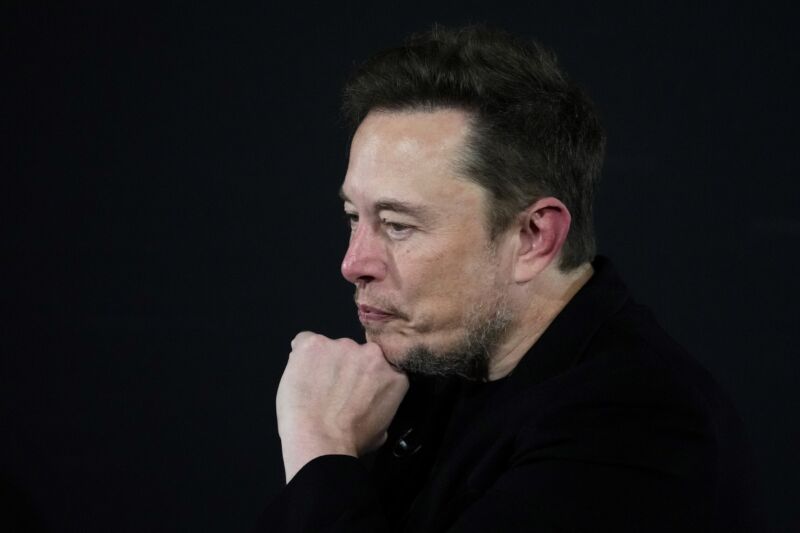
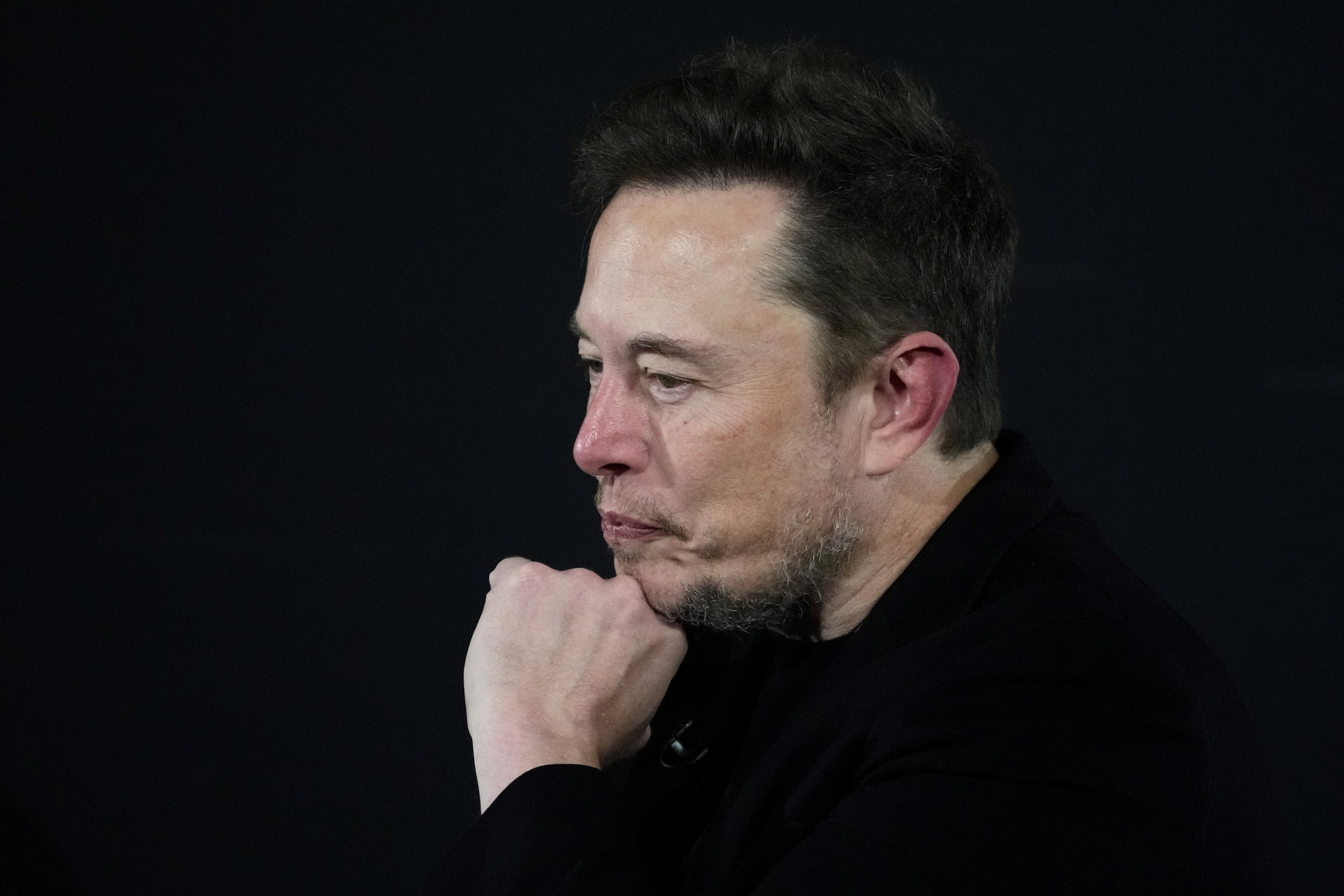
Elon Musk on stage at an event, resting his chin on his hand
Enlarge / Elon Musk at an AI event with Britain Prime Minister Rishi Sunak in London on Thursday, Nov. 2, 2023.
Getty Images | WPA Pool

Elon Musk yesterday appealed to the Supreme Court in a last-ditch effort to terminate his settlement with the Securities and Exchange Commission. Musk has claimed he was coerced into the deal with the SEC and that it violates his free speech rights, but the settlement has been upheld by every court that’s reviewed it so far.

In his petition asking the Supreme Court to hear the case, Musk said the SEC settlement forced him to “waive his First Amendment rights to speak on matters ranging far beyond the charged violations.”

The SEC case began after Musk’s August 2018 tweets stating, “Am considering taking Tesla private at $420. Funding secured” and “Investor support is confirmed. Only reason why this is not certain is that it’s contingent on a shareholder vote.” The SEC sued Musk and Tesla, saying the tweets were false and “led to significant market disruption.”

The settlement required Musk and Tesla to each pay $20 million in penalties, forced Musk to step down from his board chairman post, and required Musk to get Tesla’s pre-approval for tweets or other social media posts that may contain information material to the company or its shareholders.

Musk told the Supreme Court that the need to get pre-approval for tweets “is a quintessential prior restraint that the law forbids.”

In the settlement, “the SEC demanded that Mr. Musk refrain indefinitely from making any public statements on a wide range of topics unless he first received approval from a securities lawyer,” Musk’s petition said. “Only months later, the SEC sought to hold Mr. Musk in contempt of court on the basis that Mr. Musk allegedly had not obtained such approval for a post on Twitter (now X). In effect, the SEC sought contempt sanctions—up to and including imprisonment—for Mr. Musk’s exercise of his First Amendment rights.”

Musk’s court losses

In April 2022, Musk’s attempt to get out of the settlement was rejected by a US District Court judge. Musk appealed to the US Court of Appeals for the 2nd Circuit, but a three-judge panel unanimously ruled against him in May 2023. Musk asked the appeals court for an en banc rehearing in front of all the court’s judges, but that request was denied in July, leaving the Supreme Court as his only remaining option.

The 2nd Circuit panel ruling dismissed Musk’s argument that the settlement is a “prior restraint” on his speech, writing that “Parties entering into consent decrees may voluntarily waive their First Amendment and other rights.” The judges also saw “no evidence to support Musk’s contention that the SEC has used the consent decree to conduct bad-faith, harassing investigations of his protected speech.”

There is no guarantee that the Supreme Court will take up Musk’s case. Musk’s petition says the case presents the constitutional question of whether “a party’s acceptance of a benefit prevents that party from contending that the government violated the unconstitutional conditions doctrine in requiring a waiver of constitutional rights in exchange for that benefit.”

Musk argues that his settlement violates the unconstitutional conditions doctrine, which “limits the government’s ability to condition benefits on the relinquishment of constitutional rights.” He says his case also presents the question of “whether the government can insulate its demands that settling defendants waive constitutional rights from judicial scrutiny.”

“This petition presents an apt opportunity for the Court to clarify that government settlements are not immune from constitutional scrutiny, to the immediate benefit of the hundreds of defendants who settle cases with the SEC each year,” Musk’s petition said.

Musk complains about SEC investigations

Musk claims he is burdened with an “ever-present chilling effect that results from the pre-approval provision” and complained that the SEC has continued to investigate him. “In the past three years, the SEC has at all times kept at least one investigation open regarding Mr. Musk or Tesla. The SEC’s actions—in seeking contempt and then maintaining a steady stream of investigations—chills Mr. Musk’s speech,” the petition said.

As previously noted, the 2nd Circuit appeals court judges did not think the SEC investigations of Musk had gone too far. “To the contrary, the record indicates that the SEC has opened just three inquiries into Musk’s tweets since 2018,” the May 2023 appeals court decision said. The first of those three investigations led to the settlement that Musk is trying to get out of. The second and third investigations sought information about tweets in 2019 and 2021.

Although Musk has repeatedly lost his attempts to undo the SEC settlement, he prevailed against a class-action lawsuit that sought financial damages for Tesla shareholders. The judge in that case ruled that Musk’s tweets about having secured funding to take Tesla private were false and reckless, but a jury sided with Musk on the questions of whether he knew the tweets were false and whether they caused Tesla investors to lose money.

Despite the class-action suit’s failure, Tesla investors are getting some money. The $40 million in fines paid to the SEC by Musk and Tesla, plus interest, is in the process of being distributed to investors.

https://arstechnica.com/?p=1989680


Ex-Twitter exec sues Musk, says he was fired for objecting to budget cuts

Twitter's old bird logo next to the X logo that replaced it.

Enlarge (credit: Getty Images | NurPhoto )

A former Twitter security executive sued Elon Musk and X Corp. yesterday, alleging that he was unlawfully fired for objecting to steep budget cuts implemented shortly after Musk bought the social network.

Alan Rosa, who was fired on December 6, 2022, “was Head of Global Information Technology and Information Security and worked remotely for Twitter performing the majority of his job duties from his home in New Jersey,” said the lawsuit filed in US District Court for the District of New Jersey. He also sometimes worked in Twitter’s New York and California offices.

Rosa was required to resolve his claims through arbitration and says that he filed a demand for arbitration in April 2023 and paid his arbitration filing fee. Rosa alleges that “Twitter has refused to pay its portion of the arbitration fees despite being ordered by JAMS [Judicial Arbitration and Mediation Services] to do so.”

Read 17 remaining paragraphs | Comments

https://arstechnica.com/?p=1989253


Elon Musk and Tesla ignored Autopilot’s fatal flaws, judge says evidence shows

Elon Musk and Tesla ignored Autopilot’s fatal flaws, judge says evidence shows

A Florida judge, Reid Scott, has ruled that there’s “reasonable evidence” to conclude that Tesla and its CEO Elon Musk knew of defects in Autopilot systems and failed to fix them. Testimony from Tesla engineers and internal documents showed that Musk was “intimately involved” in Tesla’s Autopilot program and “acutely aware” of a sometimes-fatal defect—where Autopilot repeatedly fails to detect cross traffic, Scott wrote.

“Knowing that the Autopilot system had previously failed, had limitations” and, according to one Tesla Autopilot systems engineer, “had not been modified, Tesla still permitted the ‘Autopilot’ system to be engaged on roads that encountered areas of cross traffic,” Scott wrote.

Because a jury could perhaps consider that a “conscious disregard or indifference to the life” of Tesla drivers, Scott granted a motion to seek punitive damages to Kim Banner, whose husband Jeremy was killed in 2019 when his “Model 3 drove under the trailer of an 18-wheeler big rig truck that had turned onto the road, shearing off the Tesla’s roof,” Reuters reported. Autopilot allegedly failed to warn Jeremy or respond in any way that could have avoided the collision, like braking or steering the vehicle out of danger, Banner’s complaint said.

Seemingly most worrying to the judge, Tesla engineers told Scott that following Banner’s death in 2019 and the “eerily similar” death of another Florida driver, Joshua Brown, in 2016, the automaker did nothing to intervene or update Autopilot’s cross-traffic detection system. Tesla continues to market the Autopilot feature as safe for drivers today, Scott wrote.

“It would reasonable to conclude that [Tesla] dismissed the information it had available in favor of its marketing campaign for the purpose of selling vehicles under the label of being autonomous,” Scott wrote.

Scott noted that Tesla’s marketing of Autopilot is “important” in this case, pointing to a 2016 video that’s still on Tesla’s website, where Tesla claimed “the car is driving itself.” The video, Scott wrote, shows the car navigating scenarios “not dissimilar” to the cross-traffic encounter with a truck that killed Banner’s husband.

“Absent from this video is any indication that the video is aspirational or that this technology doesn’t currently exist in the market,” Scott wrote.

Scott’s ruling is considered a big blow to Tesla, which had denied liability for Banner’s death, arguing that human error is at fault because “its manual and the ‘clickwrap’ agreement sufficiently warned” Tesla owners of Autopilot’s limitations.

The judge wrote that Tesla would be able to make this argument at trial—which has been delayed—but at this stage, a jury presented with available evidence could reasonably find Tesla guilty of both intentional misconduct and gross negligence. The result of such a verdict could put Tesla on the hook for awarding huge damages that experts have said could also enormously damage Tesla’s reputation. At trial, Banner will likely argue that these warnings were inadequate.

Banner’s attorney, Lake “Trey” Lytal III, told Reuters that they are “extremely proud of this result based in the evidence of punitive conduct.”

https://arstechnica.com/?p=1986151


Sam Altman wins power struggle, returns to OpenAI with new board

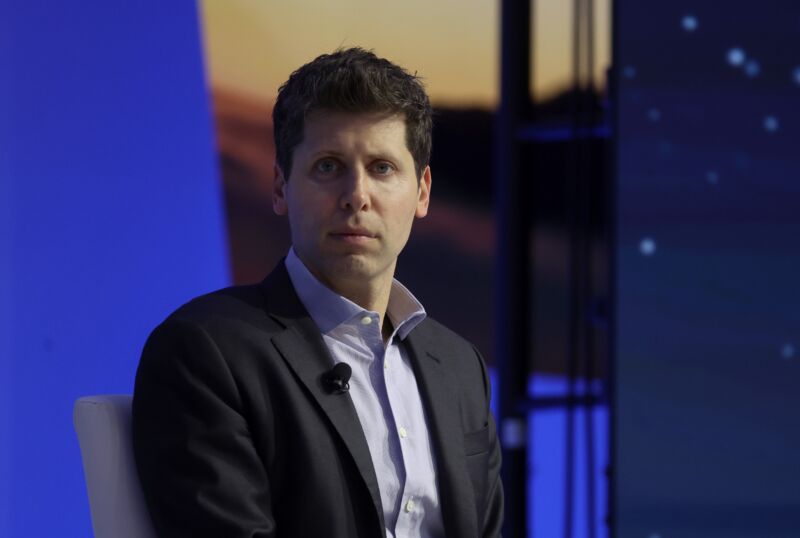
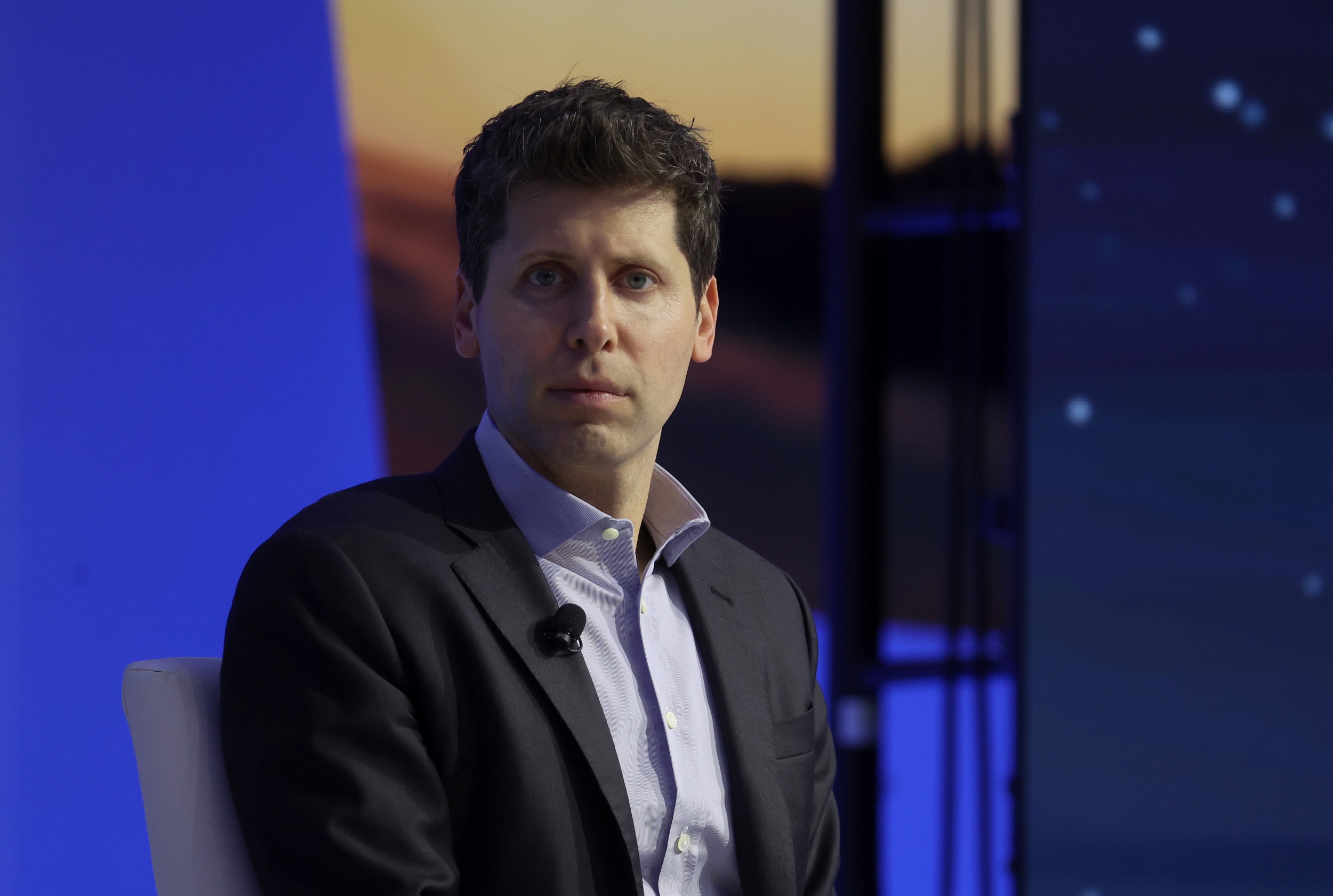
Sam Altman sits on stage at a conference.
Enlarge / OpenAI CEO Sam Altman at the APEC CEO Summit at Moscone West on November 16, 2023 in San Francisco.
Getty Images | Justin Sullivan

After five days of chaos triggered by OpenAI’s firing of CEO Sam Altman, the executive is set to return to the company, while the board of directors that fired him is to be almost entirely remade. OpenAI said last night that it “reached an agreement in principle for Sam Altman to return to OpenAI as CEO.”

Altman had accepted a job on Sunday from Microsoft, a major investor in OpenAI. Microsoft also offered to hire OpenAI’s employees, who threatened to resign en masse if Altman wasn’t brought back. According to Altman, Microsoft CEO Satya Nadella supported his return to OpenAI.

“with the new board and w satya’s support, i’m looking forward to returning to openai, and building on our strong partnership with msft,” Altman wrote. Altman also wrote, “i love openai, and everything i’ve done over the past few days has been in service of keeping this team and its mission together.”

OpenAI said that the company and Altman are still “collaborating to figure out the details.” But three of the four board members who remained after the Friday departures of Altman and OpenAI CTO Greg Brockman will leave.

The one OpenAI board member who is staying is Quora CEO Adam D’Angelo, who was reportedly involved in the discussions that led to Altman’s return. The three who are leaving the board are OpenAI Chief Scientist Ilya Sutskever, entrepreneur Tasha McCauley, and Helen Toner of the Georgetown Center for Security and Emerging Technology.

New board could add six members

OpenAI said the “new initial board” will consist of D’Angelo, economist Larry Summers, and former Salesforce co-CEO Bret Taylor, who will be the chair. More board members will reportedly be added. At least for now, Altman will not regain his former position on the board.

“The previous board and Altman’s camp also agreed to conduct an independent investigation into his conduct, the decision to oust him last week and its aftermath, a person familiar with the matter said,” The Wall Street Journal reported. “The new board is expected to add as many as six additional members, the person said, in addition to continuing its duties.”

OpenAI’s interim CEO, Emmett Shear, who led the company for a few days, wrote, “I am deeply pleased by this result, after ~72 very intense hours of work. Coming into OpenAI, I wasn’t sure what the right path would be. This was the pathway that maximized safety alongside doing right by all stakeholders involved. I’m glad to have been a part of the solution.”

Meanwhile, some new details emerged about the days leading up to Altman’s firing. “In the weeks leading up to his shocking ouster from OpenAI, Sam Altman was actively working to raise billions from some of the world’s largest investors for a new chip venture,” Bloomberg reported. Altman reportedly was traveling in the Middle East to raise money for “an AI-focused chip company” that would compete against Nvidia.

OpenAI’s announcement of the firing on Friday provided little detail but said that Altman “was not consistently candid in his communications with the board, hindering its ability to exercise its responsibilities.”

“Slow erosion of trust” before firing

As Bloomberg wrote, “The board and Altman had differences of opinion on AI safety, the speed of development of the technology and the commercialization of the company, according to a person familiar with the matter. Altman’s ambitions and side ventures added complexity to an already strained relationship with the board.”

OpenAI has an unusual structure, with a nonprofit that controls the for-profit subsidiary OpenAI Global. A Wall Street Journal behind-the-scenes report noted that the nonprofit board’s mission is to “ensur[e] the company develops AI for humanity’s benefit—even if that means wiping out its investors.”

“According to people familiar with the board’s thinking, members had grown so untrusting of Altman that they felt it necessary to double-check nearly everything he told them,” the WSJ report said. The sources said it wasn’t a single incident that led to the firing, “but a consistent, slow erosion of trust over time that made them increasingly uneasy,” the WSJ article said. “Also complicating matters were Altman’s mounting list of outside AI-related ventures, which raised questions for the board about how OpenAI’s technology or intellectual property could be used.”

But Altman’s firing was so controversial that it threatened to unravel the company entirely. The WSJ wrote:

Over the weekend, Altman’s old executive team pushed the board to reinstate him—telling directors that their actions could trigger the company’s collapse.

“That would actually be consistent with the mission,” replied board member Helen Toner, a director at a Washington policy research organization who joined the board two years ago.

Toner commented on Altman’s return, writing, “And now, we all get some sleep.”

https://arstechnica.com/?p=1986079


Binance slapped with $4B fine, accepts plea deal forcing CEO to resign

Binance CEO Changpeng Zhao leaves the US District Court on November 21, 2023 in Seattle.
Enlarge / Binance CEO Changpeng Zhao leaves the US District Court on November 21, 2023 in Seattle.

Binance founder Changpeng Zhao has resigned as CEO of the world’s largest cryptocurrency exchange after agreeing to plead guilty to money laundering violations, the US Department of Justice announced on Tuesday.

The DOJ’s settlement concludes a three-year investigation into Binance that found “willful failures allowed money to flow to terrorists, cybercriminals, and child abusers through its platform,” Secretary of the Treasury Janet Yellen wrote in a statement. According to the plea agreement, Zhao will pay a $50 million fine, and Binance—which also pled guilty to conspiring to operate an unlicensed money-transmitting business and violating sanctions against Iran, Cuba, and Syria—will pay a $4.3 billion fine.

“Today’s historic penalties and monitorship to ensure compliance with US law and regulations mark a milestone for the virtual currency industry,” Yellen said. “Any institution, wherever located, that wants to reap the benefits of the US financial system must also play by the rules that keep us all safe from terrorists, foreign adversaries, and crime or face the consequences.”

Zhao will also be temporarily barred from working at Binance. According to the plea deal, regulators will appoint an independent compliance monitor to ensure transparency in Binance’s operations for three years. Zhao cannot be involved with Binance until after that appointment ends.

In June, the Securities and Exchange Commission charged Binance with various securities law violations, alleging that Zhao and Binance secretly allowed “high-value US customers to continue trading on the Binance.com platform” violating laws restricting US customers from using its platform. The DOJ said that Zhao personally directed employees to hide these transactions to avoid regulatory oversight.

Binance revenue reportedly fell in 2023 until the collapse of FTX gave the crypto exchange a “big boost,” Fortune reported. But now the hefty fine at the heart of Binance’s plea deal has put another big dent in the platform’s finances.

US Attorney General Merrick Garland celebrated Zhao’s and Binance’s plea deals, noting that they quickly followed the conviction of FTX co-founder Sam Bankman-Fried on fraud, money laundering, and conspiracy charges earlier this month.

“Binance became the world’s largest cryptocurrency exchange in part because of the crimes it committed—now it is paying one of the largest corporate penalties in US history,” Garland said. “In just the past month, the Justice Department has successfully prosecuted the CEOs of two of the world’s largest cryptocurrency exchanges in two separate criminal cases.  The message here should be clear: using new technology to break the law does not make you a disruptor, it makes you a criminal.”

Zhao, whom Forbes designated as the wealthiest man in crypto in 2022, held what sources told Forbes was a considerable stake in Binance—”at least 70 percent.” He raised $15 million to launch Binance in 2017, and by mid-2022, his exchange had an estimated market value of $92.5 billion.

Last month, The Economist dubbed Zhao “crypto’s last man standing.” On X, Zhao posted a statement explaining how hard it was to let the crypto exchange go.

“Today, I stepped down as CEO of Binance. Admittedly, it was not easy to let go emotionally,” Zhao wrote. “But I know it is the right thing to do. I made mistakes, and I must take responsibility. This is best for our community, for Binance, and for myself.”

According to Zhao, Binance’s former Global Head of Regional Markets, Richard Teng, is now Binance’s CEO.

“Richard is a highly qualified leader and, with over three decades of financial services and regulatory experience, he will navigate the company through its next period of growth,” Zhao wrote. “He will ensure Binance delivers on our next phase of security, transparency, compliance, and growth.”

Teng will have to “cooperate fully with the government in any and all matters relating to the conduct” described in Binance’s plea agreement, “as well as any other conduct under investigation by the government at any time” in the three years after the monitor is appointed. Once those three years pass, the CEO will be expected to “certify that Binance has met its disclosure obligations”—including the obligation to inform US officials “promptly about any evidence or allegation of money laundering, compliance, and sanctions-related misconduct, as well as other criminal violations of federal law.”

Zhao said that he will take a break but will remain available to consult with the Binance team—”consistent with the framework set out in our US agency resolutions”—”as a shareholder and former CEO with historical knowledge of our company.”

At times, his post took upbeat turns, including claiming some wins for Binance from the settlement. Zhao said he was “proud to point out” that the plea deals “do not allege that Binance misappropriated any user funds” or “that Binance engaged in any market manipulation.”

Zhao said that he was unlikely to become a CEO driving a startup ever again but expected that Binance would thrive without him.

“Binance is no longer a baby,” Zhao wrote. “It is time for me to let it walk and run. I know Binance will continue to grow and excel with the deep bench it has.”

https://arstechnica.com/?p=1985992


Reports: Sam Altman in talks for OpenAI return; board members could be ousted

Sam Altman wearing a jacket and button-down shirt.
Enlarge / Then-OpenAI CEO Sam Altman at APEC CEO Summit at Moscone West on November 16, 2023, in San Francisco.
Getty Images | Justin Sullivan

Former OpenAI CEO Sam Altman is in talks to return to the company’s top job days after he was fired, but nothing has been finalized, according to news reports today.

“Discussions are happening between Altman, CEO Emmett Shear and at least one board member, Adam D’Angelo,” Bloomberg wrote, citing anonymous sources. “The talks also involve some of OpenAI’s investors, many of whom are pushing for his reinstatement.” OpenAI shareholders reportedly lobbying for Altman’s reinstatement include Thrive Capital, Khosla Ventures, and Tiger Global Management.

Altman was fired on Friday by the board of directors of OpenAI, Inc., the nonprofit that controls the for-profit subsidiary OpenAI Global. An Altman return could be paired with changes to the board.

“In one scenario being discussed, Altman would become a director on a transitional board,” Bloomberg wrote. Former Salesforce co-CEO Bret Taylor could join the board, the report said.

Besides D’Angelo, who is also Quora’s CEO, the OpenAI board consists of OpenAI Chief Scientist Ilya Sutskever, entrepreneur Tasha McCauley, and Helen Toner of the Georgetown Center for Security and Emerging Technology. Altman was on the OpenAI board until he was forced out of the CEO role and board position last week. The board was previously chaired by Greg Brockman, who was removed from the board when Altman was fired and then quit his post as OpenAI CTO.

“That the board and Altman are in communication is a significant development because until Monday, the directors largely refused to engage with the executive they fired Friday, several people have said,” according to Bloomberg.

A Washington Post report similarly said that “talks were ongoing Tuesday about the future of OpenAI and the potential return of Sam Altman.” Altman’s return may be contingent on removal of the board members who fired him, the Post wrote:

Investors and executives were scrambling to figure out a plan to bring back Altman after it was revealed late Sunday night that he would be leading Microsoft’s new AI lab. Conflicting information was emerging from the negotiations. One person familiar with the situation said the talks were less about specific board members and more about creating a board that was “stable and well-intentioned.” Another person familiar with the matter said Altman would return only if the board members who fired him left.

Microsoft, Salesforce make offers to OpenAI employees

As noted, Altman appears to be headed to Microsoft if he doesn’t return to OpenAI. Microsoft already announced it was hiring Altman, though Microsoft CEO Satya Nadella suggested yesterday that he’s open to Altman returning to OpenAI instead.

Altman wrote yesterday that the “top priority” for himself and Nadella is to ensure that OpenAI “continues to thrive,” and that they “are committed to fully providing continuity of operations to our partners and customers.” The OpenAI/Microsoft partnership “makes this very doable,” he added.

Meanwhile, Microsoft and Salesforce are angling to hire OpenAI employees who are revolting against the Altman firing. By the end of Monday, 747 out of 770 OpenAI employees reportedly signed a letter threatening to quit and join Altman at Microsoft if the firing isn’t reversed.

Microsoft CTO Kevin Scott responded to the petition in a twitter.com post. “To my partners at OpenAI: We have seen your petition and appreciate your desire potentially to join Sam Altman at Microsoft’s new AI Research Lab. Know that if needed, you have a role at Microsoft that matches your compensation and advances our collective mission,” Scott wrote today.

Salesforce CEO Marc Benioff also made a pitch. He wrote yesterday that Salesforce would match the salary and equity of “any OpenAI researcher who has tendered their resignation” and give them positions on the Salesforce Einstein Trusted AI research team.

OpenAI is currently being led by interim CEO Emmett Shear. According to Bloomberg, “Shear has been left in the dark” regarding certain key questions about Altman’s removal. Shear “has told people close to OpenAI that he doesn’t plan to stick around if the board can’t clearly communicate to him in writing its reasoning for Altman’s sudden firing,” Bloomberg wrote.

https://arstechnica.com/?p=1985908


Judge rejects Elon Musk’s attempt to kill Twitter/FTC privacy settlement

Illustration of a stamp that prints the word
Getty Images | Bet_Noire

Elon Musk lost an attempt to avoid a deposition and terminate a privacy settlement that Twitter agreed to before he bought the company.

Musk’s X Corp. in July asked a federal judge for “a protective order staying the notice of deposition of Elon Musk,” and an order to terminate or modify the company’s 2022 settlement with the Federal Trade Commission. US Magistrate Judge Thomas Hixson denied both requests in an order issued Thursday in US District Court for the Northern District of California.

The May 2022 settlement with the FTC came in response to Twitter targeting ads at users with phone numbers and email addresses collected from those users when they enabled two-factor authentication. US authorities are investigating whether the Musk-owned social network, now officially called X, is complying with the settlement’s privacy and security requirements.

There was a legal flaw in X Corp.’s motion to terminate the settlement and prevent Musk’s deposition, Hixson wrote. When Twitter agreed to the privacy settlement last year, there was a “stipulated order” issued by the court and an “administrative order” issued by the FTC. X asked the court to terminate the stipulated order, but Hixson pointed out that the two orders are quite different.

“The obligations that X Corp. seeks to be relieved of come from the FTC’s Administrative Order, not this Court’s Stipulated Order,” Hixson wrote. The FTC’s administrative order “stands on its own,” and the relevant Federal Rule of Civil Procedure “allows the Court to modify its own orders, not another tribunal’s orders,” the judge wrote.

Judge: Court can’t block Musk’s deposition

Denying X’s request for discovery, Hixson wrote that “no discovery is necessary or appropriate. The flaw in X Corp.’s motion is purely legal: X Corp. is seeking to be relieved from its prospective obligations under the Administrative Order, and there is no order the Court can issue under Rule 60(b), or under any other Rule, that would accomplish that. Accordingly, discovery would not serve any purpose for this judicial proceeding.”

Moreover, “The Court also does not understand how it could order the FTC not to depose Musk,” Hixson wrote. “The Stipulated Order does not mean that the Court is supervising the FTC’s enforcement of the Administrative Order.”

In a separate case, Musk is trying to avoid testifying in a Twitter stock-purchase investigation and asked the court to block a subpoena issued by the Securities and Exchange Commission. Musk’s attorneys claimed in a November 2 court filing that the SEC is “harassing” him.

The X Corp. motion in the FTC case similarly claimed that the agency’s attempt to depose Musk is “an improper effort to harass and annoy Mr. Musk.”

Summarizing X’s argument, Hixson wrote that “X Corp. argues that the FTC radically shifted its investigative strategy after Musk acquired Twitter, imposing new and burdensome demands and treating the Stipulated Order as license for invasive scrutiny of any move X Corp. makes, no matter how remote from data privacy and security concerns. X Corp. argues that the agency’s ongoing overreach raises serious concerns about due process and prosecutorial misconduct, as well as the fairness of, and public confidence in, agency investigations and proceedings.”

FTC investigation continues

In response, US government lawyers called X’s motion meritless and said the FTC investigation has “revealed a chaotic environment at the company that raised serious questions about whether and how Musk and other leaders were ensuring X Corp.’s compliance with the 2022 Administrative Order.”

“The government says this increase in investigative activity should not be surprising because Musk directed at least five rounds of terminations, layoffs or other reductions in X Corp.’s workforce, which affected the security, governance, risk and compliance team,” Hixson wrote in his summary of the government’s argument. “The government argues that the FTC was concerned about X Corp.’s ability to comply with the Administrative Order given these significant changes to the company. As for deposing Musk, the government argues that the major changes to the company appear to have been initiated by Musk himself.”

The FTC has deposed five former X Corp. employees including ex-Chief Information Security Officer Lea Kissner, the US court filing said. “At a deposition, Kissner testified that decisions by Musk and others—including layoffs and other ‘cost-cutting pressure and decisions’—impaired X Corp.’s ability to ‘put technical restrictions and controls in place… around the company’s use of contact data to make sure that it was being used… for the purpose that the particular contact data was collected,'” the US wrote.

https://arstechnica.com/?p=1985572


Hate speech group calls Musk “thin-skinned tyrant” amid X advertiser fallout

Hate speech group calls Musk “thin-skinned tyrant” amid X advertiser fallout

Advertisers with zero-tolerance policies for antisemitism spent the weekend urging the CEO of X (formerly Twitter), Linda Yaccarino, to follow their lead, save her reputation, and ditch Elon Musk’s toxic social media platform, according to a pair of reports.

Advertising industry insiders told the Financial Times and Forbes that Yaccarino got bombarded all weekend by industry friends advising her to resign, or else face a “credibility crisis” as major brands—including Apple, Disney, IBM, Lionsgate, Paramount Global, Sony, and Warner Bros.—have stopped advertising on X.

This latest X advertiser scare followed two Media Matters reports of ads appearing next to antisemitic content. But the backlash goes beyond stemming just from those reports and is also connected to an antisemitic X post from Musk. In the post, Musk explicitly endorses as “the actual truth” the great replacement theory. That theory, as The New York Times explained, claims that “Jews have organized nonwhite immigrants to replace the white race” and “was embraced by Robert Bowers, who killed 11 worshipers at the Tree of Life synagogue in Pittsburgh in 2018.”

Musk’s post was deemed so harmful that it was condemned by the White House.

According to Forbes, amid the advertiser exodus, a “groundswell of leading advertising executives” immediately started questioning why Yaccarino “is risking her reputation to shield Musk’s behavior.” Lou Paskalis, a chief executive of the marketing consultancy AJL Advisory, told the FT that he “did advise Linda via text to go and [said] that staying would only damage her reputation.”

But days into the controversy—as Musk threatens to lob a “thermonuclear lawsuit” at Media Matters for their reporting and denounces media reports that he claims falsely interpret his X post as antisemitic—Yaccarino has shown no signs that she will be leaving X. Sources told the FT that she’s staying because she “believes in X’s mission and its employees.”

This is perhaps good news for X users, who have arguably never needed Yaccarino more, according to X safety partners who told Ars that Yaccarino has been more involved with platform safety and more directly accessible than past Twitter CEOs.

Before joining X, Yaccarino was head of advertising at NBCUniversal, where she helped launch a partnership with the Foundation to Combat Antisemitism, including a “national campaign to mobilize all Americans to combat antisemitism by spreading the hashtag #StandUpToJewishHate.” According to a spokesperson for the American Jewish Committee (AJC)—which currently partners with X on platform safety by flagging harmful content and advising on policies—Yaccarino brought that same energy to X.

AJC’s spokesperson told Ars that after years of partnering with Twitter, Yaccarino became the first senior leader to actually meet with AJC in August. That meeting followed the suspension of a pro-Nazi X account after the last time a Media Matters report spooked advertisers. The meeting was presented as a high-profile event that was broadcast on X, but beyond potentially appearing as a publicity stunt, it provided AJC with a rare opportunity to discuss with Yaccarino face to face all the ways that X could improve its “detection and contextual understanding of harmful content.”

And there have been other meetings since, AJC’s spokesperson said. According to AJC, the advocacy group is in touch with Jewish communities all over the world and can actually share their experiences with X leadership, even pulling members of those communities into meetings with Yaccarino.

An important example of Yaccarino’s involvement in platform safety came after Hamas’ surprise attack out of Gaza on October 7. X immediately reached out to AJC and set up a meeting where Yaccarino brought in “high-level people” to speak with AJC about what was needed to protect Jewish communities.

That’s why AJC’s spokesperson said that under Yaccarino, there has been “a shift in the attention” given to antisemitism on X and a new “level of senior leadership engagement” that AJC had not previously seen.

Privately, reports said that Yaccarino has told her advertising colleagues that she will not resign as X CEO. Publicly, Yaccarino has not acknowledged Musk’s problematic post, instead sharing her own statement on X denouncing “discrimination by everyone” on November 16:

X’s point of view has always been very clear that discrimination by everyone should STOP across the board—I think that’s something we can and should all agree on. When it comes to this platform—X has also been extremely clear about our efforts to combat antisemitism and discrimination. There’s no place for it anywhere in the world—it’s ugly and wrong. Full stop.

While AJC still needs to “see improvement” at X, AJC’s spokesperson said that the group has no plans to abandon X despite frequently disagreeing with posts from the platform’s owner.

So although AJC used X to publicly condemn Musk’s post as antisemitic and “incredibly dangerous,” AJC remains committed to working with Yaccarino to help prevent online hate spreading on X from triggering real-world violence. AJC views this as crucial work during a wave of currently surging global antisemitism that AJC considers a “human rights emergency.”

“We do see the content spreading online, then having these offline repercussions,” AJC’s spokesperson told Ars. According to AJC, evidence suggests that the great replacement theory spreading online led to the Tree of Life shootings, which was the biggest antisemitic attack in US history. Tragedies reaching that magnitude are “obviously what we’re trying to prevent in our engagement with companies” like X.

“It’s so important to just still be doing this,” AJC’s spokesperson said.

https://arstechnica.com/?p=1985539